Mount Rainier – Paradise Meadows
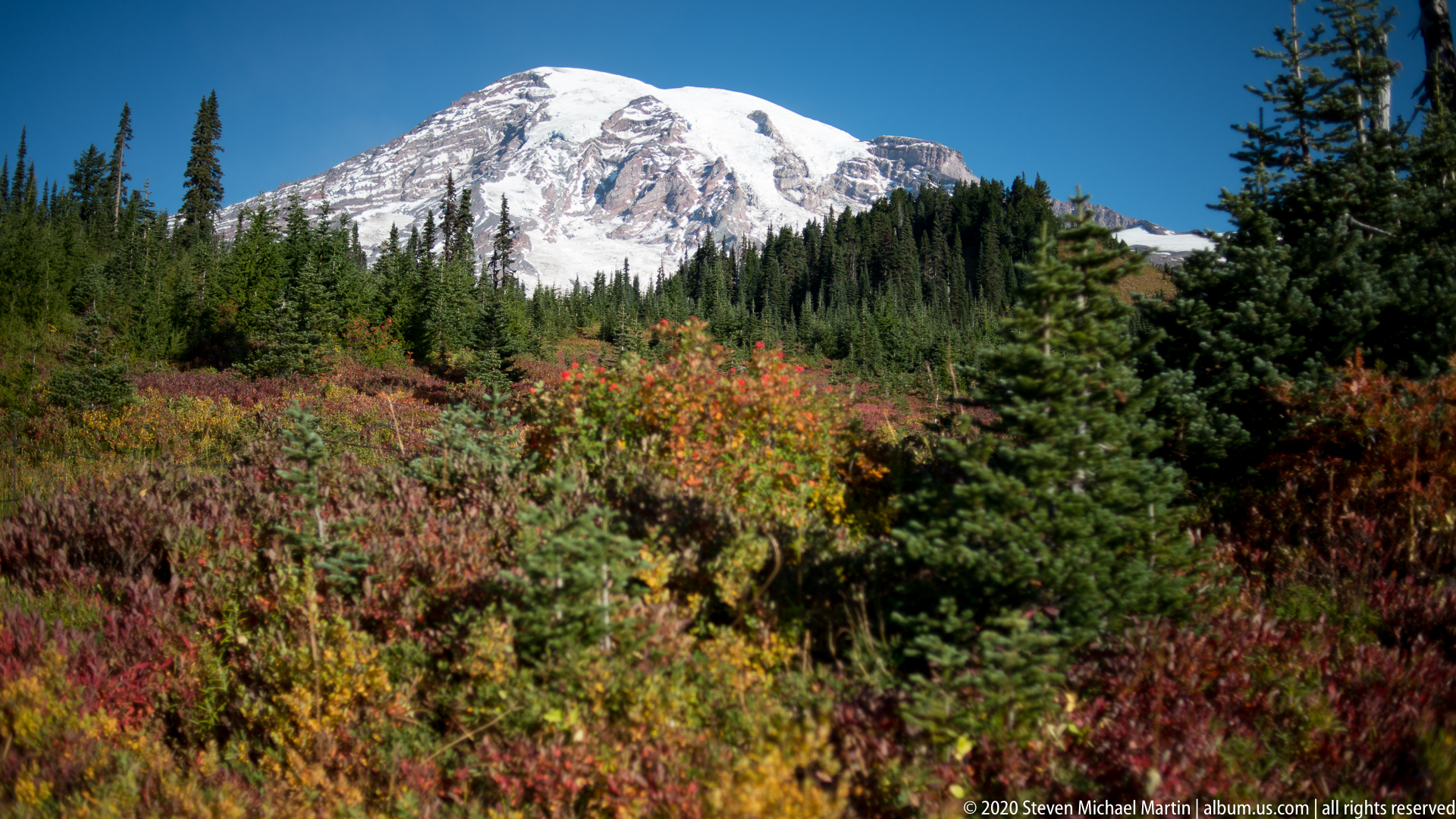
Paradise Meadows offers one of the most recognizable landscapes within Mount Rainier National Park, where open alpine terrain stretches toward expansive views of the mountain’s glaciated slopes. Rolling meadows, scattered trees, and changing light create a setting that feels both elevated and visually dynamic, particularly during the summer season when wildflowers add color to the landscape.
The area provides close perspectives of Mount Rainier’s upper elevations, where snowfields and glaciers remain visible even during warmer months. The contrast between delicate meadow vegetation and the scale of the mountain emphasizes the dramatic vertical relief that defines this portion of the Cascade Range.
Shifting weather conditions frequently alter the atmosphere, as clouds move across the mountain and sunlight highlights different textures on the terrain. Paradise Meadows combines open views with subalpine detail, creating a landscape that captures both the scale and the subtlety of Mount Rainier’s high-elevation environment.




🧭 Field Guide
Landscape Type: Alpine meadow
Primary Features: Wildflowers, open slopes, mountain views
Best Time to Visit: Mid-summer for peak wildflower bloom
Conditions: Open terrain with expansive views of Mount Rainier
✨ Highlights
- Expansive subalpine meadows with Mount Rainier rising dramatically above the landscape
- Historic Paradise National Park Inn framed by alpine scenery
- Late-season wildflowers and berry-producing shrubs transitioning into autumn colors
- Close views of glaciers, ridges, and snowfields on Mount Rainier’s upper slopes
- Frequent wildlife sightings including marmots, deer, ground squirrels, and gray jays
- Well-developed trail network providing accessible access to classic Mount Rainier scenery
🔎 Notable Encounters
- Wildflower Textures – Dense clusters of seasonal blooms add foreground detail.
- Glacial Features – Snowfields and ice formations visible on upper mountain slopes.
- Mountain Atmosphere – Shifting weather conditions influence visibility and color.
- Subalpine Vegetation – Low-growing plants adapted to shorter growing seasons.
🦌 Notable Wildlife Encounters
Paradise Meadows offers frequent opportunities to observe wildlife adapted to Mount Rainier’s subalpine environment. During late summer and early autumn visits, several species were encountered in open meadows, rocky slopes, and forest edges, often surprisingly close to the main trail network.
Hoary marmots were especially memorable, commonly seen perched upright on rocks or moving deliberately through meadow vegetation. Their distinctive whistling calls echoed across the landscape, serving as both communication and warning. Several individuals appeared comfortable near visitors, allowing for prolonged observation and photography without disturbance.
Golden-mantled ground squirrels were active along trails and rocky clearings, quickly darting between cover while occasionally pausing long enough for close viewing. A black-tailed deer calmly crossed the park road near Paradise, demonstrating how wildlife continues to move naturally through heavily visited areas. Gray jays were also observed quietly resting on conifer branches, often appearing curious about nearby hikers.
- Hoary marmot – frequently observed standing upright on rocks and meadow edges
- Golden-mantled ground squirrel – active near trails and rocky terrain
- Black-tailed deer – encountered calmly crossing the road near Paradise
- Gray jay (Canada jay) – commonly seen perched in evergreen branches
📷 Photography Notes
- Wildflowers provide strong foreground interest for mountain compositions.
- Morning or late-day light often reveals more texture on the mountain.
- Cloud movement can dramatically change lighting conditions.
- Wide-angle views help capture both meadow and mountain scale.
- Seasonal bloom timing affects color intensity across the landscape.
- Look for small elevation changes that create layered depth.