Knob Creek – Abraham Lincoln Birthplace National Historical Park
Knob Creek preserves the landscape where Abraham Lincoln spent part of his childhood and where some of his earliest memories were formed. Located a short distance from the symbolic birthplace memorial, the site provides additional context for Lincoln’s formative years and illustrates the rural environment that influenced his development. The creek and surrounding farmland represent a setting in which Lincoln began to explore the natural world and develop early skills.
Historical records indicate that Lincoln lived at Knob Creek between the ages of approximately two and seven. During this period, he experienced the rhythms of farm life and the challenges associated with frontier settlement. The reconstructed cabin and interpretive landscape provide insight into daily life in early nineteenth-century Kentucky, emphasizing the physical labor and resourcefulness required for survival.
Visitors can explore the cabin setting, walking paths, and scenic views of the surrounding countryside. The site complements the birthplace memorial by illustrating the broader environment of Lincoln’s childhood and offering a more detailed perspective on the experiences that shaped his character and values.
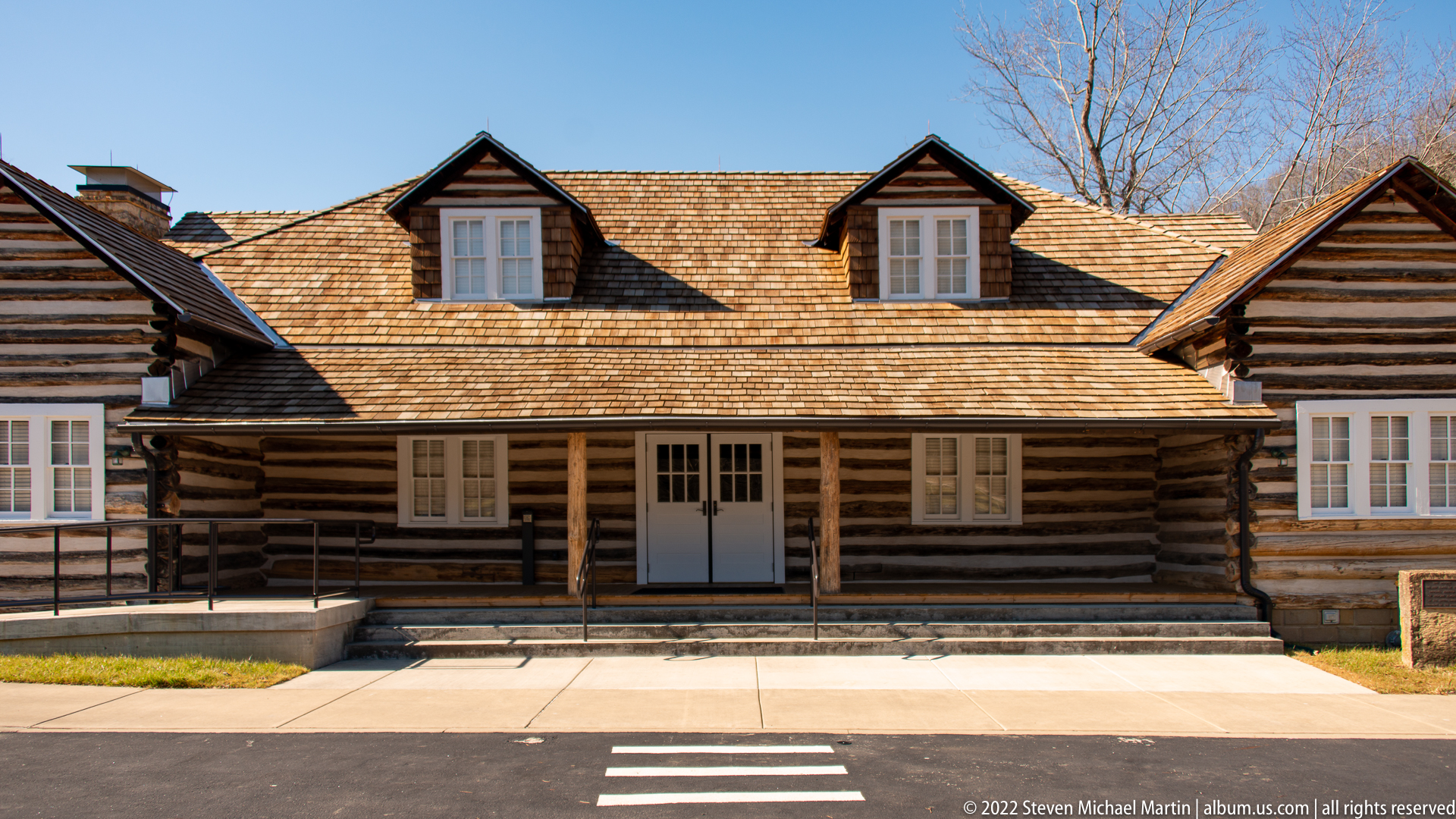
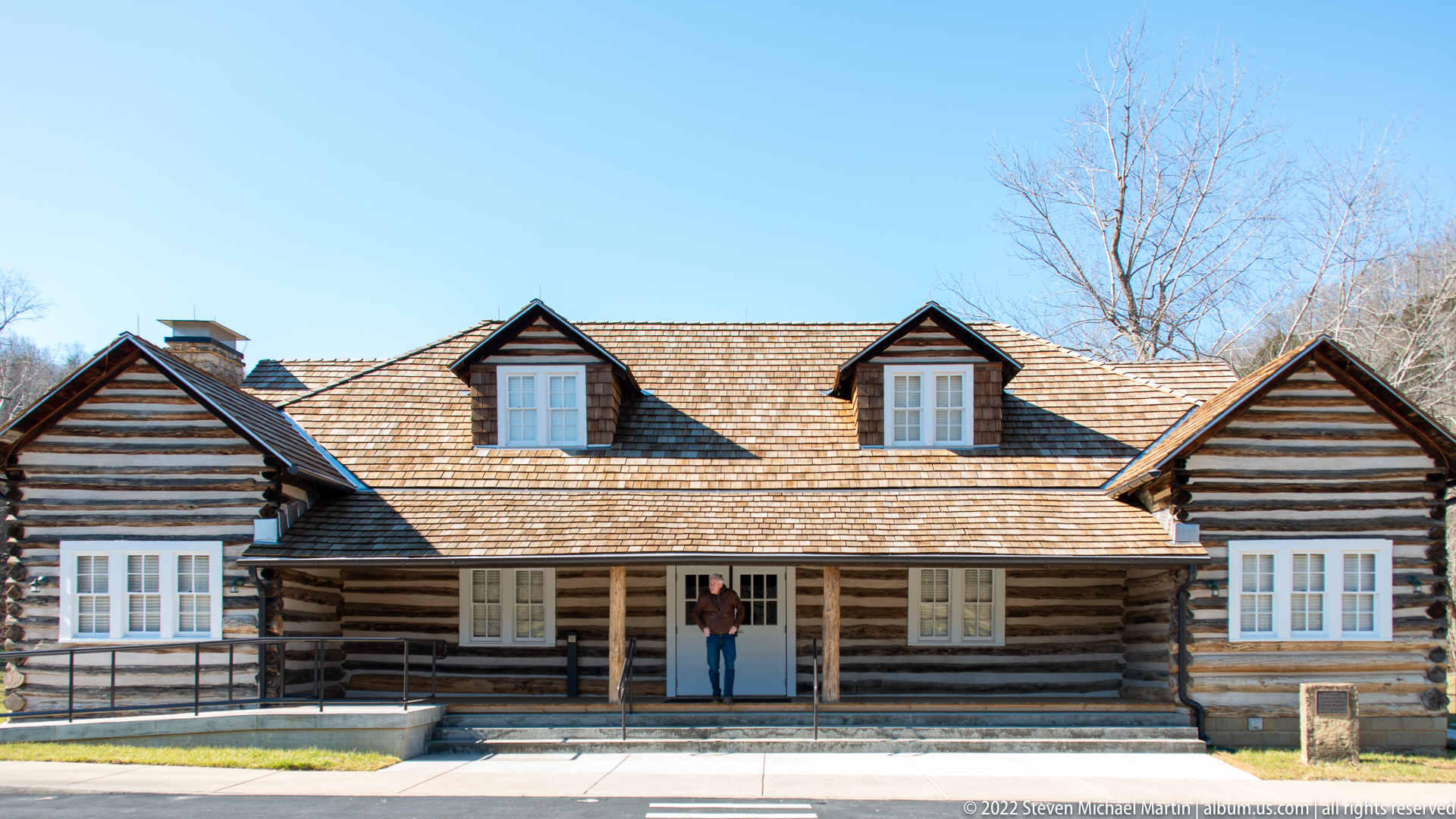
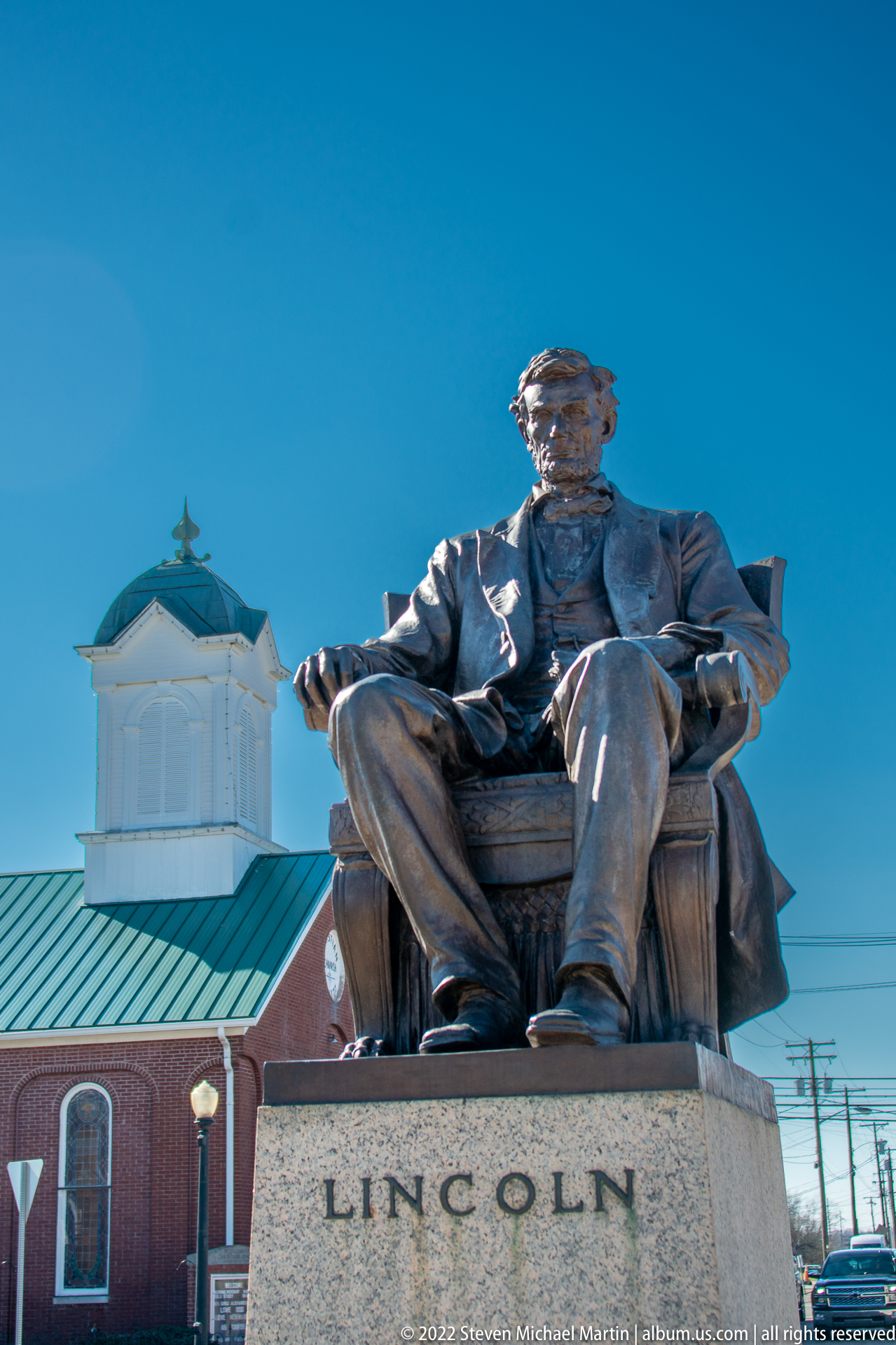
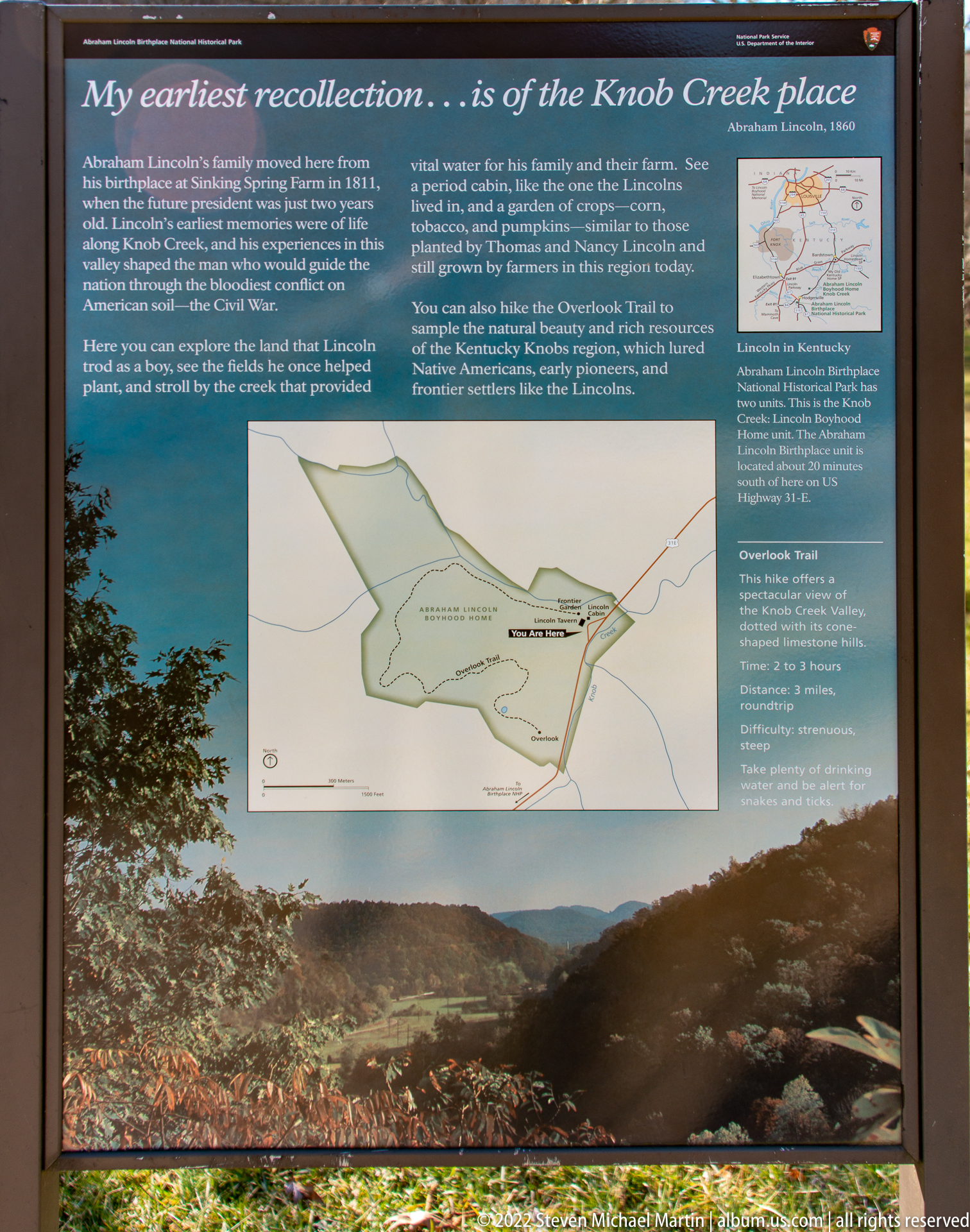
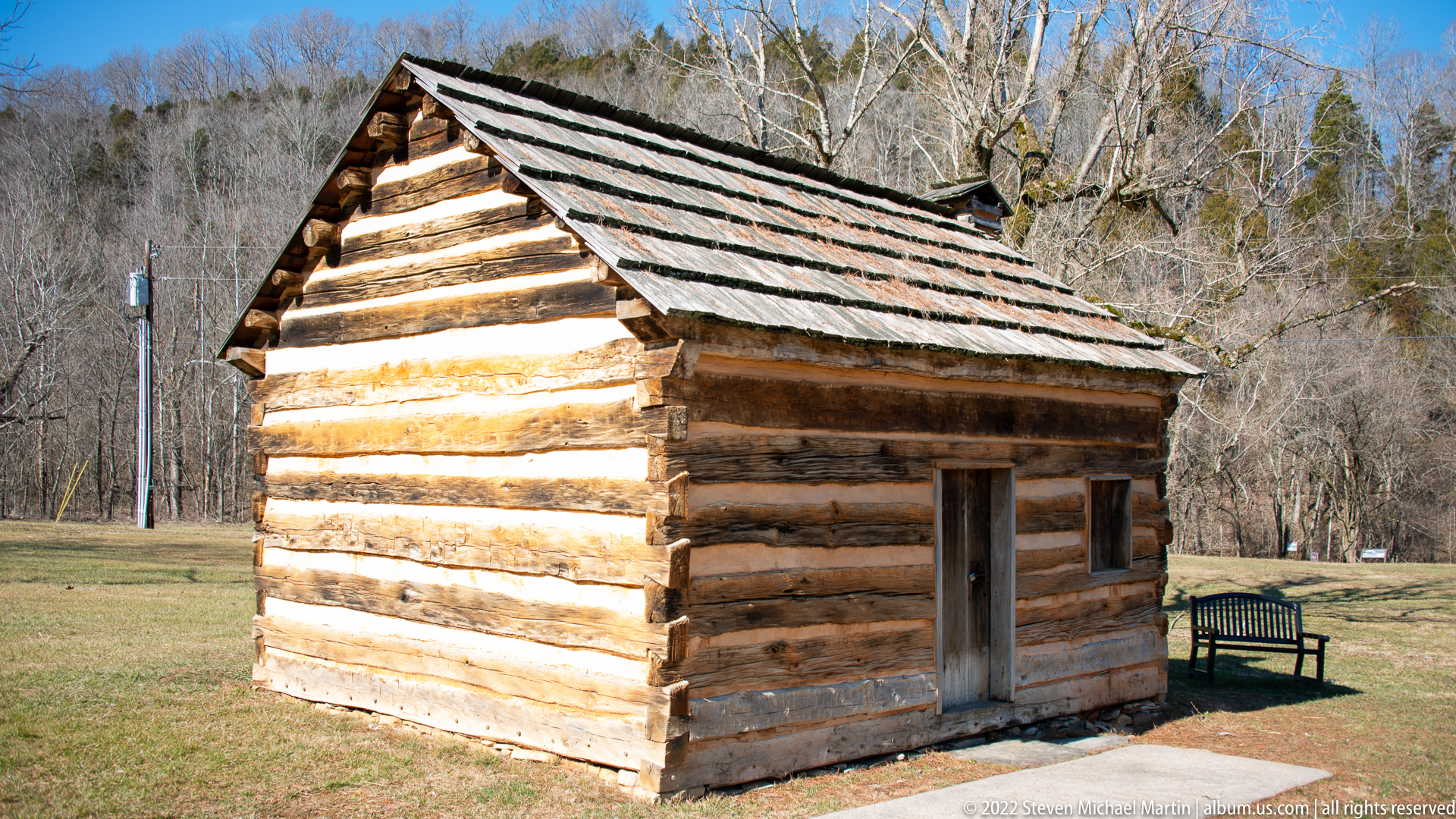
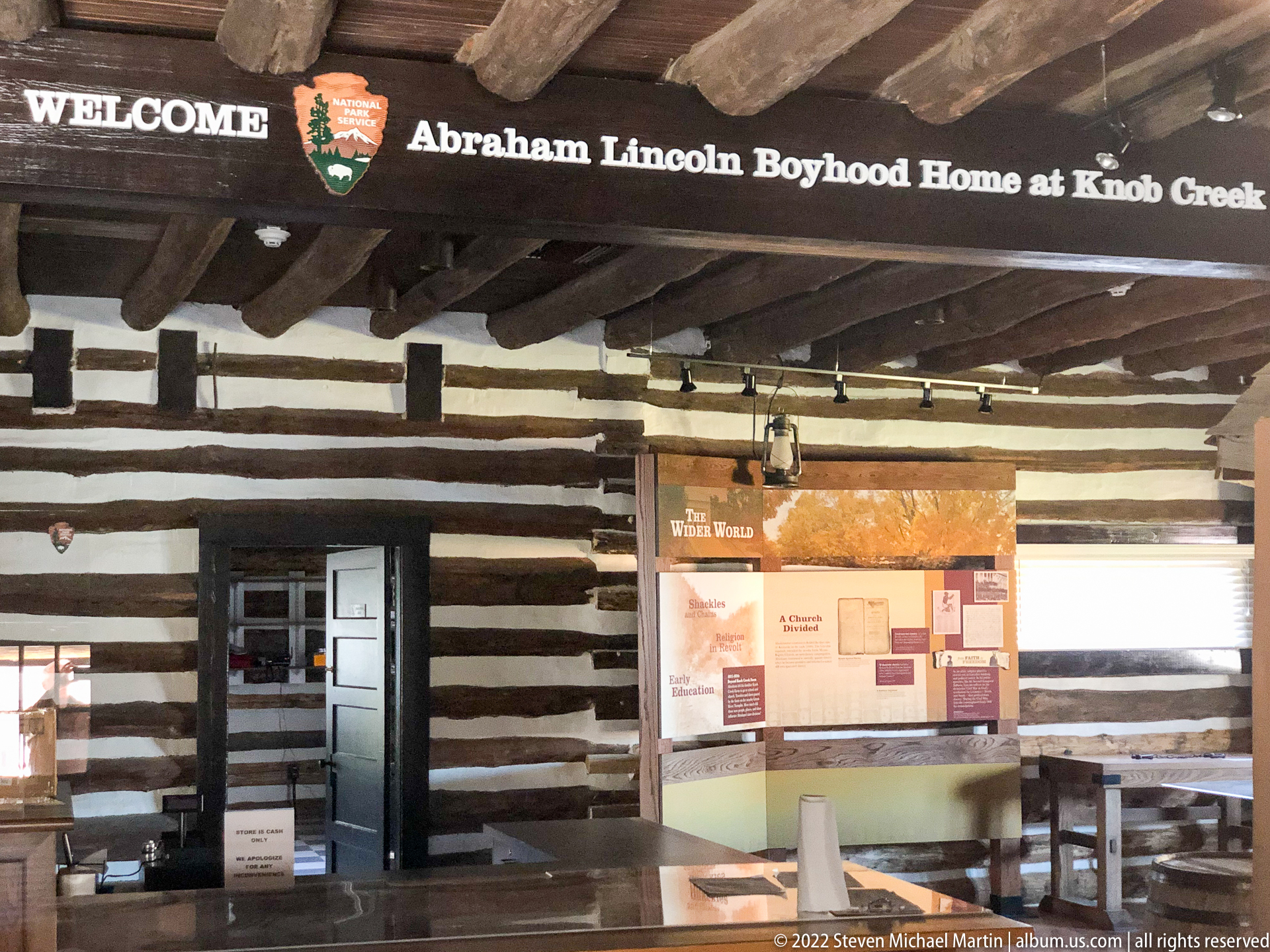
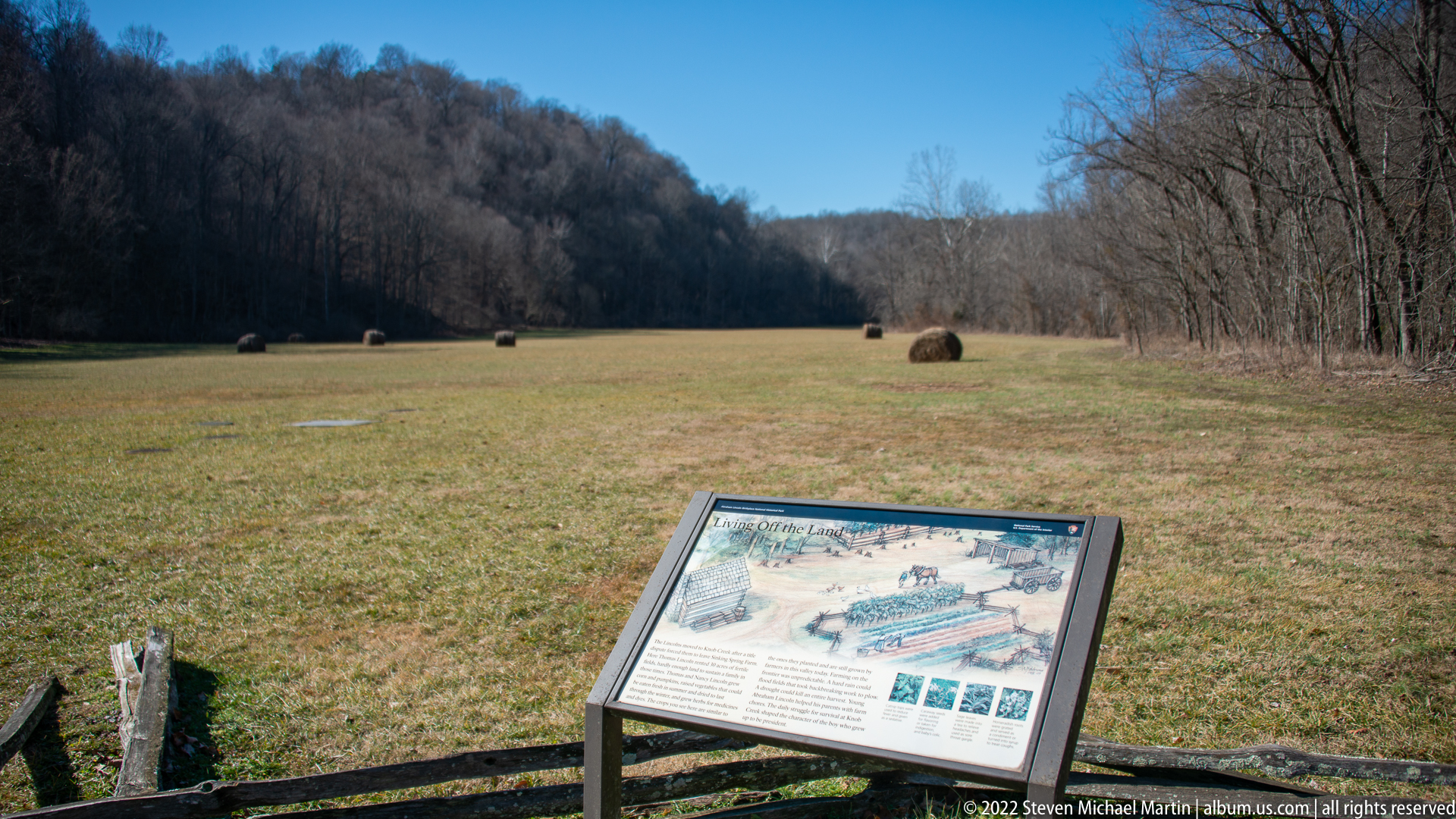
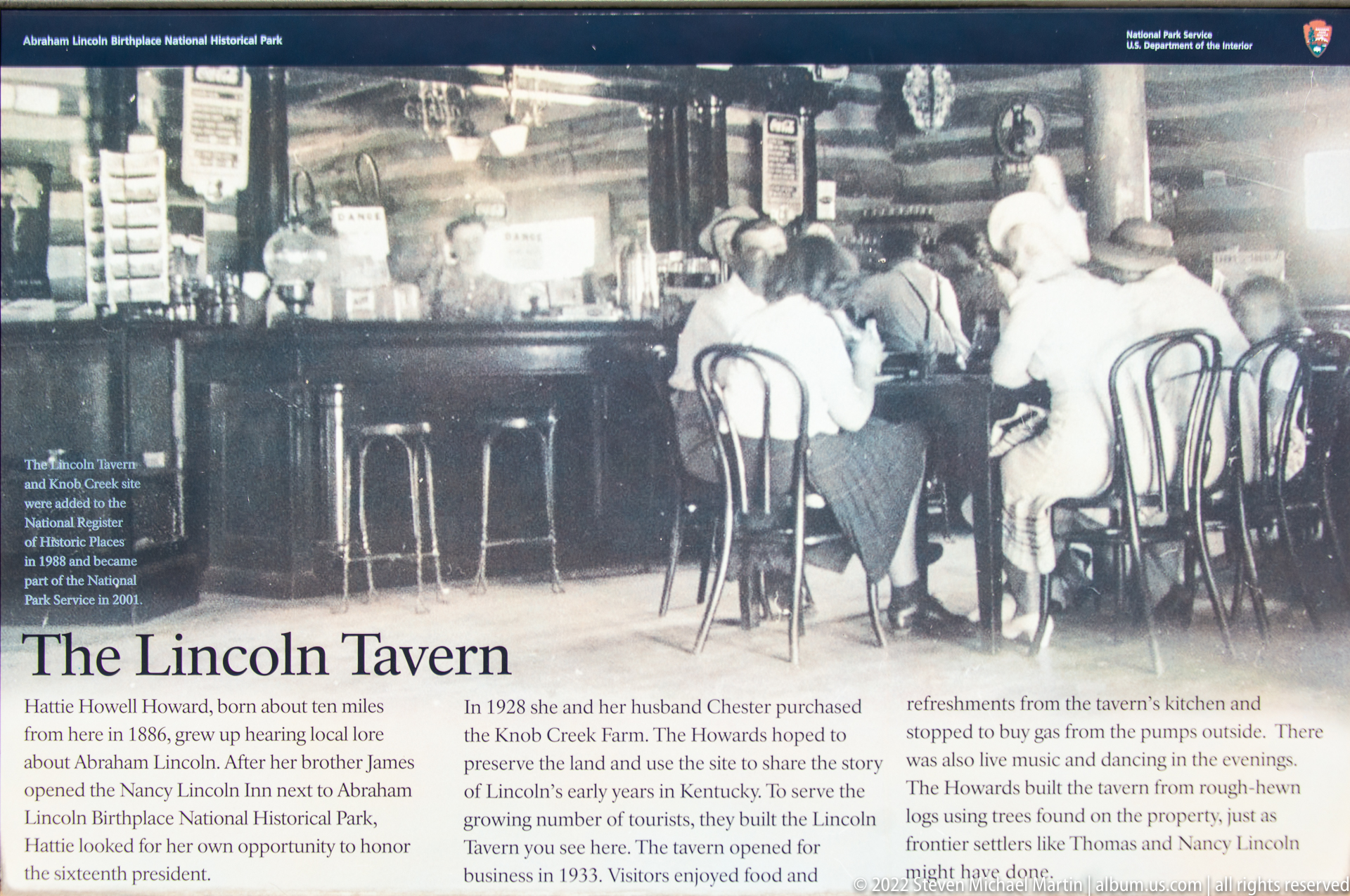
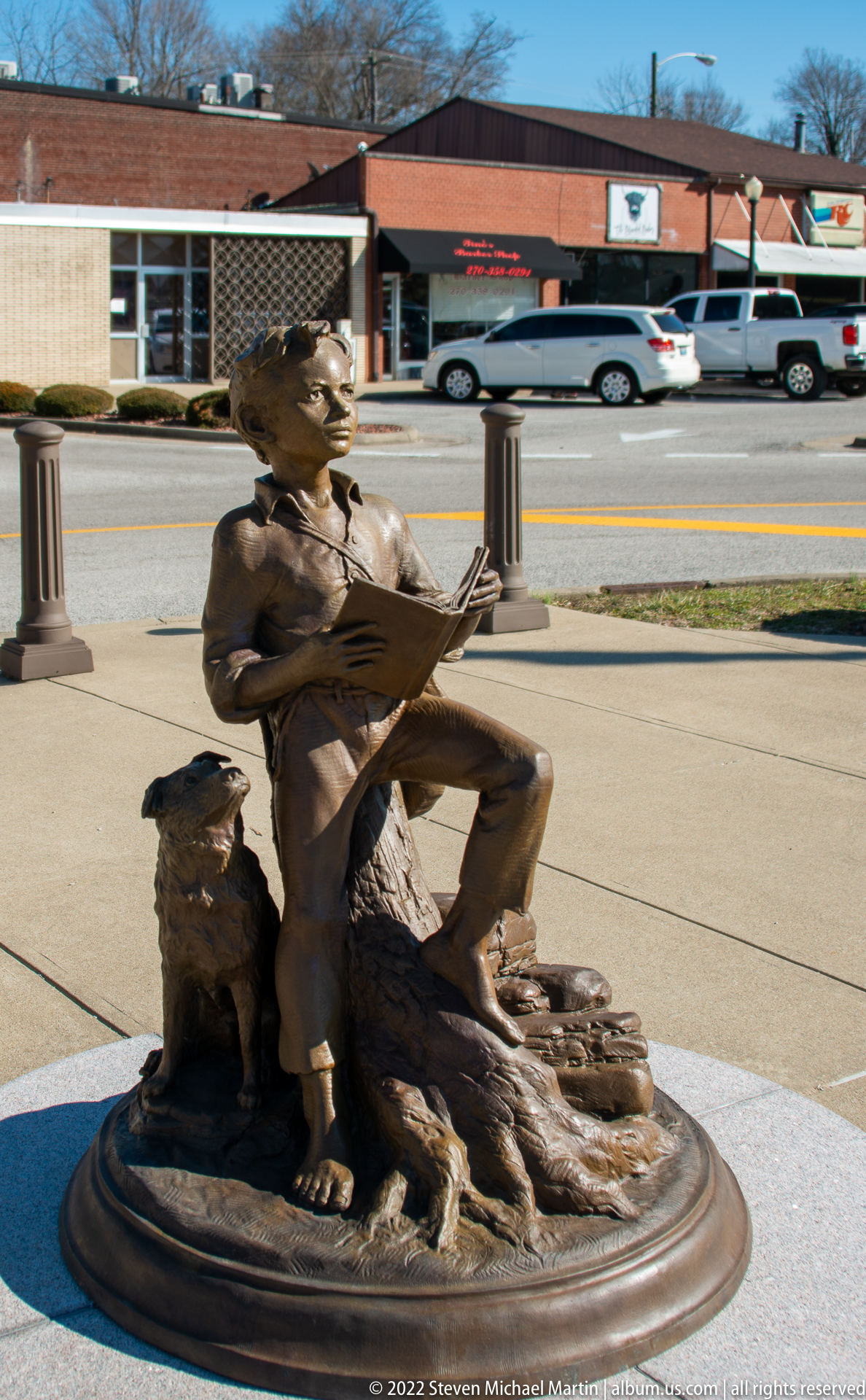
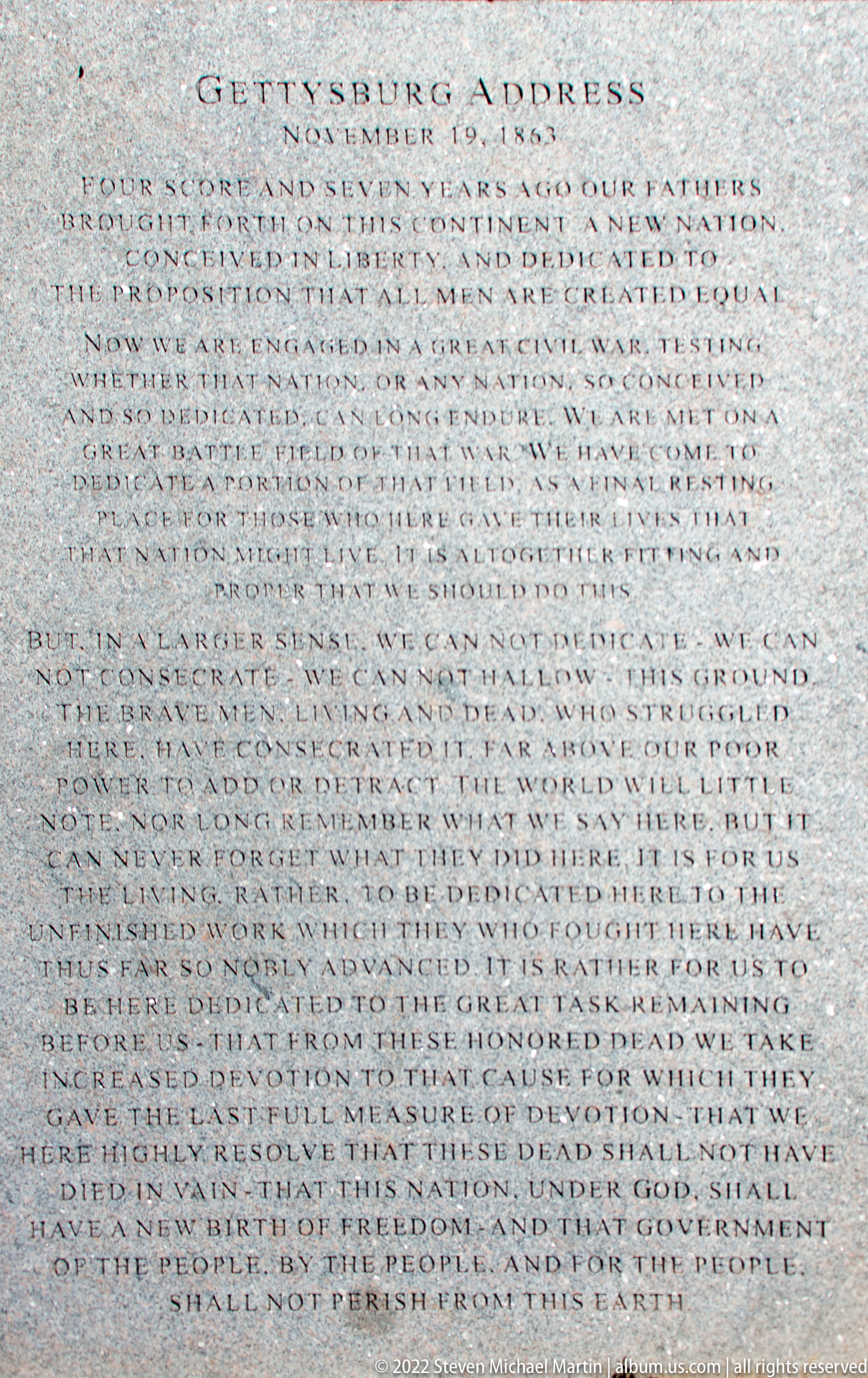
A reconstructed log cabin stands on a grassy rise, its intersecting wings built of alternating dark logs and pale chinking beneath a broad shingled roof. Modern windows, a small entry addition, and a low accessibility ramp distinguish the replica from a preserved frontier dwelling. The building anchors the commemorative landscape associated with Lincoln’s boyhood at Knob Creek. A reconstructed log cabin stands on a grassy rise, its intersecting wings built of alternating dark logs and pale chinking beneath a broad shingled roof. Modern windows, a small entry addition, and a low accessibility ramp distinguish the replica from a preserved frontier dwelling. The building anchors the commemorative landscape associated with Lincoln’s boyhood at Knob Creek. The front facade of the reconstructed cabin is organized around a central doorway and covered porch, with matching gabled wings and dormers across the broad shingle roof. A person stands at the entrance, providing scale for the long building. The carefully composed elevation shows the replica’s formal symmetry and its combination of traditional log walls with modern features. The front facade of the reconstructed cabin is organized around a central doorway and covered porch, with matching gabled wings and dormers across the broad shingle roof. A person stands at the entrance, providing scale for the long building. The carefully composed elevation shows the replica’s formal symmetry and its combination of traditional log walls with modern features. Inside a log-walled room, exposed ceiling beams and timber posts frame exhibit tables, display cases, and wall panels. A sign above the room reads “Welcome Abraham Lincoln Boyhood Home at Knob Creek,” identifying the visitor setting. The interior combines the cabin aesthetic with interpretive furnishings, giving visitors a place to explore the site’s history before walking the grounds. Inside a log-walled room, exposed ceiling beams and timber posts frame exhibit tables, display cases, and wall panels. A sign above the room reads “Welcome Abraham Lincoln Boyhood Home at Knob Creek,” identifying the visitor setting. The interior combines the cabin aesthetic with interpretive furnishings, giving visitors a place to explore the site’s history before walking the grounds. A long reconstructed log cabin spans the frame, its central porch and doorway flanked by matching gabled wings and dormer windows. One visitor stands in the entrance, dwarfed by the broad facade. The head-on view makes the building’s balanced arrangement and scale clear, while the paved walk and access ramp show how visitors approach it today. A long reconstructed log cabin spans the frame, its central porch and doorway flanked by matching gabled wings and dormer windows. One visitor stands in the entrance, dwarfed by the broad facade. The head-on view makes the building’s balanced arrangement and scale clear, while the paved walk and access ramp show how visitors approach it today. A bronze figure of Abraham Lincoln sits upright in a chair above a pale stone plinth carved with his name. The low viewpoint raises the statue against an open blue sky, while a small white cupola and brick building fill the lower background. This public monument is presented in a streetscape, separate from the farm landscape at Knob Creek. A bronze figure of Abraham Lincoln sits upright in a chair above a pale stone plinth carved with his name. The low viewpoint raises the statue against an open blue sky, while a small white cupola and brick building fill the lower background. This public monument is presented in a streetscape, separate from the farm landscape at Knob Creek. A bronze-toned roadside marker names the Lincoln Knob Creek Farm and states that Abraham Lincoln lived on the 228-acre farm from 1811 to 1816. It also quotes his recollection of the place and notes that a younger brother was born there. The freestanding marker sits beside a road and wooded hillside, linking text to the surrounding landscape. A bronze-toned roadside marker names the Lincoln Knob Creek Farm and states that Abraham Lincoln lived on the 228-acre farm from 1811 to 1816. It also quotes his recollection of the place and notes that a younger brother was born there. The freestanding marker sits beside a road and wooded hillside, linking text to the surrounding landscape. A dark green interpretive panel quotes Lincoln’s recollection of the Knob Creek place and combines a large site map with a smaller regional locator map. A panoramic landscape photograph runs along the bottom, linking the present valley to the written account. Dense text explains the farm’s setting and family history, while the maps orient visitors within the park. A dark green interpretive panel quotes Lincoln’s recollection of the Knob Creek place and combines a large site map with a smaller regional locator map. A panoramic landscape photograph runs along the bottom, linking the present valley to the written account. Dense text explains the farm’s setting and family history, while the maps orient visitors within the park. A compact log cabin stands alone on a maintained lawn, its steep shingled roof extending over a narrow doorway and small side window. The simple rectangular form and hand-hewn logs contrast with the larger, multi-wing reconstructed building elsewhere on the site. Leafless trees and a bench sit behind it, placing the replica within an open valley clearing. A compact log cabin stands alone on a maintained lawn, its steep shingled roof extending over a narrow doorway and small side window. The simple rectangular form and hand-hewn logs contrast with the larger, multi-wing reconstructed building elsewhere on the site. Leafless trees and a bench sit behind it, placing the replica within an open valley clearing. The visitor room’s heavy exposed beams cross above a long interpretive panel mounted on the log wall. A doorway opens to the left, while tables and exhibit materials occupy the foreground. The closer view makes the relationship between the rustic timber interior and the museum-style presentation more legible than the wider room view. The visitor room’s heavy exposed beams cross above a long interpretive panel mounted on the log wall. A doorway opens to the left, while tables and exhibit materials occupy the foreground. The closer view makes the relationship between the rustic timber interior and the museum-style presentation more legible than the wider room view. A large outdoor panel titled “The Lincolns at Knob Creek” brings together a route map, a regional map, a portrait, historic cabin photographs, and explanatory text. The design situates the family’s years at the farm within a wider Kentucky landscape and migration story. Its varied visual elements make the panel itself a compact guide to the site’s historical context. A large outdoor panel titled “The Lincolns at Knob Creek” brings together a route map, a regional map, a portrait, historic cabin photographs, and explanatory text. The design situates the family’s years at the farm within a wider Kentucky landscape and migration story. Its varied visual elements make the panel itself a compact guide to the site’s historical context. An interpretive panel uses a colored drawing of cultivated rows, a cabin, livestock, and people working the land to explain farm life at Knob Creek. Blocks of text below discuss the Lincoln family’s crops and the challenges of farming in the valley. Small close-up images of plants line the lower right, connecting the broad scene to specific agricultural details. An interpretive panel uses a colored drawing of cultivated rows, a cabin, livestock, and people working the land to explain farm life at Knob Creek. Blocks of text below discuss the Lincoln family’s crops and the challenges of farming in the valley. Small close-up images of plants line the lower right, connecting the broad scene to specific agricultural details. A broad grassy field stretches between wooded hills, with several round hay bales scattered across the clearing. A low interpretive panel stands in the right foreground behind a split-rail fence, bringing the farm landscape into the visitor’s view. The composition records both the present field and the site’s effort to explain its agricultural past. A broad grassy field stretches between wooded hills, with several round hay bales scattered across the clearing. A low interpretive panel stands in the right foreground behind a split-rail fence, bringing the farm landscape into the visitor’s view. The composition records both the present field and the site’s effort to explain its agricultural past. The panel titled “The Lincoln Tavern” pairs a large black-and-white interior photograph with text about Hattie Howell Howard and the tavern established at Knob Creek. In the archival image, patrons sit at a counter and small tables. The display connects a later business on the farm to the visitor history of Lincoln’s boyhood landscape. The panel titled “The Lincoln Tavern” pairs a large black-and-white interior photograph with text about Hattie Howell Howard and the tavern established at Knob Creek. In the archival image, patrons sit at a counter and small tables. The display connects a later business on the farm to the visitor history of Lincoln’s boyhood landscape. A bronze boy sits on a rough tree stump, leaning over an open book held across his knees. The sculpted figure’s bare feet rest among carved roots and branches that spread around the circular base. Storefronts and parked cars line the street behind the monument, setting this intimate reading scene within a modern town center. A bronze boy sits on a rough tree stump, leaning over an open book held across his knees. The sculpted figure’s bare feet rest among carved roots and branches that spread around the circular base. Storefronts and parked cars line the street behind the monument, setting this intimate reading scene within a modern town center. Rows of incised lettering fill a pale stone surface, beginning with the heading “Gettysburg Address.” The close view reveals the formal arrangement of the text and its weathered, granular background, while cropping out the monument’s surrounding architecture. The document’s familiar opening and closing lines are legible, turning the memorial inscription into the entire subject. Rows of incised lettering fill a pale stone surface, beginning with the heading “Gettysburg Address.” The close view reveals the formal arrangement of the text and its weathered, granular background, while cropping out the monument’s surrounding architecture. The document’s familiar opening and closing lines are legible, turning the memorial inscription into the entire subject.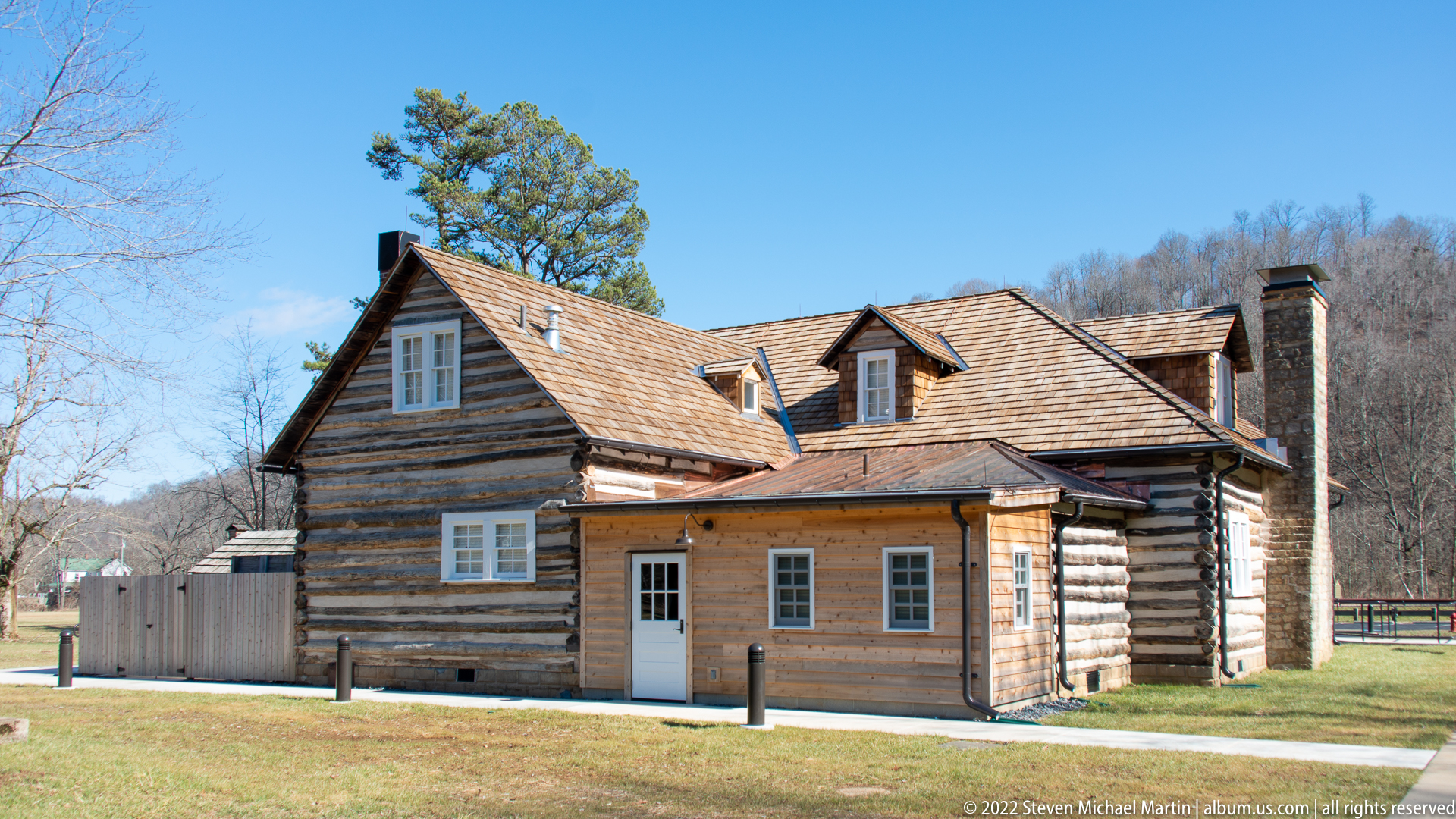
Caption
Caption

Caption
Caption
Caption

Caption
Caption
Caption
Caption

Caption

Caption
Caption
Caption
Caption
Caption