Anaktuvuk Pass – Gates of the Arctic National Park and Preserve
Anaktuvuk Pass is located within the Brooks Range and represents an important historic travel corridor through mountainous Arctic terrain. The pass has long served as a seasonal migration route for caribou and as a travel route for Indigenous communities whose subsistence traditions depend on understanding the movement of wildlife across the landscape. Its location illustrates the importance of geographic features in shaping long-term patterns of travel and settlement.
The surrounding mountains create a dramatic transition between interior boreal forest ecosystems and northern tundra environments. The landscape reflects geological uplift, glacial shaping, and climatic influences that contribute to the distinctive character of the Brooks Range. The pass provides insight into the ways natural corridors influence ecological systems and human activity.
Visitors encounter expansive mountain views and broad valleys that emphasize the scale of Arctic landscapes. The area illustrates the relationship between geography, wildlife migration, and cultural traditions that have persisted for generations in northern Alaska.
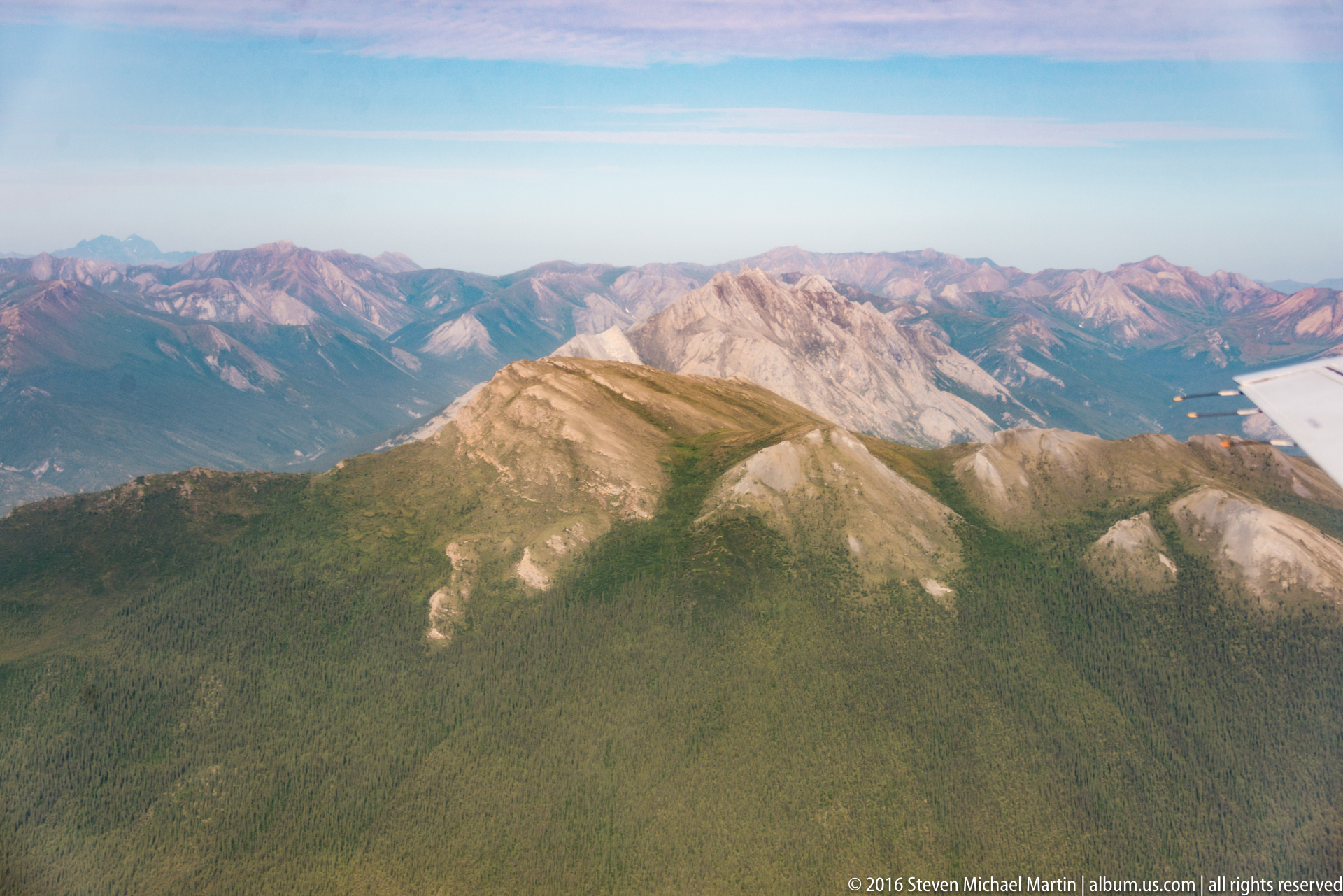
Seen from the air, a low, rounded ridge covered in dark boreal forest leads toward a chain of pale, sharply eroded mountains. The nearest slopes show patchy tundra and exposed rock, while a portion of the aircraft enters the frame at right. The elevated viewpoint makes the transition from wooded lowlands to rugged alpine terrain the defining feature of this view.
Caption
Seen from the air, a low, rounded ridge covered in dark boreal forest leads toward a chain of pale, sharply eroded mountains. The nearest slopes show patchy tundra and exposed rock, while a portion of the aircraft enters the frame at right. The elevated viewpoint makes the transition from wooded lowlands to rugged alpine terrain the defining feature of this view.
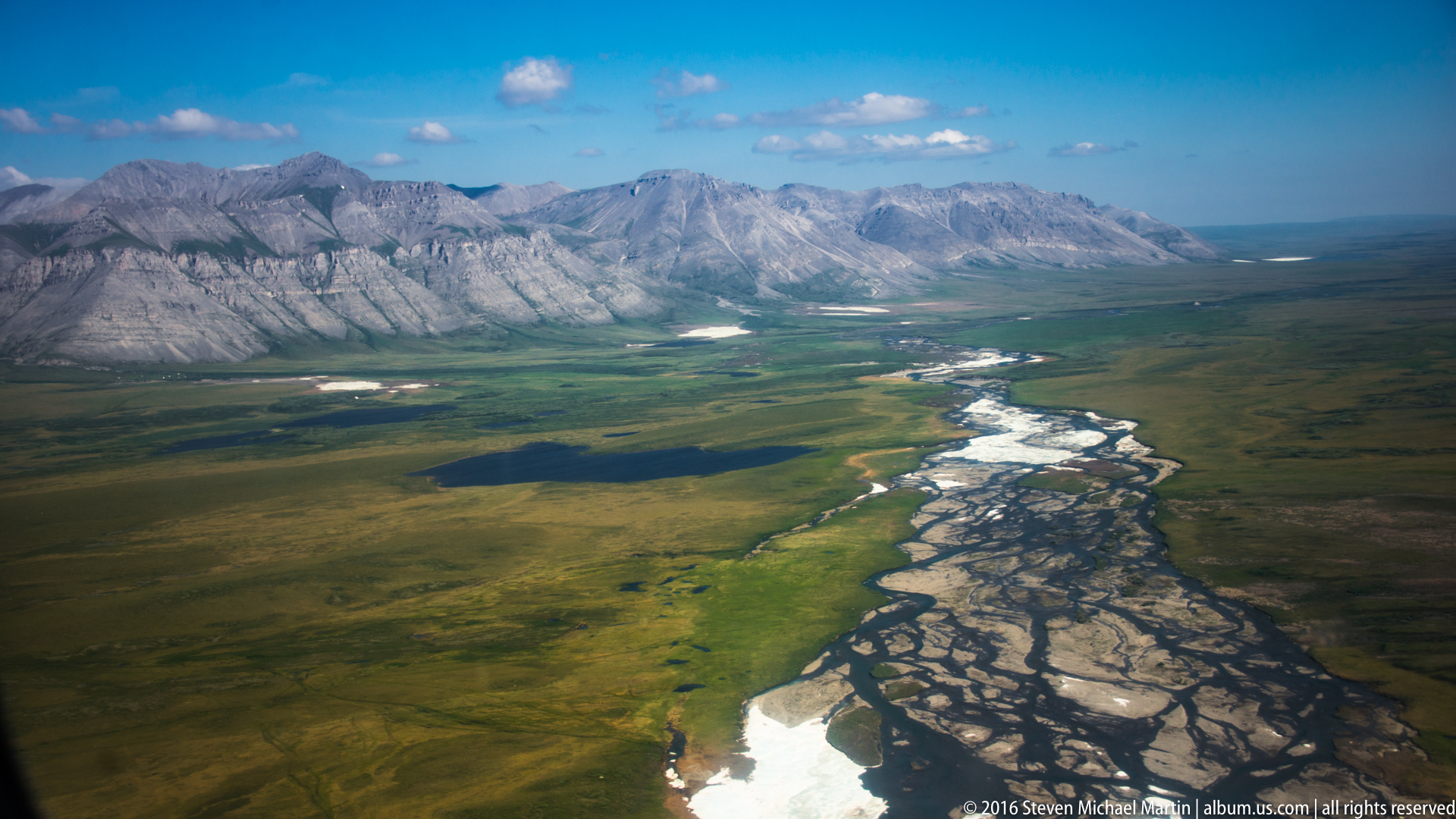
The braided river extends from the foreground toward the distant horizon, bordered by an expansive green lowland and a line of mountains. Pale bars and dark water form a diagonal corridor through the plain. Compared with the closer river study, this wider view shows the watercourse in relation to the surrounding landscape.
Caption
The braided river extends from the foreground toward the distant horizon, bordered by an expansive green lowland and a line of mountains. Pale bars and dark water form a diagonal corridor through the plain. Compared with the closer river study, this wider view shows the watercourse in relation to the surrounding landscape.
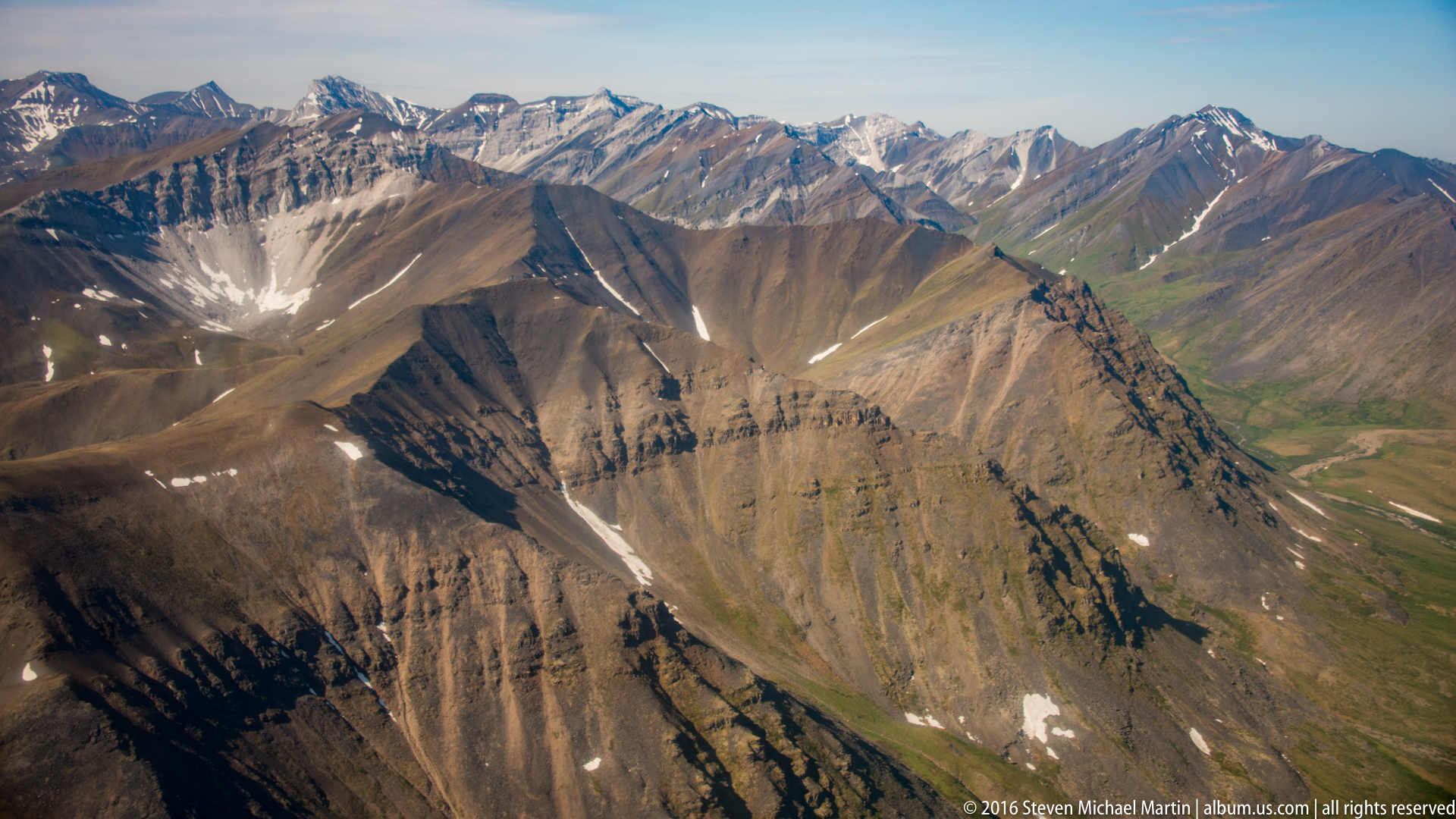
Several sharply folded ridges overlap across the frame, their brown and gray slopes cut by narrow gullies and isolated snow remnants. A green valley appears at right, where a pale streambed threads between the mountains. The near ridge forms a strong diagonal foreground, leading the eye into the more distant chain and distinguishing this image from the open valley panoramas.
Caption
Several sharply folded ridges overlap across the frame, their brown and gray slopes cut by narrow gullies and isolated snow remnants. A green valley appears at right, where a pale streambed threads between the mountains. The near ridge forms a strong diagonal foreground, leading the eye into the more distant chain and distinguishing this image from the open valley panoramas.
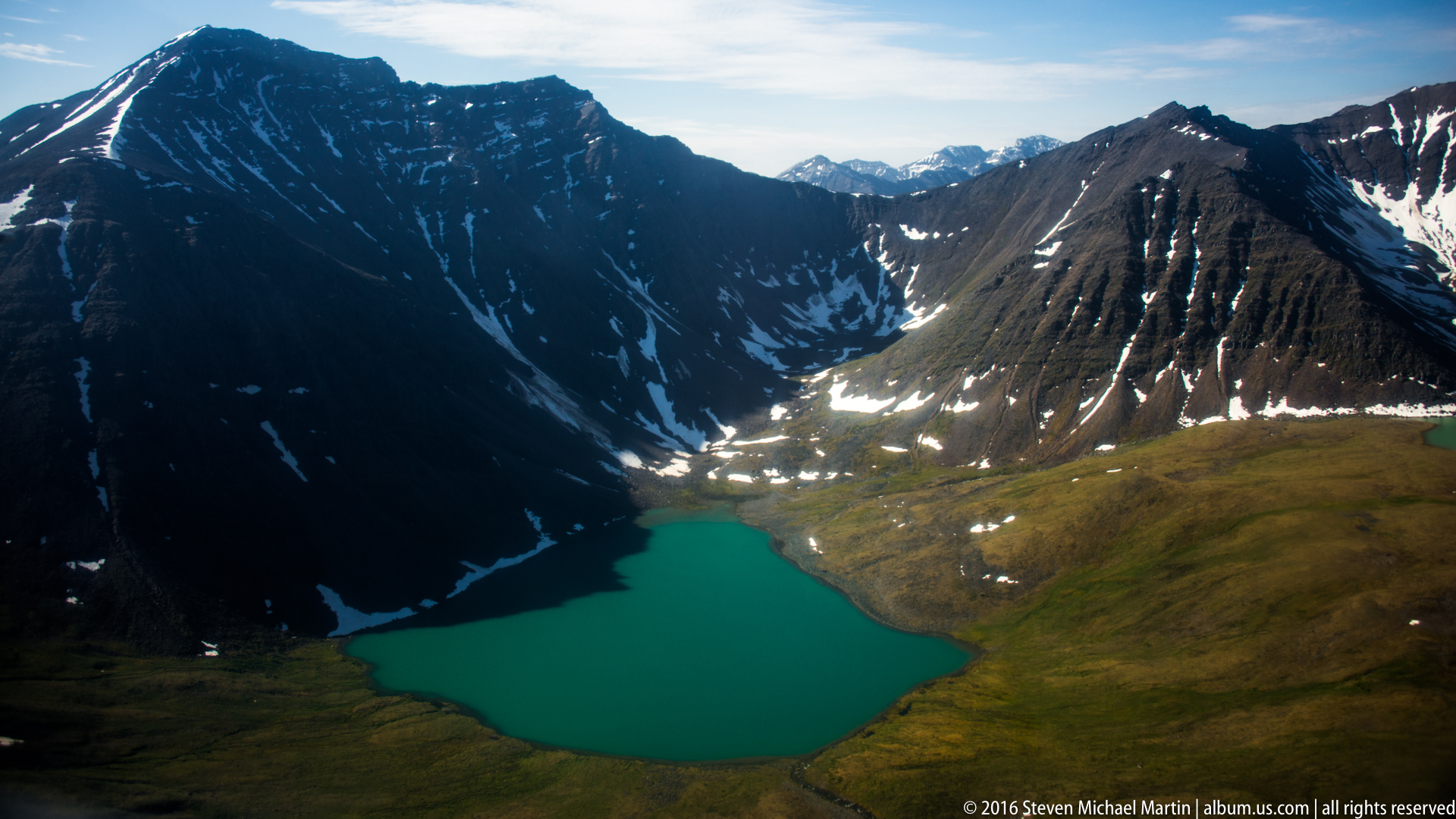
The same intensely colored lake appears from a wider, darker angle, enclosed by high ridges that funnel snowmelt toward its shore. Snow remains in shaded ravines, while yellow-green tundra covers the lower slopes. The composition places the water at the center of a deep bowl, showing how the basin’s steep walls contrast with its smooth surface.
Caption
The same intensely colored lake appears from a wider, darker angle, enclosed by high ridges that funnel snowmelt toward its shore. Snow remains in shaded ravines, while yellow-green tundra covers the lower slopes. The composition places the water at the center of a deep bowl, showing how the basin’s steep walls contrast with its smooth surface.
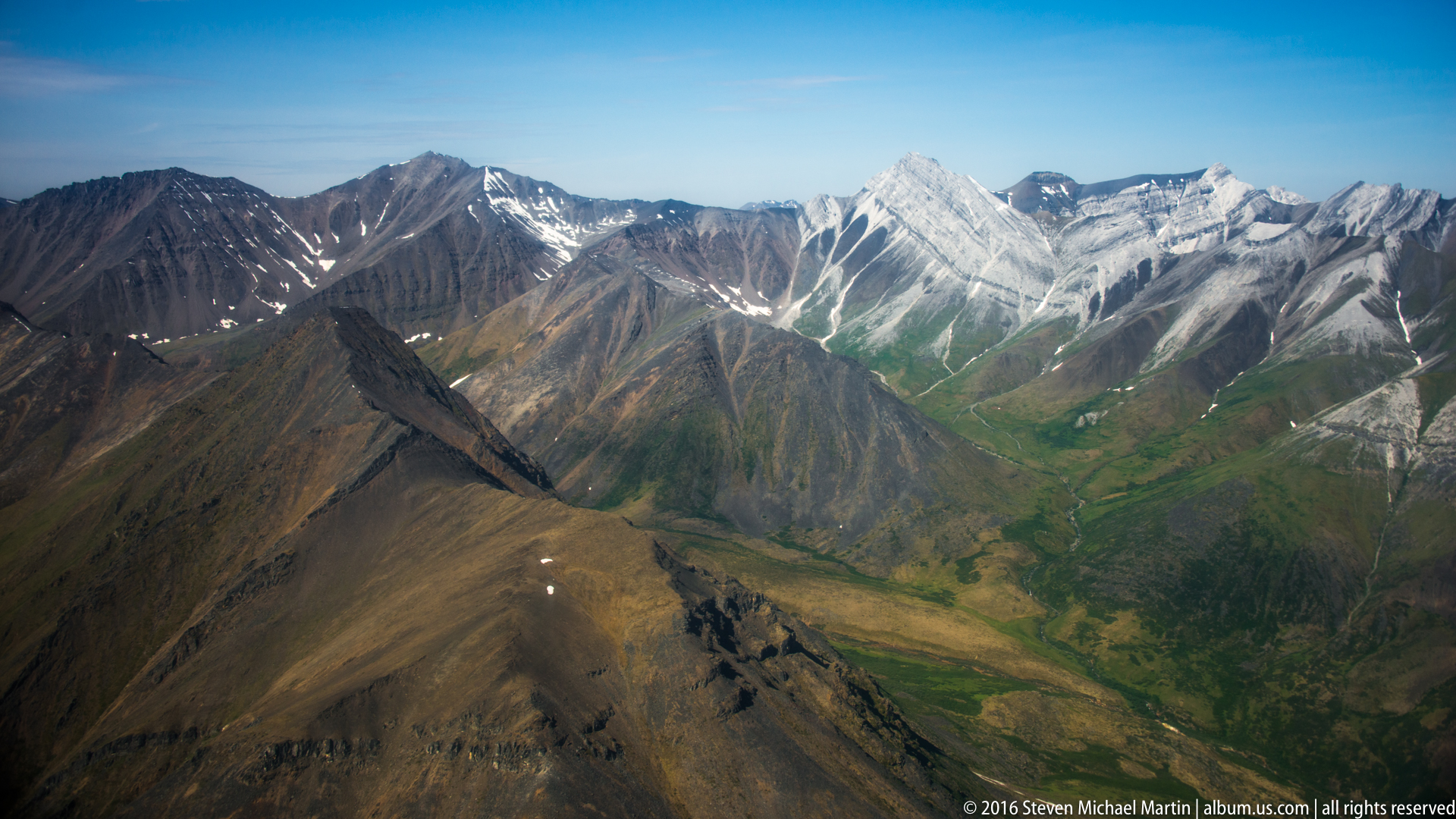
A wide aerial view looks across a sequence of high ridges toward a pale, snow-streaked massif near the center. The foreground slopes are brown and sparsely vegetated, while a green valley threads between them into the distance. This composition balances the nearer dark ridge against the lighter peaks beyond, revealing the range’s layered topography.
Caption
A wide aerial view looks across a sequence of high ridges toward a pale, snow-streaked massif near the center. The foreground slopes are brown and sparsely vegetated, while a green valley threads between them into the distance. This composition balances the nearer dark ridge against the lighter peaks beyond, revealing the range’s layered topography.
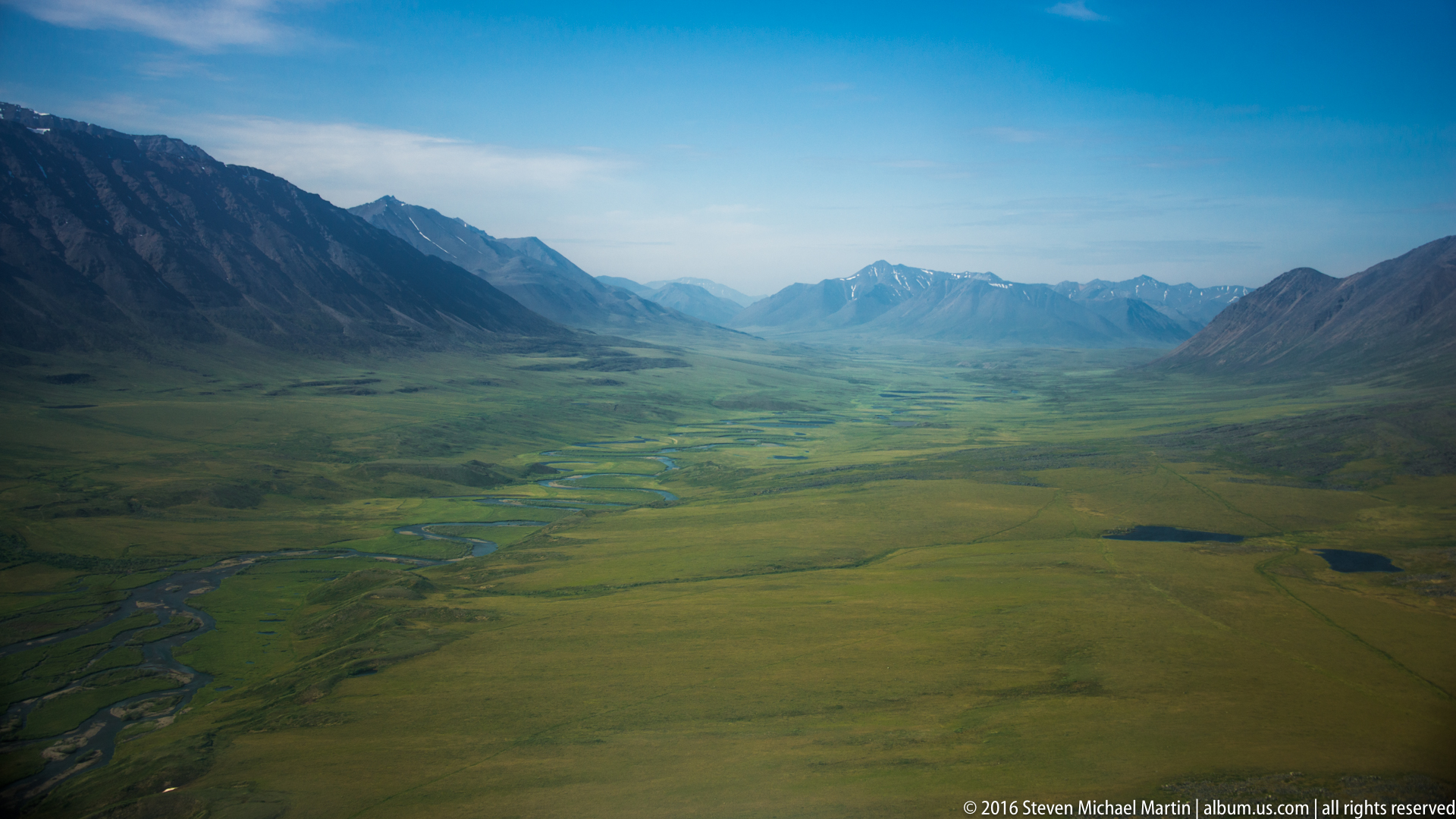
From above, a wide green-brown valley opens between long mountain walls. A braided river winds through the left foreground, splitting into multiple channels across a broad, largely treeless floodplain; small ponds dot the lower right. The distant ridgelines fade into blue haze, emphasizing the valley’s scale and the river’s meandering course.
Caption
From above, a wide green-brown valley opens between long mountain walls. A braided river winds through the left foreground, splitting into multiple channels across a broad, largely treeless floodplain; small ponds dot the lower right. The distant ridgelines fade into blue haze, emphasizing the valley’s scale and the river’s meandering course.

A white single-engine bush plane stands beside a small airfield, its red script identifying the operator as Warbelow’s Air. The propeller, high wing, and rugged landing gear are visible against a rocky mountain backdrop. The close side view documents the aircraft used for access in this remote landscape without identifying a particular flight or pilot.
Caption
A white single-engine bush plane stands beside a small airfield, its red script identifying the operator as Warbelow’s Air. The propeller, high wing, and rugged landing gear are visible against a rocky mountain backdrop. The close side view documents the aircraft used for access in this remote landscape without identifying a particular flight or pilot.

A colorful North Slope Borough Police emblem is applied to the white fuselage of a small aircraft. The circular design pairs a polar bear above a stylized Arctic landscape with a dark whale figure and prominent blue lettering. Its placement identifies the aircraft with the borough police service, while the close crop makes the insignia itself the subject.
Caption
A colorful North Slope Borough Police emblem is applied to the white fuselage of a small aircraft. The circular design pairs a polar bear above a stylized Arctic landscape with a dark whale figure and prominent blue lettering. Its placement identifies the aircraft with the borough police service, while the close crop makes the insignia itself the subject.
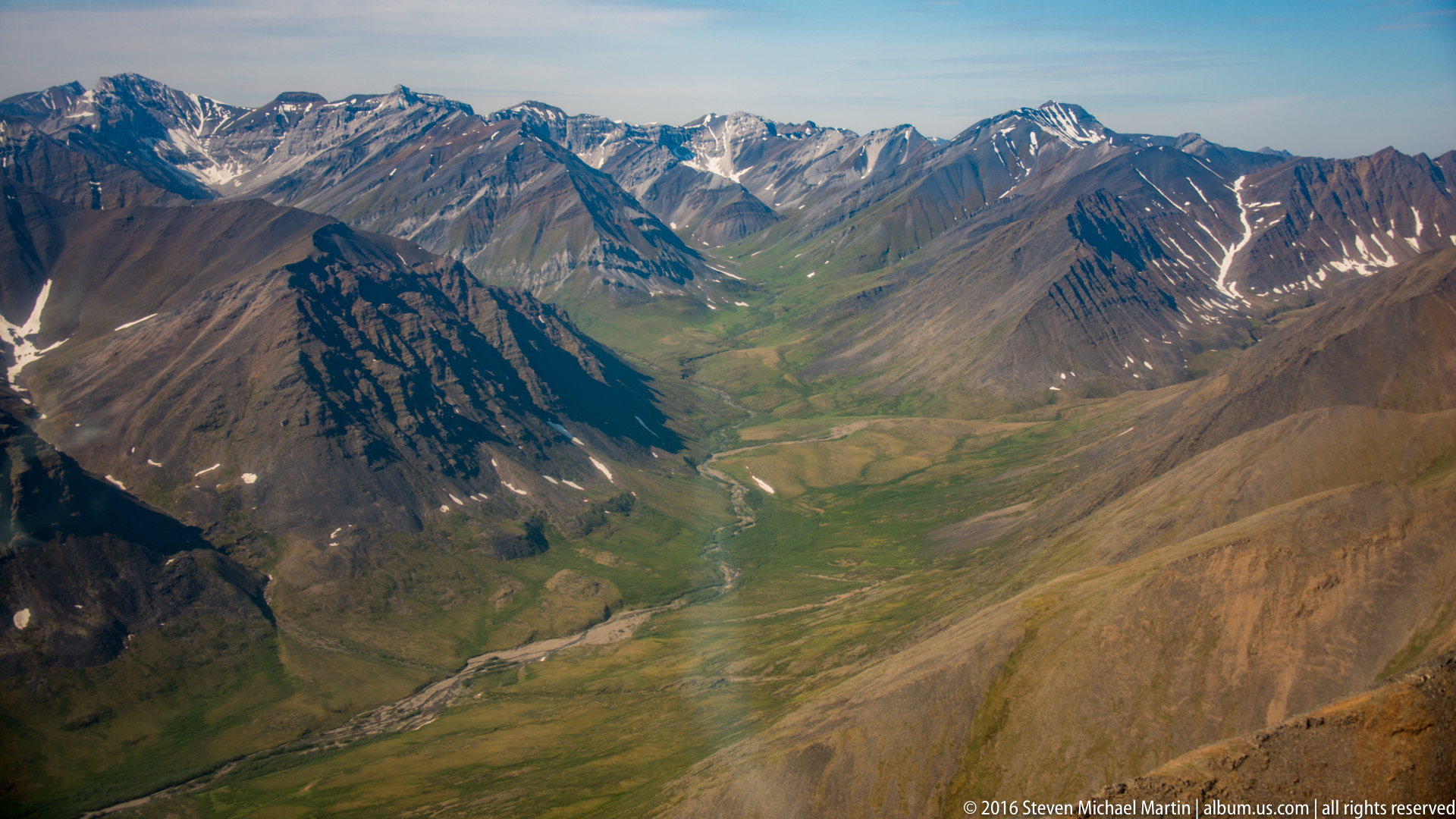
A long green valley runs from the foreground toward a distant notch between jagged mountain ranges. A pale riverbed follows the valley floor, while dark ridges and thin snow strips define its sides. The broad framing gives the landscape depth and direction, shifting attention from a single lake to the connected drainage and surrounding high country.
Caption
A long green valley runs from the foreground toward a distant notch between jagged mountain ranges. A pale riverbed follows the valley floor, while dark ridges and thin snow strips define its sides. The broad framing gives the landscape depth and direction, shifting attention from a single lake to the connected drainage and surrounding high country.
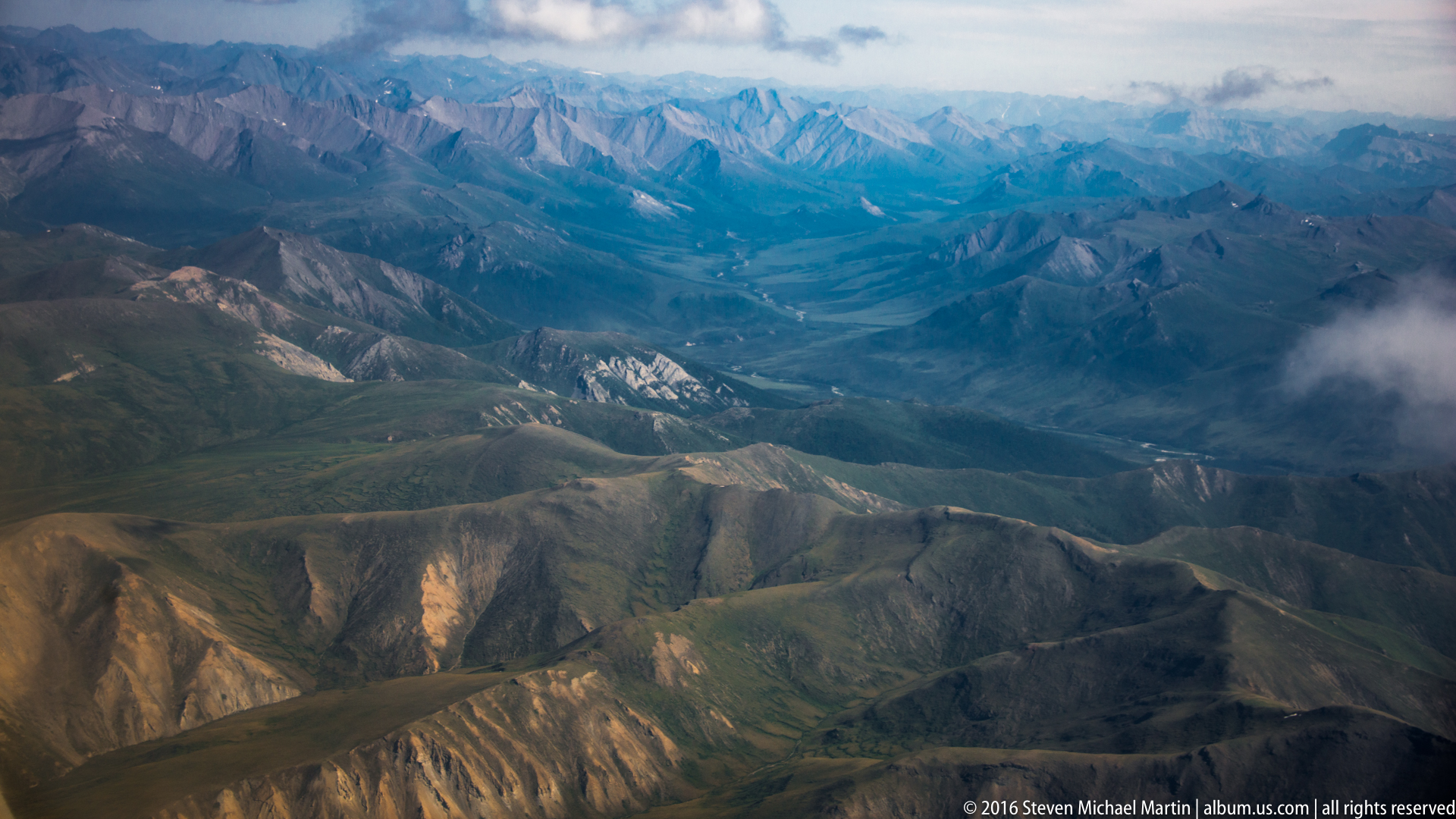
From high above, successive ridges fold toward a distant, cloud-softened horizon. Dark slopes and pale exposed rock alternate across the broad view, while low cloud drifts along the right edge. The elevated perspective makes the scale and layered relief of this Arctic mountain landscape the photograph’s defining feature.
Caption
From high above, successive ridges fold toward a distant, cloud-softened horizon. Dark slopes and pale exposed rock alternate across the broad view, while low cloud drifts along the right edge. The elevated perspective makes the scale and layered relief of this Arctic mountain landscape the photograph’s defining feature.
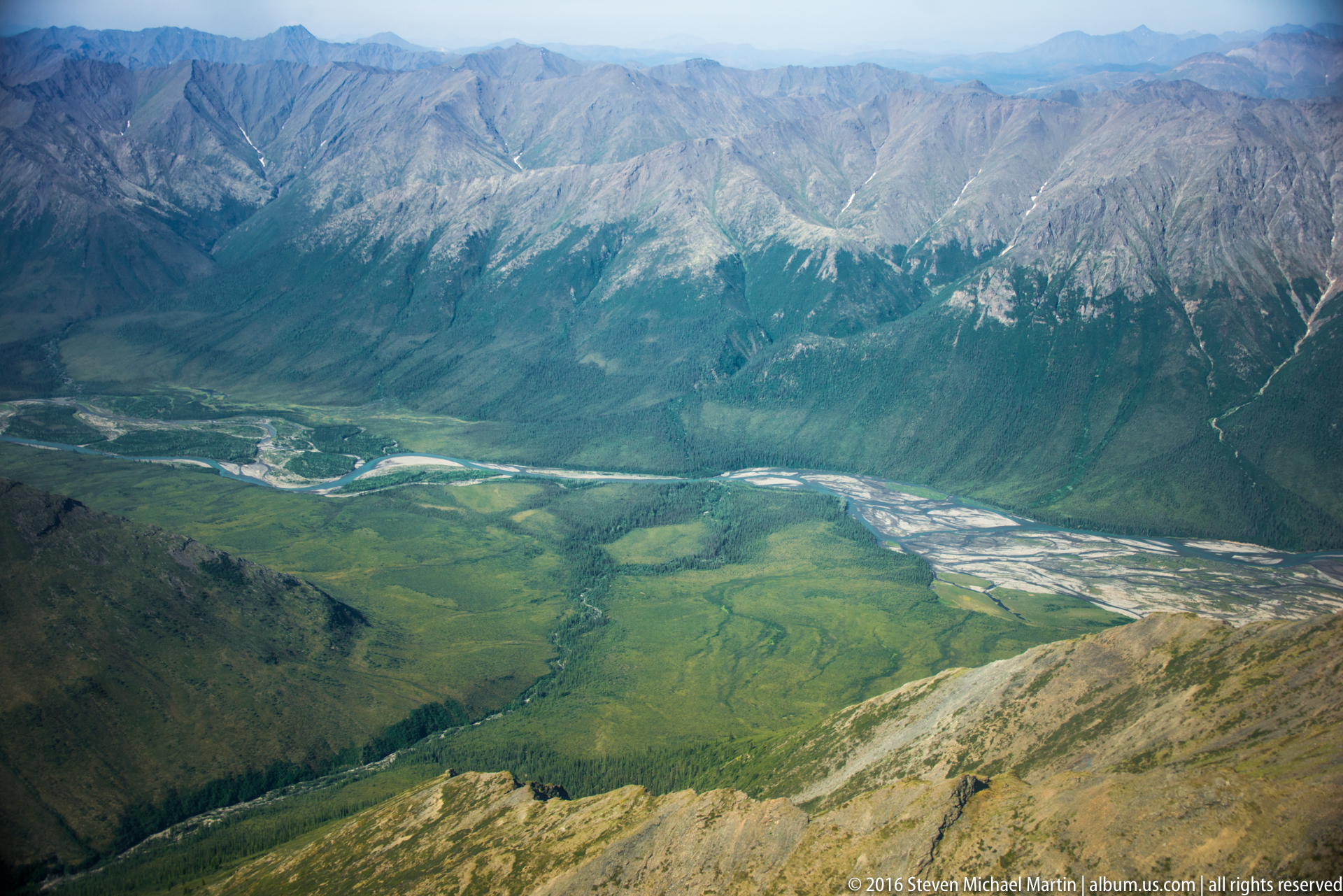
A pale braided river winds across a green basin beneath steep mountain walls. From this elevated angle, its branching channels and gravel bars form a bright, sinuous band through the valley floor. The surrounding slopes rise sharply on both sides, framing the watercourse within a wide Arctic landscape.
Caption
A pale braided river winds across a green basin beneath steep mountain walls. From this elevated angle, its branching channels and gravel bars form a bright, sinuous band through the valley floor. The surrounding slopes rise sharply on both sides, framing the watercourse within a wide Arctic landscape.
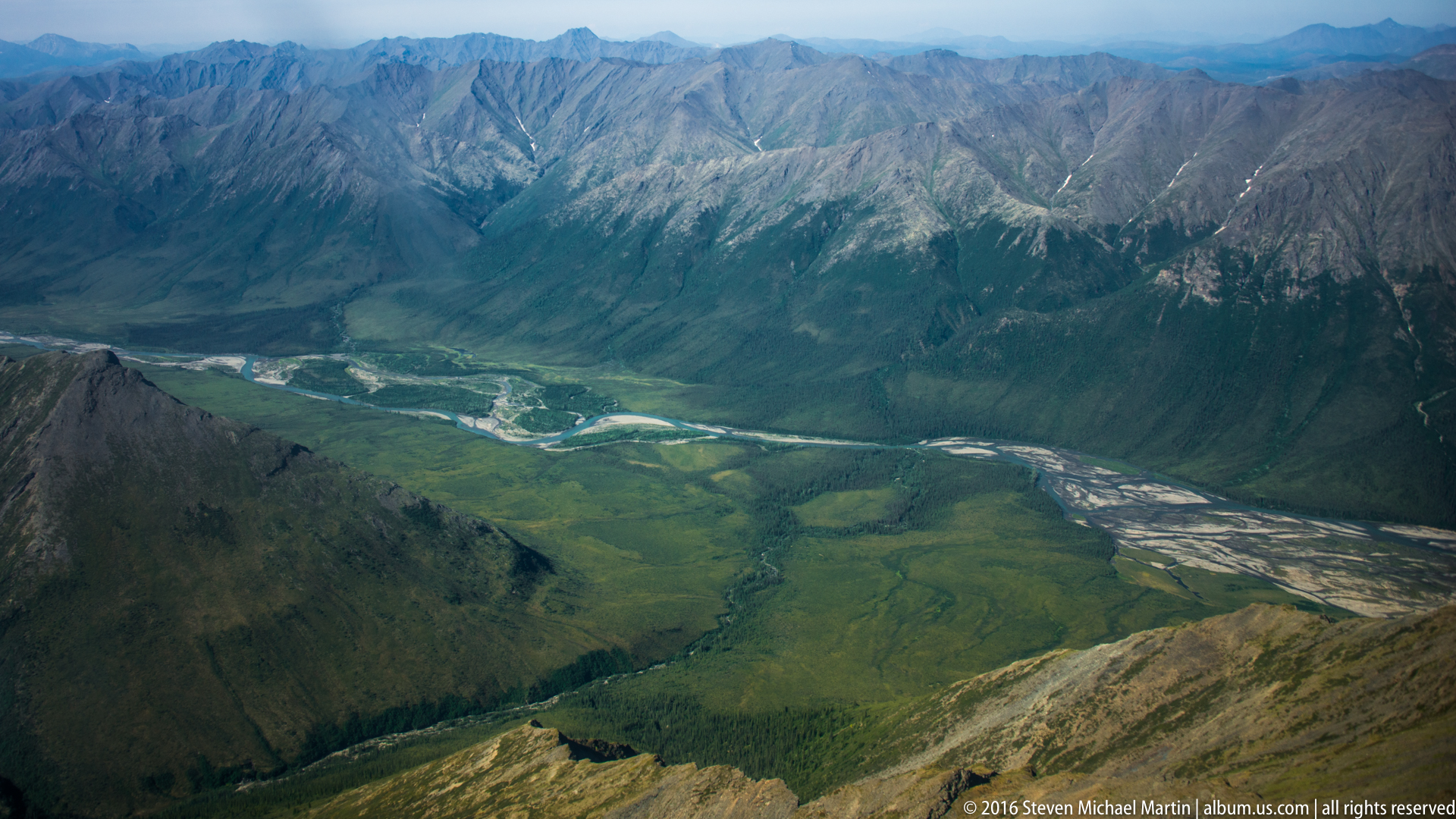
The valley’s braided river fills more of the foreground here, separating into pale channels around broad gravel bars. A dark mountain shoulder borders the left side, while the opposite wall encloses the green valley beyond. This tighter aerial composition draws attention to the shifting pattern of water and sediment.
Caption
The valley’s braided river fills more of the foreground here, separating into pale channels around broad gravel bars. A dark mountain shoulder borders the left side, while the opposite wall encloses the green valley beyond. This tighter aerial composition draws attention to the shifting pattern of water and sediment.
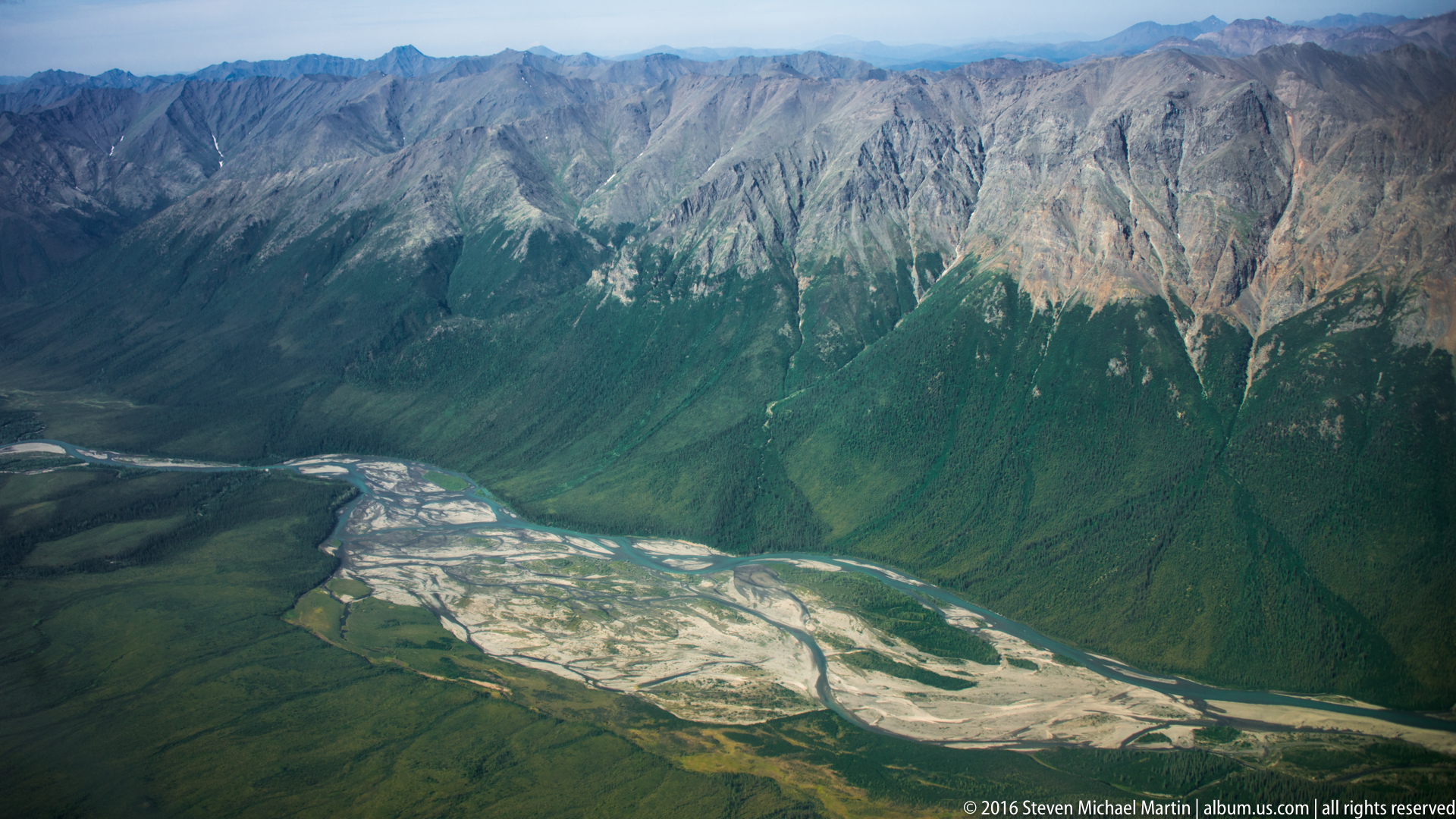
A broad fan of pale gravel and braided channels spreads across the valley floor beneath steep, green mountain slopes. The river’s branching pattern dominates the lower half of the composition, with successive ridges fading into the distance. The view records the contrast between the bright alluvial corridor and the darker surrounding terrain.
Caption
A broad fan of pale gravel and braided channels spreads across the valley floor beneath steep, green mountain slopes. The river’s branching pattern dominates the lower half of the composition, with successive ridges fading into the distance. The view records the contrast between the bright alluvial corridor and the darker surrounding terrain.
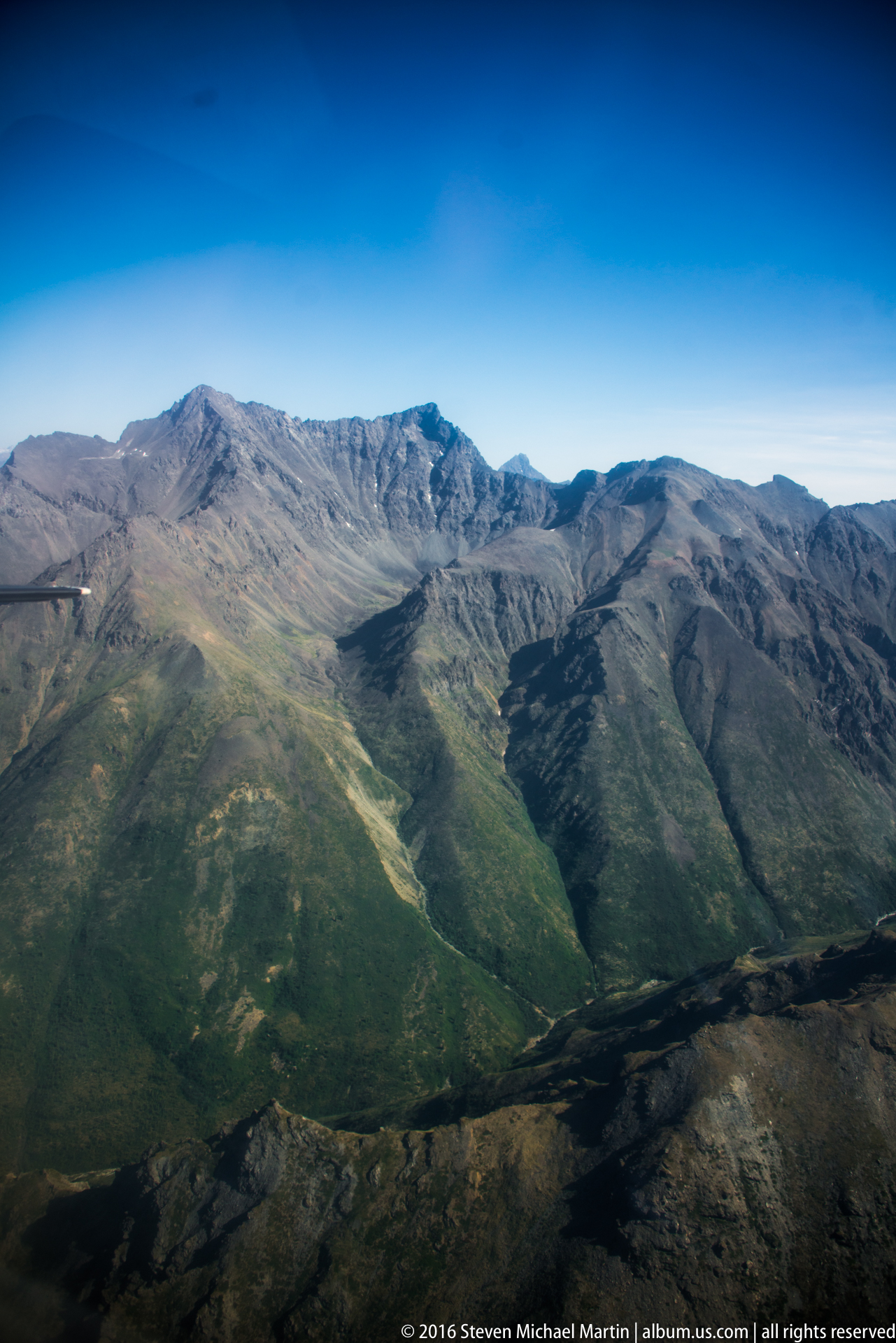
Rounded, tundra-clad ridges extend toward a distant chain of higher peaks beneath a clear blue sky. Sunlight picks out a pale route along the central slope, while deep shadows settle into the valley at right. With no river in the foreground, the photograph emphasizes the mountain contours and their changing light.
Caption
Rounded, tundra-clad ridges extend toward a distant chain of higher peaks beneath a clear blue sky. Sunlight picks out a pale route along the central slope, while deep shadows settle into the valley at right. With no river in the foreground, the photograph emphasizes the mountain contours and their changing light.
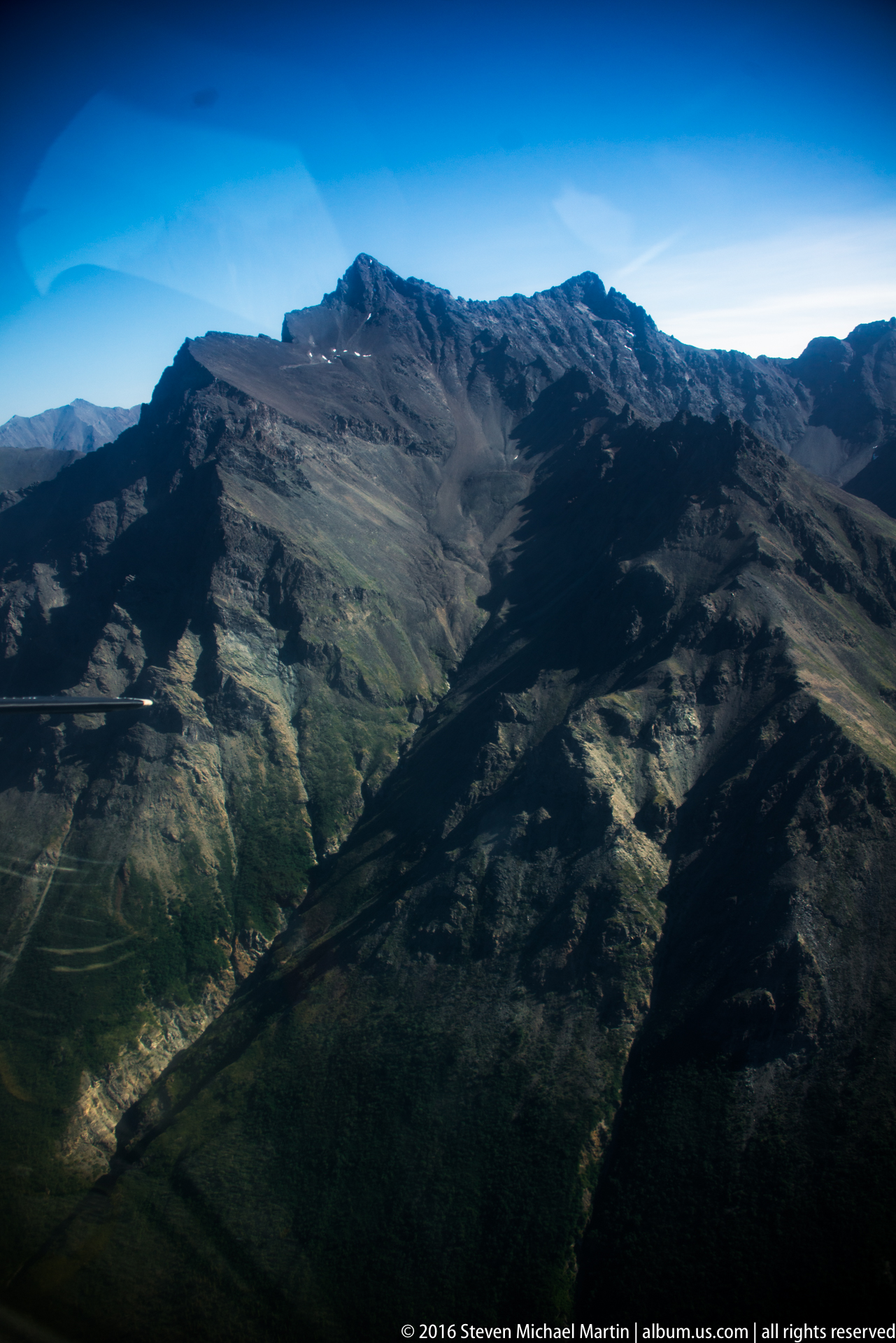
Dark foreground ridges lead toward a broad, sunlit mountain basin beneath a clear blue sky. Light reveals green slopes and pale rock along the central high ground, while deep shadow obscures much of the nearer terrain. The strong division between illuminated and shaded land gives this aerial view its defining structure.
Caption
Dark foreground ridges lead toward a broad, sunlit mountain basin beneath a clear blue sky. Light reveals green slopes and pale rock along the central high ground, while deep shadow obscures much of the nearer terrain. The strong division between illuminated and shaded land gives this aerial view its defining structure.
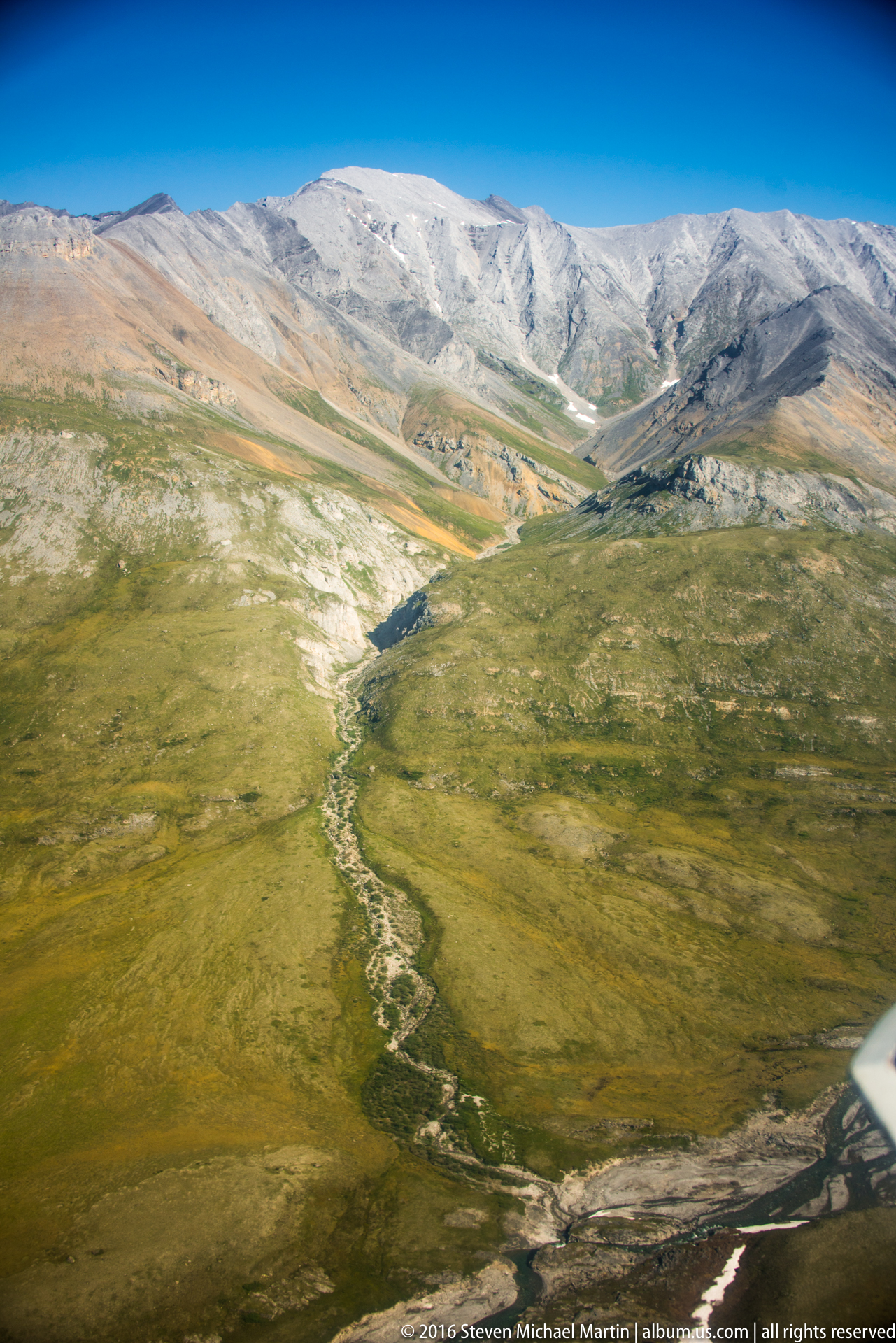
A narrow, branching stream crosses an open green basin beneath pale, treeless mountains. Low ridges divide the basin into shallow folds, and a braided river is visible along the lower edge. The wide framing emphasizes the openness of the high-country terrain, with watercourses providing the only strong lines across the tundra.
Caption
A narrow, branching stream crosses an open green basin beneath pale, treeless mountains. Low ridges divide the basin into shallow folds, and a braided river is visible along the lower edge. The wide framing emphasizes the openness of the high-country terrain, with watercourses providing the only strong lines across the tundra.

The river bends across the lower foreground, its pale gravel bars divided by narrow channels. Beyond it, a steep mountain wall rises in bands of dark vegetation and exposed rock, catching brighter light near the summit. The oblique view connects the detailed river pattern with the enclosing scale of the range.
Caption
The river bends across the lower foreground, its pale gravel bars divided by narrow channels. Beyond it, a steep mountain wall rises in bands of dark vegetation and exposed rock, catching brighter light near the summit. The oblique view connects the detailed river pattern with the enclosing scale of the range.
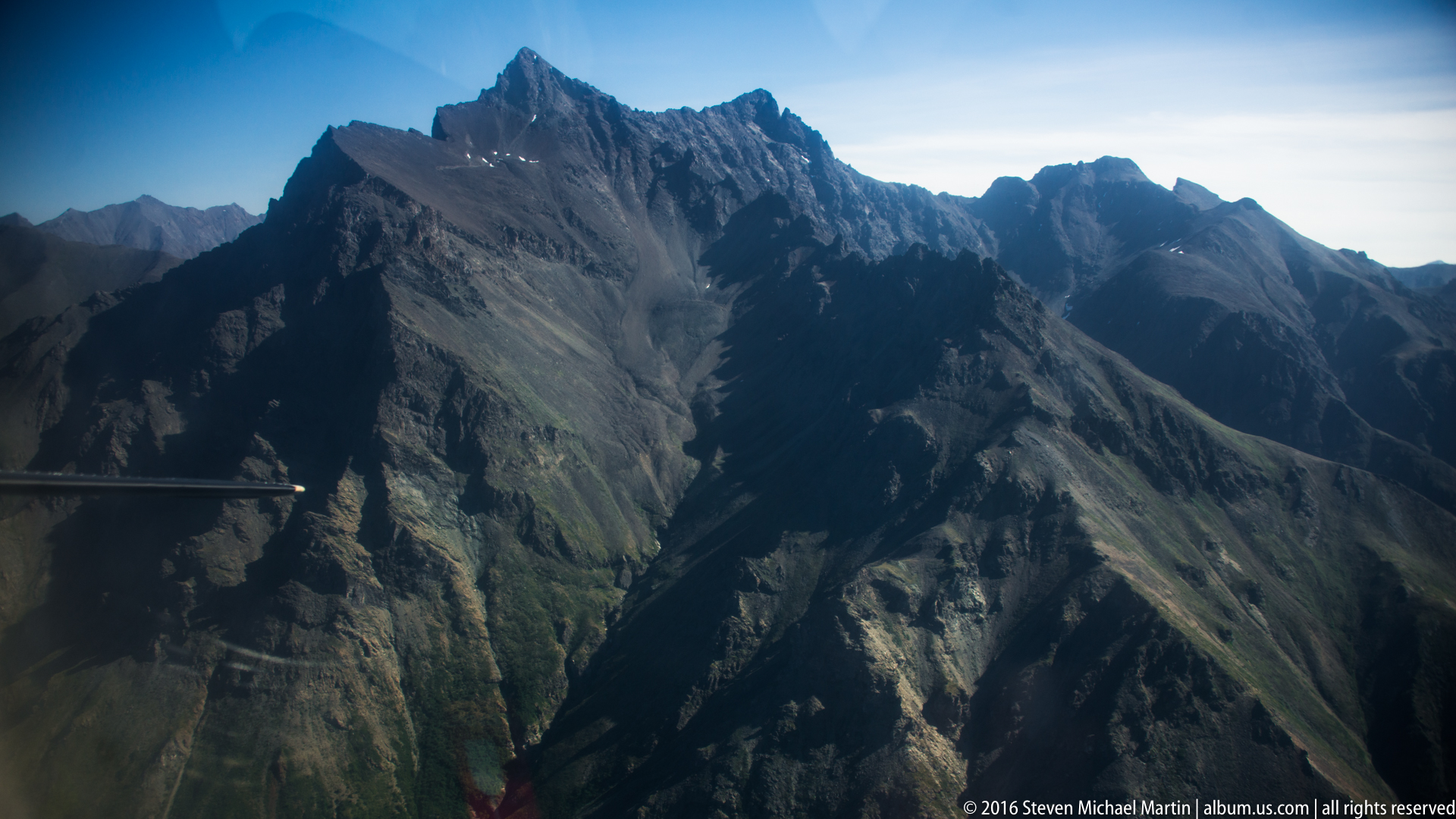
A chain of jagged peaks rises close to the aircraft, their narrow ridges and deep gullies cut into dark rock. Strong backlighting leaves much of the near face in shadow, while distant slopes remain hazy. The compressed, close viewpoint stresses the rugged relief and sharp profile of this mountain section.
Caption
A chain of jagged peaks rises close to the aircraft, their narrow ridges and deep gullies cut into dark rock. Strong backlighting leaves much of the near face in shadow, while distant slopes remain hazy. The compressed, close viewpoint stresses the rugged relief and sharp profile of this mountain section.
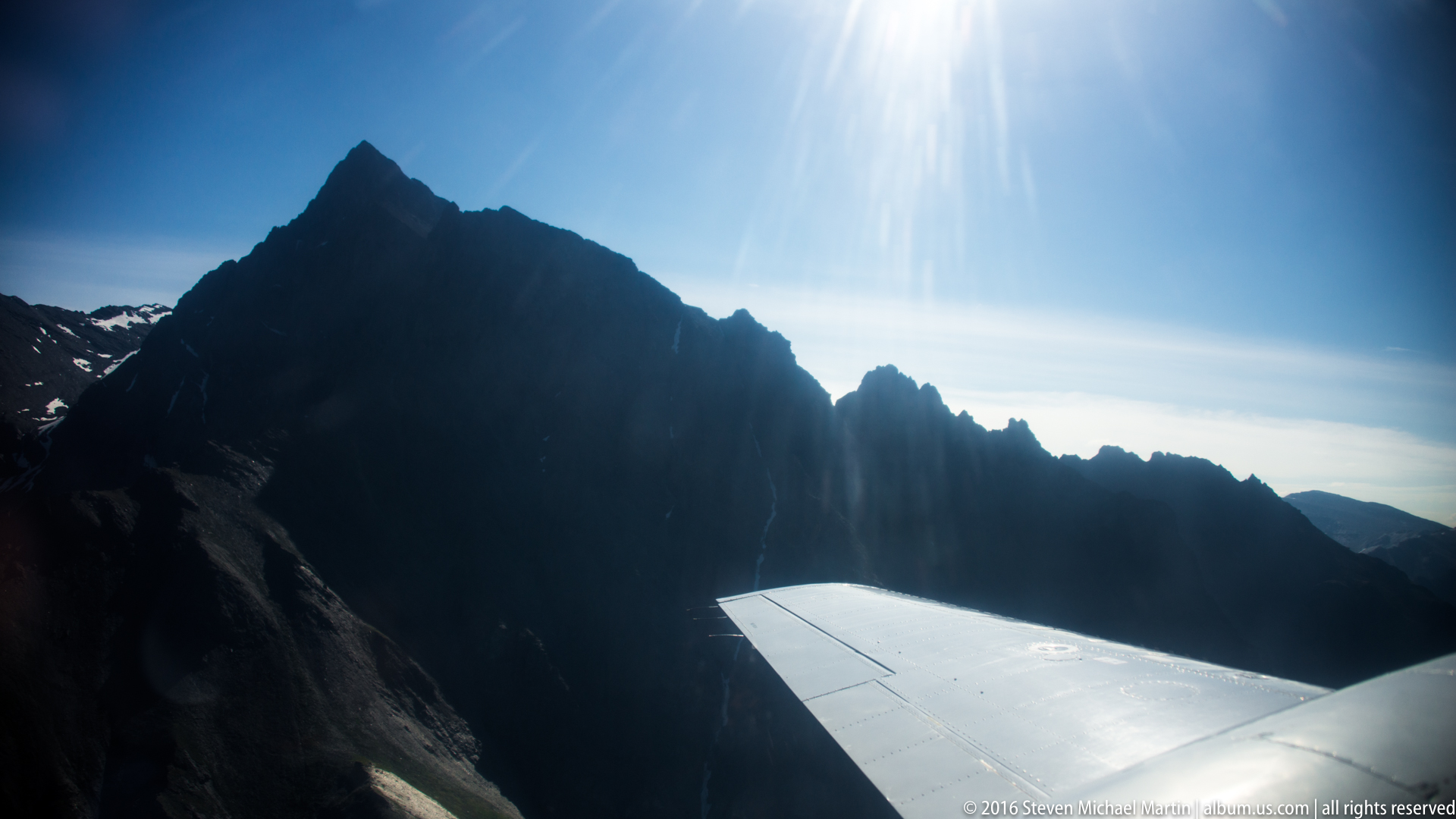
A bright aircraft wing enters the lower right foreground, placing the jagged mountain ridge beyond it in the traveler’s viewpoint. The sun shines from behind the peaks, reducing the near slopes to silhouette and scattering glare across the sky. The wing and backlighting distinguish this in-flight image from the surrounding landscape panoramas.
Caption
A bright aircraft wing enters the lower right foreground, placing the jagged mountain ridge beyond it in the traveler’s viewpoint. The sun shines from behind the peaks, reducing the near slopes to silhouette and scattering glare across the sky. The wing and backlighting distinguish this in-flight image from the surrounding landscape panoramas.

A narrow ravine cuts between rounded mountain shoulders, drawing the eye from the foreground toward a bright notch in the distant ridge. Green tundra covers the lower slopes, while pale rock and a small remnant of snow mark the higher ground. The composition centers on the valley’s branching form rather than a single peak.
Caption
A narrow ravine cuts between rounded mountain shoulders, drawing the eye from the foreground toward a bright notch in the distant ridge. Green tundra covers the lower slopes, while pale rock and a small remnant of snow mark the higher ground. The composition centers on the valley’s branching form rather than a single peak.
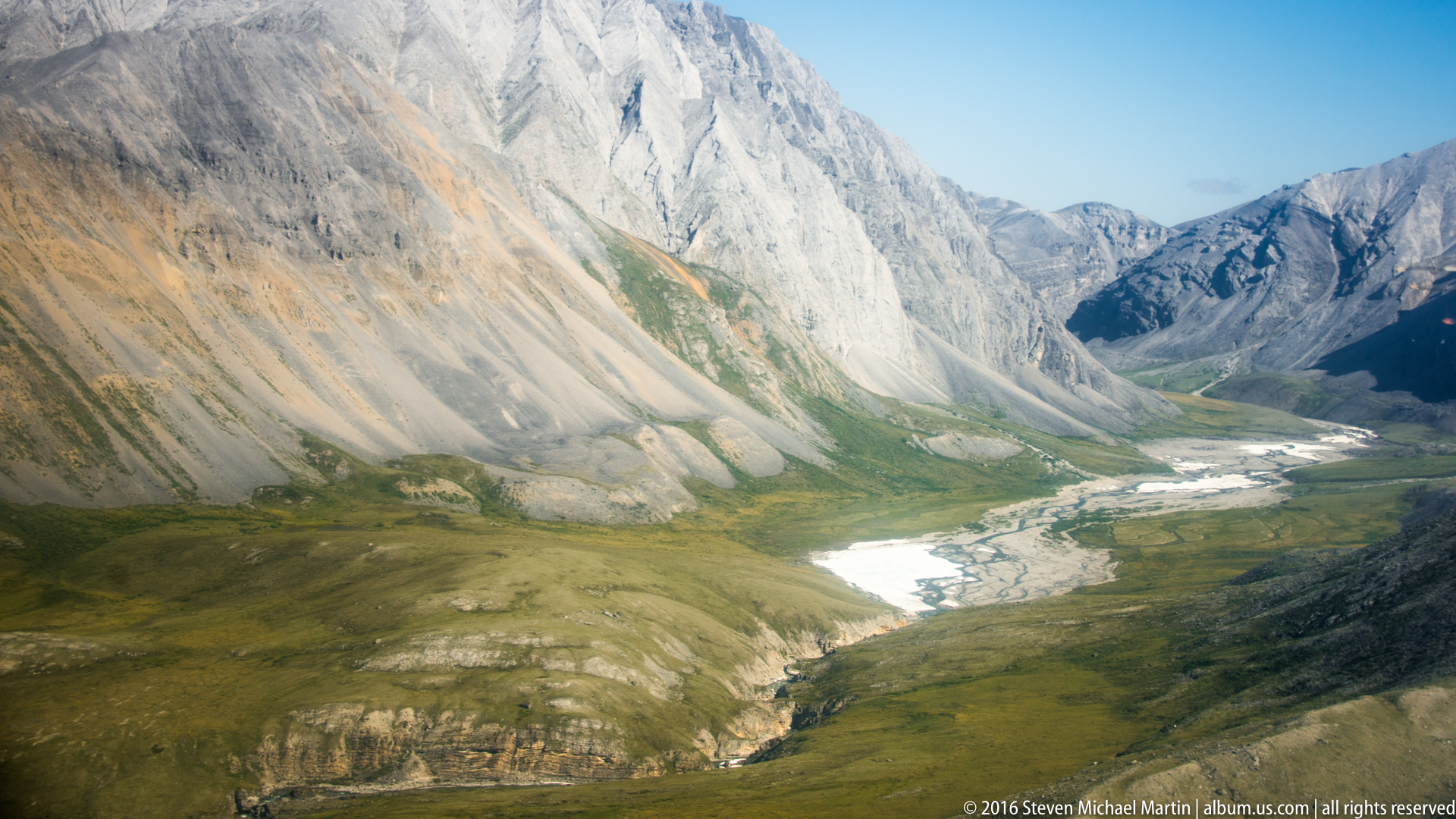
A broad valley opens between steep mountain walls, its floor traced by a pale braided stream. Small snow patches remain in shaded gullies high on the slopes, while green tundra fills the lower ground. The elevated view brings together the valley’s broad cross-section, narrow watercourse, and lingering late-season snow.
Caption
A broad valley opens between steep mountain walls, its floor traced by a pale braided stream. Small snow patches remain in shaded gullies high on the slopes, while green tundra fills the lower ground. The elevated view brings together the valley’s broad cross-section, narrow watercourse, and lingering late-season snow.
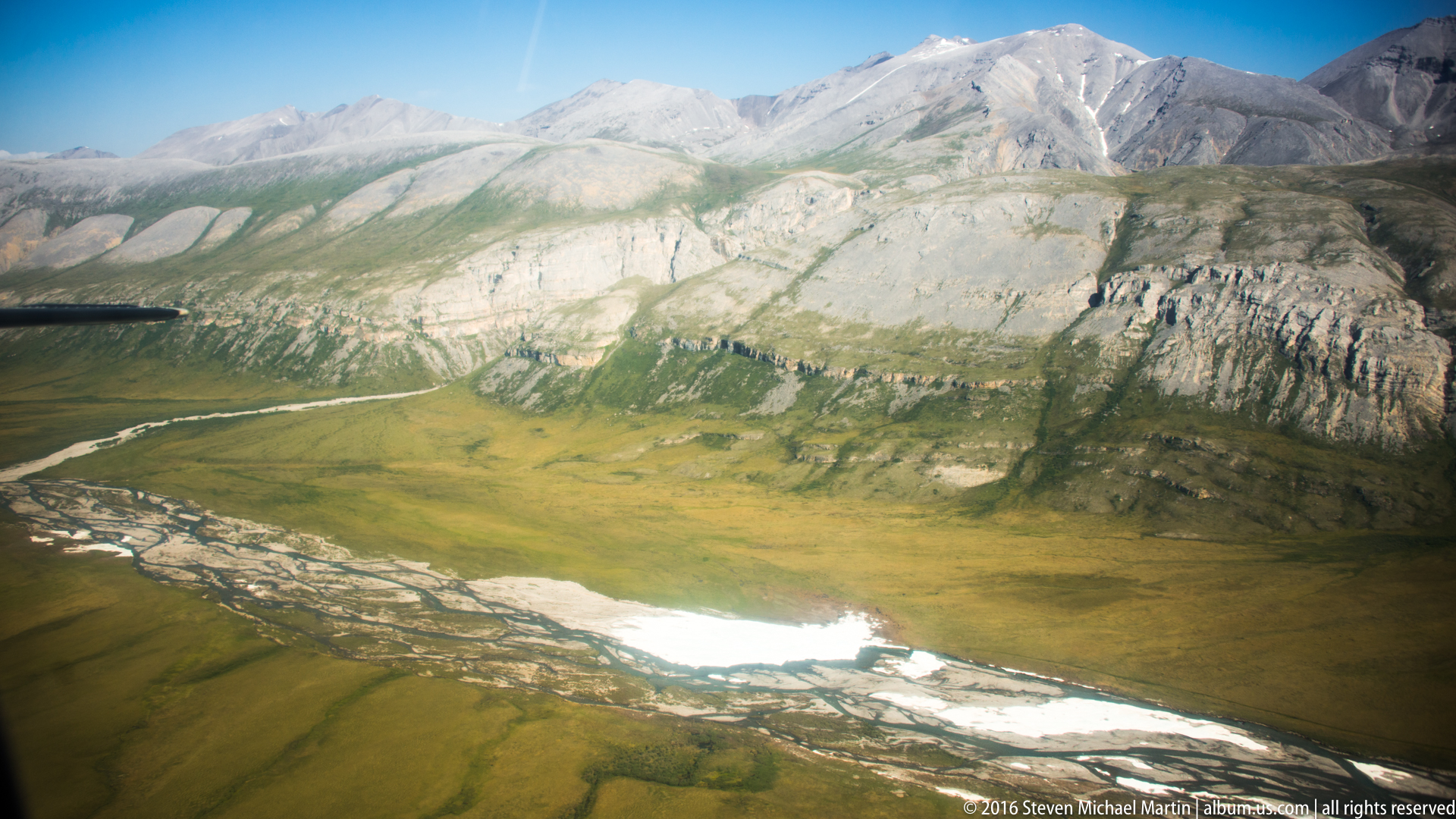
A pale braided river sweeps across the foreground below a broad mountain flank marked by bands of light-colored rock. The slope’s diagonal strata contrast with the flatter green valley floor, where individual channels separate and rejoin. This view pairs a close river corridor with the layered geology of the enclosing range.
Caption
A pale braided river sweeps across the foreground below a broad mountain flank marked by bands of light-colored rock. The slope’s diagonal strata contrast with the flatter green valley floor, where individual channels separate and rejoin. This view pairs a close river corridor with the layered geology of the enclosing range.

Seen from above, the river divides into many channels that curve across a wide, level valley. Pale gravel islands and bars separate the dark water, while distant slopes form a low backdrop. The river’s intricate branching network occupies much of the frame, making the pattern of channels the principal subject.
Caption
Seen from above, the river divides into many channels that curve across a wide, level valley. Pale gravel islands and bars separate the dark water, while distant slopes form a low backdrop. The river’s intricate branching network occupies much of the frame, making the pattern of channels the principal subject.
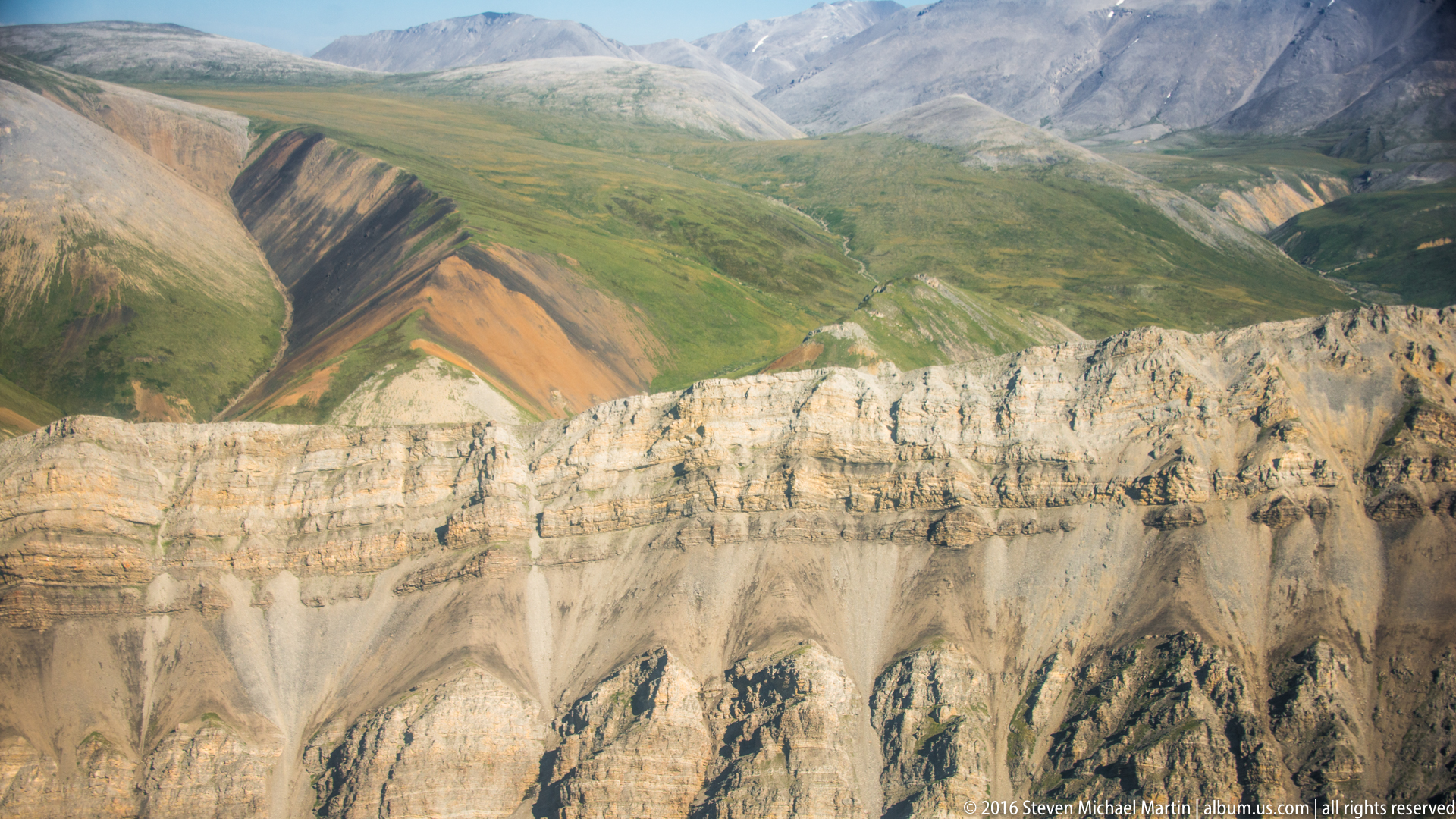
A pale rock escarpment crosses the frame in horizontal bands, its face broken by vertical gullies and projecting ledges. Rust-colored slopes rise behind the light-colored layers, while a green valley appears below. The closer angle reveals the contrast in color and structure across the mountain face without isolating a named formation.
Caption
A pale rock escarpment crosses the frame in horizontal bands, its face broken by vertical gullies and projecting ledges. Rust-colored slopes rise behind the light-colored layers, while a green valley appears below. The closer angle reveals the contrast in color and structure across the mountain face without isolating a named formation.
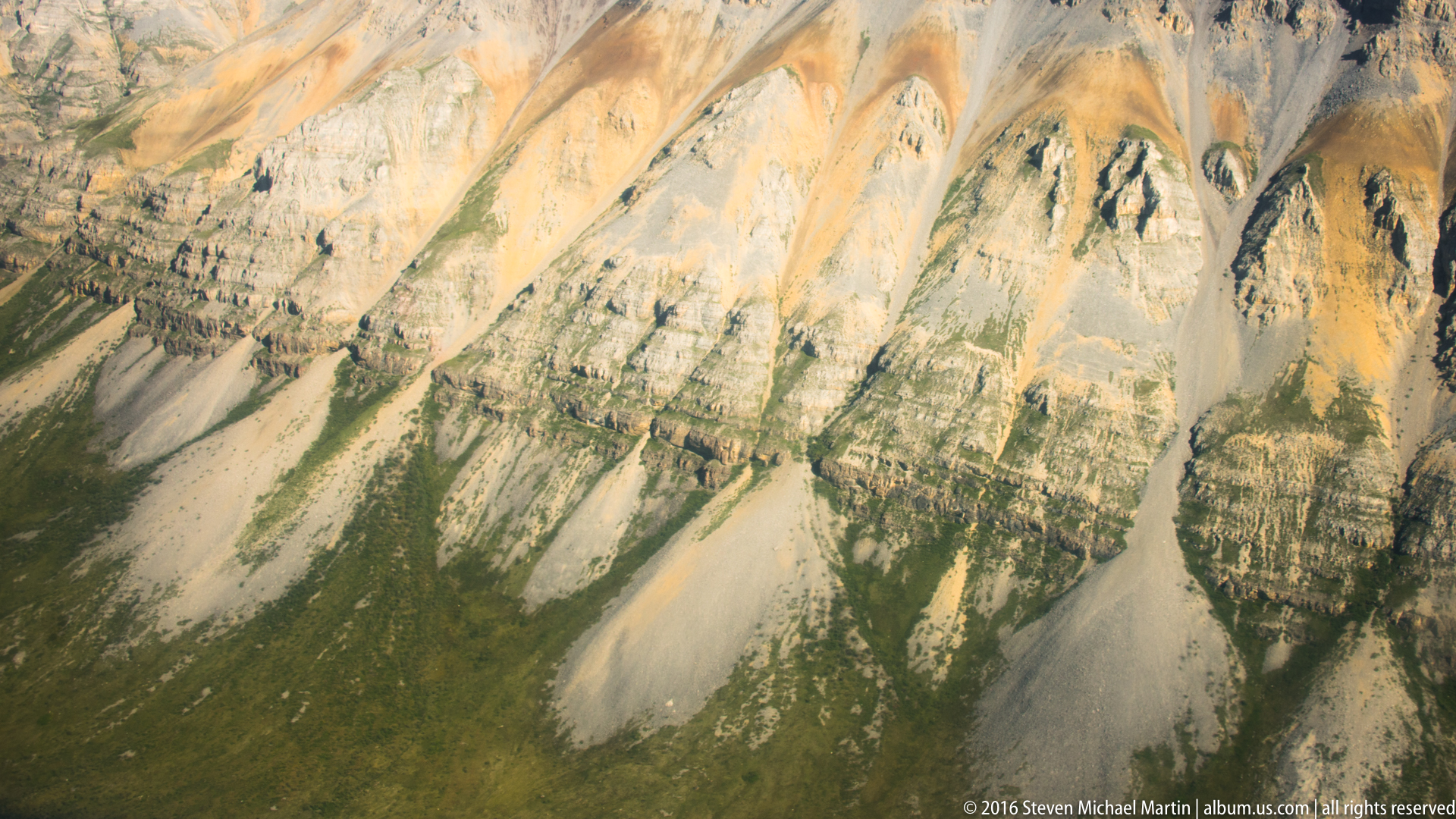
The mountain face fills the image, exposing pale and ochre bands cut by narrow erosion channels. Small dark ledges and streaks interrupt the sloping rock surface, while only a thin strip of vegetation remains at the bottom. This close aerial view shifts attention from the range’s overall form to the textures and drainage lines of its exposed geology.
Caption
The mountain face fills the image, exposing pale and ochre bands cut by narrow erosion channels. Small dark ledges and streaks interrupt the sloping rock surface, while only a thin strip of vegetation remains at the bottom. This close aerial view shifts attention from the range’s overall form to the textures and drainage lines of its exposed geology.
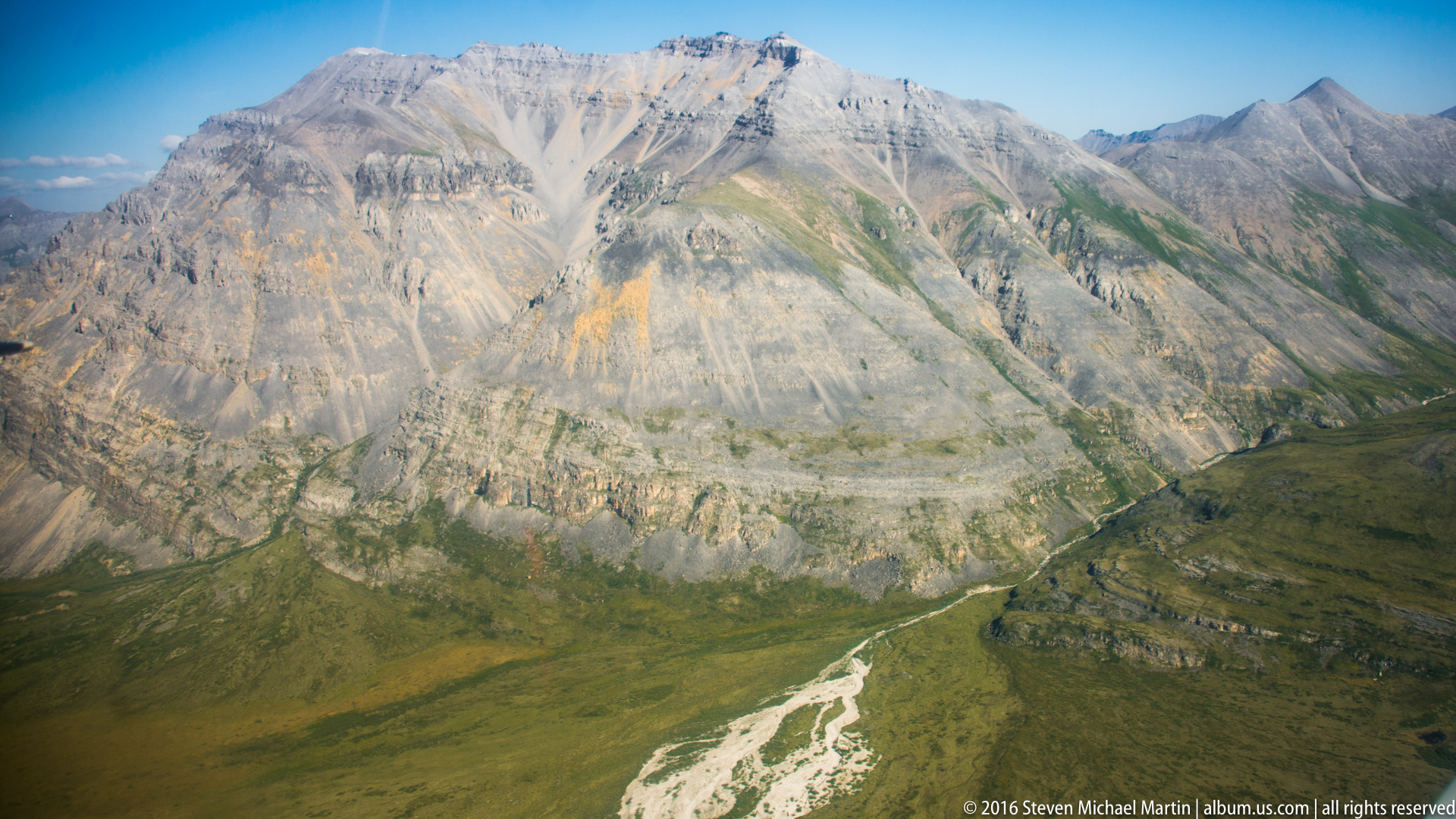
A steep, pale mountain wall occupies the left side, its gullied face descending toward a green valley. A narrow braided stream winds across the valley floor and leads toward distant peaks. The diagonal arrangement links the close rock face to the open landscape beyond, giving the scene both geological detail and regional scale.
Caption
A steep, pale mountain wall occupies the left side, its gullied face descending toward a green valley. A narrow braided stream winds across the valley floor and leads toward distant peaks. The diagonal arrangement links the close rock face to the open landscape beyond, giving the scene both geological detail and regional scale.
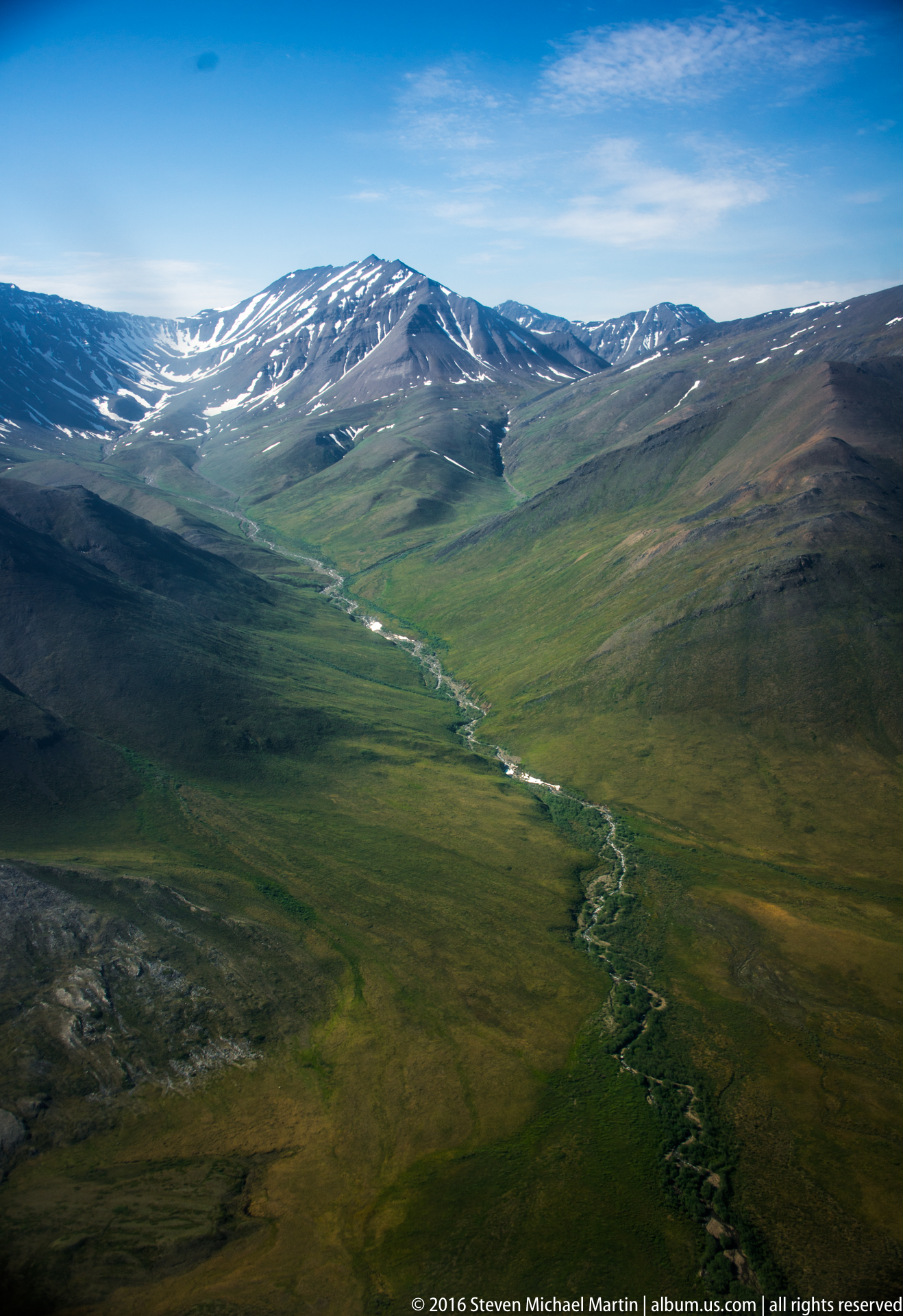
A narrow stream winds through a broad green valley toward a low mountain pass, with snow-streaked ridges extending across the horizon. Shadowed foreground slopes contrast with the brighter upper valley. The stream’s meandering line gives the expansive scene a clear visual route from the near ground into the distant Arctic range.
Caption
A narrow stream winds through a broad green valley toward a low mountain pass, with snow-streaked ridges extending across the horizon. Shadowed foreground slopes contrast with the brighter upper valley. The stream’s meandering line gives the expansive scene a clear visual route from the near ground into the distant Arctic range.
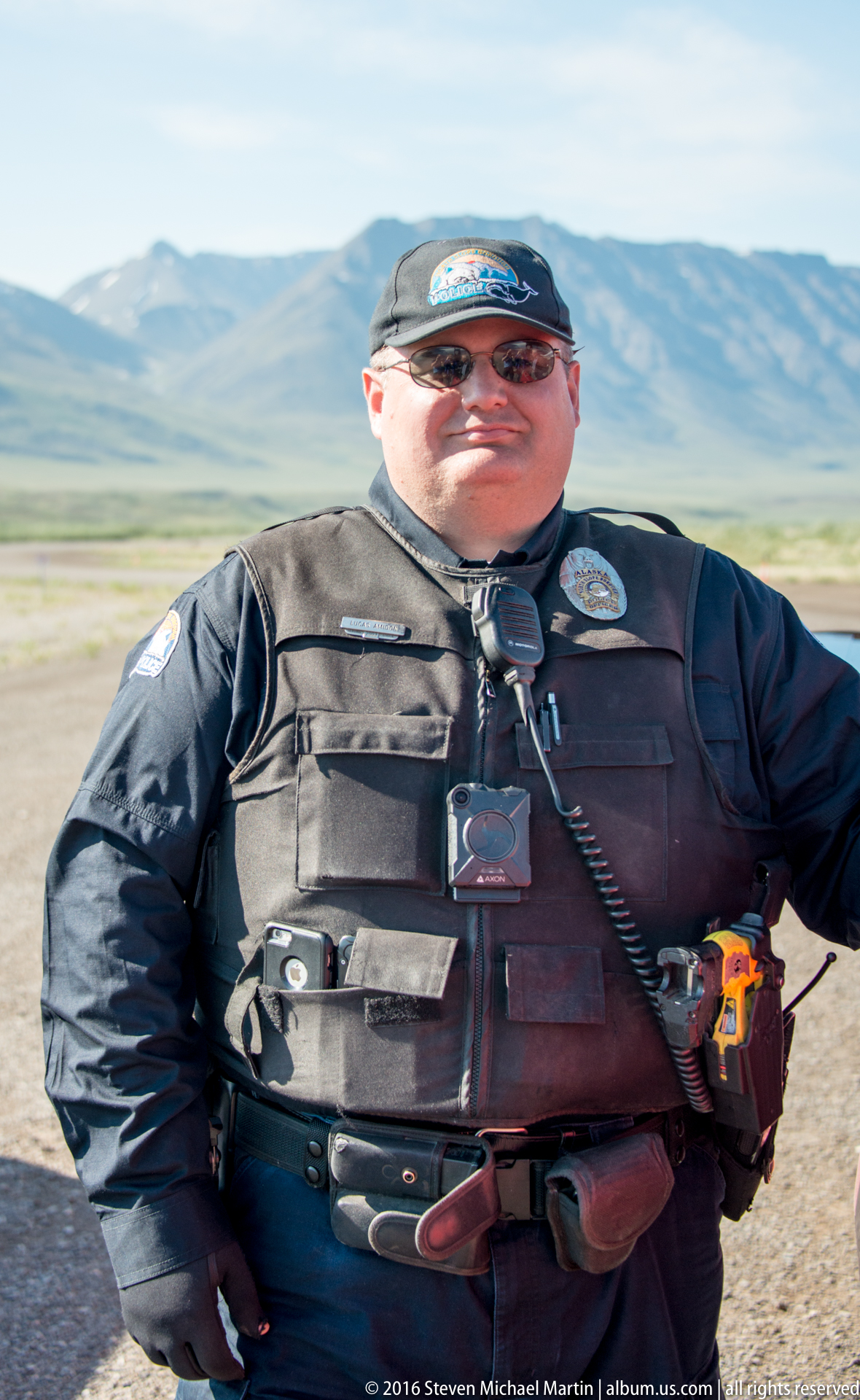
A man stands outdoors in a dark vest fitted with radios, straps, and equipment, with a cap and sunglasses. The open tundra and low mountains form a soft background. His clothing suggests an aviation or field role, but no visible name badge identifies him; the portrait is therefore described by its observable gear and setting.
Caption
A man stands outdoors in a dark vest fitted with radios, straps, and equipment, with a cap and sunglasses. The open tundra and low mountains form a soft background. His clothing suggests an aviation or field role, but no visible name badge identifies him; the portrait is therefore described by its observable gear and setting.

A thin stream follows the center of a long green valley, narrowing toward a pointed, snow-streaked ridge in the distance. Dark mountains enclose both sides, creating a strong corridor effect. The centered watercourse and balanced slopes make this image a more linear view into the range than the broader basin scenes nearby.
Caption
A thin stream follows the center of a long green valley, narrowing toward a pointed, snow-streaked ridge in the distance. Dark mountains enclose both sides, creating a strong corridor effect. The centered watercourse and balanced slopes make this image a more linear view into the range than the broader basin scenes nearby.
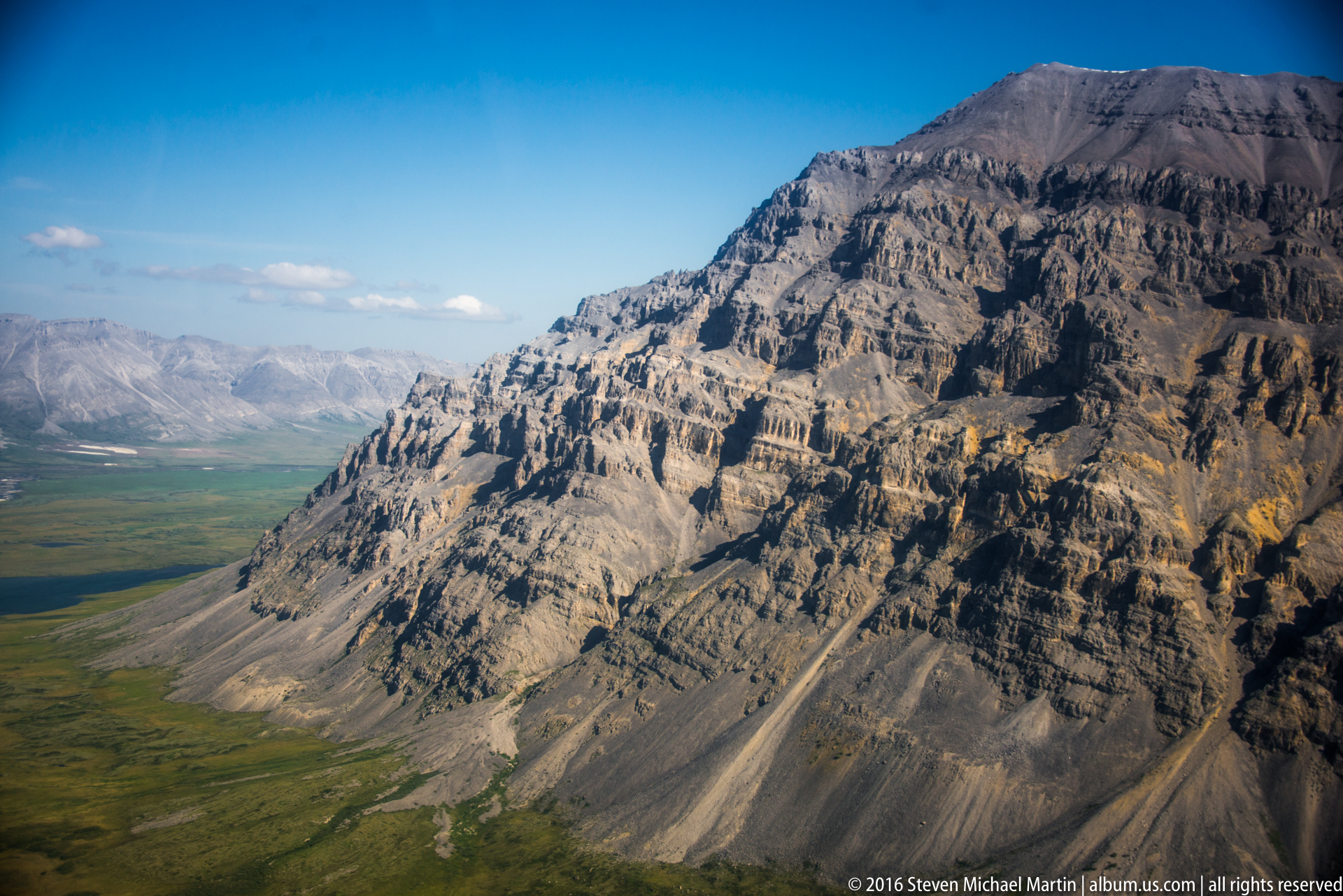
A rugged, layered escarpment rises along the right side, its broken ledges descending toward a broad green plain. Distant mountains recede across the left background, while the near rock face remains dominant. The composition sets a steep, textured wall against the open lowland and reveals how the terrain changes across the valley.
Caption
A rugged, layered escarpment rises along the right side, its broken ledges descending toward a broad green plain. Distant mountains recede across the left background, while the near rock face remains dominant. The composition sets a steep, textured wall against the open lowland and reveals how the terrain changes across the valley.

A massive mountain wall frames a green valley dotted with small blue lakes. A winding stream traces the lower ground, while pale peaks line the distance beneath scattered clouds. The lakes add a distinct foreground pattern to the composition, set against the continuous rocky slope that dominates the right side.
Caption
A massive mountain wall frames a green valley dotted with small blue lakes. A winding stream traces the lower ground, while pale peaks line the distance beneath scattered clouds. The lakes add a distinct foreground pattern to the composition, set against the continuous rocky slope that dominates the right side.
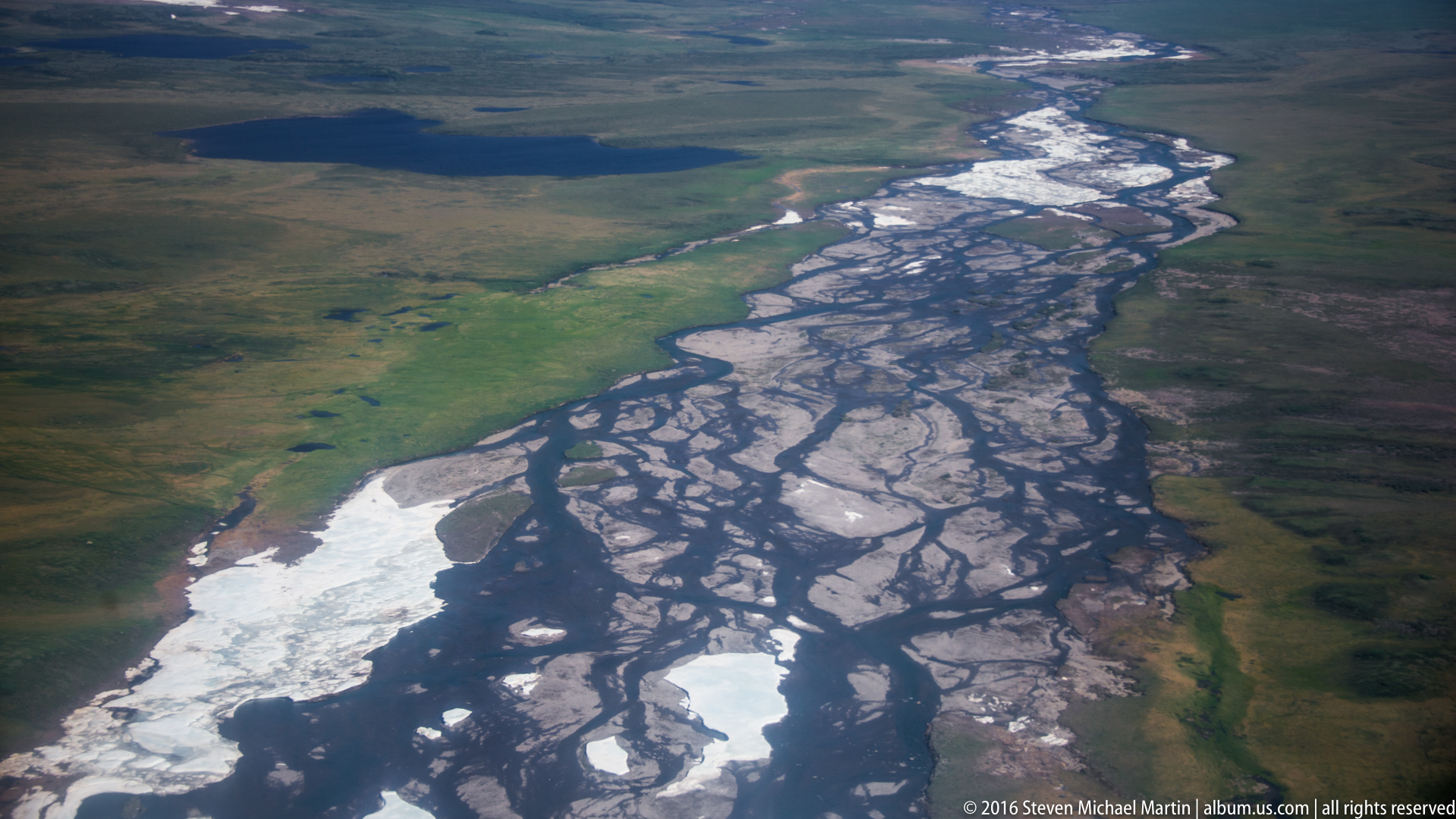
Dark water divides around broad, pale gravel bars in a close view of the river corridor. The channels converge and separate repeatedly, creating a dense branching pattern that fills the frame. Narrow strips of green tundra remain at the edges, but the water and sediment dominate this detailed overhead composition.
Caption
Dark water divides around broad, pale gravel bars in a close view of the river corridor. The channels converge and separate repeatedly, creating a dense branching pattern that fills the frame. Narrow strips of green tundra remain at the edges, but the water and sediment dominate this detailed overhead composition.

A broad mountain wall spans the horizon above a flat green valley, with a thin pale track or watercourse running near its base. In the foreground, the land transitions from low tundra to the mountain’s exposed rock. The horizontal framing emphasizes the long continuous ridge and the open floor below it.
Caption
A broad mountain wall spans the horizon above a flat green valley, with a thin pale track or watercourse running near its base. In the foreground, the land transitions from low tundra to the mountain’s exposed rock. The horizontal framing emphasizes the long continuous ridge and the open floor below it.

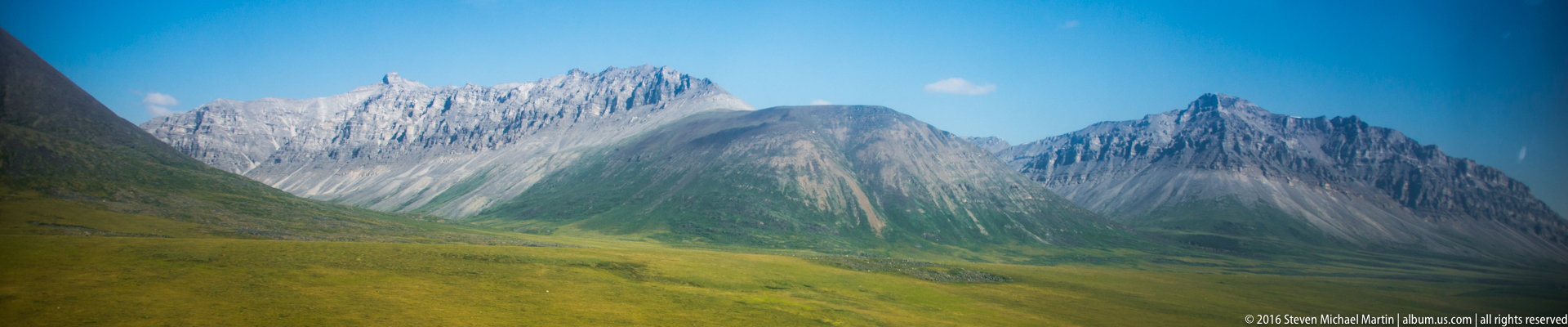
From the tundra floor, low grasses and shrubs lead toward a rugged mountain ridge beneath a clear blue sky. The range rises in a broken line, with a pointed peak near the center and greener slopes at left. This lower viewpoint places the foreground vegetation on the same visual plane as the distant mountains.
Caption
From the tundra floor, low grasses and shrubs lead toward a rugged mountain ridge beneath a clear blue sky. The range rises in a broken line, with a pointed peak near the center and greener slopes at left. This lower viewpoint places the foreground vegetation on the same visual plane as the distant mountains.

An open tundra plain fills the foreground, its low shrubs forming a soft band beneath a long mountain range. A small snow remnant lies high on the ridge, while warm light brings out brown and green tones across the slopes. The broad, level foreground contrasts with the steep, weathered mountains behind it.
Caption
An open tundra plain fills the foreground, its low shrubs forming a soft band beneath a long mountain range. A small snow remnant lies high on the ridge, while warm light brings out brown and green tones across the slopes. The broad, level foreground contrasts with the steep, weathered mountains behind it.
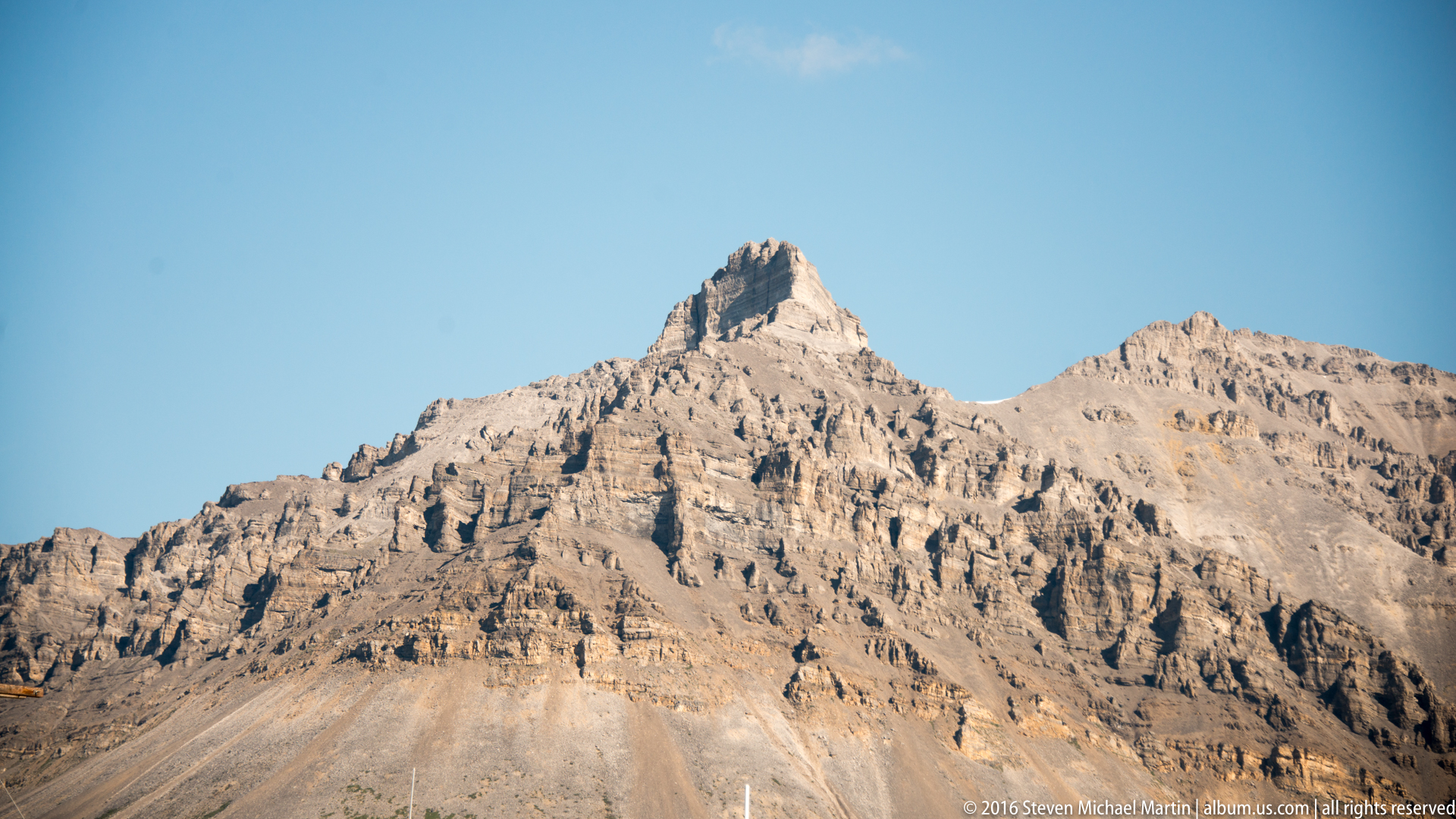
A steep, pale mountain rises to a distinct pointed summit against an unbroken blue sky. Repeated ledges and gullies descend from the crest, creating a strongly ribbed profile. The tight framing isolates the peak and its eroded rock layers, in contrast to the broad valley views elsewhere in the sequence.
Caption
A steep, pale mountain rises to a distinct pointed summit against an unbroken blue sky. Repeated ledges and gullies descend from the crest, creating a strongly ribbed profile. The tight framing isolates the peak and its eroded rock layers, in contrast to the broad valley views elsewhere in the sequence.
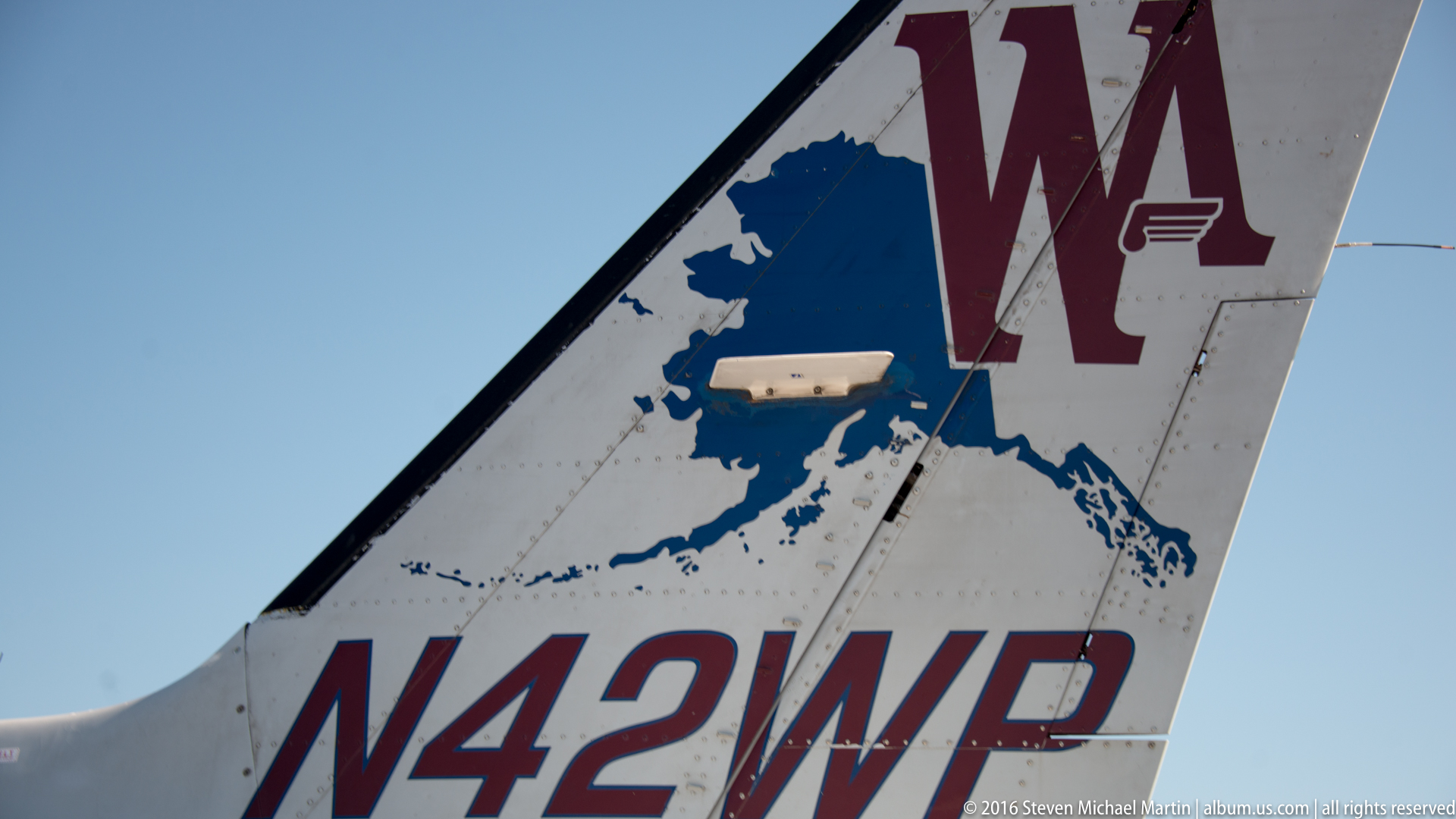
The aircraft’s tail fills the frame, displaying a blue map of Alaska beneath large burgundy initials and a mountain graphic. The registration “N42WP” is visible near the lower edge. This close detail shifts from the full bush plane to its painted identity marks, preserving the readable livery without inferring an operator beyond what is shown.
Caption
The aircraft’s tail fills the frame, displaying a blue map of Alaska beneath large burgundy initials and a mountain graphic. The registration “N42WP” is visible near the lower edge. This close detail shifts from the full bush plane to its painted identity marks, preserving the readable livery without inferring an operator beyond what is shown.
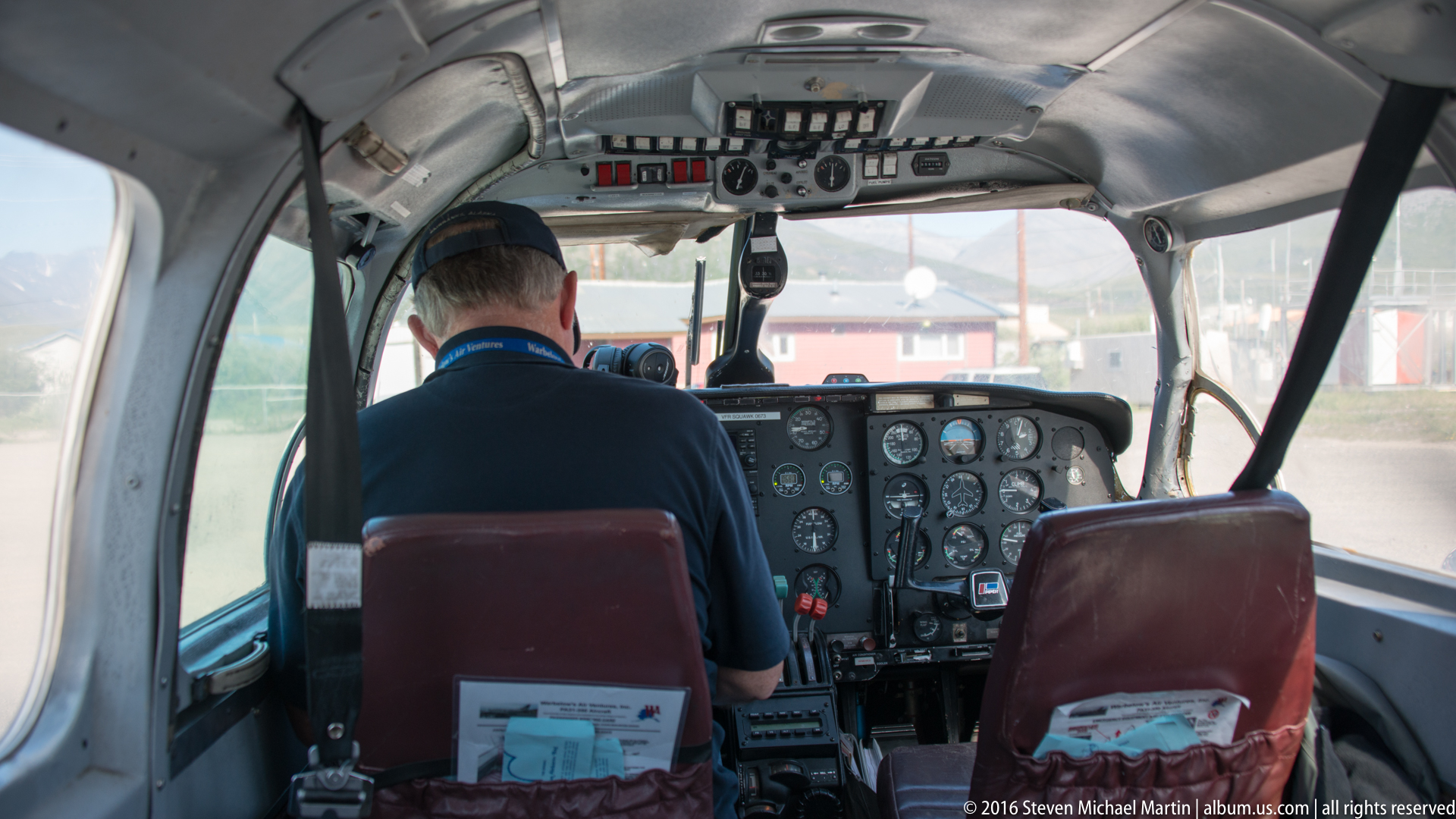
Seen from behind the pilot, the compact aircraft cockpit is filled with analog gauges, switches, and overhead controls. The pilot sits centered between two worn passenger seats, facing the broad windshield and a low building outside. This interior view records the working setting of the flight, with the instrument panel and forward view framing the pilot rather than the surrounding landscape.
Caption
Seen from behind the pilot, the compact aircraft cockpit is filled with analog gauges, switches, and overhead controls. The pilot sits centered between two worn passenger seats, facing the broad windshield and a low building outside. This interior view records the working setting of the flight, with the instrument panel and forward view framing the pilot rather than the surrounding landscape.

Two older passengers sit shoulder to shoulder inside the aircraft cabin and look toward the camera. The man wears glasses, a checked shirt, and a dark jacket; the woman wears sunglasses and a patterned top. Their relaxed expressions and close framing give this image a personal, documentary character distinct from the surrounding aerial views. No names or specific relationship are established by the photograph.
Caption
Two older passengers sit shoulder to shoulder inside the aircraft cabin and look toward the camera. The man wears glasses, a checked shirt, and a dark jacket; the woman wears sunglasses and a patterned top. Their relaxed expressions and close framing give this image a personal, documentary character distinct from the surrounding aerial views. No names or specific relationship are established by the photograph.
A vivid turquoise lake occupies the lower center of a steep mountain basin. Dark slopes frame the water, while narrow snow streaks trace gullies on the surrounding gray peaks. The elevated viewpoint reveals the lake’s irregular shoreline and the abrupt transition from water to tundra-covered slopes, making the basin’s color and enclosed form the defining features.
Caption
A vivid turquoise lake occupies the lower center of a steep mountain basin. Dark slopes frame the water, while narrow snow streaks trace gullies on the surrounding gray peaks. The elevated viewpoint reveals the lake’s irregular shoreline and the abrupt transition from water to tundra-covered slopes, making the basin’s color and enclosed form the defining features.

From a higher, slightly more distant viewpoint, the turquoise lake sits near the bottom of a broad mountain bowl. Deep shadow covers the left wall, while sunlit tundra and scattered snow patches define the opposite slope. The lake’s curved shoreline and the converging ridges make this a more spatially expansive view of the basin than the preceding closer frame.
Caption
From a higher, slightly more distant viewpoint, the turquoise lake sits near the bottom of a broad mountain bowl. Deep shadow covers the left wall, while sunlit tundra and scattered snow patches define the opposite slope. The lake’s curved shoreline and the converging ridges make this a more spatially expansive view of the basin than the preceding closer frame.

A pale gray mountain face fills the view, patterned by dark horizontal bands and long branching gullies. Snow collects in the deepest channels, creating bright ribbons against the exposed rock; green tundra and darker ridges edge the lower slopes. The image emphasizes the mountain’s layered appearance and incised drainage rather than a distant vista.
Caption
A pale gray mountain face fills the view, patterned by dark horizontal bands and long branching gullies. Snow collects in the deepest channels, creating bright ribbons against the exposed rock; green tundra and darker ridges edge the lower slopes. The image emphasizes the mountain’s layered appearance and incised drainage rather than a distant vista.
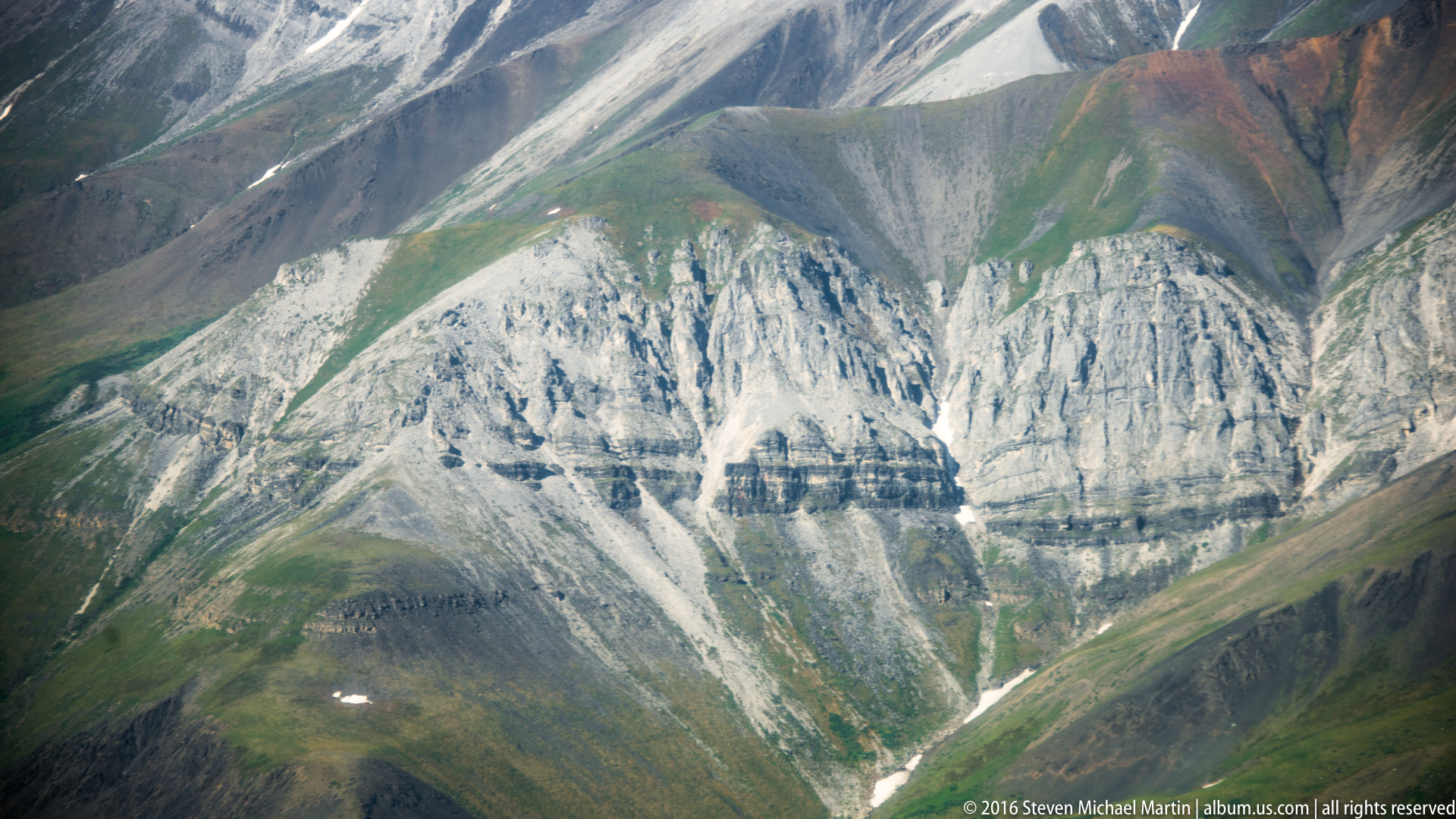
This closer view isolates the pale mountain wall, where dense vertical channels descend from its crest and intersect darker horizontal bands. A narrow snow-filled ravine cuts through the lower center, while green slopes frame the base. The compressed view makes the erosion pattern legible and gives the rock face a more sculptural presence than the broader surrounding landscapes.
Caption
This closer view isolates the pale mountain wall, where dense vertical channels descend from its crest and intersect darker horizontal bands. A narrow snow-filled ravine cuts through the lower center, while green slopes frame the base. The compressed view makes the erosion pattern legible and gives the rock face a more sculptural presence than the broader surrounding landscapes.

The mountain’s light-colored central face rises above a green valley, with multiple ravines radiating down from its crest. Darker peaks bracket the scene, and thin snow lines remain in shaded cuts. The wider composition restores the relationship between the eroded face and the surrounding range, showing how the pale slopes stand out amid the darker terrain.
Caption
The mountain’s light-colored central face rises above a green valley, with multiple ravines radiating down from its crest. Darker peaks bracket the scene, and thin snow lines remain in shaded cuts. The wider composition restores the relationship between the eroded face and the surrounding range, showing how the pale slopes stand out amid the darker terrain.
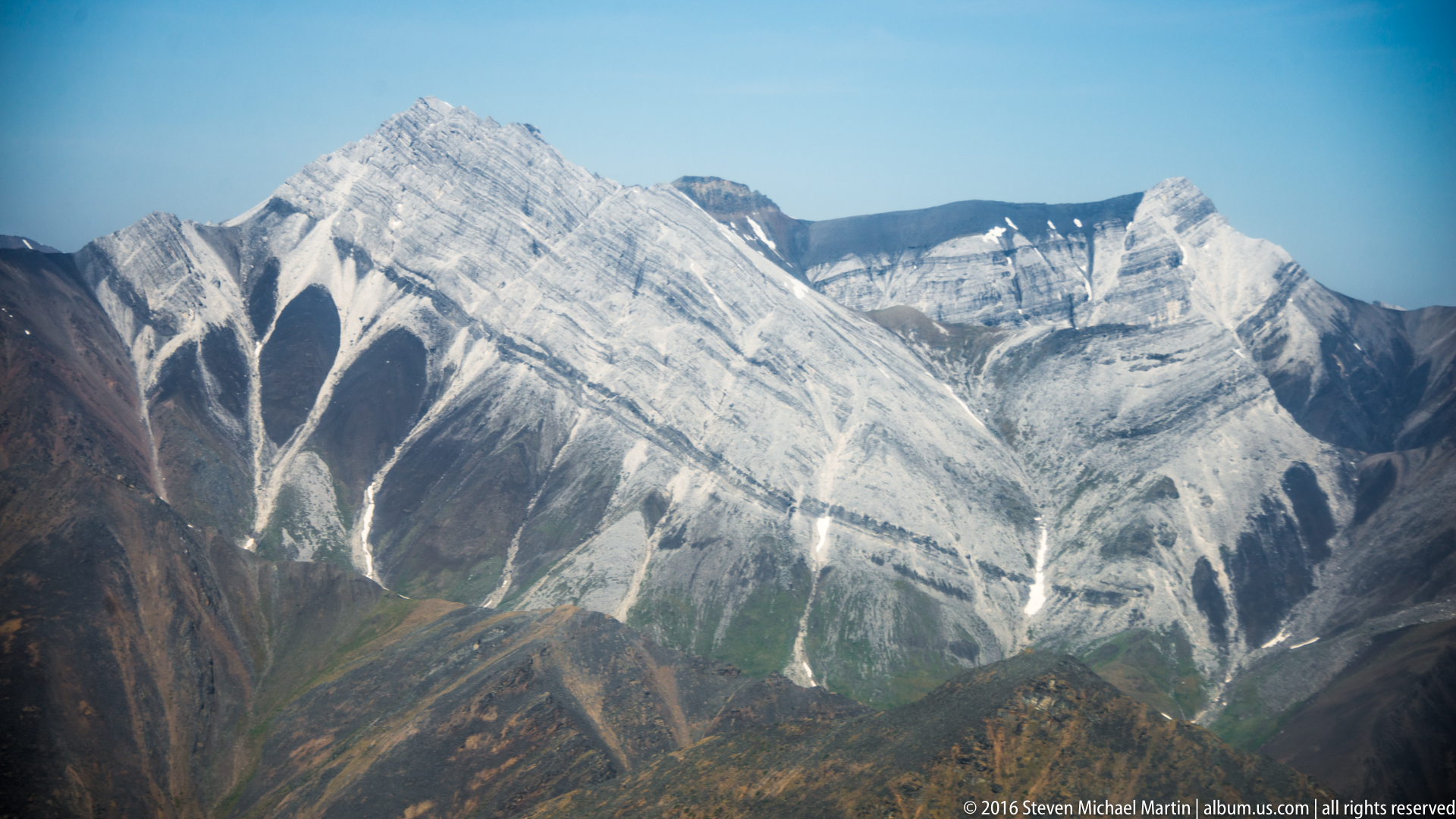
A group of pale gray peaks dominates the center, their steep flanks carved into deep vertical gullies. Narrow snowfields remain in several channels, and rusty brown foothills rise in the foreground. The strong tonal contrast between light rock and darker lower slopes emphasizes the mountain relief without establishing a named summit.
Caption
A group of pale gray peaks dominates the center, their steep flanks carved into deep vertical gullies. Narrow snowfields remain in several channels, and rusty brown foothills rise in the foreground. The strong tonal contrast between light rock and darker lower slopes emphasizes the mountain relief without establishing a named summit.

A dark ridge crosses the foreground beneath a chain of higher mountains. A pale summit rises near the center beyond several intervening ridgelines, while isolated snow patches remain in shaded recesses. The open sky and long receding layers create a spacious view, with the central peak serving as a visual anchor rather than a confirmed named landmark.
Caption
A dark ridge crosses the foreground beneath a chain of higher mountains. A pale summit rises near the center beyond several intervening ridgelines, while isolated snow patches remain in shaded recesses. The open sky and long receding layers create a spacious view, with the central peak serving as a visual anchor rather than a confirmed named landmark.

A broad basin opens between dark ridges, with green drainage lines descending toward a narrow valley floor. Snow lies in scattered gullies on the higher slopes, and warm ochre patches mark exposed ground in the foreground. The angled viewpoint follows the basin inward, showing a complex network of slopes rather than a single isolated summit.
Caption
A broad basin opens between dark ridges, with green drainage lines descending toward a narrow valley floor. Snow lies in scattered gullies on the higher slopes, and warm ochre patches mark exposed ground in the foreground. The angled viewpoint follows the basin inward, showing a complex network of slopes rather than a single isolated summit.

In black and white, successive mountain ridges recede into haze beneath a pale sky. A pointed peak rises above the surrounding skyline, while darker foreground slopes form overlapping bands. The monochrome treatment suppresses the tundra’s color and instead accentuates silhouette, distance, and tonal gradation across the range.
Caption
In black and white, successive mountain ridges recede into haze beneath a pale sky. A pointed peak rises above the surrounding skyline, while darker foreground slopes form overlapping bands. The monochrome treatment suppresses the tundra’s color and instead accentuates silhouette, distance, and tonal gradation across the range.
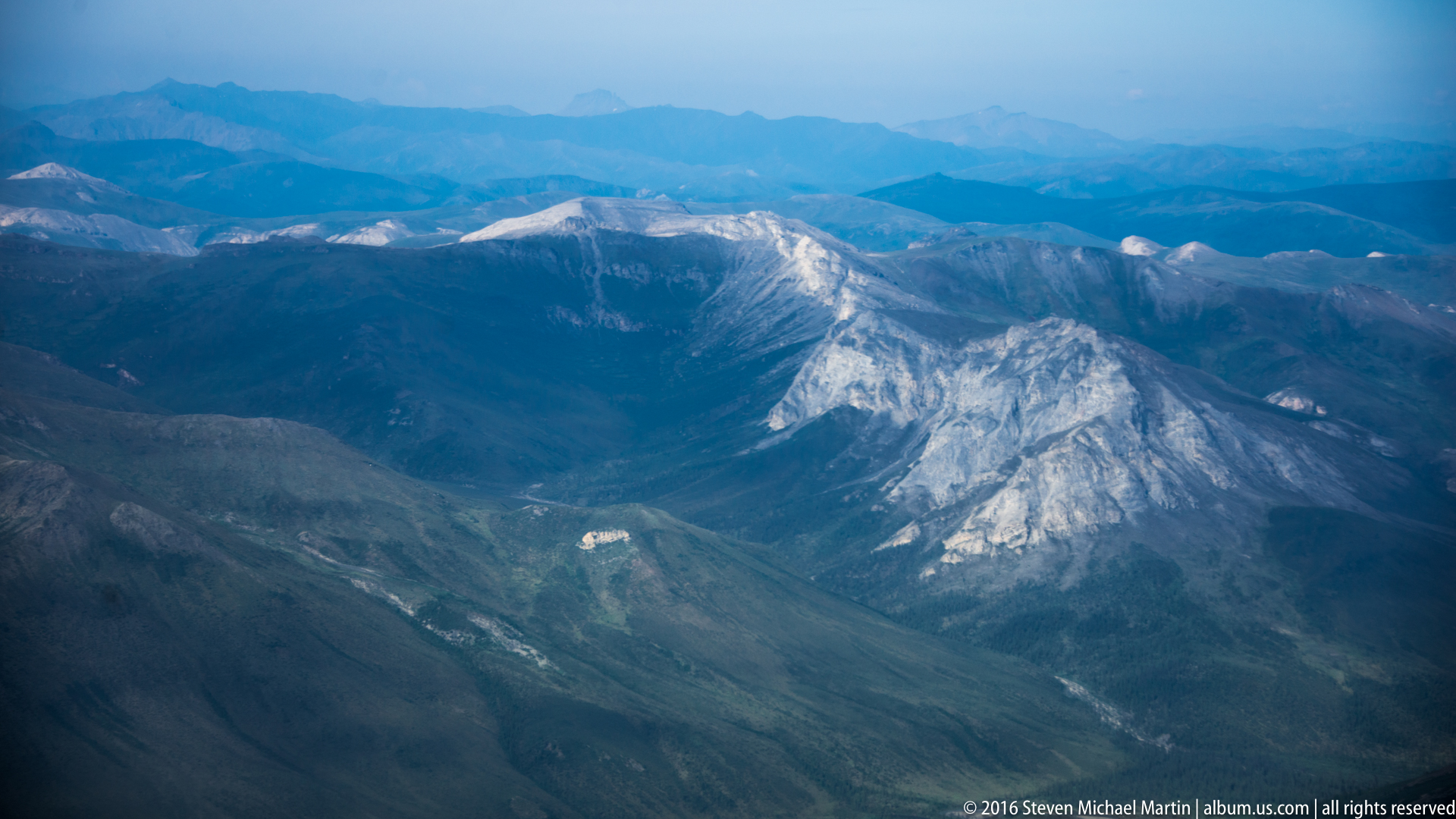
A pale, deeply incised mountain mass stands out in the center-right distance above darker ridges and a broad shadowed valley. Blue haze softens the farthest ranges, while a green-brown slope enters from the lower right. The long view makes the pale mountain’s branching snow or exposed rock channels the focal pattern.
Caption
A pale, deeply incised mountain mass stands out in the center-right distance above darker ridges and a broad shadowed valley. Blue haze softens the farthest ranges, while a green-brown slope enters from the lower right. The long view makes the pale mountain’s branching snow or exposed rock channels the focal pattern.
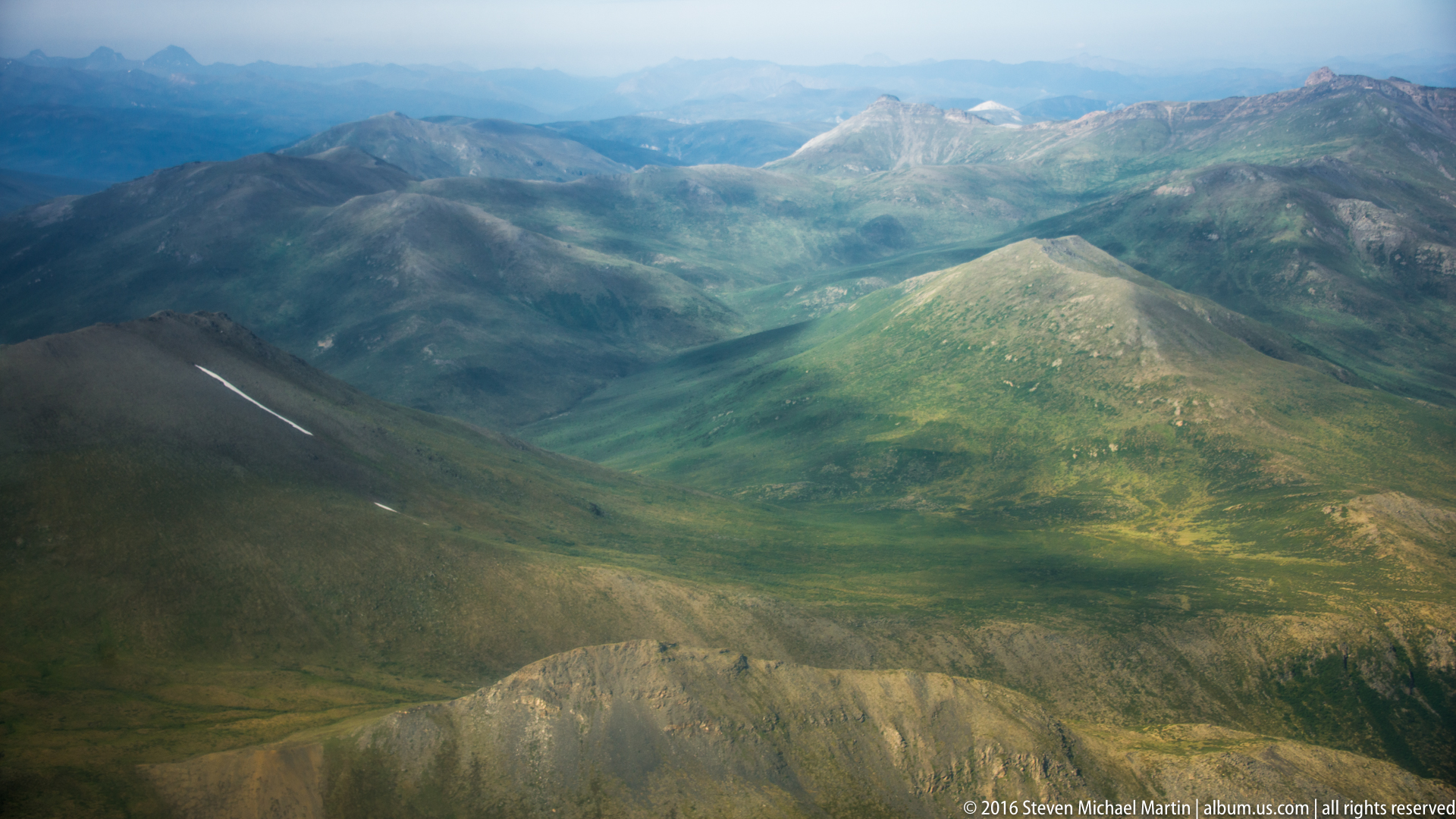
Low rounded ridges roll across the foreground toward a broad green valley and distant mountain chain. A few narrow snow remnants mark shaded cuts on the left slope; otherwise, the terrain is largely treeless and muted green-brown. The softer contours distinguish this view from the sharper, more rugged peaks elsewhere in the sequence.
Caption
Low rounded ridges roll across the foreground toward a broad green valley and distant mountain chain. A few narrow snow remnants mark shaded cuts on the left slope; otherwise, the terrain is largely treeless and muted green-brown. The softer contours distinguish this view from the sharper, more rugged peaks elsewhere in the sequence.
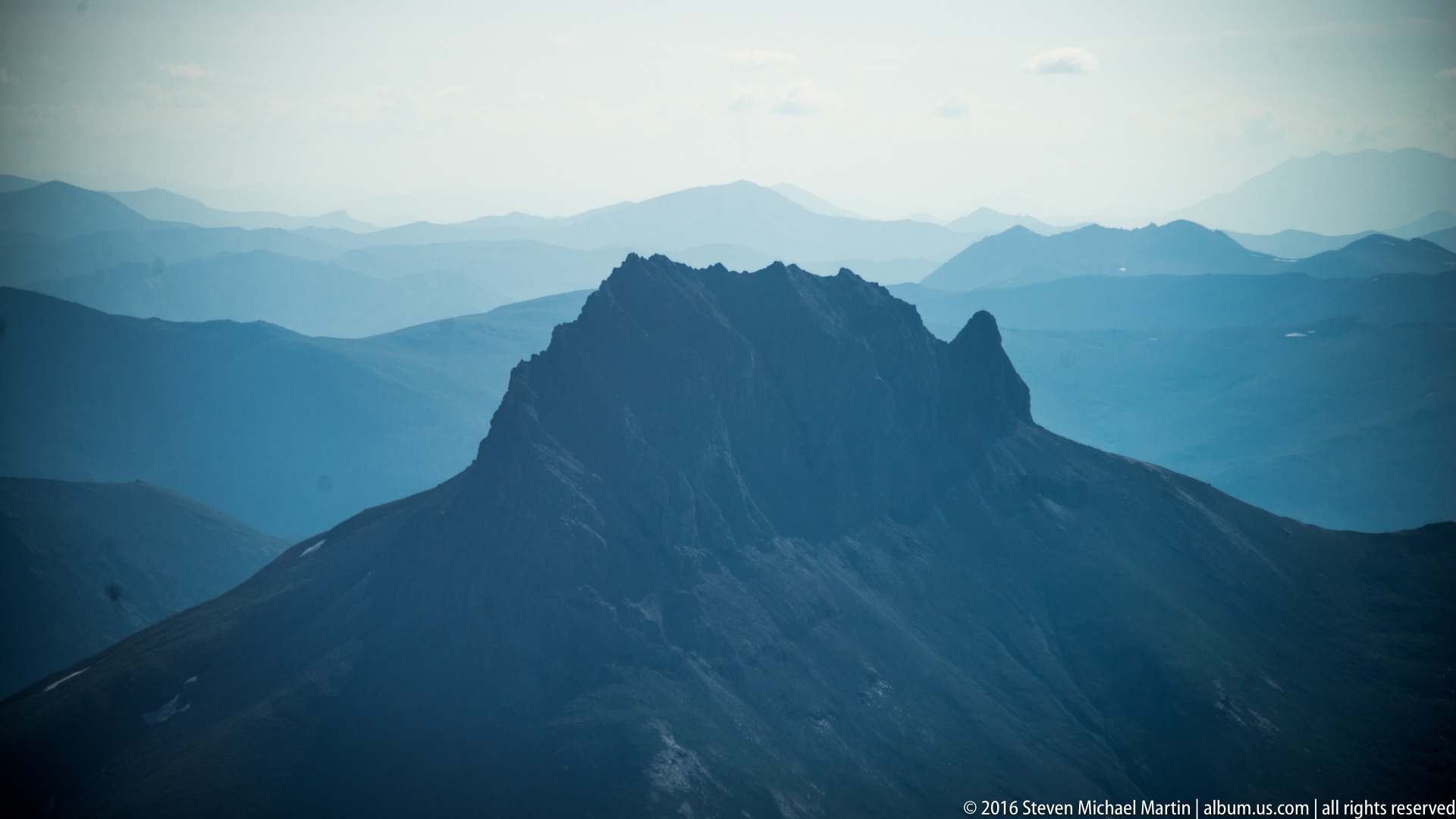
A dark, sharply serrated summit rises above a nearer ridge, silhouetted against several blue layers of distant mountains. The cool haze softens the background while preserving the peak’s distinct sawtooth outline. With no nearby scale reference or legible landmark, the photograph is best identified by its dramatic profile and atmospheric depth rather than a specific mountain name.
Caption
A dark, sharply serrated summit rises above a nearer ridge, silhouetted against several blue layers of distant mountains. The cool haze softens the background while preserving the peak’s distinct sawtooth outline. With no nearby scale reference or legible landmark, the photograph is best identified by its dramatic profile and atmospheric depth rather than a specific mountain name.
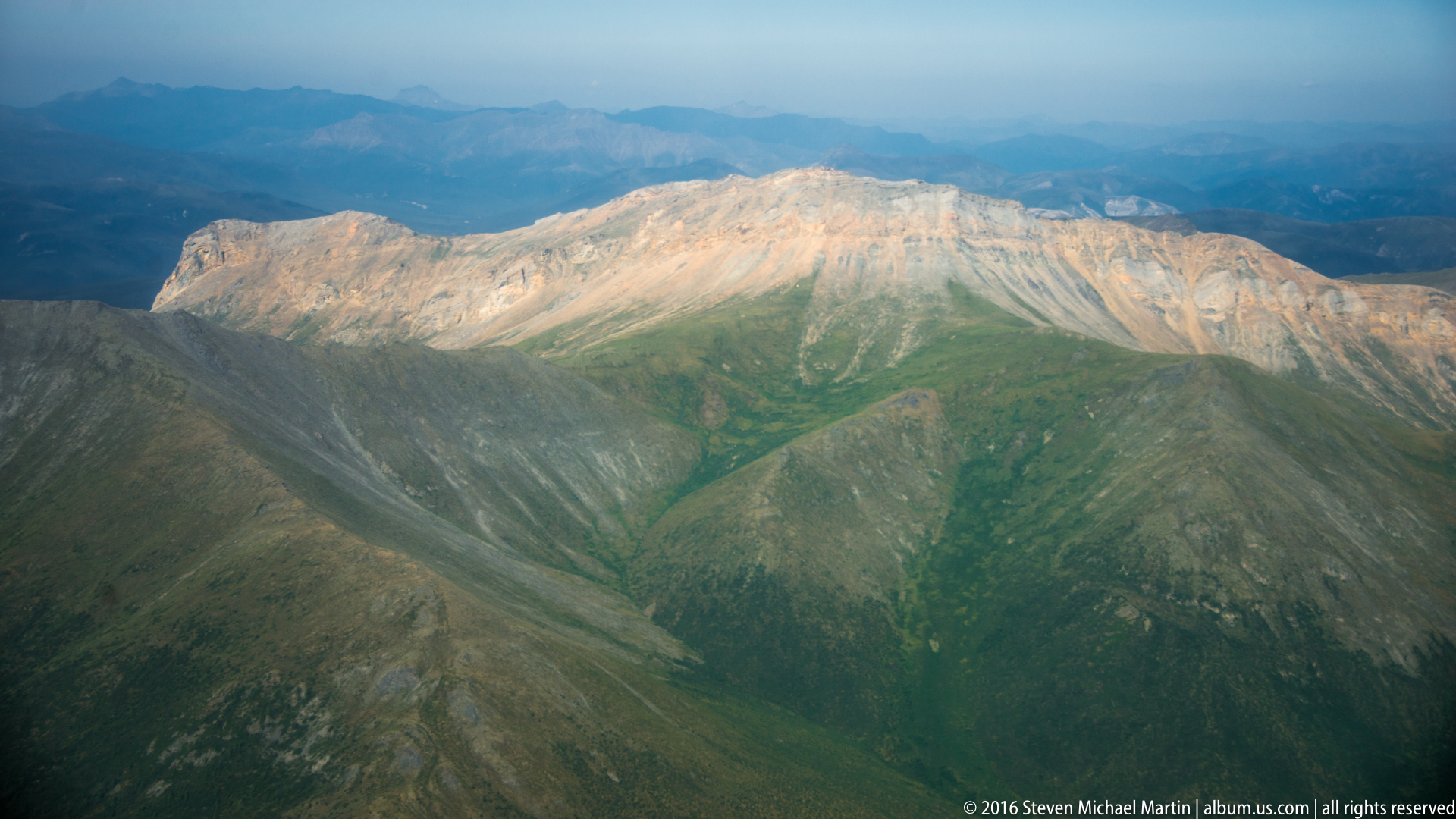
A broad, pale summit catches direct light above darker green-brown slopes. Its gently rounded crest contrasts with the narrow jagged peak in the previous frame, while distant ridges remain faint in the background. The low, warm light reveals subtle gullies and changes in vegetation across the mountain’s face.
Caption
A broad, pale summit catches direct light above darker green-brown slopes. Its gently rounded crest contrasts with the narrow jagged peak in the previous frame, while distant ridges remain faint in the background. The low, warm light reveals subtle gullies and changes in vegetation across the mountain’s face.

Two sharply pointed pale spires rise together from a dark, steep-sided basin, their snow-bright faces contrasting with shadowed rock and blue haze. The nearer ridge partly frames their base, while layers of peaks recede behind them. Their distinctive paired silhouette is the photograph’s strongest identifying feature; no named formation is established by the visible evidence.
Caption
Two sharply pointed pale spires rise together from a dark, steep-sided basin, their snow-bright faces contrasting with shadowed rock and blue haze. The nearer ridge partly frames their base, while layers of peaks recede behind them. Their distinctive paired silhouette is the photograph’s strongest identifying feature; no named formation is established by the visible evidence.

The paired pale pinnacles reappear farther back in the composition, partly screened by warm brown ridges in the foreground. Dark mountain walls enclose the basin, and blue atmospheric haze softens the distant range. This framing view emphasizes the spires’ position within the surrounding terrain, rather than isolating their shape as in the preceding image.
Caption
The paired pale pinnacles reappear farther back in the composition, partly screened by warm brown ridges in the foreground. Dark mountain walls enclose the basin, and blue atmospheric haze softens the distant range. This framing view emphasizes the spires’ position within the surrounding terrain, rather than isolating their shape as in the preceding image.
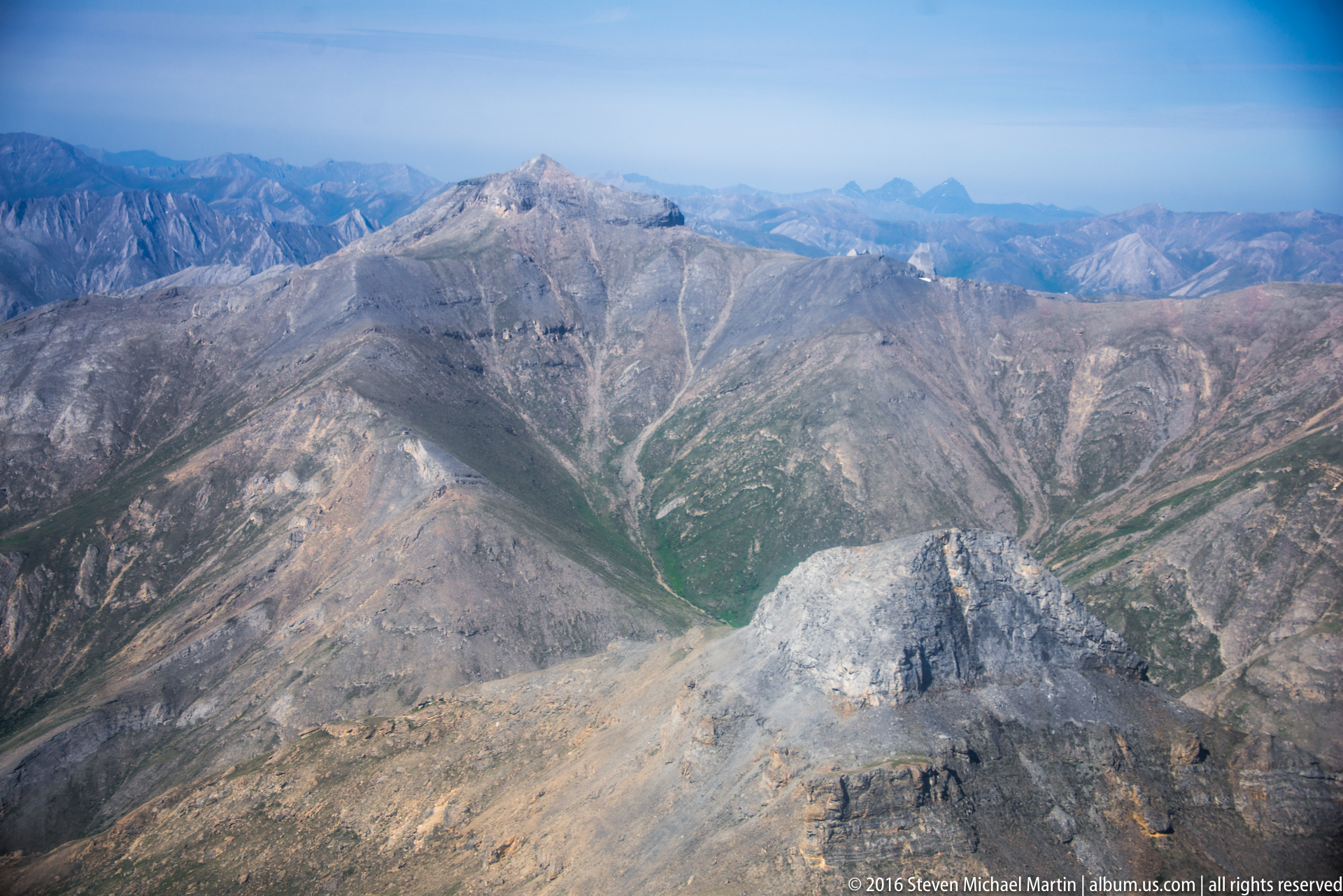
A broad panorama opens across a patchwork of pale rocky slopes, darker ridges, and green valleys. A light-colored ridge crosses the foreground, while numerous peaks recede toward a clear blue horizon. The image records the range at a wider scale than the previous views, allowing the interlocking valleys and changes in surface color to define the scene.
Caption
A broad panorama opens across a patchwork of pale rocky slopes, darker ridges, and green valleys. A light-colored ridge crosses the foreground, while numerous peaks recede toward a clear blue horizon. The image records the range at a wider scale than the previous views, allowing the interlocking valleys and changes in surface color to define the scene.

A succession of pale, angular ridges fills the foreground and middle distance, separated by dark valleys and narrow green drainage corridors. The higher skyline stretches across the horizon beneath thin clouds. The oblique aerial view reveals repeated folds and sharp changes in slope, making the rhythm of ridge and valley the main subject.
Caption
A succession of pale, angular ridges fills the foreground and middle distance, separated by dark valleys and narrow green drainage corridors. The higher skyline stretches across the horizon beneath thin clouds. The oblique aerial view reveals repeated folds and sharp changes in slope, making the rhythm of ridge and valley the main subject.
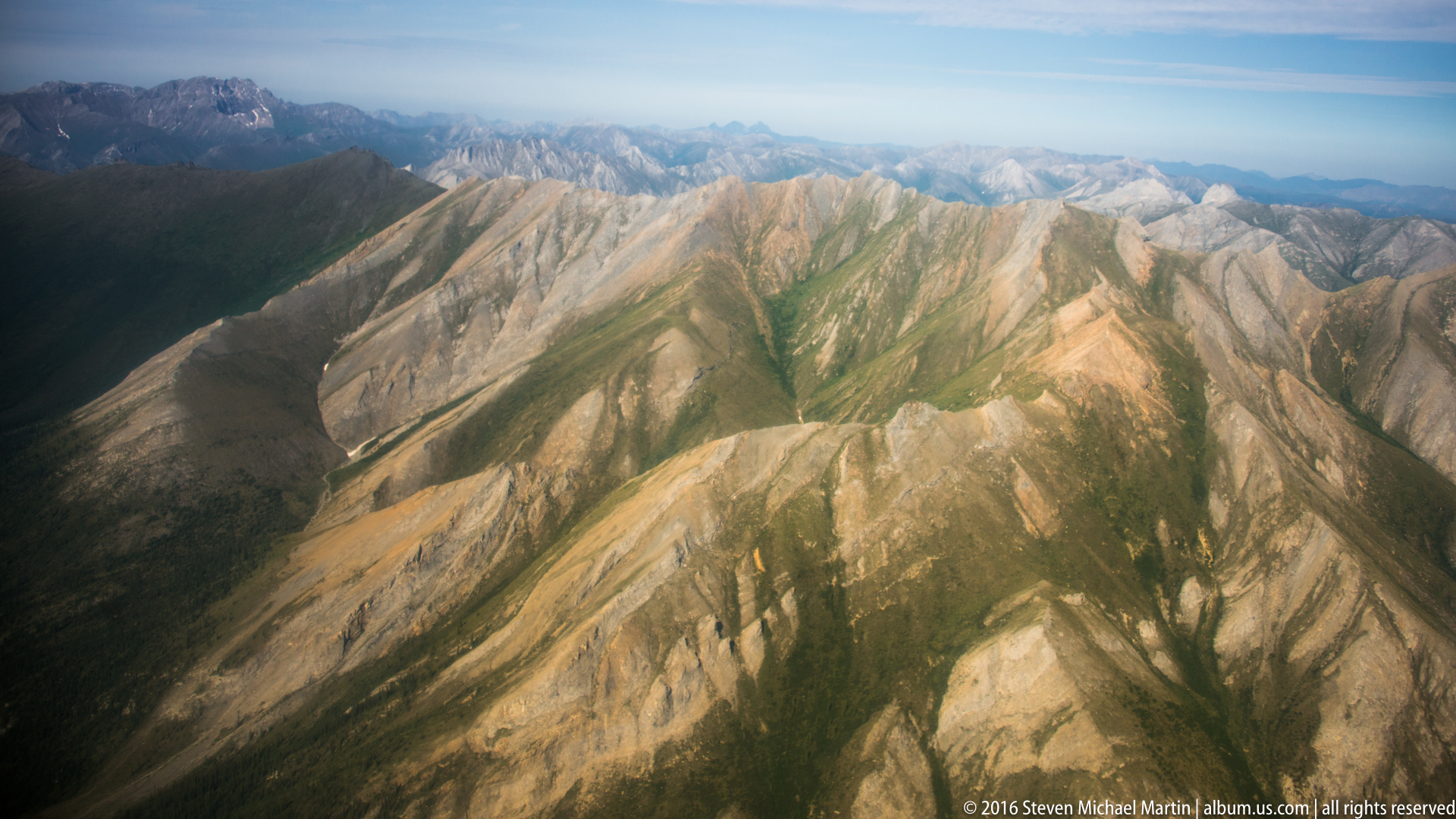
Pale ridges run diagonally across the frame, their rounded crests divided by dark, steep gullies. The warm light brings out bands of exposed rock and sparse vegetation, while a deeper shadowed basin opens along the left edge. This closer view stresses the folds and drainage cuts in the terrain rather than the full mountain chain.
Caption
Pale ridges run diagonally across the frame, their rounded crests divided by dark, steep gullies. The warm light brings out bands of exposed rock and sparse vegetation, while a deeper shadowed basin opens along the left edge. This closer view stresses the folds and drainage cuts in the terrain rather than the full mountain chain.

Rendered in monochrome, the same rugged terrain becomes a pattern of alternating bright ridgelines and dark troughs. The foreground slope drops sharply into a broad shadowed valley, while successive peaks fade into a pale, hazy sky. The lack of color concentrates attention on texture, relief, and the repeating geometry of the mountain folds.
Caption
Rendered in monochrome, the same rugged terrain becomes a pattern of alternating bright ridgelines and dark troughs. The foreground slope drops sharply into a broad shadowed valley, while successive peaks fade into a pale, hazy sky. The lack of color concentrates attention on texture, relief, and the repeating geometry of the mountain folds.
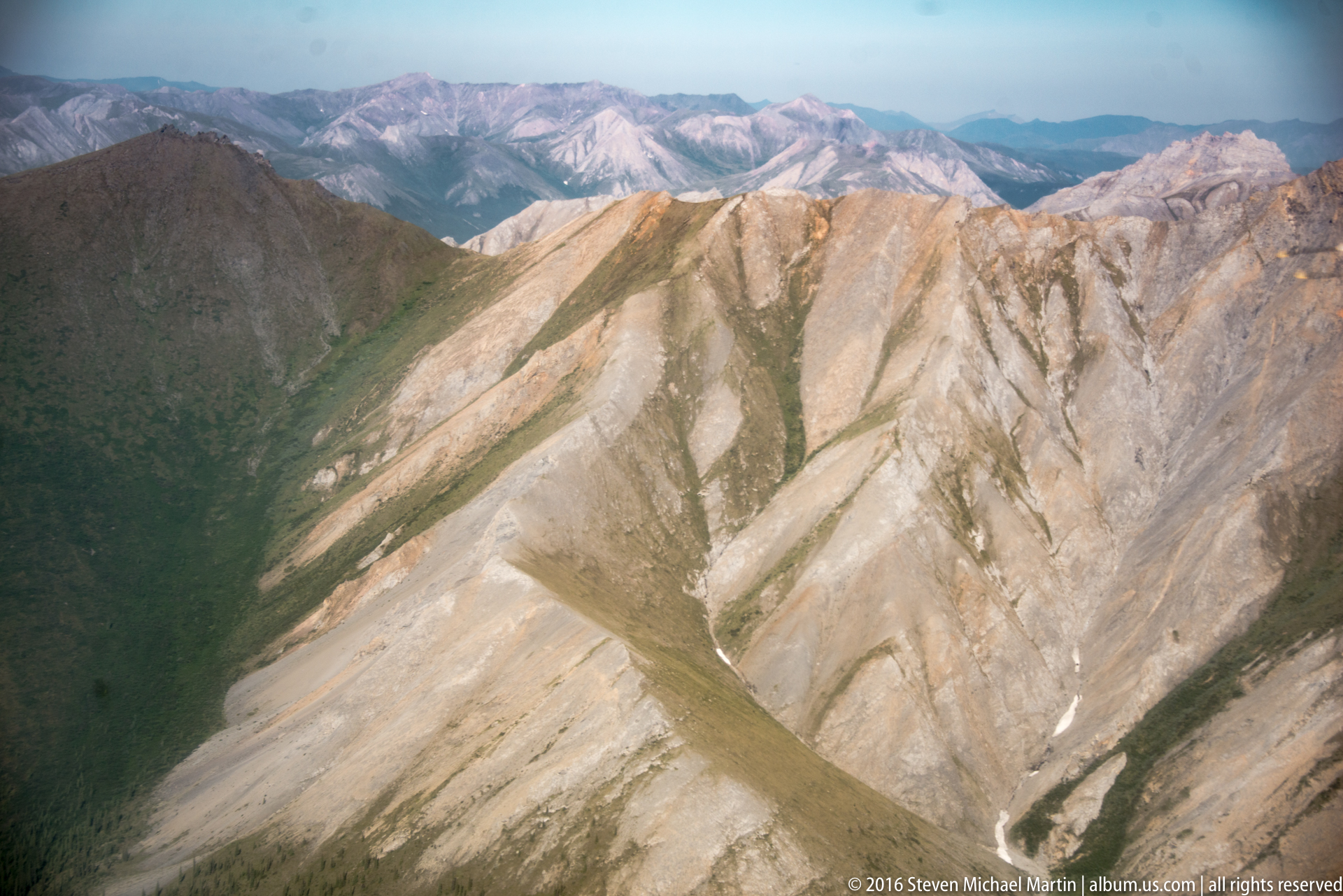
A pale ridge cuts diagonally from the lower foreground toward the center, its exposed crest catching warm sunlight. A deep green valley and darker mountain wall lie to the left, while additional pale ridges recede to the right. The strong diagonal gives this frame a directional sweep and sets it apart from the flatter panoramas.
Caption
A pale ridge cuts diagonally from the lower foreground toward the center, its exposed crest catching warm sunlight. A deep green valley and darker mountain wall lie to the left, while additional pale ridges recede to the right. The strong diagonal gives this frame a directional sweep and sets it apart from the flatter panoramas.

Blue haze mutes the distant range, where a high, pale summit rises above shadowed valleys and ridges. A green-brown slope frames the lower right, providing a foreground contrast to the cool, receding mountains. The image emphasizes depth and atmospheric distance, with the pale summit and layered ridge silhouettes forming the central view.
Caption
Blue haze mutes the distant range, where a high, pale summit rises above shadowed valleys and ridges. A green-brown slope frames the lower right, providing a foreground contrast to the cool, receding mountains. The image emphasizes depth and atmospheric distance, with the pale summit and layered ridge silhouettes forming the central view.
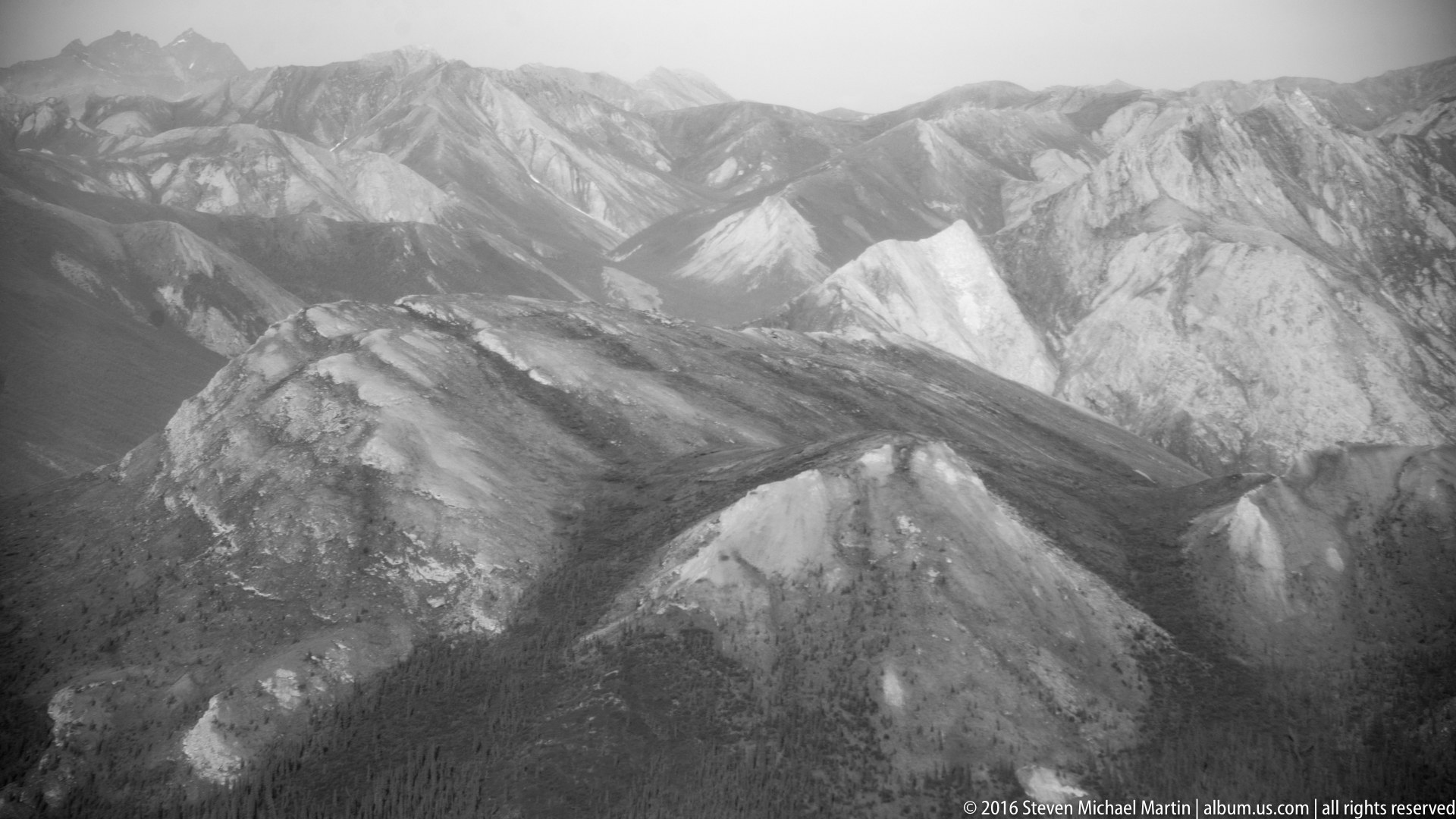
A broad black-and-white view looks across a field of pale ridges and darker valleys. Rounded foreground crests descend toward a central basin, where sharper light-colored slopes emerge beyond. Haze softens the distant range, while the monochrome palette highlights the terrain’s sculpted surfaces and repeated drainage lines.
Caption
A broad black-and-white view looks across a field of pale ridges and darker valleys. Rounded foreground crests descend toward a central basin, where sharper light-colored slopes emerge beyond. Haze softens the distant range, while the monochrome palette highlights the terrain’s sculpted surfaces and repeated drainage lines.
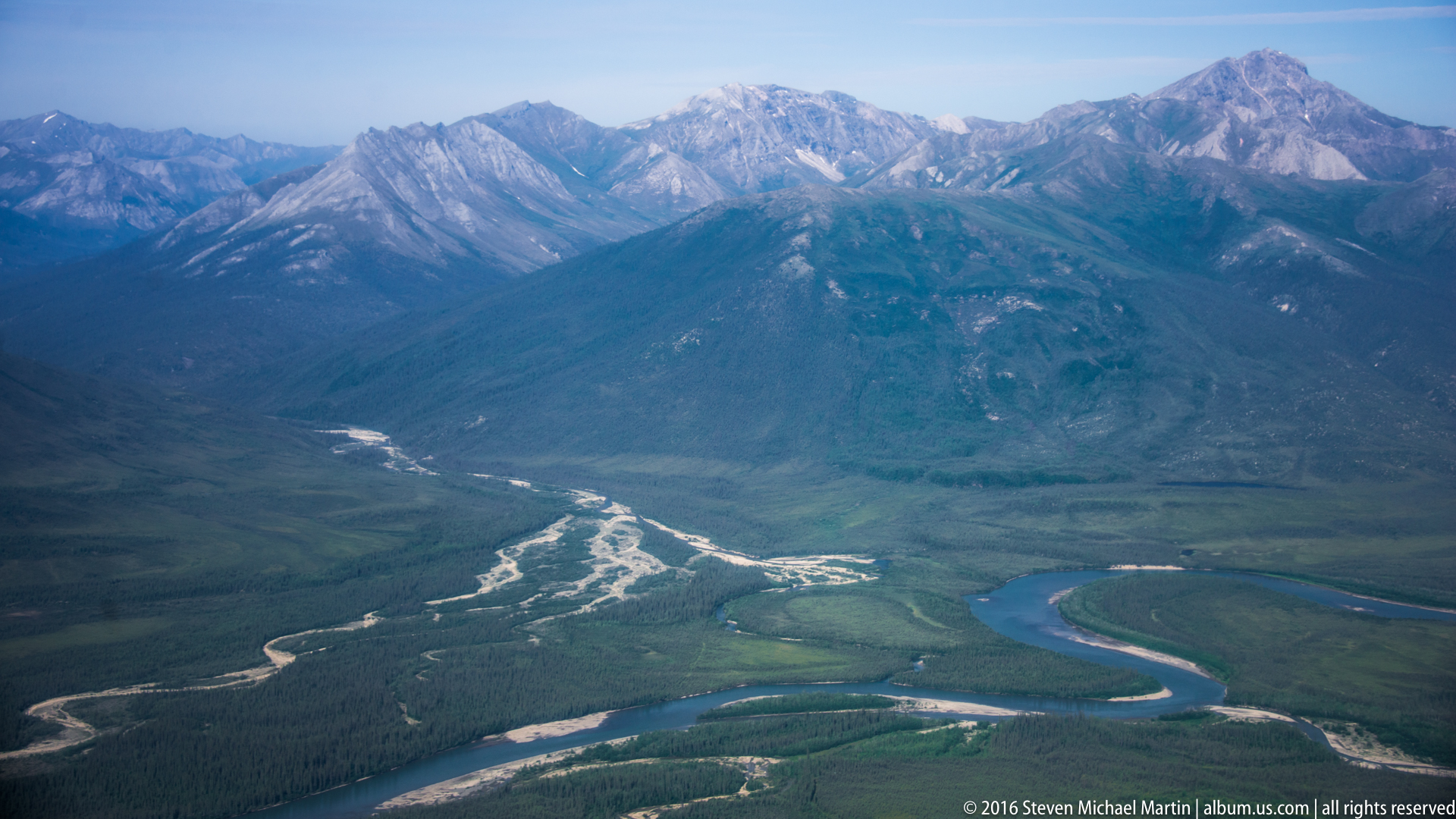
A broad river bends across a forested valley, forming a pronounced loop in the foreground before dividing into pale gravel channels farther upstream. Dark mountain slopes rise behind the valley, their higher ridges catching the light. The composition follows the water from the near bend toward the distant range, showing how the river corridor opens through the surrounding wilderness.
Caption
A broad river bends across a forested valley, forming a pronounced loop in the foreground before dividing into pale gravel channels farther upstream. Dark mountain slopes rise behind the valley, their higher ridges catching the light. The composition follows the water from the near bend toward the distant range, showing how the river corridor opens through the surrounding wilderness.
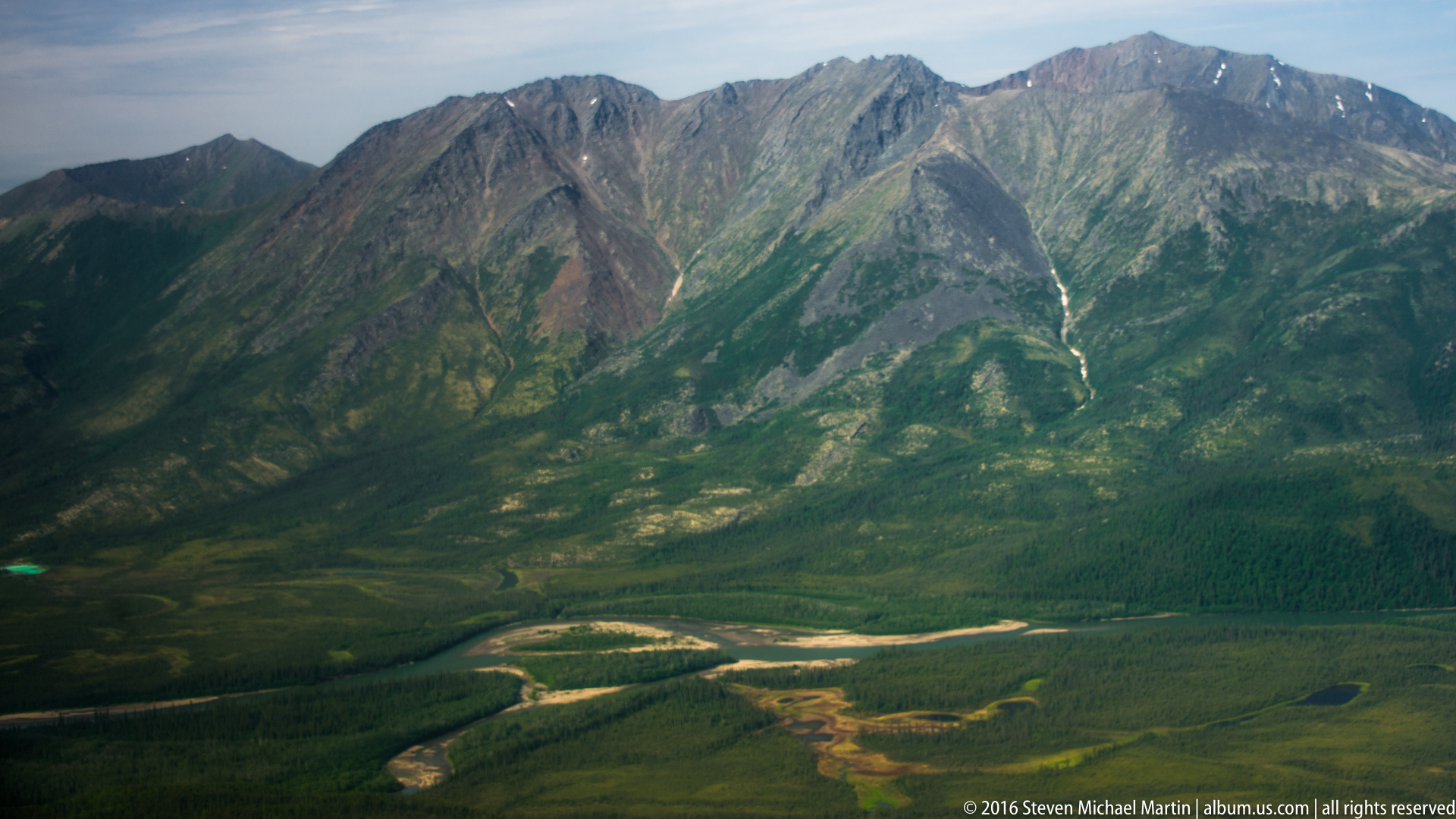
A steep mountain wall fills the upper frame, its dark ridges broken by narrow pale drainage lines and bands of green vegetation. Below, a braided river spreads through a broad, flat valley floor, where pale gravel bars divide the channels. The close alignment of the rugged slopes and branching watercourse gives this aerial view a stronger sense of enclosure than the neighboring, wider river panoramas.
Caption
A steep mountain wall fills the upper frame, its dark ridges broken by narrow pale drainage lines and bands of green vegetation. Below, a braided river spreads through a broad, flat valley floor, where pale gravel bars divide the channels. The close alignment of the rugged slopes and branching watercourse gives this aerial view a stronger sense of enclosure than the neighboring, wider river panoramas.
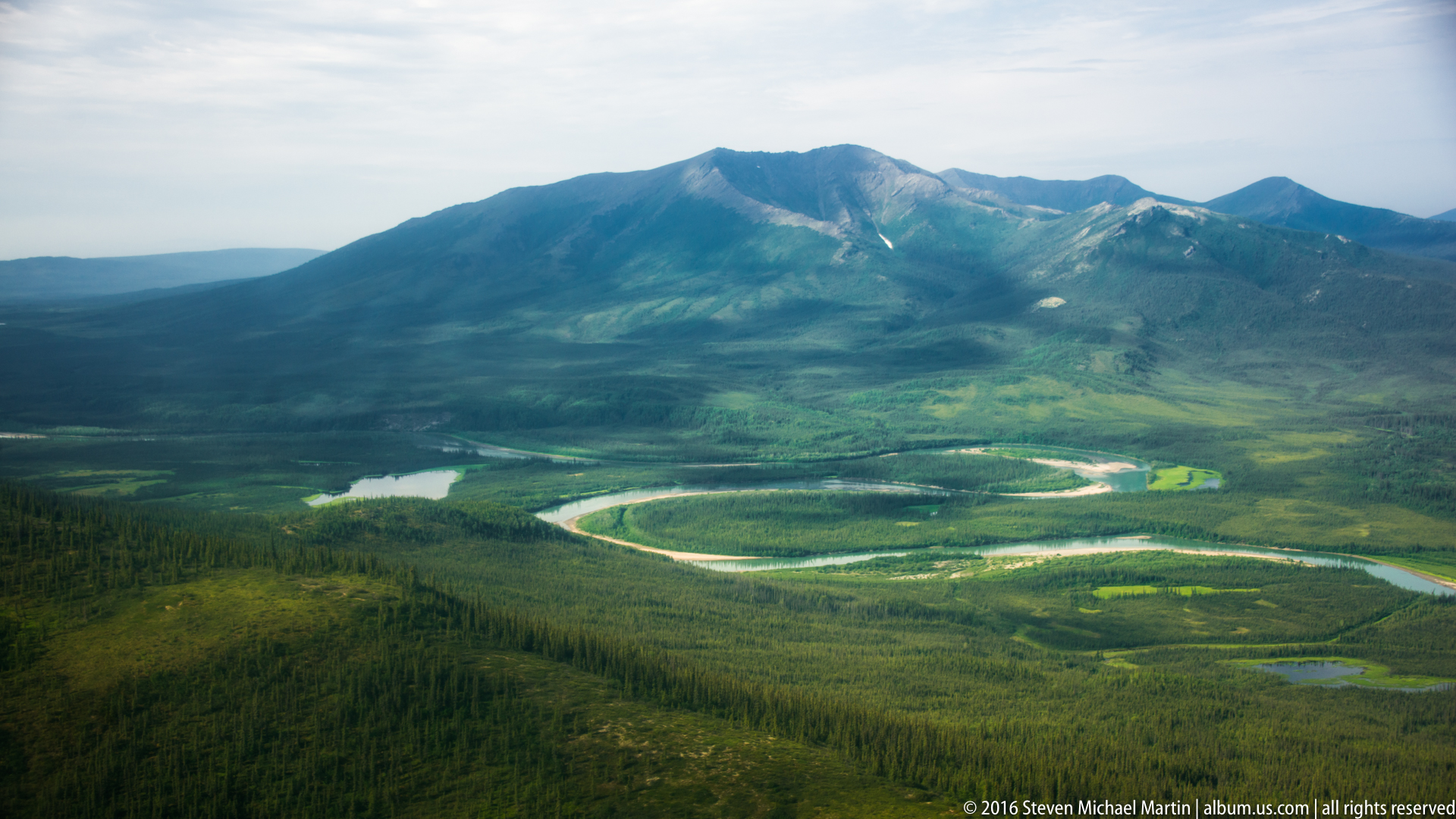
A pale river curves in a long S-shape across a broad green valley, bordered by dark bands of trees and open tundra. A rounded mountain rises beyond the water, while low, level terrain stretches toward the left horizon. The distance between the river bends and the mountain gives the scene a spacious, horizontal structure distinct from the tighter mountain gorge views nearby.
Caption
A pale river curves in a long S-shape across a broad green valley, bordered by dark bands of trees and open tundra. A rounded mountain rises beyond the water, while low, level terrain stretches toward the left horizon. The distance between the river bends and the mountain gives the scene a spacious, horizontal structure distinct from the tighter mountain gorge views nearby.
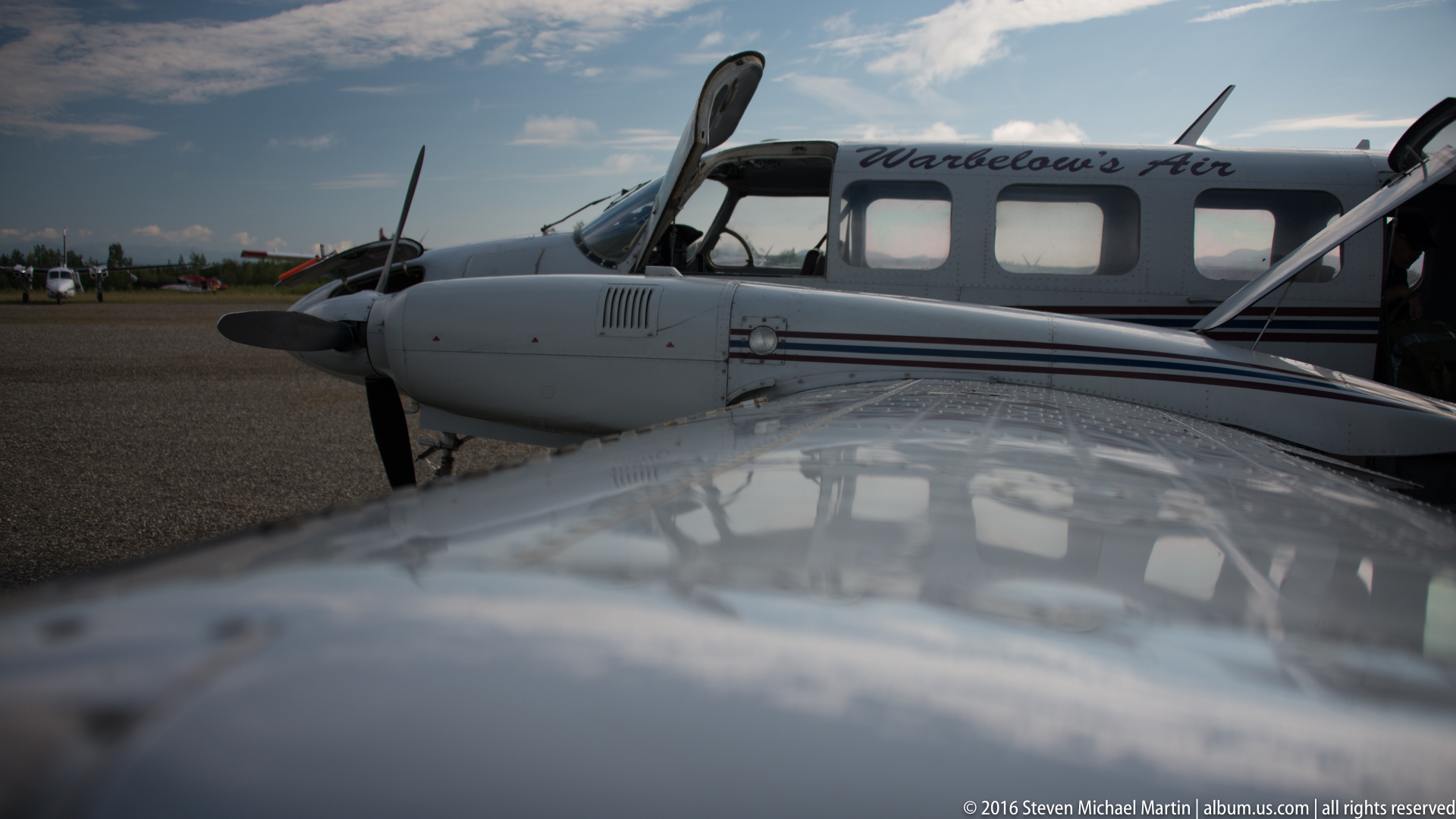
A single-engine aircraft marked “Warbelow’s Air” stands on an airstrip, photographed close to its nose and left wing. The polished wing dominates the foreground and reflects the cabin windows, while the propeller, landing gear and open side windows remain visible beyond it. The scene records the small-aircraft access that connects remote communities and wilderness destinations in northern Alaska.
Caption
A single-engine aircraft marked “Warbelow’s Air” stands on an airstrip, photographed close to its nose and left wing. The polished wing dominates the foreground and reflects the cabin windows, while the propeller, landing gear and open side windows remain visible beyond it. The scene records the small-aircraft access that connects remote communities and wilderness destinations in northern Alaska.
Gates of the Arctic National Park and Preserve — Field Guide
National Park Field Guide
📍 Overview
Gates of the Arctic National Park and Preserve protects one of the largest undeveloped wilderness areas in the United States. Located north of the Arctic Circle, the park includes rugged mountain ranges, broad river valleys, and tundra landscapes shaped by glacial and geological processes. The absence of roads and developed trails contributes to a strong sense of isolation and environmental continuity.
The Brooks Range forms the central geographic feature of the park, creating dramatic transitions between interior forest ecosystems and northern tundra environments. Wildlife including caribou, wolves, and bears inhabit the region, reflecting ecological relationships shaped by seasonal migration and climate conditions. Archaeological evidence indicates long-standing human presence connected to subsistence traditions adapted to Arctic environments.
⭐ Highlights
- One of the most remote national parks in the United States
- Brooks Range mountain landscapes
- Large-scale wilderness with minimal development
- Wildlife habitats shaped by seasonal migration
- River systems flowing through Arctic valleys
🔎 Key Features
- Mountain ranges formed by geological uplift
- Remote tundra and river valley ecosystems
- Archaeological evidence of early human activity
- Landscape shaped by glacial processes
- Minimal infrastructure emphasizing wilderness preservation
📷 Photography Notes
- Wide compositions help convey the scale of the landscape
- Low-angle light can emphasize mountain textures
- Weather changes can create dramatic atmosphere
- Foreground elements help add depth to expansive views
- Seasonal colors can vary significantly across tundra terrain
- Look for compositions that emphasize isolation and scale

A printed page pairs a snow-covered mountain panorama with a lone hiker crossing the foreground. Smaller photographs of wildlife, plants, and terrain sit above columns of explanatory text, arranging the Arctic landscape as both a vast setting and a place encountered on foot. The tiny print is not legible in this view, so the page’s precise publication title and claims remain unidentified.
Caption
A printed page pairs a snow-covered mountain panorama with a lone hiker crossing the foreground. Smaller photographs of wildlife, plants, and terrain sit above columns of explanatory text, arranging the Arctic landscape as both a vast setting and a place encountered on foot. The tiny print is not legible in this view, so the page’s precise publication title and claims remain unidentified.

The map traces the extensive, irregular boundary of Gates of the Arctic National Park and Preserve across a relief-rendered section of northern Alaska. Green lines enclose a broad central area and several separated units, while nearby preserves, wilderness areas, rivers, and settlements place the protected lands in regional context. The park’s name is printed prominently within the shaded mountain terrain.
Caption
The map traces the extensive, irregular boundary of Gates of the Arctic National Park and Preserve across a relief-rendered section of northern Alaska. Green lines enclose a broad central area and several separated units, while nearby preserves, wilderness areas, rivers, and settlements place the protected lands in regional context. The park’s name is printed prominently within the shaded mountain terrain.