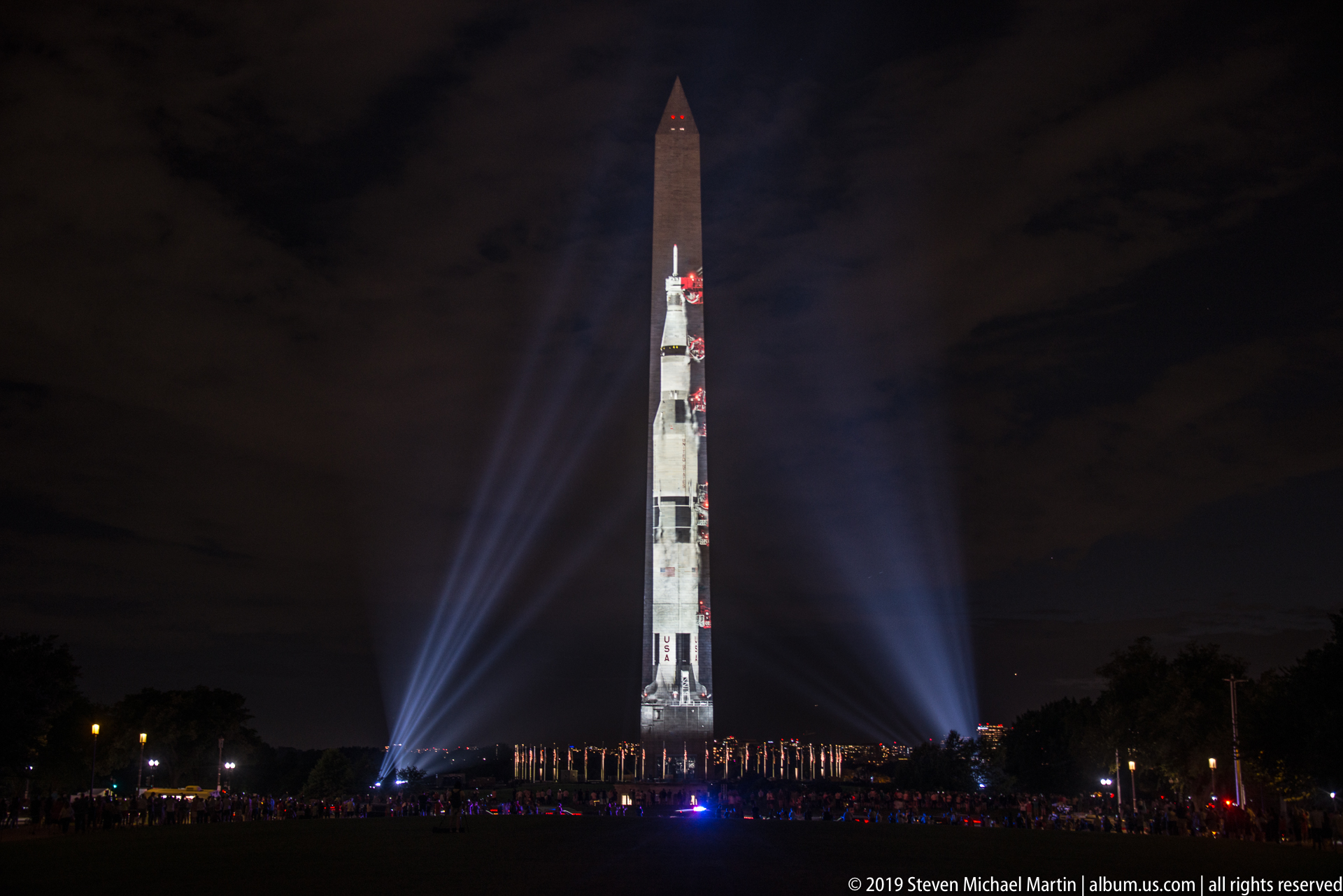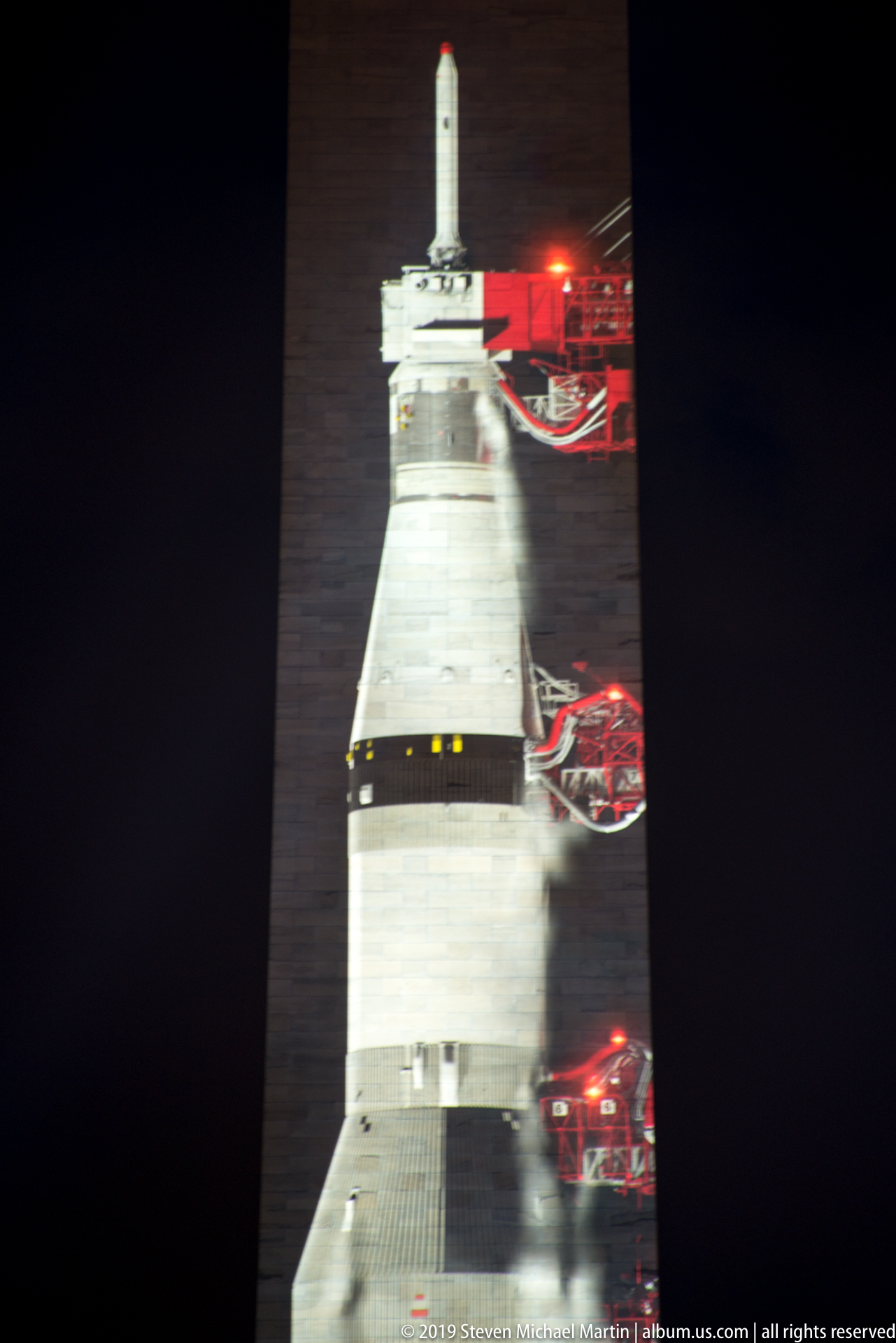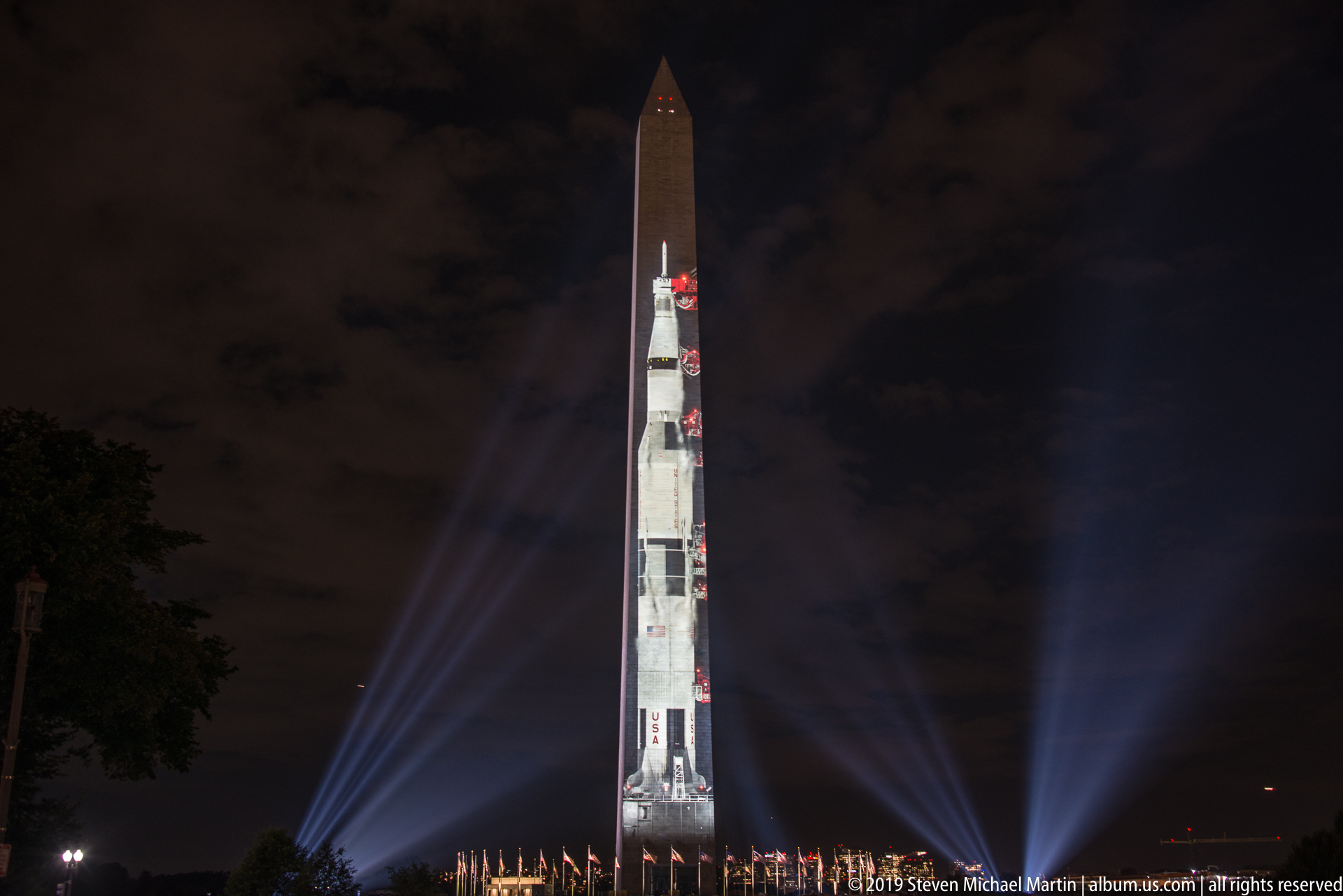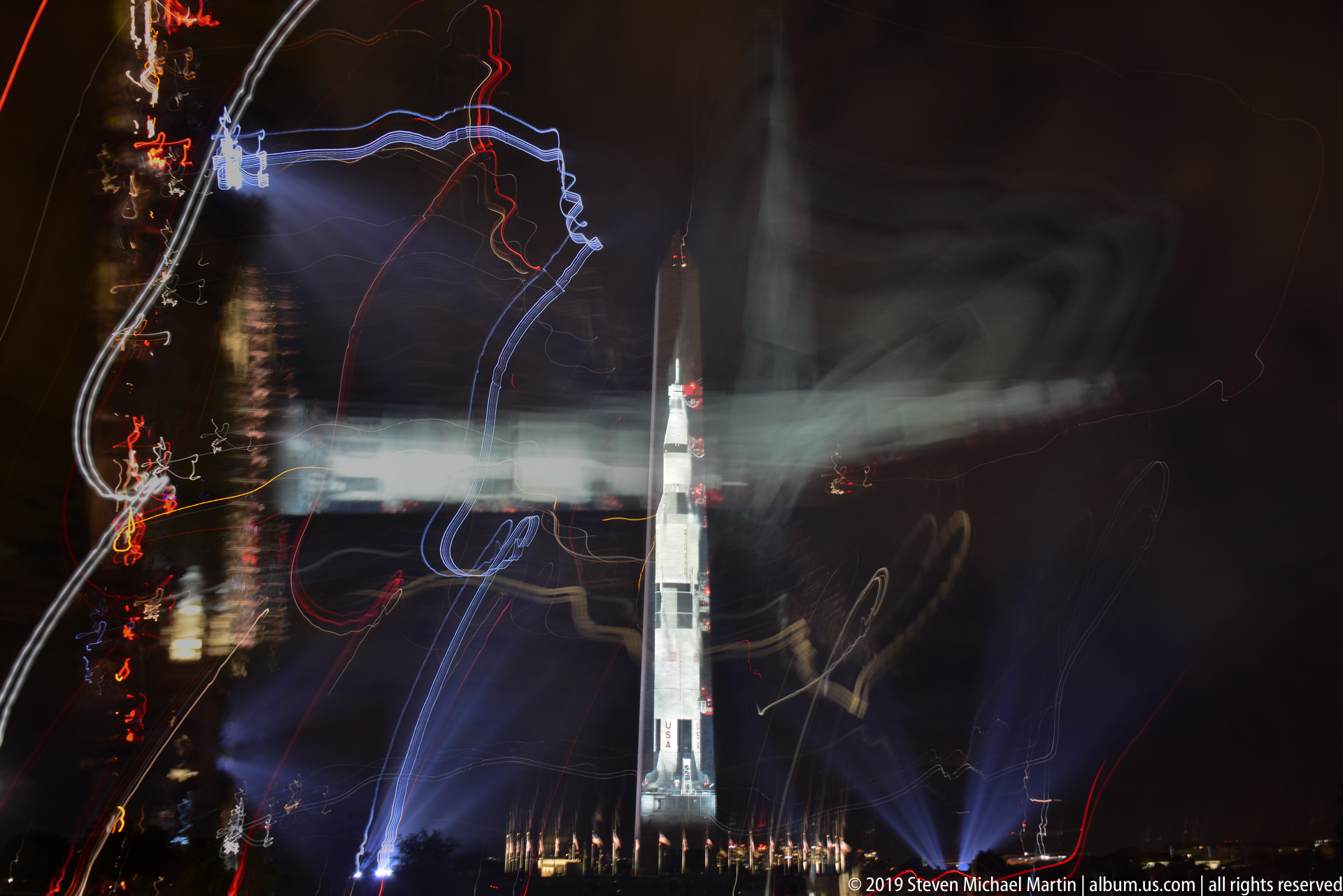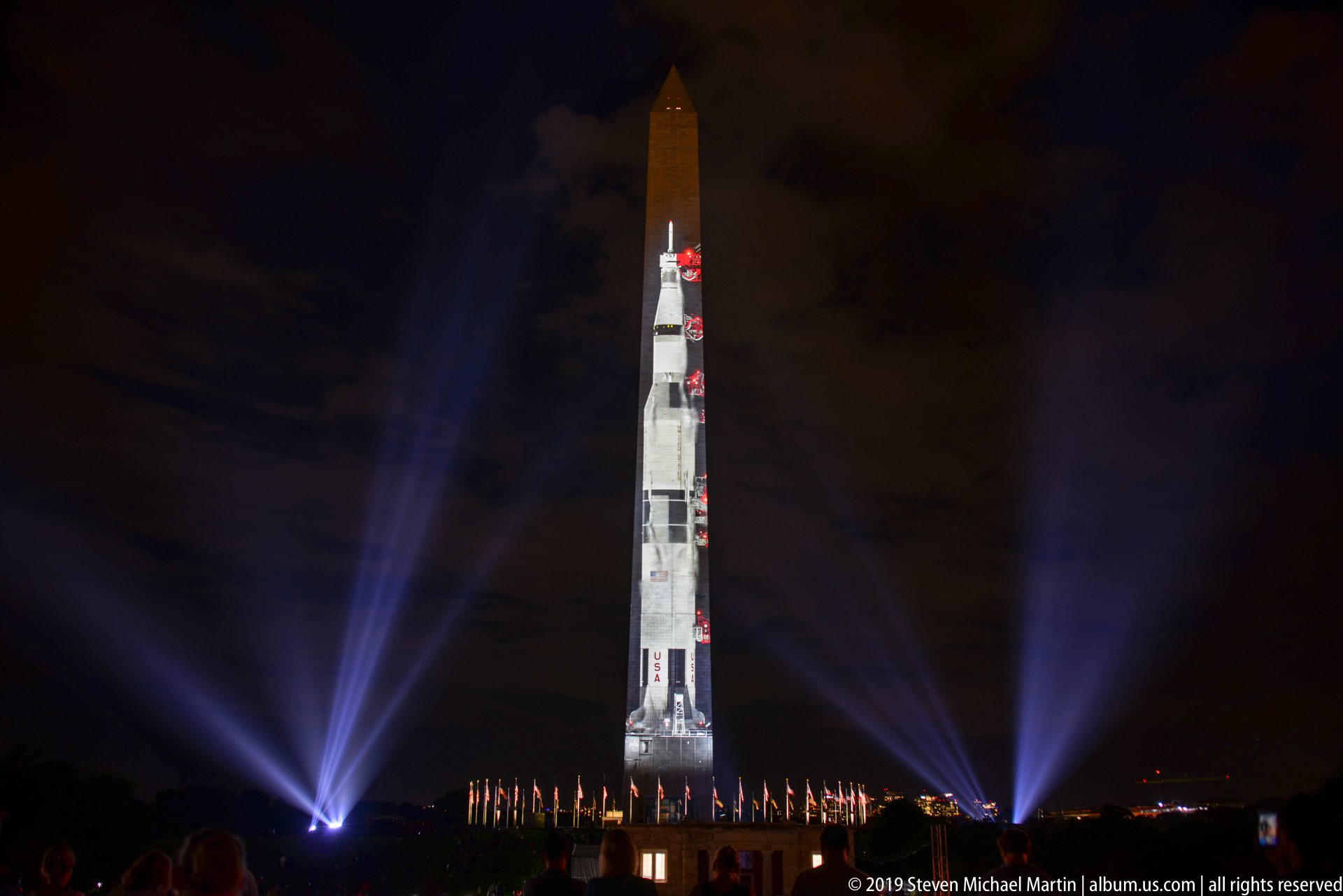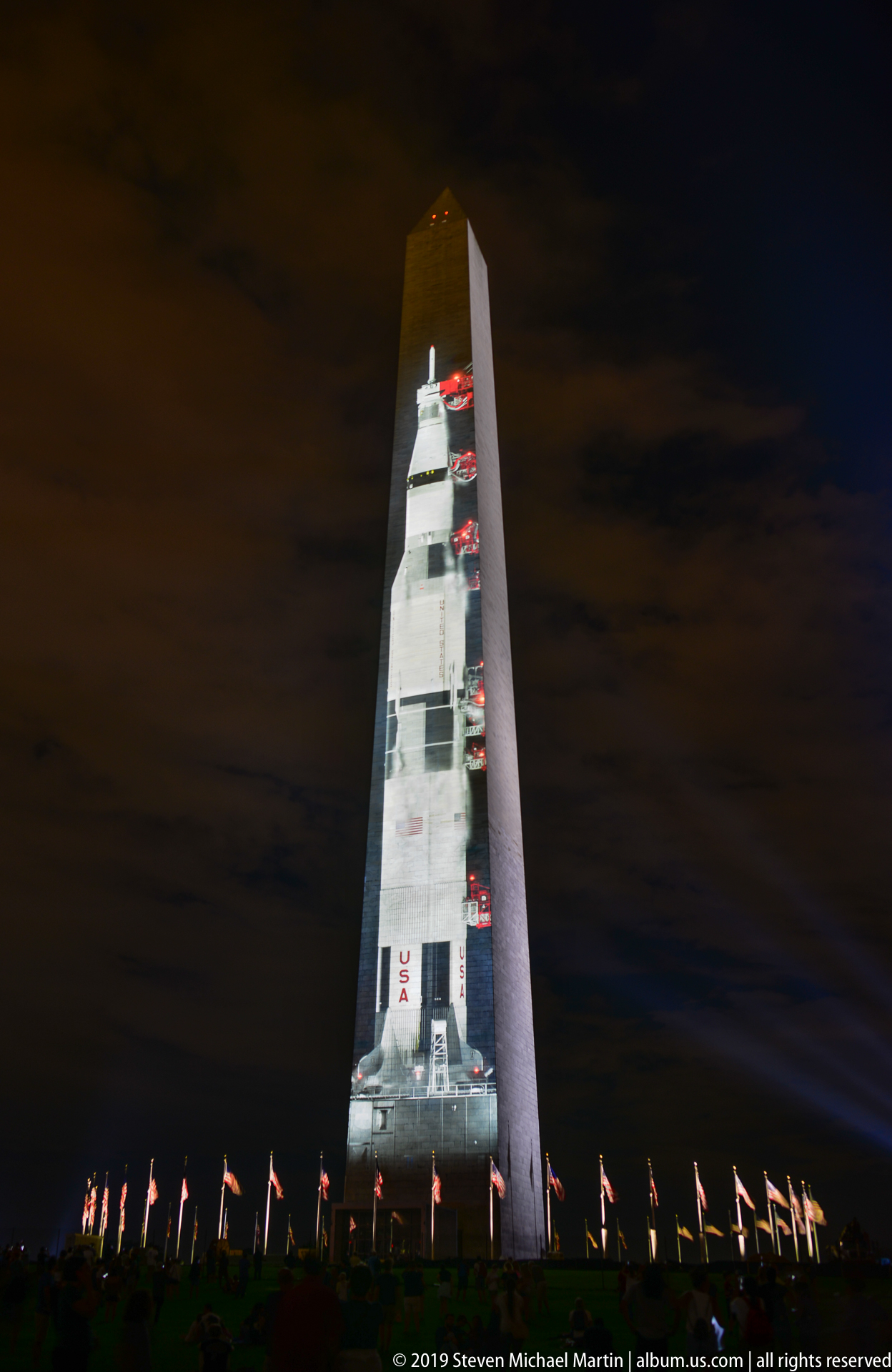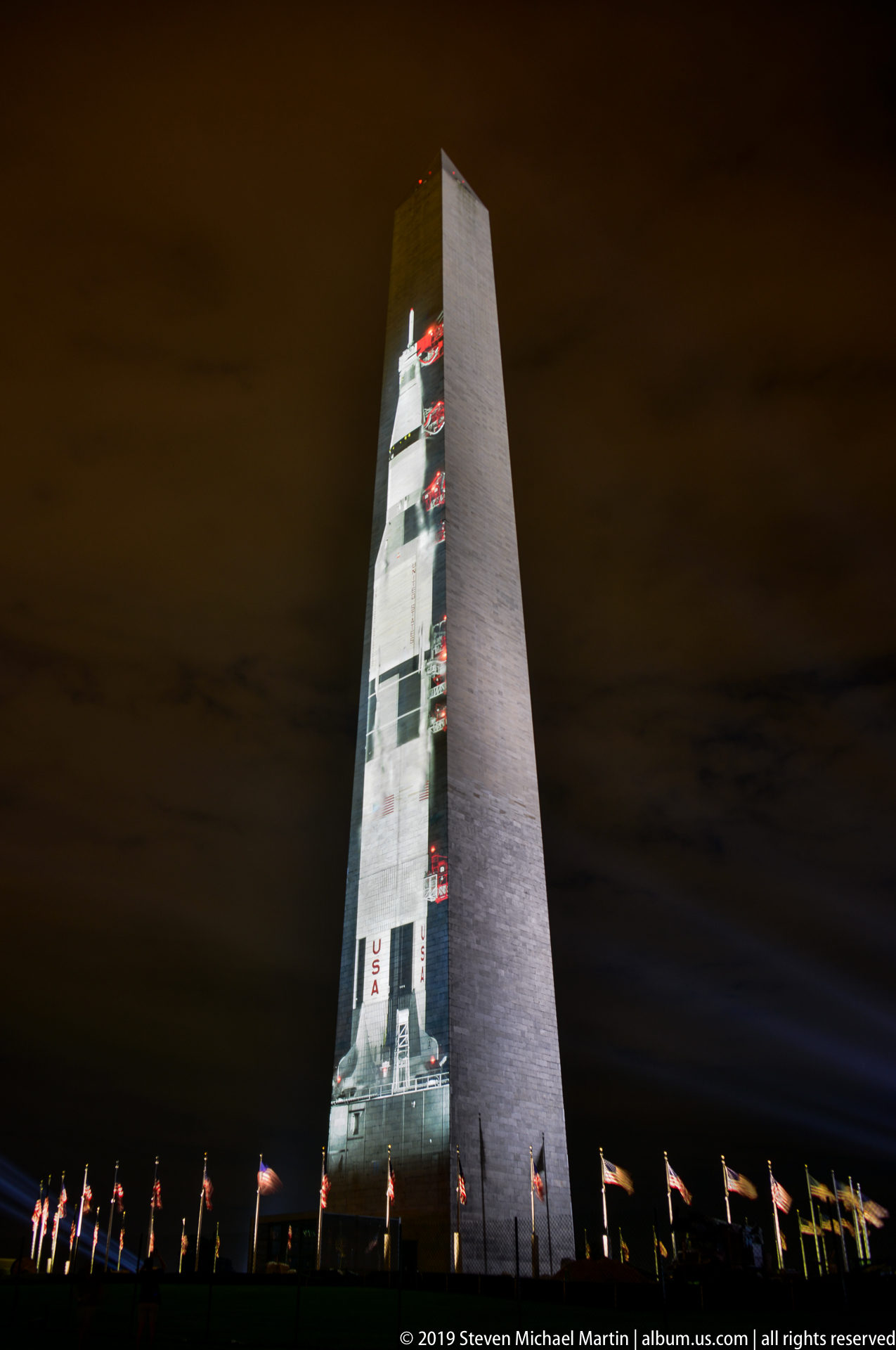
Saturn V Rocket Projection on the Washington Monument
The Washington Monument forms the central vertical axis of the National Mall, designed as an obelisk to commemorate George Washington and the founding of the United States. Rising 555 feet above the surrounding landscape, the monument reflects nineteenth-century architectural traditions that associated classical form with permanence and civic virtue. Its unobstructed position within the planned geometry of the capital allows the structure to serve as both a commemorative landmark and a visual focal point for national events and symbolic projections.
Projected imagery of the Saturn V rocket onto the monument connects the architectural symbolism of the capital with the technological achievements of the Apollo program, which carried astronauts to the Moon between 1967 and 1973. The Saturn V remains one of the most powerful rockets ever developed and represents a defining accomplishment of twentieth-century scientific innovation. Aligning the image of the rocket with the monument visually links the legacy of national leadership with the history of space exploration, demonstrating how civic landscapes can interpret milestones in science and engineering.
The projection of the Saturn V onto the Washington Monument contributes to understanding how contemporary visual media can reinterpret historic monuments through new symbolic associations. The alignment of architectural form and technological imagery reflects continuity between earlier expressions of national identity and modern achievements in exploration and discovery. Such temporary installations illustrate how the National Mall continues to function as a setting where history, innovation, and public imagination intersect.