Selby Lake – Gates of the Arctic National Park and Preserve
Selby Lake is located within the remote wilderness of Gates of the Arctic National Park and Preserve and reflects the expansive, undeveloped landscapes that define Alaska’s Brooks Range region. Surrounded by tundra ridges and glacially shaped terrain, the lake represents the type of quiet interior environment that characterizes much of the park. Its isolated setting illustrates the scale of protected wilderness areas that remain largely unchanged by modern infrastructure.
The surrounding landscape includes rolling uplands, river valleys, and seasonal vegetation adapted to Arctic climatic conditions. Lakes such as Selby are often connected to broader watershed systems that support wildlife movement and seasonal ecological cycles. The environment reflects long-term geological processes associated with glaciation, erosion, and climatic variation across northern Alaska.
Visitors encounter a landscape defined by silence, open horizons, and minimal visual development. The simplicity of the terrain emphasizes the vast scale of Gates of the Arctic and highlights the importance of preserving intact ecosystems. Selby Lake provides a representative example of the park’s remote interior character and the environmental continuity that distinguishes Arctic wilderness regions.
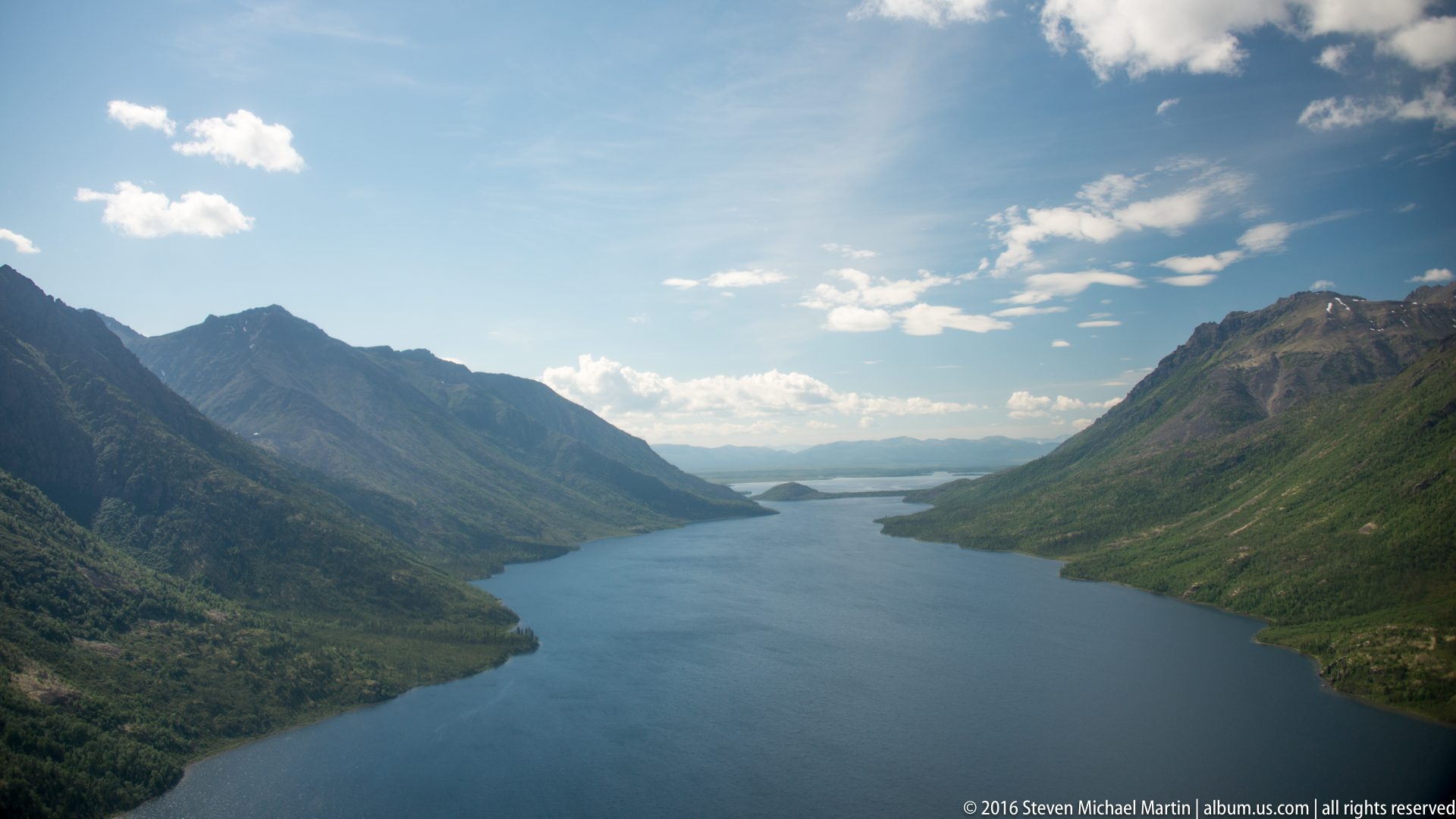
A long, dark lake narrows toward a distant opening between steep mountain walls. Small waves texture the foreground, while scattered clouds cast light across the upper slopes and a low shoreline remains visible along both sides. The nearly centered perspective follows the water deep into the valley, conveying the lake’s length and the close enclosure of the surrounding mountains.
Caption
A long, dark lake narrows toward a distant opening between steep mountain walls. Small waves texture the foreground, while scattered clouds cast light across the upper slopes and a low shoreline remains visible along both sides. The nearly centered perspective follows the water deep into the valley, conveying the lake’s length and the close enclosure of the surrounding mountains.
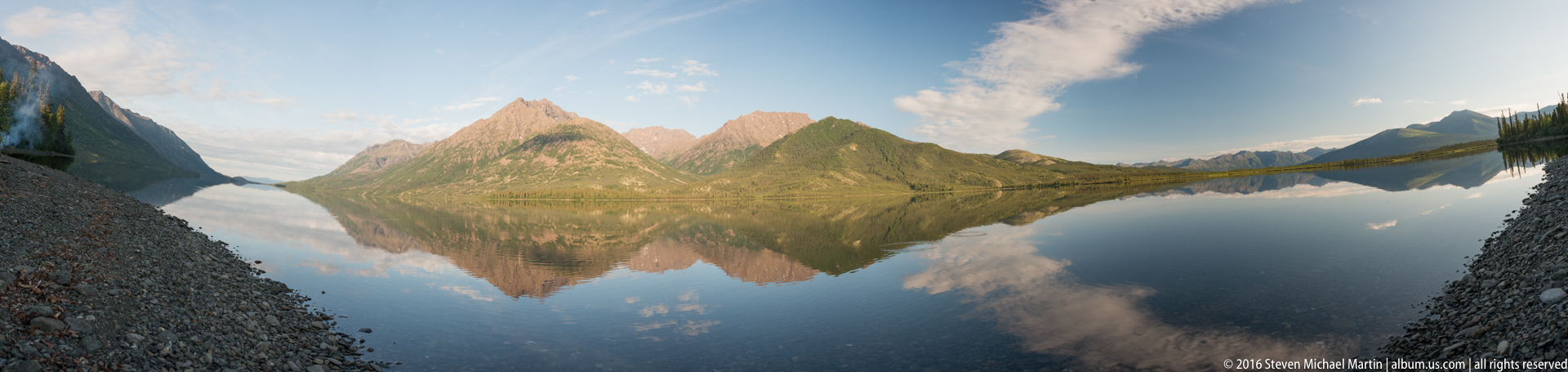
A broad lake mirrors a chain of steep, green and rocky peaks beneath scattered clouds. Gravel shores frame the water on both sides, drawing the eye toward the central mountain group and its inverted reflection. The wide panoramic composition gives the lake and surrounding relief nearly equal weight, recording the enclosed basin as a continuous landscape rather than isolating a single summit.
Caption
A broad lake mirrors a chain of steep, green and rocky peaks beneath scattered clouds. Gravel shores frame the water on both sides, drawing the eye toward the central mountain group and its inverted reflection. The wide panoramic composition gives the lake and surrounding relief nearly equal weight, recording the enclosed basin as a continuous landscape rather than isolating a single summit.
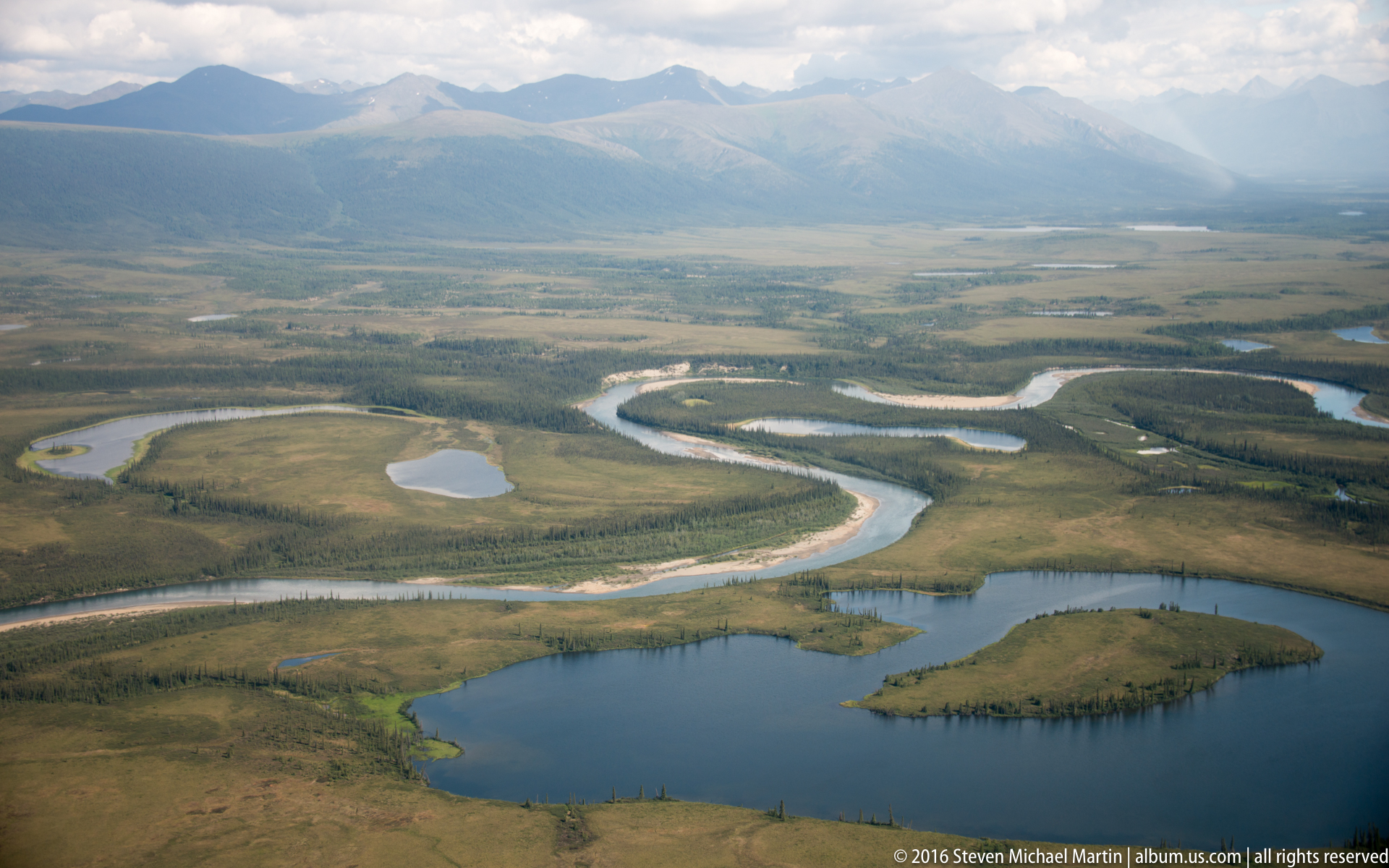
The river winds across a broad, low-lying plain before joining a larger lake in the foreground. Small ponds punctuate the open tundra, and distant mountains form a pale blue horizon. From this height, water occupies several distinct forms—curving channel, isolated pools, and lake—showing how the drainage network spreads across the flat landscape.
Caption
The river winds across a broad, low-lying plain before joining a larger lake in the foreground. Small ponds punctuate the open tundra, and distant mountains form a pale blue horizon. From this height, water occupies several distinct forms—curving channel, isolated pools, and lake—showing how the drainage network spreads across the flat landscape.
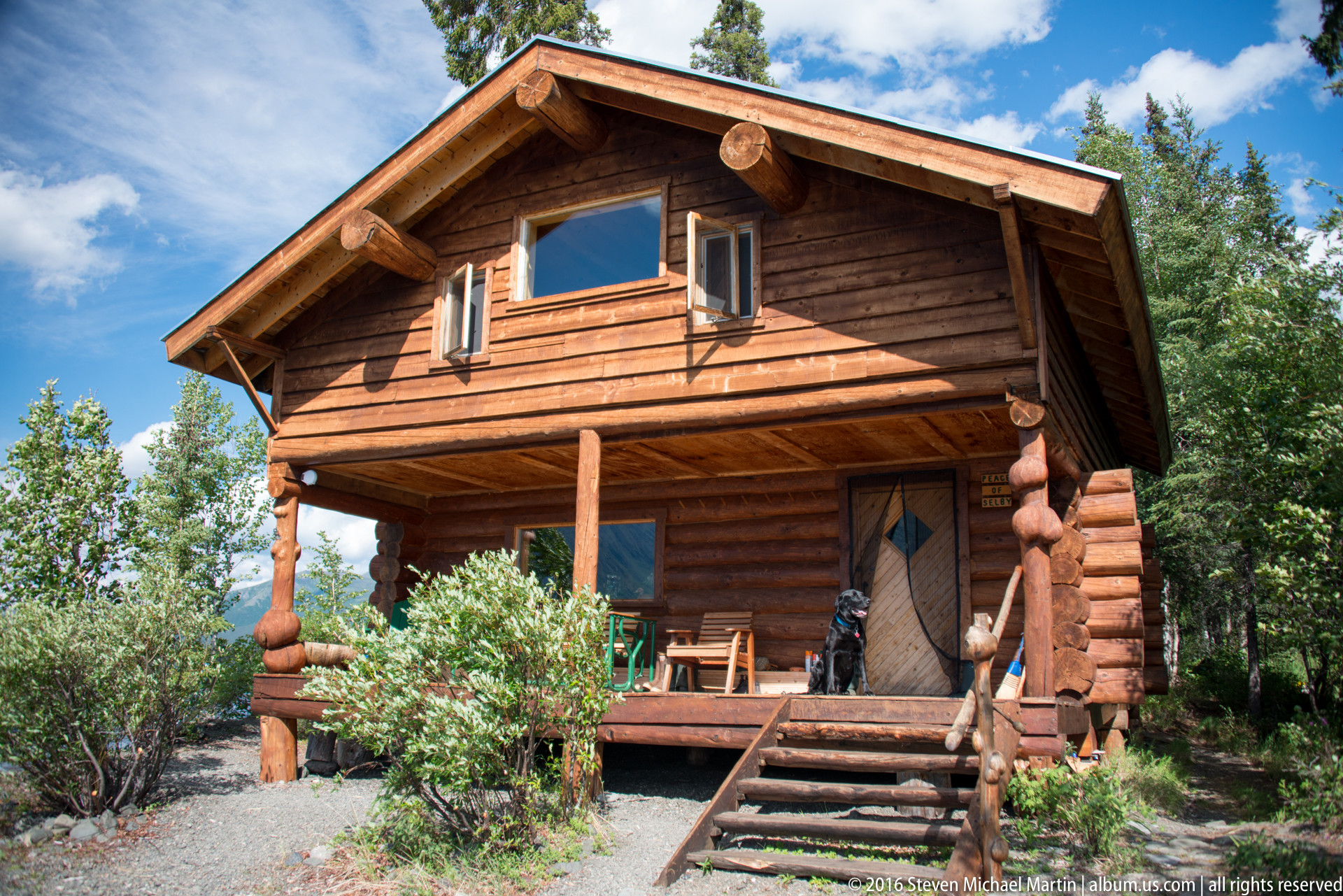
A two-story log cabin rises behind low shrubs, its broad gabled roof and covered porch facing the camera. A short flight of steps leads to the porch, where chairs and a small table sit beneath the overhang. Spruce trees enclose the building, but a clear blue sky and open foreground keep the log walls and cabin form fully visible.
Caption
A two-story log cabin rises behind low shrubs, its broad gabled roof and covered porch facing the camera. A short flight of steps leads to the porch, where chairs and a small table sit beneath the overhang. Spruce trees enclose the building, but a clear blue sky and open foreground keep the log walls and cabin form fully visible.
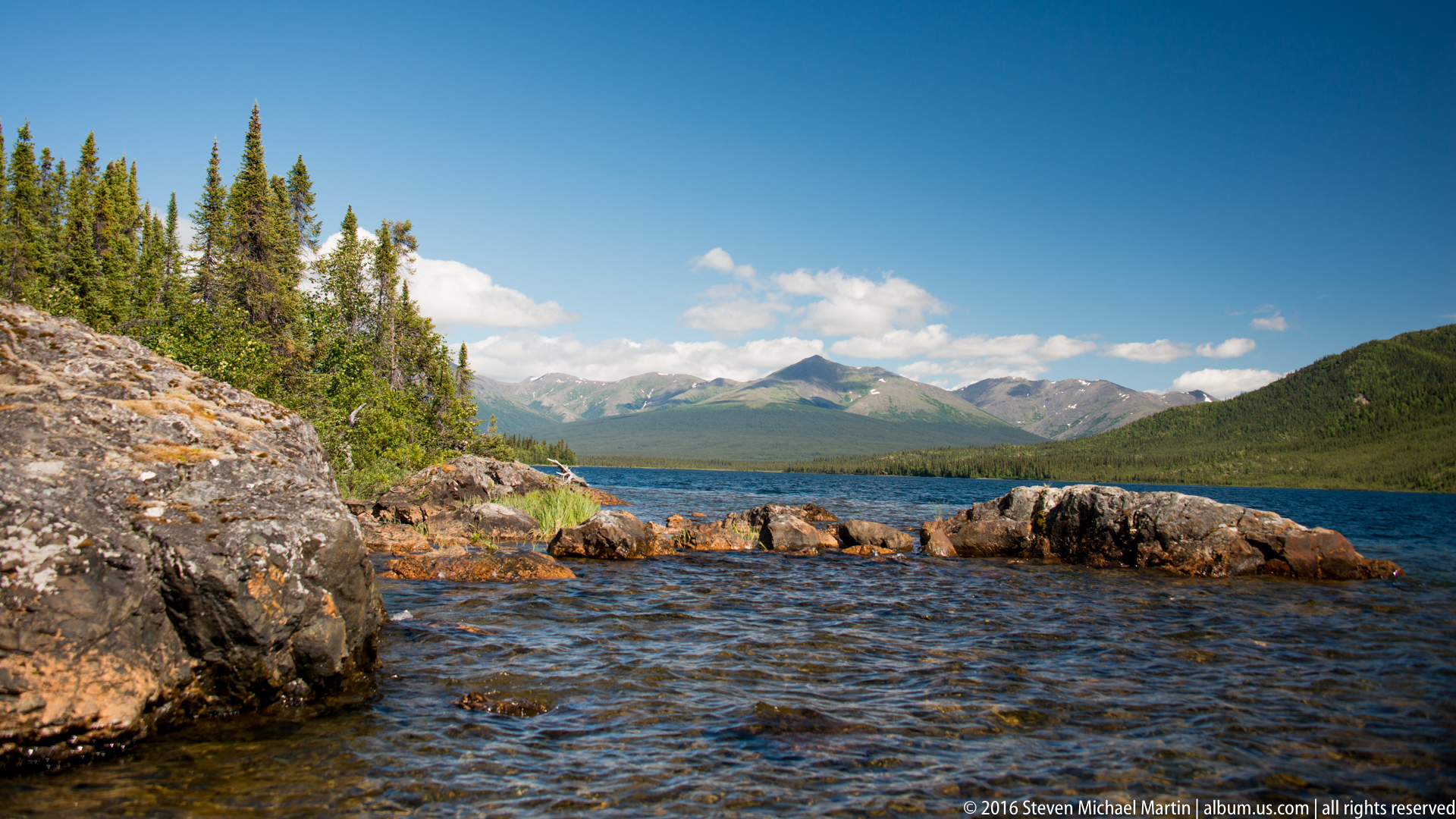
Rust-colored and gray rocks project into the lake in the foreground, creating a broken, uneven waterline. Beyond them, forested slopes rise toward rounded mountain peaks beneath a bright blue sky. The wider composition combines near-shore geology with the lake basin and distant terrain, extending the sequence from close rock details to a full landscape view.
Caption
Rust-colored and gray rocks project into the lake in the foreground, creating a broken, uneven waterline. Beyond them, forested slopes rise toward rounded mountain peaks beneath a bright blue sky. The wider composition combines near-shore geology with the lake basin and distant terrain, extending the sequence from close rock details to a full landscape view.
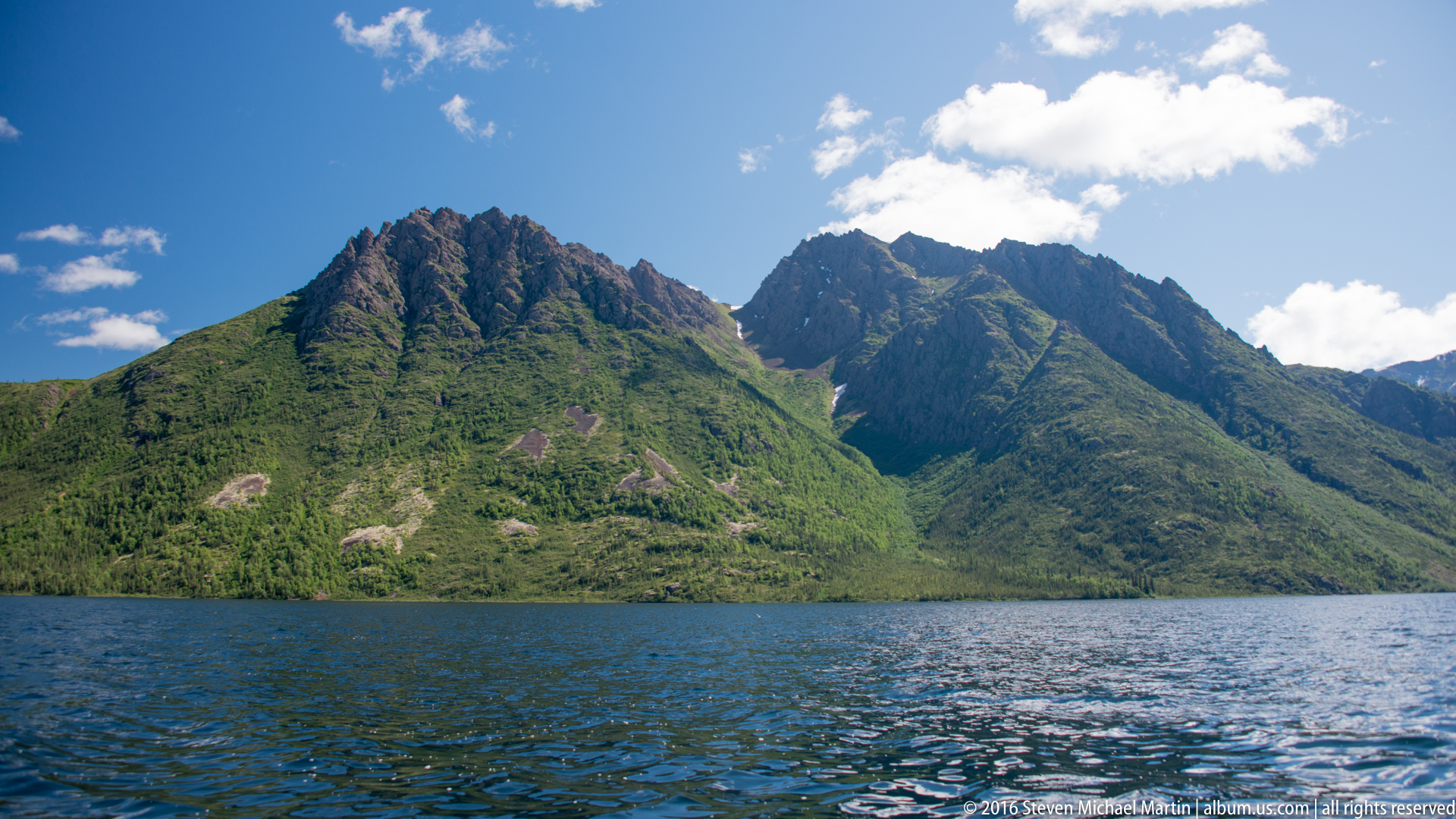
A steep, jagged mountain wall rises from the lake, its lower slopes covered in green vegetation and its upper ridges exposed as dark rock. A bright cloud hangs above the central peaks, while rippled blue water fills the foreground. The wide view conveys the abrupt transition from water to high terrain without identifying individual summits.
Caption
A steep, jagged mountain wall rises from the lake, its lower slopes covered in green vegetation and its upper ridges exposed as dark rock. A bright cloud hangs above the central peaks, while rippled blue water fills the foreground. The wide view conveys the abrupt transition from water to high terrain without identifying individual summits.
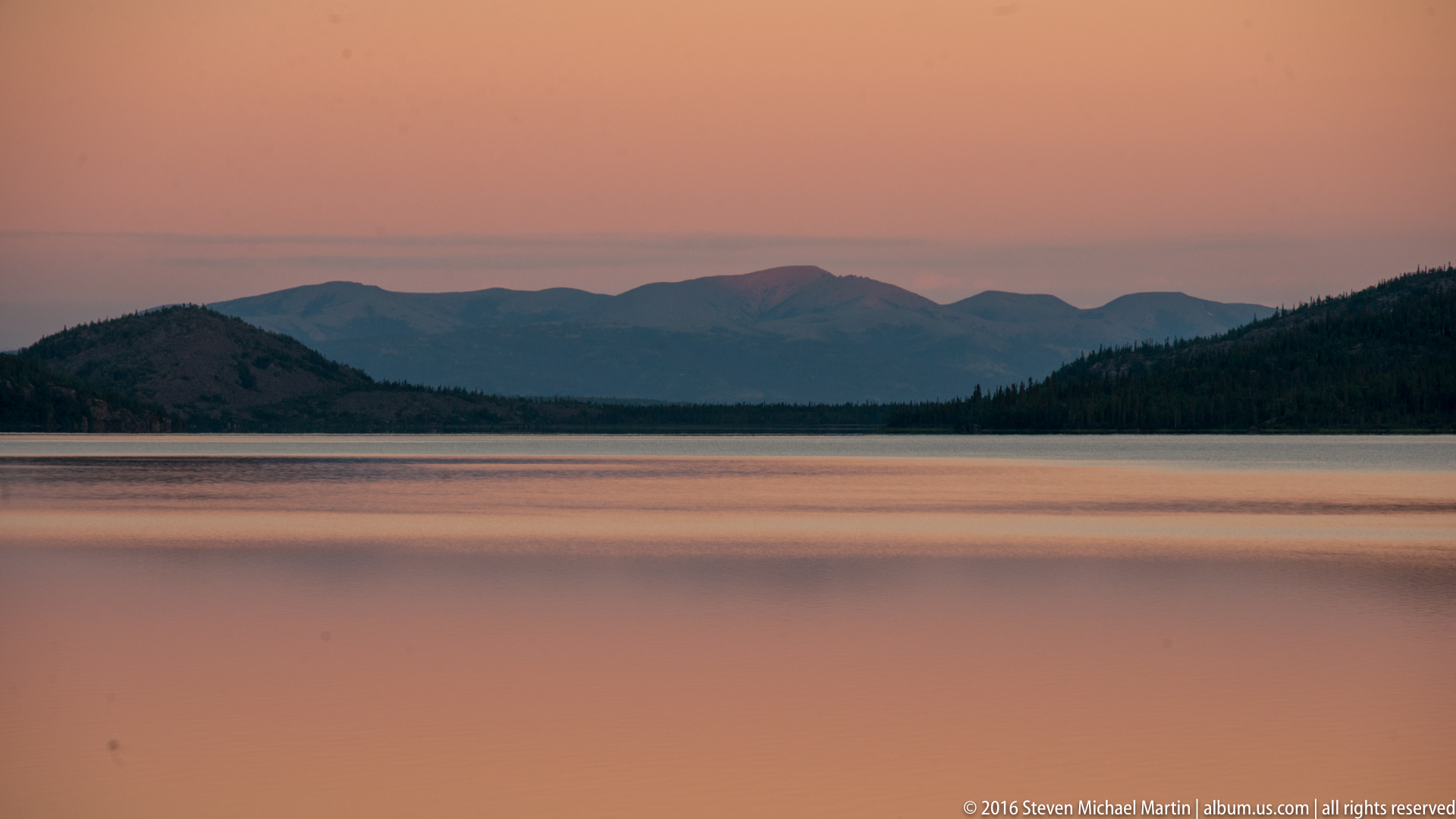
A broad band of pale pink and orange twilight spreads above layered mountain silhouettes. The lake is nearly smooth, carrying the subdued colors in long horizontal reflections. With no foreground objects or people, the minimal composition centers on the quiet transition from sky to water at the end of the day.
Caption
A broad band of pale pink and orange twilight spreads above layered mountain silhouettes. The lake is nearly smooth, carrying the subdued colors in long horizontal reflections. With no foreground objects or people, the minimal composition centers on the quiet transition from sky to water at the end of the day.
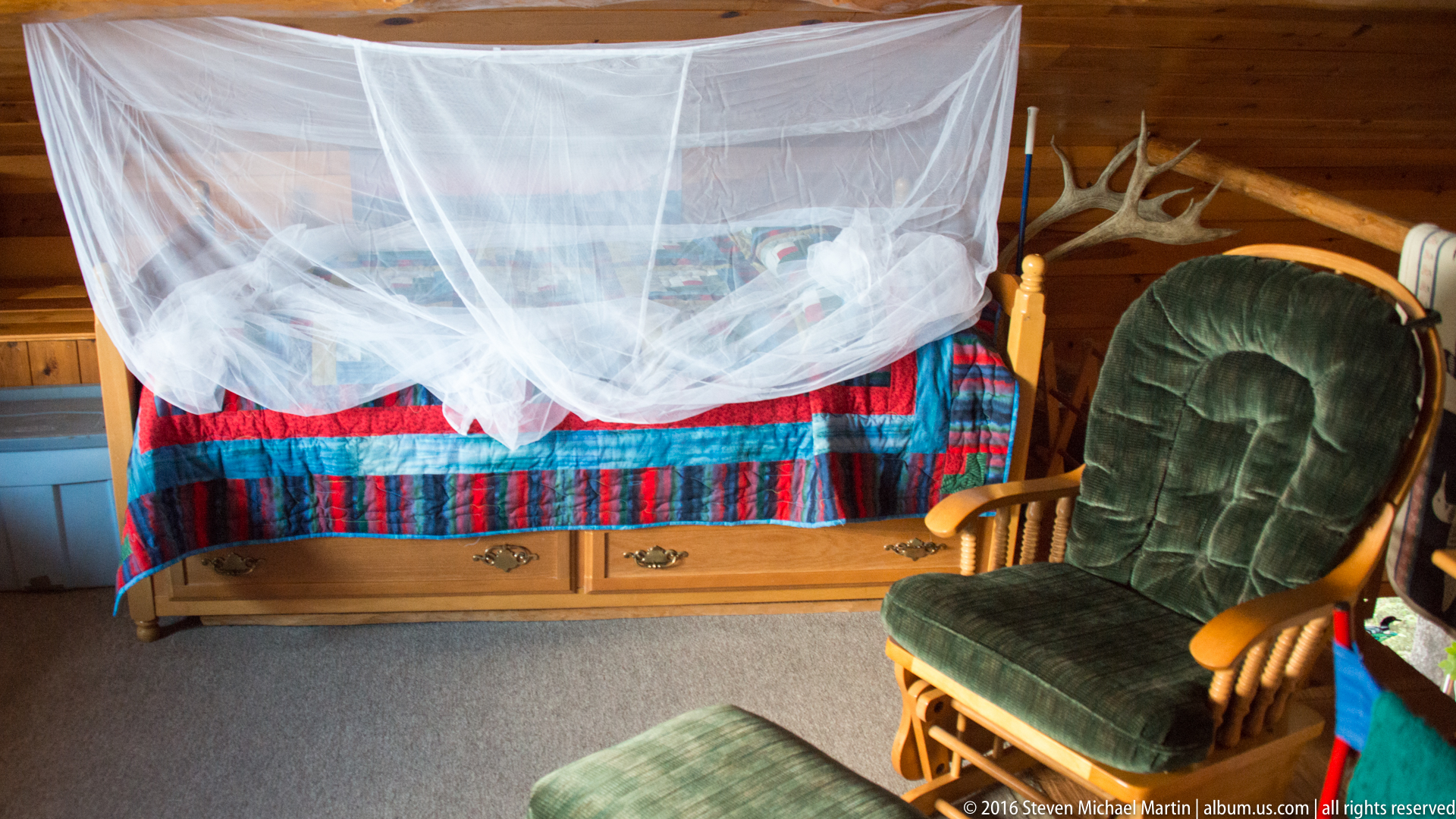
A white mesh canopy hangs over a bed covered with a red, blue, and green woven blanket. A wooden dresser and rocking chair fill the small cabin room, with antlers mounted high on the wall. The netting is the central feature, a practical barrier that stands out against the warm wood interior and its domestic furnishings.
Caption
A white mesh canopy hangs over a bed covered with a red, blue, and green woven blanket. A wooden dresser and rocking chair fill the small cabin room, with antlers mounted high on the wall. The netting is the central feature, a practical barrier that stands out against the warm wood interior and its domestic furnishings.

Seen from above, a winding watercourse threads through bright green low vegetation and patches of dark conifer forest. Small pools and branching channels create an irregular mosaic across the valley floor. The elevated viewpoint reveals the drainage pattern and contrasts between open wetland and tree-covered ground.
Caption
Seen from above, a winding watercourse threads through bright green low vegetation and patches of dark conifer forest. Small pools and branching channels create an irregular mosaic across the valley floor. The elevated viewpoint reveals the drainage pattern and contrasts between open wetland and tree-covered ground.
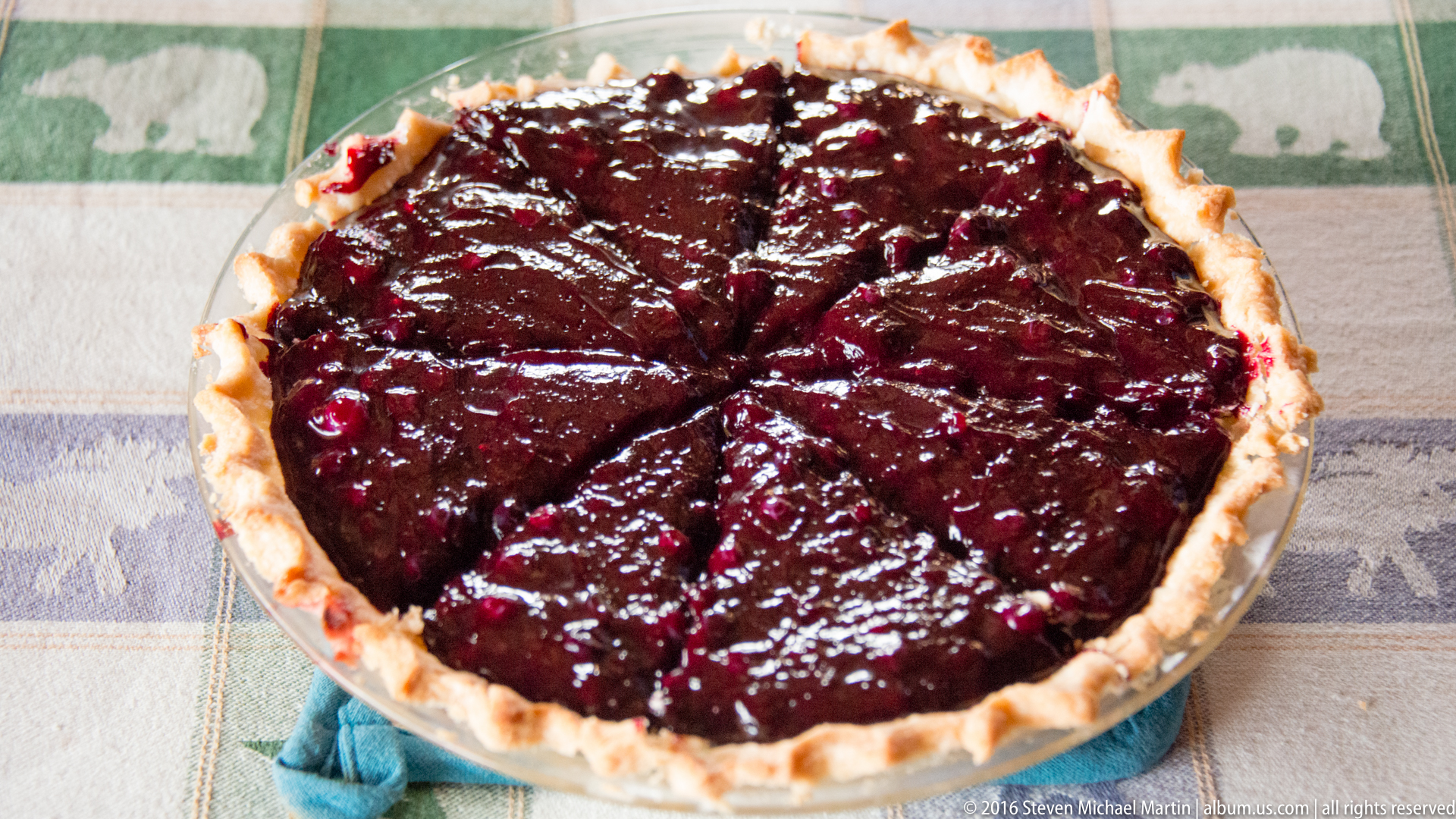
A round pie fills the frame, its golden crimped crust surrounding a glossy layer of dark berries. The fruit has been arranged in overlapping sections and catches the light beneath a shiny glaze, while a patterned cloth and blue fabric sit beneath the plate. The close food photograph contrasts with the surrounding wilderness views and records a meal associated with the cabin stay.
Caption
A round pie fills the frame, its golden crimped crust surrounding a glossy layer of dark berries. The fruit has been arranged in overlapping sections and catches the light beneath a shiny glaze, while a patterned cloth and blue fabric sit beneath the plate. The close food photograph contrasts with the surrounding wilderness views and records a meal associated with the cabin stay.
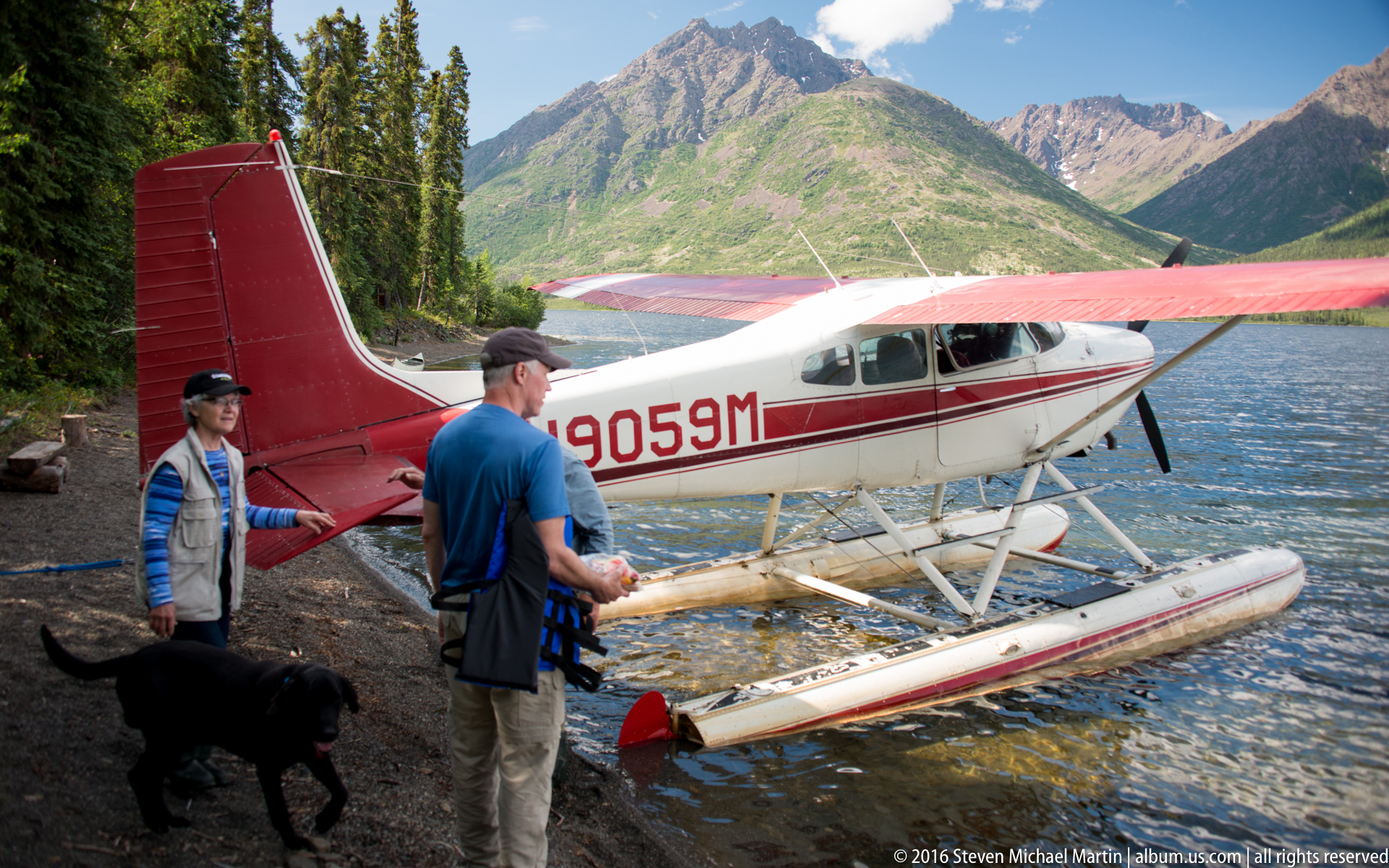
A red-and-white floatplane rests on its pontoons at the rocky lakeshore, its wing stretching across the frame beneath steep green mountains. Two people stand beside the aircraft while a black dog moves along the shore. The close view brings the practical scale of air access into focus, linking the remote lake setting to the people and equipment gathered at its edge.
Caption
A red-and-white floatplane rests on its pontoons at the rocky lakeshore, its wing stretching across the frame beneath steep green mountains. Two people stand beside the aircraft while a black dog moves along the shore. The close view brings the practical scale of air access into focus, linking the remote lake setting to the people and equipment gathered at its edge.
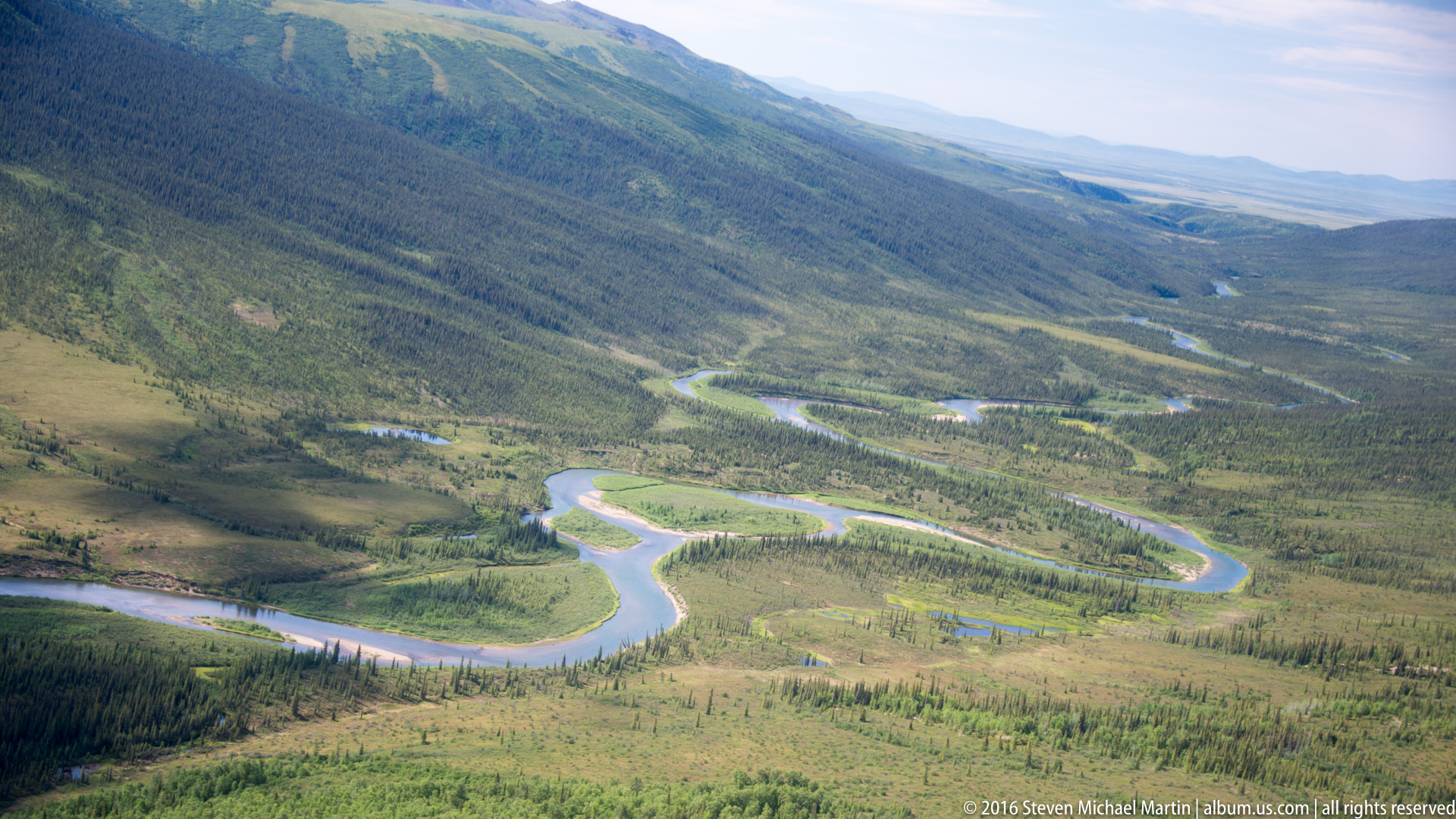
From above, a pale river loops through a broad green valley beneath steep, forested mountain slopes. The bends divide the open floodplain into irregular sections, while distant lowlands fade toward the horizon at the right. The elevated viewpoint reveals the river’s course and the valley’s scale in one composition, with no single peak dominating the landscape.
Caption
From above, a pale river loops through a broad green valley beneath steep, forested mountain slopes. The bends divide the open floodplain into irregular sections, while distant lowlands fade toward the horizon at the right. The elevated viewpoint reveals the river’s course and the valley’s scale in one composition, with no single peak dominating the landscape.

The red-and-white floatplane appears inside an oval reflection, surrounded by a dark curved rim and pale blue sky. The compressed view turns the aircraft into a small reflected subject, with its wing and fuselage visible but the reflective surface’s location unclear. The image offers a different perspective on the plane than the direct shoreline views, isolating it within a circular frame.
Caption
The red-and-white floatplane appears inside an oval reflection, surrounded by a dark curved rim and pale blue sky. The compressed view turns the aircraft into a small reflected subject, with its wing and fuselage visible but the reflective surface’s location unclear. The image offers a different perspective on the plane than the direct shoreline views, isolating it within a circular frame.
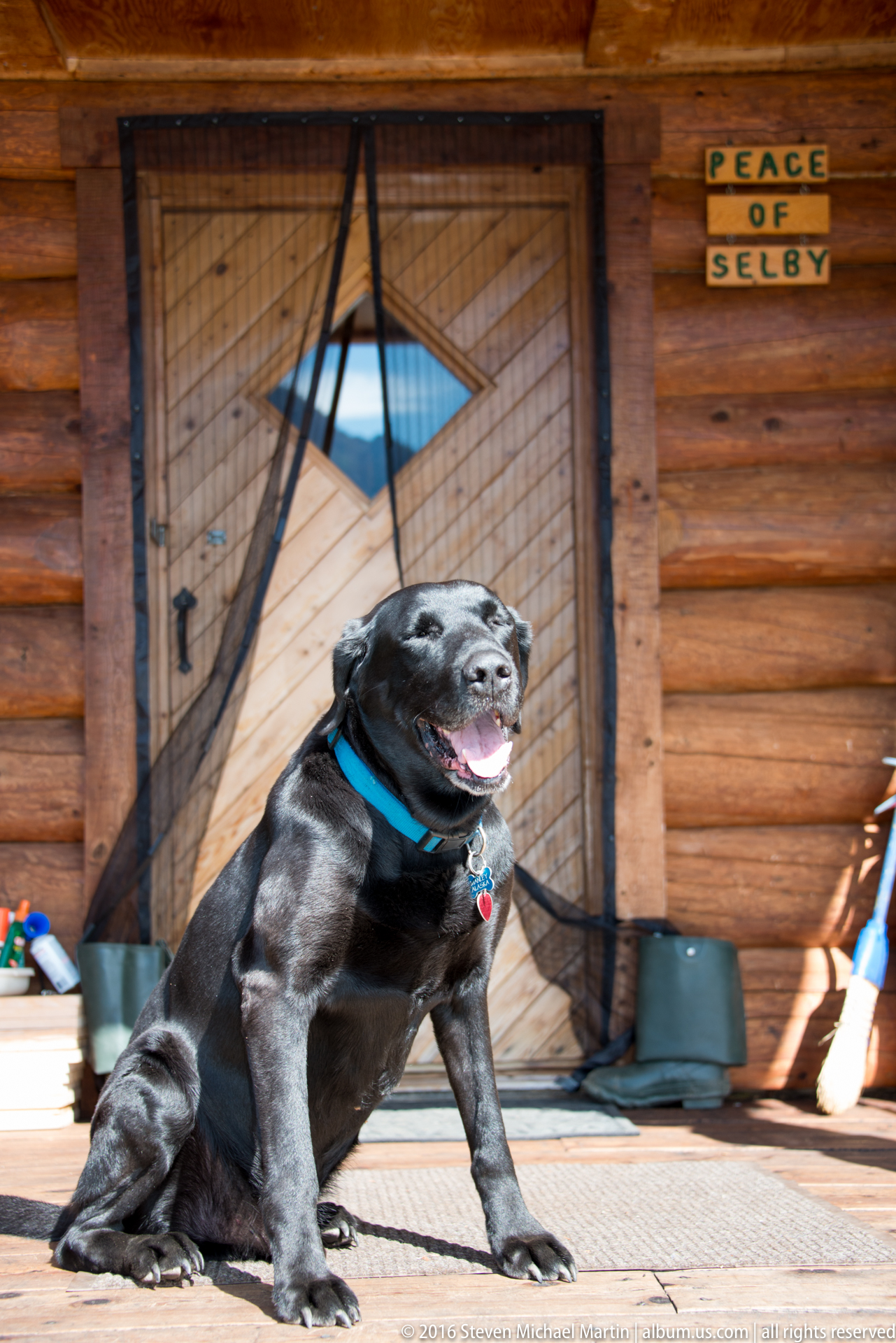
A black dog sits alert on the cabin’s wooden porch, its bright collar contrasting with its dark coat. Behind it, a cross-braced wooden door bears a small sign reading “PEACE OF SELBY,” tying the portrait to the cabin’s informal identity. Buckets and porch furniture flank the doorway, while the dog remains the dominant subject in the shaded foreground.
Caption
A black dog sits alert on the cabin’s wooden porch, its bright collar contrasting with its dark coat. Behind it, a cross-braced wooden door bears a small sign reading “PEACE OF SELBY,” tying the portrait to the cabin’s informal identity. Buckets and porch furniture flank the doorway, while the dog remains the dominant subject in the shaded foreground.
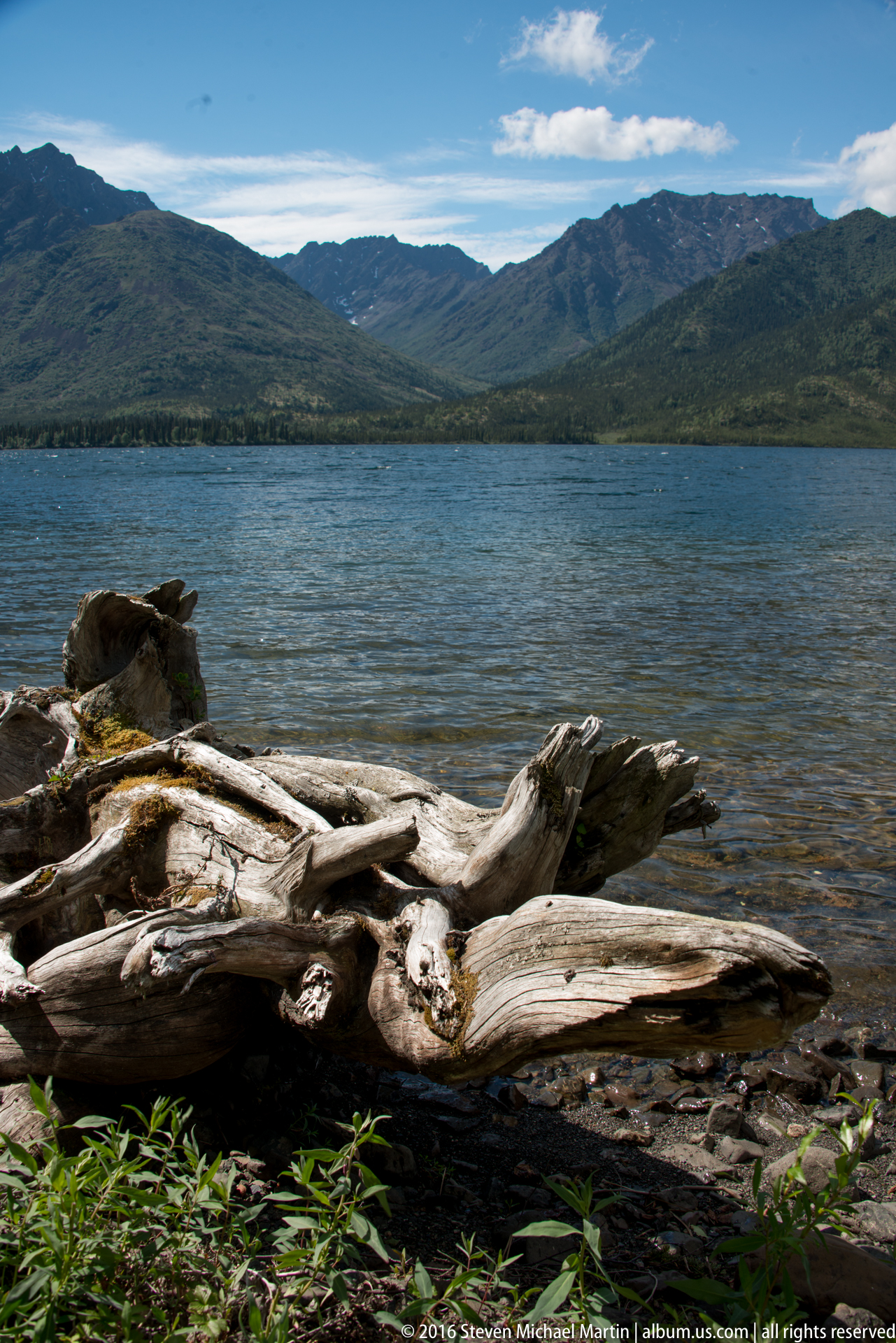
A bleached, weathered trunk lies across the rocky foreground, its twisting branches contrasting with the smooth horizontal bands of lake and mountain beyond. The driftwood anchors the near shore while the far bank and low mountain range recede into the background. The broad framing balances this close trace of shoreline movement against the scale of the lake.
Caption
A bleached, weathered trunk lies across the rocky foreground, its twisting branches contrasting with the smooth horizontal bands of lake and mountain beyond. The driftwood anchors the near shore while the far bank and low mountain range recede into the background. The broad framing balances this close trace of shoreline movement against the scale of the lake.

A rugged mountain headwall fills the view, its exposed gray rock cut by narrow gullies and small snow patches. Green slopes rise from the valley floor toward the central peak, while darker rock walls frame the scene on both sides. The upward perspective emphasizes the steep relief and the transition from vegetated lower slopes to bare alpine rock.
Caption
A rugged mountain headwall fills the view, its exposed gray rock cut by narrow gullies and small snow patches. Green slopes rise from the valley floor toward the central peak, while darker rock walls frame the scene on both sides. The upward perspective emphasizes the steep relief and the transition from vegetated lower slopes to bare alpine rock.
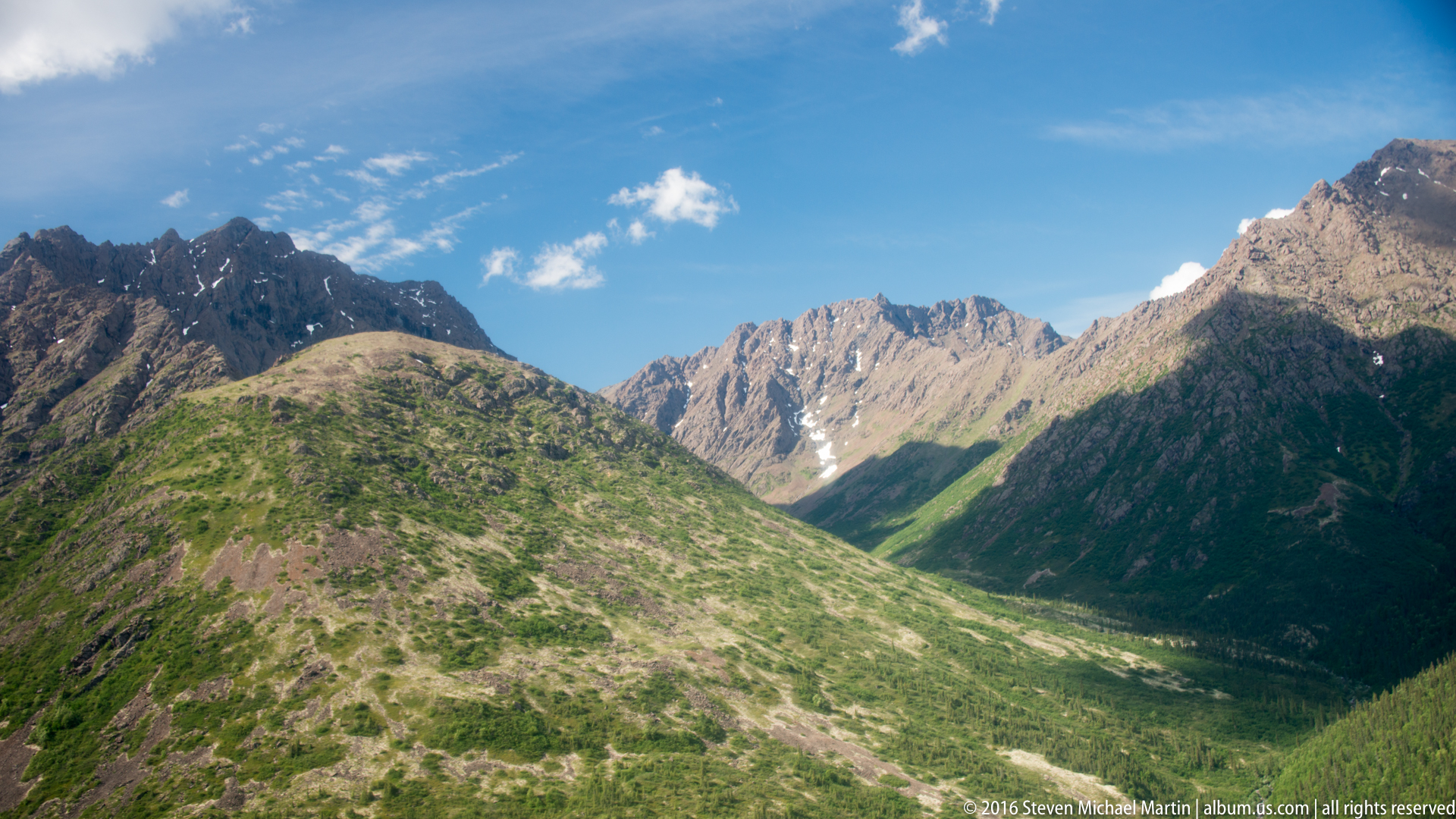
A deep mountain pass opens between rounded green ridges toward a jagged rock face at the center. A narrow snow streak remains high in a shaded cleft, while low vegetation covers the nearer slopes. The wider framing includes both sides of the valley and the route-like opening between them, making the mountain relief and scale easier to read than in the closer view.
Caption
A deep mountain pass opens between rounded green ridges toward a jagged rock face at the center. A narrow snow streak remains high in a shaded cleft, while low vegetation covers the nearer slopes. The wider framing includes both sides of the valley and the route-like opening between them, making the mountain relief and scale easier to read than in the closer view.

A black dog sits in the foreground on a rocky shore, facing the camera while a floatplane and two people occupy the waterline behind it. The aircraft’s red tail and white pontoons contrast with the green mountain slopes across the lake. The low composition gives the dog the clearest presence while retaining the plane as evidence of the arrival or departure activity nearby.
Caption
A black dog sits in the foreground on a rocky shore, facing the camera while a floatplane and two people occupy the waterline behind it. The aircraft’s red tail and white pontoons contrast with the green mountain slopes across the lake. The low composition gives the dog the clearest presence while retaining the plane as evidence of the arrival or departure activity nearby.
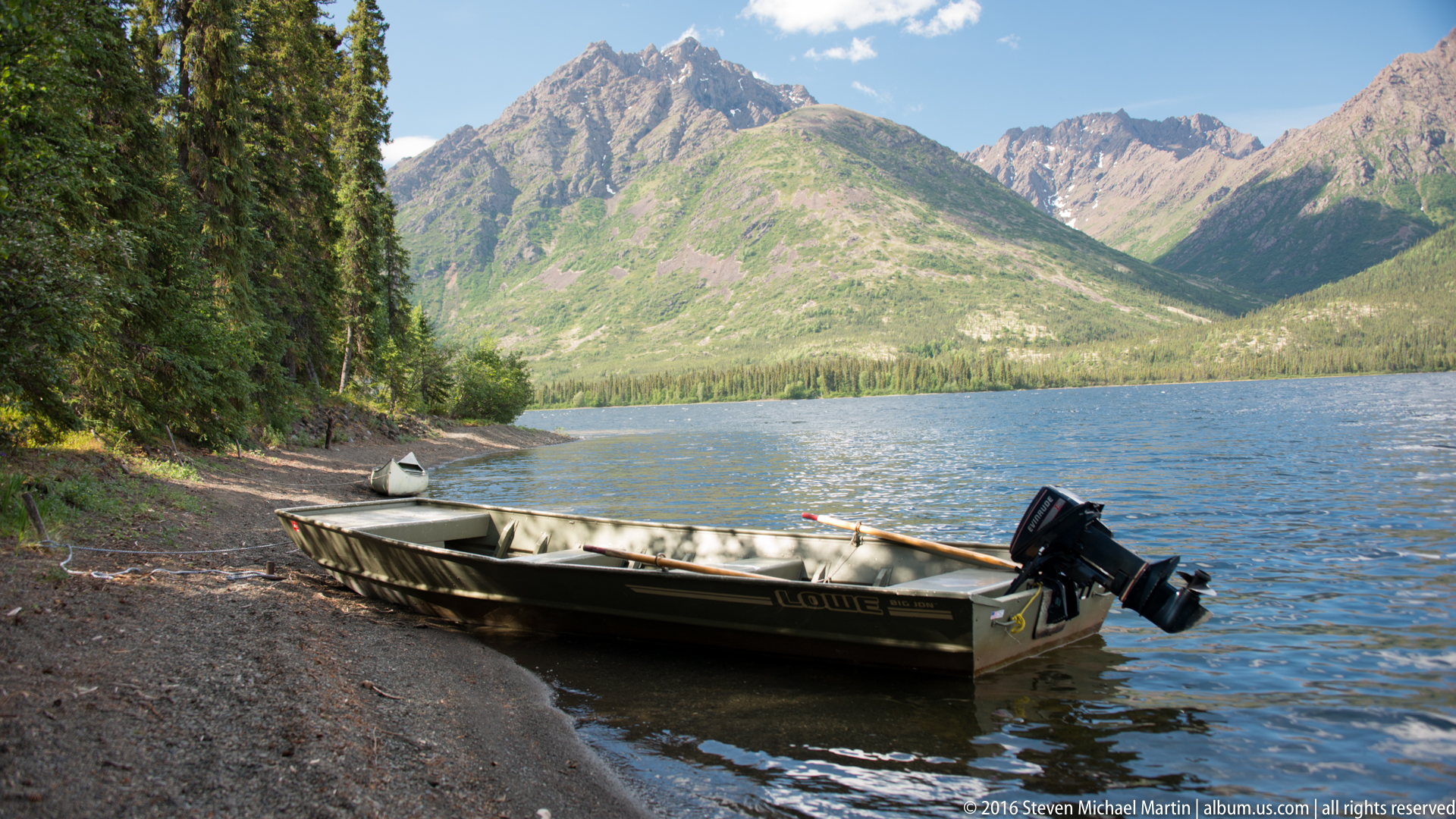
A long, narrow motorboat rests partly afloat along the pebbled shore, its outboard motor raised at the stern. A second small craft sits farther up the bank, and the lake leads toward steep green mountains beyond. The boat’s close placement makes its practical details—hull, motor, and shoreline mooring—more prominent than the distant landscape.
Caption
A long, narrow motorboat rests partly afloat along the pebbled shore, its outboard motor raised at the stern. A second small craft sits farther up the bank, and the lake leads toward steep green mountains beyond. The boat’s close placement makes its practical details—hull, motor, and shoreline mooring—more prominent than the distant landscape.

An empty green canoe sits bow-first at the edge of the lake, its stern drawn onto a narrow pebbled beach. A rope extends from the boat toward the bank, securing it against the small waves. Across the water, a steep green mountain rises above a thin shoreline, placing this simple landing point within a broad alpine setting.
Caption
An empty green canoe sits bow-first at the edge of the lake, its stern drawn onto a narrow pebbled beach. A rope extends from the boat toward the bank, securing it against the small waves. Across the water, a steep green mountain rises above a thin shoreline, placing this simple landing point within a broad alpine setting.
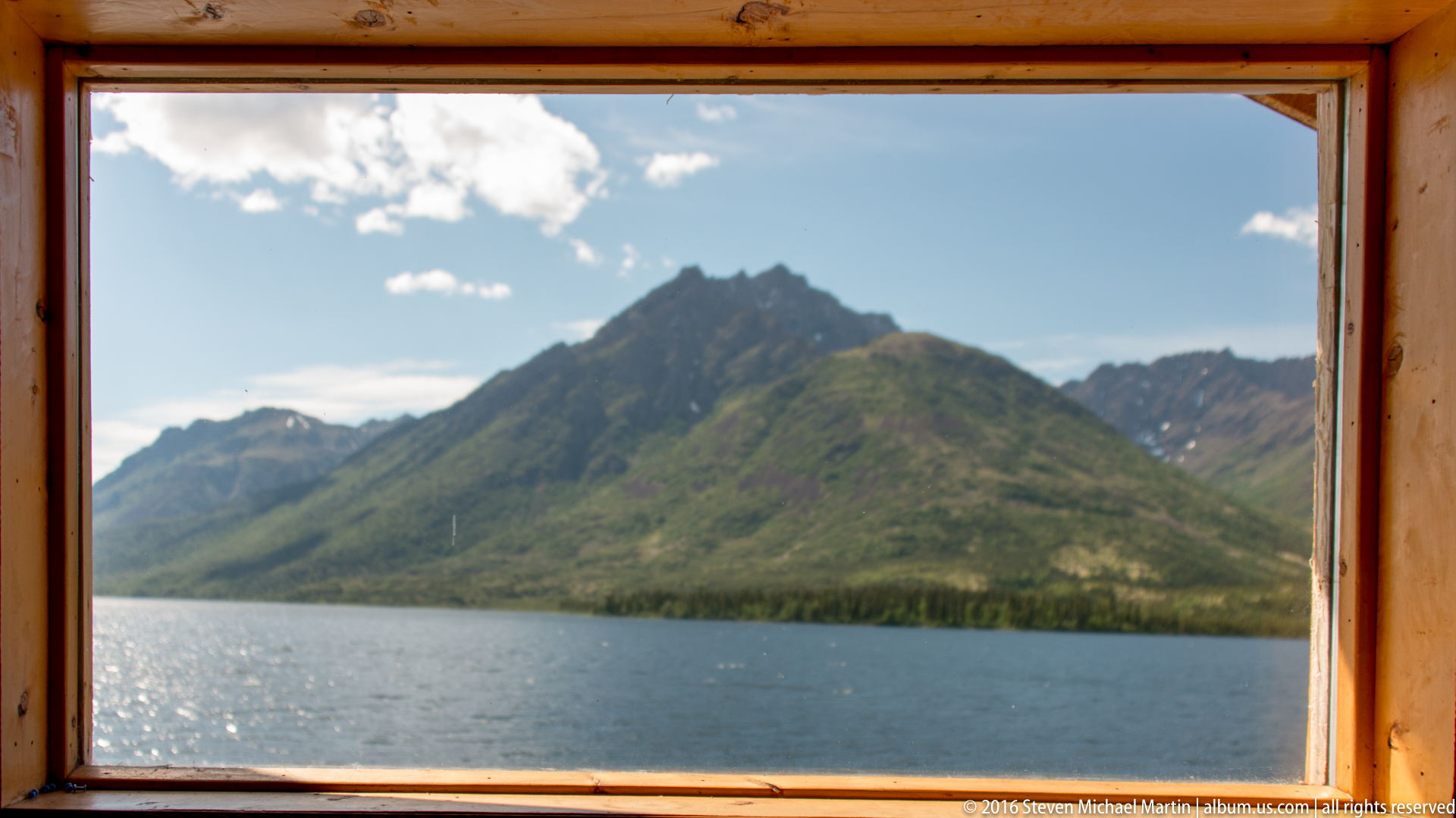
A dark mountain rises above the lake, neatly framed by the thick wooden edges of a cabin window. The interior frame forms a rectangle around the distant peak, while a strip of shimmering water remains visible below it. This view places the landscape within a built interior, contrasting the close grain and warm color of the wood with the cool open air beyond.
Caption
A dark mountain rises above the lake, neatly framed by the thick wooden edges of a cabin window. The interior frame forms a rectangle around the distant peak, while a strip of shimmering water remains visible below it. This view places the landscape within a built interior, contrasting the close grain and warm color of the wood with the cool open air beyond.
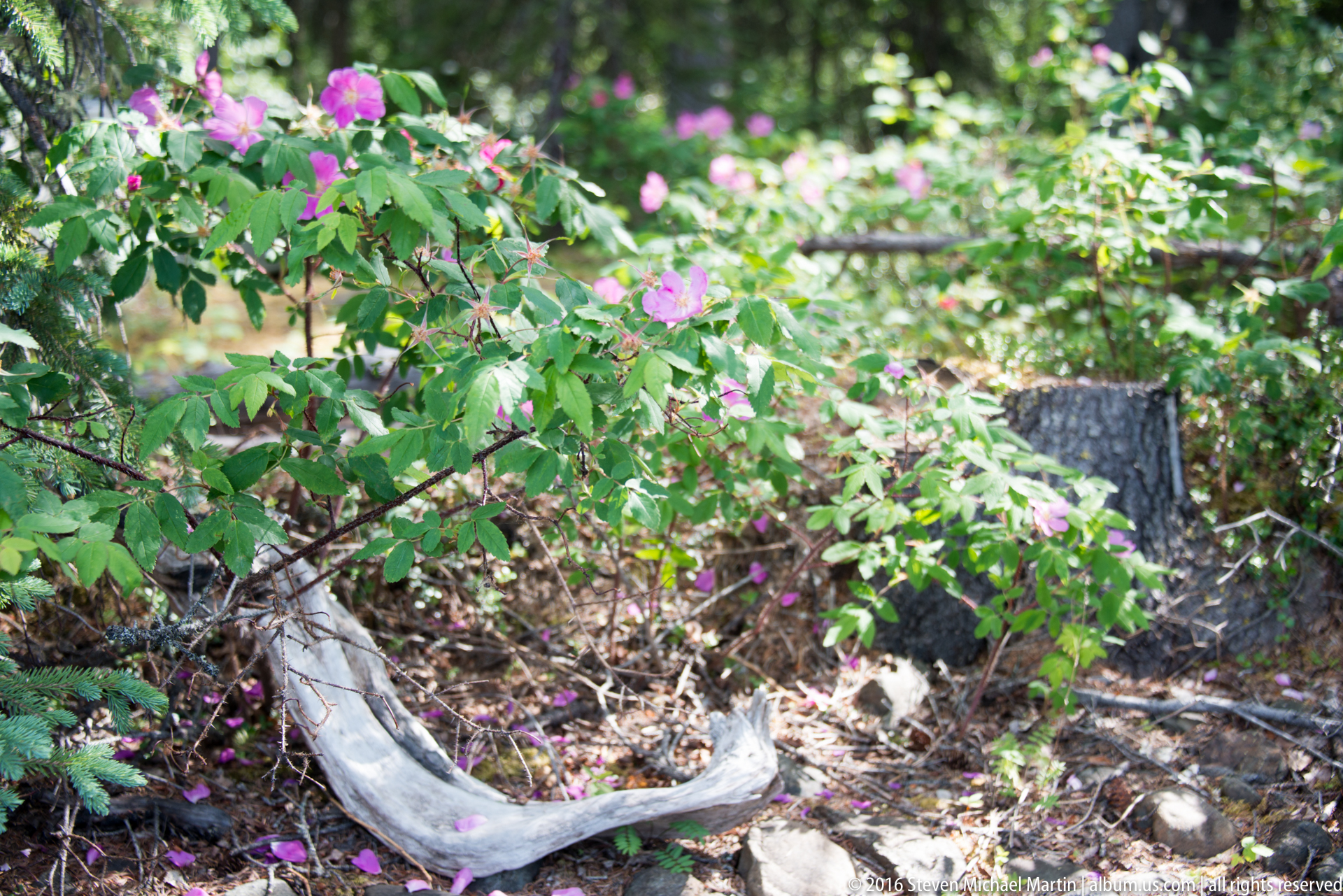
A pale antler rests diagonally across low green shrubs, partly surrounded by small pink blossoms and leaf litter. Its branching tines contrast with the soft foliage and dark soil beneath the plants. The close view records the antler as a found natural object in the understory; the photograph does not show the animal or establish which species shed it.
Caption
A pale antler rests diagonally across low green shrubs, partly surrounded by small pink blossoms and leaf litter. Its branching tines contrast with the soft foliage and dark soil beneath the plants. The close view records the antler as a found natural object in the understory; the photograph does not show the animal or establish which species shed it.
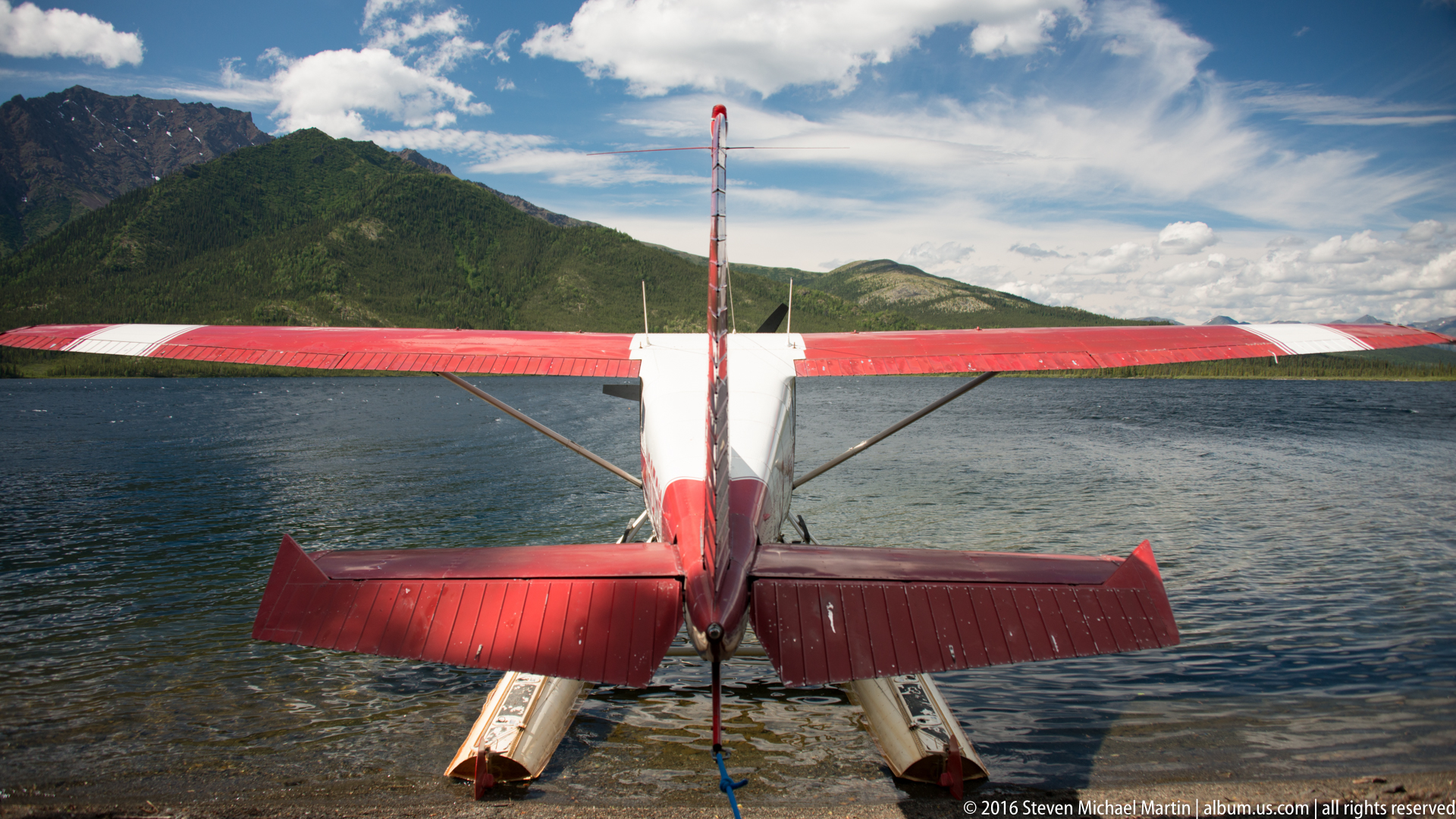
Seen from behind, the floatplane’s red tail and broad wing form a strong cross-shape above the lake. Its pontoons touch the water beside a gravelly shoreline, while green mountain slopes rise on both sides of the distant valley. This rear view emphasizes the aircraft’s position on the water and the surrounding landscape rather than the fuselage details seen at the dock.
Caption
Seen from behind, the floatplane’s red tail and broad wing form a strong cross-shape above the lake. Its pontoons touch the water beside a gravelly shoreline, while green mountain slopes rise on both sides of the distant valley. This rear view emphasizes the aircraft’s position on the water and the surrounding landscape rather than the fuselage details seen at the dock.

Pale, finely branched lichen spreads across the ground among dark leaves and small low-growing plants. The close focus reveals its dense, coral-like structure and the irregular patches where it covers the soil. This texture study brings the tundra floor into view at a scale quite different from the lake and mountain panoramas in the sequence.
Caption
Pale, finely branched lichen spreads across the ground among dark leaves and small low-growing plants. The close focus reveals its dense, coral-like structure and the irregular patches where it covers the soil. This texture study brings the tundra floor into view at a scale quite different from the lake and mountain panoramas in the sequence.

A hand holds a small tuft of pale branching lichen against a dark, blurred background. The black wristwatch and open palm provide scale, making the delicate, coral-like branches easier to distinguish than in the ground-level view. The specimen remains intact in the hand, though the photograph alone does not establish its species or whether it was collected.
Caption
A hand holds a small tuft of pale branching lichen against a dark, blurred background. The black wristwatch and open palm provide scale, making the delicate, coral-like branches easier to distinguish than in the ground-level view. The specimen remains intact in the hand, though the photograph alone does not establish its species or whether it was collected.
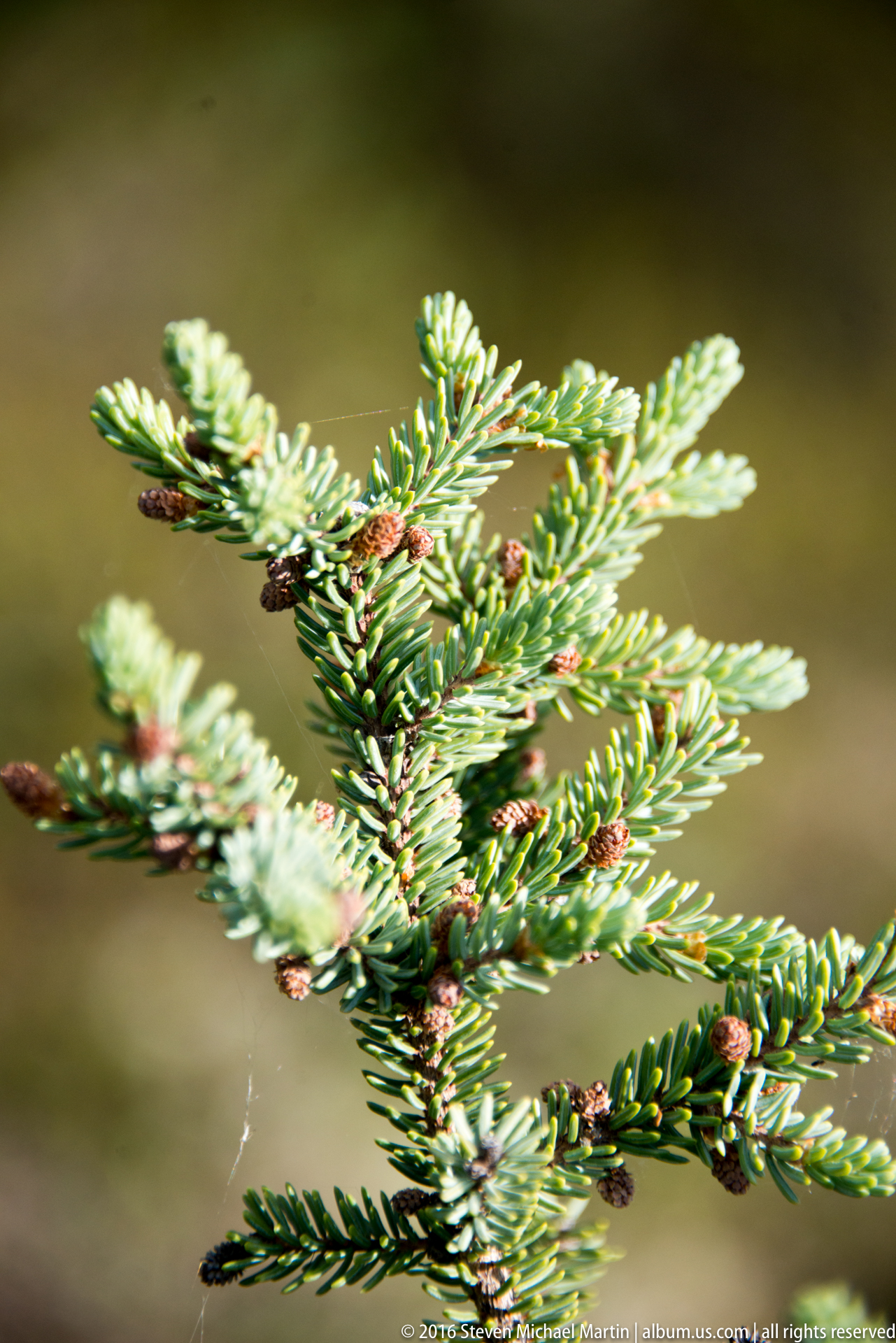
A spruce branch reaches into the frame, its fresh pale-green tips set against a softly blurred brown-green background. Small reddish-brown cones sit among the needles, revealing the tree’s reproductive structures at close range. The shallow focus isolates the branch and gives its radial arrangement a crisp, almost sculptural outline distinct from the larger mountain views.
Caption
A spruce branch reaches into the frame, its fresh pale-green tips set against a softly blurred brown-green background. Small reddish-brown cones sit among the needles, revealing the tree’s reproductive structures at close range. The shallow focus isolates the branch and gives its radial arrangement a crisp, almost sculptural outline distinct from the larger mountain views.
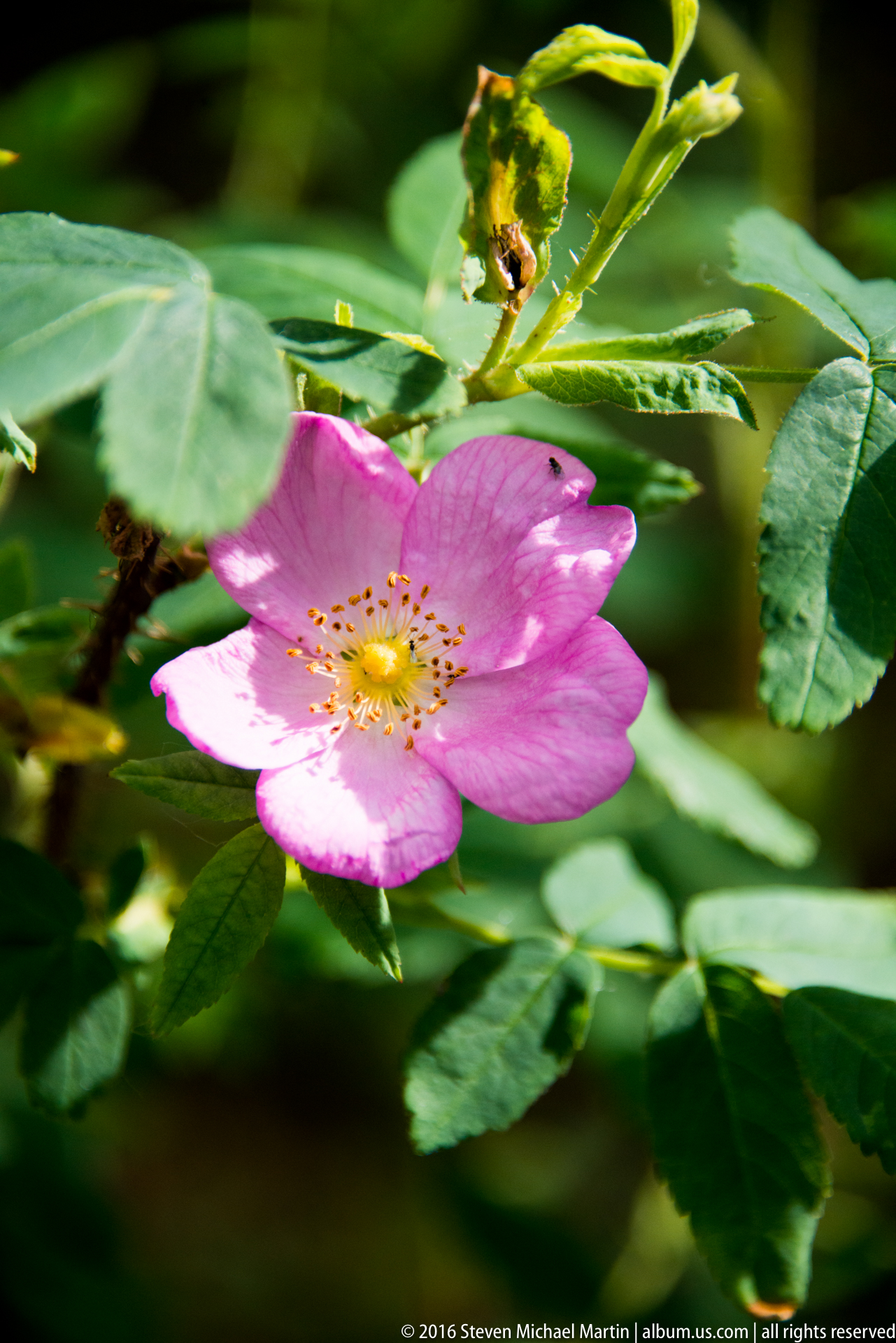
A single pink, five-petaled flower opens amid broad green leaves, its yellow stamens clustered around a pale center. Several unopened buds and thorny-looking stems appear nearby, suggesting a wild rose rather than a cultivated bloom. Bright sunlight falls across the petals, while the surrounding leaves overlap to create a dense, natural setting.
Caption
A single pink, five-petaled flower opens amid broad green leaves, its yellow stamens clustered around a pale center. Several unopened buds and thorny-looking stems appear nearby, suggesting a wild rose rather than a cultivated bloom. Bright sunlight falls across the petals, while the surrounding leaves overlap to create a dense, natural setting.
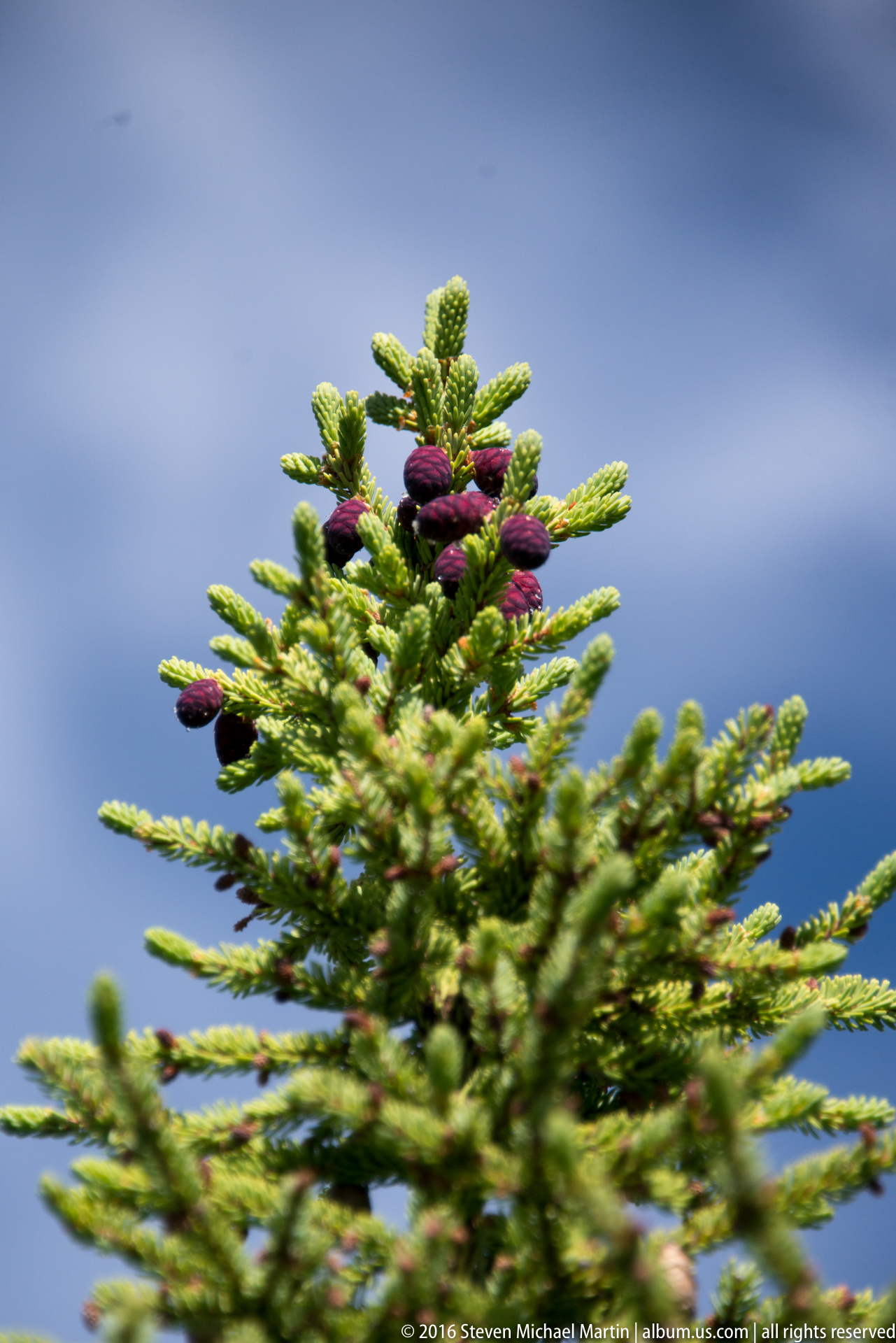
The upper crown of a small spruce is set against a clear blue sky, its green needles punctuated by many reddish-purple cones. The upward viewpoint makes the tree’s tiered shape and dense cone clusters legible, while the uncluttered background isolates the crown from the forest around it. The image records a whole-plant view that complements the closer branch study.
Caption
The upper crown of a small spruce is set against a clear blue sky, its green needles punctuated by many reddish-purple cones. The upward viewpoint makes the tree’s tiered shape and dense cone clusters legible, while the uncluttered background isolates the crown from the forest around it. The image records a whole-plant view that complements the closer branch study.
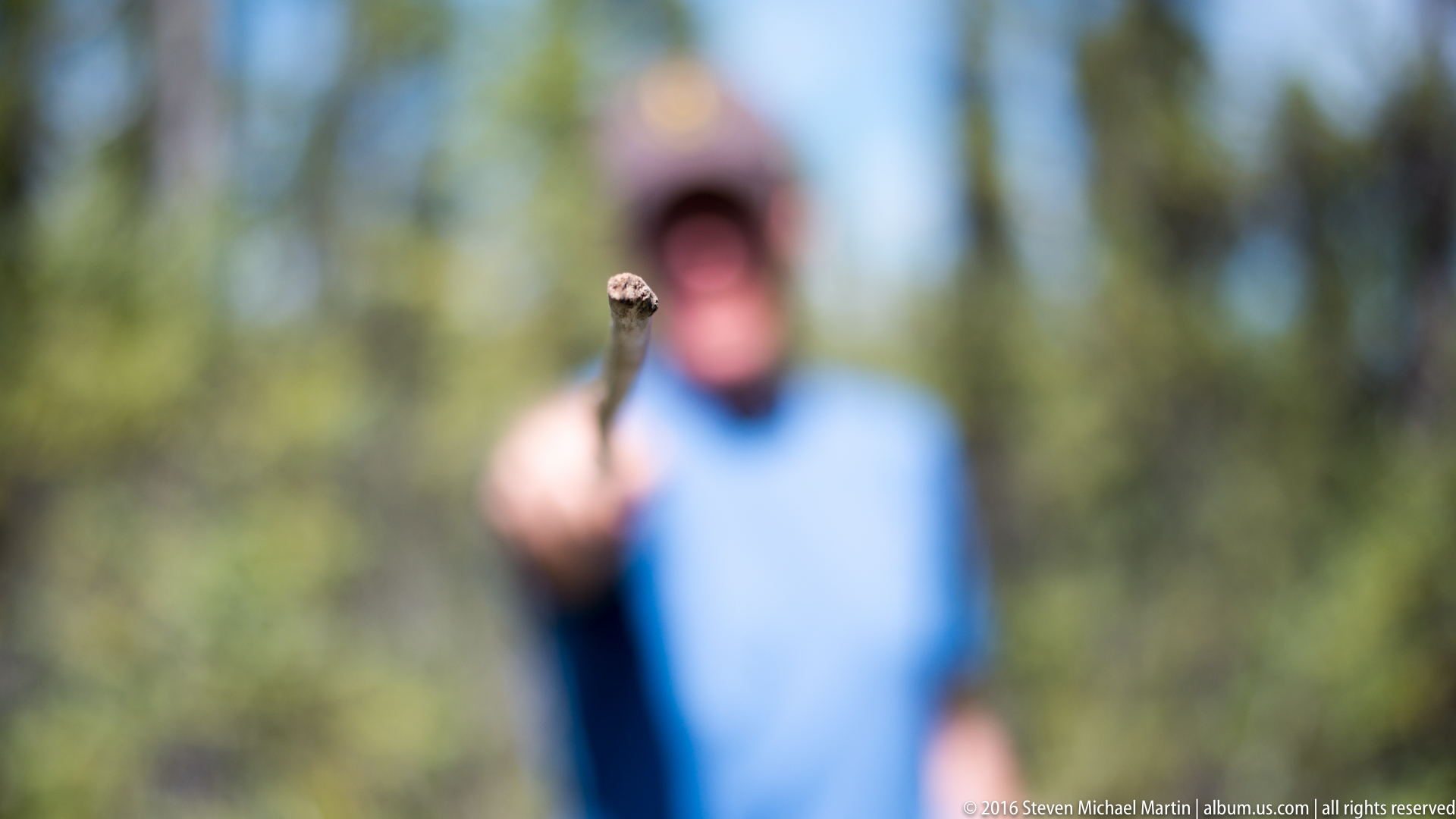
A slender branch reaches directly toward the lens, sharply focused at its tip while a man in a blue shirt remains blurred behind it. The deliberate depth of field turns a simple gesture into a study of foreground and distance: the branch seems to extend out of the image while the person and wooded setting recede. The branch’s species and purpose are not apparent.
Caption
A slender branch reaches directly toward the lens, sharply focused at its tip while a man in a blue shirt remains blurred behind it. The deliberate depth of field turns a simple gesture into a study of foreground and distance: the branch seems to extend out of the image while the person and wooded setting recede. The branch’s species and purpose are not apparent.
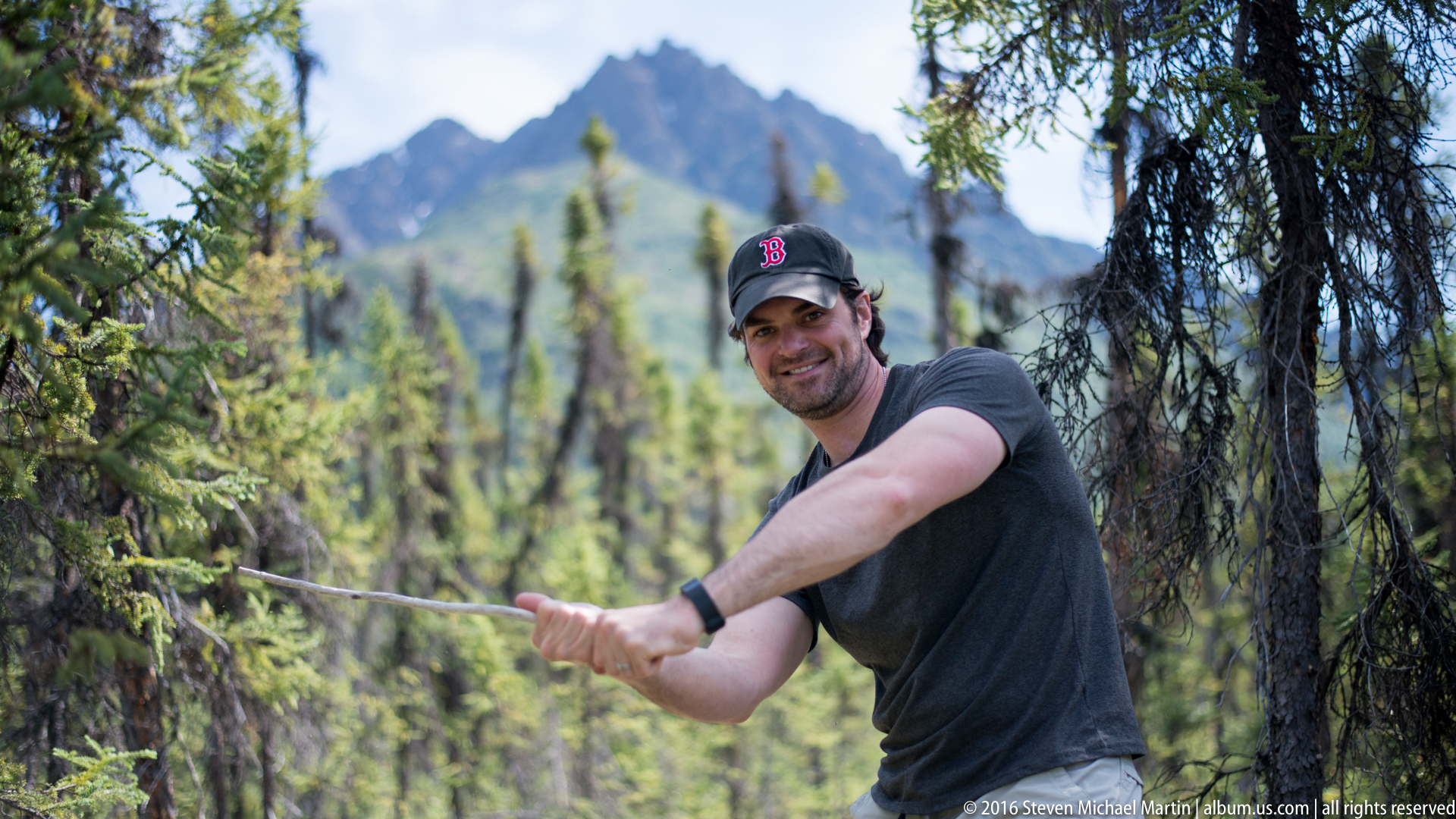
A smiling man in a dark shirt and baseball cap holds a long, slender branch across his body in a wooded clearing. Young spruce and leafy shrubs frame him, while a pointed mountain rises in soft focus behind the trees. The medium view shows both the person and his interaction with the branch, giving the outdoor portrait a more contextual setting than the closer action frame that follows.
Caption
A smiling man in a dark shirt and baseball cap holds a long, slender branch across his body in a wooded clearing. Young spruce and leafy shrubs frame him, while a pointed mountain rises in soft focus behind the trees. The medium view shows both the person and his interaction with the branch, giving the outdoor portrait a more contextual setting than the closer action frame that follows.
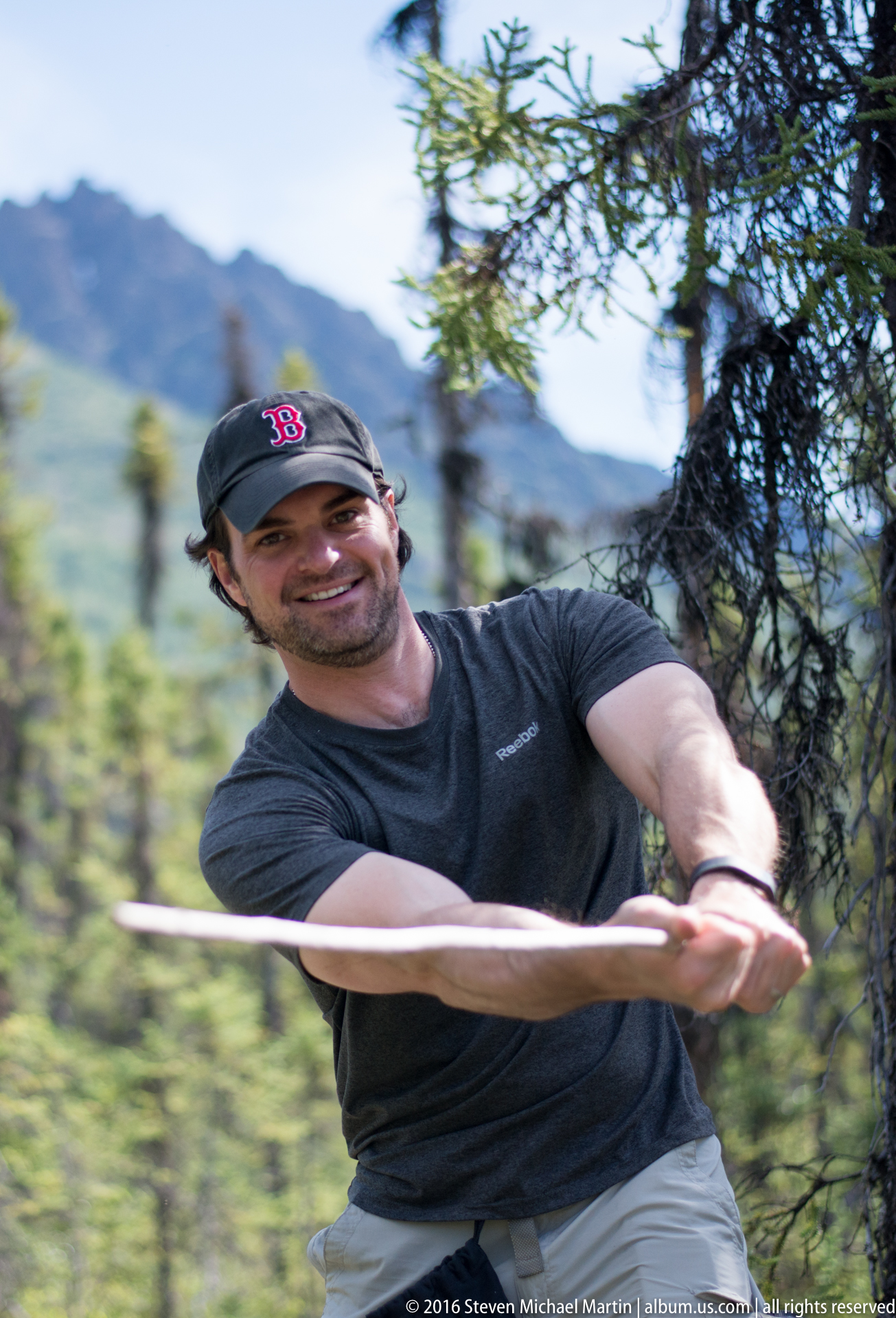
The man’s smiling face and upper body fill the frame as he holds a thin branch across the foreground. His dark baseball cap and shirt contrast with the bright, blurred greens behind him; the branch cuts horizontally between the viewer and his torso. The tighter crop shifts emphasis from the surrounding trees and mountain to the person’s expression and playful interaction with the branch.
Caption
The man’s smiling face and upper body fill the frame as he holds a thin branch across the foreground. His dark baseball cap and shirt contrast with the bright, blurred greens behind him; the branch cuts horizontally between the viewer and his torso. The tighter crop shifts emphasis from the surrounding trees and mountain to the person’s expression and playful interaction with the branch.
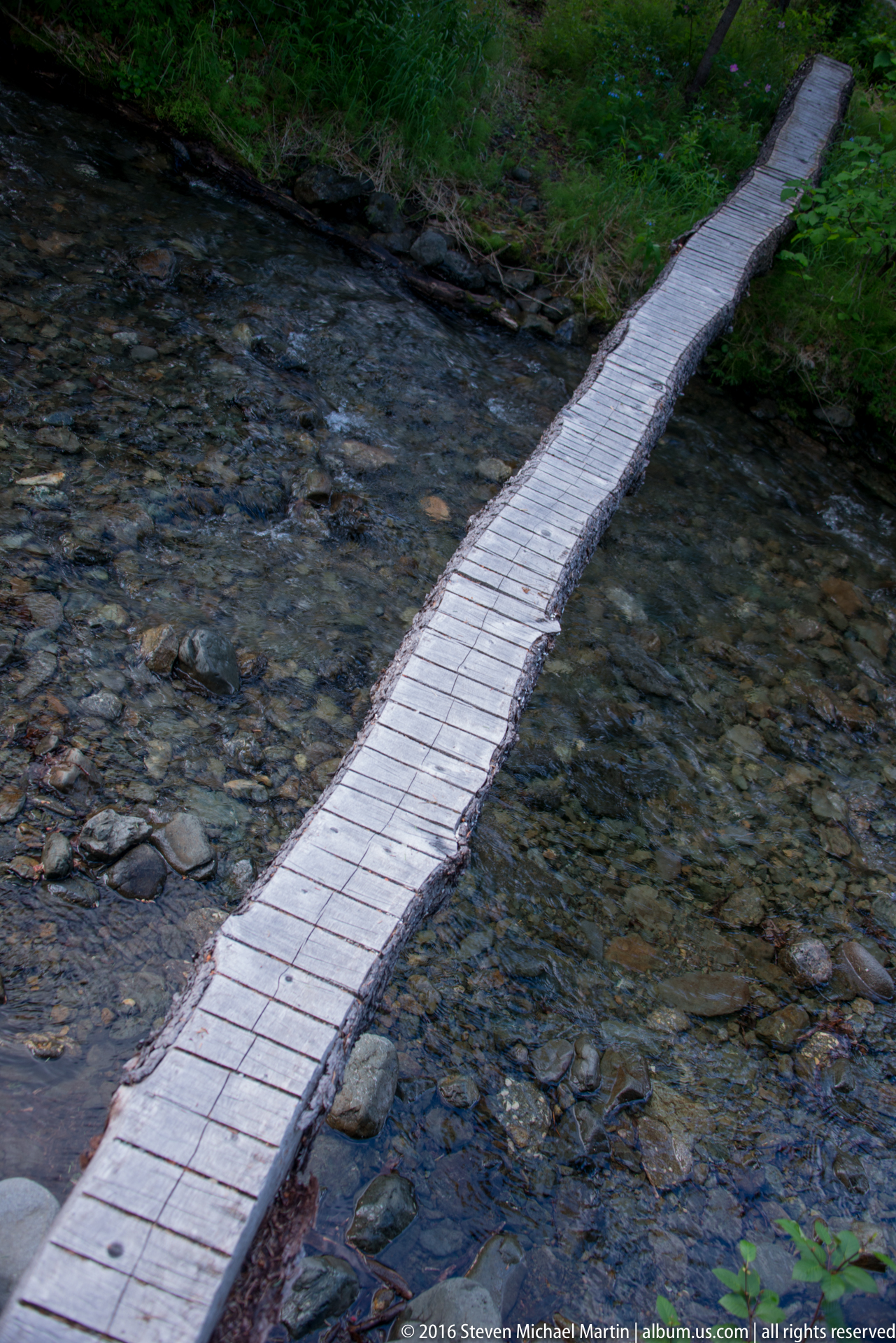
A narrow plank walkway crosses a clear, shallow stream diagonally, its simple boards supported close to the water. Rounded stones remain visible beneath the surface, while dark banks and green groundcover border the channel. The low viewpoint emphasizes the bridge’s direct route across the rocky stream rather than a larger trail or landscape.
Caption
A narrow plank walkway crosses a clear, shallow stream diagonally, its simple boards supported close to the water. Rounded stones remain visible beneath the surface, while dark banks and green groundcover border the channel. The low viewpoint emphasizes the bridge’s direct route across the rocky stream rather than a larger trail or landscape.
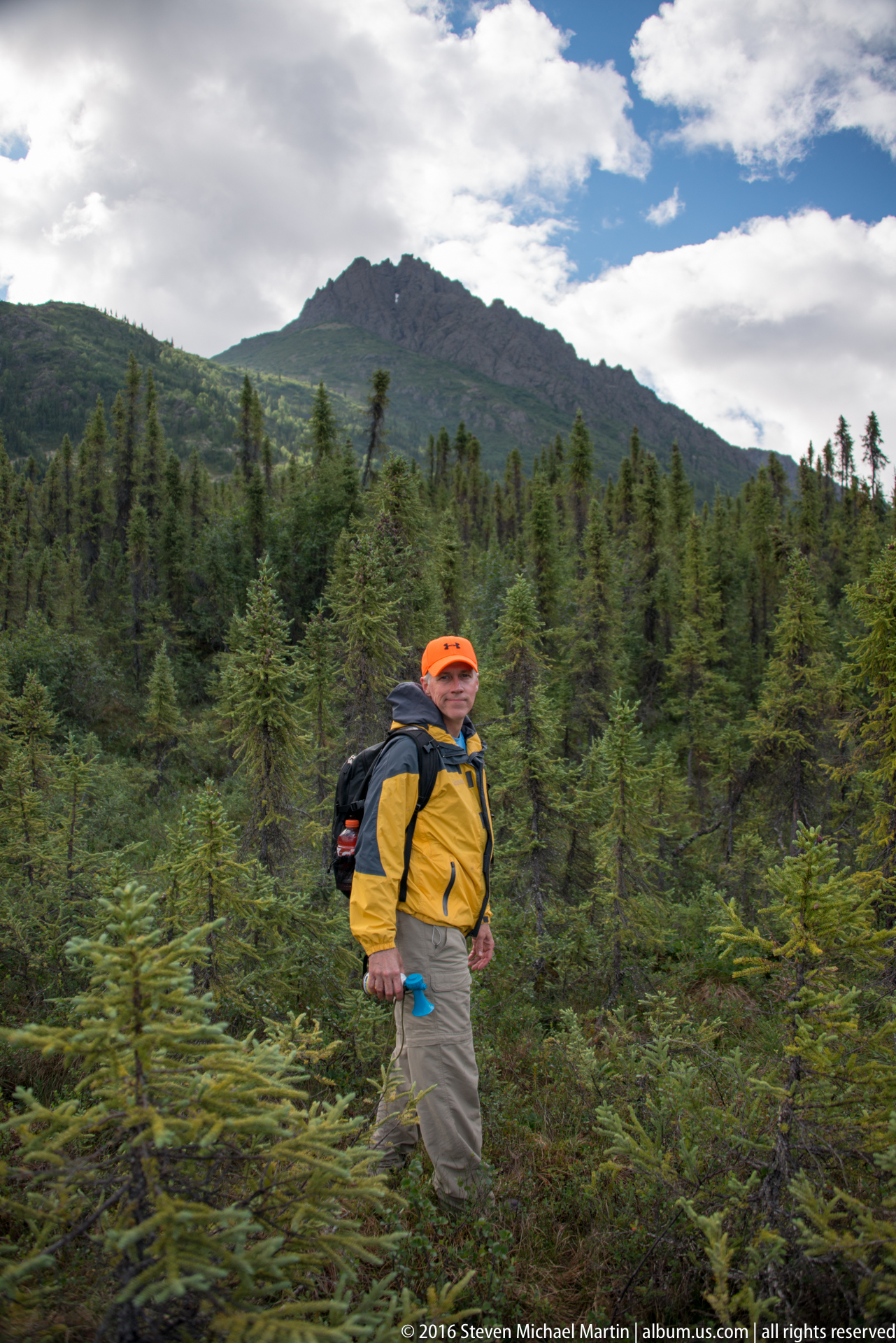
A hiker in a yellow jacket and orange cap moves through dense spruce and low brush, seen from behind. A dark backpack rises above the shoulders, and a forested mountain fills the background. The slightly blurred foreground foliage conveys the walker’s passage through the vegetation rather than a posed portrait.
Caption
A hiker in a yellow jacket and orange cap moves through dense spruce and low brush, seen from behind. A dark backpack rises above the shoulders, and a forested mountain fills the background. The slightly blurred foreground foliage conveys the walker’s passage through the vegetation rather than a posed portrait.
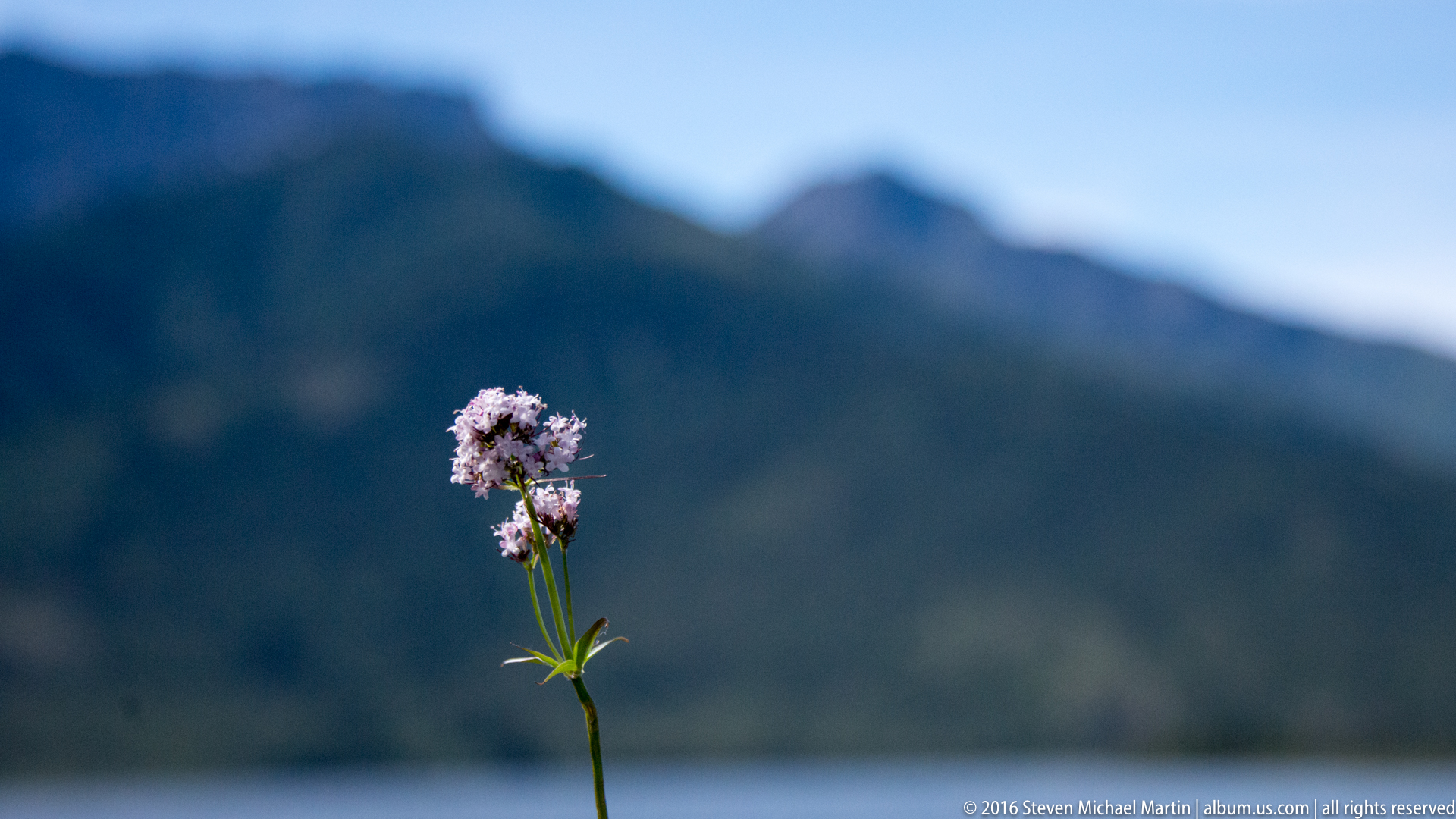
A slender stem carries a small cluster of pale lavender blossoms against a dark, softly blurred mountain slope. The flower occupies little space in the wide frame, creating a contrast between delicate foreground growth and the mass of the mountain behind it. Its shape and color are visible, but the proof image does not resolve enough detail for a reliable species identification.
Caption
A slender stem carries a small cluster of pale lavender blossoms against a dark, softly blurred mountain slope. The flower occupies little space in the wide frame, creating a contrast between delicate foreground growth and the mass of the mountain behind it. Its shape and color are visible, but the proof image does not resolve enough detail for a reliable species identification.
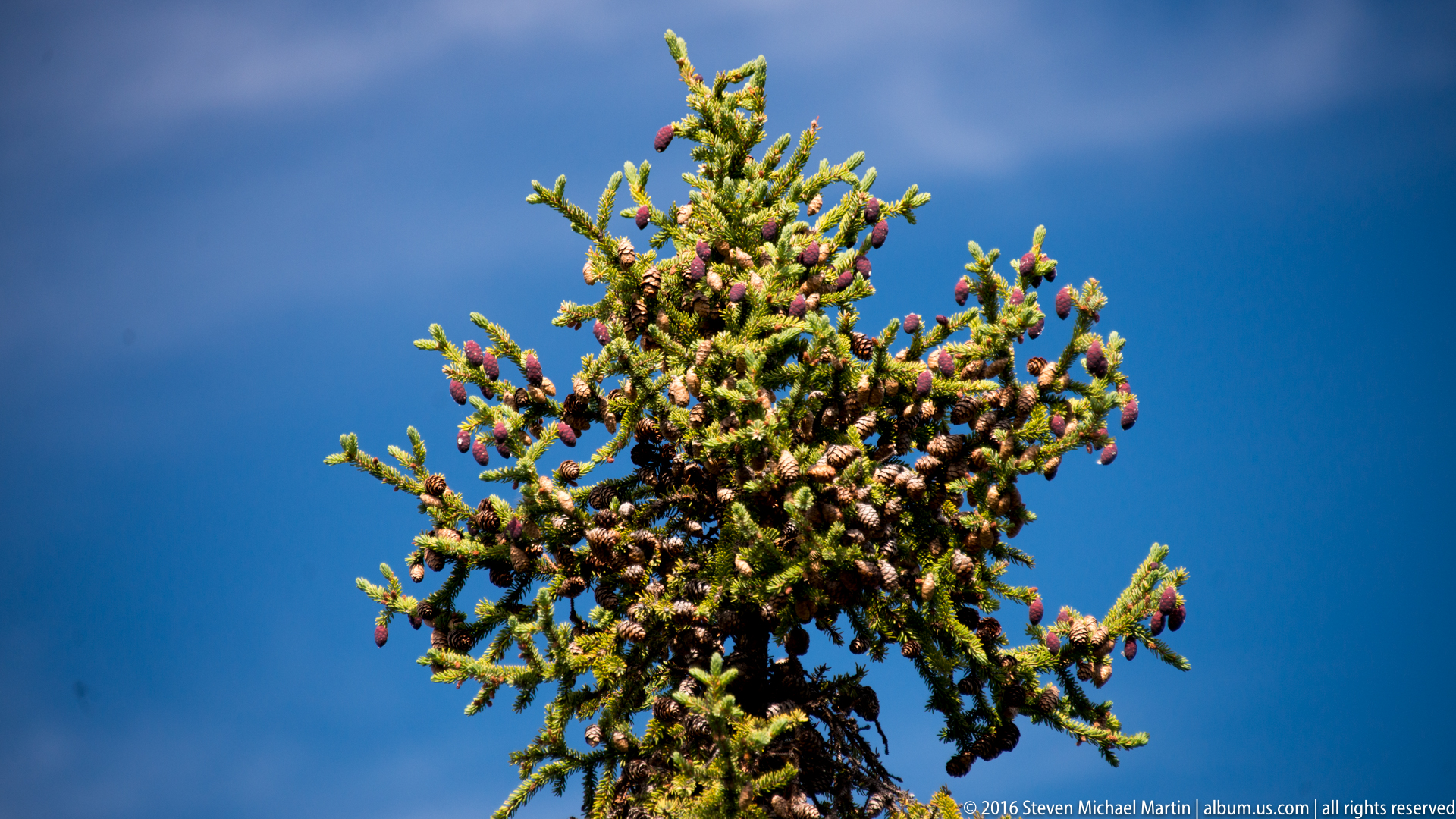
A dense spruce crown fills the frame, with green needles and numerous reddish cones set against a deep blue sky. The close crop makes the cone clusters the dominant feature and leaves the trunk and lower branches outside the composition. Strong sunlight picks out the irregular crown, documenting a prolific cone-bearing season without naming a specific tree species beyond spruce.
Caption
A dense spruce crown fills the frame, with green needles and numerous reddish cones set against a deep blue sky. The close crop makes the cone clusters the dominant feature and leaves the trunk and lower branches outside the composition. Strong sunlight picks out the irregular crown, documenting a prolific cone-bearing season without naming a specific tree species beyond spruce.
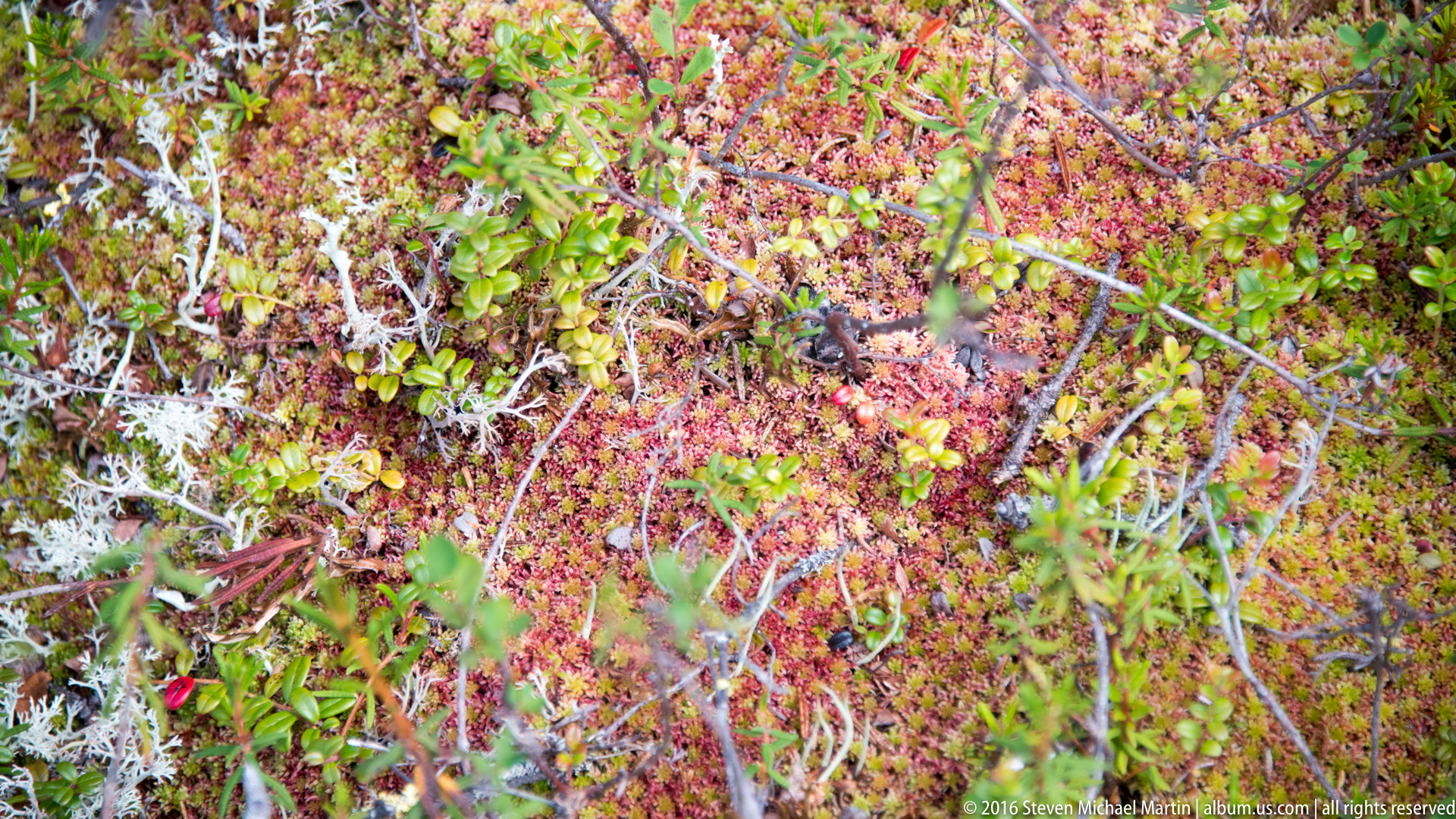
A close view of low tundra vegetation reveals red and green leaves threaded through gray branches and patches of pale lichen. The mixed colors create a fine, irregular pattern across the ground, with no single plant dominating the frame. This botanical detail records seasonal color and groundcover texture at Selby Lake without implying a specific species for each shrub.
Caption
A close view of low tundra vegetation reveals red and green leaves threaded through gray branches and patches of pale lichen. The mixed colors create a fine, irregular pattern across the ground, with no single plant dominating the frame. This botanical detail records seasonal color and groundcover texture at Selby Lake without implying a specific species for each shrub.
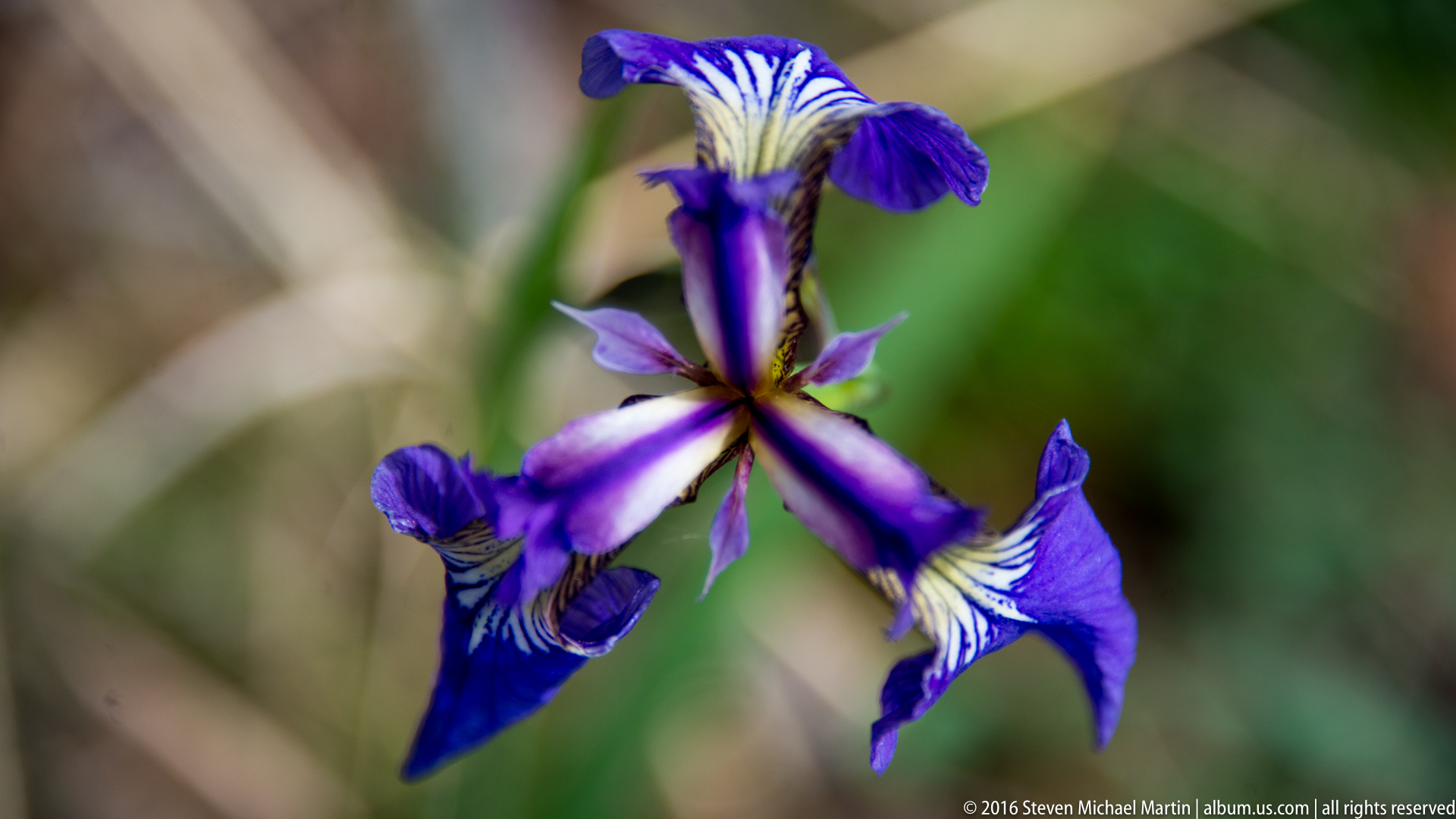
Two deep-purple iris blossoms open on a slender stem, their pale-veined petals and yellow markings sharply visible against a softly blurred green background. One flower faces upward while the other angles outward, showing different views of the distinctive petal structure. The image supports identification as an iris, though the exact species is not established by the proof-sheet view.
Caption
Two deep-purple iris blossoms open on a slender stem, their pale-veined petals and yellow markings sharply visible against a softly blurred green background. One flower faces upward while the other angles outward, showing different views of the distinctive petal structure. The image supports identification as an iris, though the exact species is not established by the proof-sheet view.
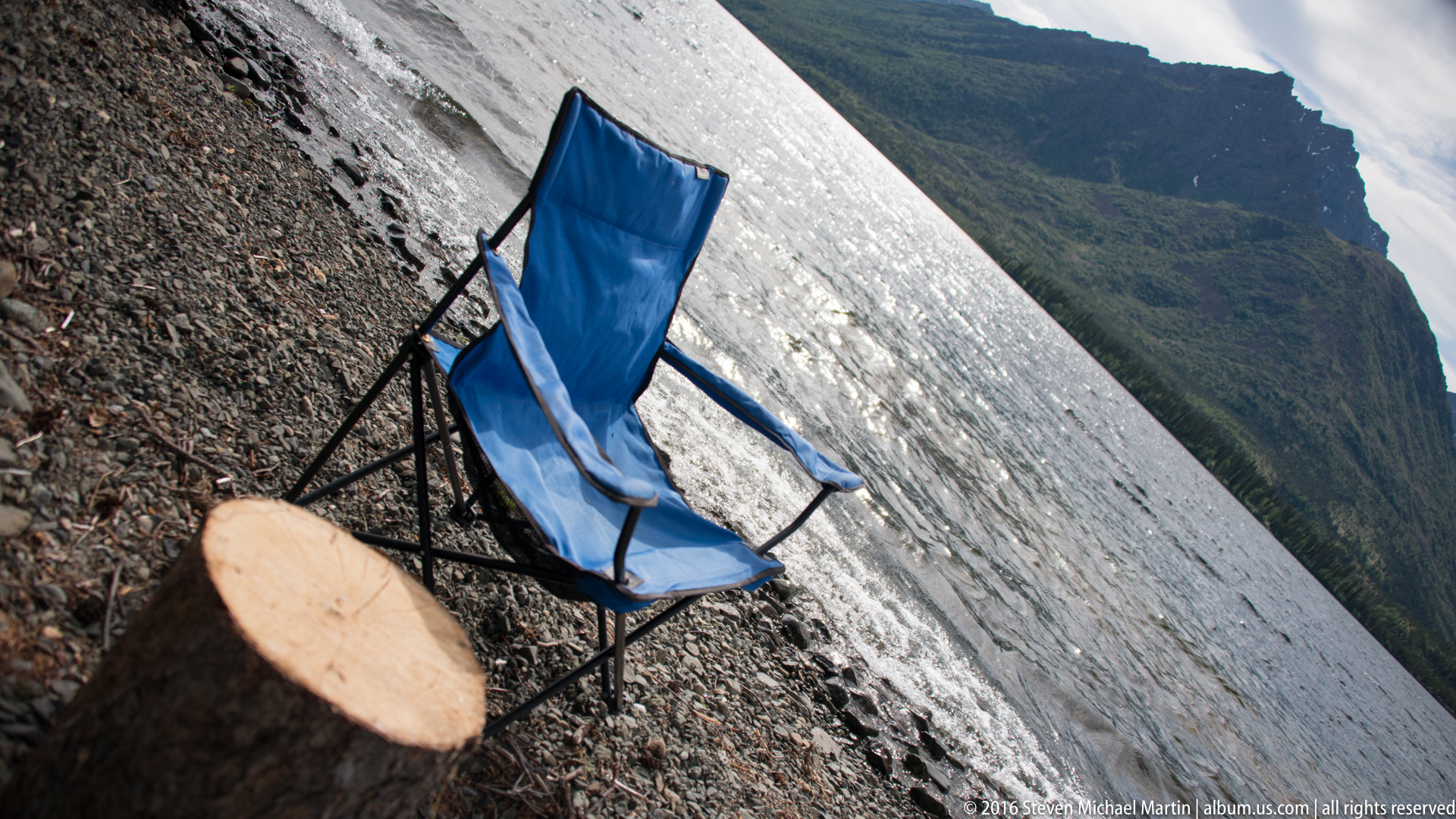
An empty blue folding chair rests on a steep, pale rock slope, angled toward a distant green valley. A cut section of log lies in the foreground, while the slope drops sharply toward the dark mountain wall at the right. The improbable seating arrangement turns the exposed mountainside into a temporary resting place and gives the rugged terrain a human scale.
Caption
An empty blue folding chair rests on a steep, pale rock slope, angled toward a distant green valley. A cut section of log lies in the foreground, while the slope drops sharply toward the dark mountain wall at the right. The improbable seating arrangement turns the exposed mountainside into a temporary resting place and gives the rugged terrain a human scale.
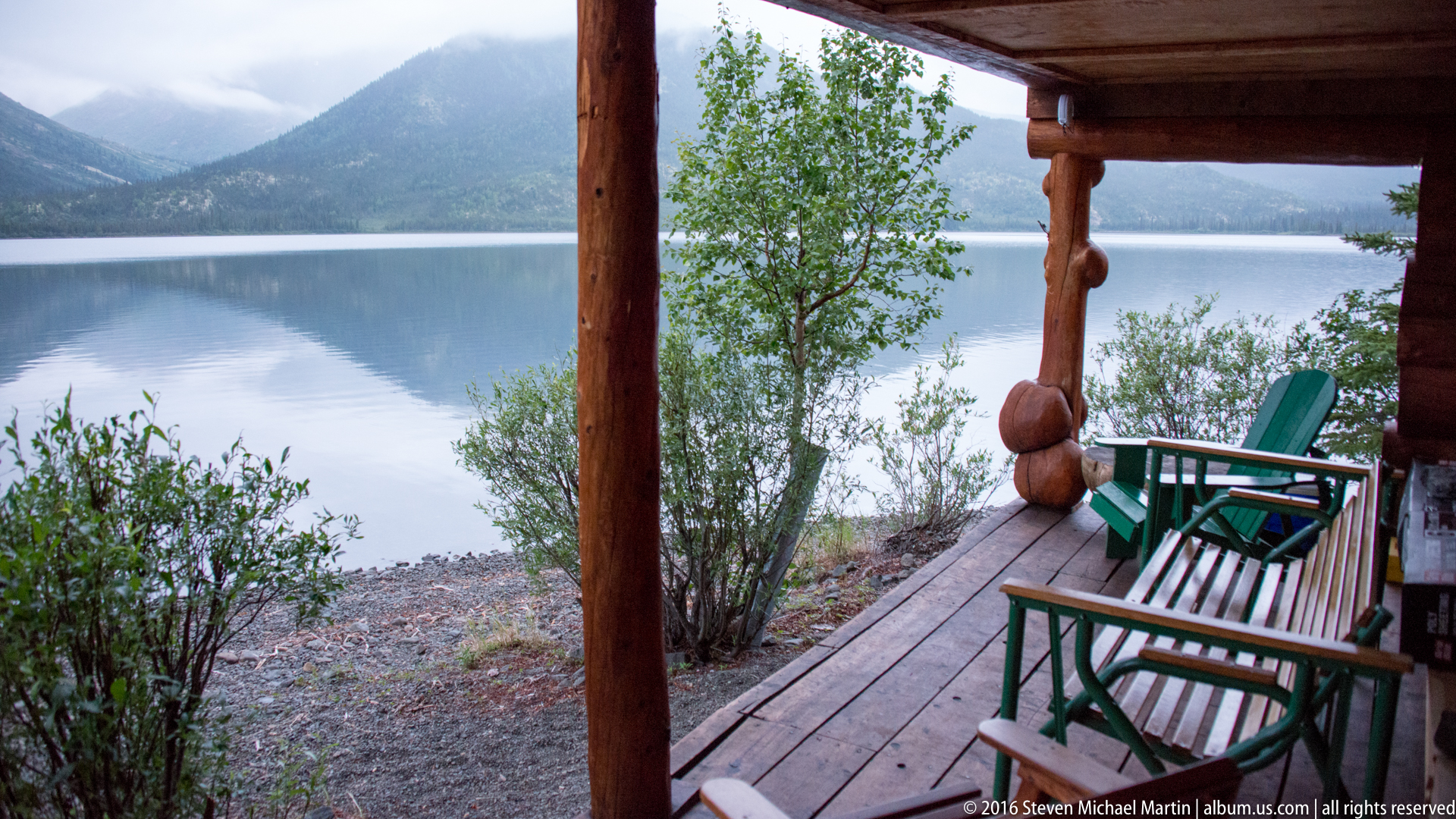
Two green chairs sit on the timber porch of a log cabin, facing a quiet lake and wooded shore. The broad overhang and carved log posts frame the view, while shrubs edge the gravelly bank below. This sheltered vantage point brings the cabin’s domestic setting into direct relation with the still water and distant hills.
Caption
Two green chairs sit on the timber porch of a log cabin, facing a quiet lake and wooded shore. The broad overhang and carved log posts frame the view, while shrubs edge the gravelly bank below. This sheltered vantage point brings the cabin’s domestic setting into direct relation with the still water and distant hills.

A broad view of a log cabin wall reveals a framed photograph, coiled rope, snowshoes or similar framed gear, and several small objects arranged along a narrow shelf. A large wooden implement leans across the foreground. The collection gives the interior a lived-in, utilitarian character, although individual tools are not all identifiable at this scale.
Caption
A broad view of a log cabin wall reveals a framed photograph, coiled rope, snowshoes or similar framed gear, and several small objects arranged along a narrow shelf. A large wooden implement leans across the foreground. The collection gives the interior a lived-in, utilitarian character, although individual tools are not all identifiable at this scale.
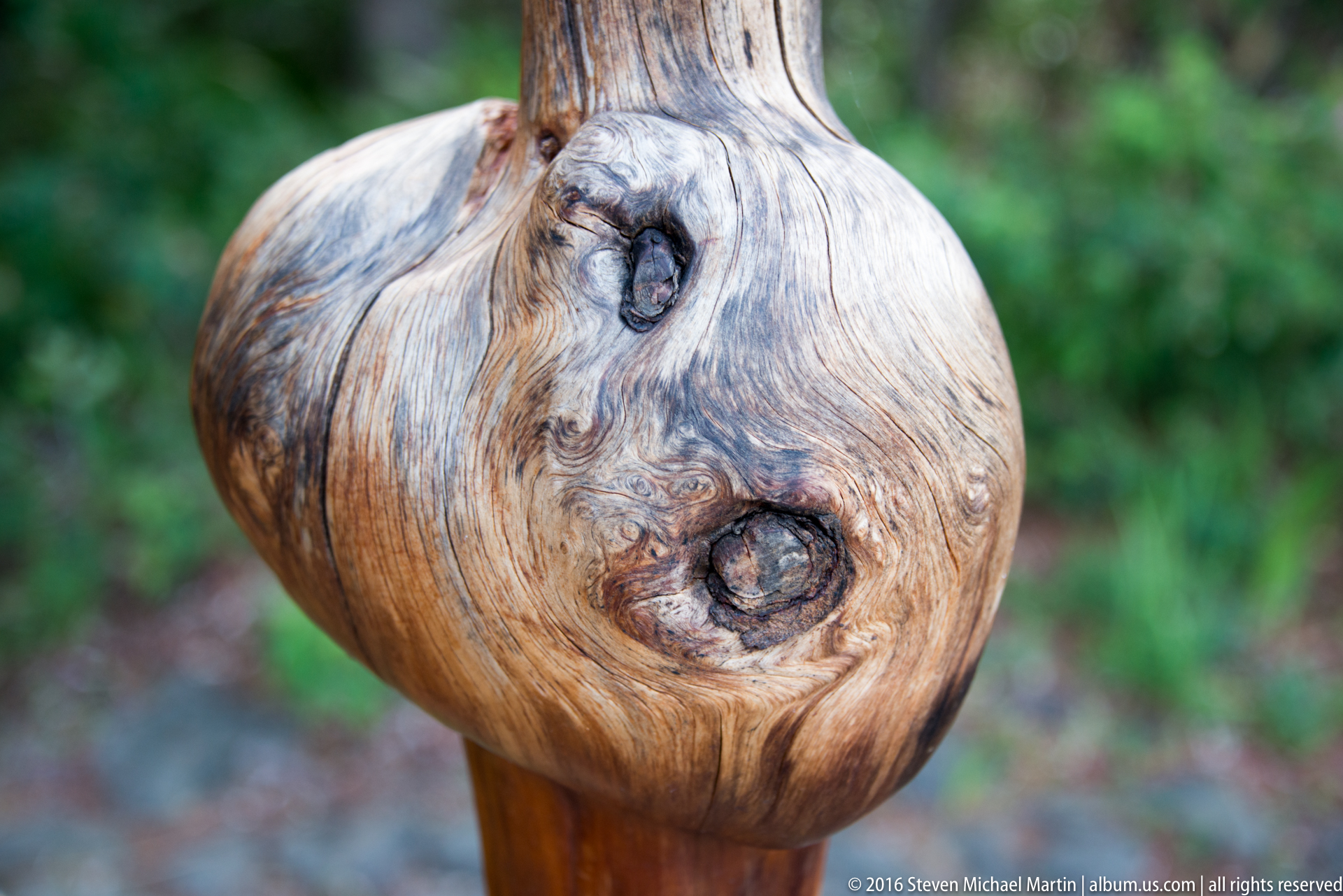
A rounded wooden post fills the frame, its pale, weathered surface marked by swirling grain, deep knots, and two dark cavities. The tight crop turns a structural or decorative post into a study of natural wood pattern and texture. The surrounding green background is softly blurred, isolating the sculptural form without establishing the object’s maker or purpose.
Caption
A rounded wooden post fills the frame, its pale, weathered surface marked by swirling grain, deep knots, and two dark cavities. The tight crop turns a structural or decorative post into a study of natural wood pattern and texture. The surrounding green background is softly blurred, isolating the sculptural form without establishing the object’s maker or purpose.

Two visitors stand together on the front steps of a two-story log cabin, one in a yellow jacket and the other in a light-colored top. Green porch chairs and a gravel approach sit below the broad timber façade, while trees and water frame the building. Their presence gives the cabin exterior a human scale without identifying either person.
Caption
Two visitors stand together on the front steps of a two-story log cabin, one in a yellow jacket and the other in a light-colored top. Green porch chairs and a gravel approach sit below the broad timber façade, while trees and water frame the building. Their presence gives the cabin exterior a human scale without identifying either person.
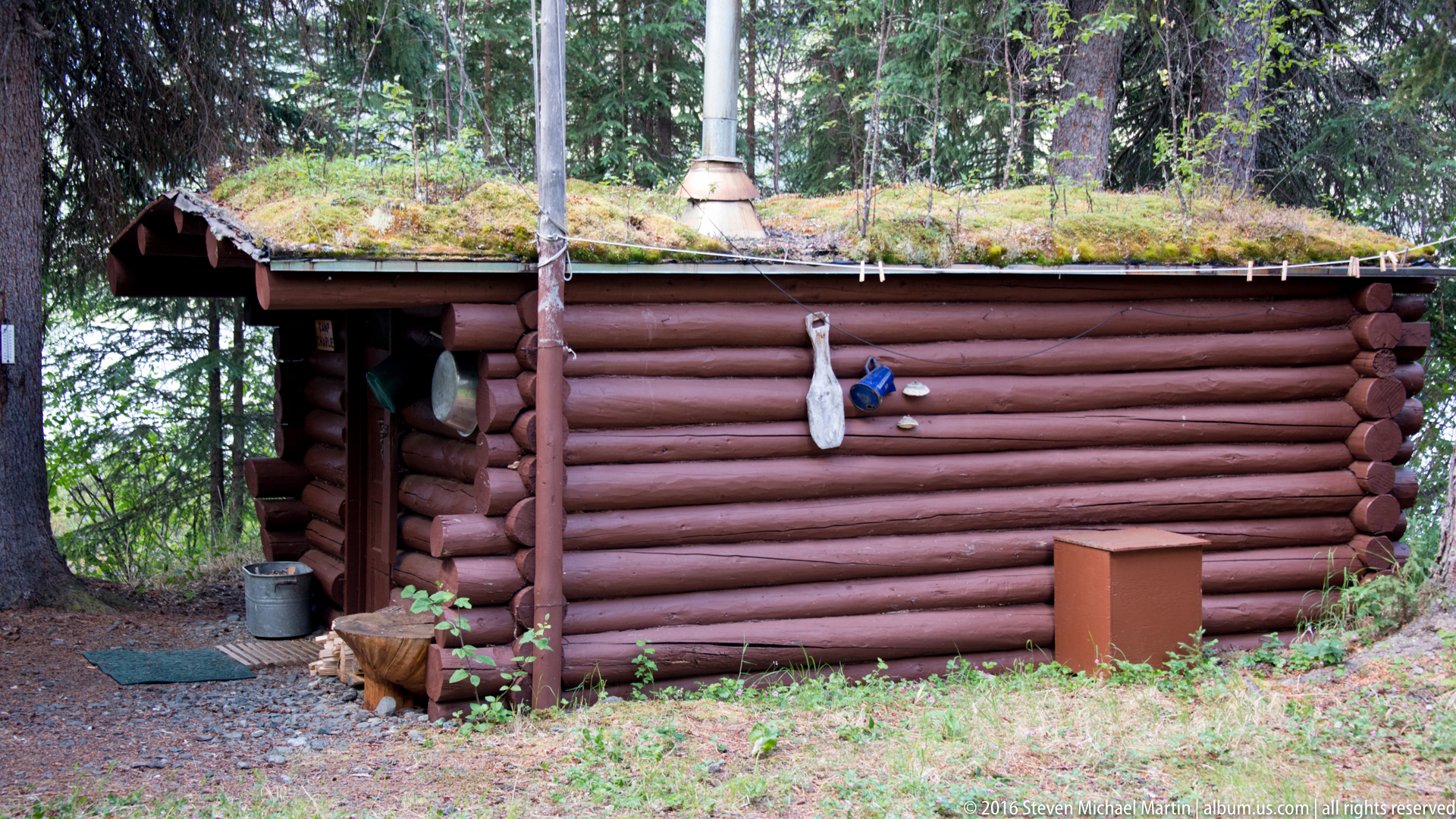
A low log outbuilding sits beneath a roof covered with moss and low vegetation, with a metal stovepipe rising through the center. A short ladder, hanging items, and a small container rest against the wall, while trees press close around the structure. The roof’s living surface softens the cabin’s outline and distinguishes it from the taller log house nearby.
Caption
A low log outbuilding sits beneath a roof covered with moss and low vegetation, with a metal stovepipe rising through the center. A short ladder, hanging items, and a small container rest against the wall, while trees press close around the structure. The roof’s living surface softens the cabin’s outline and distinguishes it from the taller log house nearby.
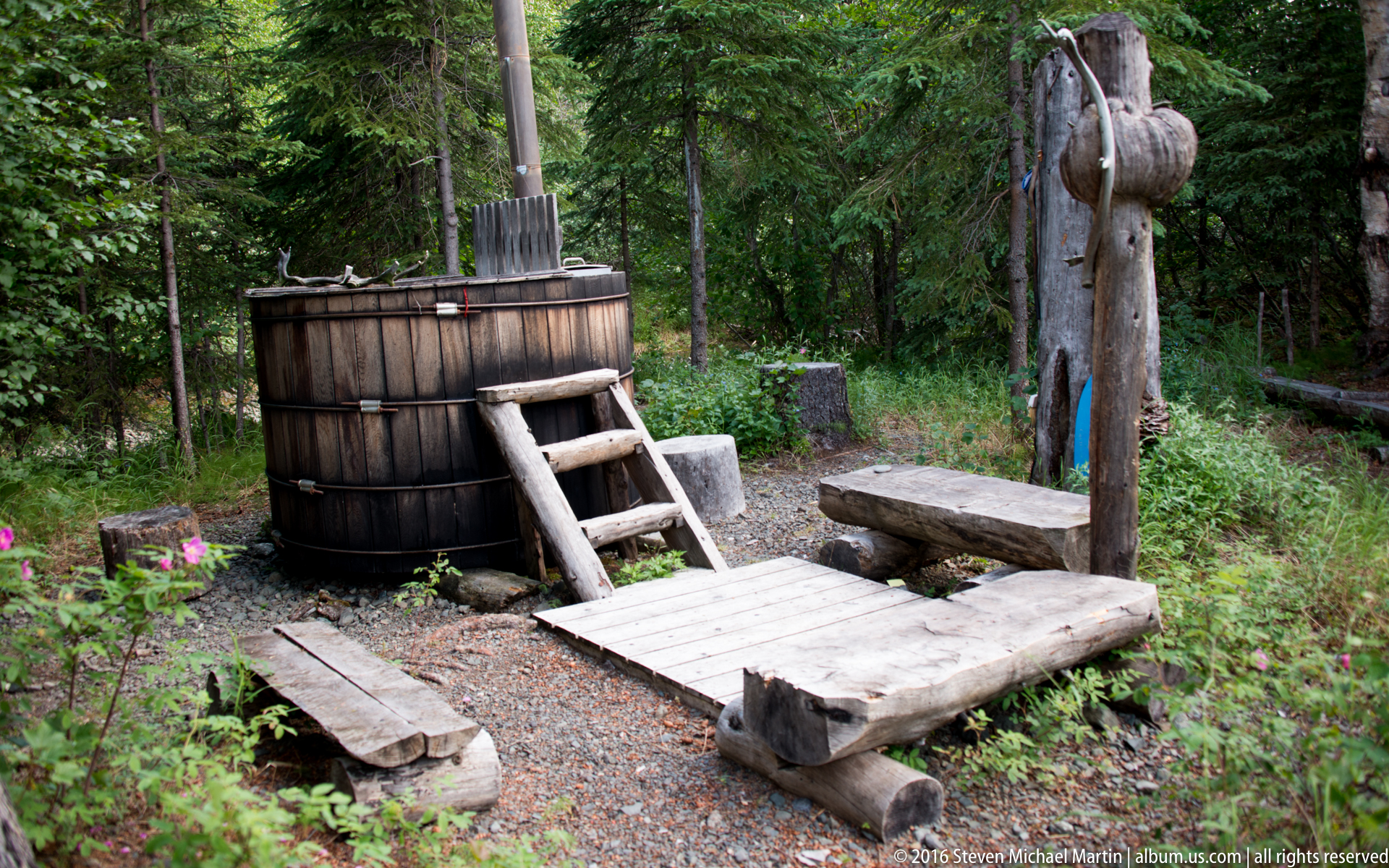
A large barrel-shaped wooden tub stands in a forest clearing beside a low platform and rough timber frame. A short set of steps leads to its rim, while a bench and nearby path suggest a place for bathing or soaking. The photograph does not show water or a heating system, so the exact function remains unconfirmed.
Caption
A large barrel-shaped wooden tub stands in a forest clearing beside a low platform and rough timber frame. A short set of steps leads to its rim, while a bench and nearby path suggest a place for bathing or soaking. The photograph does not show water or a heating system, so the exact function remains unconfirmed.
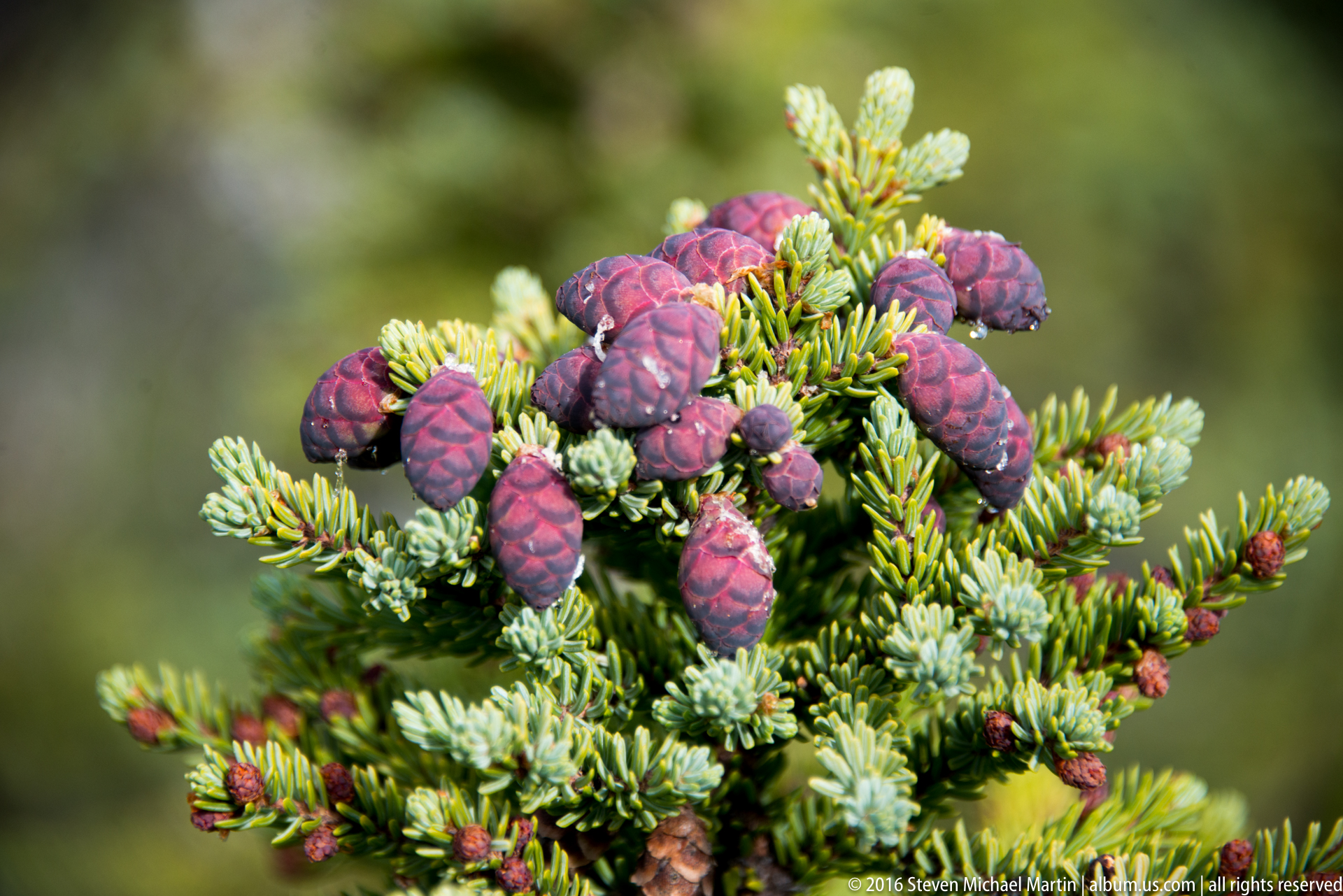
Clusters of magenta-purple cones grow upright among short evergreen needles at the tip of a spruce branch. Their saturated color contrasts with pale green new growth and a soft, dark background. The close view isolates the developing cones from the larger forest; the tree is identifiable by its needle-covered branch and cone form.
Caption
Clusters of magenta-purple cones grow upright among short evergreen needles at the tip of a spruce branch. Their saturated color contrasts with pale green new growth and a soft, dark background. The close view isolates the developing cones from the larger forest; the tree is identifiable by its needle-covered branch and cone form.

A broad pale mat of branching lichen spreads across dark soil and scattered stones, with small patches of moss and plants breaking through. The low viewpoint makes the lichen’s dense, tufted texture the dominant feature. The precise species is not identifiable from this frame, but the ground-covering growth is characteristic of a cold northern forest floor.
Caption
A broad pale mat of branching lichen spreads across dark soil and scattered stones, with small patches of moss and plants breaking through. The low viewpoint makes the lichen’s dense, tufted texture the dominant feature. The precise species is not identifiable from this frame, but the ground-covering growth is characteristic of a cold northern forest floor.
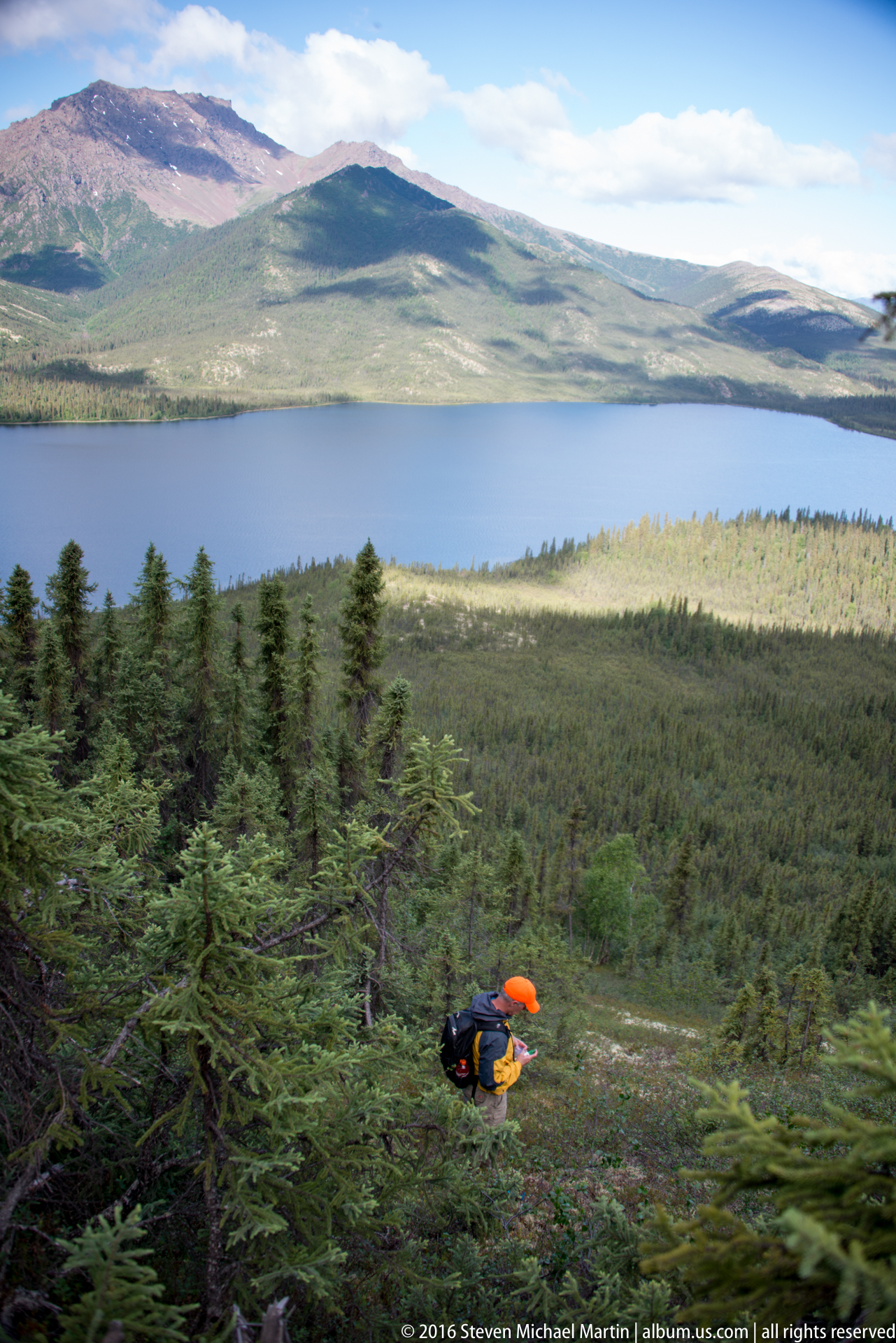
From an elevated hillside, a small hiker in an orange cap pauses among brush and low trees above a broad lake. Rolling hills line the far shore beneath a bright, cloud-dotted sky. The person’s small scale places the emphasis on the openness of the basin and the layered transition from foreground vegetation to water and distant terrain.
Caption
From an elevated hillside, a small hiker in an orange cap pauses among brush and low trees above a broad lake. Rolling hills line the far shore beneath a bright, cloud-dotted sky. The person’s small scale places the emphasis on the openness of the basin and the layered transition from foreground vegetation to water and distant terrain.
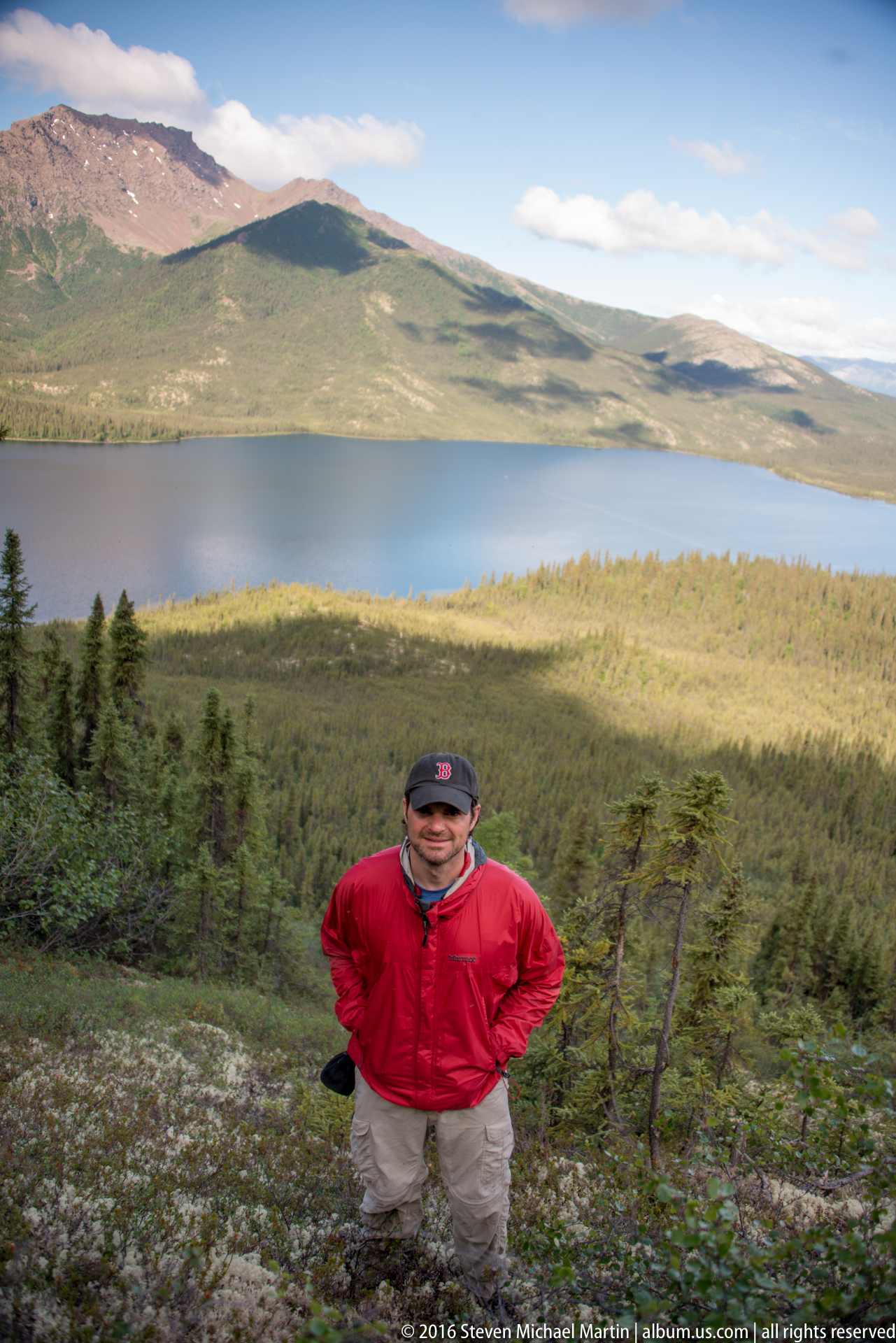
A man in a red jacket and dark cap stands facing the camera on a brushy hillside, with a broad lake and low mountain ridge behind him. The elevated viewpoint reveals bands of shrubs and scattered conifers between the figure and the shore. His position provides scale for the open basin while keeping the lake central to the composition.
Caption
A man in a red jacket and dark cap stands facing the camera on a brushy hillside, with a broad lake and low mountain ridge behind him. The elevated viewpoint reveals bands of shrubs and scattered conifers between the figure and the shore. His position provides scale for the open basin while keeping the lake central to the composition.
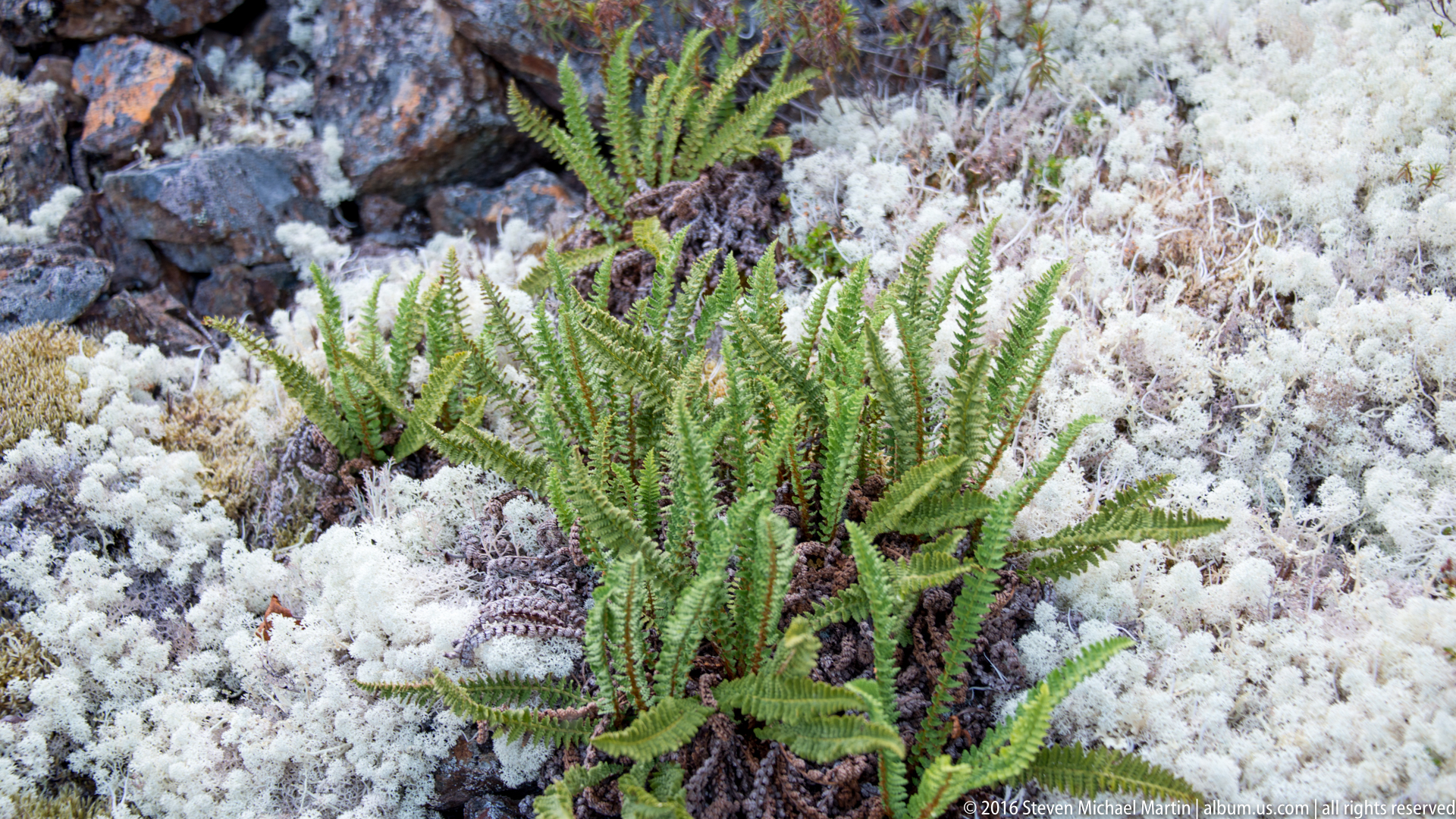
A small green fern spreads its fronds across a patchwork of pale lichen, dark soil, and angular stones. The plant’s feathered leaflets contrast with the rounded, branching lichen around it. Framed from above at close range, the image emphasizes the coexistence of different ground-layer plants in a rocky northern habitat.
Caption
A small green fern spreads its fronds across a patchwork of pale lichen, dark soil, and angular stones. The plant’s feathered leaflets contrast with the rounded, branching lichen around it. Framed from above at close range, the image emphasizes the coexistence of different ground-layer plants in a rocky northern habitat.

An overhead view of broken dark rocks reveals vivid orange lichen patches among pale branching ground lichen and small plants. The fractured stones form a rough mosaic, with varied lichen colors marking their exposed surfaces. The photograph focuses on the textures and colonization of rock rather than a larger geological formation.
Caption
An overhead view of broken dark rocks reveals vivid orange lichen patches among pale branching ground lichen and small plants. The fractured stones form a rough mosaic, with varied lichen colors marking their exposed surfaces. The photograph focuses on the textures and colonization of rock rather than a larger geological formation.
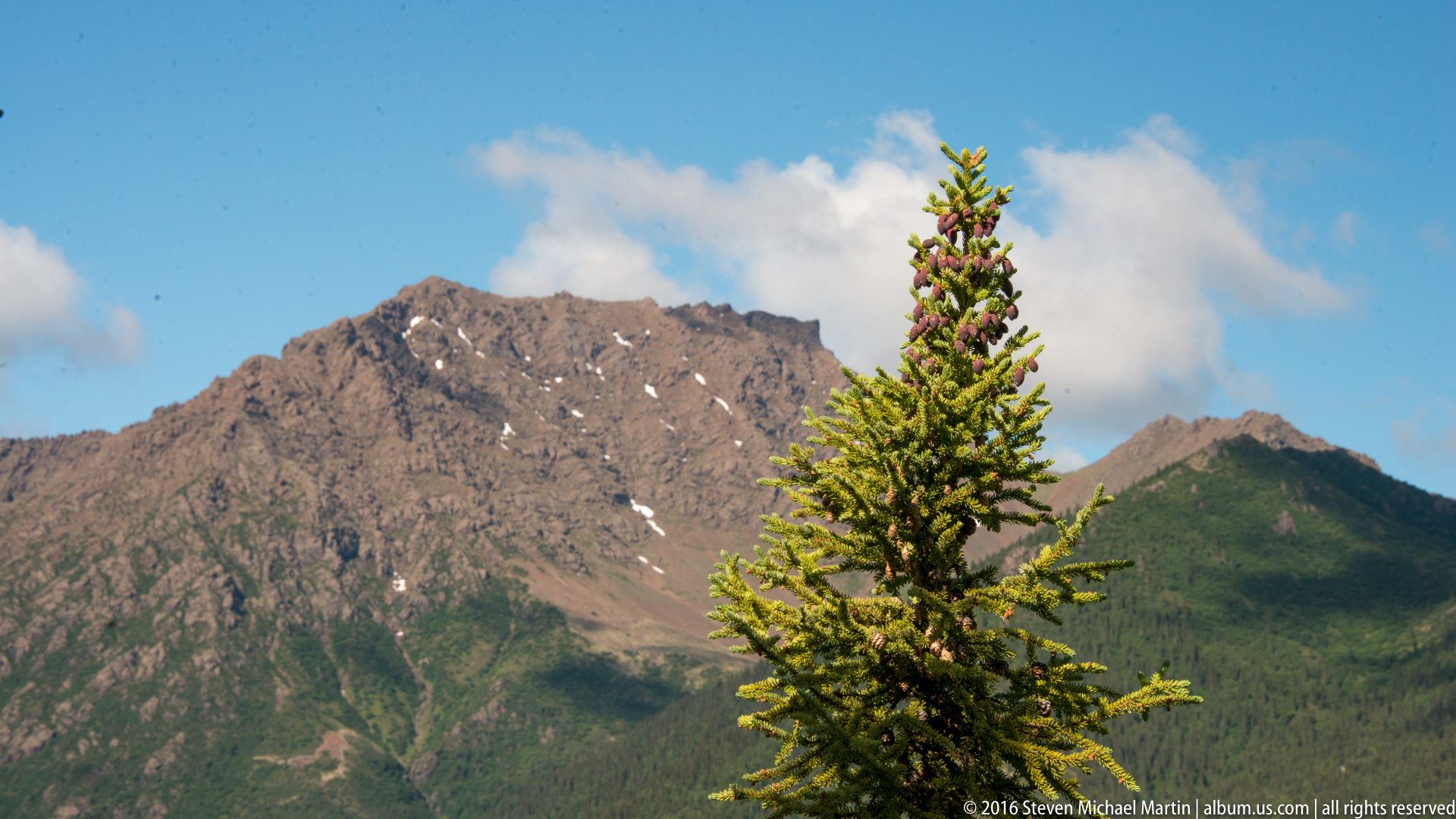
A spruce branch tipped with reddish new cones rises in the foreground against a rocky mountain ridge. The darker evergreen slope below the exposed rock and the clean blue sky create three distinct layers. This composition connects a close botanical detail with the larger mountain setting, while the tree’s species remains uncertain at this scale.
Caption
A spruce branch tipped with reddish new cones rises in the foreground against a rocky mountain ridge. The darker evergreen slope below the exposed rock and the clean blue sky create three distinct layers. This composition connects a close botanical detail with the larger mountain setting, while the tree’s species remains uncertain at this scale.
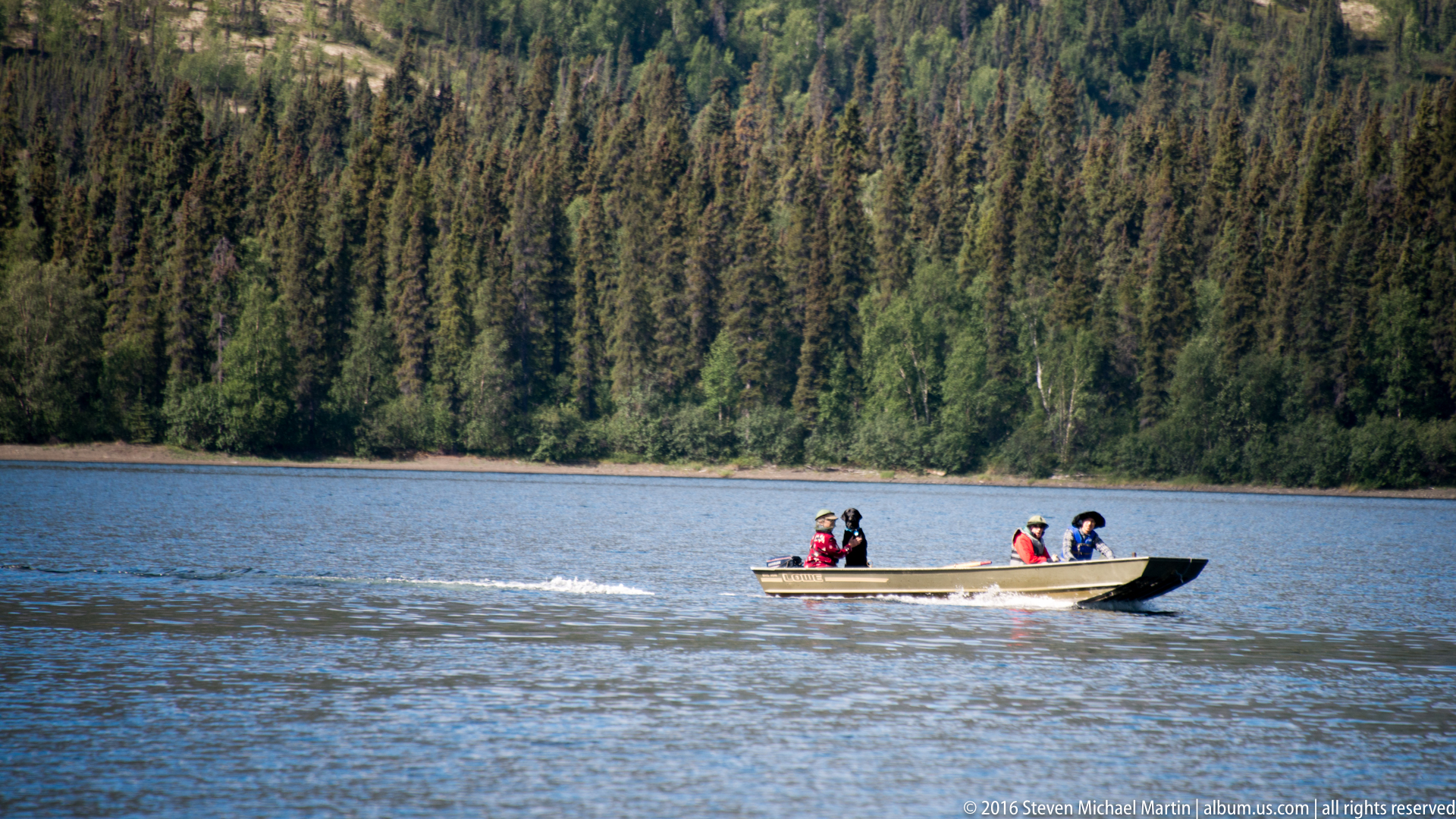
A small open motorboat carries three passengers across the lake, leaving a white wake behind its stern. Dense forest reaches the water’s edge along the opposite shore, while sunlight brightens the boat and its occupants. The wide view records both transport on the water and the scale of the surrounding forested shoreline.
Caption
A small open motorboat carries three passengers across the lake, leaving a white wake behind its stern. Dense forest reaches the water’s edge along the opposite shore, while sunlight brightens the boat and its occupants. The wide view records both transport on the water and the scale of the surrounding forested shoreline.
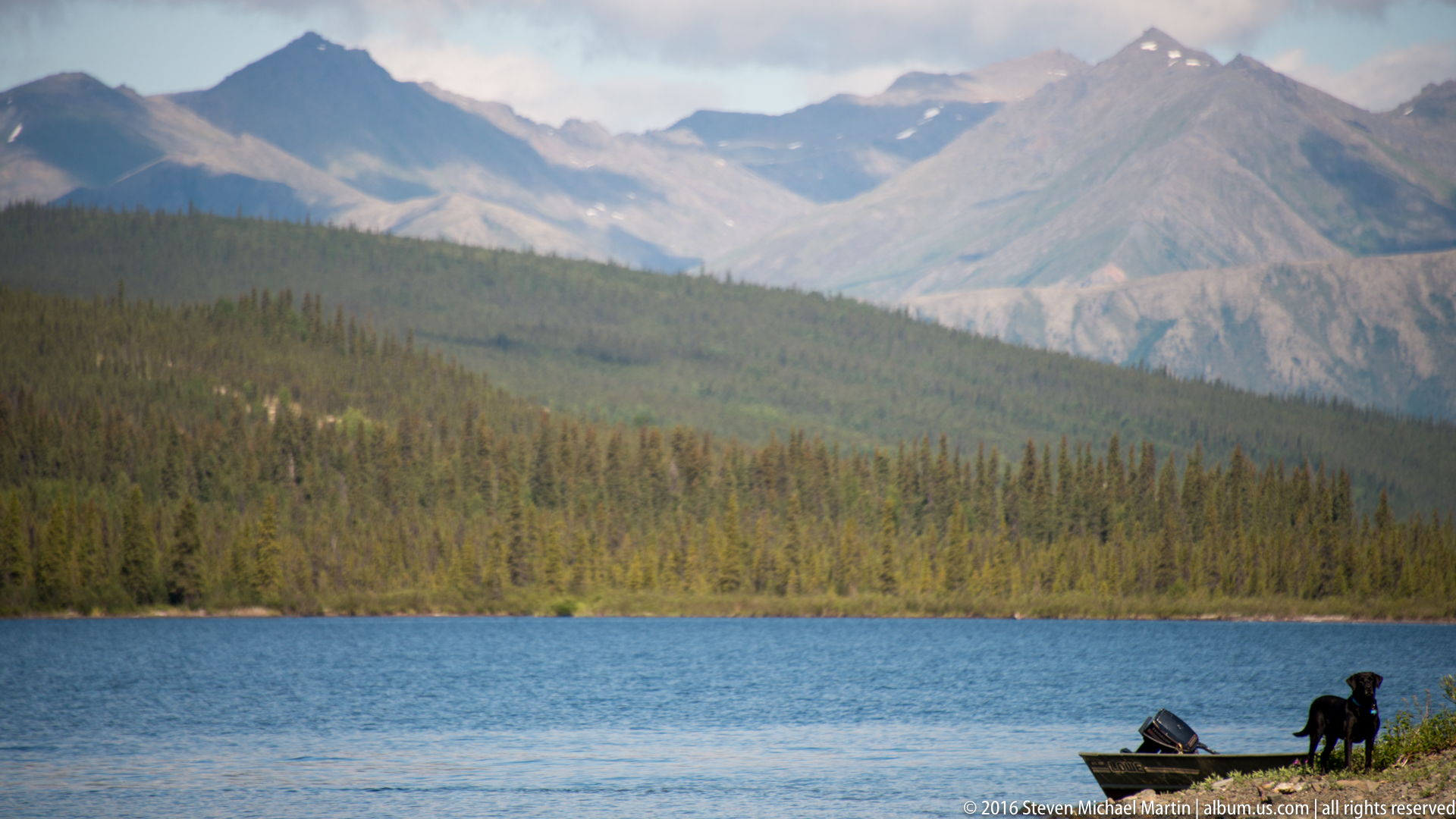
A black dog stands at the water’s edge in the lower right foreground, looking toward the lake. Across the water, forested slopes rise into a distant mountain range with small snow patches near the highest ridges. The dog’s presence adds a close point of scale to the expansive shoreline and mountain view.
Caption
A black dog stands at the water’s edge in the lower right foreground, looking toward the lake. Across the water, forested slopes rise into a distant mountain range with small snow patches near the highest ridges. The dog’s presence adds a close point of scale to the expansive shoreline and mountain view.

A woman in a red jacket, pale brimmed hat, and gray life vest sits in the bow of an aluminum canoe with a large black dog in front of her. She raises one hand while the dog faces the camera, its blue collar visible. Forested shoreline and open water frame this shared boat ride.
Caption
A woman in a red jacket, pale brimmed hat, and gray life vest sits in the bow of an aluminum canoe with a large black dog in front of her. She raises one hand while the dog faces the camera, its blue collar visible. Forested shoreline and open water frame this shared boat ride.
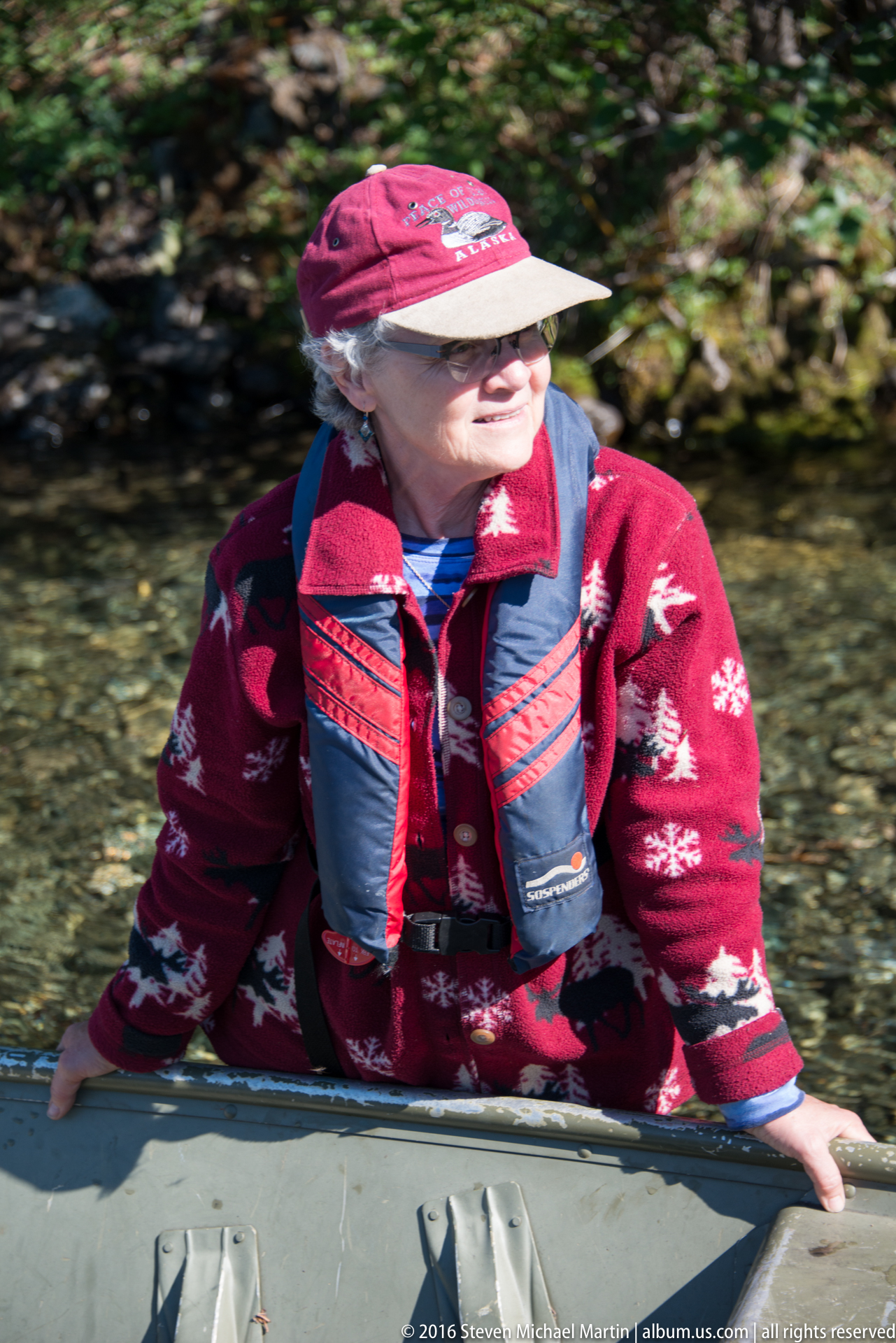
A woman wearing a red patterned sweater, red cap, and blue life vest sits in a canoe on clear water. One hand rests on the gunwale as she looks toward the shore, where stones remain visible beneath the surface. The waist-up composition centers her protective gear and calm posture rather than the wider lake landscape.
Caption
A woman wearing a red patterned sweater, red cap, and blue life vest sits in a canoe on clear water. One hand rests on the gunwale as she looks toward the shore, where stones remain visible beneath the surface. The waist-up composition centers her protective gear and calm posture rather than the wider lake landscape.
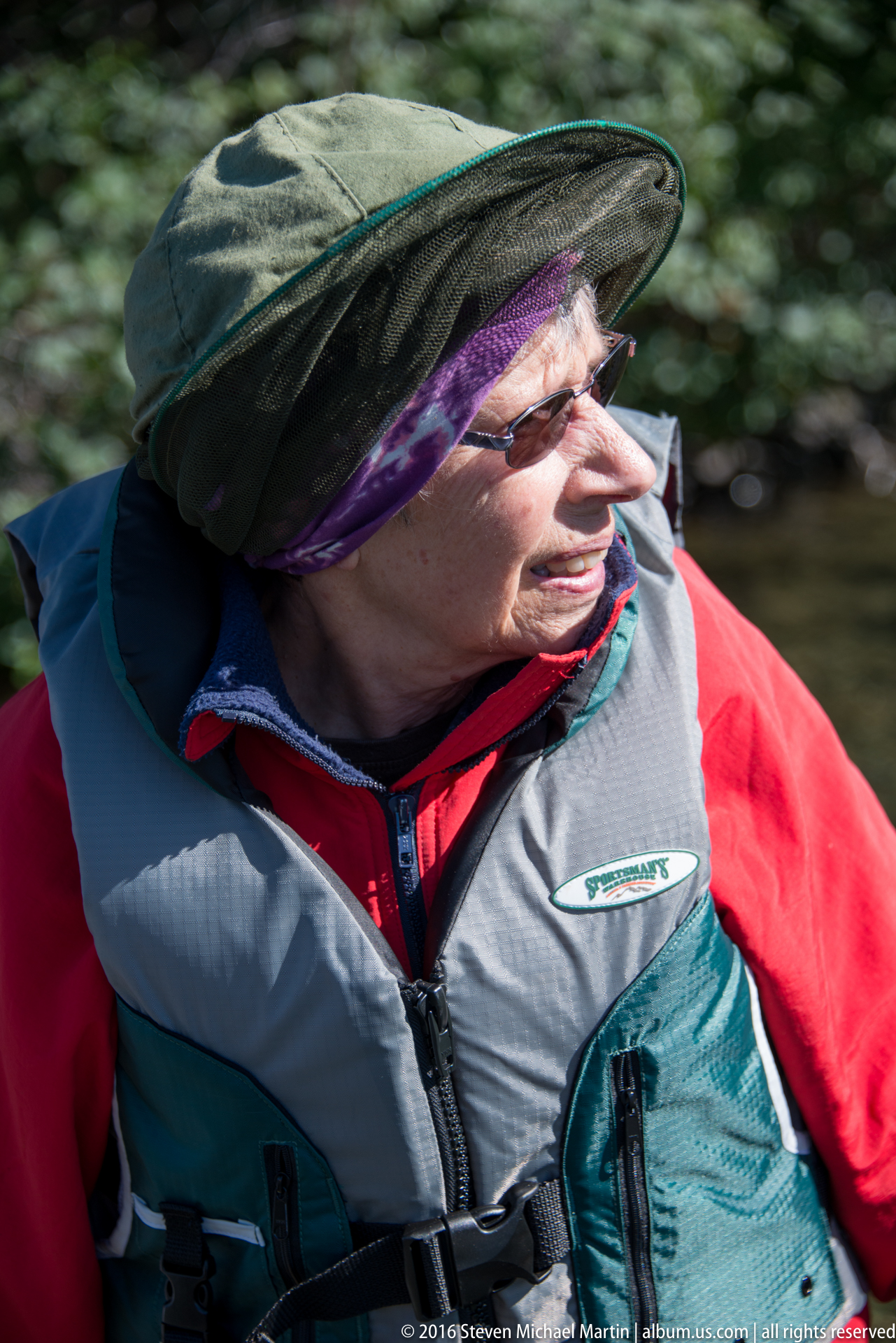
A close profile shows a woman wearing glasses, a wide-brim hat, purple head covering, and layered gray and red life vests. Sunlight catches her face as she looks away from the camera, with dark water and greenery blurred behind her. The tight crop distinguishes this portrait through its protective clothing and attentive sideways gaze.
Caption
A close profile shows a woman wearing glasses, a wide-brim hat, purple head covering, and layered gray and red life vests. Sunlight catches her face as she looks away from the camera, with dark water and greenery blurred behind her. The tight crop distinguishes this portrait through its protective clothing and attentive sideways gaze.
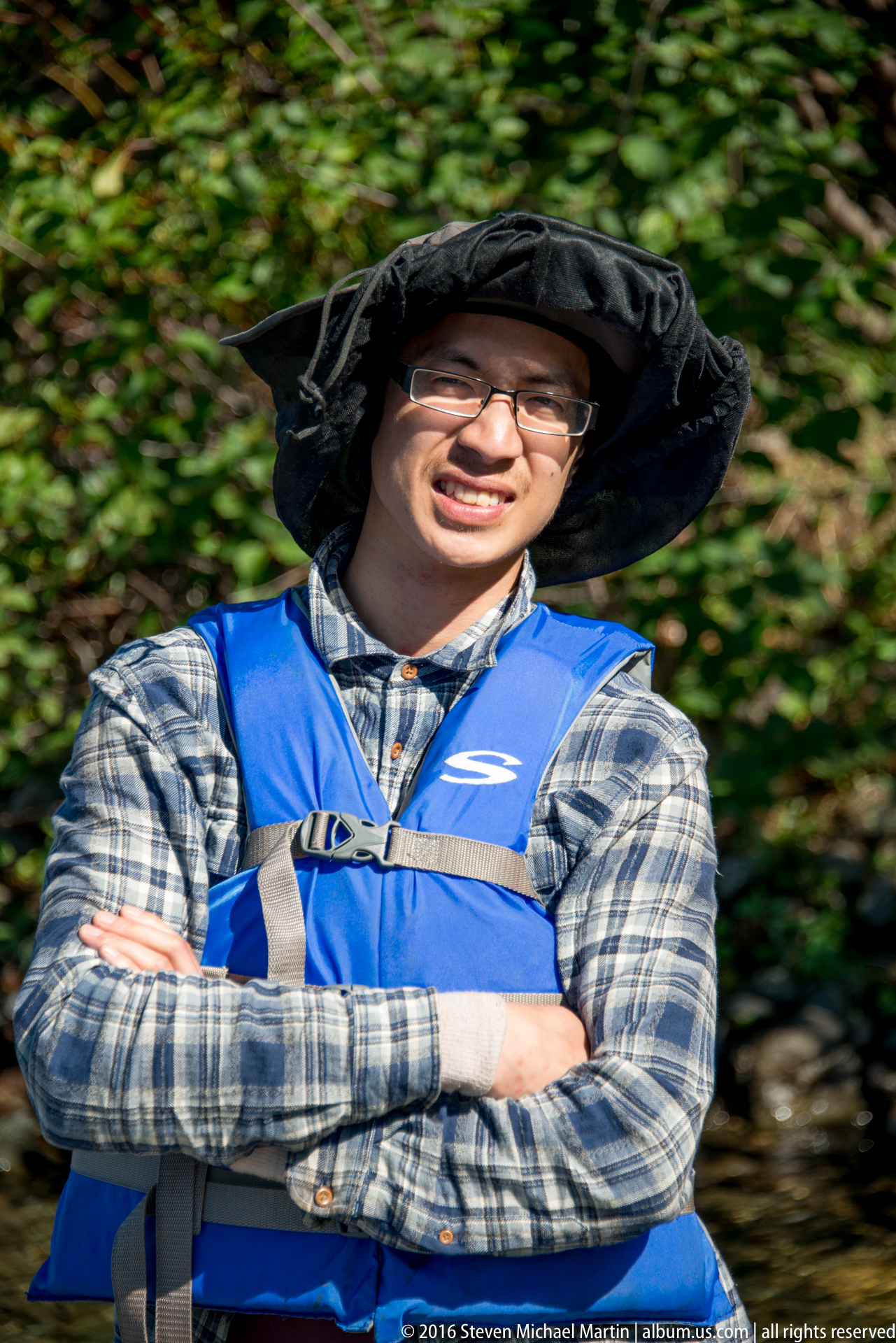
A smiling man with glasses wears a blue life vest over a plaid shirt and a wide-brim dark hat. He stands with his arms folded against a softly blurred background of green leaves. The portrait isolates his expression and layered outdoor clothing, with no lake or boat visible in this frame.
Caption
A smiling man with glasses wears a blue life vest over a plaid shirt and a wide-brim dark hat. He stands with his arms folded against a softly blurred background of green leaves. The portrait isolates his expression and layered outdoor clothing, with no lake or boat visible in this frame.

A man in an orange cap and blue life vest sits in the front of an aluminum canoe, holding a black paddle across the water. Forested hills and distant peaks form a broad backdrop beneath scattered clouds. The straight-on view places the paddler at the center of the lake scene and makes the canoe’s narrow bow prominent.
Caption
A man in an orange cap and blue life vest sits in the front of an aluminum canoe, holding a black paddle across the water. Forested hills and distant peaks form a broad backdrop beneath scattered clouds. The straight-on view places the paddler at the center of the lake scene and makes the canoe’s narrow bow prominent.
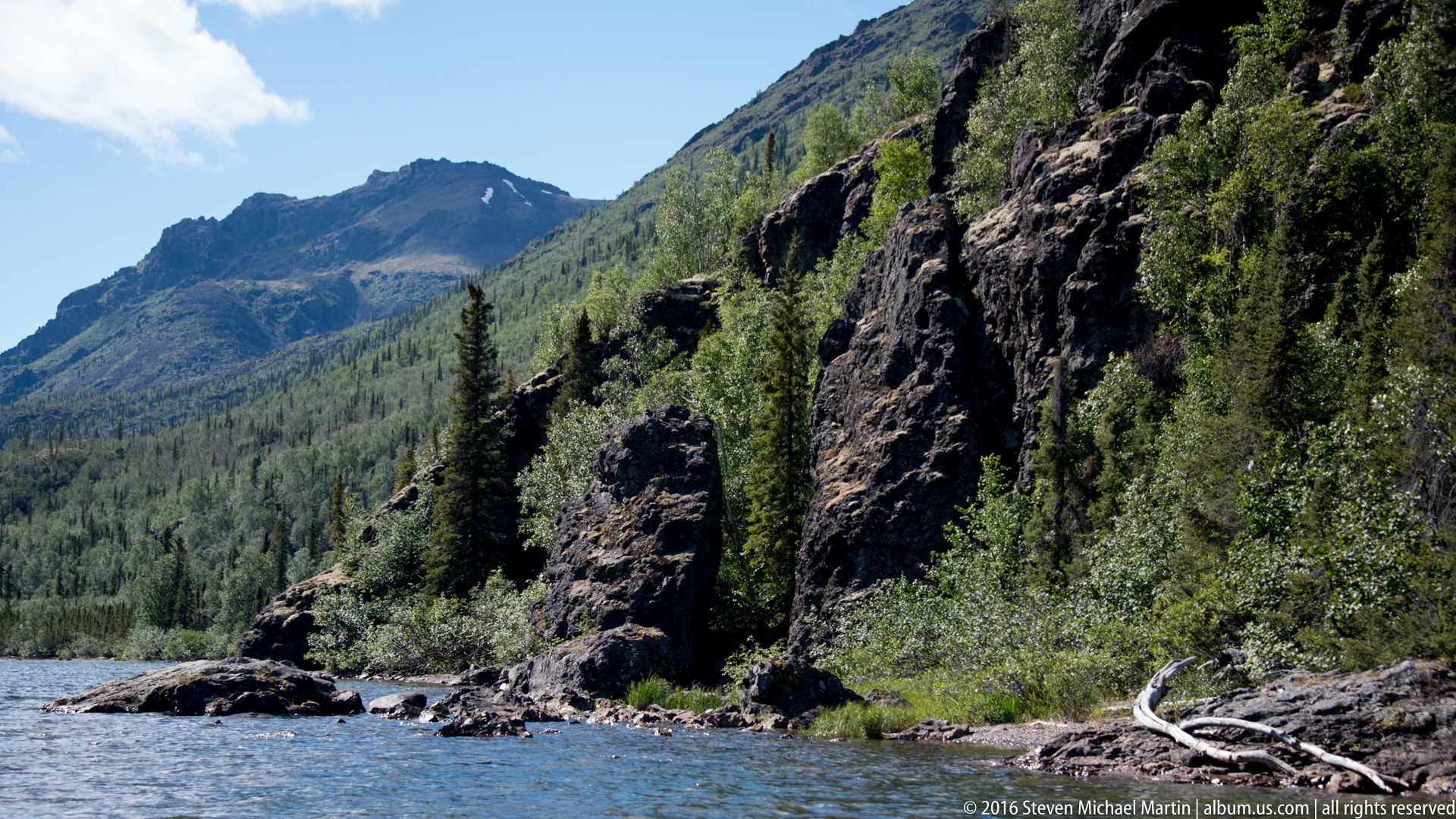
Dark, fractured rock forms a steep wall along the lakeshore, with trees and shrubs rooted along its upper edge. A low rocky point projects into the water, while forested mountains recede behind it. The side-on view emphasizes the relationship between exposed rock, vegetation, and the lake rather than a named geological feature.
Caption
Dark, fractured rock forms a steep wall along the lakeshore, with trees and shrubs rooted along its upper edge. A low rocky point projects into the water, while forested mountains recede behind it. The side-on view emphasizes the relationship between exposed rock, vegetation, and the lake rather than a named geological feature.

A low rocky bank rises directly from the water, its dark ledges broken by clusters of green shrubs and small trees. Bright blue sky and open water leave the rough shoreline as the dominant subject. The close lateral viewpoint emphasizes the contrast between the uneven rock face and the flat lake surface.
Caption
A low rocky bank rises directly from the water, its dark ledges broken by clusters of green shrubs and small trees. Bright blue sky and open water leave the rough shoreline as the dominant subject. The close lateral viewpoint emphasizes the contrast between the uneven rock face and the flat lake surface.

A broad rock outcrop slopes into the lake, with several spruce trees rising from its upper edge. The shoreline curves outward to a point, leaving distant water and low hills visible beyond. The composition records the outcrop’s shape and vegetation, while the clear sky and calm surface keep attention on the contrast between solid rock and open water.
Caption
A broad rock outcrop slopes into the lake, with several spruce trees rising from its upper edge. The shoreline curves outward to a point, leaving distant water and low hills visible beyond. The composition records the outcrop’s shape and vegetation, while the clear sky and calm surface keep attention on the contrast between solid rock and open water.
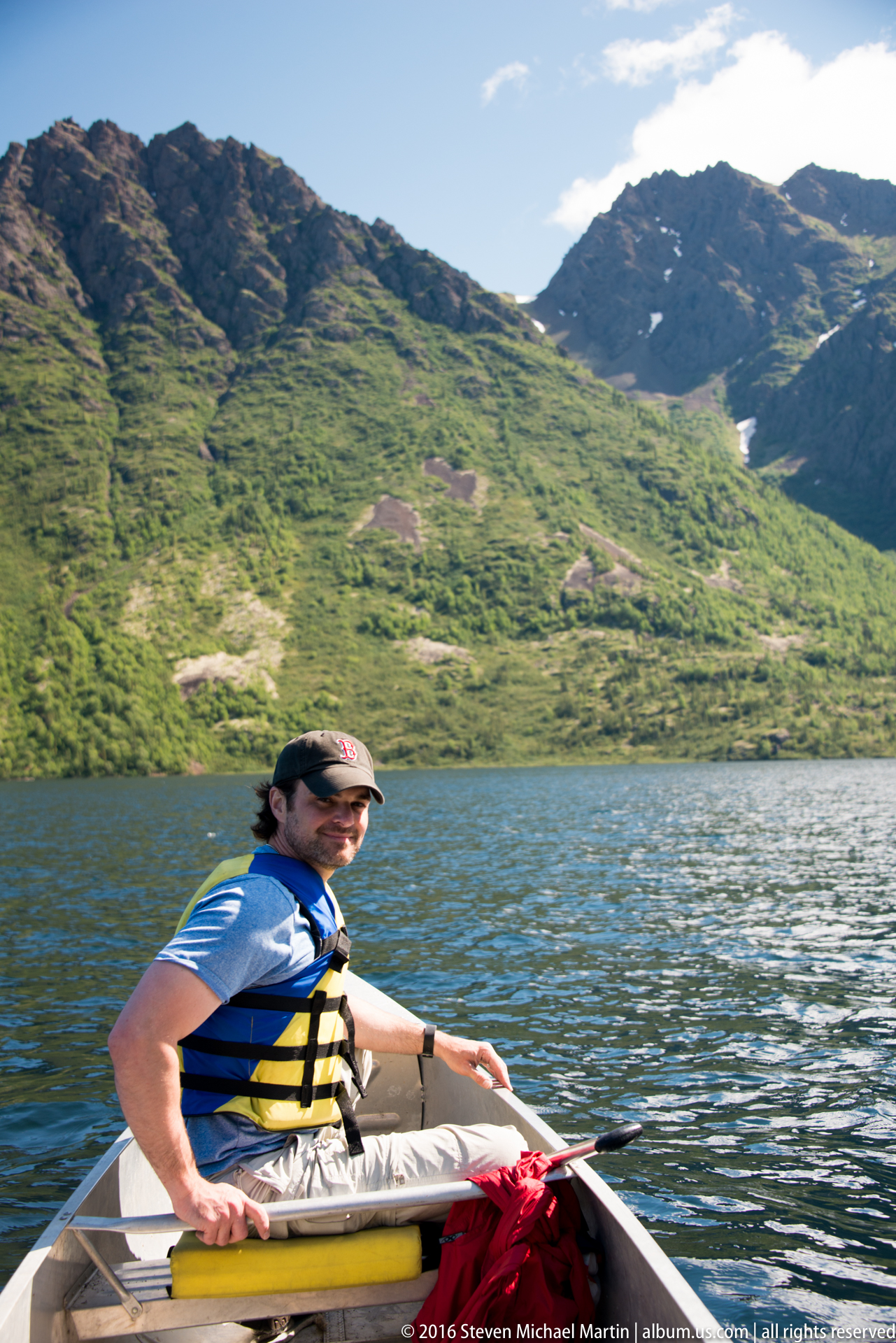
A man in a cap and life jacket sits in a small boat, holding a paddle across his lap as the craft moves over rippled water. A green mountain slope fills the opposite shore. The wider framing gives more space to the lake and terrain than the preceding portrait, foregrounding the outing’s setting.
Caption
A man in a cap and life jacket sits in a small boat, holding a paddle across his lap as the craft moves over rippled water. A green mountain slope fills the opposite shore. The wider framing gives more space to the lake and terrain than the preceding portrait, foregrounding the outing’s setting.
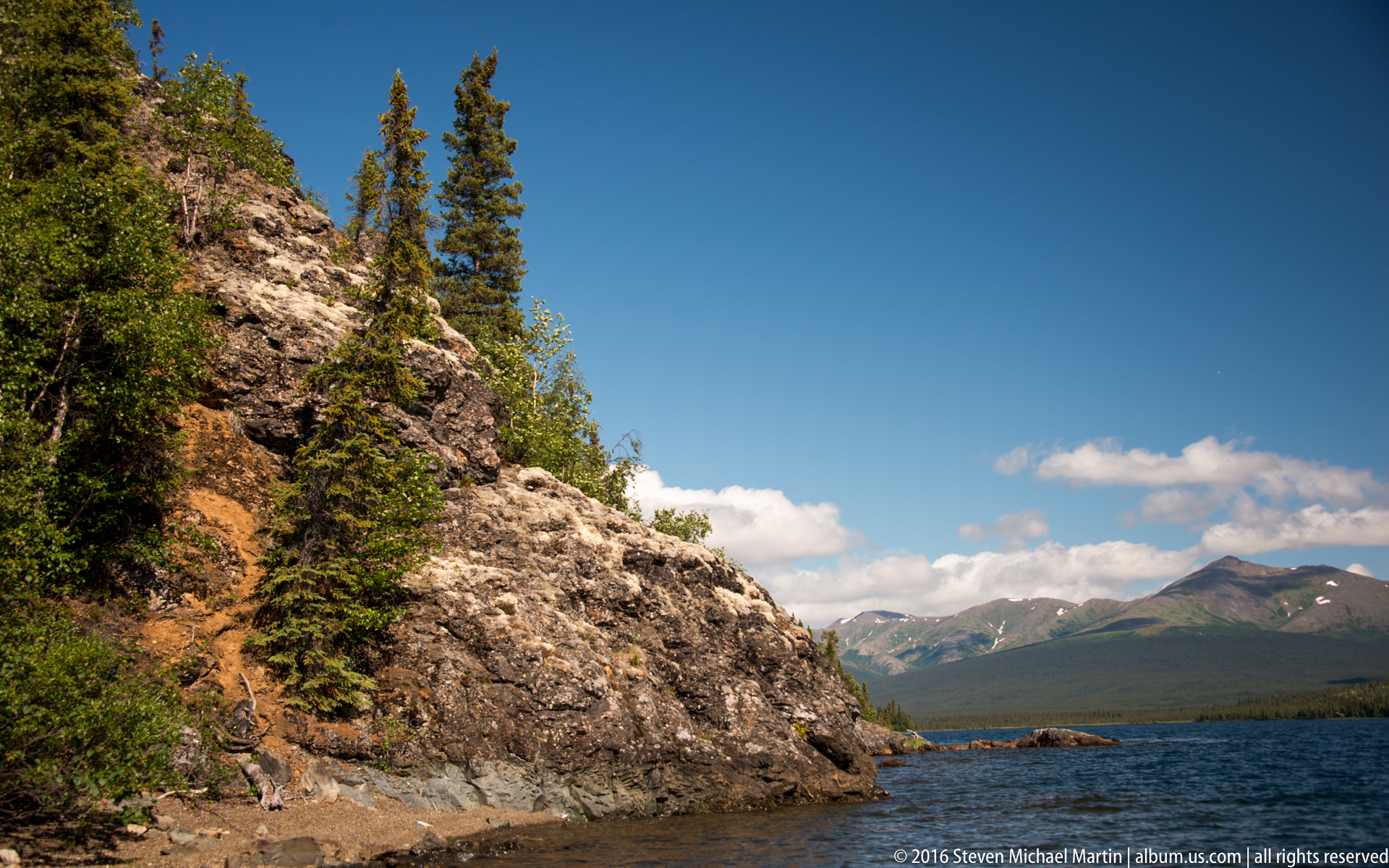
A steep rock shoulder covered with spruce and shrubs occupies the left foreground, opening onto rippled lake water and a distant range to the right. A small cloud hangs above the hills. The oblique view uses the near cliff as a frame, giving the lake and far shore depth while showing vegetation rooted directly in the rock.
Caption
A steep rock shoulder covered with spruce and shrubs occupies the left foreground, opening onto rippled lake water and a distant range to the right. A small cloud hangs above the hills. The oblique view uses the near cliff as a frame, giving the lake and far shore depth while showing vegetation rooted directly in the rock.

From a low rocky shore, the view looks across blue water toward a forested valley and high mountains with narrow snow patches in their upper gullies. Trees and shrubs border the left edge, while the layered slopes recede into a hazy distance. The composition links close shoreline texture with a much larger alpine basin.
Caption
From a low rocky shore, the view looks across blue water toward a forested valley and high mountains with narrow snow patches in their upper gullies. Trees and shrubs border the left edge, while the layered slopes recede into a hazy distance. The composition links close shoreline texture with a much larger alpine basin.

A man wearing a yellow-and-blue life jacket sits near the bow of a small boat, with blue water and a line of forest below distant mountains behind him. His relaxed pose and the close viewpoint place the viewer aboard the lake, combining a human portrait with the surrounding alpine setting.
Caption
A man wearing a yellow-and-blue life jacket sits near the bow of a small boat, with blue water and a line of forest below distant mountains behind him. His relaxed pose and the close viewpoint place the viewer aboard the lake, combining a human portrait with the surrounding alpine setting.
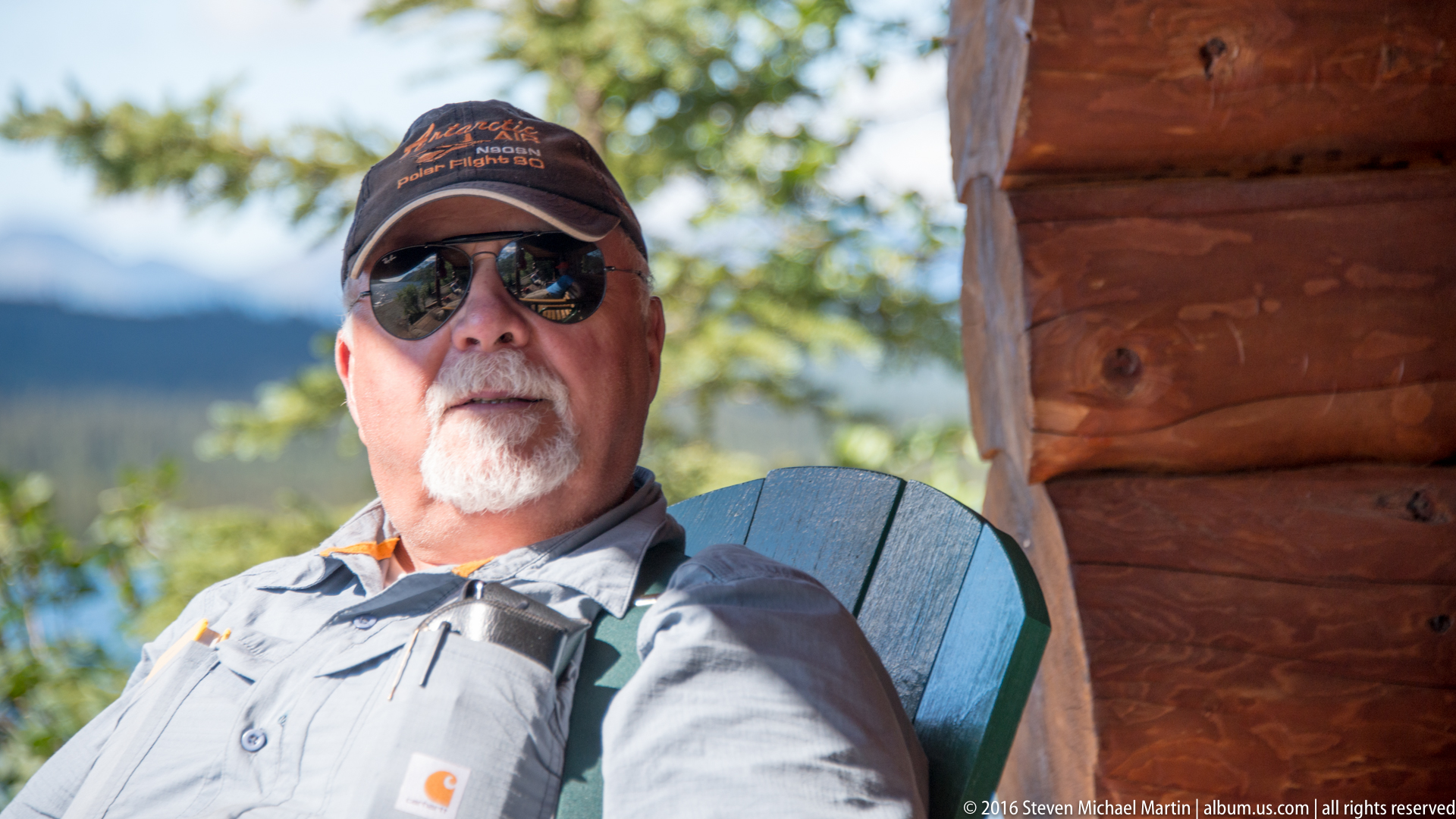
A seated man in a dark cap and mirrored sunglasses rests beside a timber wall, with a blue chair and sunlit trees behind him. The close crop brings his face and outdoor clothing forward while retaining the cabin edge and distant mountain view. His identity is not established by the photograph.
Caption
A seated man in a dark cap and mirrored sunglasses rests beside a timber wall, with a blue chair and sunlit trees behind him. The close crop brings his face and outdoor clothing forward while retaining the cabin edge and distant mountain view. His identity is not established by the photograph.
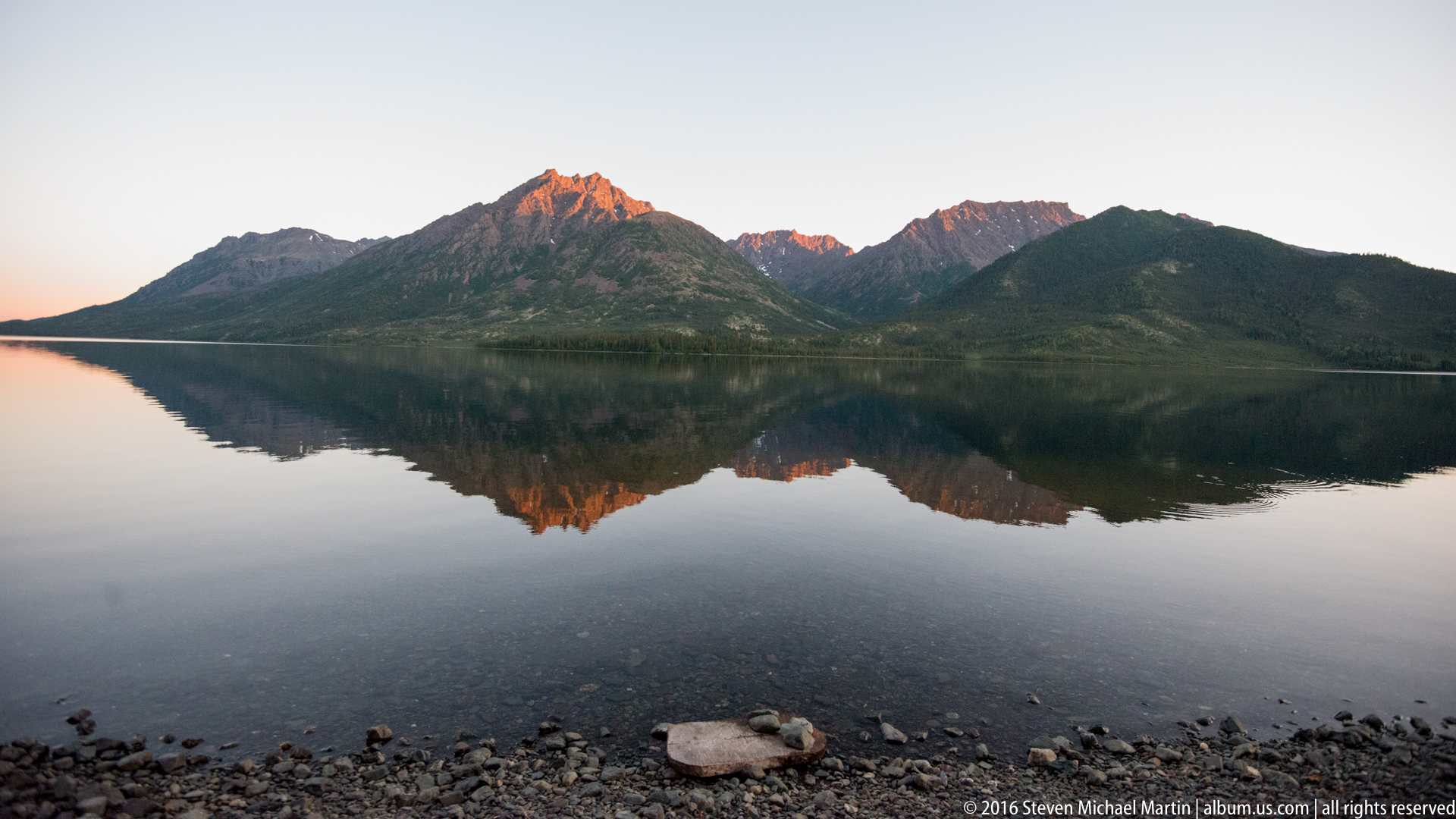
A jagged mountain ridge glows orange along its upper slopes as evening light fades. The calm lake mirrors the peaks and dark tree line, while a few stones anchor the lower edge. A narrow strip of warm sky and the near-perfect reflection make this a balanced twilight landscape.
Caption
A jagged mountain ridge glows orange along its upper slopes as evening light fades. The calm lake mirrors the peaks and dark tree line, while a few stones anchor the lower edge. A narrow strip of warm sky and the near-perfect reflection make this a balanced twilight landscape.

The lake narrows toward a distant band of warm twilight between steep mountain slopes. Darkened peaks and forested shores form a nearly symmetrical corridor, reflected in still water from foreground to horizon. Compared with the neighboring sunset view, this composition draws the eye lengthwise through the valley.
Caption
The lake narrows toward a distant band of warm twilight between steep mountain slopes. Darkened peaks and forested shores form a nearly symmetrical corridor, reflected in still water from foreground to horizon. Compared with the neighboring sunset view, this composition draws the eye lengthwise through the valley.
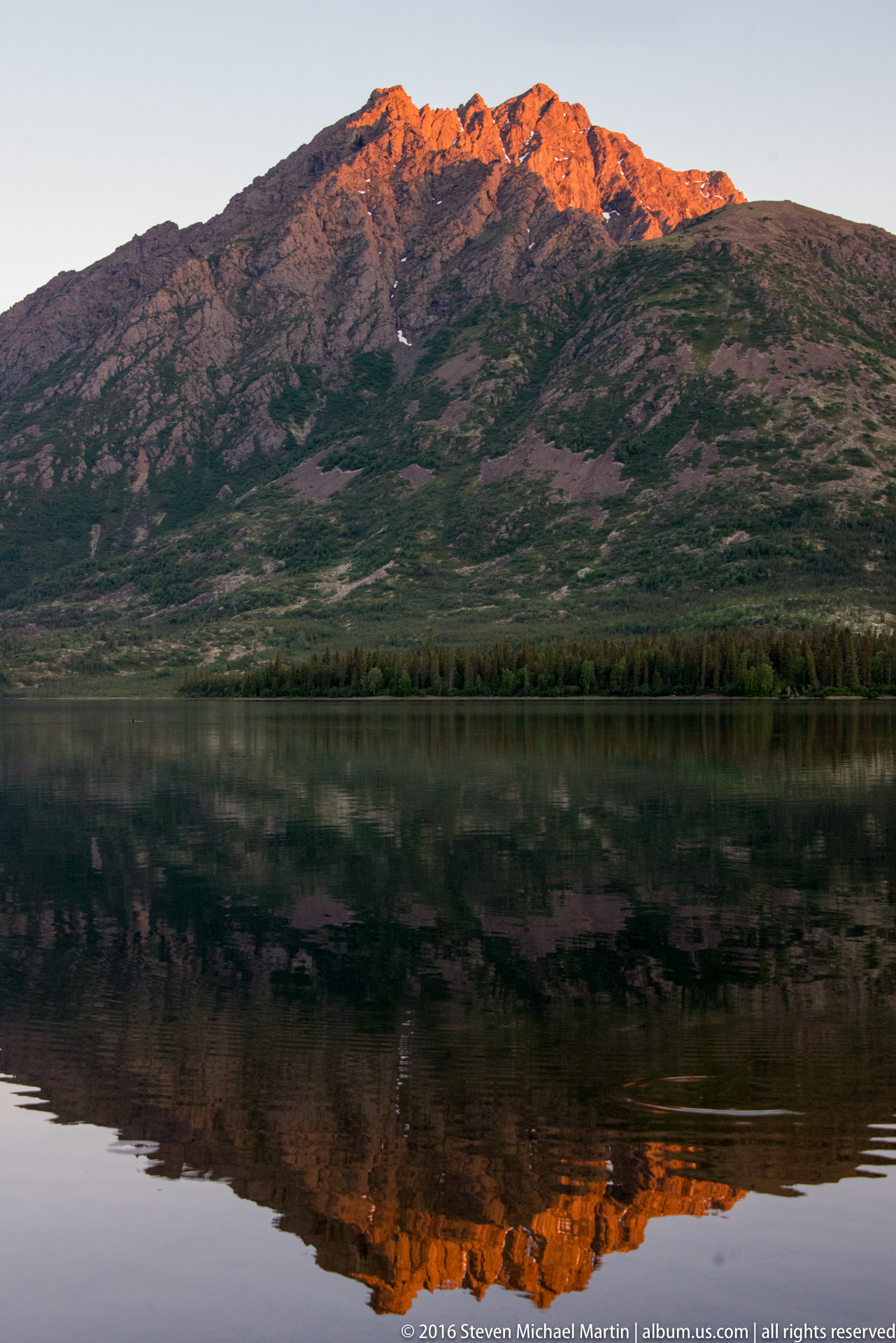
Low evening light turns the rocky summits vivid orange above muted green and purple slopes. The mountain’s reflection stretches across the still lake, with a narrow tree line separating land and water. This tighter composition isolates the illuminated ridge and its mirrored color from the broader lake views nearby.
Caption
Low evening light turns the rocky summits vivid orange above muted green and purple slopes. The mountain’s reflection stretches across the still lake, with a narrow tree line separating land and water. This tighter composition isolates the illuminated ridge and its mirrored color from the broader lake views nearby.
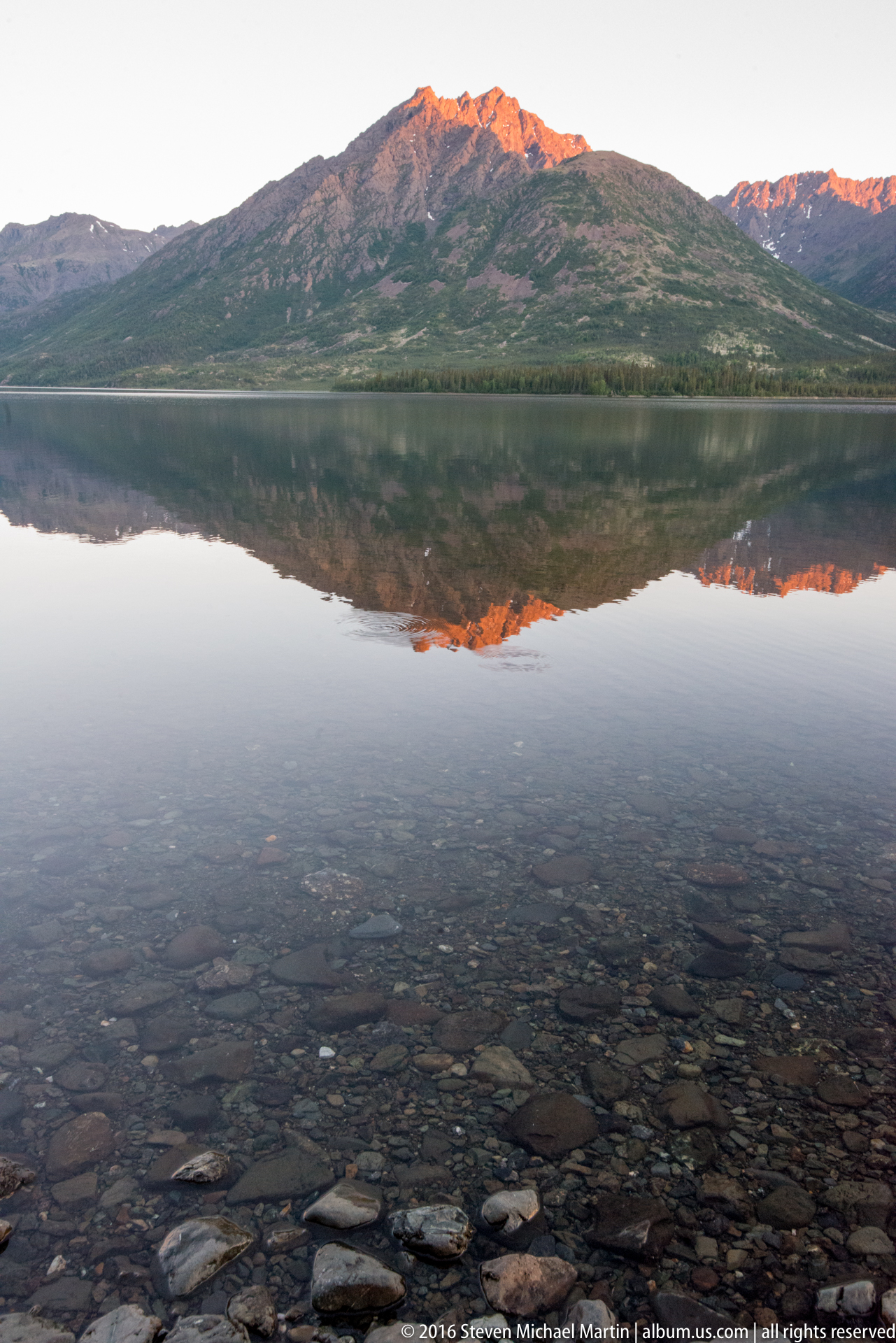
Rounded stones are visible beneath clear foreground water, while a distant mountain ridge and its orange-lit summit appear in reflection near the top of the frame. The low camera angle joins underwater detail to the far shore, showing how transparency and stillness layer the lake’s surface and depth.
Caption
Rounded stones are visible beneath clear foreground water, while a distant mountain ridge and its orange-lit summit appear in reflection near the top of the frame. The low camera angle joins underwater detail to the far shore, showing how transparency and stillness layer the lake’s surface and depth.

Three adults stand together on a rocky lakeshore, with a black dog in the foreground and a mountain reflected in the water behind them. The wider composition includes the visitors’ full bodies and the stony ground, balancing the group portrait with its setting.
Caption
Three adults stand together on a rocky lakeshore, with a black dog in the foreground and a mountain reflected in the water behind them. The wider composition includes the visitors’ full bodies and the stony ground, balancing the group portrait with its setting.
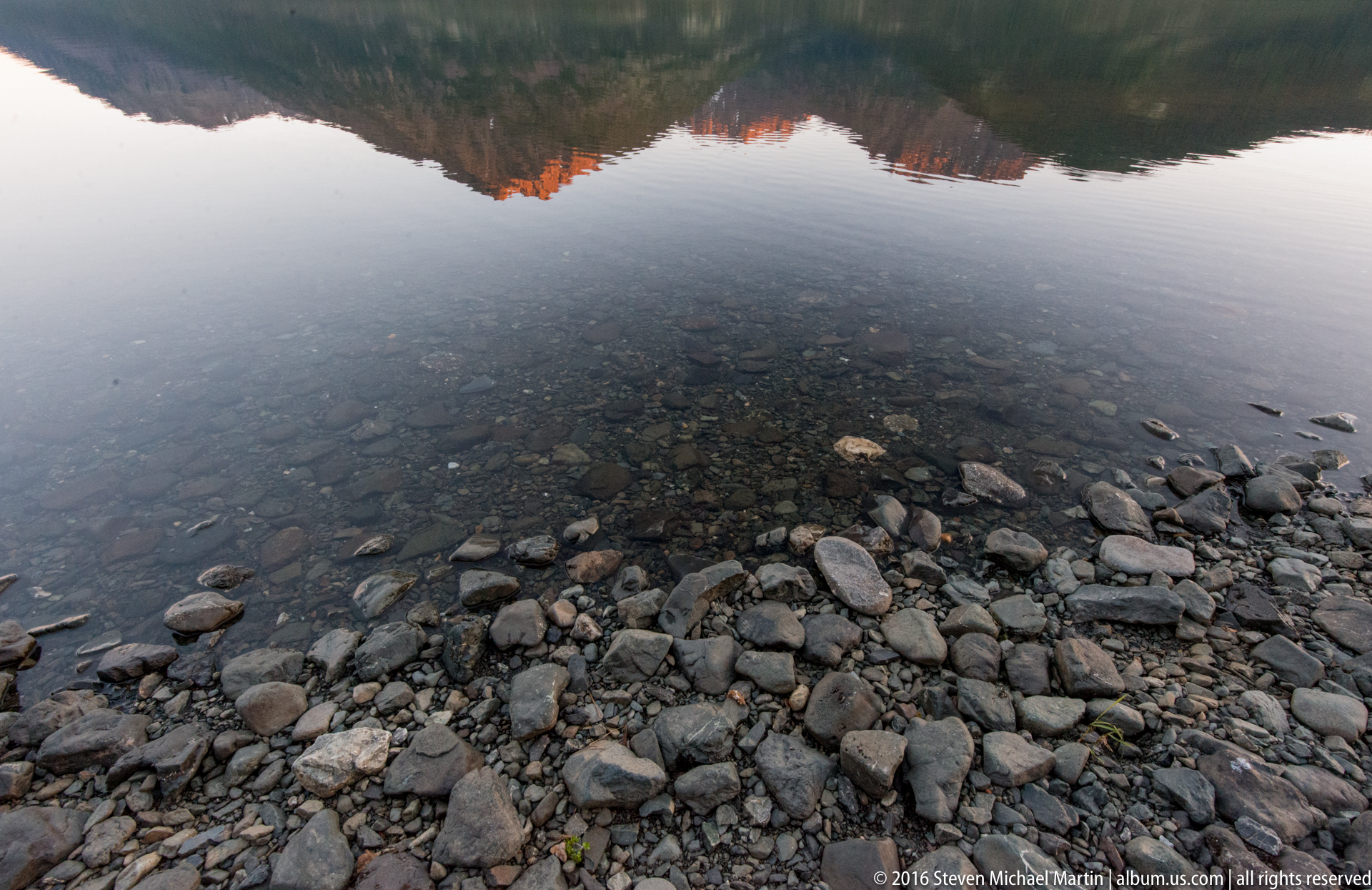
A dense scatter of rounded stones fills the foreground beneath shallow, transparent water. The far shore and mountain silhouettes appear upside down in the lake’s smooth reflection at the top edge. The composition shifts attention from distant peaks to the stony margin and the clear water covering it.
Caption
A dense scatter of rounded stones fills the foreground beneath shallow, transparent water. The far shore and mountain silhouettes appear upside down in the lake’s smooth reflection at the top edge. The composition shifts attention from distant peaks to the stony margin and the clear water covering it.
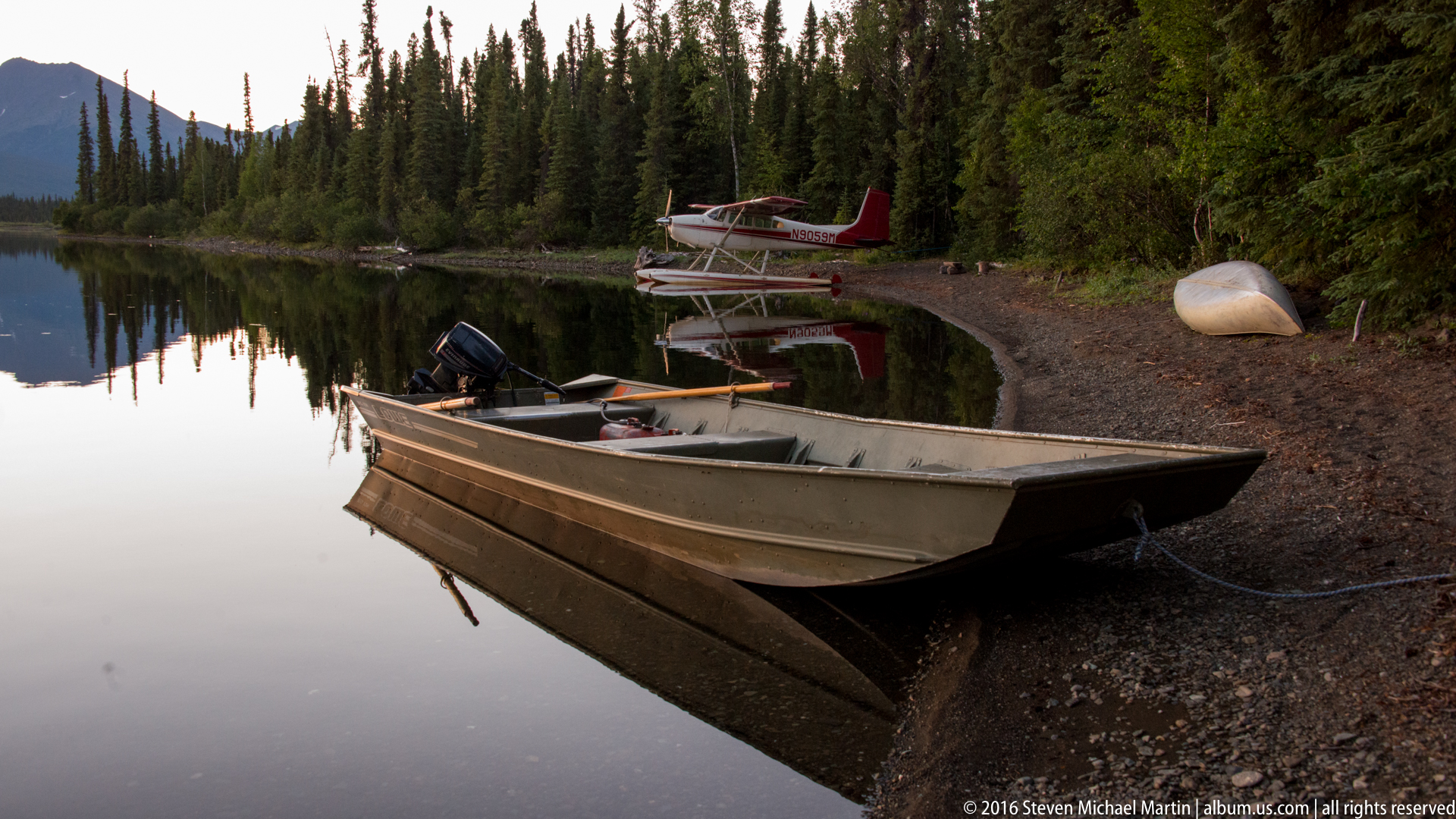
An aluminum motorboat rests partly in the water at a wooded landing, with its outboard motor and reflection visible in the foreground. A red-and-white floatplane sits at the opposite edge of the cove, and a pale canoe lies on shore. The clustered transport craft suggest a remote lakeside access point.
Caption
An aluminum motorboat rests partly in the water at a wooded landing, with its outboard motor and reflection visible in the foreground. A red-and-white floatplane sits at the opposite edge of the cove, and a pale canoe lies on shore. The clustered transport craft suggest a remote lakeside access point.

A steep, broken ridge fills the frame, its angular rock faces glowing orange where low sunlight reaches them and remaining dark in shadow below. Cropping out the lake and lower valley isolates the mountain’s jagged profile, revealing contrasts in relief, color, and late-day light.
Caption
A steep, broken ridge fills the frame, its angular rock faces glowing orange where low sunlight reaches them and remaining dark in shadow below. Cropping out the lake and lower valley isolates the mountain’s jagged profile, revealing contrasts in relief, color, and late-day light.
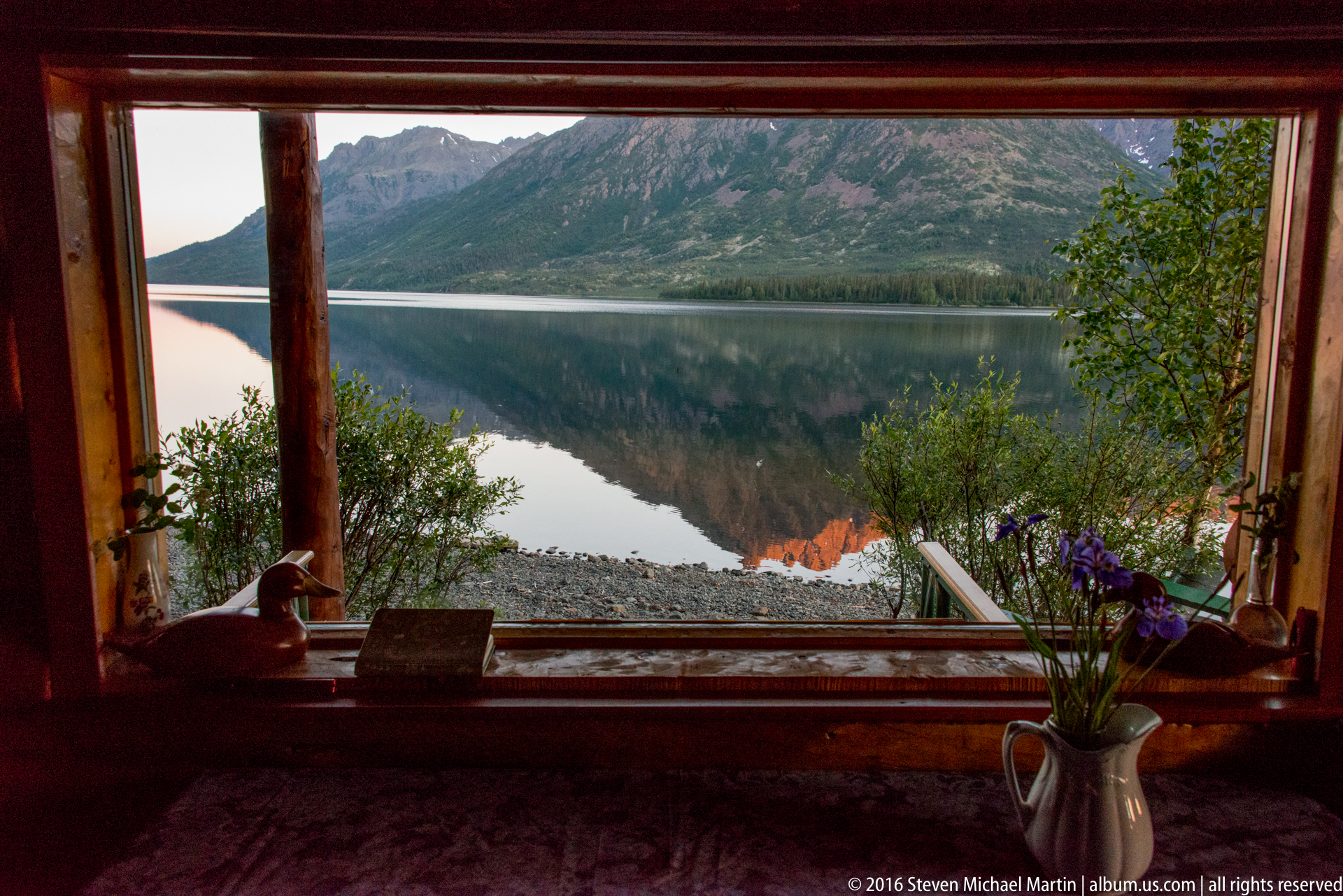
From inside a timber cabin, a broad window frames the lake, opposite mountain slope, and orange reflections near the shore. A vase of purple flowers and small objects sit along the sill, while the dark interior forms a natural border around the landscape. The view connects shelter and lakeside scenery.
Caption
From inside a timber cabin, a broad window frames the lake, opposite mountain slope, and orange reflections near the shore. A vase of purple flowers and small objects sit along the sill, while the dark interior forms a natural border around the landscape. The view connects shelter and lakeside scenery.
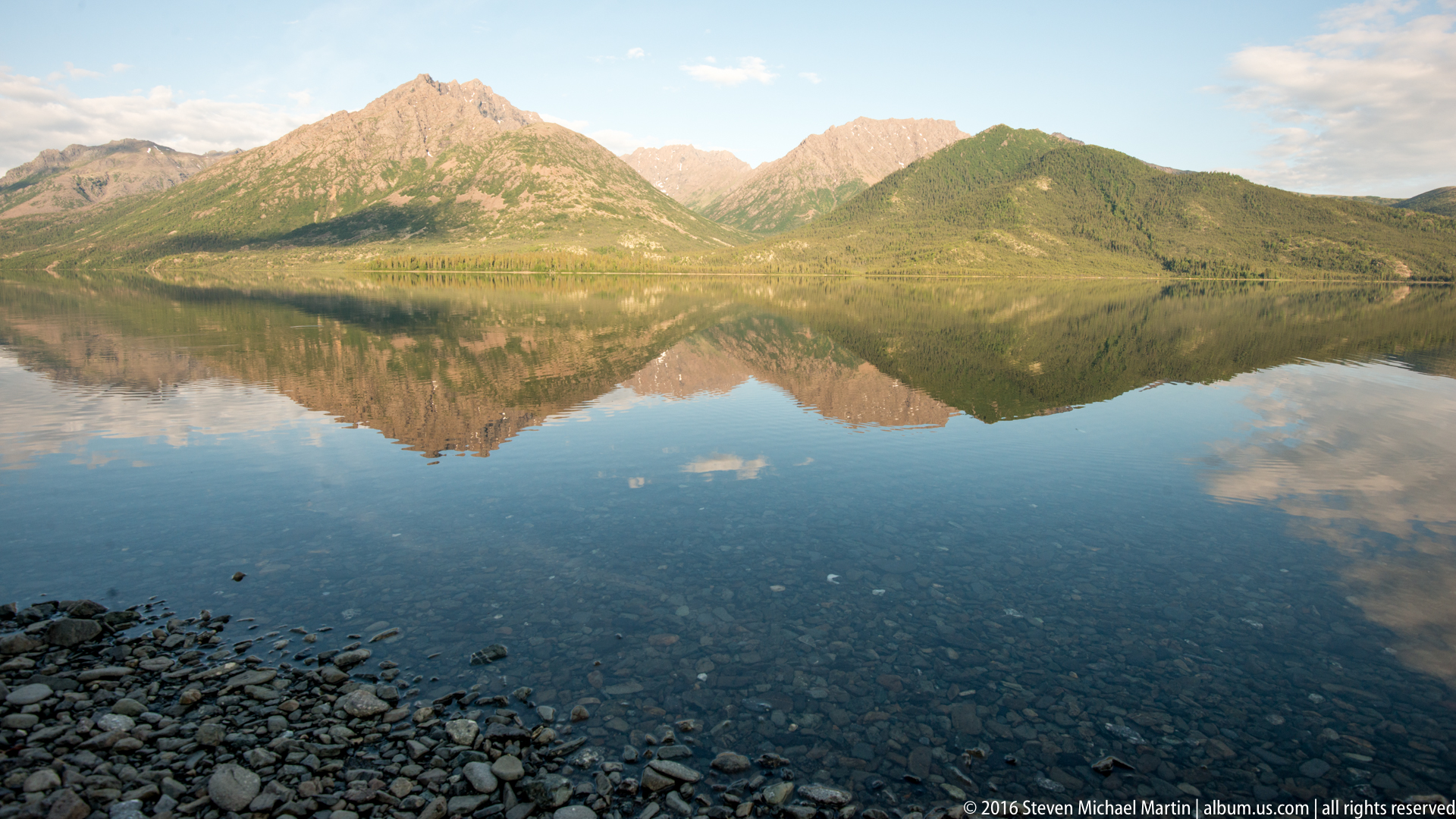
Several green and gray mountain slopes rise beyond a clear lake, their forms mirrored almost completely in the still surface. Rounded stones remain visible through the shallow foreground water, joining the near shore to the distant panorama. Soft late light keeps the colors muted and reveals varied slope textures.
Caption
Several green and gray mountain slopes rise beyond a clear lake, their forms mirrored almost completely in the still surface. Rounded stones remain visible through the shallow foreground water, joining the near shore to the distant panorama. Soft late light keeps the colors muted and reveals varied slope textures.
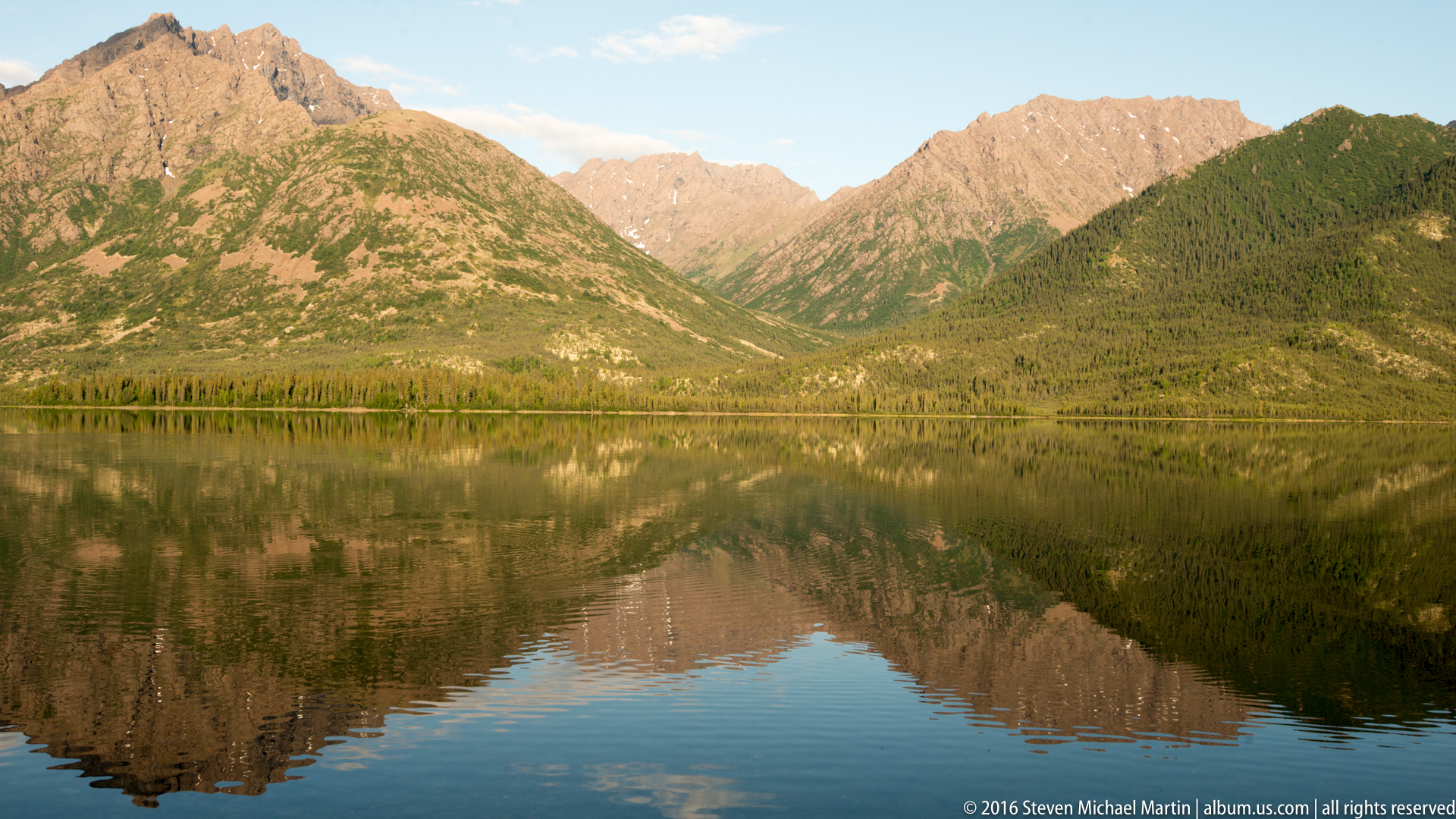
A broad mountain valley opens between a rocky left slope and darker forested terrain on the right. Its full reflection meets the real shoreline along a nearly level horizon, while small clouds drift across a blue sky. The view frames the lake as a mirror for the valley’s contrasting vegetation and rock.
Caption
A broad mountain valley opens between a rocky left slope and darker forested terrain on the right. Its full reflection meets the real shoreline along a nearly level horizon, while small clouds drift across a blue sky. The view frames the lake as a mirror for the valley’s contrasting vegetation and rock.
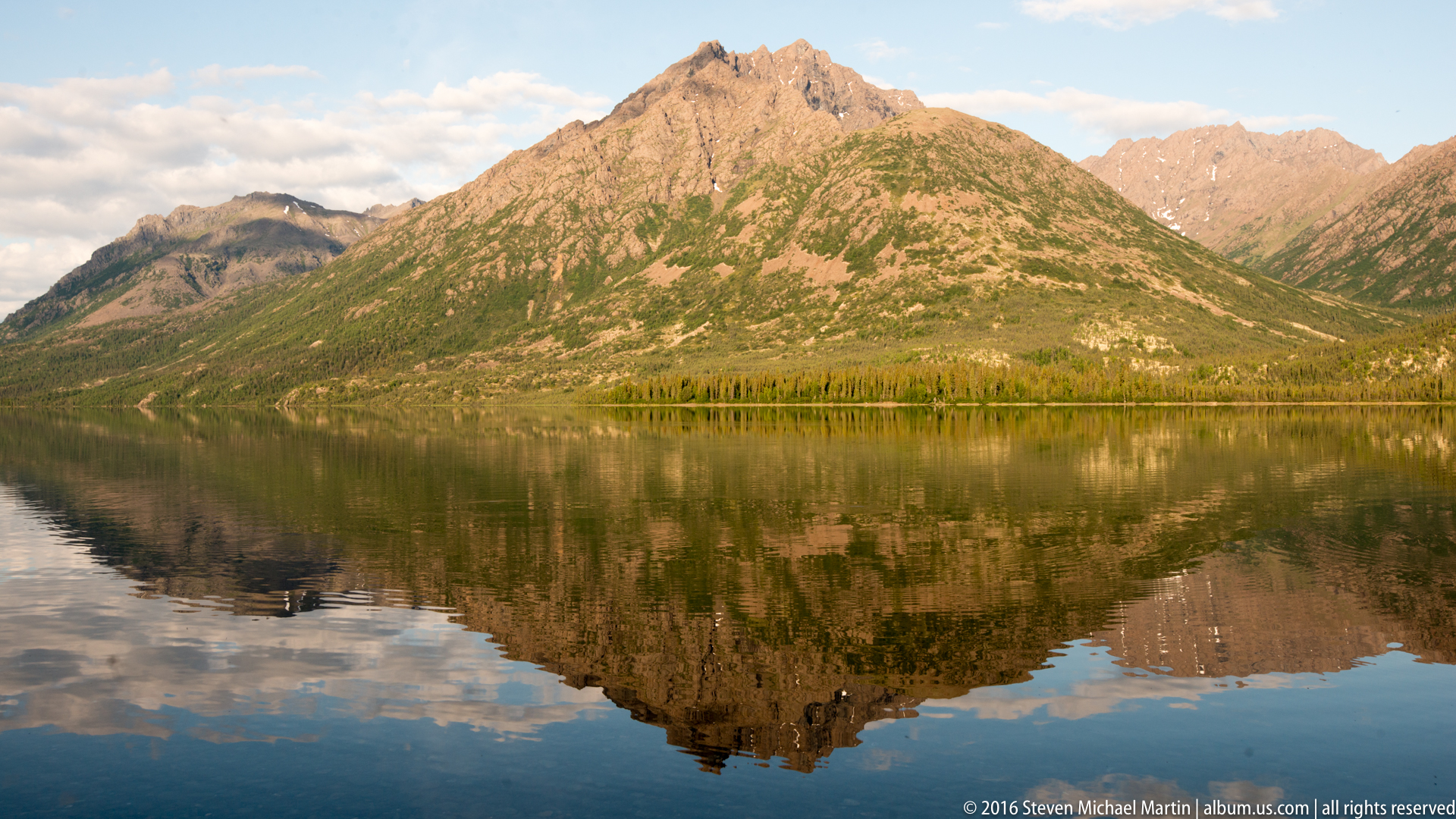
A rugged peak rises above green lower slopes, its rocky crest catching warm light. The mountain’s reflected outline fills the lower half of the frame, where small ripples slightly soften the symmetry. A narrow line of trees marks the far waterline, grounding the mountain’s scale.
Caption
A rugged peak rises above green lower slopes, its rocky crest catching warm light. The mountain’s reflected outline fills the lower half of the frame, where small ripples slightly soften the symmetry. A narrow line of trees marks the far waterline, grounding the mountain’s scale.
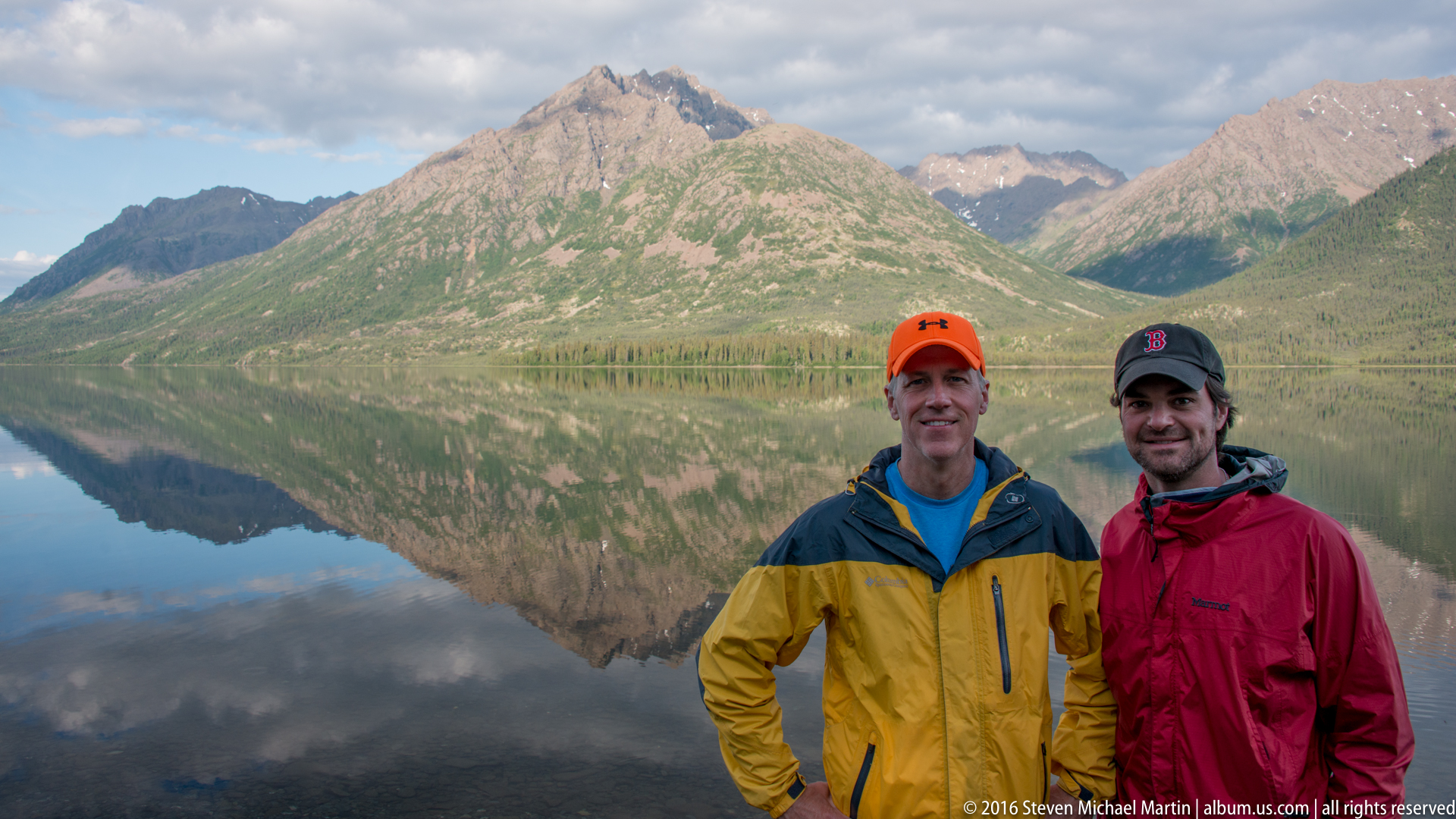
Two men stand on the rocky shore in outdoor jackets, one yellow and one red, with a mountain and its reflection filling the background. Their placement at the lower right leaves the lake and mirrored peaks dominant while adding human scale. The photograph records a posed visit without identifying either person.
Caption
Two men stand on the rocky shore in outdoor jackets, one yellow and one red, with a mountain and its reflection filling the background. Their placement at the lower right leaves the lake and mirrored peaks dominant while adding human scale. The photograph records a posed visit without identifying either person.
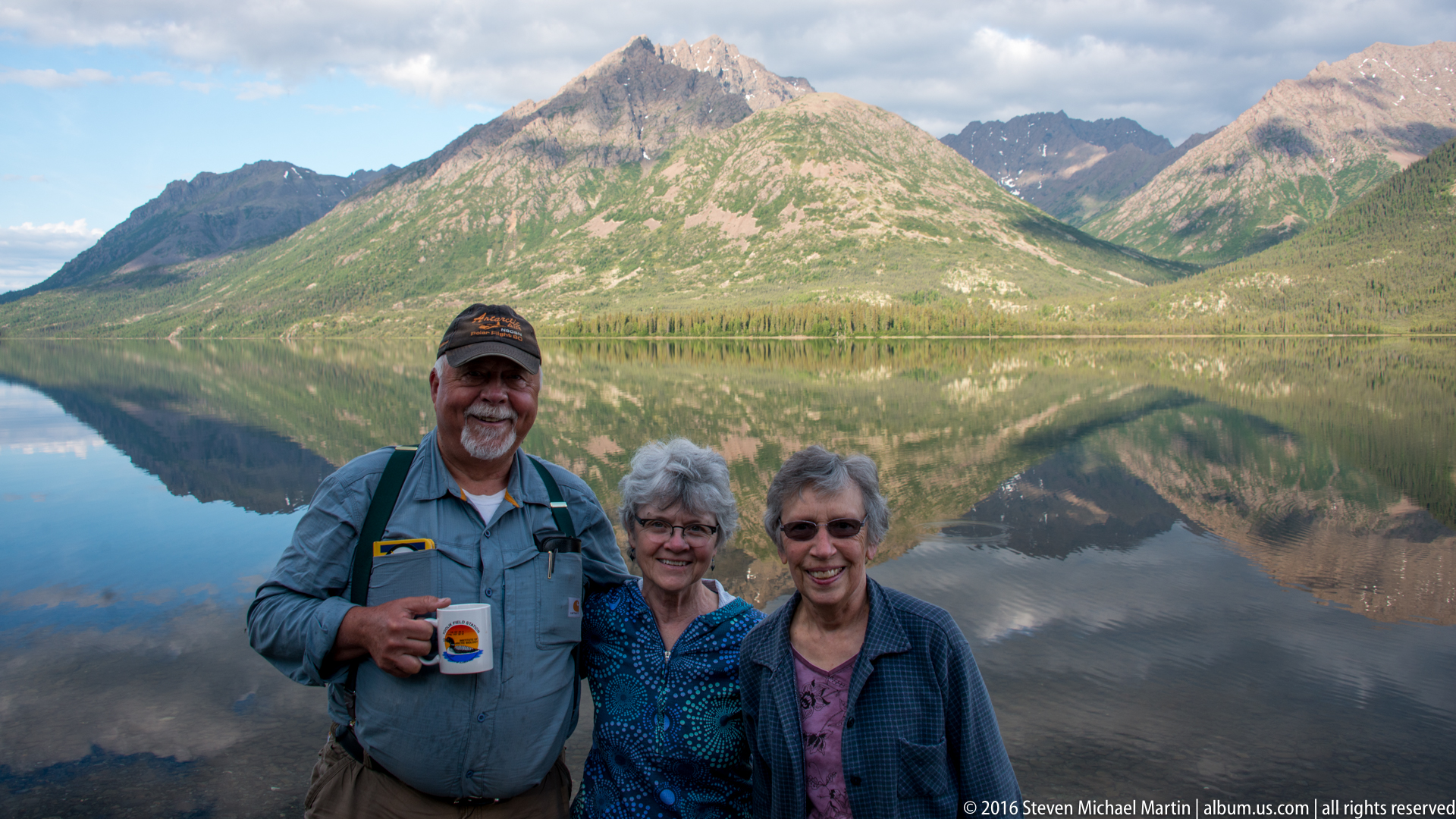
An older man in a cap stands with two women on the rocky shore, the reflected mountain rising behind them. He holds a mug while the women stand close at either side, and the lake mirrors the landscape above their shoulders. The waist-up framing gives the visitors prominence while retaining the setting.
Caption
An older man in a cap stands with two women on the rocky shore, the reflected mountain rising behind them. He holds a mug while the women stand close at either side, and the lake mirrors the landscape above their shoulders. The waist-up framing gives the visitors prominence while retaining the setting.
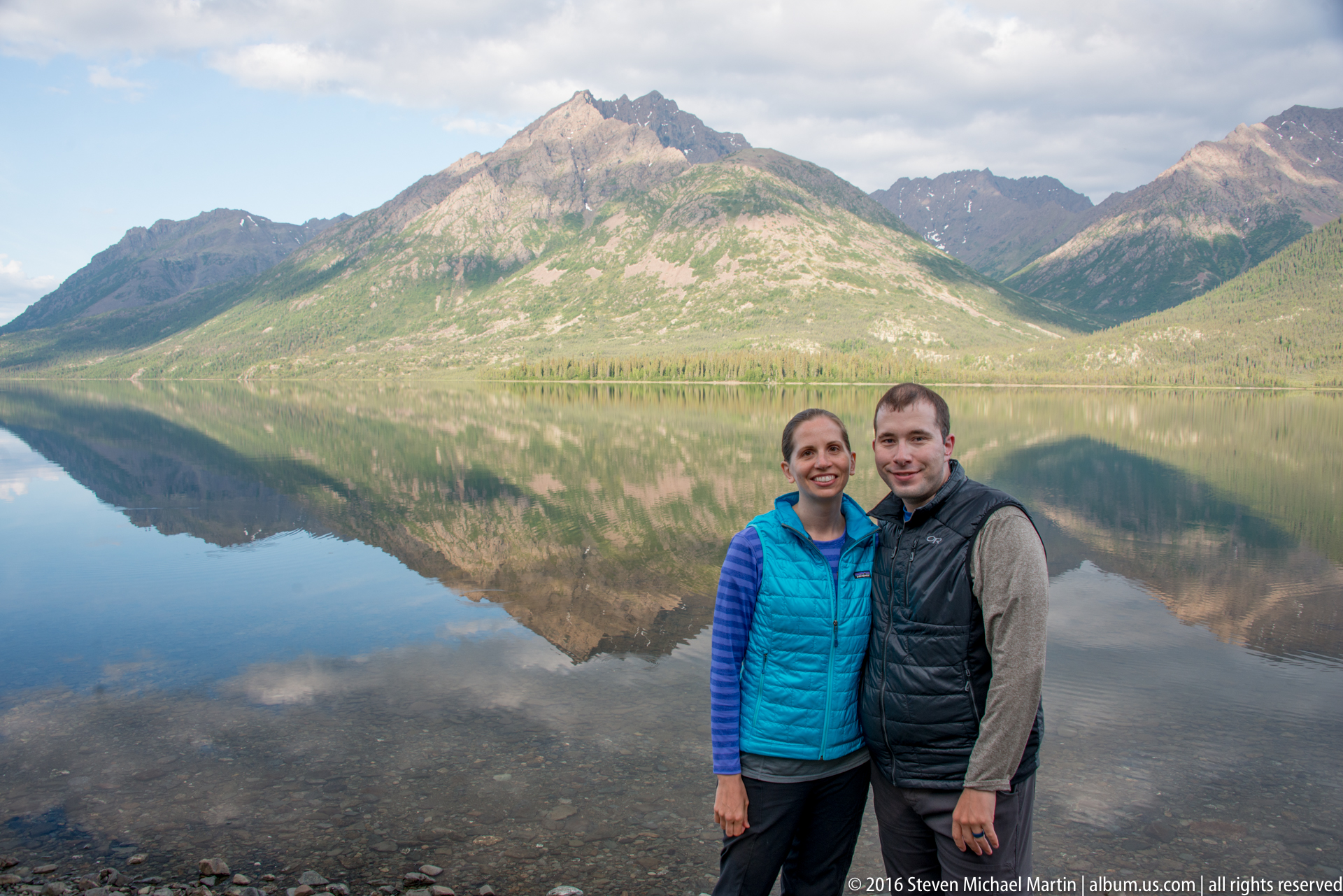
A woman in a turquoise jacket and a man in a dark vest stand together at the rocky edge of the lake. A green mountain and its reflection fill the background, with shallow clear water visible beside them. The portrait’s centered figures are framed by the broad landscape and its mirrored ridge.
Caption
A woman in a turquoise jacket and a man in a dark vest stand together at the rocky edge of the lake. A green mountain and its reflection fill the background, with shallow clear water visible beside them. The portrait’s centered figures are framed by the broad landscape and its mirrored ridge.
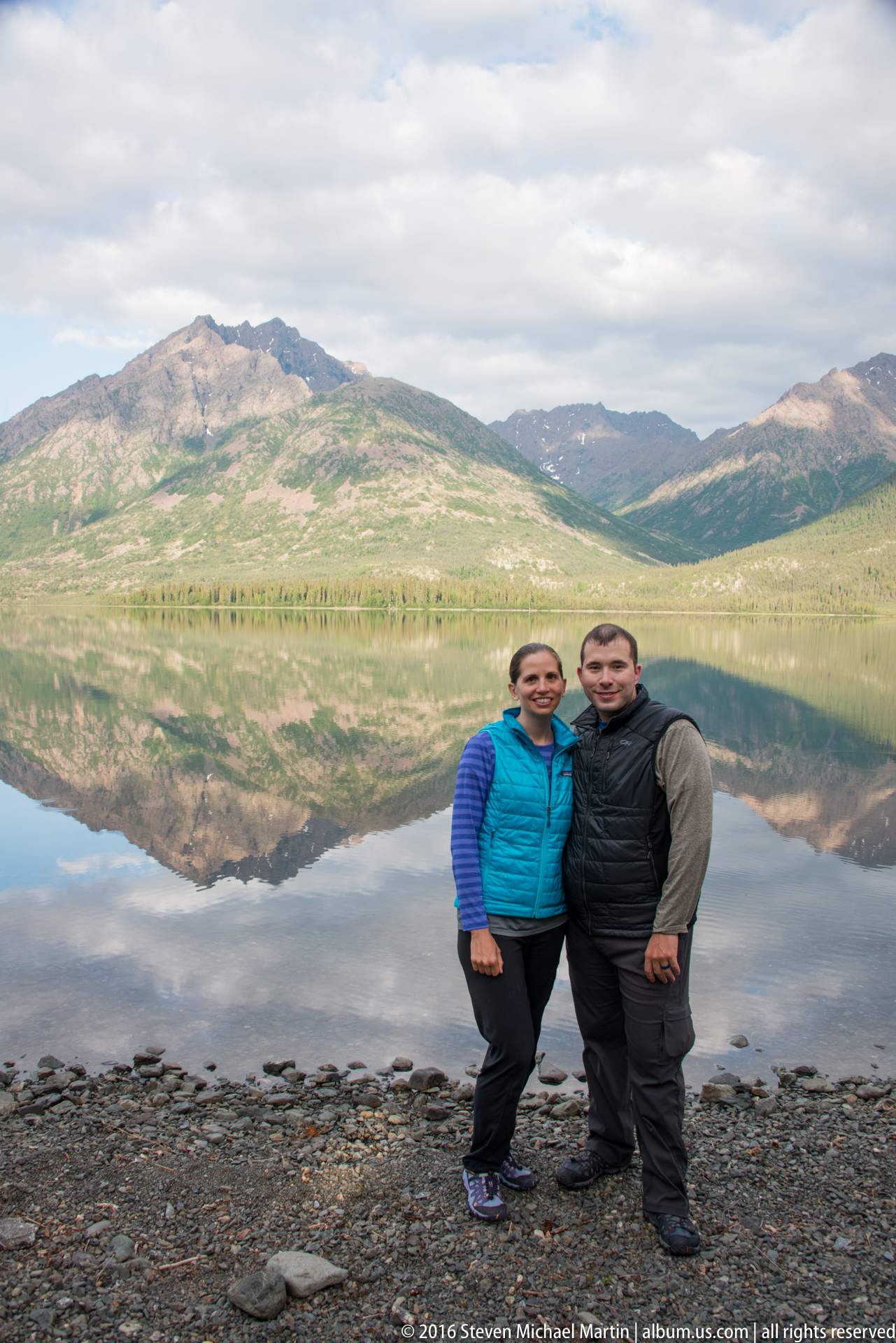
The same pair appears farther from the camera, standing full length on a broad strip of rounded stones. The lake and long mountain ridge occupy most of the frame, their reflections stretching toward the foreground. This wider portrait records more of the shoreline and landscape than the closer view on the preceding image.
Caption
The same pair appears farther from the camera, standing full length on a broad strip of rounded stones. The lake and long mountain ridge occupy most of the frame, their reflections stretching toward the foreground. This wider portrait records more of the shoreline and landscape than the closer view on the preceding image.
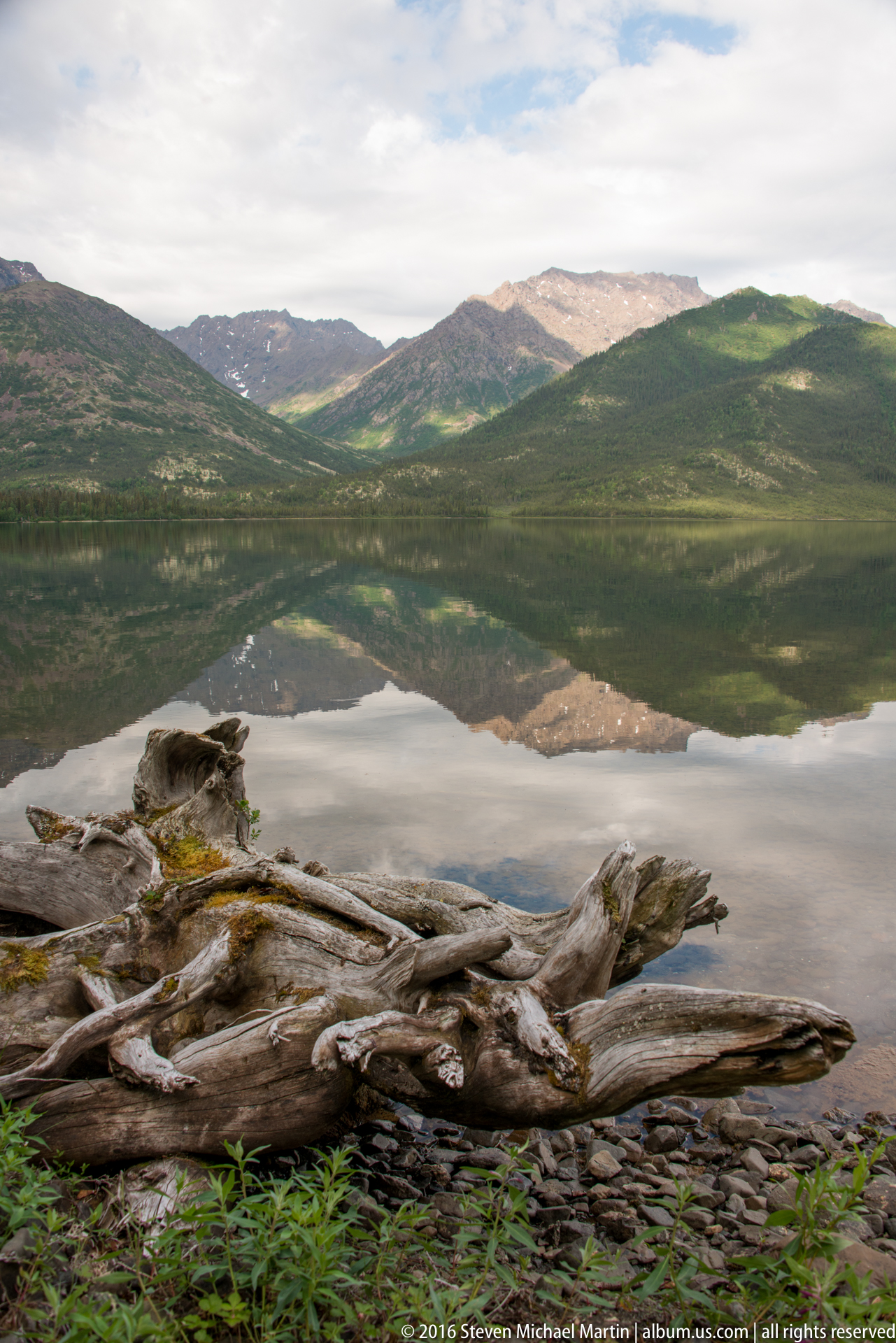
A long driftwood trunk stretches horizontally across the rocky foreground, directing the eye toward the lake and low green mountains beyond. Cloud reflections soften the water’s surface, while the broad framing shows more shoreline and surrounding slopes than the closer driftwood study on the previous image.
Caption
A long driftwood trunk stretches horizontally across the rocky foreground, directing the eye toward the lake and low green mountains beyond. Cloud reflections soften the water’s surface, while the broad framing shows more shoreline and surrounding slopes than the closer driftwood study on the previous image.
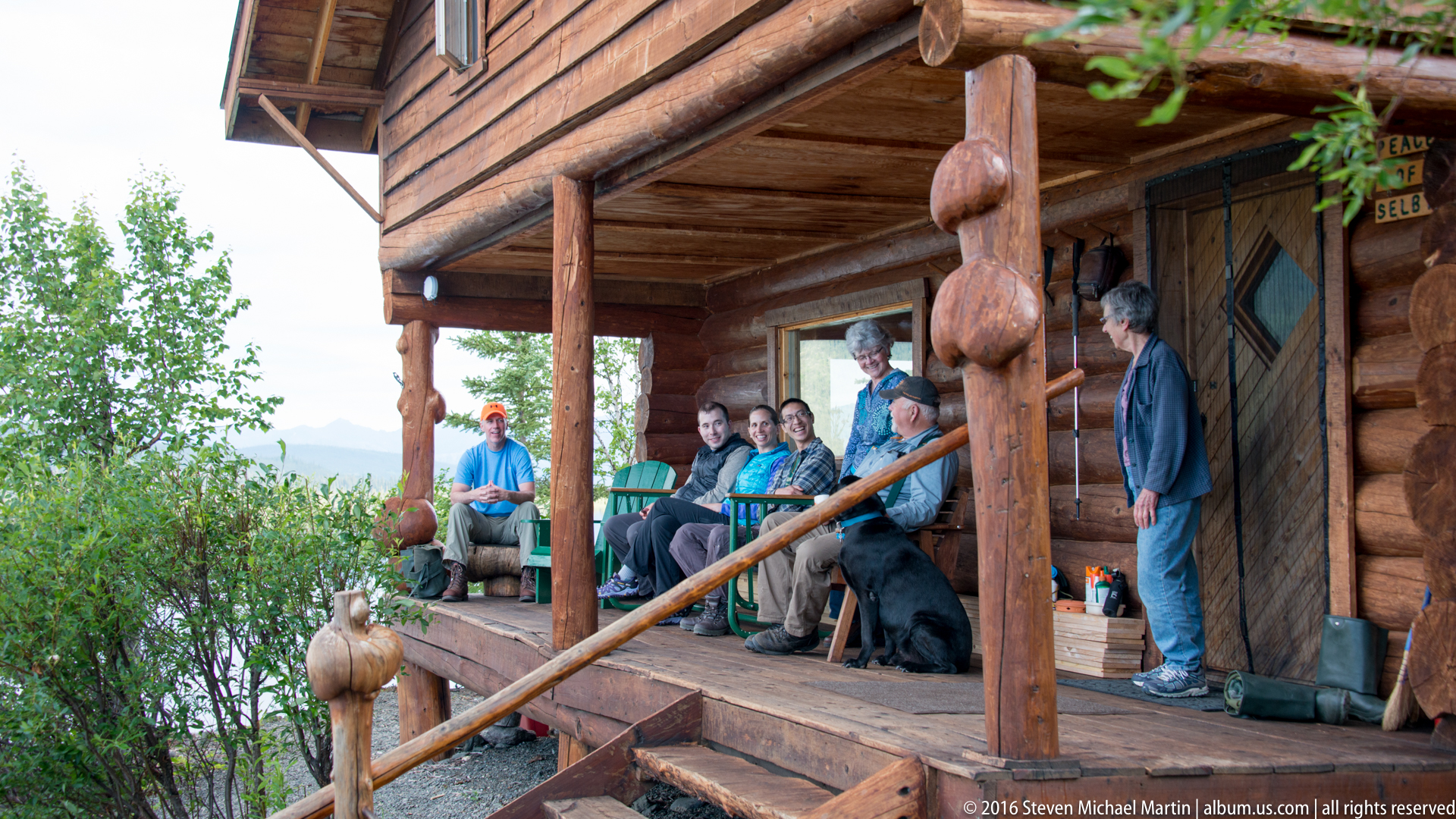
Several adults sit and stand on a covered timber porch beside a log cabin, with a black dog near the seated group. Thick log walls, heavy posts, and rounded carved ornaments frame the gathering. The angled view shows both the visitors and the cabin’s substantial porch structure.
Caption
Several adults sit and stand on a covered timber porch beside a log cabin, with a black dog near the seated group. Thick log walls, heavy posts, and rounded carved ornaments frame the gathering. The angled view shows both the visitors and the cabin’s substantial porch structure.
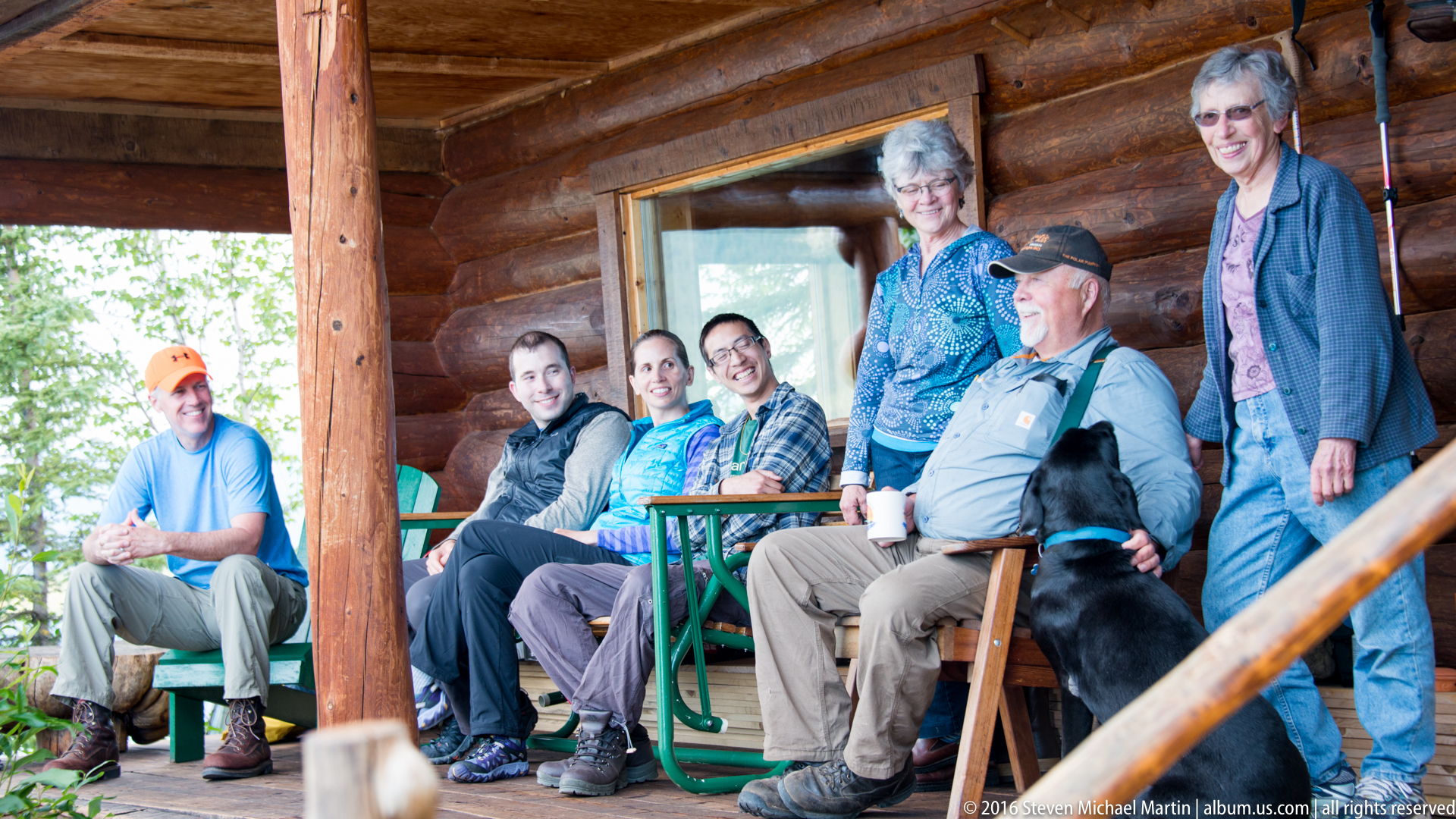
Six adults gather beneath the porch roof, some seated in green chairs and others standing behind them, while a black dog sits beside the group. Log walls, a window, and a heavy beam form the backdrop. The closer composition makes expressions and arrangement more legible than the wider porch view.
Caption
Six adults gather beneath the porch roof, some seated in green chairs and others standing behind them, while a black dog sits beside the group. Log walls, a window, and a heavy beam form the backdrop. The closer composition makes expressions and arrangement more legible than the wider porch view.

A man in a red jacket stands behind several seated companions on the cabin porch, while two women stand at the right and a black dog rests in front. The varied poses create a layered group portrait against the log wall and window. The frame includes more people and porch activity than the tighter view before it.
Caption
A man in a red jacket stands behind several seated companions on the cabin porch, while two women stand at the right and a black dog rests in front. The varied poses create a layered group portrait against the log wall and window. The frame includes more people and porch activity than the tighter view before it.
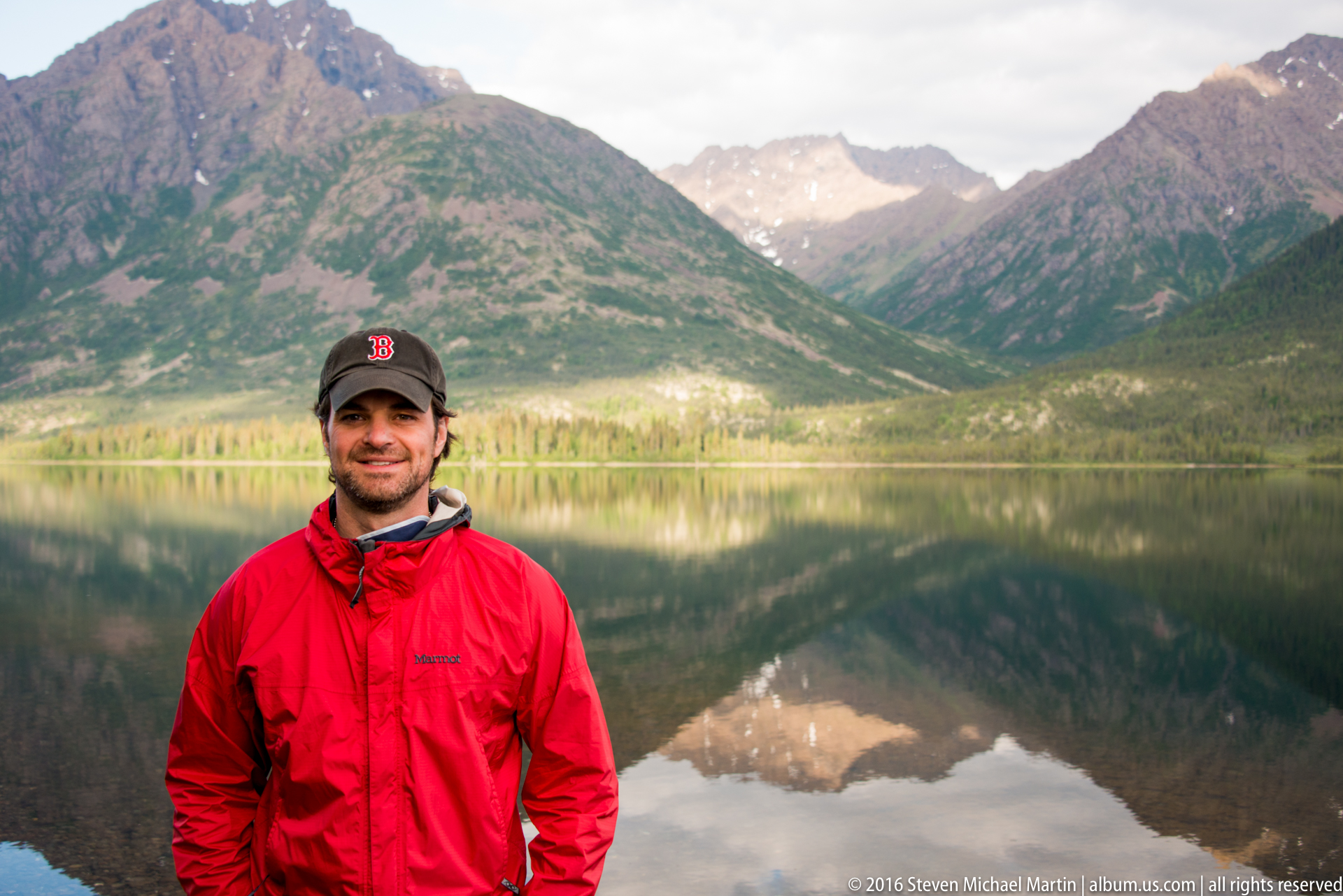
A man in a red jacket and dark cap stands near the rocky shore, positioned left of a broad mountain reflected in the lake. The landscape remains visible across the full background, pairing a close human subject with the location’s characteristic water and steep slopes. The person’s name is not established.
Caption
A man in a red jacket and dark cap stands near the rocky shore, positioned left of a broad mountain reflected in the lake. The landscape remains visible across the full background, pairing a close human subject with the location’s characteristic water and steep slopes. The person’s name is not established.
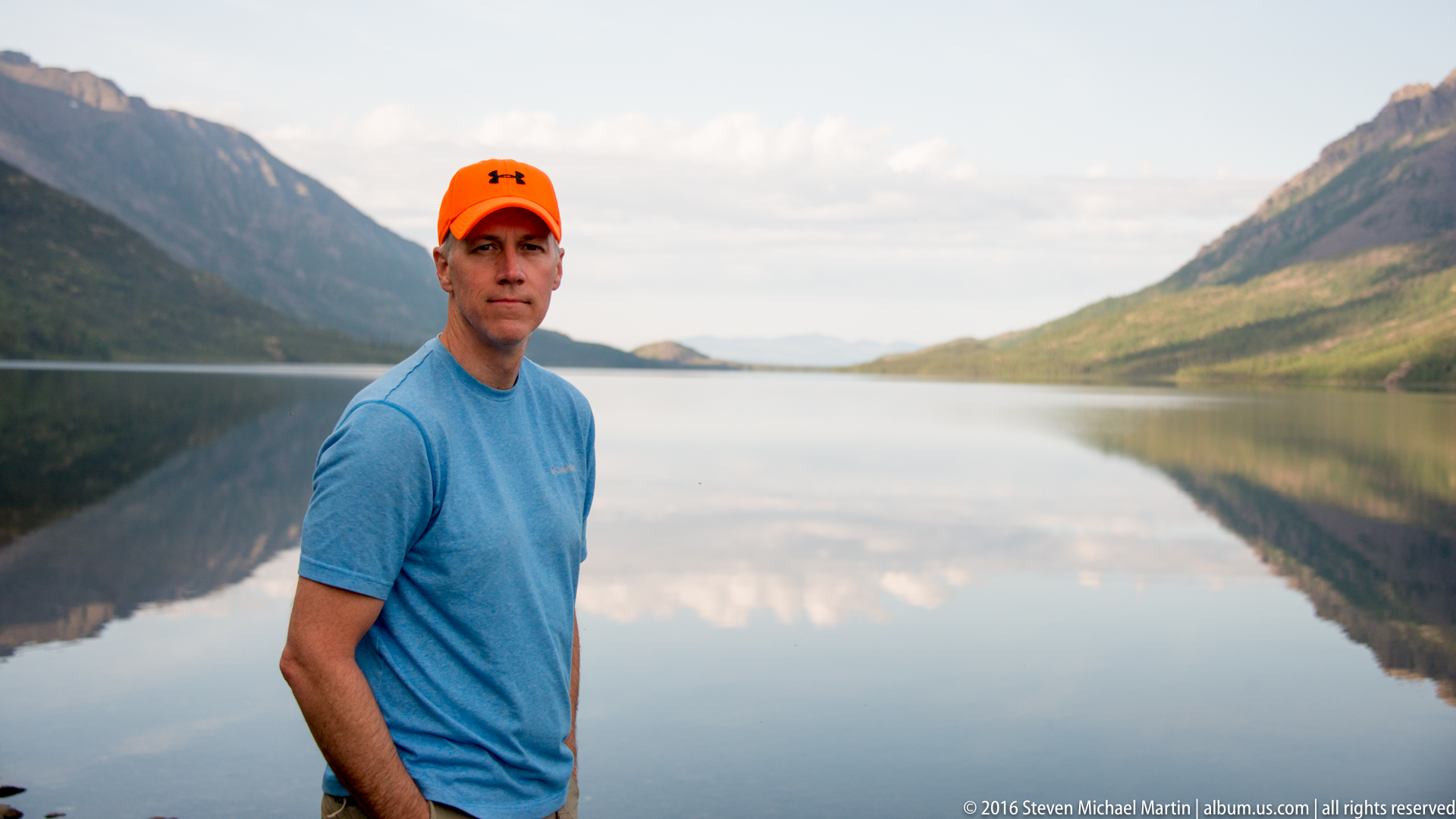
A man in a vivid orange cap and blue shirt stands near the water, turned slightly toward the camera. Calm lake water and mountain slopes extend behind him, with soft clouds reflected across the surface. The portrait places the visitor on the left while leaving an open expanse of lake in the frame.
Caption
A man in a vivid orange cap and blue shirt stands near the water, turned slightly toward the camera. Calm lake water and mountain slopes extend behind him, with soft clouds reflected across the surface. The portrait places the visitor on the left while leaving an open expanse of lake in the frame.

From a pebbled beach, the lake reflects a bright cloud bank and the mountain slopes enclosing a distant valley. A small boat or landing craft is partly visible along the left shoreline. The broad reflection dominates the composition, while the dark near bank adds depth and scale.
Caption
From a pebbled beach, the lake reflects a bright cloud bank and the mountain slopes enclosing a distant valley. A small boat or landing craft is partly visible along the left shoreline. The broad reflection dominates the composition, while the dark near bank adds depth and scale.
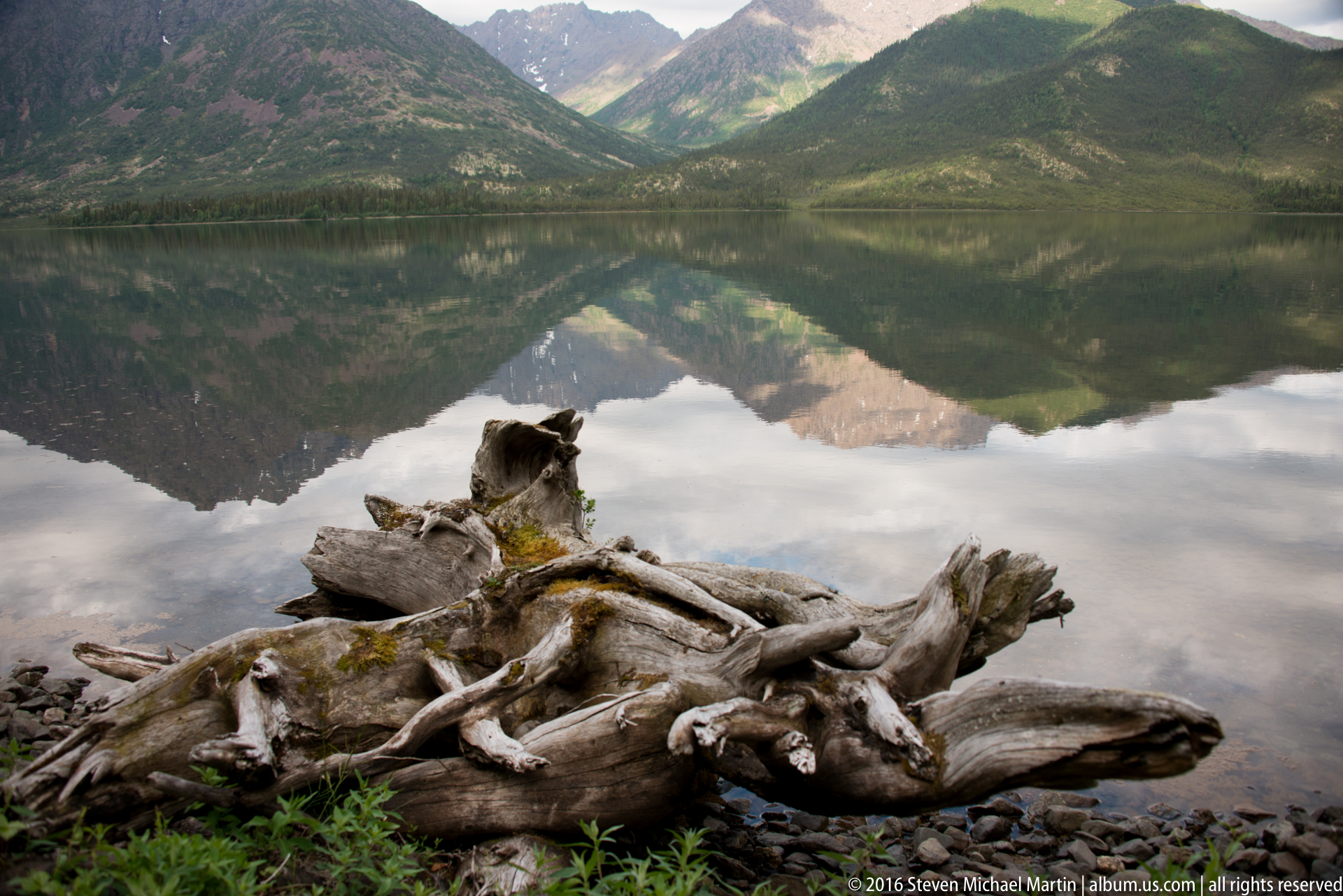
A tangled mass of weathered driftwood lies among shoreline stones, its bleached branches extending over shallow water. Beyond it, the lake reflects green slopes and a patchwork of clouds. The foreground wood gives a tactile counterpoint to the smooth mirrored landscape and distinguishes this view from the open-water frame nearby.
Caption
A tangled mass of weathered driftwood lies among shoreline stones, its bleached branches extending over shallow water. Beyond it, the lake reflects green slopes and a patchwork of clouds. The foreground wood gives a tactile counterpoint to the smooth mirrored landscape and distinguishes this view from the open-water frame nearby.
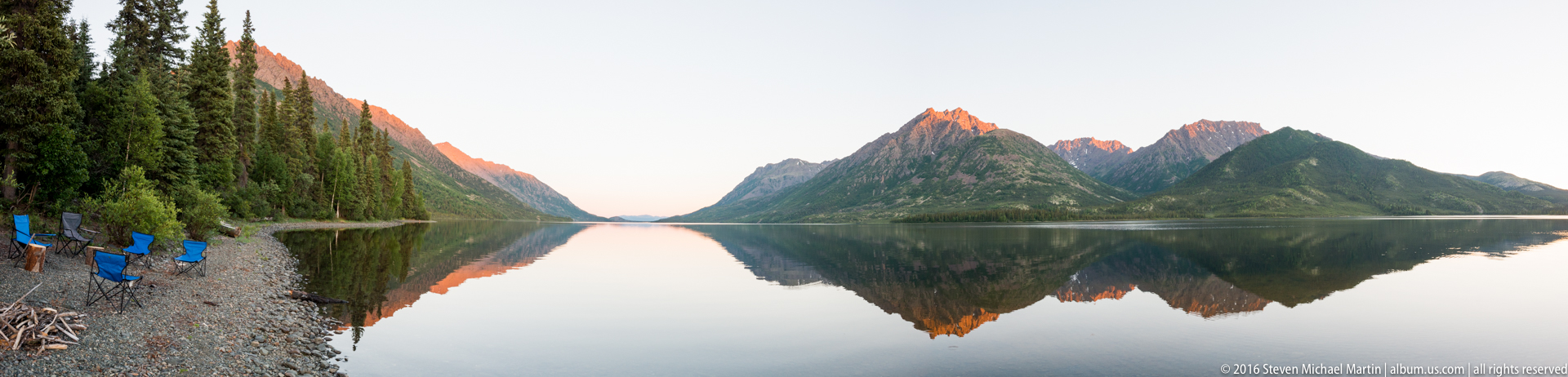
A mountain ridge glows orange at sunset above a long, still lake, its reflection forming a bright path toward the foreground. Blue camp chairs line the rocky shore at left, adding a small sign of human presence to the otherwise expansive landscape. The distant view balances campsite details with evening light.
Caption
A mountain ridge glows orange at sunset above a long, still lake, its reflection forming a bright path toward the foreground. Blue camp chairs line the rocky shore at left, adding a small sign of human presence to the otherwise expansive landscape. The distant view balances campsite details with evening light.
National Park Field Guide
📍 Overview
Gates of the Arctic National Park and Preserve protects one of the largest undeveloped wilderness areas in the United States. Located north of the Arctic Circle, the park includes rugged mountain ranges, broad river valleys, and tundra landscapes shaped by glacial and geological processes. The absence of roads and developed trails contributes to a strong sense of isolation and environmental continuity.
The Brooks Range forms the central geographic feature of the park, creating dramatic transitions between interior forest ecosystems and northern tundra environments. Wildlife including caribou, wolves, and bears inhabit the region, reflecting ecological relationships shaped by seasonal migration and climate conditions. Archaeological evidence indicates long-standing human presence connected to subsistence traditions adapted to Arctic environments.
⭐ Highlights
- One of the most remote national parks in the United States
- Brooks Range mountain landscapes
- Large-scale wilderness with minimal development
- Wildlife habitats shaped by seasonal migration
- River systems flowing through Arctic valleys
🔎 Key Features
- Mountain ranges formed by geological uplift
- Remote tundra and river valley ecosystems
- Archaeological evidence of early human activity
- Landscape shaped by glacial processes
- Minimal infrastructure emphasizing wilderness preservation
📷 Photography Notes
- Wide compositions help convey the scale of the landscape
- Low-angle light can emphasize mountain textures
- Weather changes can create dramatic atmosphere
- Foreground elements help add depth to expansive views
- Seasonal colors can vary significantly across tundra terrain
- Look for compositions that emphasize isolation and scale

A printed page pairs a snow-covered mountain panorama with a lone hiker crossing the foreground. Smaller photographs of wildlife, plants, and terrain sit above columns of explanatory text, arranging the Arctic landscape as both a vast setting and a place encountered on foot. The tiny print is not legible in this view, so the page’s precise publication title and claims remain unidentified.
Caption
A printed page pairs a snow-covered mountain panorama with a lone hiker crossing the foreground. Smaller photographs of wildlife, plants, and terrain sit above columns of explanatory text, arranging the Arctic landscape as both a vast setting and a place encountered on foot. The tiny print is not legible in this view, so the page’s precise publication title and claims remain unidentified.

The map traces the extensive, irregular boundary of Gates of the Arctic National Park and Preserve across a relief-rendered section of northern Alaska. Green lines enclose a broad central area and several separated units, while nearby preserves, wilderness areas, rivers, and settlements place the protected lands in regional context. The park’s name is printed prominently within the shaded mountain terrain.
Caption
The map traces the extensive, irregular boundary of Gates of the Arctic National Park and Preserve across a relief-rendered section of northern Alaska. Green lines enclose a broad central area and several separated units, while nearby preserves, wilderness areas, rivers, and settlements place the protected lands in regional context. The park’s name is printed prominently within the shaded mountain terrain.