Harriet Tubman National Historical Park
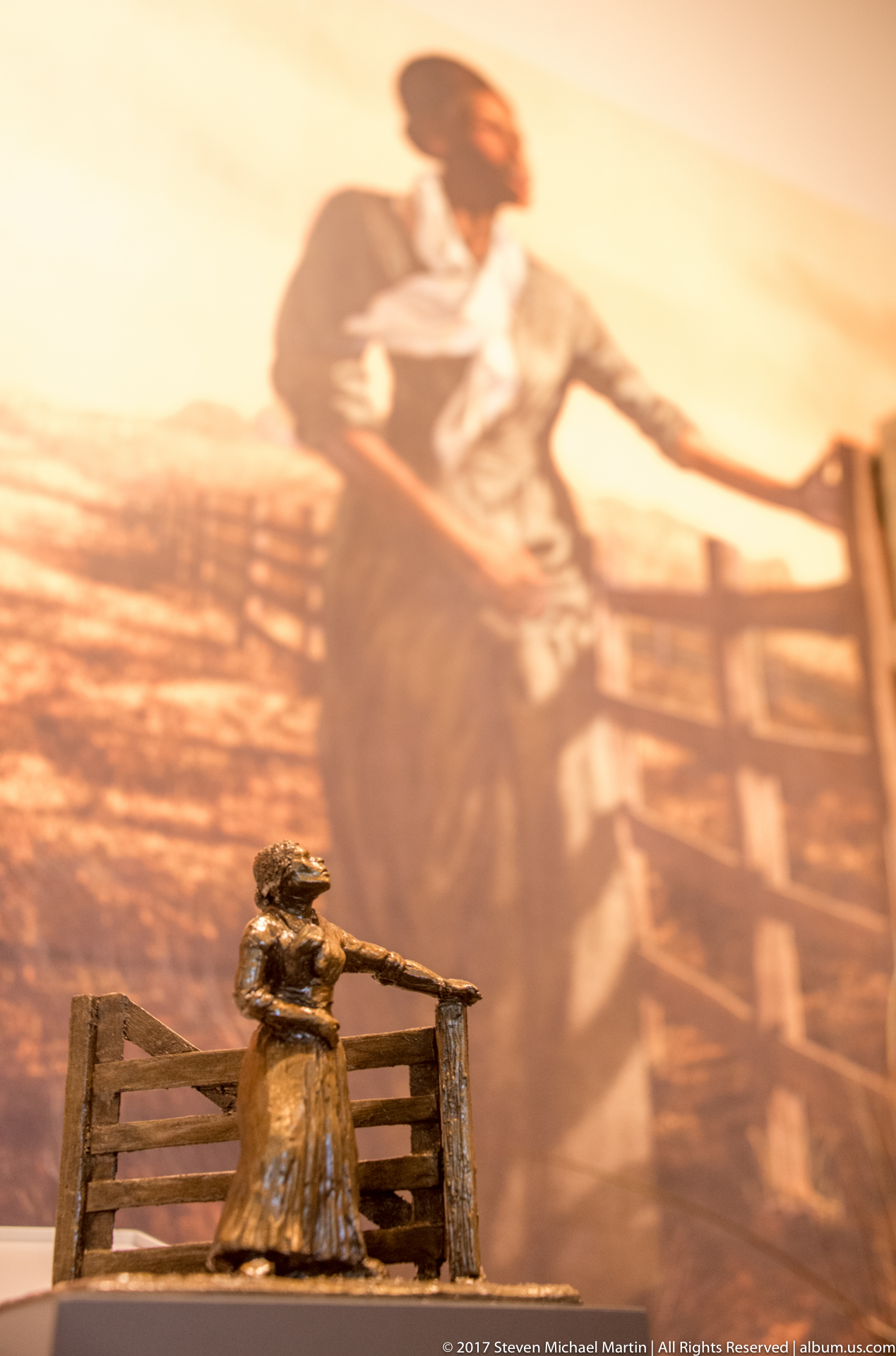
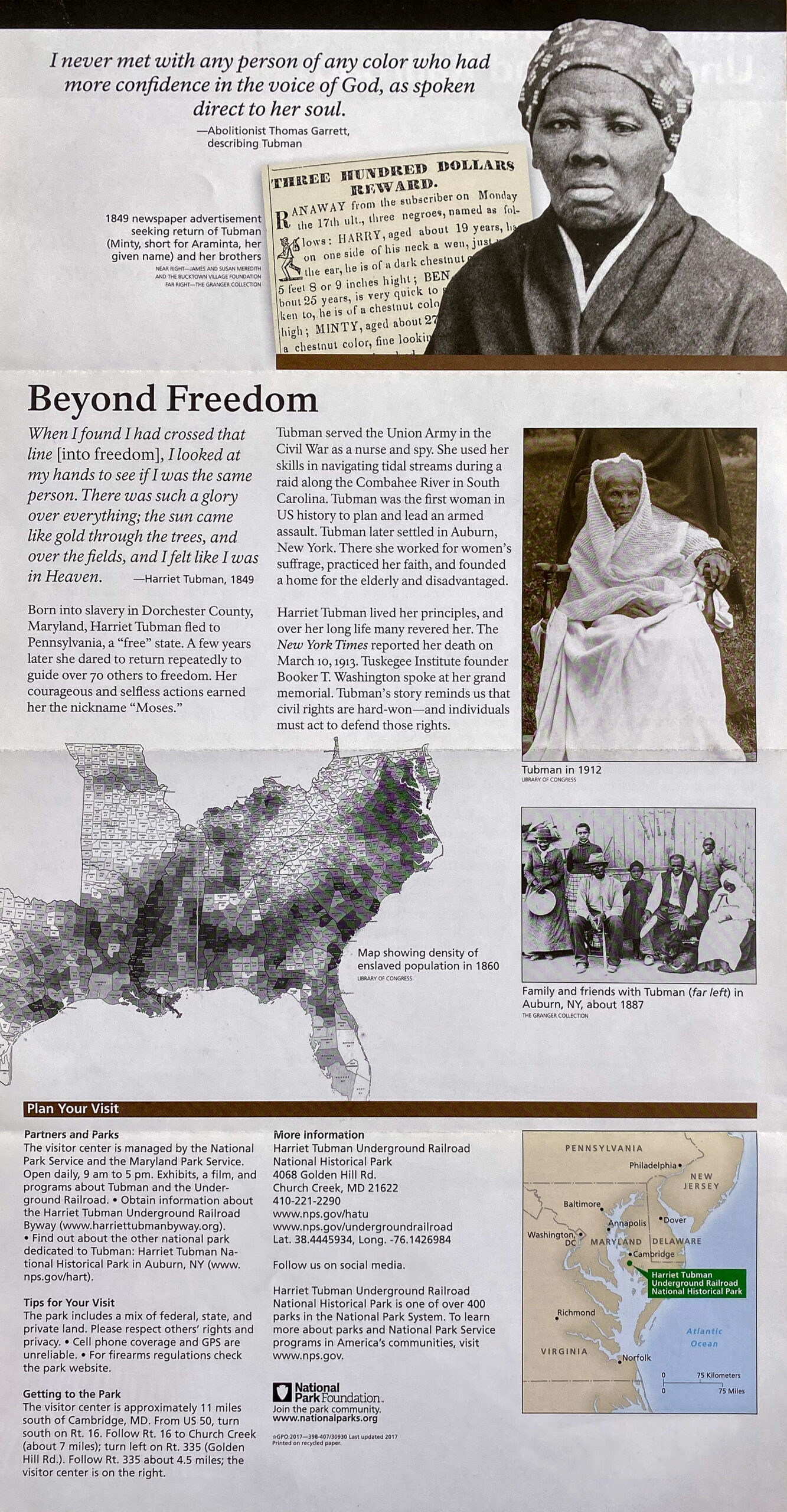
Harriet Tubman National Historical Park preserves landscapes associated with one of the most significant figures in the history of American freedom, resistance, and abolition. Located on Maryland’s Eastern Shore, the park interprets the rural environment in which Harriet Tubman was born into slavery and from which she later escaped before returning repeatedly to guide others to freedom. The marshes, forests, fields, and waterways of Dorchester County formed both the physical setting of her early life and the geographic knowledge that helped shape her extraordinary skill in movement across the landscape.
The surrounding environment of tidewater rivers, wetlands, and agricultural land illustrates the world of labor, surveillance, and resistance that defined slavery in the Chesapeake region during the nineteenth century. Tubman’s intimate understanding of this terrain enabled her to navigate through difficult landscapes under conditions of constant danger, transforming familiar local geography into a means of survival and liberation. The park preserves not only a place of origin, but also a broader cultural landscape tied to memory, movement, and the struggle against slavery.
Harriet Tubman National Historical Park contributes to understanding how landscape can shape both oppression and freedom within American history. The site connects the natural environment of the Eastern Shore with the moral and political history of abolition, illustrating how place influenced one of the most consequential lives of the nineteenth century. Its preservation reinforces the importance of interpreting courage, resistance, and self-emancipation within the physical geography where those histories unfolded.