National Mall
The National Mall forms the central ceremonial landscape of Washington, DC, extending from the United States Capitol to the Lincoln Memorial along a broad east-west axis defined by landscaped parkland, memorials, and museums. Designed in part according to the principles of the McMillan Plan of 1901, the Mall reflects City Beautiful planning traditions that sought to express democratic ideals through monumental architecture and carefully organized civic space. The open landscape provides visual continuity between institutions of government and national memory, creating a setting in which architecture, landscape design, and symbolic monuments collectively express the political identity of the United States.
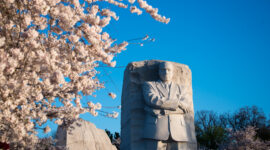
Major memorials distributed across the Mall commemorate individuals and events that shaped the development of the nation, including presidential leadership, military service, and the expansion of civil rights. The Washington Monument serves as a vertical focal point within the landscape, while museums of the Smithsonian Institution contribute to the educational mission of the site by presenting cultural, scientific, and historical collections accessible to the public. The Mall’s pathways and open lawns support civic gatherings, public demonstrations, and national commemorations that reinforce its role as a space of democratic expression.
The National Mall contributes to understanding how urban design and monumental architecture shape the interpretation of national history. As one of the most visited cultural landscapes in the United States, the Mall illustrates the integration of symbolic space with public access to knowledge and collective memory. The continuity between memorials, museums, and government institutions reflects the relationship between political ideals, public education, and the evolving narrative of the American experience.