William Howard Taft National Historic Site
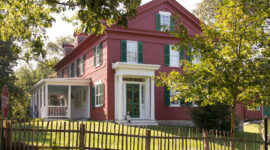
William Howard Taft National Historic Site preserves the birthplace and childhood home of the 27th President of the United States and the only individual to serve as both President and Chief Justice of the Supreme Court. Located in Cincinnati, Ohio, the house provides insight into Taft’s early life and the environment that shaped his career in public service. The site reflects the intellectual and civic traditions associated with late nineteenth-century American political life.
The restored residence illustrates domestic architecture typical of the period and presents interpretive exhibits describing Taft’s legal career, presidency, and later service on the Supreme Court. The site emphasizes the importance of education, public service, and legal scholarship in shaping national leadership during a period of industrial growth and political reform.
Visitors can explore the restored interior spaces and learn about Taft’s contributions to American political and legal history. The site provides a more personal perspective on presidential history, focusing on formative influences and the development of public leadership.
The pale brick residence rises three stories above a small entrance portico, its evenly spaced windows framed by dark shutters and red lintels. Chimneys project above the roofline, and a narrow lawn slopes toward the doorway. The straight-on view reveals the building’s balanced facade and domestic scale within the surrounding Cincinnati neighborhood. The pale brick residence rises three stories above a small entrance portico, its evenly spaced windows framed by dark shutters and red lintels. Chimneys project above the roofline, and a narrow lawn slopes toward the doorway. The straight-on view reveals the building’s balanced facade and domestic scale within the surrounding Cincinnati neighborhood. A framed portrait of William Howard Taft hangs above a dark fireplace with a carved wooden surround. The patterned wallpaper and bright window at left frame the painting, while the mantel’s floral relief creates a decorative band beneath it. The centered view links Taft’s likeness with the formal room furnishings preserved in his childhood home. A framed portrait of William Howard Taft hangs above a dark fireplace with a carved wooden surround. The patterned wallpaper and bright window at left frame the painting, while the mantel’s floral relief creates a decorative band beneath it. The centered view links Taft’s likeness with the formal room furnishings preserved in his childhood home. A large horizontal painting of William Howard Taft fills the wall above a carved fireplace, framed by an ornate gold border. The portrait shows him in a dark suit and tie against a subdued background; patterned wallpaper and a narrow strip of red trim remain visible around the frame. The close view makes the painted likeness the dominant feature. A large horizontal painting of William Howard Taft fills the wall above a carved fireplace, framed by an ornate gold border. The portrait shows him in a dark suit and tie against a subdued background; patterned wallpaper and a narrow strip of red trim remain visible around the frame. The close view makes the painted likeness the dominant feature. A dark upholstered armchair sits alone inside a glass case, its curved wooden arms and square back set against a warm yellow wall. The exhibit label in front identifies it as the “Taft Cabinet Chair.” The centered display emphasizes the chair’s simple form and worn upholstery while separating the object from the domestic rooms where it might once have been used. A dark upholstered armchair sits alone inside a glass case, its curved wooden arms and square back set against a warm yellow wall. The exhibit label in front identifies it as the “Taft Cabinet Chair.” The centered display emphasizes the chair’s simple form and worn upholstery while separating the object from the domestic rooms where it might once have been used. A large poster combines a political cartoon with the titles “27th President of the United States of America” and “10th Chief Justice of the United States Supreme Court.” Two official seals appear below the text, followed by the name William Howard Taft and the National Historic Site mark. The downward-angled view emphasizes the graphic’s words and symbols, which summarize Taft’s two highest public offices. A large poster combines a political cartoon with the titles “27th President of the United States of America” and “10th Chief Justice of the United States Supreme Court.” Two official seals appear below the text, followed by the name William Howard Taft and the National Historic Site mark. The downward-angled view emphasizes the graphic’s words and symbols, which summarize Taft’s two highest public offices. Framed documents fill a pale exhibit wall, including two dark bound volumes or certificates near the top, a formal certificate at lower left, and an illustrated diploma bearing Taft’s portrait at lower right. The display groups written credentials and commemorative documents with the likeness of their subject. Reflections on the glass soften some details, but the different formats and seals remain visible. Framed documents fill a pale exhibit wall, including two dark bound volumes or certificates near the top, a formal certificate at lower left, and an illustrated diploma bearing Taft’s portrait at lower right. The display groups written credentials and commemorative documents with the likeness of their subject. Reflections on the glass soften some details, but the different formats and seals remain visible. A pink commemorative banner marks the 150th anniversary of William Howard Taft’s birth, with dates 1857–2007 visible around a photograph of the home. A map of Ohio, presidential seal, service emblems, archival images, and a timeline fill the remaining sections. The wide view records the banner as a compact visual summary of Taft’s life and public roles. A pink commemorative banner marks the 150th anniversary of William Howard Taft’s birth, with dates 1857–2007 visible around a photograph of the home. A map of Ohio, presidential seal, service emblems, archival images, and a timeline fill the remaining sections. The wide view records the banner as a compact visual summary of Taft’s life and public roles. A chronological list traces William Howard Taft’s career from legal and judicial posts through his service as governor-general of the Philippines, secretary of war, president, and chief justice. Dates form a column at left, with appointments and roles aligned to the right. The close view focuses on the sequence of offices, making the panel function as a concise career reference within the larger exhibition. A chronological list traces William Howard Taft’s career from legal and judicial posts through his service as governor-general of the Philippines, secretary of war, president, and chief justice. Dates form a column at left, with appointments and roles aligned to the right. The close view focuses on the sequence of offices, making the panel function as a concise career reference within the larger exhibition. A large banner displays a monochrome portrait of William Howard Taft above the words “William Howard Taft National Historic Site.” The National Park Service name and shield appear at the top, while a brick wall and narrow awning frame the fabric. The close view combines the site’s public identity with a formal image of its namesake. A large banner displays a monochrome portrait of William Howard Taft above the words “William Howard Taft National Historic Site.” The National Park Service name and shield appear at the top, while a brick wall and narrow awning frame the fabric. The close view combines the site’s public identity with a formal image of its namesake. An oval portrait of a dark-haired woman hangs above a black marble mantel, flanked by gilded candlesticks and pale patterned wallpaper. The close, frontal view centers the painted figure and the formal arrangement of objects below it. The portrait’s subject is not identified on the visible wall, so the description stays with the artwork and its domestic setting. An oval portrait of a dark-haired woman hangs above a black marble mantel, flanked by gilded candlesticks and pale patterned wallpaper. The close, frontal view centers the painted figure and the formal arrangement of objects below it. The portrait’s subject is not identified on the visible wall, so the description stays with the artwork and its domestic setting. A bronze bust rests on a pale stone pedestal in front of a tree trunk and leafy planting. The closely cropped head and shoulders reveal a broad face, short hair, and formal jacket rendered in weathered green patina. The outdoor light brings out the sculpture’s surface variation, while the composition isolates the likeness from the surrounding grounds. A bronze bust rests on a pale stone pedestal in front of a tree trunk and leafy planting. The closely cropped head and shoulders reveal a broad face, short hair, and formal jacket rendered in weathered green patina. The outdoor light brings out the sculpture’s surface variation, while the composition isolates the likeness from the surrounding grounds. A carpeted staircase climbs along the left wall, its polished wood handrail leading toward the upper floor. Patterned wallpaper, a geometric tile floor, and a hanging light fixture define the narrow hall, while open doorways reveal rooms beyond. The view emphasizes the home’s circulation space and the contrast between the dark stair runner and pale walls. A carpeted staircase climbs along the left wall, its polished wood handrail leading toward the upper floor. Patterned wallpaper, a geometric tile floor, and a hanging light fixture define the narrow hall, while open doorways reveal rooms beyond. The view emphasizes the home’s circulation space and the contrast between the dark stair runner and pale walls. Seen from the corner, the house’s long brick elevations meet beneath a hipped roof lined with chimneys. Dark shutters and red window accents repeat across both sides, while small American flags hang from the upper facade. Bare trees and a sloping lawn frame the building, making its size and relationship to the street more evident than in a frontal view. Seen from the corner, the house’s long brick elevations meet beneath a hipped roof lined with chimneys. Dark shutters and red window accents repeat across both sides, while small American flags hang from the upper facade. Bare trees and a sloping lawn frame the building, making its size and relationship to the street more evident than in a frontal view. A large interpretive panel titled “Auburn Avenue 1830–1900” combines historical photographs, explanatory text, and a row of architectural drawings. The lower illustrations compare house styles along the avenue, while photographs above document earlier streetscapes. The panel connects the neighborhood’s changing built environment with the history of the Taft home’s surroundings. A large interpretive panel titled “Auburn Avenue 1830–1900” combines historical photographs, explanatory text, and a row of architectural drawings. The lower illustrations compare house styles along the avenue, while photographs above document earlier streetscapes. The panel connects the neighborhood’s changing built environment with the history of the Taft home’s surroundings. The “Auburn Avenue 1830–1900” panel describes the area’s early residents, residential development, and later changes to its buildings and services. Small archival photographs and a strip of house elevations accompany the text. In this closer view, the interpretive narrative becomes the main subject, while the images and architectural silhouettes provide visual context for the neighborhood’s evolution. The “Auburn Avenue 1830–1900” panel describes the area’s early residents, residential development, and later changes to its buildings and services. Small archival photographs and a strip of house elevations accompany the text. In this closer view, the interpretive narrative becomes the main subject, while the images and architectural silhouettes provide visual context for the neighborhood’s evolution. A brown National Park Service sign reads “William Howard Taft National Historic Site” beside a black iron gate. The sign stands on a low brick base, with the historic house and neighboring buildings visible behind it. The frontal composition makes the official designation unmistakable and places the entrance marker within the surrounding residential block. A brown National Park Service sign reads “William Howard Taft National Historic Site” beside a black iron gate. The sign stands on a low brick base, with the historic house and neighboring buildings visible behind it. The frontal composition makes the official designation unmistakable and places the entrance marker within the surrounding residential block. The pale brick house stands behind a black iron fence, with a park sign and American flag beside the entrance walk. A low brick retaining wall follows the sloping lawn, while bare trees and nearby homes fill the background. This wider view links the recognizable residence to its street frontage and public entrance. The pale brick house stands behind a black iron fence, with a park sign and American flag beside the entrance walk. A low brick retaining wall follows the sloping lawn, while bare trees and nearby homes fill the background. This wider view links the recognizable residence to its street frontage and public entrance. A display room centers on a curtained window framed by gathered drapery, with a small table and decorative objects placed in front. Framed photographs and portraits hang on both sides, while a pale bust, carved shelving, and black mantel fill the room’s edges. Red ropes preserve a visitor path through the densely furnished interior. A display room centers on a curtained window framed by gathered drapery, with a small table and decorative objects placed in front. Framed photographs and portraits hang on both sides, while a pale bust, carved shelving, and black mantel fill the room’s edges. Red ropes preserve a visitor path through the densely furnished interior. A formal parlor is arranged around a dark fireplace, oval portrait, upholstered chairs, and a low table, with a second framed portrait on the wall. A chandelier hangs above a richly patterned rug, and green drapery frames the window at right. Red ropes guide visitors around the furnishings, marking the room as a preserved historic interior. A formal parlor is arranged around a dark fireplace, oval portrait, upholstered chairs, and a low table, with a second framed portrait on the wall. A chandelier hangs above a richly patterned rug, and green drapery frames the window at right. Red ropes guide visitors around the furnishings, marking the room as a preserved historic interior. A grand piano stands beneath a large gilt-framed mirror that reflects a window and an oval portrait. A red visitor rope crosses the foreground, while the instrument’s polished wood case and exposed keyboard occupy most of the lower frame. The close view singles out the piano as a furnishing within the home’s preserved parlor rather than showing the entire room. A grand piano stands beneath a large gilt-framed mirror that reflects a window and an oval portrait. A red visitor rope crosses the foreground, while the instrument’s polished wood case and exposed keyboard occupy most of the lower frame. The close view singles out the piano as a furnishing within the home’s preserved parlor rather than showing the entire room. A large oval portrait of a man in a dark suit hangs above a black marble mantel, flanked by gilded candlesticks. The painted figure faces slightly to one side, while patterned wallpaper and narrow decorative bands frame the arrangement. The close view highlights the portrait’s formal presentation and the mantel objects beneath it without naming the sitter. A large oval portrait of a man in a dark suit hangs above a black marble mantel, flanked by gilded candlesticks. The painted figure faces slightly to one side, while patterned wallpaper and narrow decorative bands frame the arrangement. The close view highlights the portrait’s formal presentation and the mantel objects beneath it without naming the sitter. A bright window anchors a furnished parlor where patterned chairs and a settee face inward across a richly colored rug. Portraits hang on either side of the window, and a chandelier, small tables, and carved wood furniture complete the arrangement. The view emphasizes the room’s conversational layout and layered textiles, with red ropes marking the preserved furnishings. A bright window anchors a furnished parlor where patterned chairs and a settee face inward across a richly colored rug. Portraits hang on either side of the window, and a chandelier, small tables, and carved wood furniture complete the arrangement. The view emphasizes the room’s conversational layout and layered textiles, with red ropes marking the preserved furnishings. Two framed prints hang side by side, each showing a dramatic group of figures within an ornamental border. The right print is labeled “King Lear,” while the left includes the word “Fool” and a central robed figure. Their close pairing reveals a literary or theatrical theme within the home’s collection, though the exact print titles and scenes are not fully visible. Two framed prints hang side by side, each showing a dramatic group of figures within an ornamental border. The right print is labeled “King Lear,” while the left includes the word “Fool” and a central robed figure. Their close pairing reveals a literary or theatrical theme within the home’s collection, though the exact print titles and scenes are not fully visible. An elaborate carved cabinet with mirrored backing rises above a table crowded with books, ceramic vessels, and small decorative objects. Curving wooden supports and a carved crest frame the mirror, while patterned wallpaper and upholstered chairs establish the surrounding parlor. The close composition draws attention to the cabinet’s intricate woodwork and the domestic collection assembled beneath it. An elaborate carved cabinet with mirrored backing rises above a table crowded with books, ceramic vessels, and small decorative objects. Curving wooden supports and a carved crest frame the mirror, while patterned wallpaper and upholstered chairs establish the surrounding parlor. The close composition draws attention to the cabinet’s intricate woodwork and the domestic collection assembled beneath it. A biography panel headed “Alphonso Taft, 1810–1891” combines a portrait, an engraving, and photographs of a riverfront and other historic scenes. Dense text fills the center and right side, linking the images to his life and public career. The broad view records the exhibit’s layout, while smaller paragraphs are too fine to transcribe reliably. A biography panel headed “Alphonso Taft, 1810–1891” combines a portrait, an engraving, and photographs of a riverfront and other historic scenes. Dense text fills the center and right side, linking the images to his life and public career. The broad view records the exhibit’s layout, while smaller paragraphs are too fine to transcribe reliably. A yellow-backed exhibit panel combines archival photographs of a man, a horse-drawn scene, a house, and several formal portraits. Reproduced documents sit behind a clear case at the lower right, while short captions connect the images to Taft family history. The arrangement offers multiple forms of evidence—photographs, documents, and text—within one display. A yellow-backed exhibit panel combines archival photographs of a man, a horse-drawn scene, a house, and several formal portraits. Reproduced documents sit behind a clear case at the lower right, while short captions connect the images to Taft family history. The arrangement offers multiple forms of evidence—photographs, documents, and text—within one display. A white bed fills the foreground of a compact bedroom, with a dark writing desk and chair set near the bright window. A dresser, striped rug, and small framed pictures occupy the opposite wall, while a red rope marks the visitor route. The arrangement presents a private domestic room with both sleeping and study furnishings. A white bed fills the foreground of a compact bedroom, with a dark writing desk and chair set near the bright window. A dresser, striped rug, and small framed pictures occupy the opposite wall, while a red rope marks the visitor route. The arrangement presents a private domestic room with both sleeping and study furnishings. An interpretive wall panel assembles archival photographs of buildings and a portrait of a man, with explanatory text and framed documents below. The display is headed by Taft family history material, though most fine text is too small to read from this distance. The warm yellow backing organizes the images into a chronology of people and places. An interpretive wall panel assembles archival photographs of buildings and a portrait of a man, with explanatory text and framed documents below. The display is headed by Taft family history material, though most fine text is too small to read from this distance. The warm yellow backing organizes the images into a chronology of people and places. A broad carpeted staircase rises beside a polished wood balustrade, turning toward the upper floor. Pale walls and doorways line the hall, while patterned flooring extends beneath the stairs and into adjoining rooms. A visitor is partly visible near the lower landing, giving scale to the stair and showing the route through the historic residence. A broad carpeted staircase rises beside a polished wood balustrade, turning toward the upper floor. Pale walls and doorways line the hall, while patterned flooring extends beneath the stairs and into adjoining rooms. A visitor is partly visible near the lower landing, giving scale to the stair and showing the route through the historic residence. From the upper landing, a curved wood balustrade outlines the open stairwell and overlooks the lower floor. Patterned wallpaper continues along the walls, while the geometric tile floor and another room appear below. The elevated angle reveals the staircase’s turn and the connection between levels, complementing the ground-level view of the same circulation space. From the upper landing, a curved wood balustrade outlines the open stairwell and overlooks the lower floor. Patterned wallpaper continues along the walls, while the geometric tile floor and another room appear below. The elevated angle reveals the staircase’s turn and the connection between levels, complementing the ground-level view of the same circulation space. A display case arranges campaign buttons, medals, small printed items, and photographs alongside text panels about Taft. Several ribbons and commemorative pieces hang vertically, while coin-like objects and cards are set in rows. The close, frontal view focuses on material culture connected with public life, though individual objects are too small to identify precisely. A display case arranges campaign buttons, medals, small printed items, and photographs alongside text panels about Taft. Several ribbons and commemorative pieces hang vertically, while coin-like objects and cards are set in rows. The close, frontal view focuses on material culture connected with public life, though individual objects are too small to identify precisely. A large political cartoon titled “Buck” dominates the panel, showing a group of caricatured figures around a central character. Smaller cartoons, a black-and-white photograph, and a formal portrait labeled William H. Taft surround it. The mix of satire and documentary images presents Taft through contemporary visual culture as well as official portraiture. A large political cartoon titled “Buck” dominates the panel, showing a group of caricatured figures around a central character. Smaller cartoons, a black-and-white photograph, and a formal portrait labeled William H. Taft surround it. The mix of satire and documentary images presents Taft through contemporary visual culture as well as official portraiture. A ceremonial key rests in a red-lined presentation case beside a small tricolor flag and a printed document bearing William H. Taft’s name. The nearby exhibit text refers to Manila and a 1905 presentation, tying these objects to his visit as governor of the Philippines. Viewed through glass, the arrangement brings together an official gift and its written record in one compact display. A ceremonial key rests in a red-lined presentation case beside a small tricolor flag and a printed document bearing William H. Taft’s name. The nearby exhibit text refers to Manila and a 1905 presentation, tying these objects to his visit as governor of the Philippines. Viewed through glass, the arrangement brings together an official gift and its written record in one compact display. A newspaper front page featuring Taft sits beneath a strip of archival photographs, with a reproduced portrait and a small press image nearby. Explanatory text fills the panel’s right side, while the newspaper is protected in a clear case. The display links print media and photography as records of Taft’s public image and political career. A newspaper front page featuring Taft sits beneath a strip of archival photographs, with a reproduced portrait and a small press image nearby. Explanatory text fills the panel’s right side, while the newspaper is protected in a clear case. The display links print media and photography as records of Taft’s public image and political career. Five black-and-white photographs show William Howard Taft seated in a chair, holding a cigar and changing his pose across a series. The repeated composition allows small variations in expression and gesture to be compared. A short caption beneath the images describes them as photographs of Taft, while the warm panel background frames the set as a focused archival display. Five black-and-white photographs show William Howard Taft seated in a chair, holding a cigar and changing his pose across a series. The repeated composition allows small variations in expression and gesture to be compared. A short caption beneath the images describes them as photographs of Taft, while the warm panel background frames the set as a focused archival display. A yellow interpretive panel headed “The Philippines” combines explanatory text with a large archival photograph and a map of the islands. The central image shows three men standing outdoors, while a second group photograph sits below it. The panel places Taft’s Philippine service within a broader historical account and uses the map to locate the events described. A yellow interpretive panel headed “The Philippines” combines explanatory text with a large archival photograph and a map of the islands. The central image shows three men standing outdoors, while a second group photograph sits below it. The panel places Taft’s Philippine service within a broader historical account and uses the map to locate the events described. A broad yellow exhibit wall arranges archival photographs, short text blocks, and a small illuminated image in a dense collage. The photographs show groups of people, formal gatherings, and outdoor scenes, while a map panel remains visible at the far left. Rather than centering a single portrait, the display assembles many episodes into a visual account of Taft’s years in the Philippines. A broad yellow exhibit wall arranges archival photographs, short text blocks, and a small illuminated image in a dense collage. The photographs show groups of people, formal gatherings, and outdoor scenes, while a map panel remains visible at the far left. Rather than centering a single portrait, the display assembles many episodes into a visual account of Taft’s years in the Philippines. Several archival photographs are arranged on a yellow exhibit panel, including a group portrait on steps, a wide image of a house, and smaller portraits of a man and woman. Explanatory text sits between the images, linking family life with the Taft home. The varied scales of the photographs make this section read as a family history display rather than a single-document case. Several archival photographs are arranged on a yellow exhibit panel, including a group portrait on steps, a wide image of a house, and smaller portraits of a man and woman. Explanatory text sits between the images, linking family life with the Taft home. The varied scales of the photographs make this section read as a family history display rather than a single-document case. A framed black-and-white drawing presents four exaggerated male profiles in a row, each rendered with distinct facial features and hairstyles. The figures are shown from the shoulders up, facing in alternating directions, with a signature near the lower right. The close view emphasizes the artist’s caricature technique and the sequence of portraits, while avoiding attribution of the individuals where the names are not legible. A framed black-and-white drawing presents four exaggerated male profiles in a row, each rendered with distinct facial features and hairstyles. The figures are shown from the shoulders up, facing in alternating directions, with a signature near the lower right. The close view emphasizes the artist’s caricature technique and the sequence of portraits, while avoiding attribution of the individuals where the names are not legible. A round portrait of William Howard Taft is set into a dark, ornate object with a pale bow and ribbons above it. Gold-toned edging frames the image, while the curved reflective surface and surrounding fasteners suggest a commemorative or presentation piece. The tight crop isolates the portrait and its decorative setting, making the object’s material and layered construction as prominent as the likeness itself. A round portrait of William Howard Taft is set into a dark, ornate object with a pale bow and ribbons above it. Gold-toned edging frames the image, while the curved reflective surface and surrounding fasteners suggest a commemorative or presentation piece. The tight crop isolates the portrait and its decorative setting, making the object’s material and layered construction as prominent as the likeness itself. A long table covered with a pale cloth anchors a formal dining room, surrounded by wooden chairs and framed by tall curtained windows. A dark fireplace and mantel occupy the right wall, while a small desk and an American flag stand near the far end. The centered view follows the table toward the window and records the room’s furnishings and arrangement within the historic home. A long table covered with a pale cloth anchors a formal dining room, surrounded by wooden chairs and framed by tall curtained windows. A dark fireplace and mantel occupy the right wall, while a small desk and an American flag stand near the far end. The centered view follows the table toward the window and records the room’s furnishings and arrangement within the historic home. A yellow exhibit panel headed “Saving Taft’s House” pairs text with historic photographs of the residence in different periods. One wide image shows the house behind a fence, while a second larger photograph emphasizes its front elevation and porch. Smaller photographs at the right add further views. Together, the images document the property’s appearance and preservation through archival views rather than presenting the house itself. A yellow exhibit panel headed “Saving Taft’s House” pairs text with historic photographs of the residence in different periods. One wide image shows the house behind a fence, while a second larger photograph emphasizes its front elevation and porch. Smaller photographs at the right add further views. Together, the images document the property’s appearance and preservation through archival views rather than presenting the house itself. A large yellow exhibit panel combines a political cartoon, archival photographs, and explanatory text. The central cartoon shows two men seated on an elephant, while a smaller drawing and several photographs flank it. The layered material presents political imagery alongside documentary portraits, turning the panel into a compact visual account of Taft-era public life rather than a single-image display. A large yellow exhibit panel combines a political cartoon, archival photographs, and explanatory text. The central cartoon shows two men seated on an elephant, while a smaller drawing and several photographs flank it. The layered material presents political imagery alongside documentary portraits, turning the panel into a compact visual account of Taft-era public life rather than a single-image display. A formal family group poses in two rows in front of a bright window, with William Howard Taft seated at the center of the front row. Men in dark suits stand behind the seated women and children, while the arrangement and direct gaze give the image the composed character of an official family portrait. The archival photograph records the household as a group rather than isolating Taft alone. A formal family group poses in two rows in front of a bright window, with William Howard Taft seated at the center of the front row. Men in dark suits stand behind the seated women and children, while the arrangement and direct gaze give the image the composed character of an official family portrait. The archival photograph records the household as a group rather than isolating Taft alone. A bronze-colored plaque mounted against a rough boulder identifies the William Howard Taft Home as a National Historic Landmark. Its text names Taft as the twenty-seventh president and tenth chief justice and describes the home’s significance. The close frontal view makes the designation and its inscription the subject, while the uneven stone behind the plaque contrasts with its carefully bordered metal surface. A bronze-colored plaque mounted against a rough boulder identifies the William Howard Taft Home as a National Historic Landmark. Its text names Taft as the twenty-seventh president and tenth chief justice and describes the home’s significance. The close frontal view makes the designation and its inscription the subject, while the uneven stone behind the plaque contrasts with its carefully bordered metal surface. An aged program cover reads “Official Inauguration Program” beneath two oval portraits joined by a red, white, and blue ribbon motif. A small image of the White House sits below the title, followed by the printed price of fifteen cents. The close view records the document’s graphic design and its commemorative purpose without requiring the names of the people pictured to be inferred from the portraits alone. An aged program cover reads “Official Inauguration Program” beneath two oval portraits joined by a red, white, and blue ribbon motif. A small image of the White House sits below the title, followed by the printed price of fifteen cents. The close view records the document’s graphic design and its commemorative purpose without requiring the names of the people pictured to be inferred from the portraits alone. A broad window with blue louvered shutters is decorated with red, white, and blue bunting draped beneath the sill. Reflections of trees and sky fill the glass, while the pale clapboard wall and stone foundation establish the exterior setting. The close architectural detail records a patriotic seasonal display on the house without losing the window’s scale, shutter texture, and relationship to the surrounding façade. A broad window with blue louvered shutters is decorated with red, white, and blue bunting draped beneath the sill. Reflections of trees and sky fill the glass, while the pale clapboard wall and stone foundation establish the exterior setting. The close architectural detail records a patriotic seasonal display on the house without losing the window’s scale, shutter texture, and relationship to the surrounding façade. A life-size figure of William Howard Taft stands against a pale green wall, wearing a black suit, white shirt, and dark bowler hat. The hands are held near the front of the coat, and the figure’s face is modeled with a broad mustache and full features. A small wall label sits to the left, but the portrait-like figure dominates the simple gallery setting. A life-size figure of William Howard Taft stands against a pale green wall, wearing a black suit, white shirt, and dark bowler hat. The hands are held near the front of the coat, and the figure’s face is modeled with a broad mustache and full features. A small wall label sits to the left, but the portrait-like figure dominates the simple gallery setting. A seated mannequin in a brimmed hat and vest appears beside a tan car marked “CHARLIE TAFT.” The surrounding display uses a painted green outdoor backdrop and a rocky ground surface to stage the scene, while a small open case sits at the figure’s feet. This tableau shifts the exhibition from documents and photographs to a life-size scene centered on the named car and a costumed figure. A seated mannequin in a brimmed hat and vest appears beside a tan car marked “CHARLIE TAFT.” The surrounding display uses a painted green outdoor backdrop and a rocky ground surface to stage the scene, while a small open case sits at the figure’s feet. This tableau shifts the exhibition from documents and photographs to a life-size scene centered on the named car and a costumed figure. A cluster of yellow-framed photographs and small display boxes fills a pale gallery wall. The arrangement mixes portraits, family groups, a building image, and several paper artifacts, with frames of varied proportions placed close together. The composition presents a family archive as a wall installation, contrasting the repeated yellow borders with the differently scaled photographs and objects inside them. A cluster of yellow-framed photographs and small display boxes fills a pale gallery wall. The arrangement mixes portraits, family groups, a building image, and several paper artifacts, with frames of varied proportions placed close together. The composition presents a family archive as a wall installation, contrasting the repeated yellow borders with the differently scaled photographs and objects inside them. A small gallery is arranged with freestanding panels titled “The Tafts: A Legacy of Citizenship” and “The Political Legacy of Mr. President, Mr. Chief Justice.” Archival photographs and text surround a central glass case at the far end. The view looks down the exhibition aisle, showing how the panels frame the central object and guide visitors through Taft’s civic and political history. A small gallery is arranged with freestanding panels titled “The Tafts: A Legacy of Citizenship” and “The Political Legacy of Mr. President, Mr. Chief Justice.” Archival photographs and text surround a central glass case at the far end. The view looks down the exhibition aisle, showing how the panels frame the central object and guide visitors through Taft’s civic and political history. Raised metal letters spelling “William Howard Taft National Historic Site” are mounted diagonally across a pale brick wall. Green-framed windows project at the left edge, and a strip of blue sky opens above the masonry. The oblique angle makes the sign recede along the wall, turning the site name itself into the subject and recording how the historic property is identified to visitors. Raised metal letters spelling “William Howard Taft National Historic Site” are mounted diagonally across a pale brick wall. Green-framed windows project at the left edge, and a strip of blue sky opens above the masonry. The oblique angle makes the sign recede along the wall, turning the site name itself into the subject and recording how the historic property is identified to visitors.
Caption

Caption

Caption

Caption

Caption

Caption

Caption

Caption

Caption

Caption

Caption

Caption

Caption

Caption

Caption

Caption

Caption

Caption

Caption

Caption

Caption

Caption

Caption

Caption

Caption

Caption

Caption

Caption

Caption

Caption

Caption

Caption

Caption

Caption

Caption

Caption

Caption

Caption

Caption

Caption

Caption

Caption

Caption

Caption

Caption

Caption

Caption

Caption

Caption

Caption

Caption

Caption