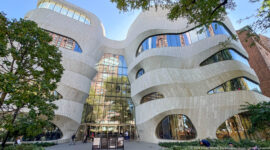
St. Patrick’s Cathedral
St. Patrick’s Cathedral stands along Fifth Avenue in Midtown Manhattan as one of the most recognizable examples of Gothic Revival architecture in the United States. Construction began in 1858 to serve the rapidly growing Catholic population of New York City, many of whom were immigrants arriving during the nineteenth century. The cathedral opened in 1879, reflecting both the expanding influence of religious institutions and the emergence of Midtown as a major civic and cultural district.
Designed by architect James Renwick Jr., the cathedral’s white marble façade, twin spires, stained glass windows, and vaulted interior illustrate European architectural traditions adapted to an American urban setting. When construction began, the site was considered far north of the city center, but subsequent development transformed the surrounding area into one of the most prominent corridors of commercial and cultural life in New York.
St. Patrick’s Cathedral contributes to understanding how immigration, religion, and architecture shaped the civic identity of New York City during the nineteenth century. The structure remains an enduring landmark that reflects the historical development of Fifth Avenue as both a ceremonial and commercial axis within the evolving urban landscape.