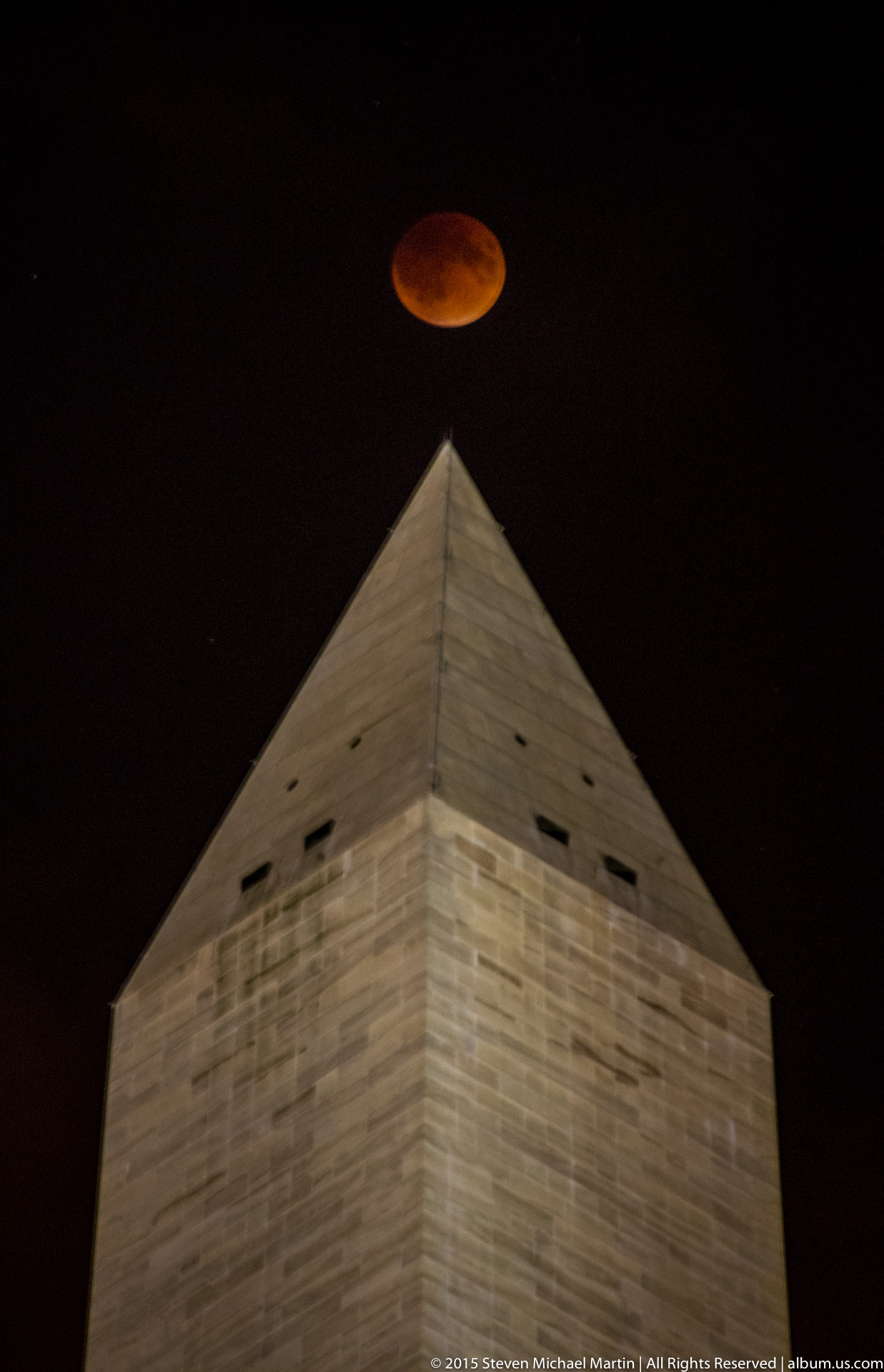
Washington Monument Blood Moon
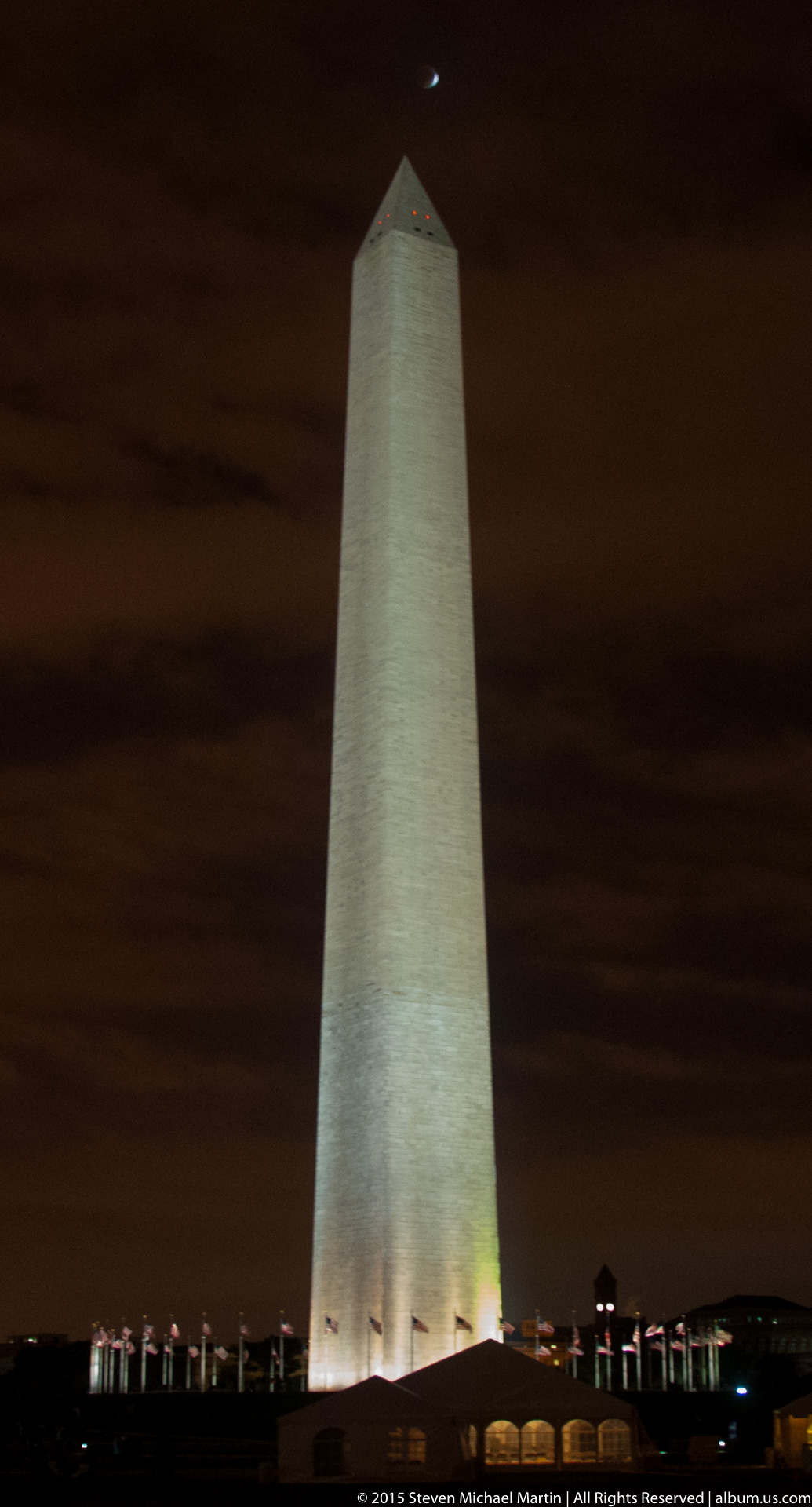
The Washington Monument stands at the center of the National Mall as a geometric focal point within the planned landscape of the federal capital. Constructed as an obelisk in honor of George Washington, the monument reflects nineteenth-century interest in classical forms associated with permanence and civic virtue. Its position within Pierre L’Enfant’s original city plan creates strong visual alignments across the monumental core, allowing astronomical events and changing natural light conditions to interact with the architectural geometry of the capital’s symbolic center.
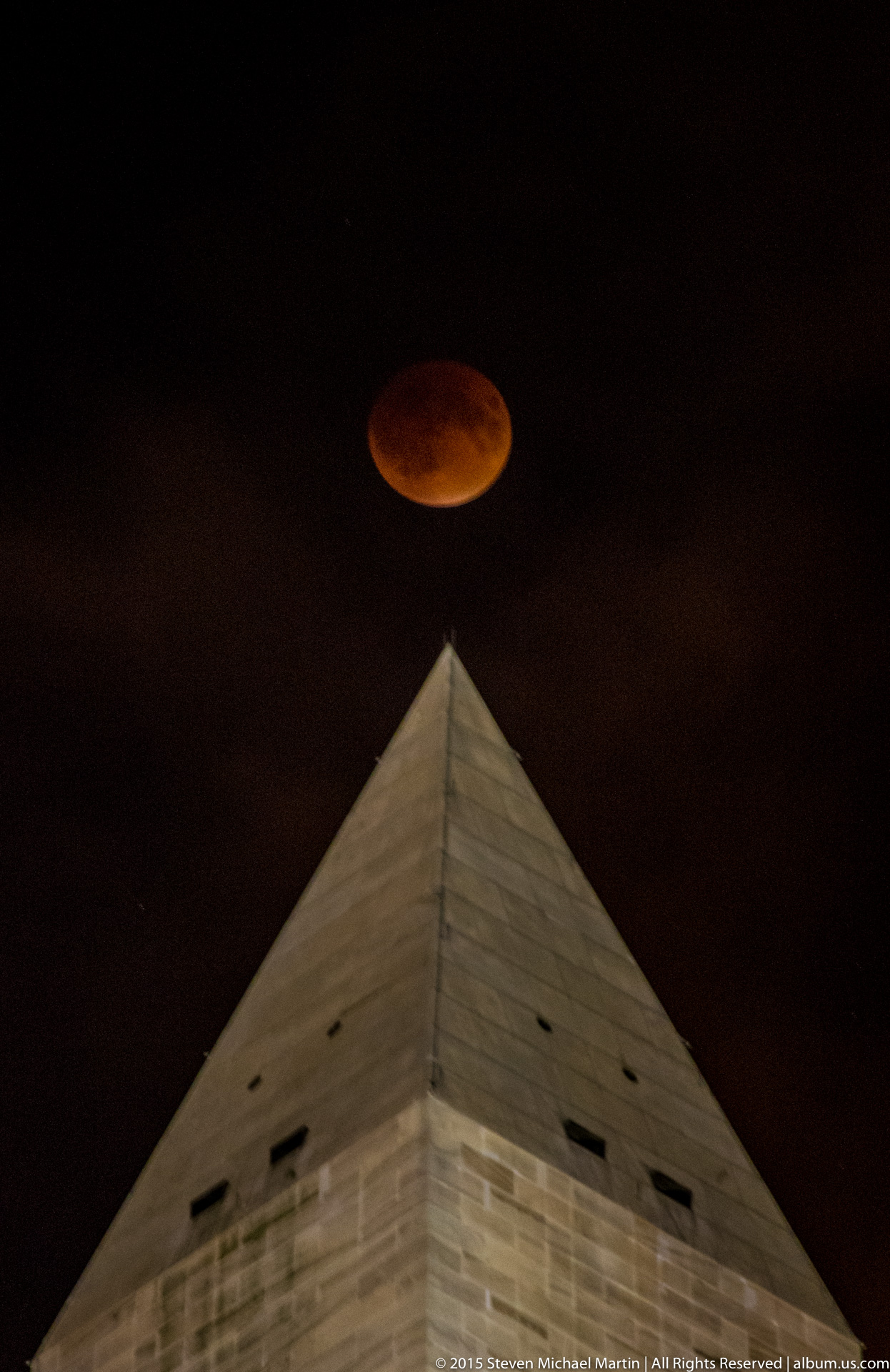
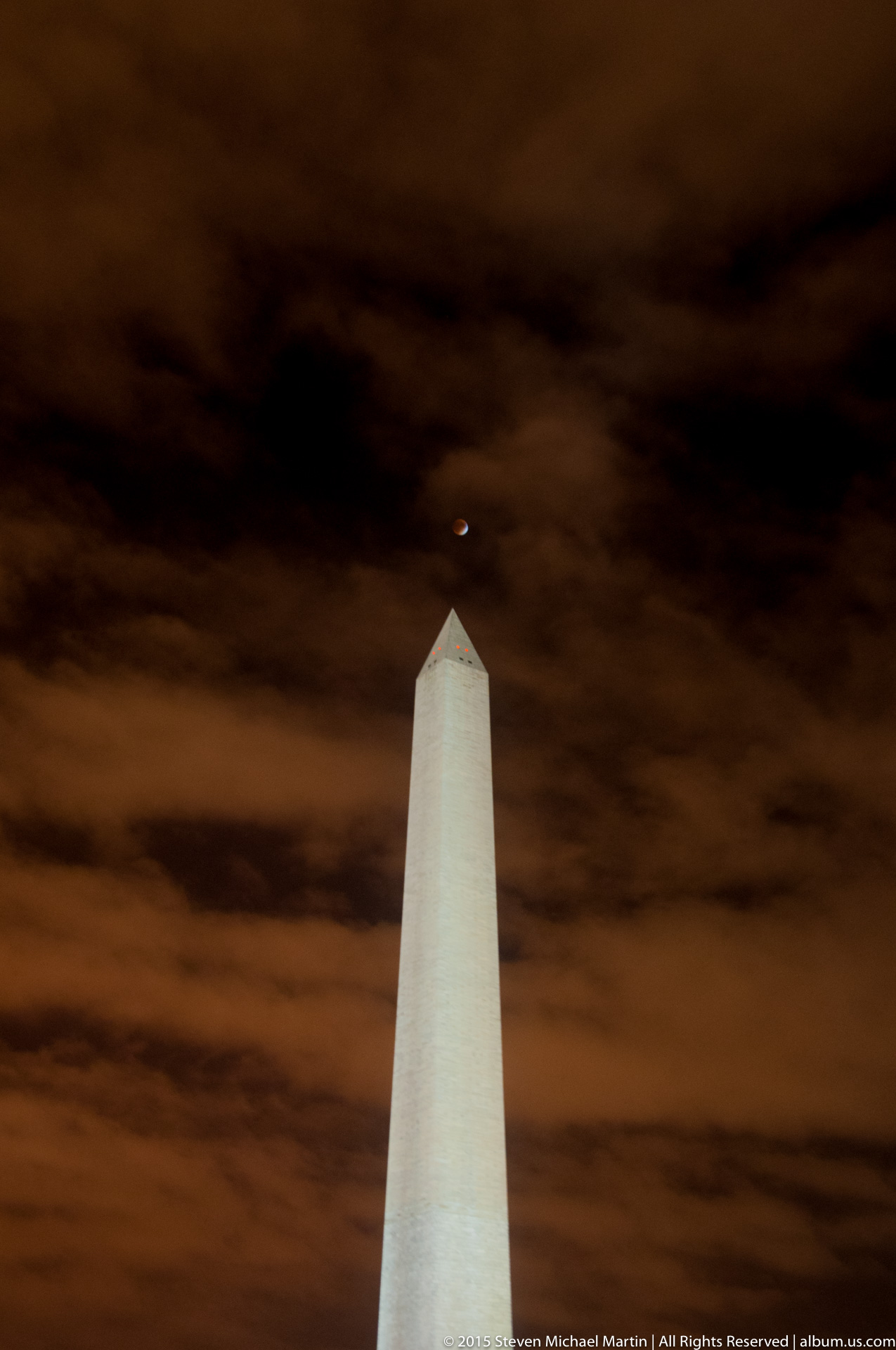
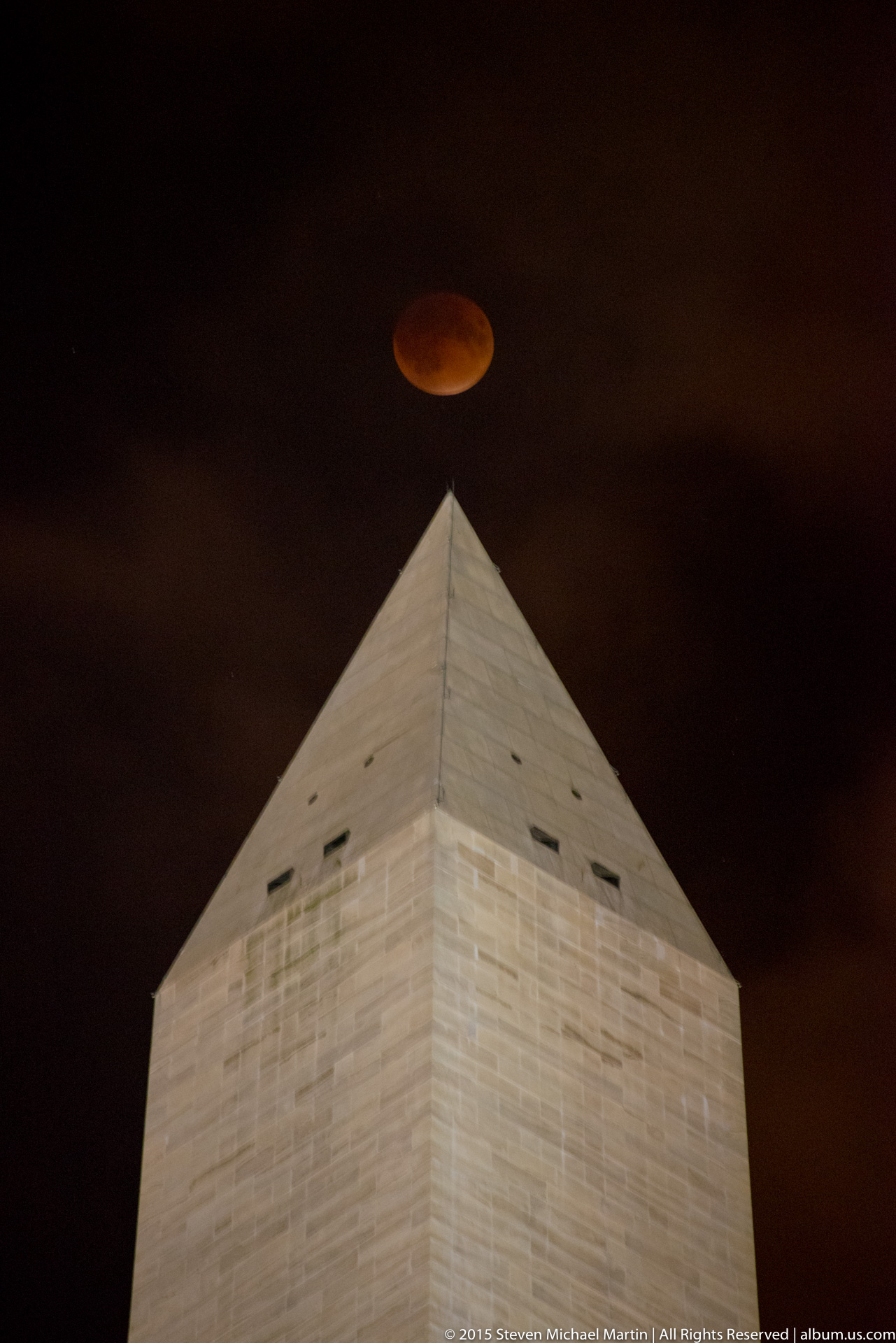
A total lunar eclipse, commonly referred to as a “blood moon,” occurs when the Earth passes between the Sun and the Moon, causing the Moon to appear red as sunlight filters through the Earth’s atmosphere before reaching the lunar surface. Photographs capturing the Moon positioned directly above the Washington Monument illustrate the intersection of astronomical alignment and urban design, demonstrating how the open sightlines of the National Mall provide opportunities to observe celestial phenomena within a monumental civic setting. The height restrictions that limit building elevations in Washington help preserve unobstructed views of the sky, making such visual alignments possible across the city’s historic landscape.
The appearance of a lunar eclipse over the Washington Monument contributes to understanding how natural phenomena can reinforce the symbolic presence of civic architecture. Observations of the night sky within the federal capital connect the temporal rhythms of astronomy with the enduring physical presence of national monuments. Such moments illustrate how designed landscapes can frame rare environmental events, linking cosmic cycles with the built environment that expresses national identity.