Washington, DC
Washington, DC developed as a planned capital city intended to reflect the political ideals of a newly independent nation through architecture and urban design. Established along the Potomac River between Maryland and Virginia, the city was conceived as a federal district distinct from individual states, symbolizing unity among the original thirteen states. Broad avenues, formal vistas, and neoclassical public buildings demonstrate the influence of Enlightenment ideals and classical architectural traditions associated with democratic governance.
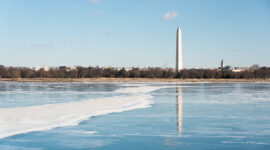
Periods of unexpected delay within the city, such as remaining in Washington during severe winter weather affecting travel in the northeastern United States, provide opportunities to experience the capital’s historic landscape in quieter conditions. Reduced crowds allow clearer observation of architectural relationships between federal buildings, monuments, and museums, revealing the intentional spatial organization of the city’s civic core. Walking through Washington’s monumental core during winter conditions emphasizes the contrast between seasonal atmosphere and the permanence of stone memorials and institutional architecture.
Washington, DC contributes to understanding the role of planned urban landscapes in expressing political philosophy through built form. The capital’s monuments and institutions demonstrate continuity between the founding principles of the United States and contemporary civic life. Experiencing the city under varied circumstances highlights the enduring presence of national symbols embedded within everyday urban environments.