Wind Cave National Park
Wind Cave National Park preserves one of the longest cave systems in the world, notable for rare boxwork formations created by mineral deposits within cracks in the limestone bedrock. The cave developed as groundwater dissolved soluble rock layers, gradually forming underground chambers and passageways. Unique mineral structures illustrate geological processes that occurred over millions of years.
Above ground, mixed-grass prairie ecosystems support wildlife including bison, elk, and prairie dogs. The combination of cave systems and prairie landscapes illustrates the relationship between surface ecology and underground geological formations shaped by water movement and mineral deposition.
Wind Cave demonstrates how geological and ecological systems interact across different environments. The park provides insight into how underground water processes influence landscape development both below and above the surface.
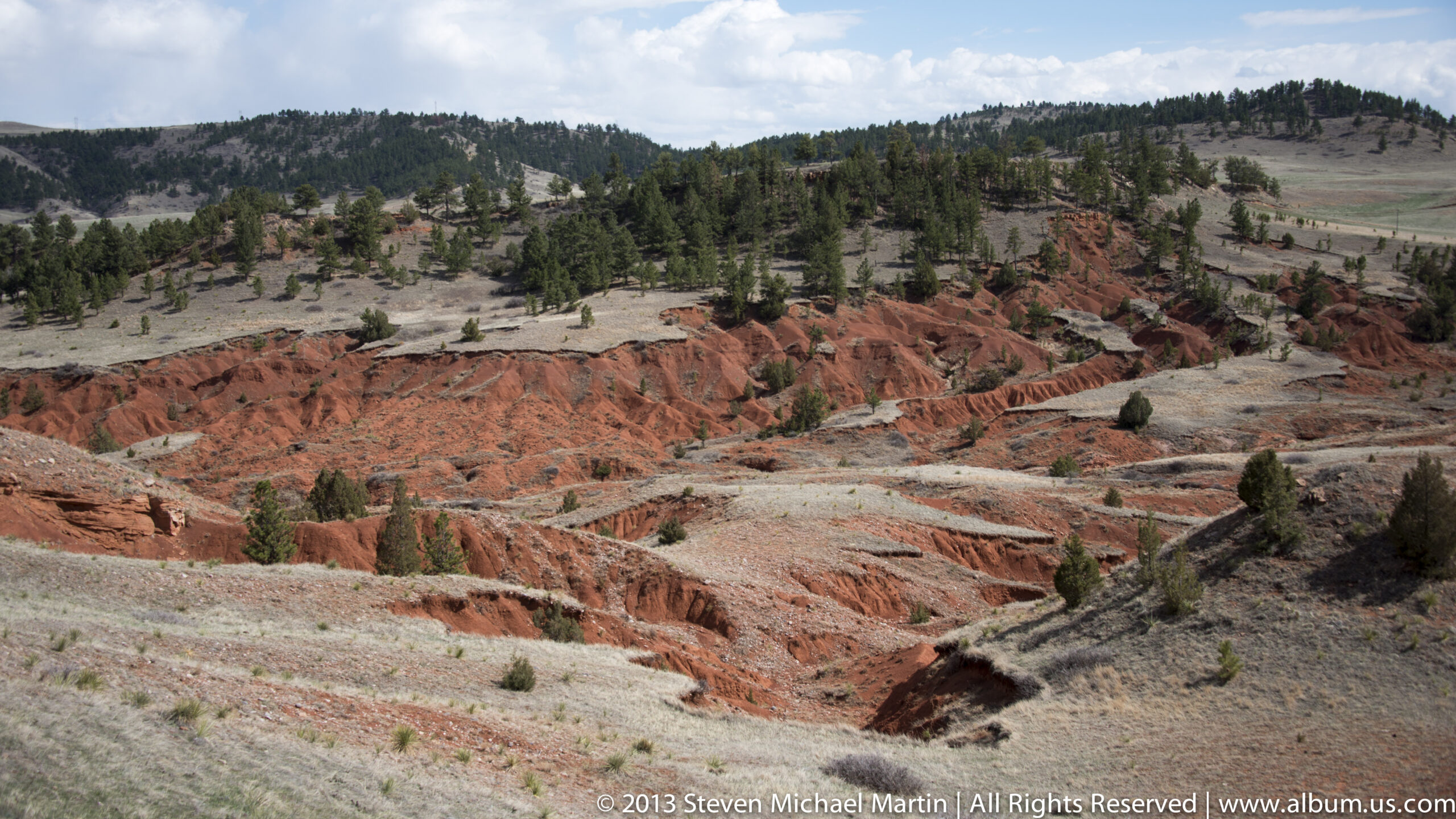
Red-orange ravines cut through pale prairie slopes beneath a ridge dotted with pines. The elevated view follows several branching gullies across the foreground and middle distance, where exposed bands of sediment contrast with the darker woodland above. The composition records a broad surface landscape associated with Wind Cave National Park, distinct from the cave interiors that follow.
Caption
Red-orange ravines cut through pale prairie slopes beneath a ridge dotted with pines. The elevated view follows several branching gullies across the foreground and middle distance, where exposed bands of sediment contrast with the darker woodland above. The composition records a broad surface landscape associated with Wind Cave National Park, distinct from the cave interiors that follow.
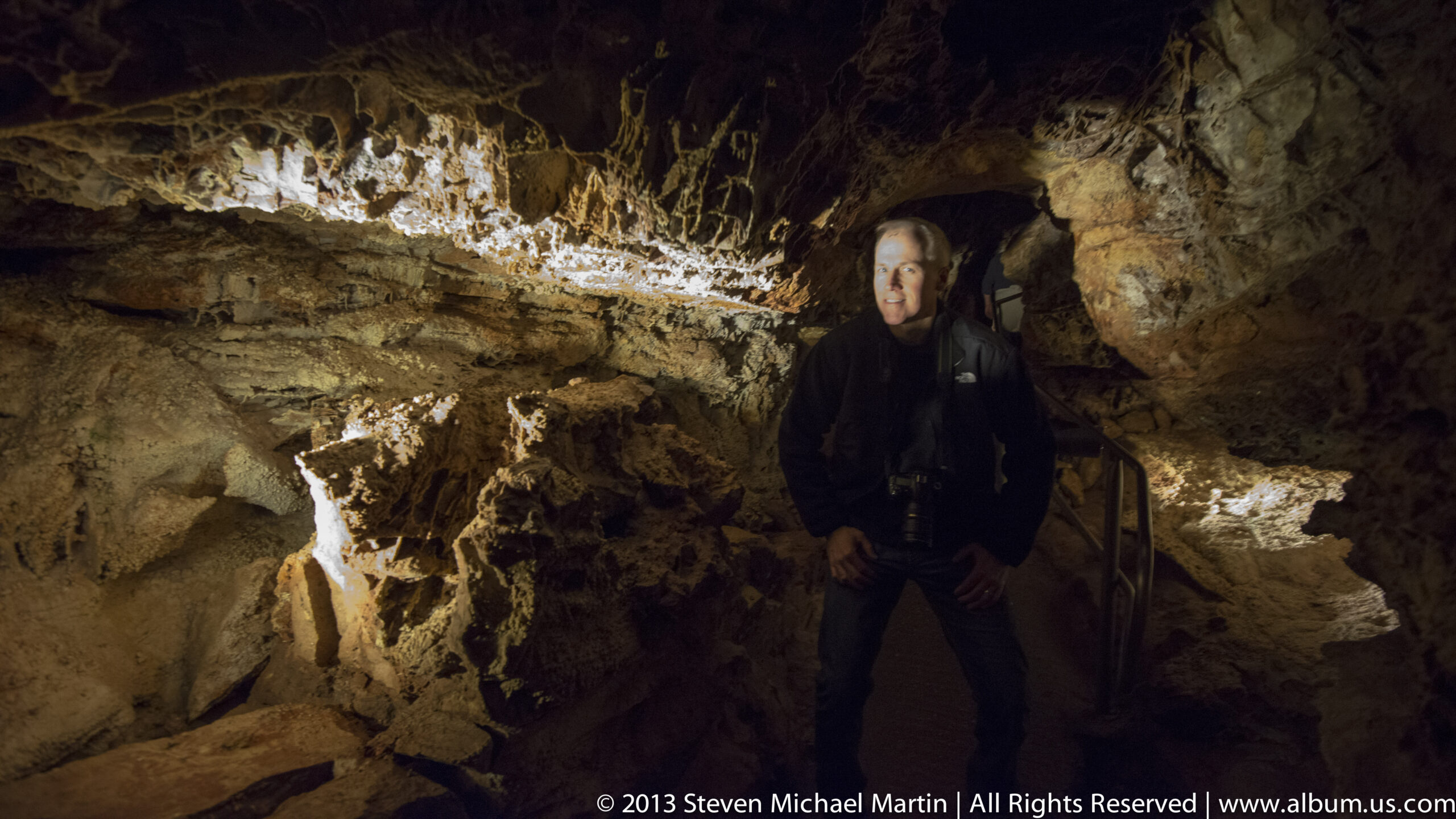
A visitor in dark clothing stands near the right side of a broad cave passage, framed by low, uneven rock ceilings and pale formations. Warm light illuminates the surrounding stone while deep shadows recede behind the figure. The person provides scale for the chamber and helps distinguish this contextual interior view from the close studies of cave texture nearby.
Caption
A visitor in dark clothing stands near the right side of a broad cave passage, framed by low, uneven rock ceilings and pale formations. Warm light illuminates the surrounding stone while deep shadows recede behind the figure. The person provides scale for the chamber and helps distinguish this contextual interior view from the close studies of cave texture nearby.
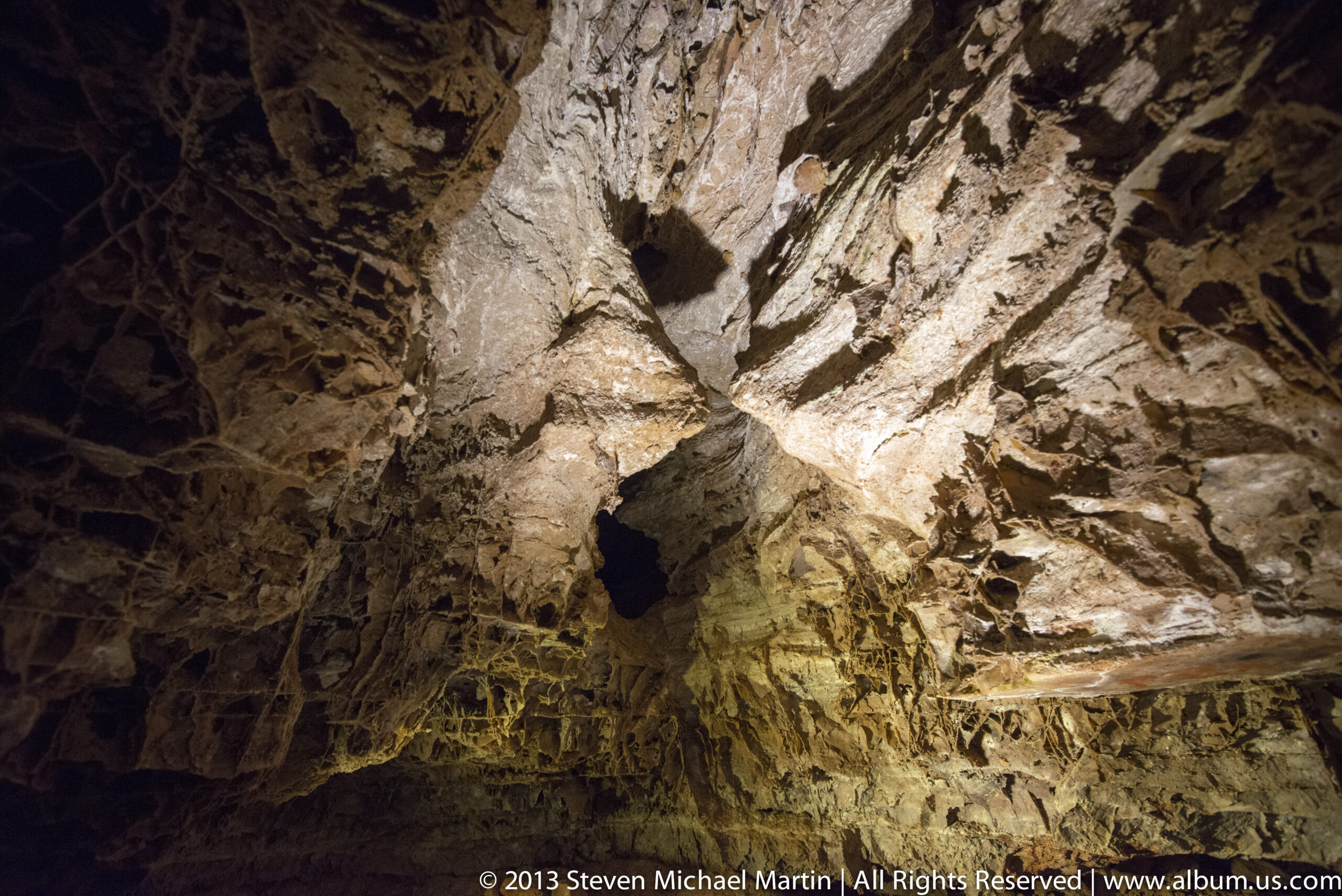
A pale, sharply ridged formation rises through the center of a close cave view, its angular surfaces catching warm light against dark recesses. Thin mineral-looking textures and broken edges give the rock a layered appearance. The framing excludes people and the larger passage, drawing attention to the varied surface relief of the cave wall and ceiling.
Caption
A pale, sharply ridged formation rises through the center of a close cave view, its angular surfaces catching warm light against dark recesses. Thin mineral-looking textures and broken edges give the rock a layered appearance. The framing excludes people and the larger passage, drawing attention to the varied surface relief of the cave wall and ceiling.
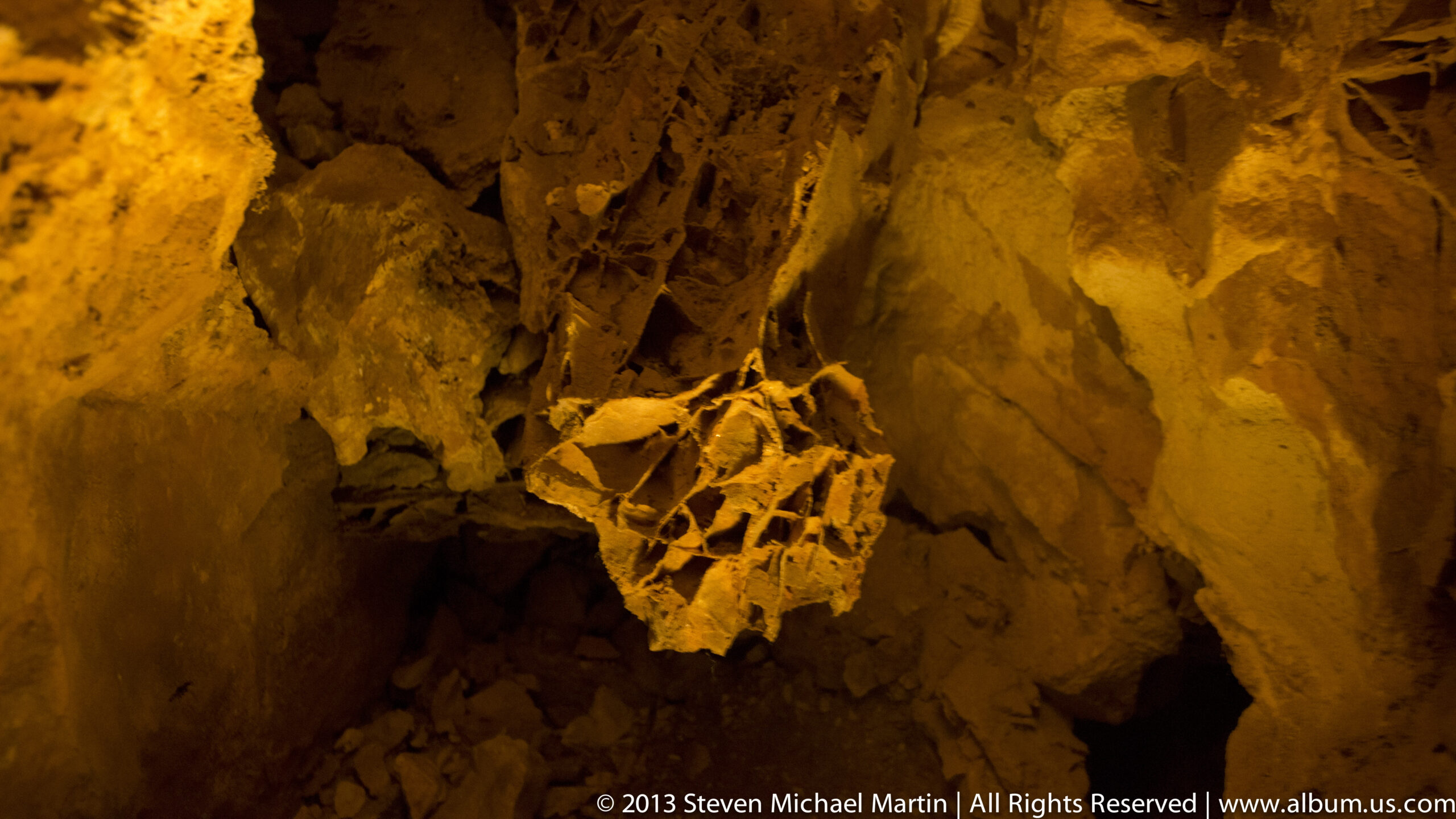
Golden light falls across a narrow, irregular cave passage, highlighting jagged ledges and a cluster of projecting rock forms. Deep shadow occupies the lower center and edges, making the illuminated surfaces appear to recede into a dark opening. The view emphasizes the passage’s uneven geometry and warm color rather than a clearly identifiable named formation.
Caption
Golden light falls across a narrow, irregular cave passage, highlighting jagged ledges and a cluster of projecting rock forms. Deep shadow occupies the lower center and edges, making the illuminated surfaces appear to recede into a dark opening. The view emphasizes the passage’s uneven geometry and warm color rather than a clearly identifiable named formation.
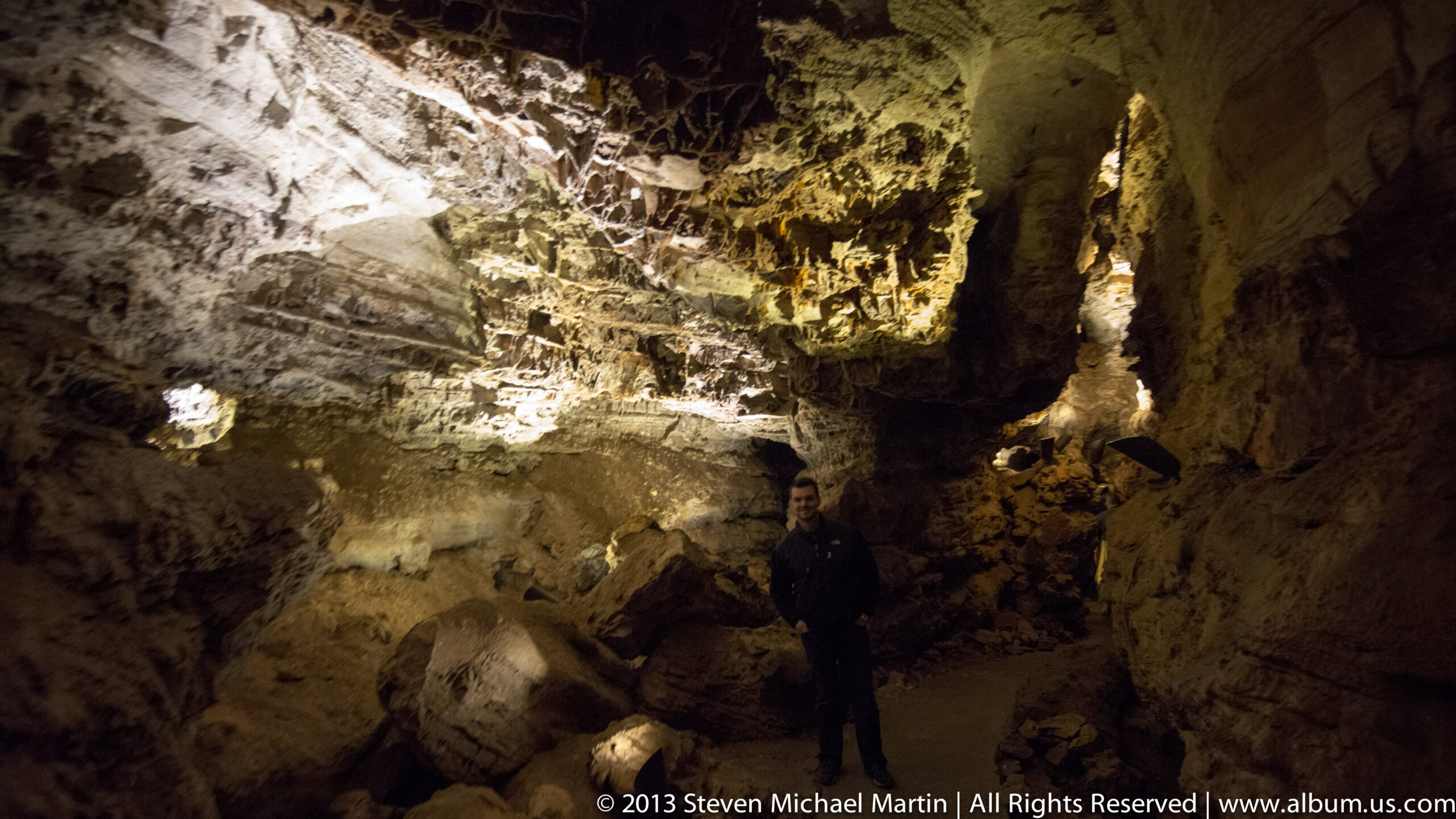
A visitor stands near the center of a spacious cave chamber beneath a high, irregular ceiling. Yellow-white light picks out ridges and ledges across the rock, while darker openings extend into the background. The wide framing places a human figure within the underground space, showing the chamber’s scale and the contrast between illuminated stone and shadow.
Caption
A visitor stands near the center of a spacious cave chamber beneath a high, irregular ceiling. Yellow-white light picks out ridges and ledges across the rock, while darker openings extend into the background. The wide framing places a human figure within the underground space, showing the chamber’s scale and the contrast between illuminated stone and shadow.
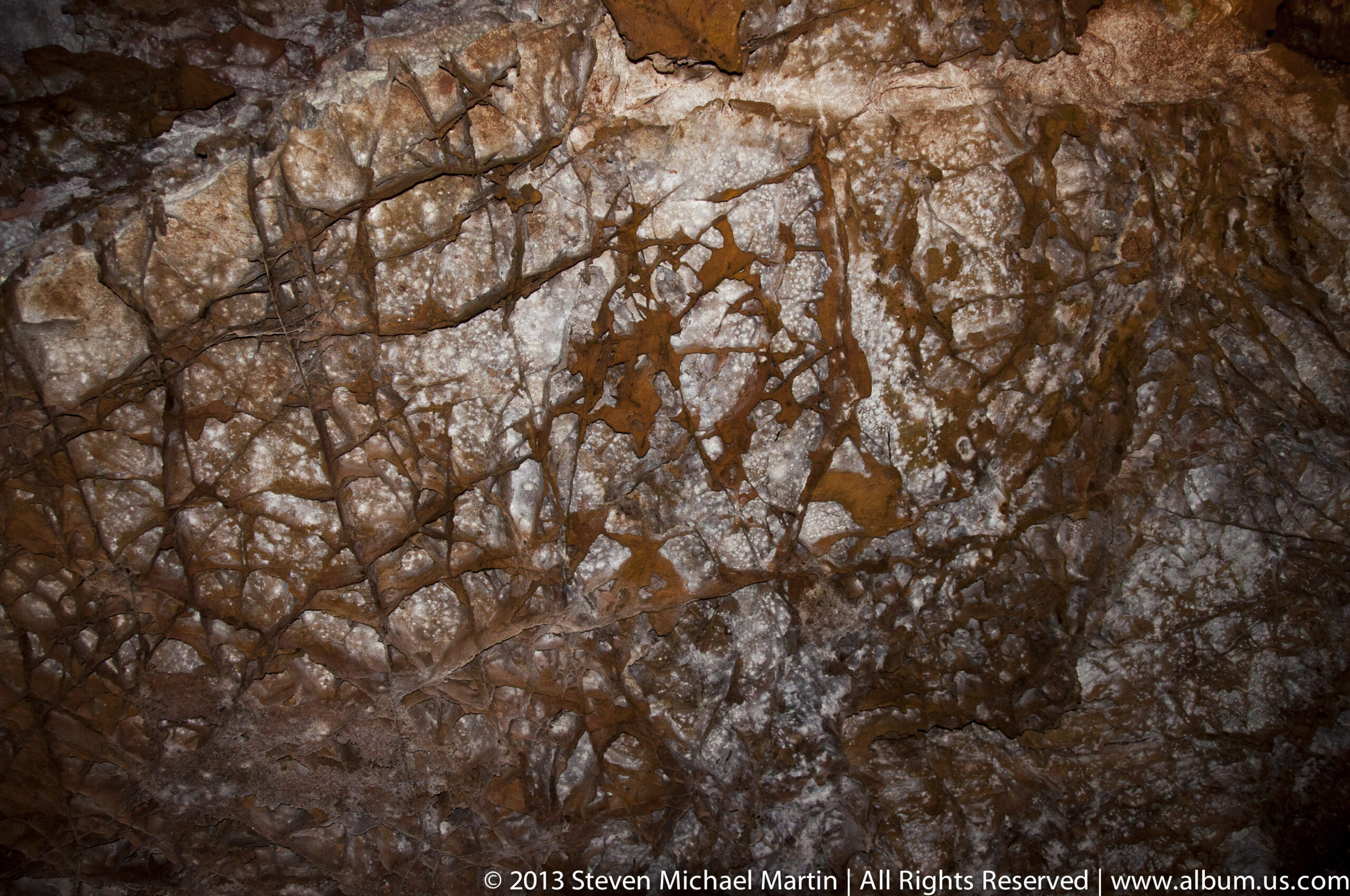
Pale and rust-colored rock surfaces fill the frame, divided by fine cracks and irregular seams. Bright light reveals rough granular patches across the center, while darker edges define shallow pockets and overlapping planes. Without a wider view, the image is best read as a close study of cave-wall texture rather than a particular chamber or mineral deposit.
Caption
Pale and rust-colored rock surfaces fill the frame, divided by fine cracks and irregular seams. Bright light reveals rough granular patches across the center, while darker edges define shallow pockets and overlapping planes. Without a wider view, the image is best read as a close study of cave-wall texture rather than a particular chamber or mineral deposit.

Amber and cream light reveals a rough cave ceiling broken into ledges, cracks, and irregular projections. Dark recesses separate the illuminated surfaces and add depth to the close view. The photograph focuses on the cave’s natural texture and changing planes, with no person or recognizable passage visible to establish the chamber’s size.
Caption
Amber and cream light reveals a rough cave ceiling broken into ledges, cracks, and irregular projections. Dark recesses separate the illuminated surfaces and add depth to the close view. The photograph focuses on the cave’s natural texture and changing planes, with no person or recognizable passage visible to establish the chamber’s size.
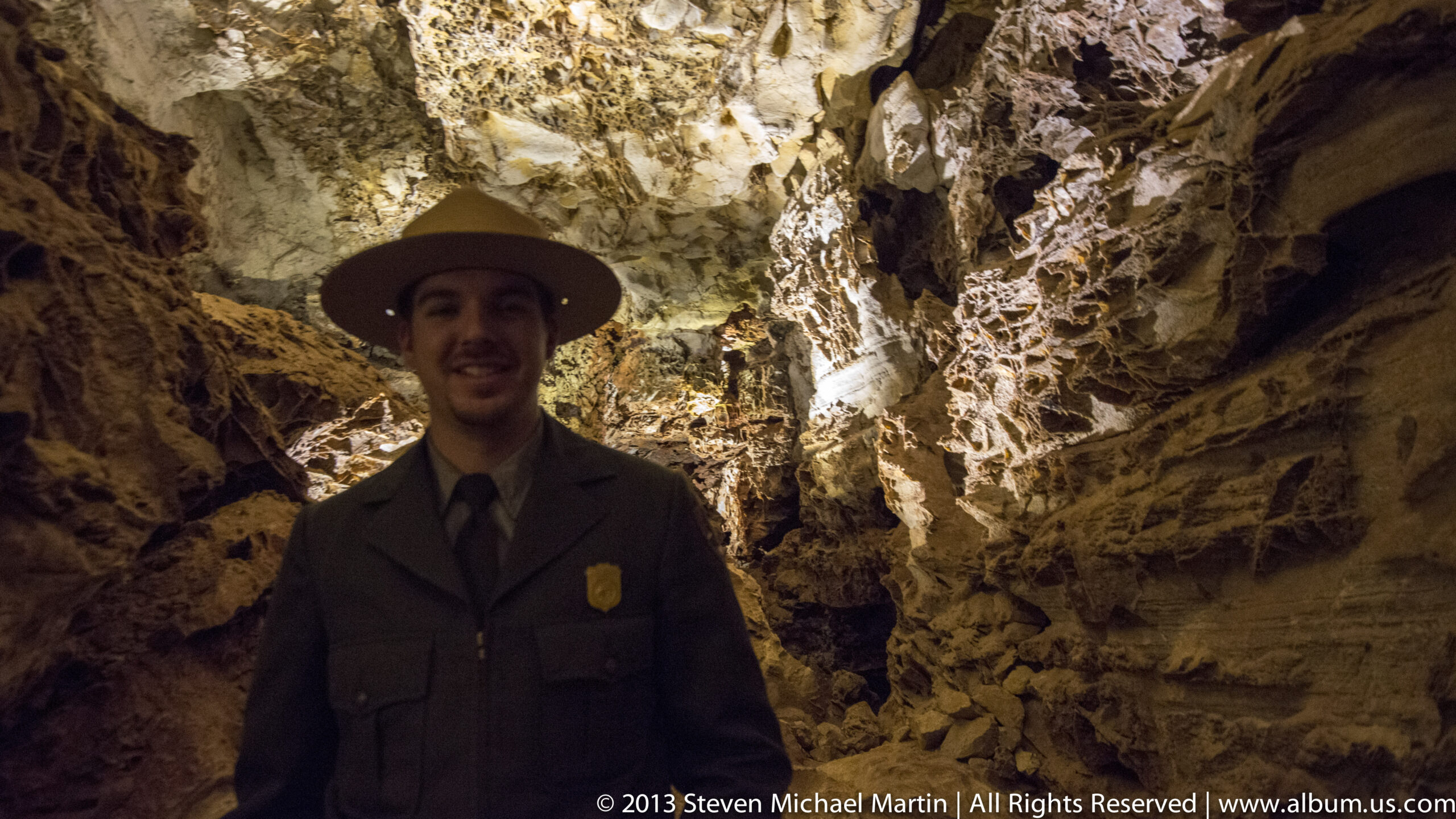
A visitor wearing a broad-brimmed hat and dark uniform stands in a warmly lit cave chamber. A small gold-colored badge is visible on the jacket, while rough, pale rock walls surround the figure. The portrait connects a human presence to the cave’s scale and interior setting; the person’s identity and official role cannot be confirmed from the photograph alone.
Caption
A visitor wearing a broad-brimmed hat and dark uniform stands in a warmly lit cave chamber. A small gold-colored badge is visible on the jacket, while rough, pale rock walls surround the figure. The portrait connects a human presence to the cave’s scale and interior setting; the person’s identity and official role cannot be confirmed from the photograph alone.
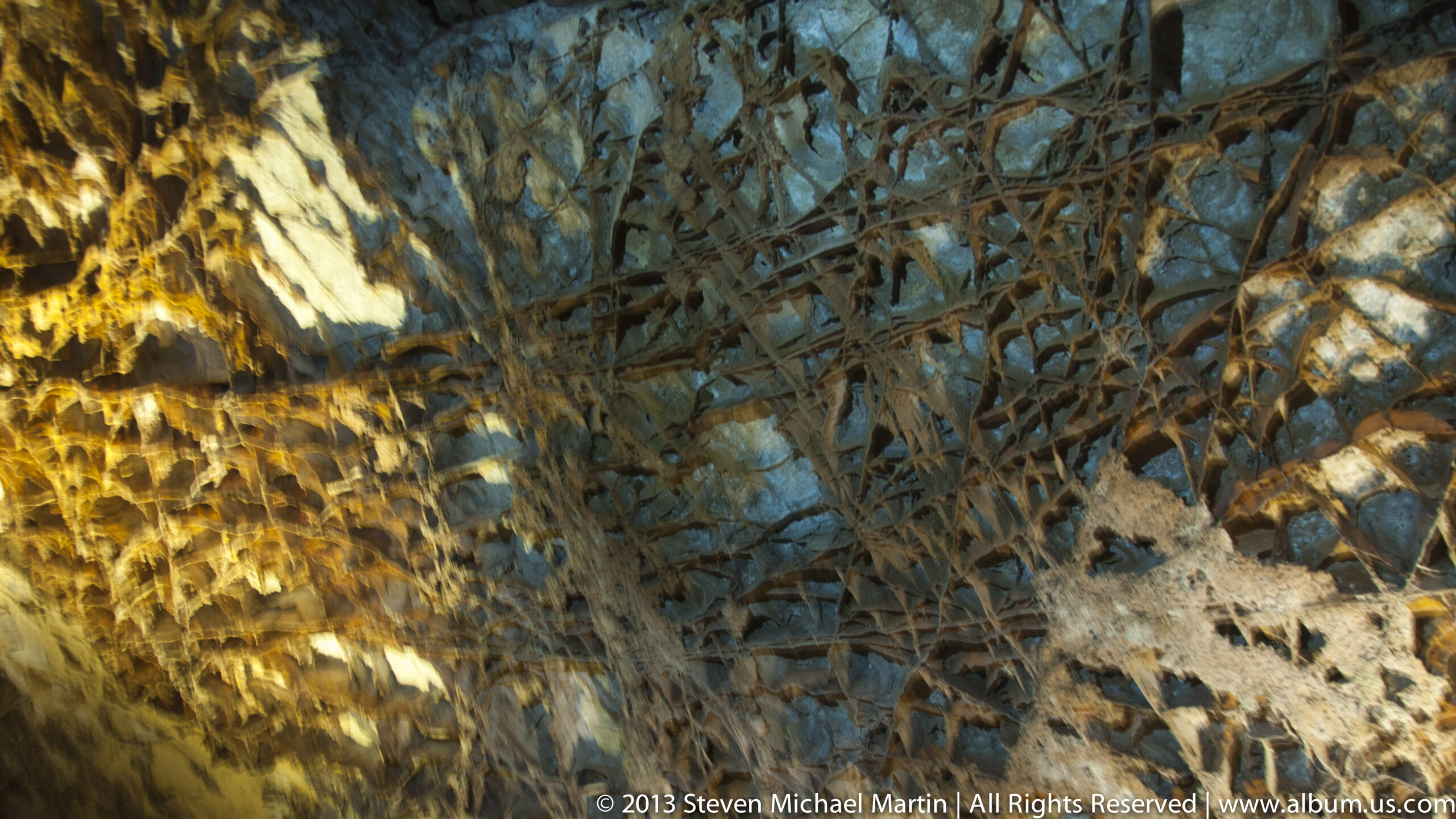
Blue-green light washes over a broad field of closely packed cave formations, while warm golden illumination enters from the left. The opposing colors reveal layered ridges and small projections across the ceiling and upper wall. This color contrast gives the interior a different visual character from the amber-only views, while the composition remains focused on the rock surface.
Caption
Blue-green light washes over a broad field of closely packed cave formations, while warm golden illumination enters from the left. The opposing colors reveal layered ridges and small projections across the ceiling and upper wall. This color contrast gives the interior a different visual character from the amber-only views, while the composition remains focused on the rock surface.

A dense network of thin mineral fins forms a honeycomb pattern across the cave ceiling. Warm light accentuates the raised edges and leaves narrow recesses in shadow. This distinctive lattice is characteristic of boxwork, a cave formation strongly associated with Wind Cave; the close upward view isolates its branching geometry from the broader chamber.
Caption
A dense network of thin mineral fins forms a honeycomb pattern across the cave ceiling. Warm light accentuates the raised edges and leaves narrow recesses in shadow. This distinctive lattice is characteristic of boxwork, a cave formation strongly associated with Wind Cave; the close upward view isolates its branching geometry from the broader chamber.
National Park Field Guide
Wind Cave National Park protects a complex underground cave system formed through dissolution of limestone rock and deposition of mineral structures known as boxwork. The cave is one of the longest in the world and contains rare formations created when minerals crystallized along cracks in bedrock. Surface prairie ecosystems illustrate how geological processes influence environmental conditions above ground.
🧭 Key Features
- Rare boxwork cave formations created by mineral deposition
- Extensive underground passageways formed through limestone dissolution
- Mixed-grass prairie ecosystem supporting wildlife populations
- Relationship between underground geology and surface ecology
- Evidence of long-term hydrological processes shaping terrain
🌄 Landscape Highlights
Underground chambers display distinctive honeycomb-like boxwork formations that developed as mineral veins eroded more slowly than surrounding rock. Above ground, rolling prairie landscapes provide habitat for grazing animals adapted to semi-arid climates. The contrast between underground and surface environments illustrates how geological processes operate across different spatial scales.
🌎 Natural Systems
Groundwater movement through limestone bedrock created cavities that expanded over long periods of time. Mineral-rich solutions deposited calcite along fractures, producing unusual crystalline structures. Surface grasslands developed under climatic conditions influenced by elevation and precipitation patterns characteristic of the Great Plains.
📷 Photography Notes
- Prairie landscapes show seasonal variation in color
- Wide compositions illustrate openness of terrain
- Wildlife often visible in grassland environments
- Morning light enhances texture in rolling hills
- Look for contrast between sky and prairie horizon
- Interpretive displays provide context for cave formations
🌱 Conservation Context
Wind Cave National Park protects rare geological formations and prairie ecosystems that illustrate long-term environmental processes. Preservation ensures continued study of cave development and ecological relationships between surface and underground environments shaped by water and climate.

An open park brochure combines a cave-themed header, visitor information, historical text, and a series of wildlife photographs. Bison and other animals appear in horizontal image strips, with a portrait of a historical figure among the printed panels. The page presents the park through both its underground features and prairie wildlife; the fine print is too small to transcribe reliably here.
Caption
An open park brochure combines a cave-themed header, visitor information, historical text, and a series of wildlife photographs. Bison and other animals appear in horizontal image strips, with a portrait of a historical figure among the printed panels. The page presents the park through both its underground features and prairie wildlife; the fine print is too small to transcribe reliably here.

A printed guide headed “Exploring Wind Cave and the Black Hills” pairs visitor information with two broad maps marked by routes and colored park boundaries. The maps occupy most of the page and show roads, trails, and surrounding areas, while compact text sections provide trip guidance. The photograph documents the guide’s layout; small labels are not reliably legible at this scale.
Caption
A printed guide headed “Exploring Wind Cave and the Black Hills” pairs visitor information with two broad maps marked by routes and colored park boundaries. The maps occupy most of the page and show roads, trails, and surrounding areas, while compact text sections provide trip guidance. The photograph documents the guide’s layout; small labels are not reliably legible at this scale.