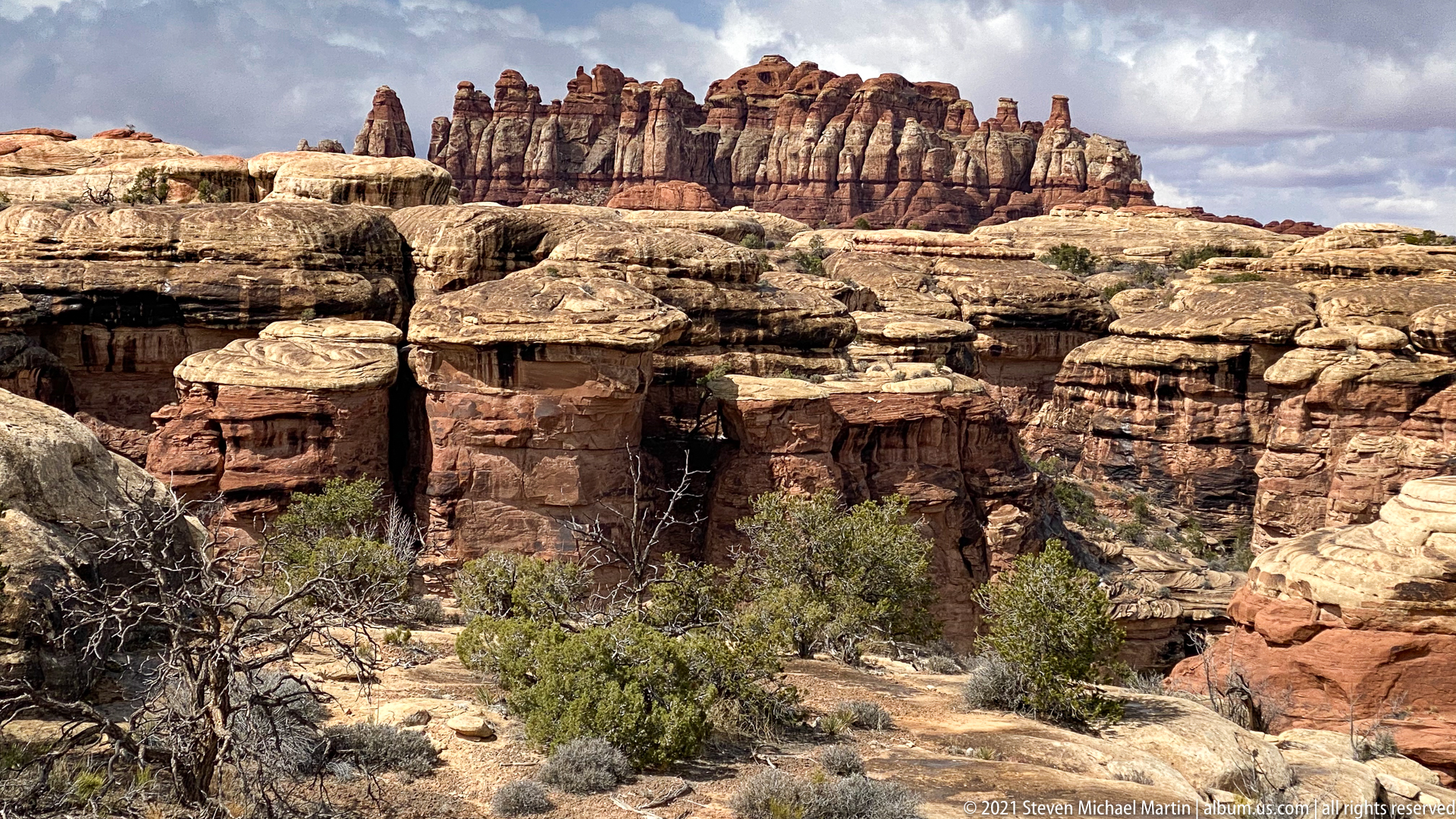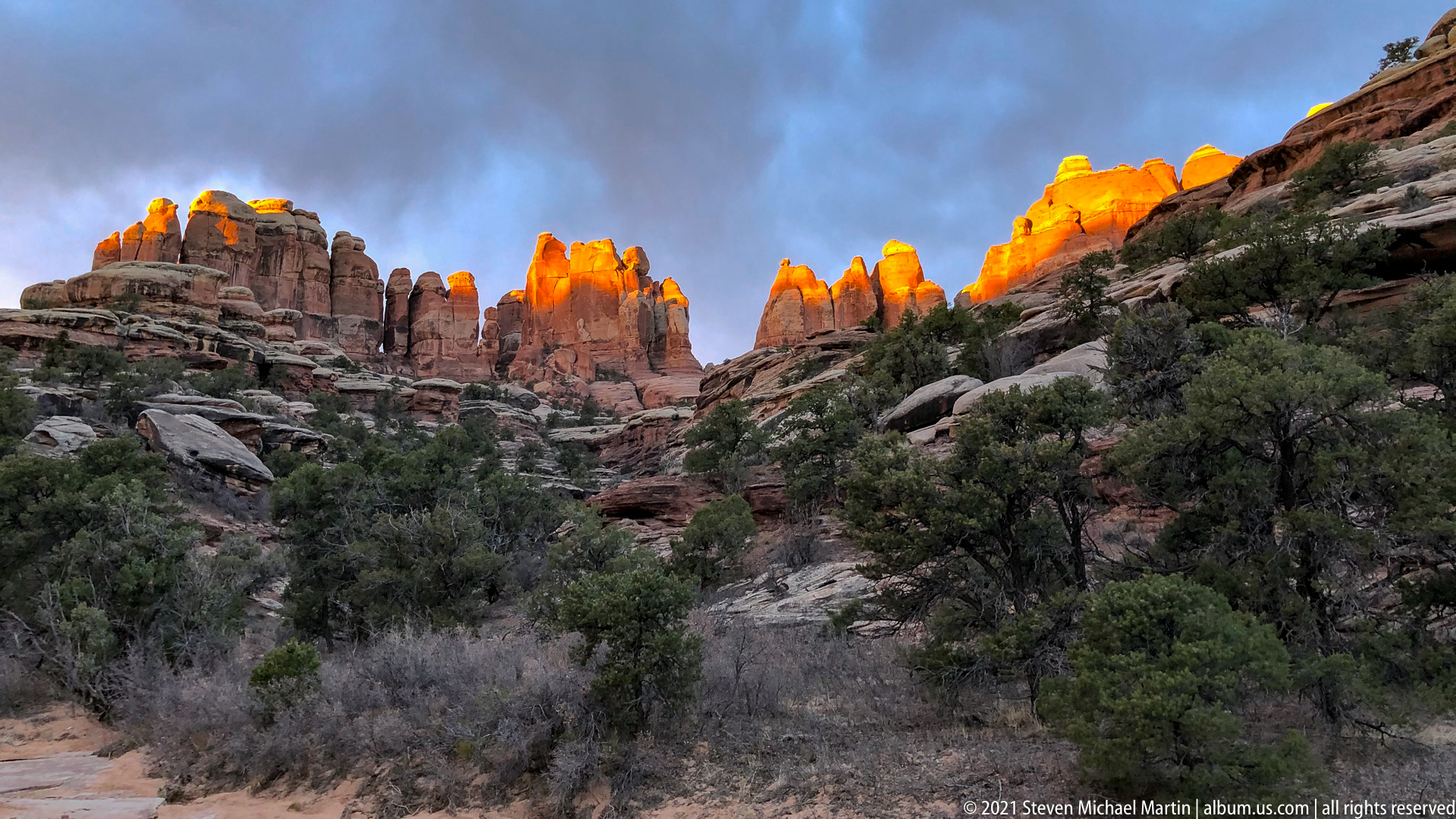
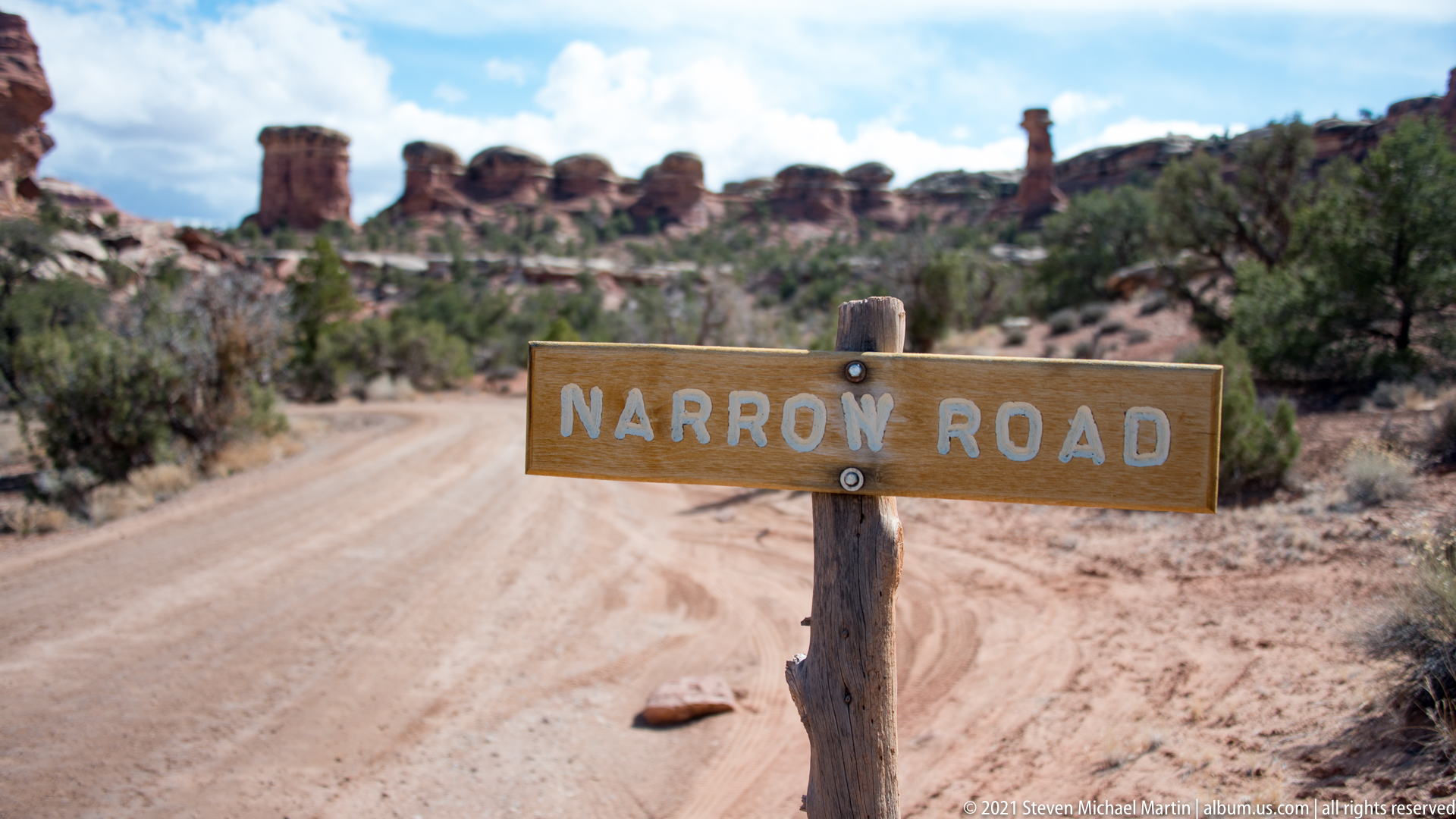
The Needles – Canyonlands National Park The Needles District of Canyonlands National Park is known for its dense concentration of colorful sandstone spires formed through erosion of Cedar Mesa Sandstone. Vertical fractures in the rock created pathways for weathering that gradually separated stone into tall, narrow formations resembling clustered spires. The resulting landscape reflects the […]
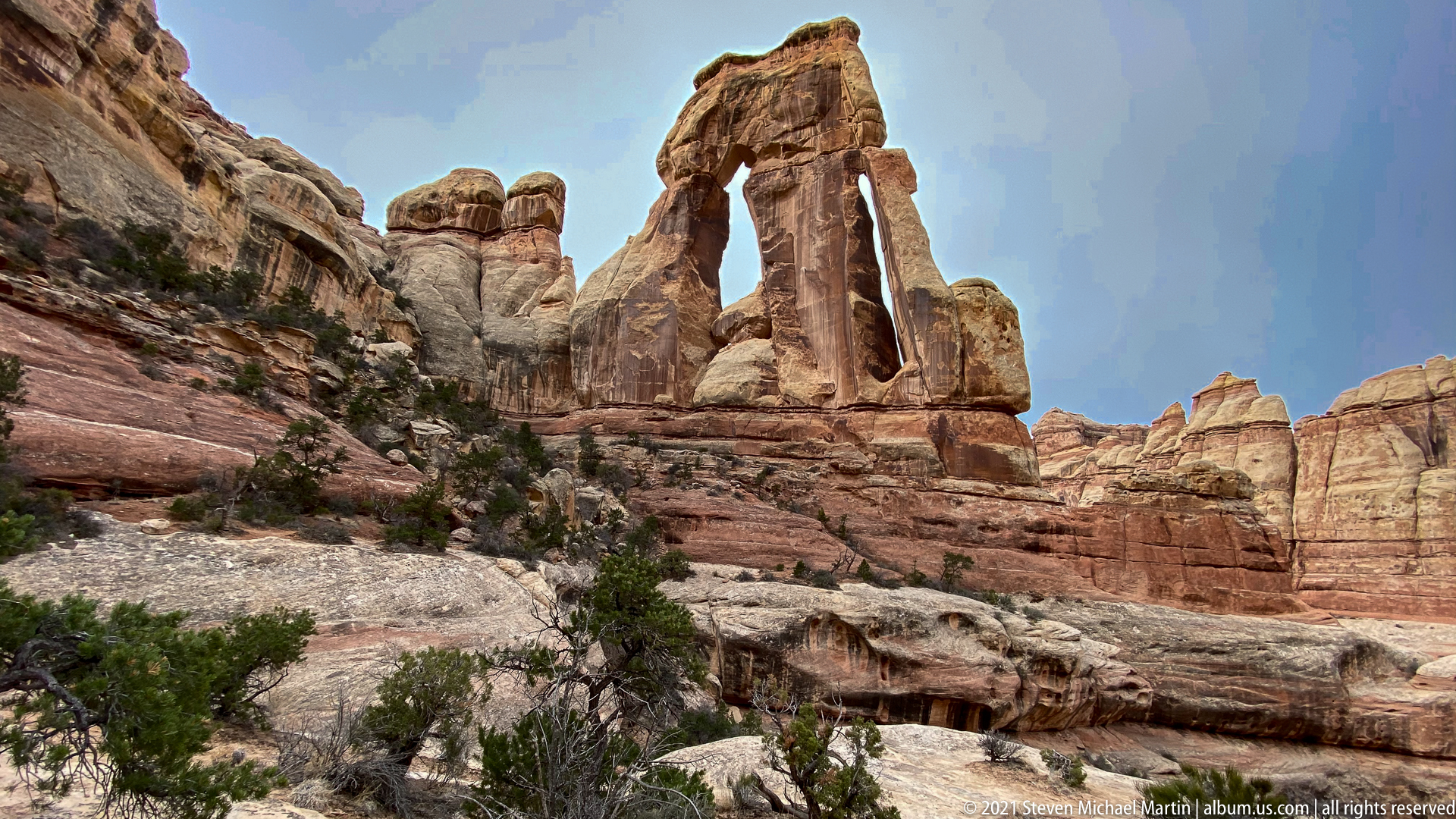
Druid Arch – Canyonlands National Park Druid Arch is a large natural sandstone arch located within the Needles District and represents the effects of erosion acting upon fractured rock layers. The formation was created as weathering gradually removed softer material, leaving a freestanding arch structure supported by more resistant sandstone. The arch’s shape reflects structural […]
Elephant Hill – Canyonlands National Park Elephant Hill marks an important access point within the Needles District of Canyonlands National Park and illustrates the rugged terrain characteristic of the Colorado Plateau. The area is defined by sandstone formations shaped through erosion acting upon uplifted sedimentary rock layers. The landscape demonstrates the influence of geological forces […]
Elephant Canyon – Canyonlands National Park Elephant Canyon preserves a remote desert landscape within Canyonlands National Park characterized by eroded sandstone formations and narrow canyon corridors shaped by long-term geological processes. The canyon lies within the Needles District, an area known for colorful rock formations and complex erosional features. The surrounding terrain reflects the influence […]
Fruita – Capitol Reef National Park Fruita preserves a historic agricultural settlement located along the Fremont River within Capitol Reef National Park. Established by nineteenth-century settlers, the community developed orchards supported by irrigation systems that allowed fruit cultivation within an otherwise arid landscape. The area reflects the adaptation of agricultural practices to desert environmental conditions […]
The Narrows – Capitol Reef National Park The Narrows section of Capitol Reef National Park preserves a narrow canyon environment carved by water erosion through uplifted sedimentary rock layers. The confined passage illustrates how persistent water flow gradually cuts through rock strata, creating steep canyon walls and sinuous corridors. The formation demonstrates the continuing influence […]
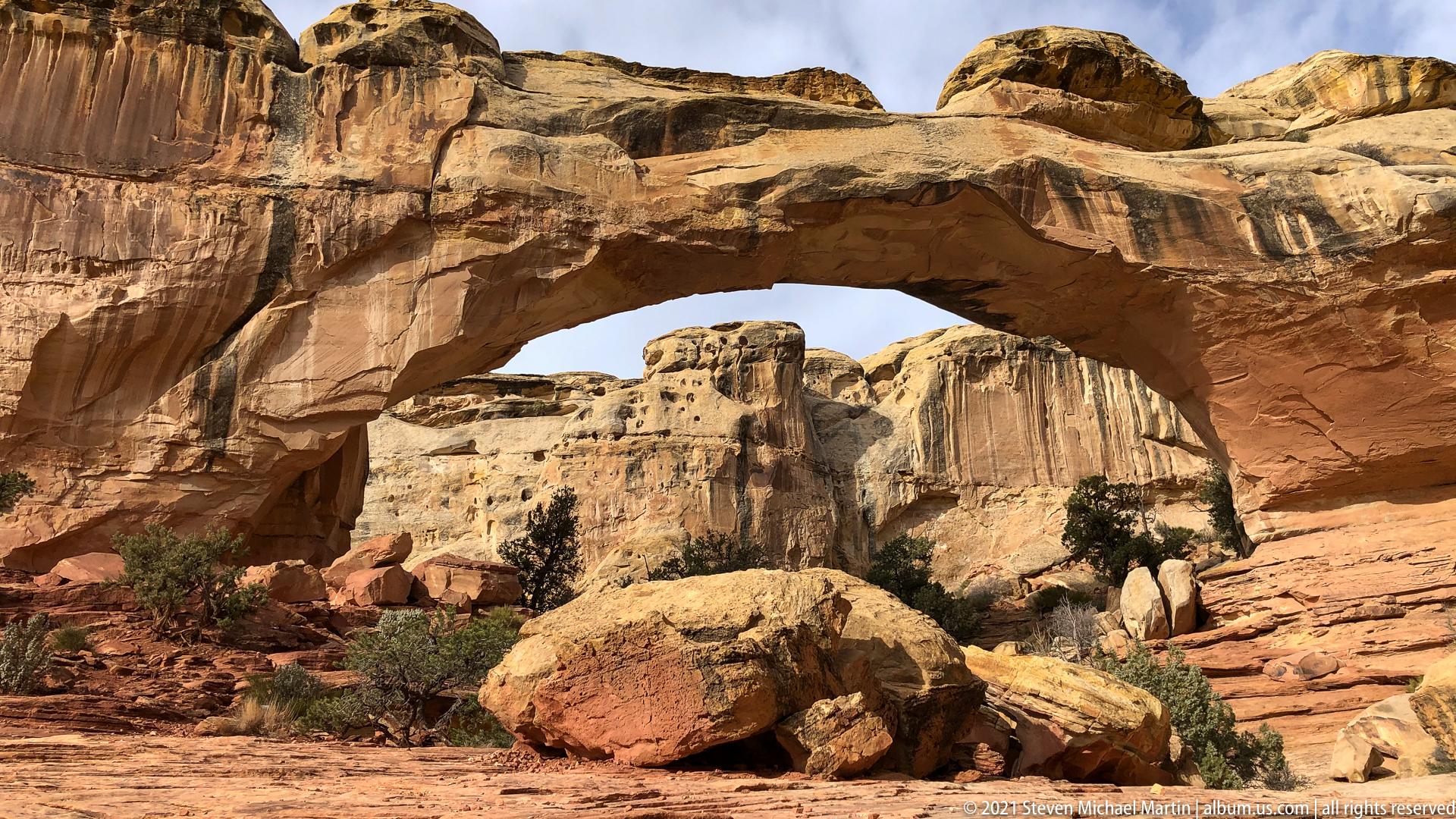
Hickman Bridge – Capitol Reef National Park Hickman Bridge is a natural sandstone arch formed through erosion acting upon sedimentary rock layers uplifted by tectonic forces. The formation spans a canyon corridor shaped by the gradual removal of softer material beneath more resistant rock layers. The resulting arch demonstrates the interaction between structural geology and […]
Muley Twist Canyon – Capitol Reef National Park Muley Twist Canyon preserves a remote desert landscape characterized by deeply eroded sandstone formations and winding canyon corridors shaped by long-term geological processes. The canyon’s distinctive name reflects the twisting route of the drainage system that gradually carved through layered sedimentary rock. The surrounding terrain illustrates the […]
Goosenecks Overlook – Capitol Reef National Park Goosenecks Overlook provides views of deeply incised canyon bends carved by the Sulphur Creek drainage system within Capitol Reef National Park. The winding curves of the canyon illustrate the long-term effects of water erosion acting upon uplifted rock layers of the Colorado Plateau. The resulting formations demonstrate the […]
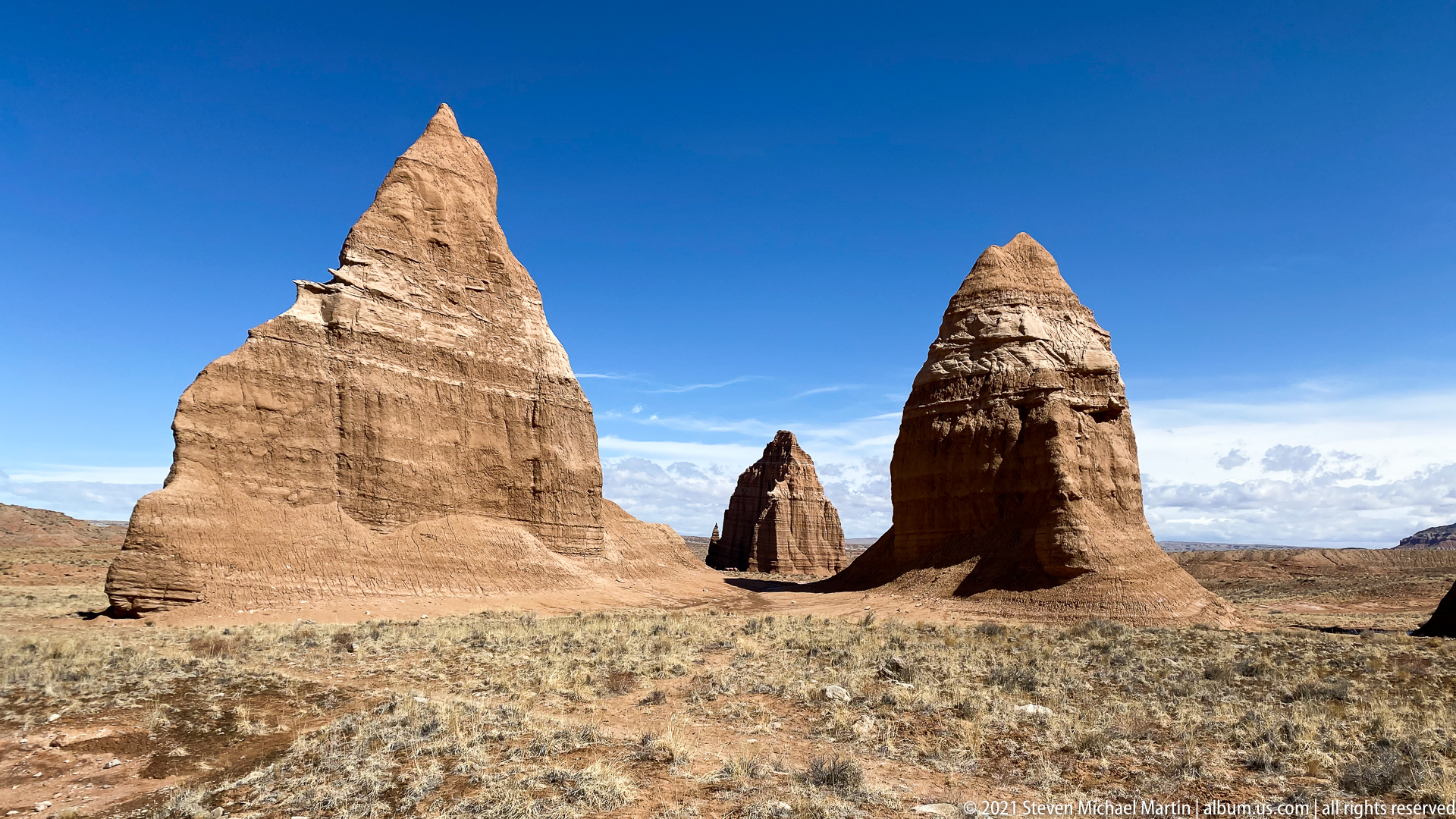
Cathedral Valley – Capitol Reef National Park Cathedral Valley preserves a remote region of Capitol Reef National Park known for towering monoliths, expansive desert valleys, and distinctive sandstone formations shaped by erosion. The area contains large freestanding rock structures formed through long-term weathering of sedimentary layers deposited during prehistoric geological periods. The landscape illustrates the […]