Black Hills
The Black Hills region consists of forested mountains rising above the surrounding Great Plains, formed through geological uplift associated with the Laramide orogeny approximately seventy million years ago. Erosion exposed ancient granite and metamorphic rock formations that contrast with the sedimentary plains surrounding the region. The distinctive topography creates varied ecosystems supporting diverse plant and animal species.
For centuries, the Black Hills have held spiritual and cultural importance for Indigenous communities, particularly the Lakota Sioux. The region’s forests, granite peaks, and river valleys provide a landscape that reflects both geological history and cultural significance.
Today, the Black Hills illustrate how tectonic uplift and erosion can create isolated mountain environments within otherwise flat terrain. The region forms a transition zone between prairie ecosystems and mountainous landscapes leading toward the Rocky Mountains.
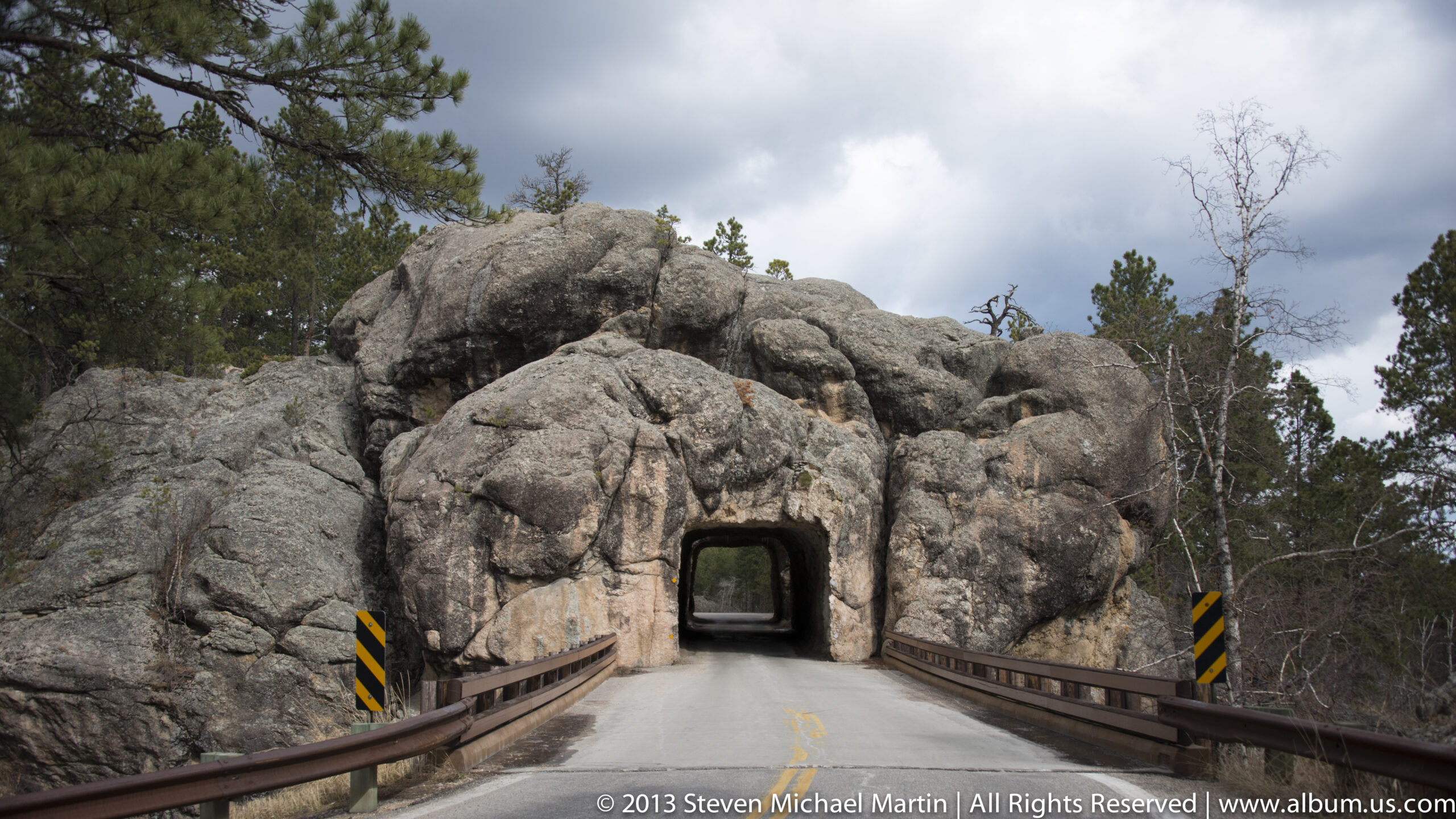
A two-lane road enters a short rectangular tunnel cut through a massive granite outcrop. Metal guardrails and black-and-yellow hazard markers line the approach, with pine trees and exposed rock rising above the opening. The frontal composition centers the tunnel mouth and the roadway leading directly into it.
Caption
A two-lane road enters a short rectangular tunnel cut through a massive granite outcrop. Metal guardrails and black-and-yellow hazard markers line the approach, with pine trees and exposed rock rising above the opening. The frontal composition centers the tunnel mouth and the roadway leading directly into it.
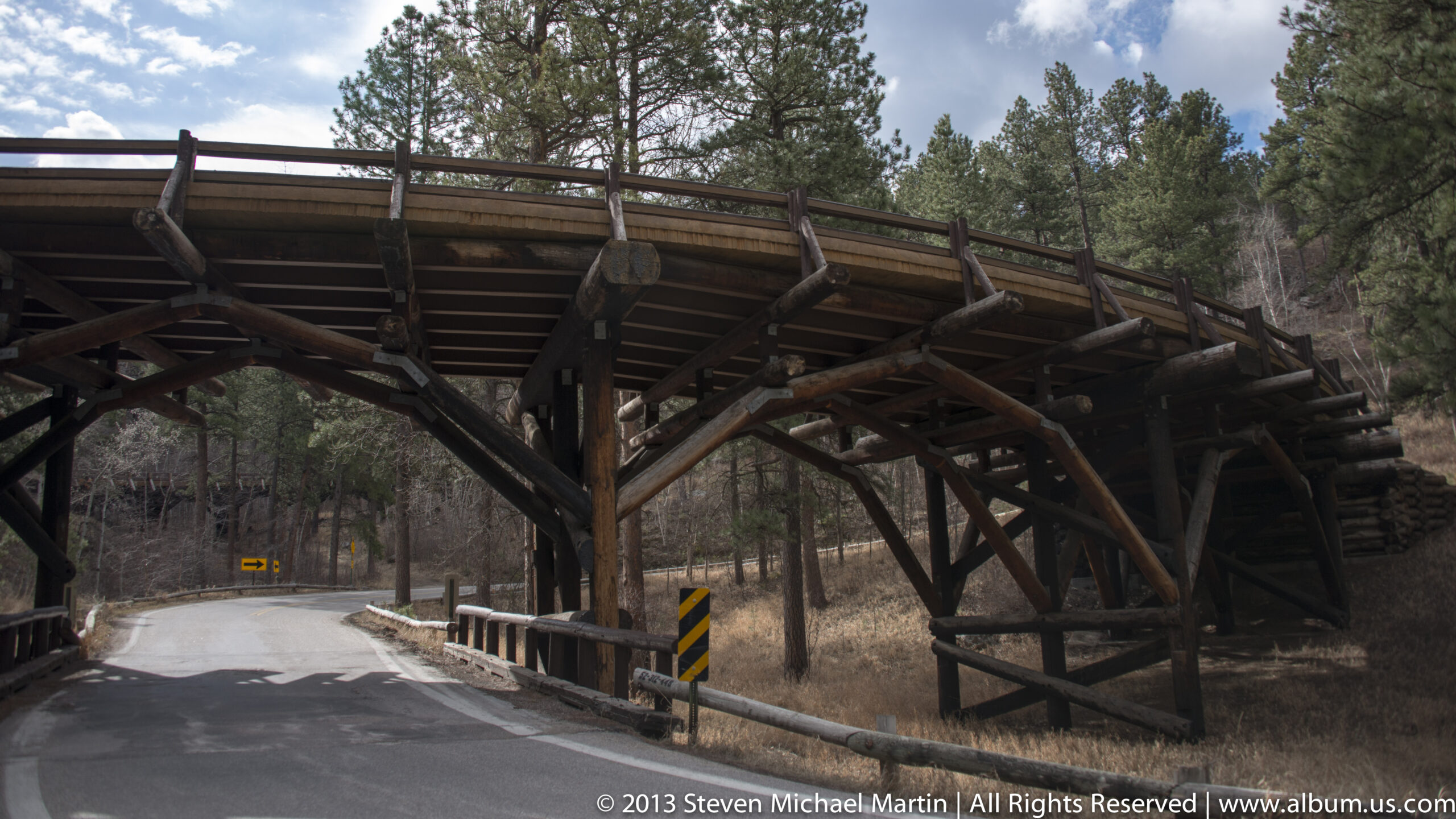
A heavy timber bridge or trestle spans over a road as it curves through a wooded ravine. Exposed beams and diagonal braces form a dense support structure beneath the deck, while black-and-yellow hazard markers stand beside the roadway. The low angle foregrounds the construction and the road passing beneath it.
Caption
A heavy timber bridge or trestle spans over a road as it curves through a wooded ravine. Exposed beams and diagonal braces form a dense support structure beneath the deck, while black-and-yellow hazard markers stand beside the roadway. The low angle foregrounds the construction and the road passing beneath it.
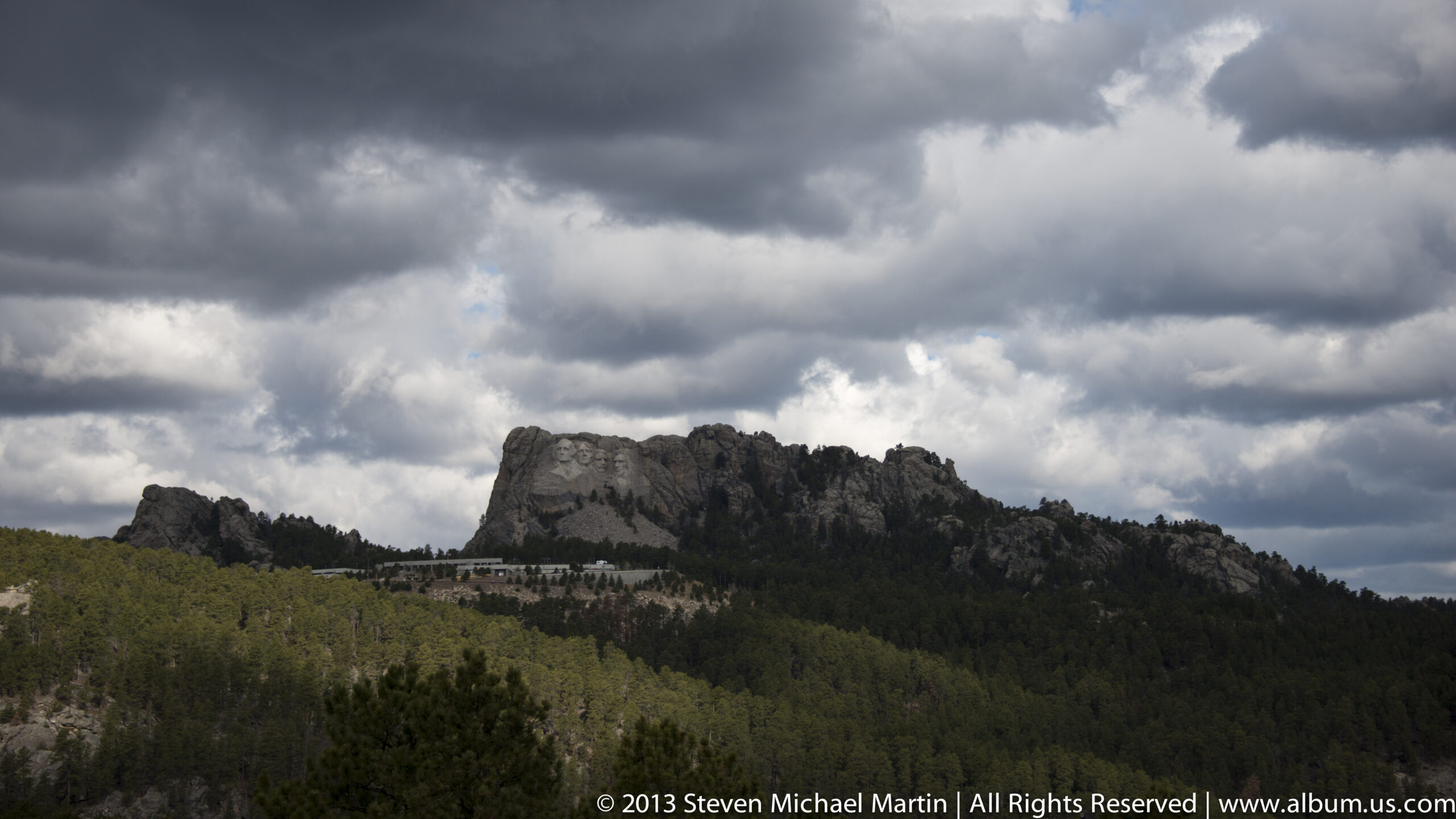
The carved faces of Mount Rushmore occupy a small section of a long granite ridge, surrounded by evergreen forest. A roadway traverses the lower slope, while dramatic gray clouds fill much of the sky. The wider framing shows the monument’s scale within the larger mountain landscape rather than isolating the sculpture.
Caption
The carved faces of Mount Rushmore occupy a small section of a long granite ridge, surrounded by evergreen forest. A roadway traverses the lower slope, while dramatic gray clouds fill much of the sky. The wider framing shows the monument’s scale within the larger mountain landscape rather than isolating the sculpture.
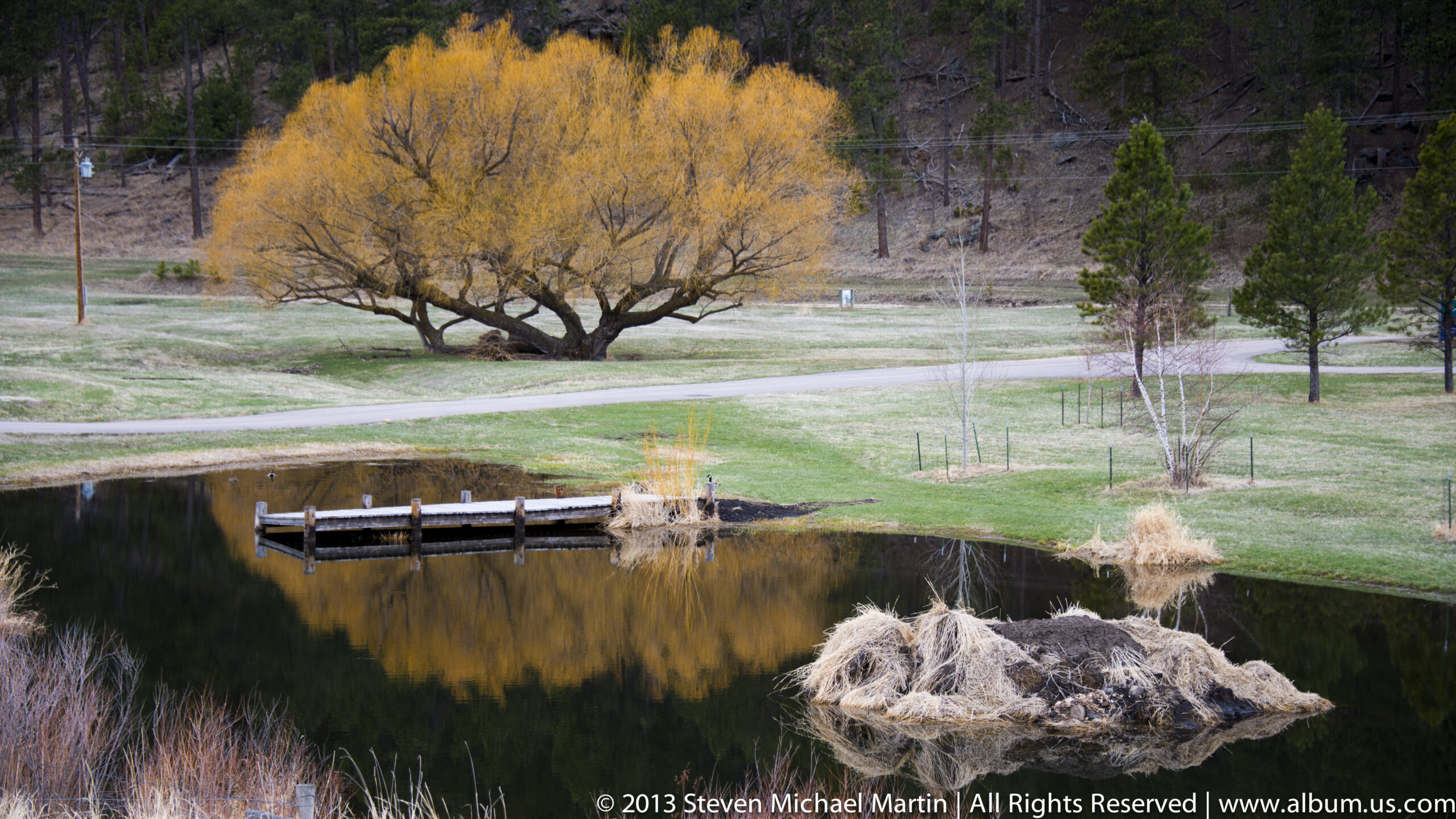
A low willow with vivid yellow spring foliage leans over a still pond, its branches mirrored in the dark water. A narrow footbridge crosses a small inlet near the opposite bank, while pale grass, young trees, and a track open the scene beyond. The reflection and small bridge give this quiet clearing a composed, park-like character within the forest landscape.
Caption
A low willow with vivid yellow spring foliage leans over a still pond, its branches mirrored in the dark water. A narrow footbridge crosses a small inlet near the opposite bank, while pale grass, young trees, and a track open the scene beyond. The reflection and small bridge give this quiet clearing a composed, park-like character within the forest landscape.
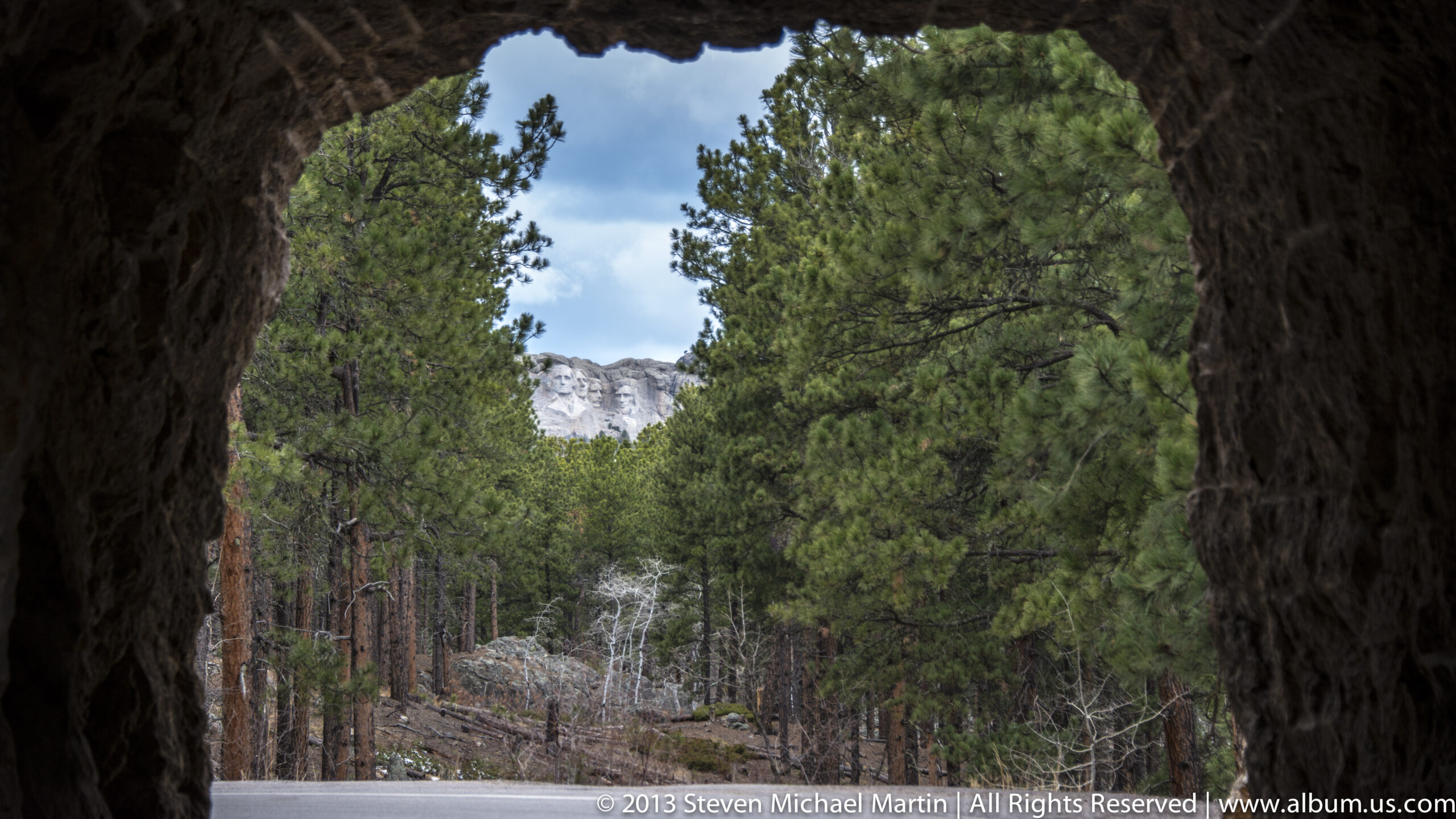
A dark, irregular rock opening frames a view of pine trees and a pale granite face across a wooded ravine. The rough stone edges fill the foreground like a natural aperture, while blue sky appears between branches above. The composition uses the near rock walls to enclose the distant landscape.
Caption
A dark, irregular rock opening frames a view of pine trees and a pale granite face across a wooded ravine. The rough stone edges fill the foreground like a natural aperture, while blue sky appears between branches above. The composition uses the near rock walls to enclose the distant landscape.
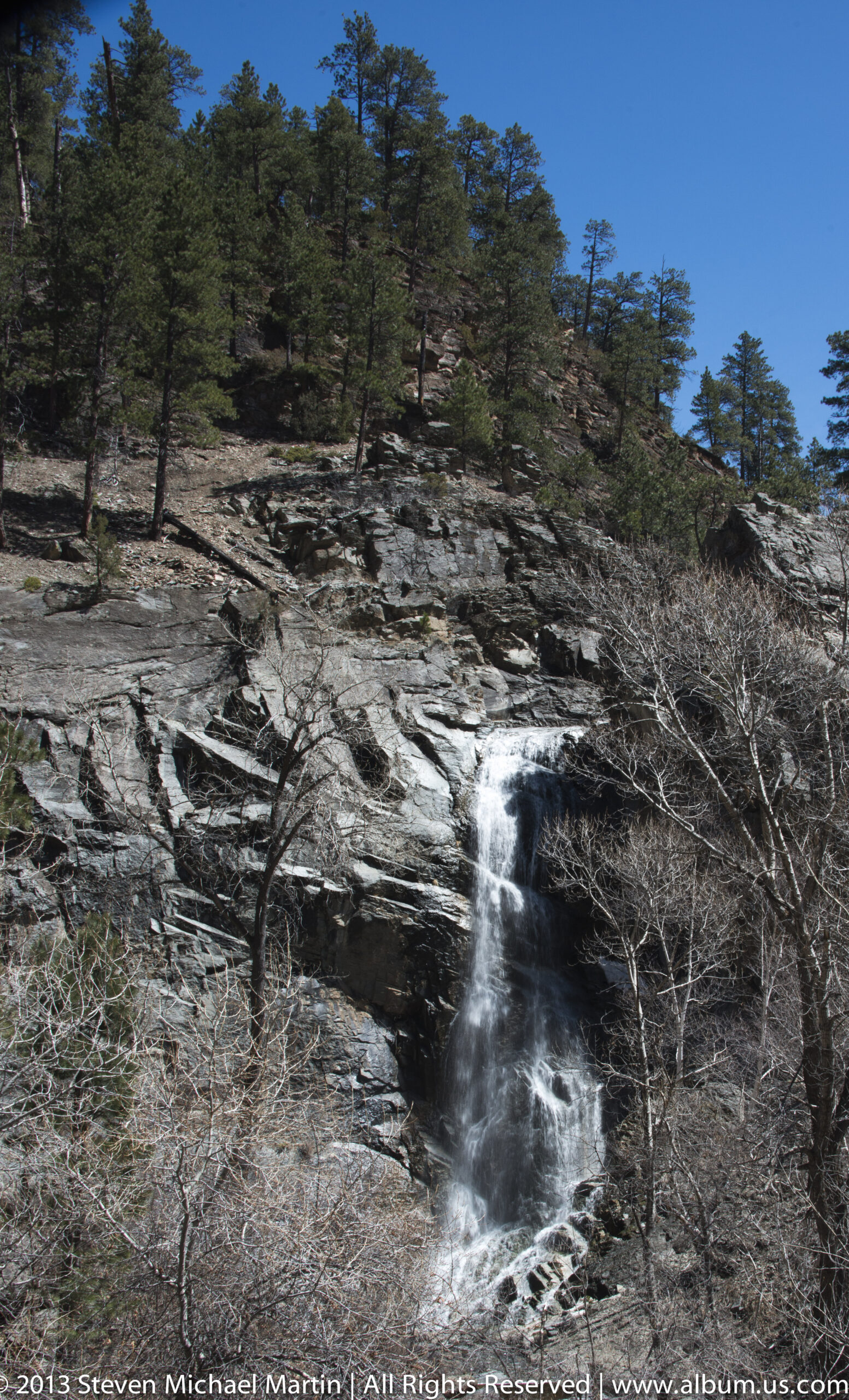
A narrow waterfall drops over a dark, layered rock ledge into a shallow pool, surrounded by leafless brush and evergreen trees. The water breaks into several white cascades as it follows the uneven face. Sunlight brightens the upper slope while the shaded lower rocks hold the stream in the center of the composition.
Caption
A narrow waterfall drops over a dark, layered rock ledge into a shallow pool, surrounded by leafless brush and evergreen trees. The water breaks into several white cascades as it follows the uneven face. Sunlight brightens the upper slope while the shaded lower rocks hold the stream in the center of the composition.
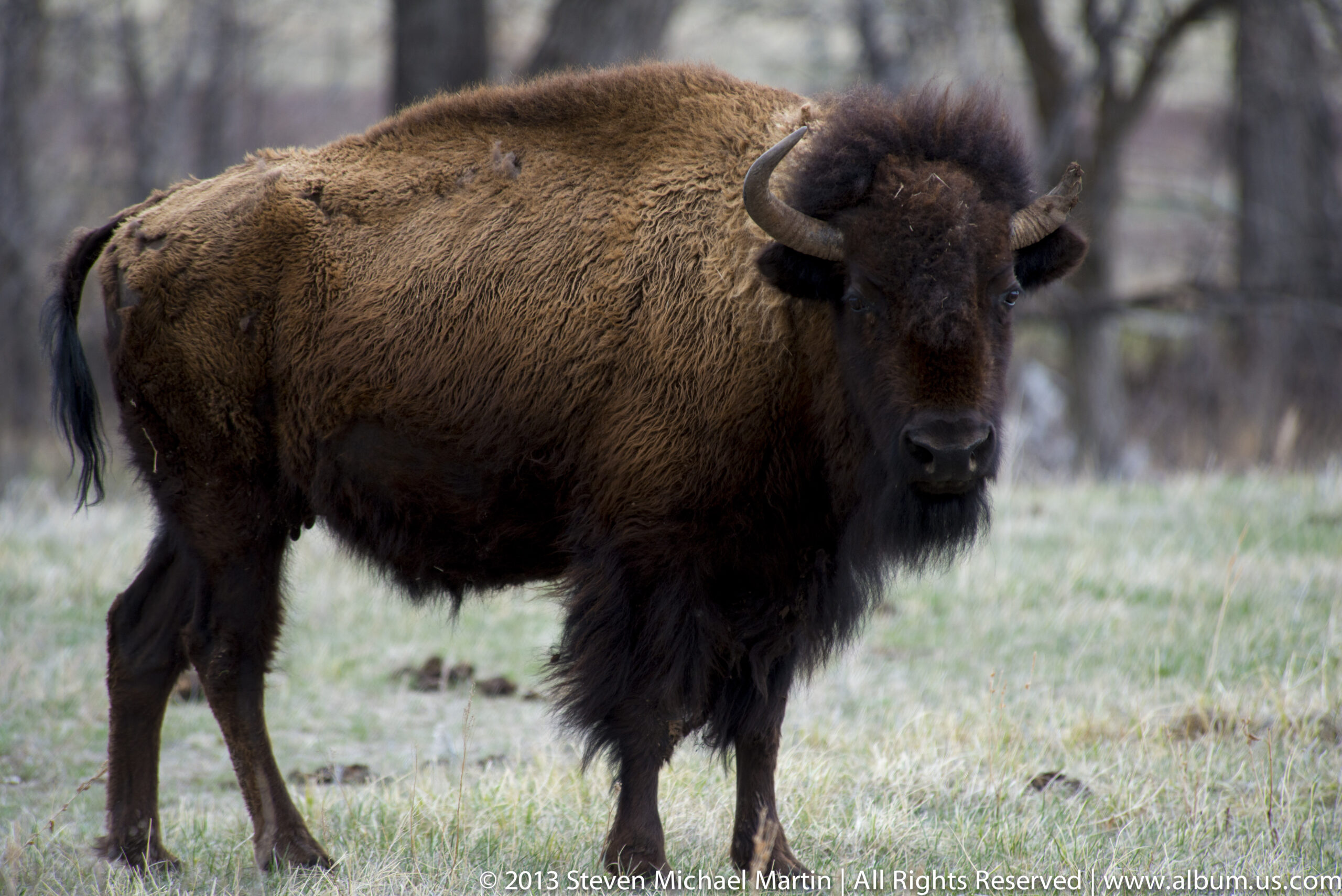
A mature bison stands squarely in short grass, facing the camera with both horns visible and its dark mane framing the head. Sunlight warms the brown coat along its back, while leafless trees soften into the background. The direct gaze and full-body framing distinguish this portrait from the tighter profile beside it.
Caption
A mature bison stands squarely in short grass, facing the camera with both horns visible and its dark mane framing the head. Sunlight warms the brown coat along its back, while leafless trees soften into the background. The direct gaze and full-body framing distinguish this portrait from the tighter profile beside it.
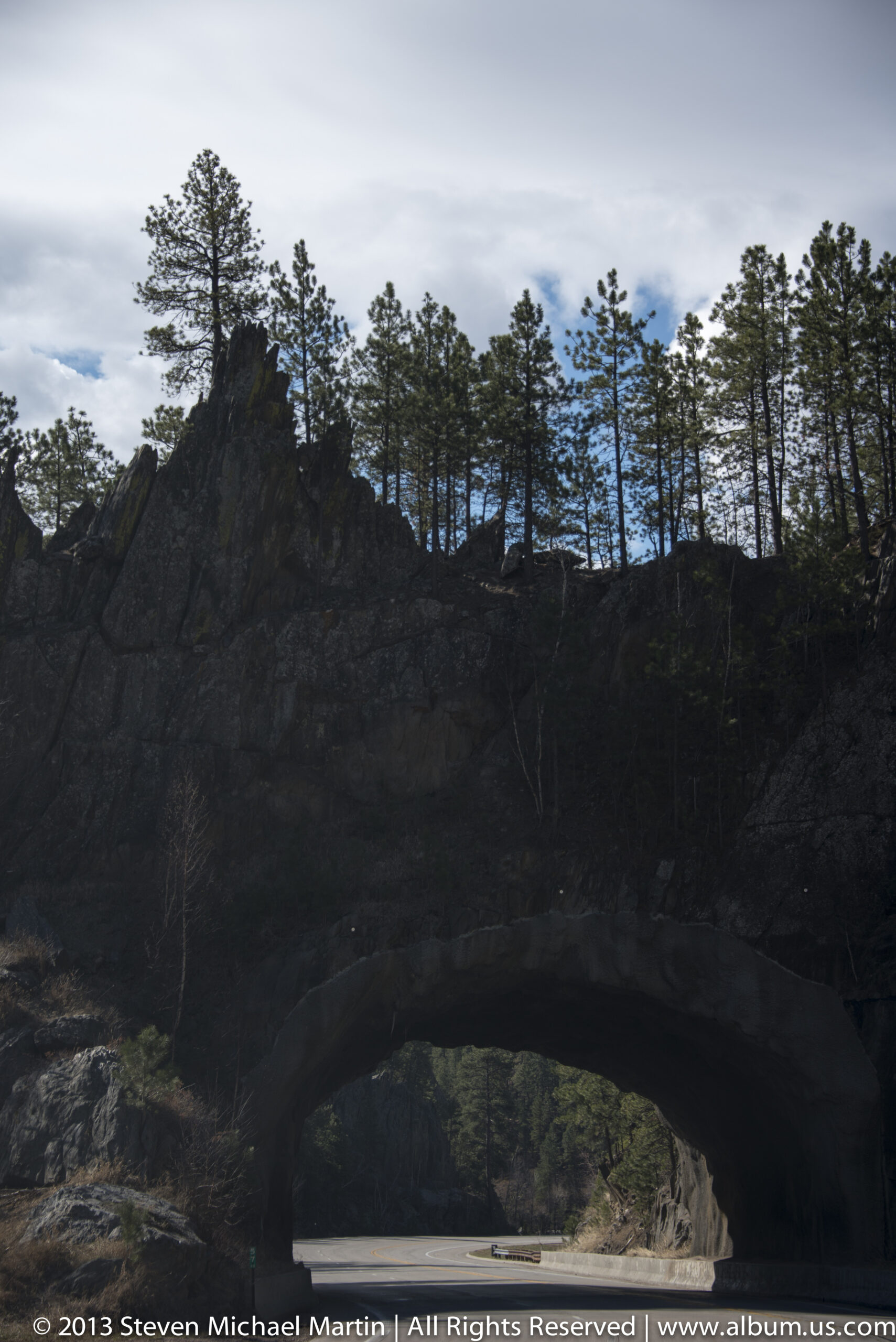
A broad natural arch spans a shadowed opening in a dark granite ridge, with pine trees silhouetted along its skyline. The low viewpoint places the arch across the lower half of the frame, while bright sky behind the trees outlines the uneven rock crest. Forest is visible through the opening beyond.
Caption
A broad natural arch spans a shadowed opening in a dark granite ridge, with pine trees silhouetted along its skyline. The low viewpoint places the arch across the lower half of the frame, while bright sky behind the trees outlines the uneven rock crest. Forest is visible through the opening beyond.
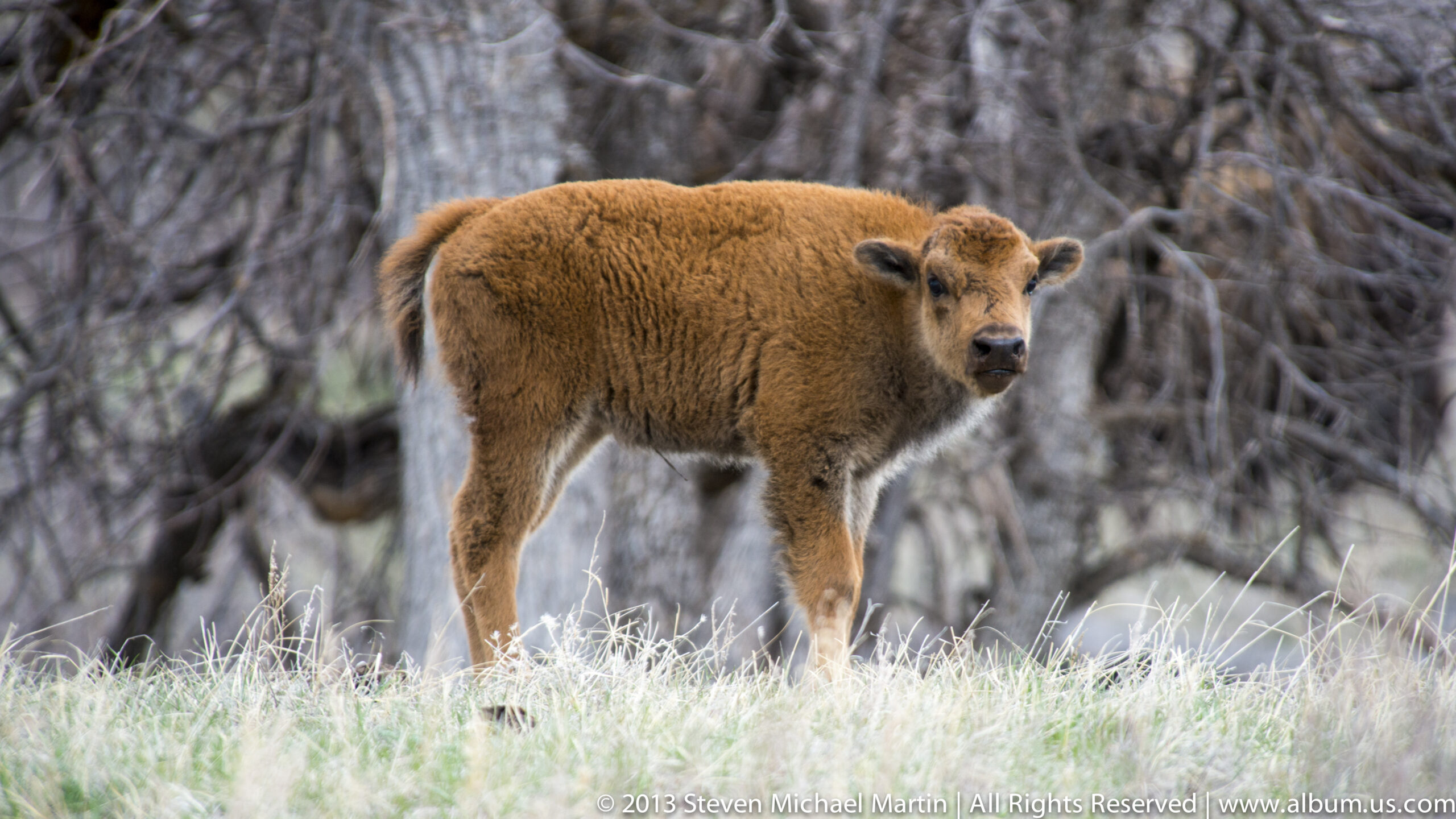
A young reddish bison calf stands alone in the foreground, turning its head toward the camera. Bare trunks and tangled branches form a muted background, with part of an adult bison visible behind it. The calf’s lighter coat and smaller stature distinguish it clearly from the mature animal nearby.
Caption
A young reddish bison calf stands alone in the foreground, turning its head toward the camera. Bare trunks and tangled branches form a muted background, with part of an adult bison visible behind it. The calf’s lighter coat and smaller stature distinguish it clearly from the mature animal nearby.
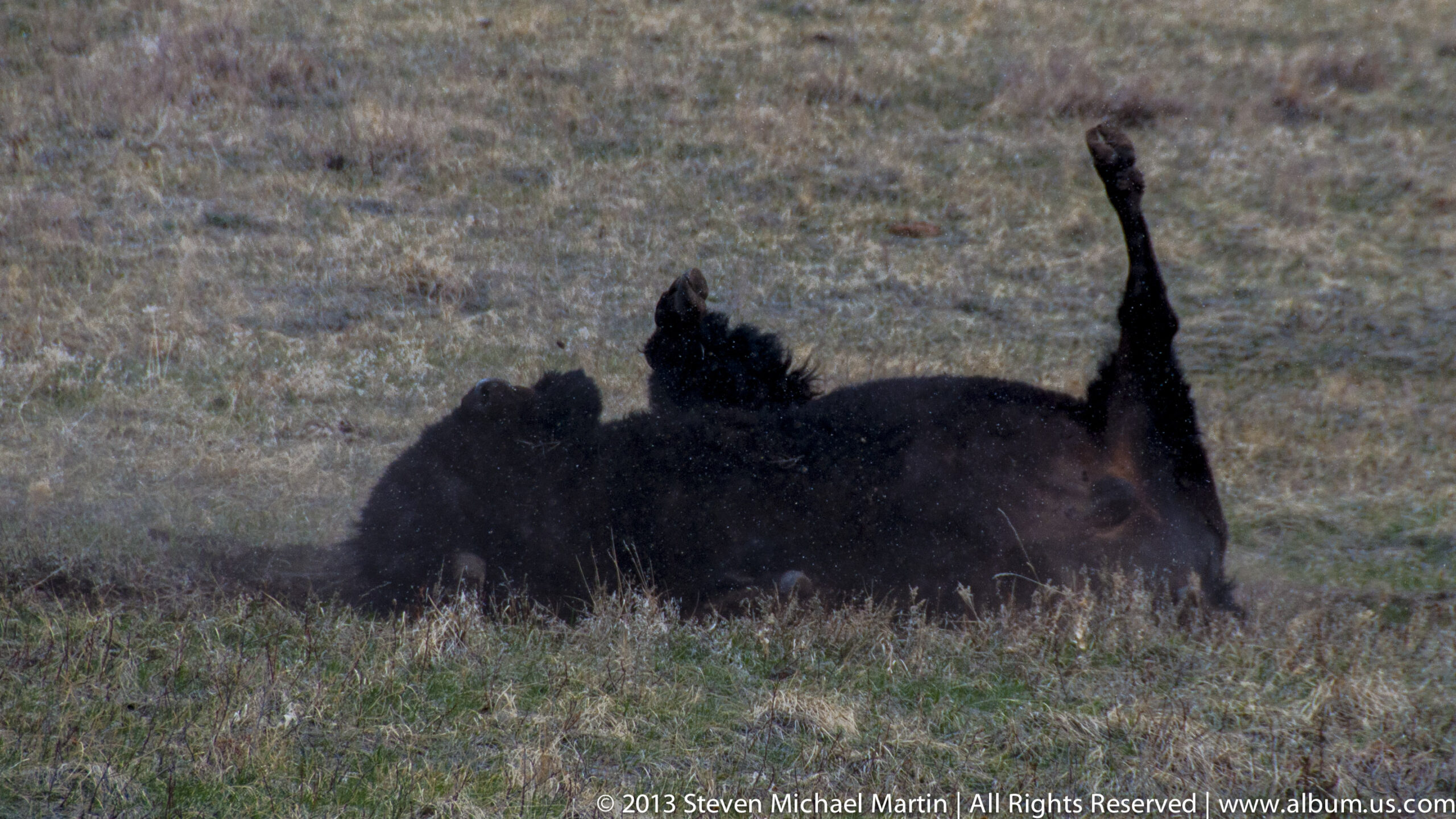
A dark bison lies on its back or side in short, dry grass, legs lifted as it rolls. Its broad body and shaggy shoulder dominate the frame, while the muted field recedes without other animals in view. The unusual posture records a moment of dust bathing or rolling behavior rather than grazing.
Caption
A dark bison lies on its back or side in short, dry grass, legs lifted as it rolls. Its broad body and shaggy shoulder dominate the frame, while the muted field recedes without other animals in view. The unusual posture records a moment of dust bathing or rolling behavior rather than grazing.
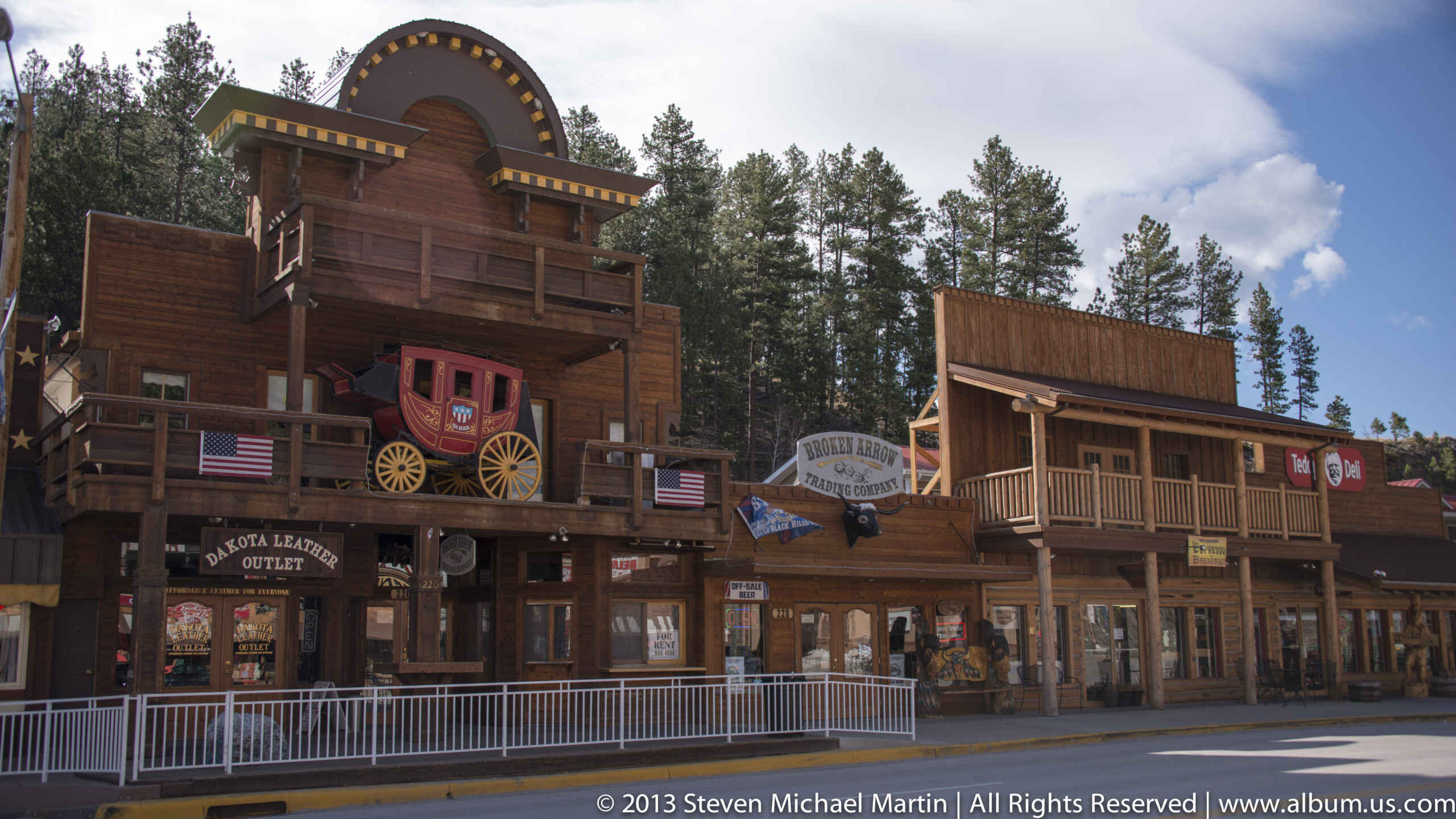
A row of timber-fronted shops presents a western streetscape, with a red stagecoach mounted above a balcony and signs for a theater outlet below. American flags hang from the facade, and a second wooden building continues the row to the right. The oblique street view combines commercial signage with a staged frontier-themed display.
Caption
A row of timber-fronted shops presents a western streetscape, with a red stagecoach mounted above a balcony and signs for a theater outlet below. American flags hang from the facade, and a second wooden building continues the row to the right. The oblique street view combines commercial signage with a staged frontier-themed display.
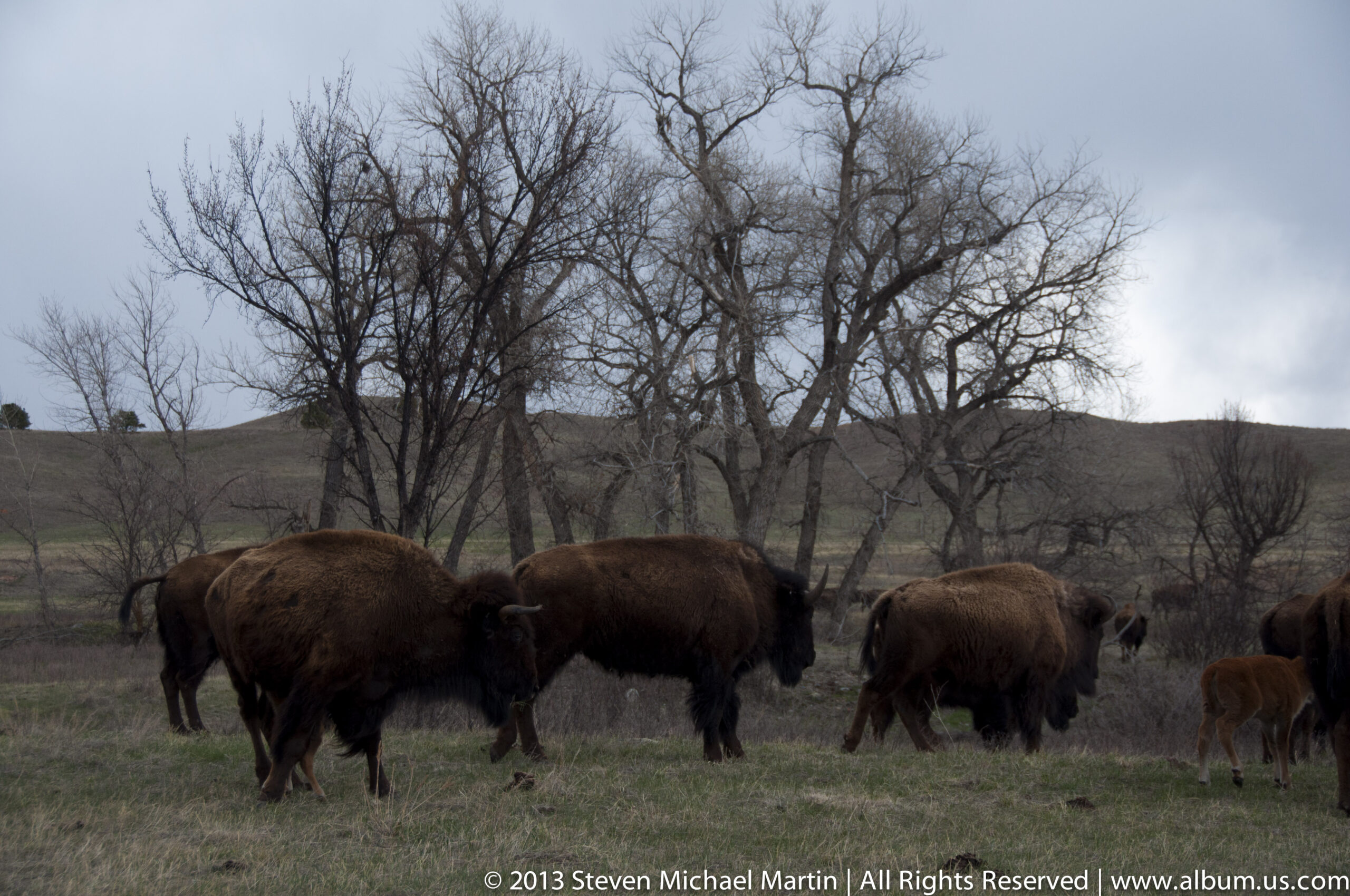
Several bison graze across a grassy clearing, their dark bodies overlapping as they move from left to right. A smaller calf walks near the adult at the far right. Leafless trees and low hills frame the herd beneath a gray sky, giving this view a quiet, early-season prairie setting.
Caption
Several bison graze across a grassy clearing, their dark bodies overlapping as they move from left to right. A smaller calf walks near the adult at the far right. Leafless trees and low hills frame the herd beneath a gray sky, giving this view a quiet, early-season prairie setting.
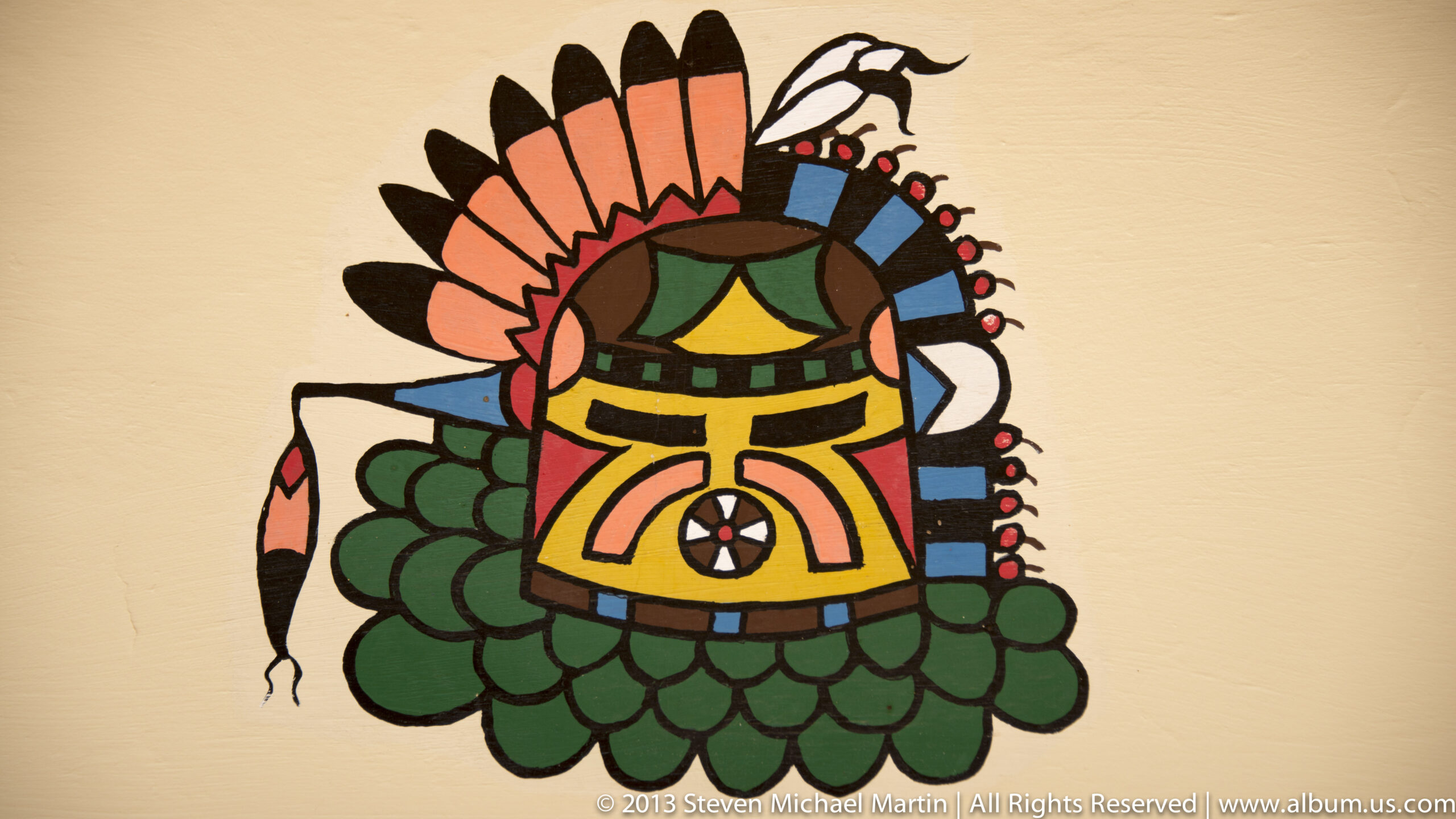
A brightly painted, symmetrical figure fills a pale wall, with a fan of red and black feather-like shapes above a geometric face and a layered green body. Bold black outlines separate yellow, turquoise, red, and green areas. The image reads as decorative graphic art; its specific cultural source is not established by the visible design alone.
Caption
A brightly painted, symmetrical figure fills a pale wall, with a fan of red and black feather-like shapes above a geometric face and a layered green body. Bold black outlines separate yellow, turquoise, red, and green areas. The image reads as decorative graphic art; its specific cultural source is not established by the visible design alone.
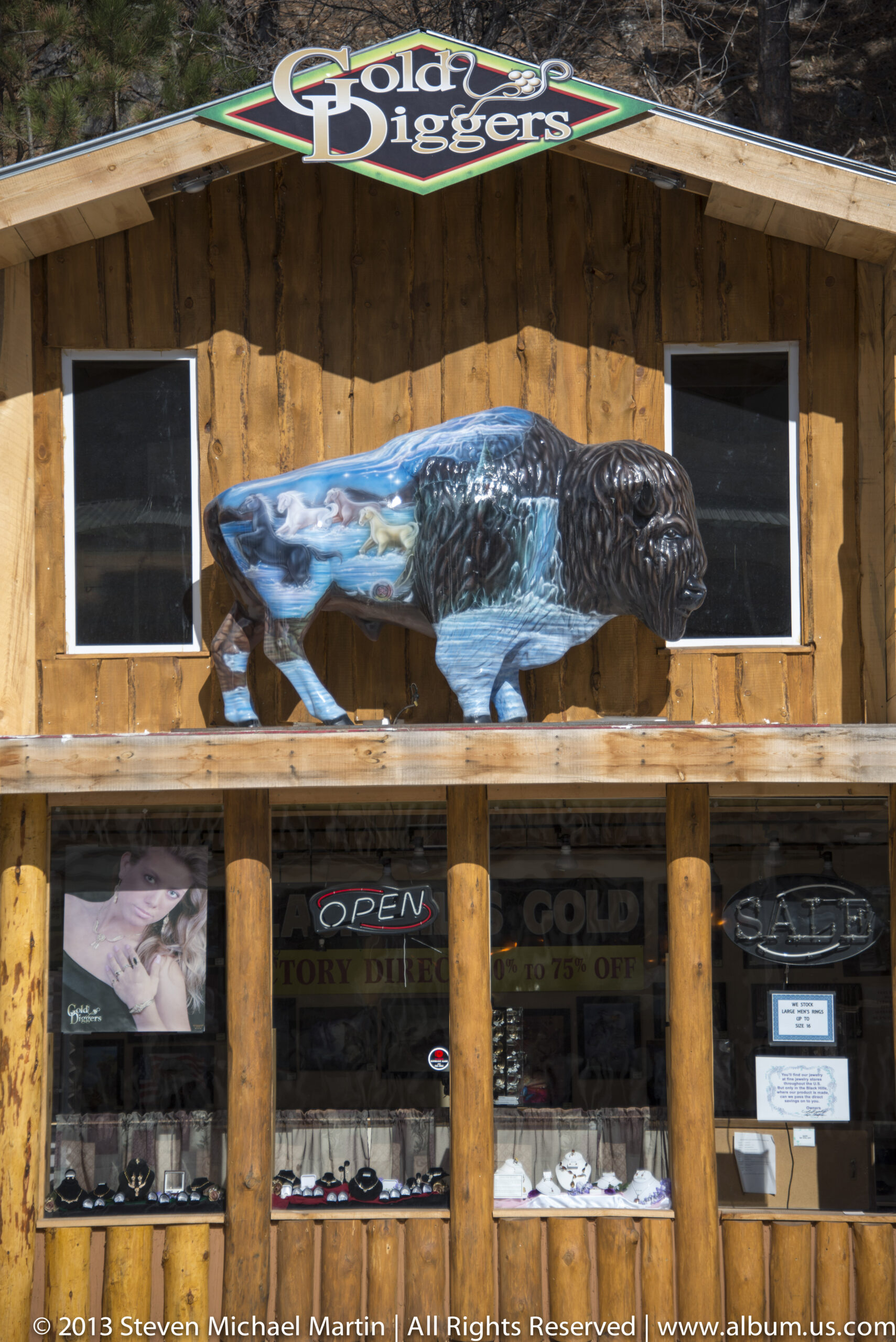
A large blue bear sculpture stretches across the balcony above a timber storefront marked “Gold Diggers.” Display windows and sale signs sit below, while log-like columns support the upper facade. The close, nearly frontal view centers the oversized animal figure and its relationship to the shop signage.
Caption
A large blue bear sculpture stretches across the balcony above a timber storefront marked “Gold Diggers.” Display windows and sale signs sit below, while log-like columns support the upper facade. The close, nearly frontal view centers the oversized animal figure and its relationship to the shop signage.
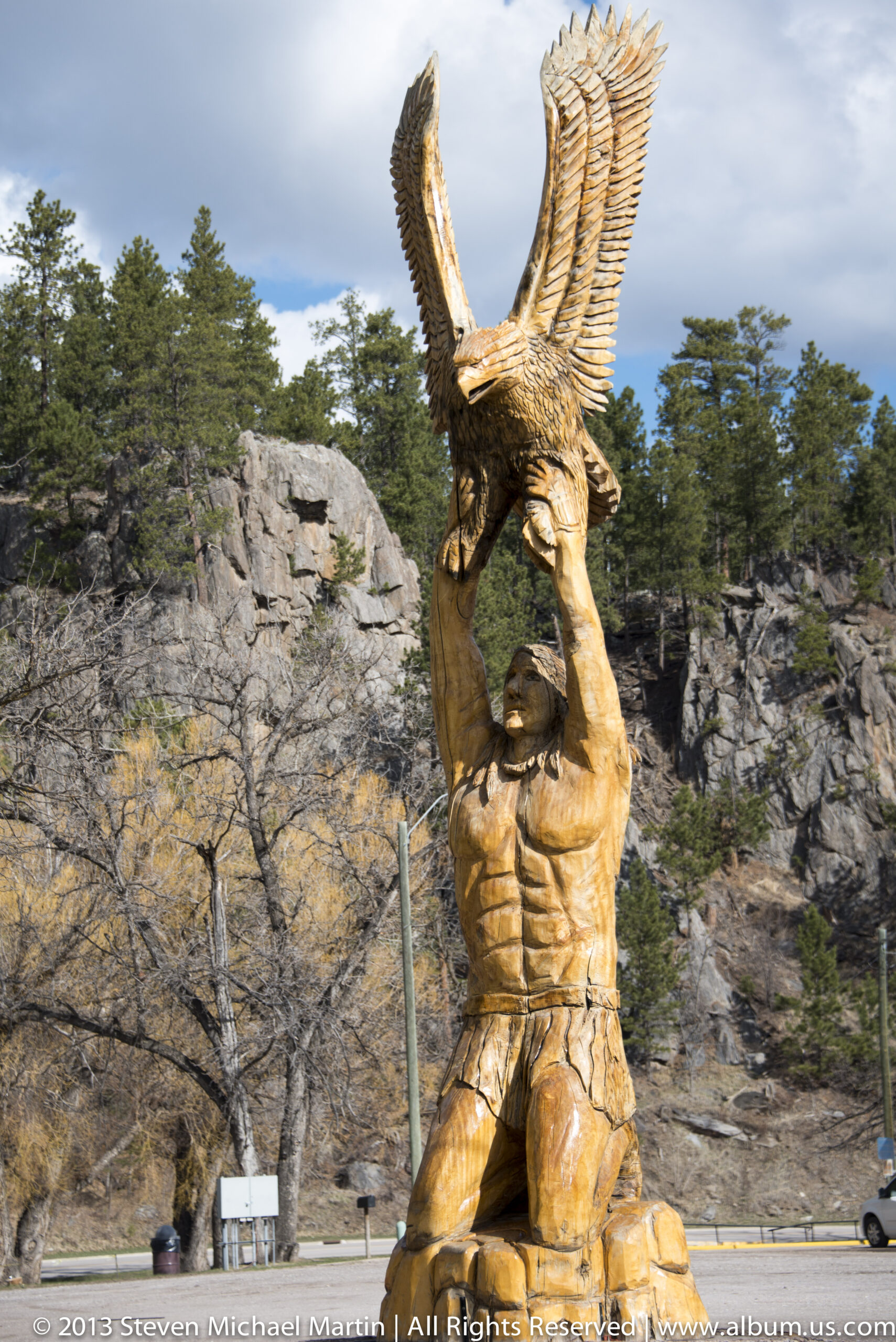
A carved wooden figure raises a large eagle overhead, its wings spread in a high arc. The figure’s muscular arms and detailed feather carving are visible against pine trees and exposed rock. A small interpretive plaque stands near the base, but its text is not legible at this distance.
Caption
A carved wooden figure raises a large eagle overhead, its wings spread in a high arc. The figure’s muscular arms and detailed feather carving are visible against pine trees and exposed rock. A small interpretive plaque stands near the base, but its text is not legible at this distance.
A pronghorn stands in profile on a grassy slope, its tan coat and white underside outlined against a blue-gray horizon. Its short horns, dark cheek markings, and white rump are visible, while the head turns slightly left. The low framing leaves open sky above the animal and emphasizes its full body.
Caption
A pronghorn stands in profile on a grassy slope, its tan coat and white underside outlined against a blue-gray horizon. Its short horns, dark cheek markings, and white rump are visible, while the head turns slightly left. The low framing leaves open sky above the animal and emphasizes its full body.
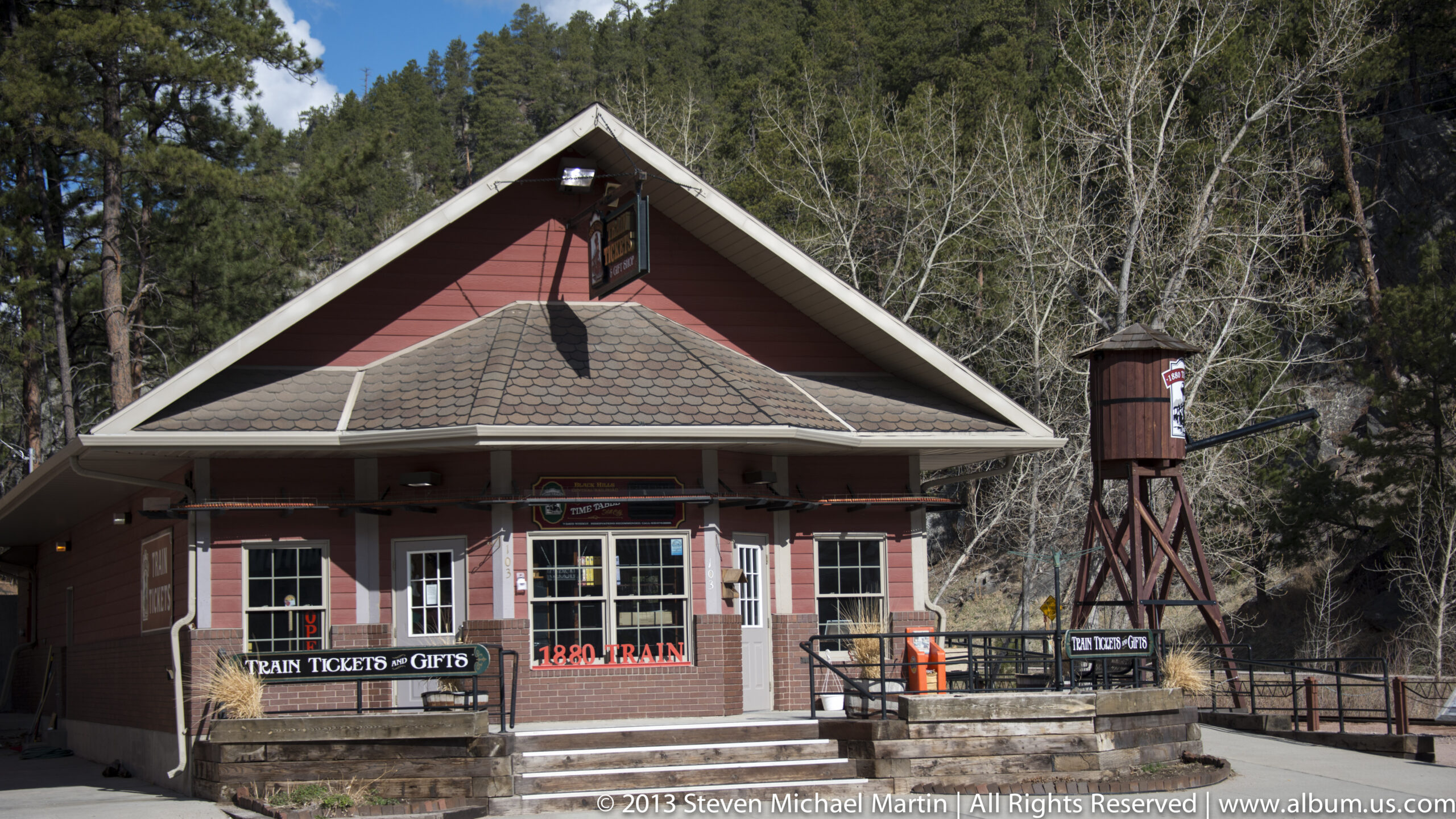
A red-and-brick railway depot stands among trees, with signs reading “TRAIN TICKETS • GIFTS” and “1880 TRAIN.” A raised cylindrical water tank and trackside equipment occupy the right side of the grounds. The full exterior view situates the station building within a small rail complex.
Caption
A red-and-brick railway depot stands among trees, with signs reading “TRAIN TICKETS • GIFTS” and “1880 TRAIN.” A raised cylindrical water tank and trackside equipment occupy the right side of the grounds. The full exterior view situates the station building within a small rail complex.
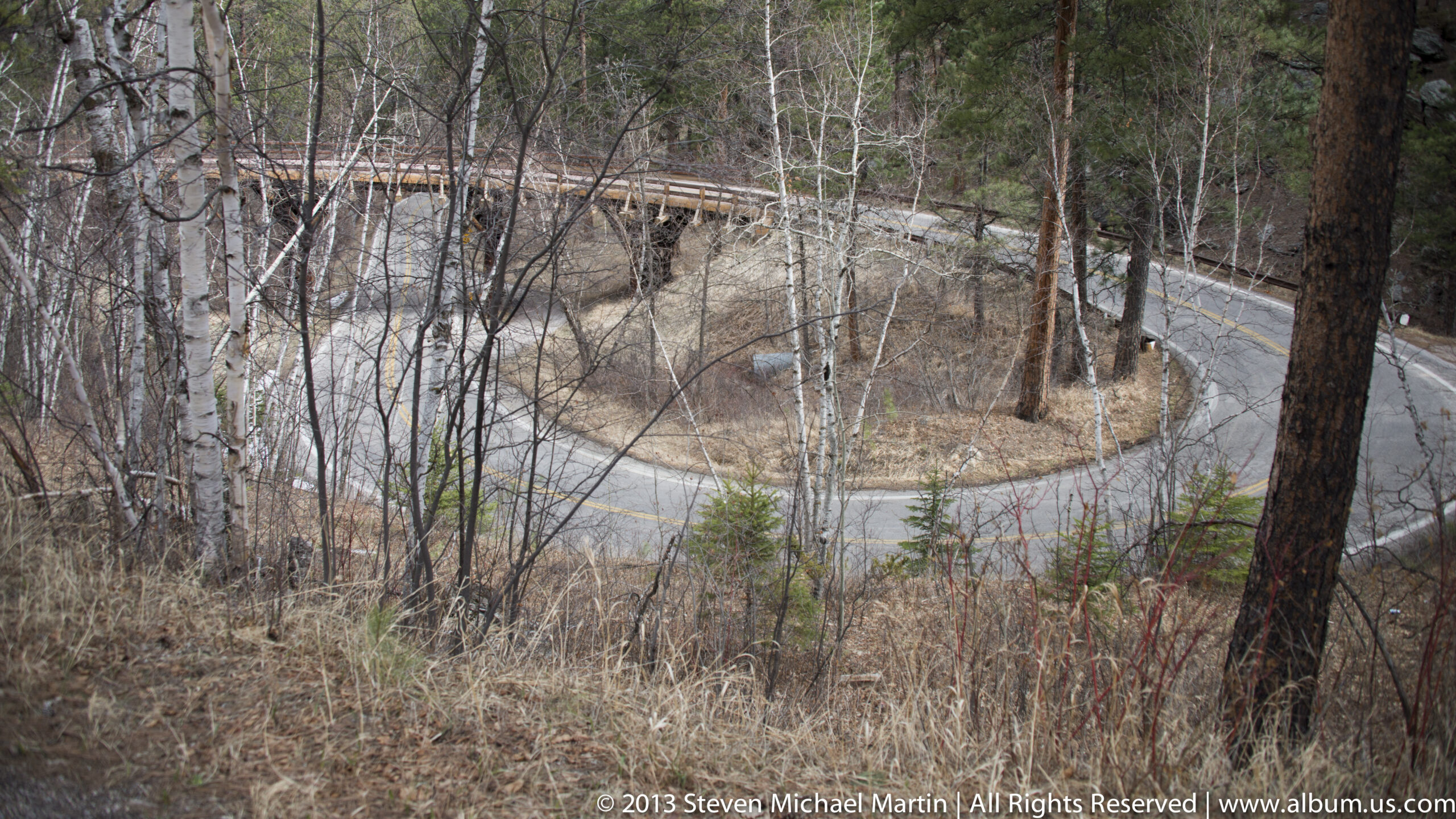
A paved road bends sharply around a rocky, tree-covered slope, forming a broad hairpin turn visible through leafless trunks. A low timber guardrail follows the outer curve, and a higher roadway crosses the hillside behind it. The elevated view makes the route’s tight geometry and layered roadway levels the subject.
Caption
A paved road bends sharply around a rocky, tree-covered slope, forming a broad hairpin turn visible through leafless trunks. A low timber guardrail follows the outer curve, and a higher roadway crosses the hillside behind it. The elevated view makes the route’s tight geometry and layered roadway levels the subject.
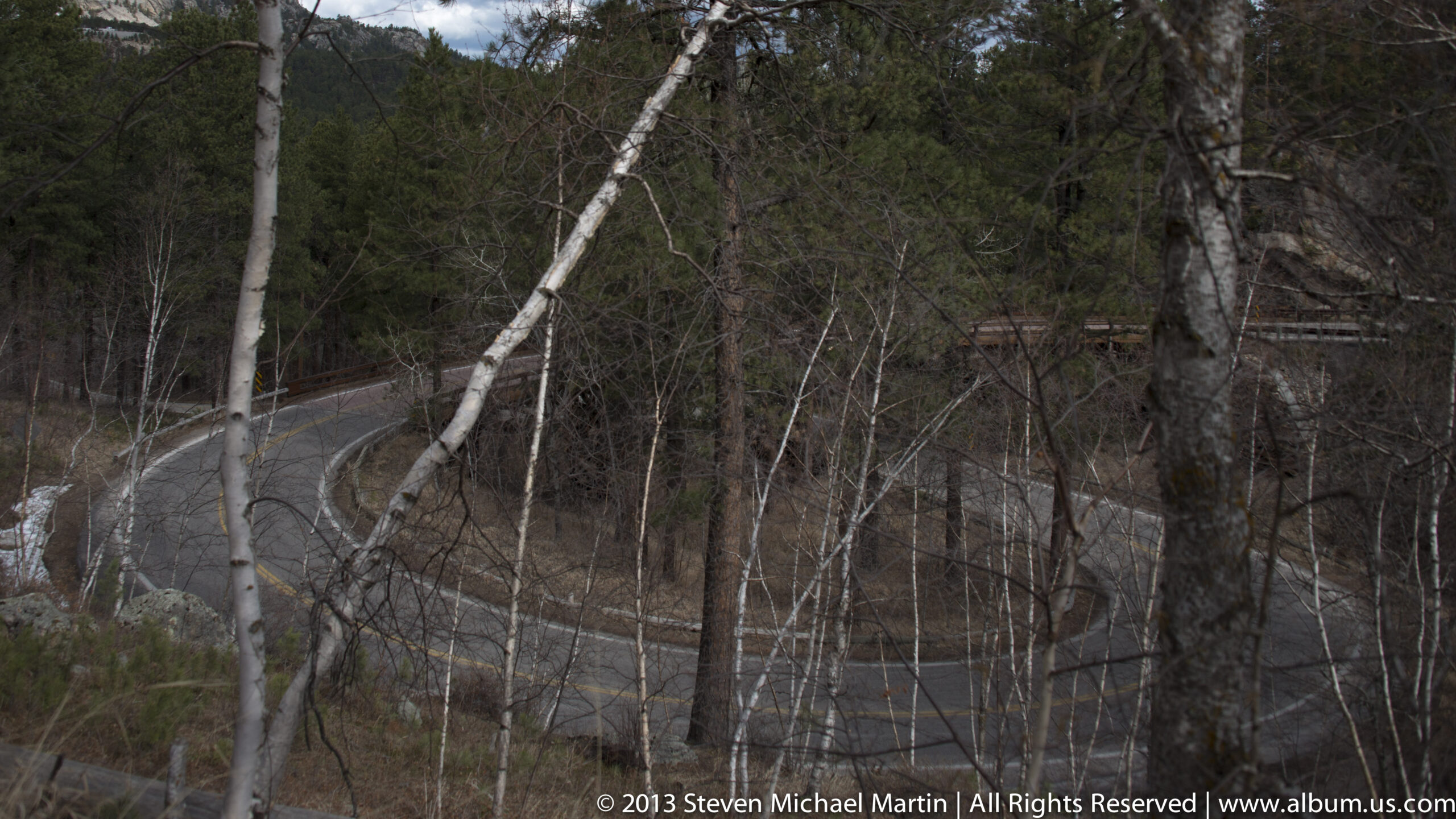
A paved road loops around a wooded hillside, its gray surface visible through a screen of slender trunks and bare branches. The curve doubles back below a narrow elevated section at the upper right. The distant, partially obscured viewpoint shows how the road winds across the steep terrain.
Caption
A paved road loops around a wooded hillside, its gray surface visible through a screen of slender trunks and bare branches. The curve doubles back below a narrow elevated section at the upper right. The distant, partially obscured viewpoint shows how the road winds across the steep terrain.
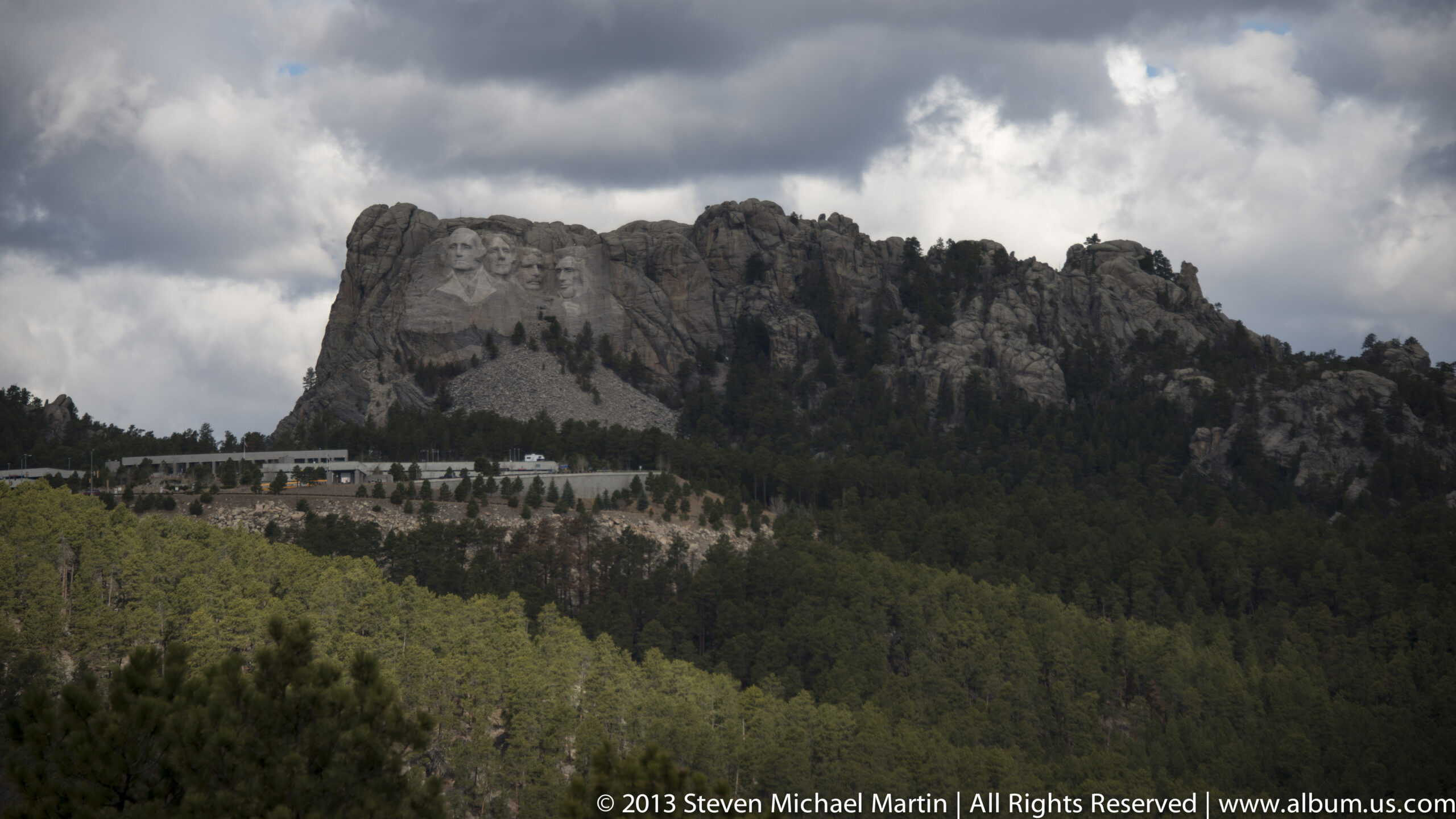
Four presidential faces are carved into a granite mountain above a dense forested slope. A narrow road or path crosses the hillside below the sculpture, while heavy clouds gather behind the summit. The medium-distance view includes the monument and its wooded setting, with the carved profiles clearly recognizable.
Caption
Four presidential faces are carved into a granite mountain above a dense forested slope. A narrow road or path crosses the hillside below the sculpture, while heavy clouds gather behind the summit. The medium-distance view includes the monument and its wooded setting, with the carved profiles clearly recognizable.
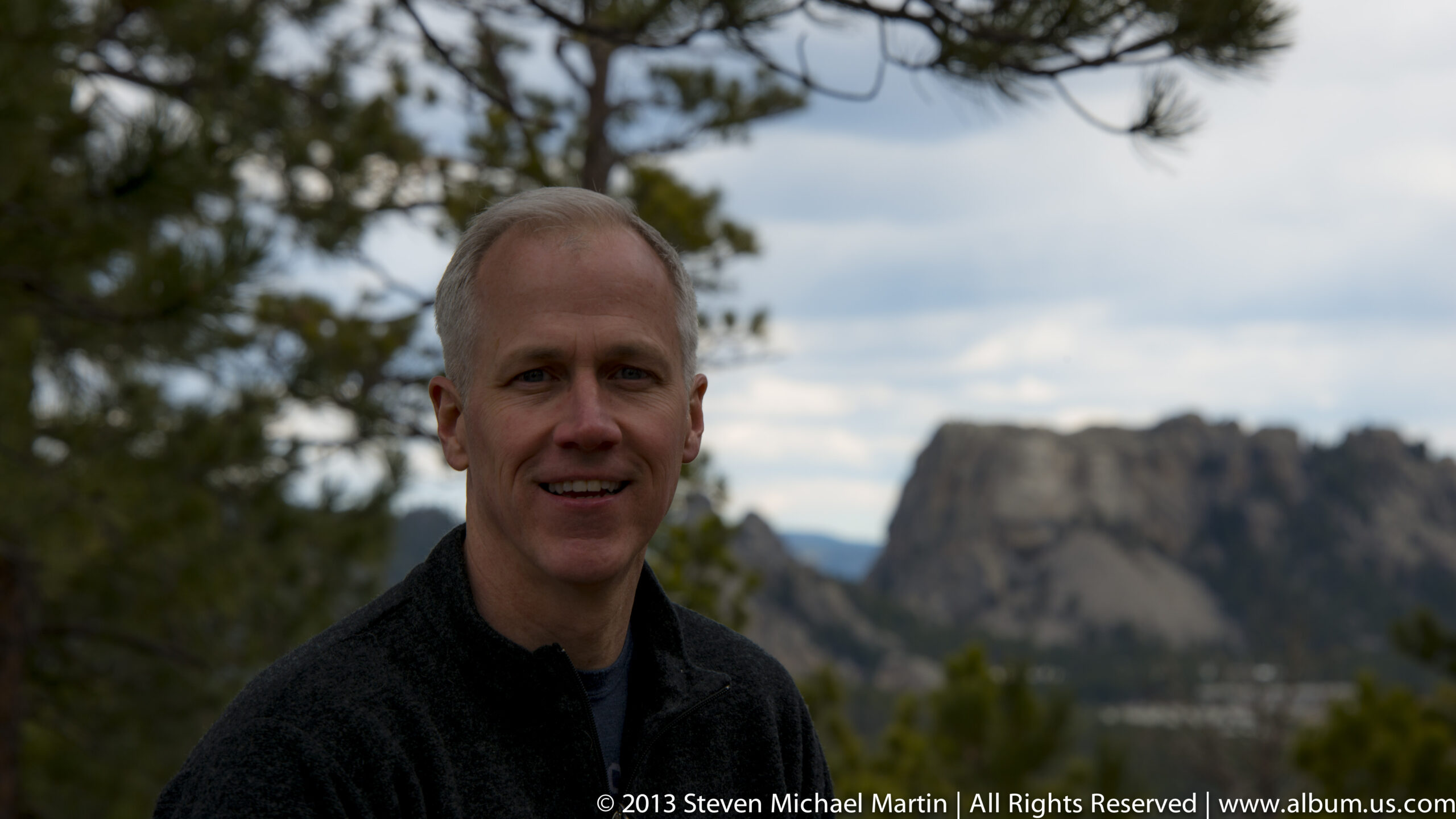
A man stands close to the camera beneath pine branches, with Mount Rushmore visible in soft focus over his shoulder. The carved faces and granite ridge appear between dark tree trunks in the background. The medium portrait balances the visitor’s face with a recognizable glimpse of the monument.
Caption
A man stands close to the camera beneath pine branches, with Mount Rushmore visible in soft focus over his shoulder. The carved faces and granite ridge appear between dark tree trunks in the background. The medium portrait balances the visitor’s face with a recognizable glimpse of the monument.
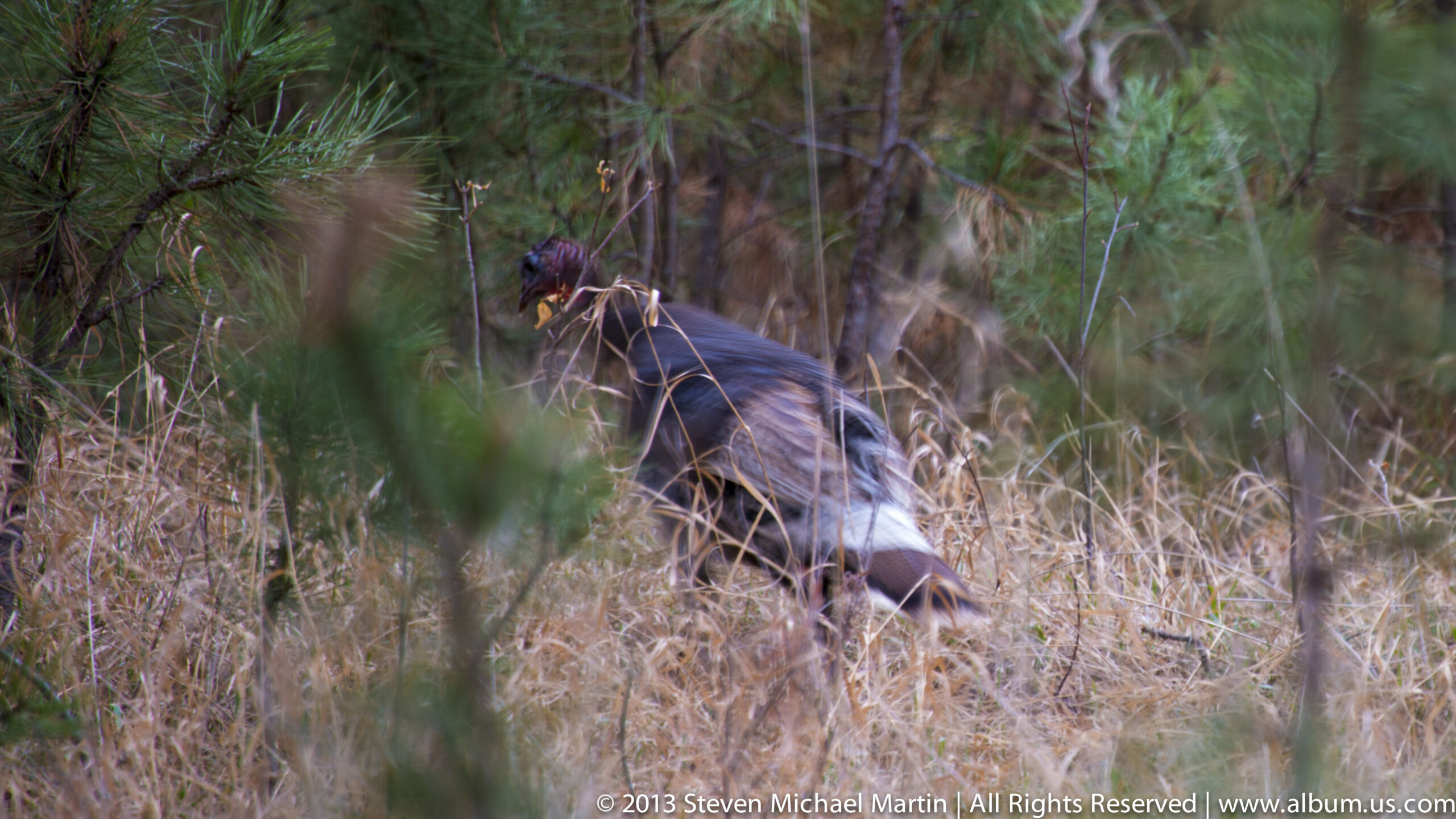
A dark wild turkey walks through dry grasses and low brush beneath scattered pine trees. Its bare head and long neck rise above the vegetation, while its broad body is partly hidden by stems in the foreground. The side view catches the bird moving across the woodland floor rather than displaying its tail fan.
Caption
A dark wild turkey walks through dry grasses and low brush beneath scattered pine trees. Its bare head and long neck rise above the vegetation, while its broad body is partly hidden by stems in the foreground. The side view catches the bird moving across the woodland floor rather than displaying its tail fan.
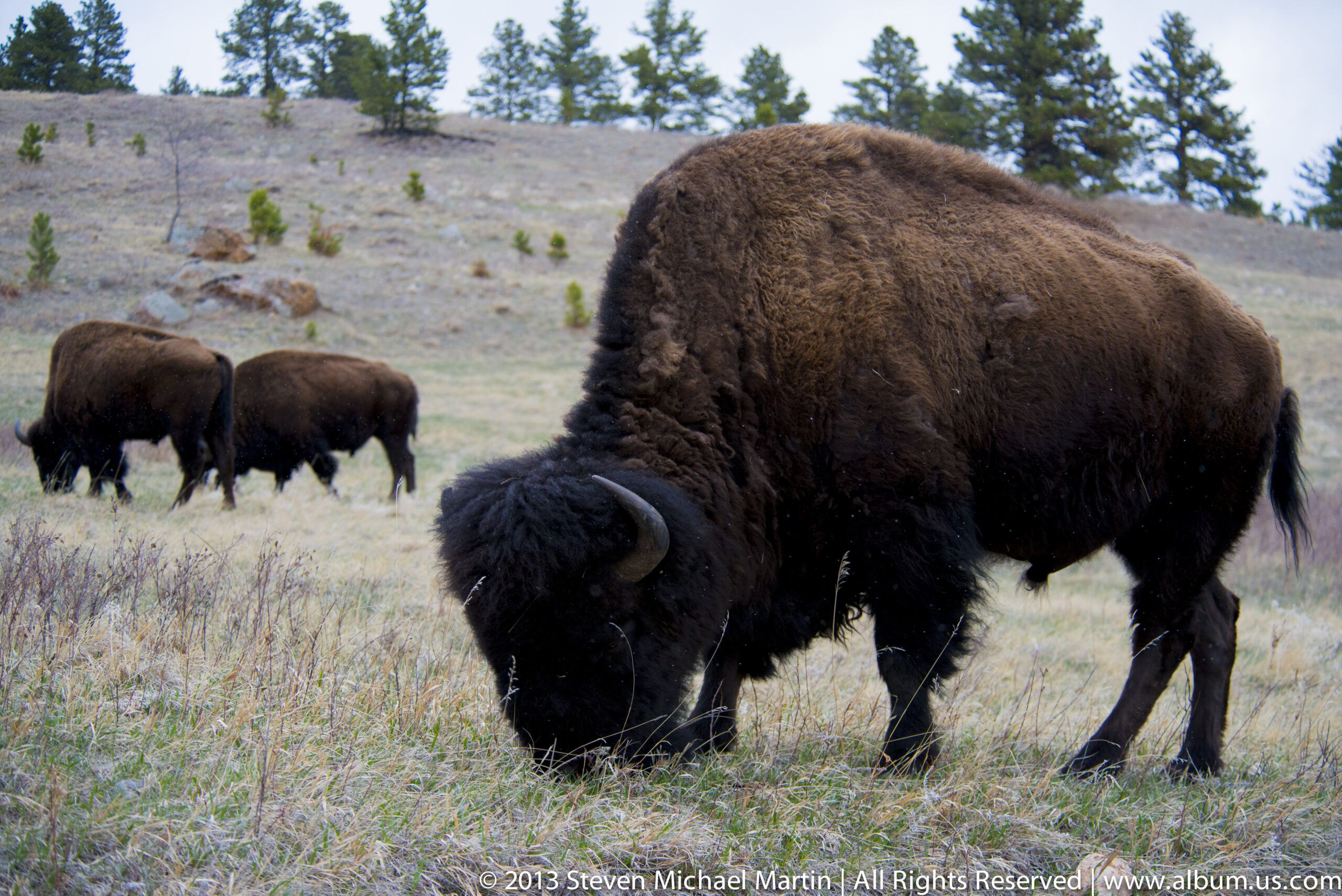
A large bison grazes close to the camera, its dark head lowered into short grass, while two others feed farther up the slope. Sparse pines line the ridge behind them. The foreground animal’s shaggy shoulder and curved horn dominate the scene, with the distant pair establishing a wider herd context.
Caption
A large bison grazes close to the camera, its dark head lowered into short grass, while two others feed farther up the slope. Sparse pines line the ridge behind them. The foreground animal’s shaggy shoulder and curved horn dominate the scene, with the distant pair establishing a wider herd context.
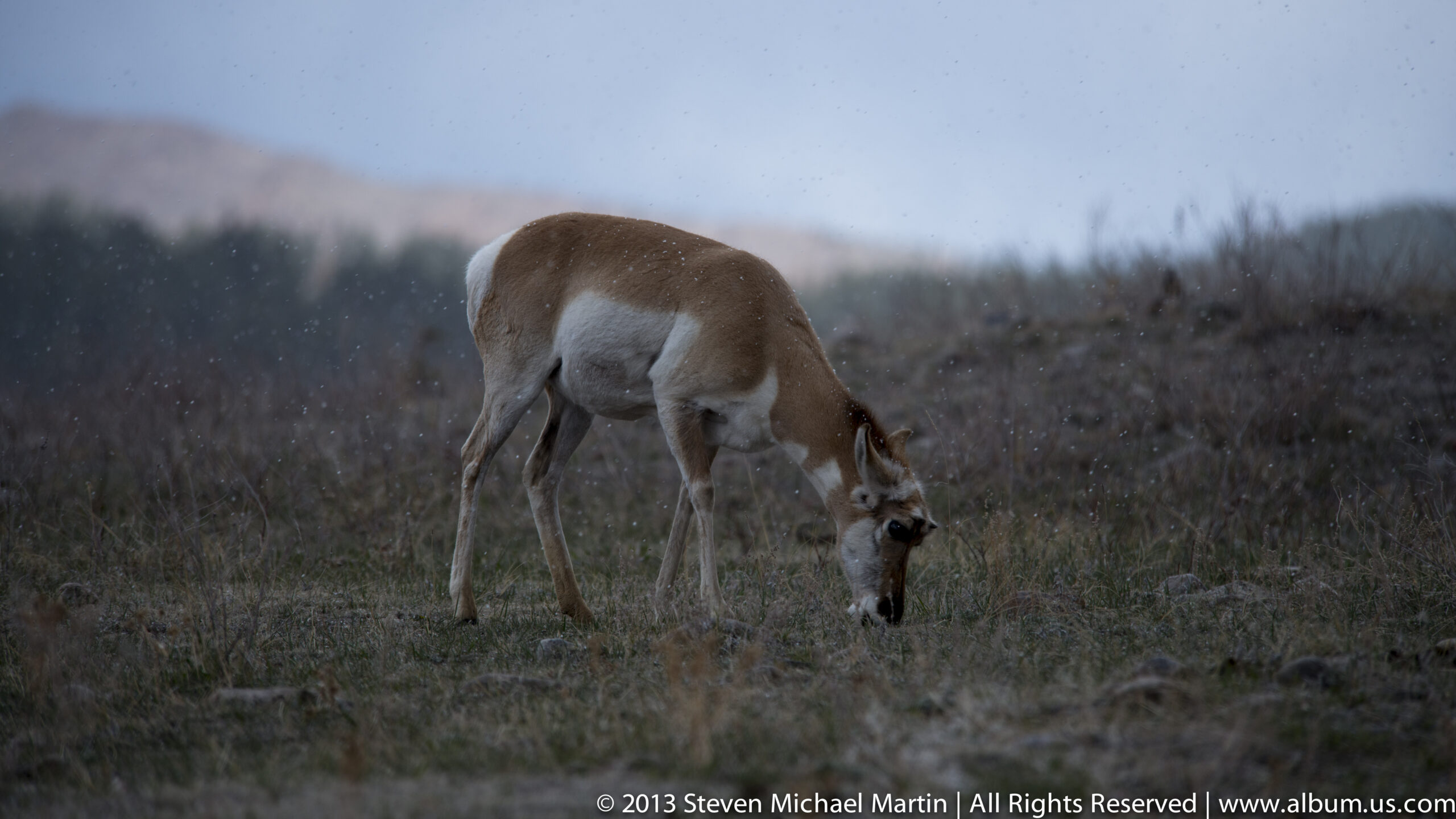
A tan-and-white pronghorn lowers its muzzle to graze in a field of dry grass. The animal’s white rump and dark facial markings stand out against the muted hillside, while fine vegetation crosses the foreground. Soft light and a shallow depth of field separate the feeding animal from the distant slope.
Caption
A tan-and-white pronghorn lowers its muzzle to graze in a field of dry grass. The animal’s white rump and dark facial markings stand out against the muted hillside, while fine vegetation crosses the foreground. Soft light and a shallow depth of field separate the feeding animal from the distant slope.
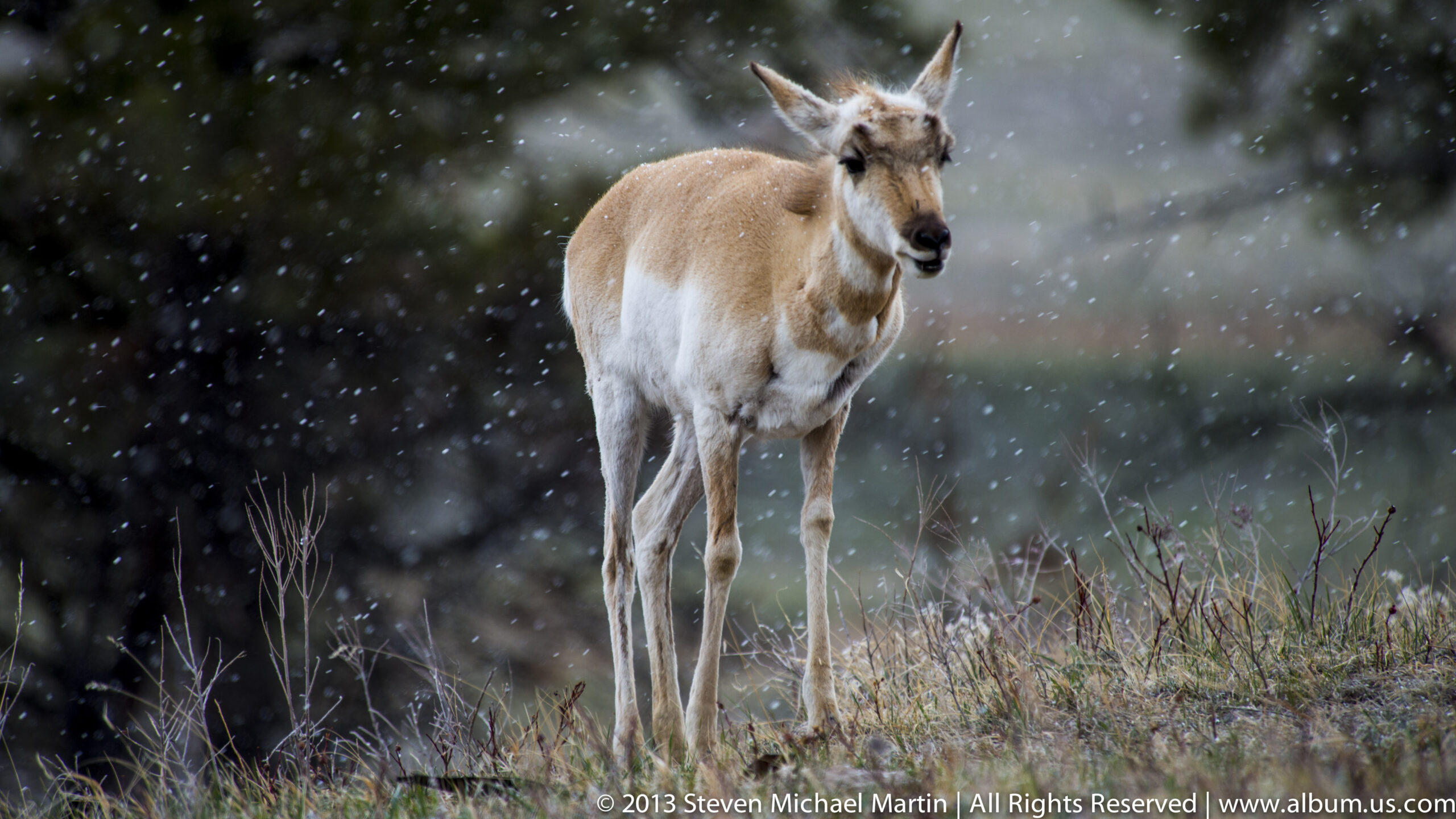
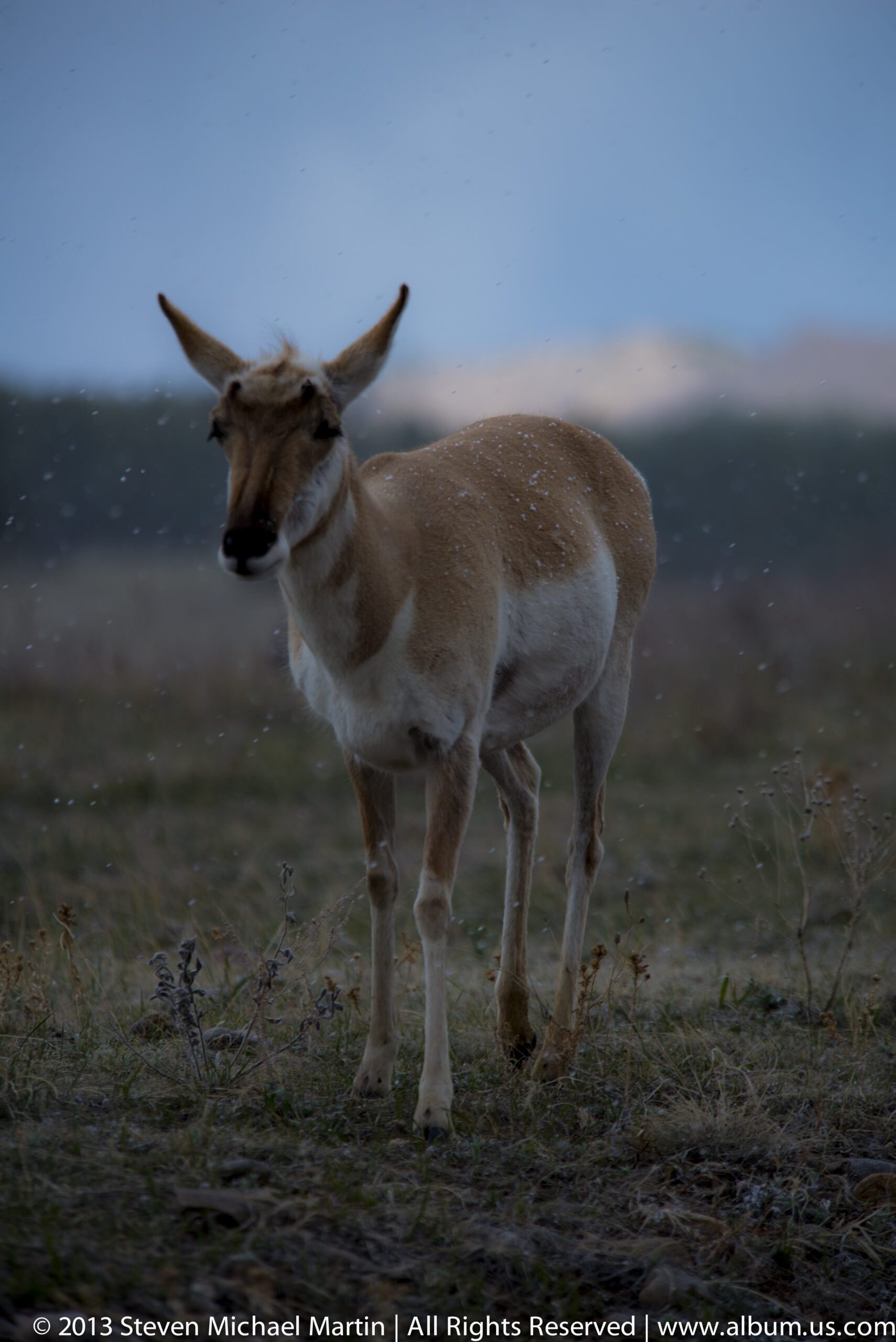
A pronghorn stands alert in a light fall of snow, facing the camera with short black horns and dark facial markings visible. Snowflakes drift across the foreground, and evergreen branches blur behind the animal. The centered portrait captures its pale winter coat against the darker woodland.
Caption
A pronghorn stands alert in a light fall of snow, facing the camera with short black horns and dark facial markings visible. Snowflakes drift across the foreground, and evergreen branches blur behind the animal. The centered portrait captures its pale winter coat against the darker woodland.
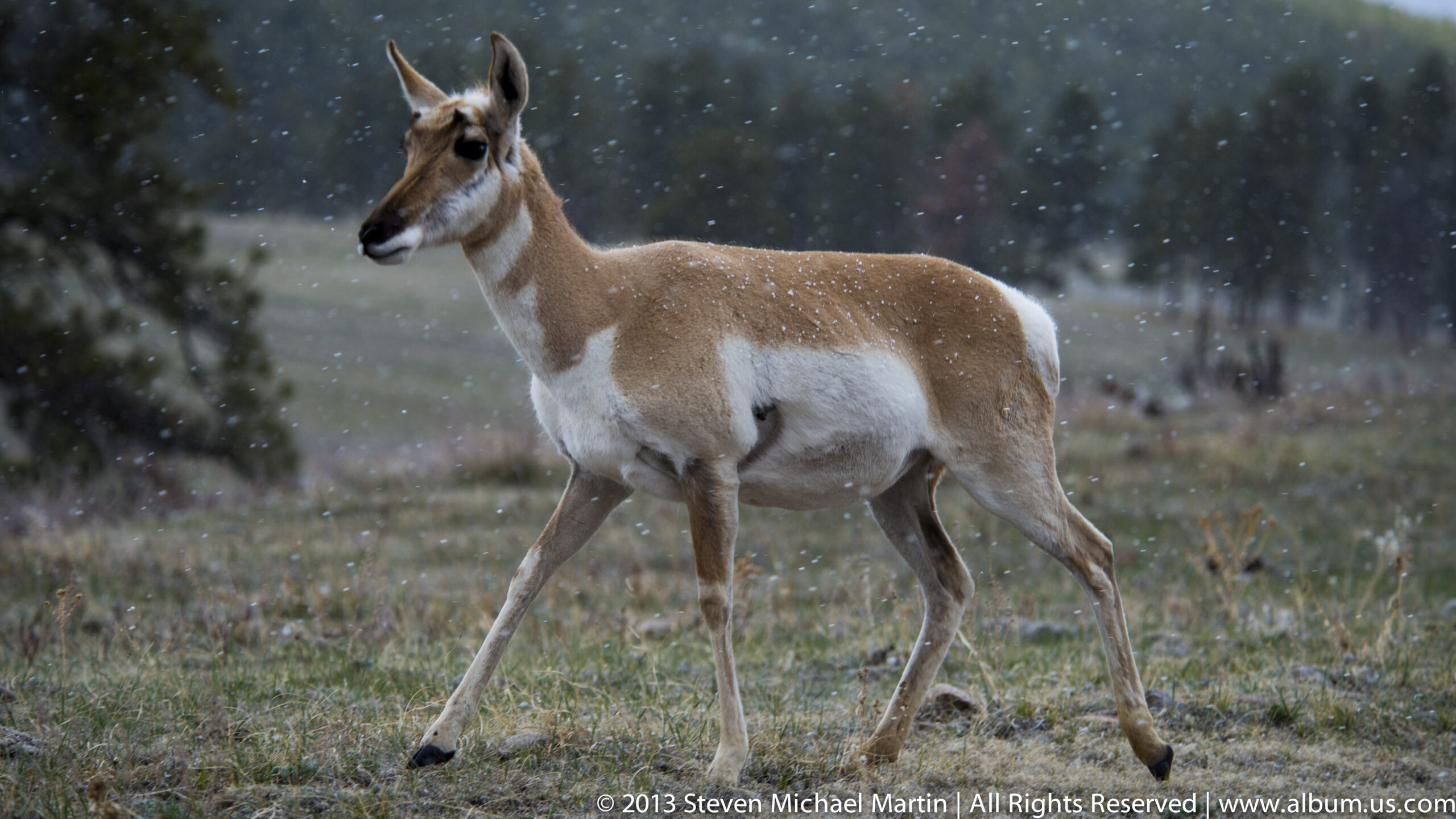
A pronghorn walks across short grass as snow falls around it, one foreleg lifted mid-step. Its head turns left and its coat contrasts with the dark, softly blurred trees behind. The close side view preserves the animal’s movement and distinctive white markings in wintry conditions.
Caption
A pronghorn walks across short grass as snow falls around it, one foreleg lifted mid-step. Its head turns left and its coat contrasts with the dark, softly blurred trees behind. The close side view preserves the animal’s movement and distinctive white markings in wintry conditions.
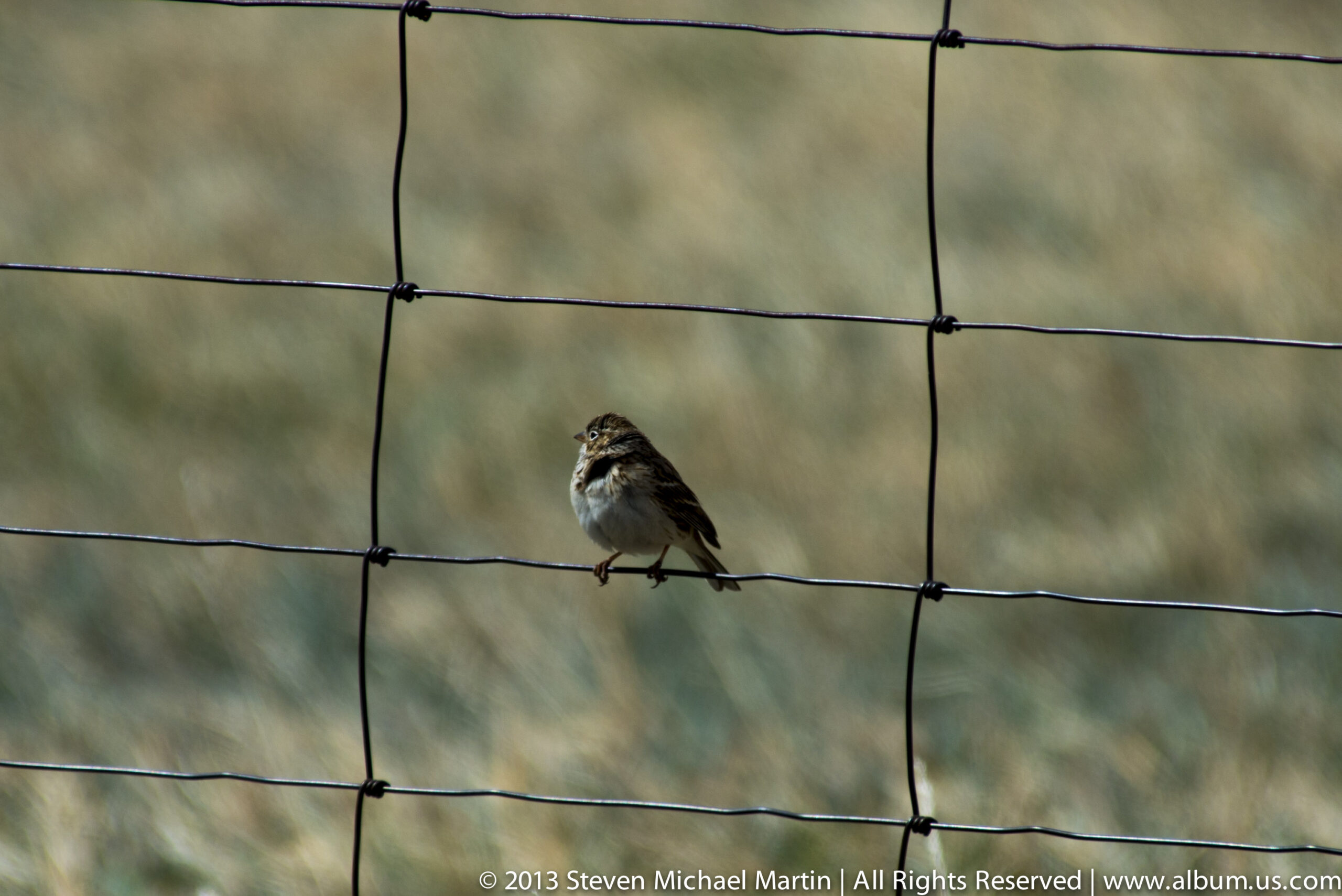
A small brown songbird perches on a horizontal strand of wire within a grid fence. Its streaked back, pale underside, and short bill are visible, though the image does not resolve enough detail for a confident species identification. The bird sits near the center against softly blurred yellow-green grass.
Caption
A small brown songbird perches on a horizontal strand of wire within a grid fence. Its streaked back, pale underside, and short bill are visible, though the image does not resolve enough detail for a confident species identification. The bird sits near the center against softly blurred yellow-green grass.
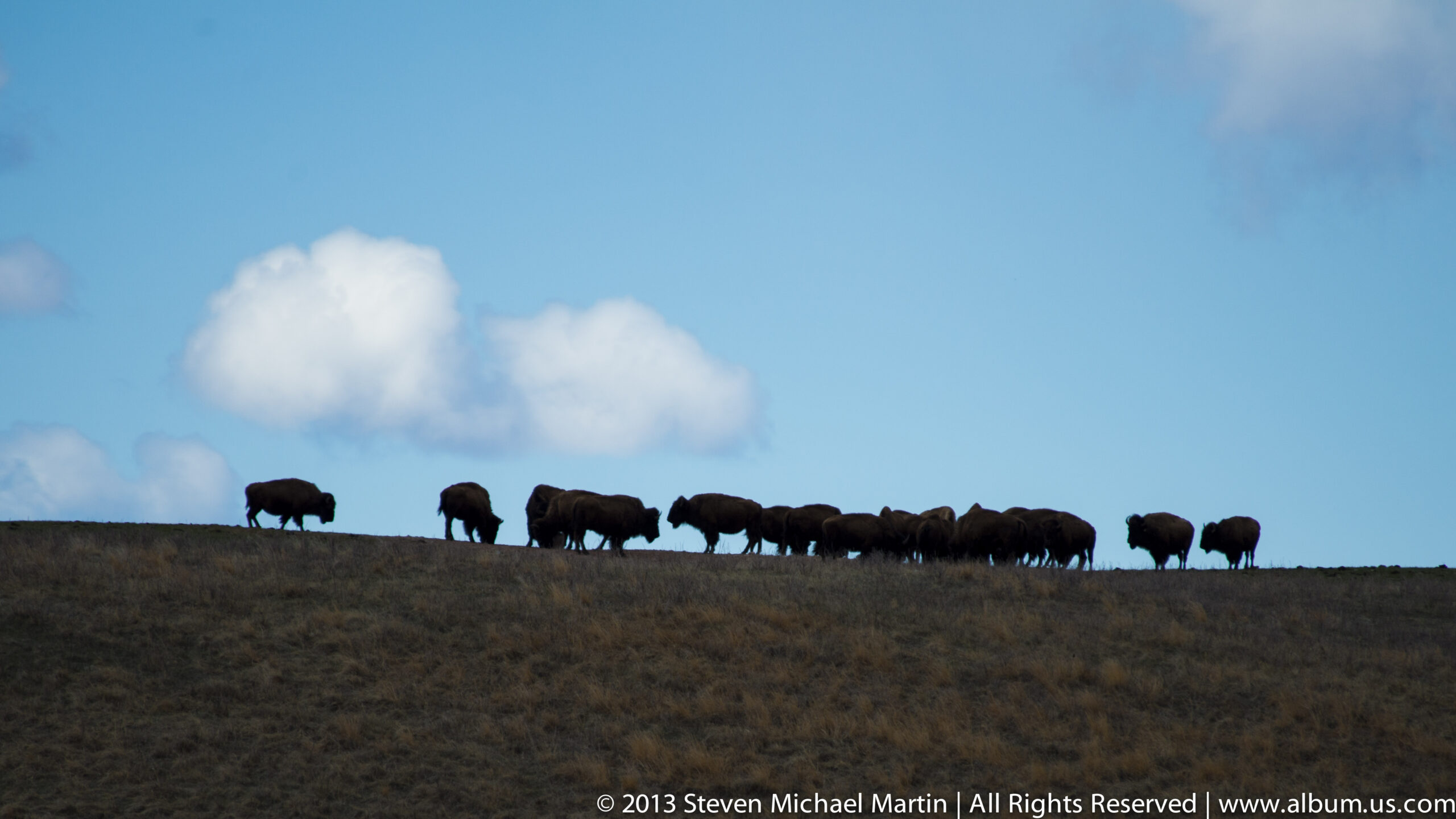
A line of bison walks along the crest of a dark ridge, their bodies reduced to silhouettes against a vivid blue sky. Two small clouds float above the herd, while the shaded hillside fills the lower half of the frame. The profile view turns the animals’ movement into a strong horizontal line.
Caption
A line of bison walks along the crest of a dark ridge, their bodies reduced to silhouettes against a vivid blue sky. Two small clouds float above the herd, while the shaded hillside fills the lower half of the frame. The profile view turns the animals’ movement into a strong horizontal line.

A bison lies on its side in the foreground, legs partly raised as it rolls or rests in short grass. Another bison grazes alone near the upper edge of the frame, separated by a broad expanse of open ground. The high viewpoint emphasizes the distance between the two animals and the undulating prairie surface.
Caption
A bison lies on its side in the foreground, legs partly raised as it rolls or rests in short grass. Another bison grazes alone near the upper edge of the frame, separated by a broad expanse of open ground. The high viewpoint emphasizes the distance between the two animals and the undulating prairie surface.
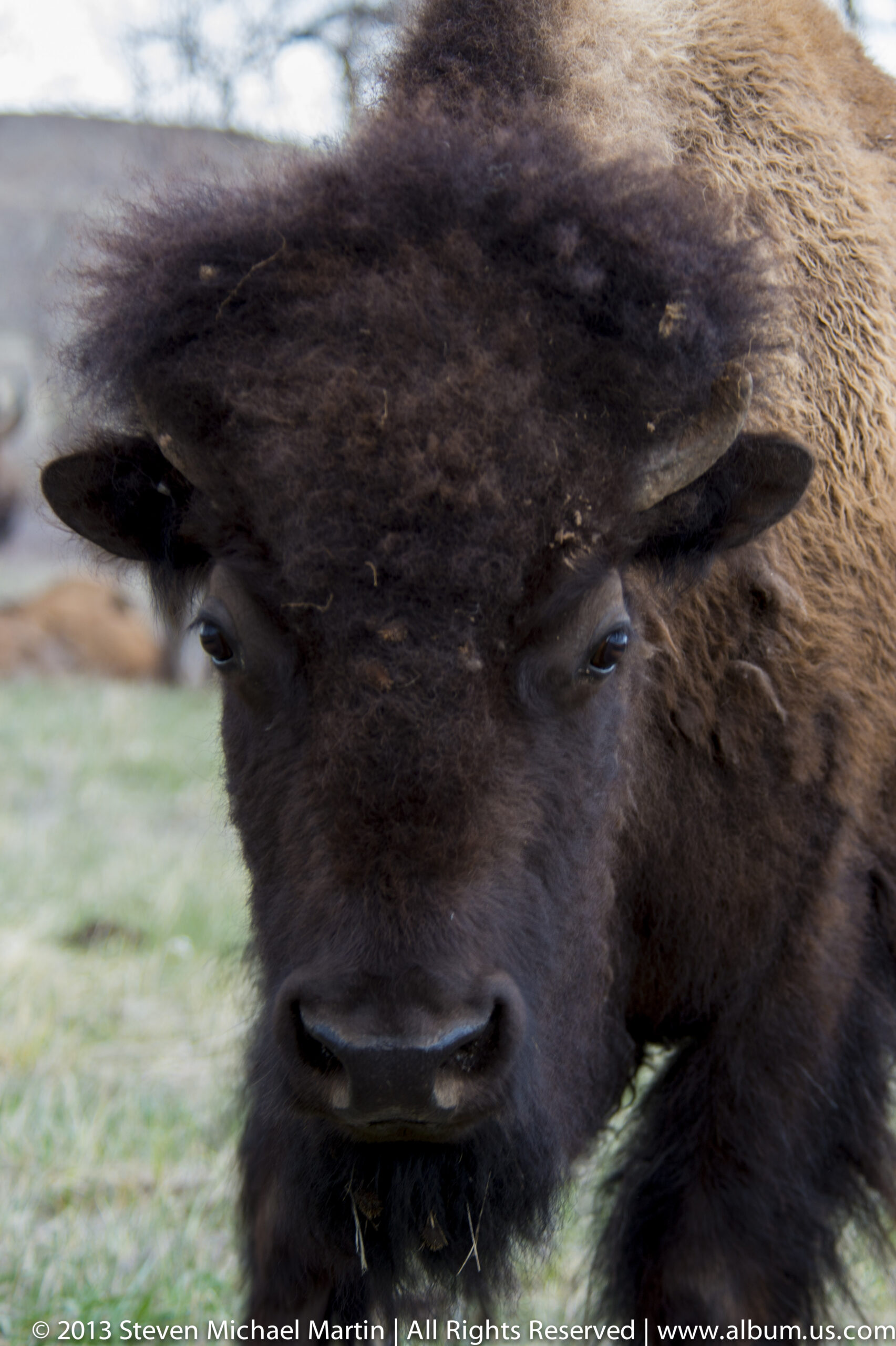
A bison faces the camera at very close range, its broad forehead, short curved horns, and wide muzzle dominating the composition. The eyes sit beneath a fringe of dark hair, while the shaggy coat fills nearly all of the frame. Soft green grass appears behind the head, but the tight crop removes most environmental context and focuses attention on the animal’s direct gaze.
Caption
A bison faces the camera at very close range, its broad forehead, short curved horns, and wide muzzle dominating the composition. The eyes sit beneath a fringe of dark hair, while the shaggy coat fills nearly all of the frame. Soft green grass appears behind the head, but the tight crop removes most environmental context and focuses attention on the animal’s direct gaze.
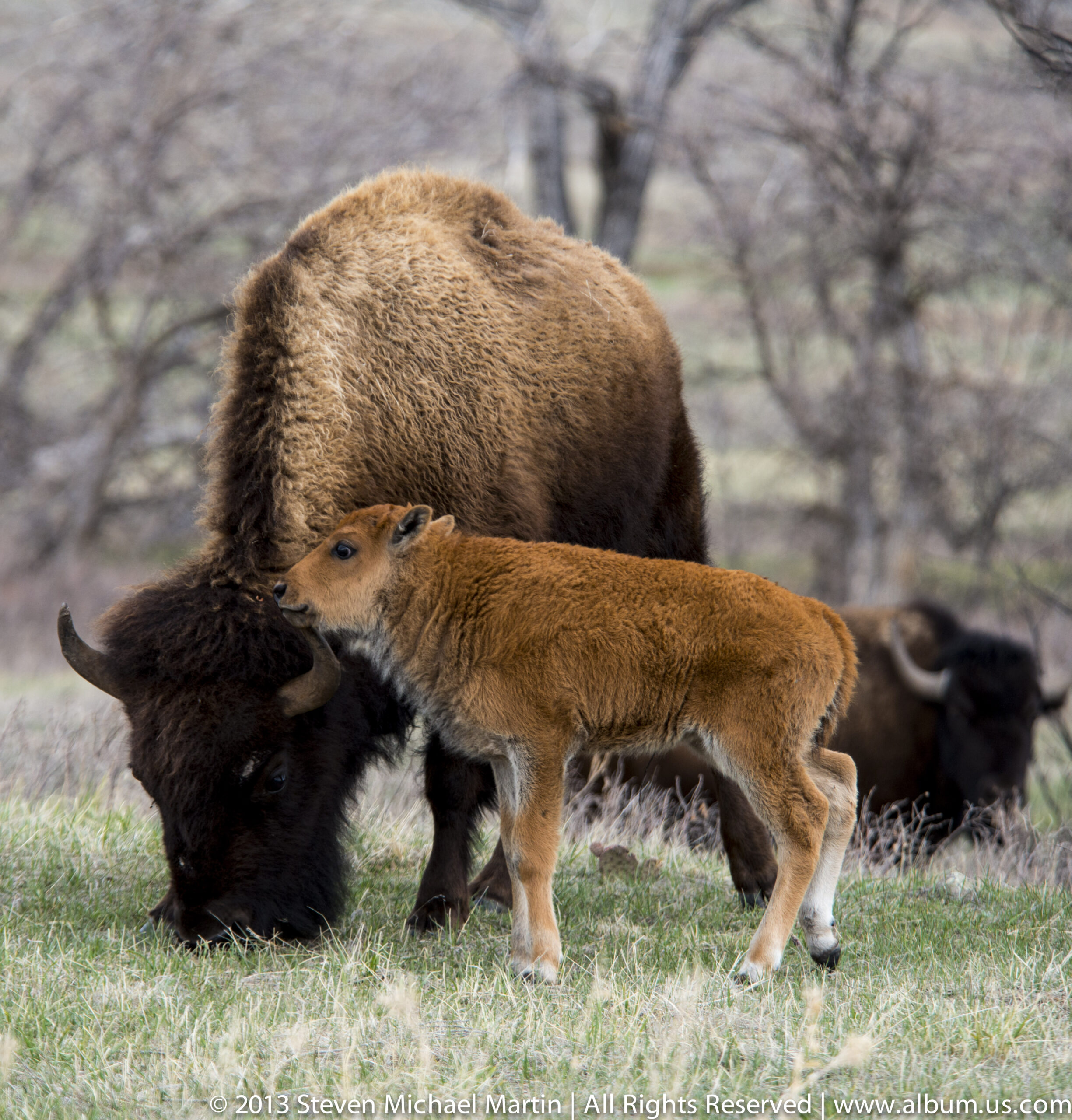
A reddish young bison presses its muzzle against the lowered head of an adult grazing in short grass. The calf’s body stretches across the foreground, while the adult’s shaggy head and curved horn are partly obscured beneath it; other bison appear out of focus in the background. The contact suggests nursing or close maternal care, though the visible posture does not confirm feeding.
Caption
A reddish young bison presses its muzzle against the lowered head of an adult grazing in short grass. The calf’s body stretches across the foreground, while the adult’s shaggy head and curved horn are partly obscured beneath it; other bison appear out of focus in the background. The contact suggests nursing or close maternal care, though the visible posture does not confirm feeding.
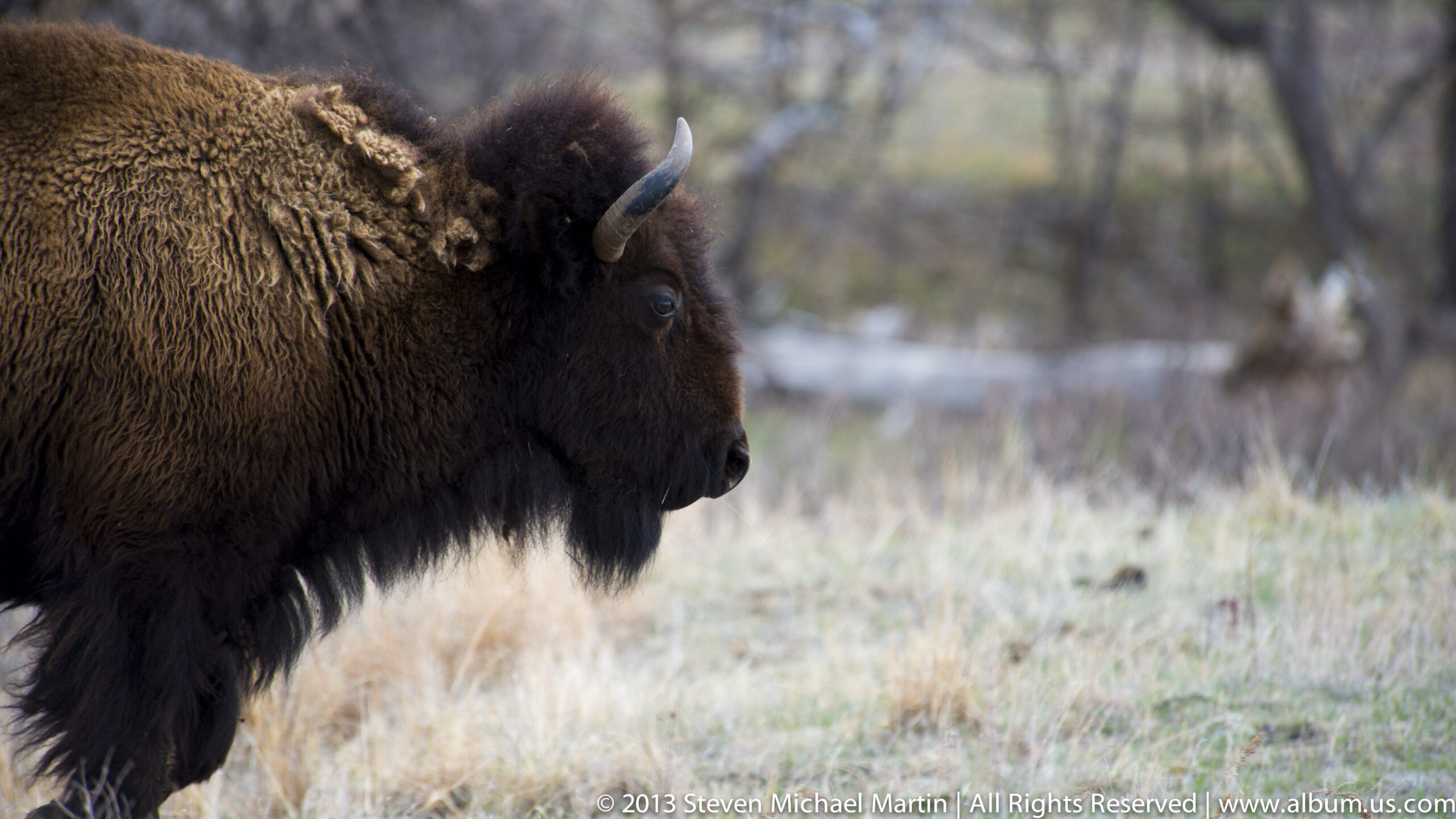
A bison’s head and shoulder fill the left side of the frame, showing the curved horn, dark eye, and dense shaggy mane. The animal faces right toward a softly blurred woodland clearing. Close cropping and shallow focus concentrate attention on its facial features and coarse winter coat.
Caption
A bison’s head and shoulder fill the left side of the frame, showing the curved horn, dark eye, and dense shaggy mane. The animal faces right toward a softly blurred woodland clearing. Close cropping and shallow focus concentrate attention on its facial features and coarse winter coat.
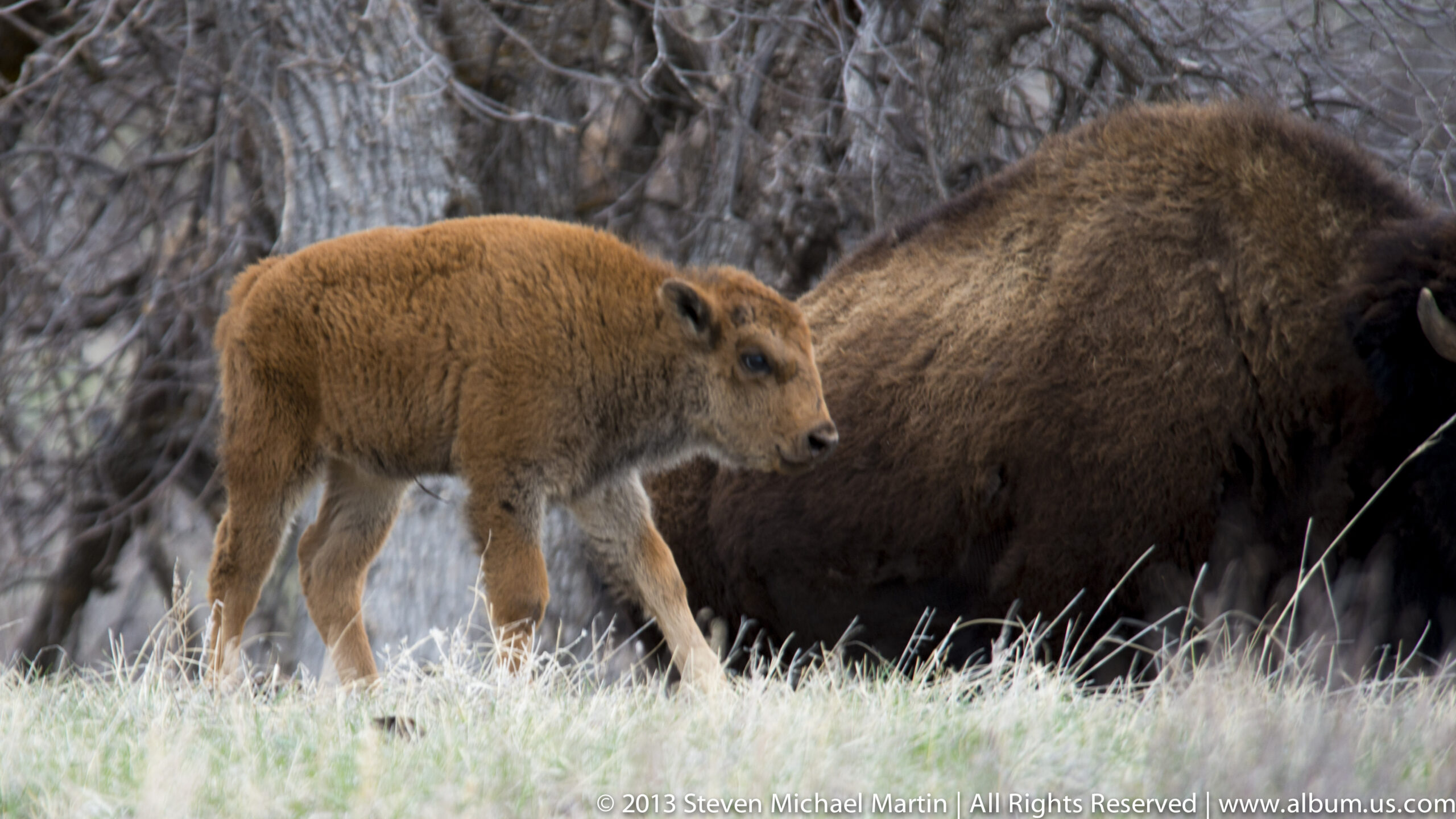
A young bison calf presses its muzzle against the shoulder of a larger adult in a leafless woodland clearing. The calf’s smaller reddish-brown body contrasts with the adult’s darker, heavier coat. Their close contact and lowered heads create a quiet maternal interaction within the herd.
Caption
A young bison calf presses its muzzle against the shoulder of a larger adult in a leafless woodland clearing. The calf’s smaller reddish-brown body contrasts with the adult’s darker, heavier coat. Their close contact and lowered heads create a quiet maternal interaction within the herd.
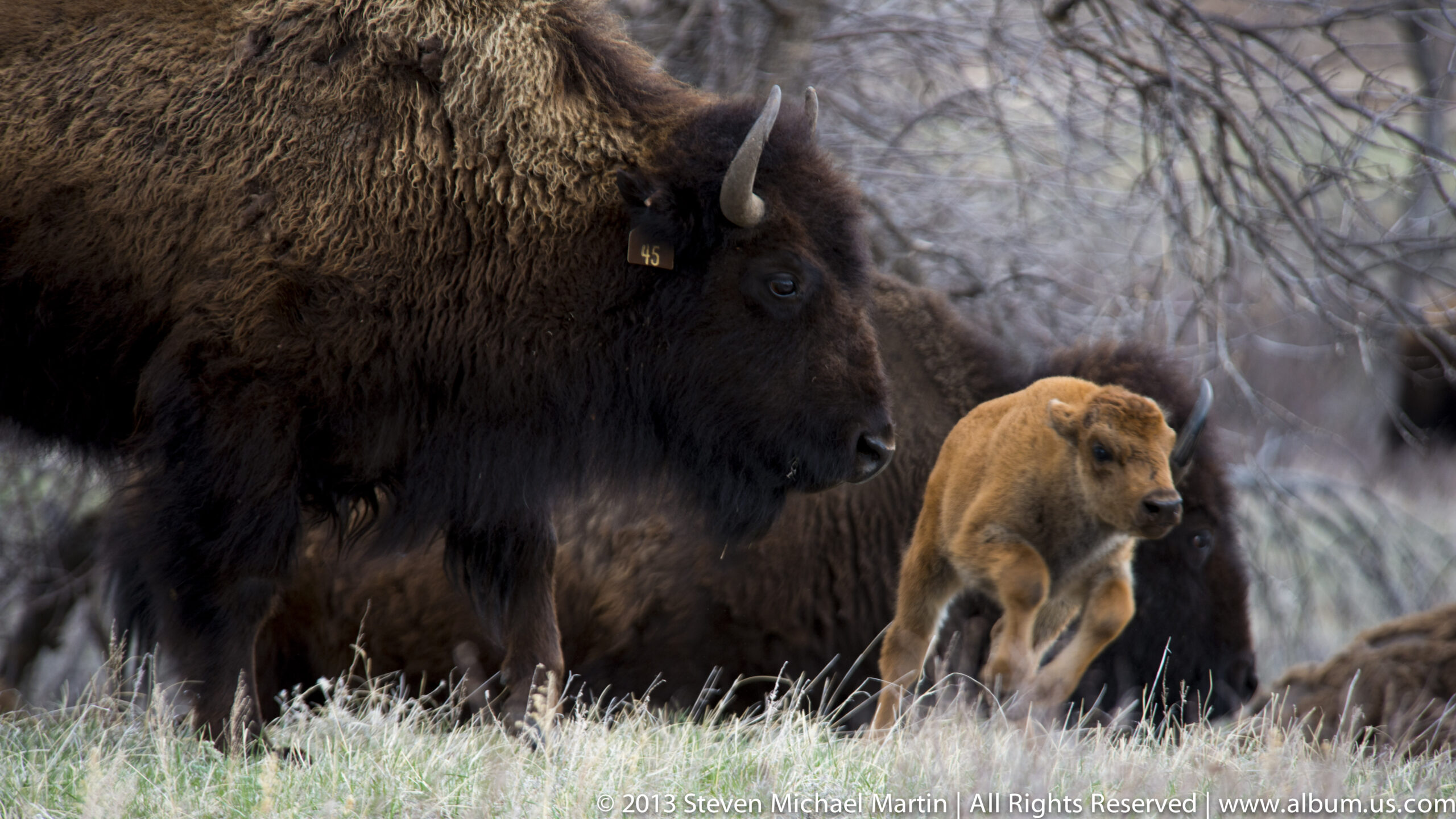
A heavy-coated adult bison stands in spring grass beside a reddish calf, with another dark bison partly visible behind them. A small numbered tag hangs below the adult’s horn, and leafless brush fills the soft background. The calf’s proximity and smaller frame make the family grouping the focus, while the tag distinguishes this view from the other bison portraits on the page.
Caption
A heavy-coated adult bison stands in spring grass beside a reddish calf, with another dark bison partly visible behind them. A small numbered tag hangs below the adult’s horn, and leafless brush fills the soft background. The calf’s proximity and smaller frame make the family grouping the focus, while the tag distinguishes this view from the other bison portraits on the page.
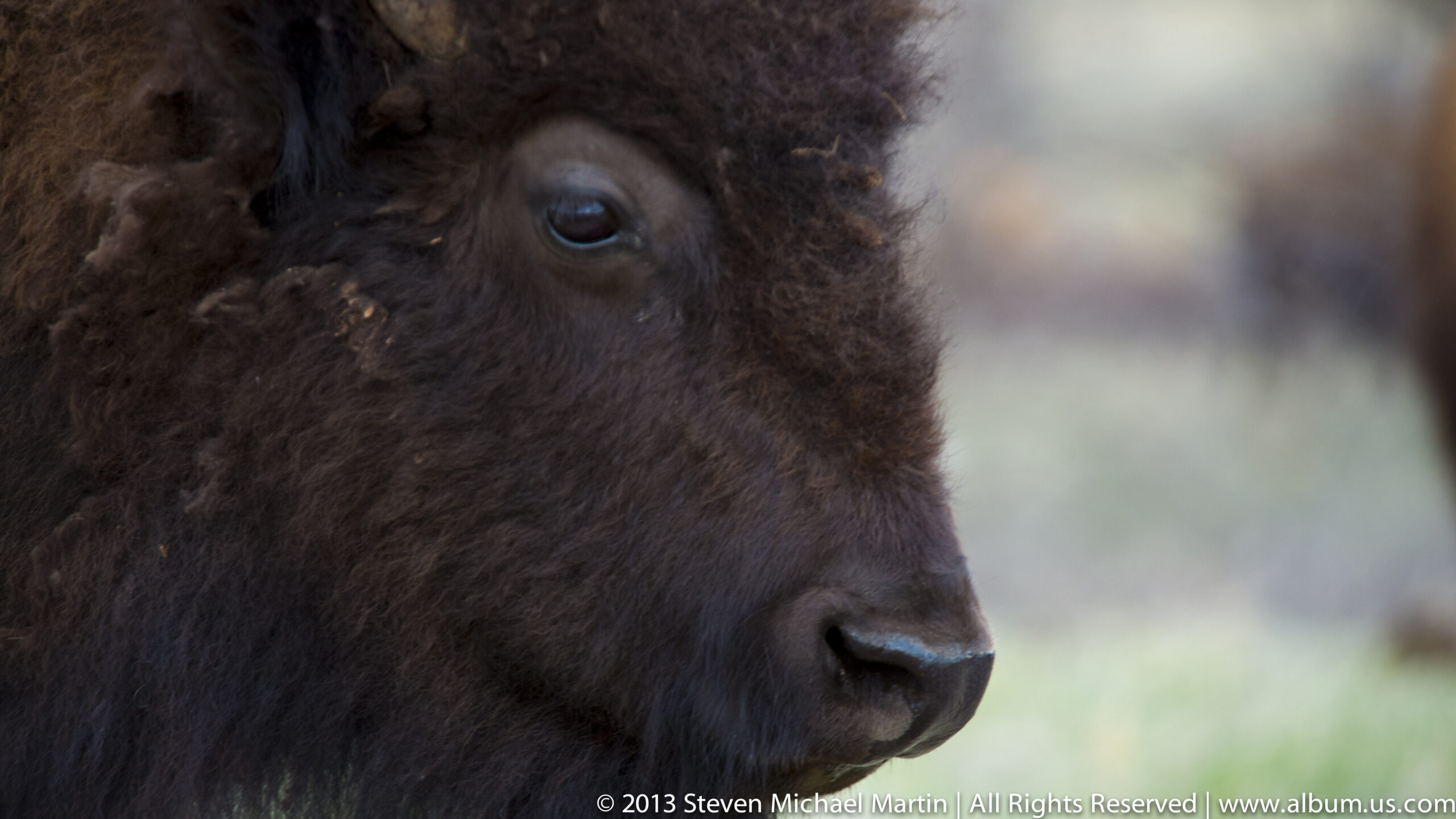
The bison’s shaggy head fills the frame in close profile, bringing its dark eye, broad muzzle, and dense brown-black coat into sharp relief. A narrow strip of pale grass and blurred woodland remains at the right edge, separating the animal from its surroundings. With no full body or herd visible, this intimate portrait concentrates on the animal’s facial features and thick winter coat.
Caption
The bison’s shaggy head fills the frame in close profile, bringing its dark eye, broad muzzle, and dense brown-black coat into sharp relief. A narrow strip of pale grass and blurred woodland remains at the right edge, separating the animal from its surroundings. With no full body or herd visible, this intimate portrait concentrates on the animal’s facial features and thick winter coat.
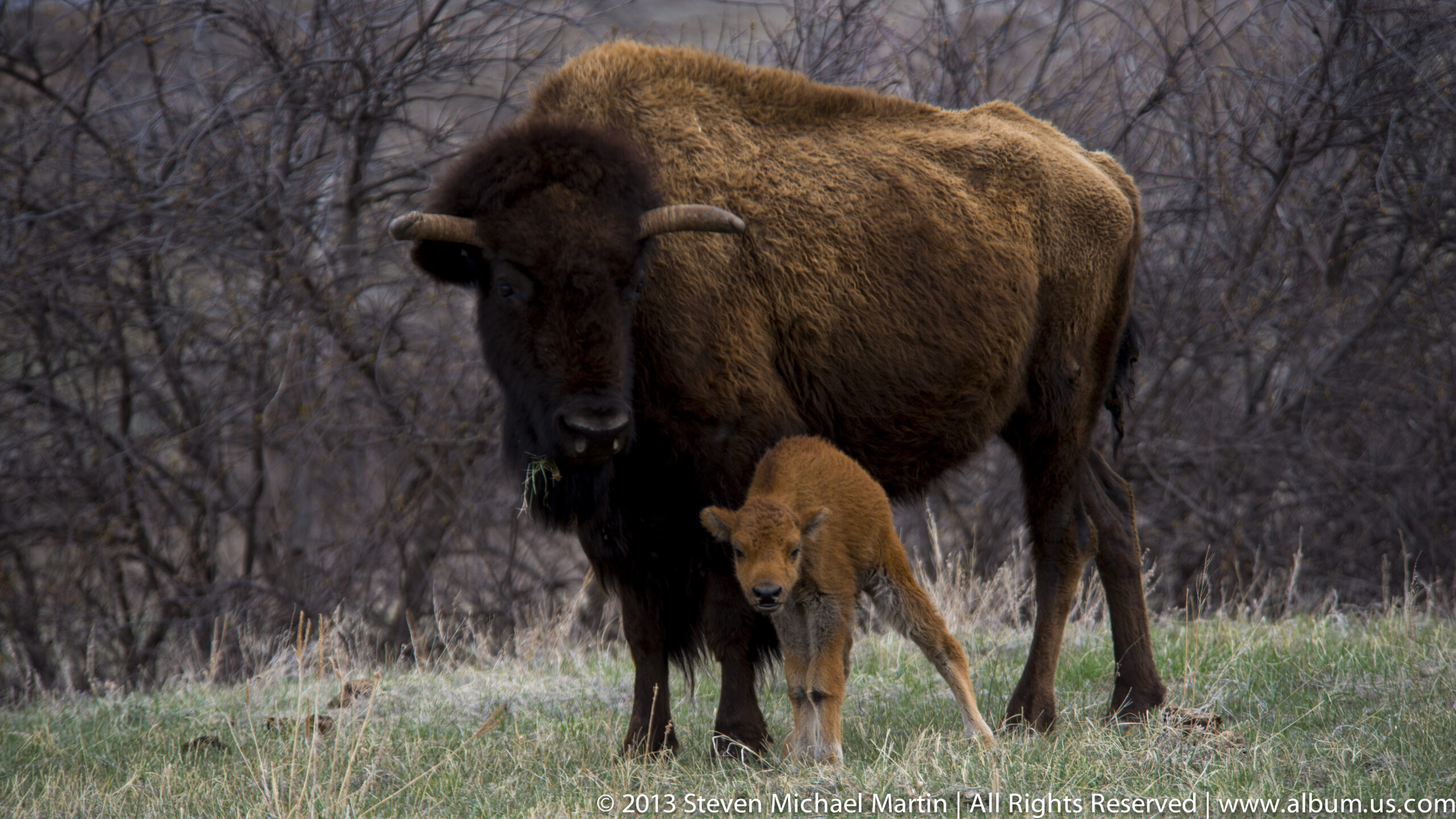
An adult bison stands over a small calf in a grassy clearing edged by leafless trees. The calf steps forward beneath the adult’s chest, while the larger animal lowers its head toward the camera. Their contrasting scale and close position make the relationship legible without relying on a wider herd scene. The brown spring coat and fresh green ground soften the otherwise rugged wildlife portrait.
Caption
An adult bison stands over a small calf in a grassy clearing edged by leafless trees. The calf steps forward beneath the adult’s chest, while the larger animal lowers its head toward the camera. Their contrasting scale and close position make the relationship legible without relying on a wider herd scene. The brown spring coat and fresh green ground soften the otherwise rugged wildlife portrait.
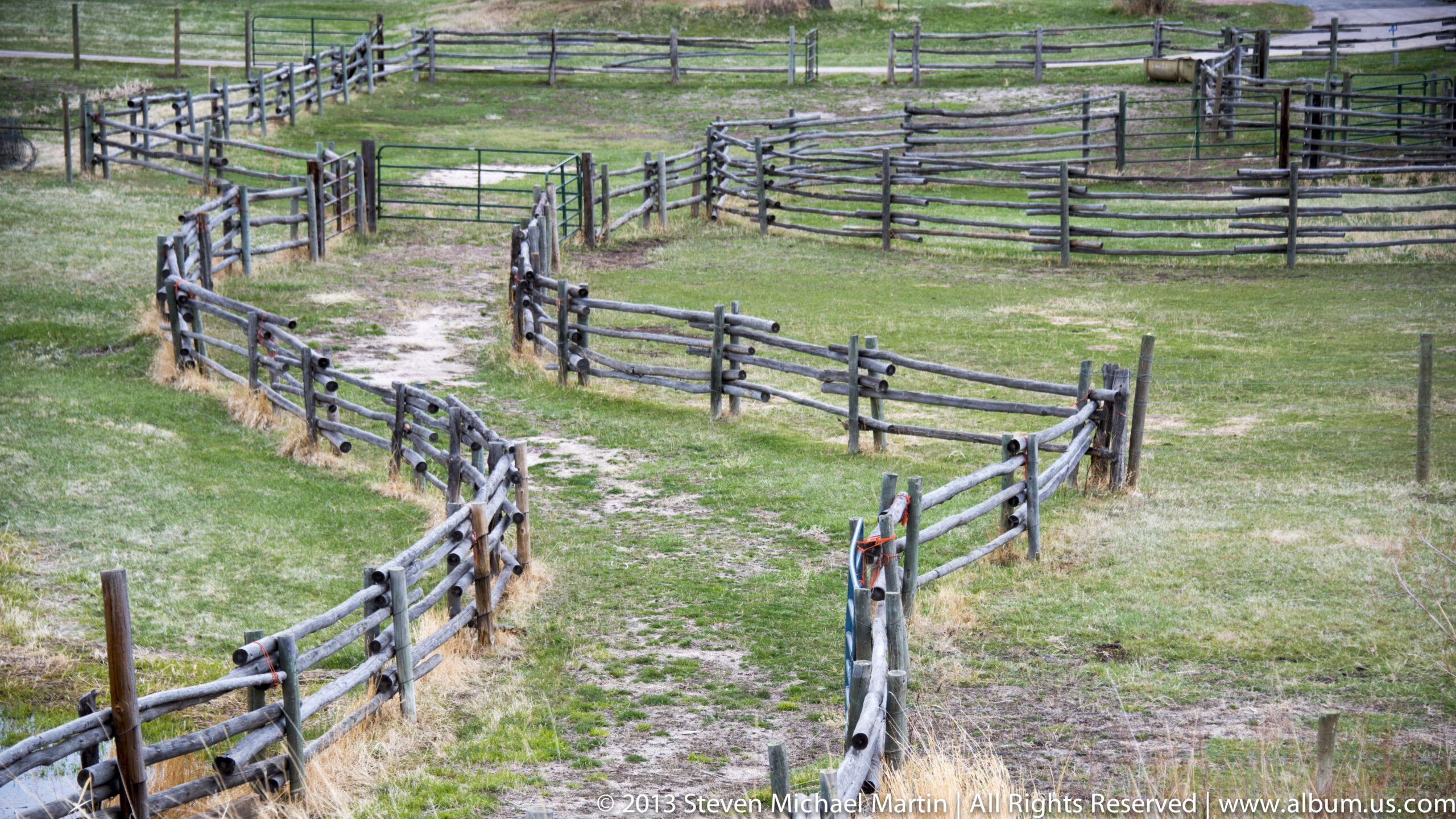
Weathered roundwood rails form a sequence of fenced enclosures across a green pasture. The nearest fence lines angle inward from both lower corners, guiding the eye through gates and smaller pens toward additional corrals beyond. No people or livestock are present, so the photograph emphasizes the layout and practical construction of the holding area against open grassland.
Caption
Weathered roundwood rails form a sequence of fenced enclosures across a green pasture. The nearest fence lines angle inward from both lower corners, guiding the eye through gates and smaller pens toward additional corrals beyond. No people or livestock are present, so the photograph emphasizes the layout and practical construction of the holding area against open grassland.
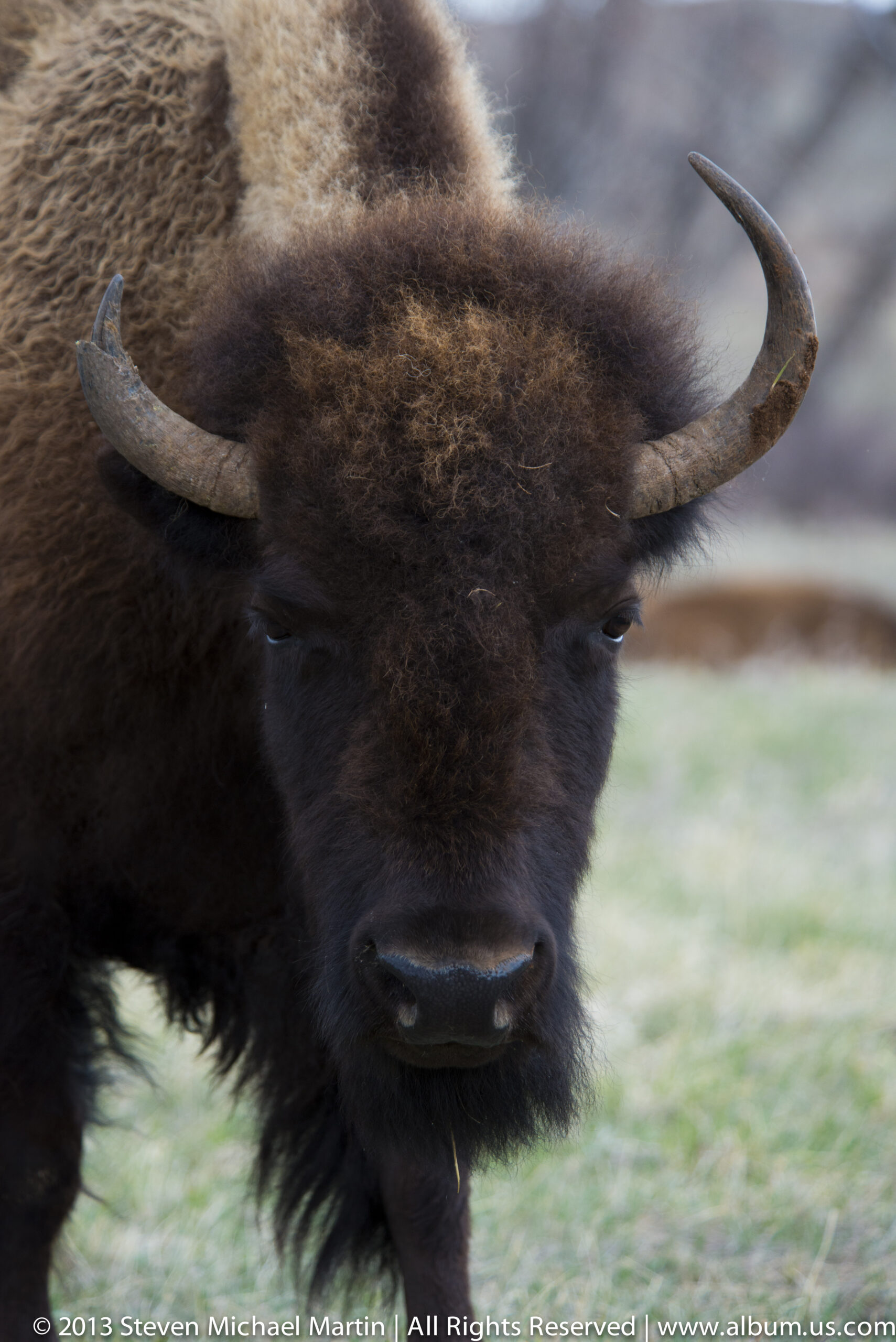
A shaggy bison lowers its head to graze, its long curved horns extending outward on either side of the dark forehead. The close crop isolates the horns, eyes, muzzle, and heavy coat, with blurred grass behind the animal. This angle foregrounds the broad sweep and symmetry of the horns, contrasting with the direct frontal and side-profile portraits elsewhere on the page.
Caption
A shaggy bison lowers its head to graze, its long curved horns extending outward on either side of the dark forehead. The close crop isolates the horns, eyes, muzzle, and heavy coat, with blurred grass behind the animal. This angle foregrounds the broad sweep and symmetry of the horns, contrasting with the direct frontal and side-profile portraits elsewhere on the page.
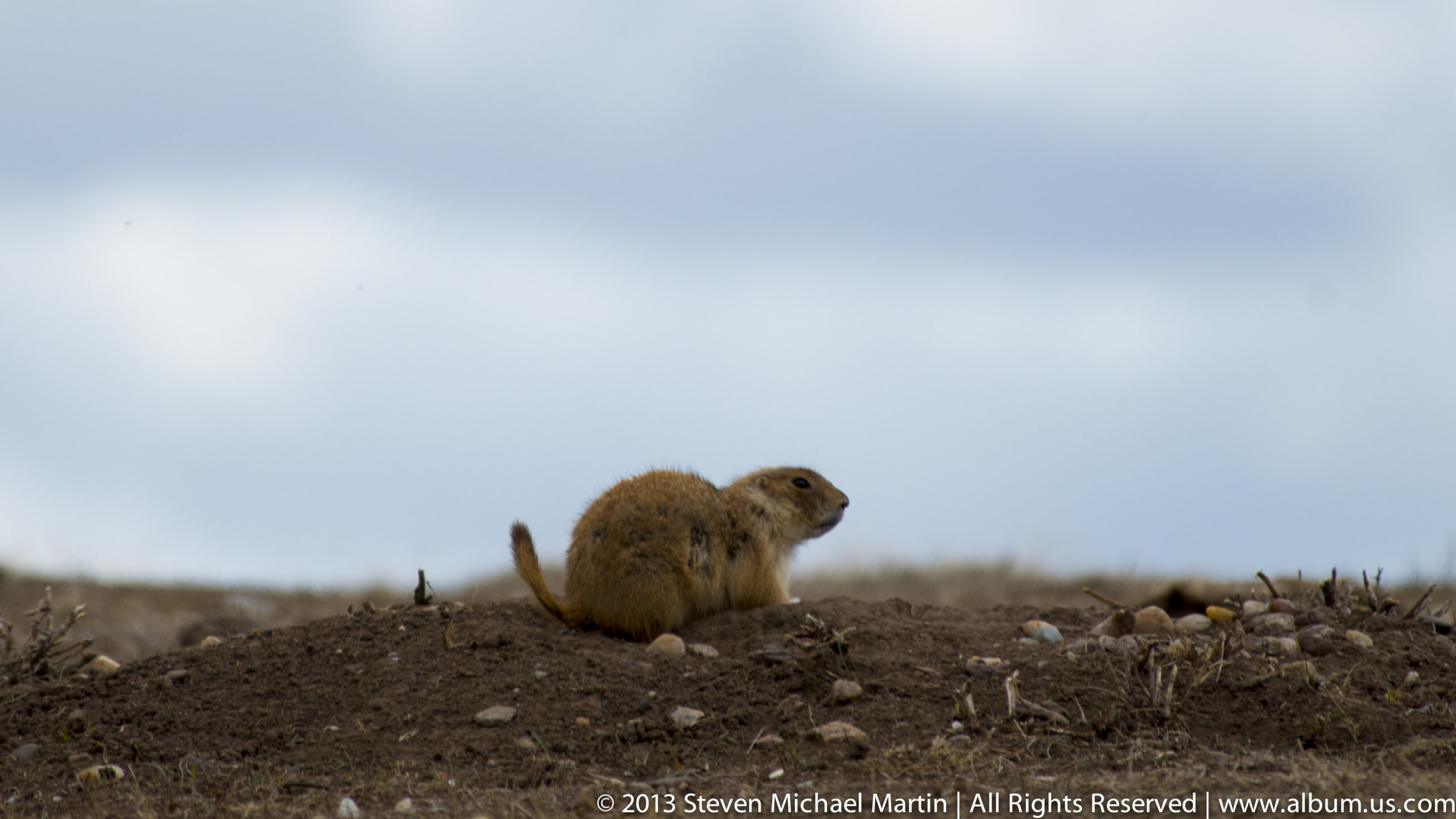
A prairie dog sits low on a mound of bare earth, turned in profile against a broad, nearly empty sky. Sparse grasses and small stones break up the dark soil along the ridge. The animal is positioned near the lower edge of the frame, and the generous negative space makes its alert silhouette and exposed burrow mound the defining features.
Caption
A prairie dog sits low on a mound of bare earth, turned in profile against a broad, nearly empty sky. Sparse grasses and small stones break up the dark soil along the ridge. The animal is positioned near the lower edge of the frame, and the generous negative space makes its alert silhouette and exposed burrow mound the defining features.
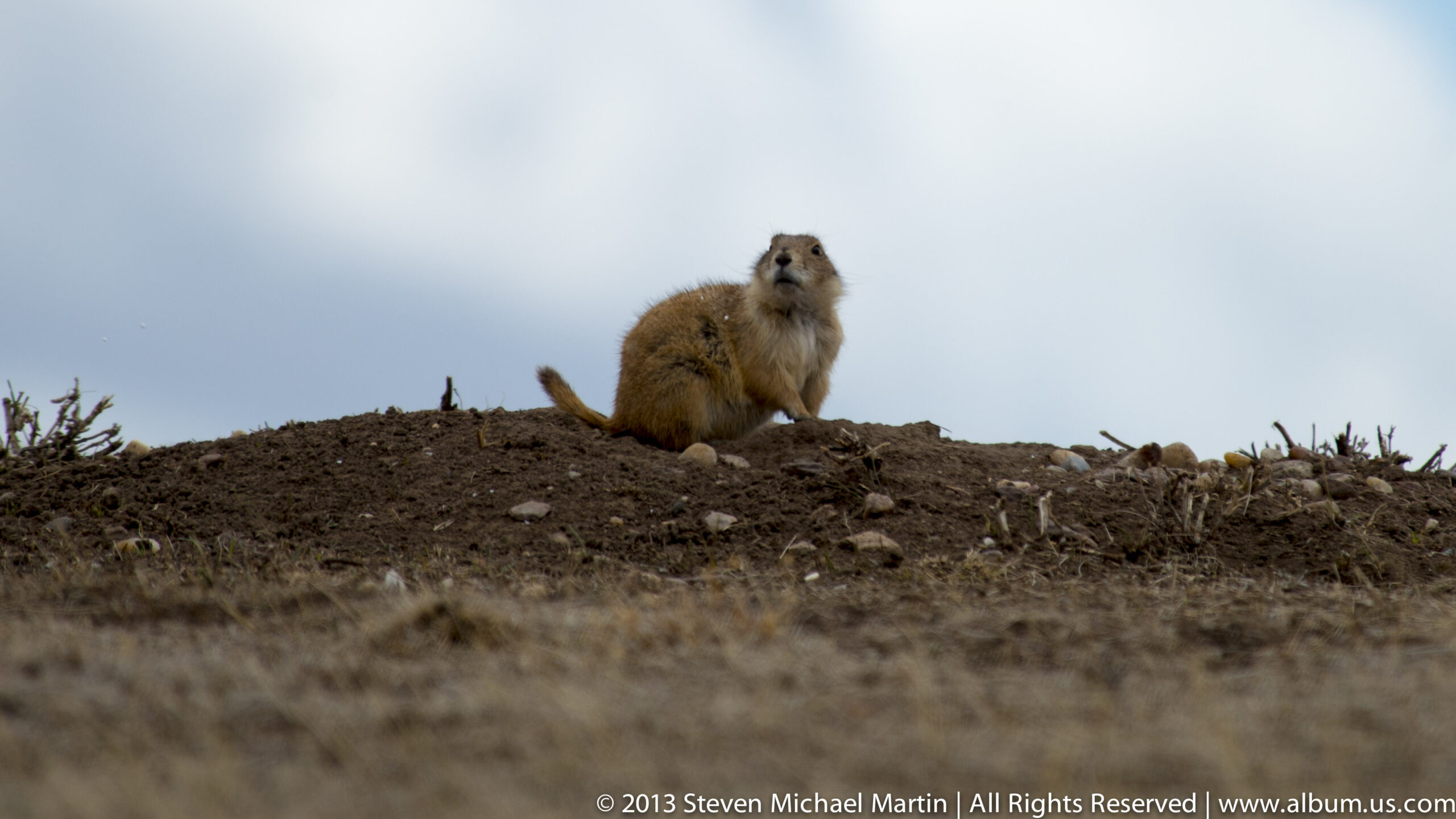
An upright prairie dog watches from the crest of a dark burrow mound, its forepaws held close to its chest and its face turned toward the camera. The low viewpoint places the animal against a large, pale blue sky, while sparse shrubs trace the mound’s uneven edge. This portrait centers the lookout posture rather than the side-on ground-level view nearby.
Caption
An upright prairie dog watches from the crest of a dark burrow mound, its forepaws held close to its chest and its face turned toward the camera. The low viewpoint places the animal against a large, pale blue sky, while sparse shrubs trace the mound’s uneven edge. This portrait centers the lookout posture rather than the side-on ground-level view nearby.
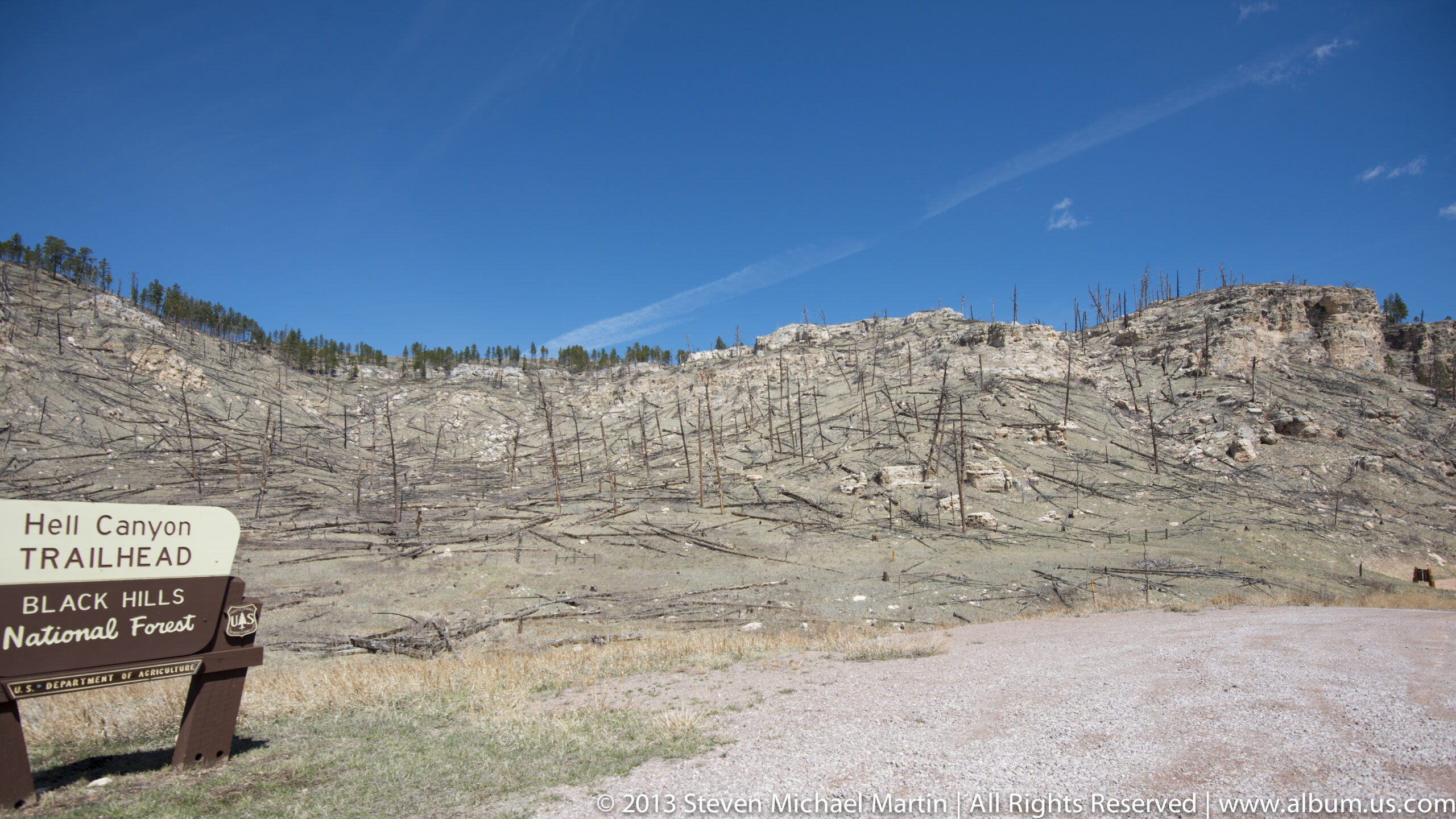
A sign at the lower left identifies the Hell Canyon Trailhead in Black Hills National Forest. Behind it, a pale, fire-scarred slope rises beneath a deep blue sky, with many bare trunks among surviving green trees. The placement of the legible trail marker beside the burned woodland connects a named access point to visible evidence of a past wildfire.
Caption
A sign at the lower left identifies the Hell Canyon Trailhead in Black Hills National Forest. Behind it, a pale, fire-scarred slope rises beneath a deep blue sky, with many bare trunks among surviving green trees. The placement of the legible trail marker beside the burned woodland connects a named access point to visible evidence of a past wildfire.
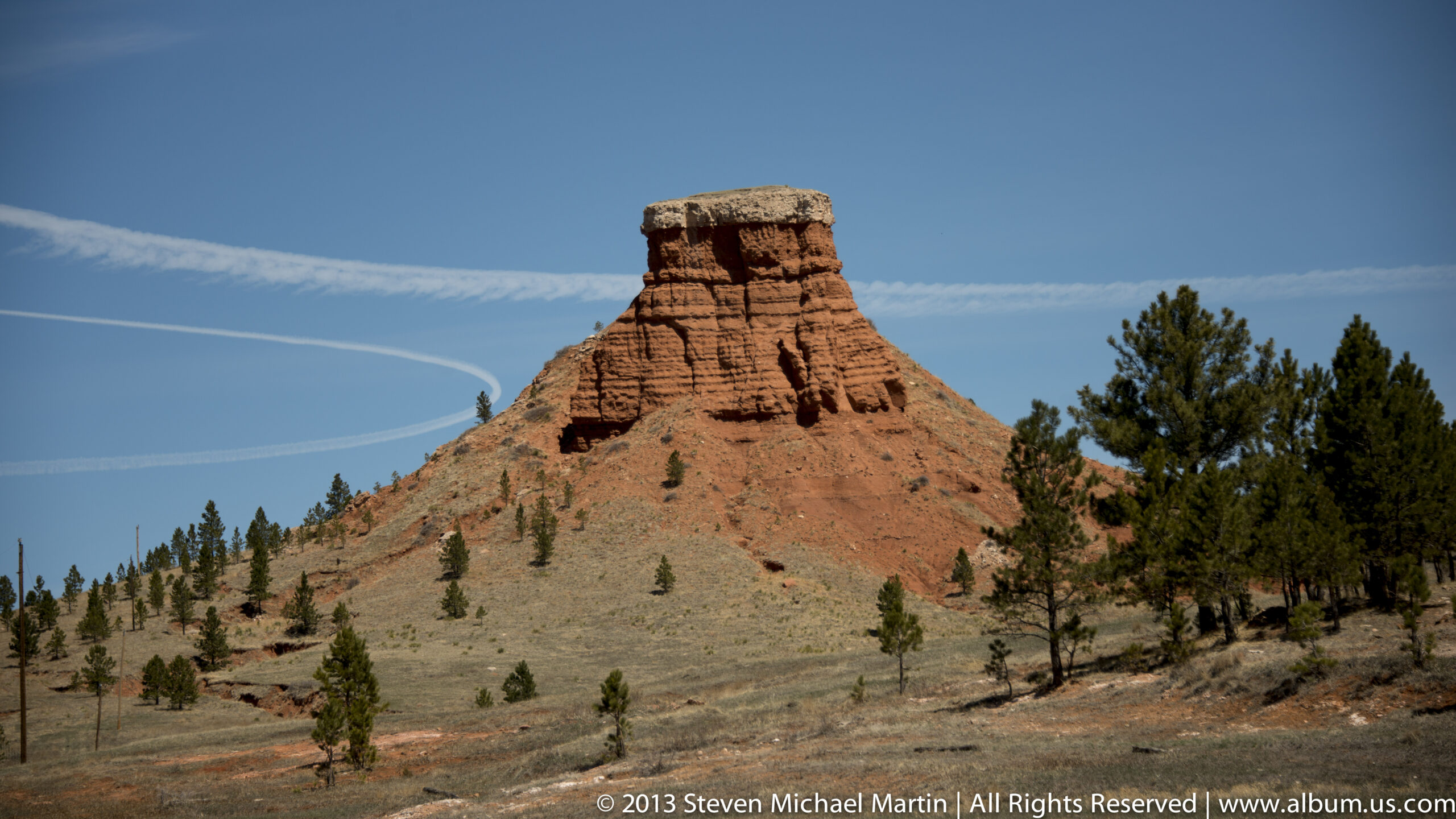
A solitary red rock butte rises above a grassy, sparsely wooded slope, its narrow summit capped by a flat, pale ledge. Horizontal bands and vertical erosion grooves mark the steep orange face, while a few pines punctuate the surrounding hillside. Thin white clouds and aircraft contrails cross the blue sky. The distinctive cap and isolated profile define the composition without identifying a specific named formation.
Caption
A solitary red rock butte rises above a grassy, sparsely wooded slope, its narrow summit capped by a flat, pale ledge. Horizontal bands and vertical erosion grooves mark the steep orange face, while a few pines punctuate the surrounding hillside. Thin white clouds and aircraft contrails cross the blue sky. The distinctive cap and isolated profile define the composition without identifying a specific named formation.
🦬 Wildlife Encountered
Wildlife encounters in the Black Hills region included American bison, pronghorn, prairie dogs, wild turkey, and grassland bird species characteristic of the northern Great Plains ecosystem. Bison were observed grazing in open prairie landscapes, including close views of calves traveling alongside adult animals, illustrating the ongoing recovery of this iconic species across portions of its historic range.
Pronghorn were seen in open grassland terrain, where their speed and keen eyesight help them thrive in expansive prairie environments. Prairie dog colonies provided additional wildlife activity, with individuals standing alert near burrow entrances. Birdlife included wild turkey and smaller grassland species adapted to the mix of prairie and forest-edge habitats found in the Black Hills region.
Together, these wildlife encounters highlight the ecological transition zone between Great Plains grasslands and the forested hills of the Black Hills, creating diverse habitat for a variety of mammals and bird species.