Charles Young Buffalo Soldiers National Monument
Charles Young Buffalo Soldiers National Monument preserves the home of Colonel Charles Young, one of the most distinguished African American military officers of the late nineteenth and early twentieth centuries. Young served with the Buffalo Soldiers and later became the third African American graduate of West Point. His career reflects perseverance, leadership, and dedication during a period marked by significant social barriers.
The site honors Young’s contributions to military leadership, diplomacy, and education. His service included assignments as a superintendent of national parks and as a military attaché, illustrating the diverse roles he held throughout his career. The preserved home provides insight into Young’s life, accomplishments, and commitment to advancing opportunities for future generations.
Visitors encounter a setting that highlights themes of leadership, resilience, and public service. Interpretive exhibits provide context for understanding the broader history of the Buffalo Soldiers and the role of African American officers in shaping the United States military and civic institutions.
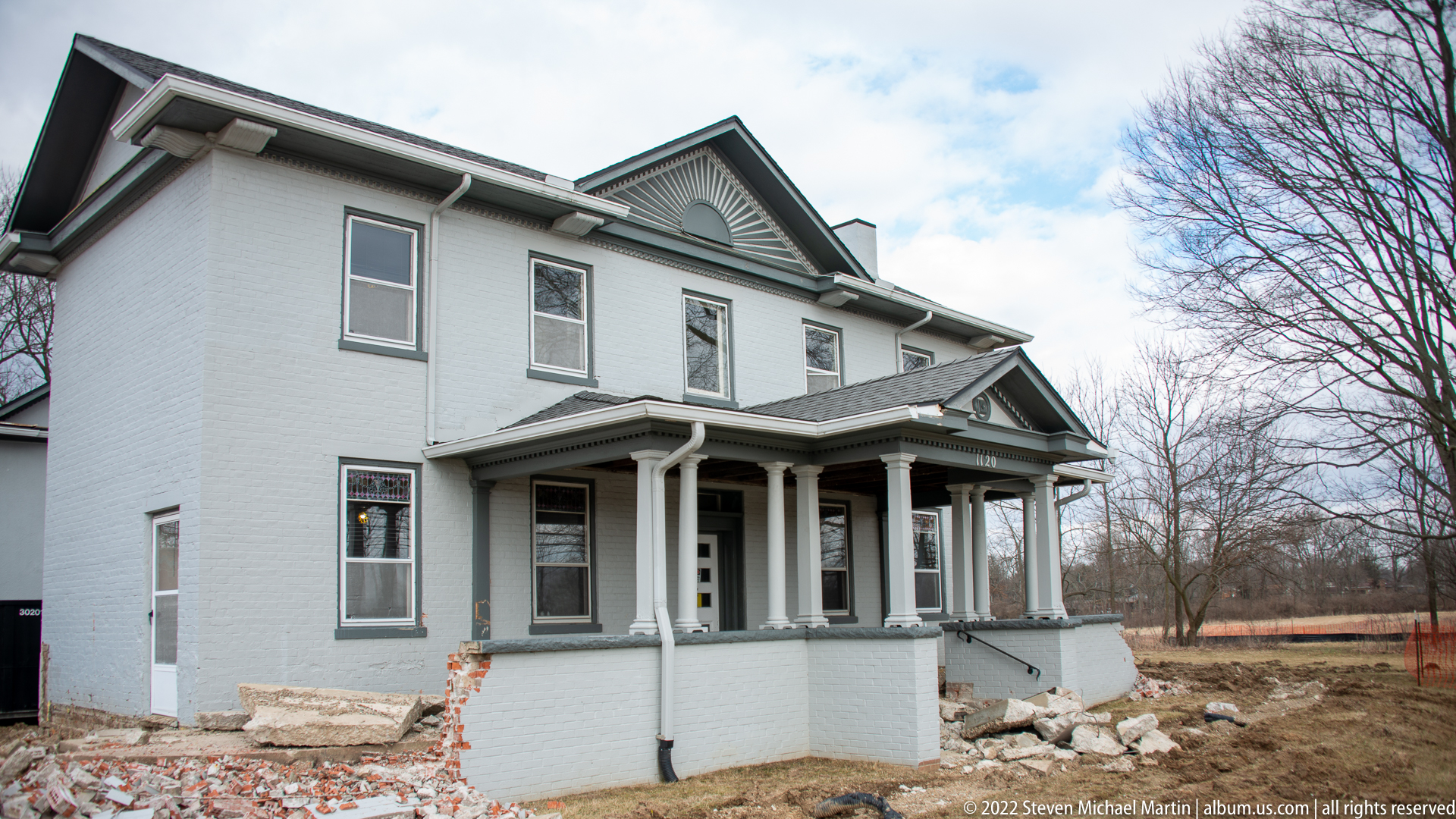
The house’s front porch and projecting entry fill this closer view, showing white columns, a low porch roof, several windows, and the adjoining two-story wall. The camera looks diagonally across the façade toward the side elevation; rubble and exposed ground remain visible at the foundation. Compared with the preceding frontal view, the angle draws attention to the porch structure and the scale of the ongoing work.
Caption
The house’s front porch and projecting entry fill this closer view, showing white columns, a low porch roof, several windows, and the adjoining two-story wall. The camera looks diagonally across the façade toward the side elevation; rubble and exposed ground remain visible at the foundation. Compared with the preceding frontal view, the angle draws attention to the porch structure and the scale of the ongoing work.
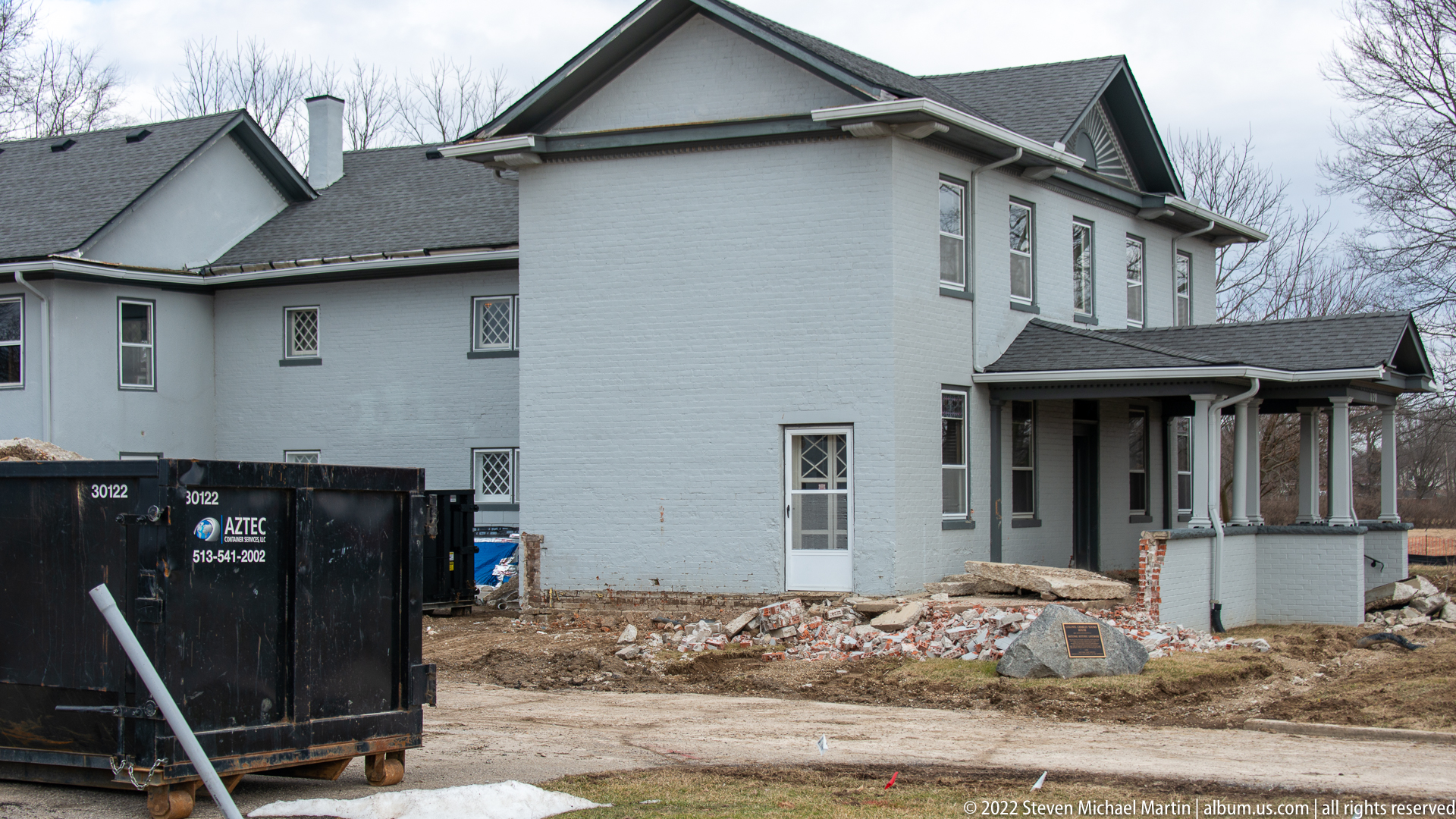
A pale two-story house is seen from its side and front, with a steep gable, small-paned windows, and a covered porch. A large black construction dumpster occupies the left foreground, while broken brick and building material lie along the base of the wall. This oblique view records active exterior work and the building’s substantial side elevation under a gray winter sky.
Caption
A pale two-story house is seen from its side and front, with a steep gable, small-paned windows, and a covered porch. A large black construction dumpster occupies the left foreground, while broken brick and building material lie along the base of the wall. This oblique view records active exterior work and the building’s substantial side elevation under a gray winter sky.
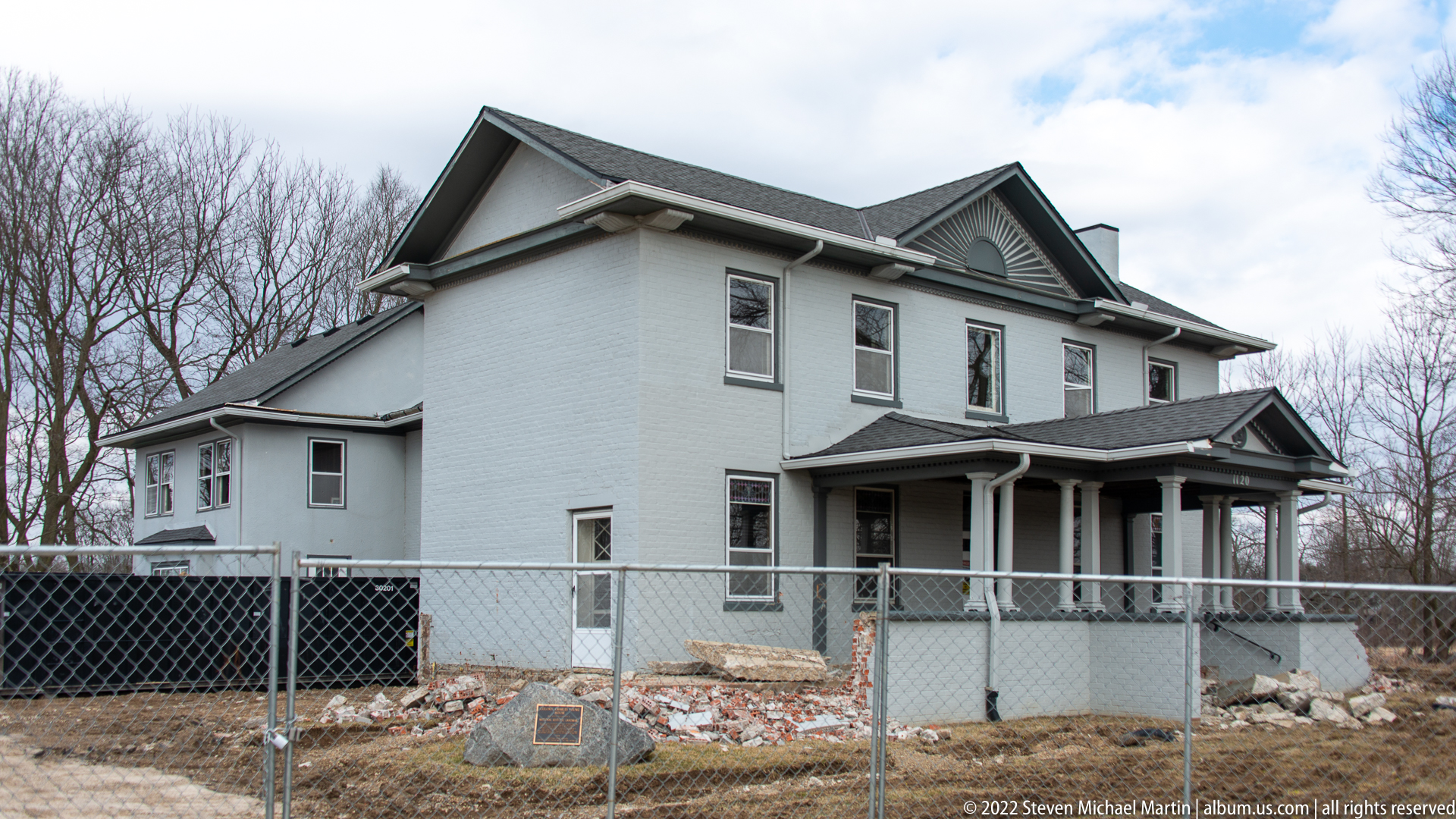
A pale two-story residence is photographed nearly head-on behind a temporary chain-link fence. Its columned front porch, layered gables, evenly spaced windows, and dark roof define a balanced façade, while exposed soil and fragments of masonry mark the work zone in front. The broad view emphasizes the building’s architectural arrangement and current condition rather than a single construction detail.
Caption
A pale two-story residence is photographed nearly head-on behind a temporary chain-link fence. Its columned front porch, layered gables, evenly spaced windows, and dark roof define a balanced façade, while exposed soil and fragments of masonry mark the work zone in front. The broad view emphasizes the building’s architectural arrangement and current condition rather than a single construction detail.

A brown Ohio historical marker bearing the name Charles Young stands beside a road, with a large pale two-story house and porch set behind construction fencing. Bare trees, utility lines, and a construction dumpster establish the present-day setting. The wider composition connects the marker with the nearby house without relying on an unreadable property label to establish the building’s history.
Caption
A brown Ohio historical marker bearing the name Charles Young stands beside a road, with a large pale two-story house and porch set behind construction fencing. Bare trees, utility lines, and a construction dumpster establish the present-day setting. The wider composition connects the marker with the nearby house without relying on an unreadable property label to establish the building’s history.
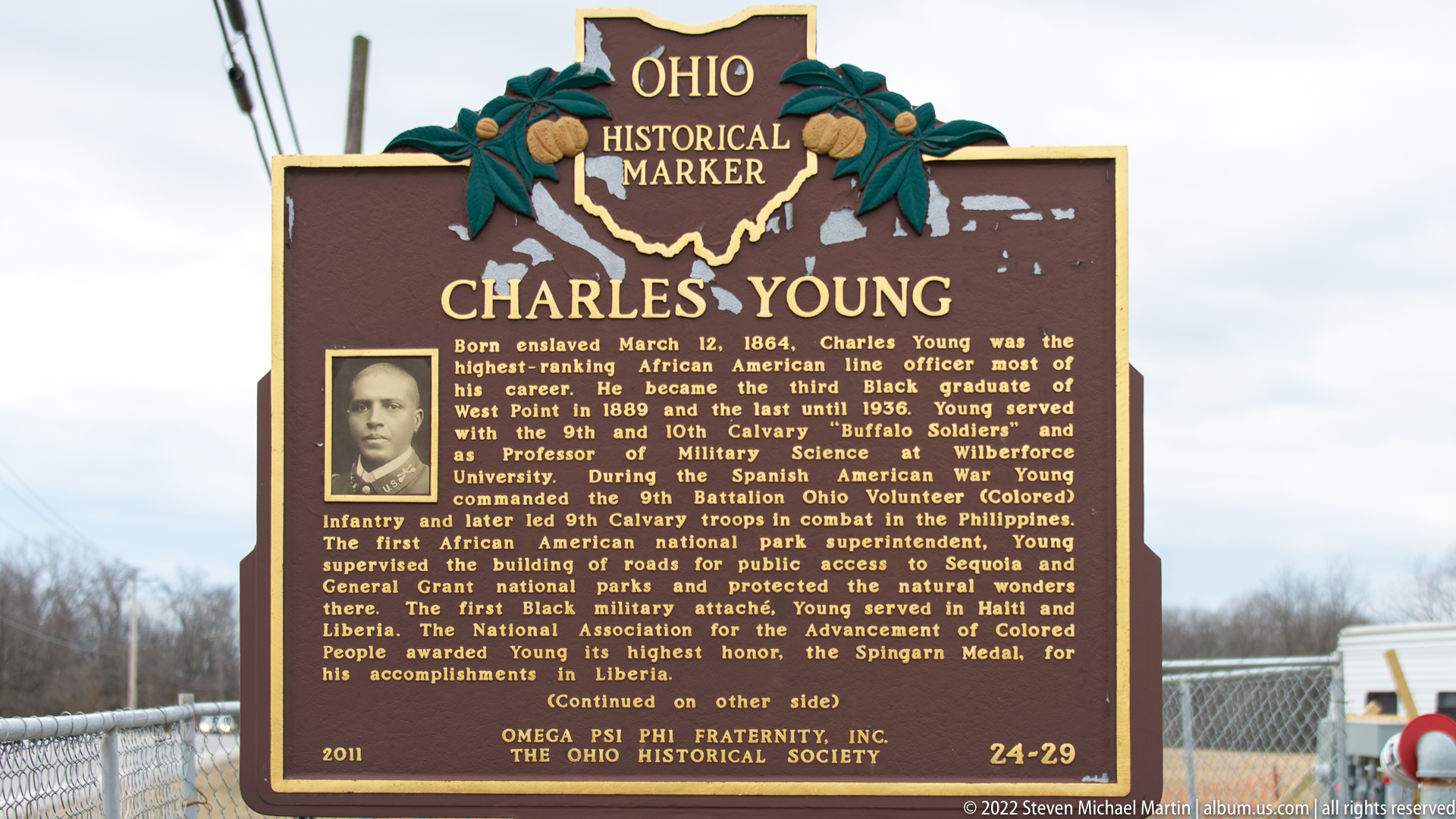
The front face of an Ohio historical marker presents a portrait of Charles Young above a dense gold-lettered account of his life and military career. Its inscription notes his birth, education, service with Buffalo Soldier regiments, and later honors. The close, nearly frontal view makes the portrait and text central, while the roadside setting and leaf-shaped ornament remain visible around the sign.
Caption
The front face of an Ohio historical marker presents a portrait of Charles Young above a dense gold-lettered account of his life and military career. Its inscription notes his birth, education, service with Buffalo Soldier regiments, and later honors. The close, nearly frontal view makes the portrait and text central, while the roadside setting and leaf-shaped ornament remain visible around the sign.
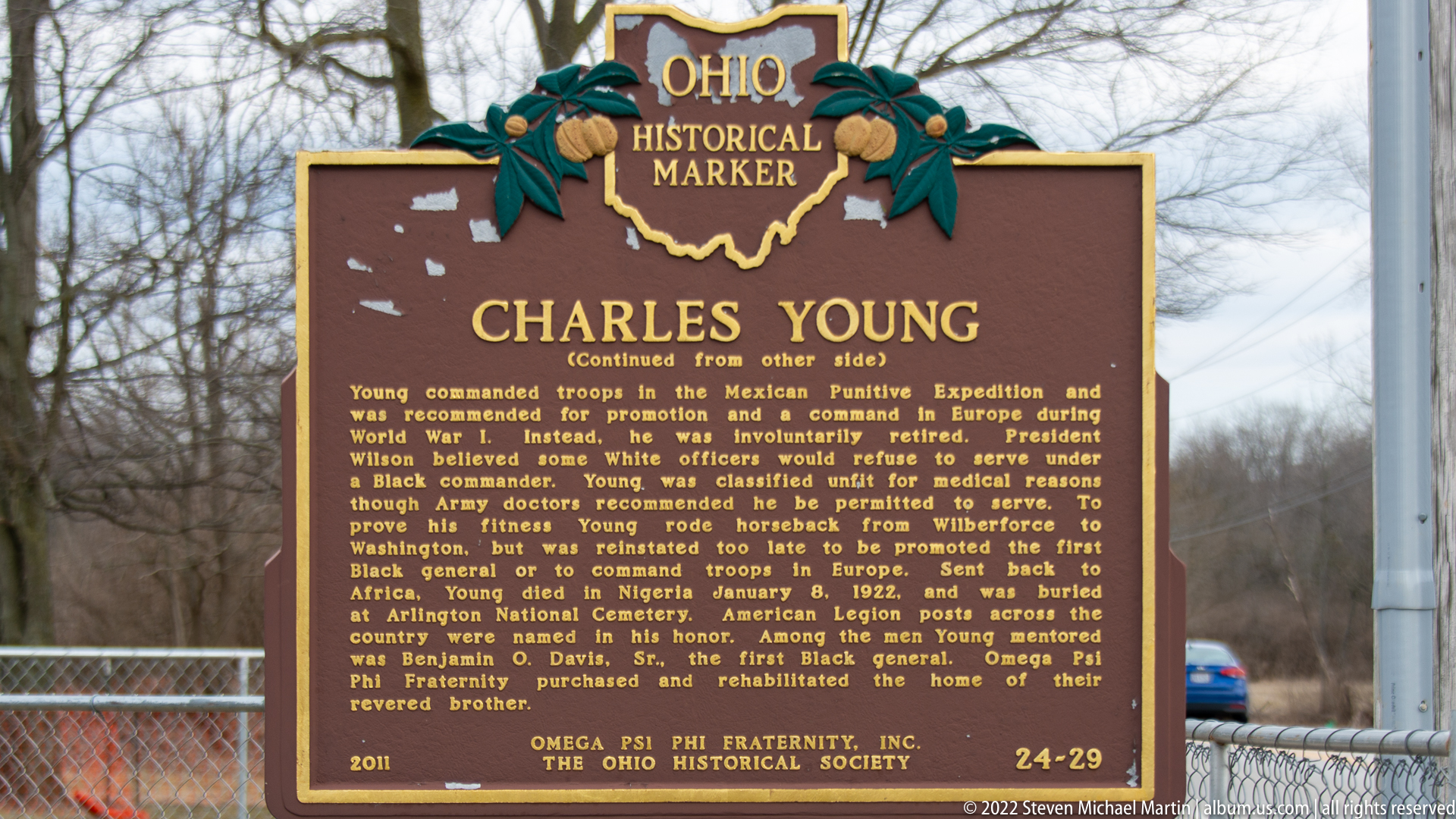
The reverse face of an Ohio historical marker fills the frame, its gold lettering continuing a biography of Charles Young. The text describes his military service, command roles, retirement, and burial, with leafy ornament framing the title area. A chain-link fence and bare trees sit behind the sign. The close view makes the marker’s inscription and weathered surface the primary subject.
Caption
The reverse face of an Ohio historical marker fills the frame, its gold lettering continuing a biography of Charles Young. The text describes his military service, command roles, retirement, and burial, with leafy ornament framing the title area. A chain-link fence and bare trees sit behind the sign. The close view makes the marker’s inscription and weathered surface the primary subject.
Charles Young Buffalo Soldiers National Monument — Field Guide
National Monument Field Guide
📍 Overview
Charles Young Buffalo Soldiers National Monument preserves the home and legacy of Colonel Charles Young, a pioneering African American military leader and one of the highest-ranking Black officers of his era. Young’s career included service with the Buffalo Soldiers, diplomatic assignments, and leadership roles connected to early national park administration. His achievements reflect perseverance and dedication in the face of significant social challenges.
The preserved home provides insight into Young’s professional accomplishments and personal life, illustrating the broader historical context of African American military service during the late nineteenth and early twentieth centuries. The site highlights themes of leadership, education, and public service that contributed to lasting institutional change.
⭐ Highlights
- Home of Colonel Charles Young, prominent Buffalo Soldiers officer
- Connection to African American military leadership history
- Association with early national park administration
- Interpretation of diplomatic and educational contributions
- Historic setting reflecting early twentieth-century life
🔎 Key Features
- Historic residence associated with Charles Young’s career
- Interpretive exhibits describing Buffalo Soldiers history
- Context for understanding African American leadership in the military
- Connection to early park management history
- Educational materials describing Young’s broader influence
📷 Photography Notes
- Exterior architectural details provide strong composition elements
- Soft light works well for capturing historic textures
- Look for angles that emphasize the character of the residence
- Framing with surrounding landscape can add context
- Details such as entryways and windows create visual interest
- Consider compositions that convey the personal scale of the site
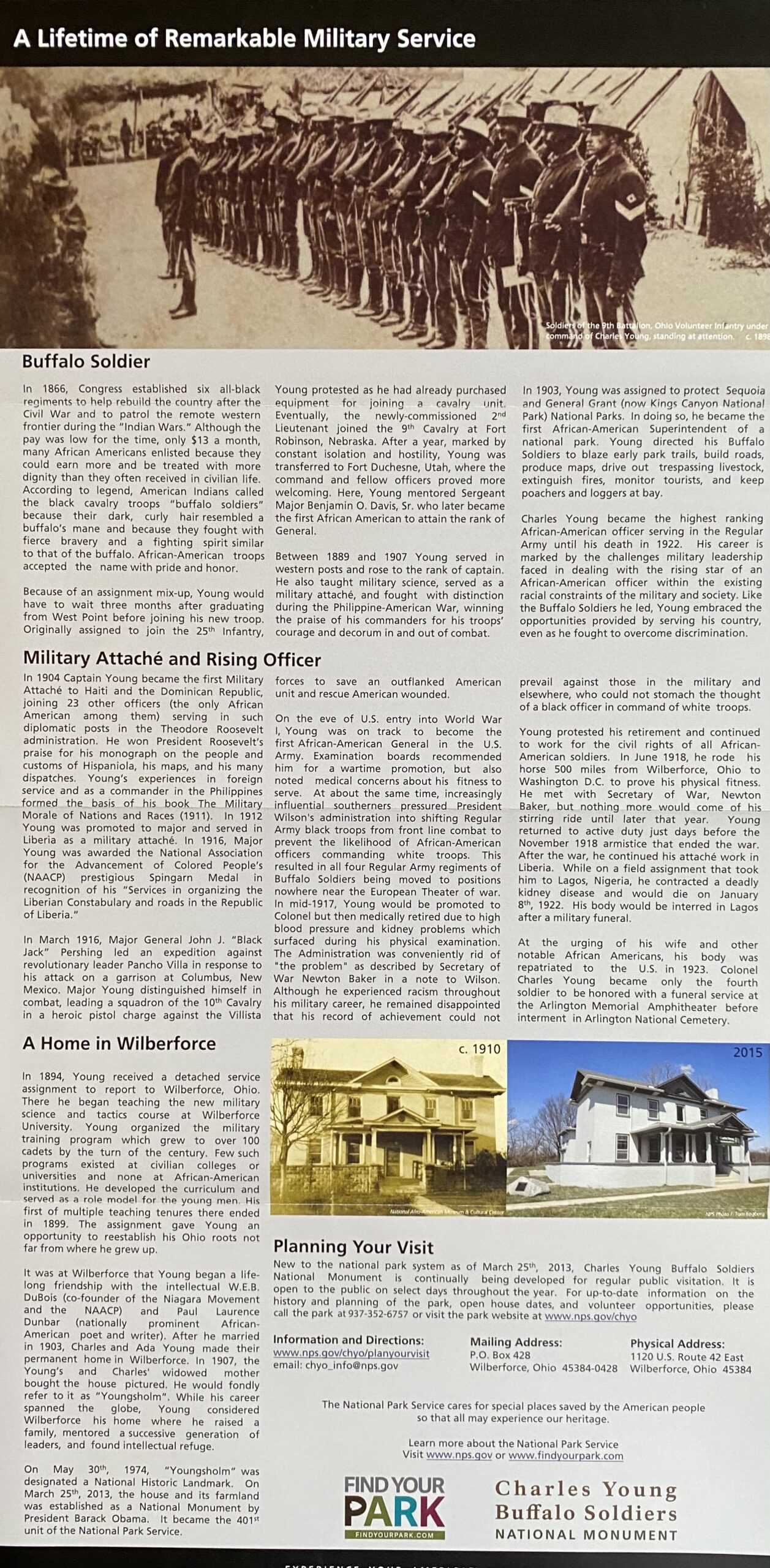
A second exhibit panel titled “A Lifetime of Remarkable Military Service” is organized into sections on Buffalo Soldiers, Young’s military career, his home in Wilberforce, and visiting the site. A sepia photograph of horse-drawn wagons spans the top; lower down, small color photographs show a house and monument grounds. The varied images connect military service with the places associated with Young’s later life.
Caption
A second exhibit panel titled “A Lifetime of Remarkable Military Service” is organized into sections on Buffalo Soldiers, Young’s military career, his home in Wilberforce, and visiting the site. A sepia photograph of horse-drawn wagons spans the top; lower down, small color photographs show a house and monument grounds. The varied images connect military service with the places associated with Young’s later life.
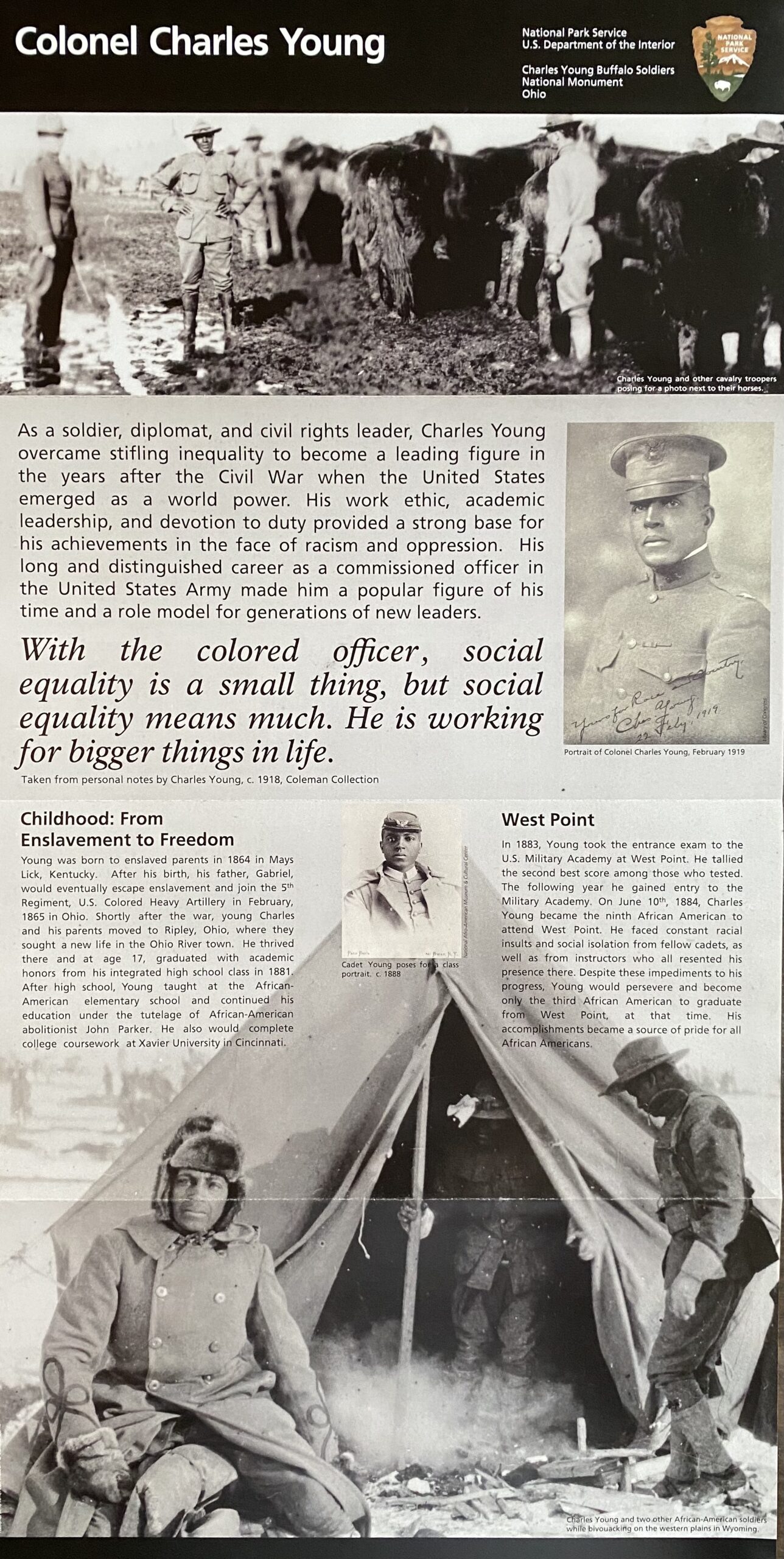
A black-and-white exhibit panel headed “Colonel Charles Young” brings together archival photographs, a portrait, biographical text, and a large quotation about equality and social conditions. One photograph shows people gathered near a tent, while smaller portraits and images punctuate the text. The arrangement links Young’s life and public role to the broader history of Black military service without treating any one archival scene as self-explanatory.
Caption
A black-and-white exhibit panel headed “Colonel Charles Young” brings together archival photographs, a portrait, biographical text, and a large quotation about equality and social conditions. One photograph shows people gathered near a tent, while smaller portraits and images punctuate the text. The arrangement links Young’s life and public role to the broader history of Black military service without treating any one archival scene as self-explanatory.