Fossil Butte National Monument
Fossil Butte National Monument preserves sedimentary rock layers containing exceptionally well-preserved fossils from an ancient freshwater lake that existed approximately fifty million years ago. Fossilized fish, plants, and insects provide insight into prehistoric ecosystems that developed when the climate of the region differed significantly from present conditions.
Fine-grained limestone deposits allowed detailed preservation of delicate biological structures, creating one of the most important fossil records of the Eocene epoch. These fossils illustrate how environmental conditions influence the preservation of biological material across geological time.
Today, Fossil Butte demonstrates how sedimentary environments can preserve evidence of ancient life. The monument provides insight into climate change, species evolution, and ecological conditions that existed long before modern landscapes developed.
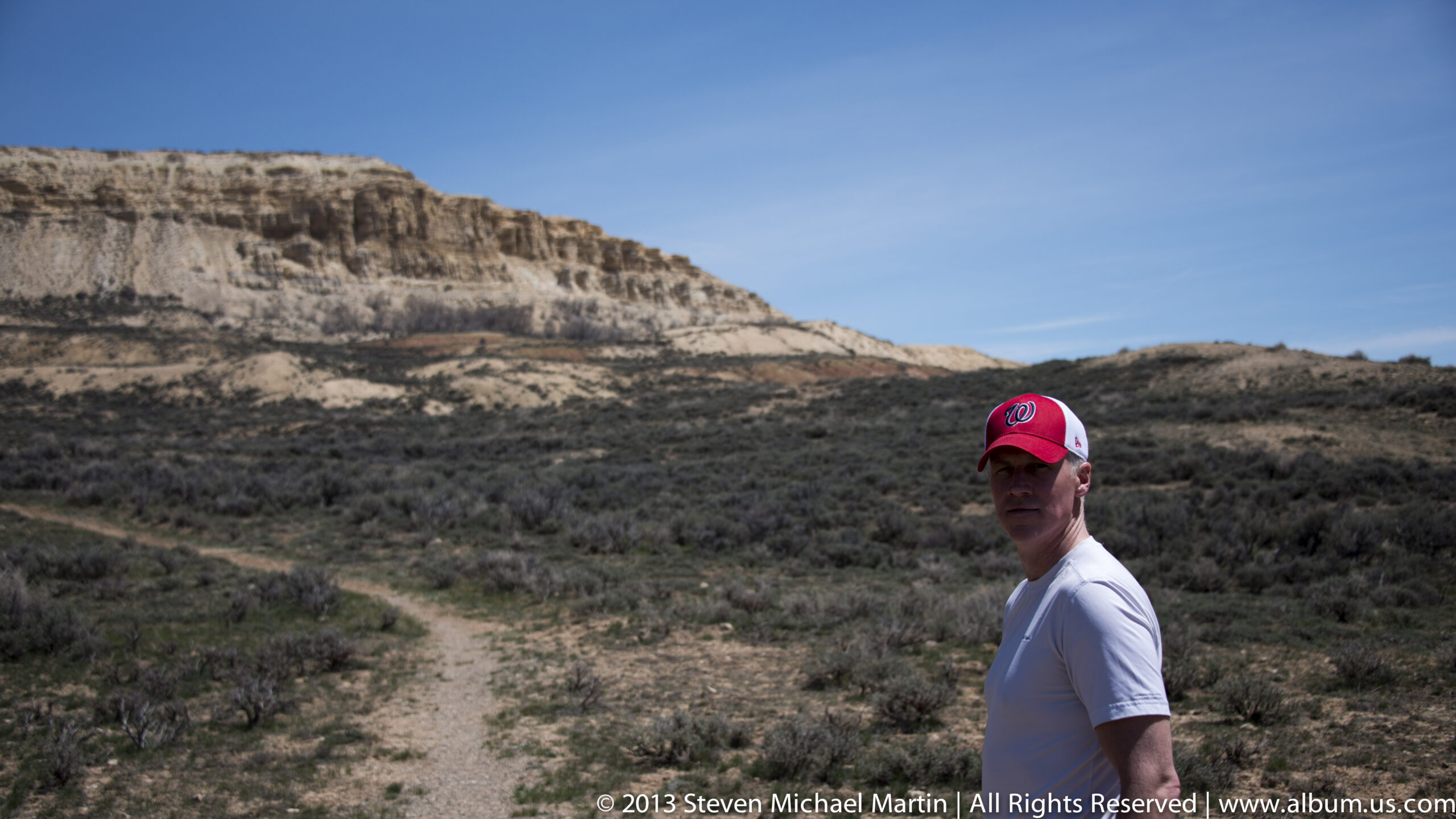
A visitor in a red cap stands beside a narrow path crossing a shrub-covered slope below pale, banded cliffs. The layered ridge spans the upper background, while the person turns toward the camera at the right edge. This view joins the exposed geology with a human presence on the open hillside.
Caption
A visitor in a red cap stands beside a narrow path crossing a shrub-covered slope below pale, banded cliffs. The layered ridge spans the upper background, while the person turns toward the camera at the right edge. This view joins the exposed geology with a human presence on the open hillside.
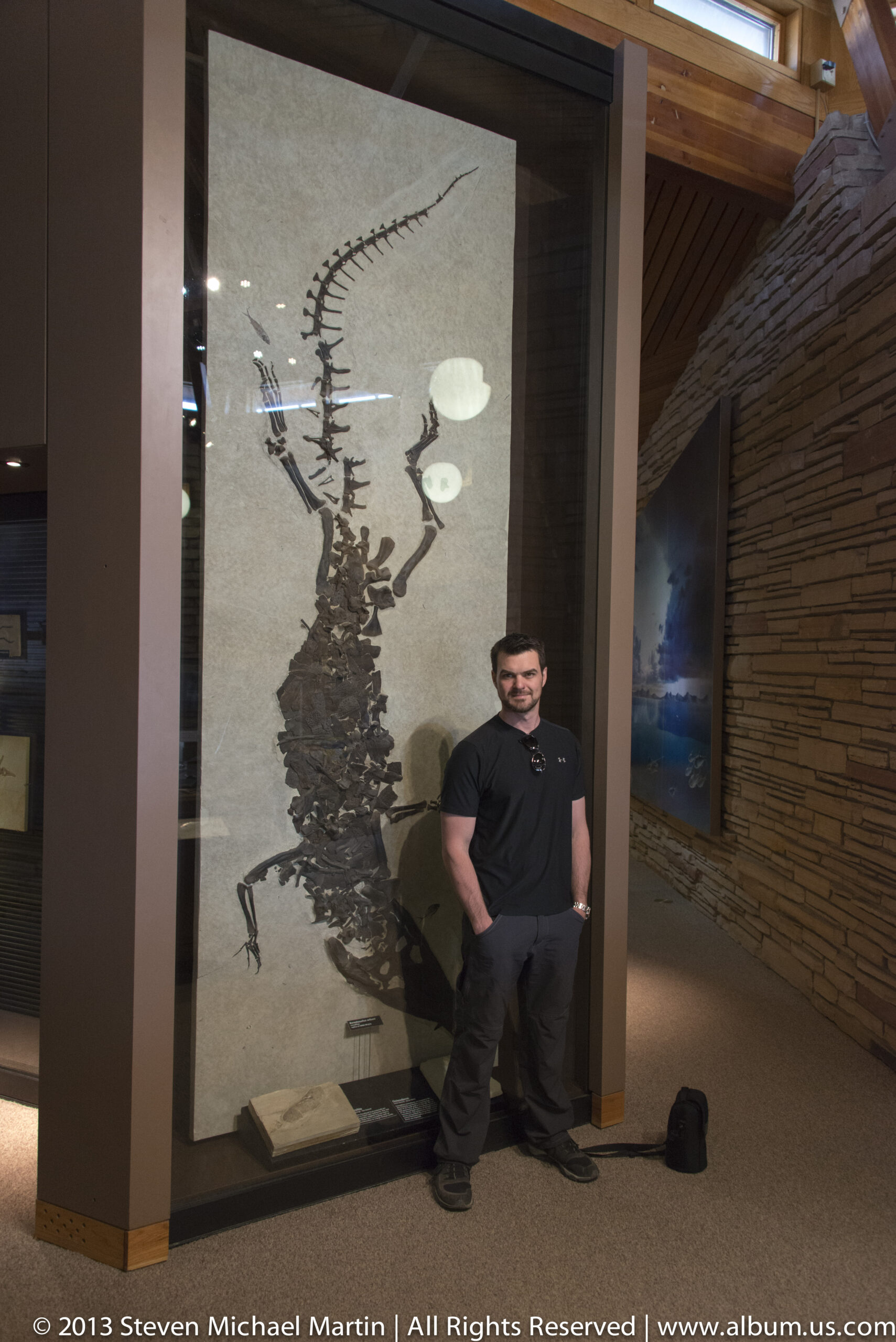
A visitor stands beside a towering fossil skeleton displayed upright in a tall, illuminated case. The specimen’s curved backbone, ribs, and extended limbs spread across a pale backing, with reflections from the gallery glass crossing the surface. The person provides scale, while the display setting distinguishes this mounted specimen from the close slab views.
Caption
A visitor stands beside a towering fossil skeleton displayed upright in a tall, illuminated case. The specimen’s curved backbone, ribs, and extended limbs spread across a pale backing, with reflections from the gallery glass crossing the surface. The person provides scale, while the display setting distinguishes this mounted specimen from the close slab views.

Thin ochre and cream layers lie in closely stacked, uneven beds across the frame. The strata buckle, fracture, and break into small angular flakes, creating a rough, rippled surface. Warm light from the upper left emphasizes the alternating bands and granular texture, with no vegetation or human-made objects visible.
Caption
Thin ochre and cream layers lie in closely stacked, uneven beds across the frame. The strata buckle, fracture, and break into small angular flakes, creating a rough, rippled surface. Warm light from the upper left emphasizes the alternating bands and granular texture, with no vegetation or human-made objects visible.
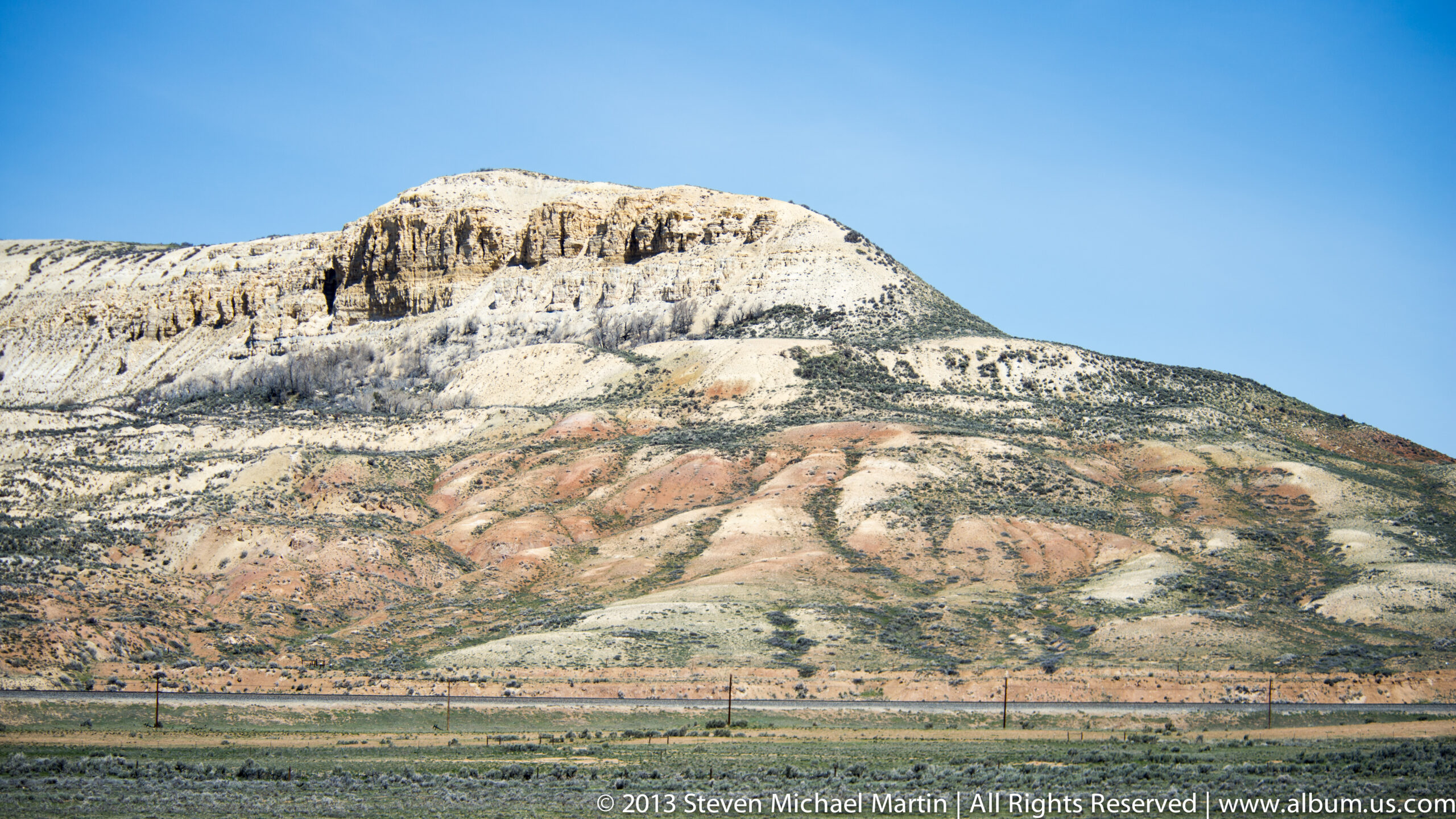
A pale, horizontally layered cliff crowns a broad slope streaked with rust, cream, and muted green. Sparse shrubs and grasses cover the lower ground, while a thin road line runs across the base of the formation. The open view presents the butte’s contrasting sedimentary bands beneath a clear blue sky.
Caption
A pale, horizontally layered cliff crowns a broad slope streaked with rust, cream, and muted green. Sparse shrubs and grasses cover the lower ground, while a thin road line runs across the base of the formation. The open view presents the butte’s contrasting sedimentary bands beneath a clear blue sky.

A broad basin of red, rust, and green sedimentary ridges stretches toward a low blue horizon. A pale road curves through the left foreground, while scrub-covered slopes and layered escarpments occupy the middle distance. The panorama emphasizes the repeated bands of color and the scale of the open badlands terrain.
Caption
A broad basin of red, rust, and green sedimentary ridges stretches toward a low blue horizon. A pale road curves through the left foreground, while scrub-covered slopes and layered escarpments occupy the middle distance. The panorama emphasizes the repeated bands of color and the scale of the open badlands terrain.
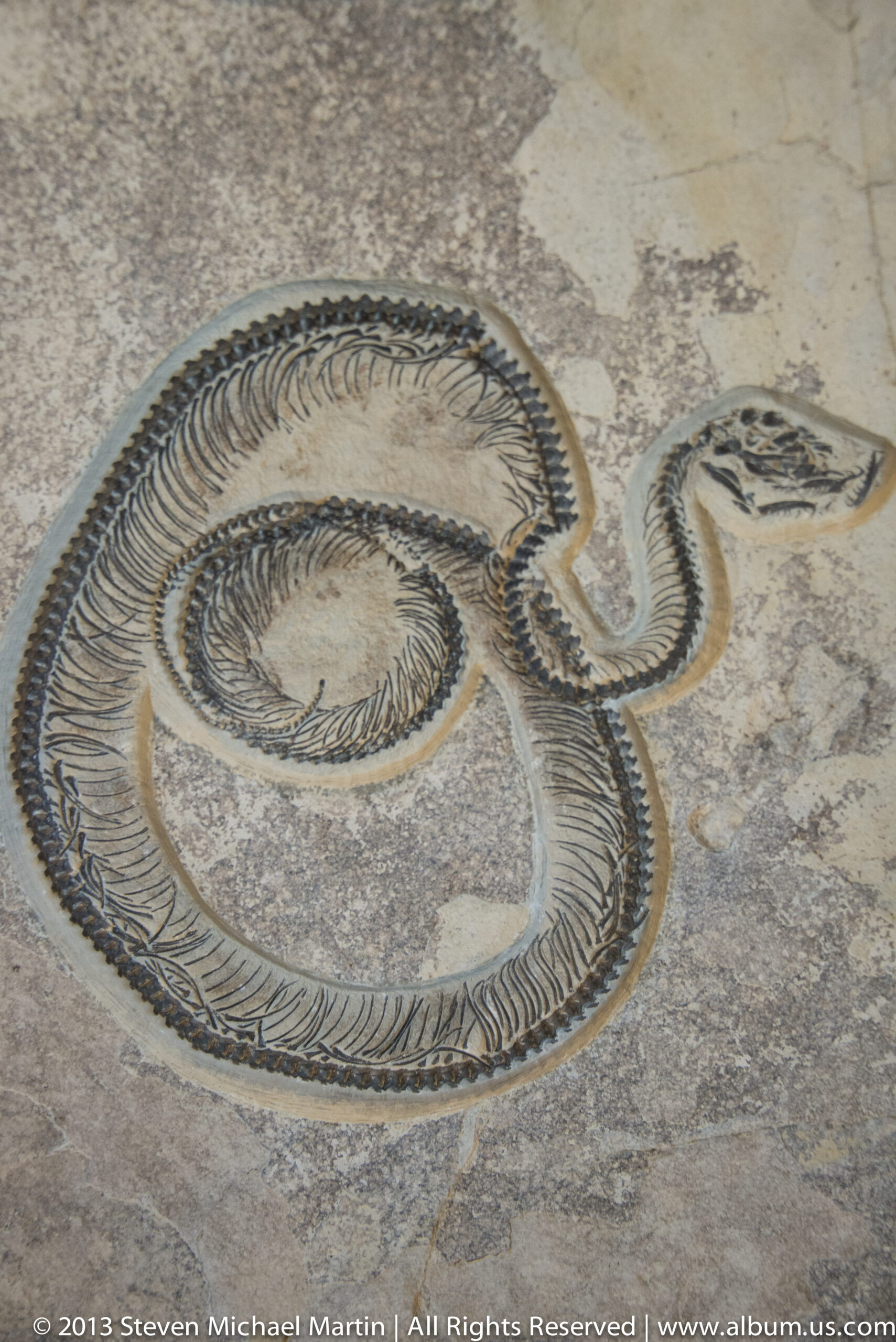
A long fossil skeleton curls into overlapping loops across a pale stone slab. Repeated ribs form fine curved lines along the body, while a narrow tail or neck extends toward the upper right. The close view makes the animal’s sinuous outline and dense rib pattern legible, though the specimen’s species is not identified here.
Caption
A long fossil skeleton curls into overlapping loops across a pale stone slab. Repeated ribs form fine curved lines along the body, while a narrow tail or neck extends toward the upper right. The close view makes the animal’s sinuous outline and dense rib pattern legible, though the specimen’s species is not identified here.
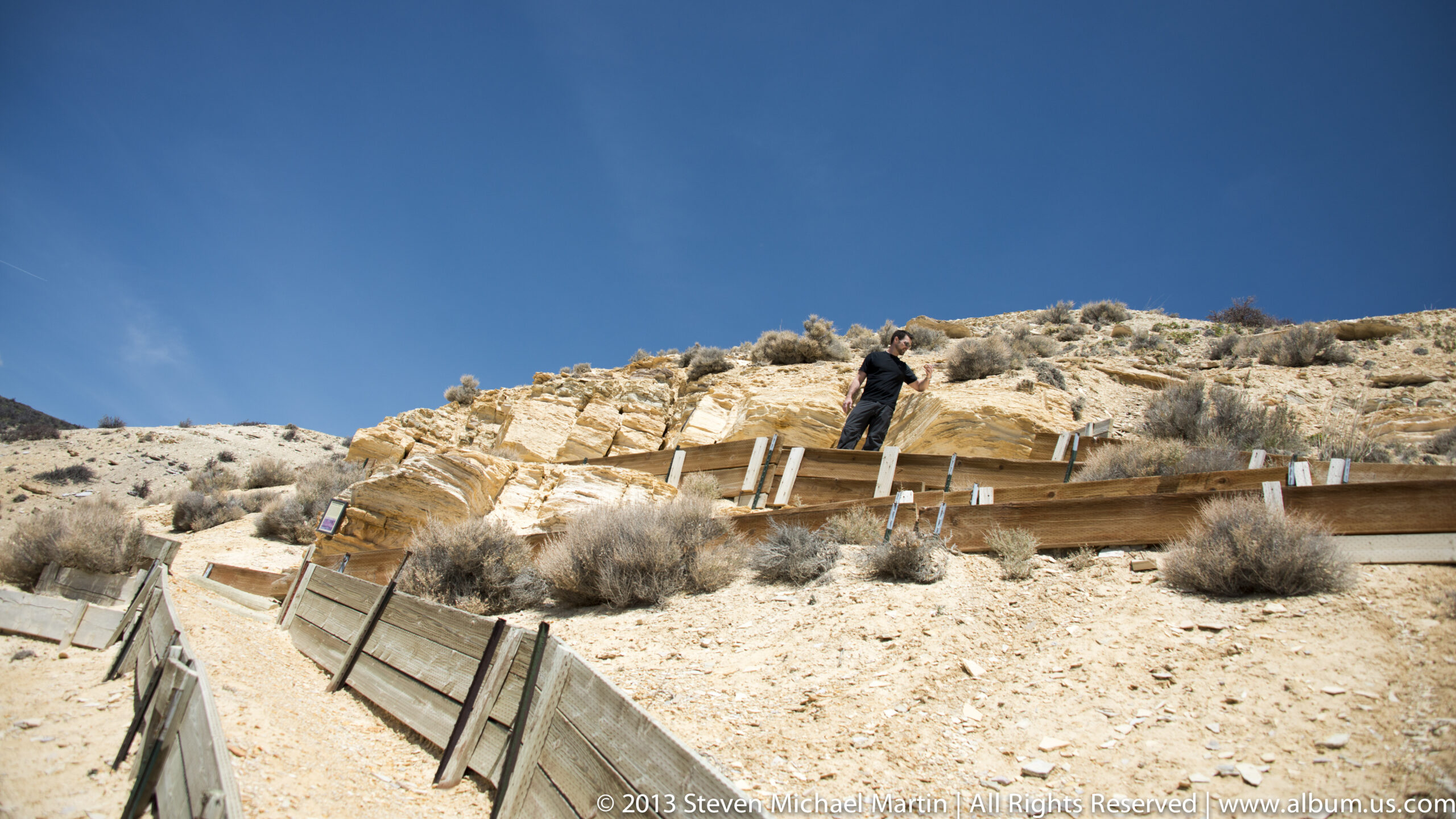
A raised wooden walkway winds across a pale, shrub-dotted slope, with a visitor standing near the rail above it. The path bends toward the left foreground and follows the hillside contours beneath a deep blue sky. The broad view shows how the built trail provides access across the exposed terrain.
Caption
A raised wooden walkway winds across a pale, shrub-dotted slope, with a visitor standing near the rail above it. The path bends toward the left foreground and follows the hillside contours beneath a deep blue sky. The broad view shows how the built trail provides access across the exposed terrain.
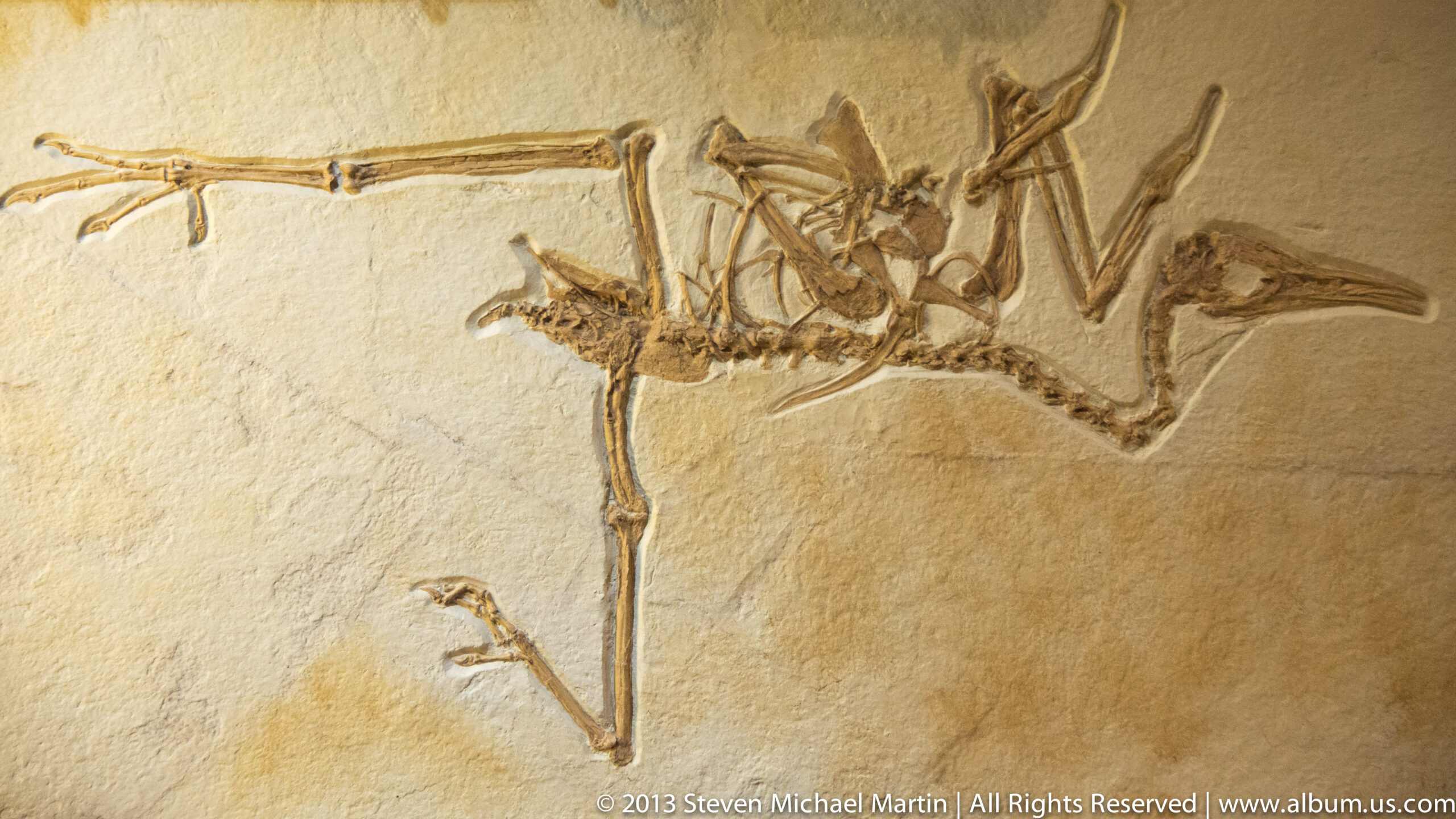
An articulated fossil bird lies across a buff-colored stone matrix, its wings and long legs spread in different directions. Fine bones and feather-like impressions are visible around the body, while the head and beak point toward the left edge. The close crop emphasizes the delicate structure preserved in the slab without assigning a species.
Caption
An articulated fossil bird lies across a buff-colored stone matrix, its wings and long legs spread in different directions. Fine bones and feather-like impressions are visible around the body, while the head and beak point toward the left edge. The close crop emphasizes the delicate structure preserved in the slab without assigning a species.
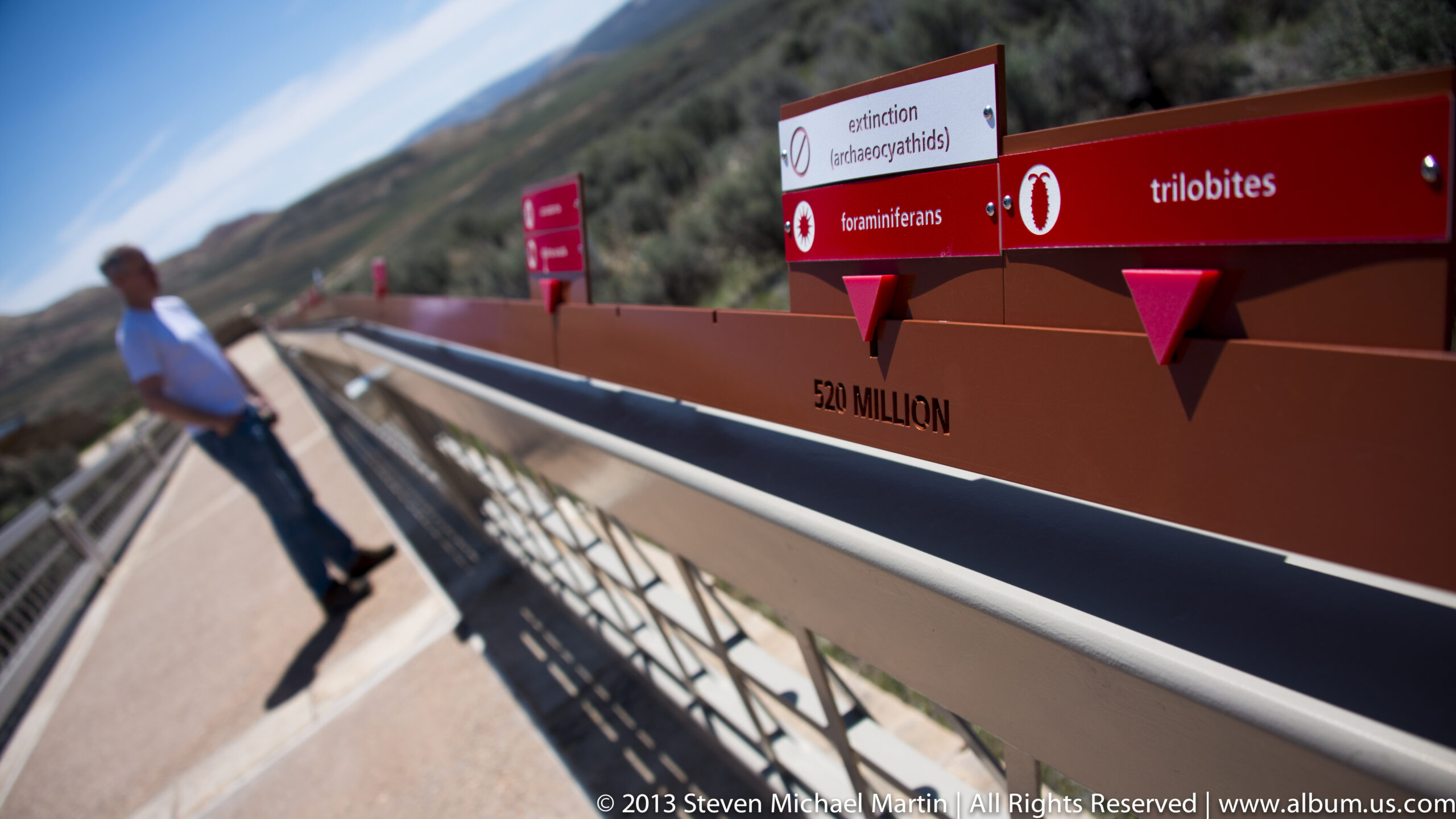
A visitor leans beside a long rust-colored interpretive railing that marks geologic events, including trilobites and extinction. The scale reads “520 million,” and red triangular markers point to positions along the timeline. The receding rail and angled walkway lead toward the visitor, linking the displayed chronology to the surrounding landscape.
Caption
A visitor leans beside a long rust-colored interpretive railing that marks geologic events, including trilobites and extinction. The scale reads “520 million,” and red triangular markers point to positions along the timeline. The receding rail and angled walkway lead toward the visitor, linking the displayed chronology to the surrounding landscape.
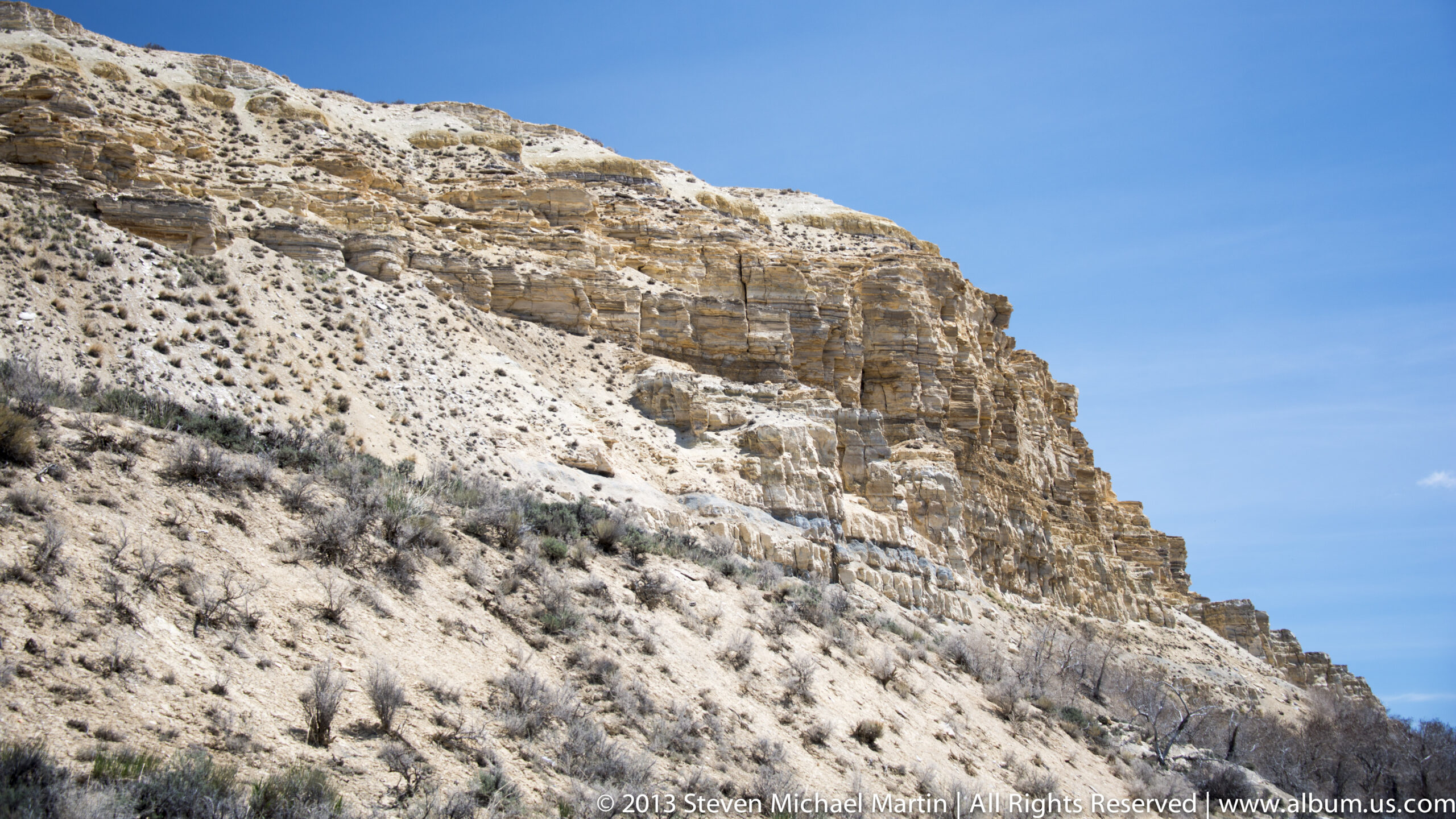
A steep pale cliff fills the left side of the frame, its horizontal strata forming ledges and shallow recesses. Loose fragments and low brush cover the slope below, while the rock face recedes diagonally toward the upper right. The close landscape view highlights the exposed bedding and eroded edges of the formation.
Caption
A steep pale cliff fills the left side of the frame, its horizontal strata forming ledges and shallow recesses. Loose fragments and low brush cover the slope below, while the rock face recedes diagonally toward the upper right. The close landscape view highlights the exposed bedding and eroded edges of the formation.

A close portrait shows a man in a red baseball cap with a white “W” emblem and a plain white shirt. He looks downward, the brim shading his eyes, while pale rocky terrain blurs behind him. The shallow focus isolates the cap and his expression from the surrounding landscape.
Caption
A close portrait shows a man in a red baseball cap with a white “W” emblem and a plain white shirt. He looks downward, the brim shading his eyes, while pale rocky terrain blurs behind him. The shallow focus isolates the cap and his expression from the surrounding landscape.
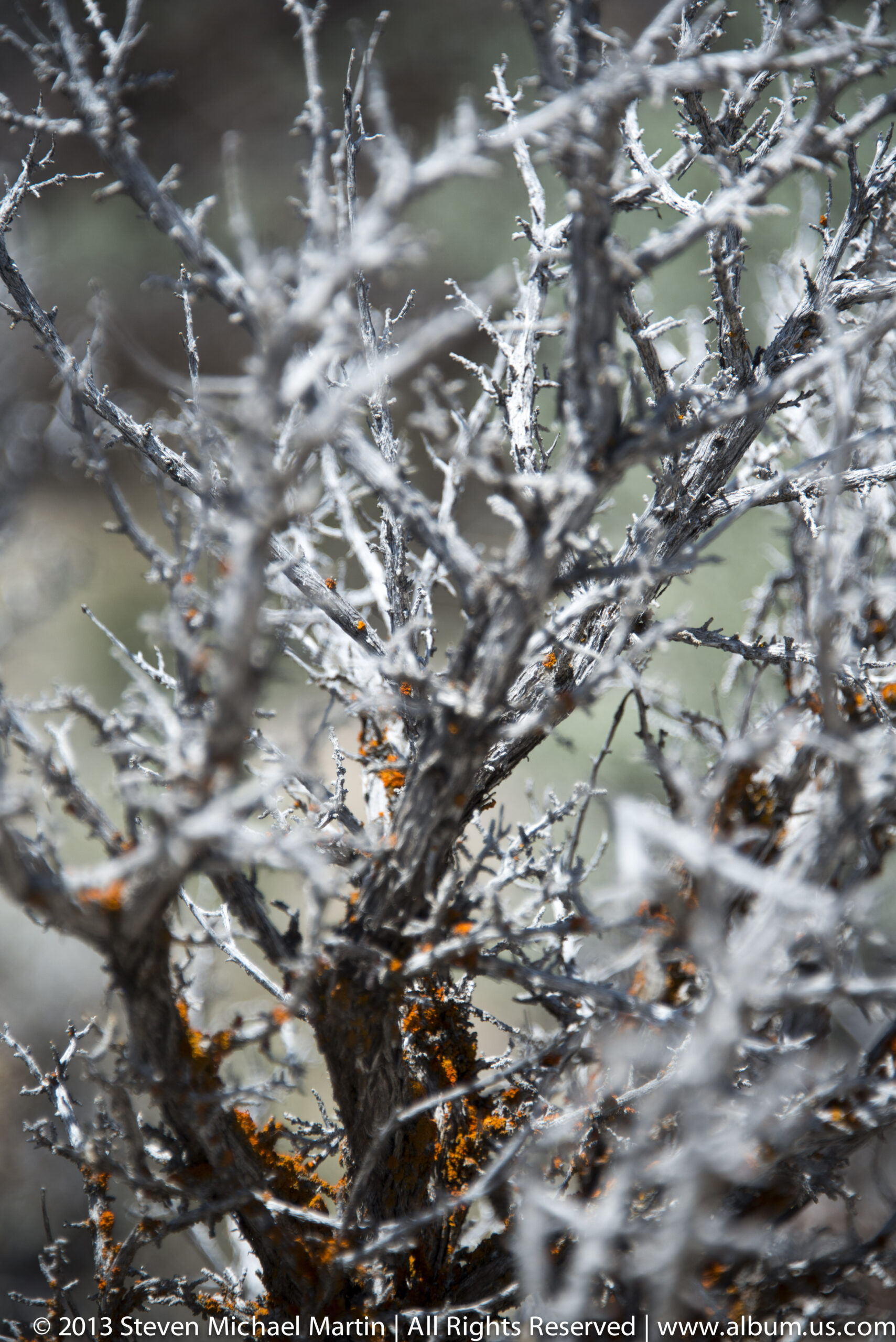
Small orange blossoms dot a network of pale, leafless branches in the foreground, with darker trunks and foliage blurred behind them. The shallow focus isolates the flowers and fine twigs while the background suggests a wooded setting. The thumbnail does not support a dependable plant species identification.
Caption
Small orange blossoms dot a network of pale, leafless branches in the foreground, with darker trunks and foliage blurred behind them. The shallow focus isolates the flowers and fine twigs while the background suggests a wooded setting. The thumbnail does not support a dependable plant species identification.
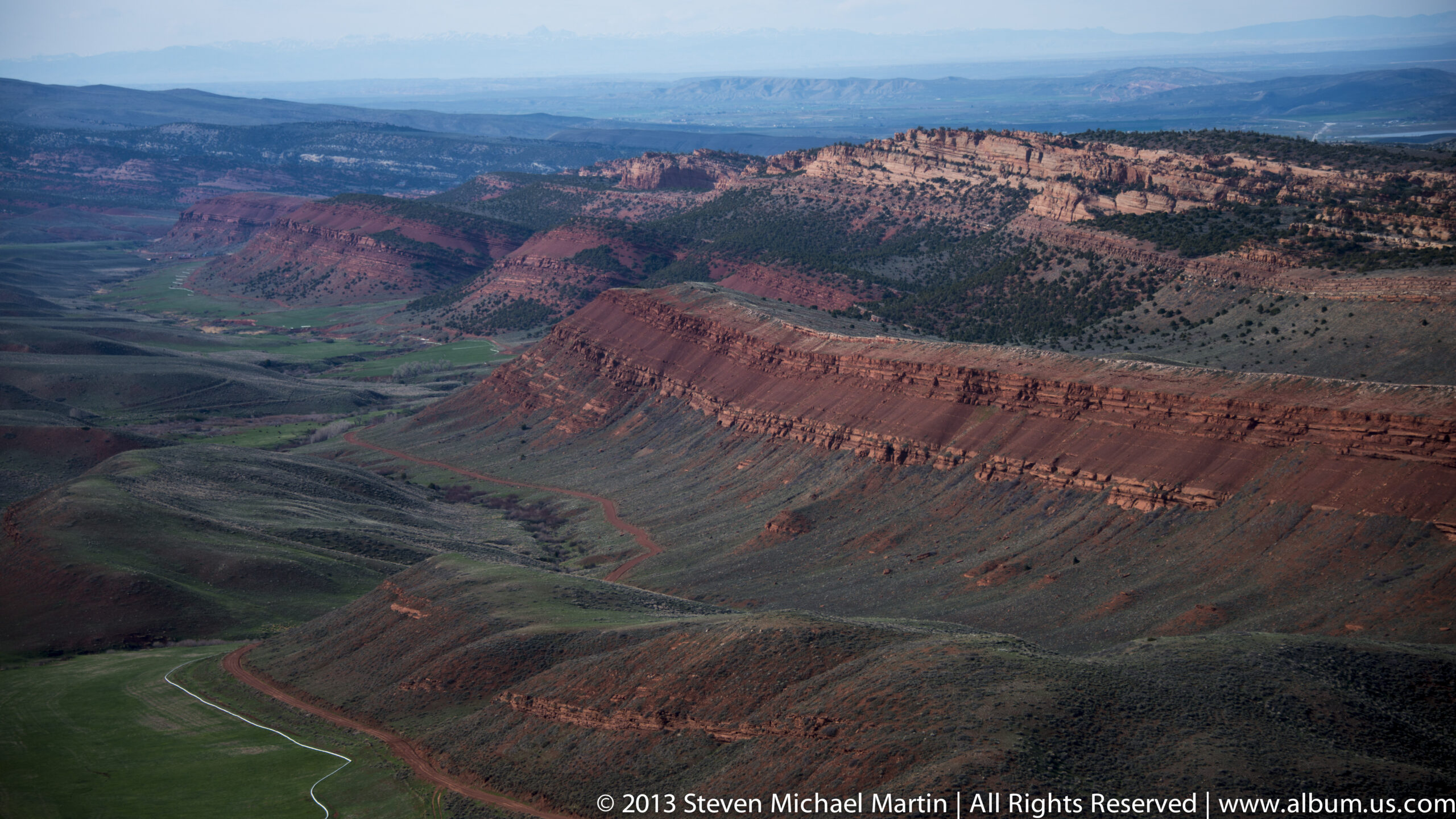
From an elevated viewpoint, red-banded ridges descend into a broad green basin crossed by a pale winding road. Successive escarpments recede toward blue-gray hills on the horizon, while the foreground slopes remain dark in shadow. This higher vantage reveals the network of colored layers and drainage lines across the landscape.
Caption
From an elevated viewpoint, red-banded ridges descend into a broad green basin crossed by a pale winding road. Successive escarpments recede toward blue-gray hills on the horizon, while the foreground slopes remain dark in shadow. This higher vantage reveals the network of colored layers and drainage lines across the landscape.
National Monument Field Guide
Fossil Butte National Monument preserves fossil beds formed within an ancient lake environment during the Eocene epoch. Sediments gradually accumulated at the lake bottom, preserving fish, plants, and insects in remarkable detail. The monument illustrates how environmental conditions influence fossil preservation and provide insight into prehistoric ecosystems.
🏛 Key Significance
- Fossils from 50 million-year-old lake environment
- Exceptional preservation of fish and plant specimens
- Evidence of Eocene climate conditions
- Sedimentary limestone deposits preserving biological detail
- Insight into prehistoric freshwater ecosystems
📖 Interpretive Context
Calm lake waters allowed fine sediments to accumulate slowly, covering organisms and preserving structural detail. Fossil layers illustrate how environmental conditions influence the preservation of biological material over geological time periods. The monument demonstrates how sedimentary processes contribute to understanding ancient ecosystems.
📷 Photography Notes
- Interpretive displays help visualize fossil environments
- Wide landscapes show relationship between geology and terrain
- Rock layers illustrate sedimentary formation patterns
- Observe textures in exposed formations