Fort Union Trading Post National Historic Site
Fort Union Trading Post was one of the most important fur trade centers on the upper Missouri River during the 19th century. Established in 1828 near the present-day border of North Dakota and Montana, the post became a major commercial hub where Indigenous communities, traders, and company representatives exchanged buffalo robes and other goods. Its location along the Missouri River made it a strategic center within broader trade networks extending across the northern plains.
The post operated during a period when waterways and overland trails linked distant regions of North America through commerce and diplomacy. Fort Union was not only an economic center but also a place of cultural interaction, where different languages, traditions, and political interests came together. The reconstructed buildings illustrate the practical design of frontier trading posts built to support long-distance exchange.
Today, Fort Union helps interpret the commercial and cultural systems that shaped the northern plains during the fur trade era. The site demonstrates how trade routes and river corridors connected Indigenous communities and expanding American economic networks during the 19th century.
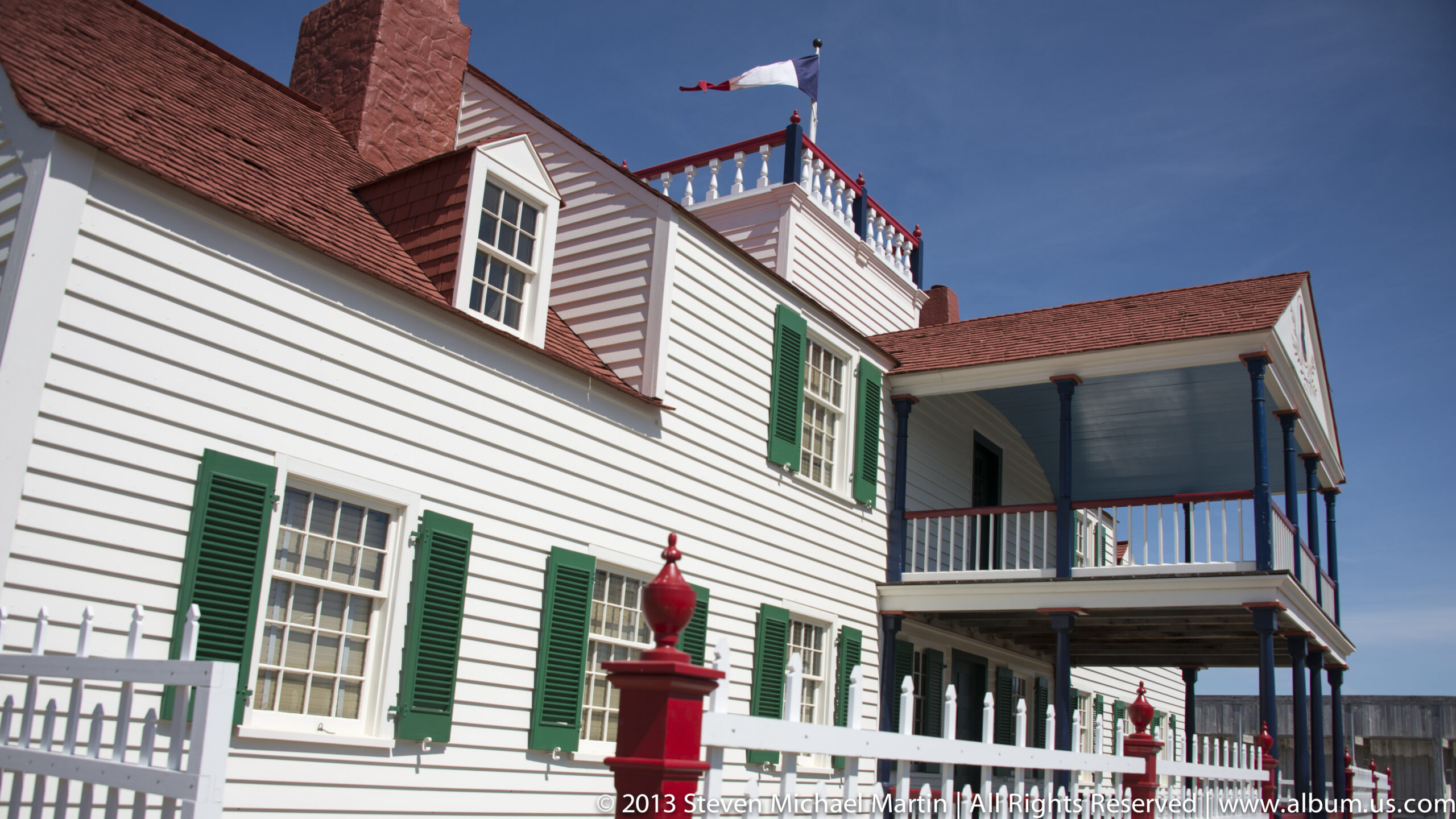
The long white façade has green shutters, a red roof, and an upper gallery supported over a shaded ground-level passage. A small rooftop balcony and flag appear above the main roofline, while a red pump stands in the foreground. The oblique view shows how the building’s galleries, windows, and service area relate along one side.
Caption
The long white façade has green shutters, a red roof, and an upper gallery supported over a shaded ground-level passage. A small rooftop balcony and flag appear above the main roofline, while a red pump stands in the foreground. The oblique view shows how the building’s galleries, windows, and service area relate along one side.
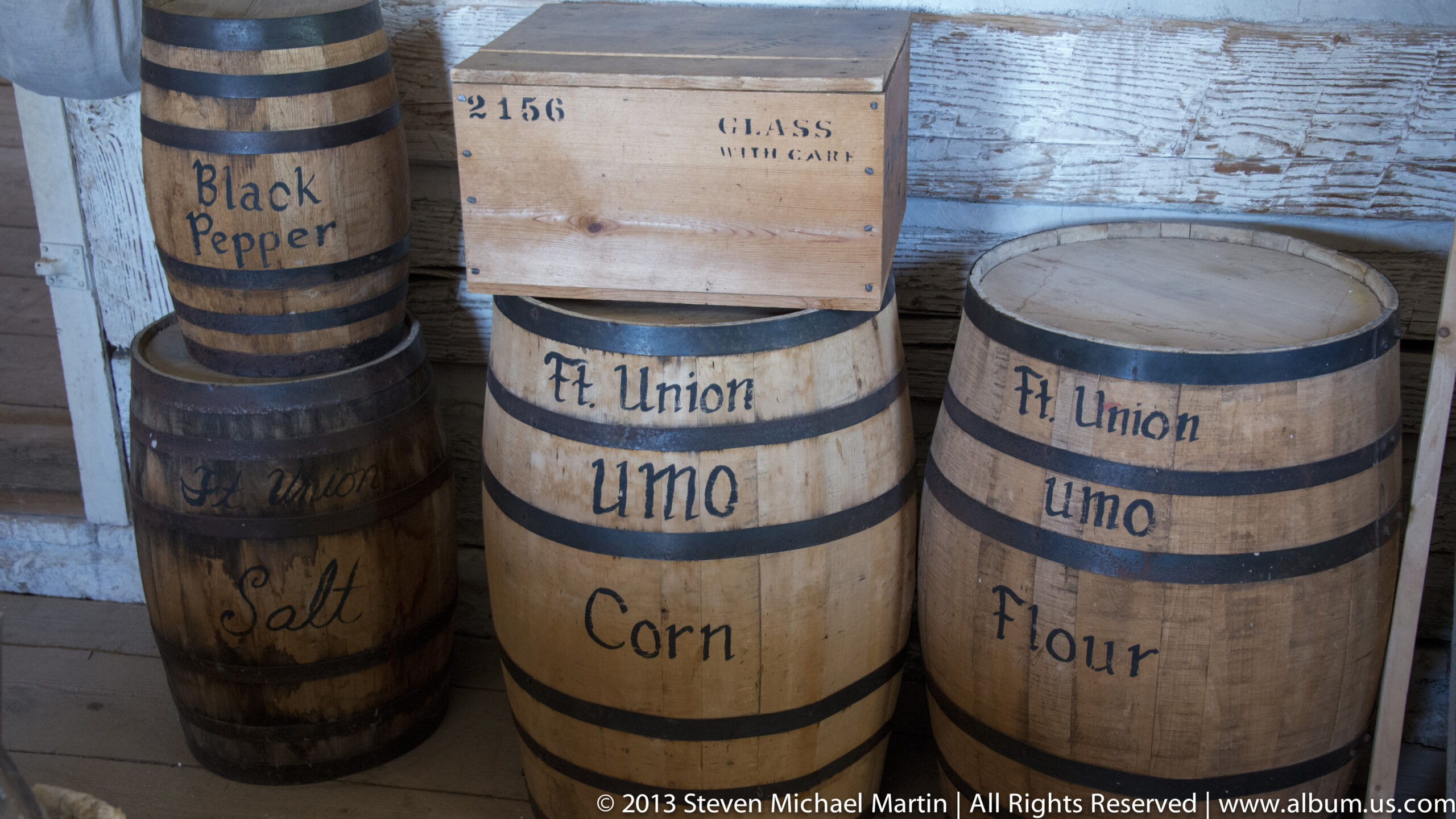
Several wooden barrels stand against a pale plank wall, their painted labels identifying salt, black pepper, corn, and flour. Blue bands encircle the staves, and one container is partly obscured by a small crate. The close view foregrounds labeled provisions and storage vessels associated with the trading-post interior.
Caption
Several wooden barrels stand against a pale plank wall, their painted labels identifying salt, black pepper, corn, and flour. Blue bands encircle the staves, and one container is partly obscured by a small crate. The close view foregrounds labeled provisions and storage vessels associated with the trading-post interior.
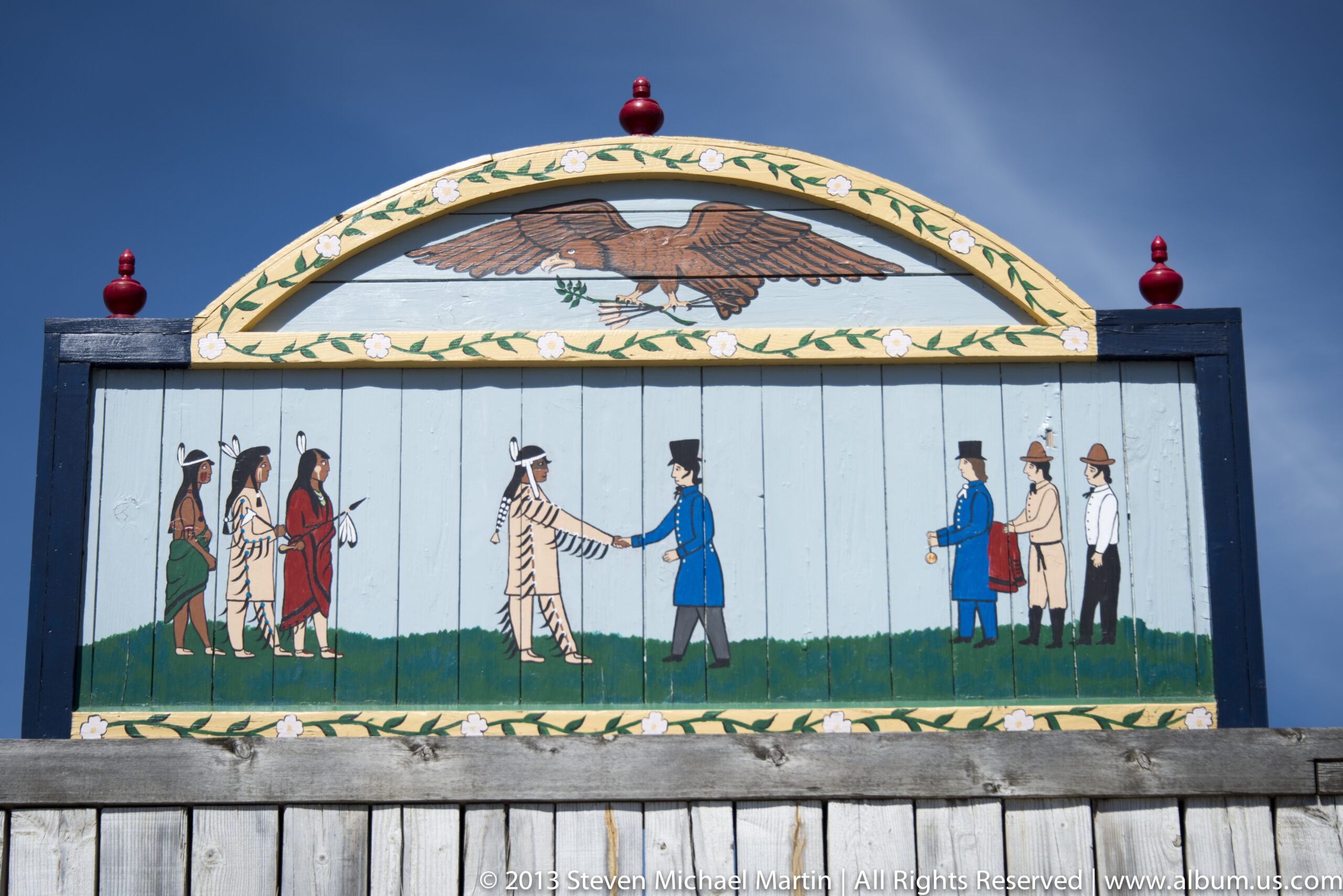
A painted panel shows groups of Indigenous visitors and European traders facing one another across a green ground, with a large eagle motif in the arched panel above. The figures’ clothing and gestures are rendered in contrasting colors, while the framing crops the mural’s lower architectural setting. The scene is presented as a decorative historical interpretation.
Caption
A painted panel shows groups of Indigenous visitors and European traders facing one another across a green ground, with a large eagle motif in the arched panel above. The figures’ clothing and gestures are rendered in contrasting colors, while the framing crops the mural’s lower architectural setting. The scene is presented as a decorative historical interpretation.
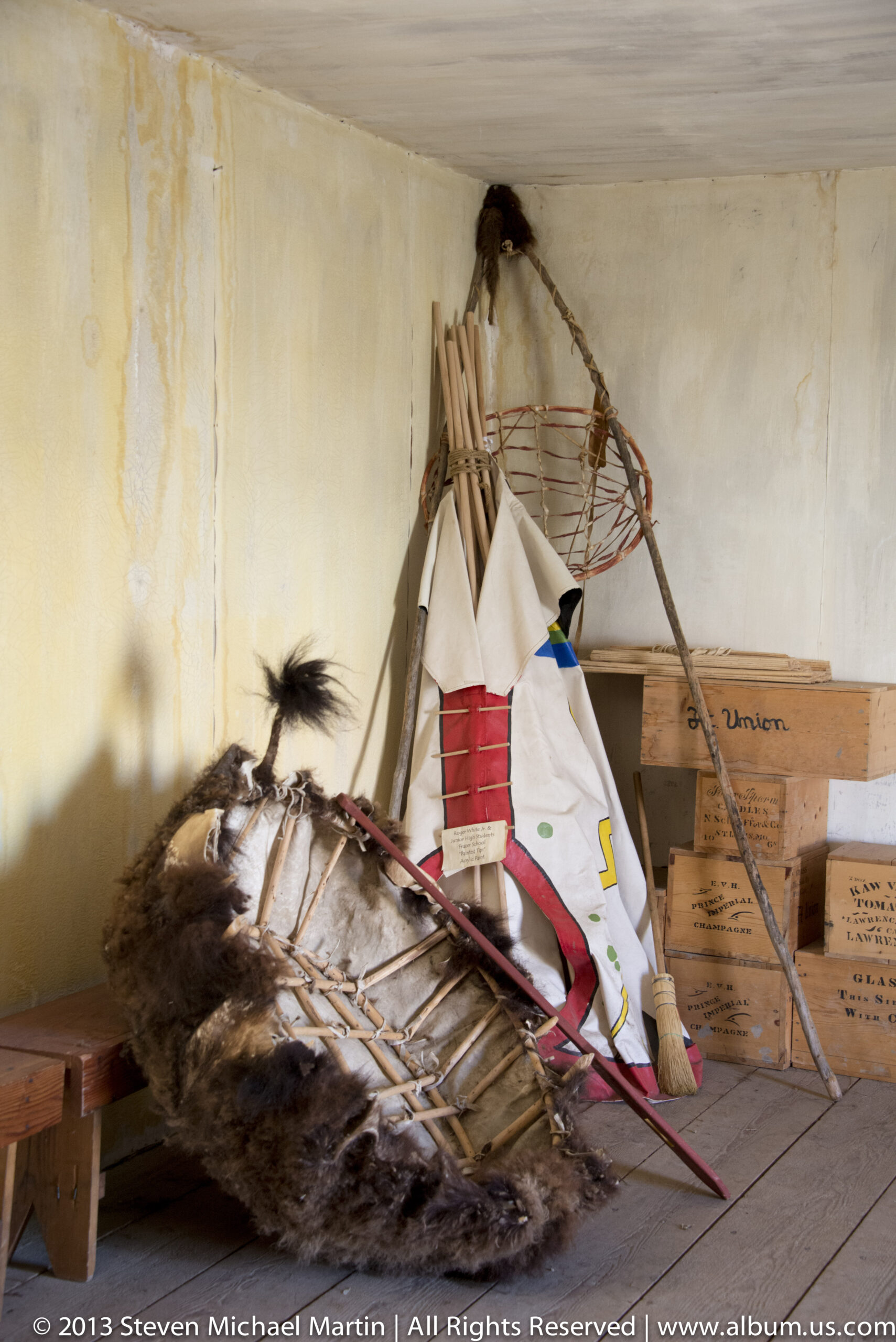
A tipi-shaped display occupies a corner of a pale-walled room, with poles and a draped hide arranged around a small central structure. A large fur or hide lies across the foreground, and wooden crates line the wall behind it. The scene appears as an indoor interpretive arrangement; the proof sheet does not establish whether the materials are original objects.
Caption
A tipi-shaped display occupies a corner of a pale-walled room, with poles and a draped hide arranged around a small central structure. A large fur or hide lies across the foreground, and wooden crates line the wall behind it. The scene appears as an indoor interpretive arrangement; the proof sheet does not establish whether the materials are original objects.
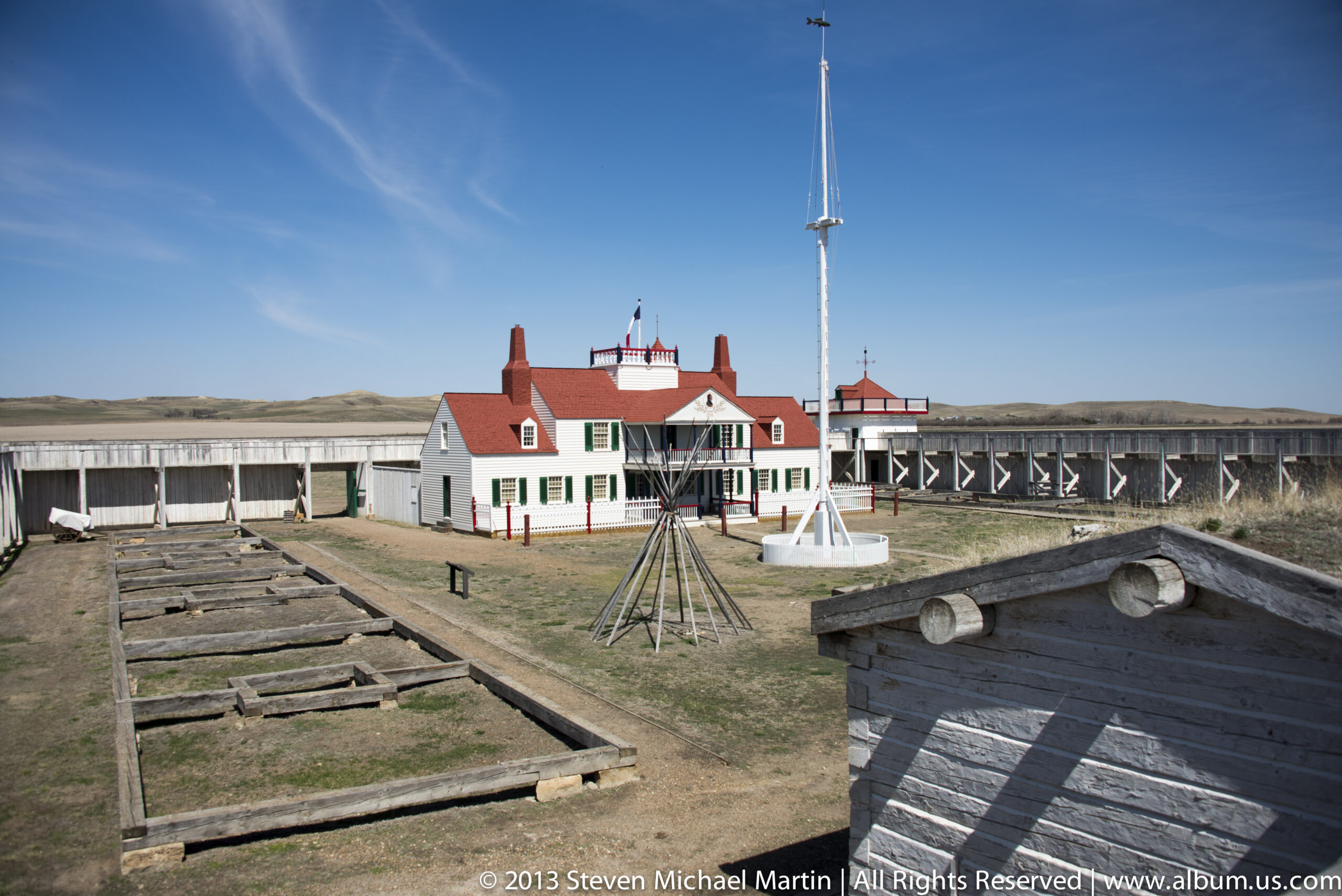
An open courtyard is enclosed by a long timber palisade, with white buildings and red roofs grouped near the center. A tall flagpole rises before them, while wooden platforms and log structures line the foreground. The elevated viewpoint makes the compound’s layout legible, from the perimeter walls to the central buildings and passageways.
Caption
An open courtyard is enclosed by a long timber palisade, with white buildings and red roofs grouped near the center. A tall flagpole rises before them, while wooden platforms and log structures line the foreground. The elevated viewpoint makes the compound’s layout legible, from the perimeter walls to the central buildings and passageways.

A visitor stands within a tall timber gateway, aligned with a second opening and the white, red-roofed buildings beyond. A painted panel above the entrance shows several human figures in historical dress, while heavy vertical posts frame the view. The sequence of gates draws the eye into the fort’s central compound.
Caption
A visitor stands within a tall timber gateway, aligned with a second opening and the white, red-roofed buildings beyond. A painted panel above the entrance shows several human figures in historical dress, while heavy vertical posts frame the view. The sequence of gates draws the eye into the fort’s central compound.
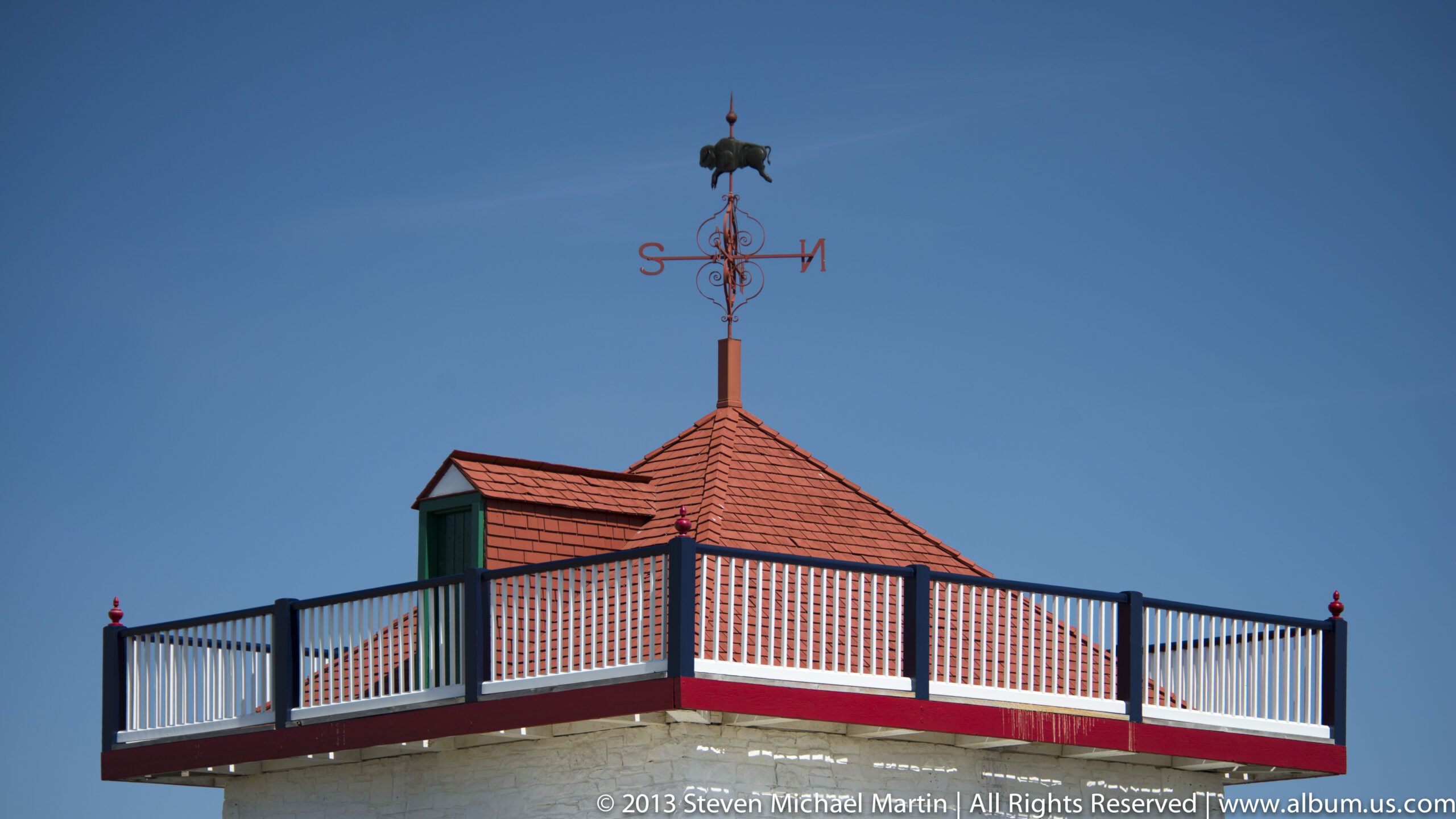
A small rooftop balcony wraps around a red-shingled pavilion, its white railings edged in dark blue and red. An eagle-topped weather vane rises above the roof peak, while the pale masonry wall fills the lower frame. The low angle isolates the upper architectural details against an uninterrupted blue sky.
Caption
A small rooftop balcony wraps around a red-shingled pavilion, its white railings edged in dark blue and red. An eagle-topped weather vane rises above the roof peak, while the pale masonry wall fills the lower frame. The low angle isolates the upper architectural details against an uninterrupted blue sky.
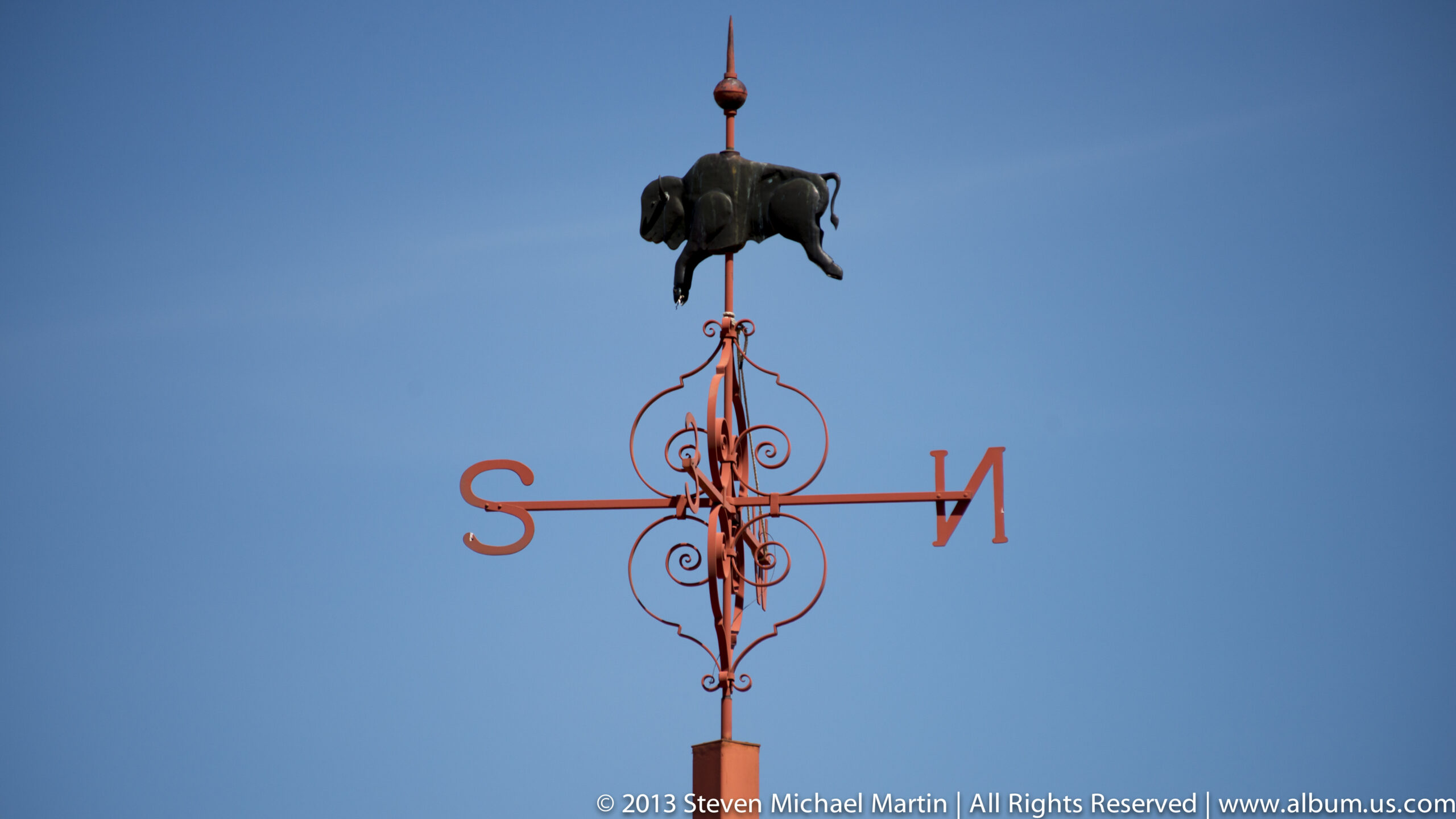
The iron weather vane is seen close against open sky, with an eagle-shaped figure poised above ornate scrollwork and compass arms. The letters N, S, and W are visible around the center, while the roofline is excluded from this detail. Its silhouette reveals the layered construction and decorative metalwork of the rooftop feature.
Caption
The iron weather vane is seen close against open sky, with an eagle-shaped figure poised above ornate scrollwork and compass arms. The letters N, S, and W are visible around the center, while the roofline is excluded from this detail. Its silhouette reveals the layered construction and decorative metalwork of the rooftop feature.
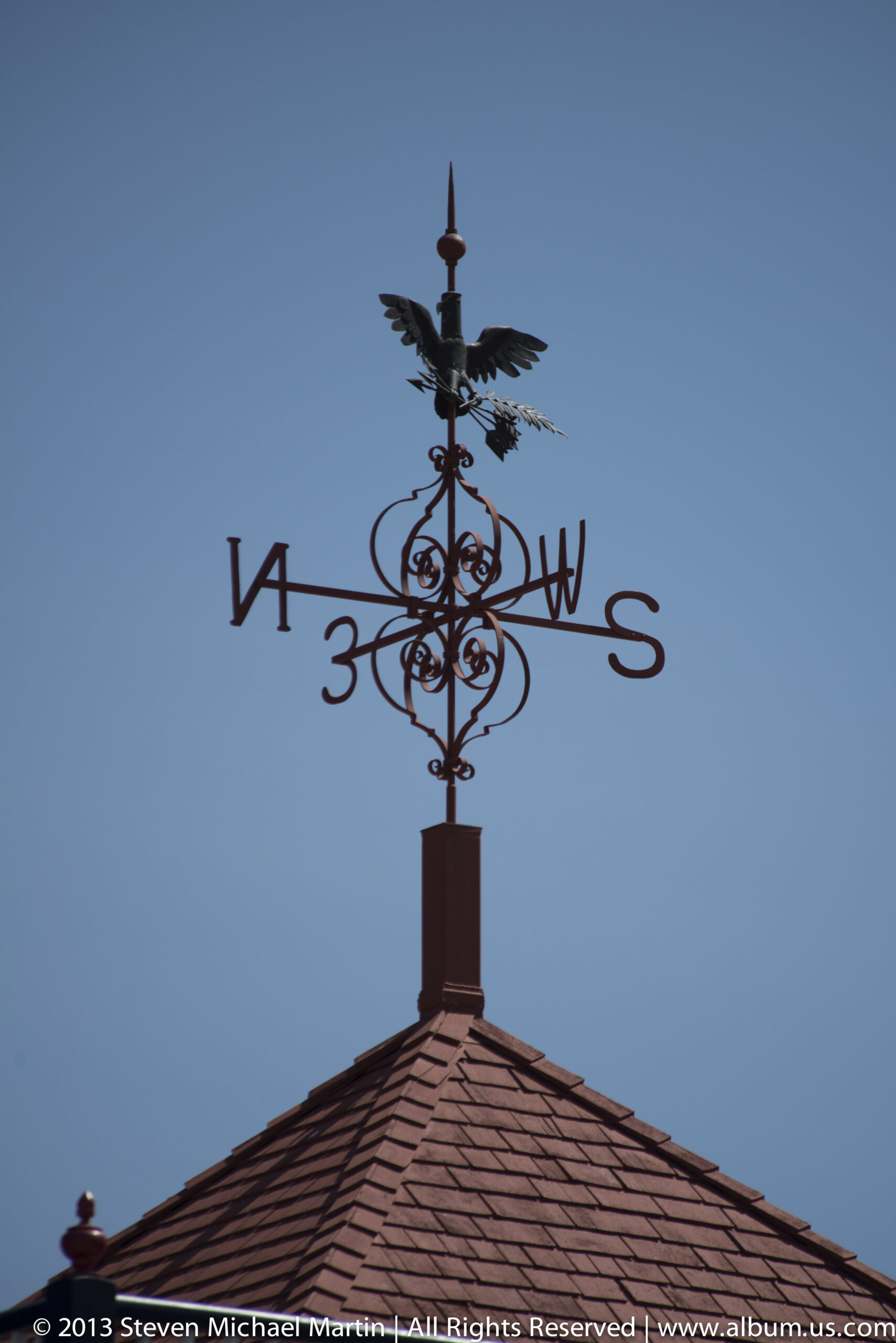
An ornate metal weather vane rises from the peak of a red-brown shingled roof. Its openwork compass arms and small eagle figure form a dark silhouette against a clear sky. Seen from below, the decorative assembly is isolated from the building and surrounding landscape, making its ironwork and directional letters the focus.
Caption
An ornate metal weather vane rises from the peak of a red-brown shingled roof. Its openwork compass arms and small eagle figure form a dark silhouette against a clear sky. Seen from below, the decorative assembly is isolated from the building and surrounding landscape, making its ironwork and directional letters the focus.
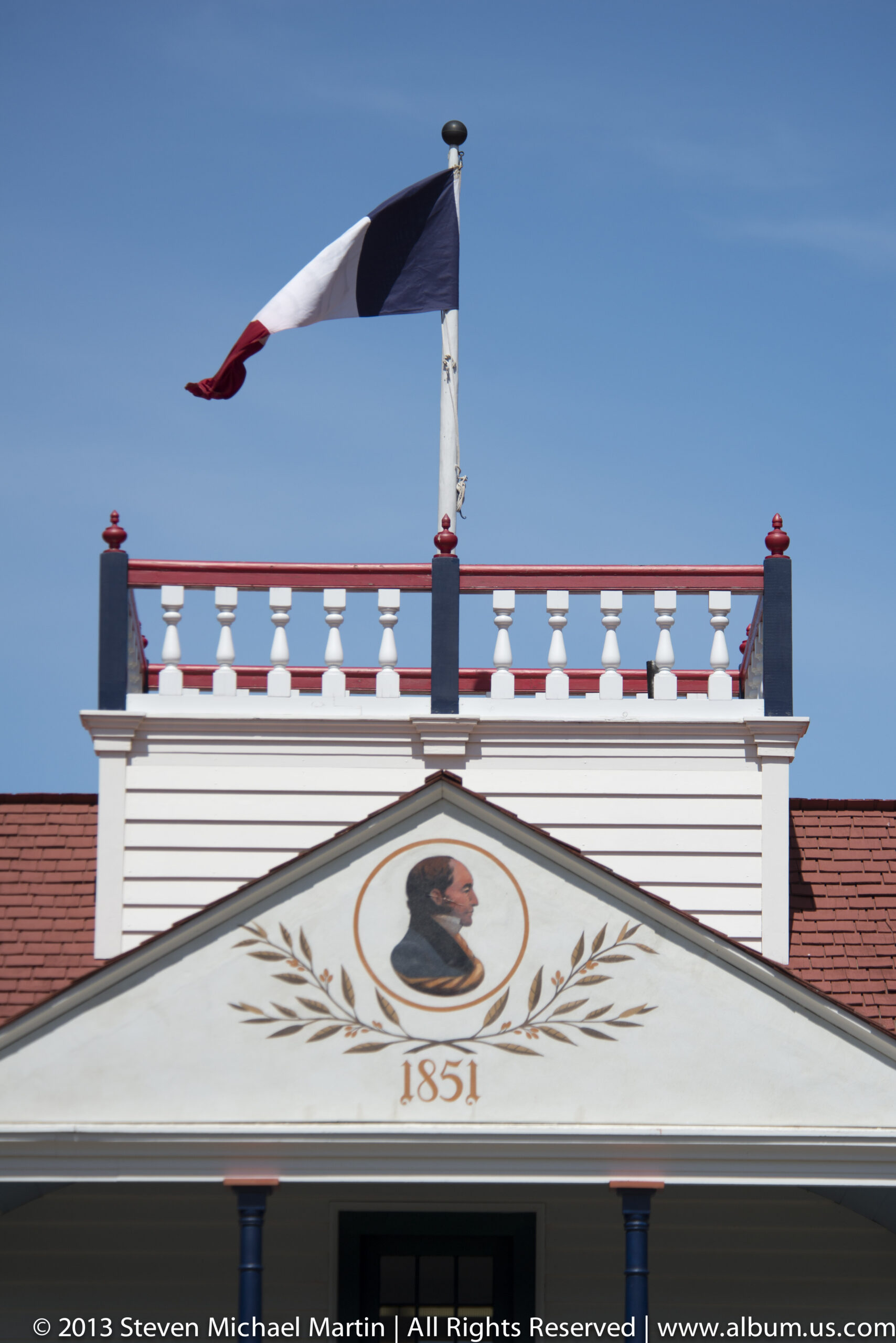
A flag flies from the roofline above a white pediment decorated with a central portrait medallion, laurel branches, and the date 1851. The red roof and balustrade form horizontal bands beneath the flag, which lifts toward the left in a light breeze. The upward framing joins the building’s commemorative decoration with its rooftop display.
Caption
A flag flies from the roofline above a white pediment decorated with a central portrait medallion, laurel branches, and the date 1851. The red roof and balustrade form horizontal bands beneath the flag, which lifts toward the left in a light breeze. The upward framing joins the building’s commemorative decoration with its rooftop display.
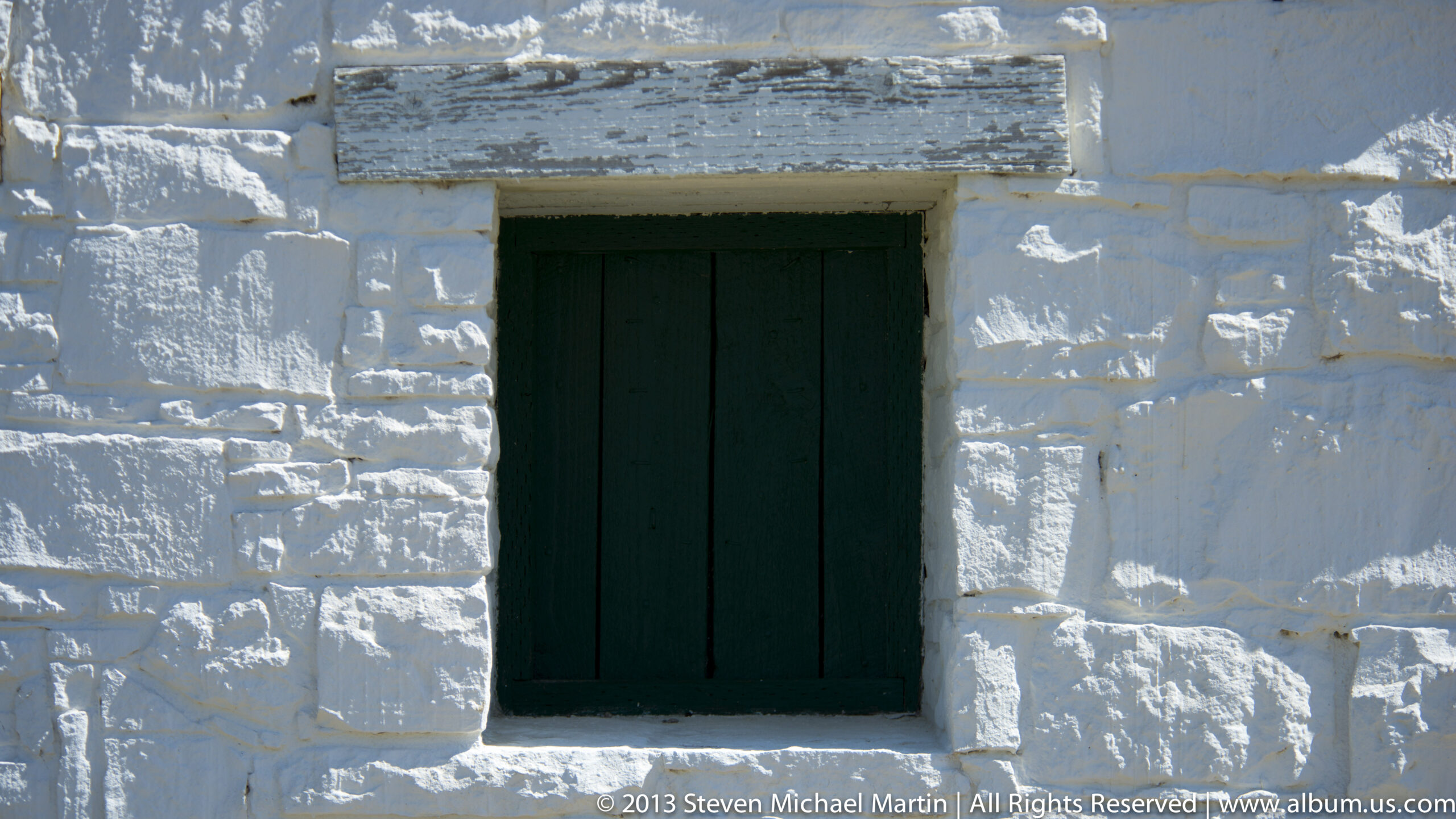
A deep, dark green rectangular opening is set into a thick whitewashed masonry wall. Uneven plaster and exposed patches of underlying material texture the surround, while strong sun casts crisp shadows along the sides. The close, frontal view isolates the contrast between the heavy pale wall and the recessed green surface.
Caption
A deep, dark green rectangular opening is set into a thick whitewashed masonry wall. Uneven plaster and exposed patches of underlying material texture the surround, while strong sun casts crisp shadows along the sides. The close, frontal view isolates the contrast between the heavy pale wall and the recessed green surface.
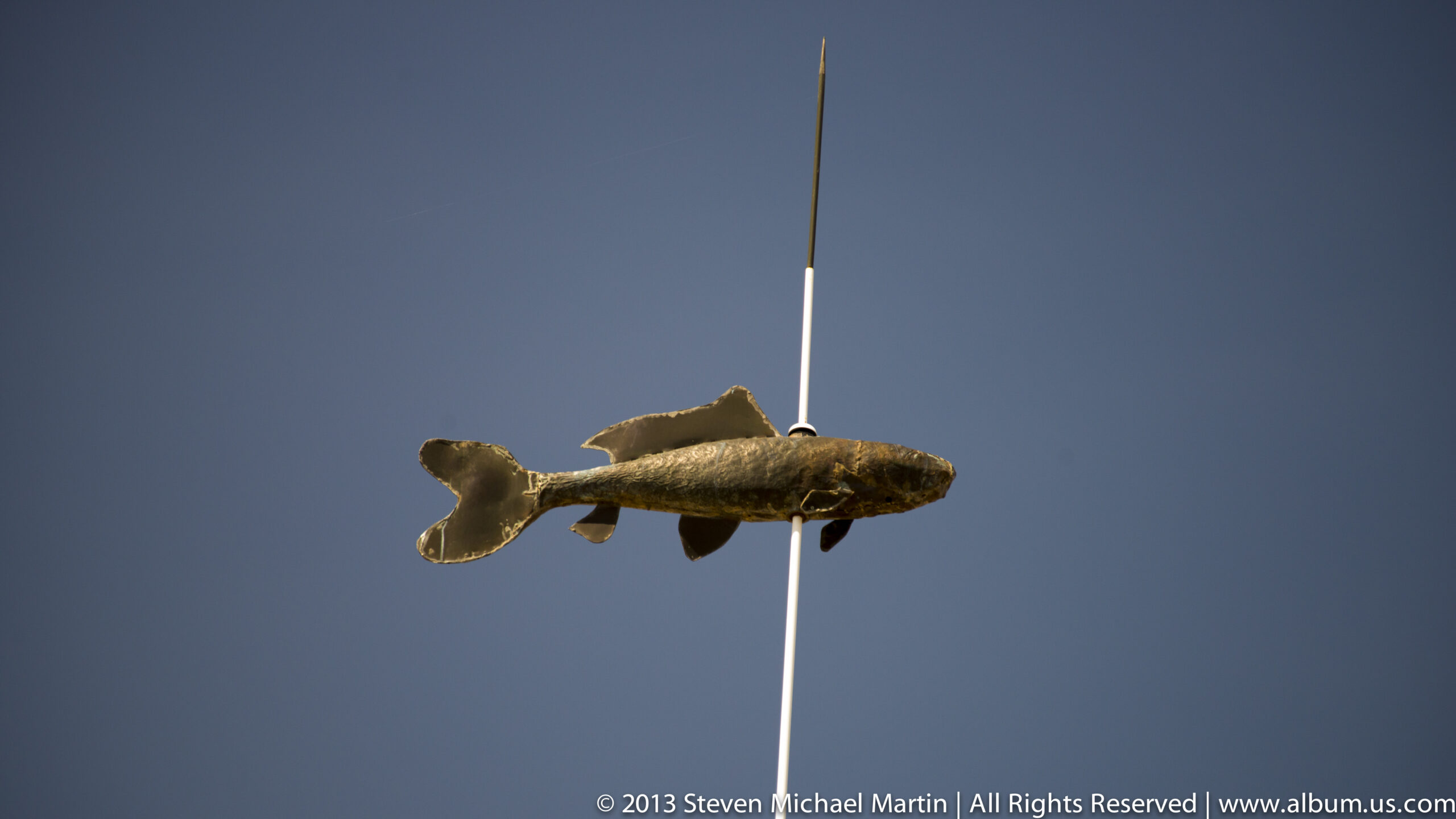
A metal fish-shaped ornament is mounted horizontally on a slender pole against a plain blue sky. Its tail, fins, and elongated body are clearly outlined, with no roof or building visible to establish how the object functions. The isolated view emphasizes the silhouette and the unusual fish form rather than its architectural setting.
Caption
A metal fish-shaped ornament is mounted horizontally on a slender pole against a plain blue sky. Its tail, fins, and elongated body are clearly outlined, with no roof or building visible to establish how the object functions. The isolated view emphasizes the silhouette and the unusual fish form rather than its architectural setting.
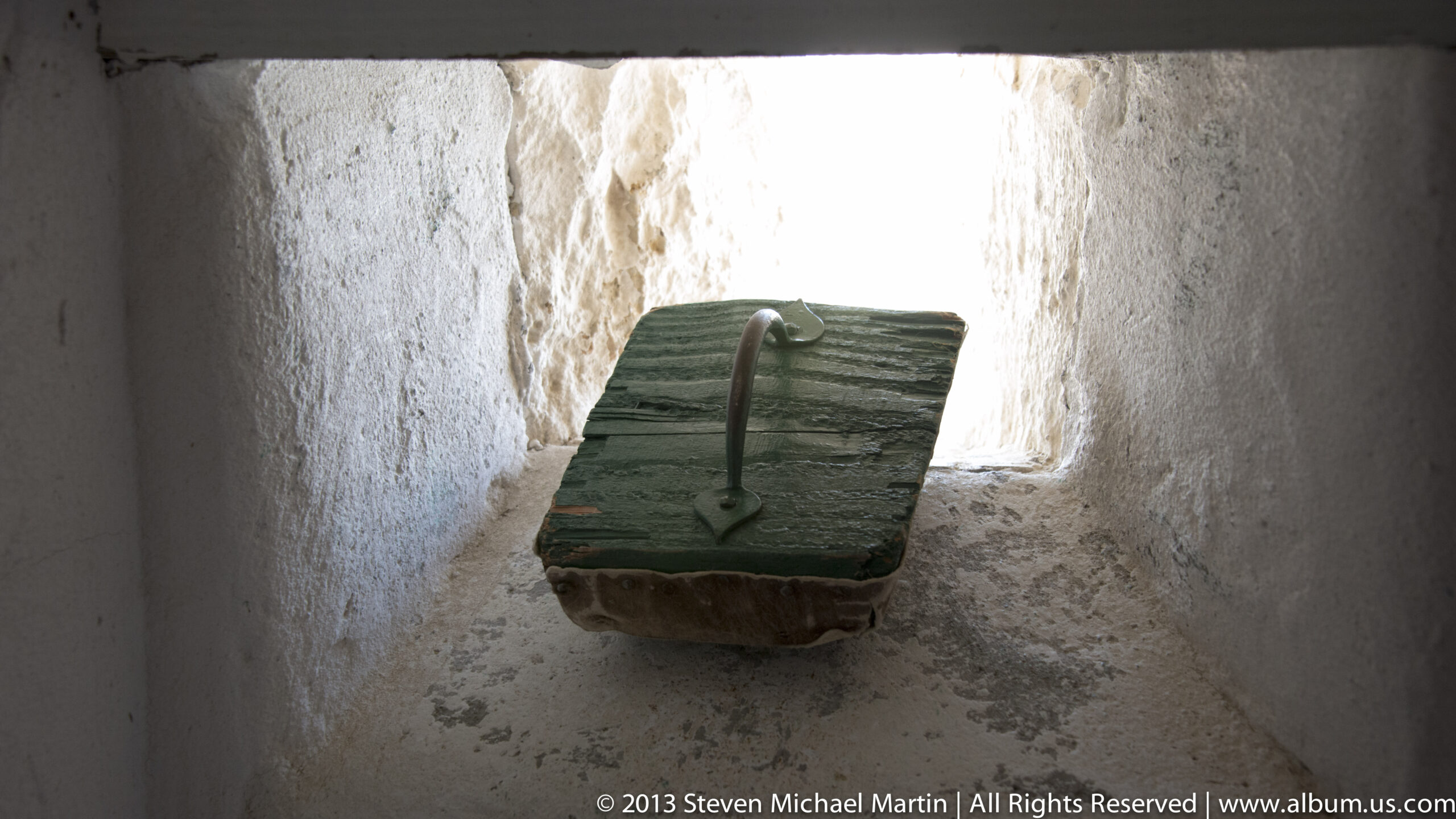
A small weathered wooden panel with a curved metal handle rests within a deep, brightly lit masonry recess. The surrounding walls are rough and pale, and the object sits on a narrow ledge above the floor. The thumbnail does not establish the fixture’s original purpose, so the caption stays with its visible form and placement.
Caption
A small weathered wooden panel with a curved metal handle rests within a deep, brightly lit masonry recess. The surrounding walls are rough and pale, and the object sits on a narrow ledge above the floor. The thumbnail does not establish the fixture’s original purpose, so the caption stays with its visible form and placement.
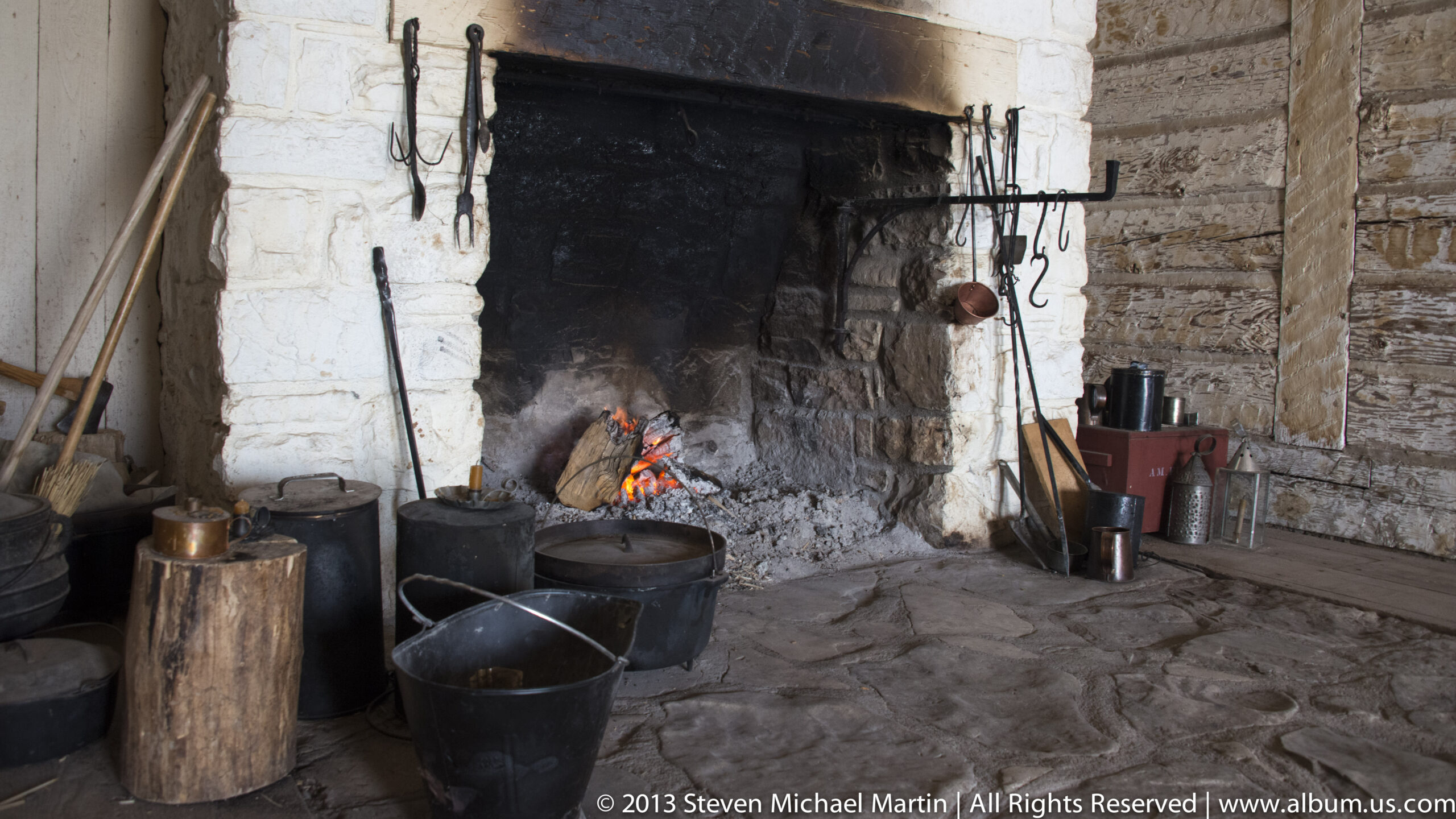
A broad stone fireplace holds a small active fire, with iron pots and kettles arranged across the hearth and floor. Long tools hang from a horizontal bar at the right, and the surrounding whitewashed walls show smoke-darkened surfaces. The view centers the hearth as a working interior feature, with cookware placed close at hand.
Caption
A broad stone fireplace holds a small active fire, with iron pots and kettles arranged across the hearth and floor. Long tools hang from a horizontal bar at the right, and the surrounding whitewashed walls show smoke-darkened surfaces. The view centers the hearth as a working interior feature, with cookware placed close at hand.
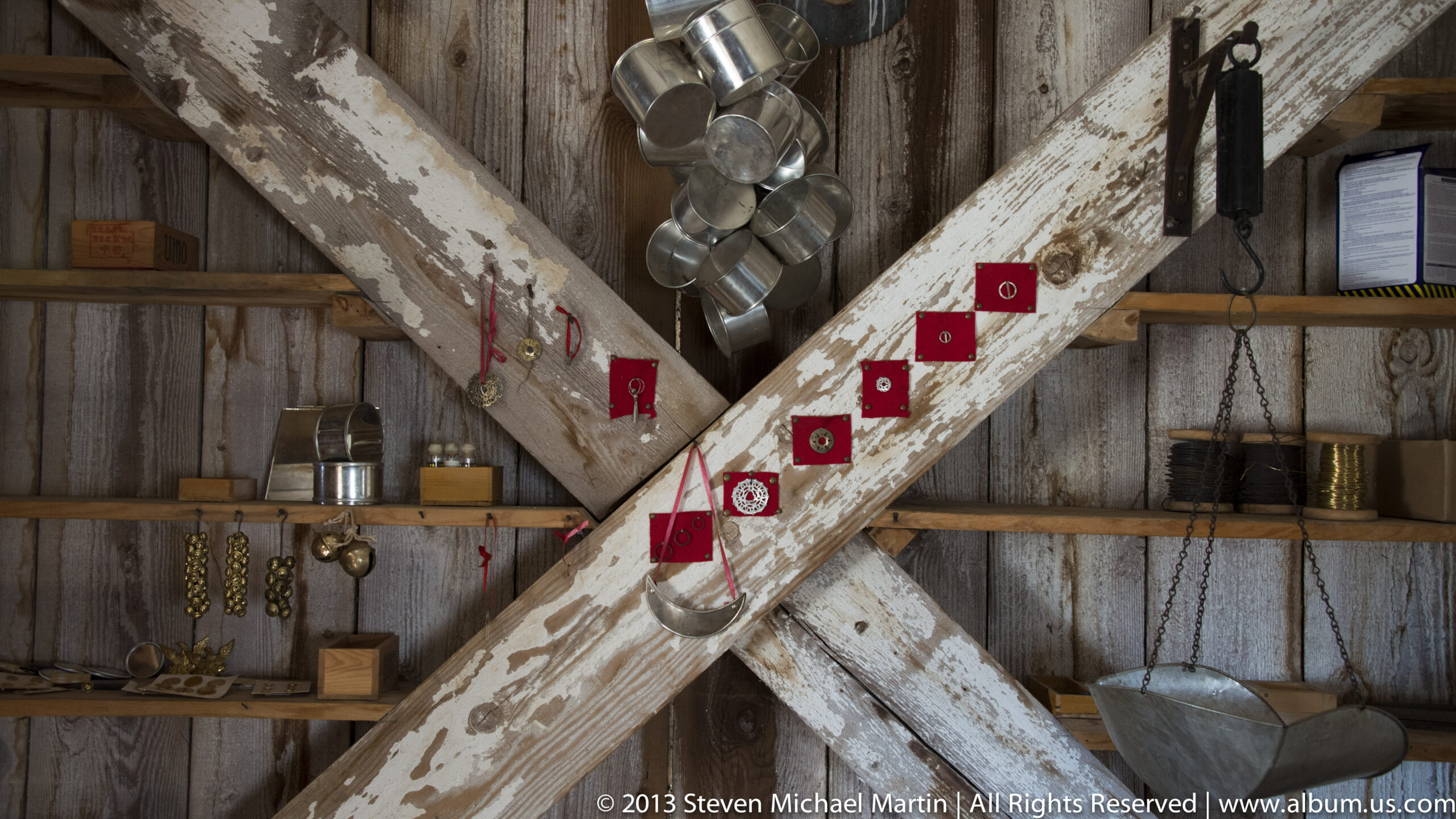
Several metal cups hang from a weathered timber frame, with a line of small red tags or fittings attached along the diagonal beam. Shelves and additional metal objects fill the plank-walled room behind them. The angled beams divide the composition and draw attention to the hanging utensils, though their exact historical use is not clear at this scale.
Caption
Several metal cups hang from a weathered timber frame, with a line of small red tags or fittings attached along the diagonal beam. Shelves and additional metal objects fill the plank-walled room behind them. The angled beams divide the composition and draw attention to the hanging utensils, though their exact historical use is not clear at this scale.
Historic Site Field Guide
Fort Union Trading Post served as a major center of commerce along the Missouri River during the 19th century fur trade era. The site illustrates how river corridors functioned as economic and cultural connections linking Indigenous communities, traders, and expanding American commercial networks. The reconstructed buildings reflect architectural designs suited to remote frontier environments.
🏛 Historical Significance
- Major fur trade center operating from 1828–1867
- Exchange hub for buffalo robes and trade goods
- Meeting place for Indigenous tribes and traders
- Strategic location along Missouri River corridor
- Example of commercial networks shaping western expansion
📖 Interpretive Context
Trade along the Missouri River connected distant regions through systems of exchange that relied on waterways for transportation. Fort Union functioned as both a commercial center and a place of cultural interaction. The site illustrates how trade routes contributed to economic development and cross-cultural contact across the northern plains.
📷 Photography Notes
- Wooden structures convey frontier atmosphere
- Wide compositions show fort layout
- Look for textures in reconstructed materials
- Landscape context helps illustrate isolation of site