Great Sand Dunes National Park
Great Sand Dunes National Park preserves a remarkable landscape of towering dunes formed by wind patterns interacting with the Sangre de Cristo Mountains. Sand carried across the San Luis Valley accumulates at the base of the mountains, creating dunes that reach heights exceeding 700 feet. The contrast between alpine peaks and desert-like terrain makes the park one of the most distinctive environments in the Rocky Mountain region.
The dunes are constantly reshaped by wind and seasonal moisture, creating changing patterns of light and texture across the landscape. Nearby wetlands, grasslands, and forested slopes illustrate the environmental diversity surrounding the dune field. The interaction between climate, topography, and sediment movement continues to shape the evolving landscape.
Visitors experience Great Sand Dunes National Park as a striking contrast between mountain and desert environments. The expansive dune field creates a sense of scale that differs from traditional alpine scenery, offering a unique geological landscape within Colorado.
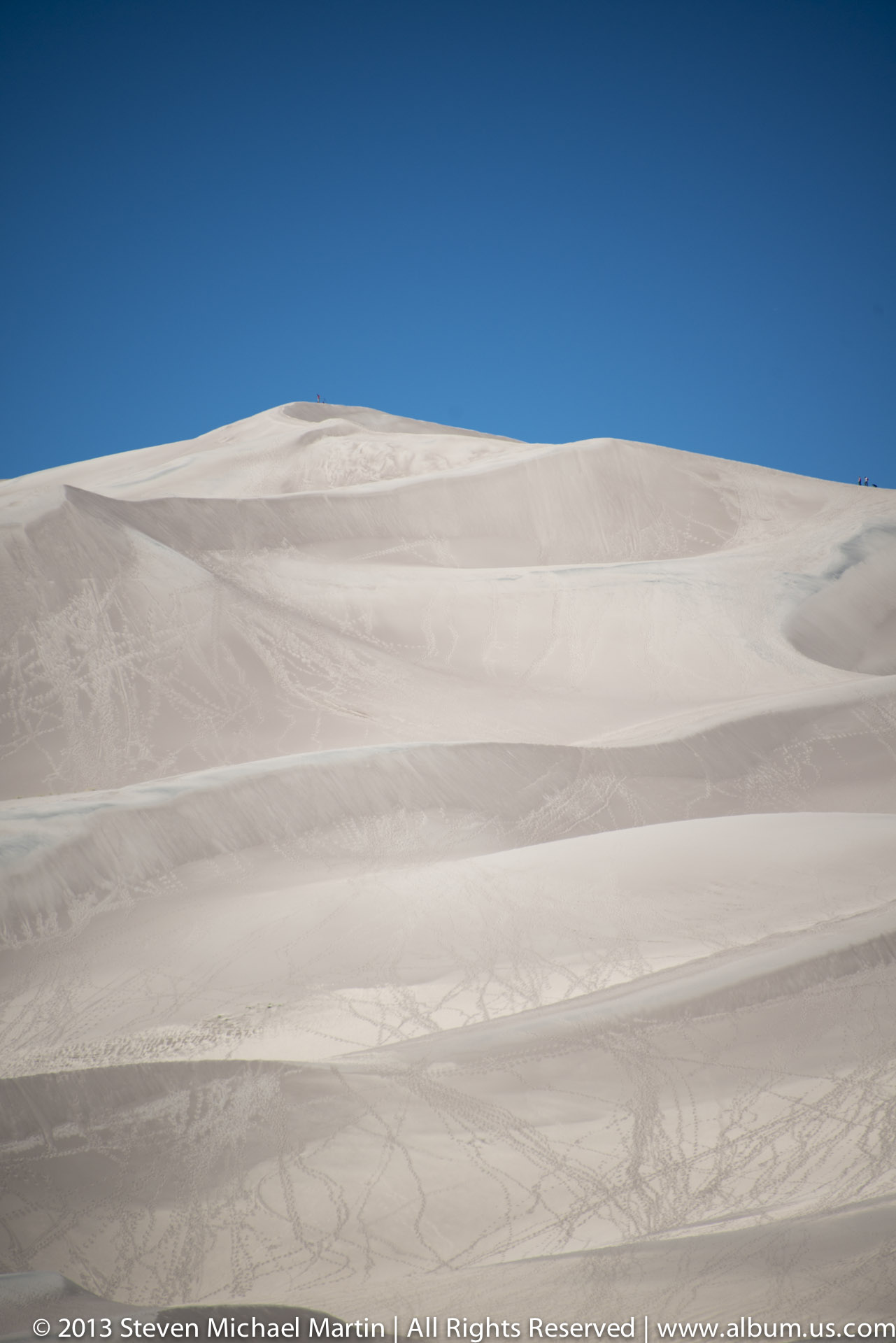
Broad, pale dune slopes sweep from foreground to horizon, divided by soft ridgelines and shallow troughs. The high angle leaves out the surrounding mountains and focuses on the sand’s layered geometry, with subtle lines and tonal bands marking the changing gradients. A clear sky forms a narrow strip above the crest, keeping the composition centered on the dune surface.
Caption
Broad, pale dune slopes sweep from foreground to horizon, divided by soft ridgelines and shallow troughs. The high angle leaves out the surrounding mountains and focuses on the sand’s layered geometry, with subtle lines and tonal bands marking the changing gradients. A clear sky forms a narrow strip above the crest, keeping the composition centered on the dune surface.
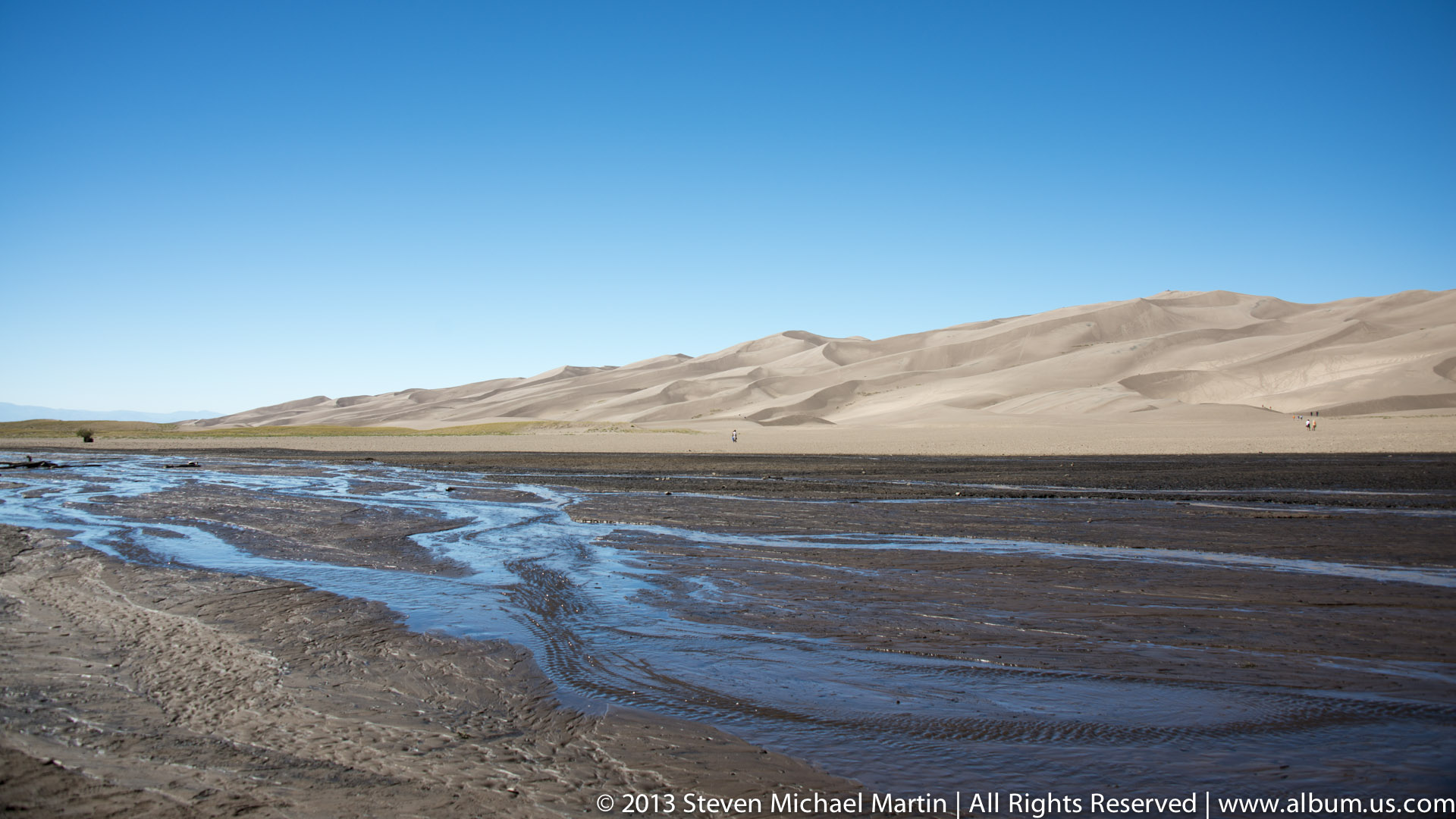
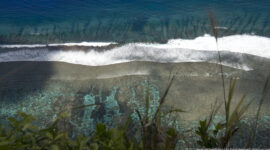
A shallow stream spreads into narrow blue channels across dark, wet sand at the foot of the dunes. Beyond the water, the pale slopes rise in a continuous ridge beneath the sky, with a few tiny visitors visible along the distant edge. The foreground contrast between reflective water and damp sediment distinguishes this view from the dry dune scenes nearby.
Caption
A shallow stream spreads into narrow blue channels across dark, wet sand at the foot of the dunes. Beyond the water, the pale slopes rise in a continuous ridge beneath the sky, with a few tiny visitors visible along the distant edge. The foreground contrast between reflective water and damp sediment distinguishes this view from the dry dune scenes nearby.
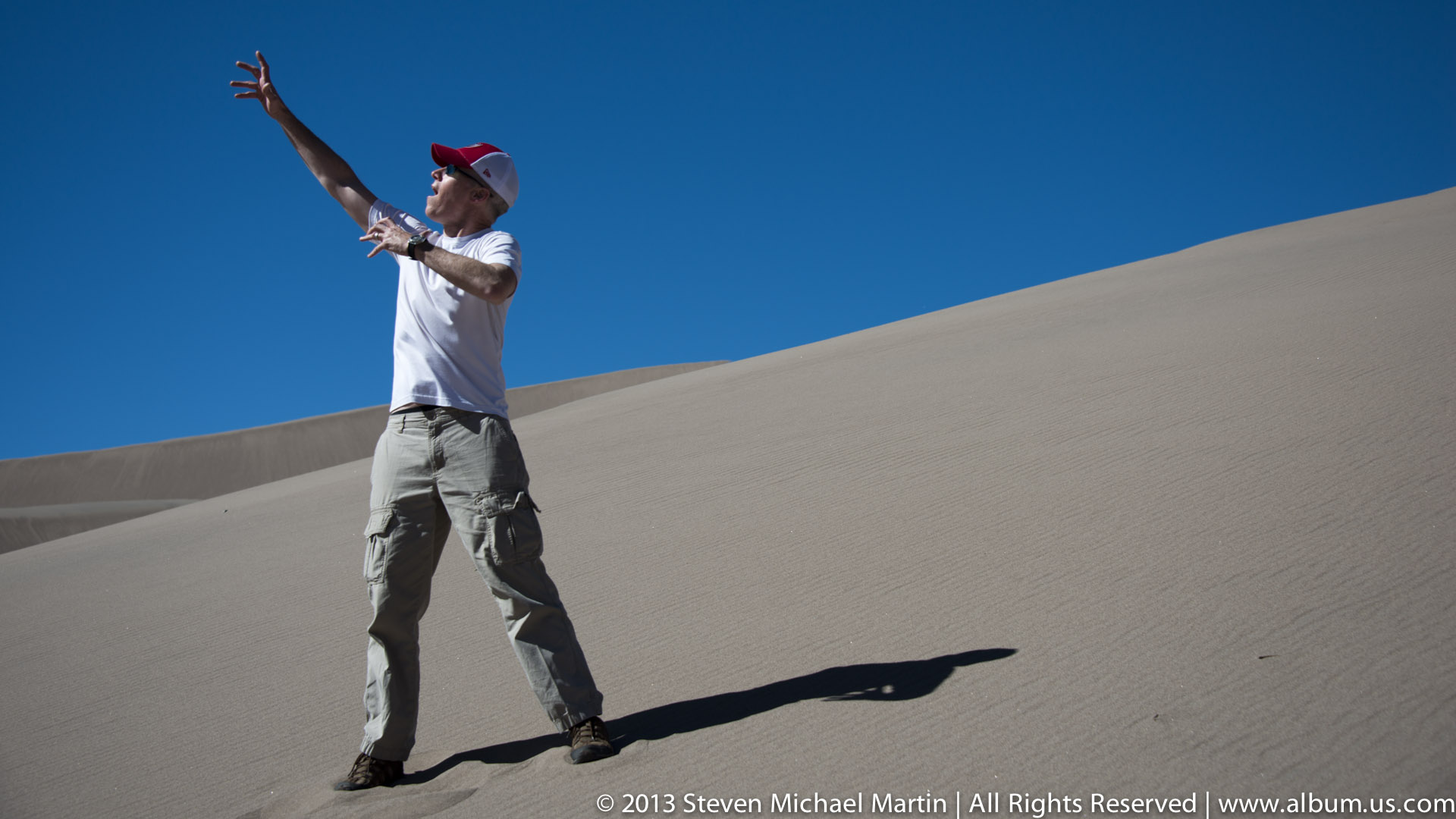
A man in a white shirt and red cap stands high on a smooth dune, extending one arm toward the open sky. The steep slope cuts diagonally behind him, and his long shadow reaches across the sand toward the lower edge. The sparse composition gives the gesture and the clean boundary between dune and blue sky equal weight.
Caption
A man in a white shirt and red cap stands high on a smooth dune, extending one arm toward the open sky. The steep slope cuts diagonally behind him, and his long shadow reaches across the sand toward the lower edge. The sparse composition gives the gesture and the clean boundary between dune and blue sky equal weight.
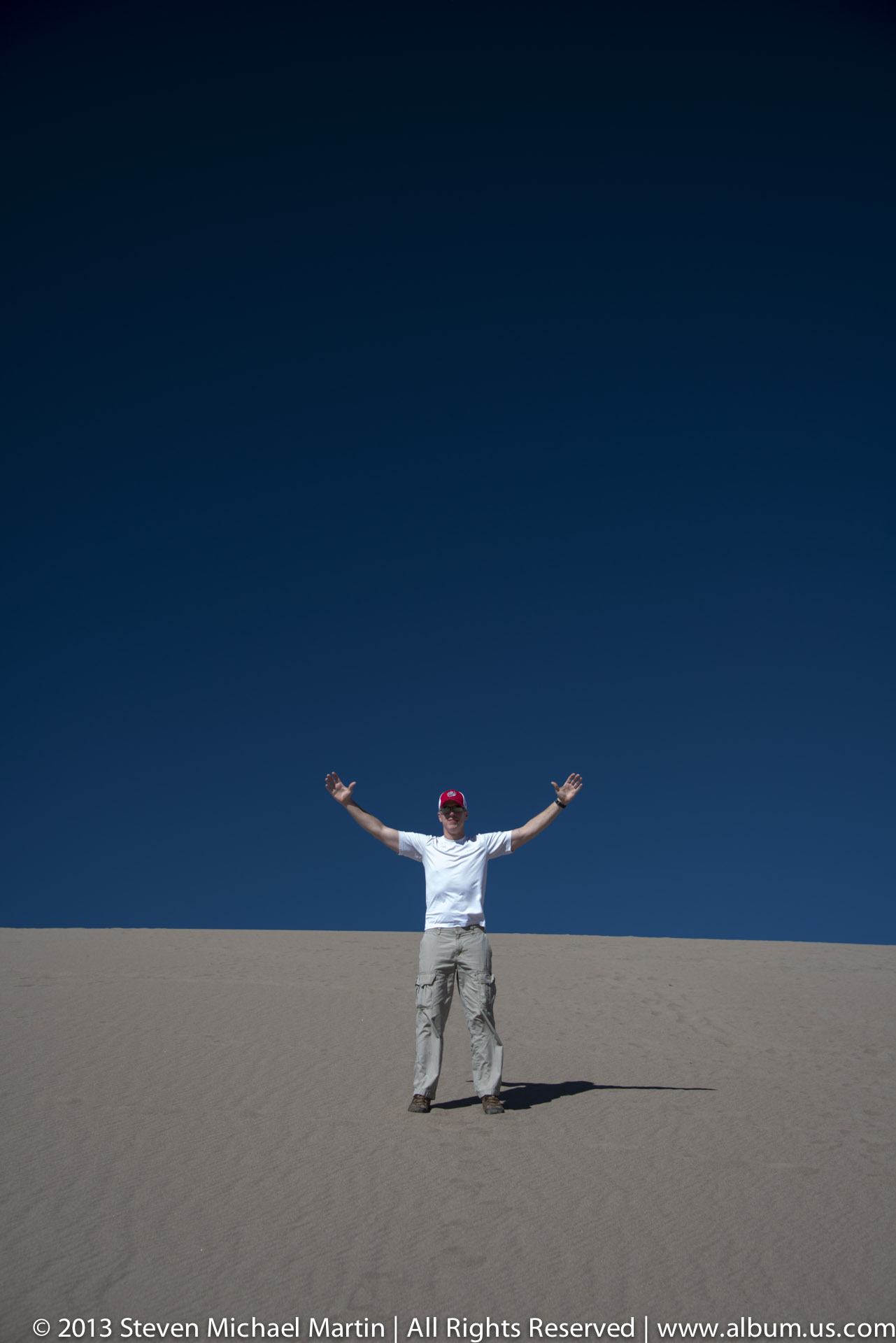
A man in a white shirt and red cap stands near the crest of a bare dune with both arms spread wide. His compact figure is centered against a broad, uninterrupted field of sand and a dark blue sky; a long shadow stretches diagonally across the slope. The open framing emphasizes the contrast between the visitor’s pose and the dune’s simple, clean lines.
Caption
A man in a white shirt and red cap stands near the crest of a bare dune with both arms spread wide. His compact figure is centered against a broad, uninterrupted field of sand and a dark blue sky; a long shadow stretches diagonally across the slope. The open framing emphasizes the contrast between the visitor’s pose and the dune’s simple, clean lines.
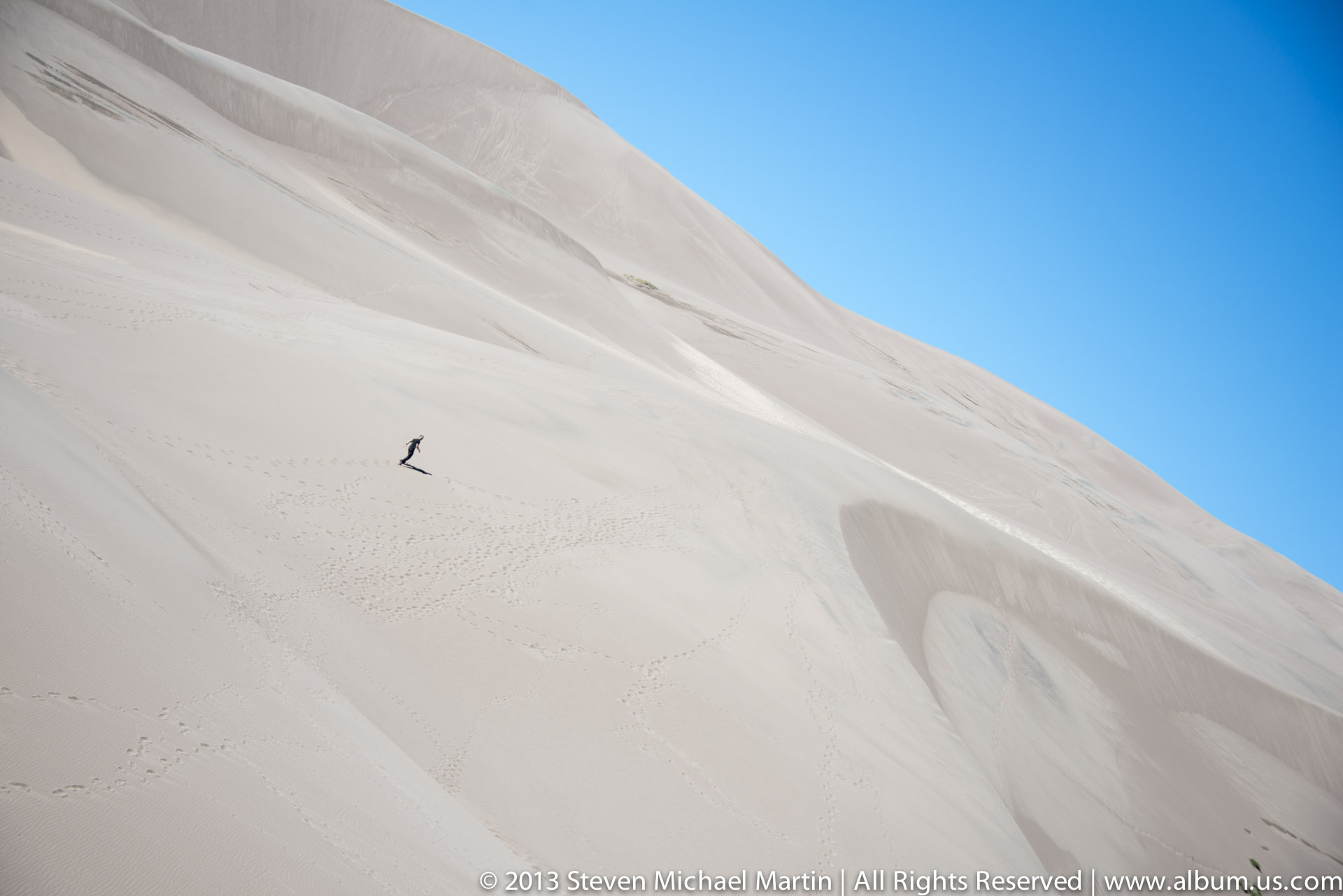
A steep dune face rises from the lower left toward the upper right, filling most of the view with pale sand. A small visitor appears partway across the slope, and faint footprints mark a route below and behind the figure. The diagonal crest and bright blue sky create a strong division between sand and open air, emphasizing the angle of ascent.
Caption
A steep dune face rises from the lower left toward the upper right, filling most of the view with pale sand. A small visitor appears partway across the slope, and faint footprints mark a route below and behind the figure. The diagonal crest and bright blue sky create a strong division between sand and open air, emphasizing the angle of ascent.
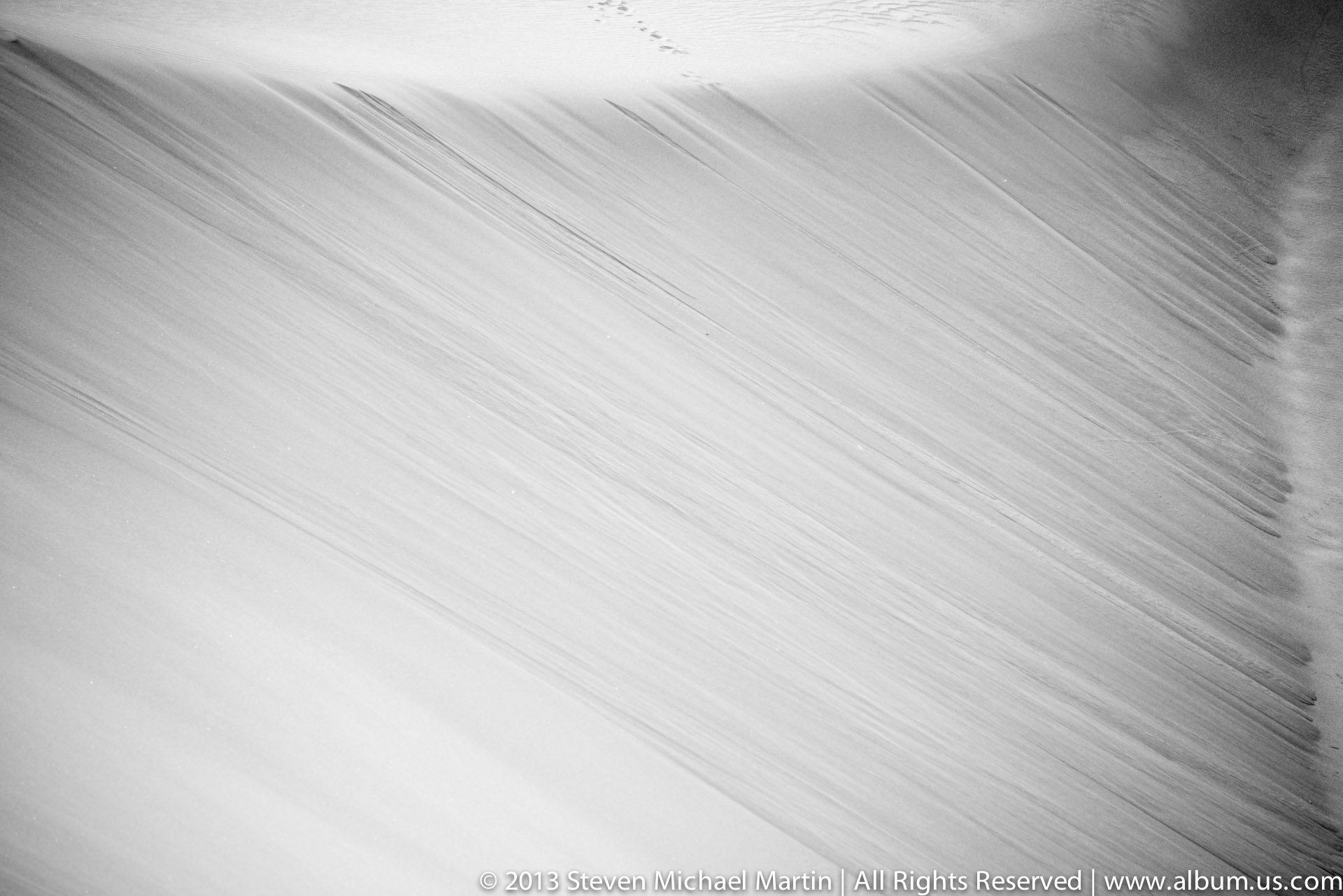
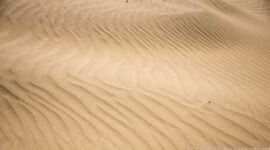
Fine, parallel ripples sweep diagonally across a pale sand surface, creating alternating bands of light and shadow. The close, monochrome framing excludes the horizon, people, and vegetation, turning the wind-shaped texture into an abstract pattern. Subtle shifts in ripple direction and spacing give the otherwise minimal image a sense of movement.
Caption
Fine, parallel ripples sweep diagonally across a pale sand surface, creating alternating bands of light and shadow. The close, monochrome framing excludes the horizon, people, and vegetation, turning the wind-shaped texture into an abstract pattern. Subtle shifts in ripple direction and spacing give the otherwise minimal image a sense of movement.
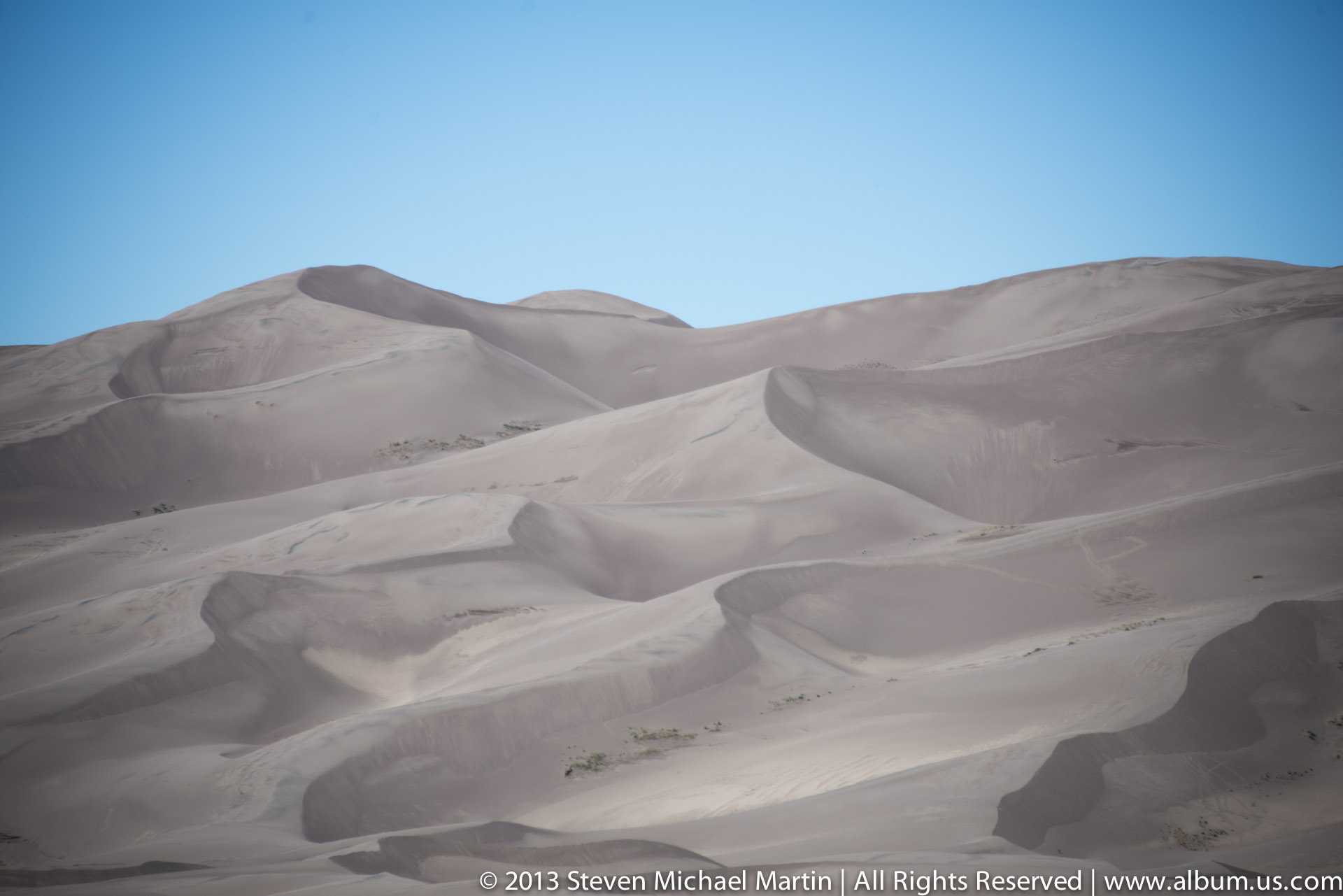
A series of pale sand ridges overlap across the frame, their smooth crests and shallow troughs forming a repeating pattern. Fine surface lines trace the slopes, while the uppermost ridge rises against a bright blue sky. With no people or vegetation in the foreground, the photograph isolates the dunes’ shifting contours and subtle tonal changes.
Caption
A series of pale sand ridges overlap across the frame, their smooth crests and shallow troughs forming a repeating pattern. Fine surface lines trace the slopes, while the uppermost ridge rises against a bright blue sky. With no people or vegetation in the foreground, the photograph isolates the dunes’ shifting contours and subtle tonal changes.

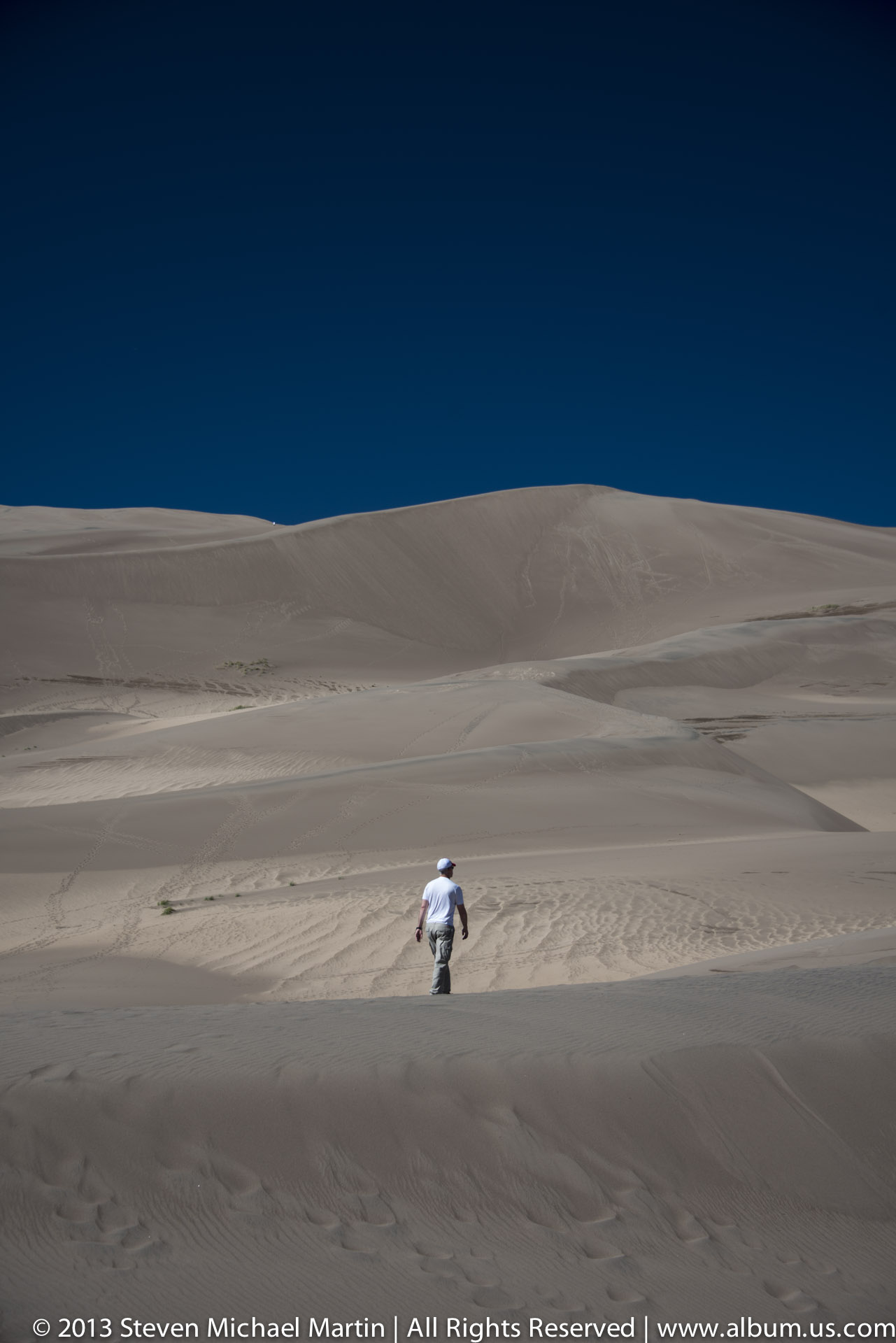
A visitor walks away across a broad, gently rising dune, his small figure positioned near the horizon beneath an expansive dark blue sky. A crisp shadow trails to his right, while faint surface ripples and footprints mark the otherwise open sand. The large area of sky and empty slope makes the person’s scale and solitary movement the central contrast.
Caption
A visitor walks away across a broad, gently rising dune, his small figure positioned near the horizon beneath an expansive dark blue sky. A crisp shadow trails to his right, while faint surface ripples and footprints mark the otherwise open sand. The large area of sky and empty slope makes the person’s scale and solitary movement the central contrast.
A lone visitor descends a broad, smooth dune, seen from behind and reduced to a small figure near the lower center. The ridge creates a nearly horizontal division between sand and deep blue sky, while subtle bands of light and shade reveal gentle changes in the slope. The expansive negative space stresses the scale of the dune and the distance between the visitor and the crest.
Caption
A lone visitor descends a broad, smooth dune, seen from behind and reduced to a small figure near the lower center. The ridge creates a nearly horizontal division between sand and deep blue sky, while subtle bands of light and shade reveal gentle changes in the slope. The expansive negative space stresses the scale of the dune and the distance between the visitor and the crest.
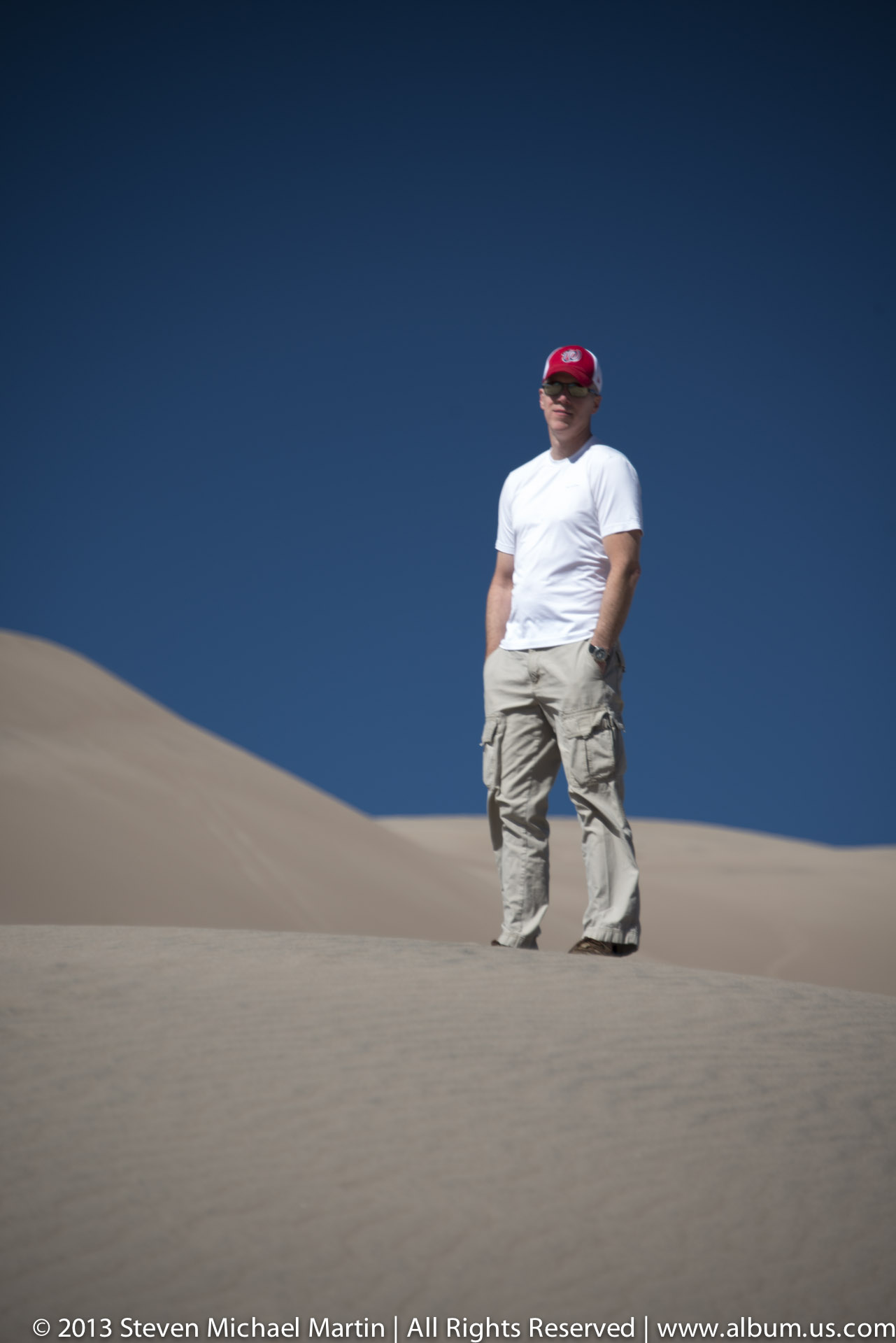
A man in a white shirt, tan trousers, and red cap stands on a pale dune, looking across the frame with his hands in his pockets. The person is isolated against a large field of blue sky and a low sand ridge, with a soft shadow at his feet. The simple portrait keeps attention on his stance and clothing while preserving the stark dune setting.
Caption
A man in a white shirt, tan trousers, and red cap stands on a pale dune, looking across the frame with his hands in his pockets. The person is isolated against a large field of blue sky and a low sand ridge, with a soft shadow at his feet. The simple portrait keeps attention on his stance and clothing while preserving the stark dune setting.

A single hiker crosses the wide face of a pale dune, appearing as a small dark figure near the right side of the slope. Soft ridges layer across the background, and faint tracks mark the sand below. The bright, high-key surface leaves little distraction, making the person’s scale against the dune field the defining feature.
Caption
A single hiker crosses the wide face of a pale dune, appearing as a small dark figure near the right side of the slope. Soft ridges layer across the background, and faint tracks mark the sand below. The bright, high-key surface leaves little distraction, making the person’s scale against the dune field the defining feature.

A visitor in dark clothing sits on a steep dune with one arm lifted toward the sky. The sand face rises diagonally across the frame, while the figure’s bent legs and backward-leaning posture suggest a pause or slide; the exact activity is not clear at this scale. Bright blue sky occupies much of the image and sharpens the contrast with the pale slope.
Caption
A visitor in dark clothing sits on a steep dune with one arm lifted toward the sky. The sand face rises diagonally across the frame, while the figure’s bent legs and backward-leaning posture suggest a pause or slide; the exact activity is not clear at this scale. Bright blue sky occupies much of the image and sharpens the contrast with the pale slope.
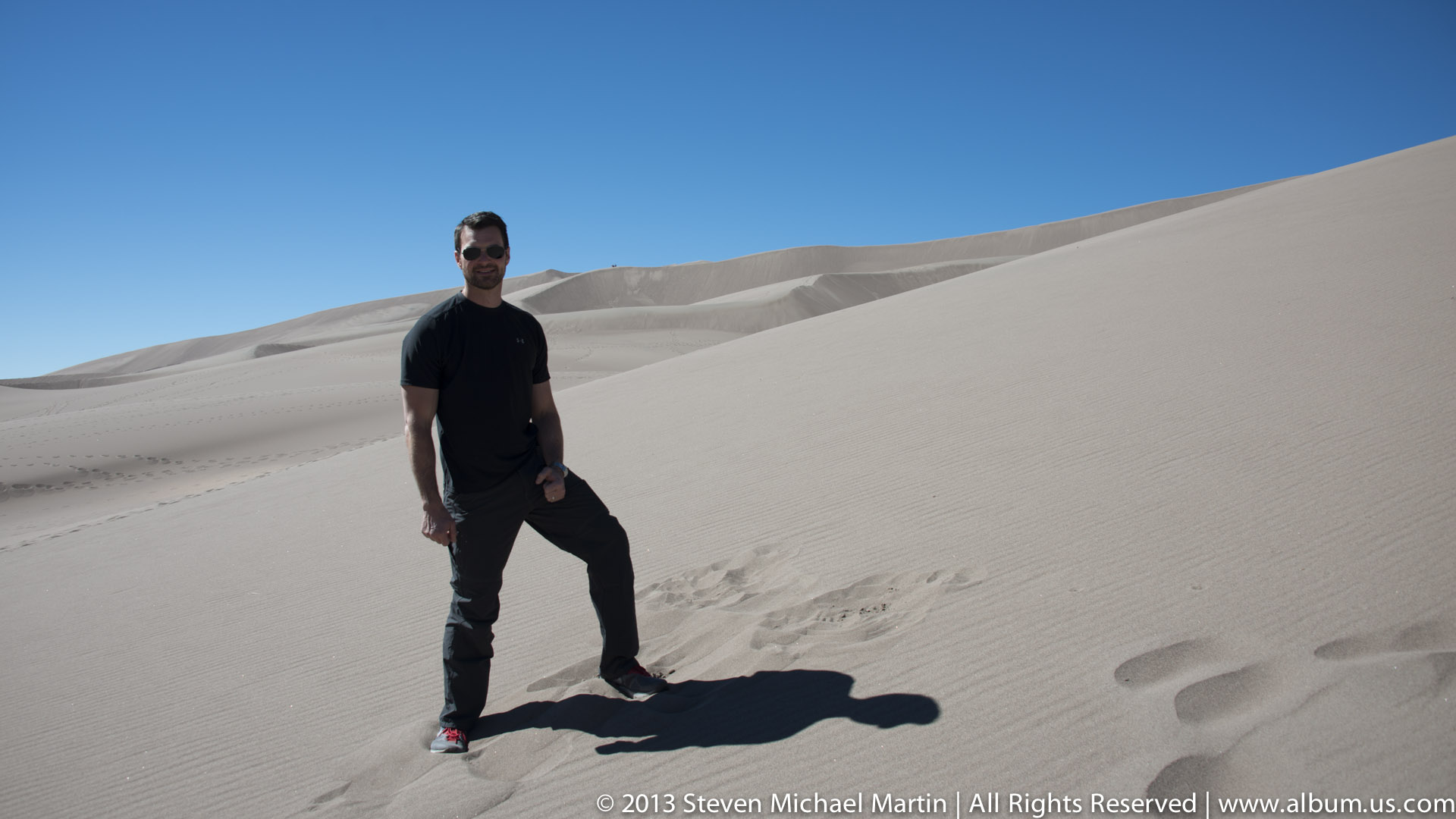
A man in dark clothing poses on the side of a dune, placing one foot higher on the slope while facing the camera. His long shadow falls down the pale sand, and a line of footprints leads toward him from the lower right. The angled ridge behind him and clear sky retain the sense of elevation while the full figure gives the frame a personal scale.
Caption
A man in dark clothing poses on the side of a dune, placing one foot higher on the slope while facing the camera. His long shadow falls down the pale sand, and a line of footprints leads toward him from the lower right. The angled ridge behind him and clear sky retain the sense of elevation while the full figure gives the frame a personal scale.

A small visitor stands on a dune crest with both arms raised, silhouetted against the blue sky. A single line of footprints climbs the ridge from the foreground and leads directly to the figure, while a sharp slipface curves down along the right side. The composition links the person’s pose to the visible route through the sand and to the crest’s narrow profile.
Caption
A small visitor stands on a dune crest with both arms raised, silhouetted against the blue sky. A single line of footprints climbs the ridge from the foreground and leads directly to the figure, while a sharp slipface curves down along the right side. The composition links the person’s pose to the visible route through the sand and to the crest’s narrow profile.
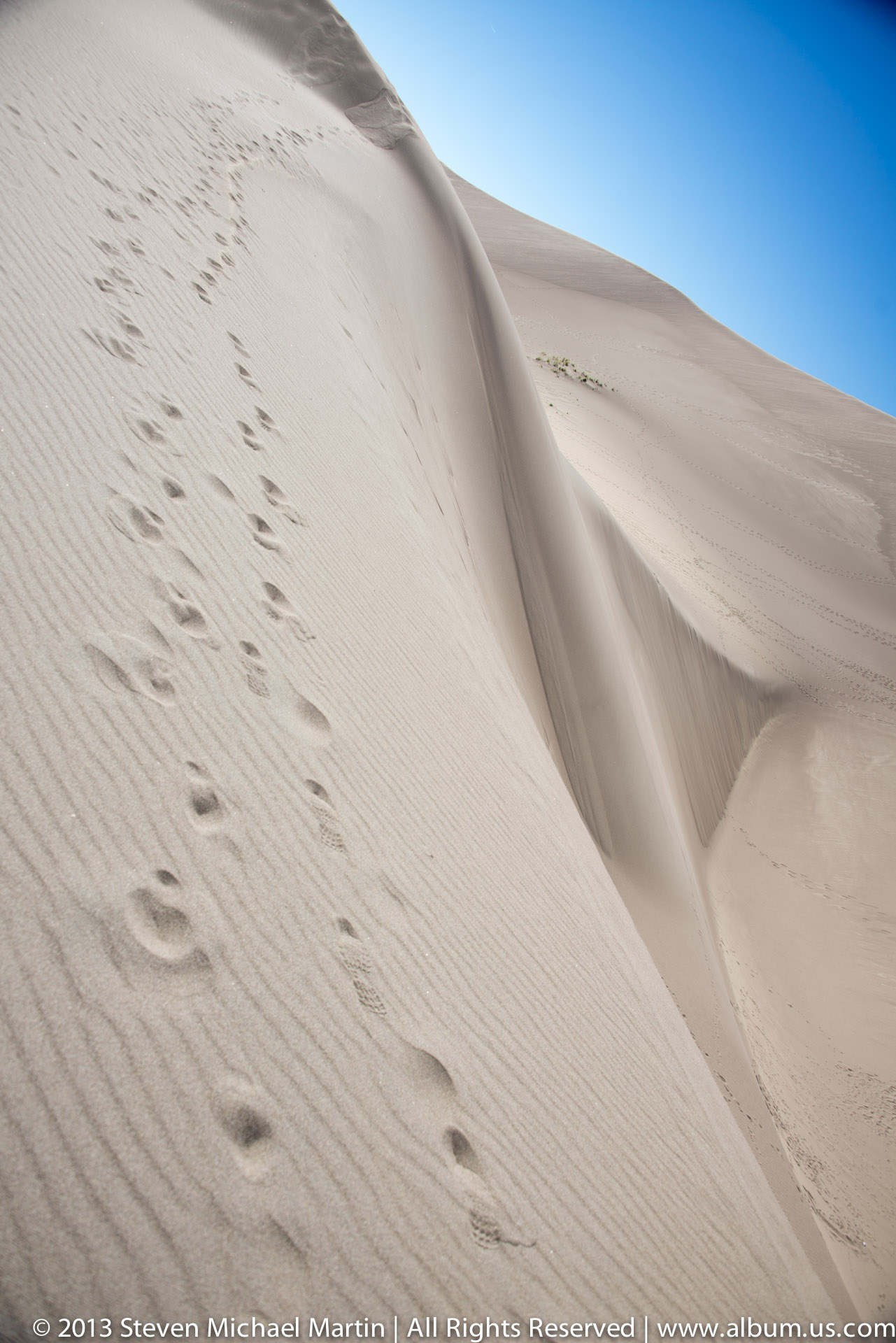
A chain of footprints climbs a steep dune face toward a high crest, with the tracks entering from the lower left and diminishing as they rise. The ridge’s sharp diagonal divides pale sand from a narrow wedge of blue sky, while fine ripples soften the otherwise smooth surface. No person is visible, leaving the path through the sand as the subject.
Caption
A chain of footprints climbs a steep dune face toward a high crest, with the tracks entering from the lower left and diminishing as they rise. The ridge’s sharp diagonal divides pale sand from a narrow wedge of blue sky, while fine ripples soften the otherwise smooth surface. No person is visible, leaving the path through the sand as the subject.
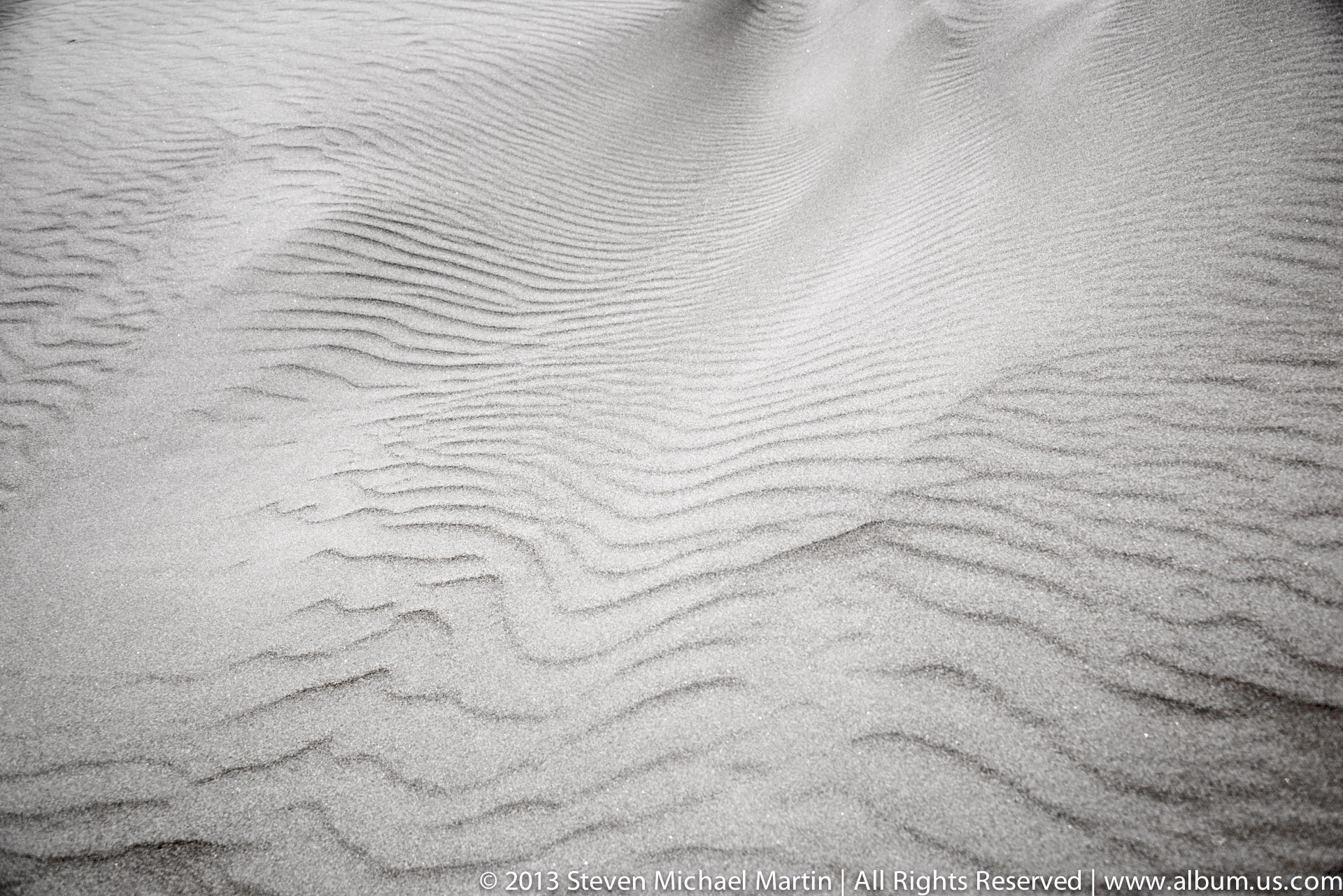
Small, closely spaced ripples cover the frame, their curved lines converging toward a shallow trough near the upper edge. The pale sand and soft gray shadows create a nearly monochrome study of surface texture, with no horizon or human presence to interrupt the pattern. This close detail contrasts with the larger dune views by showing the fine scale of wind-shaped ridges.
Caption
Small, closely spaced ripples cover the frame, their curved lines converging toward a shallow trough near the upper edge. The pale sand and soft gray shadows create a nearly monochrome study of surface texture, with no horizon or human presence to interrupt the pattern. This close detail contrasts with the larger dune views by showing the fine scale of wind-shaped ridges.
Great Sand Dunes National Park — Field Guide
🏞️ National Park Field Guide
📍 Overview
Great Sand Dunes National Park protects the tallest sand dunes in North America, formed through the interaction of wind patterns and mountain geography in the San Luis Valley. Sand transported across the valley accumulates against the Sangre de Cristo Mountains, producing a distinctive high elevation dune field.
Seasonal wind cycles and moisture levels continuously reshape dune surfaces, creating dynamic patterns of light and shadow. The surrounding environment includes wetlands, grasslands, and alpine terrain, contributing to the ecological diversity of the park.
⭐ Highlights
- Tallest sand dunes in North America
- High elevation dune field
- Views of Sangre de Cristo Mountains
- Unique desert-like environment in Colorado
- Dynamic landscape shaped by wind
🔎 Key Features
- Wind-formed dune systems
- Interaction of mountain and valley geography
- Seasonal changes in dune patterns
- Contrasting alpine and desert environments
- Expansive open landscape
📷 Photography Notes
- Low-angle light enhances dune texture
- Footprints create scale references
- Cloud shadows add visual depth
- Mountain backdrop strengthens composition
- Simple compositions emphasize form
- Early morning offers softer contrast

An interpretive panel headed “Great Sand Dunes” features a panoramic landscape photograph above the title “Stone, Sand, and Stream.” Smaller images and text sections below describe the park’s natural features, including visible examples of dunes, water, plants, and wildlife. The panel brings several subjects together in a visitor display, though the fine print is too small to transcribe accurately.
Caption
An interpretive panel headed “Great Sand Dunes” features a panoramic landscape photograph above the title “Stone, Sand, and Stream.” Smaller images and text sections below describe the park’s natural features, including visible examples of dunes, water, plants, and wildlife. The panel brings several subjects together in a visitor display, though the fine print is too small to transcribe accurately.
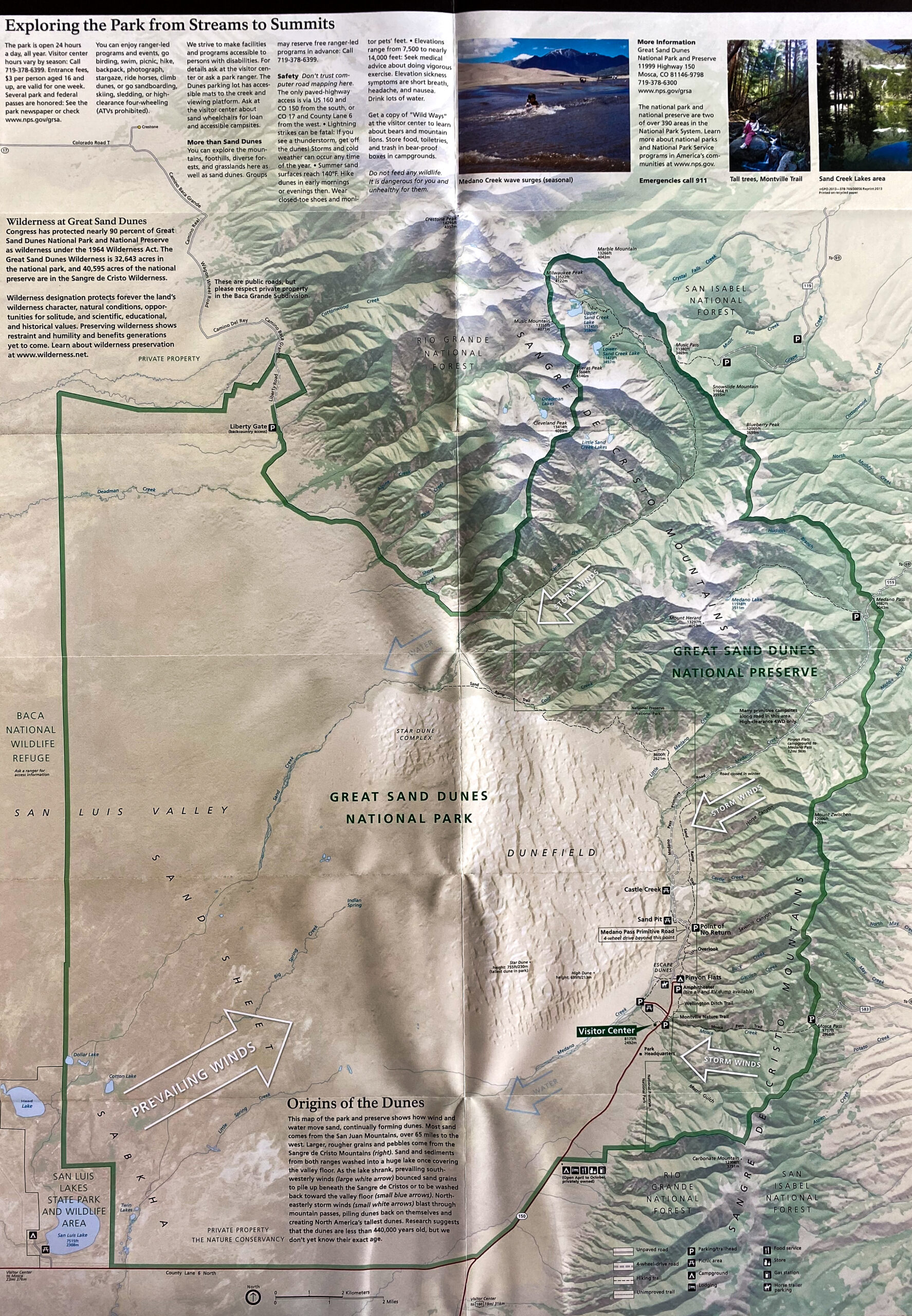
A large visitor map shows the Great Sand Dunes area in shaded relief, with the dune field near the center and a broad green boundary tracing the protected area. A narrow band of photographs and text runs across the top, while labels and route markings fill the map below. The printed layout connects the dunes with the surrounding mountain terrain and park access network.
Caption
A large visitor map shows the Great Sand Dunes area in shaded relief, with the dune field near the center and a broad green boundary tracing the protected area. A narrow band of photographs and text runs across the top, while labels and route markings fill the map below. The printed layout connects the dunes with the surrounding mountain terrain and park access network.