Jewel Cave National Monument
Jewel Cave National Monument preserves one of the longest cave systems in the world, formed through the gradual dissolution of limestone by groundwater over millions of years. The cave is especially known for its glittering calcite crystals and delicate mineral coatings that line many of its passages, giving the cave its name. These underground formations illustrate how water and mineral deposition can create highly intricate geological environments over extended periods of time.
Like nearby Wind Cave, Jewel Cave developed within the uplifted limestone layers of the Black Hills, where geological forces exposed ancient rock formations and allowed underground water movement to shape extensive cave networks. The cave system reveals the relationship between bedrock composition, hydrology, and long-term landscape change. Its chambers and passageways provide insight into the hidden geological history of the region.
Today, Jewel Cave helps demonstrate how the Black Hills preserve both above-ground and underground evidence of geological evolution. The monument illustrates how natural systems operating slowly over immense periods of time can produce landscapes of remarkable complexity and beauty.
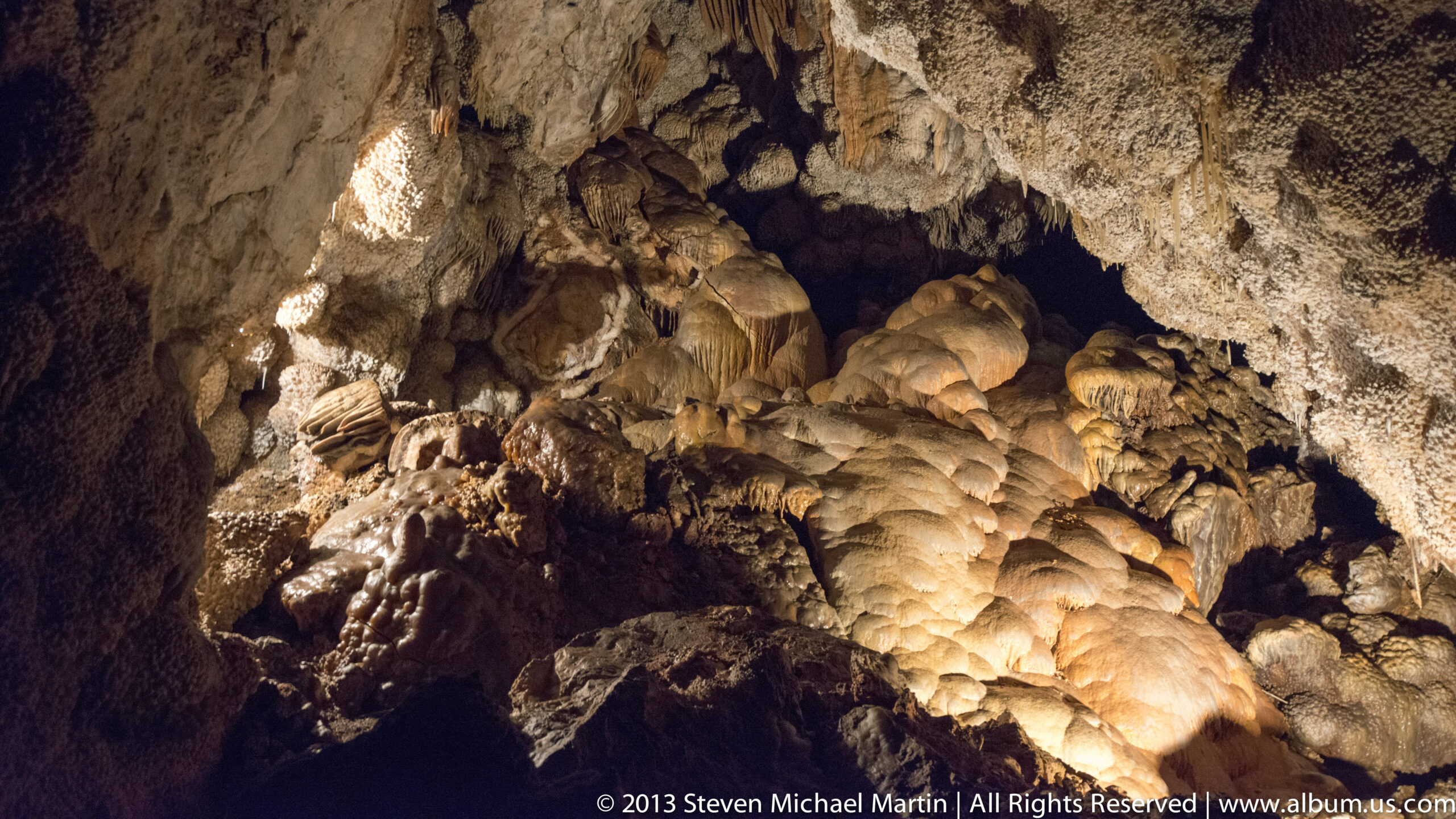
A wide view opens onto a cave chamber crowded with pale, rounded mineral deposits and sloping flowstone. Warm spotlights pick out the foreground and central formations, while the ceiling and side passages recede into darkness. The broad composition conveys the chamber’s depth and the uneven surfaces extending from floor to ceiling.
Caption
A wide view opens onto a cave chamber crowded with pale, rounded mineral deposits and sloping flowstone. Warm spotlights pick out the foreground and central formations, while the ceiling and side passages recede into darkness. The broad composition conveys the chamber’s depth and the uneven surfaces extending from floor to ceiling.
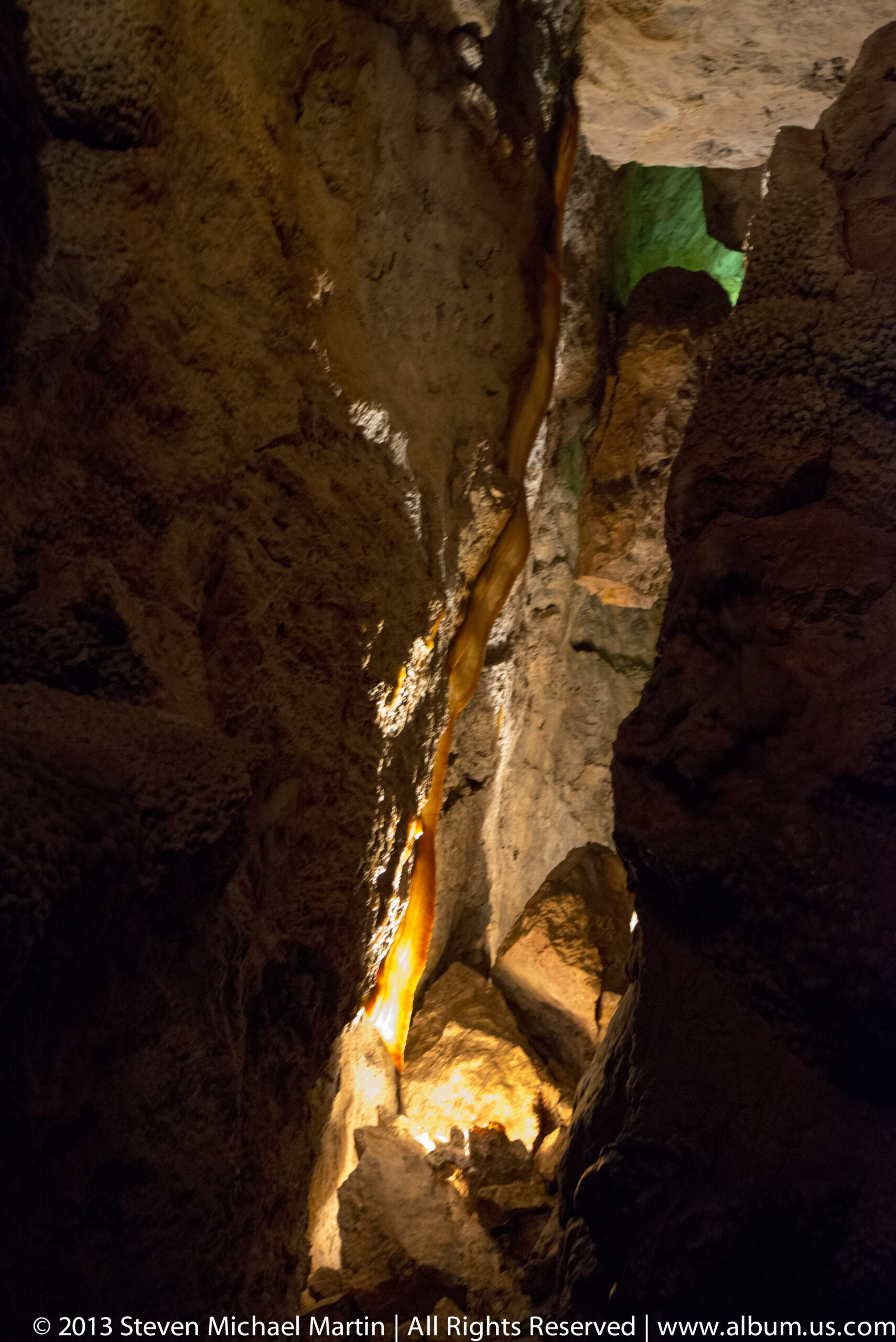
A narrow cave passage runs between dark, rough walls, with amber light illuminating the floor and a small green-lit area near the upper right. The contrasting colors mark different parts of the passage and emphasize its irregular, constricted shape. No people are visible, leaving the illuminated route and surrounding darkness as the central elements.
Caption
A narrow cave passage runs between dark, rough walls, with amber light illuminating the floor and a small green-lit area near the upper right. The contrasting colors mark different parts of the passage and emphasize its irregular, constricted shape. No people are visible, leaving the illuminated route and surrounding darkness as the central elements.

A great blue heron stands in shallow water, its long neck curved into an S and its bill pointed toward the pond. Dry reeds and their reflections surround the bird, while a blurred bank of tangled branches fills the background. The quiet, close view isolates the heron against a dense pattern of water, grasses, and reflected vegetation.
Caption
A great blue heron stands in shallow water, its long neck curved into an S and its bill pointed toward the pond. Dry reeds and their reflections surround the bird, while a blurred bank of tangled branches fills the background. The quiet, close view isolates the heron against a dense pattern of water, grasses, and reflected vegetation.

Warm light falls across a pale cave passage crowded with rounded mineral deposits and textured flowstone. Dark rock frames the opening on both sides, directing attention toward the brighter formations in the center. The varied surfaces appear continuous from floor to wall, while the shadowed ceiling gives the passage a confined, enclosed feel.
Caption
Warm light falls across a pale cave passage crowded with rounded mineral deposits and textured flowstone. Dark rock frames the opening on both sides, directing attention toward the brighter formations in the center. The varied surfaces appear continuous from floor to wall, while the shadowed ceiling gives the passage a confined, enclosed feel.
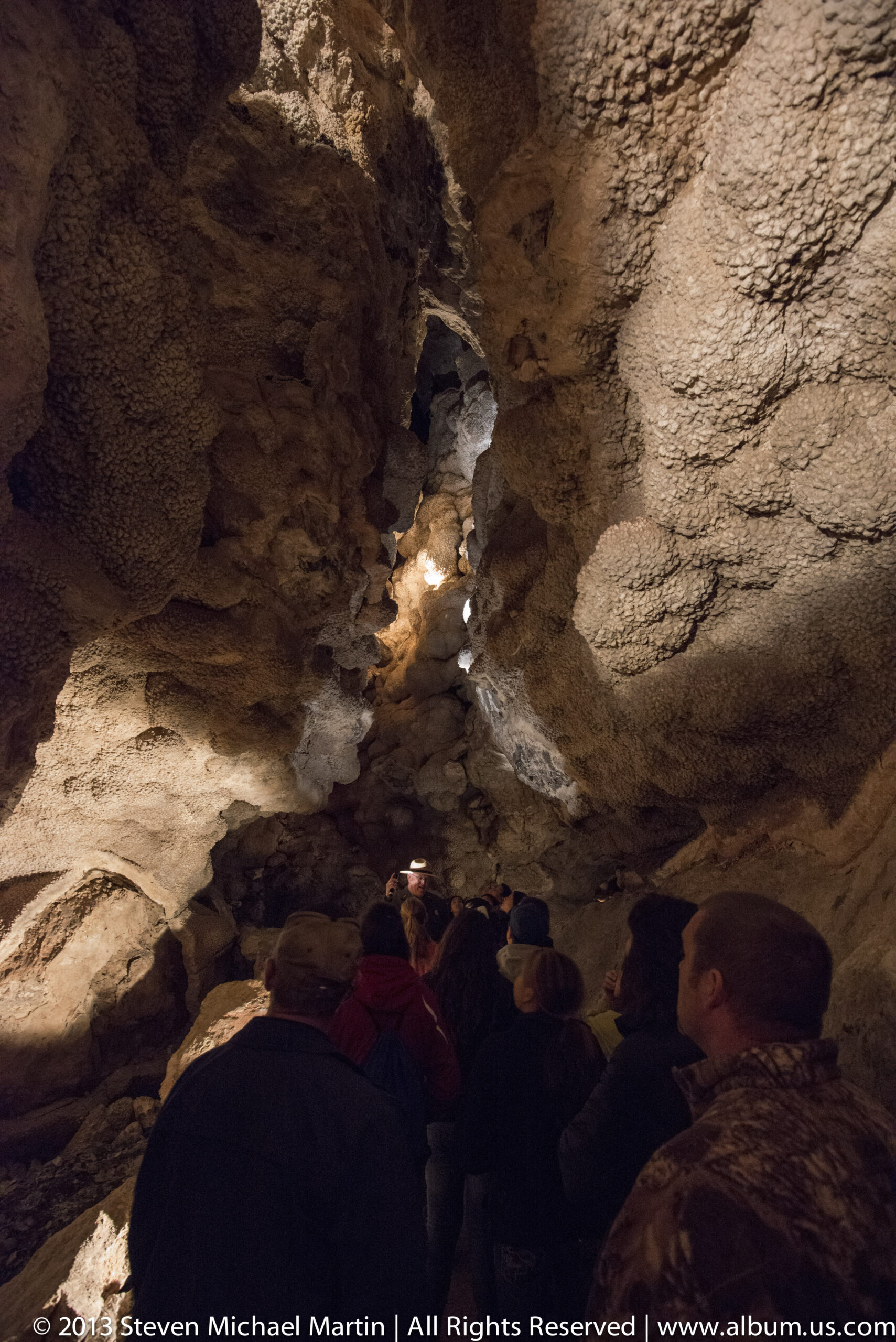
Several visitors stand close together beneath a high, irregular cave ceiling, looking toward formations illuminated by warm lights. Their silhouettes and clothing occupy the lower part of the frame, establishing the scale of the chamber and the guided underground visit. The steep upward view connects the group to the layered rock overhead.
Caption
Several visitors stand close together beneath a high, irregular cave ceiling, looking toward formations illuminated by warm lights. Their silhouettes and clothing occupy the lower part of the frame, establishing the scale of the chamber and the guided underground visit. The steep upward view connects the group to the layered rock overhead.
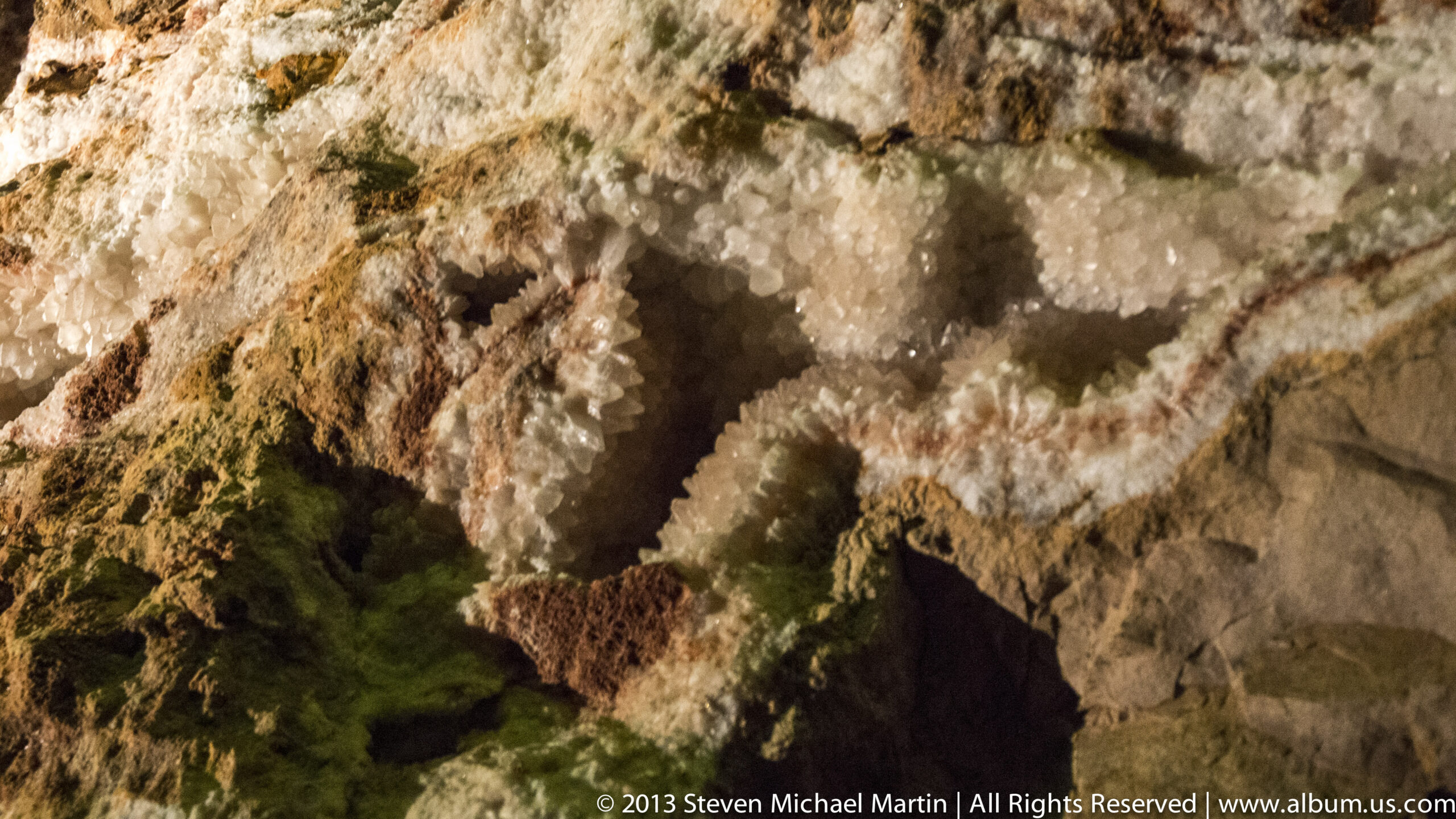
Warm artificial light reveals a rugged cave wall coated with pale, knobby mineral deposits and darker rust-colored patches. The close framing follows the uneven surface into a shadowed recess, emphasizing the contrast between rough protrusions and smooth, darker cavities. No visitors or scale markers appear, so the image reads as a study of texture and cave structure.
Caption
Warm artificial light reveals a rugged cave wall coated with pale, knobby mineral deposits and darker rust-colored patches. The close framing follows the uneven surface into a shadowed recess, emphasizing the contrast between rough protrusions and smooth, darker cavities. No visitors or scale markers appear, so the image reads as a study of texture and cave structure.
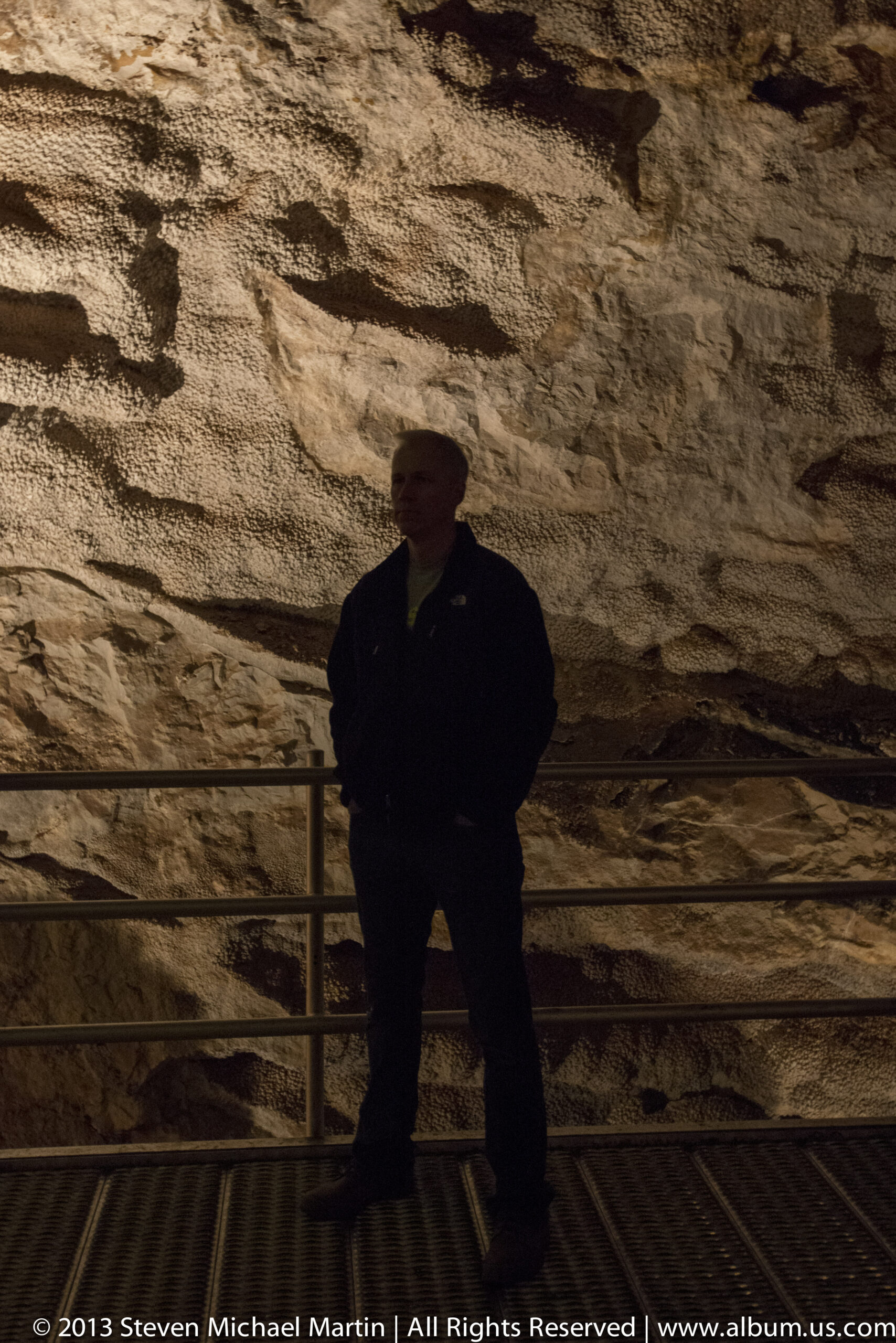
A visitor stands on a metal-railed walkway inside the cavern, silhouetted against a broad, pale rock wall. The figure’s dark outline provides scale for the textured surface, while the horizontal rail separates the visitor path from the chamber. Low light keeps the person mostly in shadow and draws attention to the rock overhead.
Caption
A visitor stands on a metal-railed walkway inside the cavern, silhouetted against a broad, pale rock wall. The figure’s dark outline provides scale for the textured surface, while the horizontal rail separates the visitor path from the chamber. Low light keeps the person mostly in shadow and draws attention to the rock overhead.
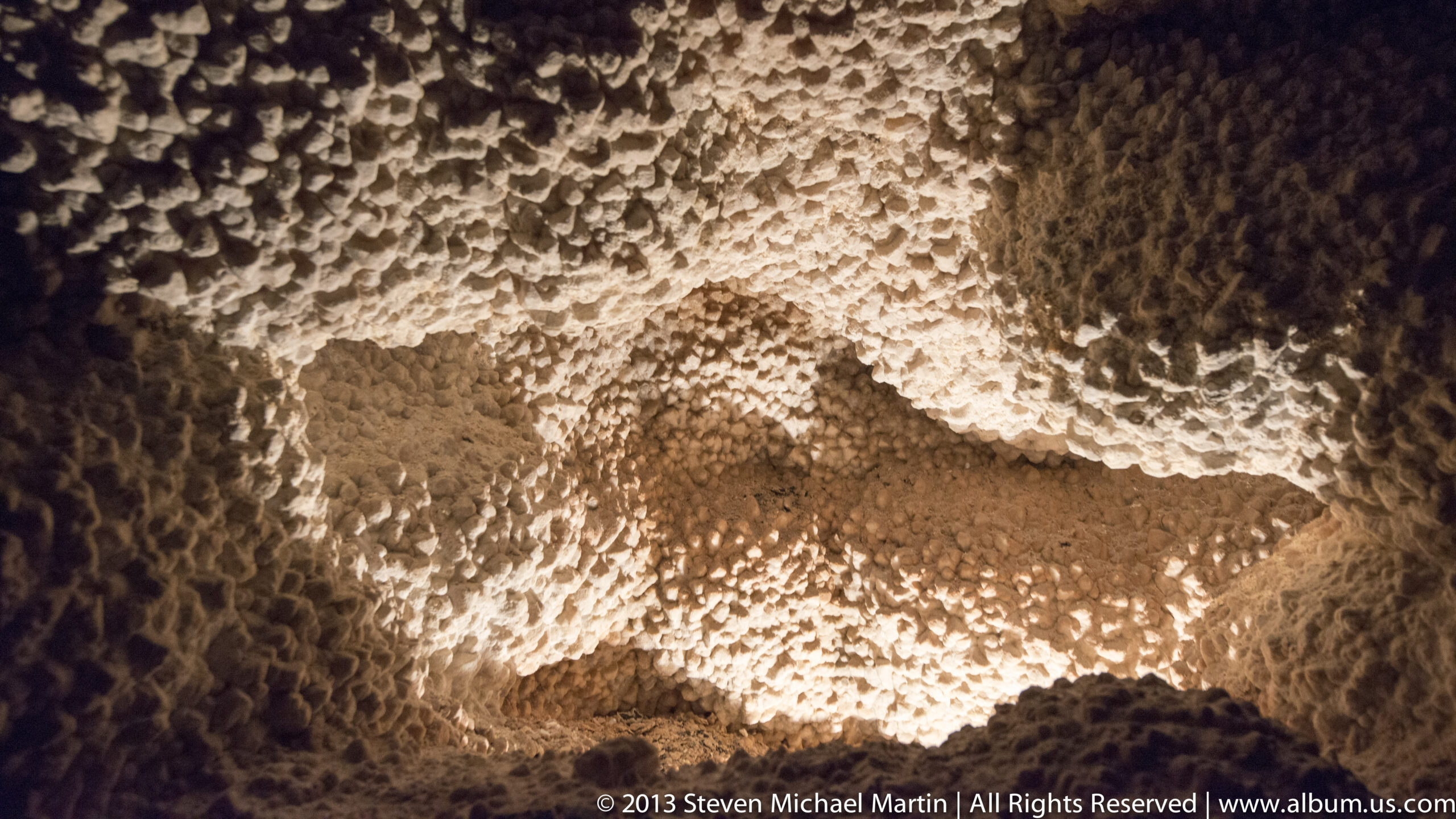
The cave ceiling fills the frame with dense, pale mineral deposits arranged in clustered ridges and rounded projections. Warm light grazes the surface, creating a bright central area and deep shadow along the right edge. The close viewpoint suppresses the chamber’s overall shape and makes the intricate texture the defining feature.
Caption
The cave ceiling fills the frame with dense, pale mineral deposits arranged in clustered ridges and rounded projections. Warm light grazes the surface, creating a bright central area and deep shadow along the right edge. The close viewpoint suppresses the chamber’s overall shape and makes the intricate texture the defining feature.
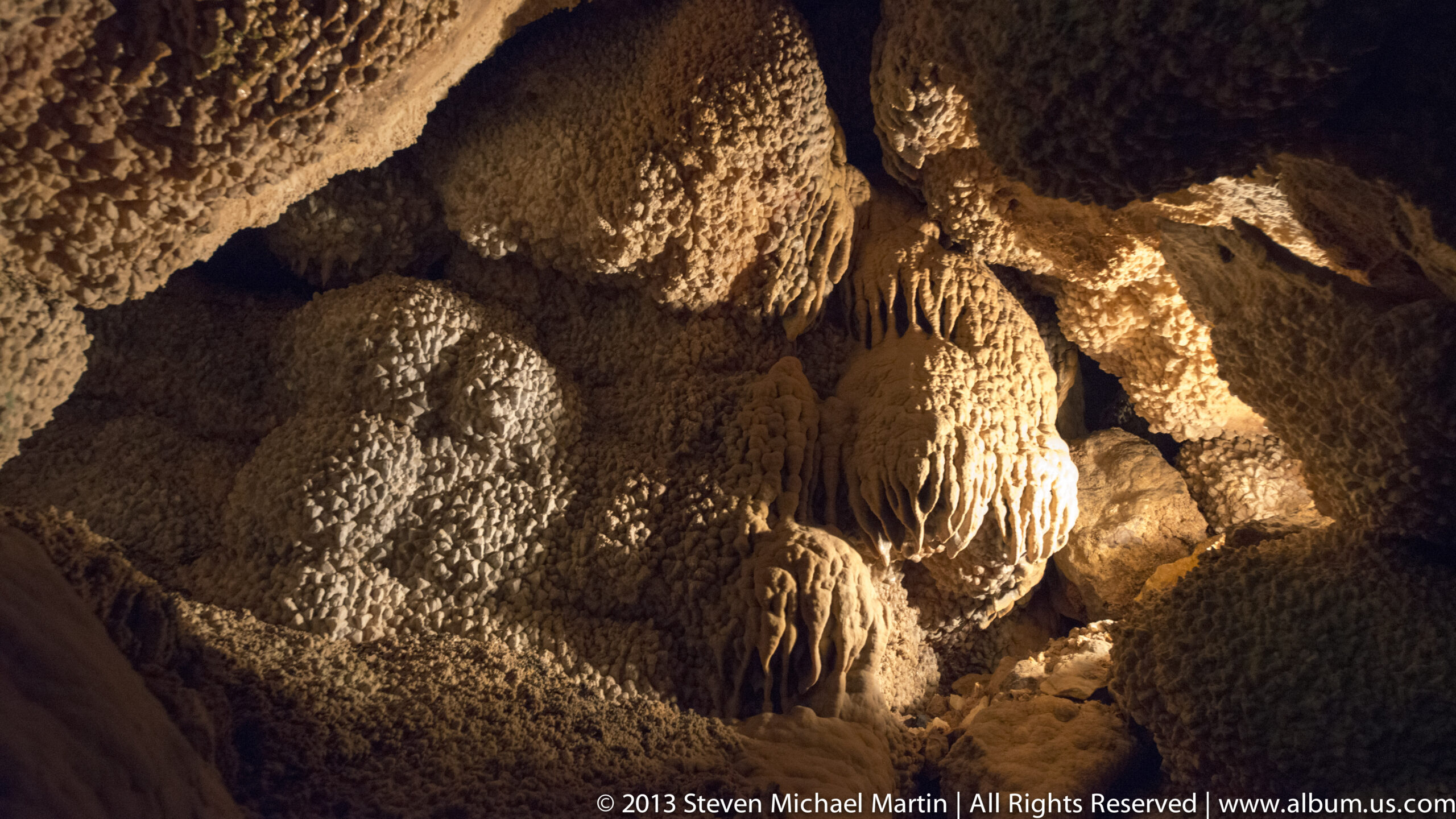
A broad mass of textured cave deposits fills the view, with tapered hanging formations descending from the ceiling and rounded surfaces rising from below. Amber lighting picks out the relief while leaving the recesses nearly black. The overlapping forms create a layered interior scene rather than a single isolated feature, showing the varied shapes within the cavern.
Caption
A broad mass of textured cave deposits fills the view, with tapered hanging formations descending from the ceiling and rounded surfaces rising from below. Amber lighting picks out the relief while leaving the recesses nearly black. The overlapping forms create a layered interior scene rather than a single isolated feature, showing the varied shapes within the cavern.
National Monument Field Guide
Jewel Cave National Monument protects an extensive underground cave system formed through the gradual dissolution of limestone rock by groundwater. Calcite crystals line many passages, reflecting mineral deposition processes occurring over long geological time periods. The cave illustrates how underground water movement shapes complex subterranean environments.
🏛 Key Significance
- One of the longest cave systems in the world
- Calcite crystal formations lining cave walls
- Limestone dissolution forming underground chambers
- Geological relationship with Black Hills uplift
- Evidence of long-term hydrological processes
📖 Interpretive Context
Mineral-rich water gradually dissolved limestone bedrock while depositing calcite along fractures in rock layers. These processes created intricate crystalline textures and complex passageways. Jewel Cave demonstrates how geological processes operating slowly over millions of years can produce highly detailed underground environments.
📷 Photography Notes
- Look for repeating crystalline textures
- Low light emphasizes cave atmosphere
- Observe mineral color variation
- Interpretive displays help visualize cave structure

A large dark interpretive panel titled “Jewel Cave” combines blocks of text, cave photographs, diagrams, and orange-highlighted illustrations. The exhibit is mounted on a wall and presents several kinds of information in a compact layout. Individual text is too small to read in this view, but the title and graphic arrangement identify it as a visitor education display.
Caption
A large dark interpretive panel titled “Jewel Cave” combines blocks of text, cave photographs, diagrams, and orange-highlighted illustrations. The exhibit is mounted on a wall and presents several kinds of information in a compact layout. Individual text is too small to read in this view, but the title and graphic arrangement identify it as a visitor education display.
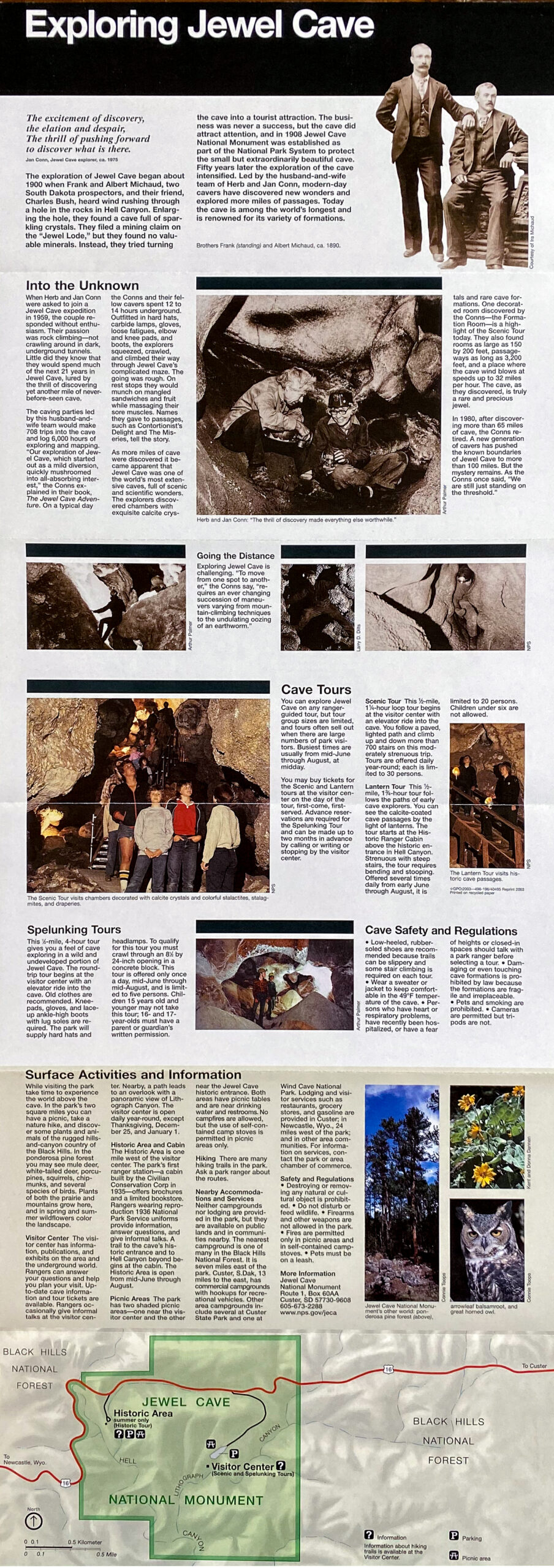
A large white exhibit headed “Exploring Jewel Cave” presents paragraphs, historic and contemporary photographs, and a colored cave map near the bottom. Two small images of people or historic subjects appear at the upper right, while a horizontal cave scene anchors the center. The display combines visitor interpretation with a diagram of the cave system.
Caption
A large white exhibit headed “Exploring Jewel Cave” presents paragraphs, historic and contemporary photographs, and a colored cave map near the bottom. Two small images of people or historic subjects appear at the upper right, while a horizontal cave scene anchors the center. The display combines visitor interpretation with a diagram of the cave system.