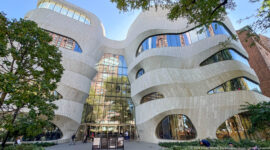
New York Walk
Walking through Manhattan reveals the layered structure of one of the most influential urban environments in the modern world. Broadway, one of the oldest north–south routes on the island, follows an early Indigenous trail that predated European settlement and later became a defining axis within the Manhattan street grid. The Upper West Side developed during the late nineteenth century as transportation improvements encouraged residential growth north of Midtown, creating neighborhoods characterized by apartment buildings, cultural institutions, and proximity to Central Park and Riverside Park.
A walk from Broadway toward the Upper West Side illustrates the continuity between historic transportation corridors and evolving urban neighborhoods. Architectural styles range from early twentieth-century residential buildings to contemporary structures that reflect ongoing development within the city. The pedestrian experience highlights the compact scale of Manhattan, where cultural institutions, shops, and public spaces are integrated within a dense urban fabric shaped by both economic and social change.
The route contributes to understanding how urban morphology influences daily life in major cities. Manhattan’s grid system and concentration of cultural institutions reflect the evolution of modern urban planning and transportation. The walk illustrates how historic pathways continue to structure movement and identity within New York City’s built environment.