Nome
Nome developed as a center of activity during the Alaska gold rush and remains one of the most historically significant communities along the Bering Sea coastline. The discovery of gold in the late nineteenth century attracted prospectors seeking economic opportunity in an environment shaped by challenging weather conditions and geographic isolation. The town reflects both the optimism and uncertainty associated with frontier resource exploration.
The surrounding tundra landscape and coastal setting illustrate the environmental conditions faced by early settlers and miners. Nome later became associated with aviation routes and logistical networks connecting remote communities across Alaska. Its location continues to emphasize the importance of transportation corridors in regions with limited road infrastructure.
Visitors encounter a community shaped by both historic events and ongoing adaptation to Arctic environmental conditions. The wide coastal horizon and open tundra landscapes provide a sense of scale that reflects the broader geographic character of western Alaska.
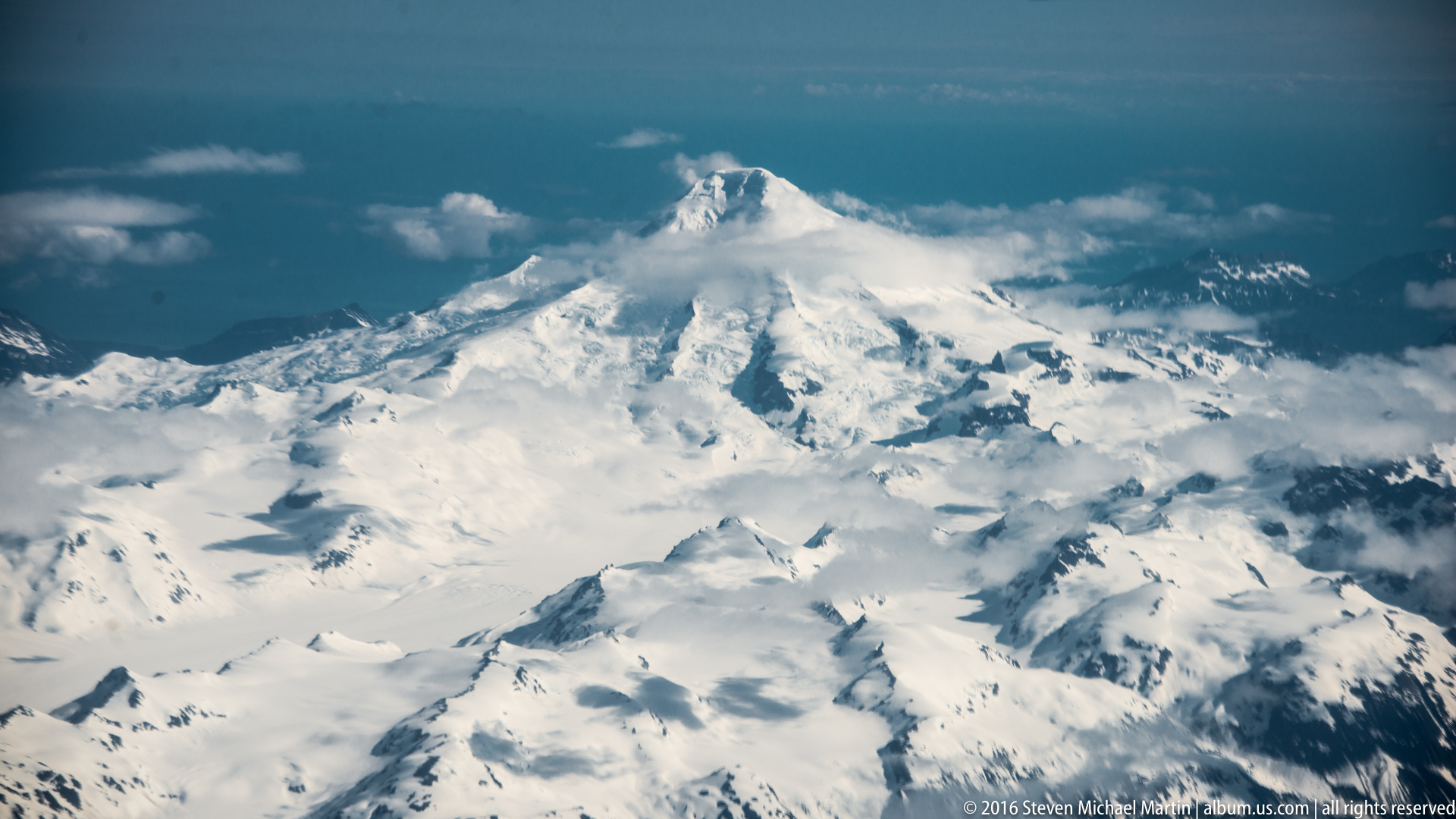
A sharply pointed, snow-covered summit rises above a broad field of glaciers and rugged ridges. Dark rock bands divide the white slopes, while scattered clouds drift along the lower peaks. Seen from the air, the image presents a close, high-contrast view of Alaska’s alpine terrain without enough geographic evidence to identify the mountain by name.
Caption
A sharply pointed, snow-covered summit rises above a broad field of glaciers and rugged ridges. Dark rock bands divide the white slopes, while scattered clouds drift along the lower peaks. Seen from the air, the image presents a close, high-contrast view of Alaska’s alpine terrain without enough geographic evidence to identify the mountain by name.

The cover of “Home from Nome” shows a red-capped gnome holding a small brown animal against an illustrated snowy forest. The title places Nome in a playful fictional setting, while the byline credits Stephen Cosgrove and Robin James. Cropped tightly, the printed cover and its storybook imagery are the subject rather than a view of the town itself.
Caption
The cover of “Home from Nome” shows a red-capped gnome holding a small brown animal against an illustrated snowy forest. The title places Nome in a playful fictional setting, while the byline credits Stephen Cosgrove and Robin James. Cropped tightly, the printed cover and its storybook imagery are the subject rather than a view of the town itself.
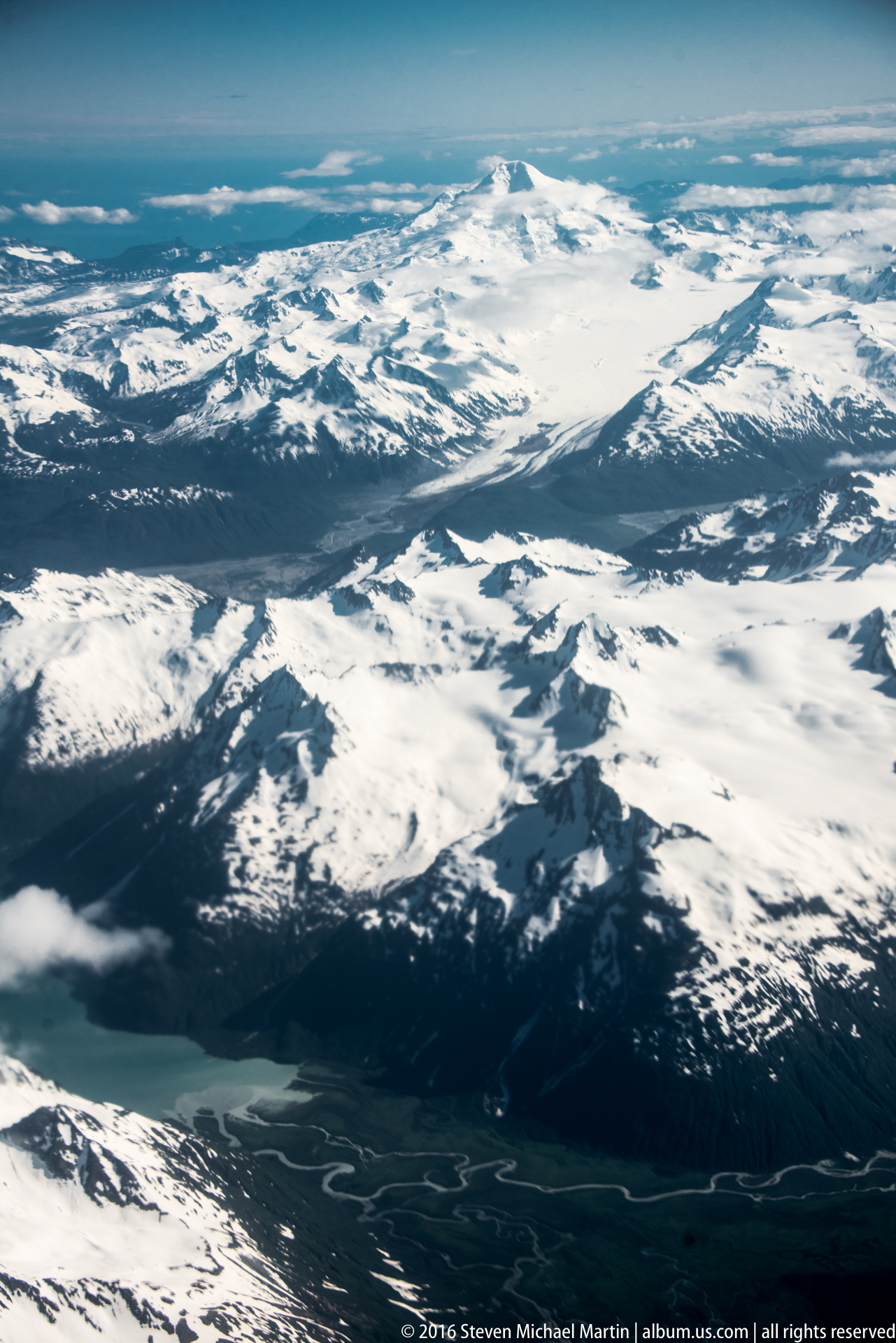
An extensive snowfield covers the upper landscape, interrupted by dark ridges and shallow valleys. Near the lower edge, a winding river system threads across open ground in several pale channels. The higher viewpoint shifts attention from individual peaks to the scale of the snow-covered terrain and the branching watercourse below.
Caption
An extensive snowfield covers the upper landscape, interrupted by dark ridges and shallow valleys. Near the lower edge, a winding river system threads across open ground in several pale channels. The higher viewpoint shifts attention from individual peaks to the scale of the snow-covered terrain and the branching watercourse below.
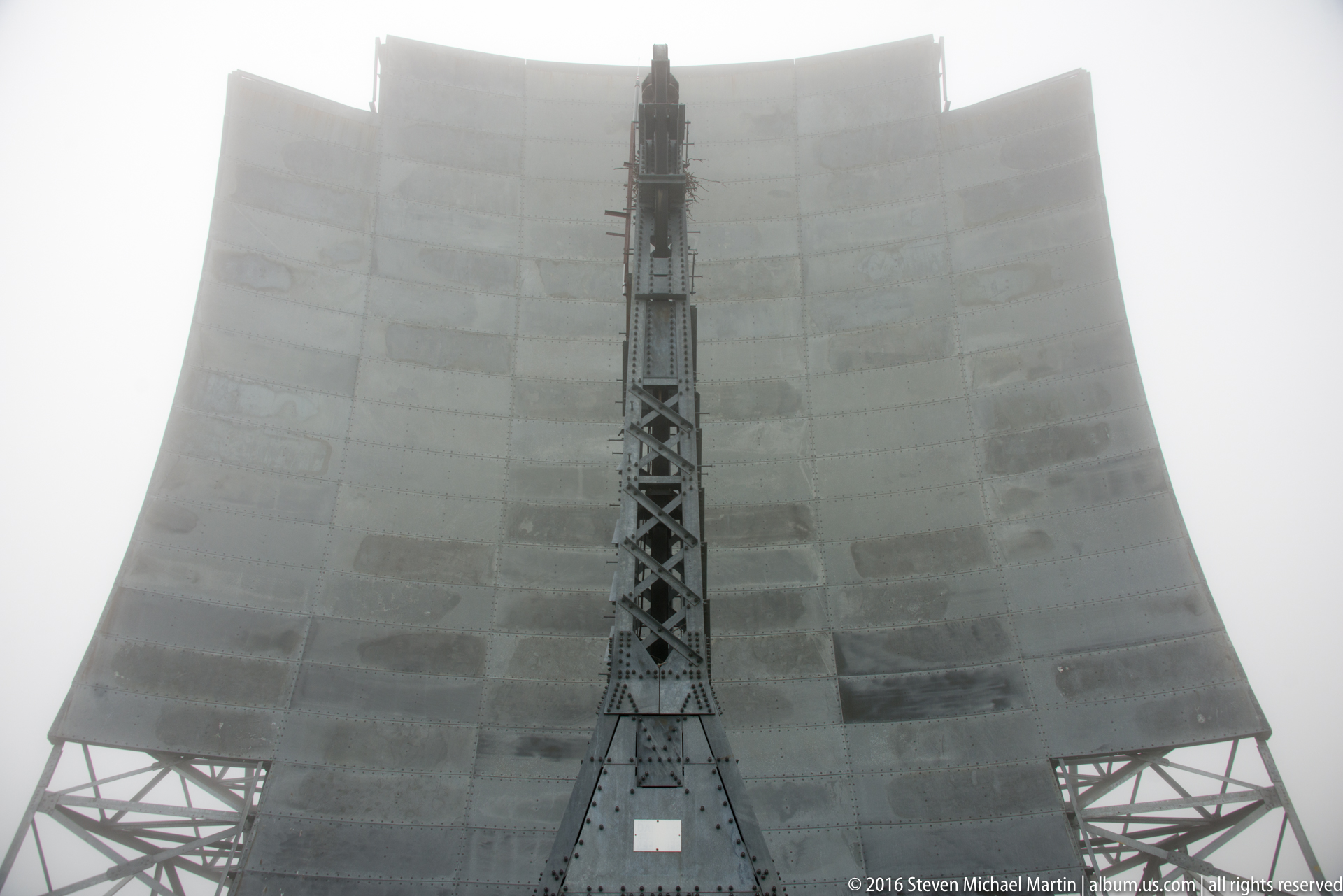
A tall lattice feed tower bisects the broad, segmented reflector, whose lower edge stands above open ground. The near-symmetrical view makes the antenna’s scale and construction clear; fog removes most of the surrounding landscape. It is one of the surviving White Alice antennas above Nome.
Caption
A tall lattice feed tower bisects the broad, segmented reflector, whose lower edge stands above open ground. The near-symmetrical view makes the antenna’s scale and construction clear; fog removes most of the surrounding landscape. It is one of the surviving White Alice antennas above Nome.
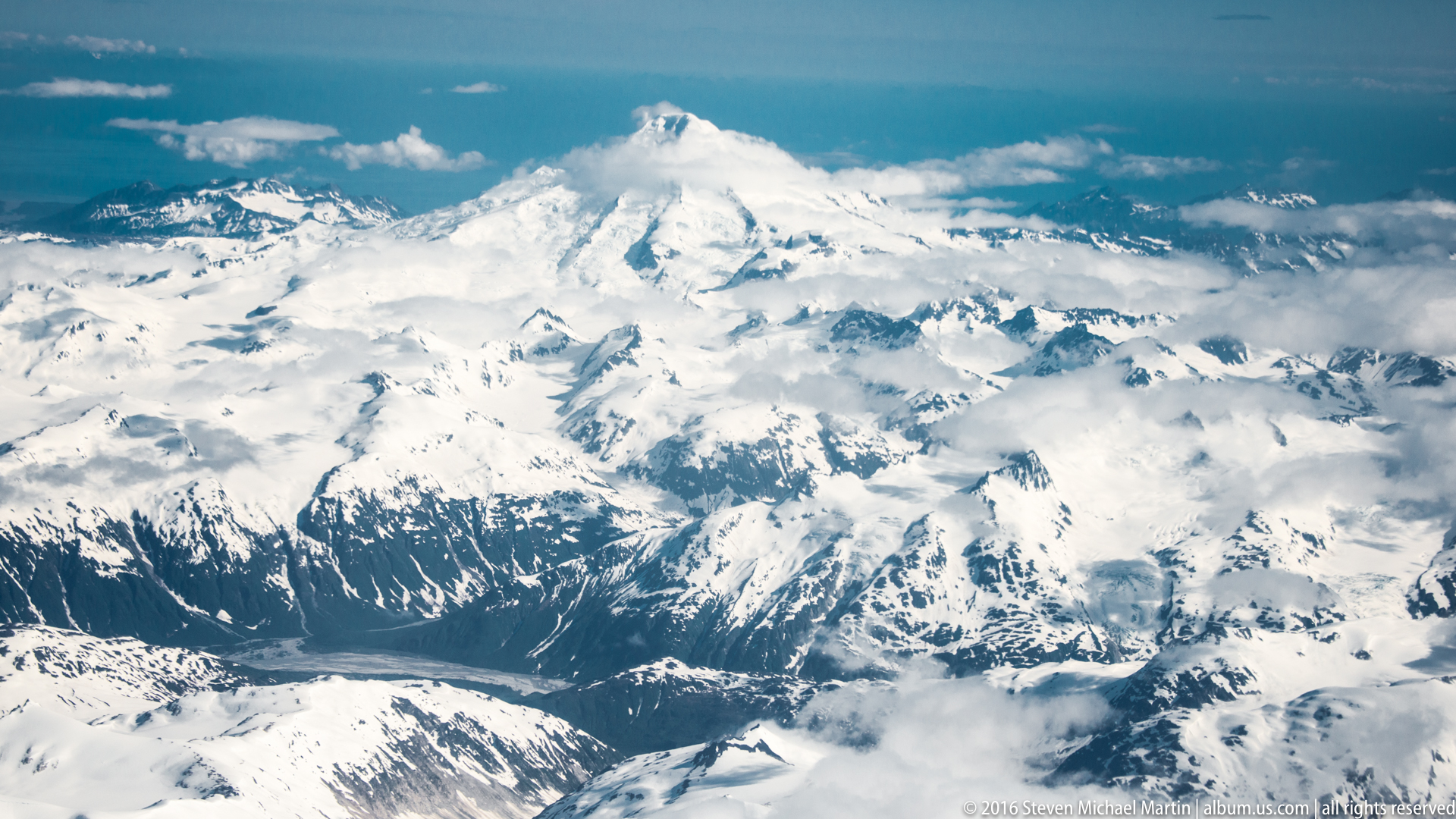
A broad mountain rises beyond a deep, shadowed valley, its upper slopes cut by ridges and streaked with snow. The aerial perspective reveals the scale of the surrounding range, including smaller peaks and cloud wisps along the lower flanks. Bright snow contrasts with dark exposed rock, but the photograph does not establish a specific summit or route.
Caption
A broad mountain rises beyond a deep, shadowed valley, its upper slopes cut by ridges and streaked with snow. The aerial perspective reveals the scale of the surrounding range, including smaller peaks and cloud wisps along the lower flanks. Bright snow contrasts with dark exposed rock, but the photograph does not establish a specific summit or route.
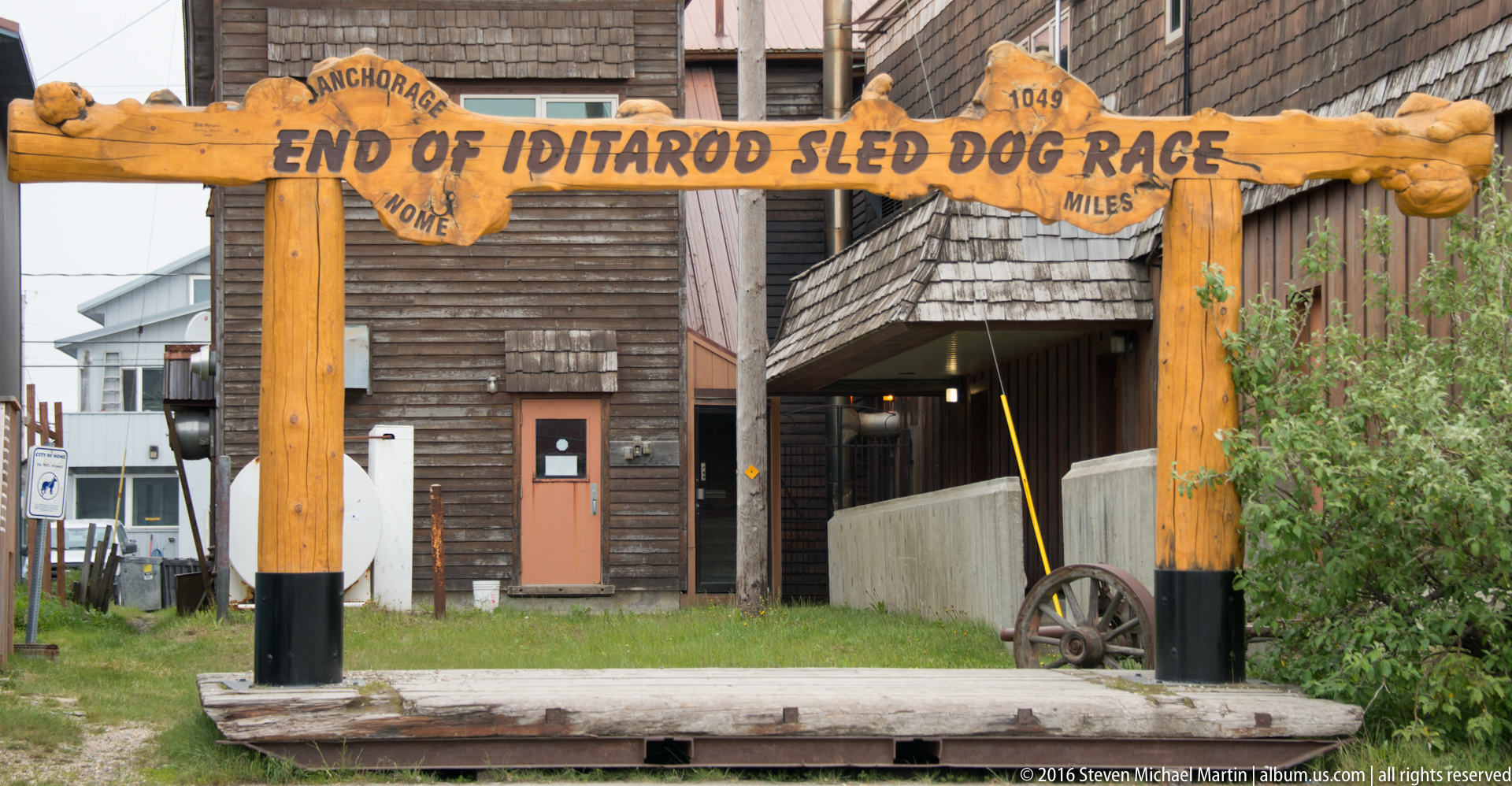
A timber gateway spans a narrow Nome street, its carved beam reading “End of Iditarod Sled Dog Race.” The structure frames a wooden-sided building and small patch of grass, while black paint protects the posts near ground level. Its lettering identifies the finish setting directly, and the low street-level view shows the arch as part of the town rather than an isolated monument.
Caption
A timber gateway spans a narrow Nome street, its carved beam reading “End of Iditarod Sled Dog Race.” The structure frames a wooden-sided building and small patch of grass, while black paint protects the posts near ground level. Its lettering identifies the finish setting directly, and the low street-level view shows the arch as part of the town rather than an isolated monument.
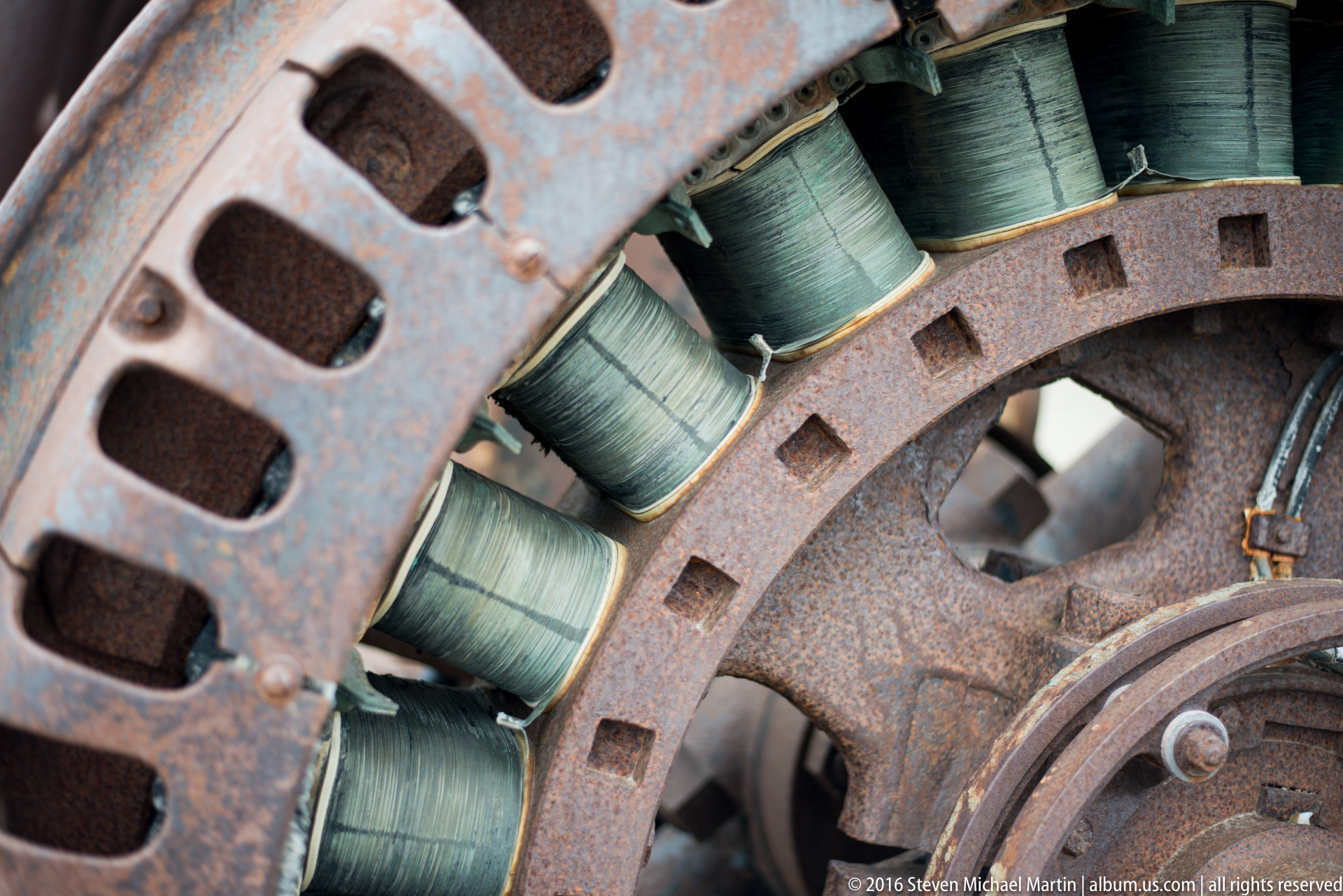
Green-gray coils are wound tightly between two perforated circular metal rings. The close crop shows the repeated loops of wire, square cutouts in the outer plate, and rust surrounding the assembly. A shallow focus turns the machine interior into an abstract pattern of circles and lines, while the visible windings suggest an electrical component without establishing its exact type.
Caption
Green-gray coils are wound tightly between two perforated circular metal rings. The close crop shows the repeated loops of wire, square cutouts in the outer plate, and rust surrounding the assembly. A shallow focus turns the machine interior into an abstract pattern of circles and lines, while the visible windings suggest an electrical component without establishing its exact type.
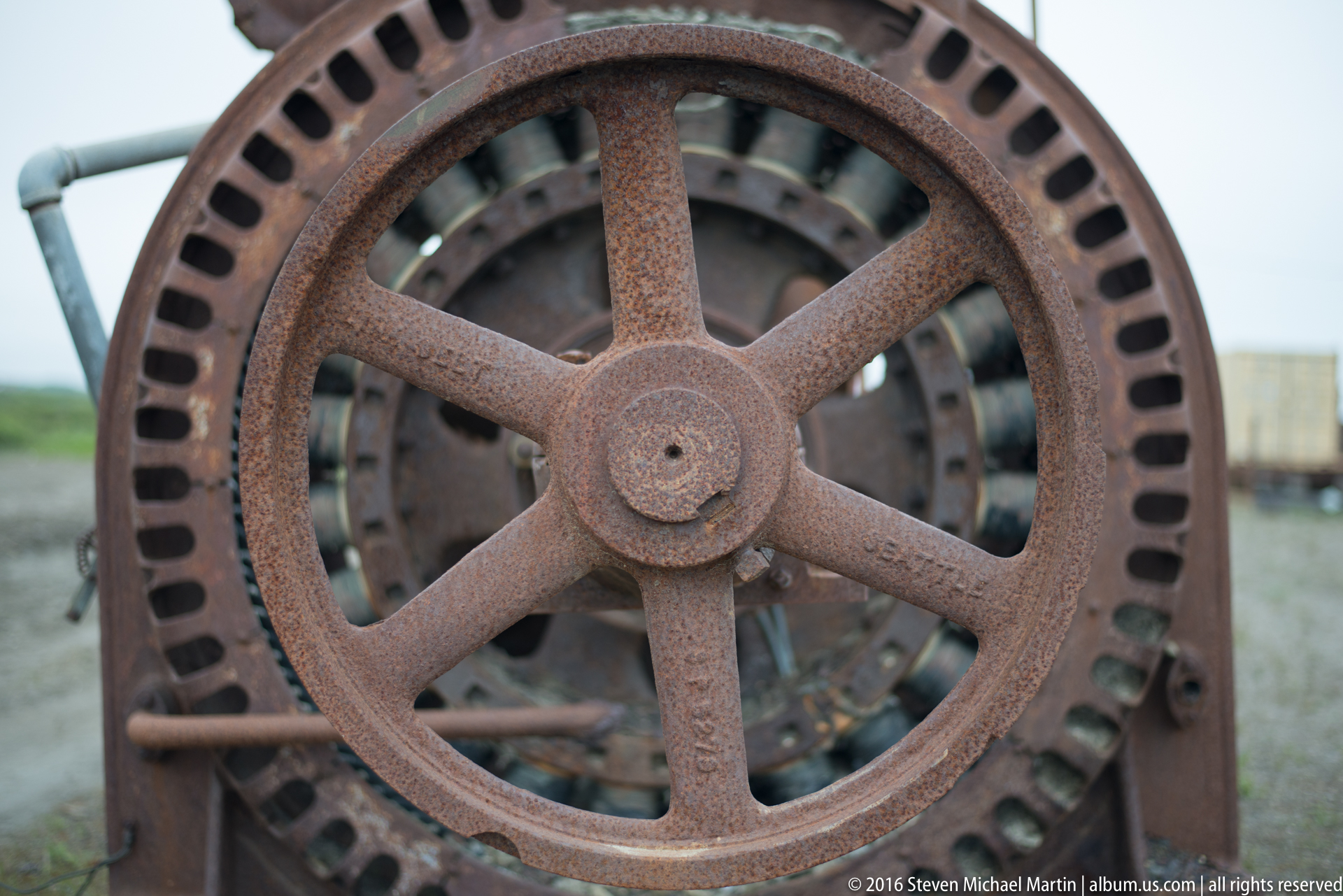
A large spoked wheel stands almost square to the camera, centered against a circular casing with a perforated outer band. The wheel’s six broad spokes converge on a rusted hub, while parallel metal rings and other fittings show through the gaps. This nearly symmetrical view isolates the wheel’s radial structure within the larger machine.
Caption
A large spoked wheel stands almost square to the camera, centered against a circular casing with a perforated outer band. The wheel’s six broad spokes converge on a rusted hub, while parallel metal rings and other fittings show through the gaps. This nearly symmetrical view isolates the wheel’s radial structure within the larger machine.
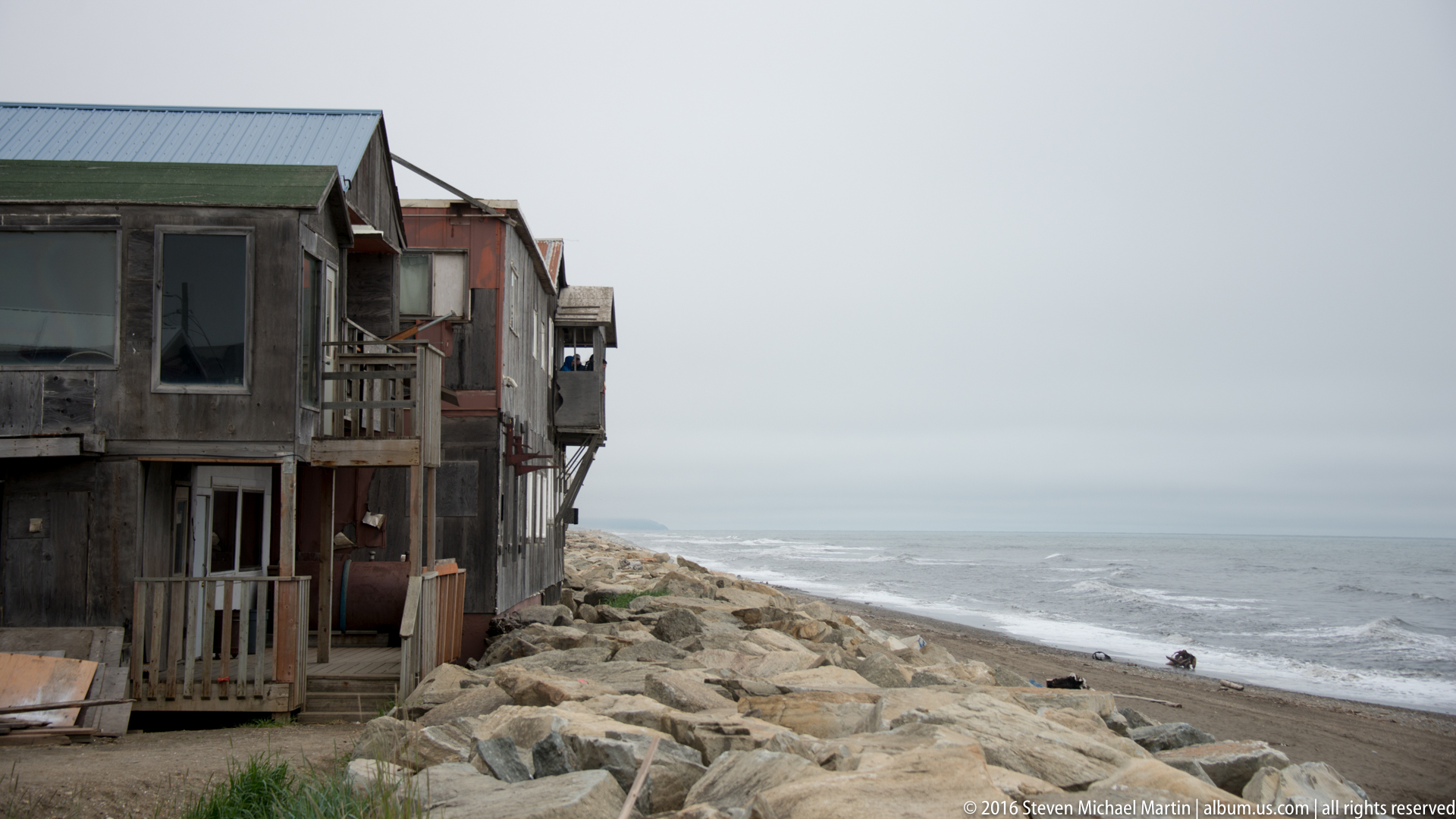
A row of weathered houses stands directly beside a rocky shoreline. Their stacked porches and varied siding face the water, while a broad field of pale boulders separates the buildings from the surf. The low gray sky and open sea occupy the right half of the frame, making the close relationship between residential blocks and exposed coast especially clear.
Caption
A row of weathered houses stands directly beside a rocky shoreline. Their stacked porches and varied siding face the water, while a broad field of pale boulders separates the buildings from the surf. The low gray sky and open sea occupy the right half of the frame, making the close relationship between residential blocks and exposed coast especially clear.

Two large spoked wheels stand within a low metal frame amid grass and scattered stones. Their circular rims and exposed hubs are seen from the side, with rust covering the iron surfaces. This closer angle clarifies the wheel construction and surrounding ground, distinguishing the object from the more distant beach view nearby.
Caption
Two large spoked wheels stand within a low metal frame amid grass and scattered stones. Their circular rims and exposed hubs are seen from the side, with rust covering the iron surfaces. This closer angle clarifies the wheel construction and surrounding ground, distinguishing the object from the more distant beach view nearby.

From farther away, the high summit appears beyond a series of snow-covered ridges and broad valleys. Blue sky and a dark band of distant land frame the upper edge, while clouds gather around the lower mountains. This wider composition emphasizes the layered range and distance between the viewer and the prominent peak.
Caption
From farther away, the high summit appears beyond a series of snow-covered ridges and broad valleys. Blue sky and a dark band of distant land frame the upper edge, while clouds gather around the lower mountains. This wider composition emphasizes the layered range and distance between the viewer and the prominent peak.
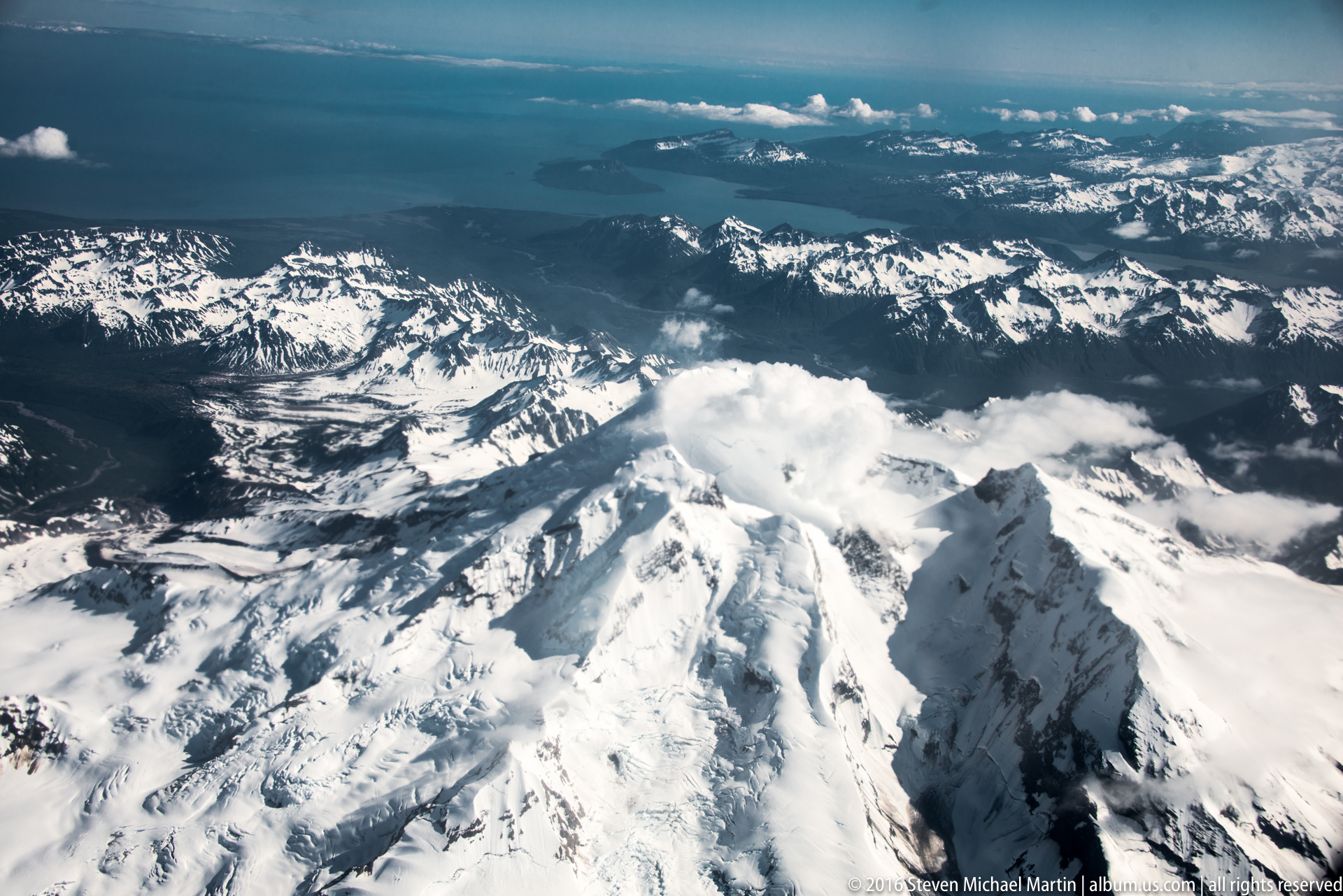
A jagged snow-covered ridge fills the foreground, its steep face broken by exposed rock and narrow crevasses. Beyond it, a second high summit rises through a low cloud bank, with more peaks fading into the distance. The close angle makes the mountain’s relief and shifting cloud layer more prominent than the surrounding landscape.
Caption
A jagged snow-covered ridge fills the foreground, its steep face broken by exposed rock and narrow crevasses. Beyond it, a second high summit rises through a low cloud bank, with more peaks fading into the distance. The close angle makes the mountain’s relief and shifting cloud layer more prominent than the surrounding landscape.

A broad shadow crosses a snow-covered ridge in the foreground, while lighter peaks and valleys recede toward a flat distant horizon. The alternating bands of sunlight and cloud shade create strong tonal divisions across the mountain terrain. From above, the scene reads as a sequence of ridges rather than a single isolated summit.
Caption
A broad shadow crosses a snow-covered ridge in the foreground, while lighter peaks and valleys recede toward a flat distant horizon. The alternating bands of sunlight and cloud shade create strong tonal divisions across the mountain terrain. From above, the scene reads as a sequence of ridges rather than a single isolated summit.

A broad metal reflector rises behind its central lattice feed structure, the curved face filling most of the view. Fog softens the antenna’s upper edge and hides the surrounding ridge. This close angle shows the scale and construction of Nome’s White Alice Communications System installation on Anvil Mountain.
Caption
A broad metal reflector rises behind its central lattice feed structure, the curved face filling most of the view. Fog softens the antenna’s upper edge and hides the surrounding ridge. This close angle shows the scale and construction of Nome’s White Alice Communications System installation on Anvil Mountain.
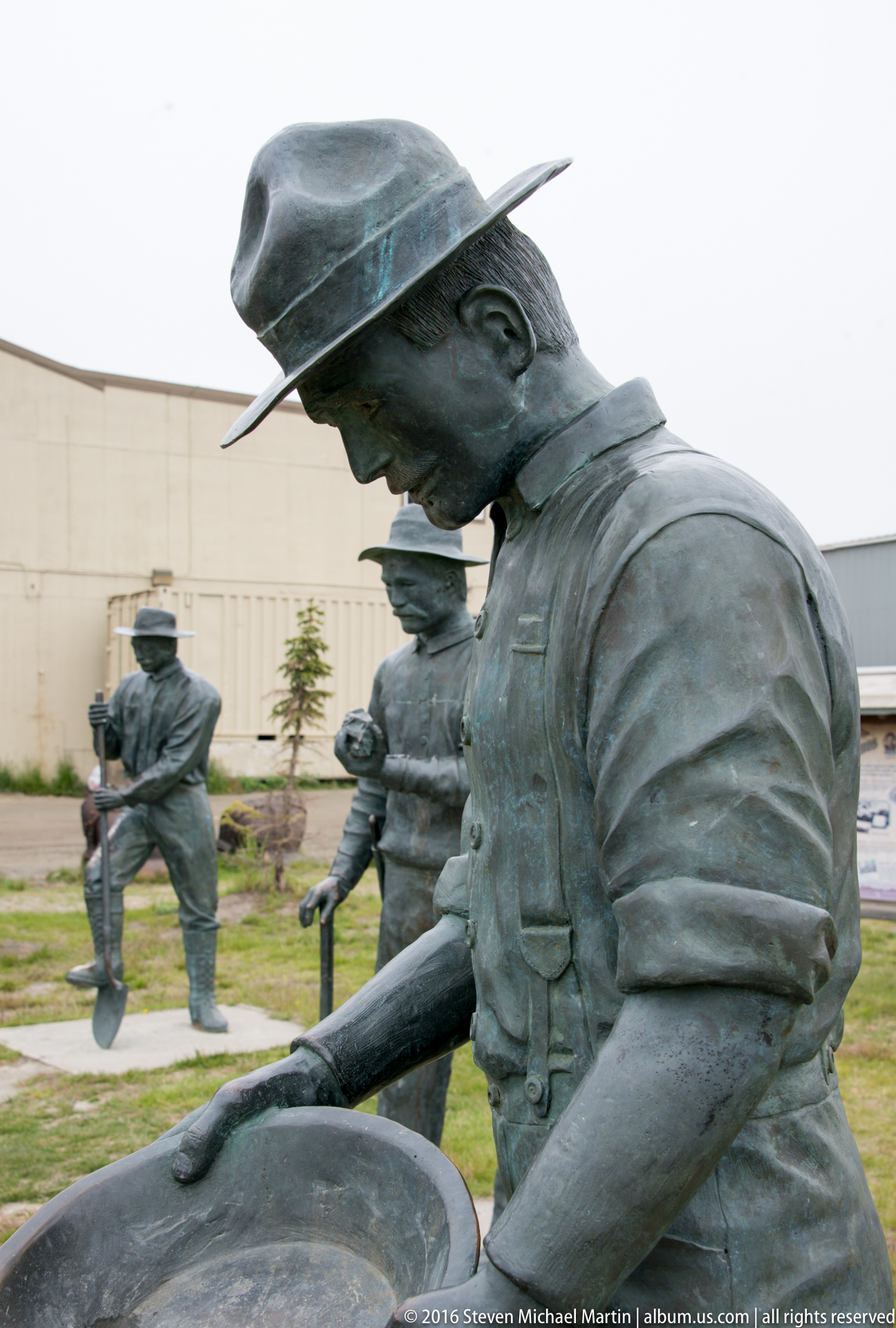
A bronze prospector in a broad-brimmed hat bends over a shallow pan, with additional figures and mining tools arranged behind him. The close view centers on the forward figure’s lowered posture and the pan’s rim; other workers remain visible in the town-side sculpture group.
Caption
A bronze prospector in a broad-brimmed hat bends over a shallow pan, with additional figures and mining tools arranged behind him. The close view centers on the forward figure’s lowered posture and the pan’s rim; other workers remain visible in the town-side sculpture group.

Dense fog reduces two tall lattice-and-reflector antennas to overlapping silhouettes above low vegetation. The nearer structure is only partly visible, while a second tower stands farther to the right. The view places Nome’s White Alice installation within its exposed mountain setting.
Caption
Dense fog reduces two tall lattice-and-reflector antennas to overlapping silhouettes above low vegetation. The nearer structure is only partly visible, while a second tower stands farther to the right. The view places Nome’s White Alice installation within its exposed mountain setting.
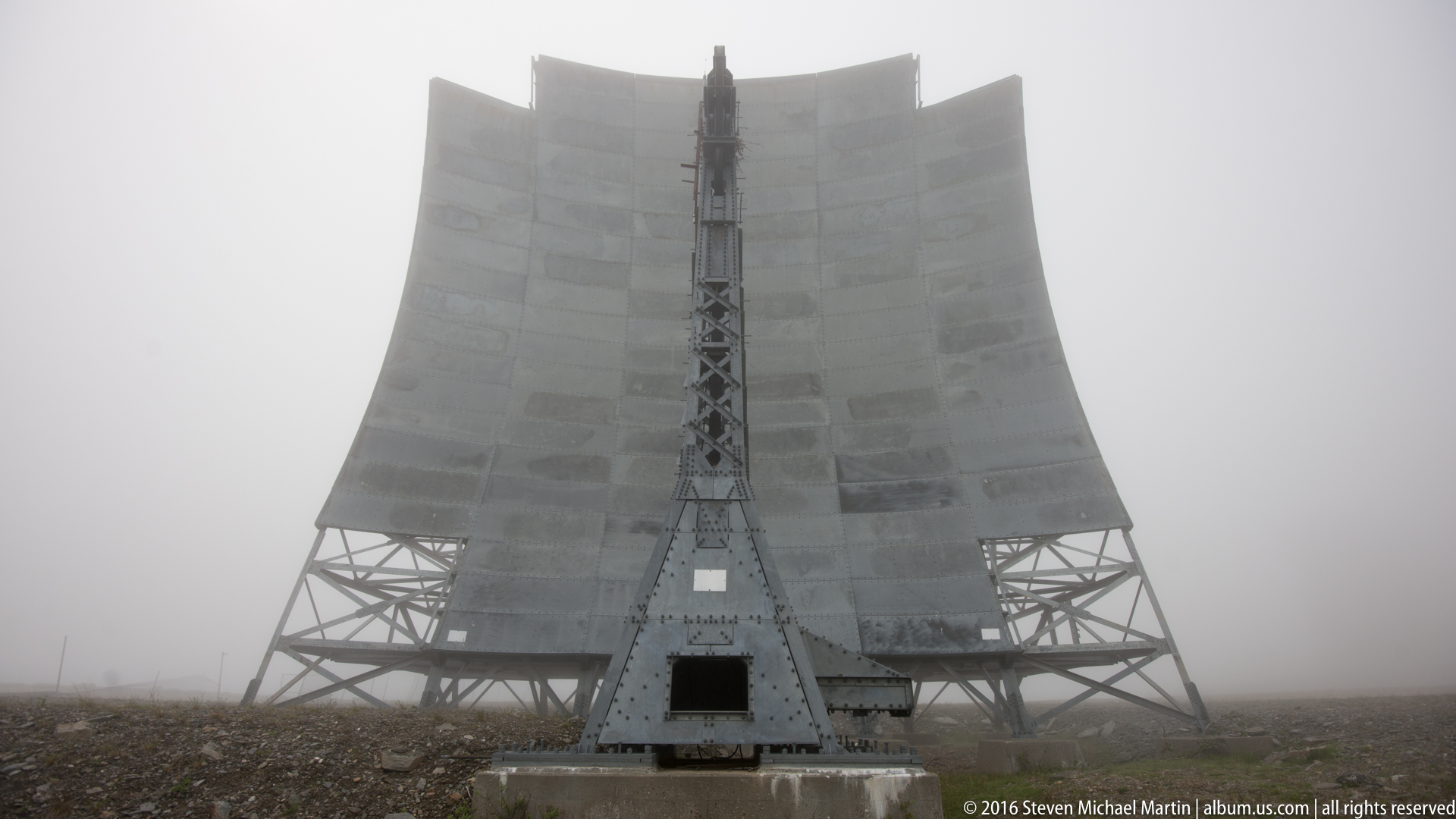
A narrow lattice tower rises from a triangular steel base at the center of the curved reflector. An opening at the base and low scrub on the ridge anchor the symmetrical view. Fog mutes the metal and hides the horizon, leaving the White Alice antenna’s geometry prominent.
Caption
A narrow lattice tower rises from a triangular steel base at the center of the curved reflector. An opening at the base and low scrub on the ridge anchor the symmetrical view. Fog mutes the metal and hides the horizon, leaving the White Alice antenna’s geometry prominent.
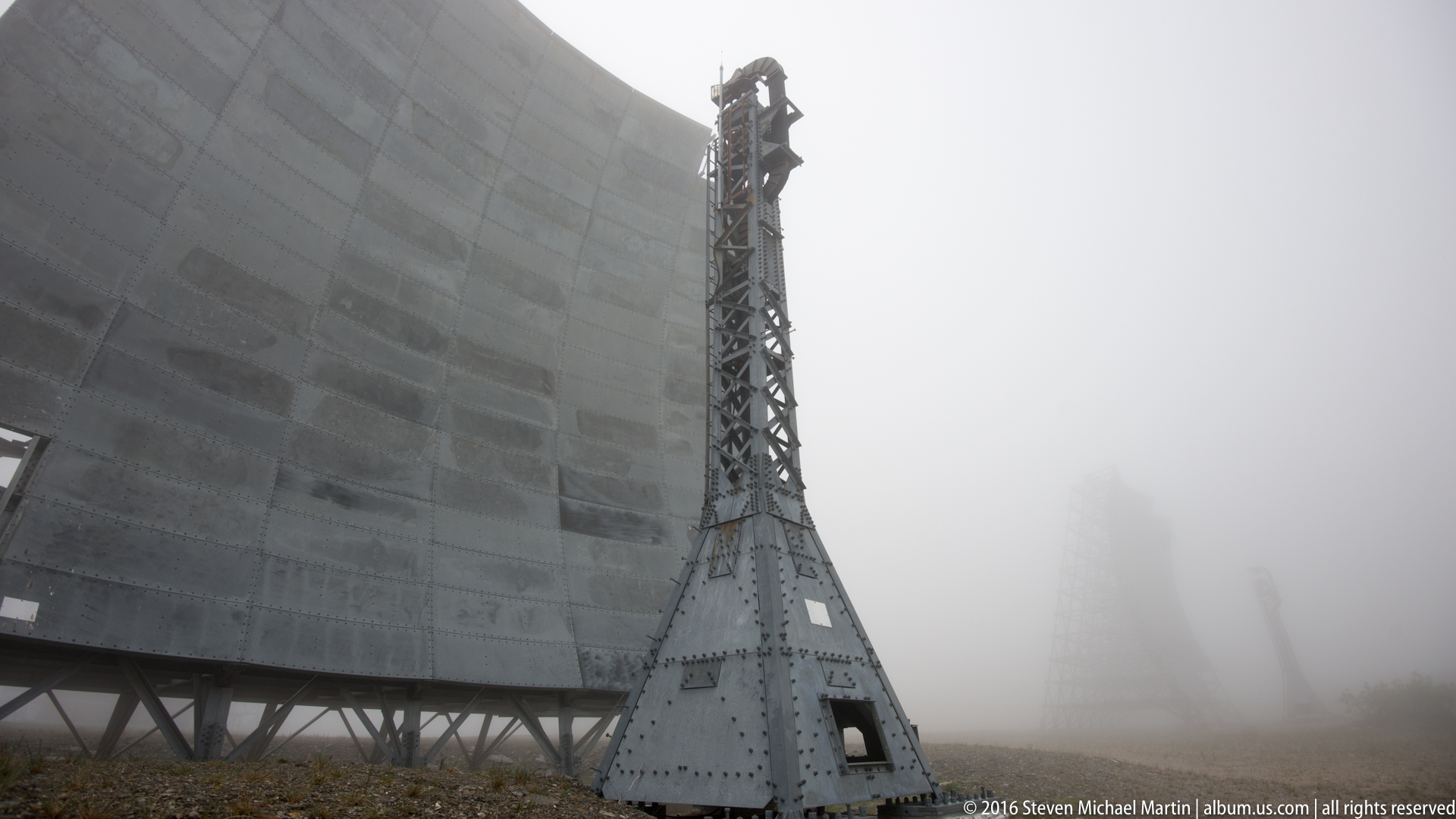
Seen from the side, the riveted mast and cross-bracing stand beside the reflector’s curved metal face. The dish sweeps out of the left edge, while another structure fades into fog behind it. The angle reveals the support’s depth and its connection to the antenna surface.
Caption
Seen from the side, the riveted mast and cross-bracing stand beside the reflector’s curved metal face. The dish sweeps out of the left edge, while another structure fades into fog behind it. The angle reveals the support’s depth and its connection to the antenna surface.
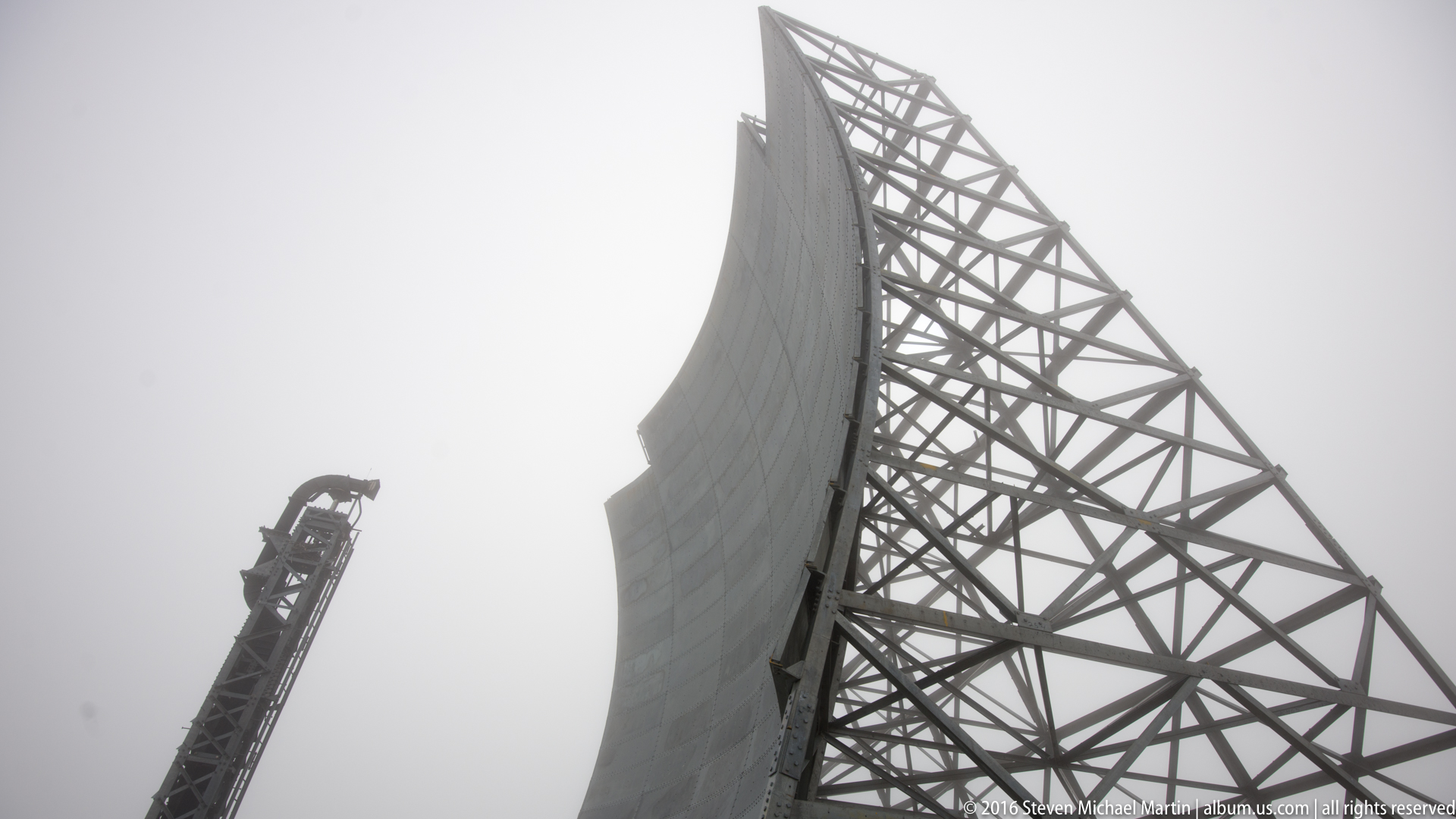
The reflector’s dark curved edge rises beside an open steel lattice tower, both cutting diagonally across the fog-bright sky. A smaller tower remains visible at far left. The low viewpoint isolates the antenna’s height and the relationship between its reflector and support.
Caption
The reflector’s dark curved edge rises beside an open steel lattice tower, both cutting diagonally across the fog-bright sky. A smaller tower remains visible at far left. The low viewpoint isolates the antenna’s height and the relationship between its reflector and support.
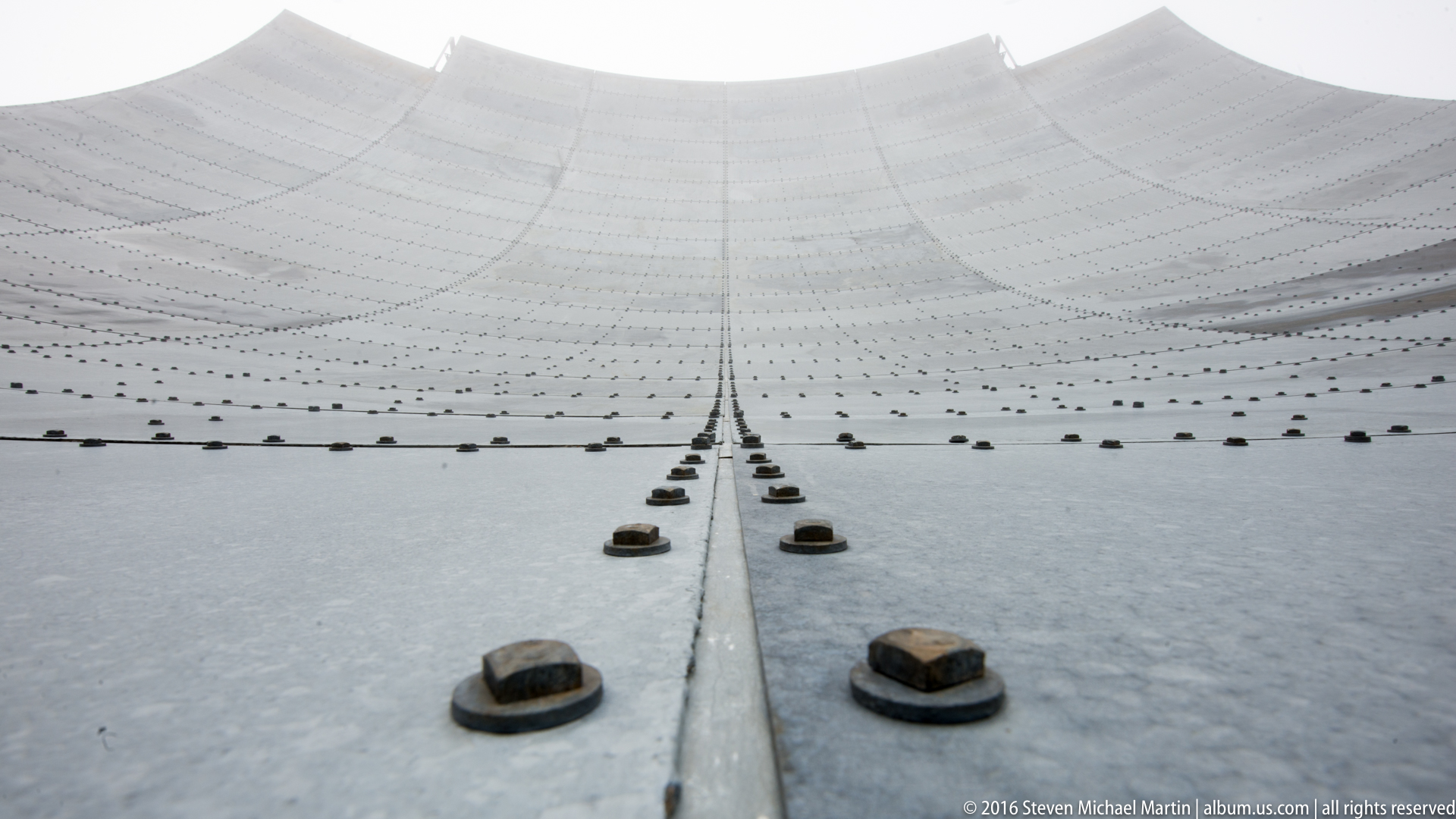
Rows of dark fasteners and a raised central seam run toward the middle of the gently curved metal face. The surface bends upward along both sides, revealing the dish’s shallow bowl shape. This close view records the panel construction of a White Alice tropospheric scatter antenna.
Caption
Rows of dark fasteners and a raised central seam run toward the middle of the gently curved metal face. The surface bends upward along both sides, revealing the dish’s shallow bowl shape. This close view records the panel construction of a White Alice tropospheric scatter antenna.
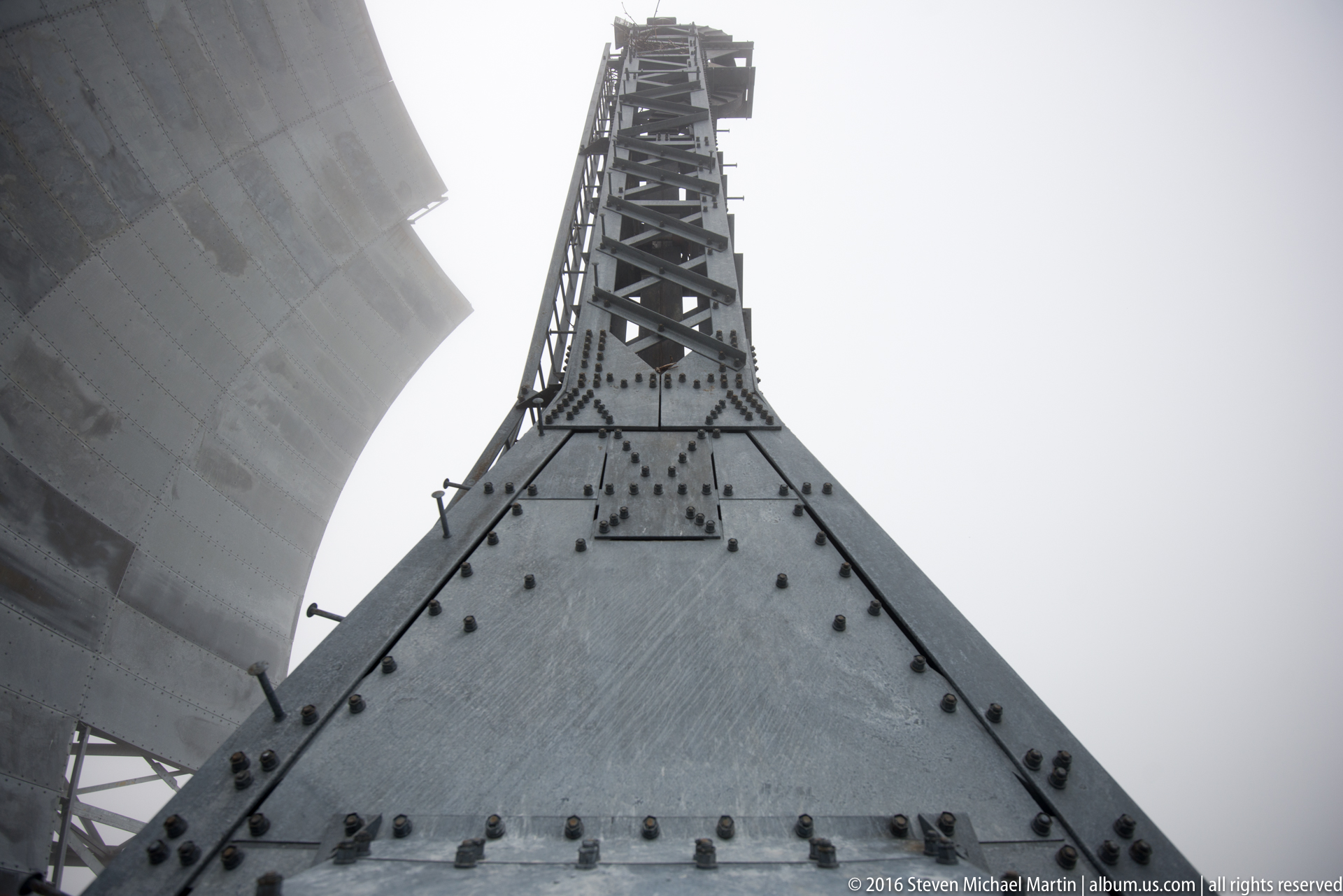
Rows of bolts cross the triangular mast base and lead upward through the lattice support. Cropped reflector panels frame the structure on both sides, narrowing the view to the antenna’s central assembly. The close perspective makes its fasteners and bracing more legible than the surrounding site.
Caption
Rows of bolts cross the triangular mast base and lead upward through the lattice support. Cropped reflector panels frame the structure on both sides, narrowing the view to the antenna’s central assembly. The close perspective makes its fasteners and bracing more legible than the surrounding site.

A tall lattice feed tower rises from a triangular lower support beneath the segmented curved reflector. Its blank rectangular plate sits near the base, while the open truss contrasts with the solid metal panels behind it. The straight-on view shows how the feed structure aligns with the antenna face.
Caption
A tall lattice feed tower rises from a triangular lower support beneath the segmented curved reflector. Its blank rectangular plate sits near the base, while the open truss contrasts with the solid metal panels behind it. The straight-on view shows how the feed structure aligns with the antenna face.
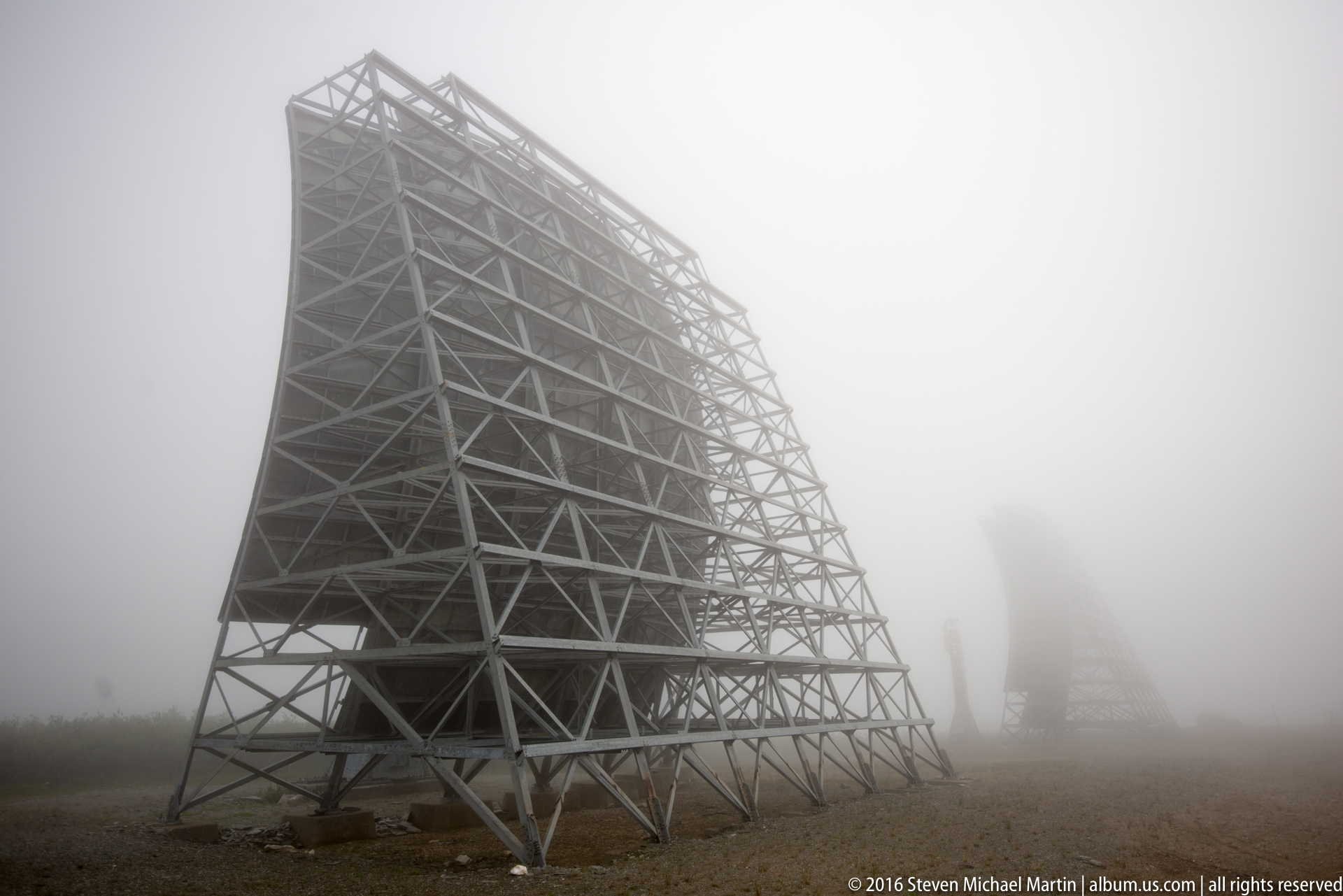
A dense grid of diagonals, horizontal braces, and vertical members forms the antenna’s rear support. Part of the curved reflector remains visible through the steel lattice; fog softens its top and a second tower behind it. This reverse angle exposes the framework carrying the broad metal face.
Caption
A dense grid of diagonals, horizontal braces, and vertical members forms the antenna’s rear support. Part of the curved reflector remains visible through the steel lattice; fog softens its top and a second tower behind it. This reverse angle exposes the framework carrying the broad metal face.
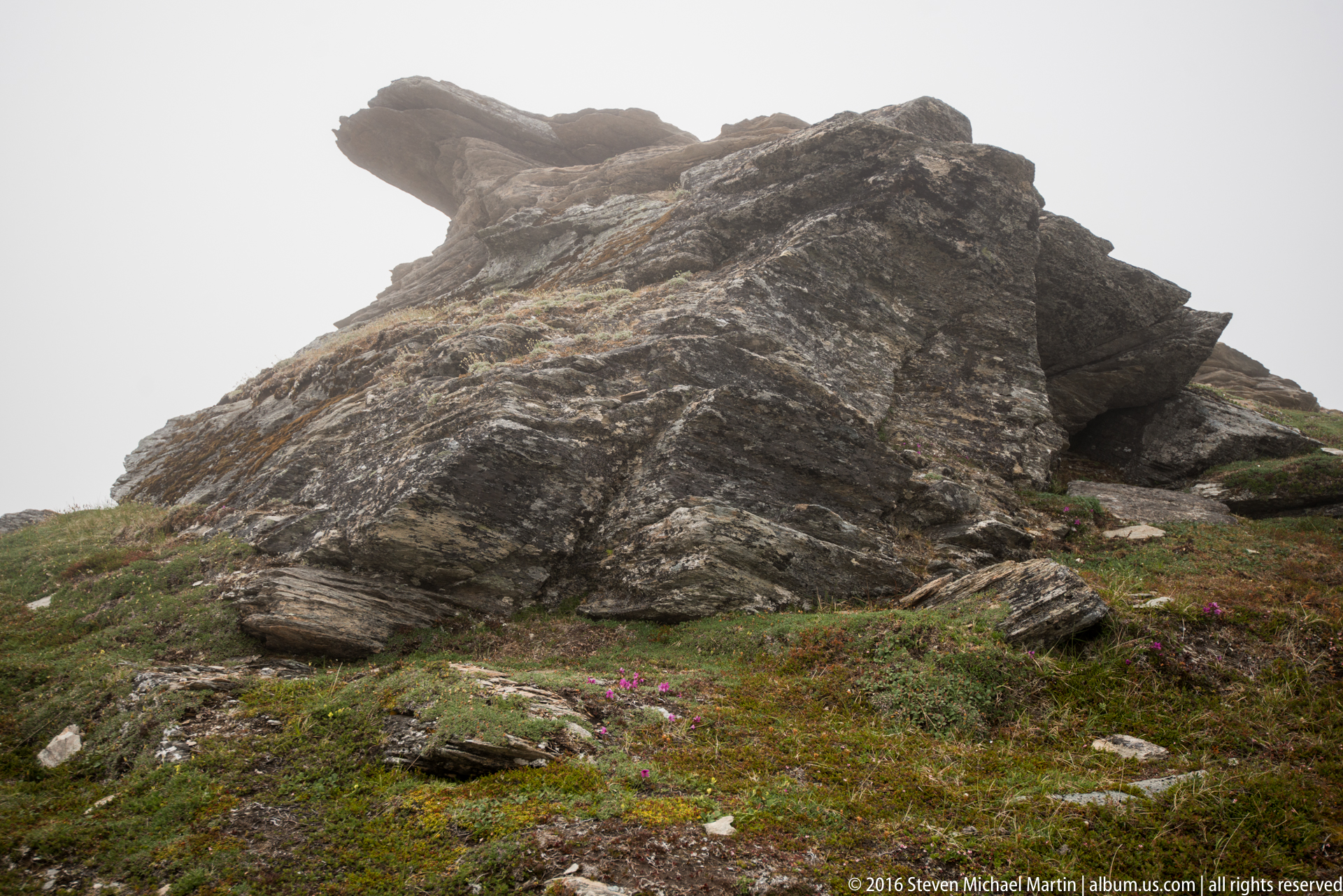
A cluster of dark, layered rocks rises above a low tundra slope dotted with mosses, grasses, and small pink flowers. The largest boulder fills the foreground, with smaller slabs stacked behind it and fog whitening the background. This close ground-level view shifts from the nearby industrial structures to the rocky terrain around the site.
Caption
A cluster of dark, layered rocks rises above a low tundra slope dotted with mosses, grasses, and small pink flowers. The largest boulder fills the foreground, with smaller slabs stacked behind it and fog whitening the background. This close ground-level view shifts from the nearby industrial structures to the rocky terrain around the site.

A visitor in a dark jacket and orange cap stands on the grassy gravel slope below two towering antenna structures. Fog blurs the lattice and reflector surfaces and erases the ridge line. The small figure provides scale for the surviving White Alice installation above Nome.
Caption
A visitor in a dark jacket and orange cap stands on the grassy gravel slope below two towering antenna structures. Fog blurs the lattice and reflector surfaces and erases the ridge line. The small figure provides scale for the surviving White Alice installation above Nome.
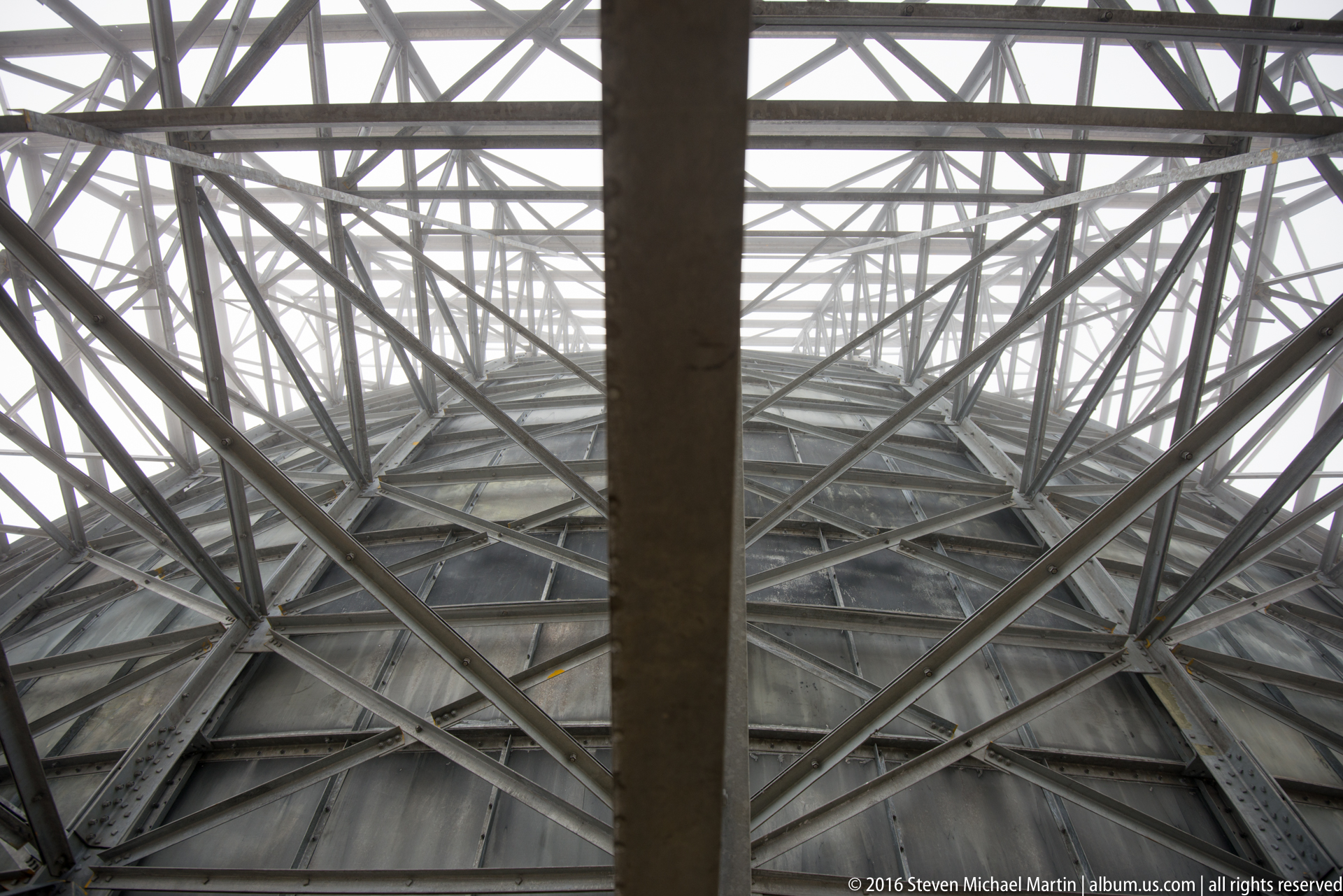
A heavy central beam divides dense diagonal braces beneath the reflector, with metal skin visible beyond the trusswork. The upward view compresses the supports into overlapping geometric layers and reveals the open framework that carries the antenna face.
Caption
A heavy central beam divides dense diagonal braces beneath the reflector, with metal skin visible beyond the trusswork. The upward view compresses the supports into overlapping geometric layers and reveals the open framework that carries the antenna face.

Repeated horizontal levels and diagonal braces form a broad rectangular support behind the reflector. The lower legs stand on bare ground, while fog erases the ridge beyond. Seen head-on, the framework reveals the steel structure carrying the antenna’s large curved face.
Caption
Repeated horizontal levels and diagonal braces form a broad rectangular support behind the reflector. The lower legs stand on bare ground, while fog erases the ridge beyond. Seen head-on, the framework reveals the steel structure carrying the antenna’s large curved face.
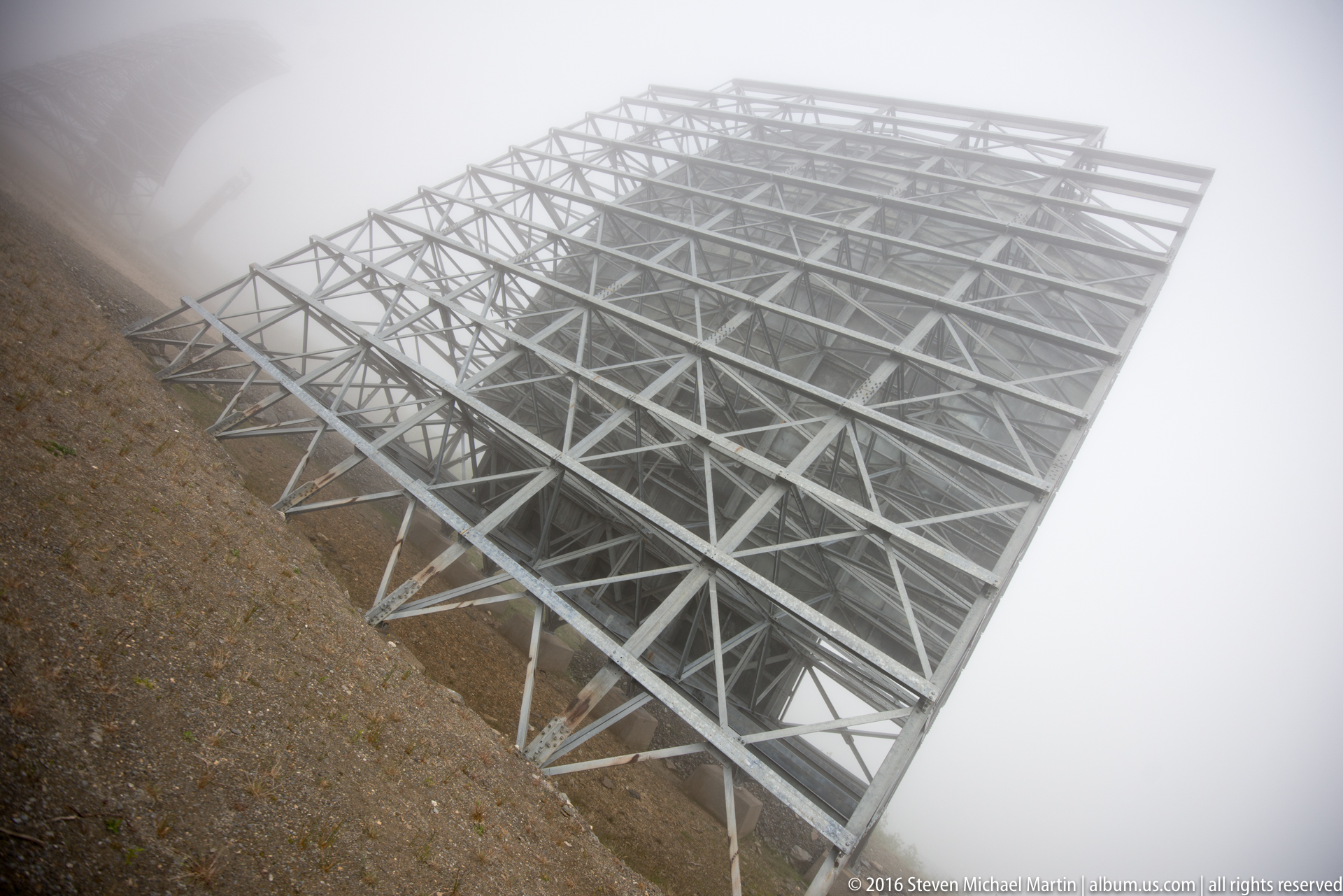
The steel framework angles across the slope on triangular legs, its repeated trusses narrowing into fog. This side view reveals the structure’s depth and open ground beneath it. It records the scale of the White Alice reflector support without adding unverified claims about its operation.
Caption
The steel framework angles across the slope on triangular legs, its repeated trusses narrowing into fog. This side view reveals the structure’s depth and open ground beneath it. It records the scale of the White Alice reflector support without adding unverified claims about its operation.
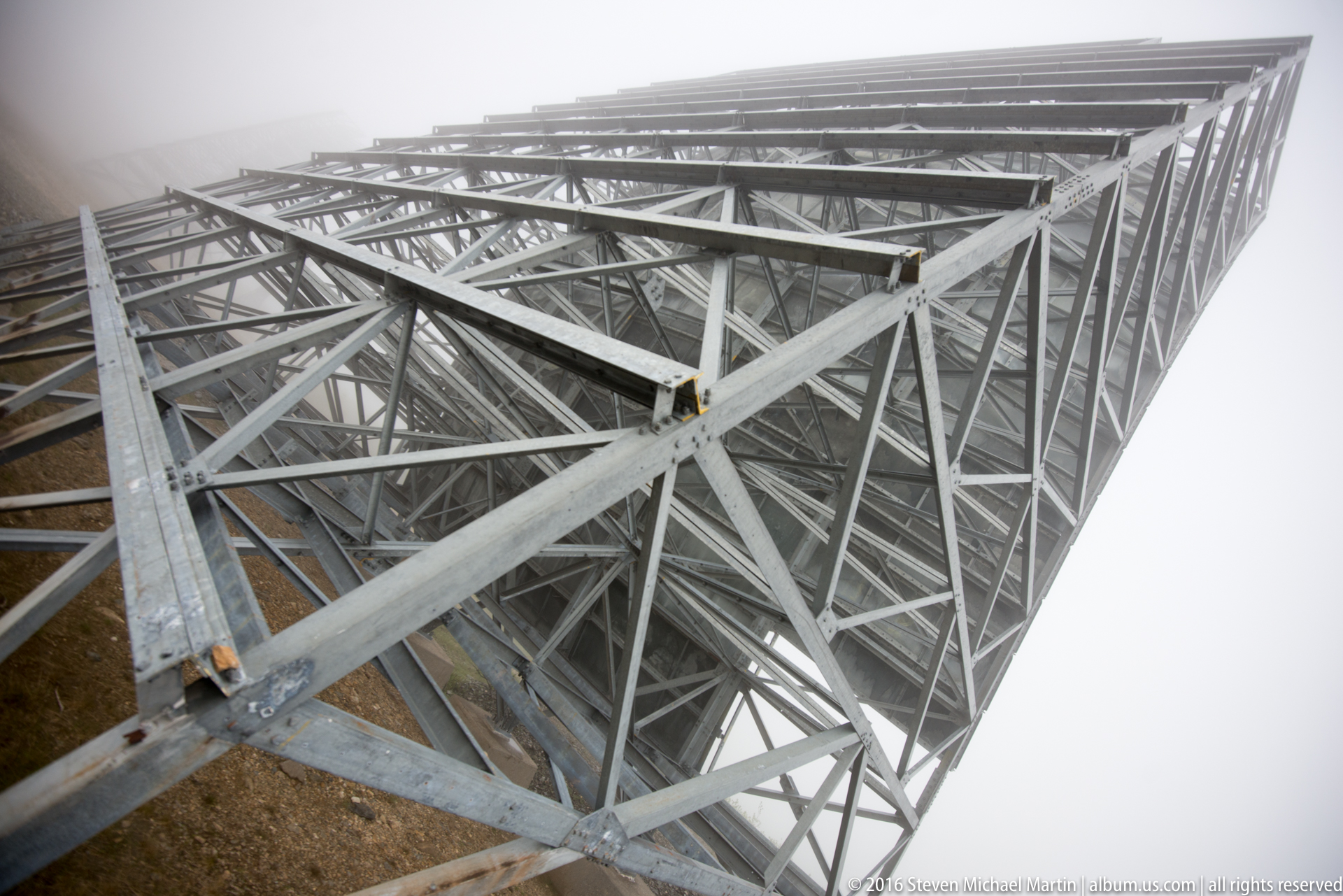
Heavy diagonal beams intersect in the foreground as parallel members extend beneath the elevated reflector. The ground drops away along the left edge, exposing the height of the steel supports. This close oblique view follows the antenna’s underside toward the far end.
Caption
Heavy diagonal beams intersect in the foreground as parallel members extend beneath the elevated reflector. The ground drops away along the left edge, exposing the height of the steel supports. This close oblique view follows the antenna’s underside toward the far end.

A white rectangular sign mounted on a post bears large red lettering reading “WARNING RESTRICTED AREA,” with smaller access language below. Rust streaks and many dark circular marks obscure portions of the text. Green vegetation and a blurred natural background surround the sign, whose message indicates controlled access without making the site boundary or authority fully legible.
Caption
A white rectangular sign mounted on a post bears large red lettering reading “WARNING RESTRICTED AREA,” with smaller access language below. Rust streaks and many dark circular marks obscure portions of the text. Green vegetation and a blurred natural background surround the sign, whose message indicates controlled access without making the site boundary or authority fully legible.
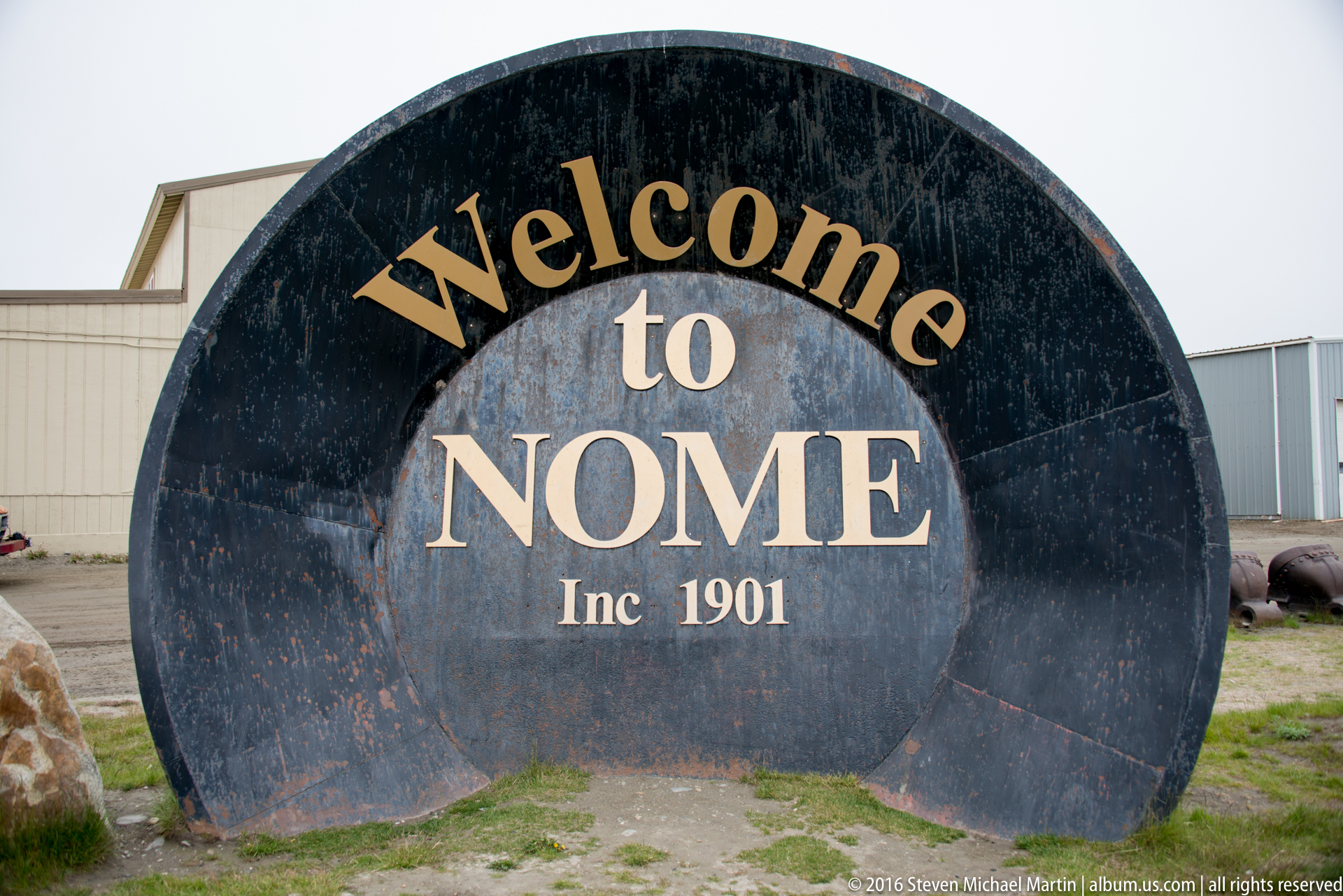
A broad, curved black sign stands on short grass, its gold and cream lettering reading “Welcome to Nome Inc. 1901.” The shape resembles a large shallow pan, while low modern buildings sit close behind it. Seen directly from the front, the sign makes the town name and incorporated date the central focus of this civic welcome display.
Caption
A broad, curved black sign stands on short grass, its gold and cream lettering reading “Welcome to Nome Inc. 1901.” The shape resembles a large shallow pan, while low modern buildings sit close behind it. Seen directly from the front, the sign makes the town name and incorporated date the central focus of this civic welcome display.
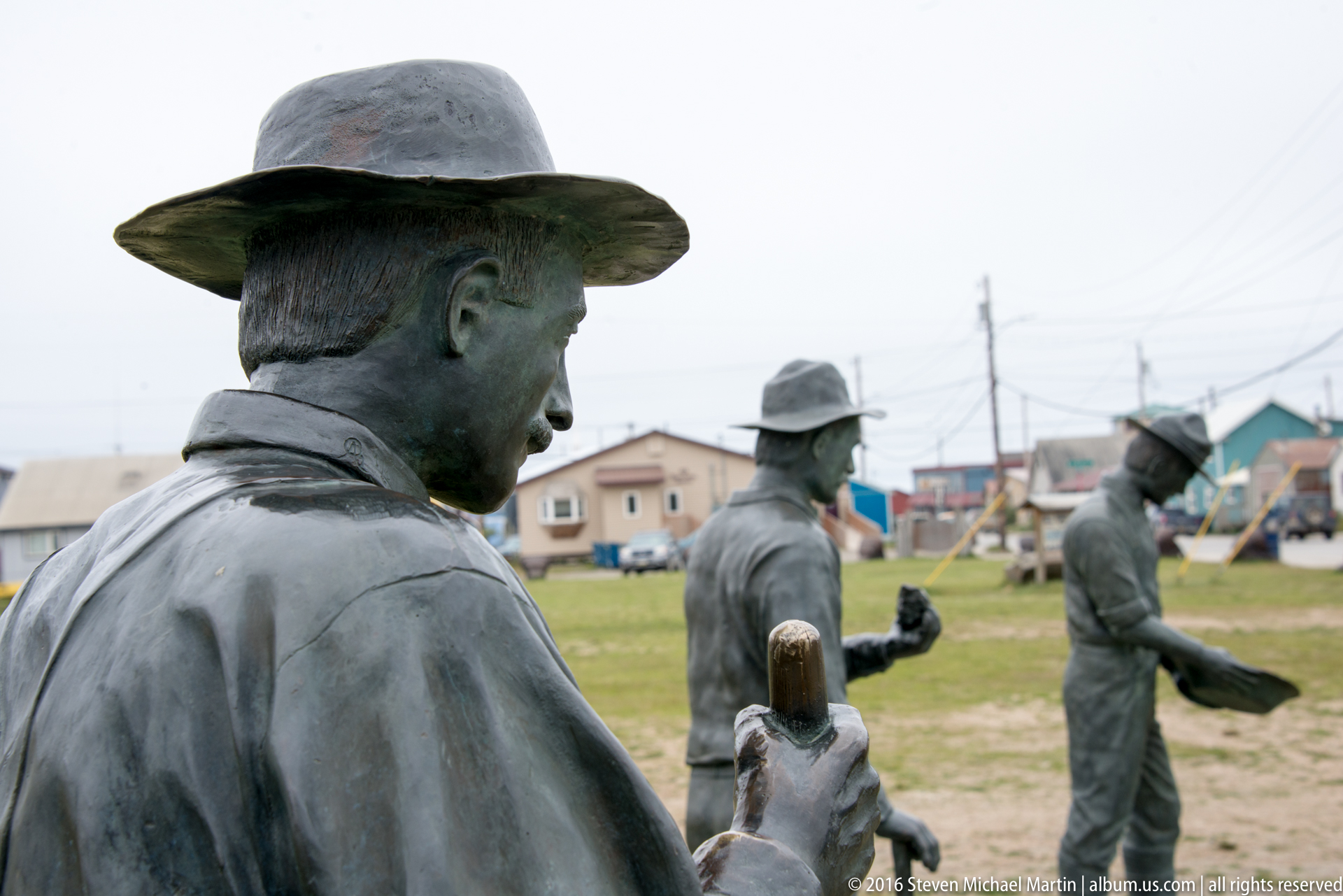
Several bronze figures in brimmed hats gather around a long trough, viewed from behind one worker in the foreground. Another figure holds a tool, while houses and utility lines show the sculpture’s town setting. The arrangement depicts miners at work without assigning an unverified title or narrative.
Caption
Several bronze figures in brimmed hats gather around a long trough, viewed from behind one worker in the foreground. Another figure holds a tool, while houses and utility lines show the sculpture’s town setting. The arrangement depicts miners at work without assigning an unverified title or narrative.
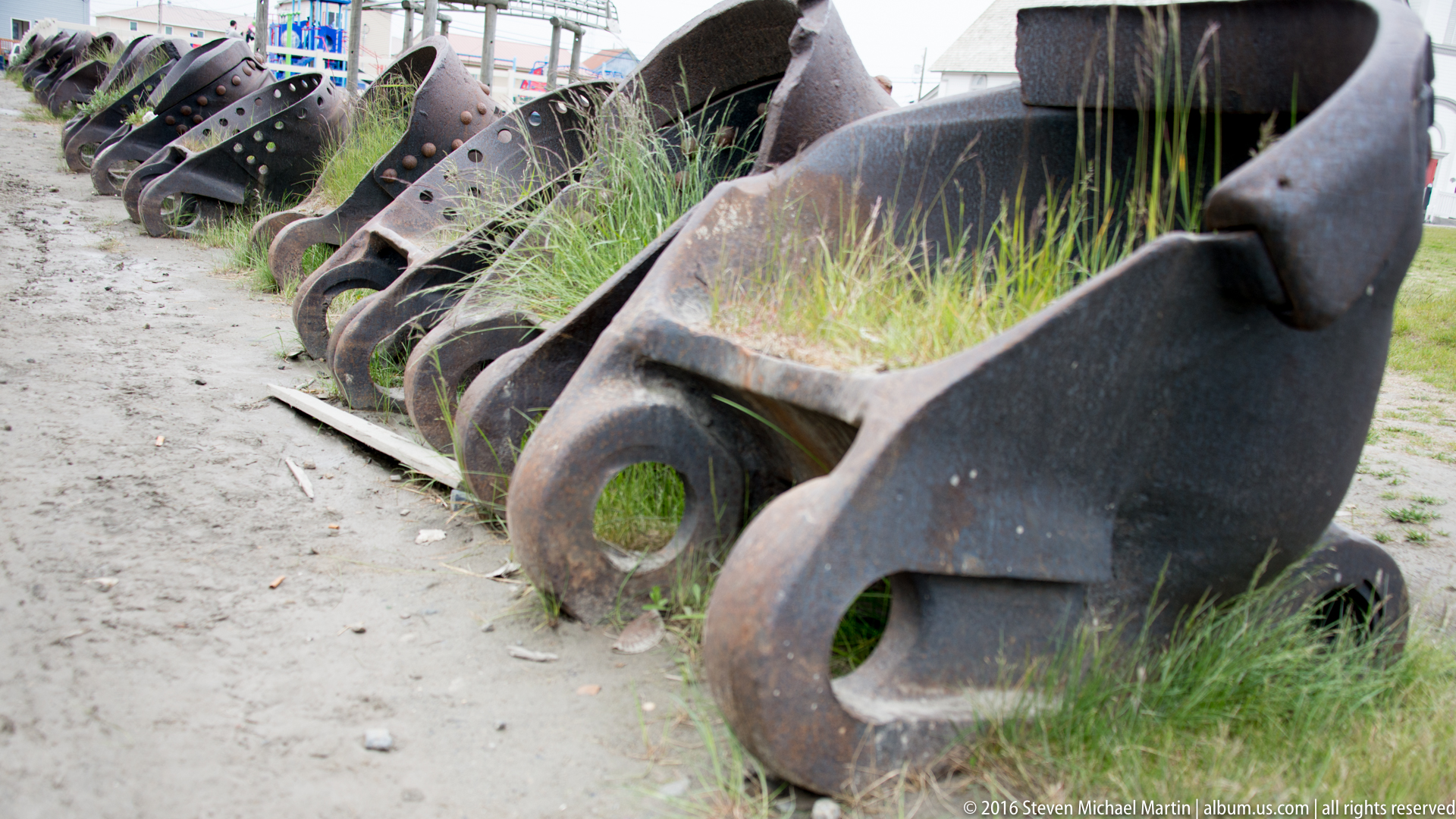
Large curved iron buckets lie in a diagonal row beside the path, their thick rims and open backs exposed. Grass grows through the nearest bucket, and rust covers the metal. Their repeated scoop shape is consistent with dredging equipment, although the particular machine is not identified in the photograph.
Caption
Large curved iron buckets lie in a diagonal row beside the path, their thick rims and open backs exposed. Grass grows through the nearest bucket, and rust covers the metal. Their repeated scoop shape is consistent with dredging equipment, although the particular machine is not identified in the photograph.

A blue fuel-price board fills the frame, with large white numerals for regular unleaded gasoline and diesel. The visible prices read 499 9/10 and 557 9/10, while smaller header text mentions food and 24-hour fuel. The tight crop turns the sign into a record of local retail information rather than a view of the service station.
Caption
A blue fuel-price board fills the frame, with large white numerals for regular unleaded gasoline and diesel. The visible prices read 499 9/10 and 557 9/10, while smaller header text mentions food and 24-hour fuel. The tight crop turns the sign into a record of local retail information rather than a view of the service station.
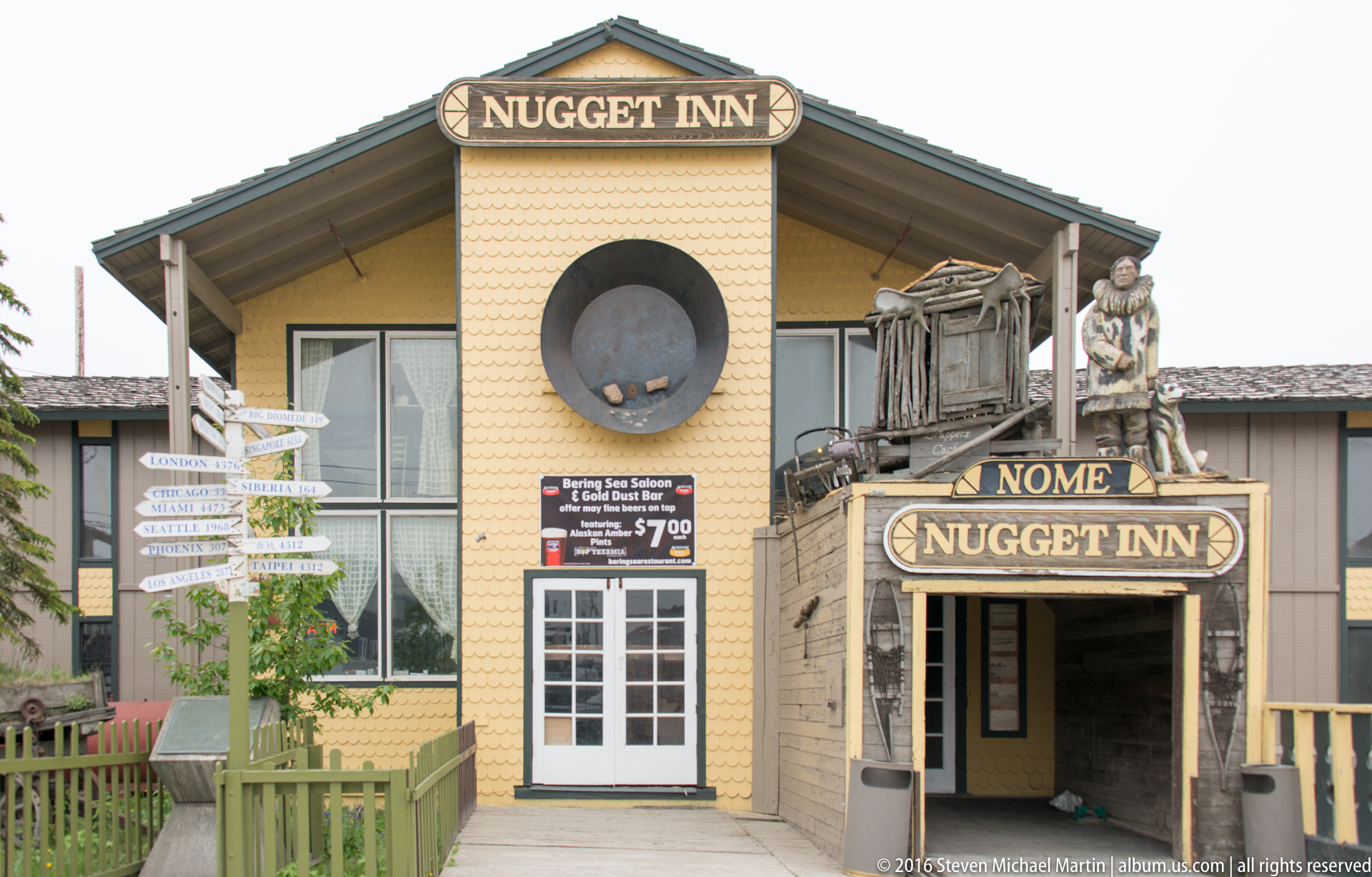
The yellow gabled facade carries a “Nugget Inn” sign at the roof peak and another above the entrance. A circular dark feature is centered over the upper doorway, while a mining-themed arrangement of equipment and figures occupies the right side of the roofline. A small directional signpost stands at left, making this a compact streetscape view of a lodging entrance.
Caption
The yellow gabled facade carries a “Nugget Inn” sign at the roof peak and another above the entrance. A circular dark feature is centered over the upper doorway, while a mining-themed arrangement of equipment and figures occupies the right side of the roofline. A small directional signpost stands at left, making this a compact streetscape view of a lodging entrance.
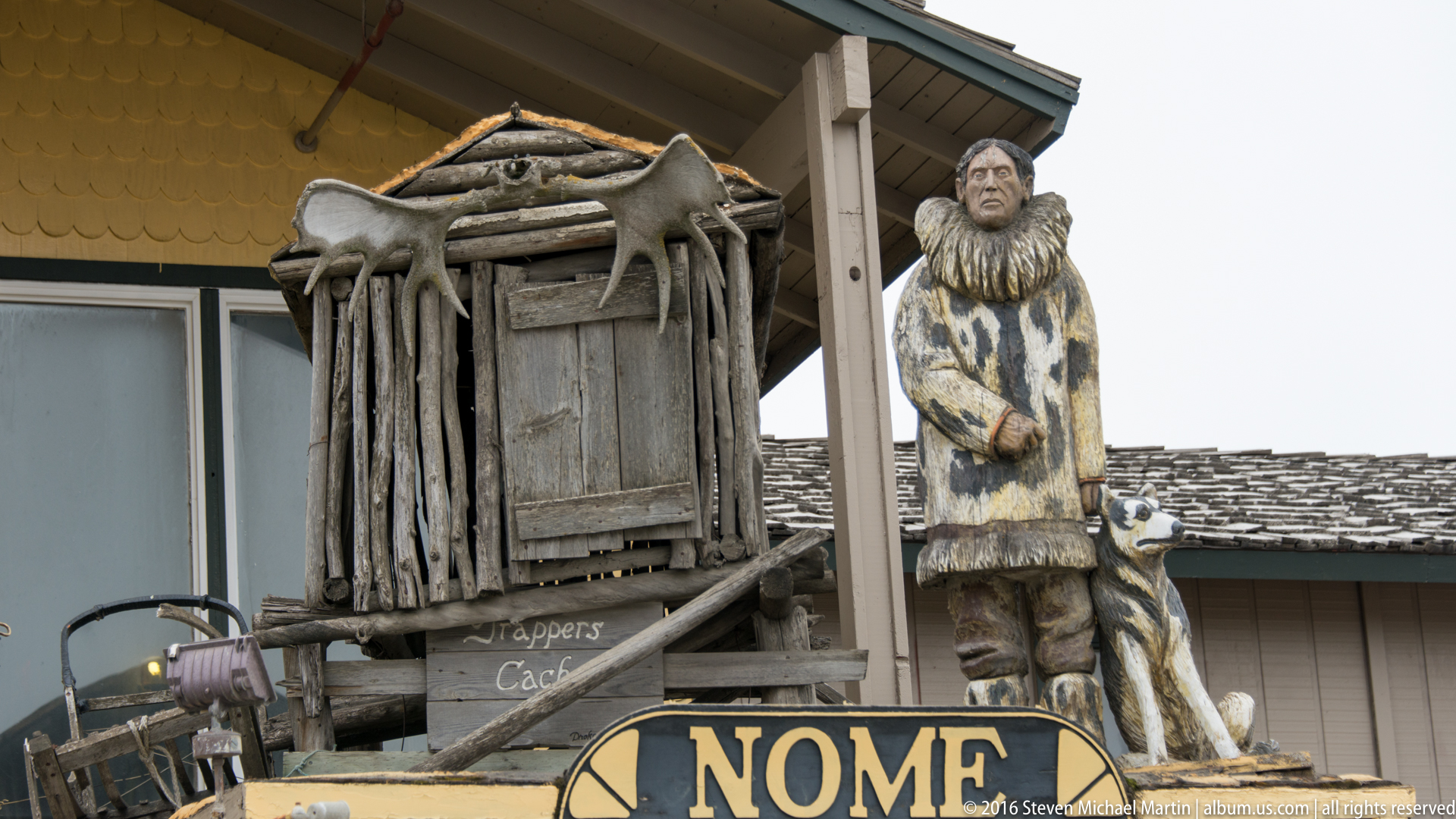
A rustic wooden structure with a sloping roof stands behind a large sign reading “NOME.” Carved figures in heavy clothing flank the structure, and long narrow objects hang from its front. The arrangement resembles a roadside heritage display, though the objects and figures are not labeled in the frame. A partial “Trappers Camp” sign adds a second layer of local-themed lettering.
Caption
A rustic wooden structure with a sloping roof stands behind a large sign reading “NOME.” Carved figures in heavy clothing flank the structure, and long narrow objects hang from its front. The arrangement resembles a roadside heritage display, though the objects and figures are not labeled in the frame. A partial “Trappers Camp” sign adds a second layer of local-themed lettering.
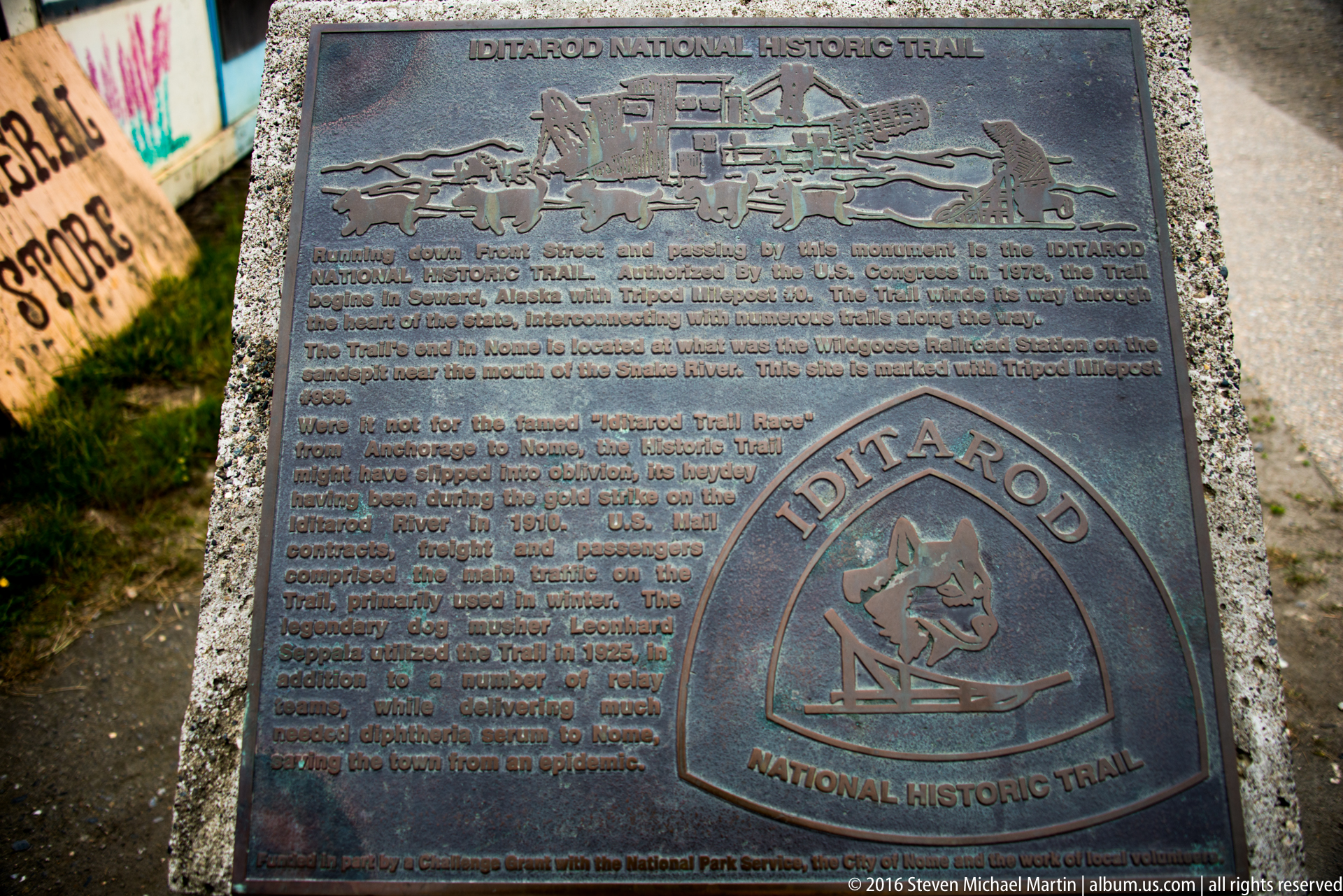
A bronze plaque titled “Iditarod National Historic Trail” fills the frame. A relief of a dog team and sled runs across the top, while several paragraphs of text explain the trail below; a circular trail emblem anchors the lower portion. The oblique view catches the raised lettering and figures in side light, though much of the small inscription is too fine to read from the proof sheet.
Caption
A bronze plaque titled “Iditarod National Historic Trail” fills the frame. A relief of a dog team and sled runs across the top, while several paragraphs of text explain the trail below; a circular trail emblem anchors the lower portion. The oblique view catches the raised lettering and figures in side light, though much of the small inscription is too fine to read from the proof sheet.

A dense cluster of painted wooden arrows points toward destinations around the world, including London, Chicago, Miami, Seattle, Los Angeles, Singapore, Siberia, and Big Diomede. Numbers beside the names give distances, turning the signpost into a playful geographic index. The arrows overlap in several directions in front of a building, while leafy branches partly obscure the lower signs.
Caption
A dense cluster of painted wooden arrows points toward destinations around the world, including London, Chicago, Miami, Seattle, Los Angeles, Singapore, Siberia, and Big Diomede. Numbers beside the names give distances, turning the signpost into a playful geographic index. The arrows overlap in several directions in front of a building, while leafy branches partly obscure the lower signs.
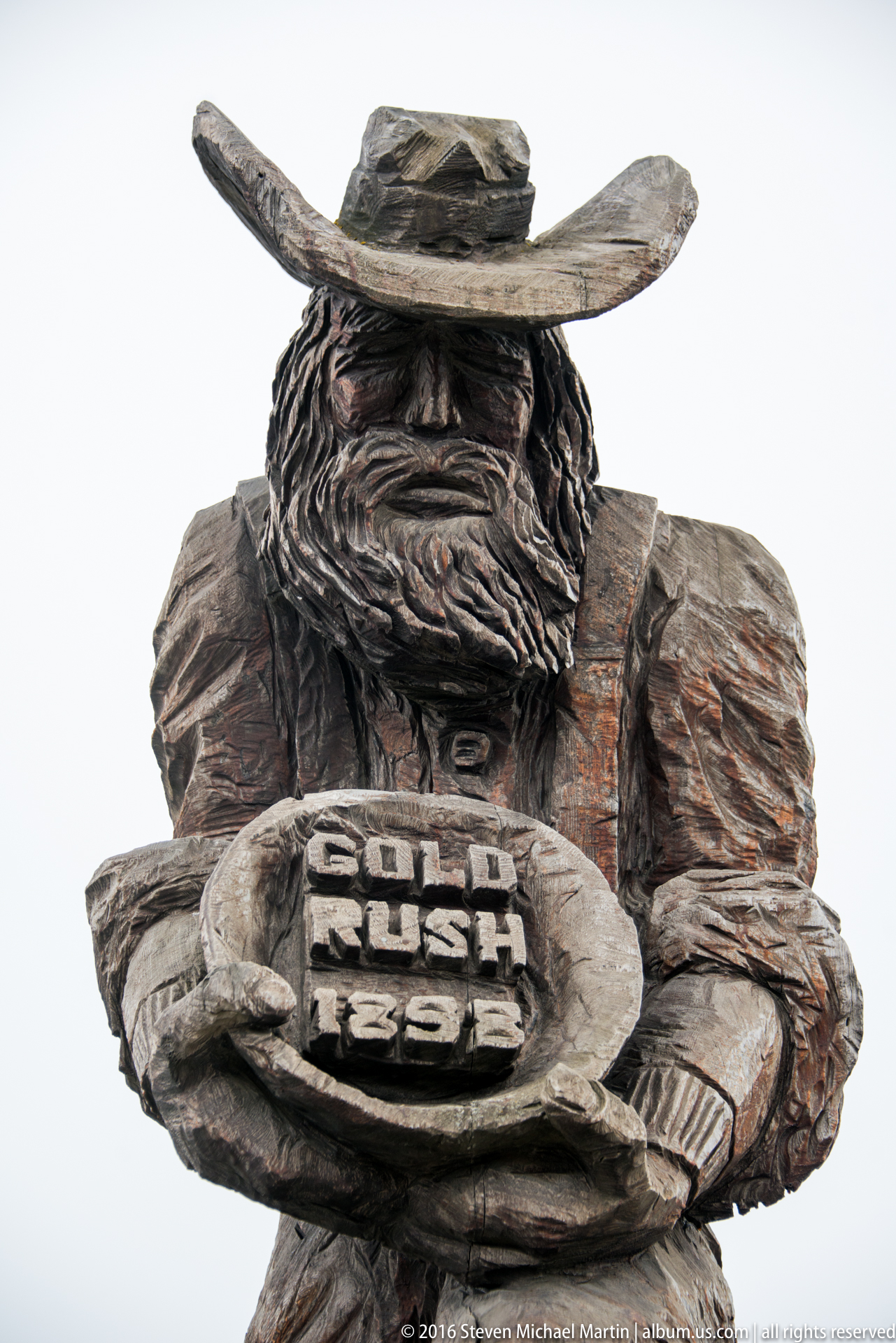
A seated wooden figure with a broad hat and long beard holds an oval plaque reading “COLD FISH.” Deep cuts define the face, coat, hands, and wood grain, giving the sculpture a rough-hewn surface. The direct view centers the figure and its sign against a plain pale background; no label identifies the character or explains the phrase.
Caption
A seated wooden figure with a broad hat and long beard holds an oval plaque reading “COLD FISH.” Deep cuts define the face, coat, hands, and wood grain, giving the sculpture a rough-hewn surface. The direct view centers the figure and its sign against a plain pale background; no label identifies the character or explains the phrase.
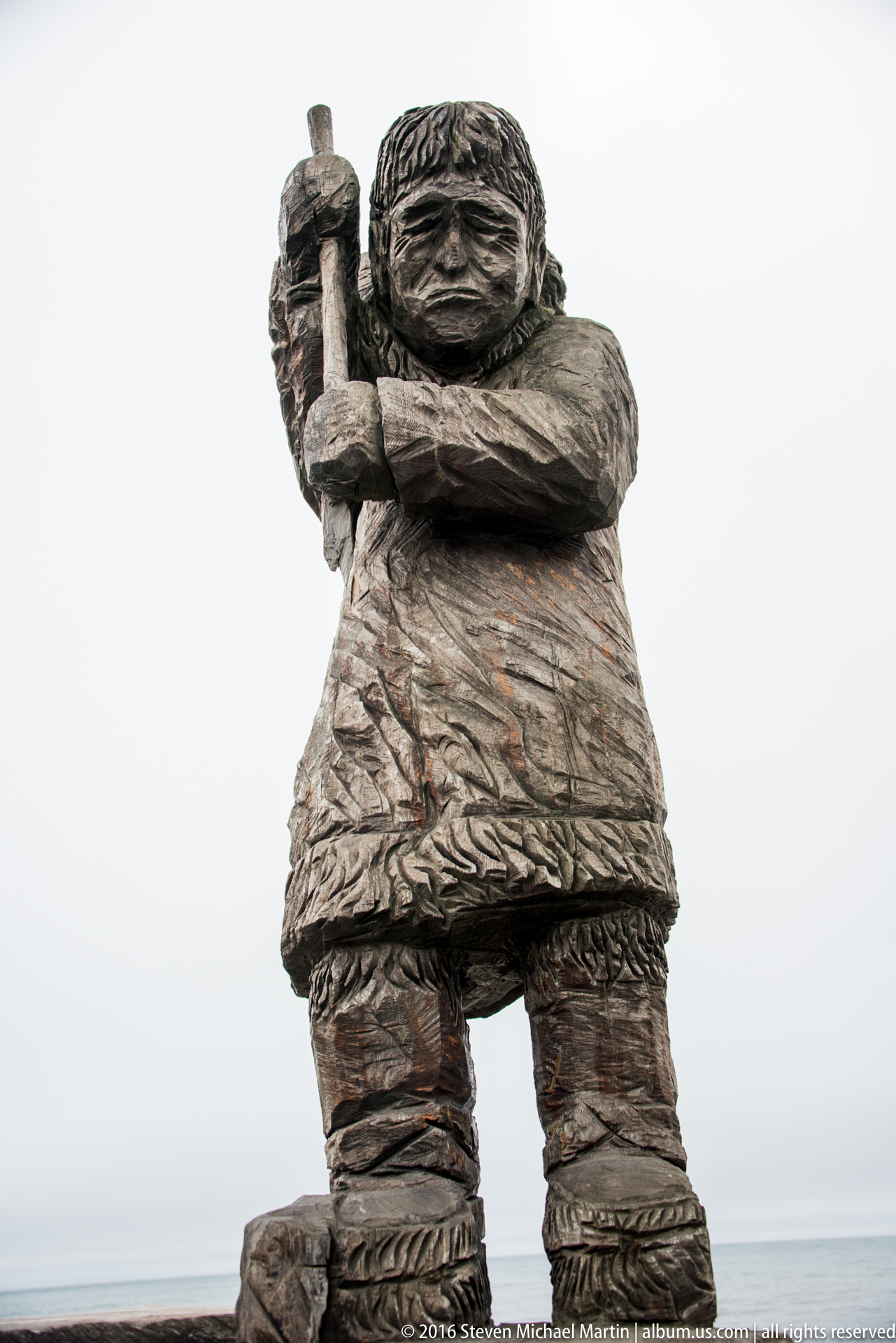
A full-length wooden figure stands against a pale sky, wearing a textured parka, trousers, and tall boots. The figure holds a long narrow object upright beside the shoulder, with both hands gathered around it. The close upward angle makes the carving’s layered clothing and compact stance prominent, while the distant sea horizon is reduced to a thin line near the bottom.
Caption
A full-length wooden figure stands against a pale sky, wearing a textured parka, trousers, and tall boots. The figure holds a long narrow object upright beside the shoulder, with both hands gathered around it. The close upward angle makes the carving’s layered clothing and compact stance prominent, while the distant sea horizon is reduced to a thin line near the bottom.
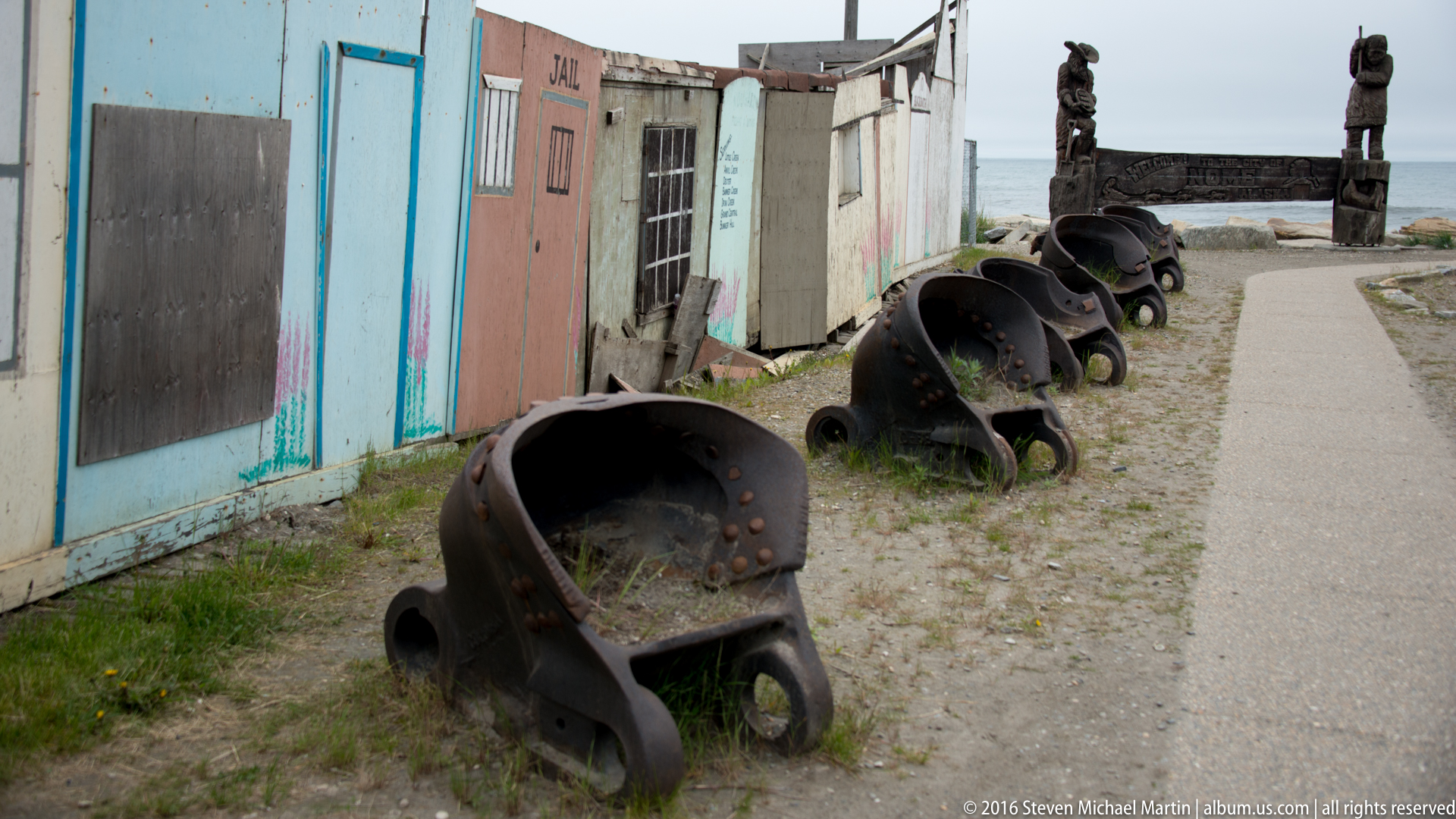
Several heavy, rust-darkened metal scoops or buckets sit in a row beside a gravel path. Their curved bodies and thick rims vary in size, and one foreground piece rests on small wheels or a low frame. Weathered buildings line the path, with carved posts visible farther along. The photograph records the objects as outdoor industrial remnants without assigning a specific machine or mining function.
Caption
Several heavy, rust-darkened metal scoops or buckets sit in a row beside a gravel path. Their curved bodies and thick rims vary in size, and one foreground piece rests on small wheels or a low frame. Weathered buildings line the path, with carved posts visible farther along. The photograph records the objects as outdoor industrial remnants without assigning a specific machine or mining function.
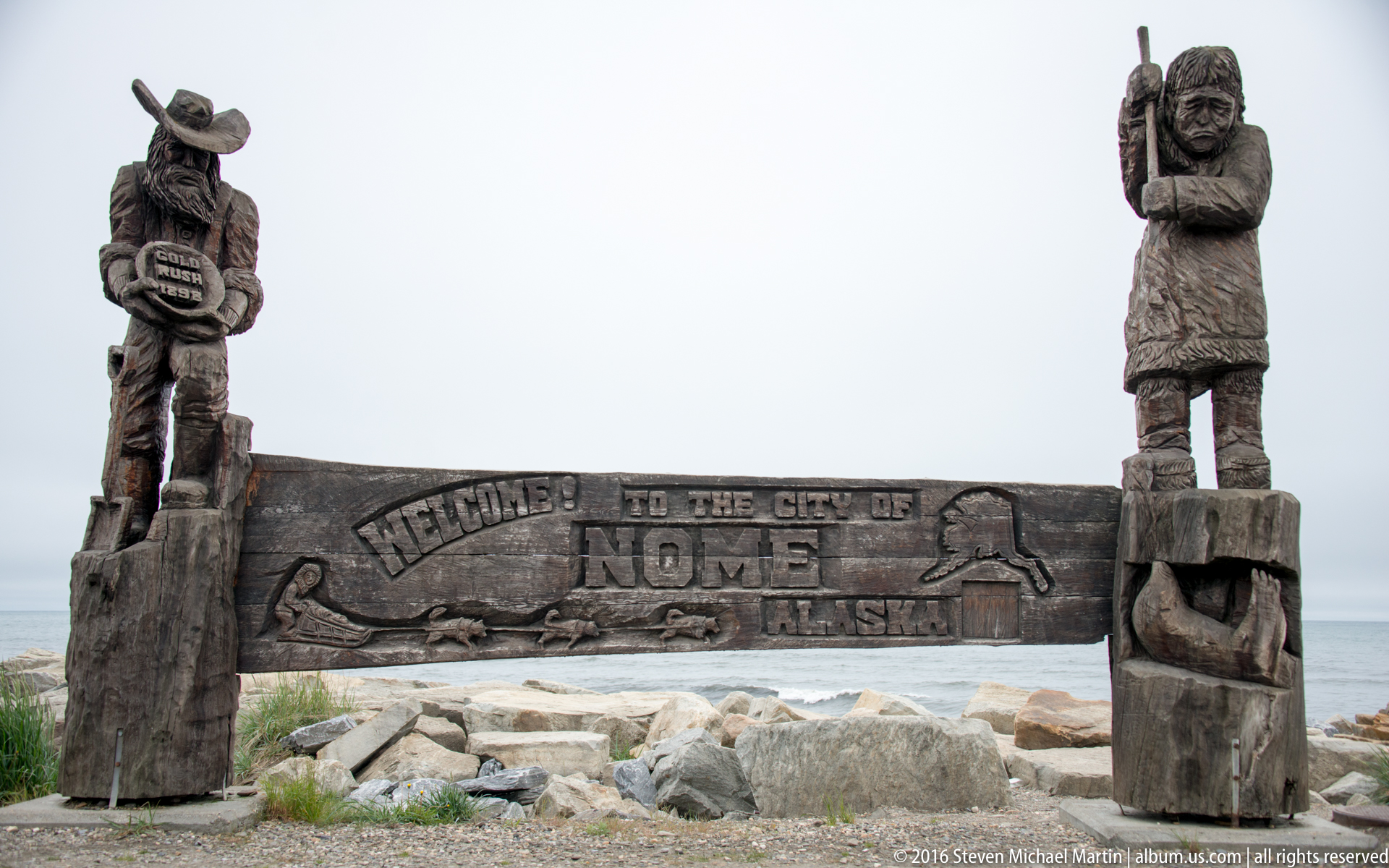
A broad carved gateway reads “Welcome to the City of Nome, Alaska,” with animal figures running along the crossbeam. Two tall carved human figures stand at the ends, one holding a long upright object. The structure rises above shoreline rocks, with the sea visible through and behind it. Its frontal composition makes the welcome inscription and carved supports the defining features.
Caption
A broad carved gateway reads “Welcome to the City of Nome, Alaska,” with animal figures running along the crossbeam. Two tall carved human figures stand at the ends, one holding a long upright object. The structure rises above shoreline rocks, with the sea visible through and behind it. Its frontal composition makes the welcome inscription and carved supports the defining features.
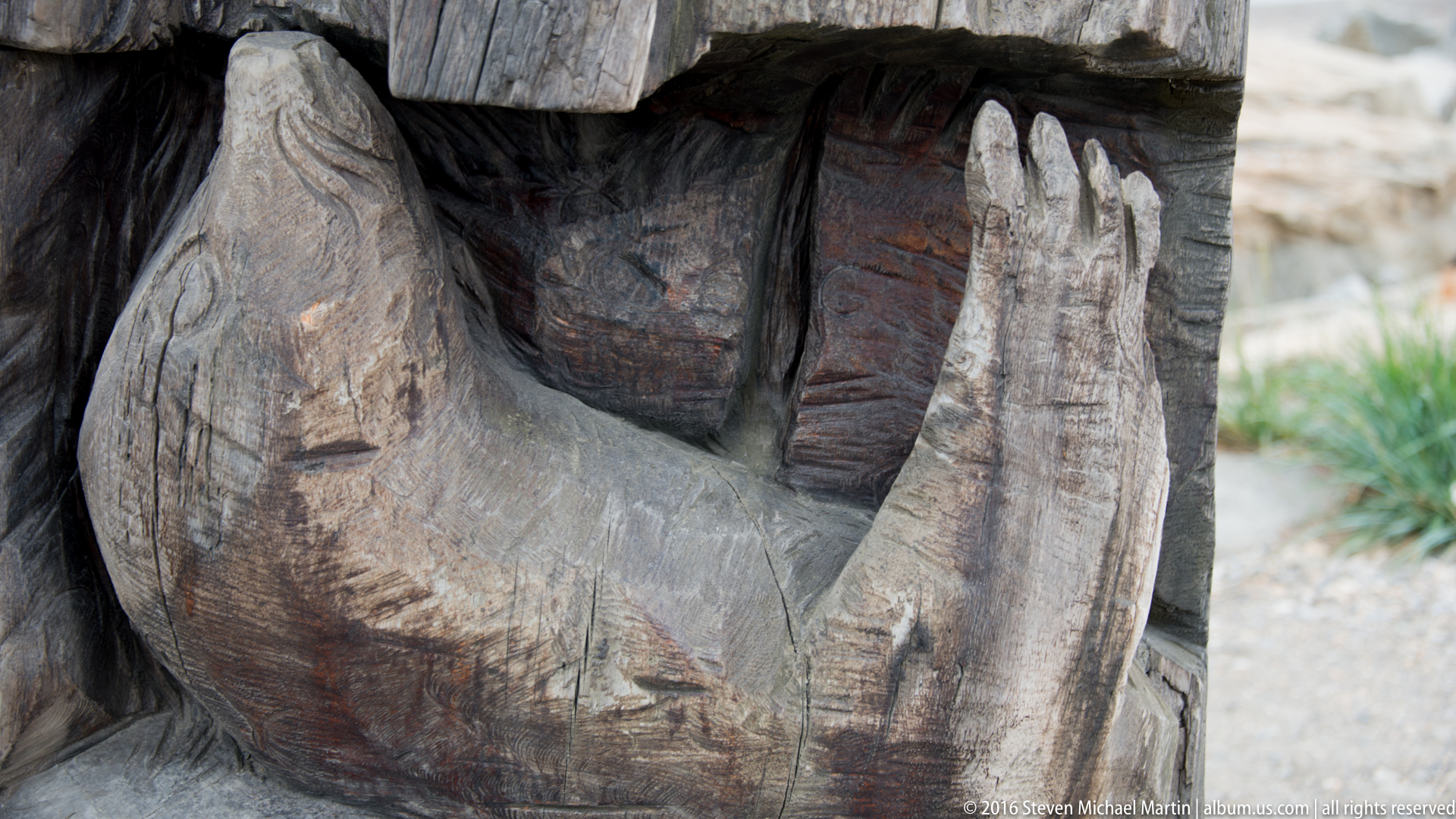
A close crop isolates a carved wooden figure’s hands and a rounded object held across the body. The rough surface shows dark grooves, lighter worn edges, and layered cuts that suggest folded clothing or a carved form beneath the arms. A pale strip of shoreline and grass appears at the right edge. Without a wider view or identifying label, the subject remains a sculptural detail.
Caption
A close crop isolates a carved wooden figure’s hands and a rounded object held across the body. The rough surface shows dark grooves, lighter worn edges, and layered cuts that suggest folded clothing or a carved form beneath the arms. A pale strip of shoreline and grass appears at the right edge. Without a wider view or identifying label, the subject remains a sculptural detail.

An old wooden cart rests on gravel beside the shore, its plank bed mounted on large rusted wheels. A long metal shaft projects from the front, and the frame shows dark wear and missing or uneven boards. The low angle emphasizes the cart’s construction against a band of rocks and open water, but no label confirms its original use.
Caption
An old wooden cart rests on gravel beside the shore, its plank bed mounted on large rusted wheels. A long metal shaft projects from the front, and the frame shows dark wear and missing or uneven boards. The low angle emphasizes the cart’s construction against a band of rocks and open water, but no label confirms its original use.
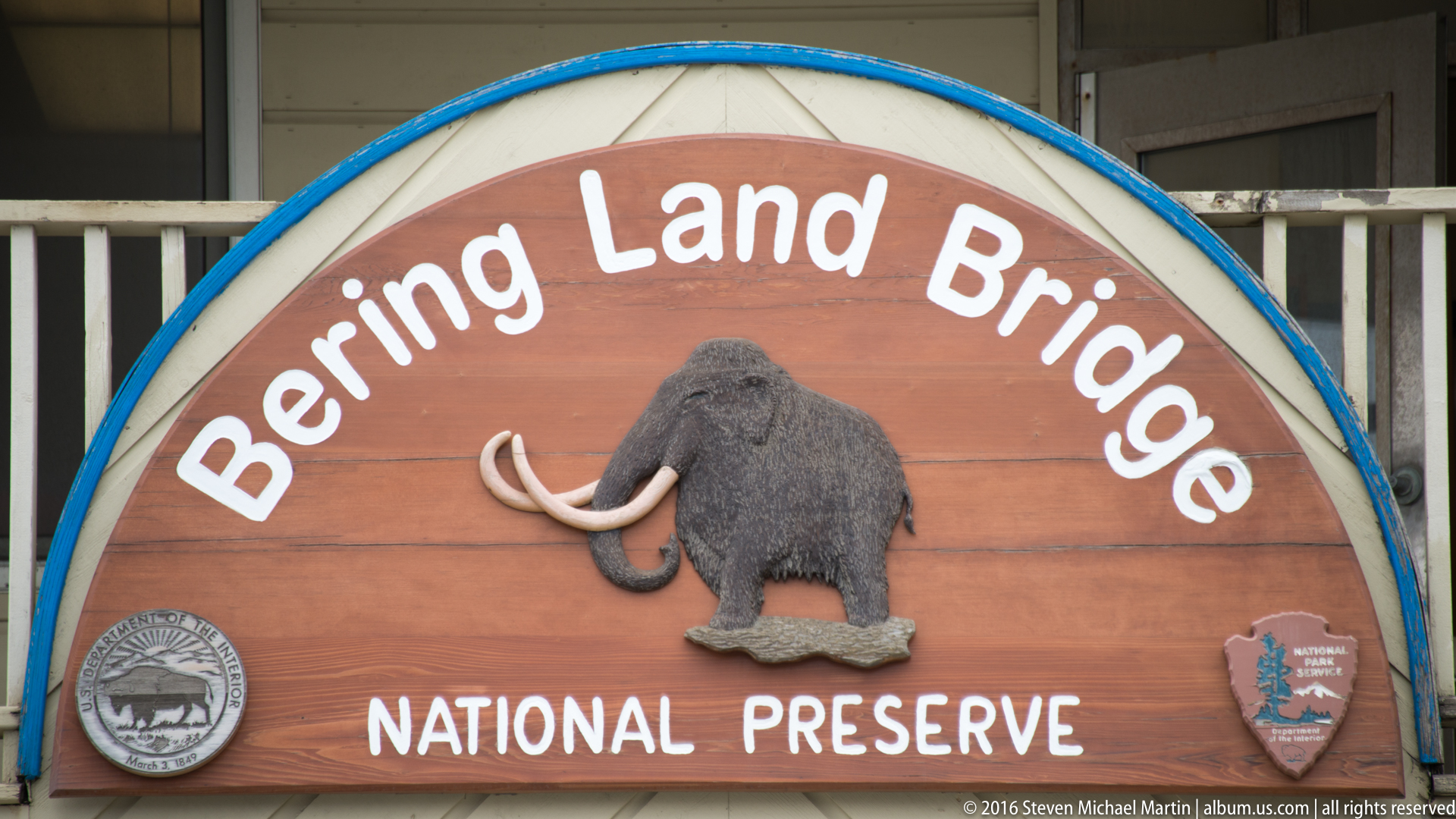
A rounded wooden sign identifies Bering Land Bridge National Preserve. A raised mammoth figure stands at its center, flanked by two agency emblems, with a blue rim tracing the top edge. The tight frontal crop makes the park designation and Ice Age animal motif prominent, while the building’s windows behind the sign establish an indoor or sheltered display setting.
Caption
A rounded wooden sign identifies Bering Land Bridge National Preserve. A raised mammoth figure stands at its center, flanked by two agency emblems, with a blue rim tracing the top edge. The tight frontal crop makes the park designation and Ice Age animal motif prominent, while the building’s windows behind the sign establish an indoor or sheltered display setting.
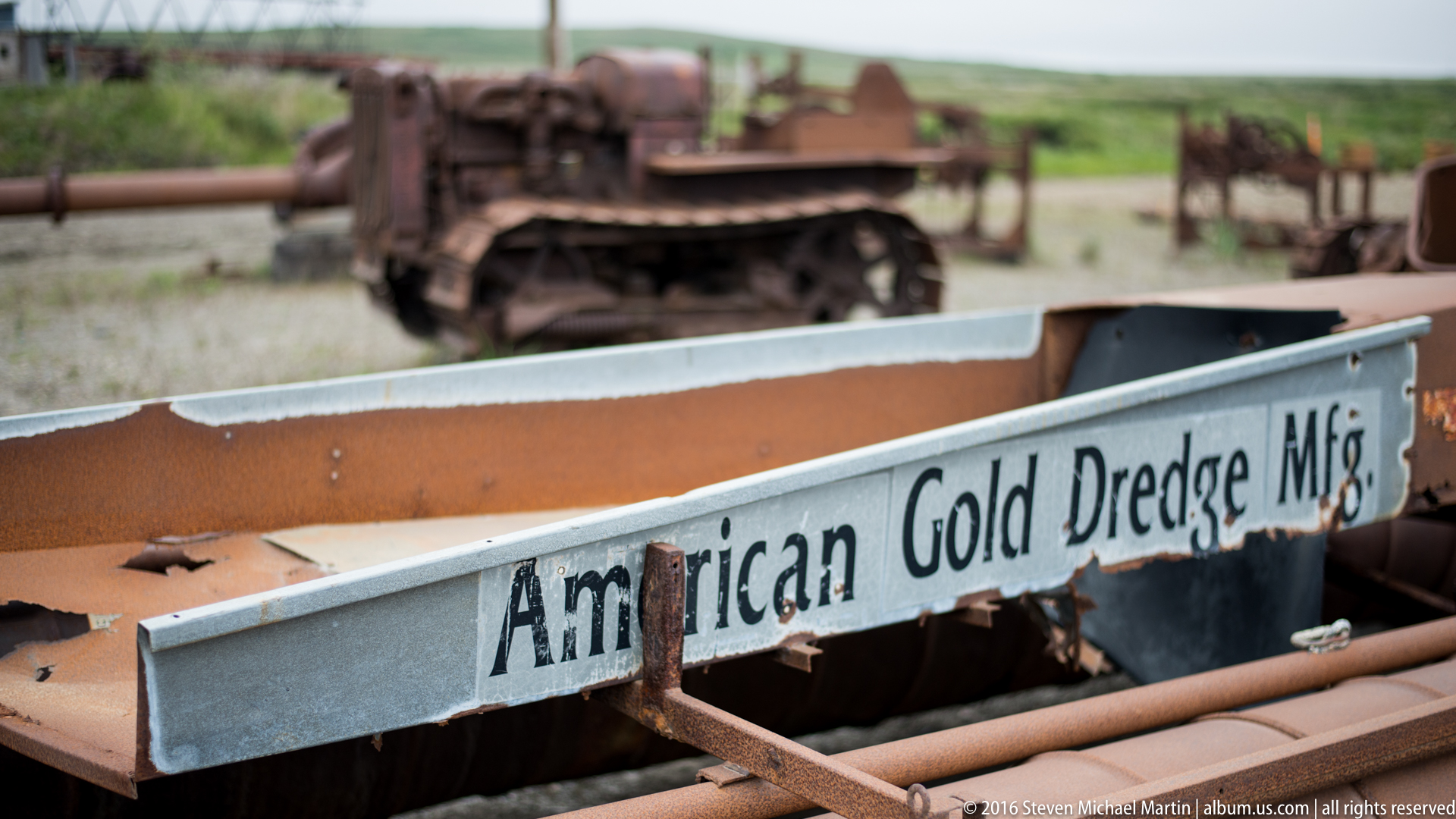
A long metal nameplate reading “American Gold Dredge Mfg.” crosses the rusted body of a large machine. Pipes, brackets, and other equipment recede behind it, with shallow focus keeping the lettering sharpest. The manufacturer wording links the object to gold-dredging machinery, while the close crop emphasizes its industrial labeling and worn, oxidized surfaces rather than the full machine.
Caption
A long metal nameplate reading “American Gold Dredge Mfg.” crosses the rusted body of a large machine. Pipes, brackets, and other equipment recede behind it, with shallow focus keeping the lettering sharpest. The manufacturer wording links the object to gold-dredging machinery, while the close crop emphasizes its industrial labeling and worn, oxidized surfaces rather than the full machine.

A rusted tracked tractor sits on gravel, its broad linked track wrapping around the lower chassis. The exposed engine, radiator, and open operator seat reveal the machine’s mechanical layout; no cab or modern fittings are present. The side view keeps the full length of the undercarriage visible, making the continuous track the defining feature of this abandoned industrial vehicle.
Caption
A rusted tracked tractor sits on gravel, its broad linked track wrapping around the lower chassis. The exposed engine, radiator, and open operator seat reveal the machine’s mechanical layout; no cab or modern fittings are present. The side view keeps the full length of the undercarriage visible, making the continuous track the defining feature of this abandoned industrial vehicle.
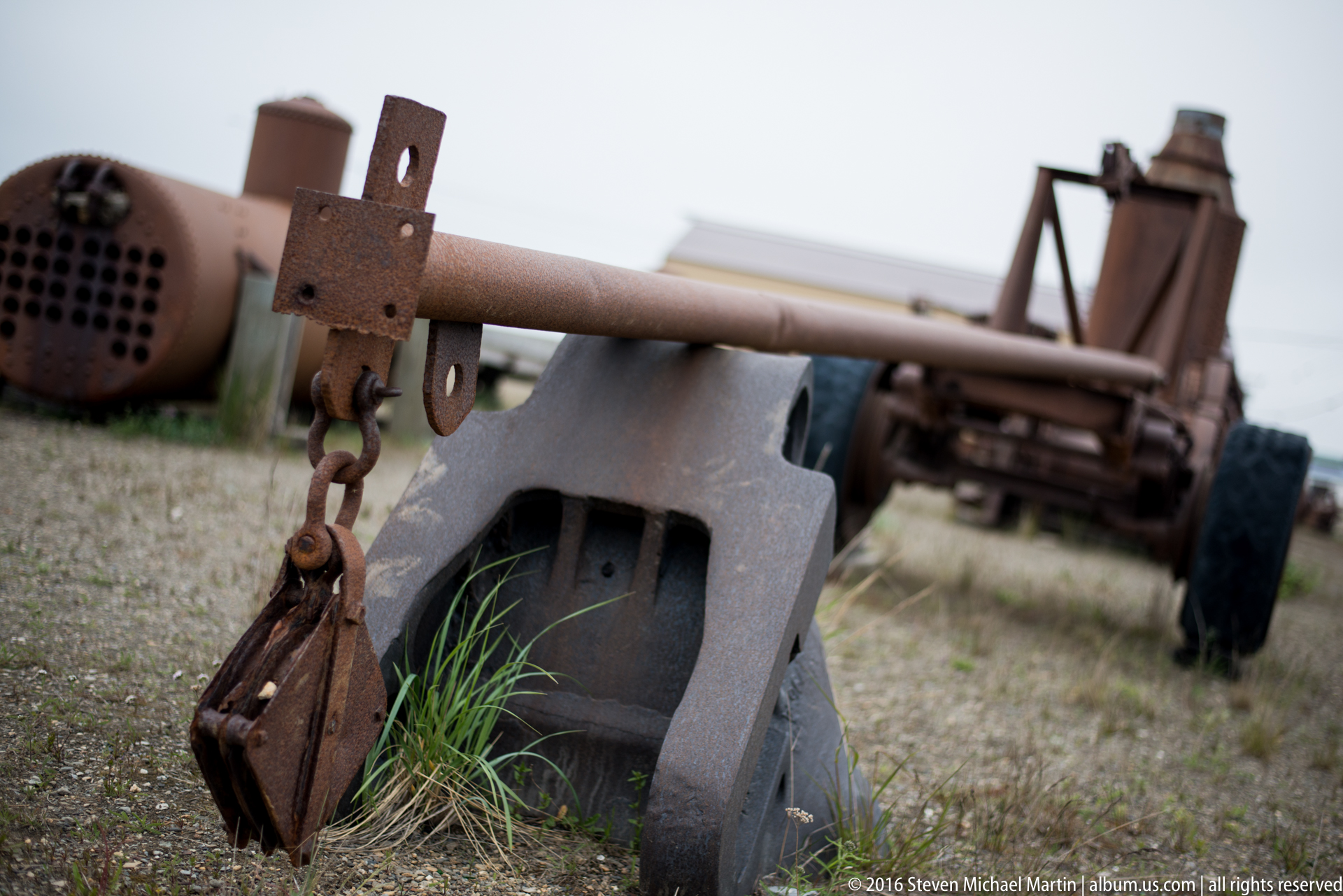
A heavy chain hangs from a rusted bracket above a curved metal housing, with a broad pipe crossing the upper frame. Other machine parts stand out of focus behind it. The close crop shifts attention from the full crawler to one working assembly, showing how chains, supports, and a shaped housing intersect. The exact function of this component is not identified by a visible label.
Caption
A heavy chain hangs from a rusted bracket above a curved metal housing, with a broad pipe crossing the upper frame. Other machine parts stand out of focus behind it. The close crop shifts attention from the full crawler to one working assembly, showing how chains, supports, and a shaped housing intersect. The exact function of this component is not identified by a visible label.
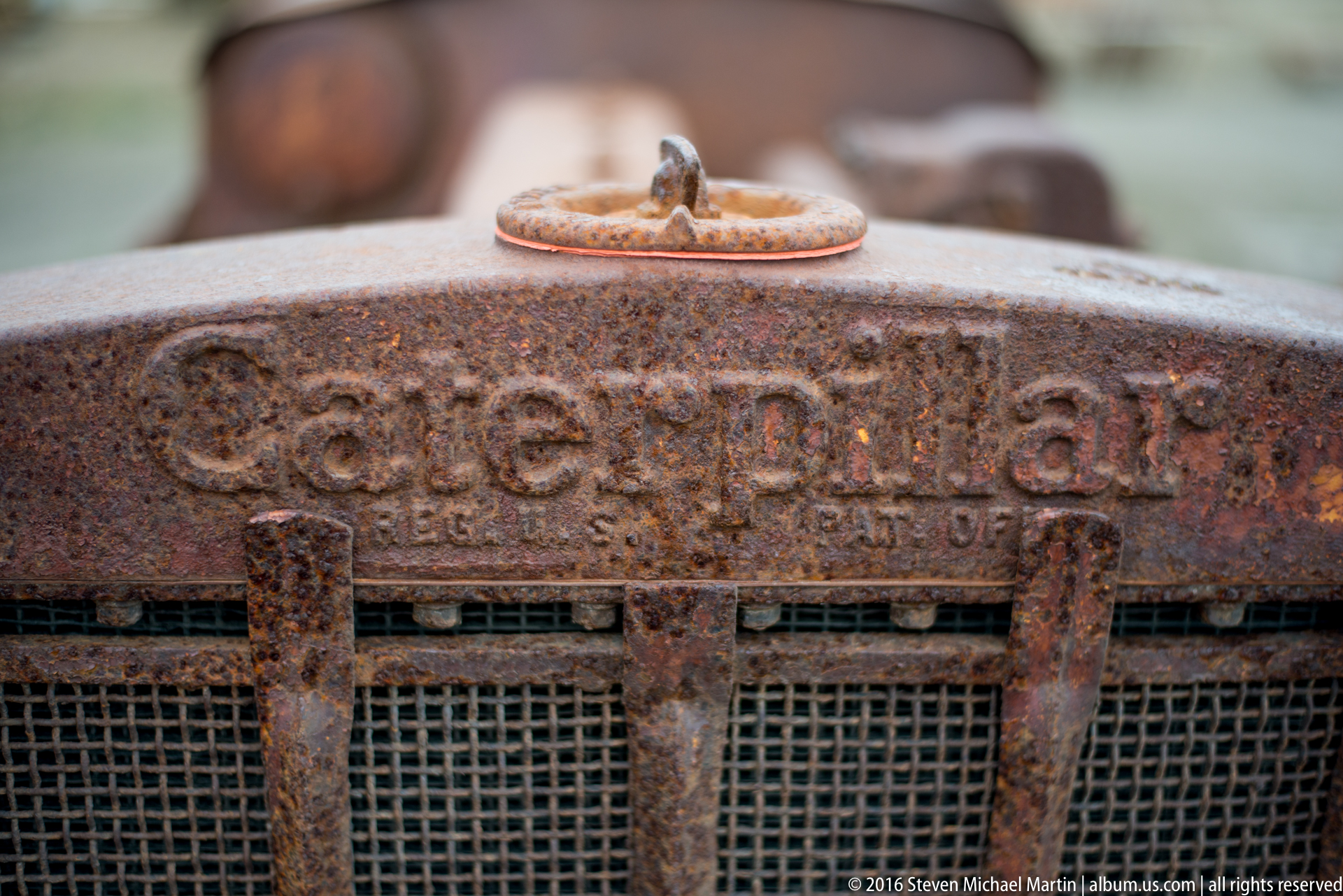
Raised lettering sits on the curved upper housing above a protective grille, with a small circular cap near the top. Corrosion and shallow focus obscure parts of the name, so the mark is not transcribed here. The close view records the surviving casting and its worn surface.
Caption
Raised lettering sits on the curved upper housing above a protective grille, with a small circular cap near the top. Corrosion and shallow focus obscure parts of the name, so the mark is not transcribed here. The close view records the surviving casting and its worn surface.

Several large gears and a heavy chain fill the interior of the old machine. A horizontal shaft bridges the frame, with toothed wheels and smaller linkages packed around it. The low viewpoint looks through the mechanism rather than across its exterior, revealing the complexity of the drive train and the corrosion accumulated on its exposed parts.
Caption
Several large gears and a heavy chain fill the interior of the old machine. A horizontal shaft bridges the frame, with toothed wheels and smaller linkages packed around it. The low viewpoint looks through the mechanism rather than across its exterior, revealing the complexity of the drive train and the corrosion accumulated on its exposed parts.

Two large toothed wheels meet near the center of the frame, one partly overlapping a circular bolted plate. Their coarse teeth and layered rust are sharply visible, while other machine components blur into the background. This detail isolates the contact point between gears, highlighting the scale and wear of the mechanism without attempting to assign a specific function.
Caption
Two large toothed wheels meet near the center of the frame, one partly overlapping a circular bolted plate. Their coarse teeth and layered rust are sharply visible, while other machine components blur into the background. This detail isolates the contact point between gears, highlighting the scale and wear of the mechanism without attempting to assign a specific function.
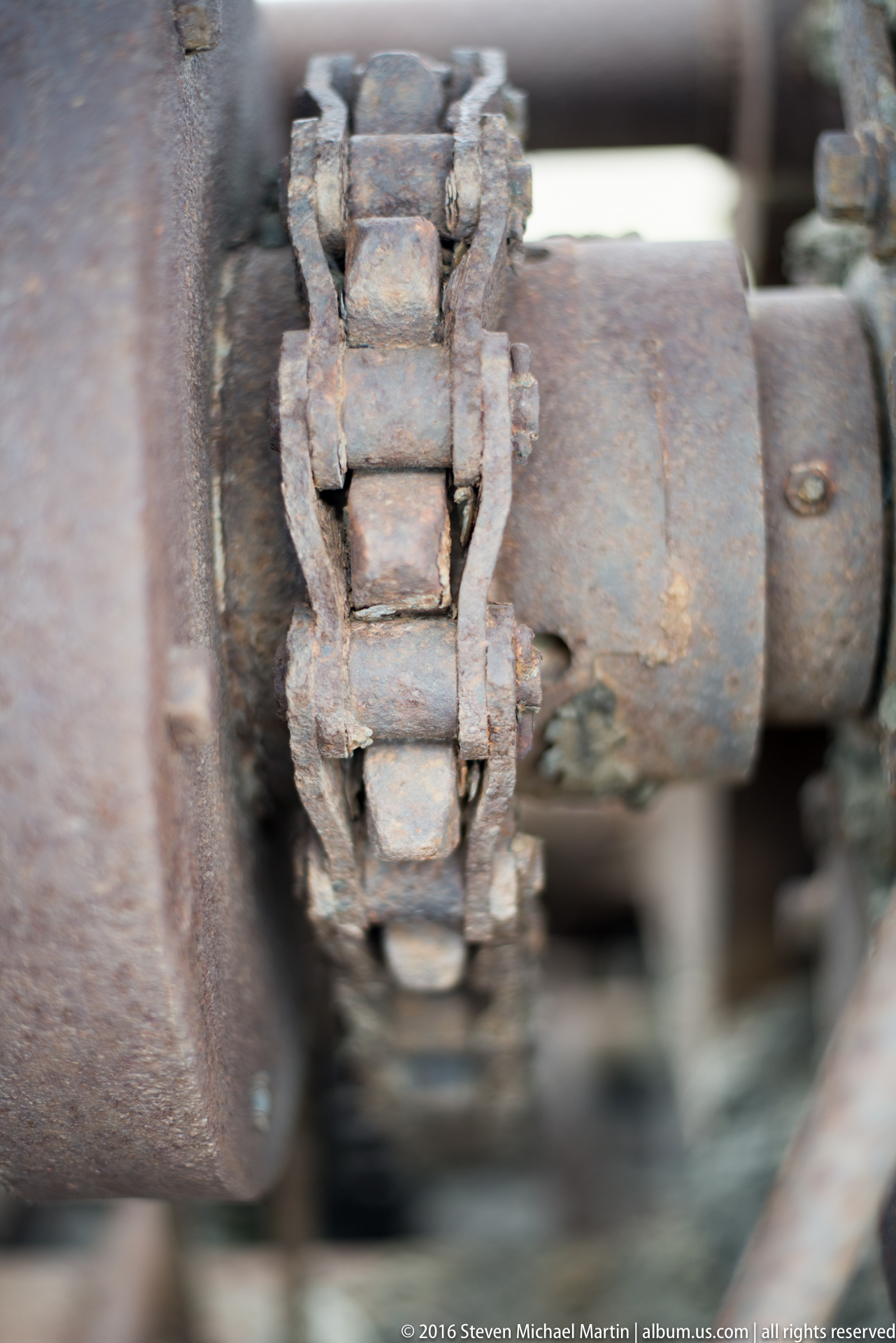
A thick chain wraps around a central shaft between large cylindrical machine parts. The links are worn and unevenly rusted, with a shallow depth of field softening the surrounding assembly. The tight composition focuses on the repeated links and their connection to the shaft, providing a mechanical detail rather than a view of the dredge as a whole.
Caption
A thick chain wraps around a central shaft between large cylindrical machine parts. The links are worn and unevenly rusted, with a shallow depth of field softening the surrounding assembly. The tight composition focuses on the repeated links and their connection to the shaft, providing a mechanical detail rather than a view of the dredge as a whole.
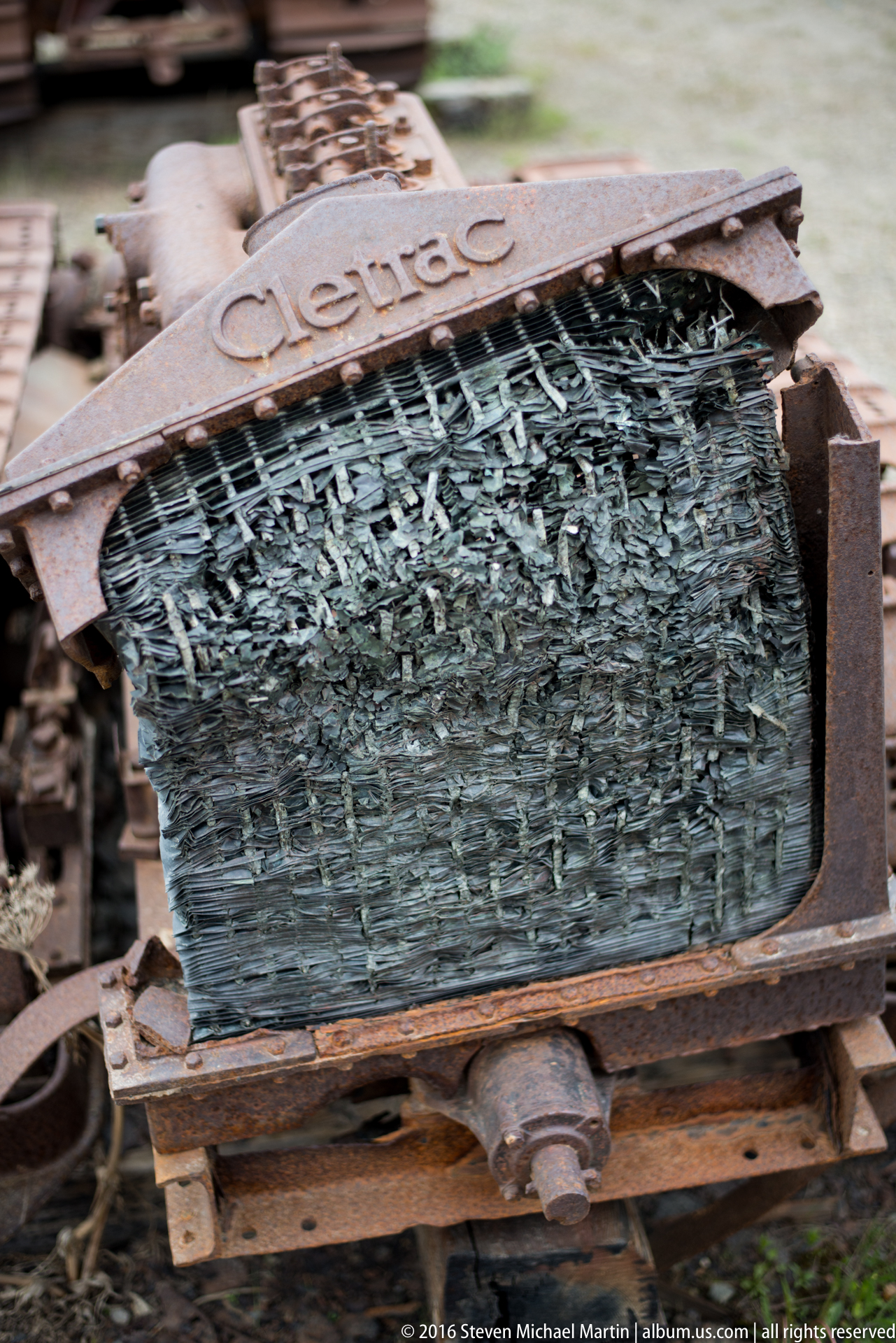
A curved wire-mesh screen sits inside a heavy rusted frame, with “Cleveland” cast across the upper bar. Dark fragments remain caught in the mesh, and bolted supports hold the cylinder in place. The close view isolates a screening component among the gold-dredging machinery.
Caption
A curved wire-mesh screen sits inside a heavy rusted frame, with “Cleveland” cast across the upper bar. Dark fragments remain caught in the mesh, and bolted supports hold the cylinder in place. The close view isolates a screening component among the gold-dredging machinery.
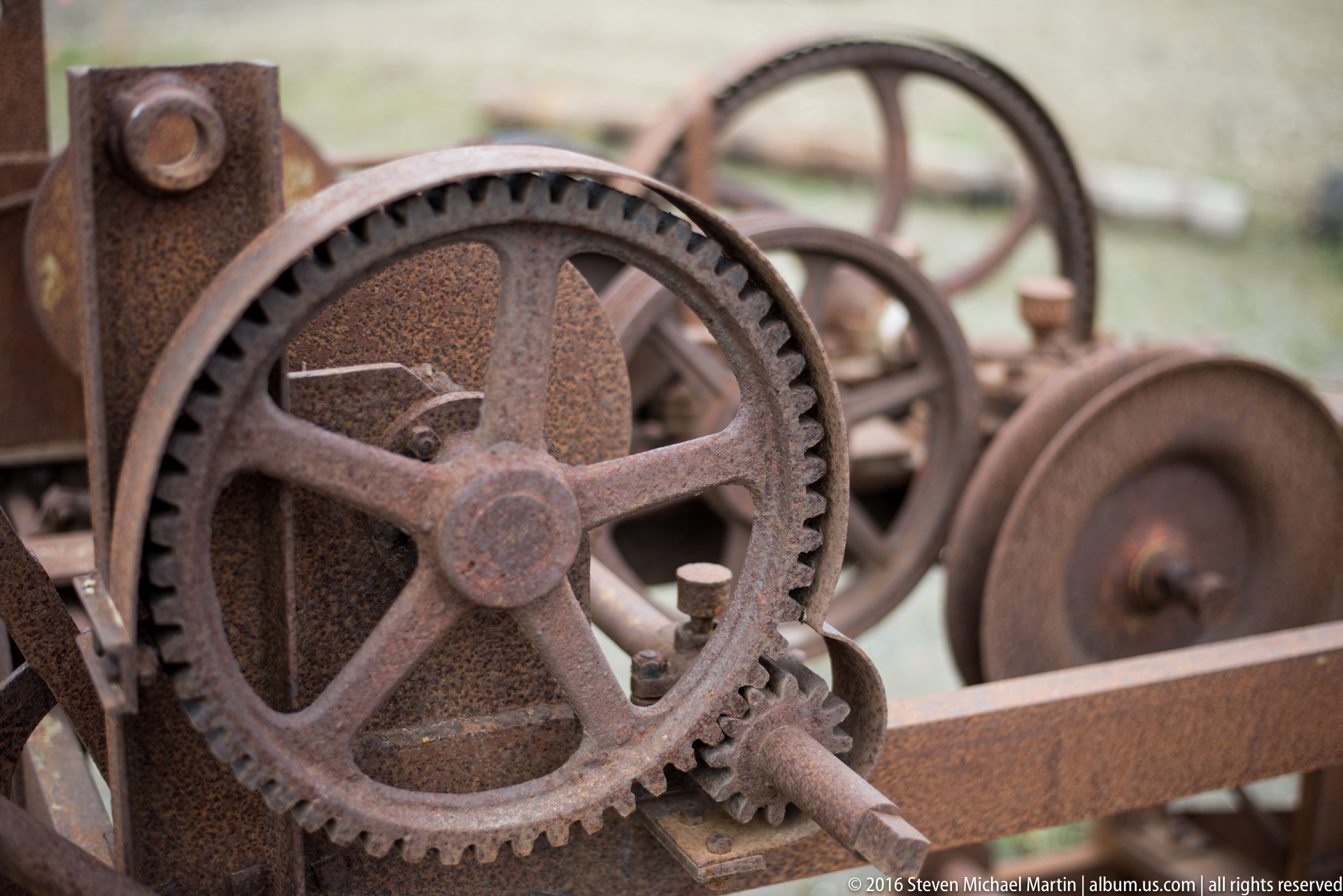
A broad spoked wheel dominates the foreground, its outer rim lined with closely spaced teeth. Smaller wheels and shafts overlap behind it, creating several layers of circular forms within the old machine. The shallow focus keeps the nearest gear crisp and lets the background components recede, emphasizing the scale and repetition of the mechanical assembly.
Caption
A broad spoked wheel dominates the foreground, its outer rim lined with closely spaced teeth. Smaller wheels and shafts overlap behind it, creating several layers of circular forms within the old machine. The shallow focus keeps the nearest gear crisp and lets the background components recede, emphasizing the scale and repetition of the mechanical assembly.
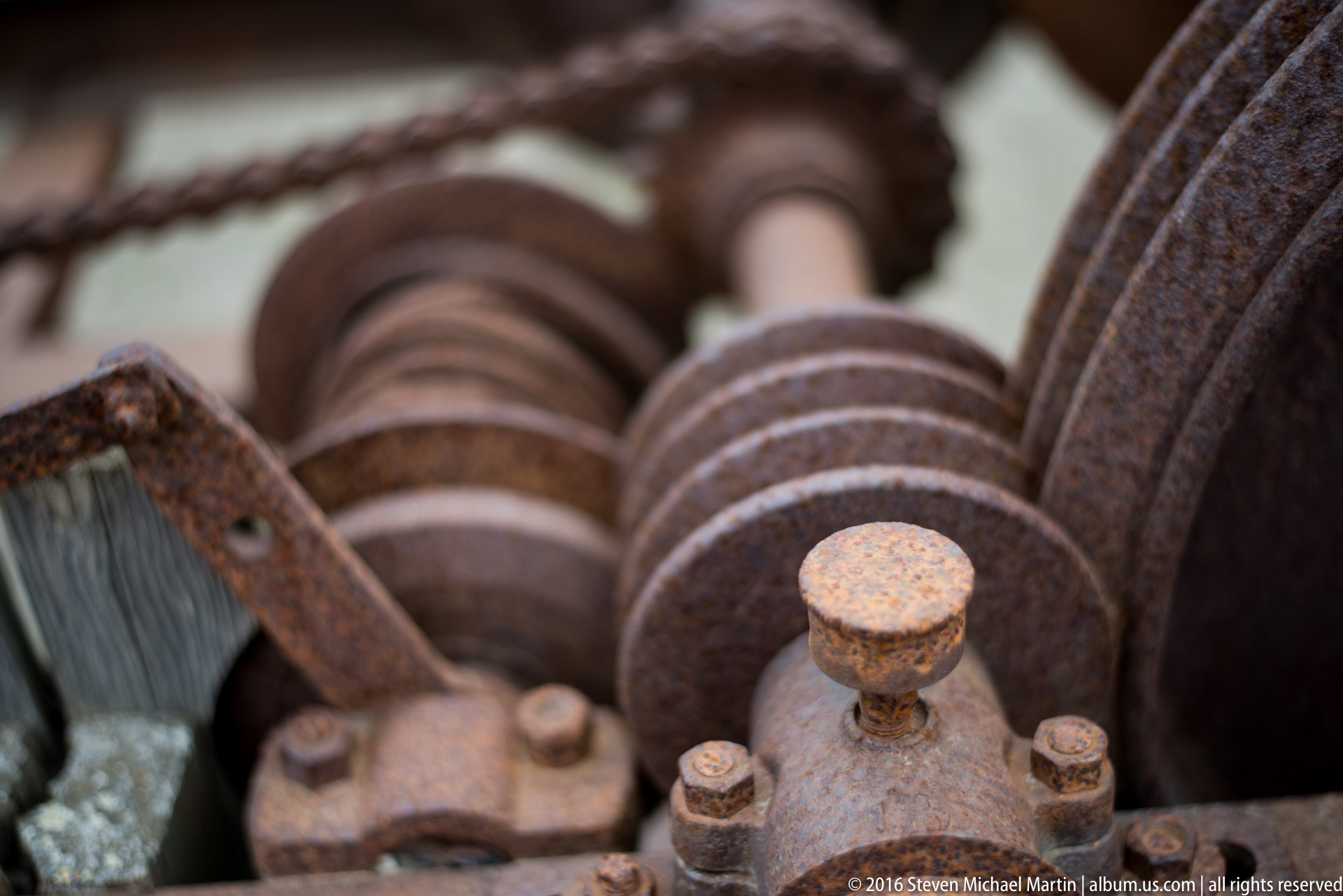
A line of thick cylindrical rollers recedes into the machine, punctuated by round end plates and heavy bolts. The nearest fastener sits sharply in the lower foreground, while the remaining rollers blur into a warm, rust-colored background. This perspective emphasizes the repeated spacing and depth of the assembly, isolating a component rather than the machine’s overall form.
Caption
A line of thick cylindrical rollers recedes into the machine, punctuated by round end plates and heavy bolts. The nearest fastener sits sharply in the lower foreground, while the remaining rollers blur into a warm, rust-colored background. This perspective emphasizes the repeated spacing and depth of the assembly, isolating a component rather than the machine’s overall form.
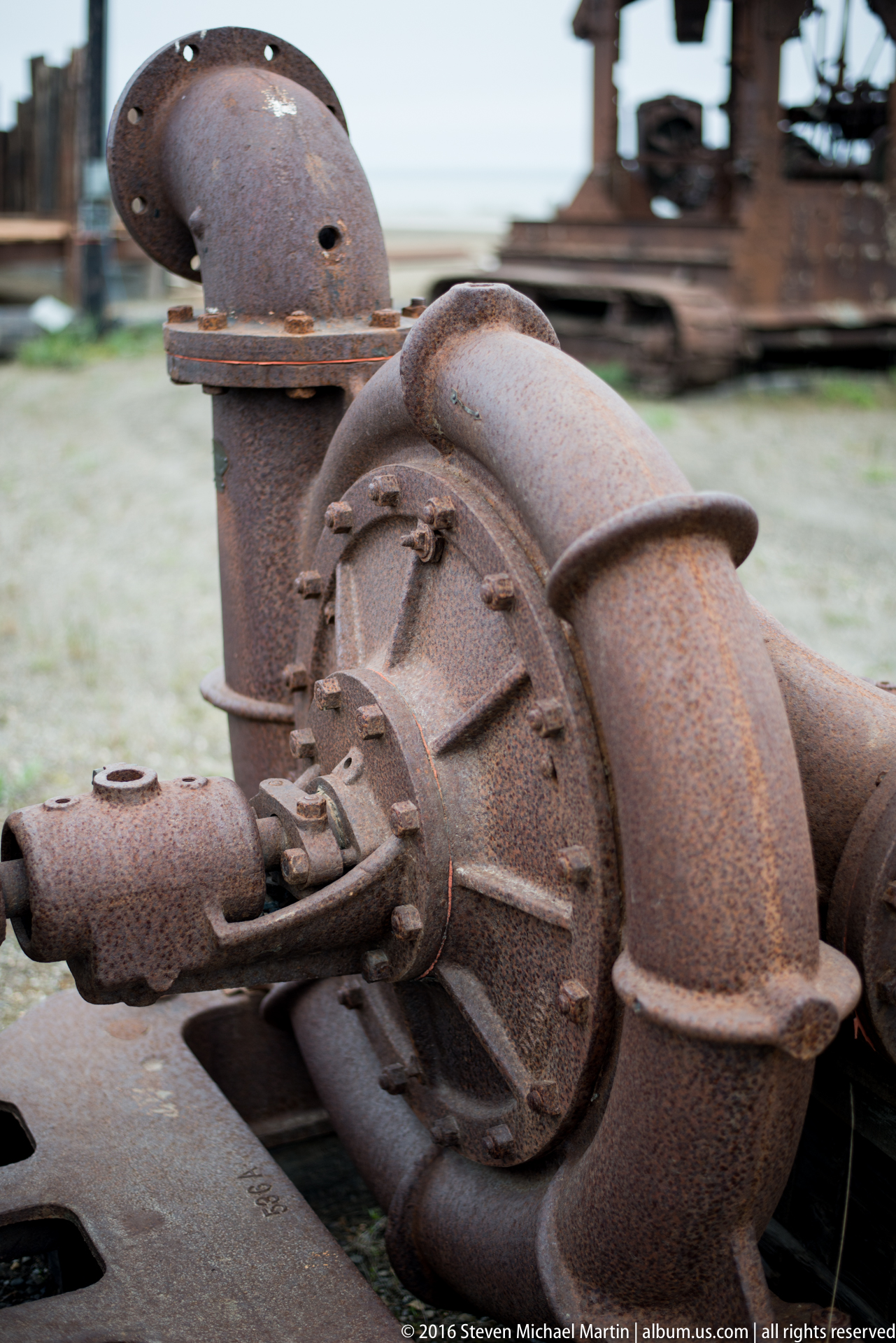
A curved cast-metal housing fills the frame, its circular side plate secured by bolts and crossed by a narrow seam. A broad pipe or duct curves along the right side, while other machinery softens behind it. The low angle highlights the housing’s thickness and rounded construction; no readable label identifies the exact machine component.
Caption
A curved cast-metal housing fills the frame, its circular side plate secured by bolts and crossed by a narrow seam. A broad pipe or duct curves along the right side, while other machinery softens behind it. The low angle highlights the housing’s thickness and rounded construction; no readable label identifies the exact machine component.
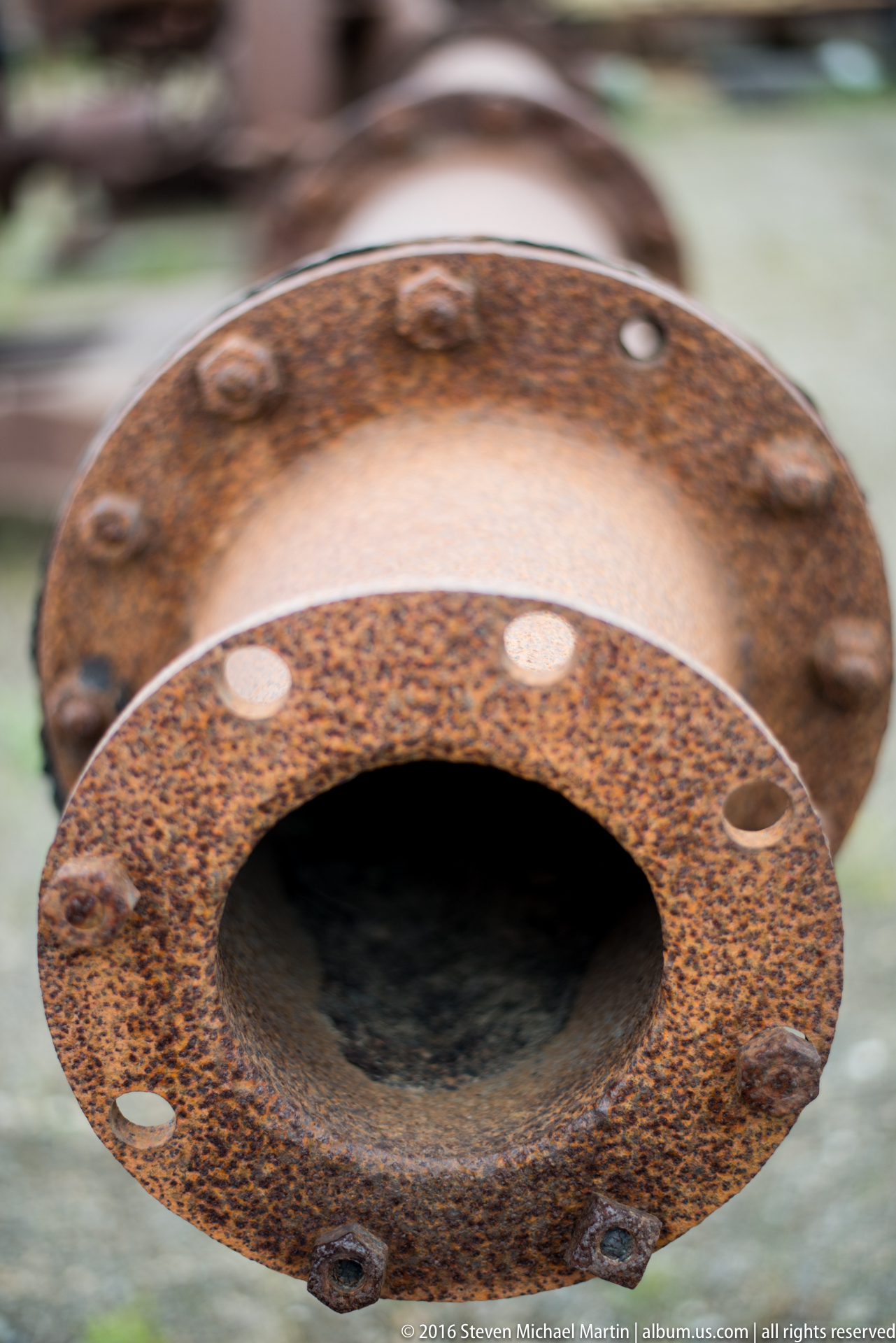
A thick circular flange faces the camera, its central opening dark and deep within a mottled, rusted surface. Evenly spaced holes around the rim indicate where bolts once secured the fitting to another component. The shallow focus separates the ring from the surrounding machine, turning a functional connection point into a study of scale, corrosion, and circular geometry.
Caption
A thick circular flange faces the camera, its central opening dark and deep within a mottled, rusted surface. Evenly spaced holes around the rim indicate where bolts once secured the fitting to another component. The shallow focus separates the ring from the surrounding machine, turning a functional connection point into a study of scale, corrosion, and circular geometry.
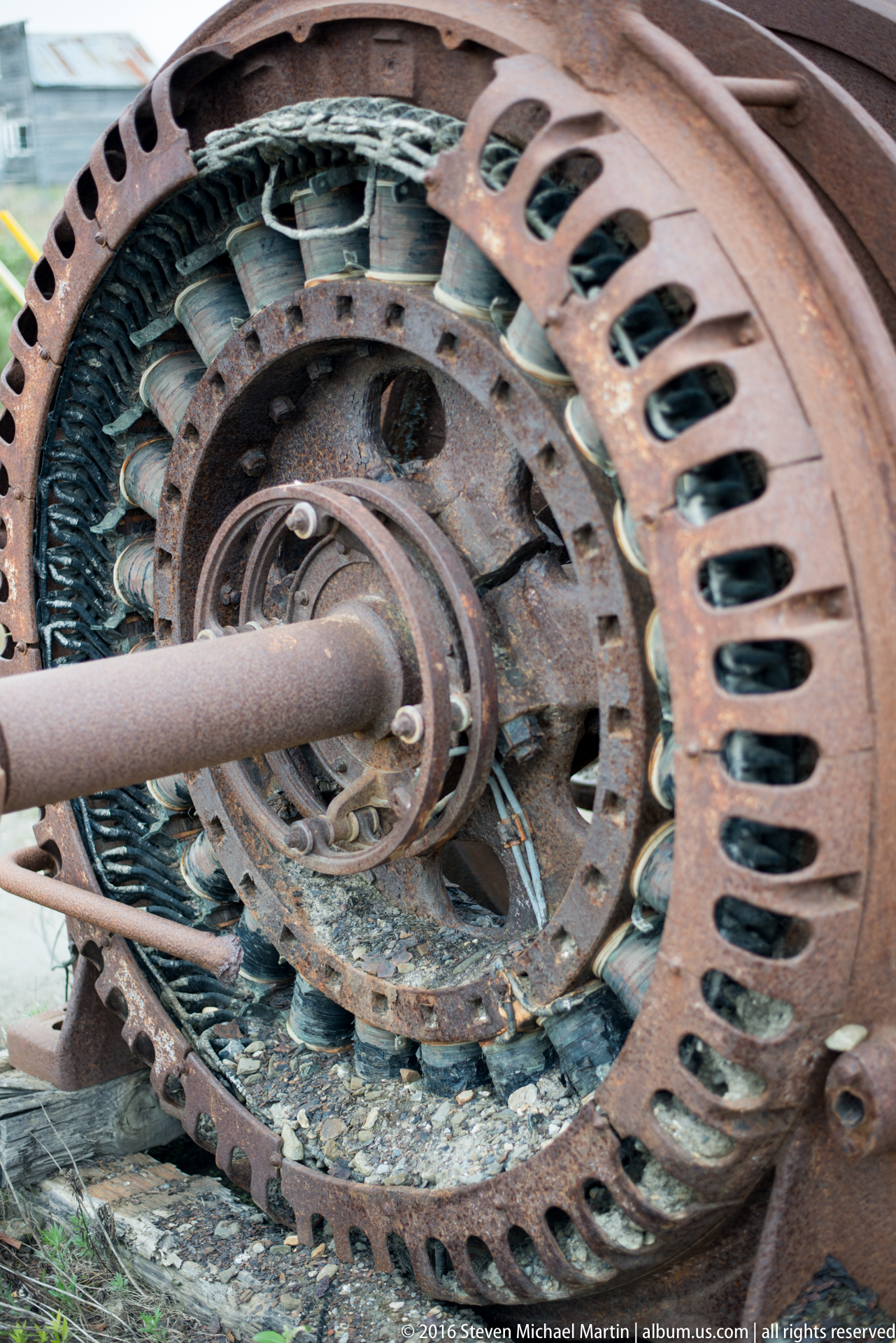
A large circular machine housing fills the view, its outer rim punctuated by repeated openings and its center packed with concentric metal rings and dark coils. Corrosion and remnants of pale residue cover the surrounding plates. The angled close-up reveals layered construction and internal components, though no label confirms whether the assembly is a motor, generator, or another rotary mechanism.
Caption
A large circular machine housing fills the view, its outer rim punctuated by repeated openings and its center packed with concentric metal rings and dark coils. Corrosion and remnants of pale residue cover the surrounding plates. The angled close-up reveals layered construction and internal components, though no label confirms whether the assembly is a motor, generator, or another rotary mechanism.
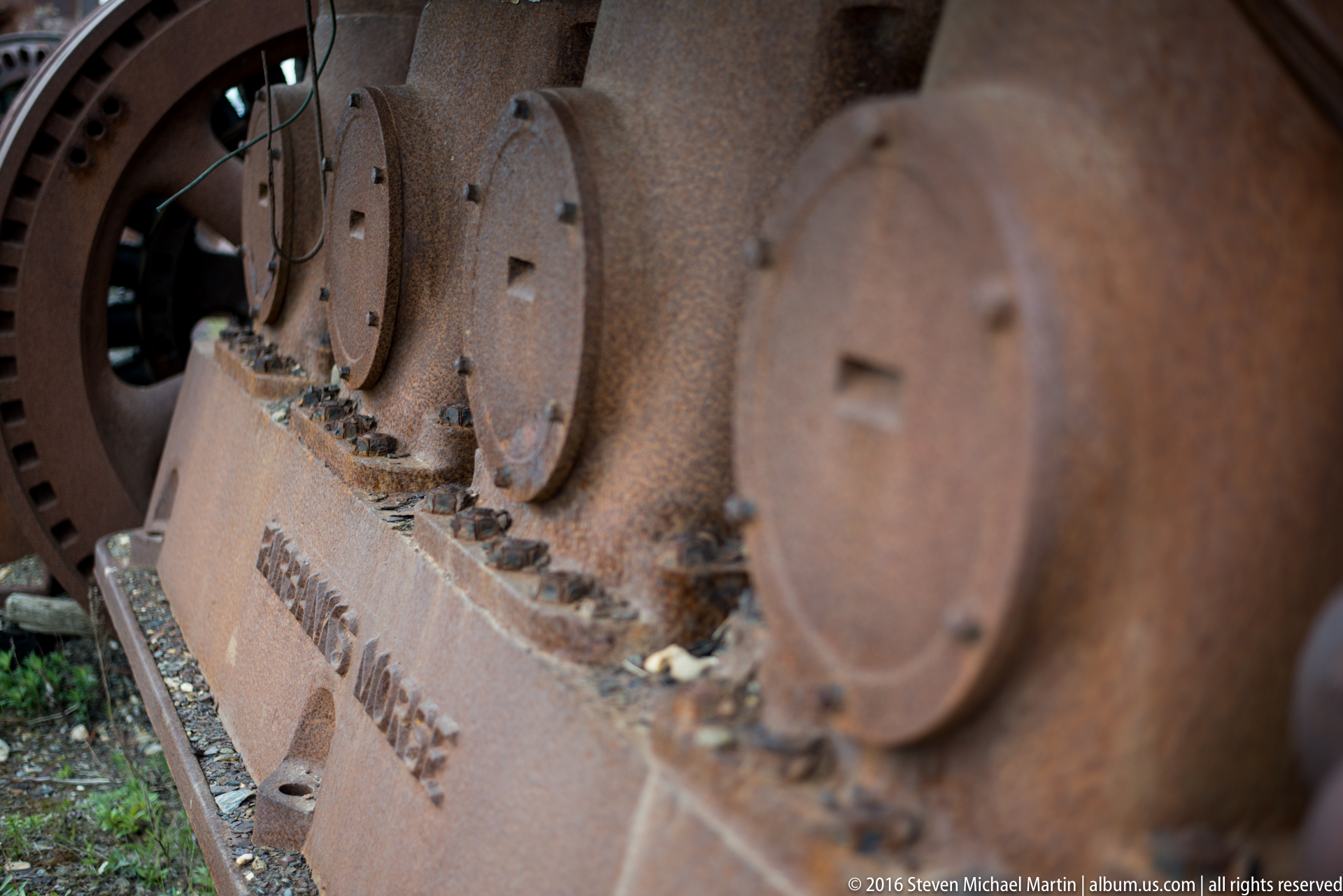
A line of round covers and bolts runs along a long, rusted metal beam, with a broad circular plate nearest the camera. Gears and brackets rise behind the beam, while the shallow focus softens the far end of the assembly. The oblique view emphasizes repetition and surface wear, showing how the machine’s large components are joined along a structural frame.
Caption
A line of round covers and bolts runs along a long, rusted metal beam, with a broad circular plate nearest the camera. Gears and brackets rise behind the beam, while the shallow focus softens the far end of the assembly. The oblique view emphasizes repetition and surface wear, showing how the machine’s large components are joined along a structural frame.
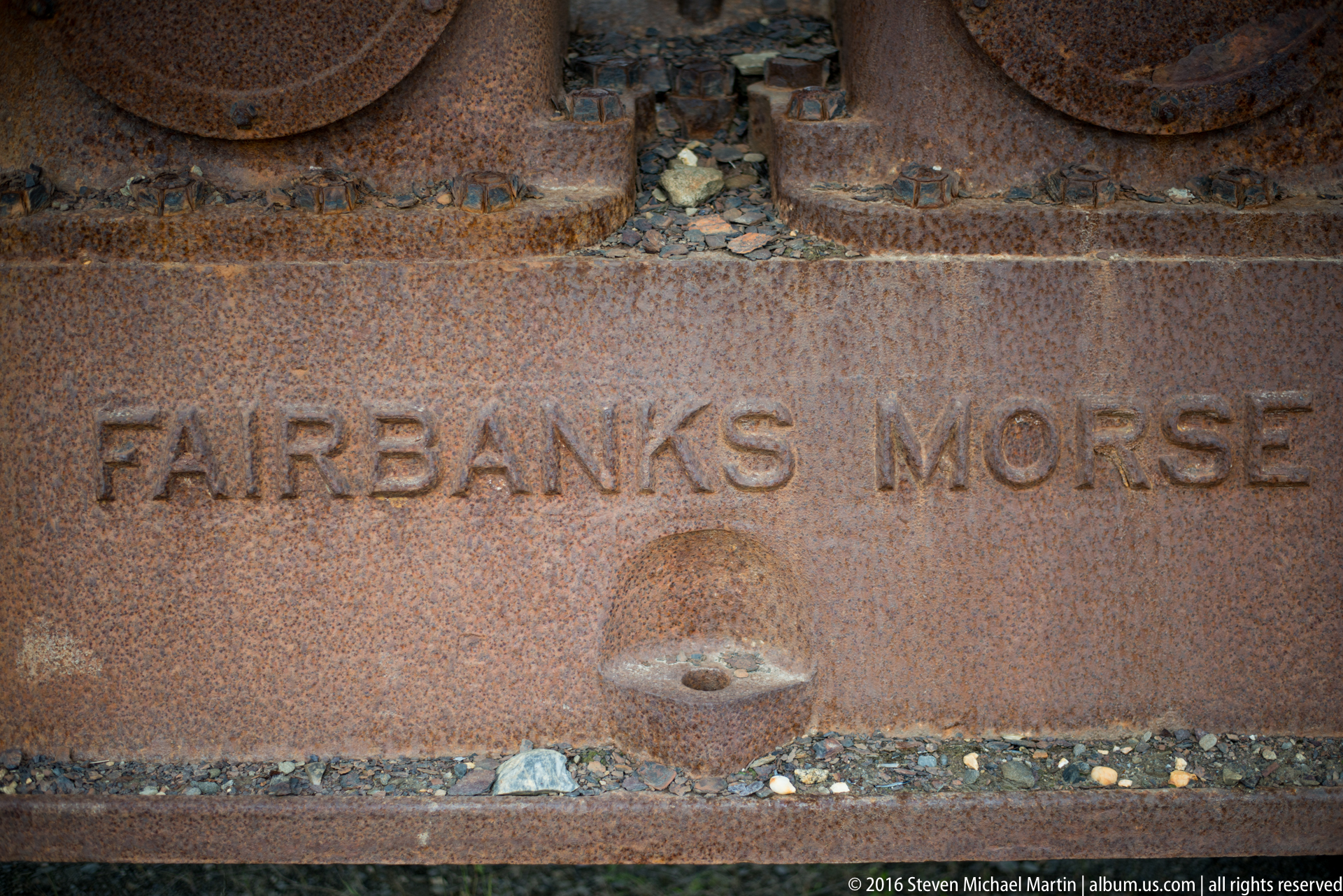
The words “FAIRBANKS MORSE” are cast into a broad rusted panel, with a small circular fitting directly below and bolts along the upper edge. The close framing makes the maker’s name the central subject, while corrosion softens the letter edges and mottles the surrounding metal. The machine itself extends beyond the frame, leaving the manufacturer mark as the clearest identifying detail.
Caption
The words “FAIRBANKS MORSE” are cast into a broad rusted panel, with a small circular fitting directly below and bolts along the upper edge. The close framing makes the maker’s name the central subject, while corrosion softens the letter edges and mottles the surrounding metal. The machine itself extends beyond the frame, leaving the manufacturer mark as the clearest identifying detail.
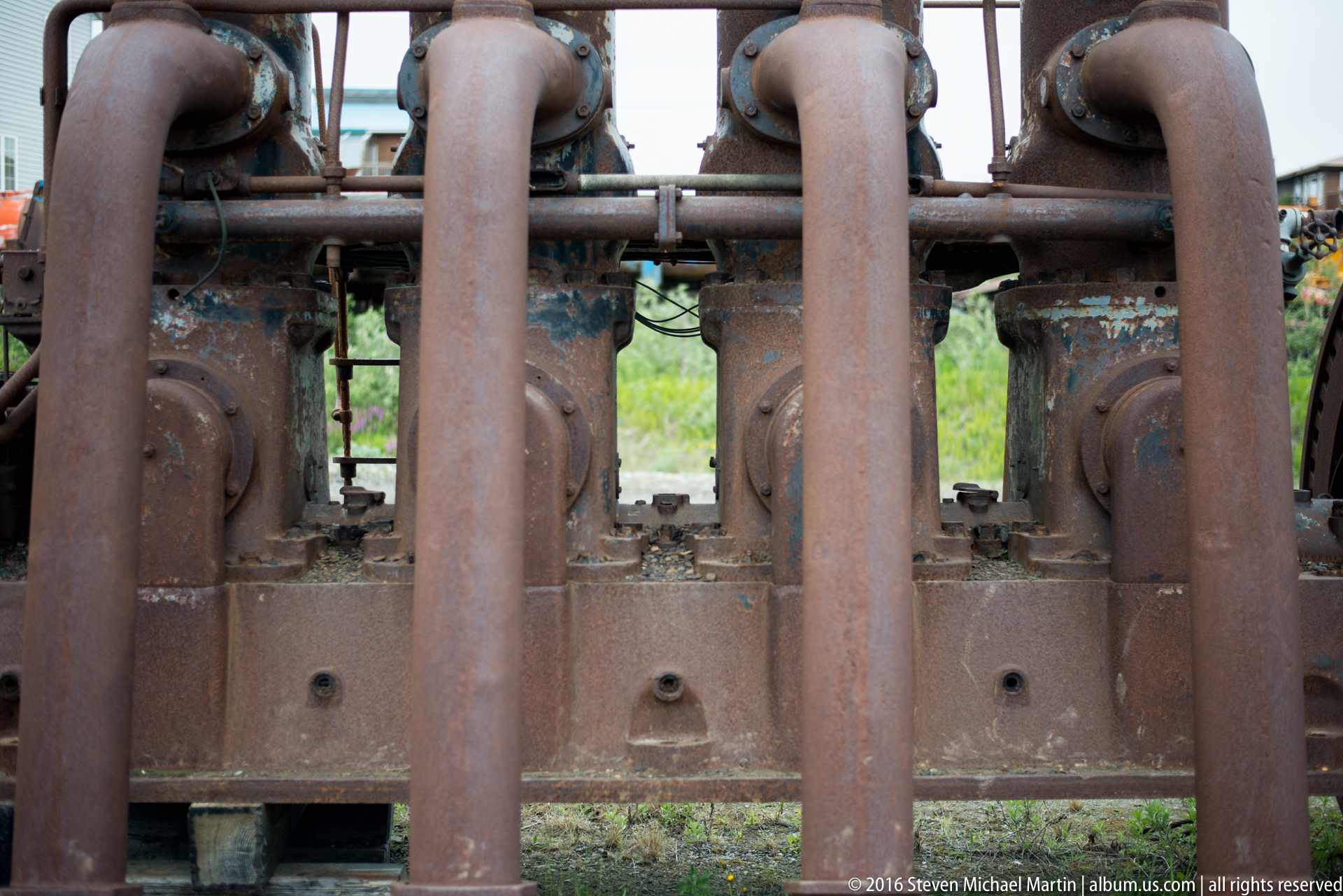
Several thick pipes curve down from a horizontal bar across the upper frame, forming repeated arches in front of a dark machine body. Grass and bright daylight show through the open lower area, placing the equipment outdoors. The frontal composition emphasizes the evenly spaced pipes and their connections, while the rest of the machine remains partially obscured behind them.
Caption
Several thick pipes curve down from a horizontal bar across the upper frame, forming repeated arches in front of a dark machine body. Grass and bright daylight show through the open lower area, placing the equipment outdoors. The frontal composition emphasizes the evenly spaced pipes and their connections, while the rest of the machine remains partially obscured behind them.
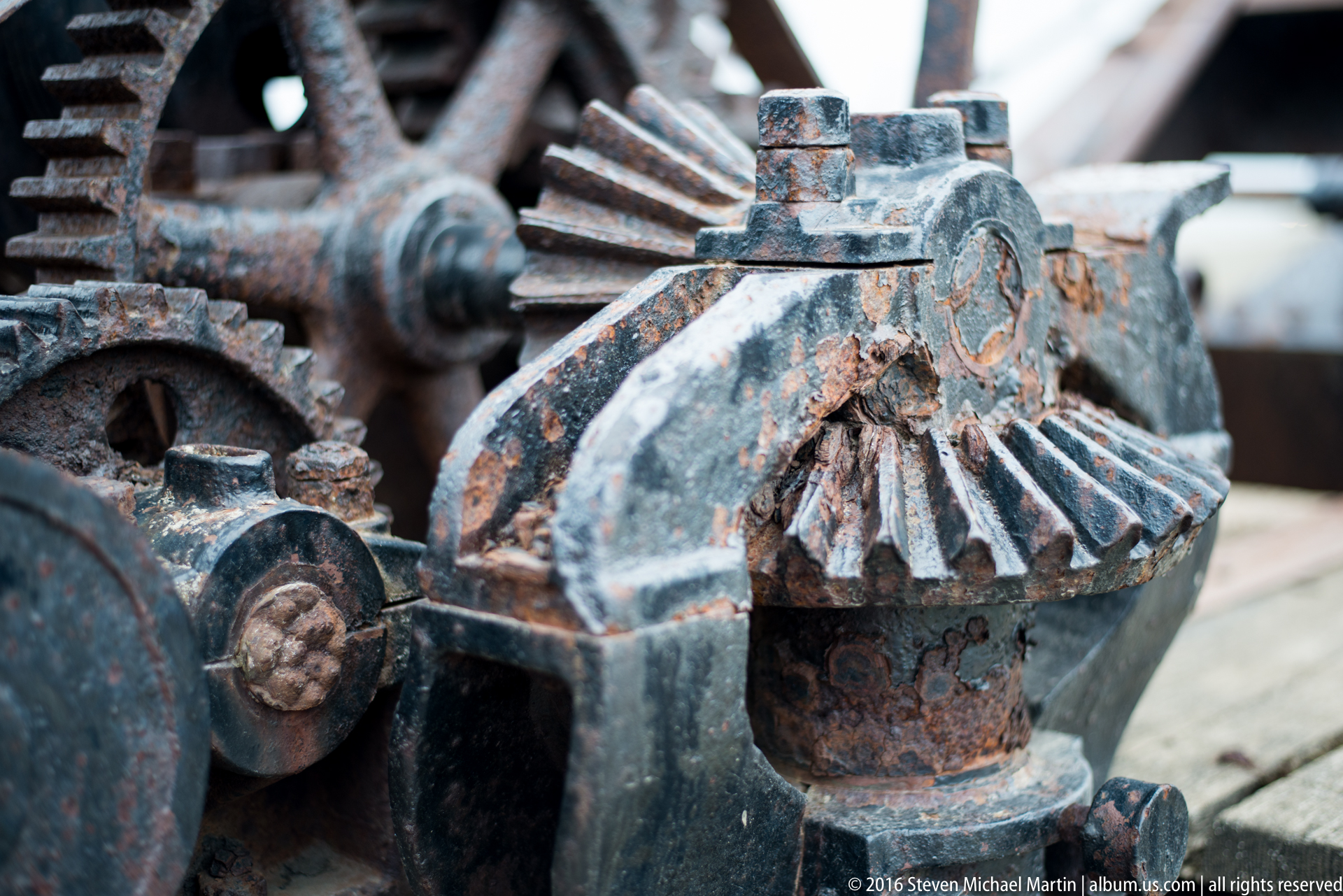
A large toothed gear meshes with smaller cast-metal components in this close view of weathered machinery. Rust, flaking blue-gray paint, bolts, and the uneven wear of the gear teeth reveal prolonged exposure and use. The cropped framing isolates the transmission-like assembly, while the broader machine and its original function remain outside the frame.
Caption
A large toothed gear meshes with smaller cast-metal components in this close view of weathered machinery. Rust, flaking blue-gray paint, bolts, and the uneven wear of the gear teeth reveal prolonged exposure and use. The cropped framing isolates the transmission-like assembly, while the broader machine and its original function remain outside the frame.
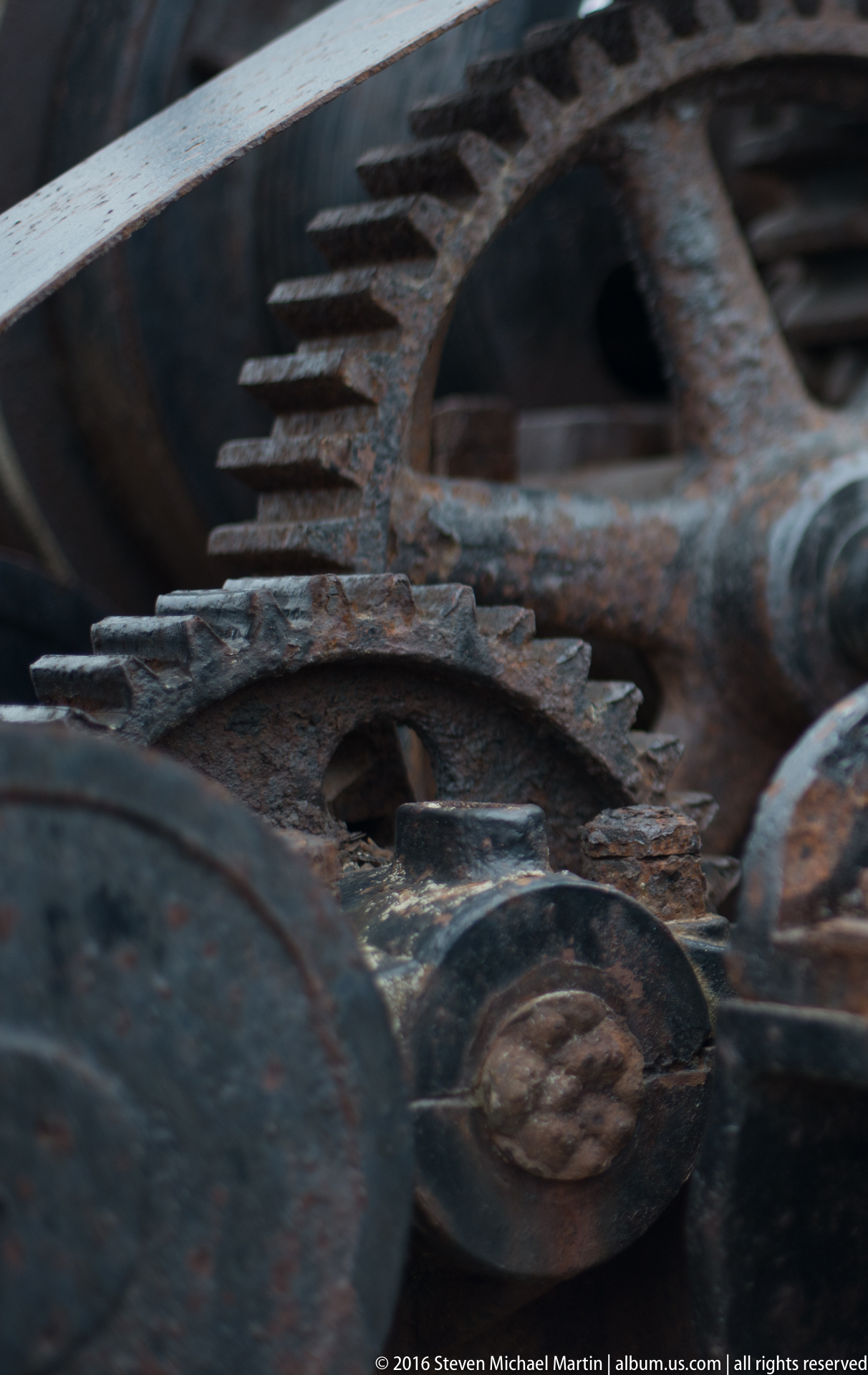
Several broad, rusted gear wheels overlap in a shallow-focus composition, their teeth interlocking across the center. Dark gaps between the wheels reveal the depth of the mechanism, while worn surfaces range from brown oxidation to remnants of blue paint. The tight crop turns a heavy machine into a study of repeated teeth and circular forms.
Caption
Several broad, rusted gear wheels overlap in a shallow-focus composition, their teeth interlocking across the center. Dark gaps between the wheels reveal the depth of the mechanism, while worn surfaces range from brown oxidation to remnants of blue paint. The tight crop turns a heavy machine into a study of repeated teeth and circular forms.
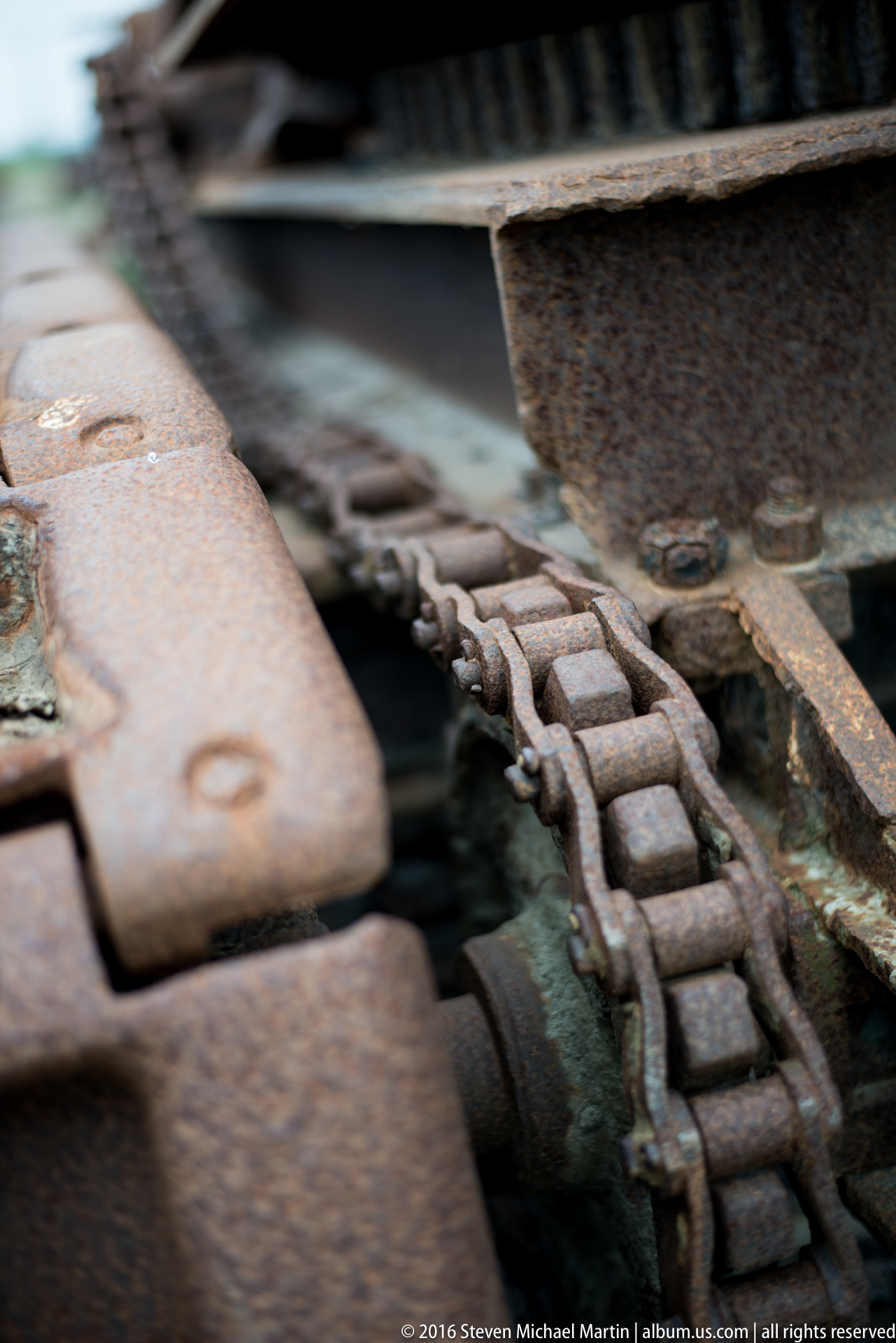
A heavy metal track runs diagonally through the center between broad, rusted steel plates. Individual links and pins remain visible, while the shallow focus softens the larger machinery around them. The angled view emphasizes the track’s repeating joints and substantial construction, suggesting tracked industrial equipment without establishing the machine’s model.
Caption
A heavy metal track runs diagonally through the center between broad, rusted steel plates. Individual links and pins remain visible, while the shallow focus softens the larger machinery around them. The angled view emphasizes the track’s repeating joints and substantial construction, suggesting tracked industrial equipment without establishing the machine’s model.
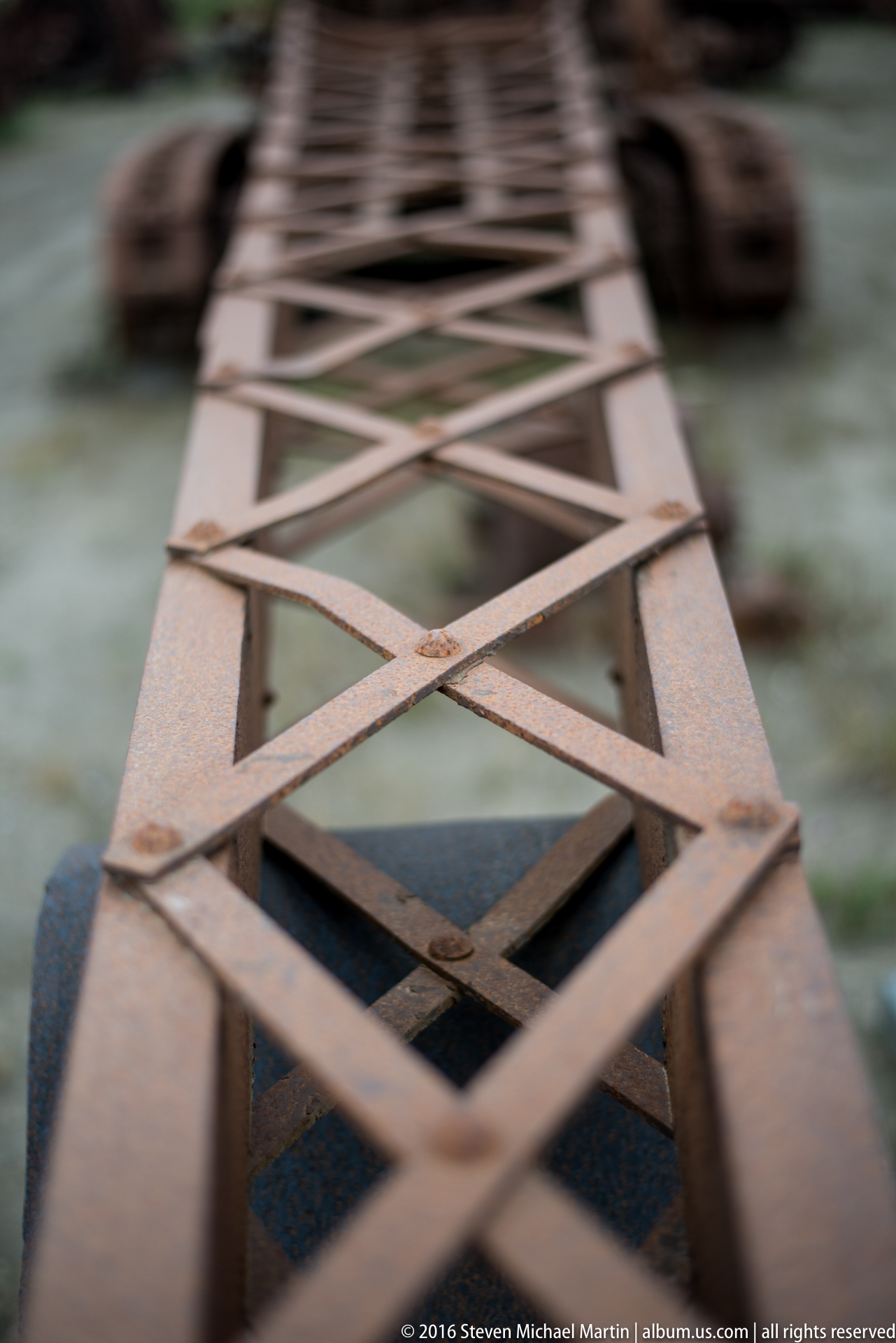
A long metal framework narrows toward the upper edge, its repeating diagonal braces forming a ladder-like pattern. Shallow focus keeps the nearest rust-colored members sharp and blurs the machinery beyond. The low viewpoint turns the structural rhythm into the main subject, though the frame’s role within the larger installation is not apparent.
Caption
A long metal framework narrows toward the upper edge, its repeating diagonal braces forming a ladder-like pattern. Shallow focus keeps the nearest rust-colored members sharp and blurs the machinery beyond. The low viewpoint turns the structural rhythm into the main subject, though the frame’s role within the larger installation is not apparent.
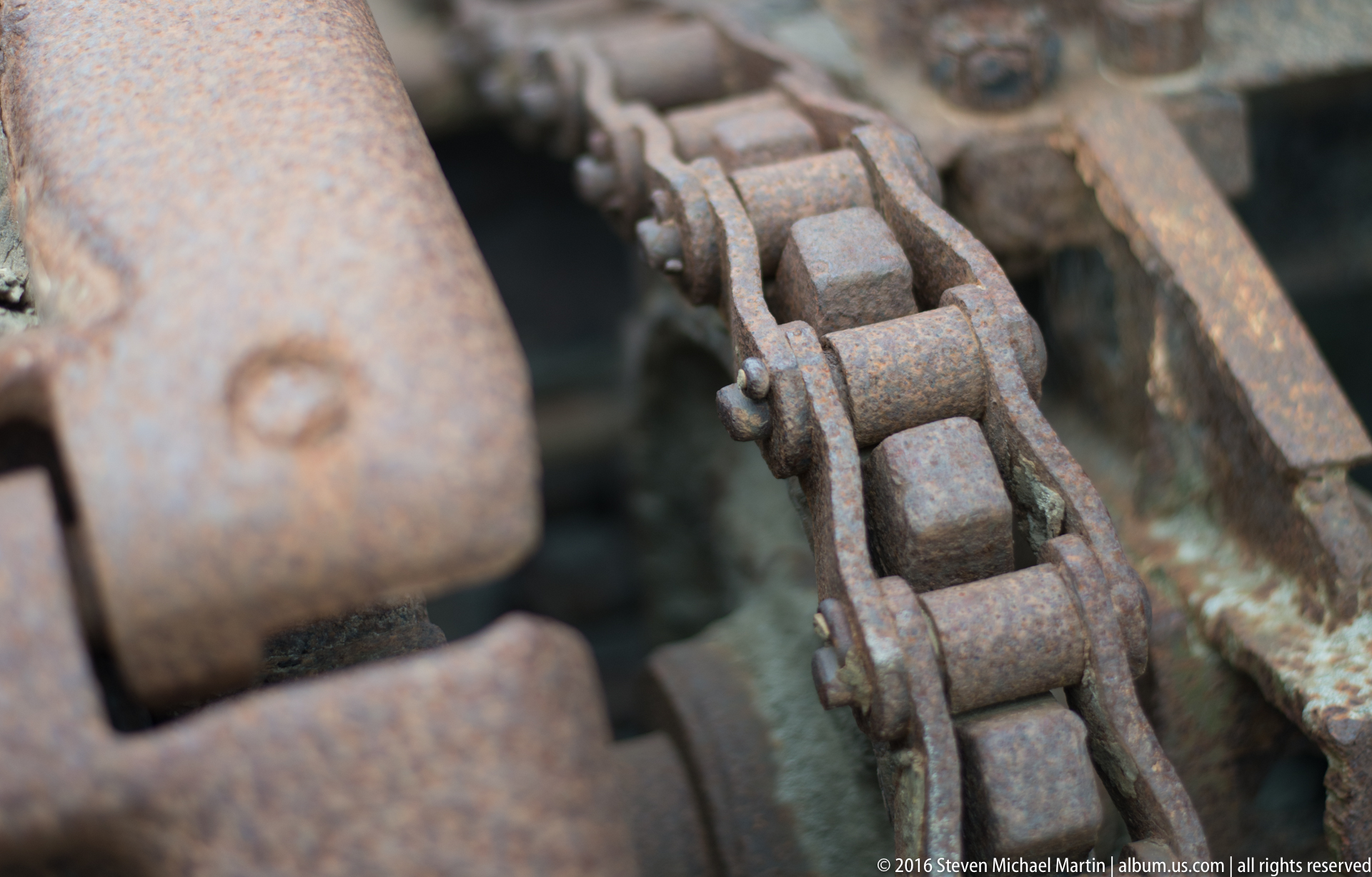
The close viewpoint follows a line of thick track links and connecting pins receding into the background. Their rusted, uneven surfaces contrast with a broad metal plate at left and a curved rail at right. This detail isolates the joints that let a heavy track bend around its wheels.
Caption
The close viewpoint follows a line of thick track links and connecting pins receding into the background. Their rusted, uneven surfaces contrast with a broad metal plate at left and a curved rail at right. This detail isolates the joints that let a heavy track bend around its wheels.

An open machinery frame reveals toothed gears, a large coiled cable, vertical supports, and bent metal guards. Rusted braces cross the foreground, partly obscuring the drive mechanism behind them. The view records how several components fit within a larger machine, but the image alone does not identify its original task.
Caption
An open machinery frame reveals toothed gears, a large coiled cable, vertical supports, and bent metal guards. Rusted braces cross the foreground, partly obscuring the drive mechanism behind them. The view records how several components fit within a larger machine, but the image alone does not identify its original task.
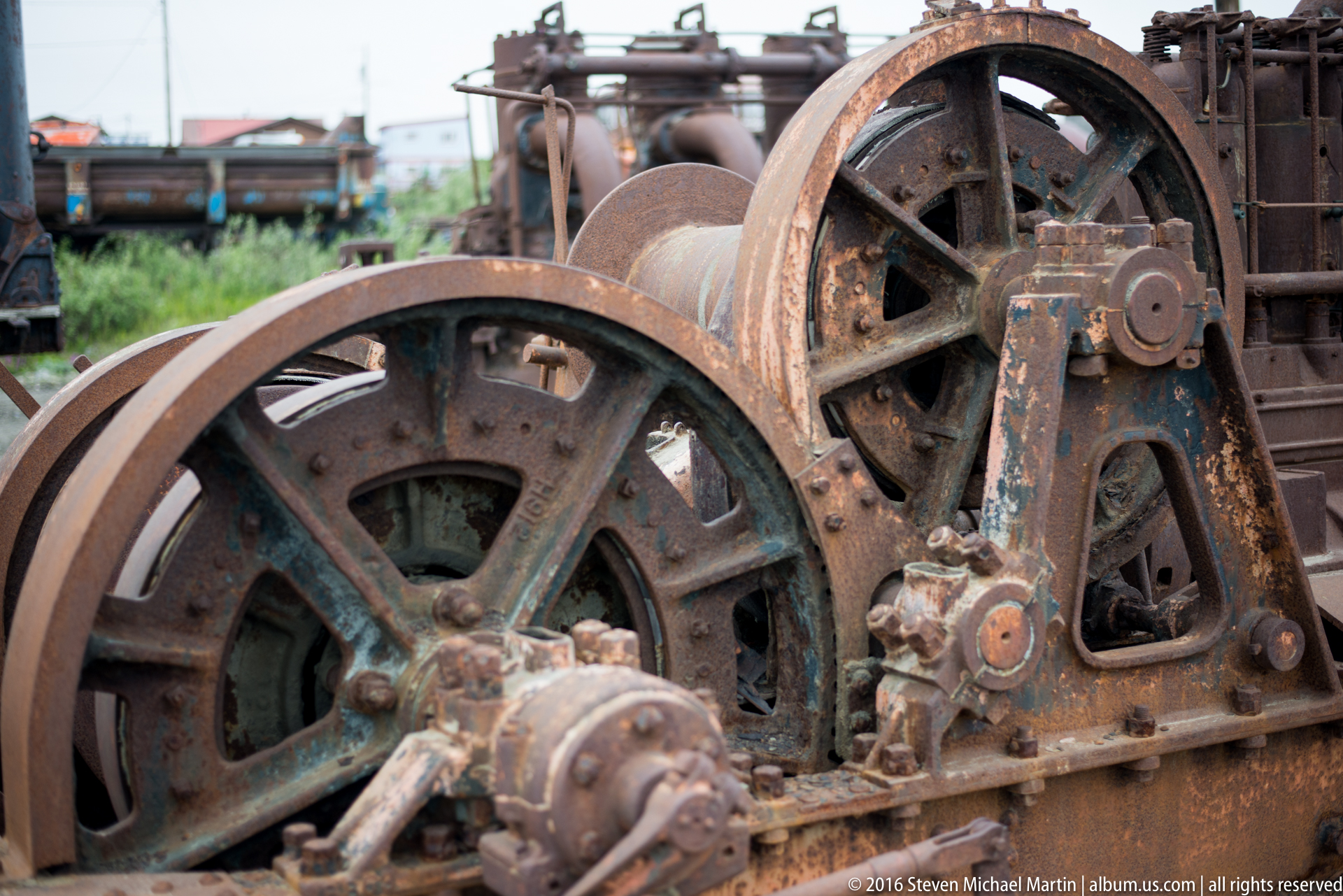
Two large spoked wheels dominate a weathered mechanical assembly, one nearer the camera and the other set behind it. Axles, gears, and a cylindrical drum connect the wheels, with rust and worn paint covering much of the metal. The broad view documents the scale of the drive mechanism without assigning it to a specific machine.
Caption
Two large spoked wheels dominate a weathered mechanical assembly, one nearer the camera and the other set behind it. Axles, gears, and a cylindrical drum connect the wheels, with rust and worn paint covering much of the metal. The broad view documents the scale of the drive mechanism without assigning it to a specific machine.
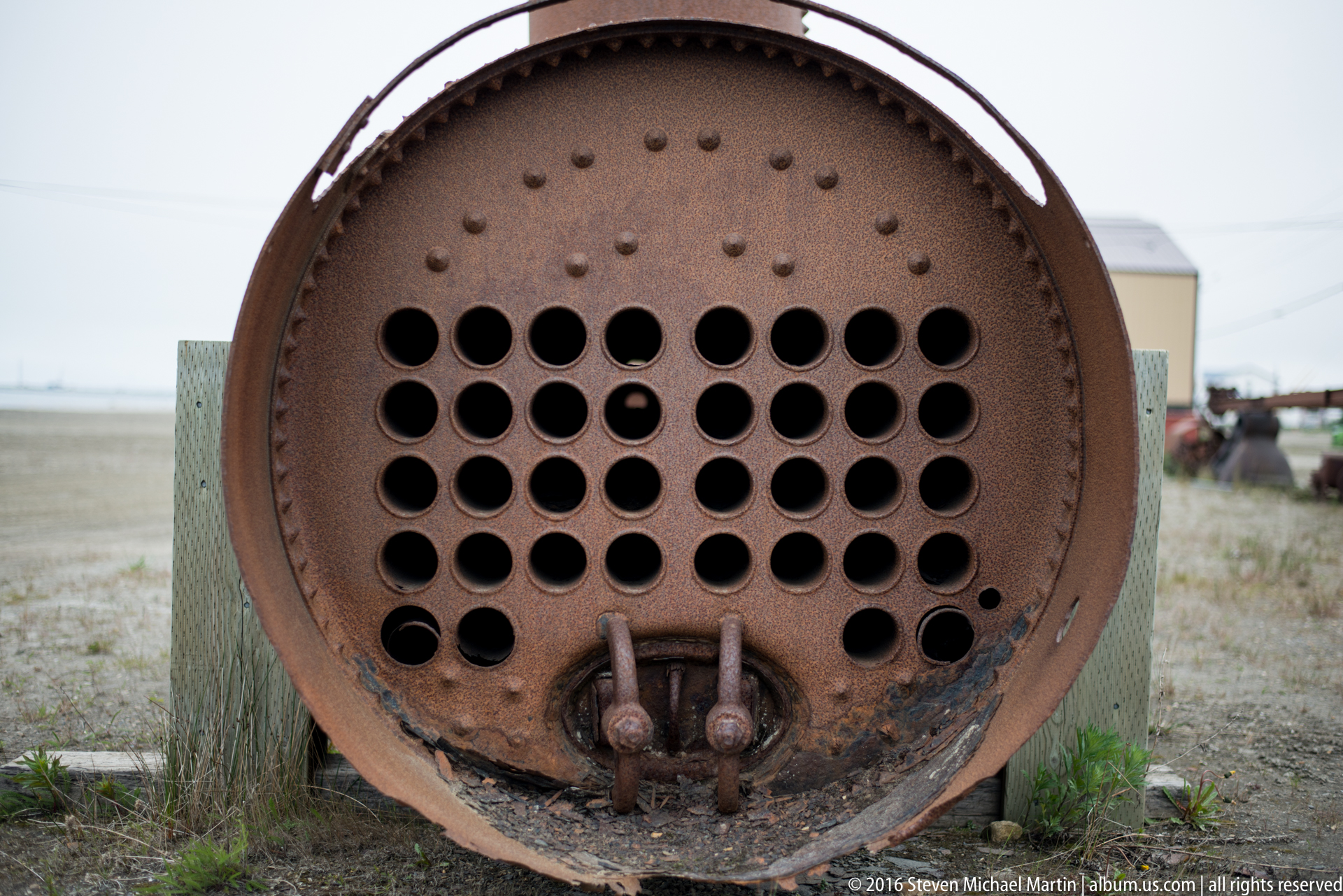
A circular iron plate fills the frame, punctured by orderly rows of dark openings and edged with rivets. Two short fittings project from its lower center, while grass and distant machinery appear around the rim. The arrangement resembles a boiler tube sheet or similar industrial end plate, but its precise role cannot be confirmed from the photograph.
Caption
A circular iron plate fills the frame, punctured by orderly rows of dark openings and edged with rivets. Two short fittings project from its lower center, while grass and distant machinery appear around the rim. The arrangement resembles a boiler tube sheet or similar industrial end plate, but its precise role cannot be confirmed from the photograph.
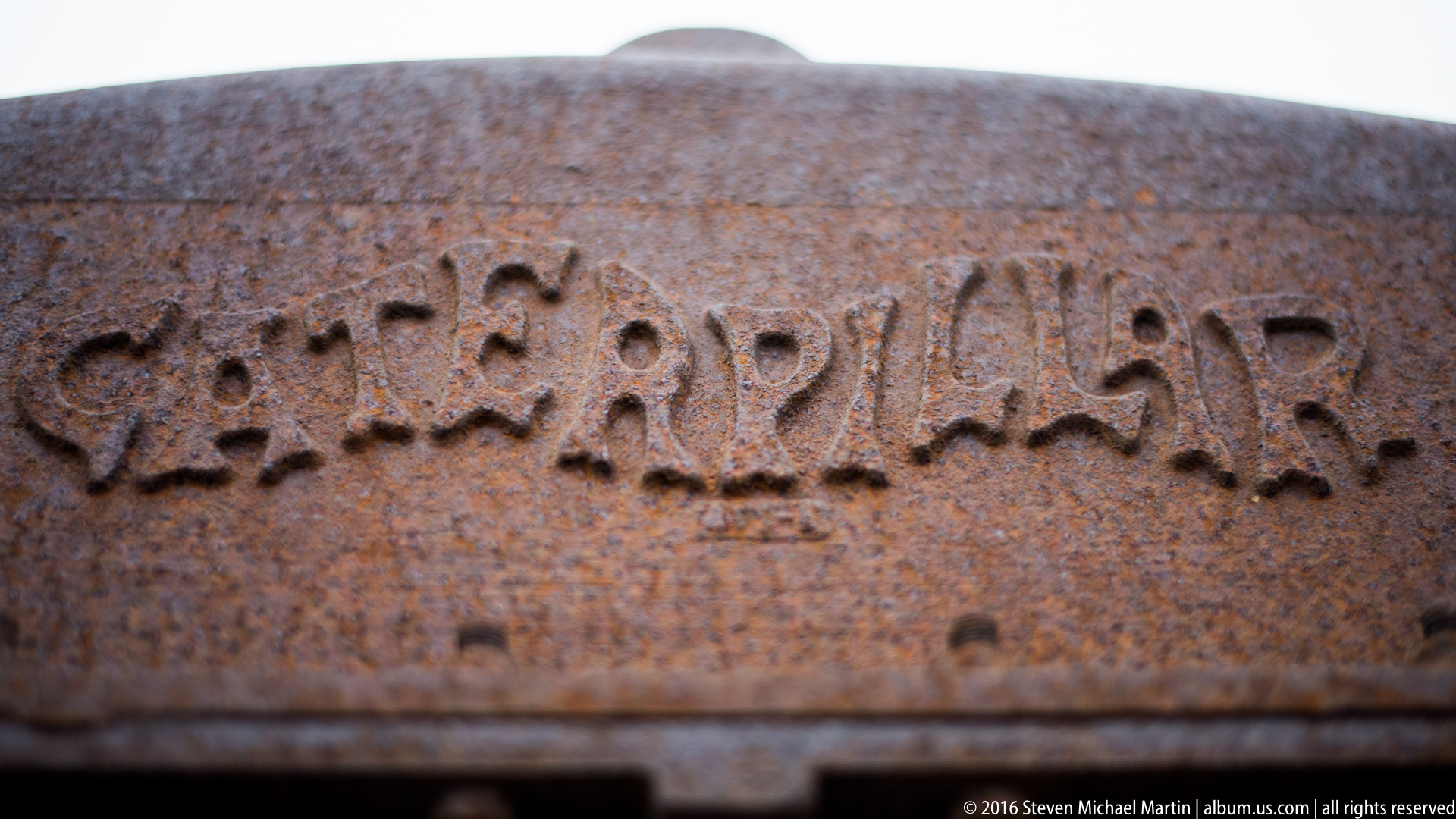
Raised letters run across the curved, rusted housing, but shallow focus and corrosion obscure most characters. The close crop preserves the mark as a raised feature without offering an unreliable transcription. Pitted metal and flaking rust dominate the surface.
Caption
Raised letters run across the curved, rusted housing, but shallow focus and corrosion obscure most characters. The close crop preserves the mark as a raised feature without offering an unreliable transcription. Pitted metal and flaking rust dominate the surface.

A rusted tracked machine faces the camera, with a square mesh grille, crossed metal braces, and broad track links visible below. Other cylindrical and wheeled machinery stands behind it in an open yard. The frontal view presents the machine’s heavy construction, although no legible badge or clear features identify its model or exact use.
Caption
A rusted tracked machine faces the camera, with a square mesh grille, crossed metal braces, and broad track links visible below. Other cylindrical and wheeled machinery stands behind it in an open yard. The frontal view presents the machine’s heavy construction, although no legible badge or clear features identify its model or exact use.
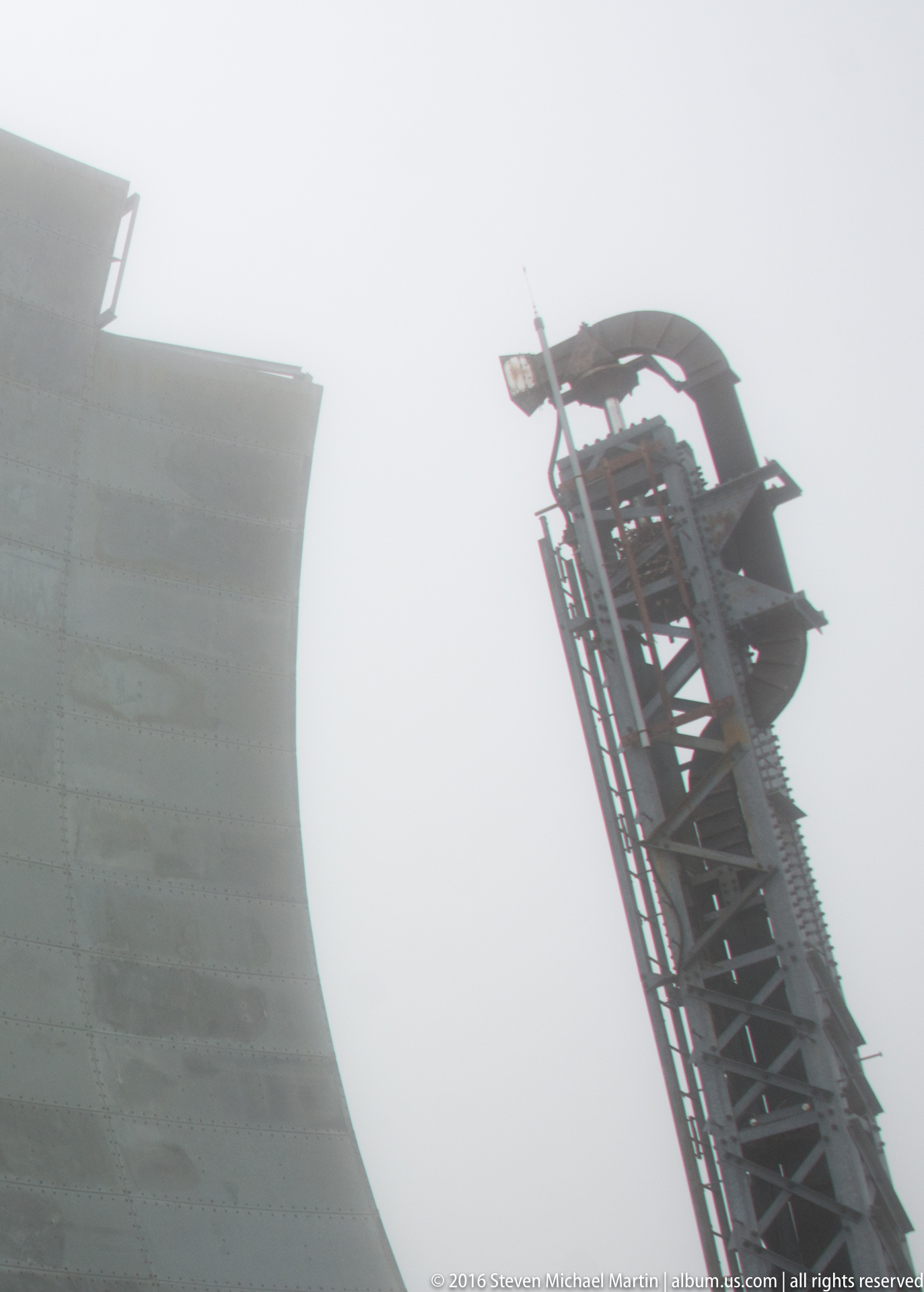
A tall lattice assembly rises beside the curved edge of a large reflector, its upper platform silhouetted against bright haze. The dish remains partly visible at left, linking the tower and panel as parts of the same antenna. This view isolates the White Alice installation’s height and supporting structure.
Caption
A tall lattice assembly rises beside the curved edge of a large reflector, its upper platform silhouetted against bright haze. The dish remains partly visible at left, linking the tower and panel as parts of the same antenna. This view isolates the White Alice installation’s height and supporting structure.
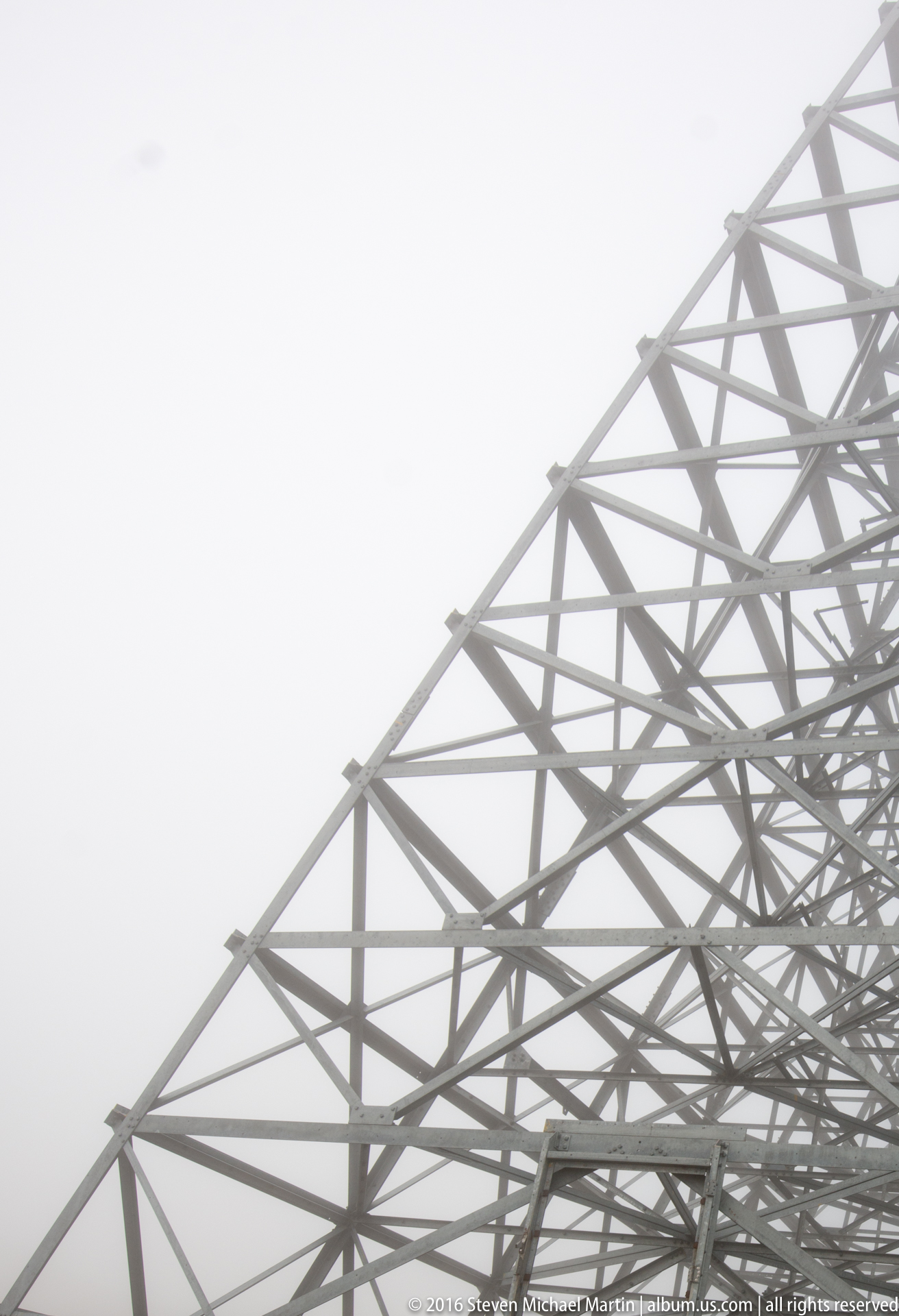
A broad steel lattice crosses the pale sky, its triangular braces converging toward the upper right. The low viewpoint shows the open construction and the framework’s scale; the curved reflector edge appears at the side. The view records a support structure of Nome’s White Alice antenna installation.
Caption
A broad steel lattice crosses the pale sky, its triangular braces converging toward the upper right. The low viewpoint shows the open construction and the framework’s scale; the curved reflector edge appears at the side. The view records a support structure of Nome’s White Alice antenna installation.
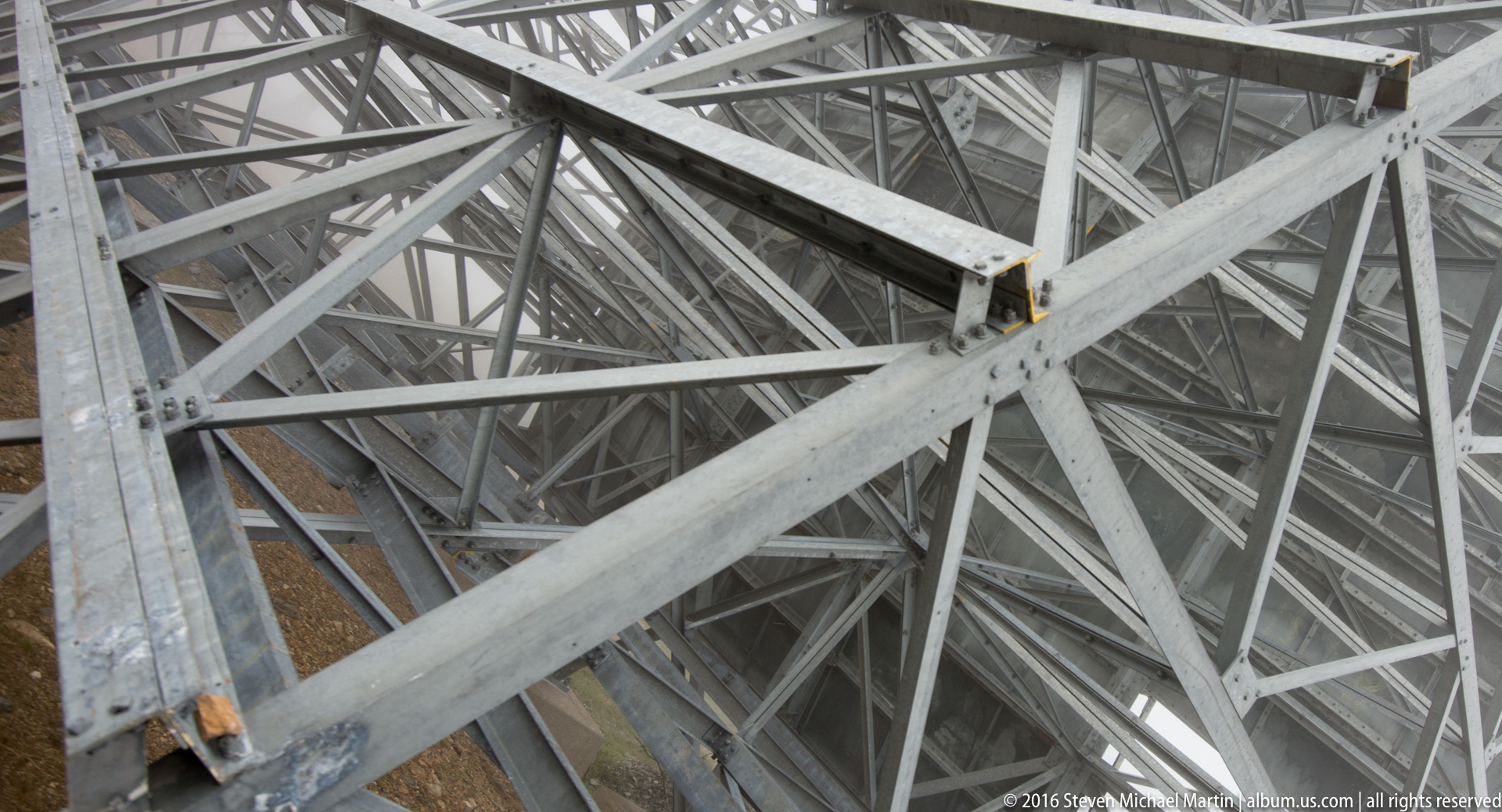
Viewed from below, broad steel beams and diagonal braces intersect in a dense grid above the camera. The overlapping members form triangular openings leading toward the antenna’s outer frame. This close structural view shows the support lattice beneath the White Alice reflector.
Caption
Viewed from below, broad steel beams and diagonal braces intersect in a dense grid above the camera. The overlapping members form triangular openings leading toward the antenna’s outer frame. This close structural view shows the support lattice beneath the White Alice reflector.
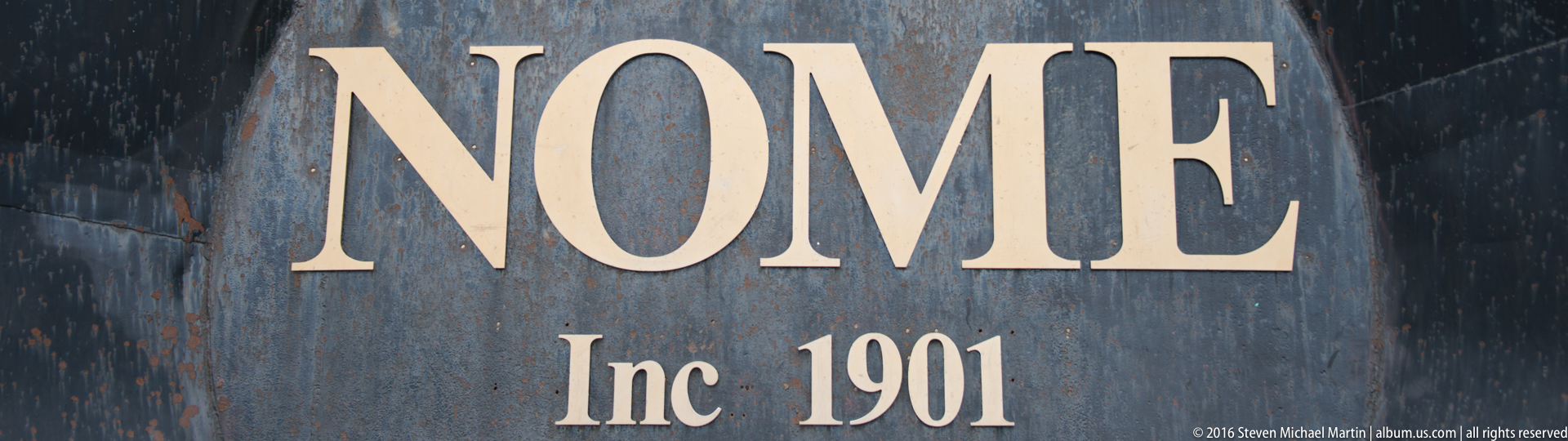
Large pale letters spell “NOME” above the smaller inscription “Inc. 1901” on a dark blue, weathered panel. The tight framing emphasizes the town name, date, and raised lettering, with no surrounding monument or building visible. The text itself supplies the historical reference, while the photograph does not identify the sign’s location or original purpose.
Caption
Large pale letters spell “NOME” above the smaller inscription “Inc. 1901” on a dark blue, weathered panel. The tight framing emphasizes the town name, date, and raised lettering, with no surrounding monument or building visible. The text itself supplies the historical reference, while the photograph does not identify the sign’s location or original purpose.
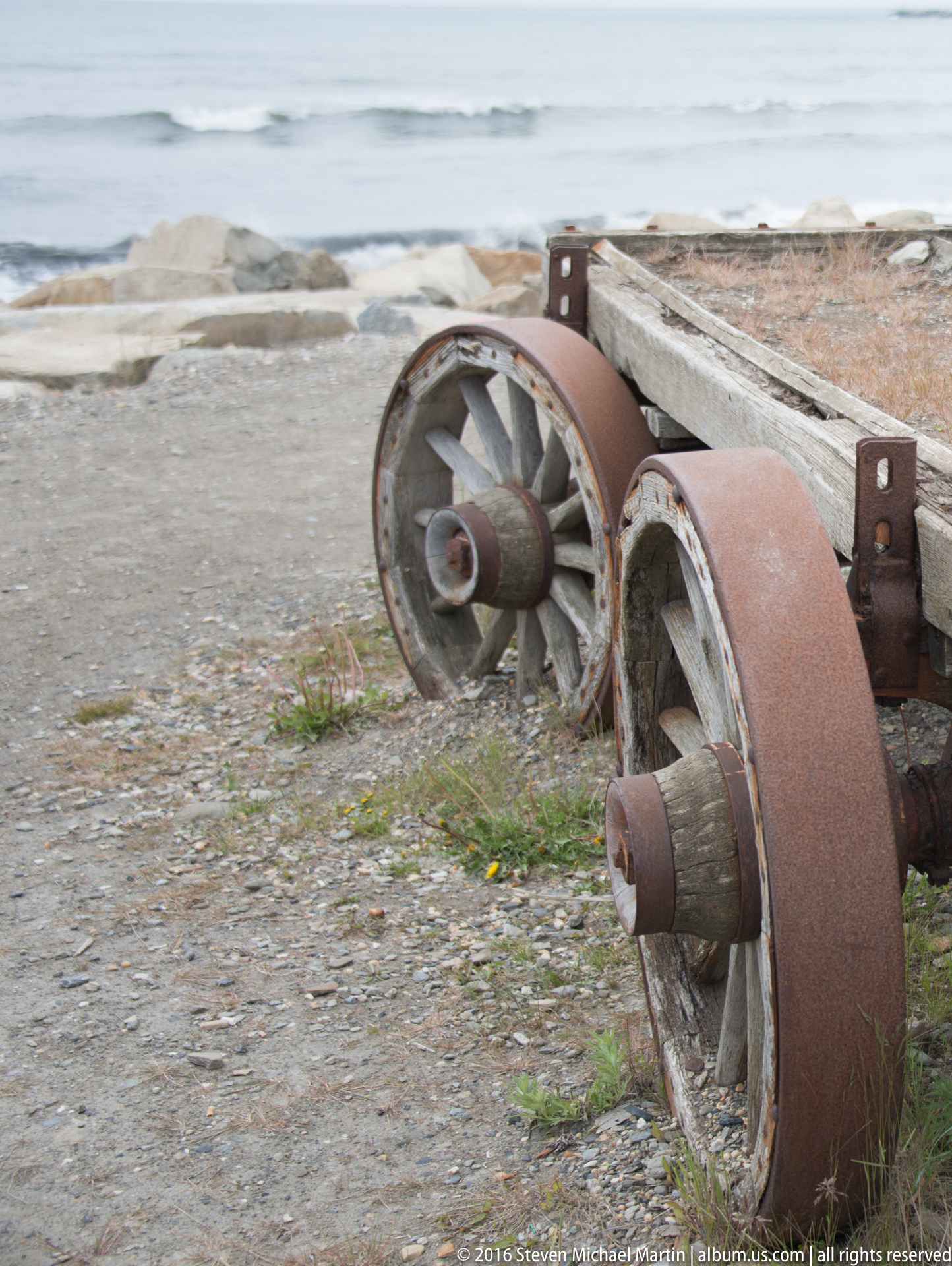
A pair of heavy iron wheels attached to a long axle rests on a pebbled beach beside the water. Their rims are rust-colored, while the central hubs and spokes remain visible beneath a weathered timber or metal frame. The coastal setting contrasts with the industrial component, but the larger machine it came from is not shown.
Caption
A pair of heavy iron wheels attached to a long axle rests on a pebbled beach beside the water. Their rims are rust-colored, while the central hubs and spokes remain visible beneath a weathered timber or metal frame. The coastal setting contrasts with the industrial component, but the larger machine it came from is not shown.
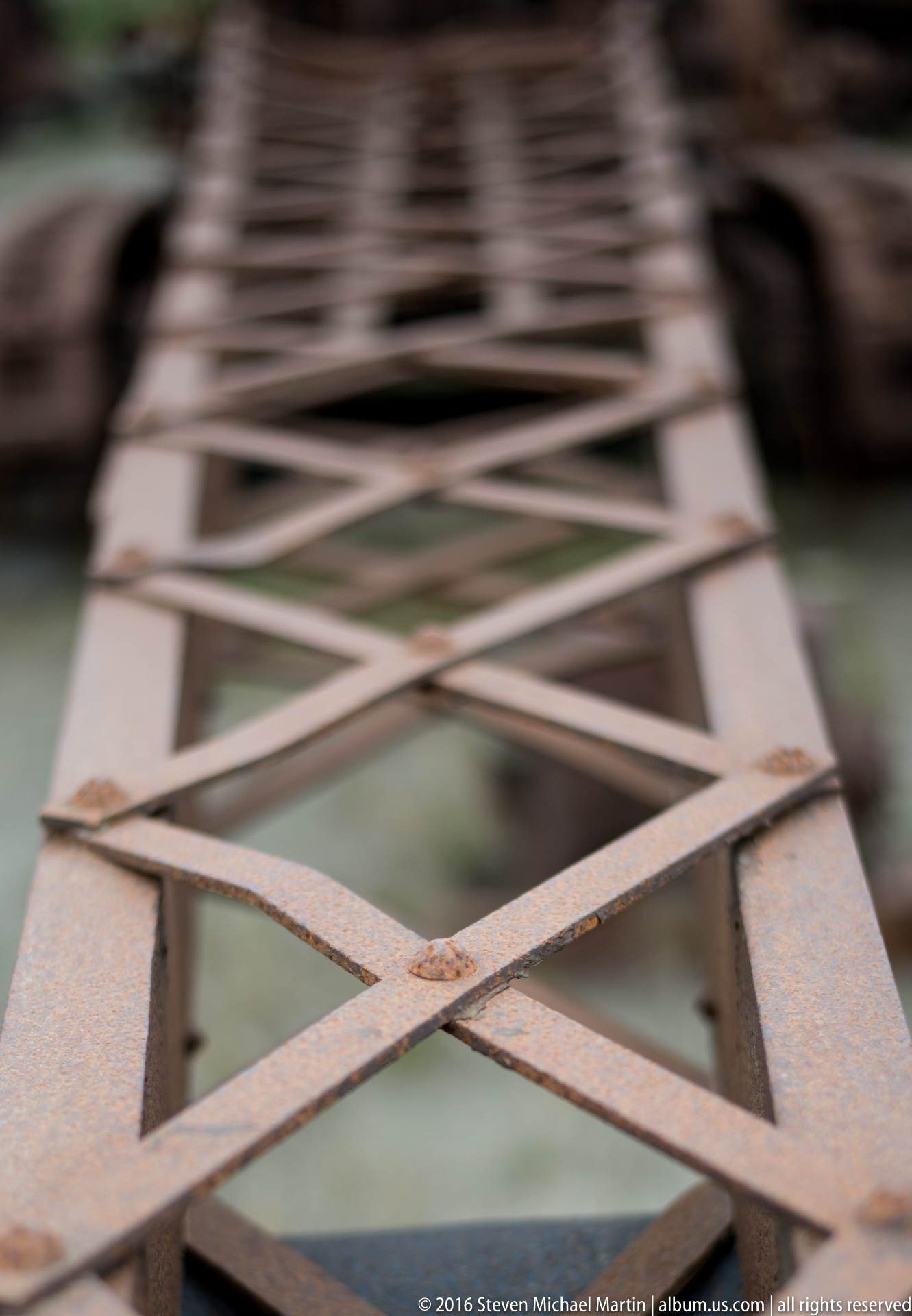
A sequence of rust-colored diagonal braces crosses a pale metal frame, forming repeated diamond and triangle shapes that recede into soft focus. The close angle and blur turn the structure into an abstract pattern of intersecting lines, while a dark mechanical form remains indistinct in the distance. The image records the framework’s geometry rather than its function.
Caption
A sequence of rust-colored diagonal braces crosses a pale metal frame, forming repeated diamond and triangle shapes that recede into soft focus. The close angle and blur turn the structure into an abstract pattern of intersecting lines, while a dark mechanical form remains indistinct in the distance. The image records the framework’s geometry rather than its function.

Large round openings form staggered rows across a heavily rusted metal plate. Their dark interiors vary in depth and shape, and several rims are bent or uneven. The extreme close-up excludes the surrounding machine, making the repeated holes, corrosion, and damaged edges the only evidence for identifying this as an industrial component.
Caption
Large round openings form staggered rows across a heavily rusted metal plate. Their dark interiors vary in depth and shape, and several rims are bent or uneven. The extreme close-up excludes the surrounding machine, making the repeated holes, corrosion, and damaged edges the only evidence for identifying this as an industrial component.

A line of raised characters runs along the metal edge, but the oblique angle and shallow focus leave most letters blurred beneath corrosion. Only fragments are distinct, so the mark cannot be transcribed reliably. The detail records the lettering and rough, rusted surface without assigning a maker.
Caption
A line of raised characters runs along the metal edge, but the oblique angle and shallow focus leave most letters blurred beneath corrosion. Only fragments are distinct, so the mark cannot be transcribed reliably. The detail records the lettering and rough, rusted surface without assigning a maker.