Florissant Fossil Beds National Monument
Florissant Fossil Beds National Monument protects one of the richest fossil deposits in North America, preserving exceptionally detailed records of ancient plants and insects dating to the Eocene epoch. Fossils formed within fine-grained lake sediments reveal delicate structures rarely preserved elsewhere, offering insight into prehistoric ecosystems that existed millions of years ago.
The monument is also known for its petrified redwood stumps, evidence of a much warmer and wetter climate that once supported large forest environments in what is now central Colorado. Volcanic activity contributed to the preservation of fossil material, allowing scientists to reconstruct past environmental conditions with unusual precision.
Visitors experience Florissant Fossil Beds as a landscape shaped by both geological and biological history. Open meadows and preserved fossil resources combine to illustrate the long-term environmental changes that influenced the Rocky Mountain region over millions of years.

A broad, pale stump rises from a sandy clearing bordered by low grasses and scattered pines. Its uneven crown and long vertical ridges stand out against the flat ground, with orange and gray mineral tones streaking the exposed surface. The wider view gives the remnant room within its open setting and distinguishes it from the clustered stumps nearby.
Caption
A broad, pale stump rises from a sandy clearing bordered by low grasses and scattered pines. Its uneven crown and long vertical ridges stand out against the flat ground, with orange and gray mineral tones streaking the exposed surface. The wider view gives the remnant room within its open setting and distinguishes it from the clustered stumps nearby.

A small squirrel pauses on a reddish rock, its gray-brown back, warm underside, and long tail visible in the close frame. Strong sunlight throws a crisp shadow onto the stone beside it, while the animal’s alert head and forepaws remain in focus. The tight composition isolates this brief wildlife encounter from the broader fossil-site landscape.
Caption
A small squirrel pauses on a reddish rock, its gray-brown back, warm underside, and long tail visible in the close frame. Strong sunlight throws a crisp shadow onto the stone beside it, while the animal’s alert head and forepaws remain in focus. The tight composition isolates this brief wildlife encounter from the broader fossil-site landscape.
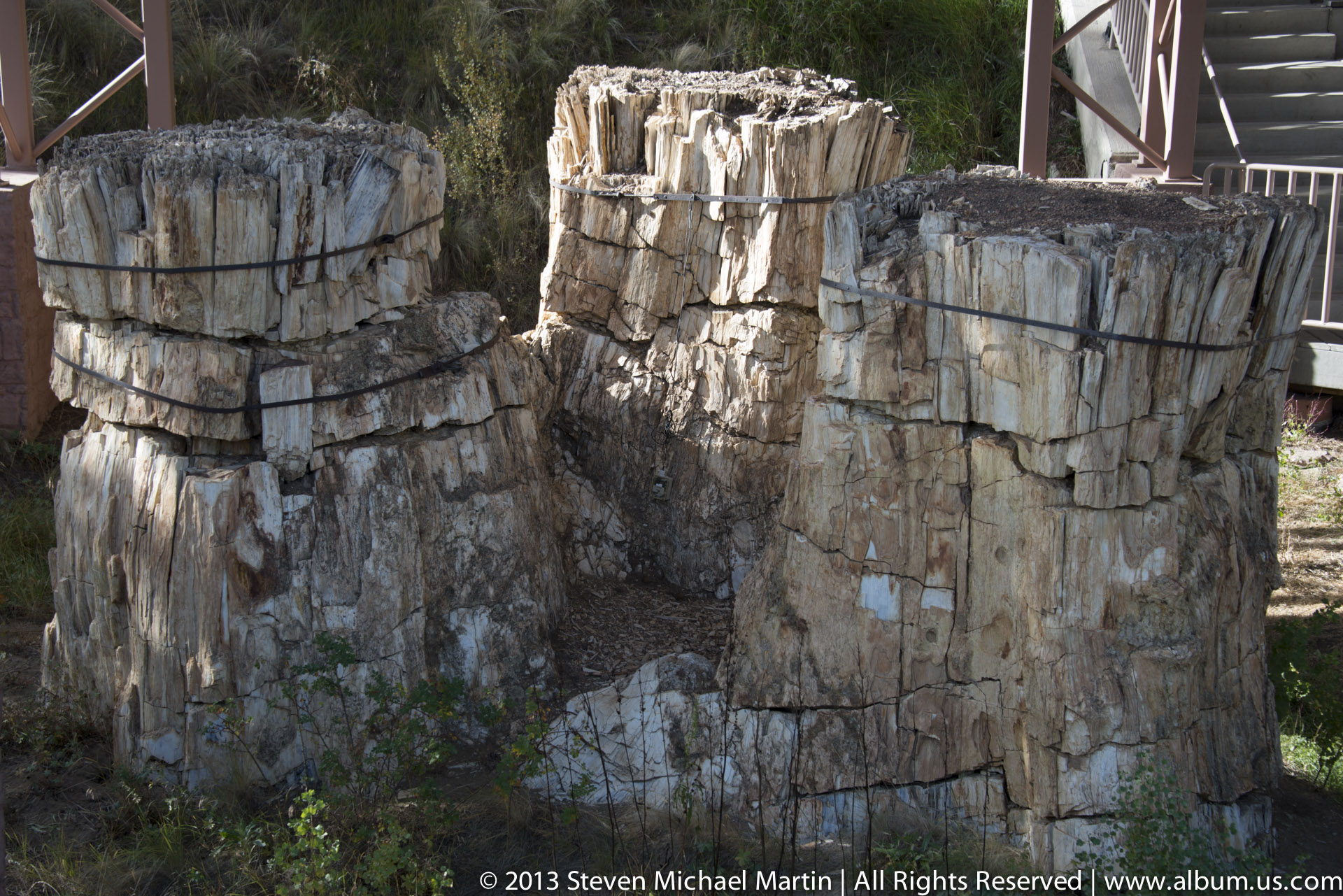
Several pale petrified tree stumps stand close together in a fenced outdoor setting. Deep vertical cracks divide their blocky surfaces, and dark metal bands wrap around sections of the wood. The grouping reveals multiple preserved trunks at once, while the nearby rail and path show that visitors view them from a designated stopping point.
Caption
Several pale petrified tree stumps stand close together in a fenced outdoor setting. Deep vertical cracks divide their blocky surfaces, and dark metal bands wrap around sections of the wood. The grouping reveals multiple preserved trunks at once, while the nearby rail and path show that visitors view them from a designated stopping point.
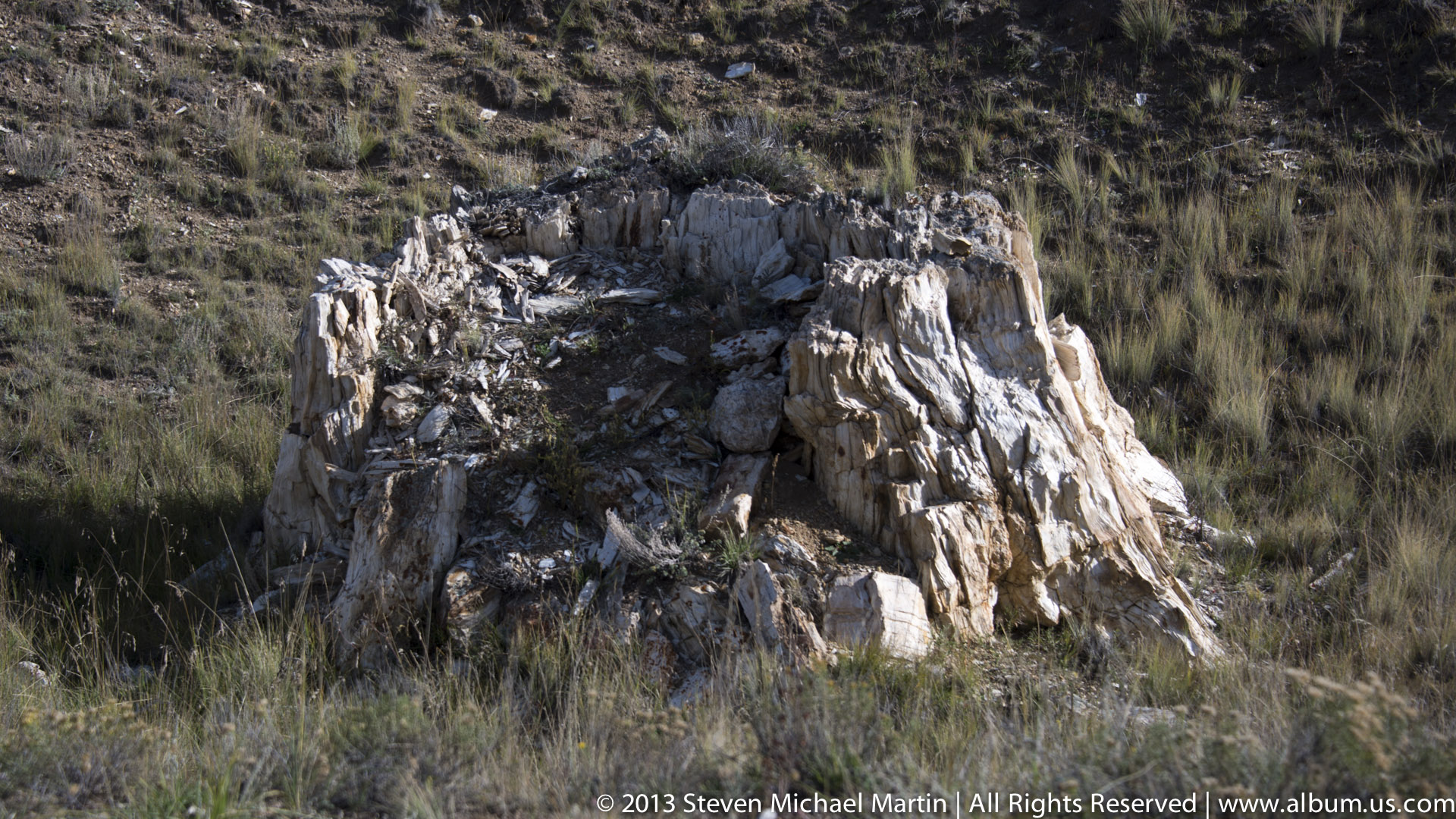
A large petrified tree stump sits in an open patch of grass and low brush, its pale, angular sides rising around a dark, broken center. The exposed surface is deeply fractured, with long vertical ridges and uneven mineralized layers. Viewed from above, the stump reads as a substantial fossilized remnant embedded in the meadow rather than as a living tree trunk.
Caption
A large petrified tree stump sits in an open patch of grass and low brush, its pale, angular sides rising around a dark, broken center. The exposed surface is deeply fractured, with long vertical ridges and uneven mineralized layers. Viewed from above, the stump reads as a substantial fossilized remnant embedded in the meadow rather than as a living tree trunk.
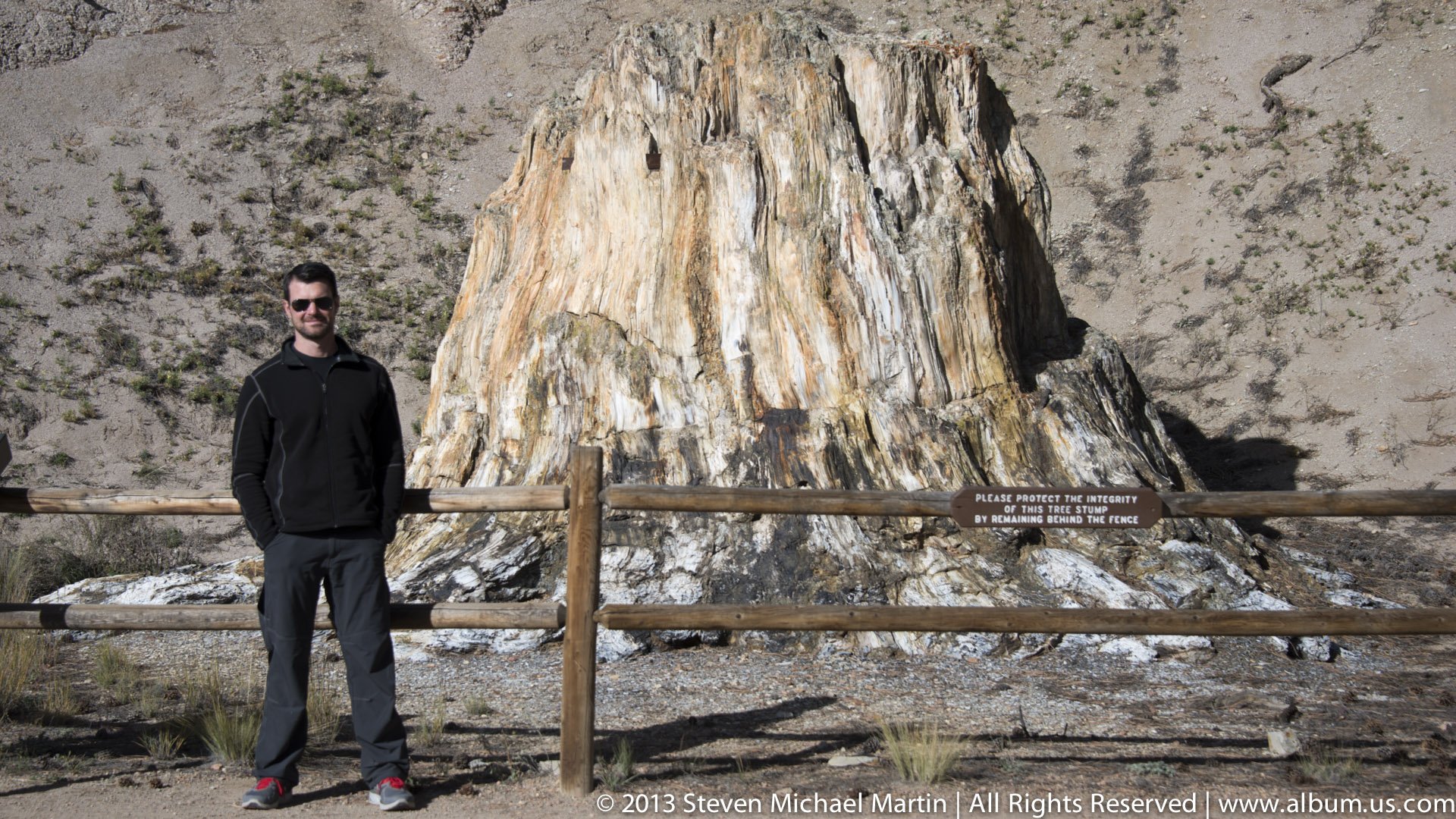
A visitor stands behind a wooden rail beside a massive petrified stump, providing scale for its height and broad, fluted surface. The stump’s pale mineralized wood fills most of the background, while a small warning or interpretive sign is attached to the barrier. The image connects the fossil feature with its managed viewing area without relying on unreadable sign text.
Caption
A visitor stands behind a wooden rail beside a massive petrified stump, providing scale for its height and broad, fluted surface. The stump’s pale mineralized wood fills most of the background, while a small warning or interpretive sign is attached to the barrier. The image connects the fossil feature with its managed viewing area without relying on unreadable sign text.
Florissant Fossil Beds National Monument — Field Guide
🏛️ National Monument Field Guide
📍 Overview
Florissant Fossil Beds National Monument preserves an exceptionally detailed fossil record dating to the Eocene epoch. Fine-grained sediments from an ancient lake environment preserved delicate plant and insect fossils that provide valuable scientific insight into prehistoric ecosystems.
Large petrified redwood stumps indicate that significantly different climatic conditions once existed in central Colorado. Volcanic ash deposits helped protect organic material, allowing unusually detailed fossil preservation.
⭐ Highlights
- Highly detailed plant and insect fossils
- Petrified redwood stumps
- Eocene epoch fossil deposits
- Ancient lakebed environment
- Important paleontological site
🔎 Key Features
- Fine-grained fossil preservation
- Volcanic ash influence on fossil formation
- Evidence of ancient climate conditions
- Fossilized forest remains
- Open meadow landscape
📷 Photography Notes
- Overcast light works well for fossil detail
- Wide views show meadow landscape
- Petrified stumps provide strong focal points
- Simple framing highlights texture
- Foreground elements add scale
- Soft light enhances subtle color variation
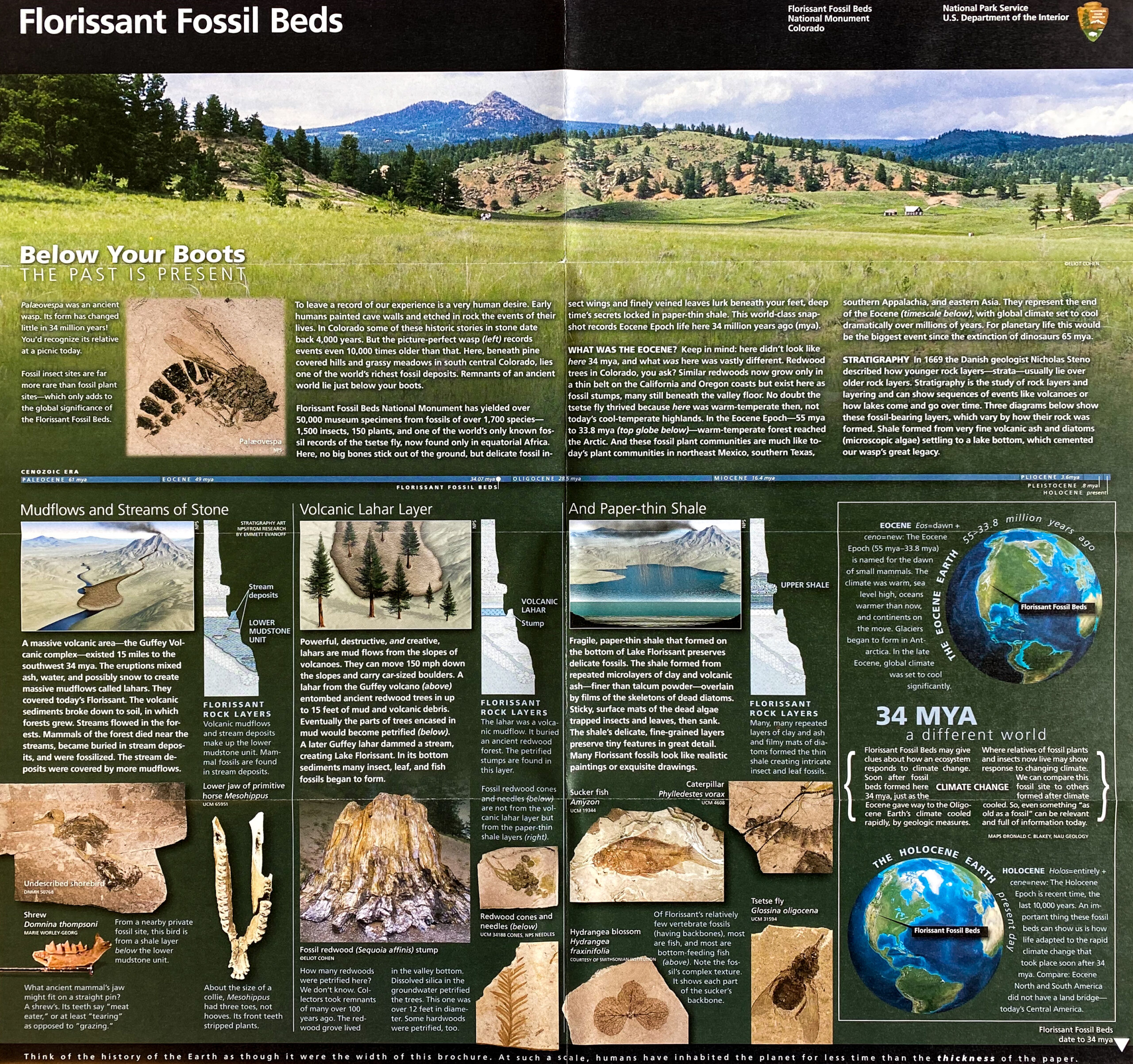
An interpretive display headed “Florissant Fossil Beds” pairs a panoramic landscape image with diagrams, fossil photographs, and blocks of explanatory text. The prominent line “Below Your Boots the Past Is Present” frames the site’s geology and buried record, while smaller panels show layered deposits and examples of fossil material. At this scale, the fine print cannot be read reliably.
Caption
An interpretive display headed “Florissant Fossil Beds” pairs a panoramic landscape image with diagrams, fossil photographs, and blocks of explanatory text. The prominent line “Below Your Boots the Past Is Present” frames the site’s geology and buried record, while smaller panels show layered deposits and examples of fossil material. At this scale, the fine print cannot be read reliably.
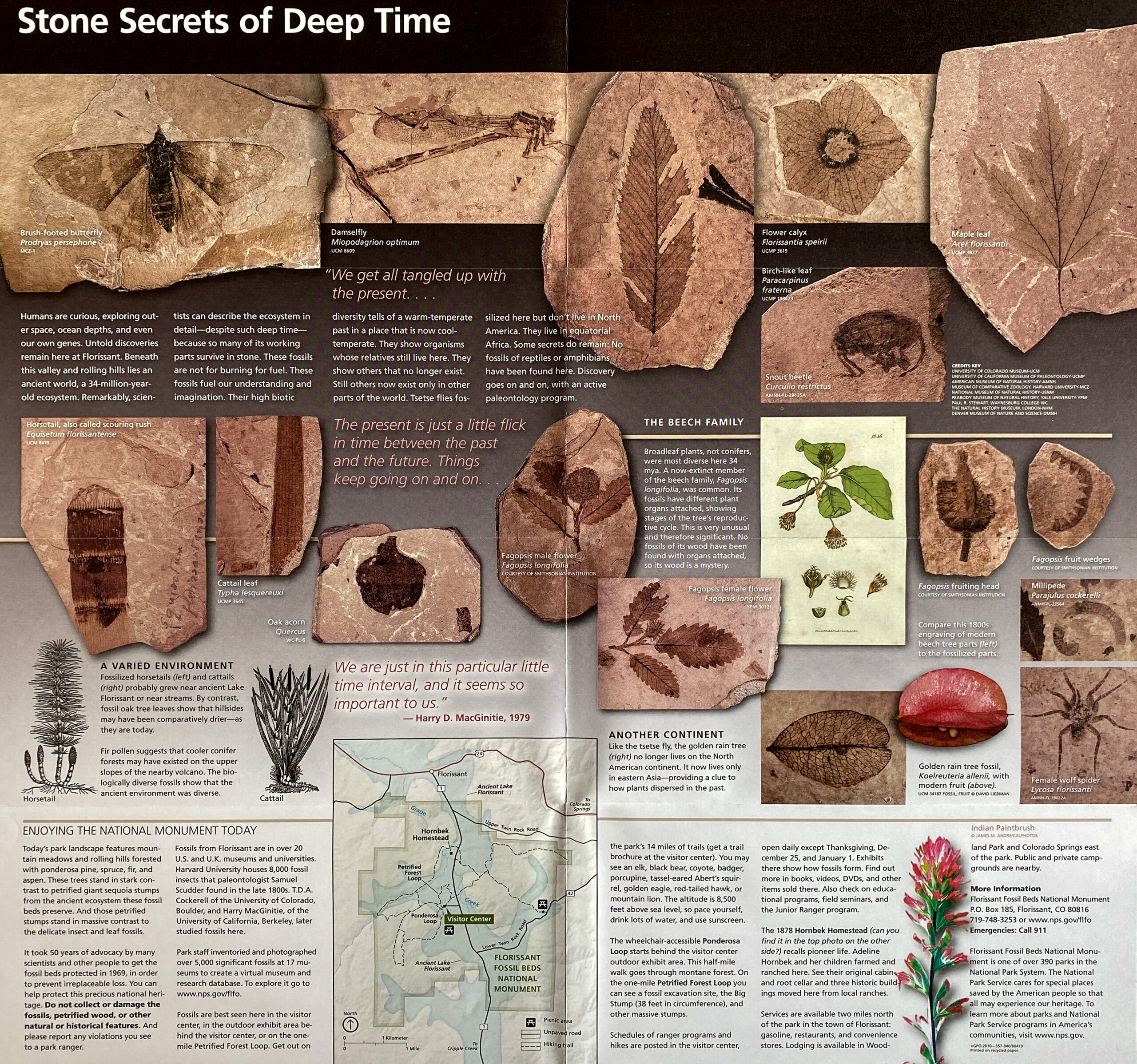
A wide interpretive panel titled “Stone Secrets of Deep Time” presents fossil specimens alongside illustrations, explanatory text, and a map of the monument. Enlarged impressions of leaves and other preserved forms are arranged across the upper and central sections, while botanical drawings and a locator map appear below. The display connects individual fossils with the ancient environment and the protected site, though its fine print is unreadable here.
Caption
A wide interpretive panel titled “Stone Secrets of Deep Time” presents fossil specimens alongside illustrations, explanatory text, and a map of the monument. Enlarged impressions of leaves and other preserved forms are arranged across the upper and central sections, while botanical drawings and a locator map appear below. The display connects individual fossils with the ancient environment and the protected site, though its fine print is unreadable here.