Grand Teton National Park
Grand Teton National Park preserves dramatic mountain landscapes formed through tectonic uplift along the Teton fault. The Teton Range rises sharply above the Jackson Hole valley, illustrating how movement of the earth’s crust created steep elevation differences across relatively short distances. Glacial activity further shaped the terrain, carving valleys and forming alpine lakes.
Snowmelt from high elevations feeds rivers and lakes that support diverse ecosystems including forests, wetlands, and grasslands. Wildlife such as elk, moose, and bears inhabit environments influenced by elevation, climate, and seasonal variation. The contrast between rugged mountains and open valley landscapes illustrates ecological diversity within a relatively compact region.
Today, Grand Teton demonstrates how tectonic forces and glaciation combine to shape mountain environments. The park illustrates how geological activity influences both terrain and ecological systems across long time periods.
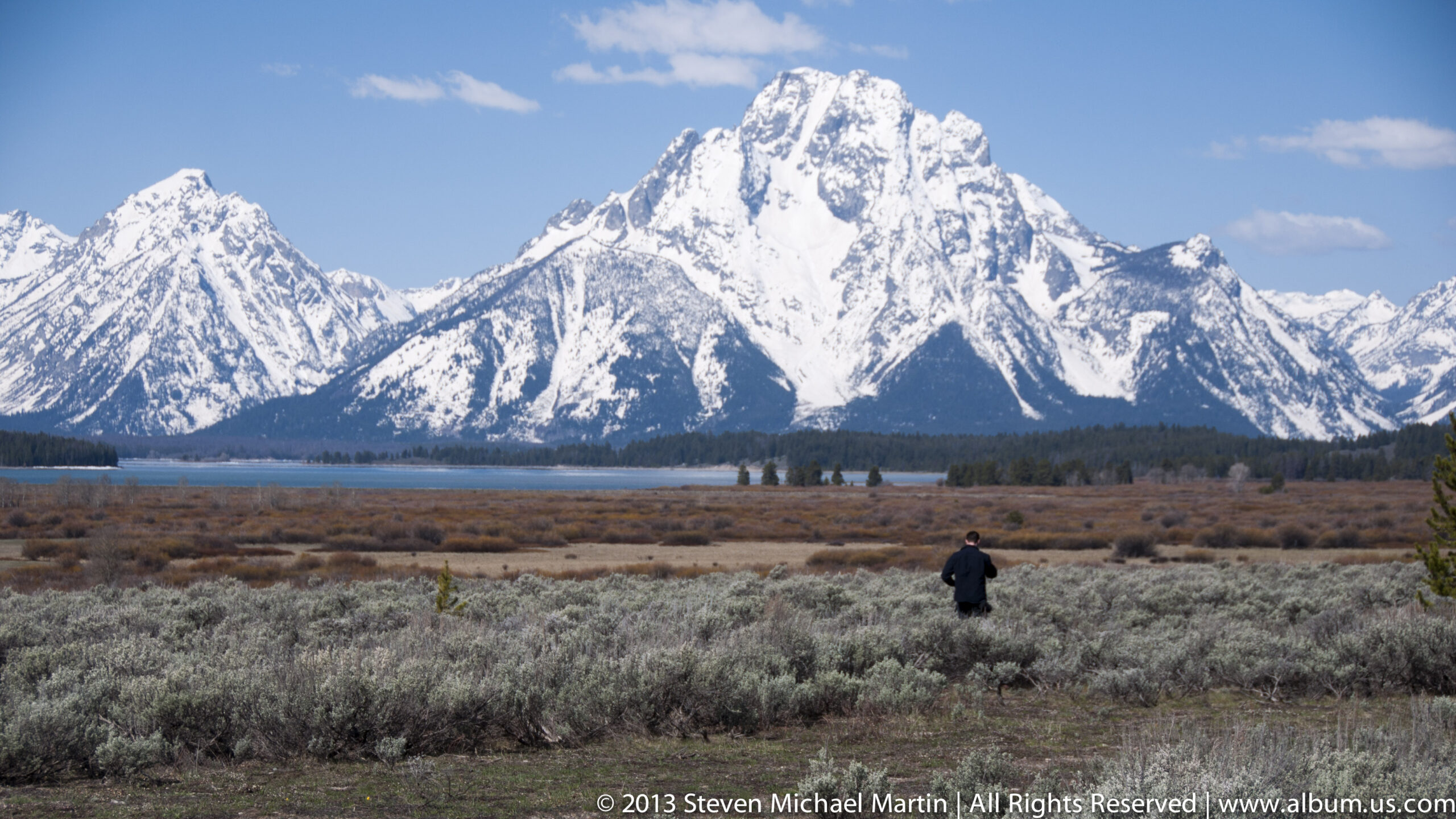
A lone person stands in the broad sagebrush flats, facing the snow-bright peaks across a narrow band of water and wetland. The small human figure gives the range scale, while the low horizon leaves the clear blue sky open above the mountains. The view emphasizes the wide valley between foreground and alpine skyline.
Caption
A lone person stands in the broad sagebrush flats, facing the snow-bright peaks across a narrow band of water and wetland. The small human figure gives the range scale, while the low horizon leaves the clear blue sky open above the mountains. The view emphasizes the wide valley between foreground and alpine skyline.
A broad, glassy lake mirrors the distant mountain range and a sky fading from blue to pink. Dark tree lines frame the water on both sides, leaving a clear opening around the low peaks. The composition gives equal weight to the reflection and the sky, recording the subdued color and calm of evening.
Caption
A broad, glassy lake mirrors the distant mountain range and a sky fading from blue to pink. Dark tree lines frame the water on both sides, leaving a clear opening around the low peaks. The composition gives equal weight to the reflection and the sky, recording the subdued color and calm of evening.
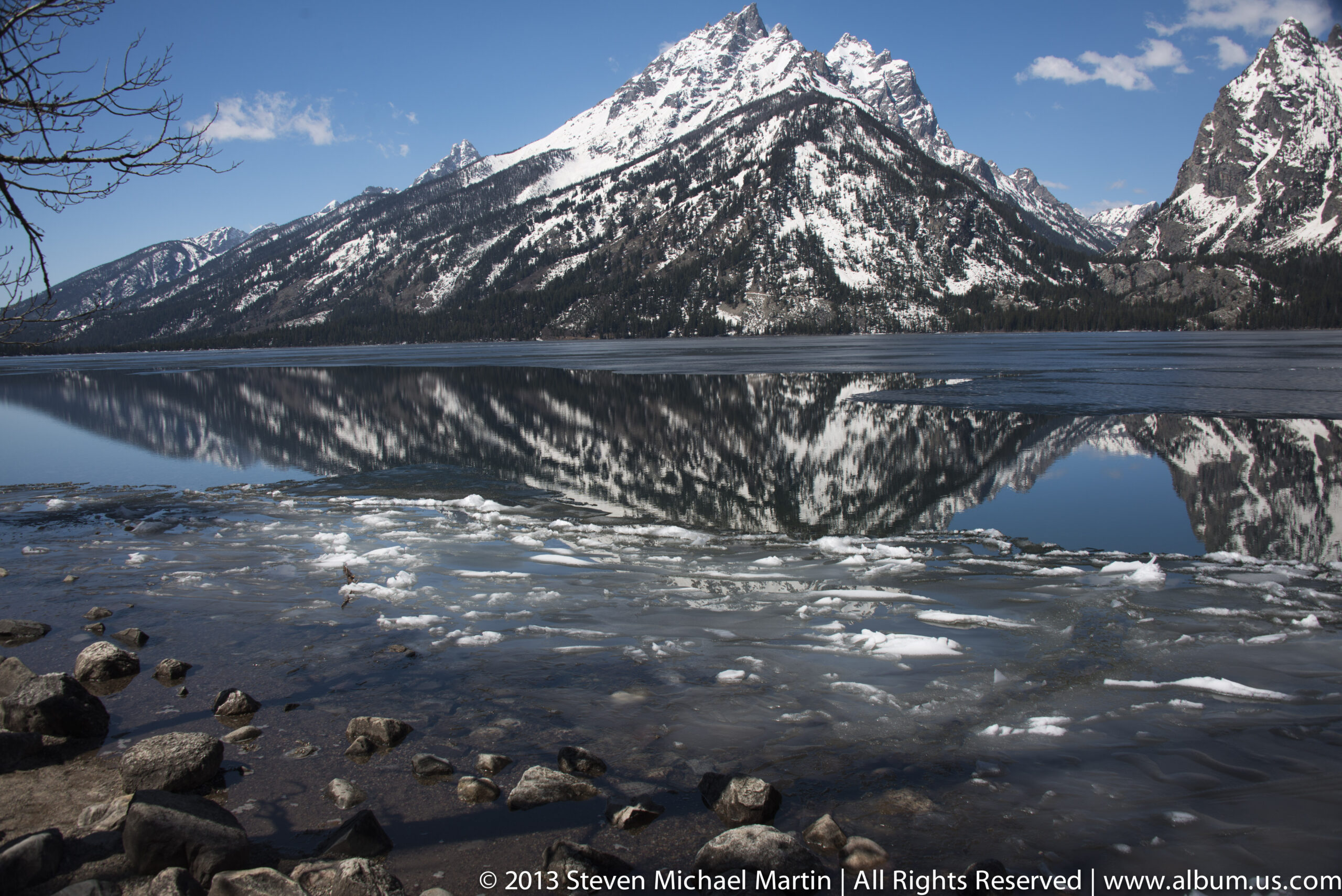
Small pieces of ice drift across a dark lake, where a snow-covered mountain and its reflection occupy the center of the view. Rounded rocks line the near shore, adding scale and texture to the water’s edge. The combination of ice, reflection, and exposed stones records a cold-season transition beneath the rugged alpine skyline.
Caption
Small pieces of ice drift across a dark lake, where a snow-covered mountain and its reflection occupy the center of the view. Rounded rocks line the near shore, adding scale and texture to the water’s edge. The combination of ice, reflection, and exposed stones records a cold-season transition beneath the rugged alpine skyline.
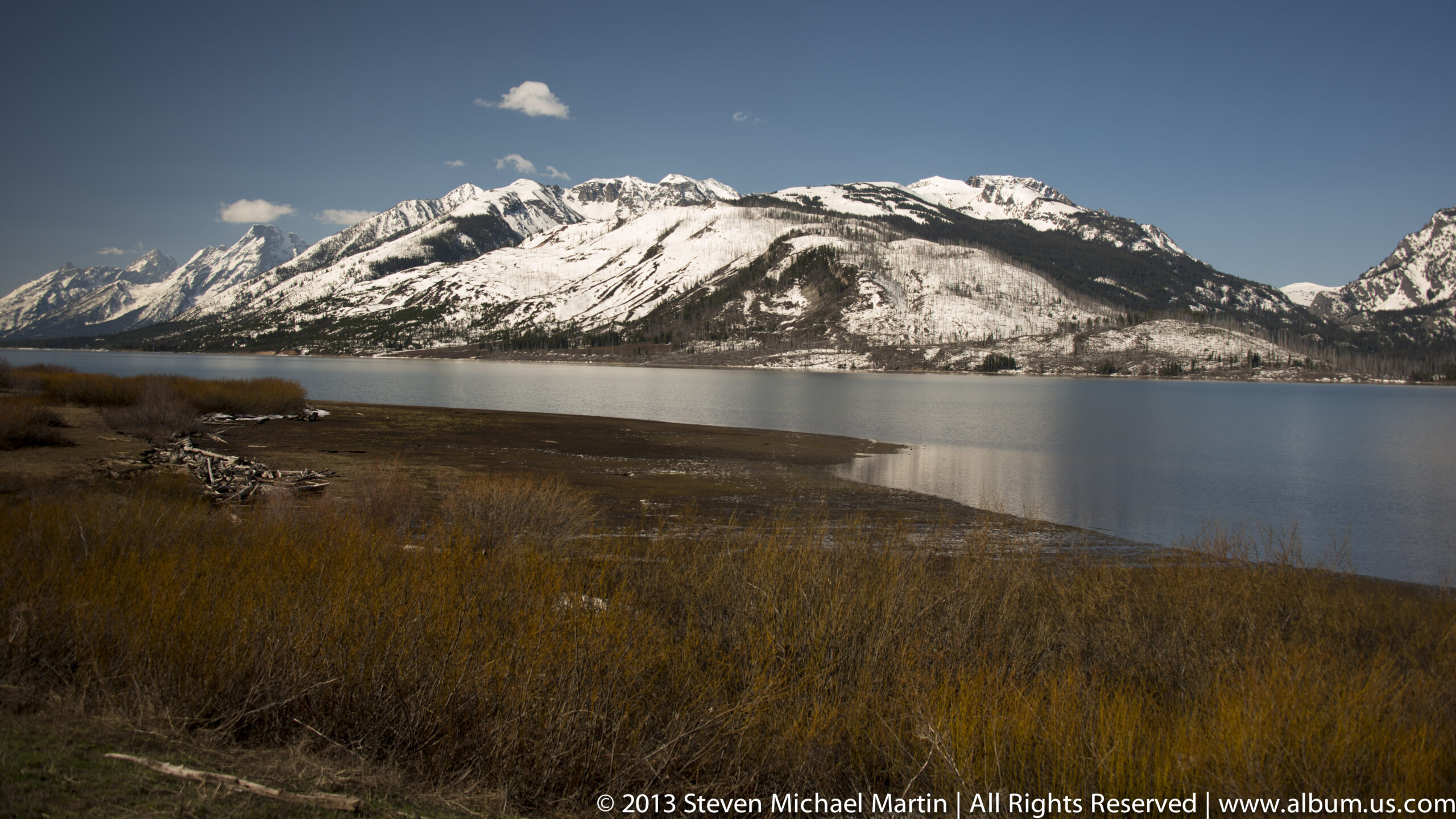
A broad lake curves along the base of a long, snow-dusted ridge. Rust-colored marsh vegetation and low shrubs fill the foreground, creating bands of color between the viewer and the water. The subdued light and distant peaks give the scene a calm, spacious character, with no people or structures interrupting the shoreline.
Caption
A broad lake curves along the base of a long, snow-dusted ridge. Rust-colored marsh vegetation and low shrubs fill the foreground, creating bands of color between the viewer and the water. The subdued light and distant peaks give the scene a calm, spacious character, with no people or structures interrupting the shoreline.
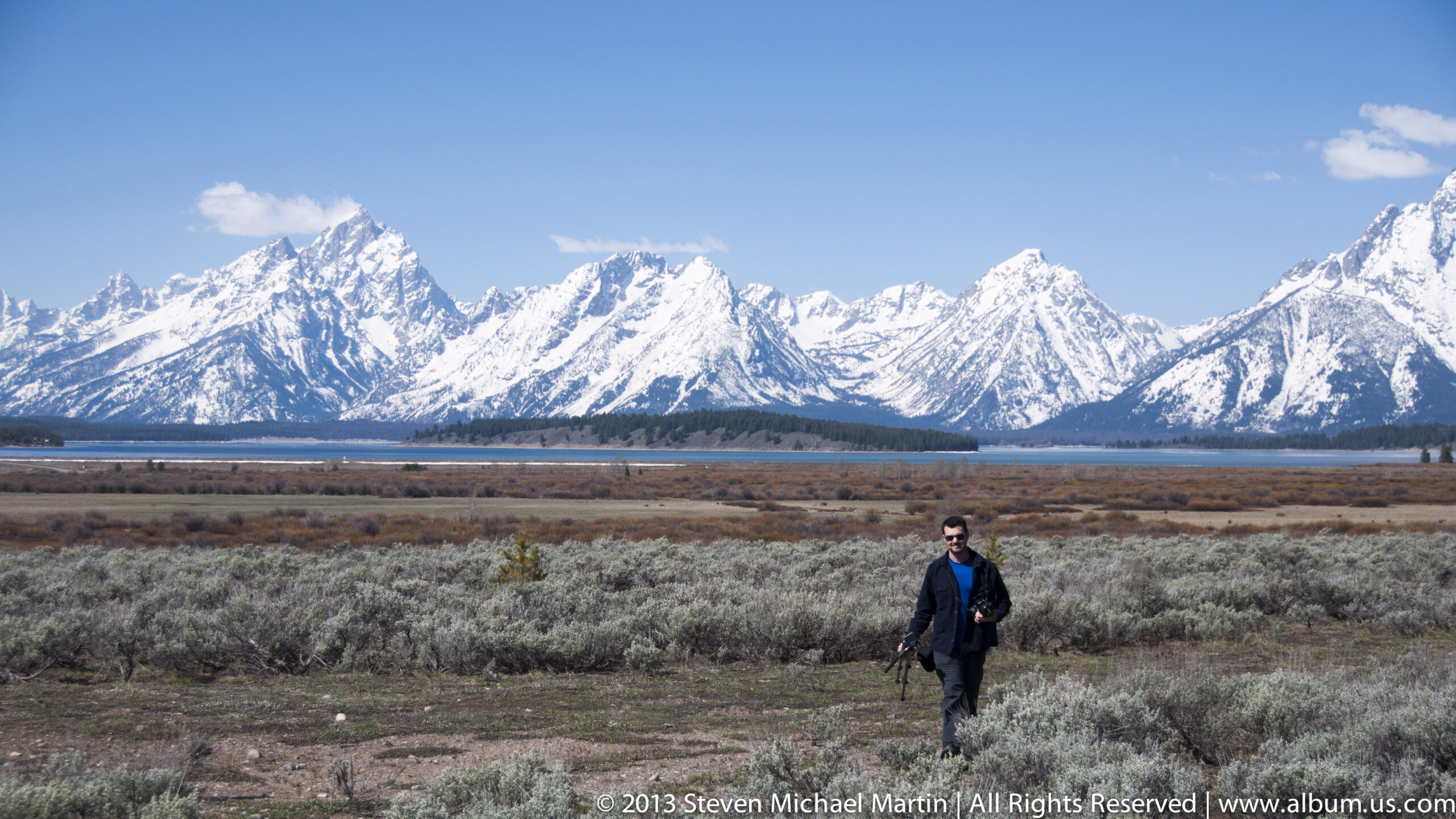
A man walks toward the camera through low sagebrush, carrying a dark item at his side. The broad horizontal view places him against a line of water and the snow-covered Teton peaks, while the open blue sky gives the mountains room to dominate the scene. His forward movement makes this a human-scale view of the valley rather than a purely scenic panorama.
Caption
A man walks toward the camera through low sagebrush, carrying a dark item at his side. The broad horizontal view places him against a line of water and the snow-covered Teton peaks, while the open blue sky gives the mountains room to dominate the scene. His forward movement makes this a human-scale view of the valley rather than a purely scenic panorama.
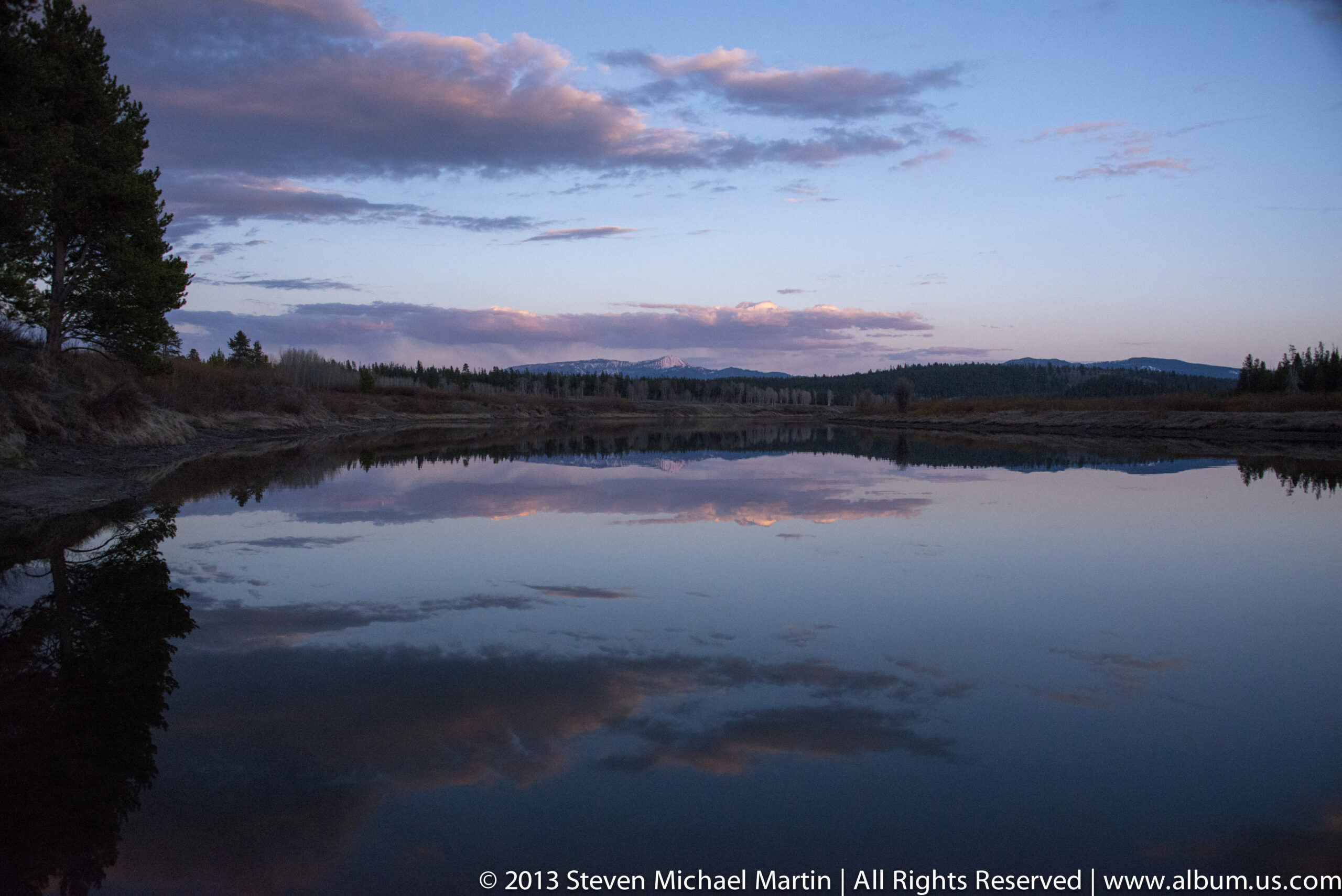
A shallow, still expanse of water reflects pink and lavender clouds above a low horizon. Dark banks and tree silhouettes frame the scene, while grasses and marsh plants edge the foreground. The mountains are no longer prominent in this wider view; the emphasis shifts to the evening sky and its colored reflection across the wetland.
Caption
A shallow, still expanse of water reflects pink and lavender clouds above a low horizon. Dark banks and tree silhouettes frame the scene, while grasses and marsh plants edge the foreground. The mountains are no longer prominent in this wider view; the emphasis shifts to the evening sky and its colored reflection across the wetland.
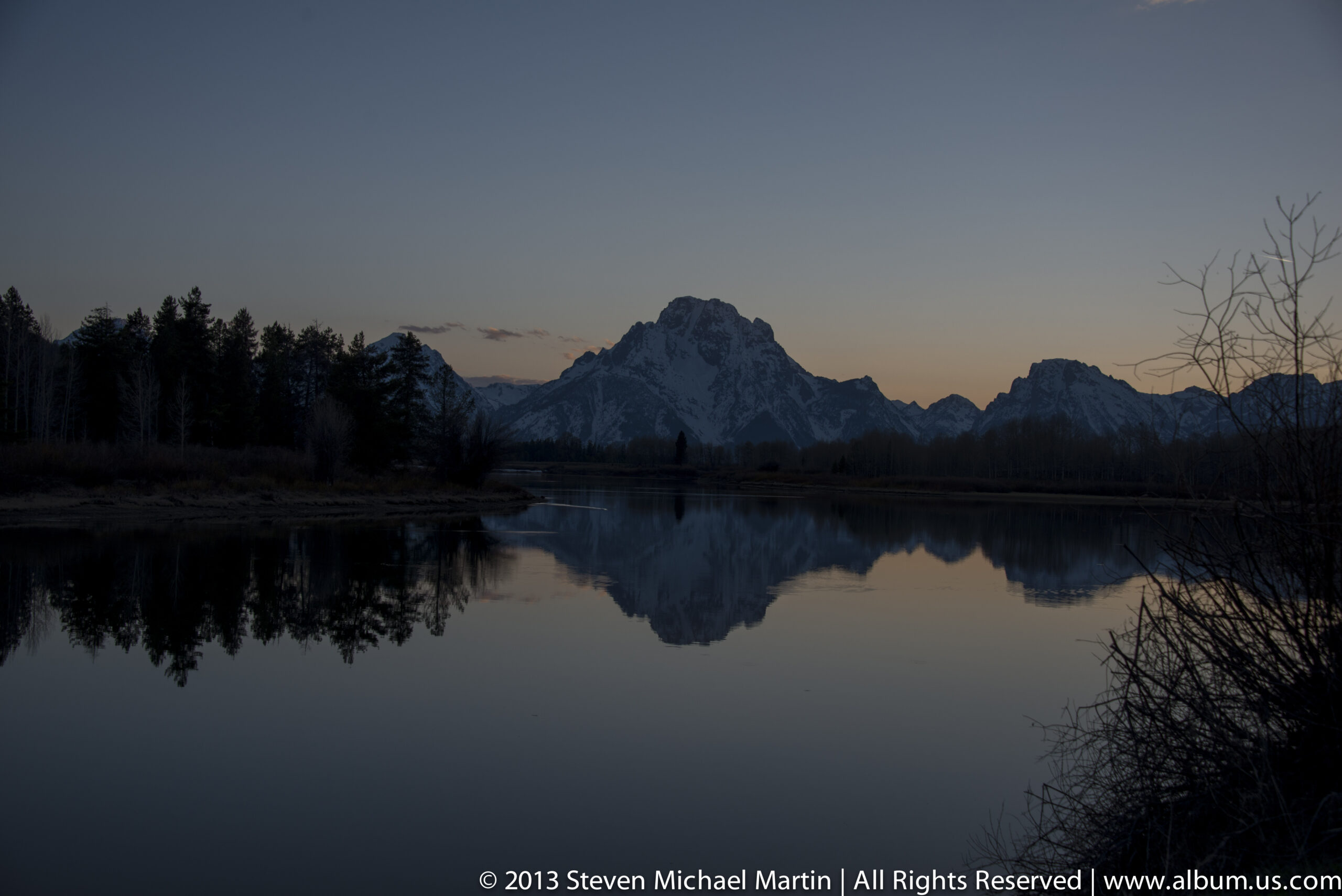
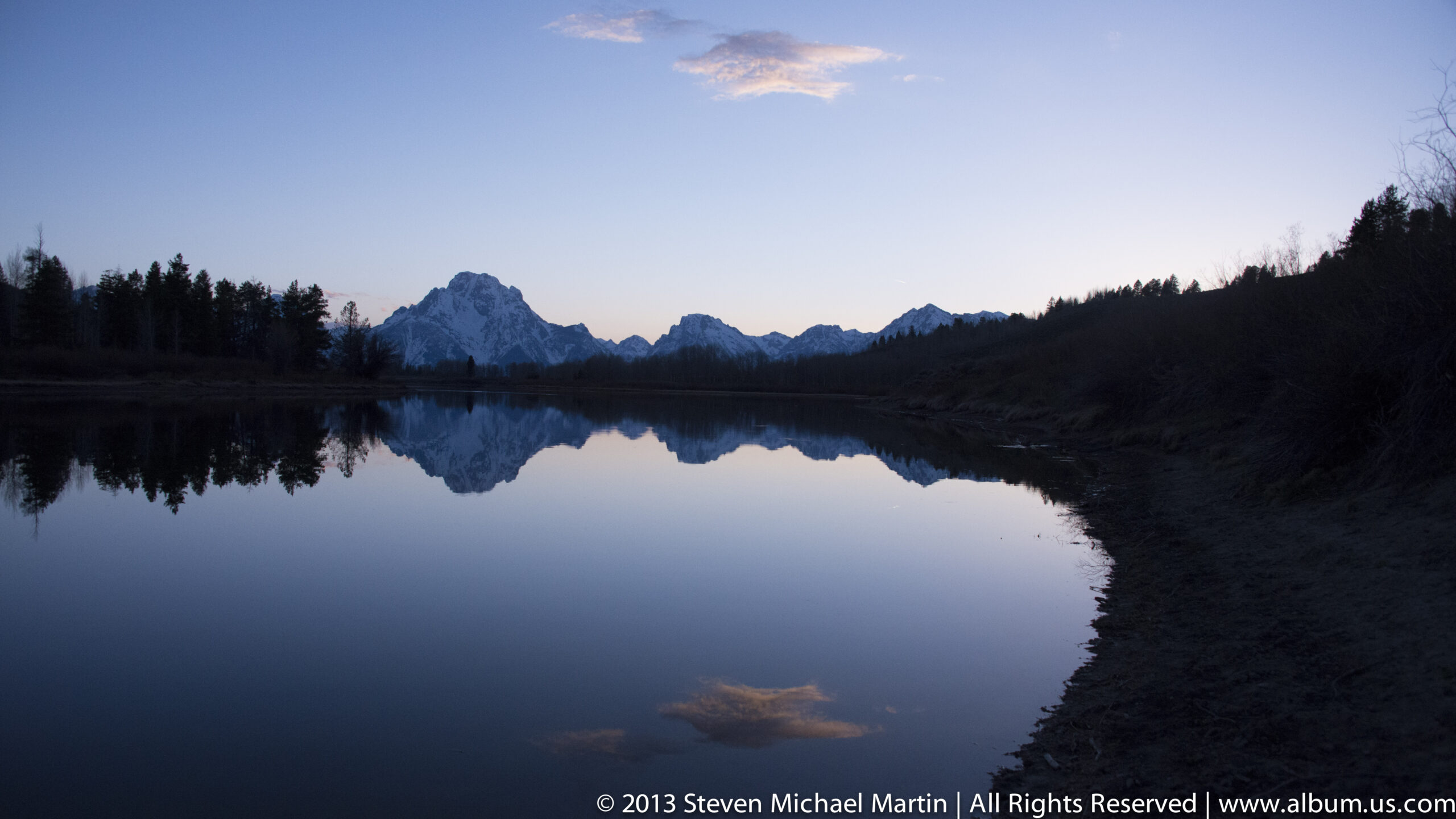
The mountain range forms a dark silhouette above a calm lake, with its outline repeated in the reflection below. A narrow band of warm light remains near the horizon, while the foreground water and shore are nearly black. The low exposure emphasizes the transition from twilight to night and the stillness of the scene.
Caption
The mountain range forms a dark silhouette above a calm lake, with its outline repeated in the reflection below. A narrow band of warm light remains near the horizon, while the foreground water and shore are nearly black. The low exposure emphasizes the transition from twilight to night and the stillness of the scene.

Two stocky, thick-coated sheep stand among low sagebrush, one facing the camera and the other angled away. The nearer animal’s short, curved horns and pale winter coat support identification as a bighorn sheep, though the proof-sheet view does not show every distinguishing feature clearly. Their close spacing and matching habitat make this a compact wildlife scene.
Caption
Two stocky, thick-coated sheep stand among low sagebrush, one facing the camera and the other angled away. The nearer animal’s short, curved horns and pale winter coat support identification as a bighorn sheep, though the proof-sheet view does not show every distinguishing feature clearly. Their close spacing and matching habitat make this a compact wildlife scene.
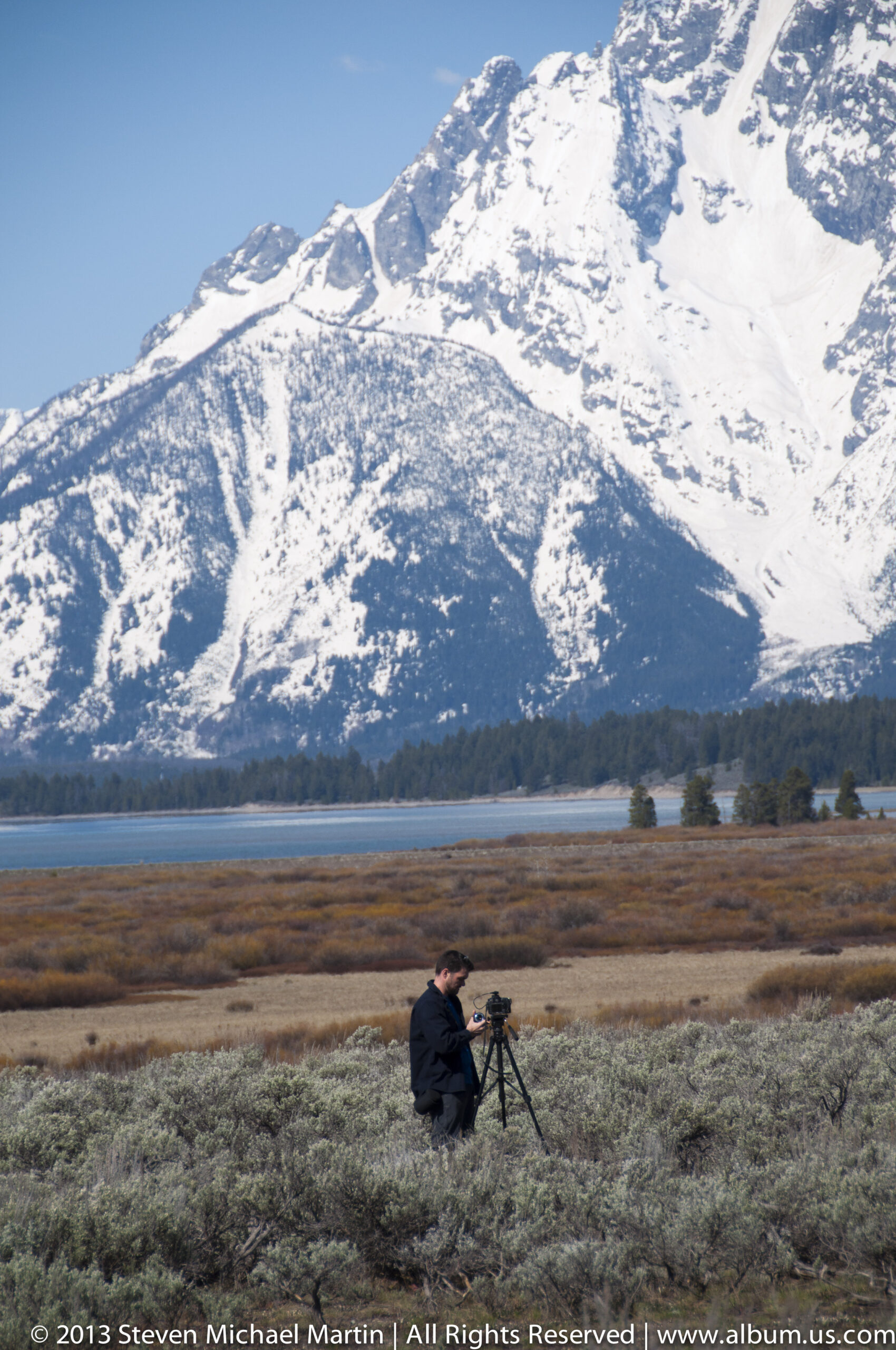
A photographer crouches behind a tripod in open sagebrush, carefully composing a view toward the snow-covered Teton Range. The low position of the camera and broad meadow place the person within the landscape rather than isolating the mountains as a distant backdrop. Spring snow remains on the high peaks while the foreground is dry and open.
Caption
A photographer crouches behind a tripod in open sagebrush, carefully composing a view toward the snow-covered Teton Range. The low position of the camera and broad meadow place the person within the landscape rather than isolating the mountains as a distant backdrop. Spring snow remains on the high peaks while the foreground is dry and open.
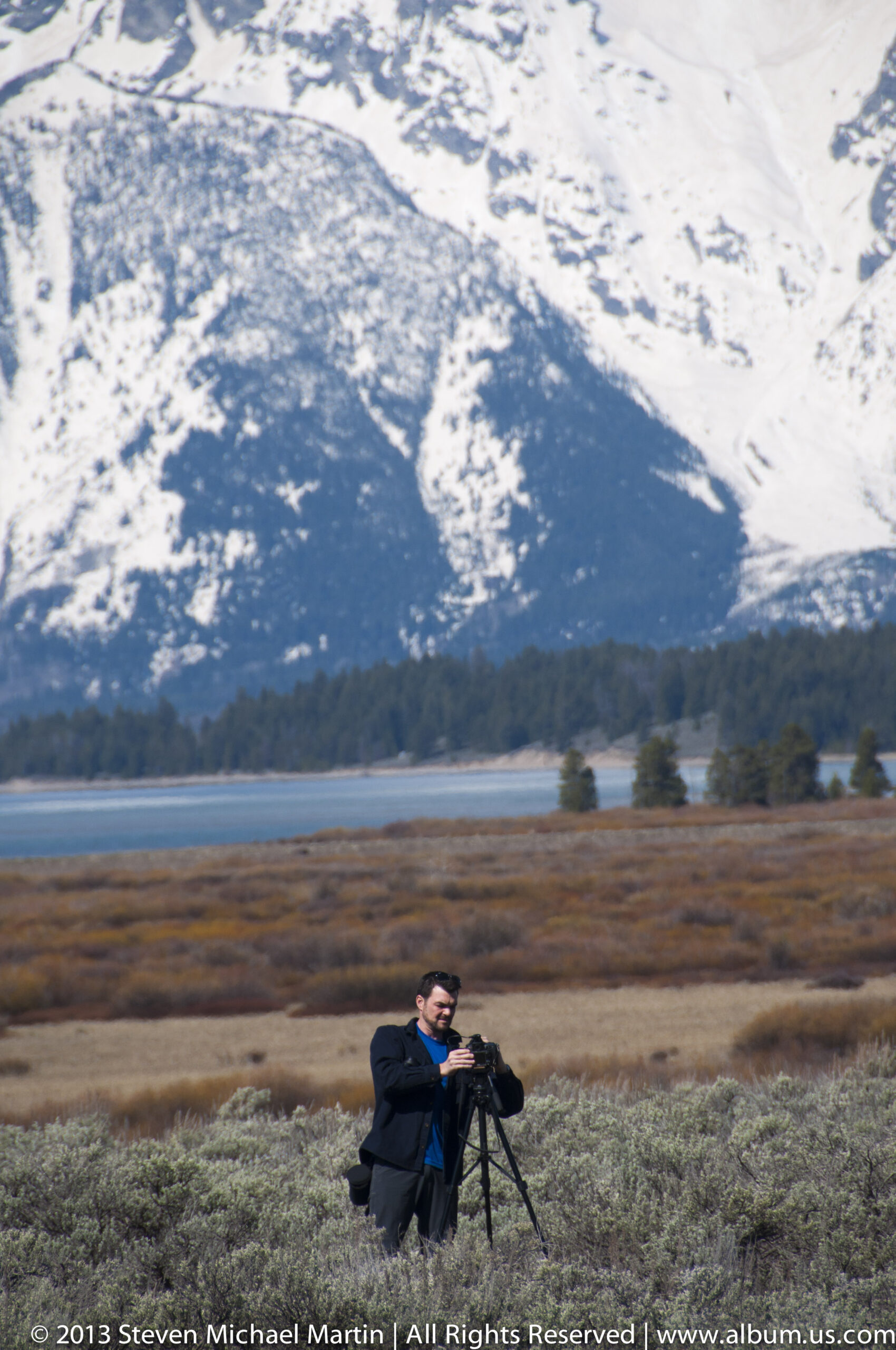
A photographer sits low beside a tripod in the open meadow, looking toward the mountain view. The closer framing reveals the camera equipment and the person’s seated posture, while the snow-striped slope and band of water remain visible behind. Sagebrush and tawny grasses fill the foreground, linking the photographer to the expansive valley setting.
Caption
A photographer sits low beside a tripod in the open meadow, looking toward the mountain view. The closer framing reveals the camera equipment and the person’s seated posture, while the snow-striped slope and band of water remain visible behind. Sagebrush and tawny grasses fill the foreground, linking the photographer to the expansive valley setting.
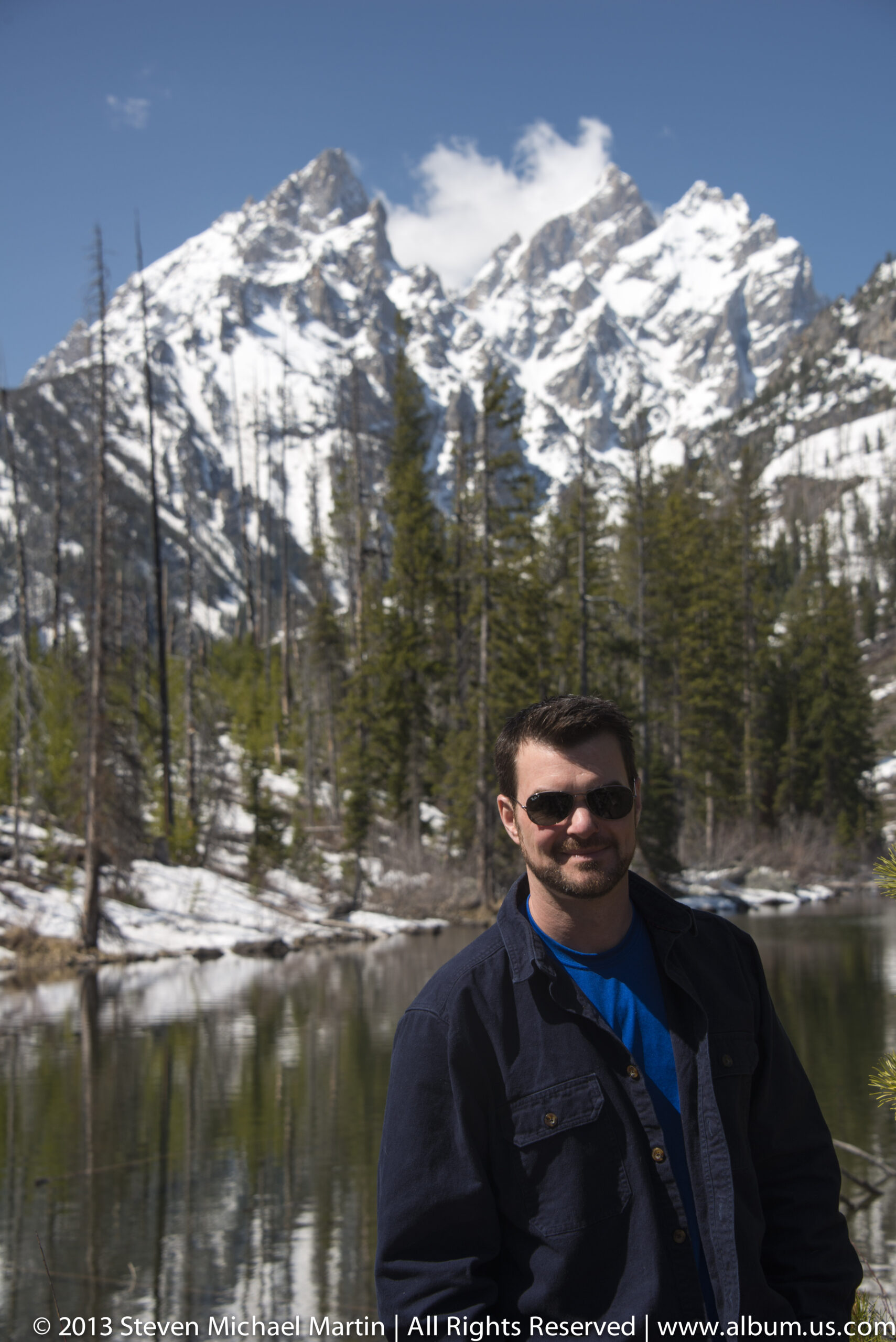
A man sits beside a still pond among conifers and lingering snow. The close portrait includes his face and dark jacket in the foreground, while the water and wooded bank establish a quiet spring setting. Motion blur softens the frame, but the relationship between the seated visitor, pond, and snow remains clear.
Caption
A man sits beside a still pond among conifers and lingering snow. The close portrait includes his face and dark jacket in the foreground, while the water and wooded bank establish a quiet spring setting. Motion blur softens the frame, but the relationship between the seated visitor, pond, and snow remains clear.
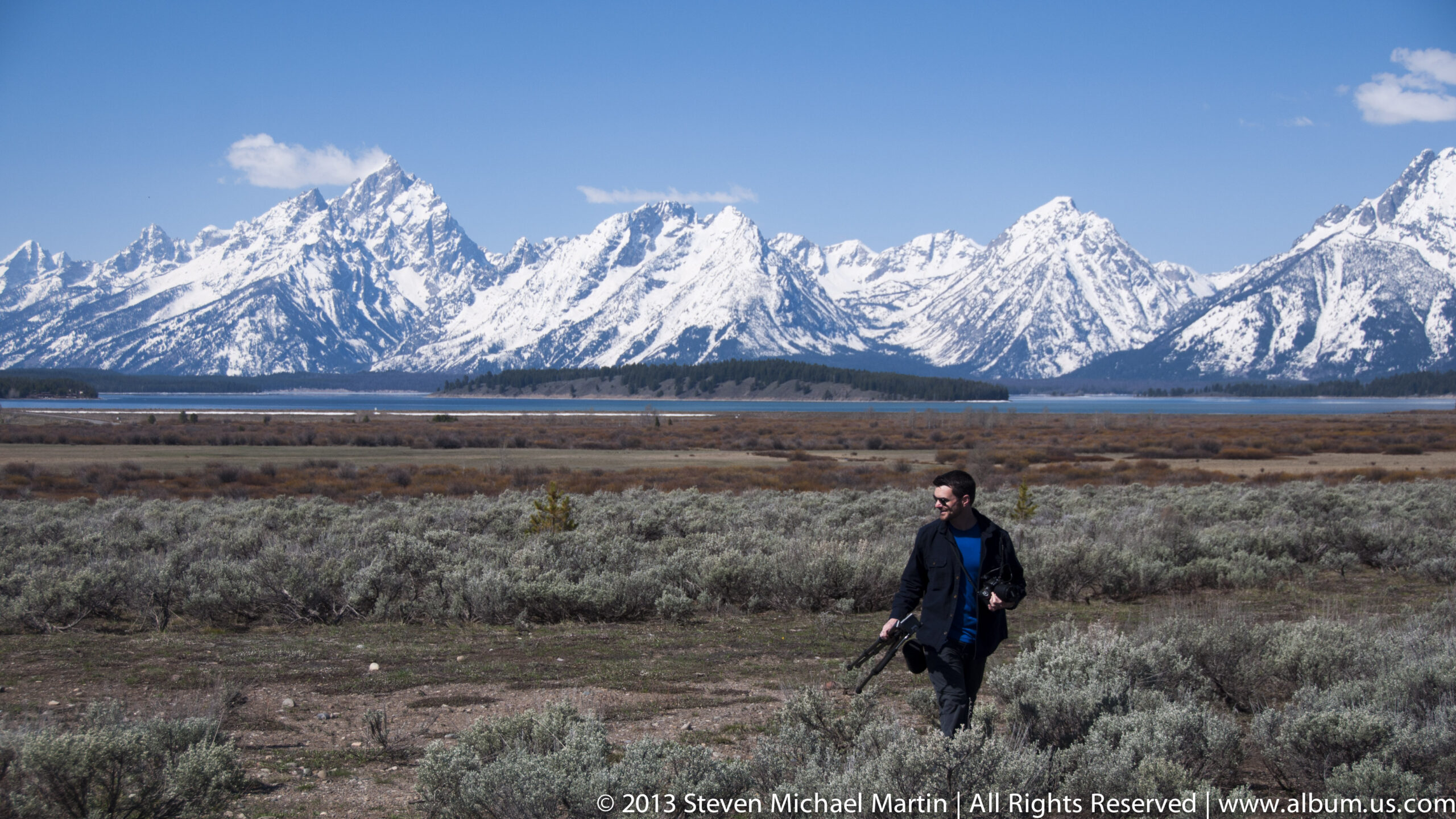
Seen closer, a man steps through the dry, low vegetation with one arm lowered beside him. The mountain range stretches across the background beneath a clear sky, but the nearer figure and textured scrub give this frame a more immediate, personal scale. The composition records movement across the open valley floor rather than a posed portrait.
Caption
Seen closer, a man steps through the dry, low vegetation with one arm lowered beside him. The mountain range stretches across the background beneath a clear sky, but the nearer figure and textured scrub give this frame a more immediate, personal scale. The composition records movement across the open valley floor rather than a posed portrait.
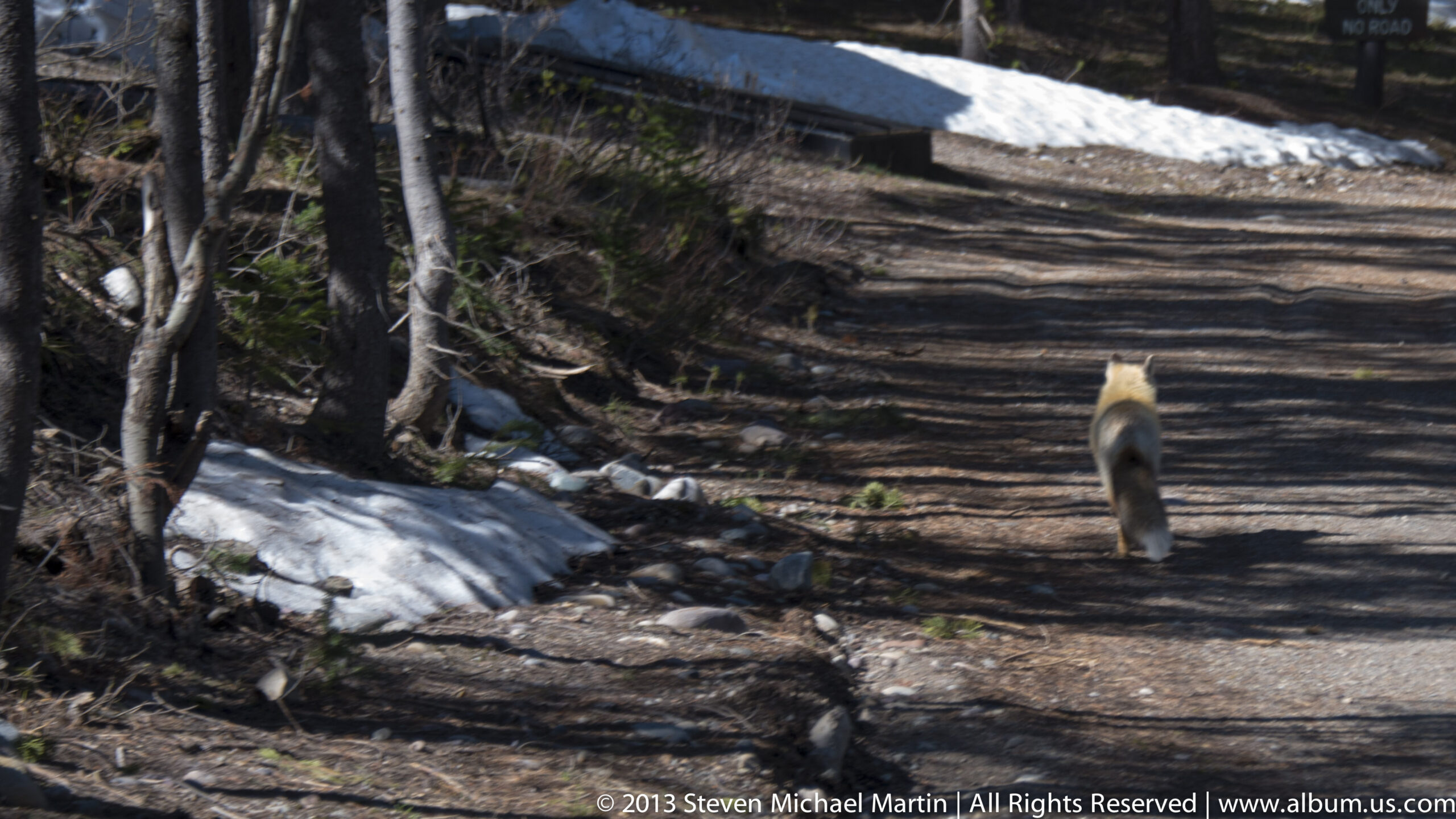
A tan, dog-like animal walks away along a dirt path bordered by melting snow and dark tree trunks. The animal’s shape is visible, but the proof-sheet view does not establish whether it is a domestic dog or a wild canid. The shaded woodland contrasts with the bright snow patches and the sunlit trail ahead.
Caption
A tan, dog-like animal walks away along a dirt path bordered by melting snow and dark tree trunks. The animal’s shape is visible, but the proof-sheet view does not establish whether it is a domestic dog or a wild canid. The shaded woodland contrasts with the bright snow patches and the sunlit trail ahead.
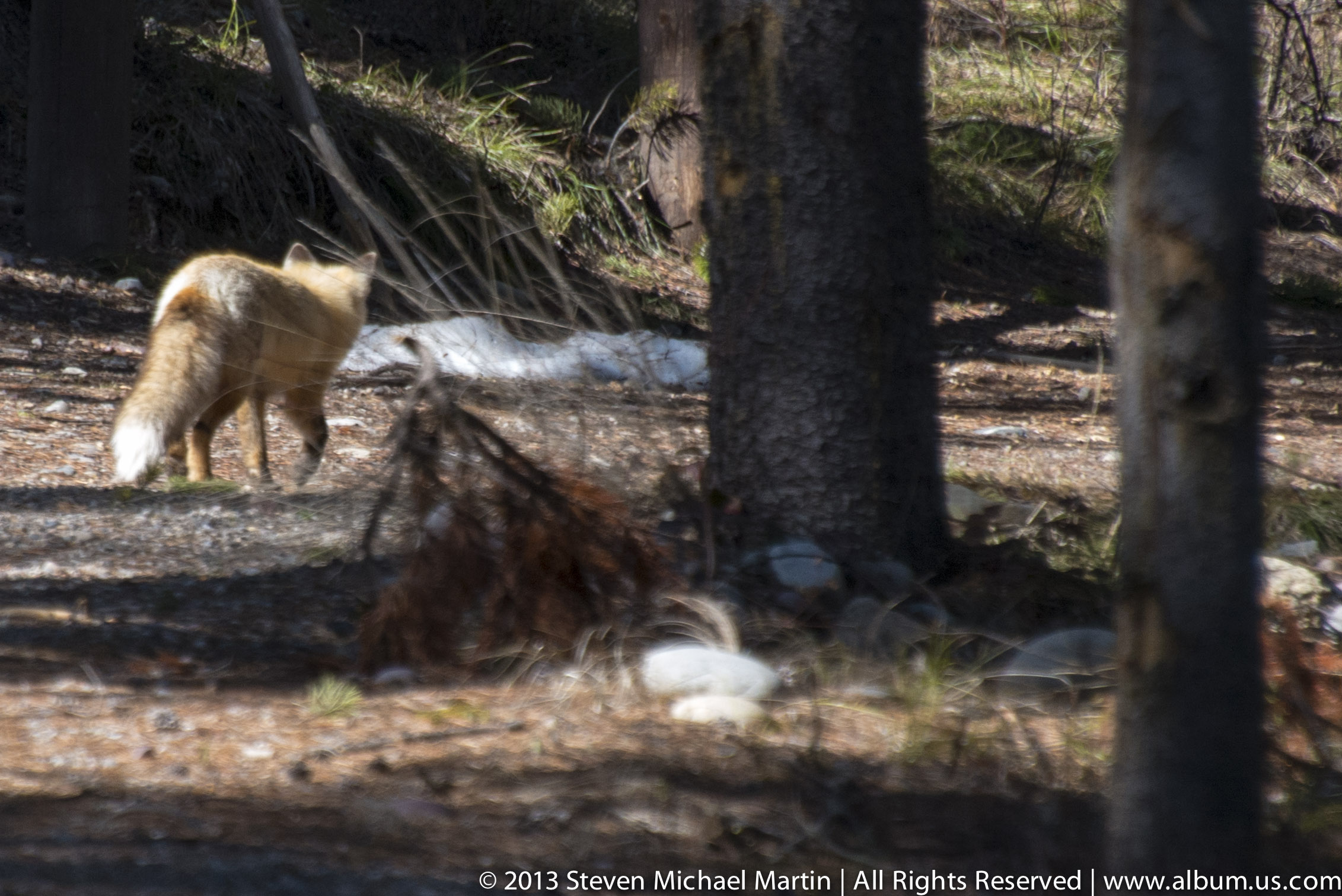
A tan fox lowers its head among sticks and leaf litter in a shaded stand of trees, with a remnant patch of snow nearby. The soft, slightly blurred view suggests an unposed moment, but does not provide enough detail to distinguish a domestic dog from a wild canid. Tree trunks and scattered branches enclose the animal within the woodland.
Caption
A tan fox lowers its head among sticks and leaf litter in a shaded stand of trees, with a remnant patch of snow nearby. The soft, slightly blurred view suggests an unposed moment, but does not provide enough detail to distinguish a domestic dog from a wild canid. Tree trunks and scattered branches enclose the animal within the woodland.

A nearly unbroken field of sagebrush spreads across the foreground beneath the distant, snow-covered Teton Range. The low viewpoint lets the dark shrubs form a textured base for the bright peaks, while a deep blue sky occupies much of the frame. This wide view emphasizes the open scale of the valley and the contrast between dry lowland and alpine snow.
Caption
A nearly unbroken field of sagebrush spreads across the foreground beneath the distant, snow-covered Teton Range. The low viewpoint lets the dark shrubs form a textured base for the bright peaks, while a deep blue sky occupies much of the frame. This wide view emphasizes the open scale of the valley and the contrast between dry lowland and alpine snow.
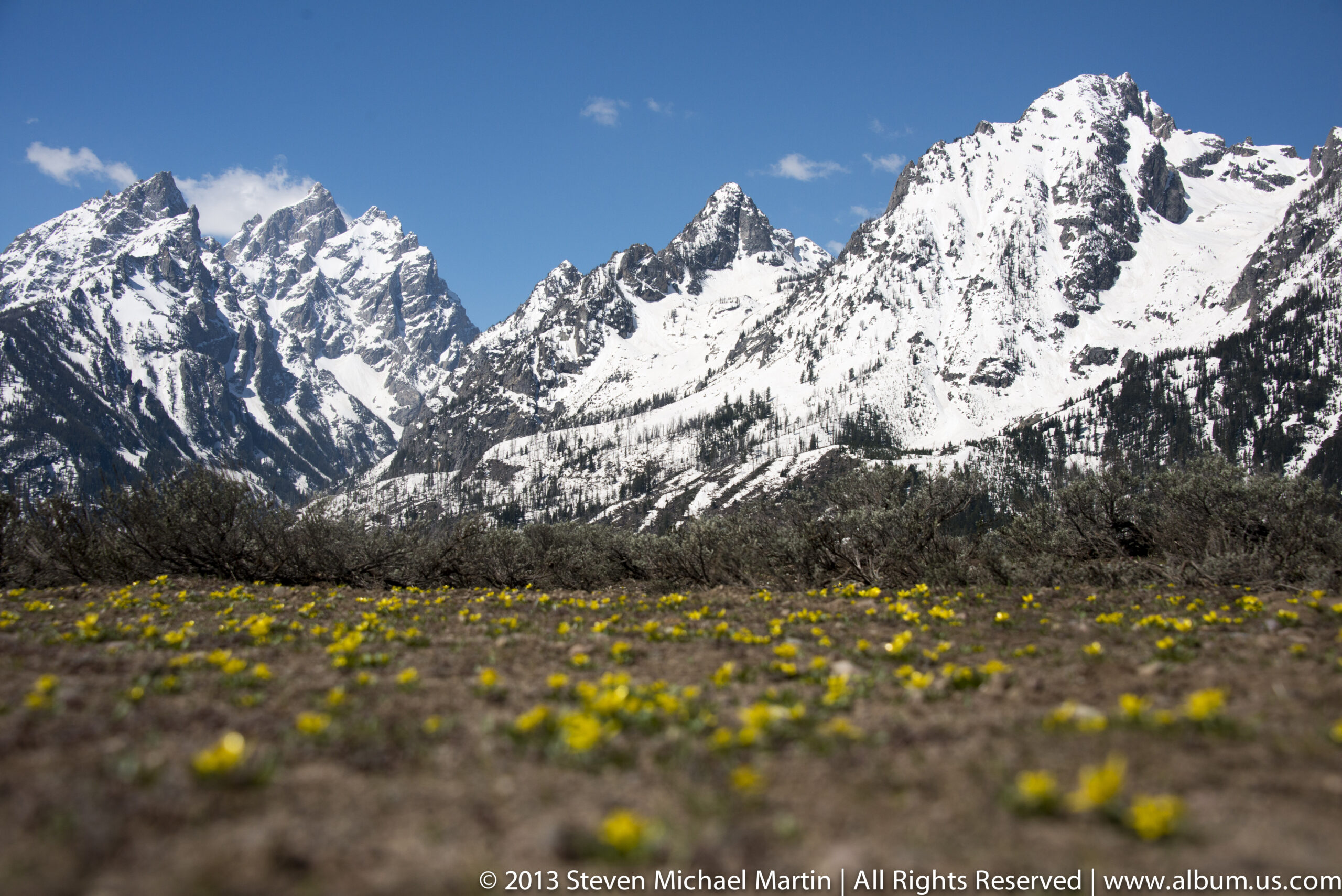
Small yellow flowers rise above green meadow growth in the foreground, with the snow-covered Teton Range beyond. The shallow focus keeps the blossoms soft and bright while the mountain skyline remains legible, pairing a close seasonal detail with the park’s distant alpine landscape. The scene shows spring color emerging at the foot of lingering snow.
Caption
Small yellow flowers rise above green meadow growth in the foreground, with the snow-covered Teton Range beyond. The shallow focus keeps the blossoms soft and bright while the mountain skyline remains legible, pairing a close seasonal detail with the park’s distant alpine landscape. The scene shows spring color emerging at the foot of lingering snow.
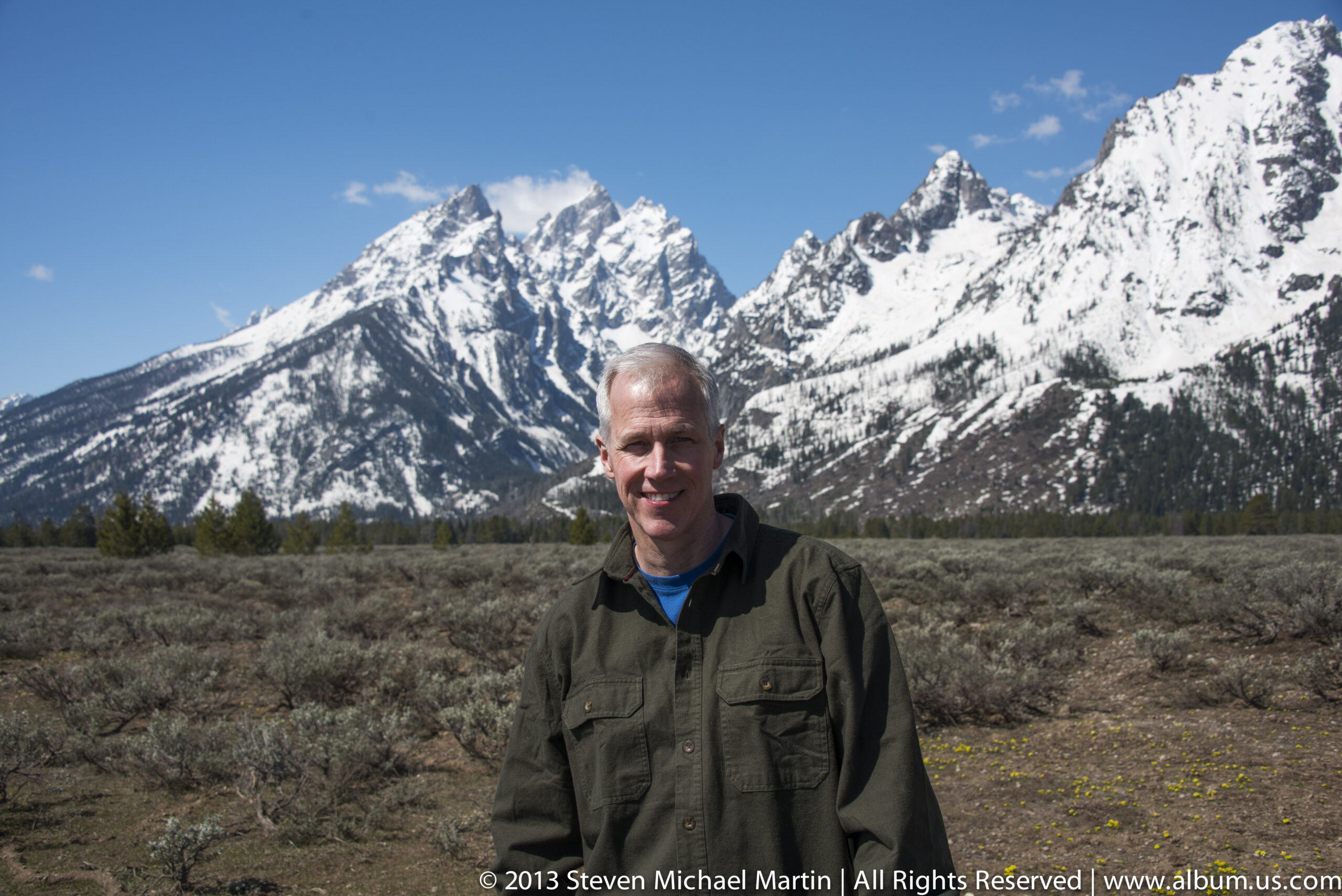
A man stands in low sagebrush with the Teton Range rising behind him. He faces the camera, while the line of dark foothills and bright snowfields create a clear backdrop for the portrait. The waist-up distance is wide enough to retain the surrounding meadow and mountain setting, making this both a personal travel portrait and a landscape view.
Caption
A man stands in low sagebrush with the Teton Range rising behind him. He faces the camera, while the line of dark foothills and bright snowfields create a clear backdrop for the portrait. The waist-up distance is wide enough to retain the surrounding meadow and mountain setting, making this both a personal travel portrait and a landscape view.
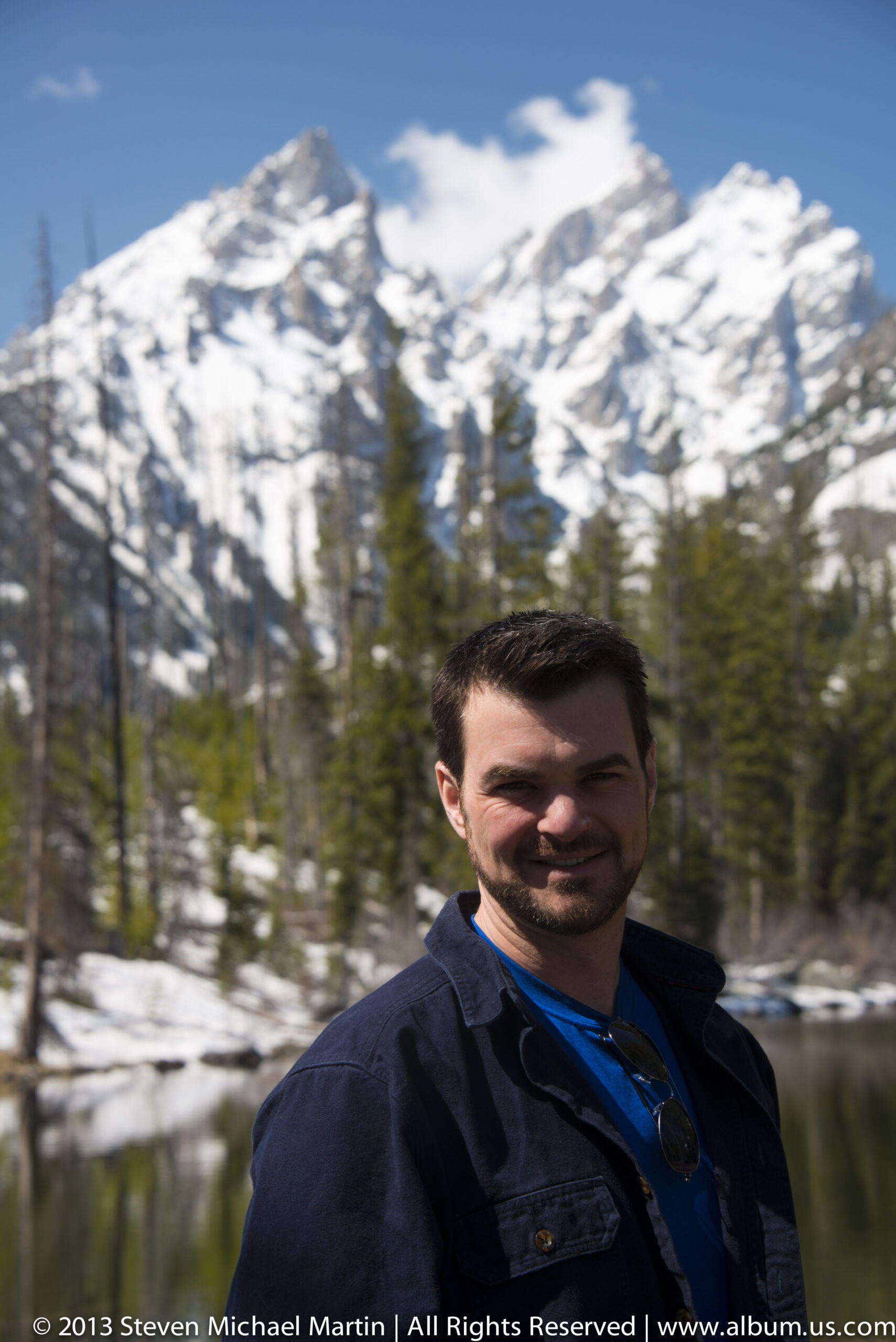
A man looks into the camera at close range, with a snow-lined pond and evergreen trees visible over his shoulder. The tight framing makes his face and dark jacket the main subject, while the reflective water provides context for the wooded mountain setting. Bright snow patches remain along the bank, suggesting a seasonal transition.
Caption
A man looks into the camera at close range, with a snow-lined pond and evergreen trees visible over his shoulder. The tight framing makes his face and dark jacket the main subject, while the reflective water provides context for the wooded mountain setting. Bright snow patches remain along the bank, suggesting a seasonal transition.
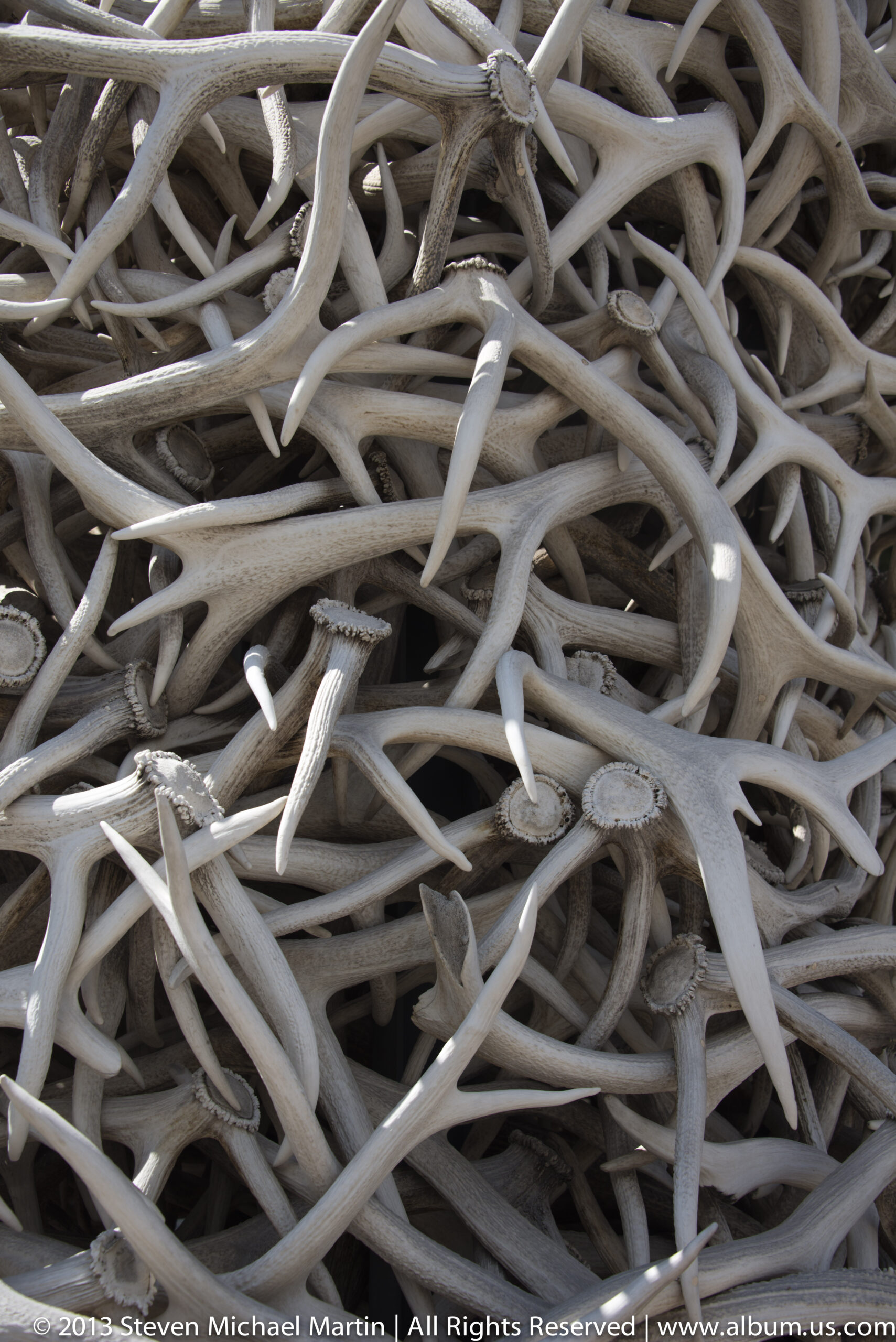
A dense pile of pale antlers fills the frame, their branching tines overlapping in many directions. The tight composition removes the larger setting and emphasizes the repeated curved forms, pointed tips, and smooth surfaces. The antlers appear to be naturally shed elk antlers, though the close view does not establish their exact origin.
Caption
A dense pile of pale antlers fills the frame, their branching tines overlapping in many directions. The tight composition removes the larger setting and emphasizes the repeated curved forms, pointed tips, and smooth surfaces. The antlers appear to be naturally shed elk antlers, though the close view does not establish their exact origin.
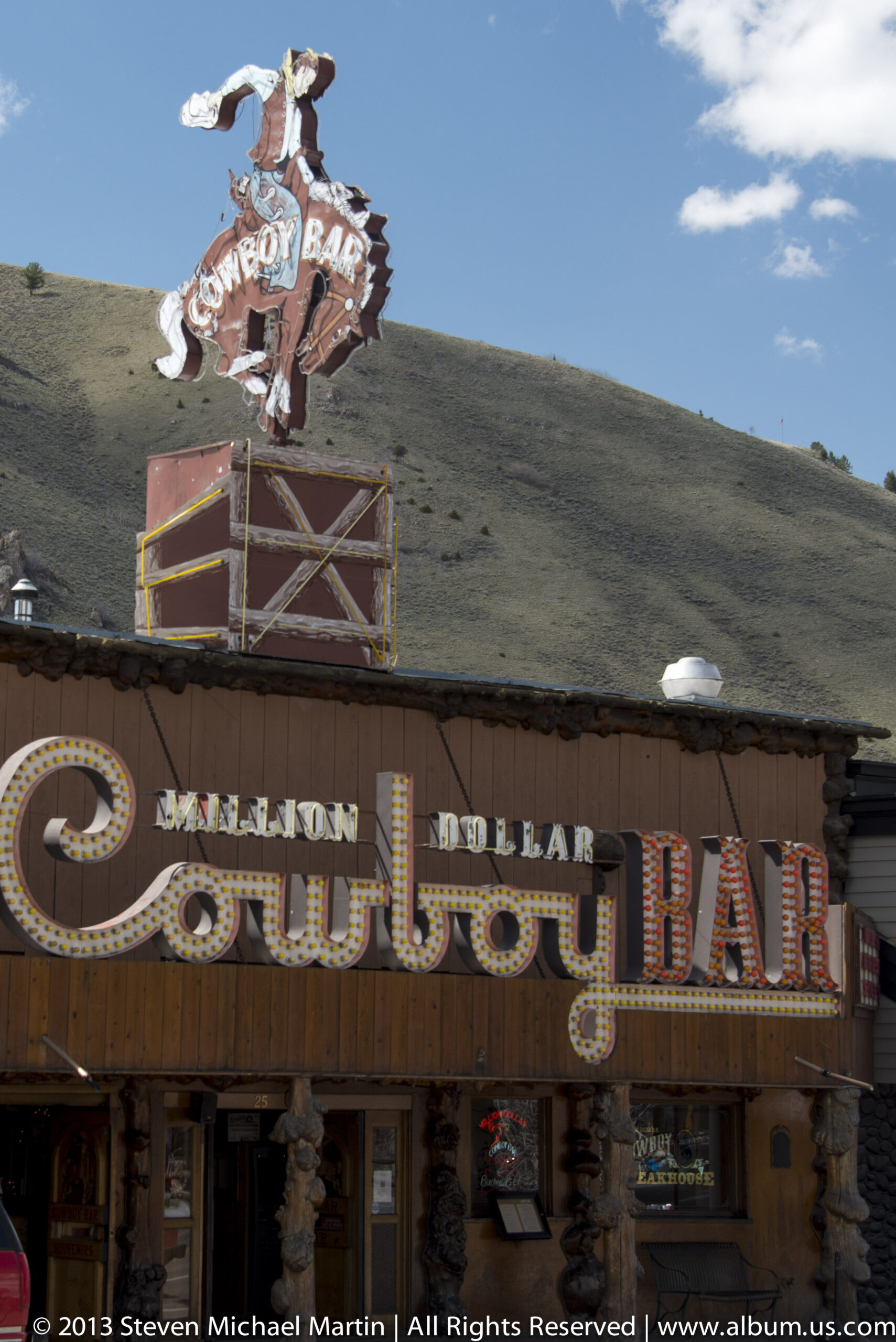
A western-style commercial façade is crowded with painted lettering and decorative motifs. The prominent “Million Dollar Cowboy Bar” sign spans the lower portion, with a mounted figure and additional ornament above it. The view records the building’s theatrical street frontage and layered signage against a clear sky, without showing the interior.
Caption
A western-style commercial façade is crowded with painted lettering and decorative motifs. The prominent “Million Dollar Cowboy Bar” sign spans the lower portion, with a mounted figure and additional ornament above it. The view records the building’s theatrical street frontage and layered signage against a clear sky, without showing the interior.
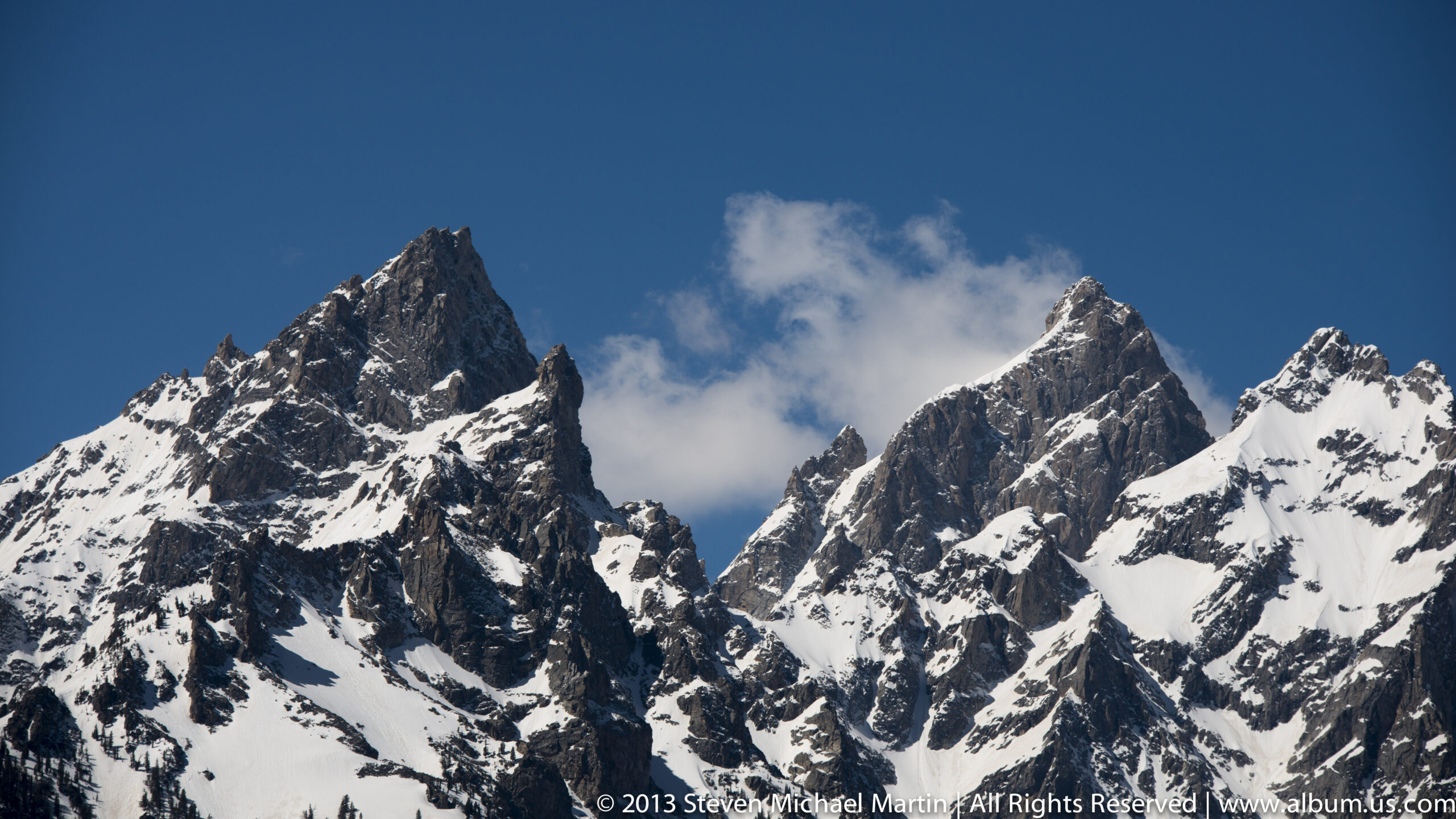
Several sharply pointed peaks rise against a vivid blue sky, their dark rock faces divided by streaks and pockets of snow. The tight crop removes the valley floor and focuses attention on the rugged summit profiles and the contrast between rock and snow. A small cloud drifts near the central peak.
Caption
Several sharply pointed peaks rise against a vivid blue sky, their dark rock faces divided by streaks and pockets of snow. The tight crop removes the valley floor and focuses attention on the rugged summit profiles and the contrast between rock and snow. A small cloud drifts near the central peak.
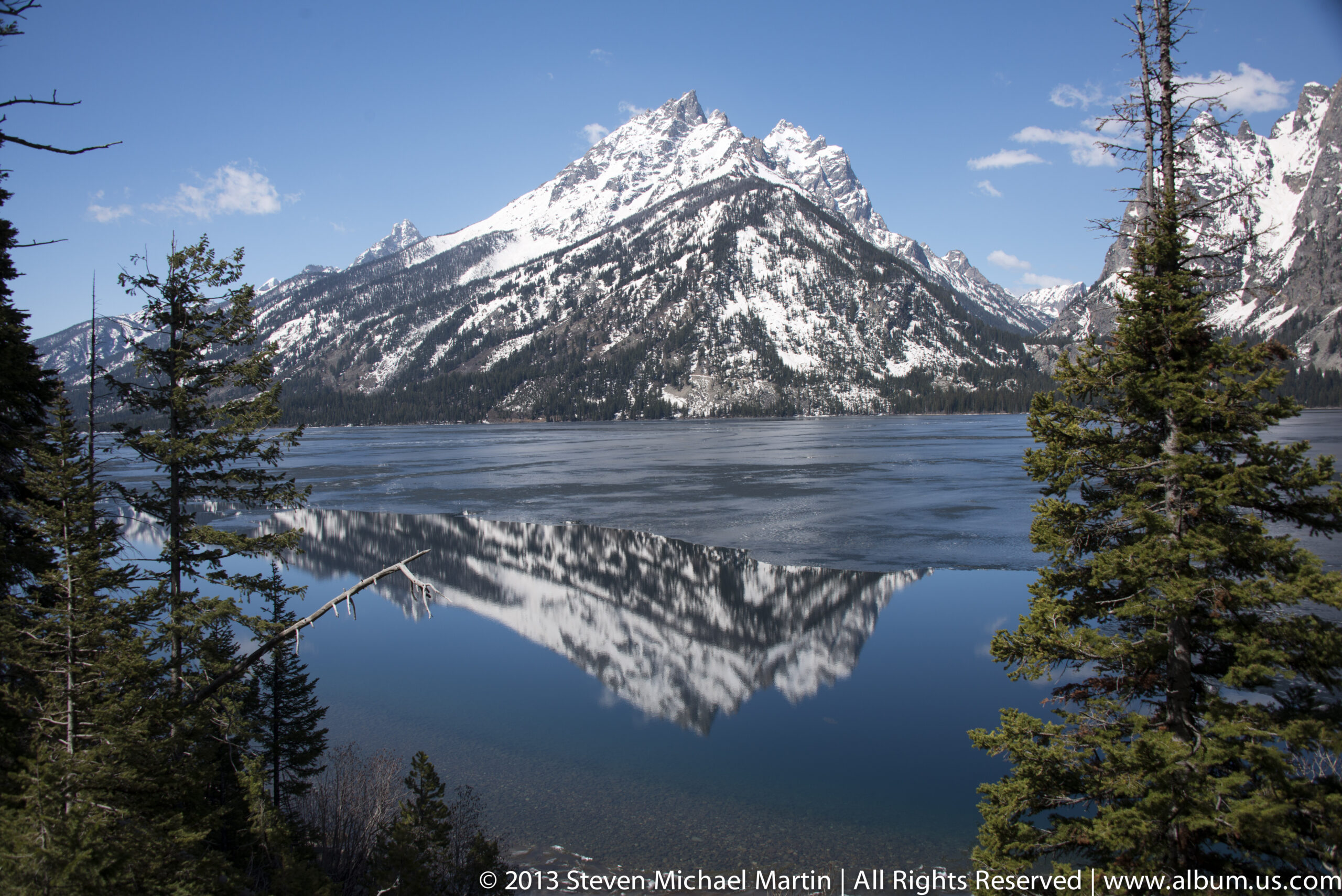
A still blue lake mirrors a snow-covered peak and the surrounding conifers. Trees frame both sides of the water, while a broken branch angles across the lower foreground and draws the eye toward the reflection. The balanced composition pairs the wooded shoreline with the mountain beyond, giving the calm water nearly as much visual weight as the summit.
Caption
A still blue lake mirrors a snow-covered peak and the surrounding conifers. Trees frame both sides of the water, while a broken branch angles across the lower foreground and draws the eye toward the reflection. The balanced composition pairs the wooded shoreline with the mountain beyond, giving the calm water nearly as much visual weight as the summit.
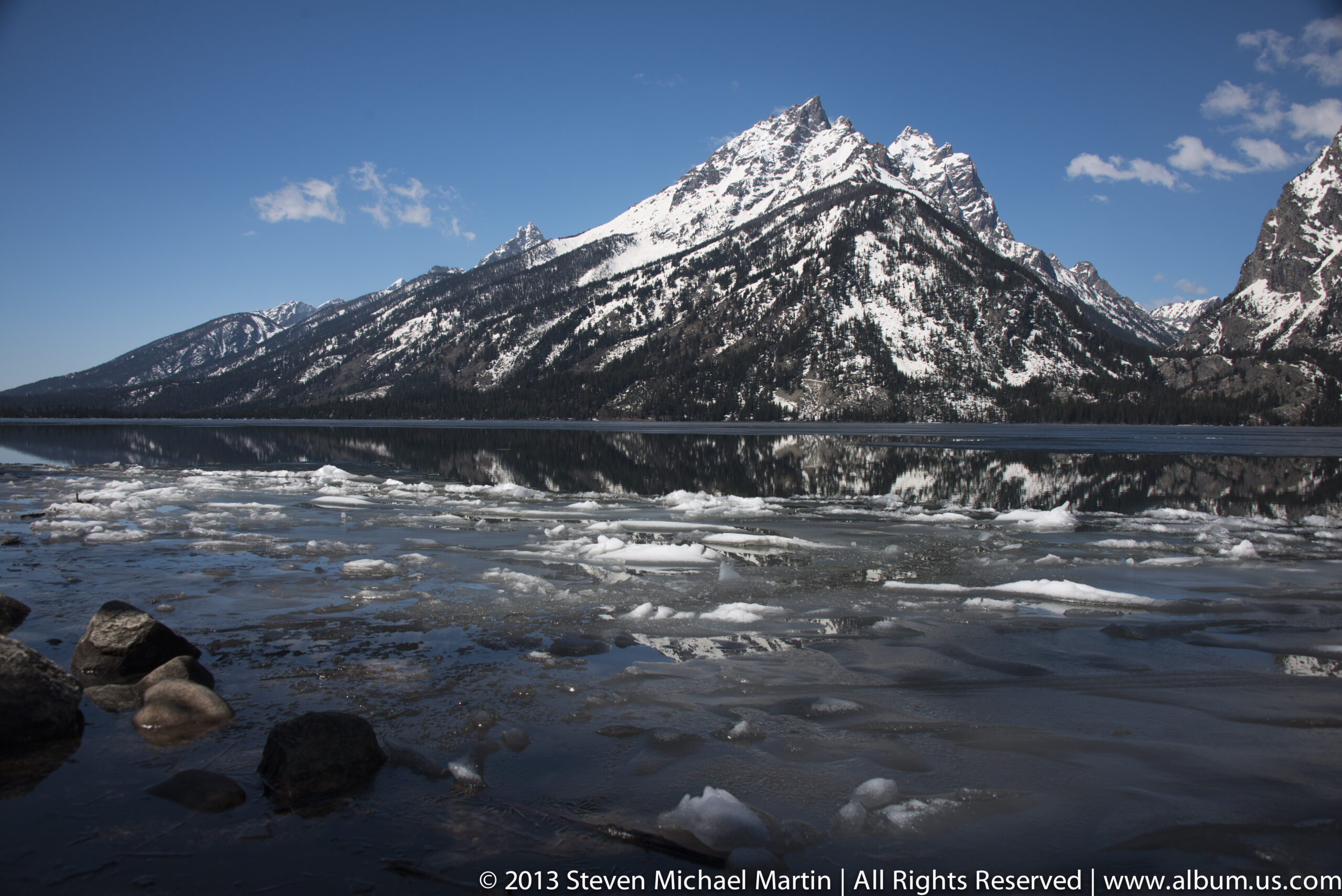
A snow-covered peak rises above a dark band of forest and appears again in the lake below. The water is nearly still, though a few scattered ice pieces interrupt its surface. Rocks along the near edge anchor the composition, while the broad reflection makes the mountain feel doubled across the horizontal divide of the shoreline.
Caption
A snow-covered peak rises above a dark band of forest and appears again in the lake below. The water is nearly still, though a few scattered ice pieces interrupt its surface. Rocks along the near edge anchor the composition, while the broad reflection makes the mountain feel doubled across the horizontal divide of the shoreline.
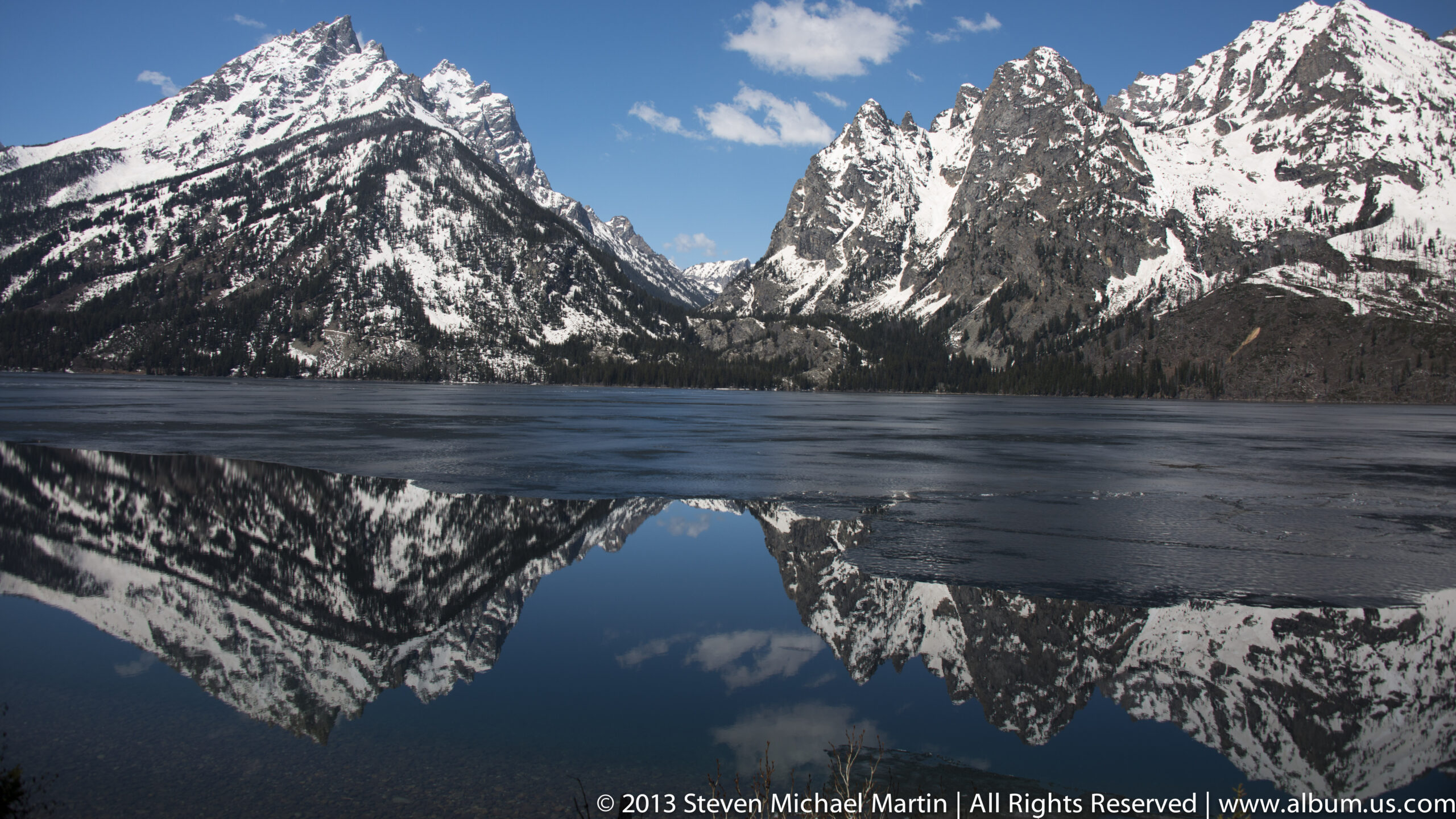
The lake occupies much of the frame, reflecting a line of snow-covered peaks and dark evergreen forest. A few stones enter at the lower edge, but the composition is dominated by the horizontal pairing of mountain and reflection. Clear blue water and lingering snow give this view a crisp, early-season character.
Caption
The lake occupies much of the frame, reflecting a line of snow-covered peaks and dark evergreen forest. A few stones enter at the lower edge, but the composition is dominated by the horizontal pairing of mountain and reflection. Clear blue water and lingering snow give this view a crisp, early-season character.
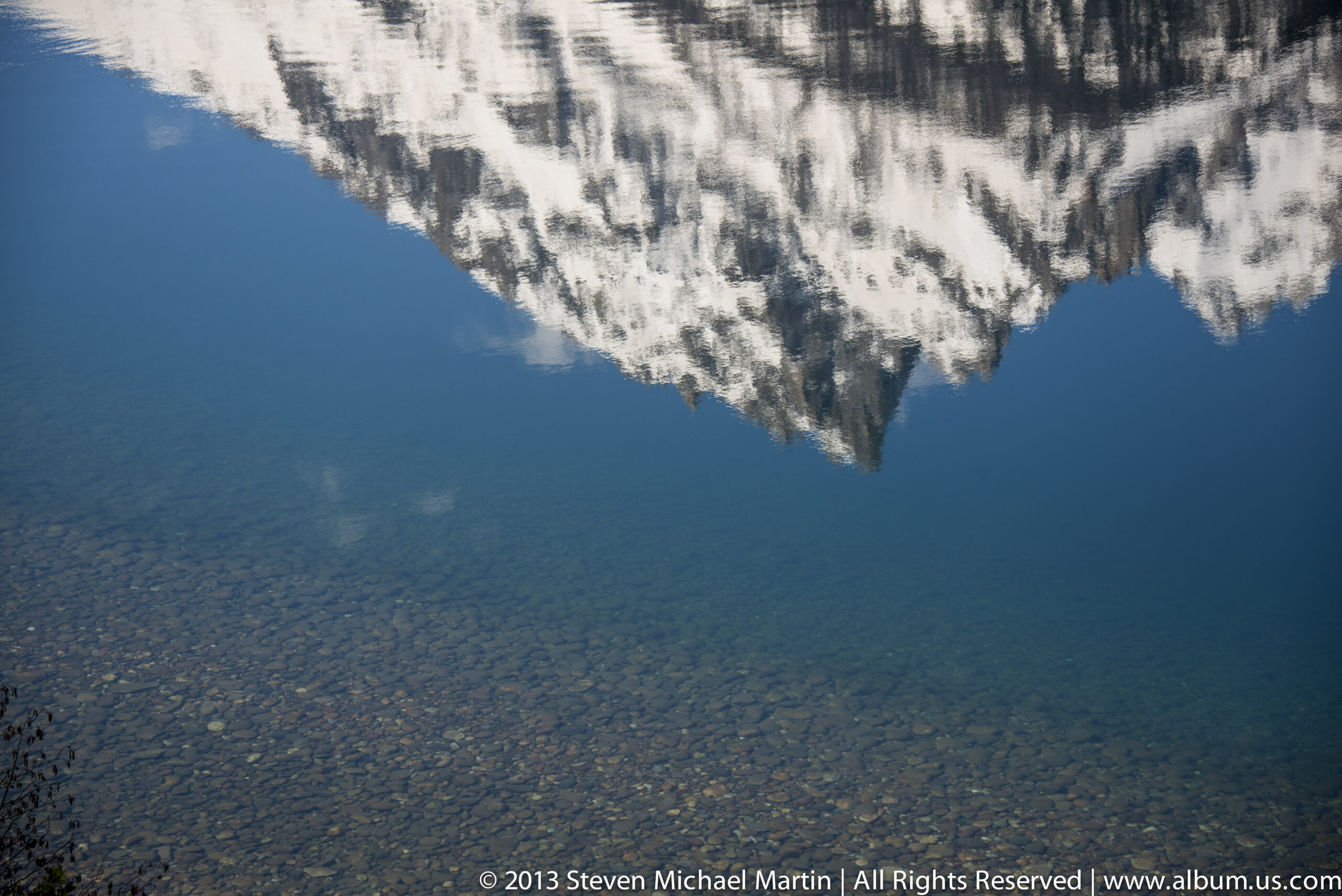
The mountain ridge appears upside down in deep blue water, with only a narrow band of actual shoreline at the top of the frame. The close crop turns the reflection into an abstract arrangement of pale snow, dark rock, and blue water. Subtle ripples soften the reflected edges without obscuring the recognizable alpine profile.
Caption
The mountain ridge appears upside down in deep blue water, with only a narrow band of actual shoreline at the top of the frame. The close crop turns the reflection into an abstract arrangement of pale snow, dark rock, and blue water. Subtle ripples soften the reflected edges without obscuring the recognizable alpine profile.
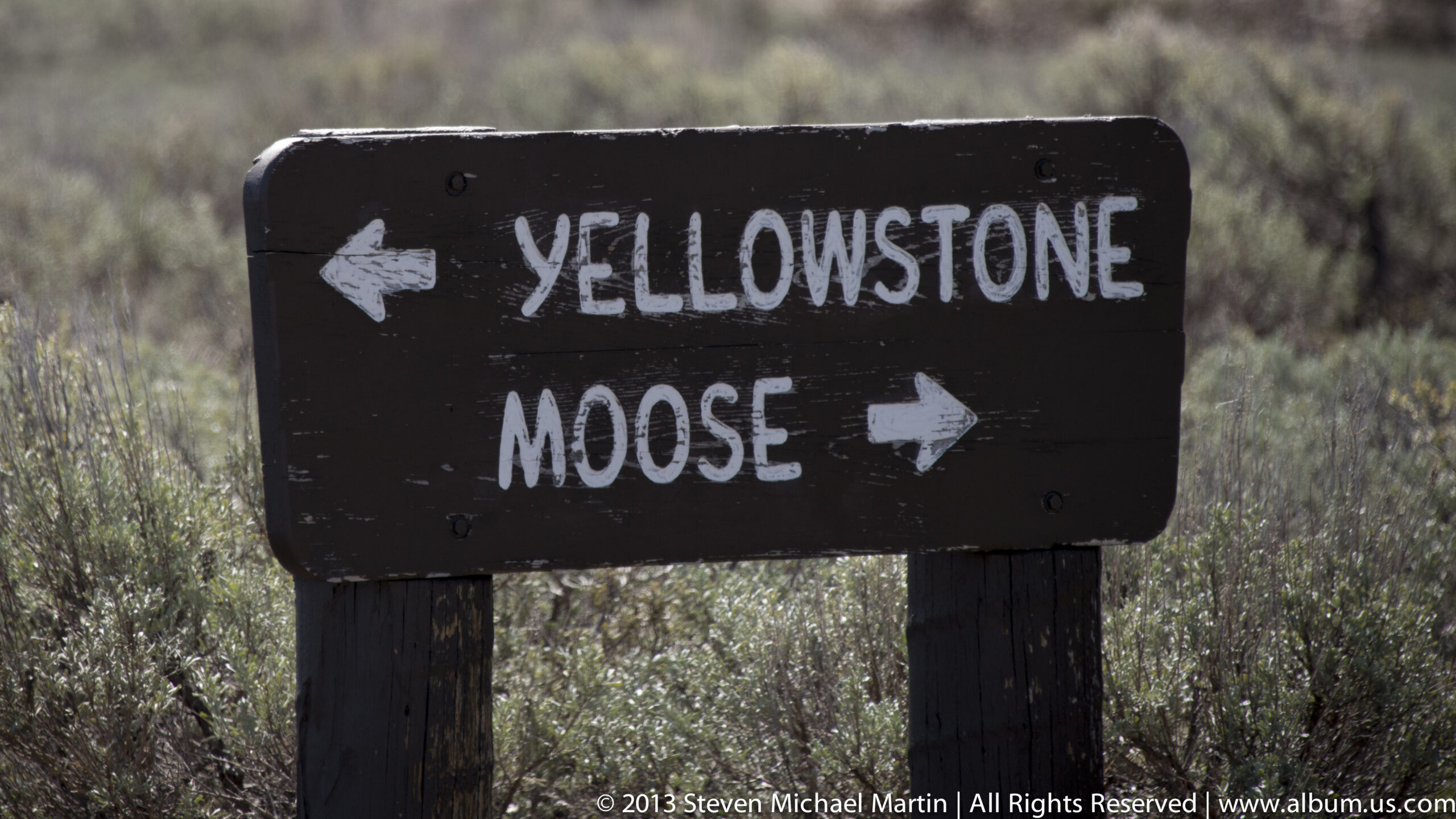
A weathered dark wooden sign fills the frame, with hand-painted white lettering and arrows directing visitors toward Yellowstone and Moose. The arrow for Yellowstone points left; the arrow for Moose points right. Sagebrush behind the sign places it in an open high-country setting, while the close view makes the legible text the central evidence.
Caption
A weathered dark wooden sign fills the frame, with hand-painted white lettering and arrows directing visitors toward Yellowstone and Moose. The arrow for Yellowstone points left; the arrow for Moose points right. Sagebrush behind the sign places it in an open high-country setting, while the close view makes the legible text the central evidence.
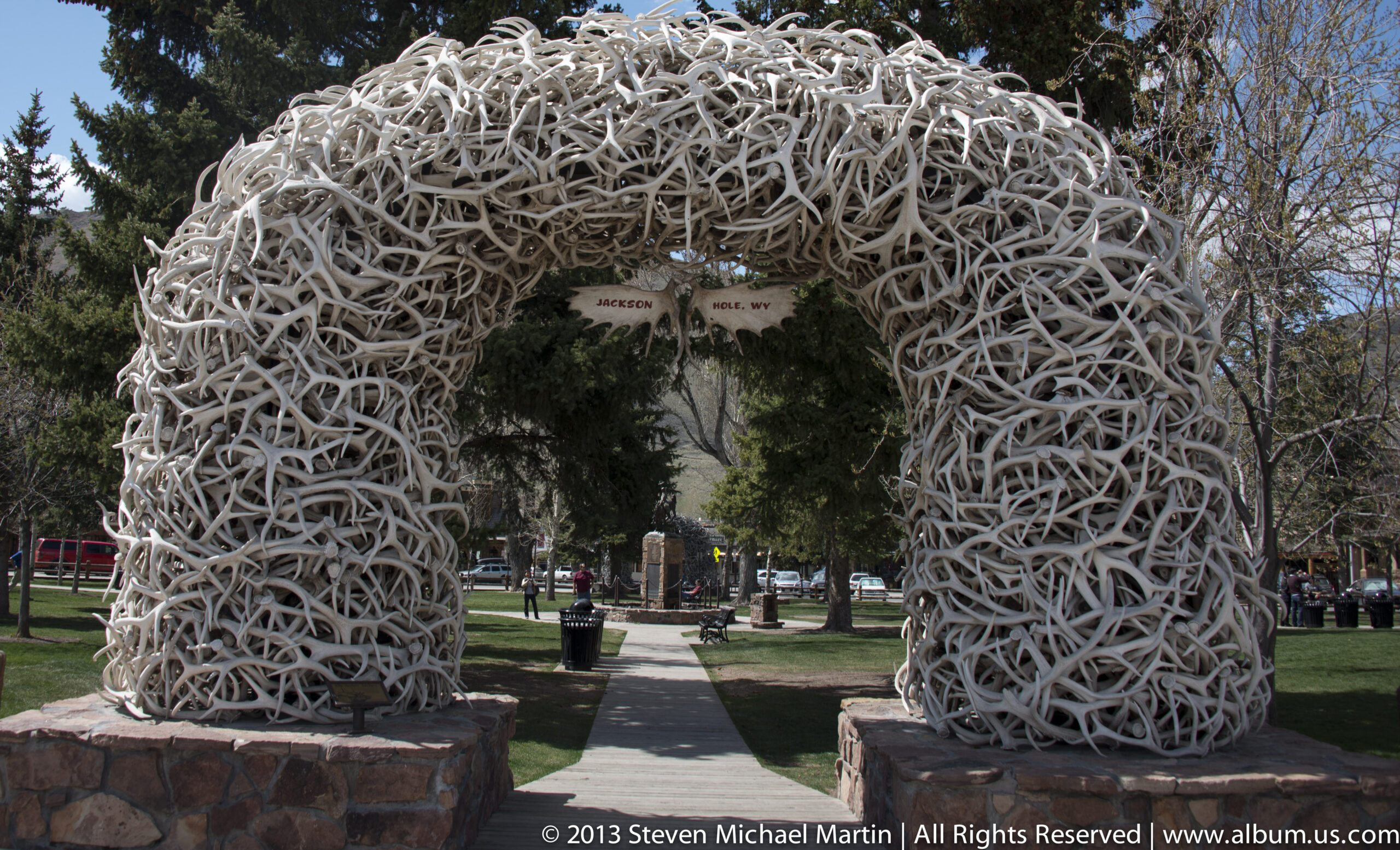
A large arch assembled from pale antlers frames a paved path through a landscaped park. The antlers form a dense interlocking surface above stone supports, while benches, trees, and small figures appear beyond the opening. The view shows the arch as both a sculptural structure and a passageway within a public outdoor space.
Caption
A large arch assembled from pale antlers frames a paved path through a landscaped park. The antlers form a dense interlocking surface above stone supports, while benches, trees, and small figures appear beyond the opening. The view shows the arch as both a sculptural structure and a passageway within a public outdoor space.
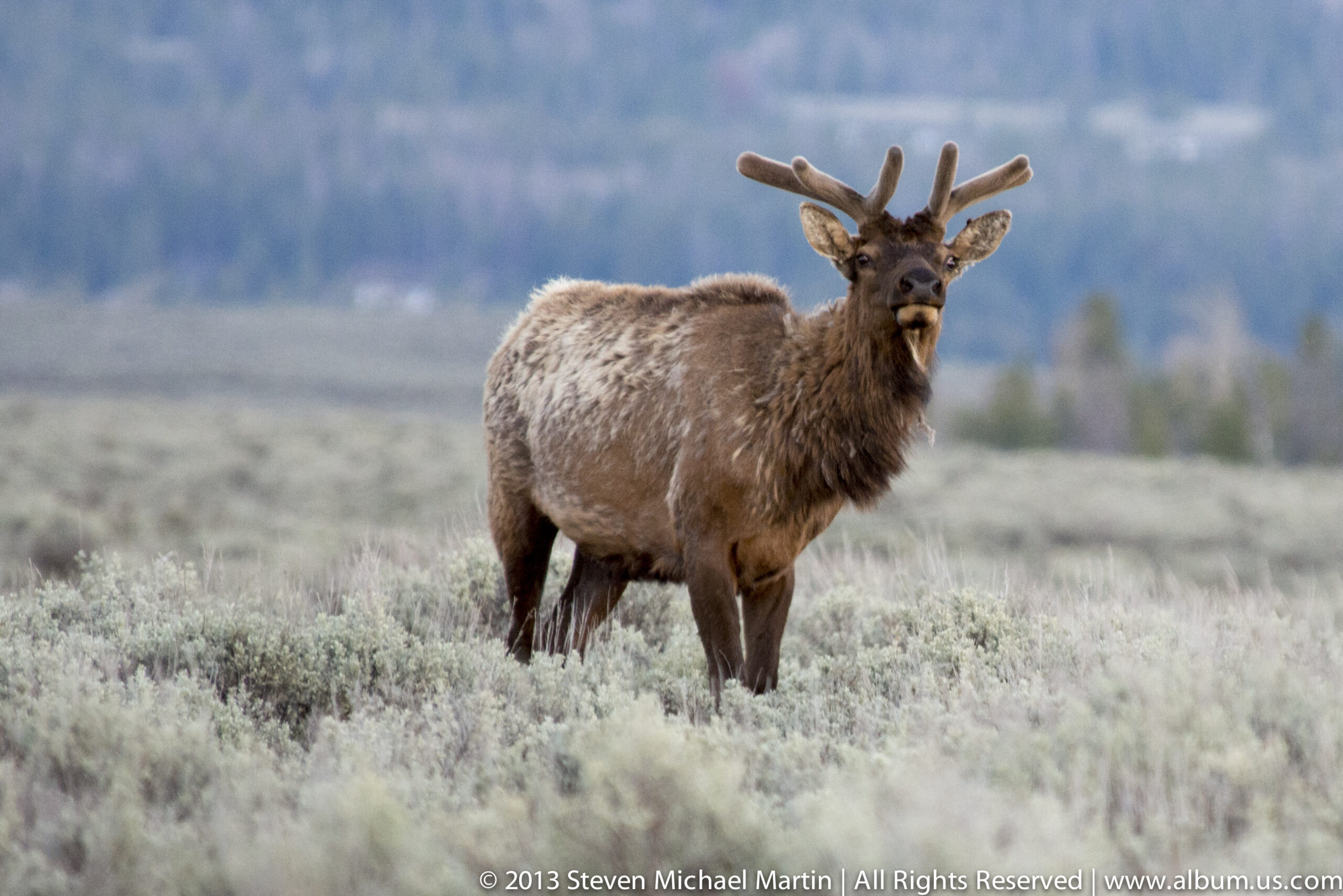
A bull elk stands broadside in low sagebrush, its branched antlers still covered in velvet. Its tawny coat contrasts with the pale shrubs, while a softly blurred meadow and distant tree line keep attention on the animal. The alert posture and unobstructed profile make the antler growth and seasonal coat especially clear.
Caption
A bull elk stands broadside in low sagebrush, its branched antlers still covered in velvet. Its tawny coat contrasts with the pale shrubs, while a softly blurred meadow and distant tree line keep attention on the animal. The alert posture and unobstructed profile make the antler growth and seasonal coat especially clear.
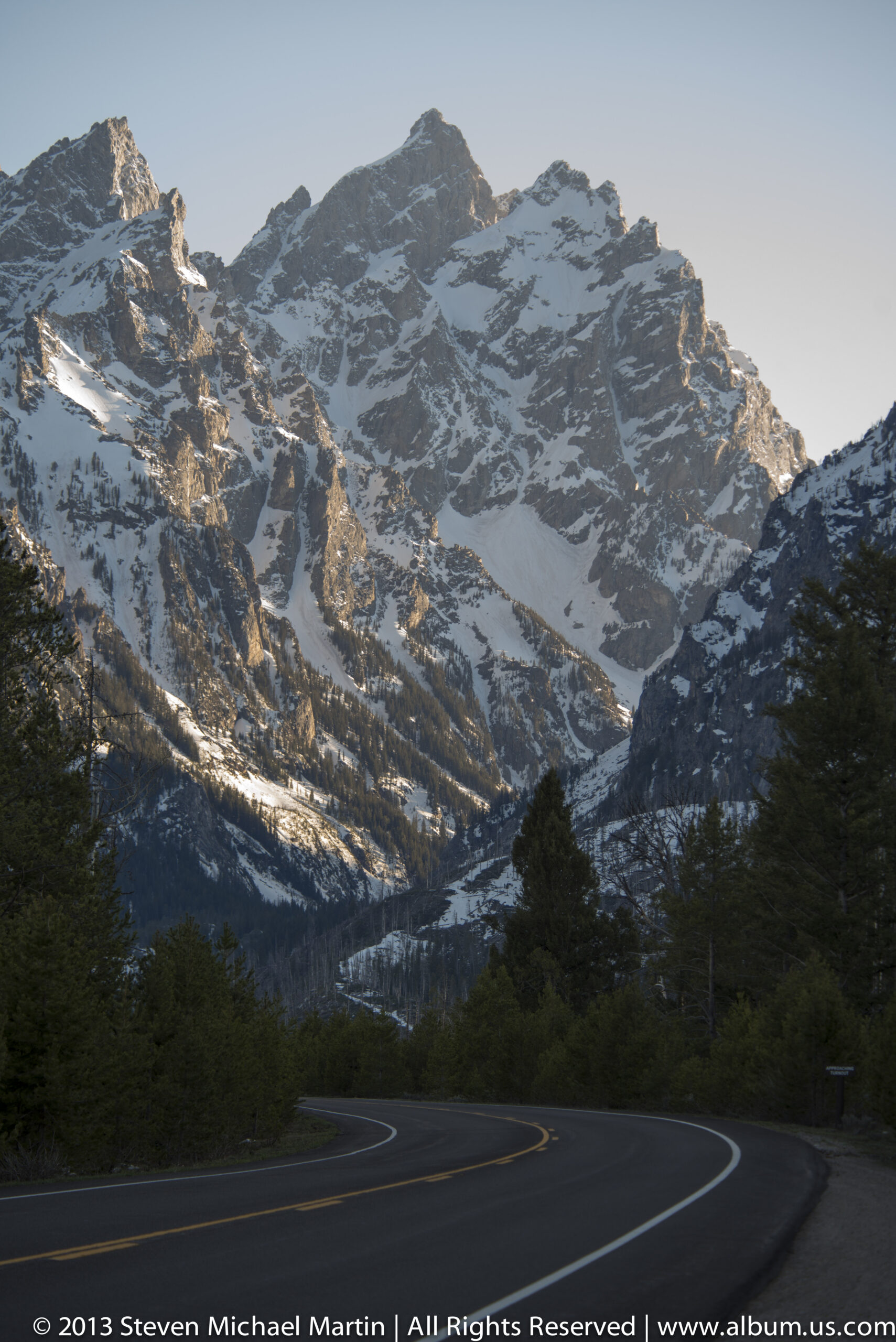
A paved road curves through the lower foreground toward a steep, snow-dusted mountain framed by conifers. The dark trees and roadway lead into the valley, while warm late-day light touches the snow and exposed rock above. This roadside viewpoint links the route through the forest with the high alpine terrain beyond.
Caption
A paved road curves through the lower foreground toward a steep, snow-dusted mountain framed by conifers. The dark trees and roadway lead into the valley, while warm late-day light touches the snow and exposed rock above. This roadside viewpoint links the route through the forest with the high alpine terrain beyond.

A low, snow-dusted mountain range forms a narrow horizon beneath a broad lavender and peach sky. The still water below mirrors both the dark ridgeline and the fading color, while a curved, shadowed bank enters from the right. With the mountains kept low in the frame, the photograph gives equal weight to the calm reflection and the open evening sky.
Caption
A low, snow-dusted mountain range forms a narrow horizon beneath a broad lavender and peach sky. The still water below mirrors both the dark ridgeline and the fading color, while a curved, shadowed bank enters from the right. With the mountains kept low in the frame, the photograph gives equal weight to the calm reflection and the open evening sky.
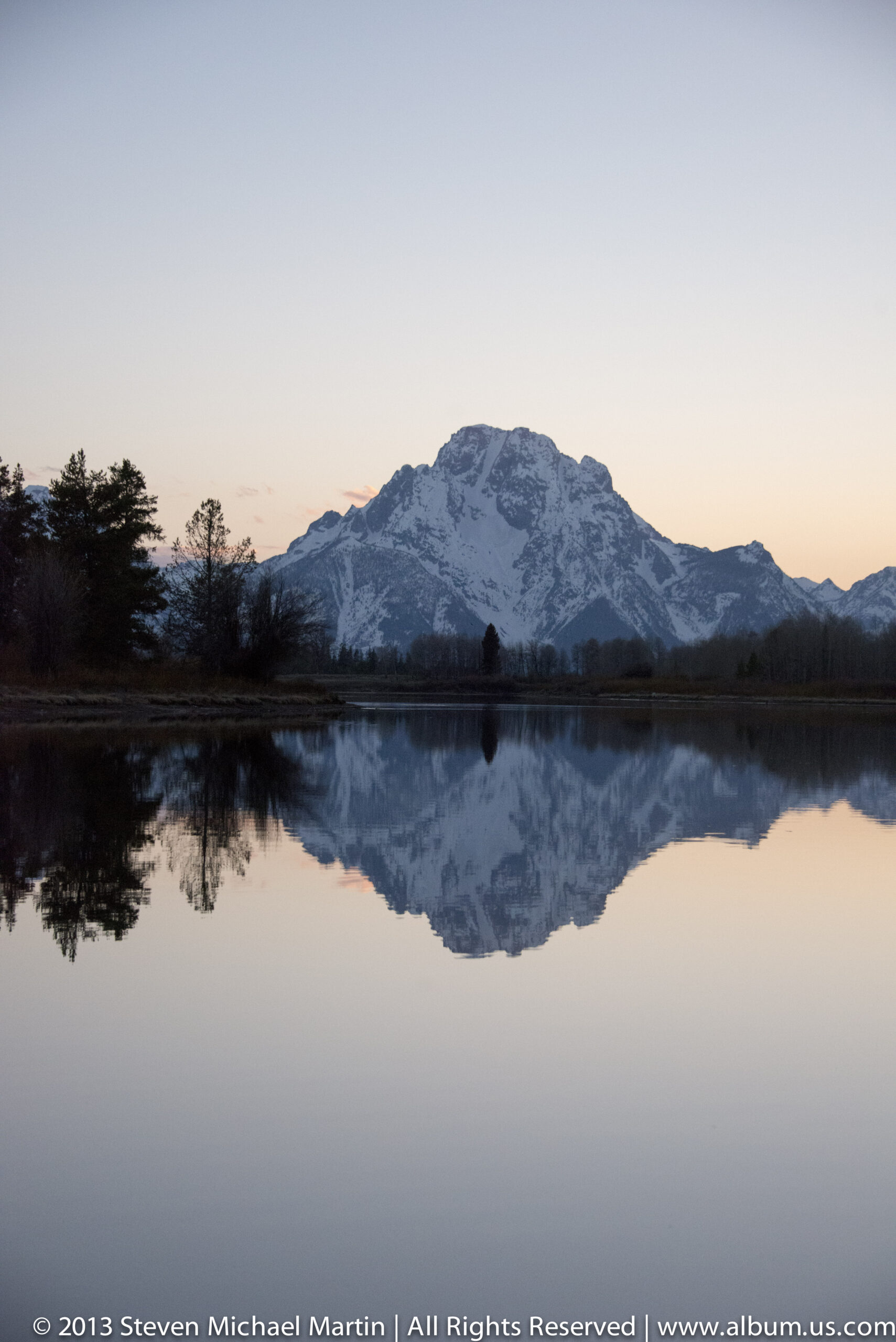
A broad, snow-covered mountain rises beyond a band of dark trees and is reflected almost completely in the lake below. The pale peach horizon and blue-gray sky are repeated in the water, while the mountain’s central mass anchors the composition. Compared with the previous image’s low horizon, this view gives the peak more height and brings its rugged snow patterns into clearer focus.
Caption
A broad, snow-covered mountain rises beyond a band of dark trees and is reflected almost completely in the lake below. The pale peach horizon and blue-gray sky are repeated in the water, while the mountain’s central mass anchors the composition. Compared with the previous image’s low horizon, this view gives the peak more height and brings its rugged snow patterns into clearer focus.
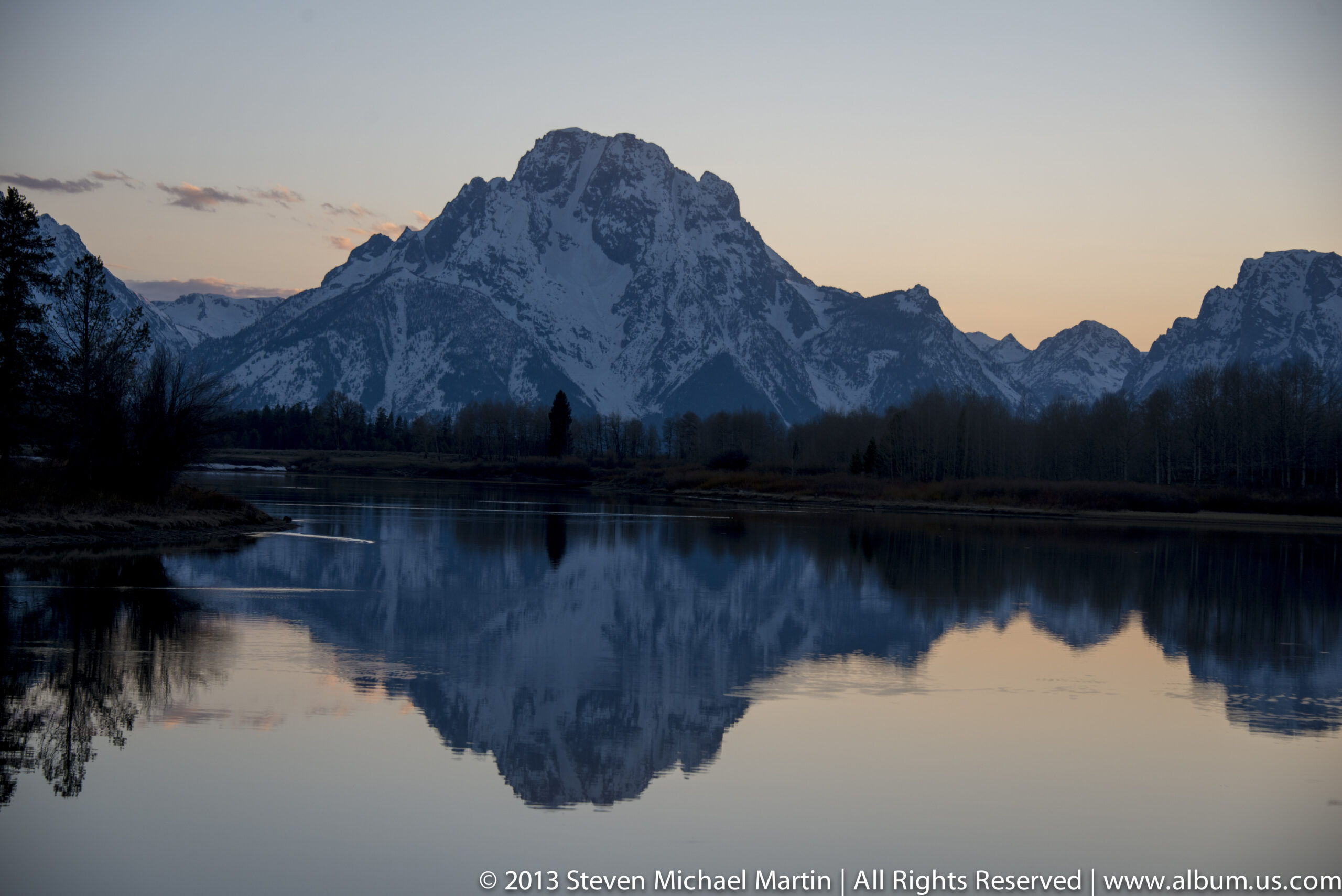
A high, jagged mountain rises above a quiet lake as the sky turns peach and pale blue. Its silhouette and snow-lined face are mirrored in the water, where a few thin bands of cloud color appear near the shore. The low light and near-symmetry create a restrained dawn view of the mountain landscape.
Caption
A high, jagged mountain rises above a quiet lake as the sky turns peach and pale blue. Its silhouette and snow-lined face are mirrored in the water, where a few thin bands of cloud color appear near the shore. The low light and near-symmetry create a restrained dawn view of the mountain landscape.
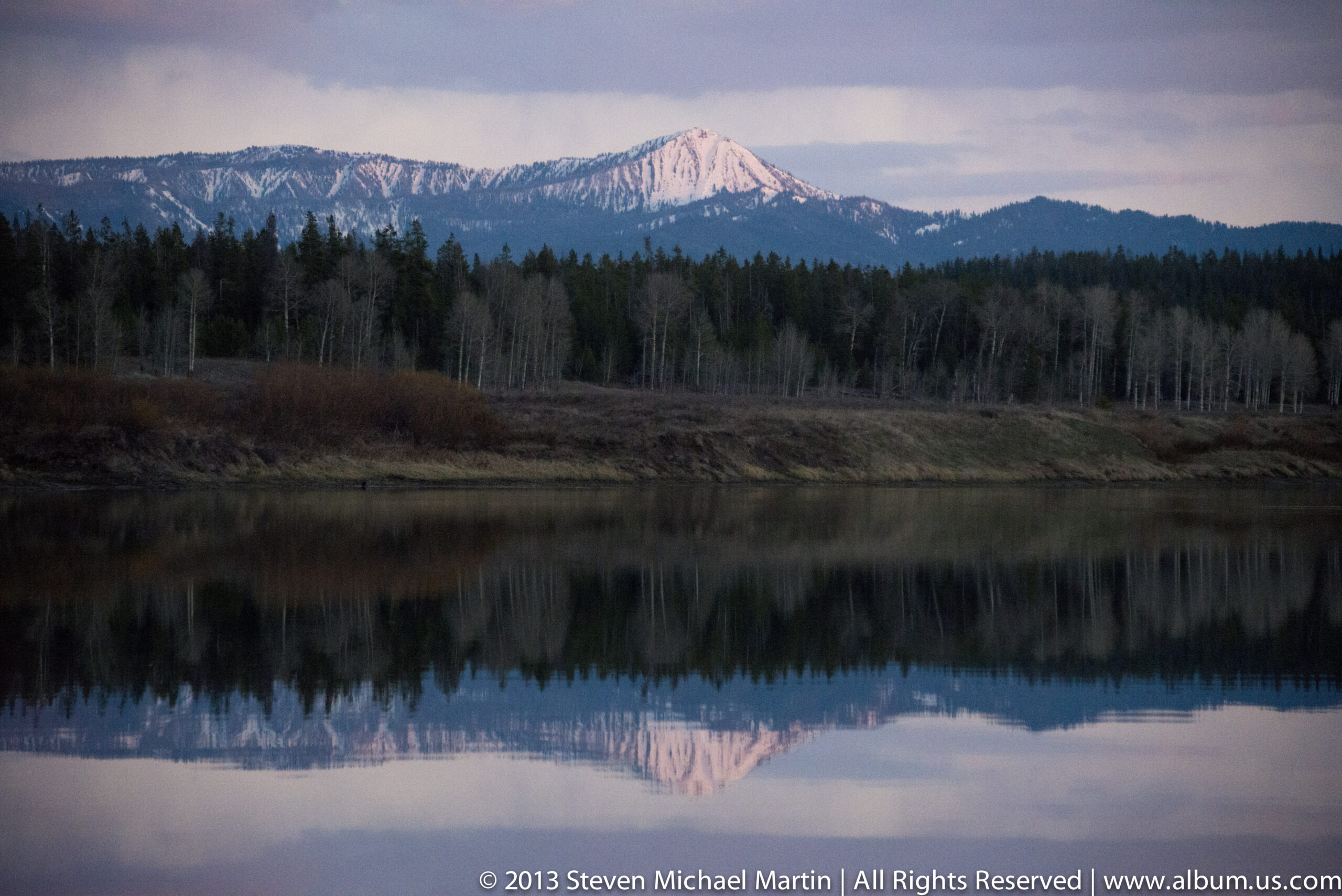
A snow-streaked peak in the Teton Range catches soft pink dawn light above a dark belt of conifers and leafless trees. The lake in the foreground reflects the mountain and treeline, creating a near-symmetrical composition that doubles the pale summit below the waterline. Cool blue shadows remain across the lower slopes, setting the illuminated peak apart from the subdued shoreline.
Caption
A snow-streaked peak in the Teton Range catches soft pink dawn light above a dark belt of conifers and leafless trees. The lake in the foreground reflects the mountain and treeline, creating a near-symmetrical composition that doubles the pale summit below the waterline. Cool blue shadows remain across the lower slopes, setting the illuminated peak apart from the subdued shoreline.
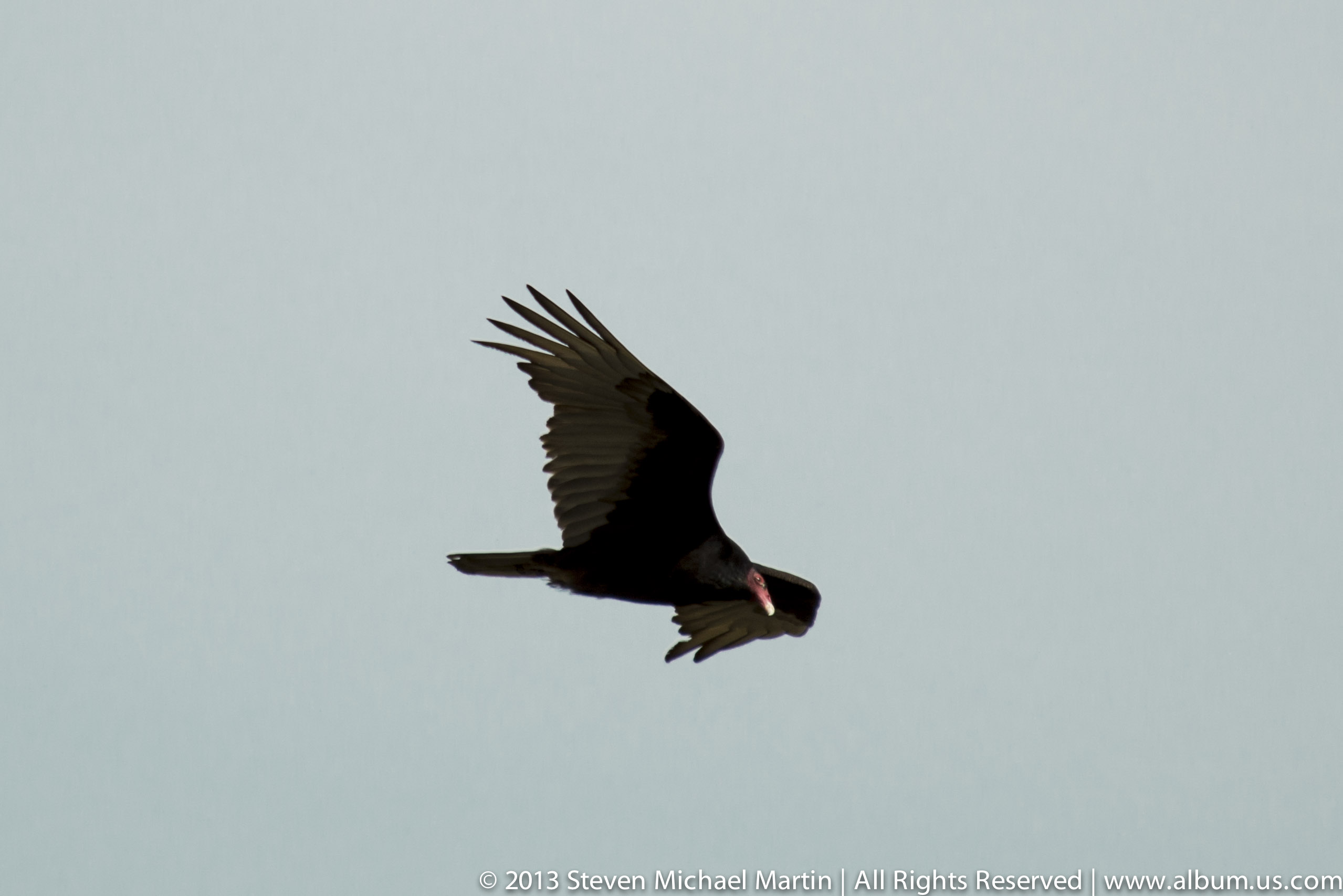
A turkey vulture glides alone across an uninterrupted pale sky, its broad wings extended and slightly raised at the tips. The dark body and flight feathers form a crisp silhouette, while the red head is visible near the front edge of the wing line. The isolated framing removes landscape context and directs attention to the bird’s soaring posture and distinctive profile.
Caption
A turkey vulture glides alone across an uninterrupted pale sky, its broad wings extended and slightly raised at the tips. The dark body and flight feathers form a crisp silhouette, while the red head is visible near the front edge of the wing line. The isolated framing removes landscape context and directs attention to the bird’s soaring posture and distinctive profile.
National Park Field Guide
Grand Teton National Park protects mountain landscapes formed through tectonic uplift along fault lines that raised the Teton Range above the surrounding valley. Glacial activity carved alpine lakes and valleys that contribute to diverse ecosystems supporting wildlife adapted to high elevation environments. The park illustrates how tectonic and glacial processes shape mountainous terrain.
🧭 Key Features
- Sharp mountain peaks formed through tectonic uplift
- Glacial valleys and alpine lakes
- Wildlife habitats supporting elk, moose, and bears
- Jackson Hole valley contrasting with mountain terrain
- Scenic mountain landscapes shaped by erosion
🌄 Landscape Highlights
The Teton Range rises abruptly above the valley floor, creating dramatic visual contrast between rugged peaks and open grasslands. Glacial lakes reflect mountain silhouettes, emphasizing the relationship between water and terrain. Seasonal snowpack influences water flow and ecological patterns across the region.
🌎 Natural Systems
Fault movement gradually elevated the mountain range while glaciers carved valleys and deposited sediments across lower elevations. Snowmelt feeds rivers that sustain ecosystems supporting diverse plant and animal species. The park illustrates the interaction between tectonic processes and climate-driven environmental change.
🦌 Wildlife Encountered
Wildlife sightings enhanced the experience of exploring Grand Teton National Park. Mule deer were observed moving through sagebrush meadows, while a bull elk appeared alert in open grassland habitat near the base of the mountains. A bird of prey was seen soaring above the landscape, adding to the sense of the park’s vibrant ecosystem. These encounters complemented the dramatic mountain scenery and reflective lakes that define Grand Teton National Park.
📷 Photography Notes
- Sunrise light illuminates mountain peaks
- Reflections in alpine lakes create strong compositions
- Foreground vegetation adds depth
- Cloud formations enhance mountain atmosphere
- Wildlife often visible in valley environments
- Seasonal snow adds visual contrast
🌱 Conservation Context
Grand Teton preserves mountain ecosystems shaped by tectonic and glacial processes. Protection of alpine environments ensures continued observation of geological activity and ecological relationships across high elevation landscapes.

An open Grand Teton National Park brochure pairs a panoramic mountain-and-valley view with interpretive sections on geology, natural communities, sagebrush flats, wetlands, lakes, and wildlife. Small photographs, diagrams, and animal illustrations break up dense text panels, while green and blue section bars organize the material. The spread presents the park as a connected landscape of alpine terrain, forest, and wetland habitat.
Caption
An open Grand Teton National Park brochure pairs a panoramic mountain-and-valley view with interpretive sections on geology, natural communities, sagebrush flats, wetlands, lakes, and wildlife. Small photographs, diagrams, and animal illustrations break up dense text panels, while green and blue section bars organize the material. The spread presents the park as a connected landscape of alpine terrain, forest, and wetland habitat.

A large shaded relief map fills the page beneath the heading “Exploring Grand Teton.” The park boundary is outlined over the mountain and valley terrain, with roads, waterways, lakes, and named visitor areas marked throughout. Labels identify the John D. Rockefeller, Jr. Memorial Parkway and neighboring public lands, placing the park within its wider regional setting.
Caption
A large shaded relief map fills the page beneath the heading “Exploring Grand Teton.” The park boundary is outlined over the mountain and valley terrain, with roads, waterways, lakes, and named visitor areas marked throughout. Labels identify the John D. Rockefeller, Jr. Memorial Parkway and neighboring public lands, placing the park within its wider regional setting.
4