Mammoth Cave
Mammoth Cave contains the longest known cave system in the world, with more than four hundred miles of mapped underground passages formed through the gradual dissolution of limestone bedrock. Over millions of years, slightly acidic groundwater carved tunnels, chambers, and passageways that created a complex subterranean landscape. The cave system illustrates how geological processes operating over long time periods can produce environments that appear almost architectural in their structure.
Archaeological evidence shows that Indigenous peoples explored portions of the cave thousands of years ago, using underground spaces for shelter, mineral extraction, and ceremonial purposes. Artifacts discovered within the cave demonstrate early human adaptation to natural environments and provide insight into cultural practices that predate European settlement in North America.
Today, Mammoth Cave reveals the interaction between geology, hydrology, and human exploration. The cave system illustrates how underground water movement shaped the landscape of the Ohio River Valley region, contributing to the development of ecosystems and travel corridors that influenced patterns of settlement across the interior of the continent.
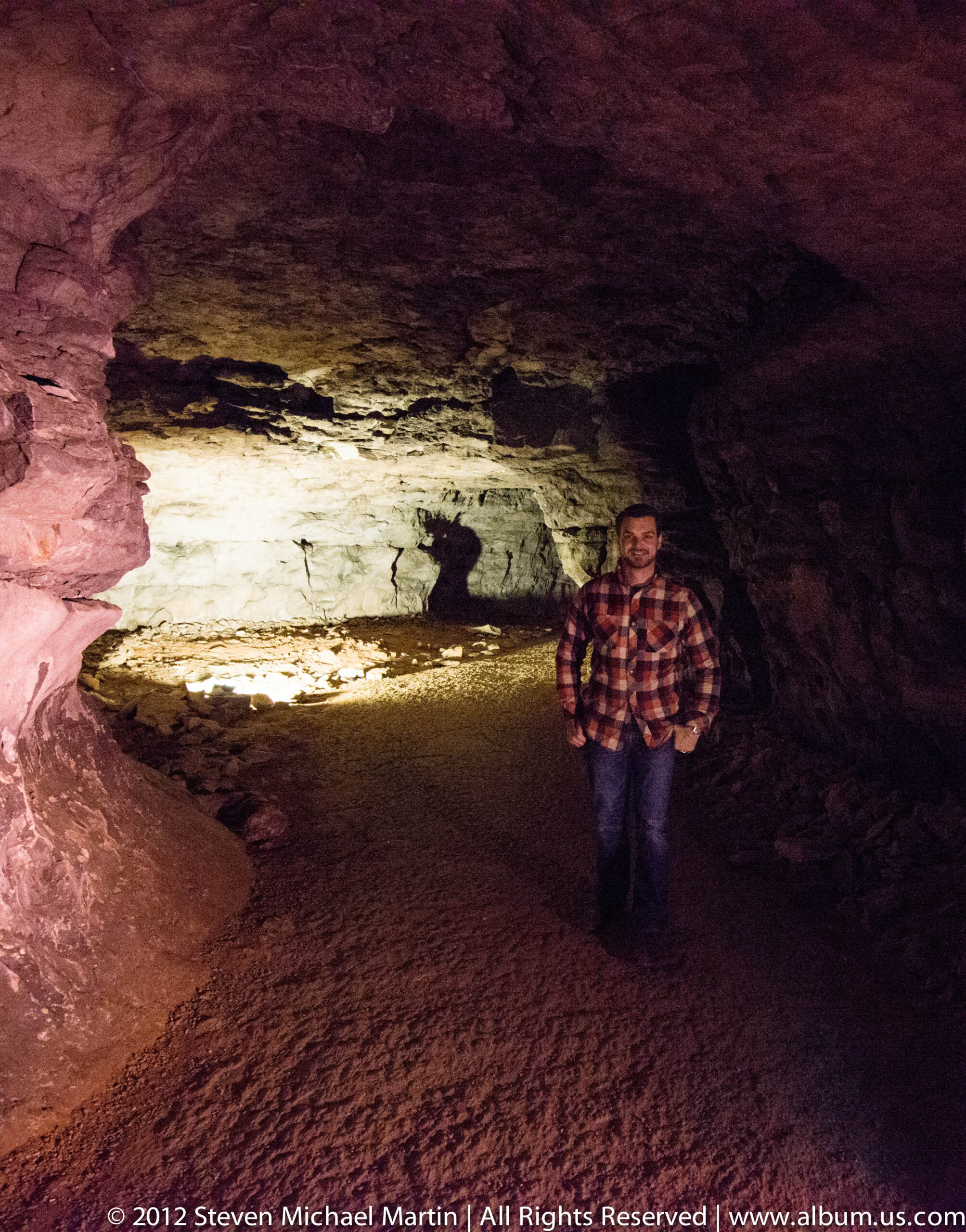
A visitor in a plaid shirt stands on the right side of a low cave passage, beside a shallow reflective pool or wet floor. A brightly lit pale rock wall fills the background, while the ceiling and edges remain dark. The composition sets the person against the illuminated formation to show its scale.
Caption
A visitor in a plaid shirt stands on the right side of a low cave passage, beside a shallow reflective pool or wet floor. A brightly lit pale rock wall fills the background, while the ceiling and edges remain dark. The composition sets the person against the illuminated formation to show its scale.
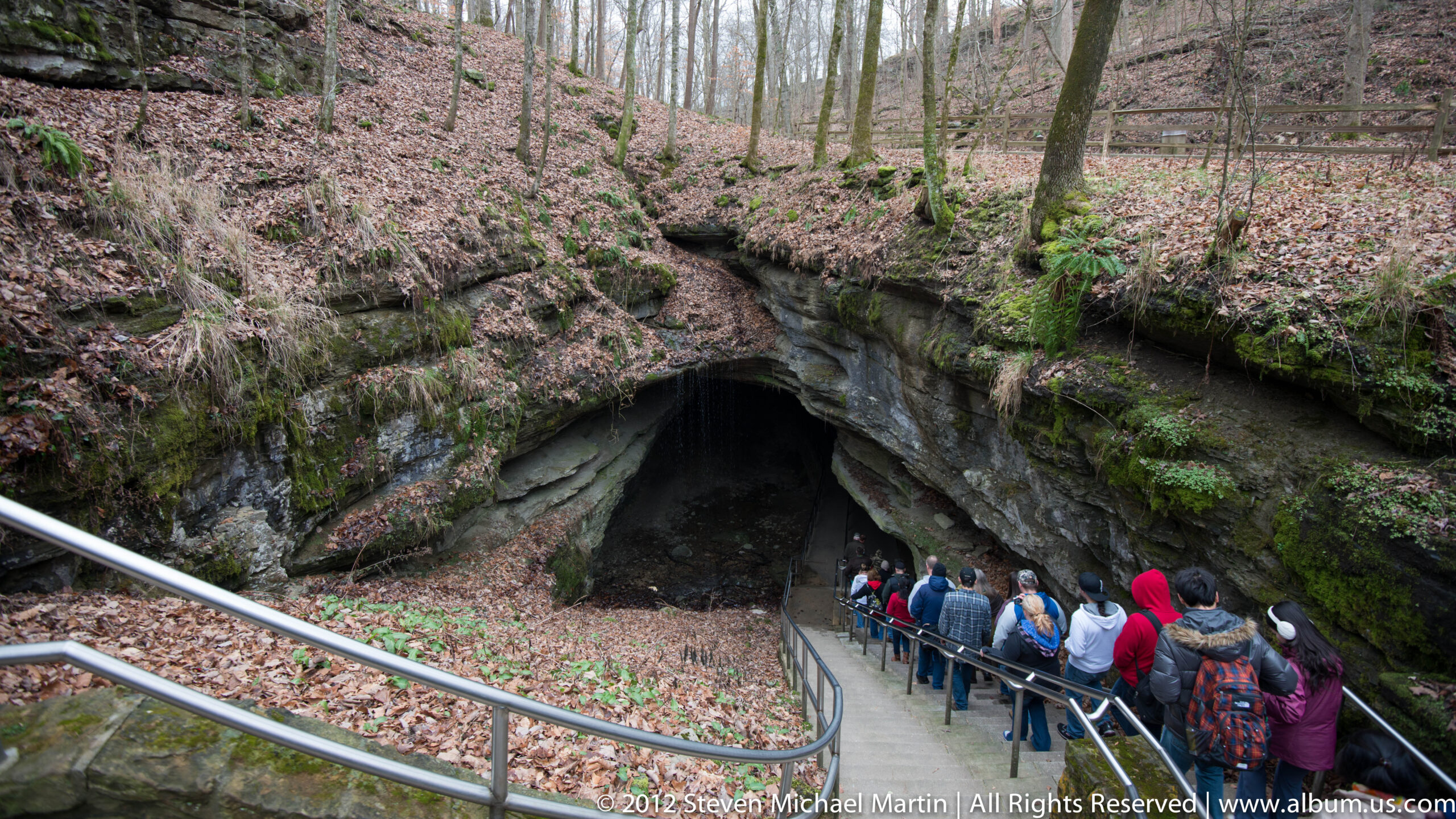
A group descends a railed stairway toward a broad, dark cave opening set into a layered limestone ravine. Leaf litter and low vegetation cover the woodland slope above, while the entrance recedes beneath a projecting rock ledge. The elevated viewpoint shows both the scale of the opening and the line of visitors entering it.
Caption
A group descends a railed stairway toward a broad, dark cave opening set into a layered limestone ravine. Leaf litter and low vegetation cover the woodland slope above, while the entrance recedes beneath a projecting rock ledge. The elevated viewpoint shows both the scale of the opening and the line of visitors entering it.

Golden light traces a narrow cave route between jagged rock walls and uneven ledges. Dark gaps interrupt the illuminated stone, and the path bends through the center of the composition. With no people visible, the view focuses on the passage’s rough surface and the dramatic contrast between amber light and shadow.
Caption
Golden light traces a narrow cave route between jagged rock walls and uneven ledges. Dark gaps interrupt the illuminated stone, and the path bends through the center of the composition. With no people visible, the view focuses on the passage’s rough surface and the dramatic contrast between amber light and shadow.
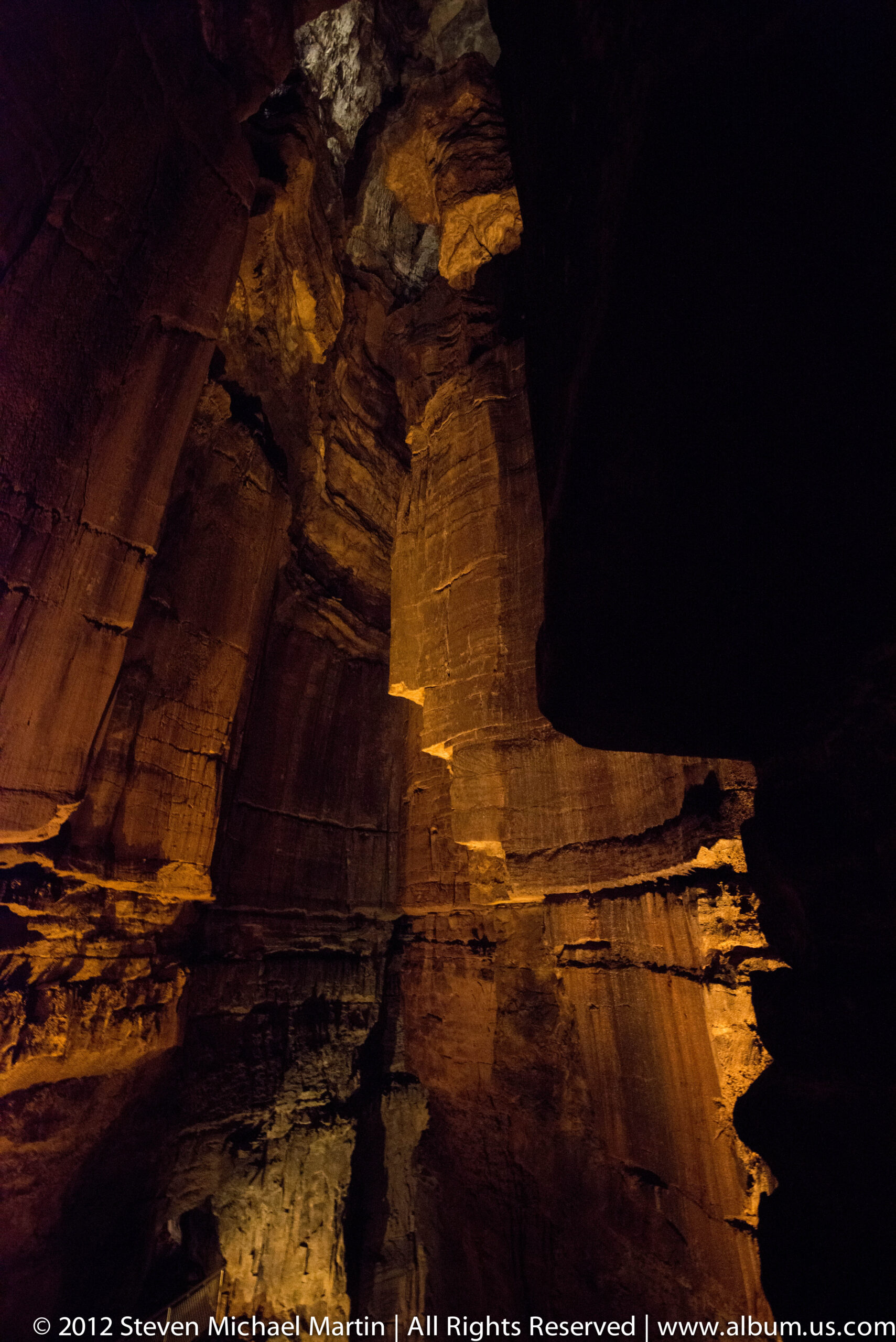
A tall stack of blocky limestone rises from the cave floor, its horizontal bands lit in amber against a black ceiling void. The central column separates open dark space on the right from a sloping rock wall on the left. Low framing and directional light make the formation’s height and stratified surfaces prominent.
Caption
A tall stack of blocky limestone rises from the cave floor, its horizontal bands lit in amber against a black ceiling void. The central column separates open dark space on the right from a sloping rock wall on the left. Low framing and directional light make the formation’s height and stratified surfaces prominent.
A small dark arachnid stands on a pale, rough rock surface, its long legs spread outward from a compact body. The subject is slightly blurred and occupies only a small part of the frame, so the species cannot be identified reliably. The tight crop nevertheless records a tiny animal against the cave substrate.
Caption
A small dark arachnid stands on a pale, rough rock surface, its long legs spread outward from a compact body. The subject is slightly blurred and occupies only a small part of the frame, so the species cannot be identified reliably. The tight crop nevertheless records a tiny animal against the cave substrate.
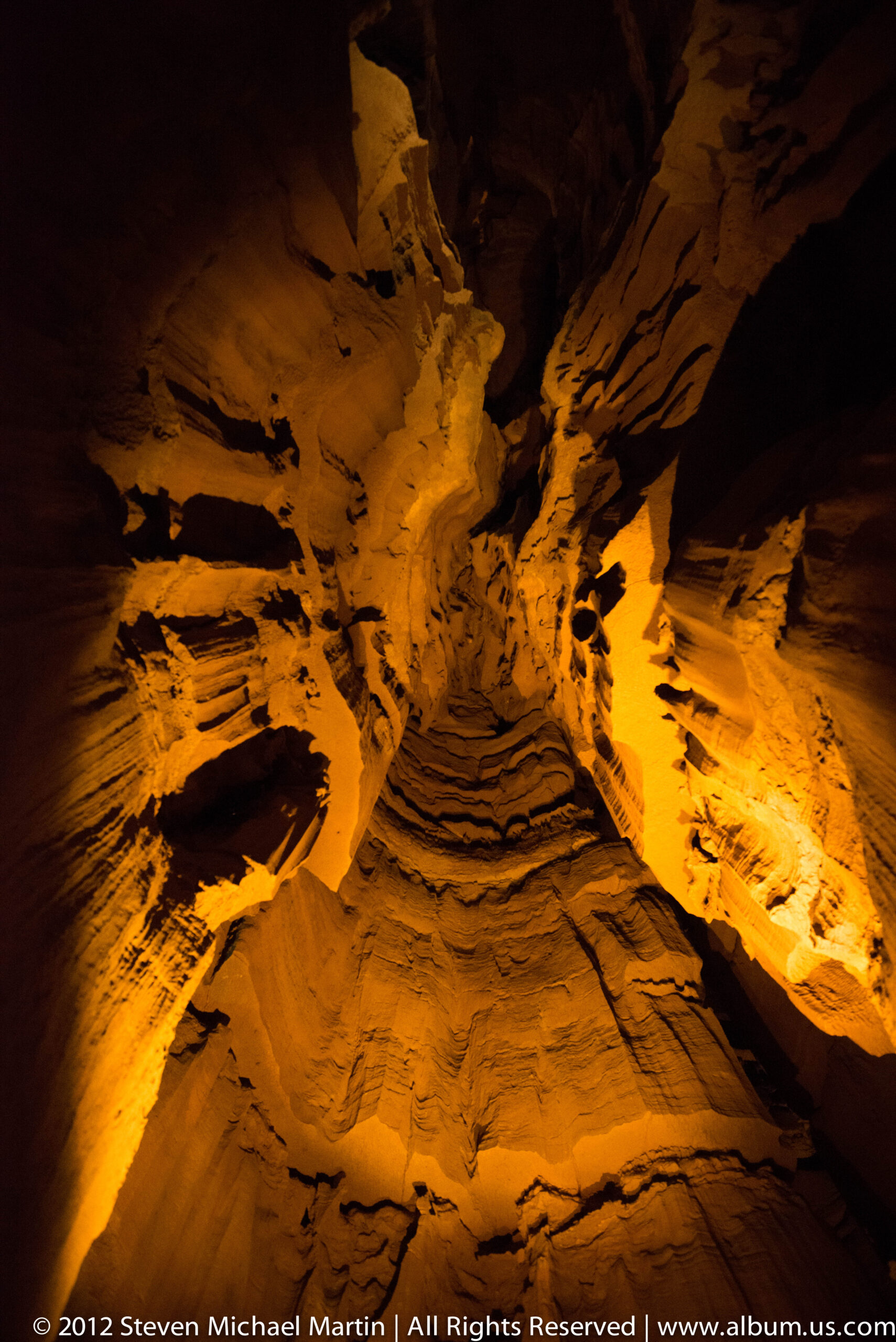
A low-angle view looks upward through a cave chamber where ridged rock and pendant formations converge toward a dark opening. Amber spotlights strike the walls from below, emphasizing their rough relief and leaving central recesses nearly black. The upward perspective turns the ceiling into the main subject.
Caption
A low-angle view looks upward through a cave chamber where ridged rock and pendant formations converge toward a dark opening. Amber spotlights strike the walls from below, emphasizing their rough relief and leaving central recesses nearly black. The upward perspective turns the ceiling into the main subject.
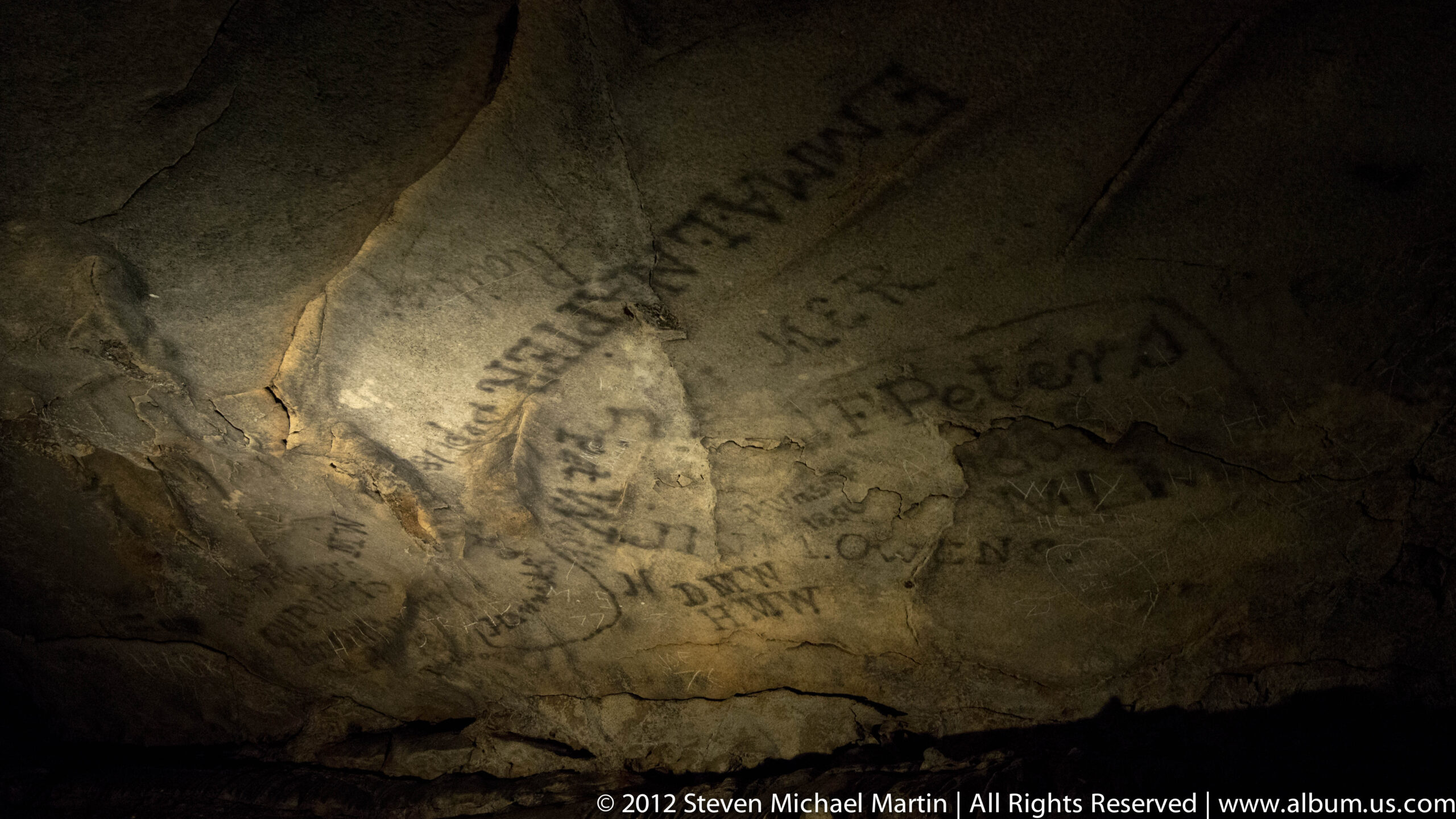
A flashlight beam isolates dark handwritten names and marks across a pale rock surface inside the cave. The inscriptions vary in size and orientation, with several overlapping near the center. Their age and authorship cannot be established from the view, so the image is best read as a record of human writing on the cave wall rather than a verified historic inscription.
Caption
A flashlight beam isolates dark handwritten names and marks across a pale rock surface inside the cave. The inscriptions vary in size and orientation, with several overlapping near the center. Their age and authorship cannot be established from the view, so the image is best read as a record of human writing on the cave wall rather than a verified historic inscription.
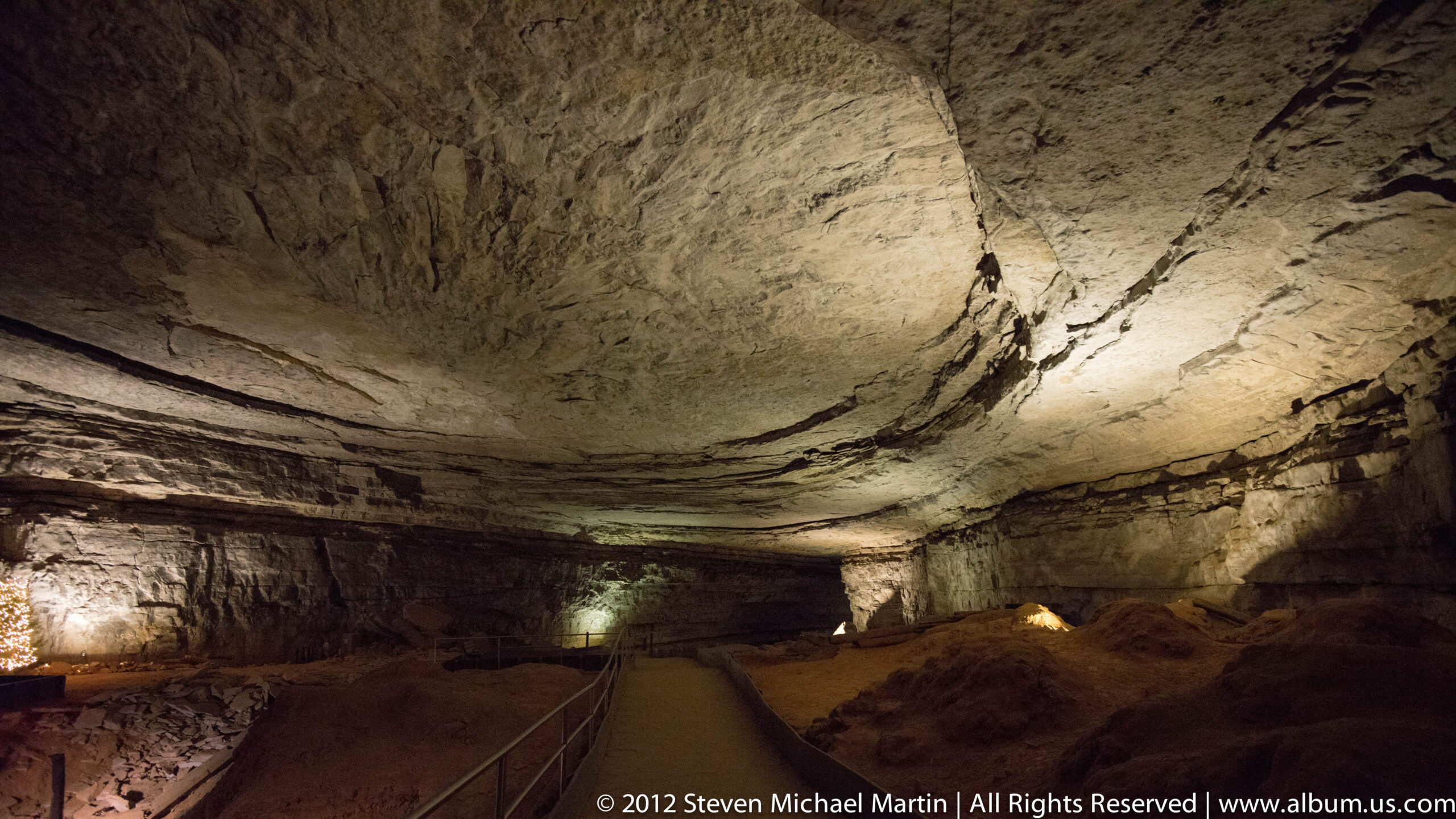
Warm electric lights reveal a broad underground chamber with a low, layered limestone ceiling and a level visitor path. Dark rock and uneven floor deposits border the walkway as it leads toward the center of the room. The wide interior view conveys the chamber’s horizontal reach and relatively low ceiling.
Caption
Warm electric lights reveal a broad underground chamber with a low, layered limestone ceiling and a level visitor path. Dark rock and uneven floor deposits border the walkway as it leads toward the center of the room. The wide interior view conveys the chamber’s horizontal reach and relatively low ceiling.
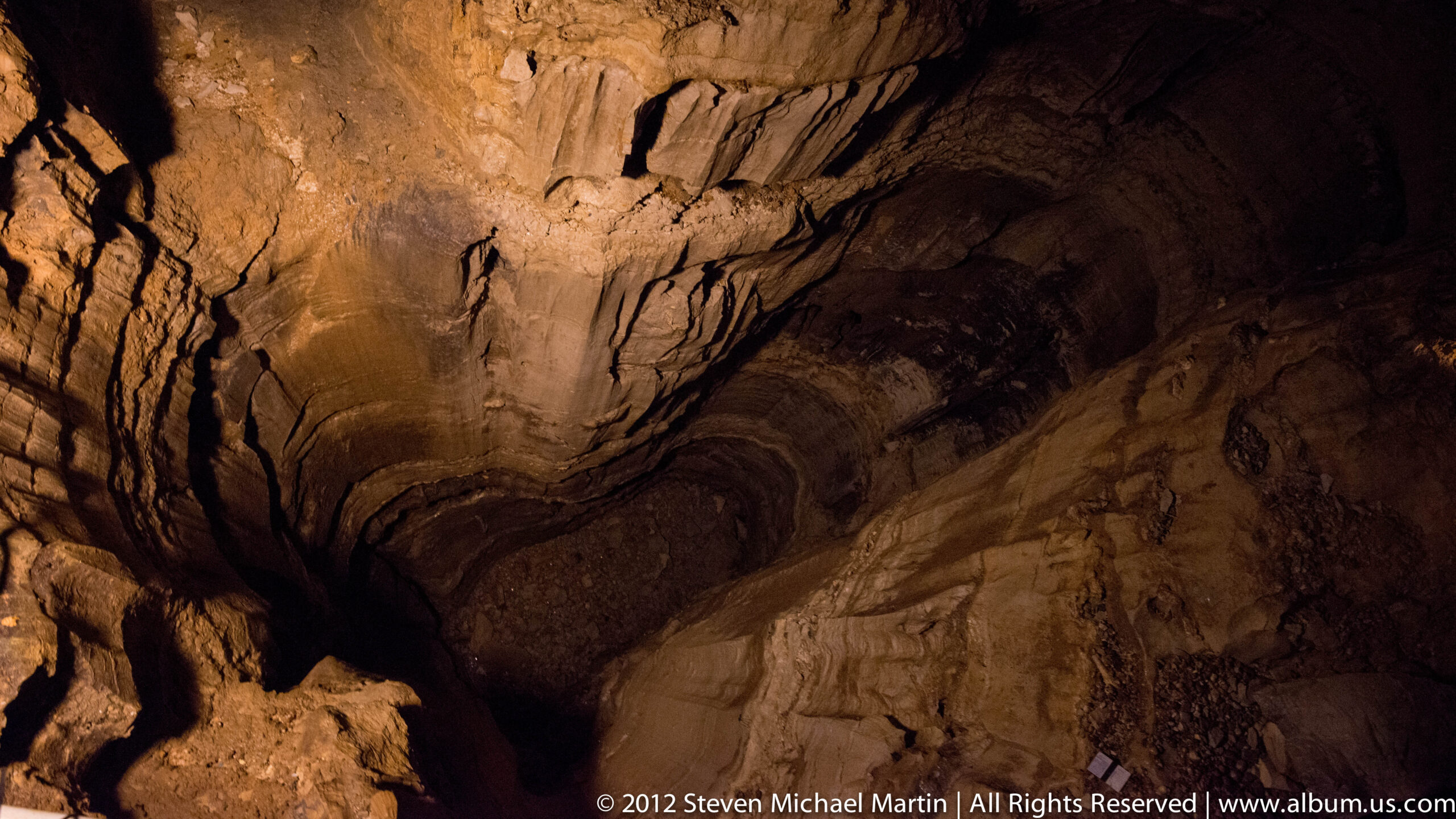
Amber light grazes an irregular limestone wall, revealing thin horizontal strata, fractures, and folded-looking ledges. The close composition excludes visitors and paths, directing attention to the rock’s layered structure and eroded contours. Deep shadow at right contrasts with the warmer illuminated face.
Caption
Amber light grazes an irregular limestone wall, revealing thin horizontal strata, fractures, and folded-looking ledges. The close composition excludes visitors and paths, directing attention to the rock’s layered structure and eroded contours. Deep shadow at right contrasts with the warmer illuminated face.
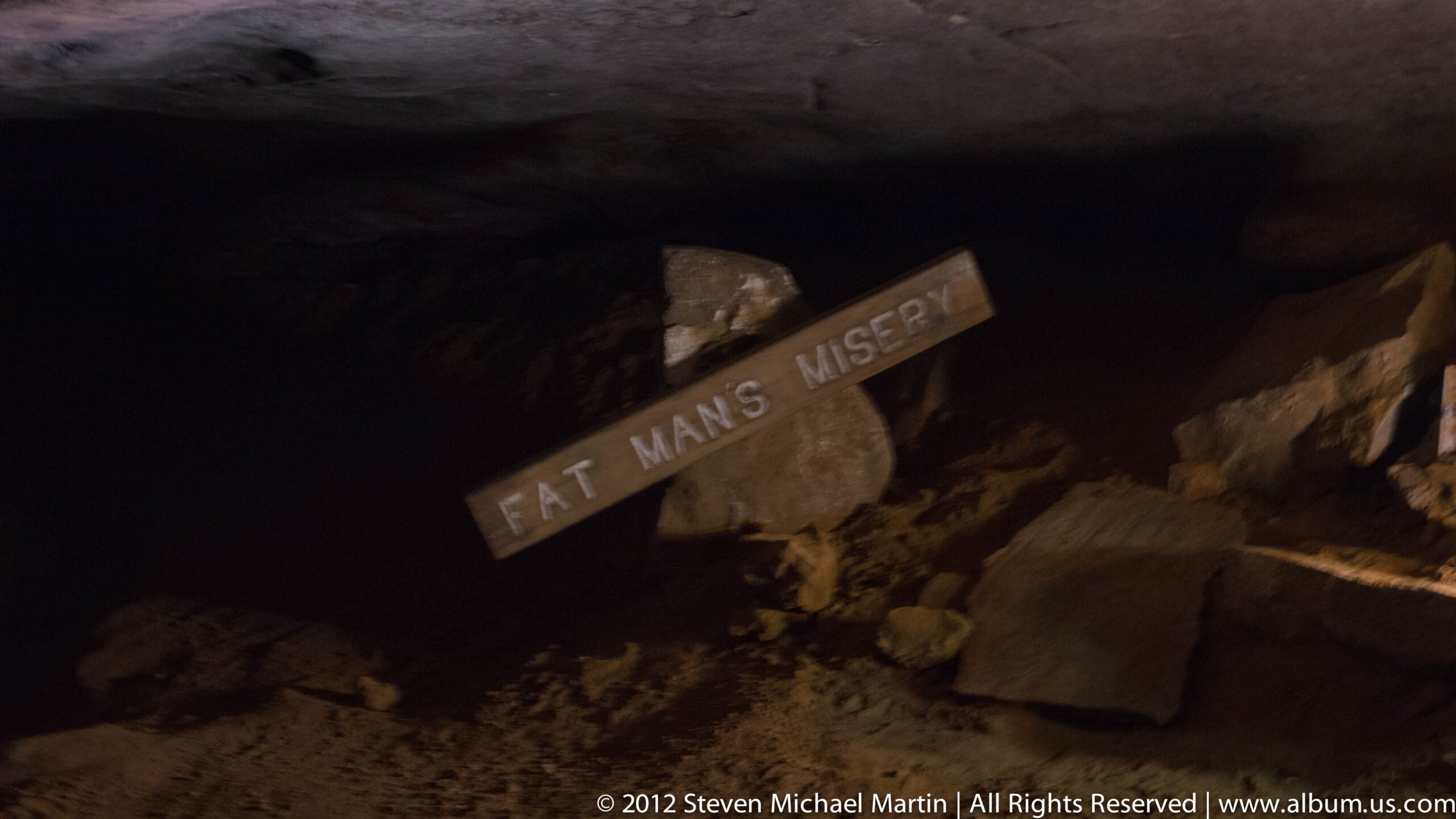
A small angled sign reading “FAT MAN’S MISERY” is mounted among low rock ledges in a dark passage. Its lettering is the brightest point in the frame, while the narrow, uneven route continues into shadow around it. The view pairs the named passage with the confined cave terrain that gives the label its immediate context.
Caption
A small angled sign reading “FAT MAN’S MISERY” is mounted among low rock ledges in a dark passage. Its lettering is the brightest point in the frame, while the narrow, uneven route continues into shadow around it. The view pairs the named passage with the confined cave terrain that gives the label its immediate context.
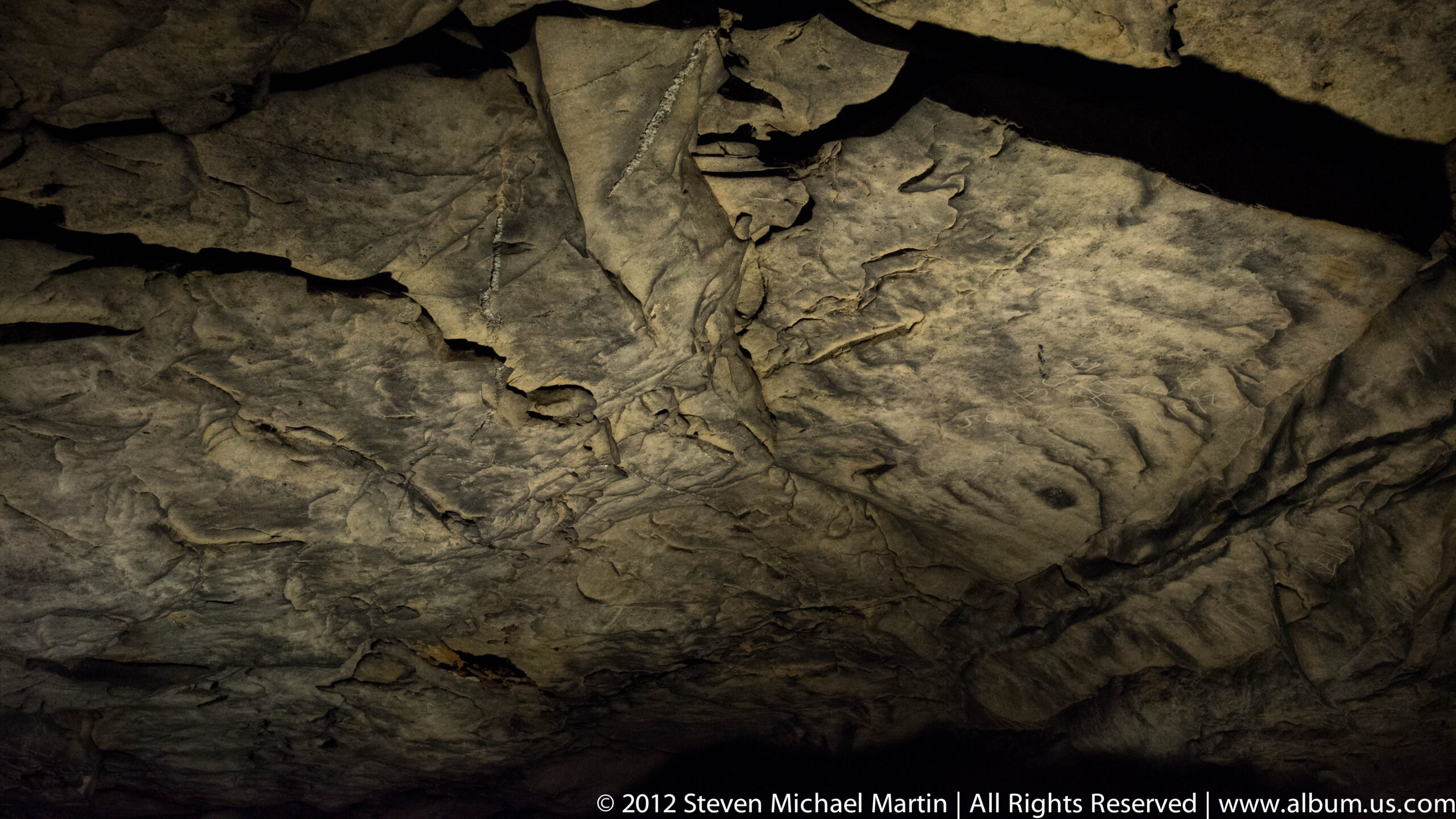
A close upward view reveals angular plates and fissures across a rugged cave ceiling. Pale gray and tan surfaces overlap in irregular folds, with black gaps marking deeper cracks. Strong direct lighting brings out the relief and sharp edges without showing the surrounding passage or visitors.
Caption
A close upward view reveals angular plates and fissures across a rugged cave ceiling. Pale gray and tan surfaces overlap in irregular folds, with black gaps marking deeper cracks. Strong direct lighting brings out the relief and sharp edges without showing the surrounding passage or visitors.
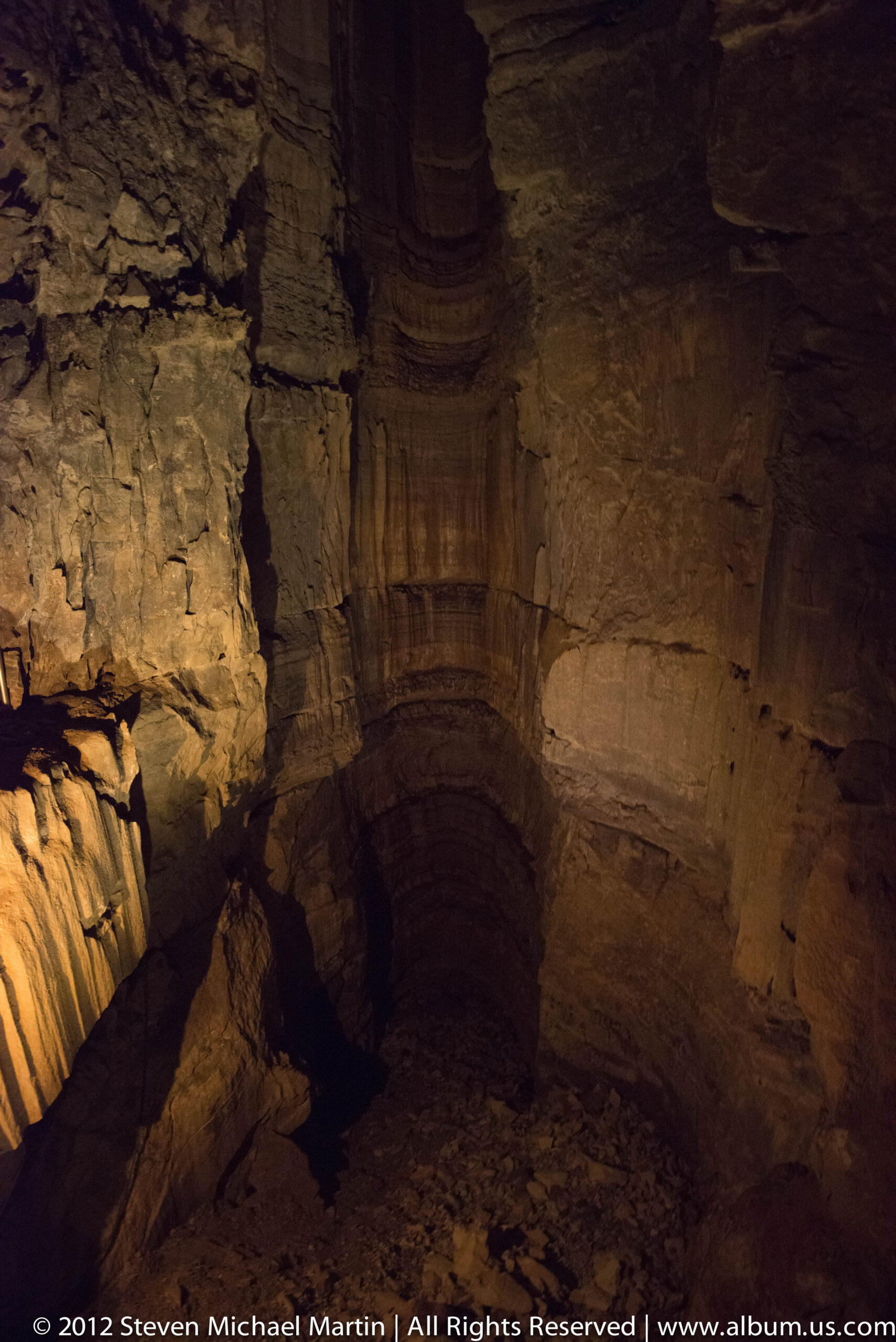
A dimly lit chamber opens into a deep central recess framed by broad horizontal ledges and a massive rock ceiling. Warm spotlights pick out the left wall and a stepped formation near the center, leaving the back of the cavity nearly black. The view emphasizes the chamber’s layered walls and depth rather than a specific named feature.
Caption
A dimly lit chamber opens into a deep central recess framed by broad horizontal ledges and a massive rock ceiling. Warm spotlights pick out the left wall and a stepped formation near the center, leaving the back of the cavity nearly black. The view emphasizes the chamber’s layered walls and depth rather than a specific named feature.
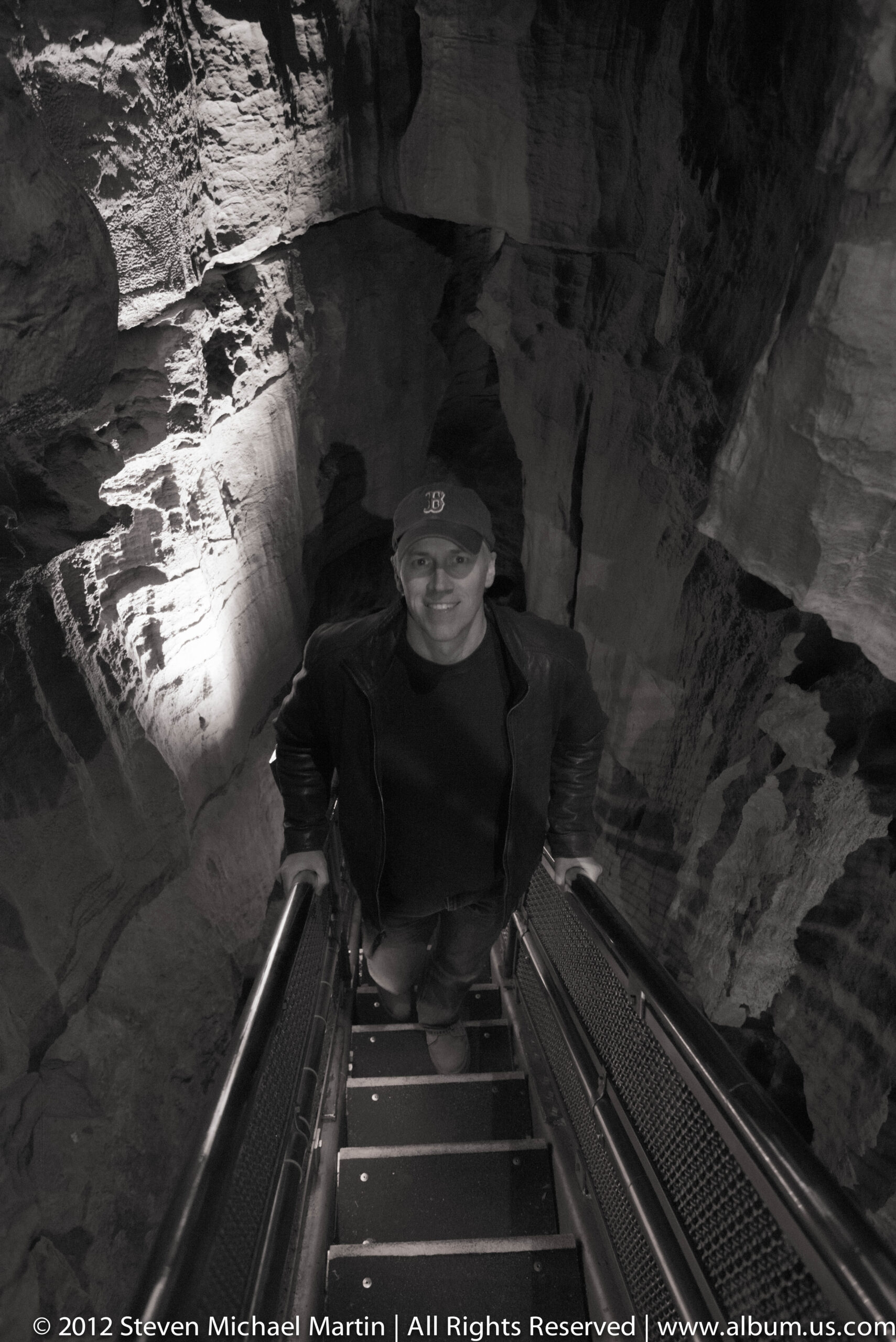
A visitor climbs a narrow metal stairway through a close rock passage, looking toward the camera beneath a cap. The steps and paired handrails converge toward the lower edge while rough, glistening stone encloses the route. This view highlights the engineered trail inside the cave and the steep change in level.
Caption
A visitor climbs a narrow metal stairway through a close rock passage, looking toward the camera beneath a cap. The steps and paired handrails converge toward the lower edge while rough, glistening stone encloses the route. This view highlights the engineered trail inside the cave and the steep change in level.
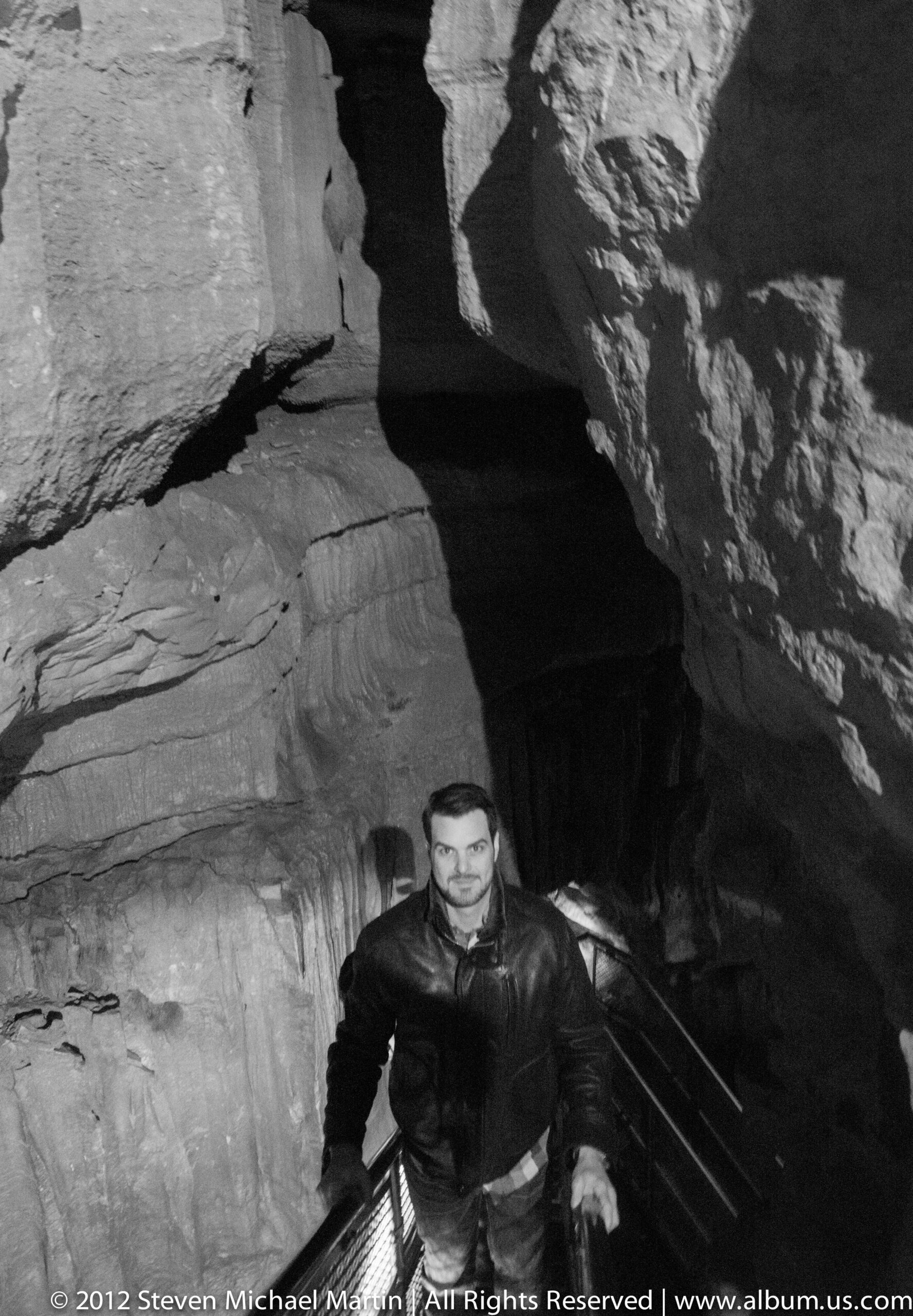
A man pauses on a metal staircase in a narrow cave corridor, one hand resting near the rail as he faces the camera. The black-and-white treatment heightens the contrast between the bright layered rock at left and the dark void behind him. The close composition connects the visitor to the constructed route.
Caption
A man pauses on a metal staircase in a narrow cave corridor, one hand resting near the rail as he faces the camera. The black-and-white treatment heightens the contrast between the bright layered rock at left and the dark void behind him. The close composition connects the visitor to the constructed route.
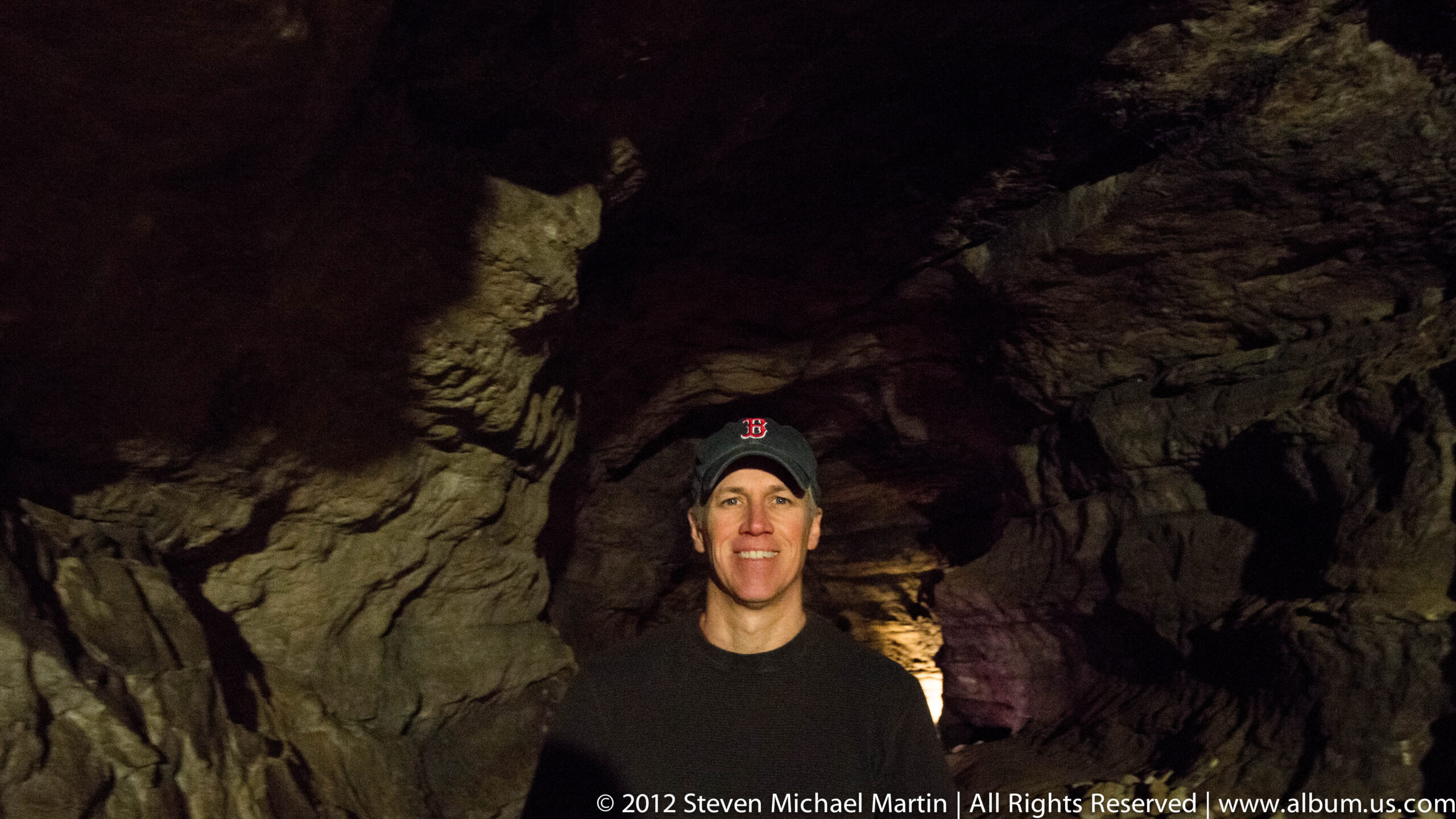
A smiling visitor in a dark shirt and baseball cap stands in the foreground of a rugged cave chamber. Uneven walls and a shadowed passage surround him, while warm lights behind add depth to the interior. The close portrait makes the person the clear subject and preserves the cave setting as context.
Caption
A smiling visitor in a dark shirt and baseball cap stands in the foreground of a rugged cave chamber. Uneven walls and a shadowed passage surround him, while warm lights behind add depth to the interior. The close portrait makes the person the clear subject and preserves the cave setting as context.
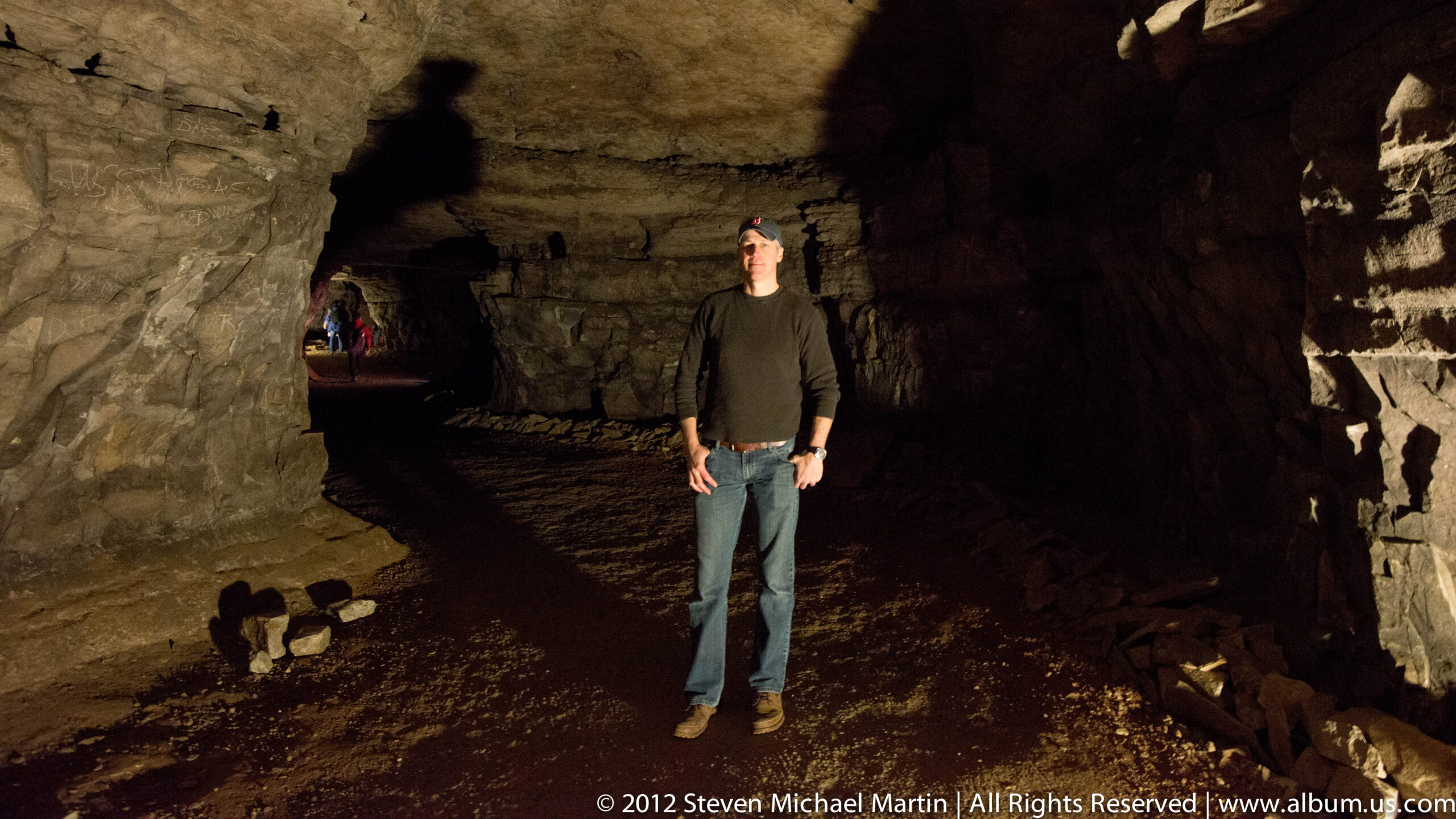
A man stands on the uneven cave floor beneath a high, irregular ceiling, with another visitor visible near a lit passage at left. The wide view places the figures within a broad rock room and provides a sense of scale. Pools of artificial light reveal layered walls while the surrounding recesses remain dark.
Caption
A man stands on the uneven cave floor beneath a high, irregular ceiling, with another visitor visible near a lit passage at left. The wide view places the figures within a broad rock room and provides a sense of scale. Pools of artificial light reveal layered walls while the surrounding recesses remain dark.
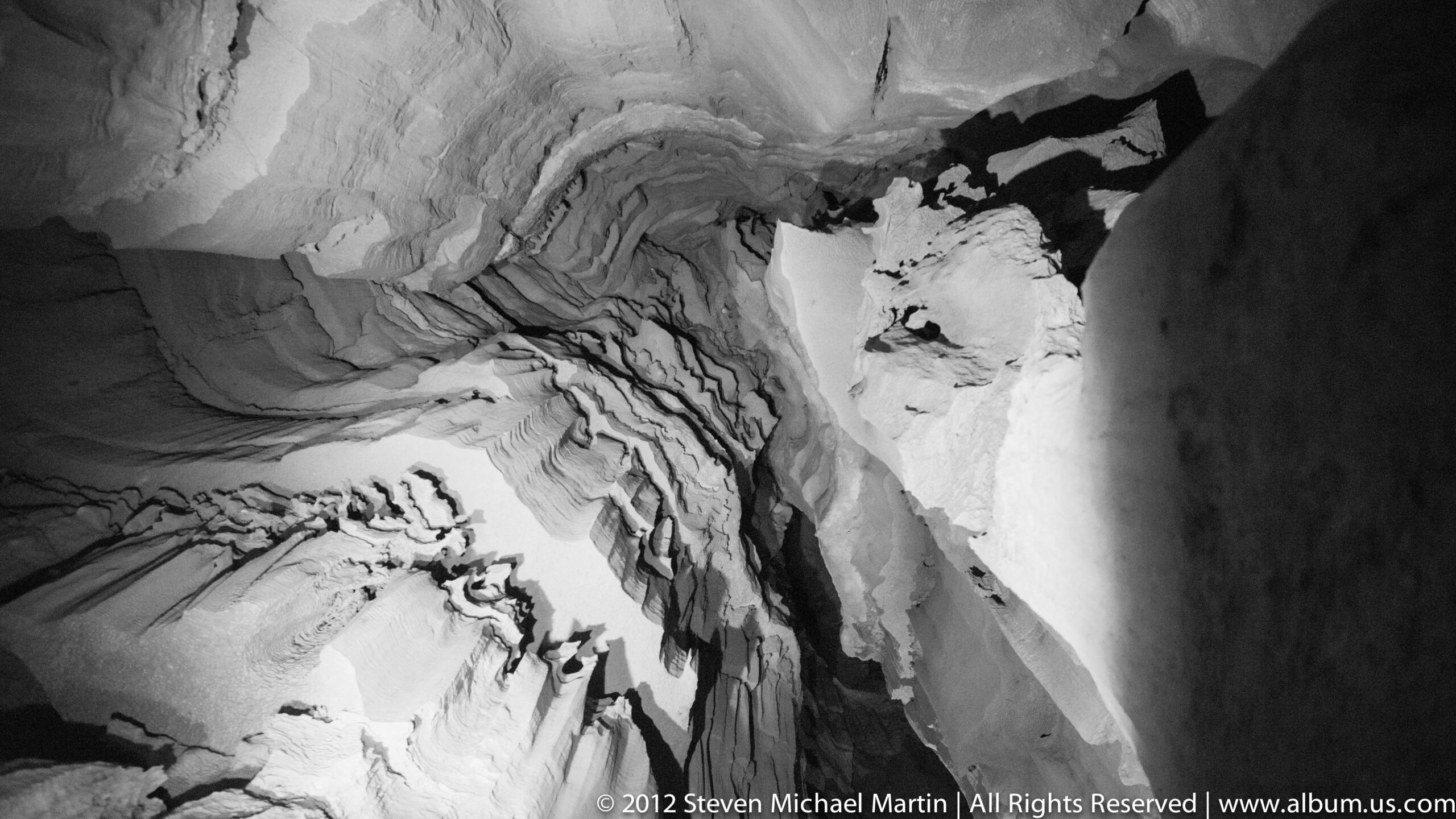
Pale mineral deposits form layered, rippling sheets across a steep cave wall, with dark seams tracing their scalloped edges. The monochrome treatment emphasizes the folds, ridges, and contrast between the bright calcite-like surface and black recesses. The close view isolates the mineral texture from the broader chamber.
Caption
Pale mineral deposits form layered, rippling sheets across a steep cave wall, with dark seams tracing their scalloped edges. The monochrome treatment emphasizes the folds, ridges, and contrast between the bright calcite-like surface and black recesses. The close view isolates the mineral texture from the broader chamber.
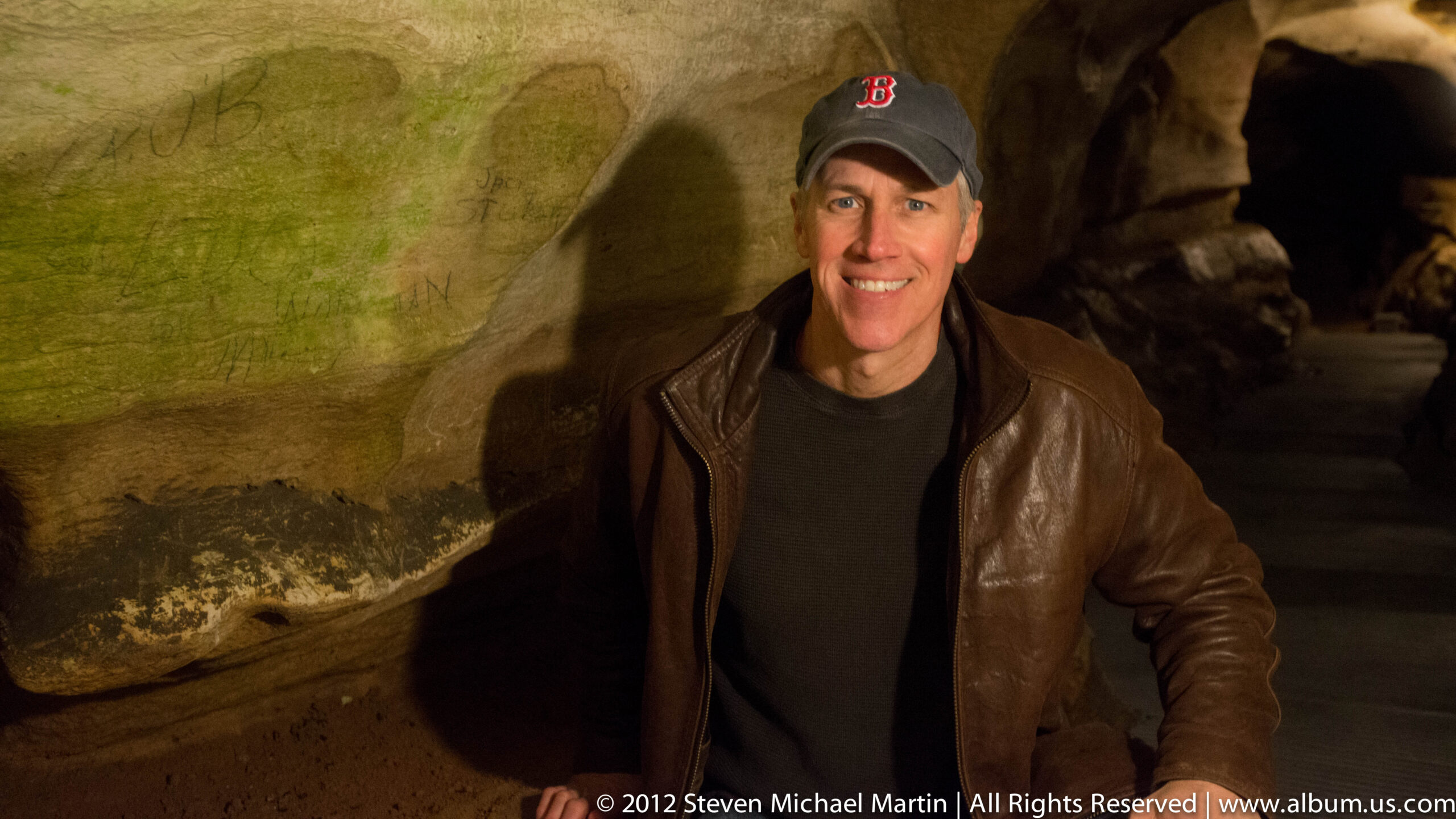
A smiling man wearing a baseball cap with a red letter stands close to the camera in a dim cave. Warm light falls across the rock behind his shoulders, while a dark passage opens to the right. The tight framing records his expression and clothing against the irregular cave wall.
Caption
A smiling man wearing a baseball cap with a red letter stands close to the camera in a dim cave. Warm light falls across the rock behind his shoulders, while a dark passage opens to the right. The tight framing records his expression and clothing against the irregular cave wall.
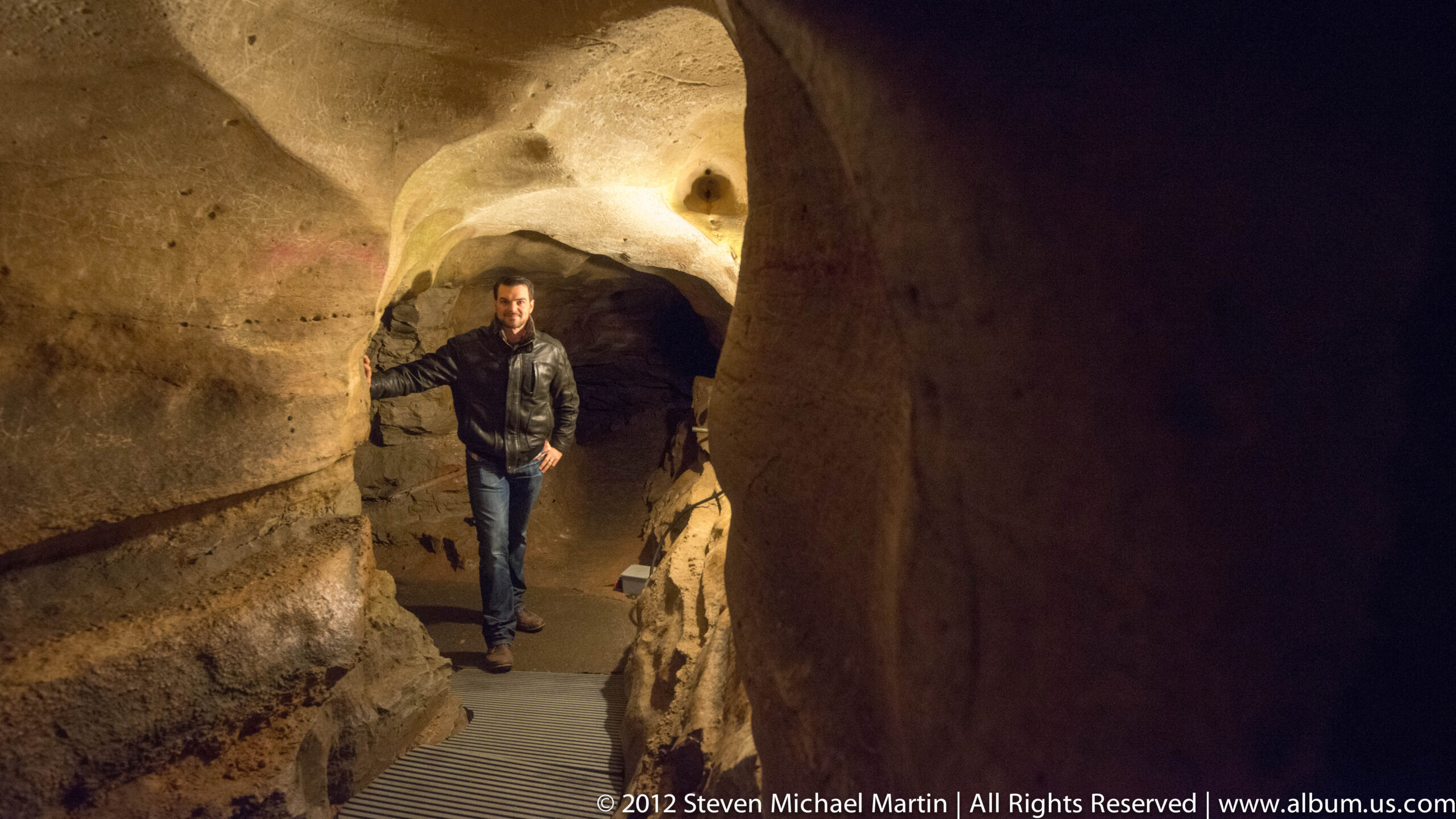
A man stands on a metal walkway within a constricted passage, framed by smooth pale walls that curve inward overhead. He rests one arm against the rock while the corridor continues into shadow behind him. The vertical composition draws attention to the tight clearance and the visitor’s position within it.
Caption
A man stands on a metal walkway within a constricted passage, framed by smooth pale walls that curve inward overhead. He rests one arm against the rock while the corridor continues into shadow behind him. The vertical composition draws attention to the tight clearance and the visitor’s position within it.
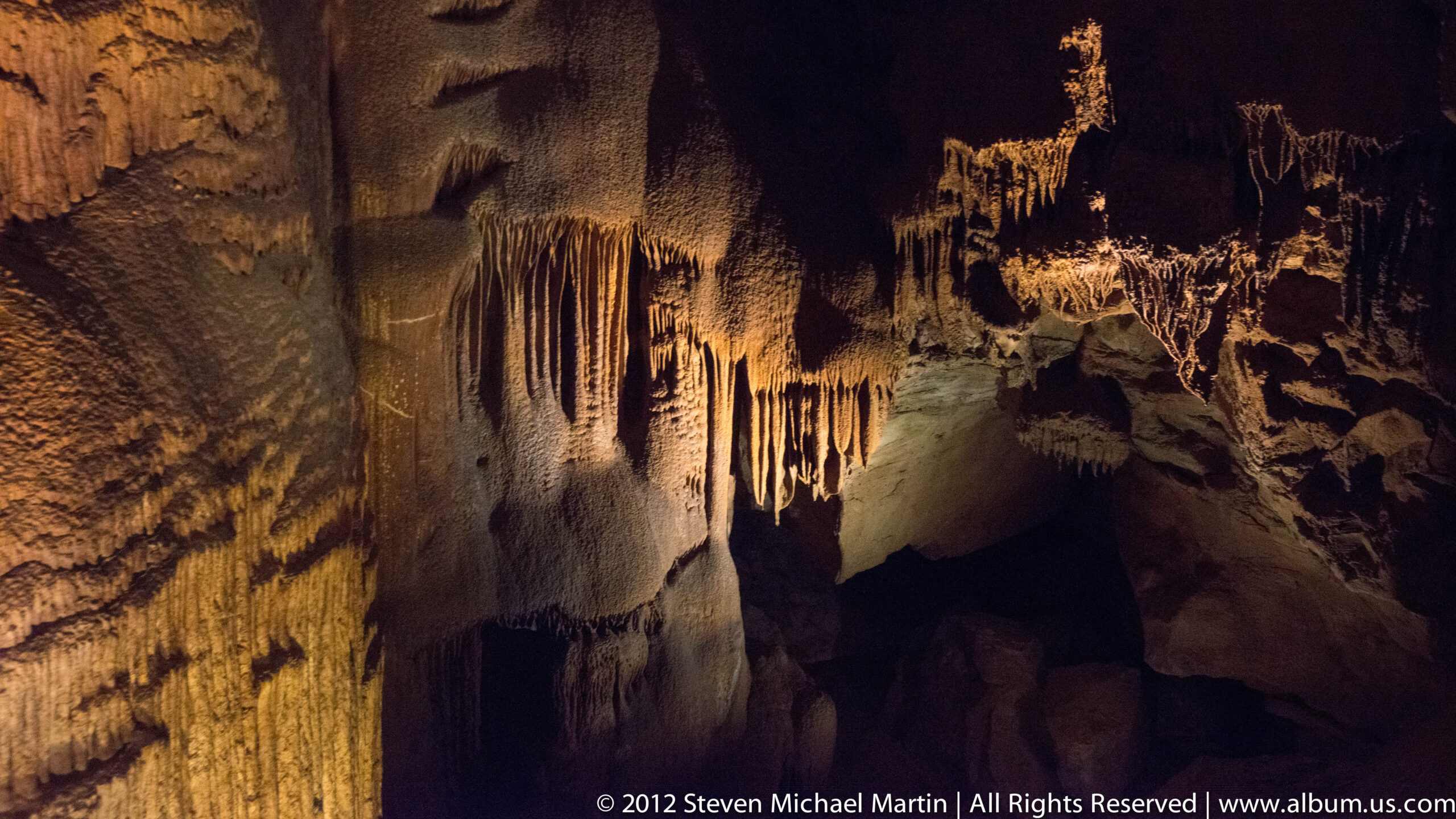
A broad cluster of thin stalactites hangs from the ceiling above a deep, unlit cavity. Amber light catches their pointed ends and the layered flowstone-like wall at left, while smaller formations extend into the background. The view contrasts delicate vertical forms with the large empty space beneath them.
Caption
A broad cluster of thin stalactites hangs from the ceiling above a deep, unlit cavity. Amber light catches their pointed ends and the layered flowstone-like wall at left, while smaller formations extend into the background. The view contrasts delicate vertical forms with the large empty space beneath them.
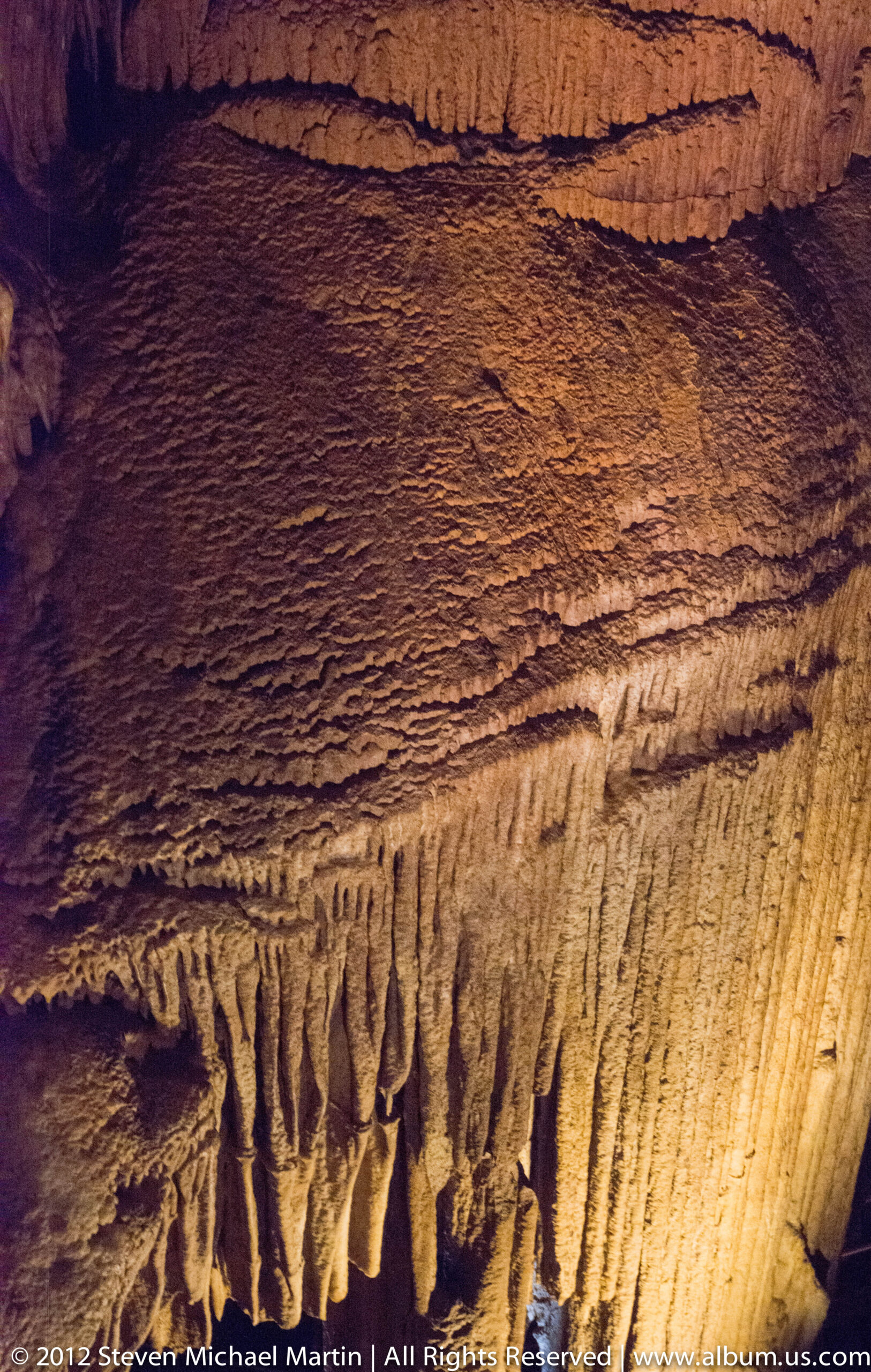
A close, warm-lit view reveals thin horizontal bands and delicate mineral draperies along a cave wall. Fine ridges descend from a ledge, forming a dense fringe above a lower shelf. The tight framing shifts attention from the chamber to the minute texture and layered growth of the rock surface.
Caption
A close, warm-lit view reveals thin horizontal bands and delicate mineral draperies along a cave wall. Fine ridges descend from a ledge, forming a dense fringe above a lower shelf. The tight framing shifts attention from the chamber to the minute texture and layered growth of the rock surface.
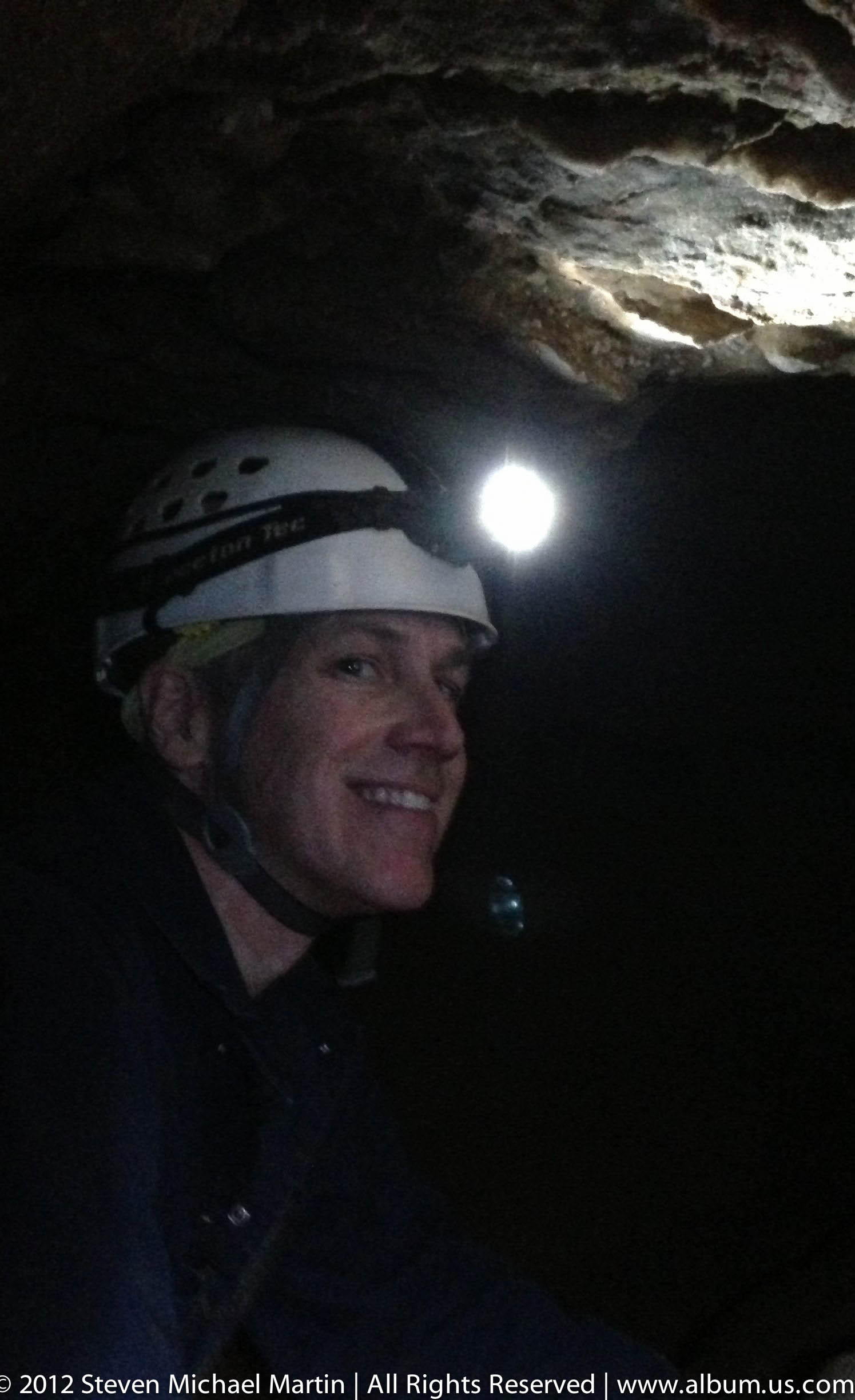
A smiling visitor wearing a white helmet and headlamp is shown in close profile against a nearly black cave background. The lamp creates a bright point above the face, while faint rock texture appears along the upper edge. This portrait isolates the person and safety equipment from the surrounding tour group.
Caption
A smiling visitor wearing a white helmet and headlamp is shown in close profile against a nearly black cave background. The lamp creates a bright point above the face, while faint rock texture appears along the upper edge. This portrait isolates the person and safety equipment from the surrounding tour group.
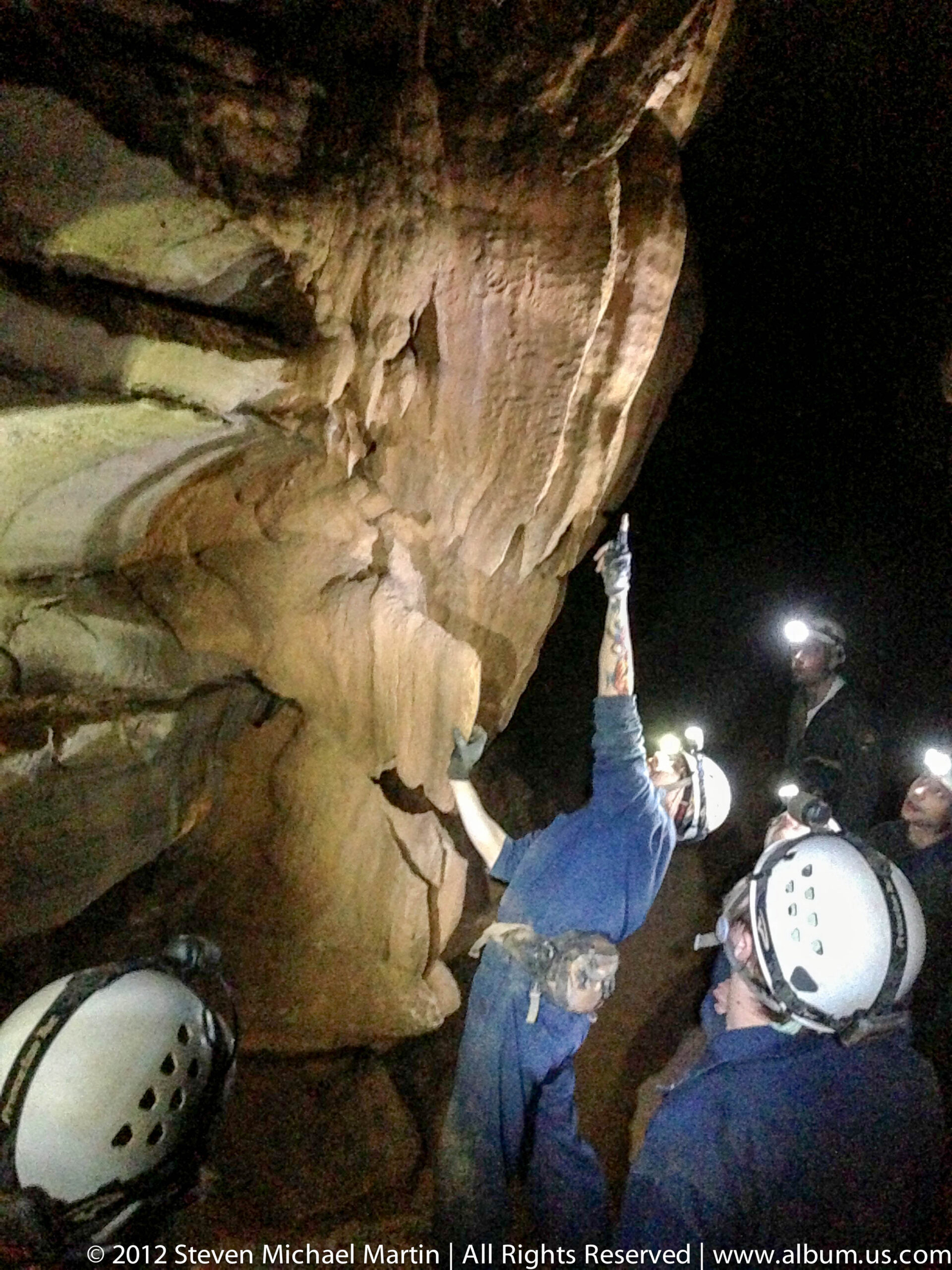
A helmeted visitor raises an arm toward a low, layered limestone ceiling as other members of the group gather close in the dark passage. Headlamps and handheld lights pick out the rough, warm-toned rock, while the tight framing conveys the confined scale of the route. The scene centers on the visitors’ close encounter with the cave’s sculpted ceiling.
Caption
A helmeted visitor raises an arm toward a low, layered limestone ceiling as other members of the group gather close in the dark passage. Headlamps and handheld lights pick out the rough, warm-toned rock, while the tight framing conveys the confined scale of the route. The scene centers on the visitors’ close encounter with the cave’s sculpted ceiling.
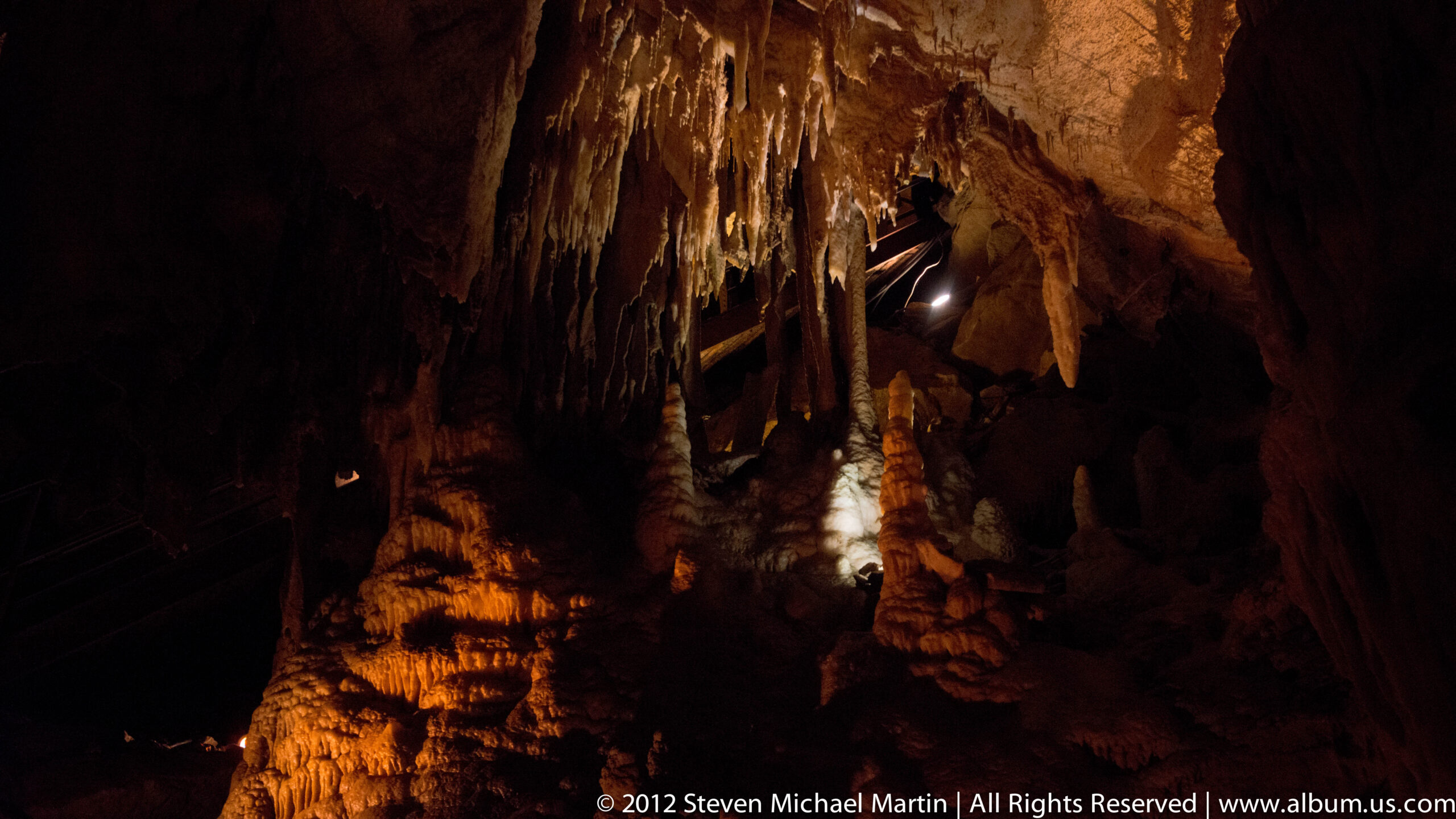
A dense cluster of long mineral formations descends from the ceiling toward a shadowed floor, lit selectively in warm tones. A visitor walkway and rail are faintly visible at the left edge, giving scale to the tall formations. The layered composition leads from the foreground deposits into the darker chamber beyond.
Caption
A dense cluster of long mineral formations descends from the ceiling toward a shadowed floor, lit selectively in warm tones. A visitor walkway and rail are faintly visible at the left edge, giving scale to the tall formations. The layered composition leads from the foreground deposits into the darker chamber beyond.
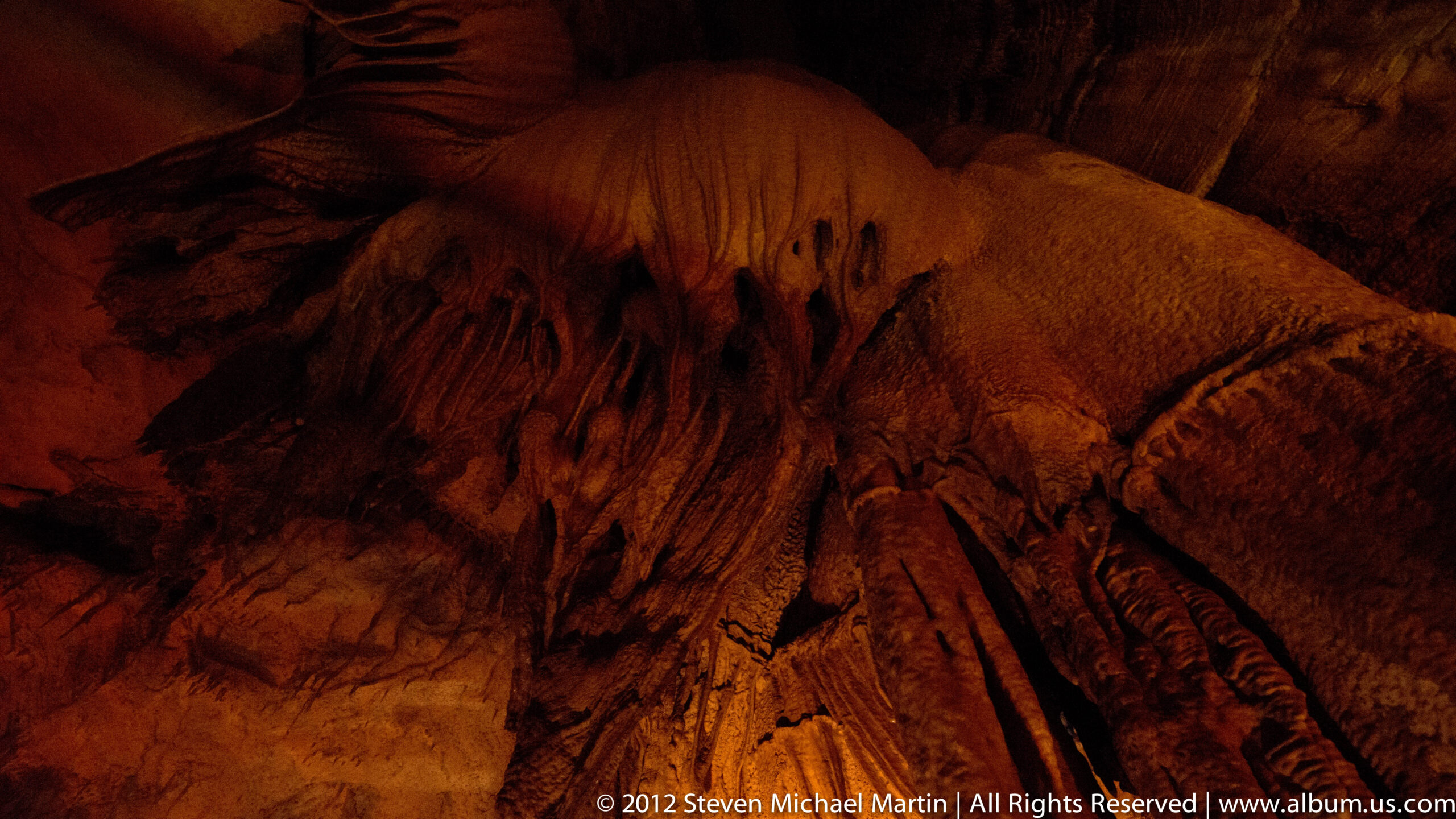
A rounded, ribbed mineral mound fills the center of a cave chamber, its folds flowing down toward a darker floor. Red-orange light brings out parallel ridges and shallow channels, while small stalactites hang above. This close view isolates the sculptural surface and its cascading contours.
Caption
A rounded, ribbed mineral mound fills the center of a cave chamber, its folds flowing down toward a darker floor. Red-orange light brings out parallel ridges and shallow channels, while small stalactites hang above. This close view isolates the sculptural surface and its cascading contours.
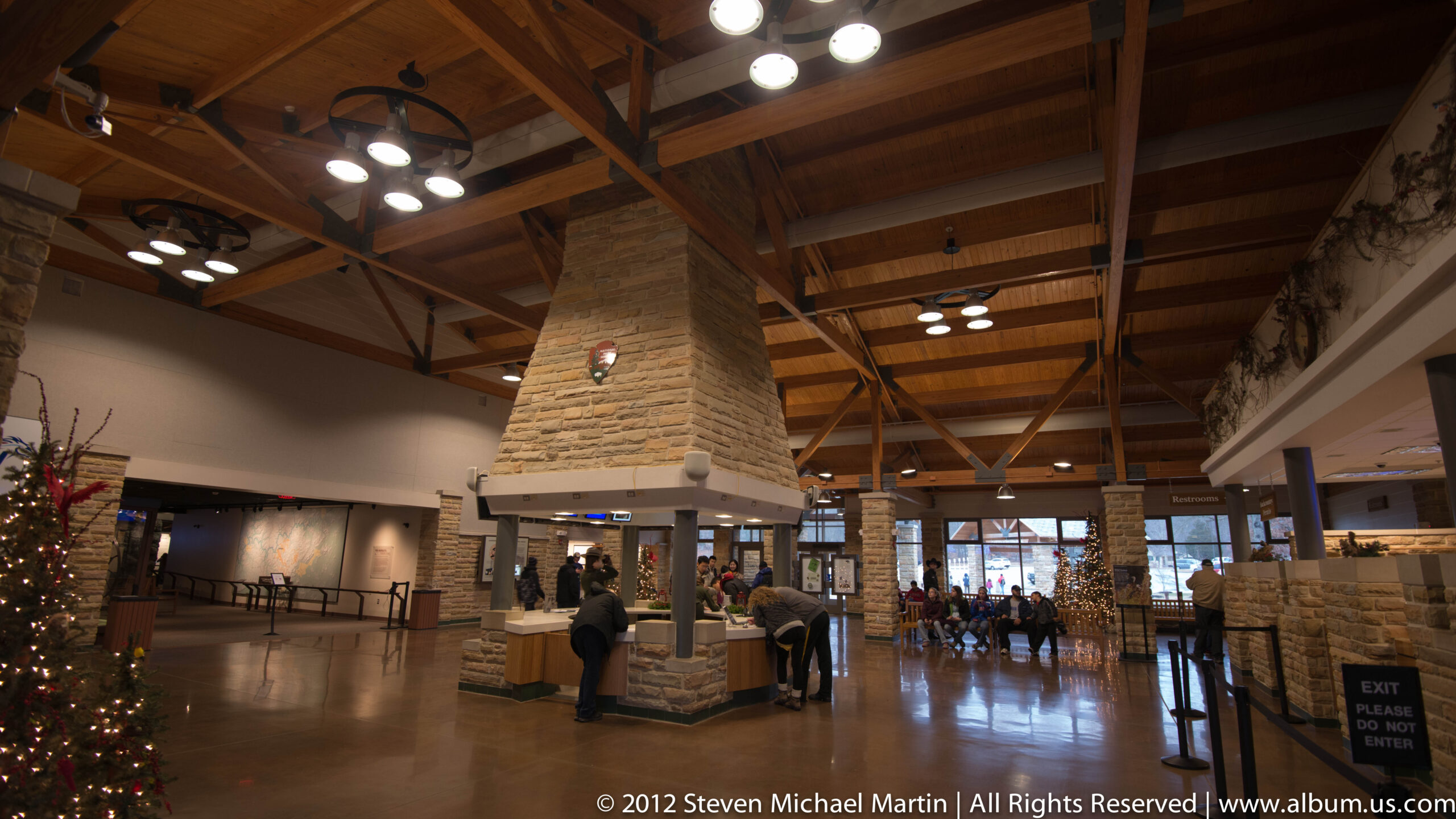
A spacious visitor center lobby has exposed timber trusses, stone-clad columns, and a tall central masonry feature beneath a peaked roof. Visitors gather at counters and seating areas around the open floor. A decorated tree at left and an “EXIT KEEP DOOR CLOSED” sign at right are visible details within the public interior.
Caption
A spacious visitor center lobby has exposed timber trusses, stone-clad columns, and a tall central masonry feature beneath a peaked roof. Visitors gather at counters and seating areas around the open floor. A decorated tree at left and an “EXIT KEEP DOOR CLOSED” sign at right are visible details within the public interior.
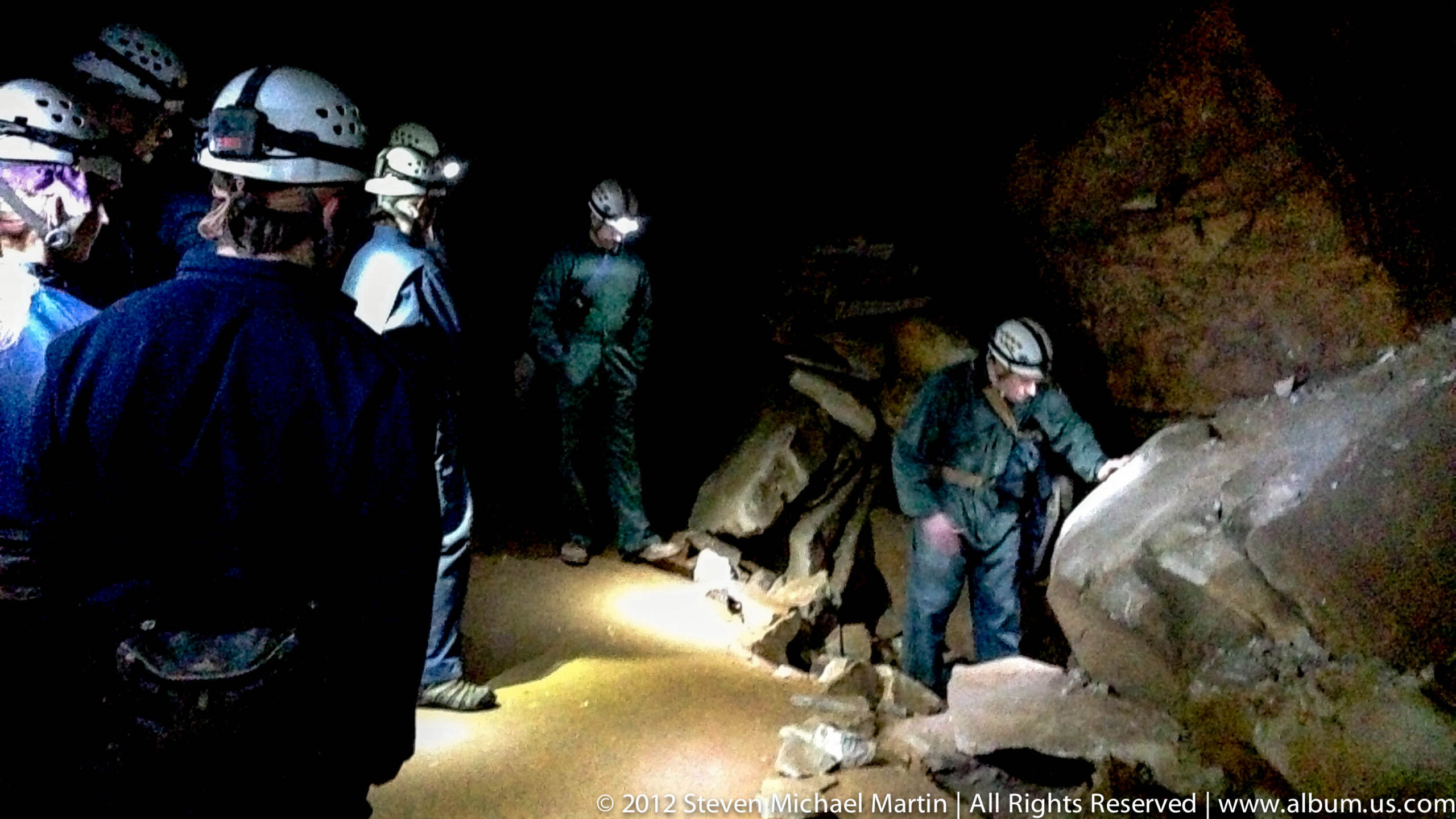
Several helmeted visitors with headlamps gather beside a large boulder in a rough cave corridor. One person bends toward the rock while others look on from behind. The handheld lights illuminate a small area of the uneven floor and walls, conveying the close, active setting of a guided underground visit.
Caption
Several helmeted visitors with headlamps gather beside a large boulder in a rough cave corridor. One person bends toward the rock while others look on from behind. The handheld lights illuminate a small area of the uneven floor and walls, conveying the close, active setting of a guided underground visit.
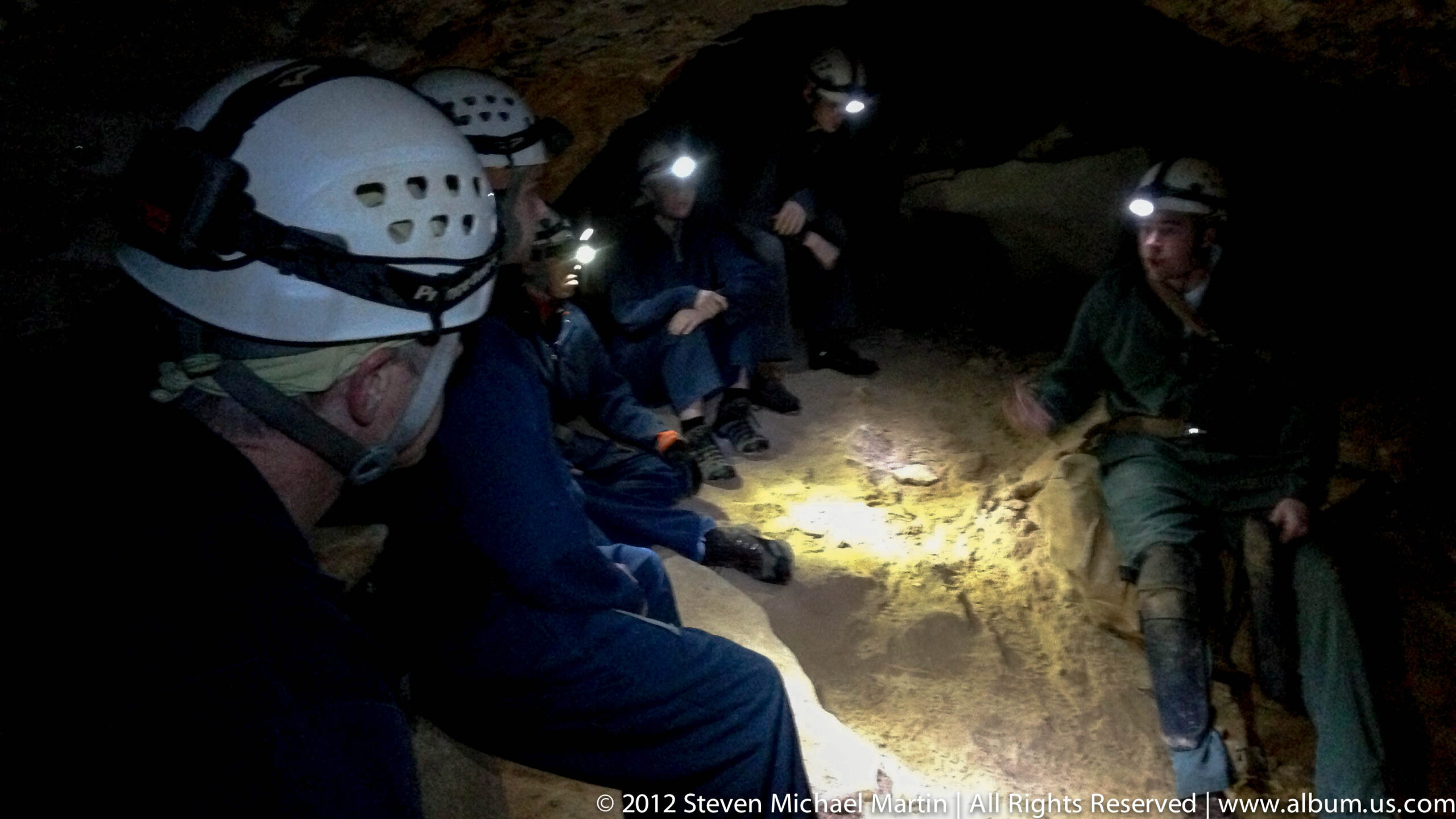
A line of helmeted visitors sits along a low rock shelf inside a cave, with headlamps lighting the uneven floor. The closest person is seen in profile at left, while others face the camera or one another across the narrow space. Their clustered posture and low ceiling convey the confined resting place.
Caption
A line of helmeted visitors sits along a low rock shelf inside a cave, with headlamps lighting the uneven floor. The closest person is seen in profile at left, while others face the camera or one another across the narrow space. Their clustered posture and low ceiling convey the confined resting place.
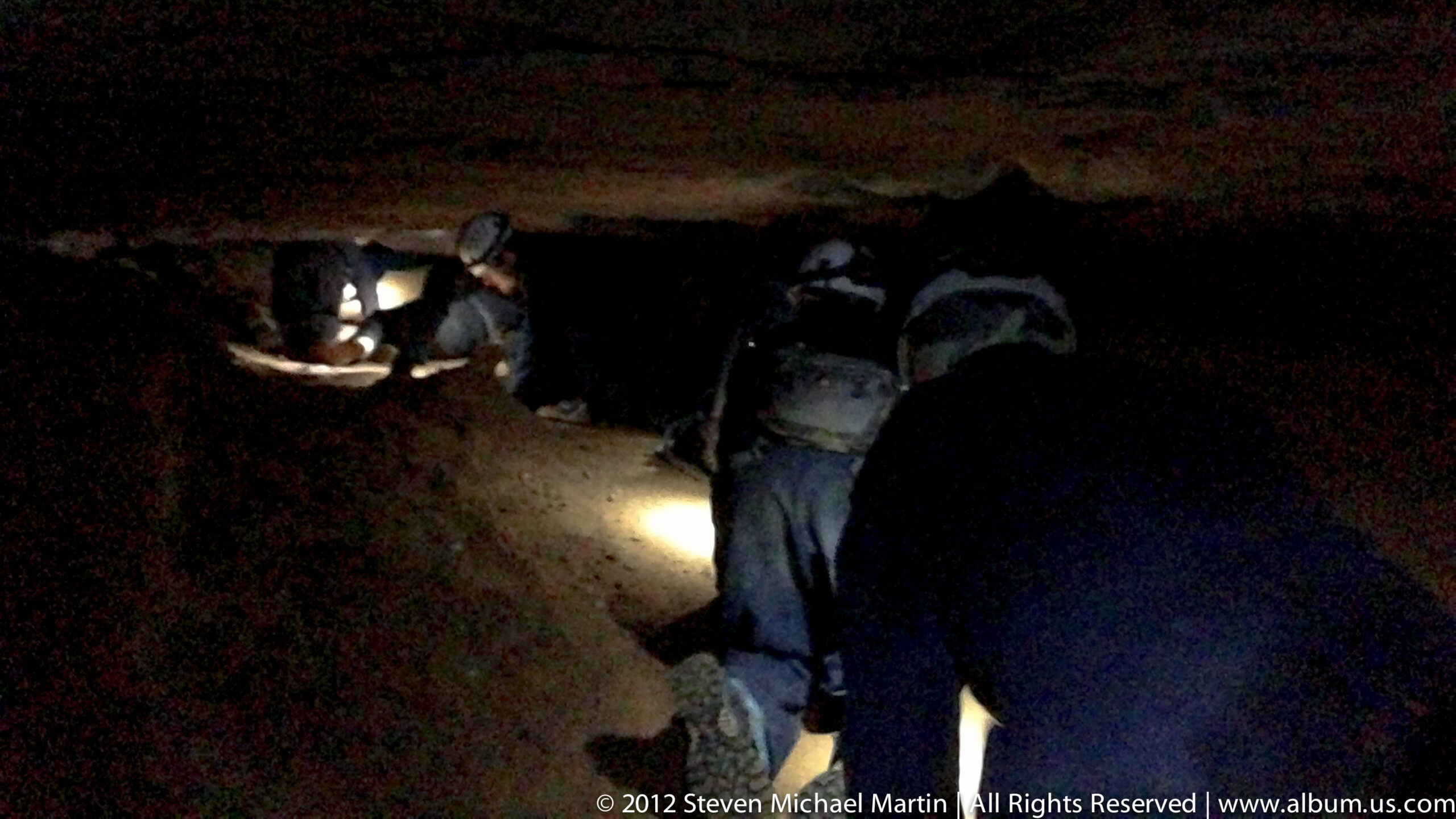
Visitors wearing helmets and headlamps crouch beneath a low ceiling as they follow a narrow passage away from the camera. A lit opening ahead marks the route, while rough rock presses close overhead and along both sides. The rear view emphasizes the careful movement required in the confined tunnel.
Caption
Visitors wearing helmets and headlamps crouch beneath a low ceiling as they follow a narrow passage away from the camera. A lit opening ahead marks the route, while rough rock presses close overhead and along both sides. The rear view emphasizes the careful movement required in the confined tunnel.
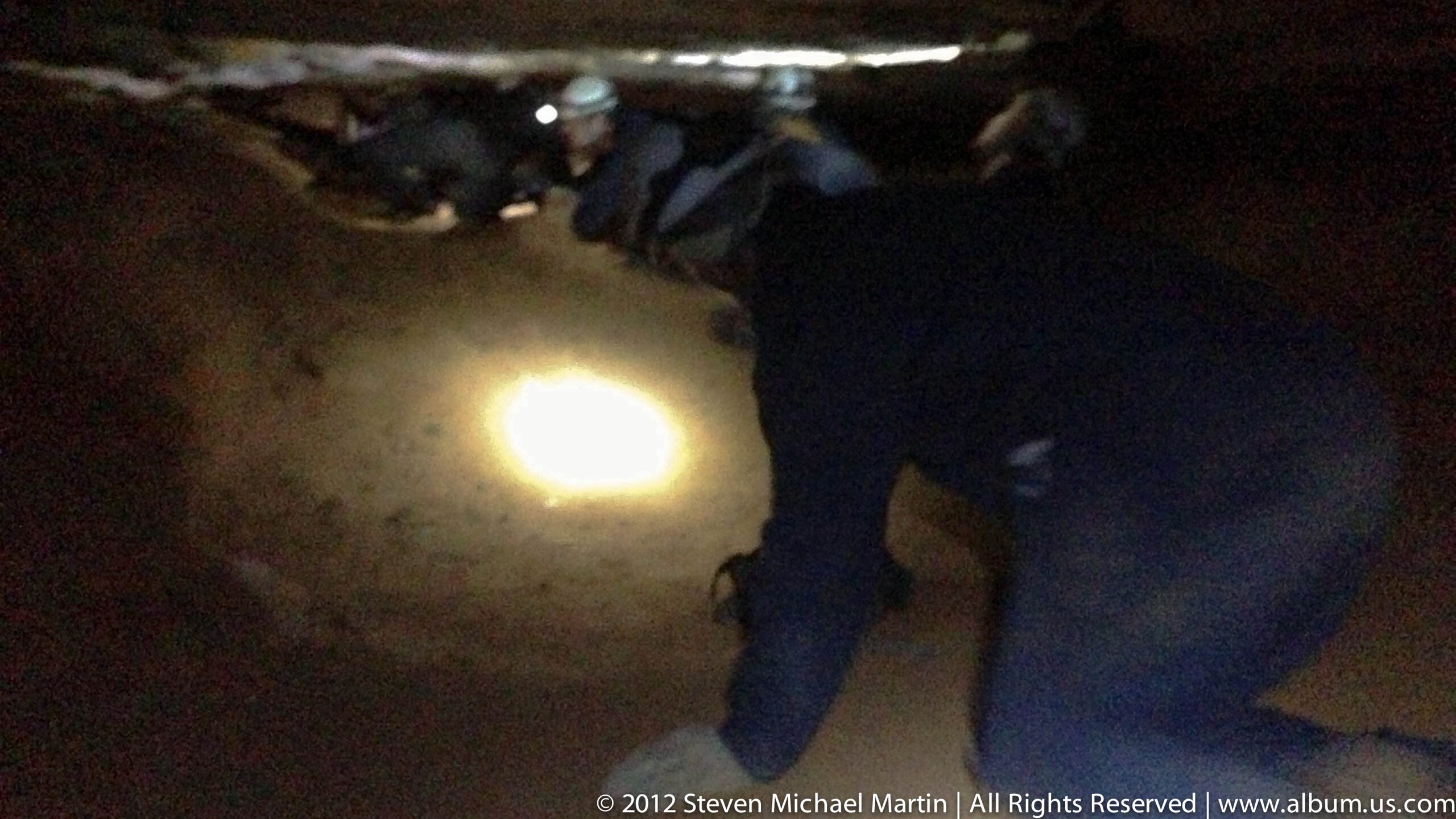
Several visitors bend low beneath a shallow rock ceiling, moving through a tight passage illuminated by headlamps. A bright beam washes across the floor at center, while the nearest person’s back fills the right foreground. The close, low viewpoint makes the restricted clearance unmistakable.
Caption
Several visitors bend low beneath a shallow rock ceiling, moving through a tight passage illuminated by headlamps. A bright beam washes across the floor at center, while the nearest person’s back fills the right foreground. The close, low viewpoint makes the restricted clearance unmistakable.
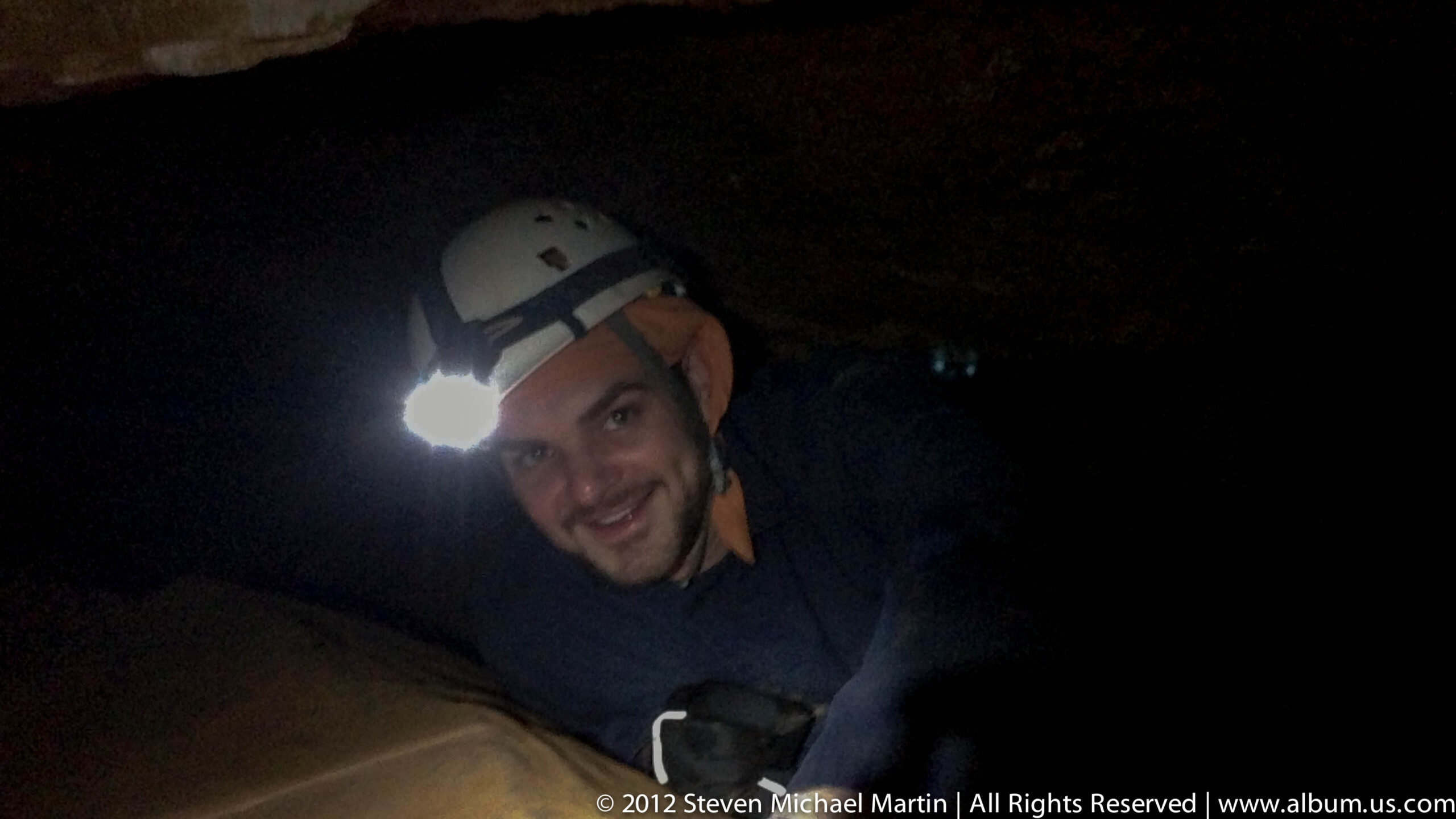
A smiling man in a white helmet and headlamp leans into the frame from a low passage, his face lit by the lamp beside his forehead. The surrounding stone is mostly dark, with a pale rock surface close to the lower edge. The portrait gives a personal view of the gear used during an underground tour.
Caption
A smiling man in a white helmet and headlamp leans into the frame from a low passage, his face lit by the lamp beside his forehead. The surrounding stone is mostly dark, with a pale rock surface close to the lower edge. The portrait gives a personal view of the gear used during an underground tour.

A black-and-white view looks through a rugged cave chamber, where broad, horizontally layered rock surfaces frame a dark central void. A bright patch of light falls on the far wall and smaller pale areas punctuate the shadowed floor, creating strong tonal contrast. The image’s upward-looking, enclosed composition draws attention to the chamber’s irregular limestone structure and depth.
Caption
A black-and-white view looks through a rugged cave chamber, where broad, horizontally layered rock surfaces frame a dark central void. A bright patch of light falls on the far wall and smaller pale areas punctuate the shadowed floor, creating strong tonal contrast. The image’s upward-looking, enclosed composition draws attention to the chamber’s irregular limestone structure and depth.
National Park Field Guide
Mammoth Cave National Park protects the longest known cave system in the world, formed through the gradual dissolution of limestone bedrock by slightly acidic groundwater. Underground passages developed over millions of years as water carved tunnels through layers of soluble rock. The cave system provides insight into geological processes that operate slowly yet dramatically over long periods of time.
🧭 Key Features
- World’s longest mapped cave system
- Limestone formations shaped by underground water movement
- Complex network of subterranean chambers and passageways
- Karst landscape including sinkholes and underground streams
- Evidence of early human exploration of cave environments
🌄 Landscape Highlights
The cave passages demonstrate how water gradually dissolved limestone along natural fractures, creating tunnels that expanded over geological time. Above ground, rolling hills and forested terrain reveal the surface expression of underground erosion processes. Sinkholes and disappearing streams illustrate how water continues to shape the landscape both above and below ground.
🌎 Natural Systems
Karst topography develops where soluble rock interacts with groundwater over extended periods of time. Underground rivers influence cave formation while surface vegetation reflects soil conditions created by limestone weathering. The park illustrates how geological and ecological systems operate together to produce complex natural environments.
📷 Photography Notes
- Look for repeating textures in rock formations
- Low light conditions emphasize cave atmosphere
- Contrast between underground and surface environments adds variety
- Wide compositions show scale of chambers
- Observe patterns created by mineral deposits
- Exterior landscapes provide context for underground systems
🌱 Conservation Context
Protection of Mammoth Cave preserves both underground and surface environments that illustrate long-term geological change. Conservation ensures that fragile cave ecosystems remain intact and that future generations can study the natural processes responsible for forming extensive subterranean networks.
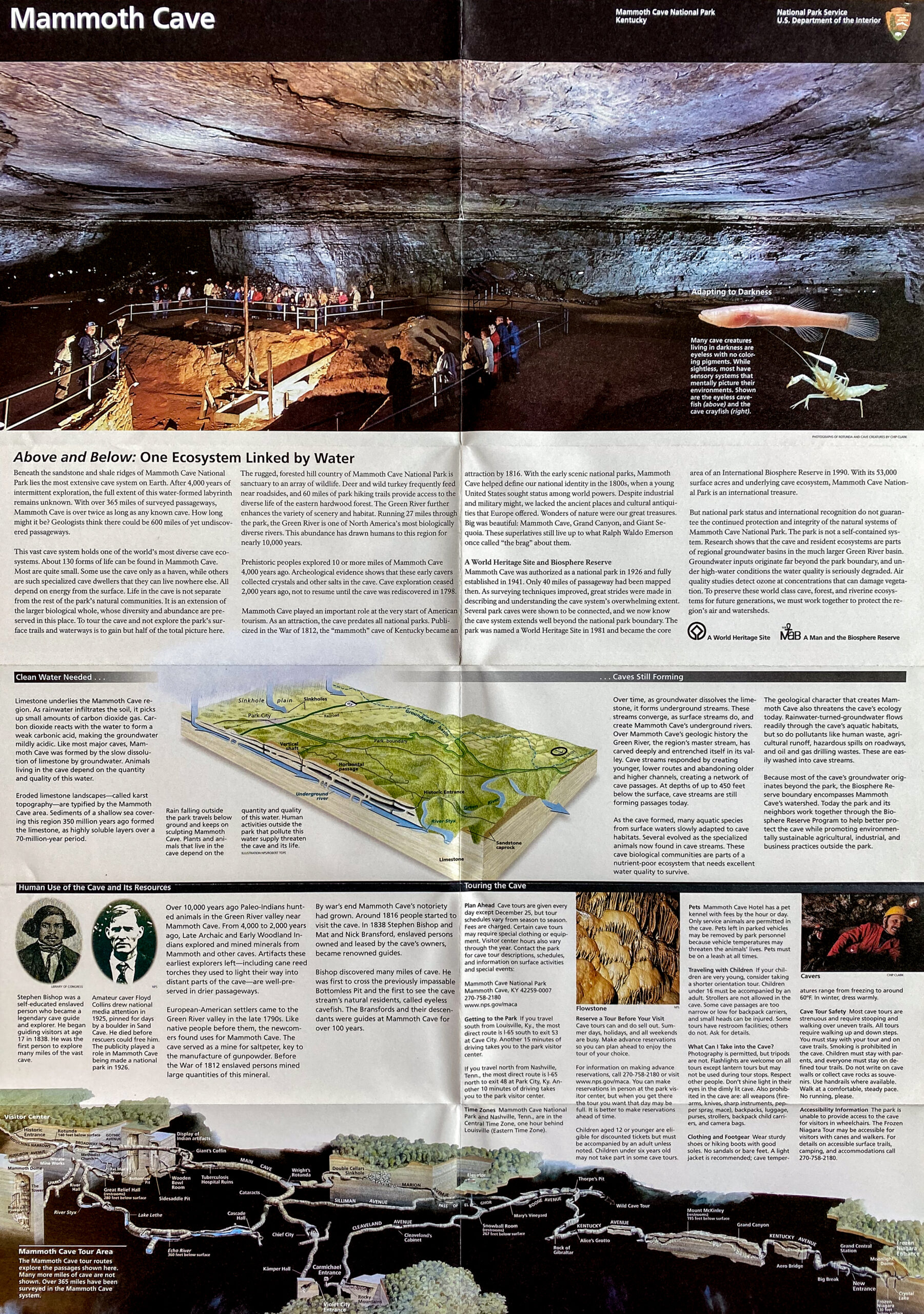
An open Mammoth Cave National Park brochure pairs a wide underground scene with interpretive text, a colored diagram of surface water and subsurface flow, and a long cave cross-section. Smaller portraits, wildlife images, and historical material fill the lower panels. The spread presents the cave as part of a connected landscape and water system, using maps and diagrams alongside visitor-facing explanations.
Caption
An open Mammoth Cave National Park brochure pairs a wide underground scene with interpretive text, a colored diagram of surface water and subsurface flow, and a long cave cross-section. Smaller portraits, wildlife images, and historical material fill the lower panels. The spread presents the cave as part of a connected landscape and water system, using maps and diagrams alongside visitor-facing explanations.

A guide spread titled “Exploring Mammoth Cave” places a large park map across its lower half, with boundaries, roads, waterways, and labeled locations marked in color. Above it, columns of visitor information sit beside small photographs and a smaller site map. The layout combines practical orientation with introductory material, making the geographic extent of the park the page’s dominant feature.
Caption
A guide spread titled “Exploring Mammoth Cave” places a large park map across its lower half, with boundaries, roads, waterways, and labeled locations marked in color. Above it, columns of visitor information sit beside small photographs and a smaller site map. The layout combines practical orientation with introductory material, making the geographic extent of the park the page’s dominant feature.