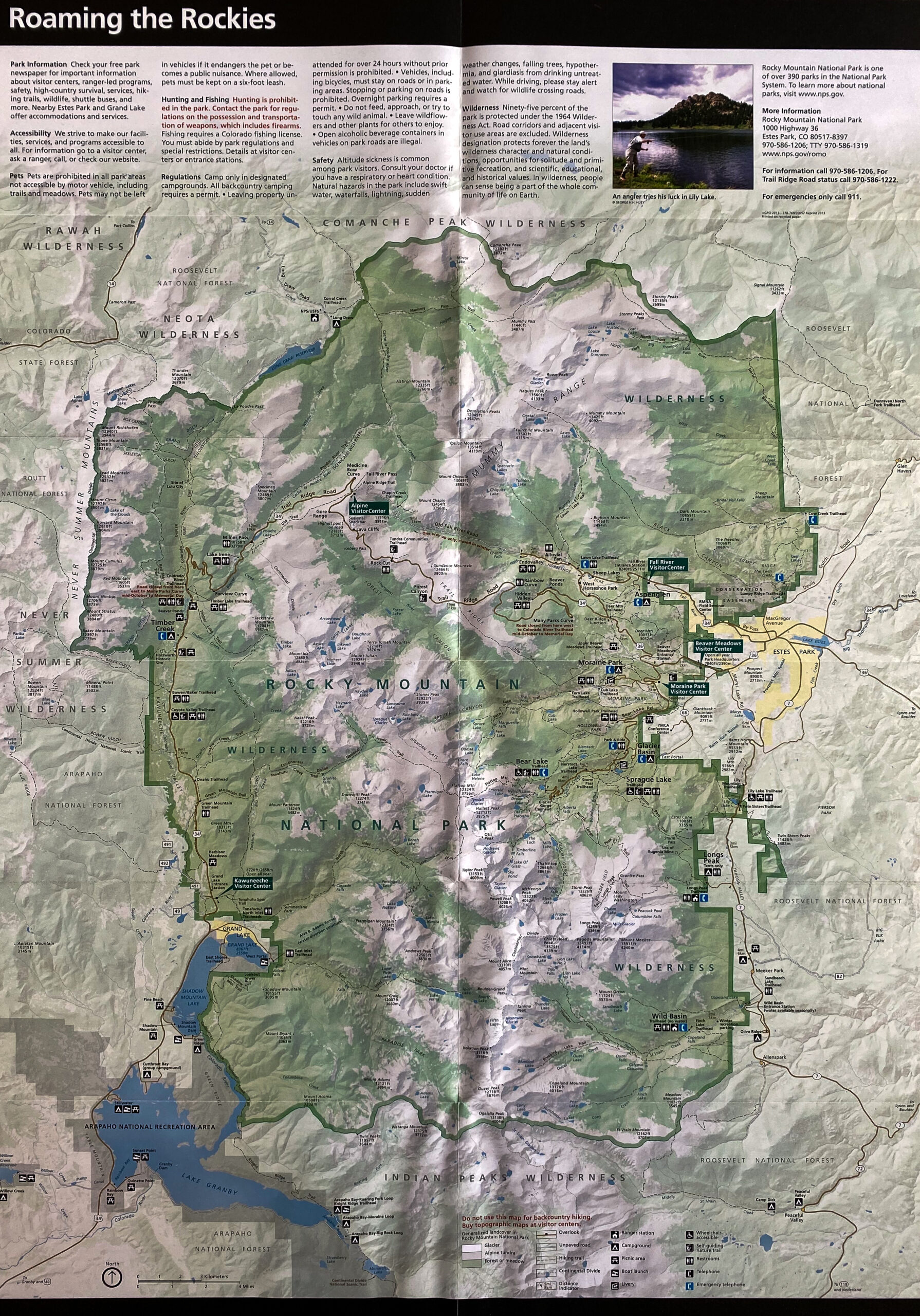
Rocky Mountain National Park – Fall River
The Fall River corridor reveals the influence of water in shaping alpine landscapes as snowmelt descends from higher elevations into forested valleys. Flowing streams, rocky banks, and surrounding mountain slopes create a transition zone between high alpine terrain and lower elevation ecosystems. The area reflects the geological forces that formed the Rocky Mountains through uplift and glaciation.
Vegetation patterns along the river illustrate how water availability supports plant life in mountain environments. Forest edges, open meadows, and river channels combine to create varied habitat that supports wildlife and seasonal changes in color and texture. The contrast between flowing water and rugged mountain terrain creates a balanced landscape composition.
Visitors experience the Fall River area as a more intimate landscape within Rocky Mountain National Park. The combination of moving water and surrounding peaks provides a quieter perspective on the park’s larger alpine environment while still highlighting the dramatic geology that defines the region.

The pond occupies the lower middle of the frame, reflecting nearby yellow trees and the subdued sky. Beyond it, an irregular aspen grove follows the valley floor, backed by rolling grass-covered hills and a dark tree line. Broad cloud cover dims the colors, allowing the reflective water and clustered autumn trees to lead the composition.
Caption
The pond occupies the lower middle of the frame, reflecting nearby yellow trees and the subdued sky. Beyond it, an irregular aspen grove follows the valley floor, backed by rolling grass-covered hills and a dark tree line. Broad cloud cover dims the colors, allowing the reflective water and clustered autumn trees to lead the composition.

Golden aspens gather along the floor of a shallow valley, their bright crowns forming an irregular band between dark shrubs and muted hills. Evergreen trees punctuate the yellow canopy, while haze softens the ridgeline and distant background. The wide view emphasizes the contrast between autumn foliage below and subdued late-season slopes above.
Caption
Golden aspens gather along the floor of a shallow valley, their bright crowns forming an irregular band between dark shrubs and muted hills. Evergreen trees punctuate the yellow canopy, while haze softens the ridgeline and distant background. The wide view emphasizes the contrast between autumn foliage below and subdued late-season slopes above.

A cross-topped tower and steep gray roof emerge from dense fog above a dark stone chapel. Conifers partly screen the lower walls, while a tall pine stands to the right and damp grass fills the foreground. The mist removes most distant detail, turning the building into the focal point and softening its wooded mountain setting.
Caption
A cross-topped tower and steep gray roof emerge from dense fog above a dark stone chapel. Conifers partly screen the lower walls, while a tall pine stands to the right and damp grass fills the foreground. The mist removes most distant detail, turning the building into the focal point and softening its wooded mountain setting.
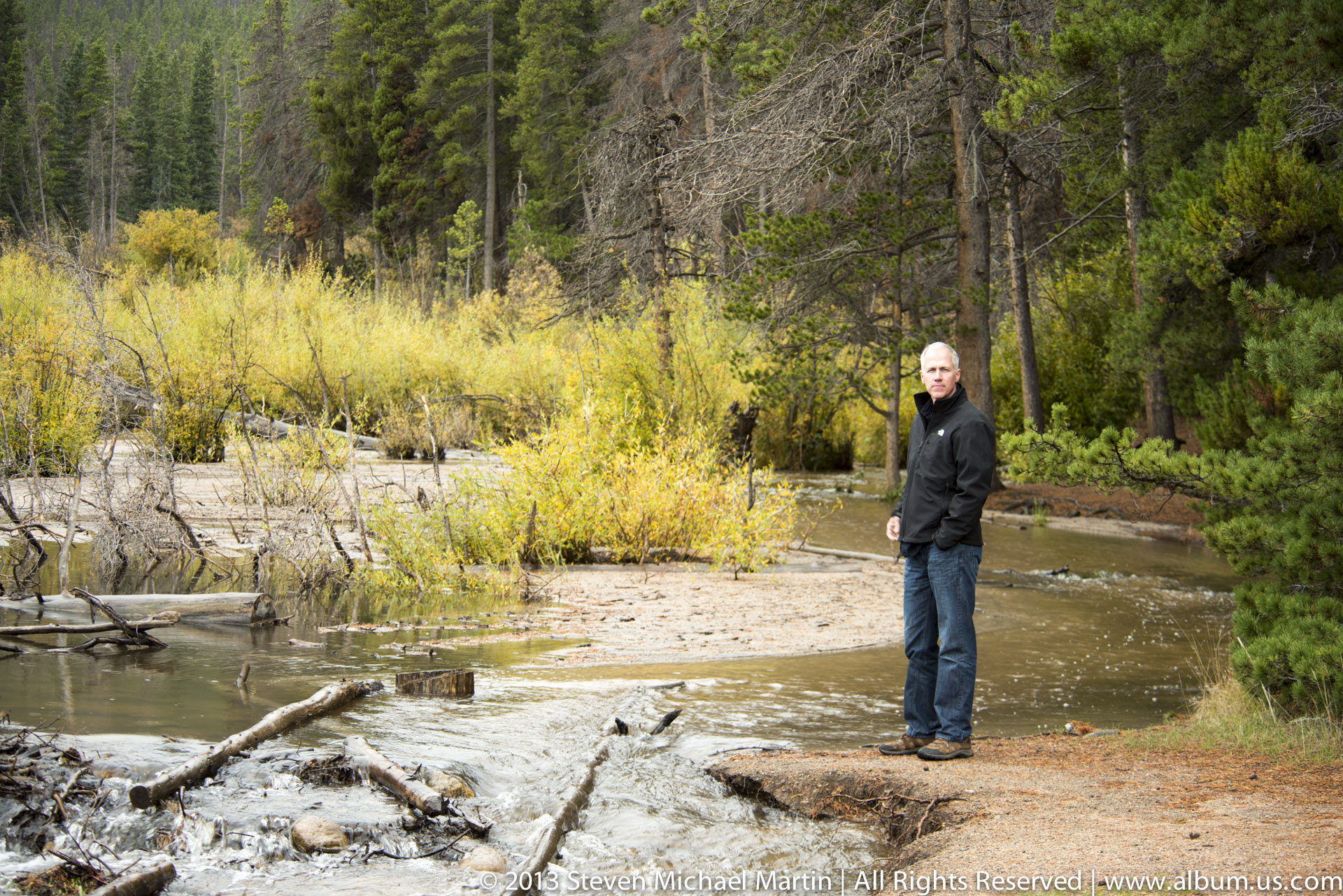
A man in a dark jacket stands at the right edge of a shallow stream, looking toward the camera. Water flows around exposed stones and fallen branches in the foreground, while bright yellow shrubs and tall evergreens line the opposite bank. The wide composition places the visitor within the stream corridor and records the mix of autumn color and conifer forest.
Caption
A man in a dark jacket stands at the right edge of a shallow stream, looking toward the camera. Water flows around exposed stones and fallen branches in the foreground, while bright yellow shrubs and tall evergreens line the opposite bank. The wide composition places the visitor within the stream corridor and records the mix of autumn color and conifer forest.

Two aging buildings sit in an open, frost-covered meadow beneath low fog. The nearer structure is a dark log cabin with a pale, steep roof; behind it stands a longer, lighter-colored outbuilding with several windows. A wooded hillside fades into the mist, while the cold, muted light and surrounding grass give the scene a quiet late-season atmosphere.
Caption
Two aging buildings sit in an open, frost-covered meadow beneath low fog. The nearer structure is a dark log cabin with a pale, steep roof; behind it stands a longer, lighter-colored outbuilding with several windows. A wooded hillside fades into the mist, while the cold, muted light and surrounding grass give the scene a quiet late-season atmosphere.

A black-billed magpie crosses the frame in flight, wings fully extended and long tail trailing behind. The white flight feathers form bright bands against its dark body, with blue-green iridescence visible along the wing and tail. The shallow focus renders the green-brown background as soft color, isolating the bird’s motion and spread-wing shape.
Caption
A black-billed magpie crosses the frame in flight, wings fully extended and long tail trailing behind. The white flight feathers form bright bands against its dark body, with blue-green iridescence visible along the wing and tail. The shallow focus renders the green-brown background as soft color, isolating the bird’s motion and spread-wing shape.

An antlered bull elk stands in the upper right of a dense meadow, partly obscured by grasses and thin branches. Its head and rack remain visible above the vegetation, while another elk’s flank enters at the far right. The layered foreground plants interrupt the view, conveying how the animals blend into the wooded edge rather than presenting a clear portrait.
Caption
An antlered bull elk stands in the upper right of a dense meadow, partly obscured by grasses and thin branches. Its head and rack remain visible above the vegetation, while another elk’s flank enters at the far right. The layered foreground plants interrupt the view, conveying how the animals blend into the wooded edge rather than presenting a clear portrait.

A weathered wooden cabin stands low on a steep hillside, its dark siding and damaged roof partly screened by tall grasses. Yellow aspen crowns rise behind it among gray, frost-dusted ground and scattered evergreens. The modest structure appears isolated within the slope, while the wide framing records both its deteriorated condition and the surrounding autumn vegetation.
Caption
A weathered wooden cabin stands low on a steep hillside, its dark siding and damaged roof partly screened by tall grasses. Yellow aspen crowns rise behind it among gray, frost-dusted ground and scattered evergreens. The modest structure appears isolated within the slope, while the wide framing records both its deteriorated condition and the surrounding autumn vegetation.

A narrow pond reflects a muted strip of sky within a broad, level meadow. Yellow aspens and darker shrubs line the water, while an open ridge with scattered trees rises beyond the valley floor. The low, horizontal composition divides the scene into bands of grass, water, autumn foliage, and distant upland beneath a softly clouded sky.
Caption
A narrow pond reflects a muted strip of sky within a broad, level meadow. Yellow aspens and darker shrubs line the water, while an open ridge with scattered trees rises beyond the valley floor. The low, horizontal composition divides the scene into bands of grass, water, autumn foliage, and distant upland beneath a softly clouded sky.

Rain beads on a black-billed magpie as it steps across a pale gravel ledge. The close viewpoint reveals the bird’s white shoulder patch, blue-green iridescence on the folded wing and long tail, while the dark woodland behind dissolves into soft color. Droplets streak through the frame, giving the otherwise still pose a clear weather context.
Caption
Rain beads on a black-billed magpie as it steps across a pale gravel ledge. The close viewpoint reveals the bird’s white shoulder patch, blue-green iridescence on the folded wing and long tail, while the dark woodland behind dissolves into soft color. Droplets streak through the frame, giving the otherwise still pose a clear weather context.

A bull elk rests low in golden meadow grass, its head raised and broad antlers silhouetted against the darker woodland. The grass conceals much of the animal’s body, leaving the branching rack and alert profile as the clearest details. Pine trunks and shaded understory form a quiet backdrop to this close wildlife view.
Caption
A bull elk rests low in golden meadow grass, its head raised and broad antlers silhouetted against the darker woodland. The grass conceals much of the animal’s body, leaving the branching rack and alert profile as the clearest details. Pine trunks and shaded understory form a quiet backdrop to this close wildlife view.

Seen from behind, a lean gray-brown canid walks uphill through a tangle of grasses and leafy stems. Its pointed ears, narrow muzzle in partial profile, long legs, and bushy tail are visible among the foliage. The rocky outcrop and dense understory break up the animal’s outline, making this a habitat view as well as a wildlife portrait.
Caption
Seen from behind, a lean gray-brown canid walks uphill through a tangle of grasses and leafy stems. Its pointed ears, narrow muzzle in partial profile, long legs, and bushy tail are visible among the foliage. The rocky outcrop and dense understory break up the animal’s outline, making this a habitat view as well as a wildlife portrait.
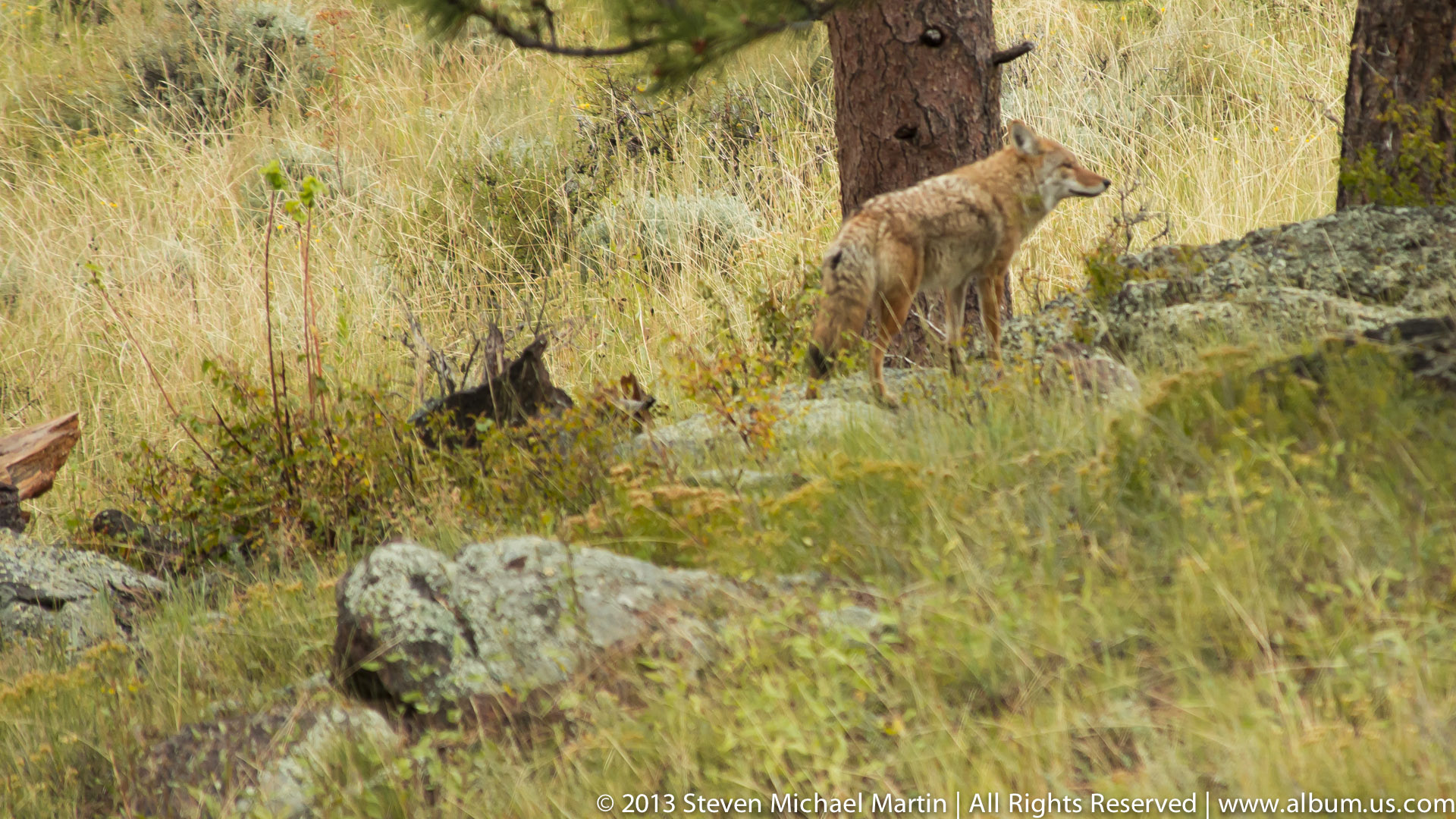
A tan-gray canid is partly hidden behind a pine trunk, its head and shoulders visible as it looks across a grassy clearing. The animal’s upright ears and mottled coat contrast with the dark tree bark and pale meadow grasses. The obstructed view preserves a candid sense of the animal moving through cover without suggesting behavior beyond its alert pause.
Caption
A tan-gray canid is partly hidden behind a pine trunk, its head and shoulders visible as it looks across a grassy clearing. The animal’s upright ears and mottled coat contrast with the dark tree bark and pale meadow grasses. The obstructed view preserves a candid sense of the animal moving through cover without suggesting behavior beyond its alert pause.

Three gray-tan canids are dispersed across tall dry grass, their bodies partly hidden by the vegetation. The nearest animal stands left of center while two others are farther to the right, creating a staggered line through the meadow. Their pointed ears and long muzzles are visible, but the broad framing keeps the surrounding grassland and spacing among the animals prominent.
Caption
Three gray-tan canids are dispersed across tall dry grass, their bodies partly hidden by the vegetation. The nearest animal stands left of center while two others are farther to the right, creating a staggered line through the meadow. Their pointed ears and long muzzles are visible, but the broad framing keeps the surrounding grassland and spacing among the animals prominent.

A gray-brown coyote moves steadily through tall, pale grass, its body nearly parallel to the frame and its muzzle pointed forward. The long tail hangs low behind it, while the dry stalks rise above its back and conceal its legs. The close crop isolates the animal against a nearly continuous field of grass.
Caption
A gray-brown coyote moves steadily through tall, pale grass, its body nearly parallel to the frame and its muzzle pointed forward. The long tail hangs low behind it, while the dry stalks rise above its back and conceal its legs. The close crop isolates the animal against a nearly continuous field of grass.
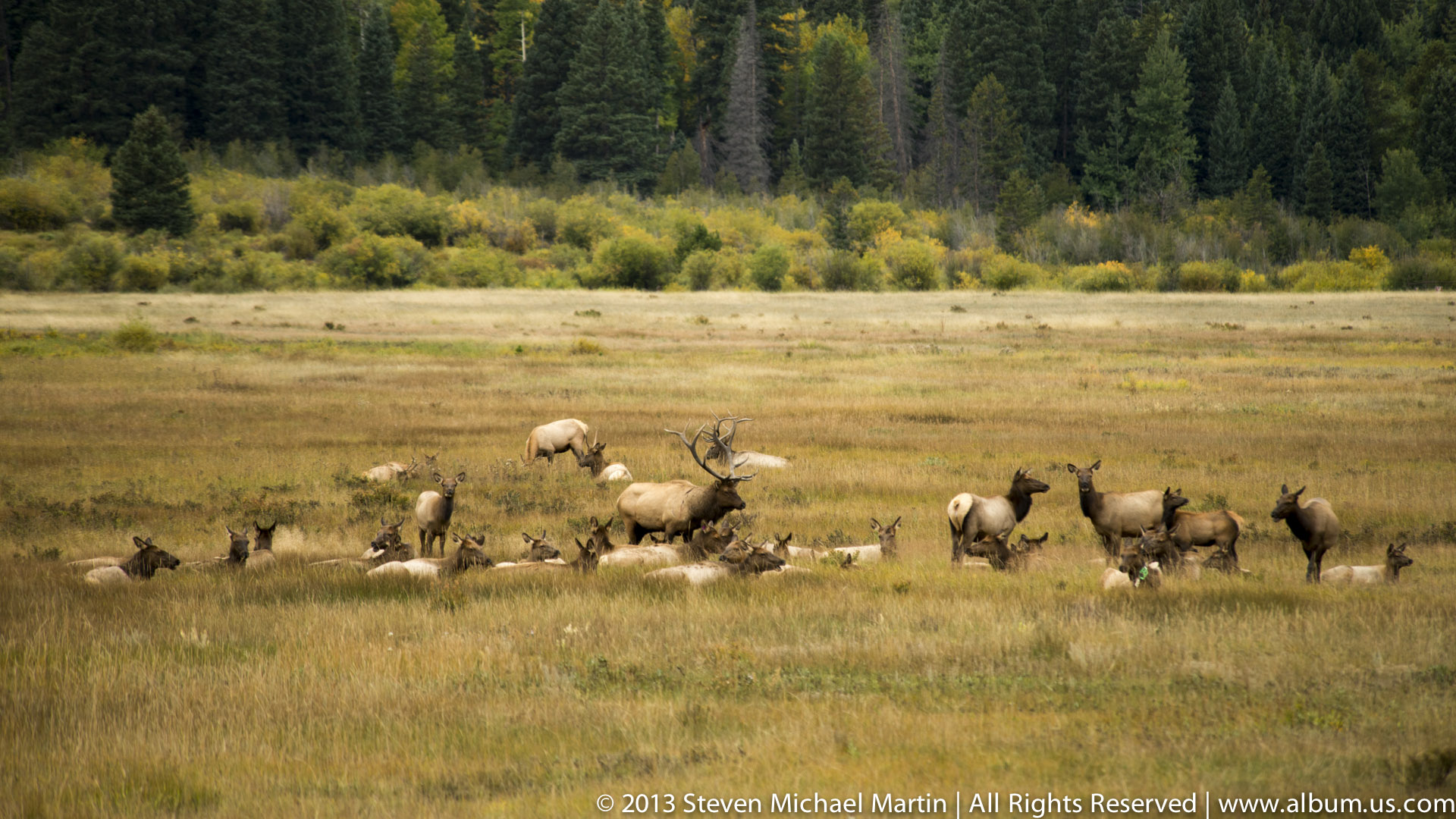
A large herd of elk spreads across the middle of a broad meadow, many animals resting while several stand among them. Antlered bulls are visible within the group, including a prominent animal near the center. Golden grass separates the herd from a dense wall of dark conifers, while the wide framing preserves the scale and open space of the gathering.
Caption
A large herd of elk spreads across the middle of a broad meadow, many animals resting while several stand among them. Antlered bulls are visible within the group, including a prominent animal near the center. Golden grass separates the herd from a dense wall of dark conifers, while the wide framing preserves the scale and open space of the gathering.

A mature bull elk and a smaller calf stand close together in a sunlit meadow. The bull’s large branching antlers dominate the upper frame as the calf faces him from the left. Golden grass surrounds both animals and continues into the background, making their difference in size and the brief face-to-face moment the central details.
Caption
A mature bull elk and a smaller calf stand close together in a sunlit meadow. The bull’s large branching antlers dominate the upper frame as the calf faces him from the left. Golden grass surrounds both animals and continues into the background, making their difference in size and the brief face-to-face moment the central details.

A black-billed magpie walks across a pale gravel surface, its body angled to the right and its head turned slightly upward. The long tail extends behind the bird, while a white shoulder patch and dark blue-green wing remain visible along its side. The uncluttered ground and soft background give this frame a straightforward full-body view.
Caption
A black-billed magpie walks across a pale gravel surface, its body angled to the right and its head turned slightly upward. The long tail extends behind the bird, while a white shoulder patch and dark blue-green wing remain visible along its side. The uncluttered ground and soft background give this frame a straightforward full-body view.

A bull elk stands broadside in a conifer forest, framed by vertical pine trunks and crossing branches. Its pale tan flank contrasts with the dark neck and the shaded woodland floor. The antlers rise above the surrounding brush, while the animal’s head turns slightly toward the camera. This view emphasizes the elk’s size within the narrow spaces of the forest.
Caption
A bull elk stands broadside in a conifer forest, framed by vertical pine trunks and crossing branches. Its pale tan flank contrasts with the dark neck and the shaded woodland floor. The antlers rise above the surrounding brush, while the animal’s head turns slightly toward the camera. This view emphasizes the elk’s size within the narrow spaces of the forest.

A single upright flower stalk stands isolated against a dark green background. Small yellow blossoms and rounded green buds cluster along its central stem, with the newest flowers near the top. The narrow depth of field keeps the plant distinct from the surrounding woodland, but the frame omits the basal leaves and other features needed for a secure species-level identification.
Caption
A single upright flower stalk stands isolated against a dark green background. Small yellow blossoms and rounded green buds cluster along its central stem, with the newest flowers near the top. The narrow depth of field keeps the plant distinct from the surrounding woodland, but the frame omits the basal leaves and other features needed for a secure species-level identification.

A bull elk stands broadside within a shaded forest understory, looking left through low evergreen branches. Its dark neck, pale tan flank, and branching antlers contrast with the mottled greens and browns of the woodland. Foreground foliage partially overlaps the animal, while the side-on stance reveals its full body and the surrounding dense habitat.
Caption
A bull elk stands broadside within a shaded forest understory, looking left through low evergreen branches. Its dark neck, pale tan flank, and branching antlers contrast with the mottled greens and browns of the woodland. Foreground foliage partially overlaps the animal, while the side-on stance reveals its full body and the surrounding dense habitat.

The bull elk’s head and shoulders occupy the center of the frame, with its broad antlers extending outward above the ears. Its dark neck mane contrasts with a tawny body, and the animal looks slightly left of the camera. Soft evergreen foliage and a few yellow leaves form a shallow-focus backdrop, keeping attention on the animal’s face and rack.
Caption
The bull elk’s head and shoulders occupy the center of the frame, with its broad antlers extending outward above the ears. Its dark neck mane contrasts with a tawny body, and the animal looks slightly left of the camera. Soft evergreen foliage and a few yellow leaves form a shallow-focus backdrop, keeping attention on the animal’s face and rack.

The bull elk faces the camera from a patch of woodland understory, its broad antlers spanning the upper part of the image. Its tongue is extended over the muzzle, a fleeting detail that distinguishes this portrait from the neighboring side views. Yellowing leaves and pale grasses soften the lower foreground, while dark branches and rocks fill the background.
Caption
The bull elk faces the camera from a patch of woodland understory, its broad antlers spanning the upper part of the image. Its tongue is extended over the muzzle, a fleeting detail that distinguishes this portrait from the neighboring side views. Yellowing leaves and pale grasses soften the lower foreground, while dark branches and rocks fill the background.

A bull elk reclines on pale meadow grass beneath the reach of a low pine branch. Its head turns left, showing the dark mane, pale flank, and long antlers against a softly focused background of rocks and grasses. The relaxed pose and partly shaded setting distinguish this view from the standing portraits in the same sequence.
Caption
A bull elk reclines on pale meadow grass beneath the reach of a low pine branch. Its head turns left, showing the dark mane, pale flank, and long antlers against a softly focused background of rocks and grasses. The relaxed pose and partly shaded setting distinguish this view from the standing portraits in the same sequence.

The elk’s face fills the center of the composition, with its large antlers reaching nearly to both edges. Fine detail is visible in the textured muzzle, dark eyes, and layered fur of the neck. The forest behind is blurred into green and brown, eliminating distractions and turning the photograph into a close wildlife portrait rather than a habitat view.
Caption
The elk’s face fills the center of the composition, with its large antlers reaching nearly to both edges. Fine detail is visible in the textured muzzle, dark eyes, and layered fur of the neck. The forest behind is blurred into green and brown, eliminating distractions and turning the photograph into a close wildlife portrait rather than a habitat view.

A young bull elk rests on its folded legs in a field of dry golden grass. Short antlers rise from its head, and its body stretches to the right with the coat blending into the meadow. The quiet side view is tightly framed, leaving little background beyond grass and placing emphasis on the animal’s resting posture and developing rack.
Caption
A young bull elk rests on its folded legs in a field of dry golden grass. Short antlers rise from its head, and its body stretches to the right with the coat blending into the meadow. The quiet side view is tightly framed, leaving little background beyond grass and placing emphasis on the animal’s resting posture and developing rack.

A bull elk browses among yellowing shrubs, its muzzle lowered into the leaves and stems at the front of the frame. The large antlers spread above its head while the pale body continues behind the brush. Soft green and brown shapes in the background suggest a wooded meadow edge, and the close crop centers the animal’s feeding posture.
Caption
A bull elk browses among yellowing shrubs, its muzzle lowered into the leaves and stems at the front of the frame. The large antlers spread above its head while the pale body continues behind the brush. Soft green and brown shapes in the background suggest a wooded meadow edge, and the close crop centers the animal’s feeding posture.

Bright yellow aspen foliage fills nearly the entire frame, broken by dark trunks and fine branching limbs. The tight composition removes the wider landscape and makes the density, color, and structure of the canopy the subject. Small gaps between leaves reveal only fragments of shadowed vegetation, creating a layered pattern of gold, brown, and green.
Caption
Bright yellow aspen foliage fills nearly the entire frame, broken by dark trunks and fine branching limbs. The tight composition removes the wider landscape and makes the density, color, and structure of the canopy the subject. Small gaps between leaves reveal only fragments of shadowed vegetation, creating a layered pattern of gold, brown, and green.

A curving pond fills the foreground, its dark surface reflecting the dense band of trees along the far bank. Golden aspens dominate the middle distance, mixed with green shrubs and a few taller, pale trunks. The hillside rises just behind the grove, and the closer viewpoint gives the water more weight than in the previous broad valley views.
Caption
A curving pond fills the foreground, its dark surface reflecting the dense band of trees along the far bank. Golden aspens dominate the middle distance, mixed with green shrubs and a few taller, pale trunks. The hillside rises just behind the grove, and the closer viewpoint gives the water more weight than in the previous broad valley views.
🏞️ National Park Field Guide
📍 Overview
Rocky Mountain National Park protects high elevation landscapes shaped by tectonic uplift and glacial activity over millions of years. Alpine tundra, forested slopes, and mountain rivers reflect the diverse environmental conditions created by elevation and climate.
The Fall River area demonstrates how water shapes mountain ecosystems, influencing vegetation patterns and wildlife habitat. Seasonal snowmelt contributes to the dynamic character of alpine environments and supports the ecological diversity of the Rocky Mountains.
⭐ Highlights
- Alpine mountain scenery
- Forest and river ecosystems
- Evidence of glacial shaping
- Transition between valley and alpine environments
- Views of rugged Rocky Mountain peaks
🔎 Key Features
- Snowmelt-fed river systems
- Glacially shaped valleys
- Montane and alpine vegetation zones
- Rock formations shaped by uplift
- Seasonal mountain environments
🦌 Wildlife Encountered
Wildlife viewing in the Fall River area of Rocky Mountain National Park included several characteristic species of the montane and meadow ecosystems. Elk were the most frequently observed animals, particularly during the fall season when bull elk are highly visible in open meadows and near forest edges. Coyotes were also seen moving through grassland habitat, often traveling cautiously through taller vegetation in search of small prey.
Additional sightings included mule deer browsing near wooded areas and black-billed magpies, a distinctive bird species commonly associated with open terrain across the Rocky Mountains. Together, these species reflect the ecological diversity of the park’s transition zone between alpine environments and lower elevation forest and meadow habitat.
- Elk
- Coyote
- Mule deer
- Black-billed magpie
📷 Photography Notes
- Early light enhances mountain contrast
- Water creates strong foreground interest
- Clouds add atmosphere to alpine scenes
- Layered ridgelines create depth
- Wide framing emphasizes scale
- Simple compositions often work best