Theodore Roosevelt National Park
Theodore Roosevelt National Park preserves a striking badlands landscape in western North Dakota shaped by erosion, sedimentary deposition, and grassland ecology. Layered rock formations, river valleys, and open prairie reflect millions of years of environmental change across the northern Great Plains. The landscape is closely associated with Theodore Roosevelt, whose time ranching in the region helped shape his views on conservation and the importance of protecting public lands.
The park’s terrain includes eroded buttes, colorful rock layers, and broad grasslands that support wildlife such as bison, elk, wild horses, and prairie dogs. These ecosystems illustrate how climate, topography, and vegetation interact across semi-arid environments. The Little Missouri River cuts through the park, providing a corridor that shaped both wildlife movement and human travel through the region.
Today, Theodore Roosevelt National Park represents both a distinctive geological landscape and an important chapter in American conservation history. The park demonstrates how direct experience of wild landscapes influenced national ideas about preservation in the late 19th and early 20th centuries.
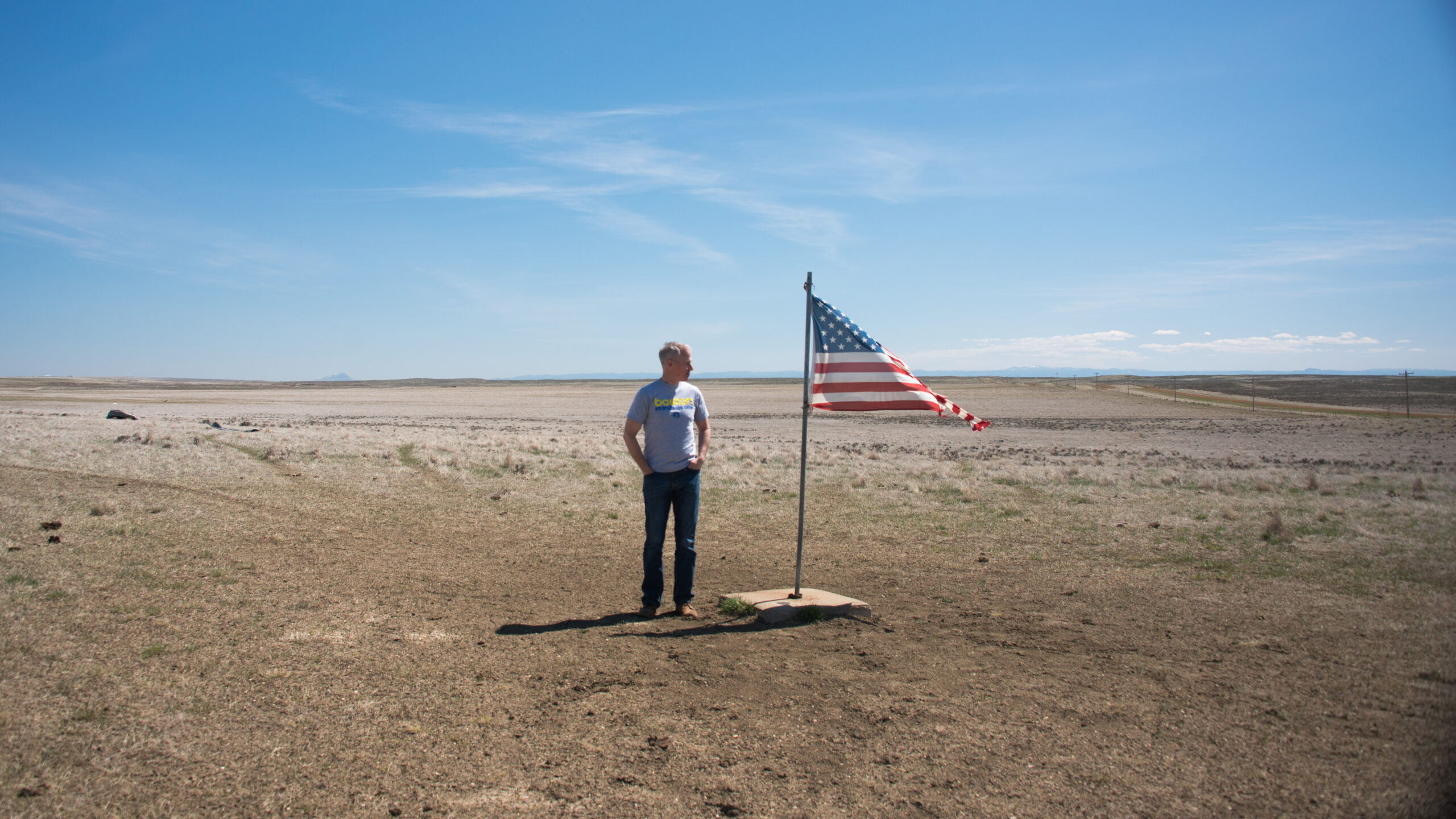
A visitor stands beside a United States flag on a low concrete base in an expansive, treeless grassland. The person and flag occupy a small area near the center, with a wide horizon and pale, dry ground emphasizing the openness of the setting. The shirt’s lettering is too small to read reliably, so the portrait remains identified only by visible clothing and surroundings.
Caption
A visitor stands beside a United States flag on a low concrete base in an expansive, treeless grassland. The person and flag occupy a small area near the center, with a wide horizon and pale, dry ground emphasizing the openness of the setting. The shirt’s lettering is too small to read reliably, so the portrait remains identified only by visible clothing and surroundings.
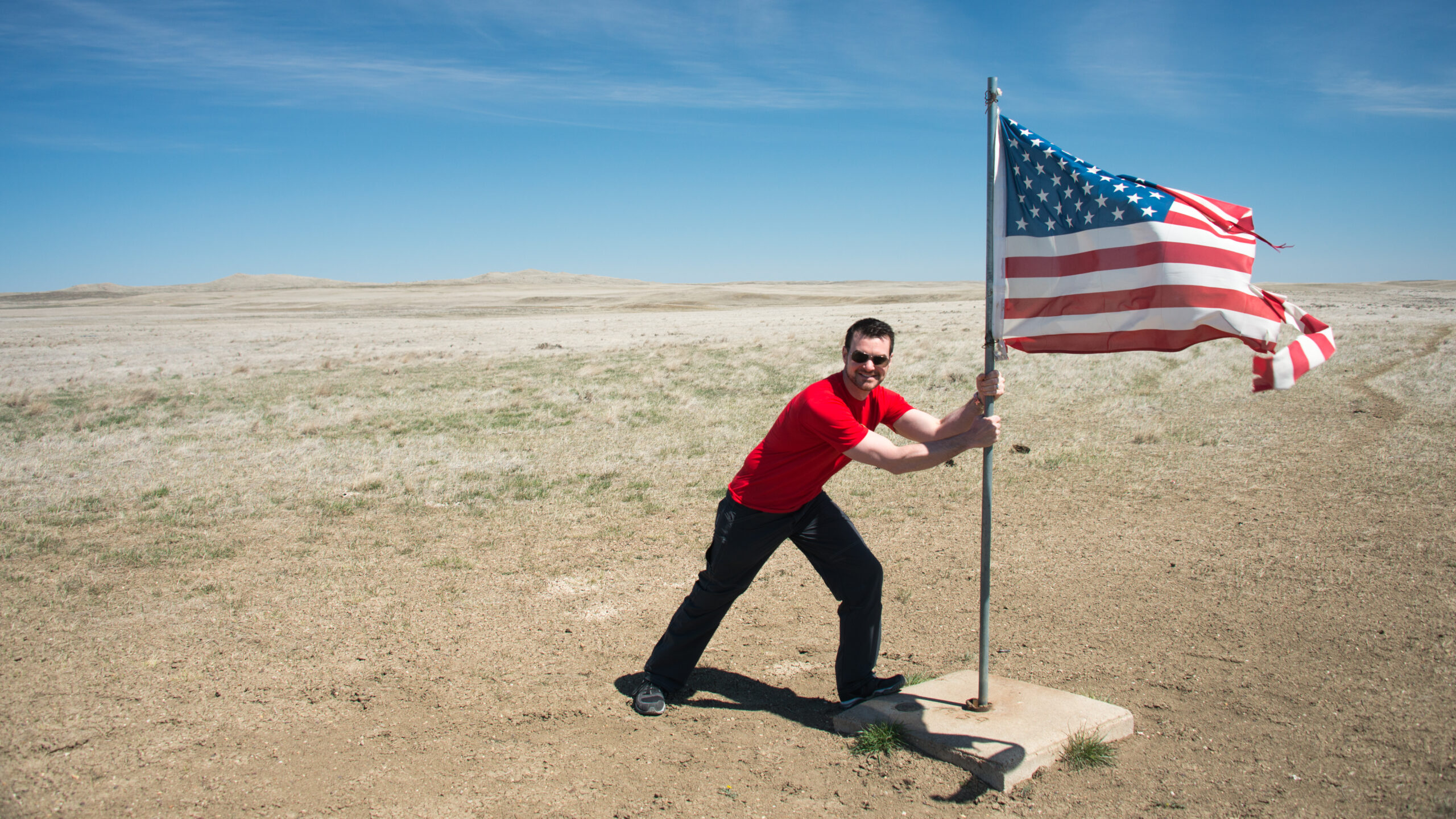
A man in a red shirt leans playfully against a flagpole beneath a large, wind-blown United States flag. The close framing reveals his pose and the concrete footing, while dry grassland and low, pale hills extend behind him. Compared with the previous photograph, this view centers a personal interaction with the flag rather than the solitary figure and broad setting.
Caption
A man in a red shirt leans playfully against a flagpole beneath a large, wind-blown United States flag. The close framing reveals his pose and the concrete footing, while dry grassland and low, pale hills extend behind him. Compared with the previous photograph, this view centers a personal interaction with the flag rather than the solitary figure and broad setting.
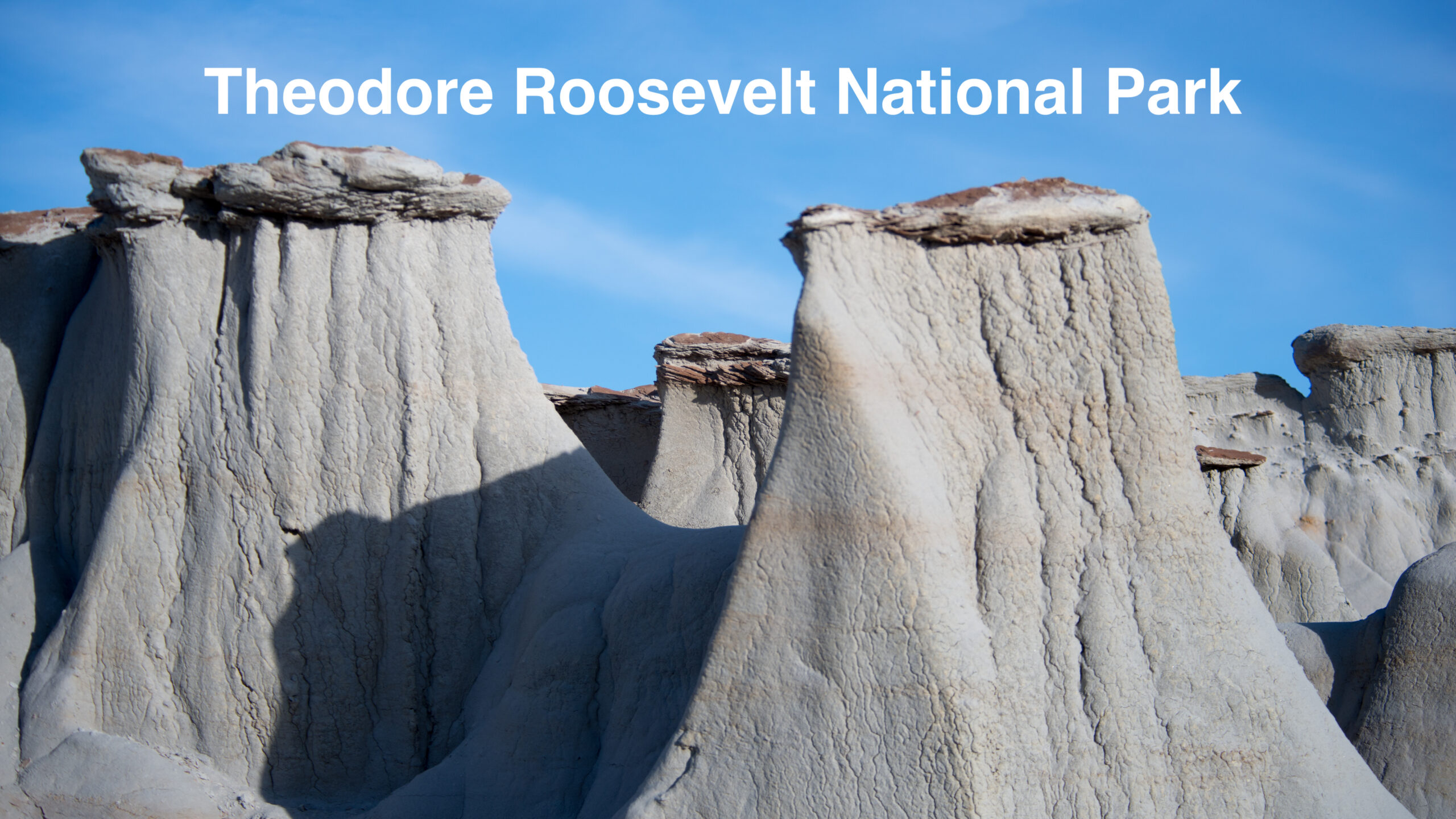
Tall, pale claystone columns rise beneath flat, reddish caprock in this close view of a badlands formation. Deep vertical grooves divide the soft slopes, while neighboring formations crowd the frame and cast strong shadows. A superimposed park title identifies Theodore Roosevelt National Park, but the caption focuses on the visible hoodoo forms and their layered caps.
Caption
Tall, pale claystone columns rise beneath flat, reddish caprock in this close view of a badlands formation. Deep vertical grooves divide the soft slopes, while neighboring formations crowd the frame and cast strong shadows. A superimposed park title identifies Theodore Roosevelt National Park, but the caption focuses on the visible hoodoo forms and their layered caps.
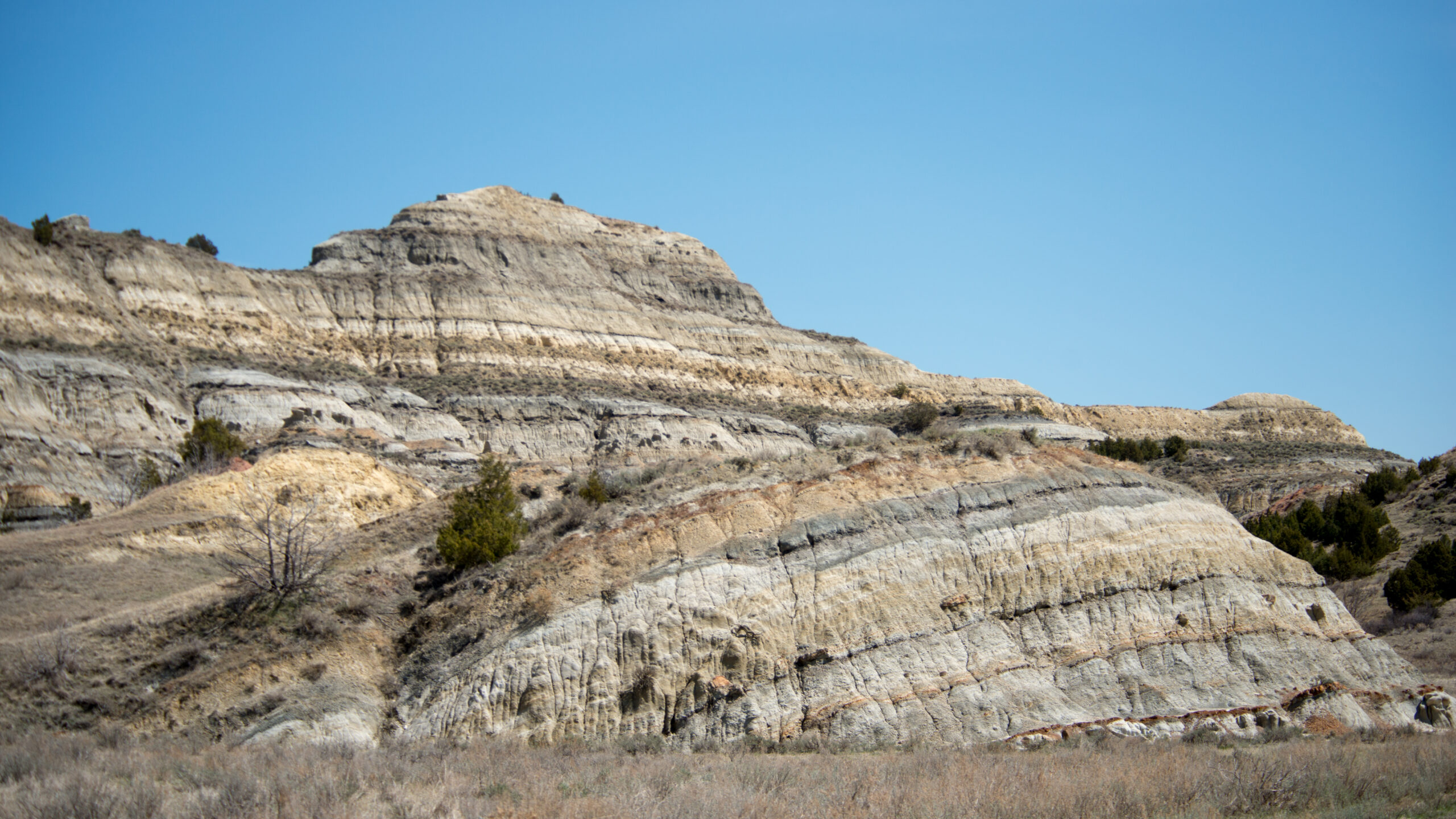
A broad, flat-topped butte rises above a lower slope marked by alternating pale and dark sedimentary bands. Sparse shrubs punctuate the foreground, while a clear blue sky leaves the ridge line sharply defined. The medium-wide view links the butte’s layered profile to the surrounding eroded terrain.
Caption
A broad, flat-topped butte rises above a lower slope marked by alternating pale and dark sedimentary bands. Sparse shrubs punctuate the foreground, while a clear blue sky leaves the ridge line sharply defined. The medium-wide view links the butte’s layered profile to the surrounding eroded terrain.
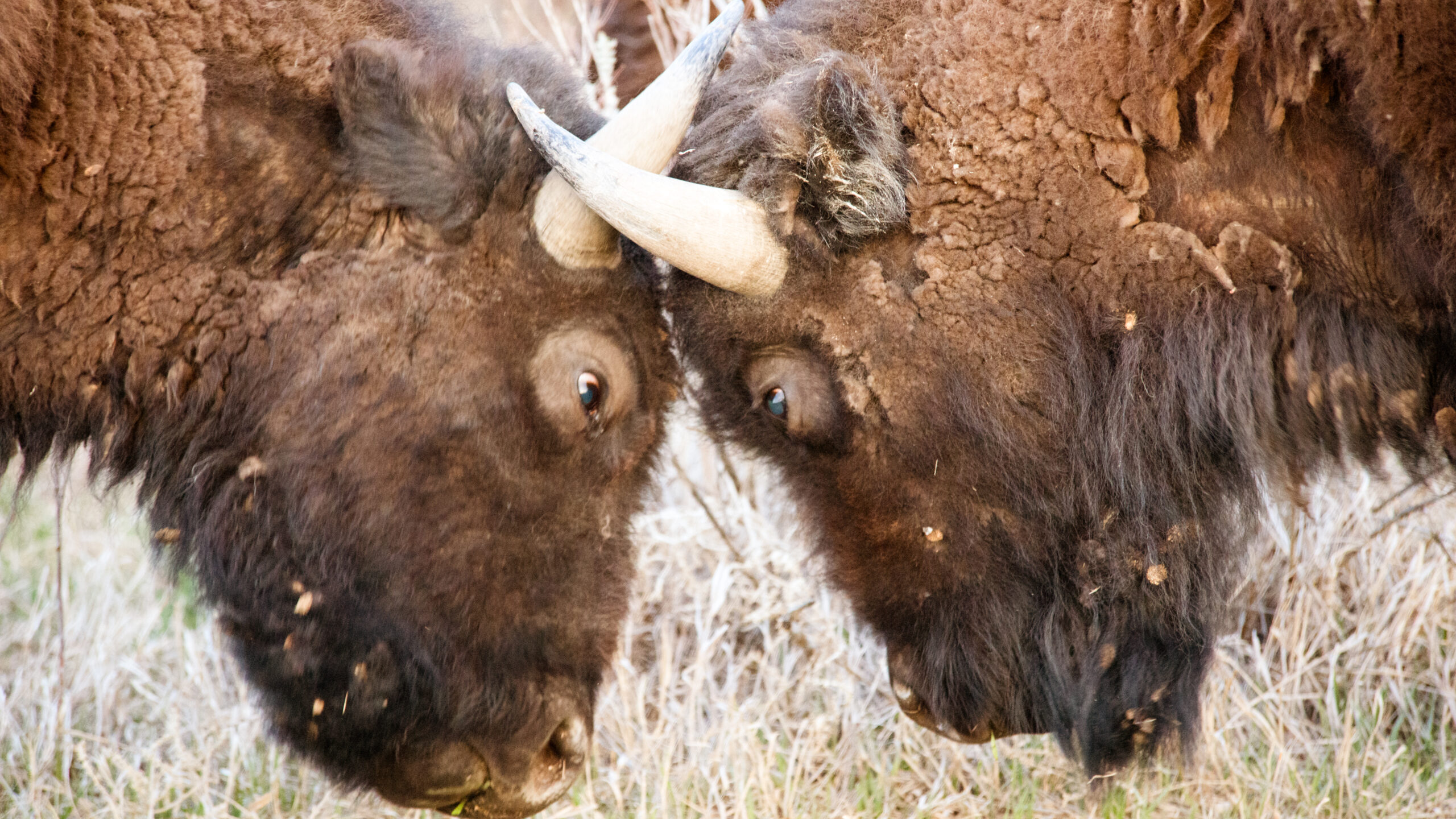
A pair of bison lower their heads toward one another, bringing their curved horns into the foreground. Their dark eyes, thick forelocks, and coarse brown hair are visible against a rough, reddish bank. The cropped composition concentrates on the animals’ heads and the angle of their horns; it does not clearly show whether they are feeding or interacting.
Caption
A pair of bison lower their heads toward one another, bringing their curved horns into the foreground. Their dark eyes, thick forelocks, and coarse brown hair are visible against a rough, reddish bank. The cropped composition concentrates on the animals’ heads and the angle of their horns; it does not clearly show whether they are feeding or interacting.
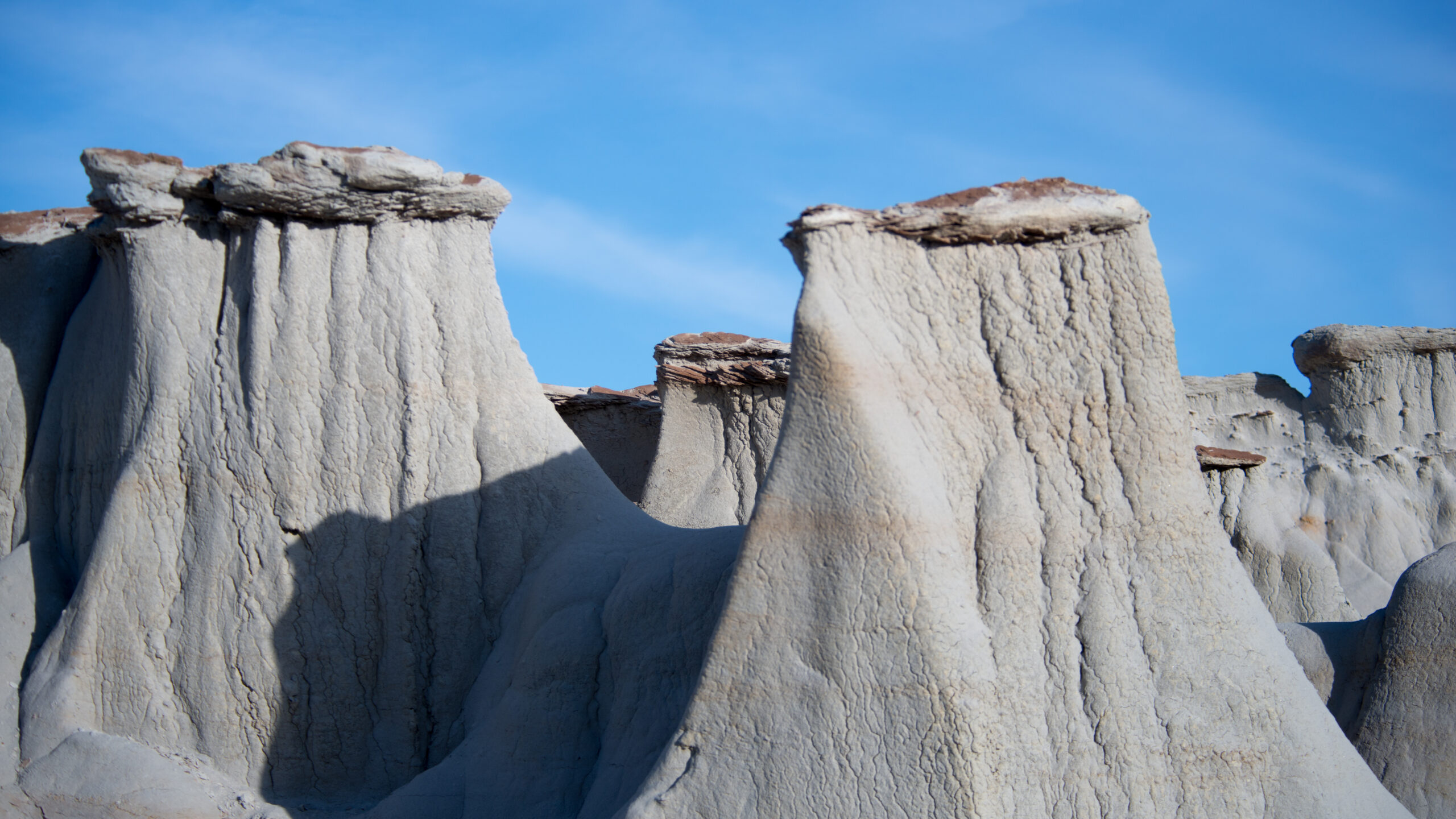
A cluster of pale, steep-sided hoodoos fills the frame, their vertical channels narrowing below flat, rust-colored caprocks. The closer viewpoint makes the height and spacing of the columns more apparent than in the preceding view, while the blue sky provides a clean backdrop. These sculpted forms reflect differential erosion of softer sediment beneath more resistant layers.
Caption
A cluster of pale, steep-sided hoodoos fills the frame, their vertical channels narrowing below flat, rust-colored caprocks. The closer viewpoint makes the height and spacing of the columns more apparent than in the preceding view, while the blue sky provides a clean backdrop. These sculpted forms reflect differential erosion of softer sediment beneath more resistant layers.
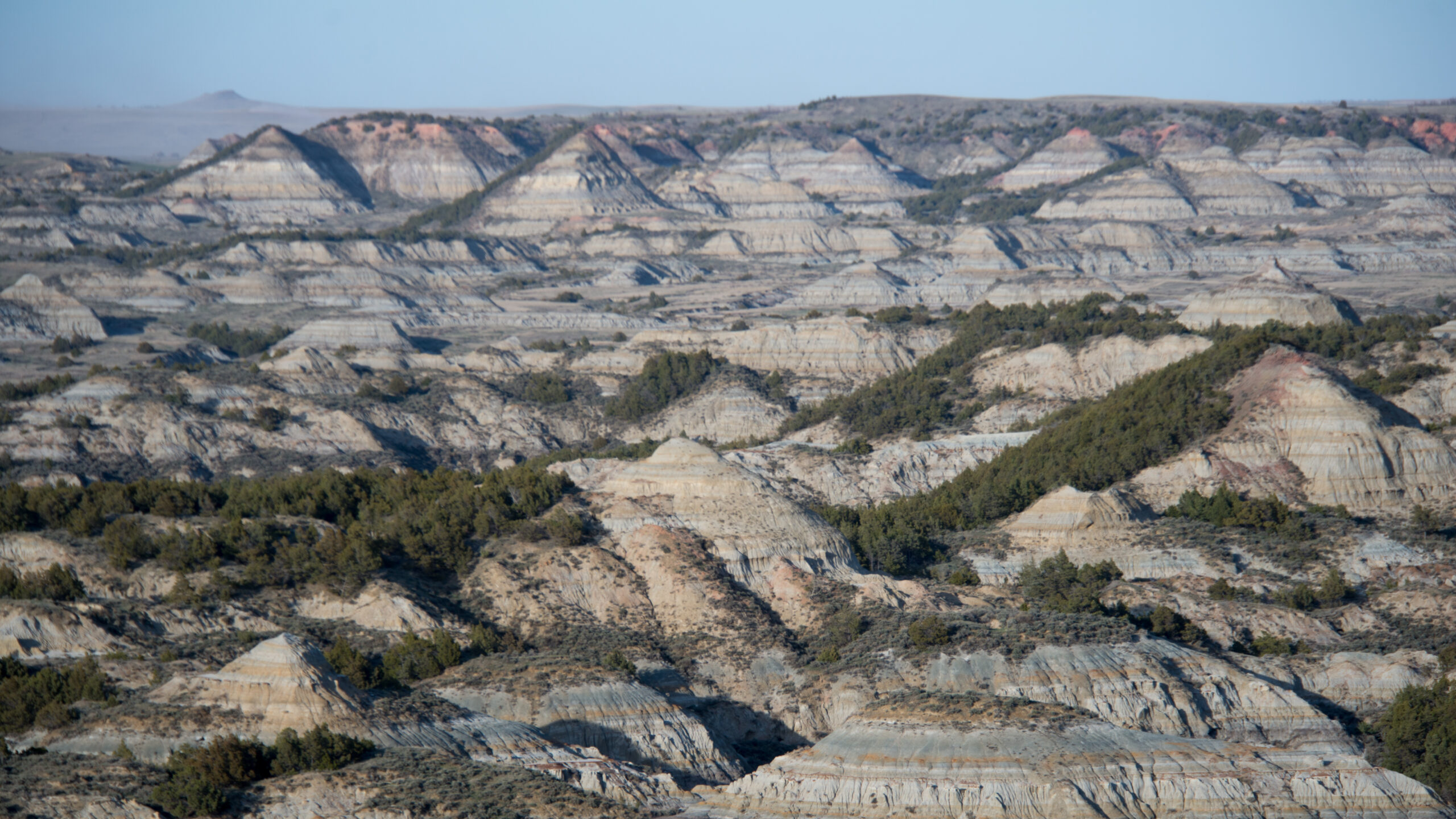
Alternating pale and dark sedimentary bands fold across a broad badlands panorama, cut by steep ravines and sparsely vegetated ridges. The elevated viewpoint reveals repeated layers receding toward the horizon, with scattered shrubs adding scale. This wide view emphasizes the terrain’s repeated contours rather than an individual hoodoo or close geological detail.
Caption
Alternating pale and dark sedimentary bands fold across a broad badlands panorama, cut by steep ravines and sparsely vegetated ridges. The elevated viewpoint reveals repeated layers receding toward the horizon, with scattered shrubs adding scale. This wide view emphasizes the terrain’s repeated contours rather than an individual hoodoo or close geological detail.
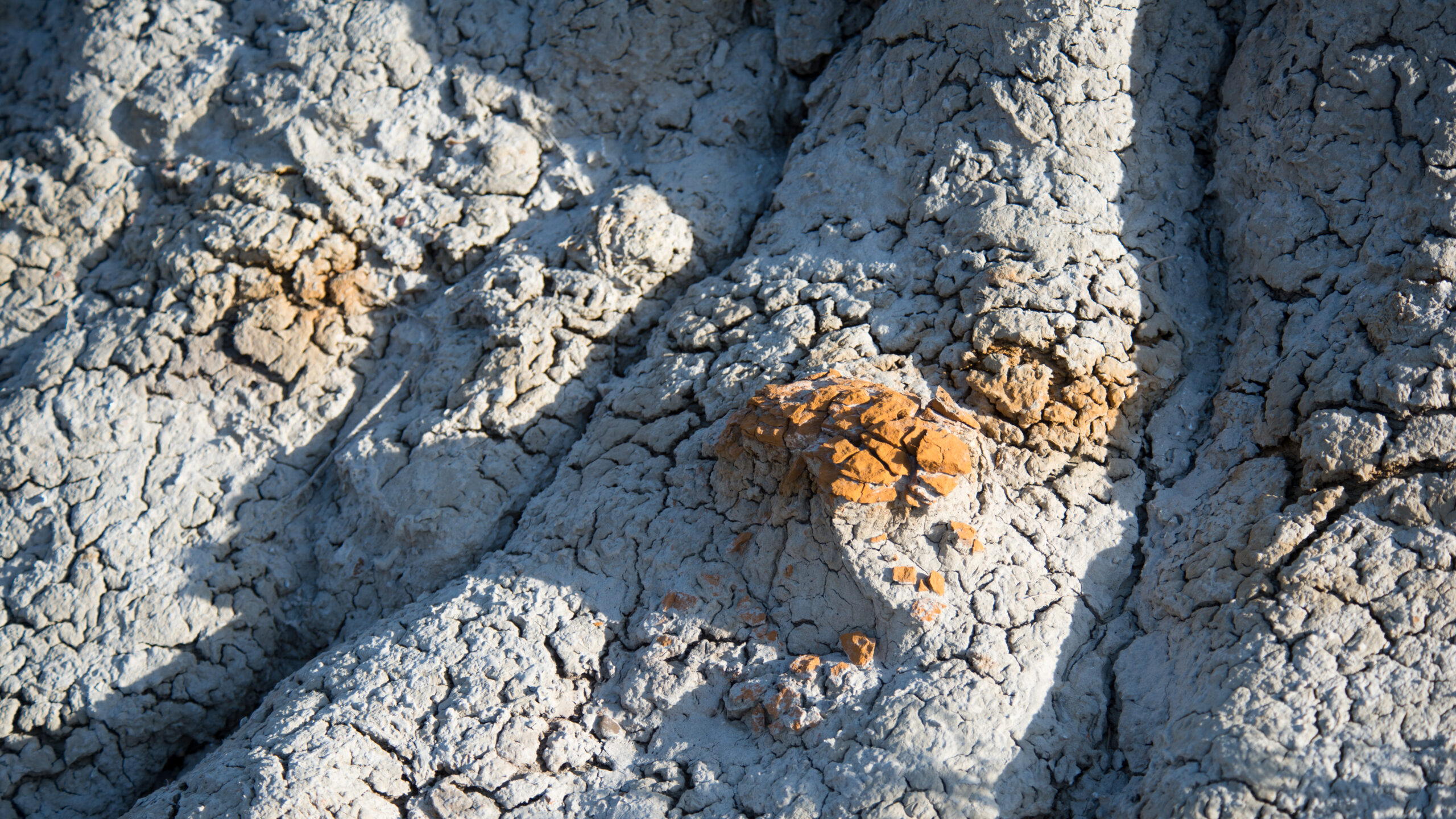
A rust-colored mineral concretion punctuates pale, deeply cracked claystone in this close view of the park’s badlands. The rough surfaces and branching fissures reveal how softer sediment erodes around harder inclusions, leaving small, resistant forms at the surface. The tight framing excludes the wider landscape and concentrates attention on the contrast between the orange-brown fragment and gray-white sediment.
Caption
A rust-colored mineral concretion punctuates pale, deeply cracked claystone in this close view of the park’s badlands. The rough surfaces and branching fissures reveal how softer sediment erodes around harder inclusions, leaving small, resistant forms at the surface. The tight framing excludes the wider landscape and concentrates attention on the contrast between the orange-brown fragment and gray-white sediment.
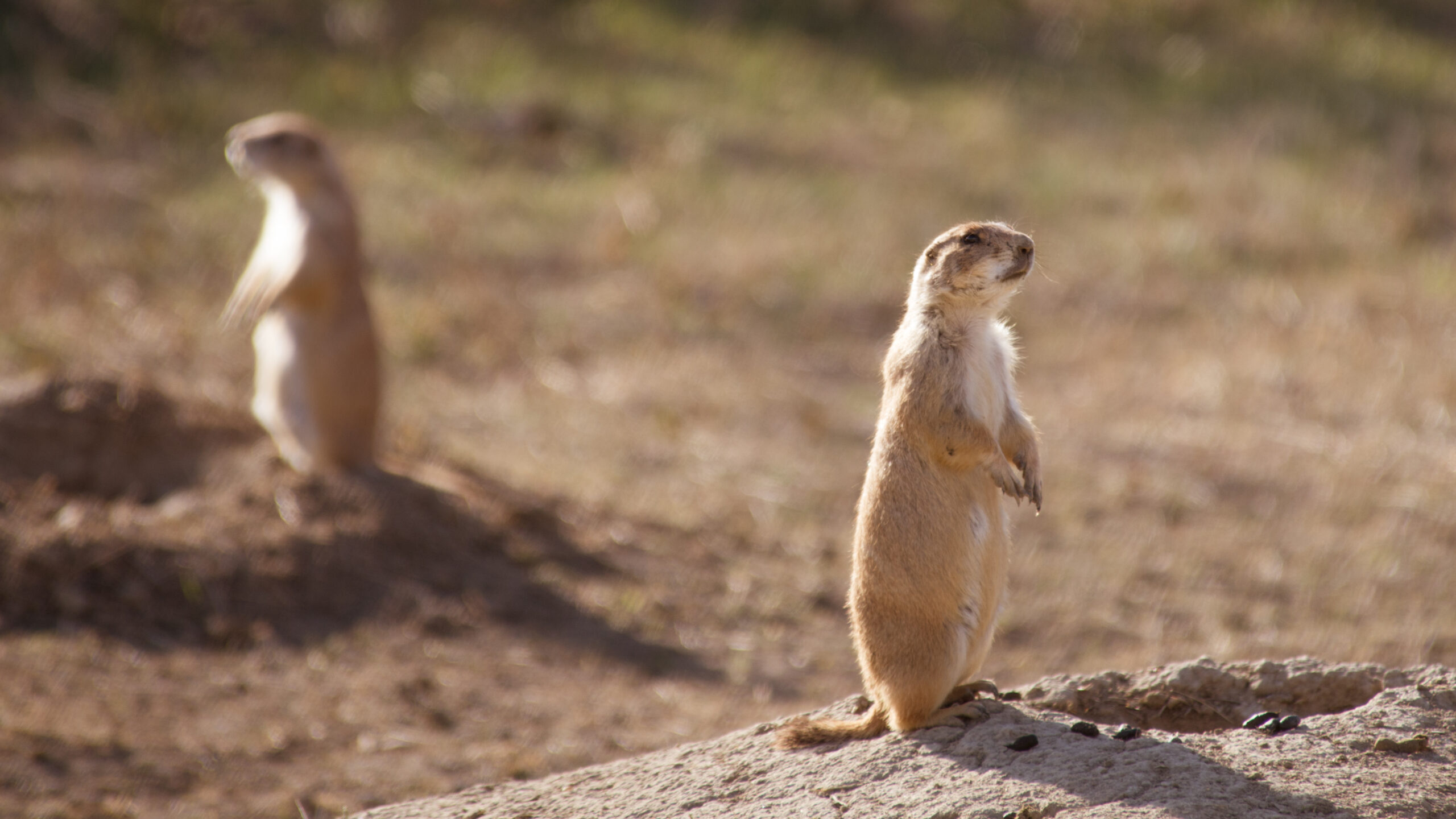
A small tan mammal stands upright on a pale rock, its forepaws held close to its chest and its gaze turned to the right. A second animal is blurred in the background. The alert posture and compact build are characteristic of a prairie dog, while the shallow focus isolates the foreground animal from the dry grassland habitat.
Caption
A small tan mammal stands upright on a pale rock, its forepaws held close to its chest and its gaze turned to the right. A second animal is blurred in the background. The alert posture and compact build are characteristic of a prairie dog, while the shallow focus isolates the foreground animal from the dry grassland habitat.
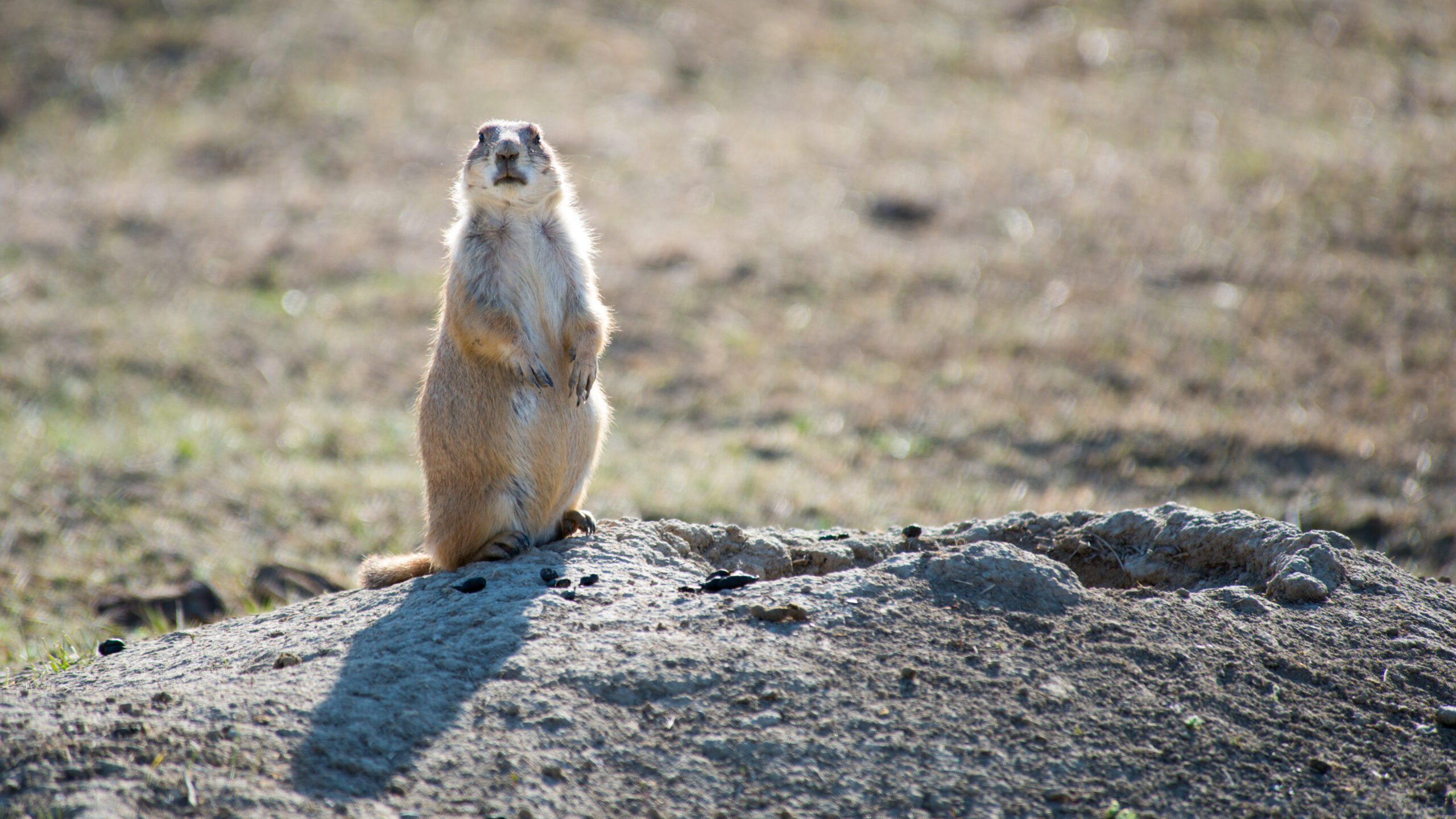
Seen from the front, a prairie dog stands upright on a broad pale mound, with its shadow stretching down the slope. The animal’s small ears, sandy coat, and forepaws held against its body are sharply defined against a softly blurred field. This portrait places more of the mound and the animal’s full stance in view than the tighter image before it.
Caption
Seen from the front, a prairie dog stands upright on a broad pale mound, with its shadow stretching down the slope. The animal’s small ears, sandy coat, and forepaws held against its body are sharply defined against a softly blurred field. This portrait places more of the mound and the animal’s full stance in view than the tighter image before it.
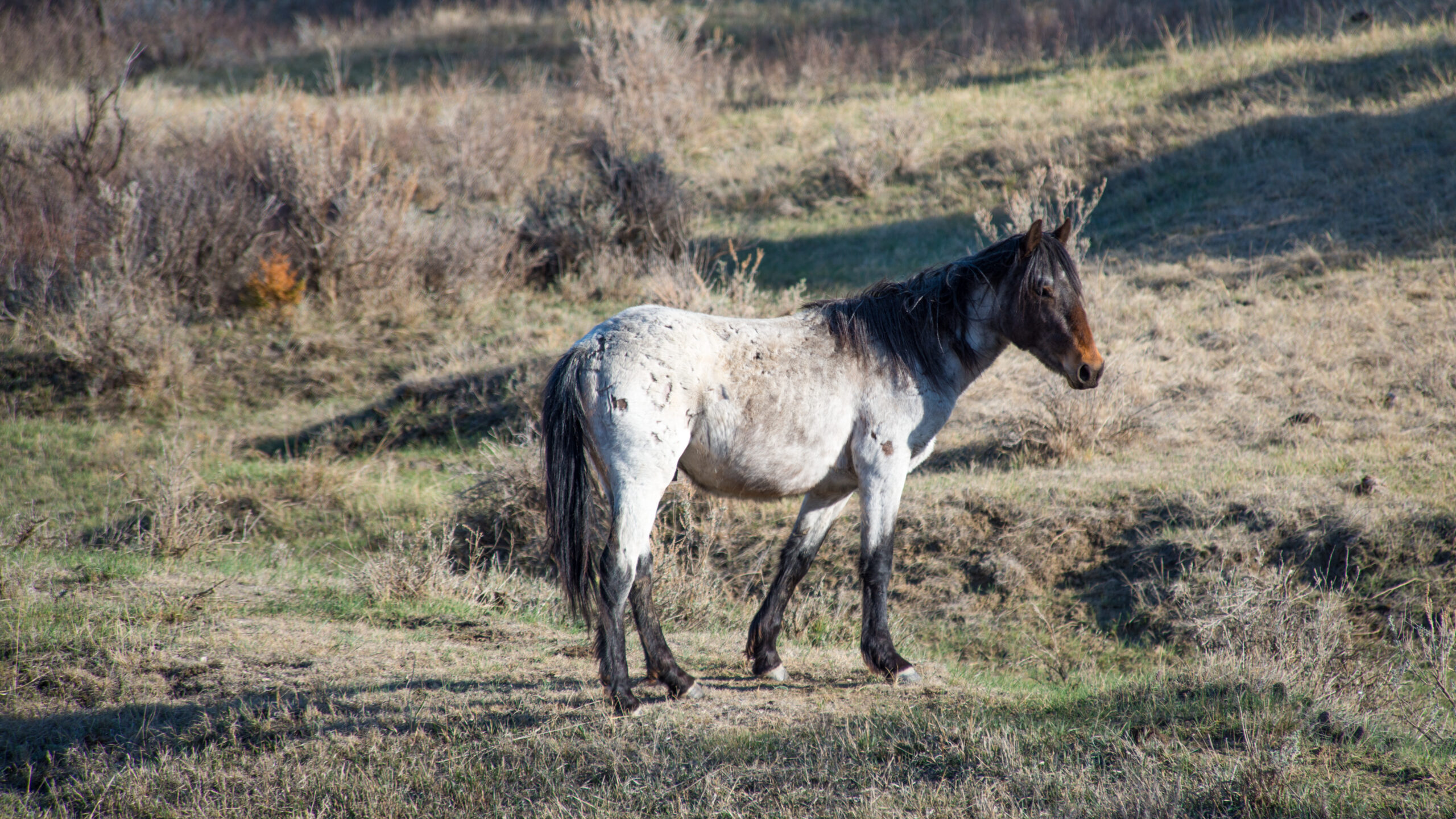
A gray and brown horse walks across uneven grassland, its head lowered slightly and dark tail hanging behind. The animal’s coat has irregular pale patches over the hindquarters and flank. Low brush and a gentle slope fill the background; no rider, tack, or fence is visible, so the photograph reads as a portrait of a horse moving through open range.
Caption
A gray and brown horse walks across uneven grassland, its head lowered slightly and dark tail hanging behind. The animal’s coat has irregular pale patches over the hindquarters and flank. Low brush and a gentle slope fill the background; no rider, tack, or fence is visible, so the photograph reads as a portrait of a horse moving through open range.
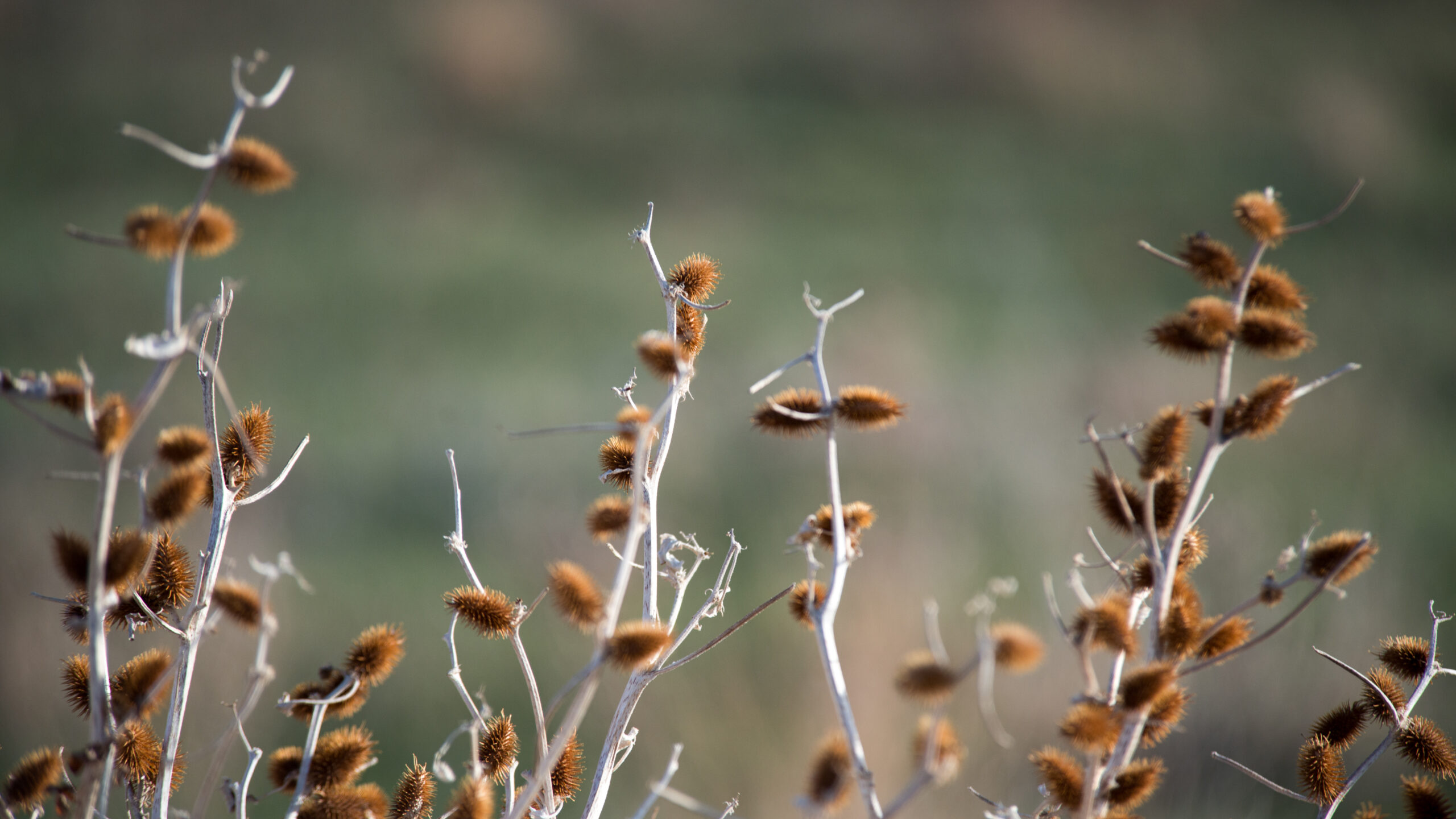
Spiny, brown seed heads rise on slender branching stems against a softly blurred green-brown background. Their hooked bracts catch the light, while shallow focus separates the nearest stalks from the surrounding vegetation. The close composition makes the plant’s dried structure and seed-bearing heads the subject; species-level identification is not sufficiently clear from this thumbnail.
Caption
Spiny, brown seed heads rise on slender branching stems against a softly blurred green-brown background. Their hooked bracts catch the light, while shallow focus separates the nearest stalks from the surrounding vegetation. The close composition makes the plant’s dried structure and seed-bearing heads the subject; species-level identification is not sufficiently clear from this thumbnail.
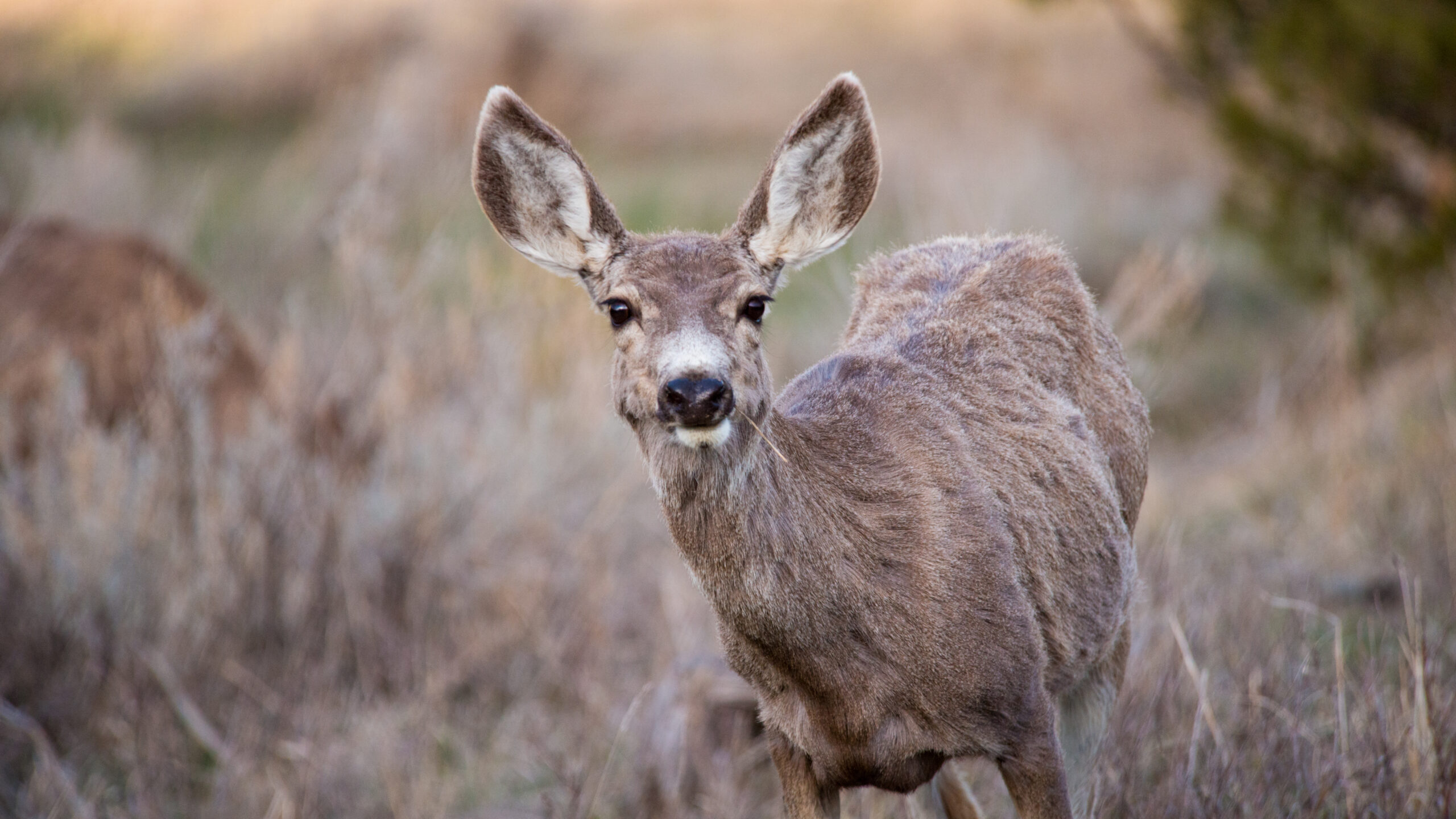
A deer turns its head toward the camera, its large ears raised above a gray-brown coat. The close view shows the face, dark nose, and shoulder against softly blurred brush and pale grasses. The broad ears and facial markings are consistent with a mule deer, though the antlers are not visible and the photograph offers no broader habitat context.
Caption
A deer turns its head toward the camera, its large ears raised above a gray-brown coat. The close view shows the face, dark nose, and shoulder against softly blurred brush and pale grasses. The broad ears and facial markings are consistent with a mule deer, though the antlers are not visible and the photograph offers no broader habitat context.
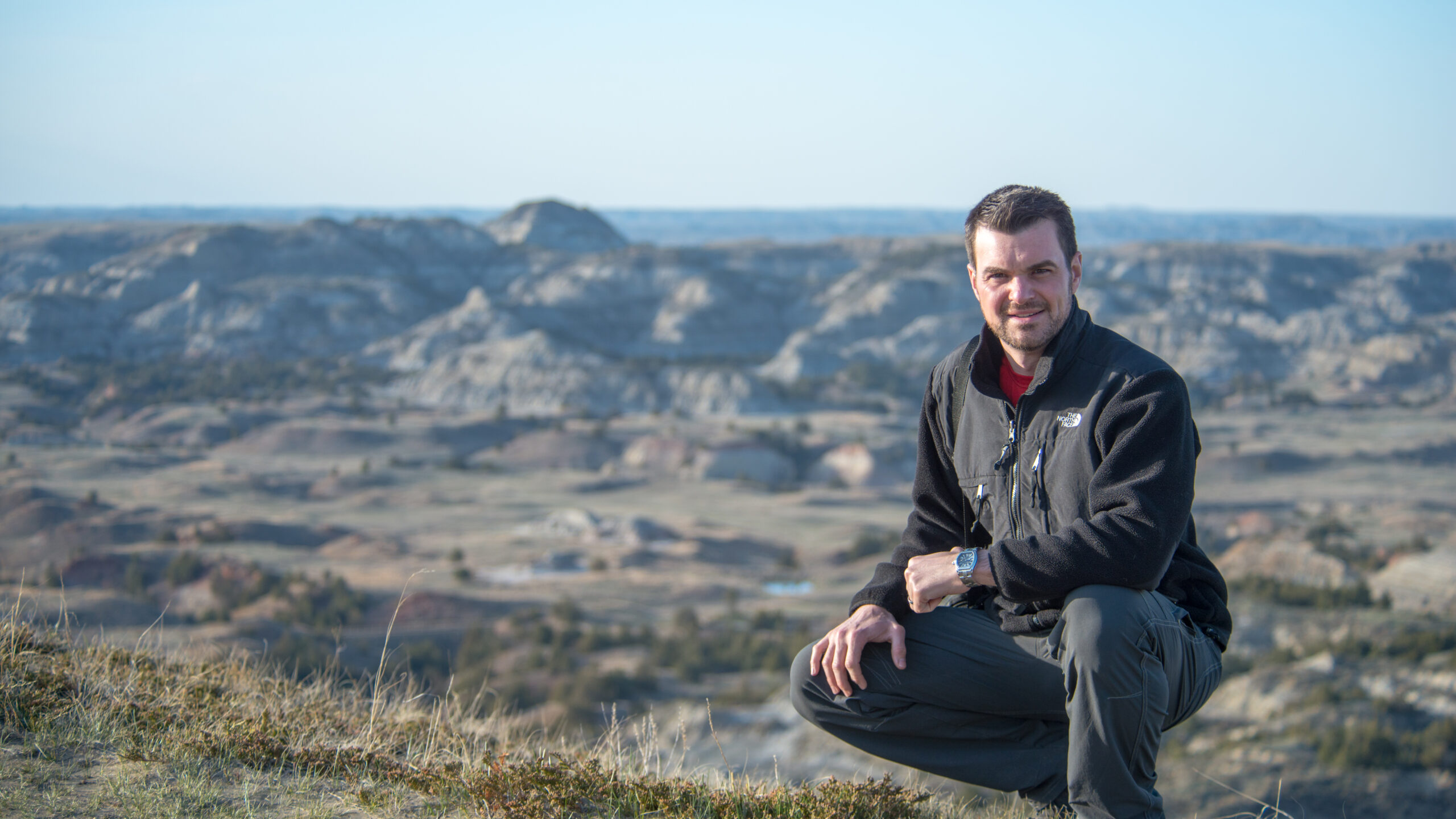
A man crouches in the foreground, facing the camera with the badlands spread out behind him. The shallow depth of field keeps his face and dark jacket sharp while softening the layered hills into a broad backdrop. The portrait records a visitor at an overlook, but no name or exact overlook is visible.
Caption
A man crouches in the foreground, facing the camera with the badlands spread out behind him. The shallow depth of field keeps his face and dark jacket sharp while softening the layered hills into a broad backdrop. The portrait records a visitor at an overlook, but no name or exact overlook is visible.
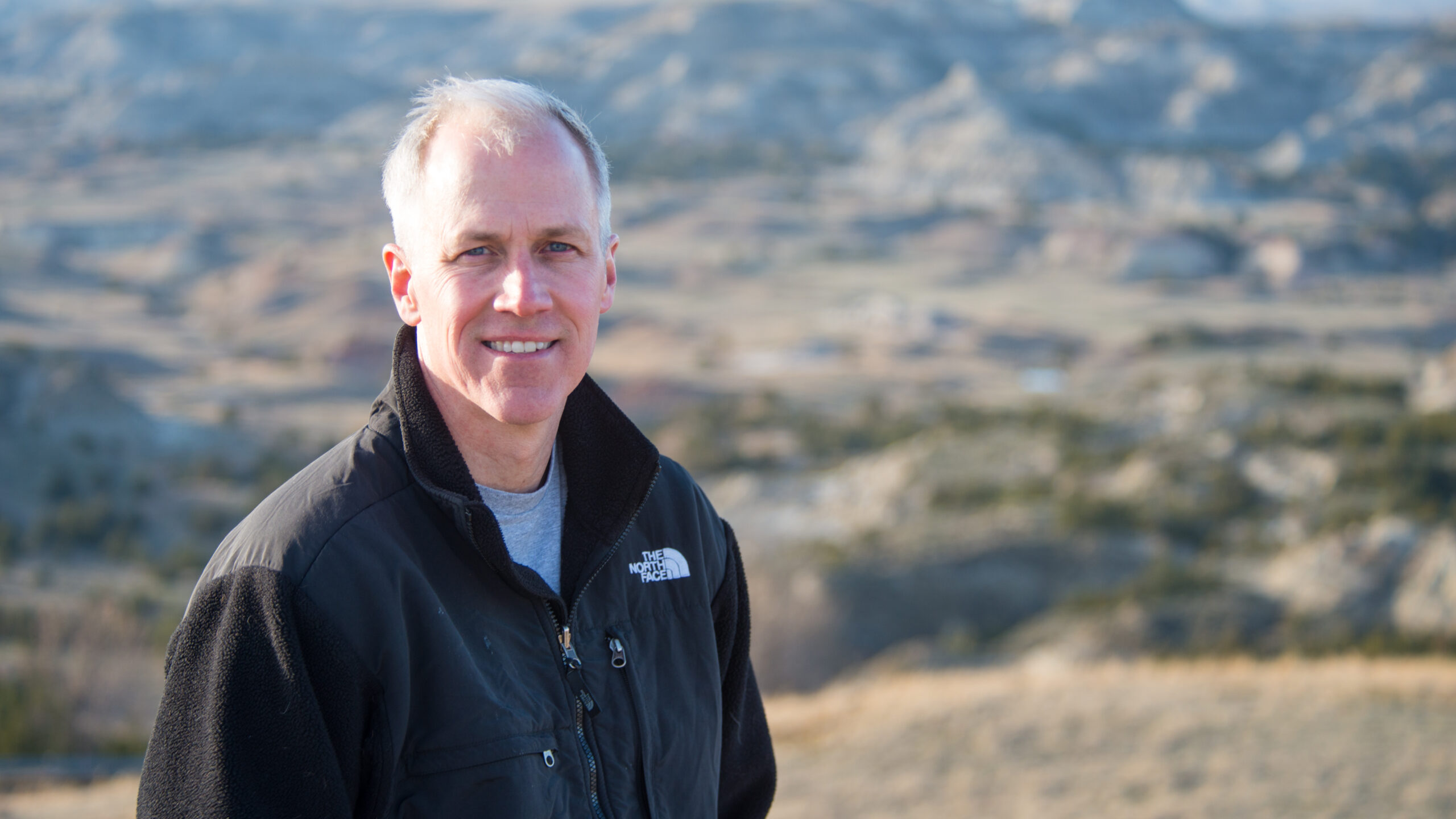
A man in a dark outdoor jacket stands at the left of the frame, smiling toward the camera. Behind him, muted, layered badlands slopes fall out of focus, giving the portrait a strong sense of place without identifying a specific overlook. The waist-up crop contrasts the subject’s dark clothing with the cool-toned landscape and directs attention to his expression.
Caption
A man in a dark outdoor jacket stands at the left of the frame, smiling toward the camera. Behind him, muted, layered badlands slopes fall out of focus, giving the portrait a strong sense of place without identifying a specific overlook. The waist-up crop contrasts the subject’s dark clothing with the cool-toned landscape and directs attention to his expression.
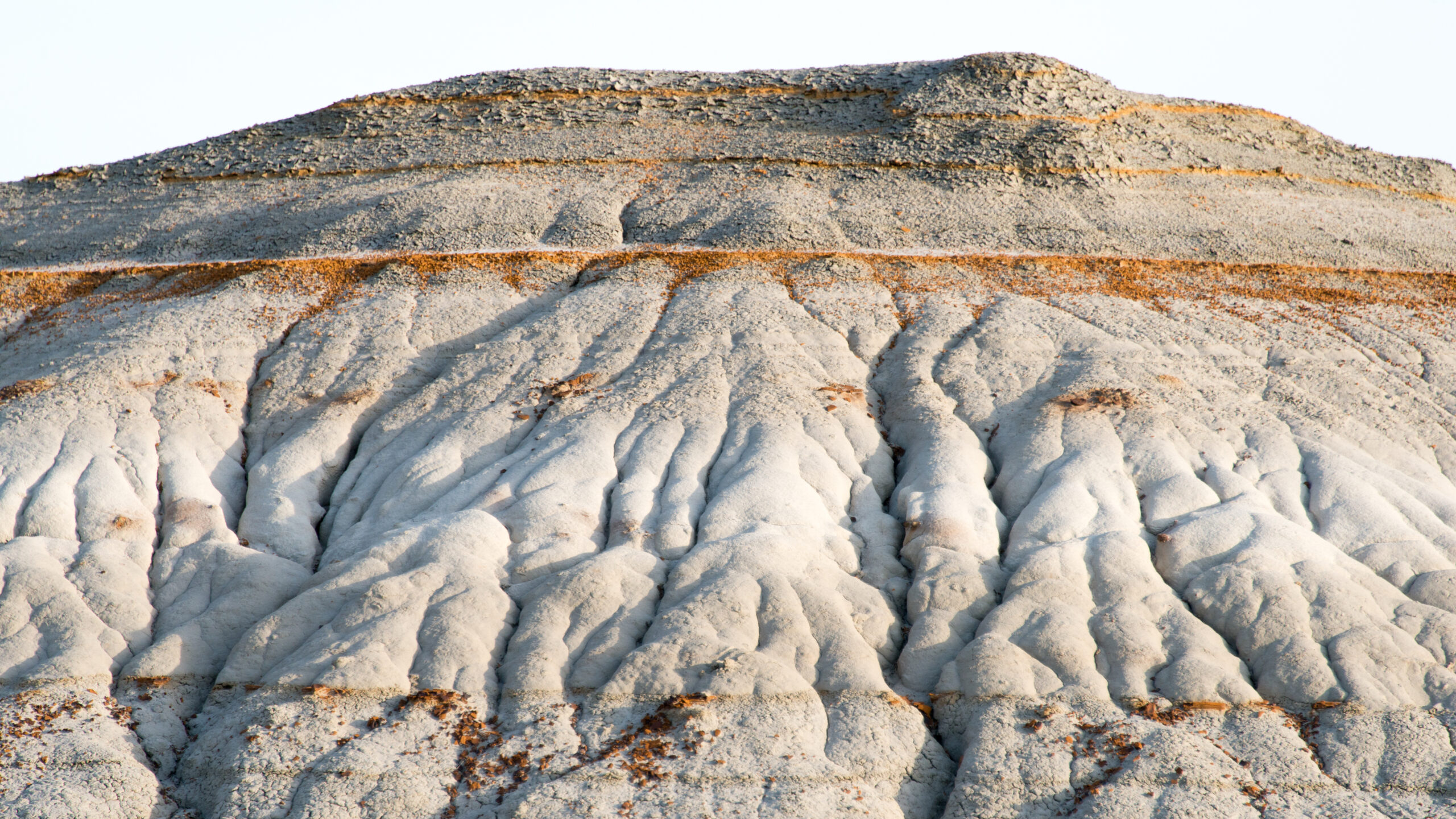
A low, pale ridge is scored by branching channels and shallow vertical grooves. Thin orange-brown bands cross the upper slope, while scattered iron-stained patches mark the lighter sediment below. The close landscape view isolates the ridge’s layered surface and drainage patterns, showing erosion across a broad, gently rounded exposure.
Caption
A low, pale ridge is scored by branching channels and shallow vertical grooves. Thin orange-brown bands cross the upper slope, while scattered iron-stained patches mark the lighter sediment below. The close landscape view isolates the ridge’s layered surface and drainage patterns, showing erosion across a broad, gently rounded exposure.
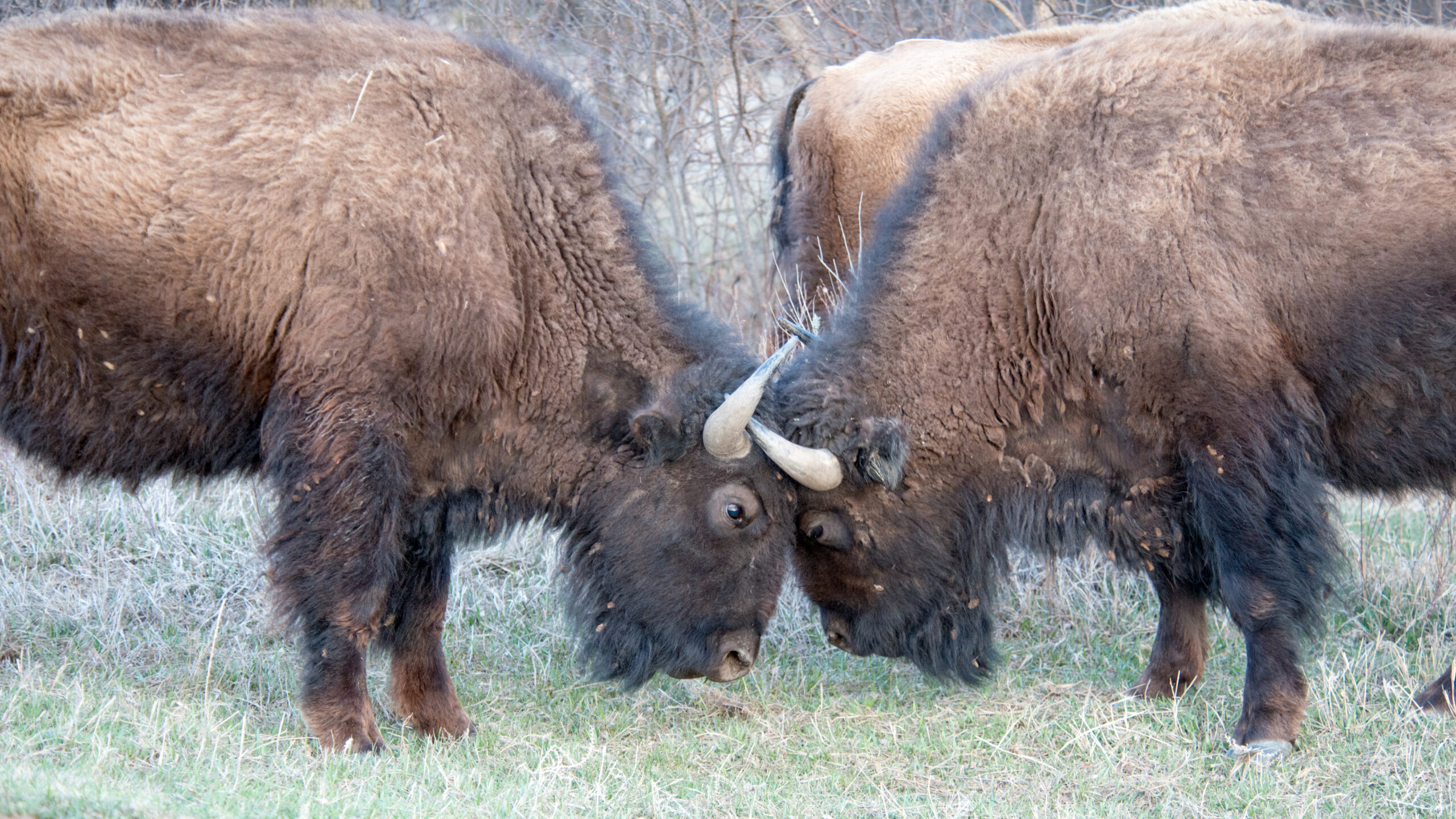
Two large bison lower their heads toward the ground, their shaggy brown coats filling most of the frame. Their horns and broad forequarters are visible as they feed in pale grass near a muddy, cracked bank. The close angle emphasizes the animals’ heavy winter coats and downward grazing posture rather than the surrounding prairie.
Caption
Two large bison lower their heads toward the ground, their shaggy brown coats filling most of the frame. Their horns and broad forequarters are visible as they feed in pale grass near a muddy, cracked bank. The close angle emphasizes the animals’ heavy winter coats and downward grazing posture rather than the surrounding prairie.
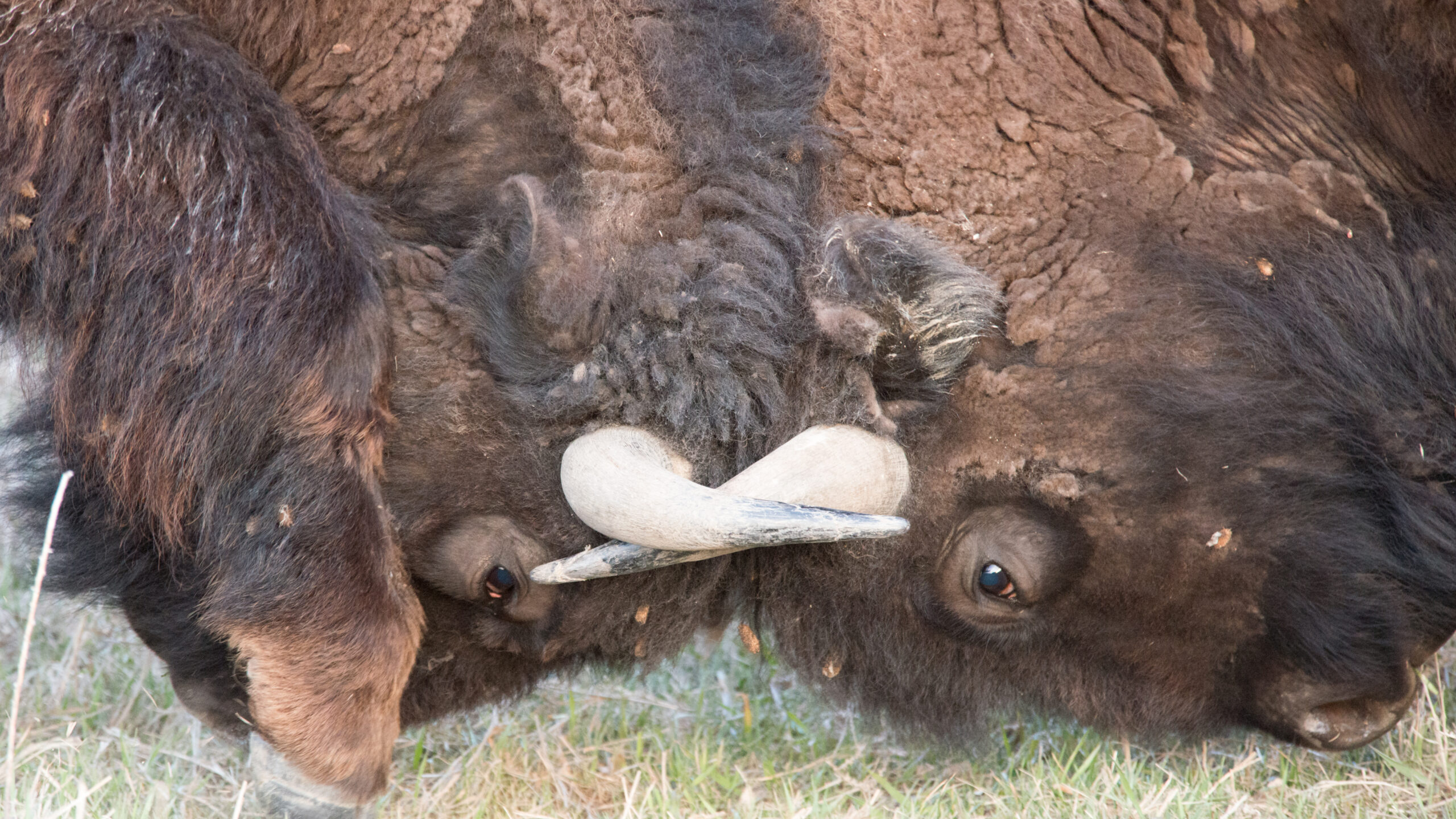
Two bison press close together, their horns and dark faces overlapping beneath thick, shaggy forelocks. A cracked, reddish earthen bank rises directly behind them. The tight crop removes most of the landscape and makes the animals’ facial features and proximity the focus, distinguishing this intimate view from the wider grazing scene nearby.
Caption
Two bison press close together, their horns and dark faces overlapping beneath thick, shaggy forelocks. A cracked, reddish earthen bank rises directly behind them. The tight crop removes most of the landscape and makes the animals’ facial features and proximity the focus, distinguishing this intimate view from the wider grazing scene nearby.
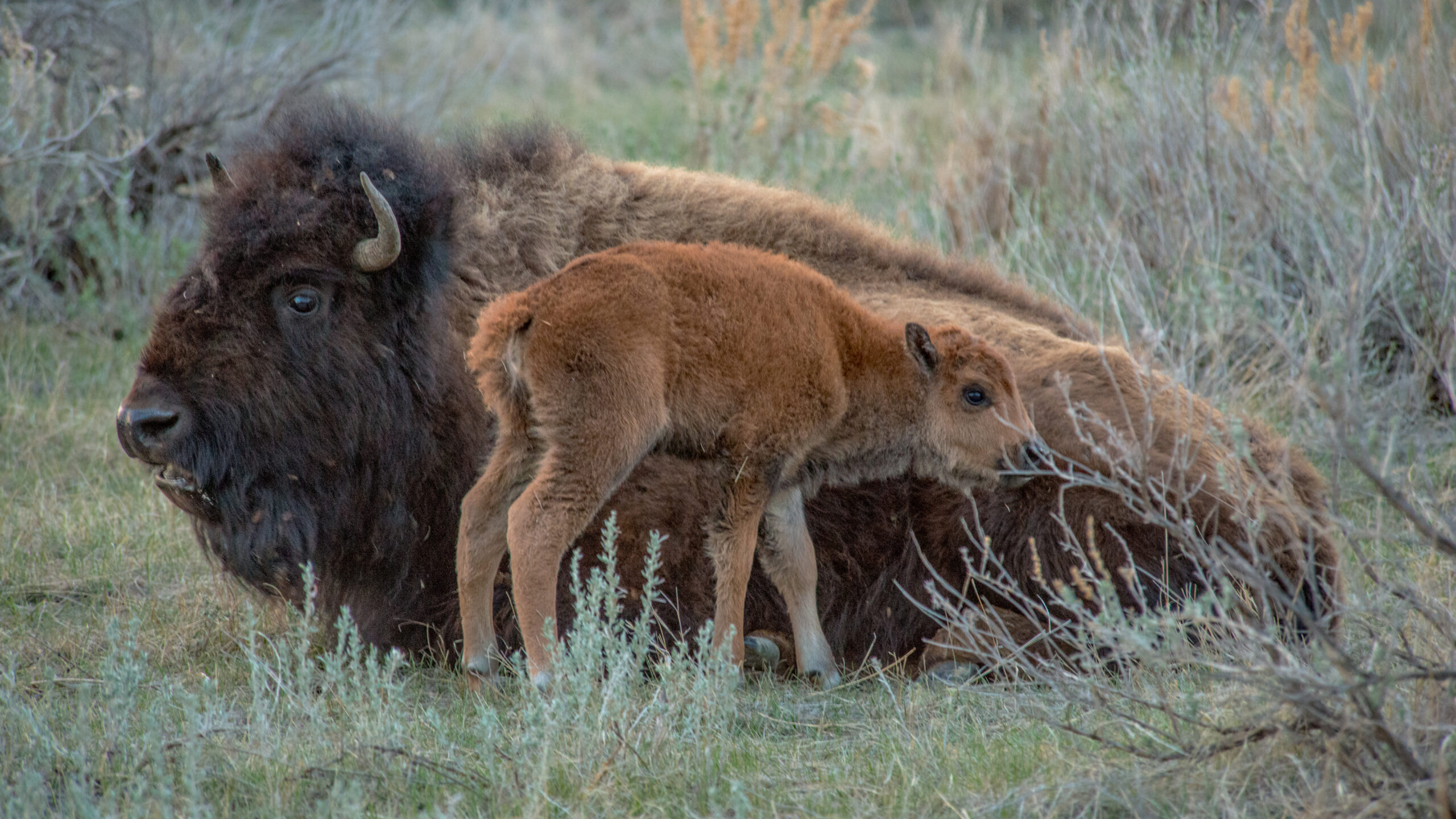
A large adult bison stands in the grass with a smaller reddish-brown calf close beside her. The calf faces to the right, while the adult looks toward the camera. Their contrasting sizes and coats make the family grouping clear, set against low green vegetation and a softly blurred background.
Caption
A large adult bison stands in the grass with a smaller reddish-brown calf close beside her. The calf faces to the right, while the adult looks toward the camera. Their contrasting sizes and coats make the family grouping clear, set against low green vegetation and a softly blurred background.
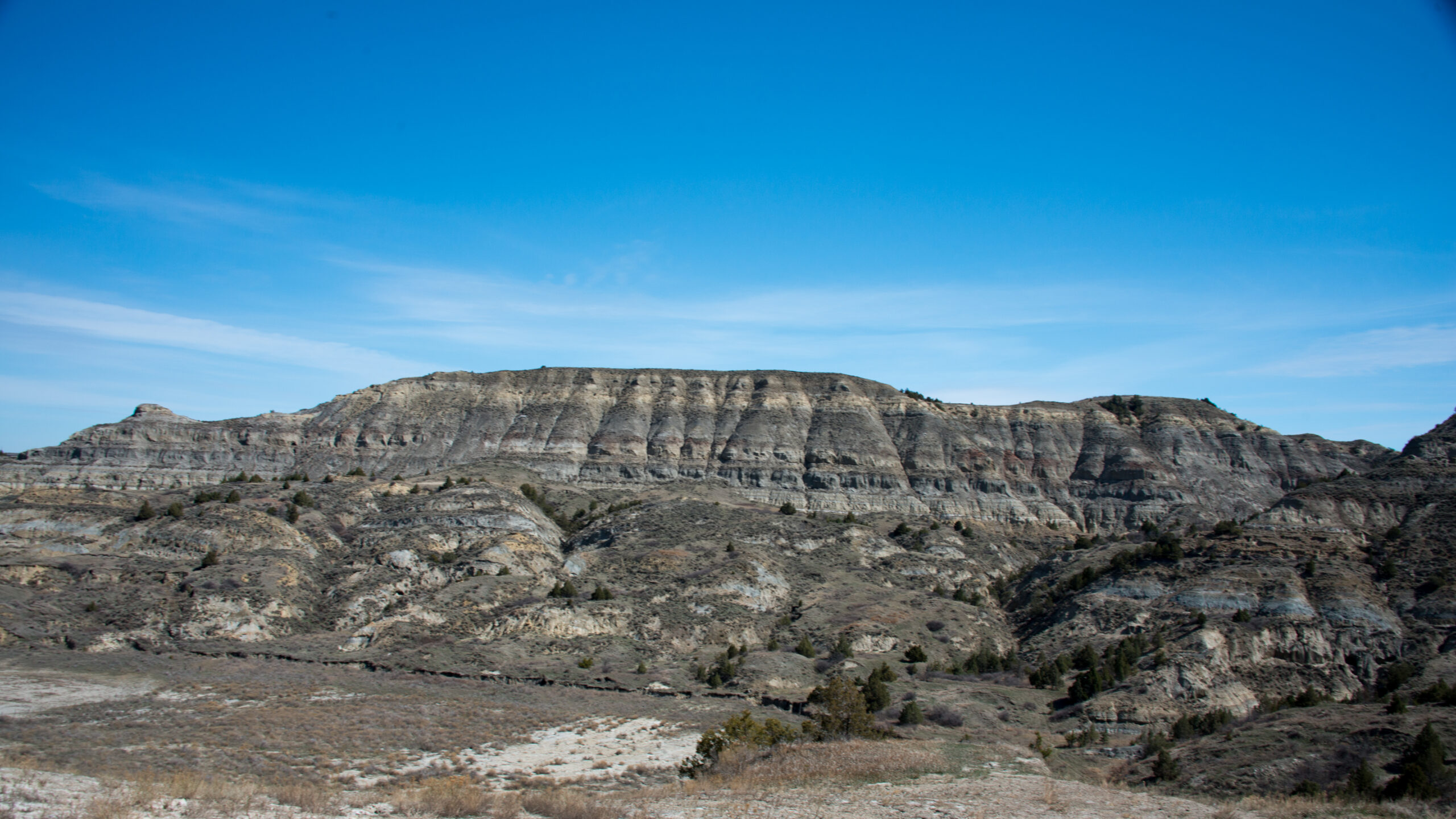
A long, horizontally layered escarpment dominates the far side of a shallow valley. Pale sedimentary bands and darker cap layers run across the slope, while sparse shrubs and broken gullies occupy the foreground. The wide composition makes the formation’s horizontal extent and relationship to the open valley more prominent than fine surface detail.
Caption
A long, horizontally layered escarpment dominates the far side of a shallow valley. Pale sedimentary bands and darker cap layers run across the slope, while sparse shrubs and broken gullies occupy the foreground. The wide composition makes the formation’s horizontal extent and relationship to the open valley more prominent than fine surface detail.
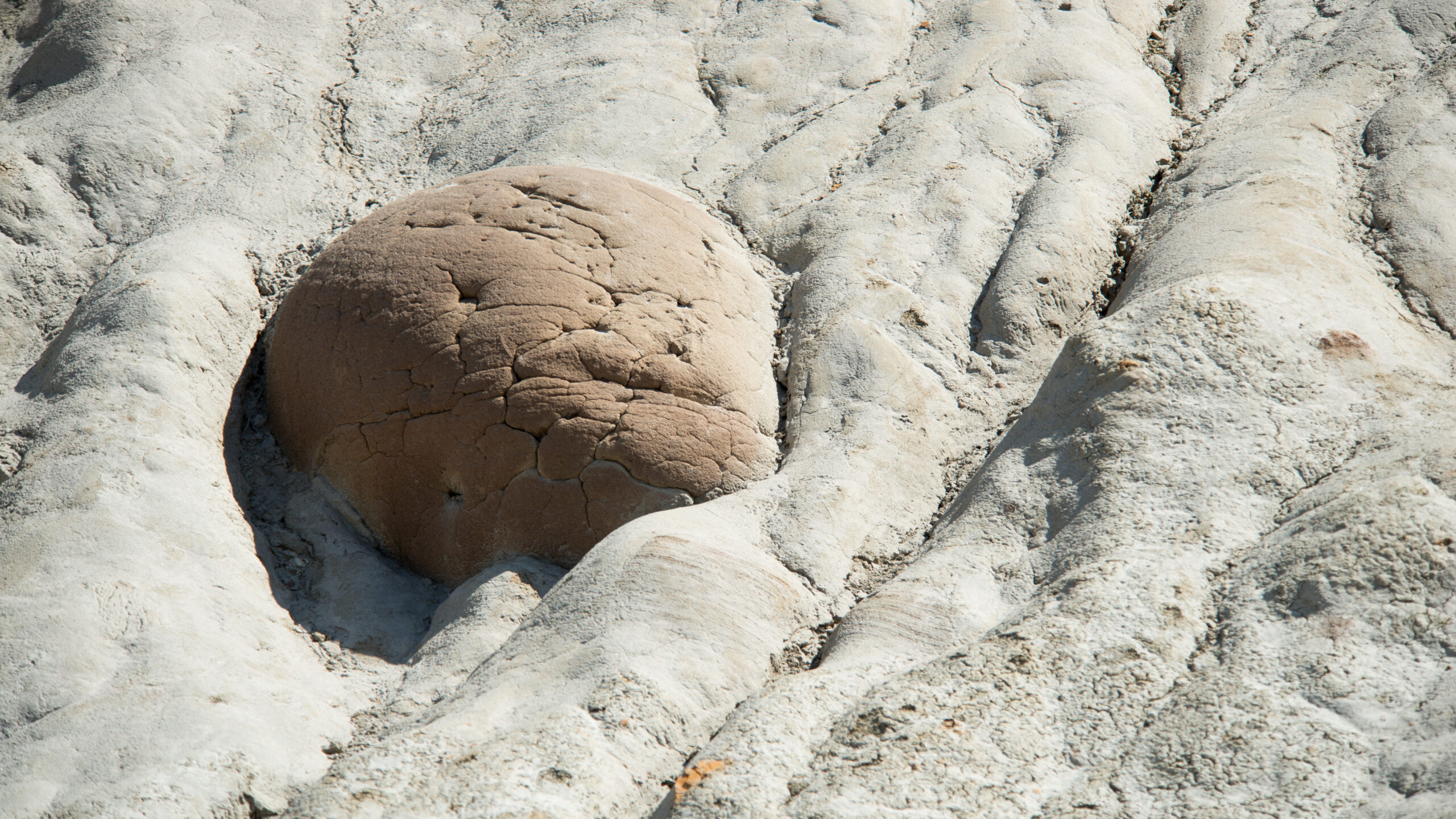
A rounded brown concretion rests in a shallow pocket among pale, fluted claystone ridges. Fine cracks cross its surface, and its darker color contrasts with the surrounding light sediment. The tight, downward-looking composition isolates this weathered geological form and shows how erosion has exposed a harder inclusion within softer material.
Caption
A rounded brown concretion rests in a shallow pocket among pale, fluted claystone ridges. Fine cracks cross its surface, and its darker color contrasts with the surrounding light sediment. The tight, downward-looking composition isolates this weathered geological form and shows how erosion has exposed a harder inclusion within softer material.
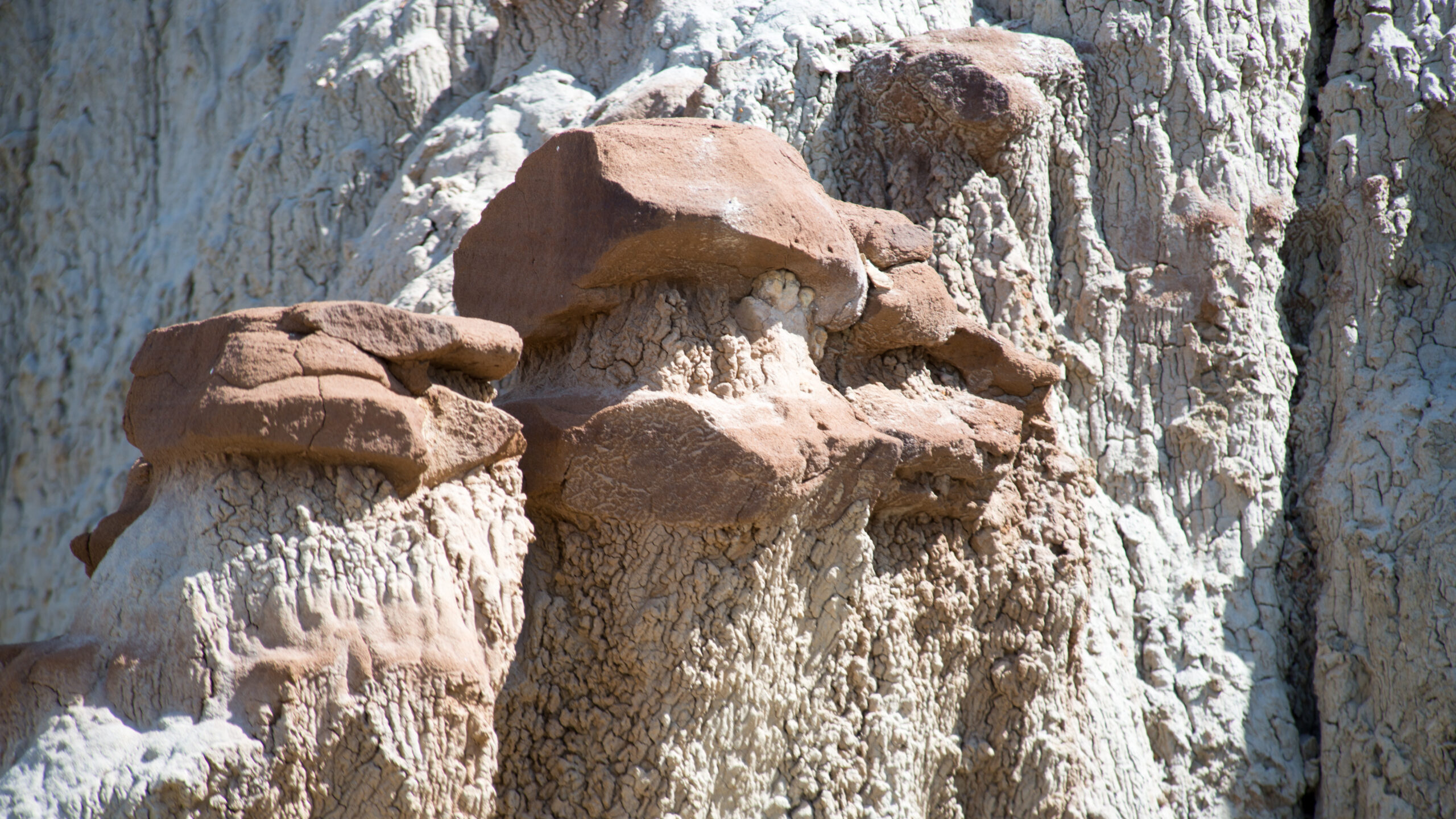
Several rust-brown, blocky concretions protrude from a pale claystone wall, with smaller fragments wedged between them. Their irregular edges and contrasting colors make the cluster stand out from the surrounding fluted sediment. This close view shows multiple resistant inclusions rather than the single rounded concretion pictured immediately before it.
Caption
Several rust-brown, blocky concretions protrude from a pale claystone wall, with smaller fragments wedged between them. Their irregular edges and contrasting colors make the cluster stand out from the surrounding fluted sediment. This close view shows multiple resistant inclusions rather than the single rounded concretion pictured immediately before it.
National Park Field Guide
Theodore Roosevelt National Park preserves badlands landscapes shaped by erosion of sedimentary rock layers over millions of years. The Little Missouri River gradually carved valleys and exposed colorful geological formations that illustrate long-term environmental change across the northern Great Plains. The park also reflects the historical influence of Theodore Roosevelt, whose experiences in this region contributed to the development of conservation policy in the United States.
🧭 Key Features
- Eroded buttes and pinnacles formed through sedimentary processes
- Mixed-grass prairie ecosystems supporting grazing wildlife
- Little Missouri River valley landscape
- Wildlife including bison, elk, prairie dogs, and wild horses
- Landscape associated with early conservation philosophy
🌄 Landscape Highlights
Colorful sediment layers reveal changing environmental conditions when ancient rivers and floodplains deposited mineral-rich sediments. Erosion exposed these formations, creating steep slopes and ridges that contrast with surrounding prairie. Open horizons emphasize the scale of Great Plains environments.
🌎 Natural Systems
Climate variation, rainfall, and river erosion continue to shape badlands terrain. Prairie ecosystems support grazing mammals adapted to semi-arid conditions. The park illustrates how grasslands and eroded rock formations coexist within dynamic environmental systems.
🦬 Wildlife Encountered
Wildlife encounters in Theodore Roosevelt National Park included prairie dogs, wild horses, mule deer, and American bison observed across the park’s distinctive badlands and mixed grass prairie landscapes. Prairie dog colonies were especially active, with individuals frequently seen standing upright near burrow entrances, a characteristic behavior that helps them monitor for predators across the open terrain.
Wild horses, a well-known feature of the park, were observed grazing in open prairie habitat, reflecting the rugged and remote character of the North Dakota badlands. Mule deer were also encountered in grassland areas, where their adaptability allows them to thrive in semi-arid environments shaped by erosion and sparse vegetation.
American bison were observed at close range, including views of calves traveling alongside adult animals and bulls interacting in open grassland habitat. These observations illustrate the continued recovery of bison populations across parts of their historic Great Plains range and highlight the importance of protected landscapes such as Theodore Roosevelt National Park.
📷 Photography Notes
- Side lighting enhances texture in layered formations
- Wildlife frequently visible in grassland environments
- Wide compositions emphasize scale of terrain
- Storm clouds create dramatic contrast
- Foreground ridges create depth
- Evening light enhances warm earth tones
🌱 Conservation Context
The park reflects the conservation philosophy influenced by Theodore Roosevelt’s experiences in the region. Protection of badlands ecosystems preserves geological formations and wildlife habitat representative of the northern Great Plains environment.

An open visitor brochure combines a historical narrative with photographs, captions, and a large bison image. Smaller panels show park landscapes, wildlife, vegetation, and historic scenes beneath a dark title band reading “Theodore Roosevelt.” The printed layout links the park’s natural features with its history, while individual paragraphs are too small to transcribe reliably from this view.
Caption
An open visitor brochure combines a historical narrative with photographs, captions, and a large bison image. Smaller panels show park landscapes, wildlife, vegetation, and historic scenes beneath a dark title band reading “Theodore Roosevelt.” The printed layout links the park’s natural features with its history, while individual paragraphs are too small to transcribe reliably from this view.

A two-part park guide presents blocks of visitor information above detailed maps labeled North Unit and South Unit. Colored route lines, trail names, visitor centers, and boundary outlines fill the lower half, while safety and planning text occupies the upper panels. The photograph documents the printed guide as a whole; the smallest text is not reliably readable at this scale.
Caption
A two-part park guide presents blocks of visitor information above detailed maps labeled North Unit and South Unit. Colored route lines, trail names, visitor centers, and boundary outlines fill the lower half, while safety and planning text occupies the upper panels. The photograph documents the printed guide as a whole; the smallest text is not reliably readable at this scale.