Badlands National Park
Badlands National Park preserves a landscape of sharply eroded rock formations shaped by wind and water erosion over millions of years. Layered sedimentary deposits contain fossils from ancient mammals that lived in subtropical environments long before the development of modern grasslands. The terrain illustrates how environmental conditions changed significantly across geological time periods.
Mixed-grass prairie ecosystems surrounding the rock formations support wildlife adapted to semi-arid climates, including bison, bighorn sheep, and prairie dogs. These species reflect ecological relationships that developed as climate patterns shifted toward the conditions seen today.
The contrast between exposed rock formations and open prairie illustrates how erosion continues to shape terrain. The Badlands demonstrate how geological forces operating gradually over long periods of time produce landscapes that reveal the environmental history of North America.
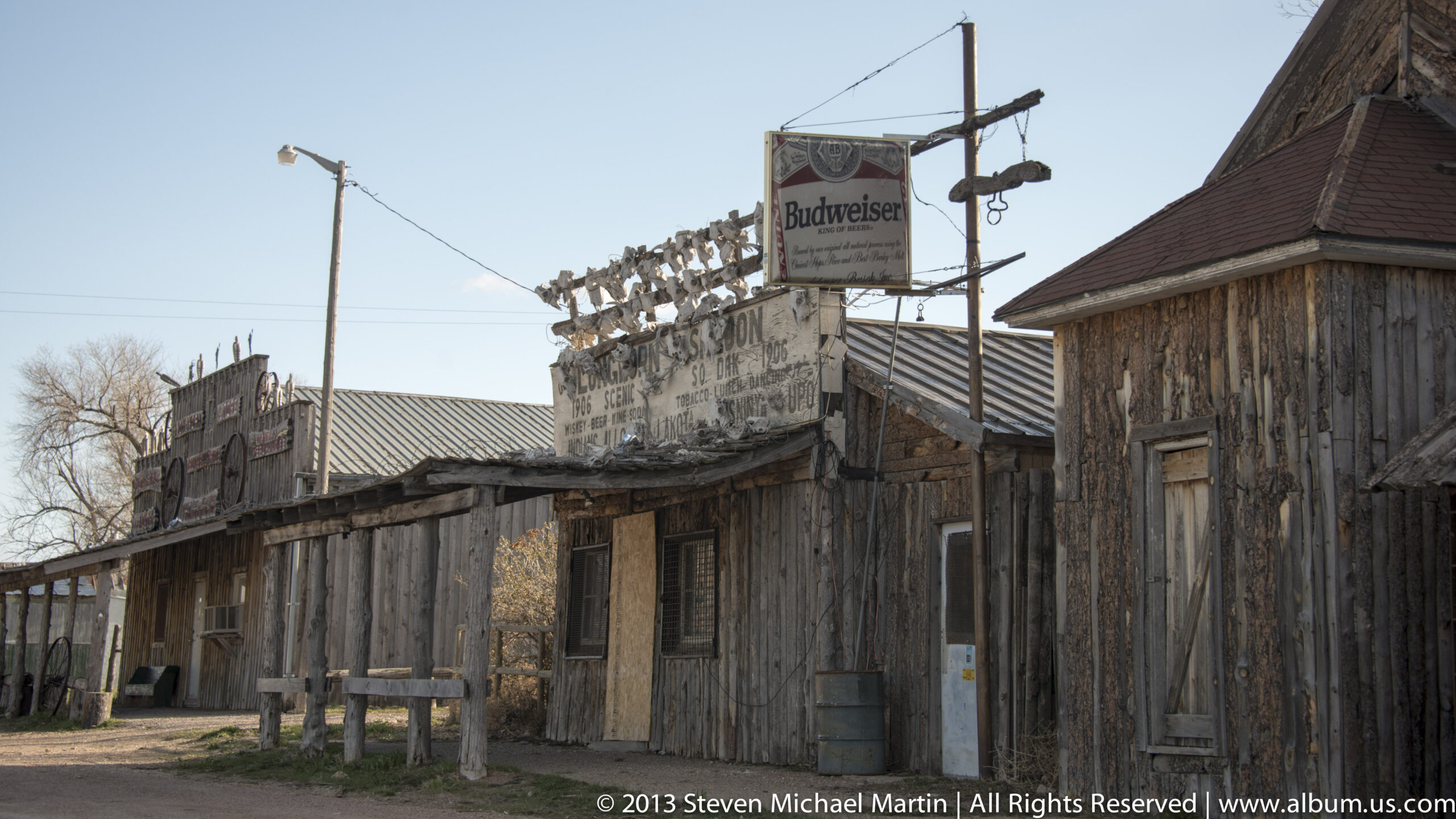
A row of weathered timber storefronts stands beneath a pale sky, with a prominent Budweiser sign mounted above the roofs. Faded painted lettering covers the central facade, and a small porch and bench sit in front. The view records the vernacular buildings and layered commercial signs without identifying a specific town from the image alone.
Caption
A row of weathered timber storefronts stands beneath a pale sky, with a prominent Budweiser sign mounted above the roofs. Faded painted lettering covers the central facade, and a small porch and bench sit in front. The view records the vernacular buildings and layered commercial signs without identifying a specific town from the image alone.

A small white church with a narrow steeple stands alone on flat prairie beneath an immense cloud-filled sky. Utility poles and a low line of distant buildings mark the horizon, while dry grass spans the foreground. The low placement of the building emphasizes the open scale of the surrounding landscape.
Caption
A small white church with a narrow steeple stands alone on flat prairie beneath an immense cloud-filled sky. Utility poles and a low line of distant buildings mark the horizon, while dry grass spans the foreground. The low placement of the building emphasizes the open scale of the surrounding landscape.
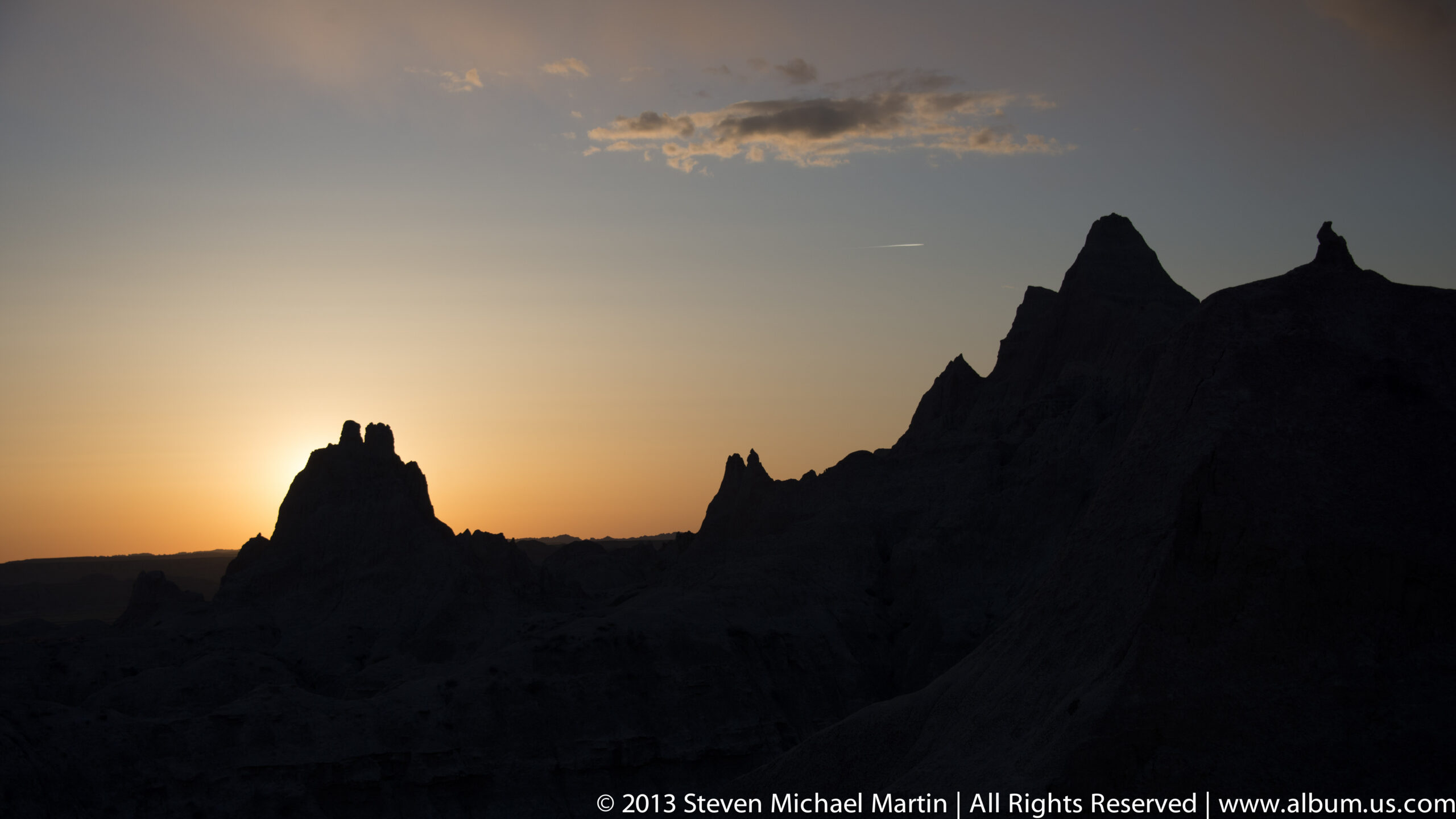
Jagged rock pinnacles form a dark silhouette against a sky shifting from orange near the horizon to blue above. The setting sun glows just left of the formations, outlining narrow spires and uneven peaks. The foreground remains nearly black, turning the landscape into a graphic profile at the close of day.
Caption
Jagged rock pinnacles form a dark silhouette against a sky shifting from orange near the horizon to blue above. The setting sun glows just left of the formations, outlining narrow spires and uneven peaks. The foreground remains nearly black, turning the landscape into a graphic profile at the close of day.
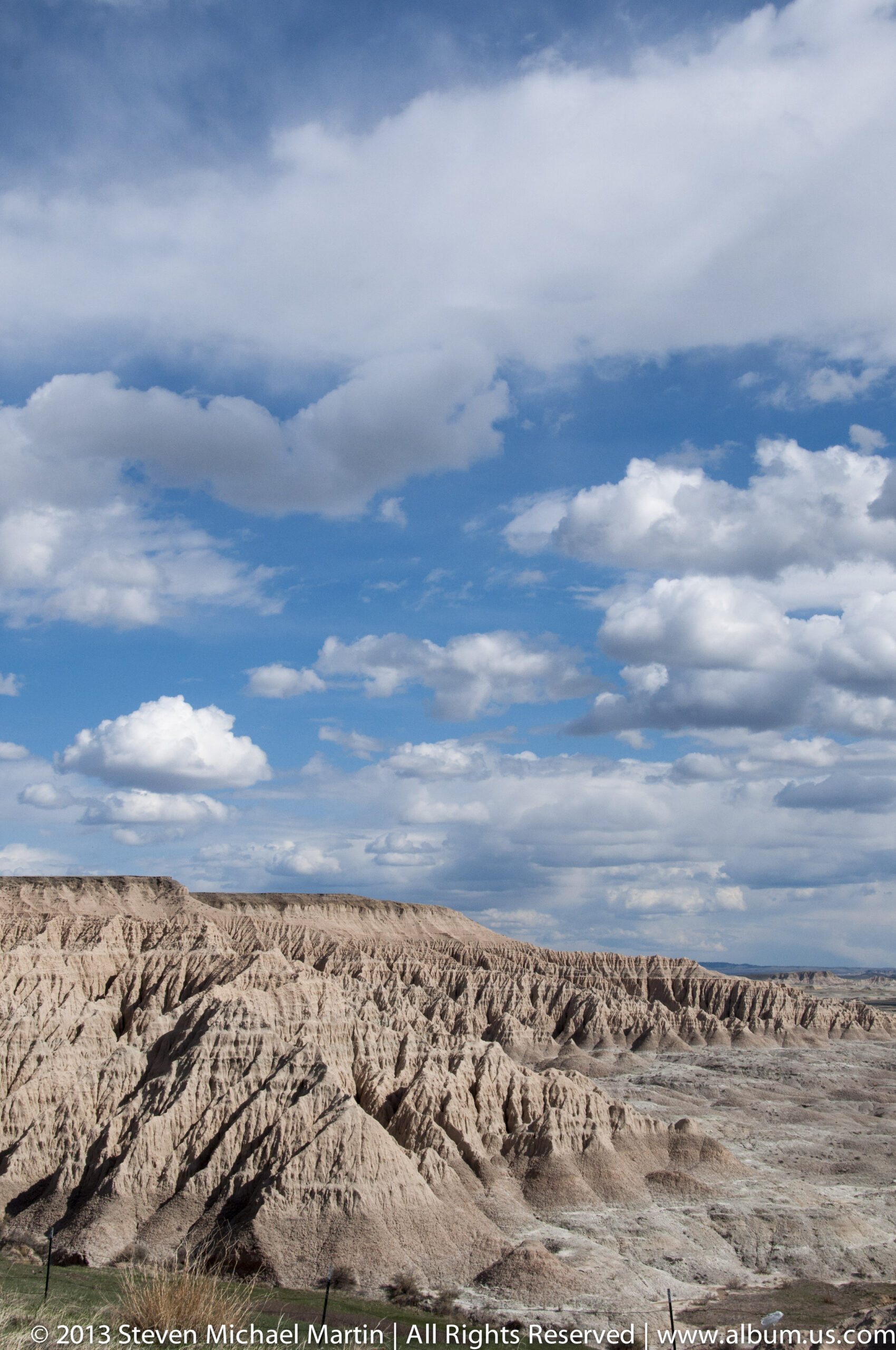
A broad panorama opens across pale, deeply cut badlands, where low ridges form a repeating pattern from foreground to horizon. A wide field of broken clouds occupies nearly half the frame, with patches of blue between them. This wider view gives the formations room to recede into the distance.
Caption
A broad panorama opens across pale, deeply cut badlands, where low ridges form a repeating pattern from foreground to horizon. A wide field of broken clouds occupies nearly half the frame, with patches of blue between them. This wider view gives the formations room to recede into the distance.
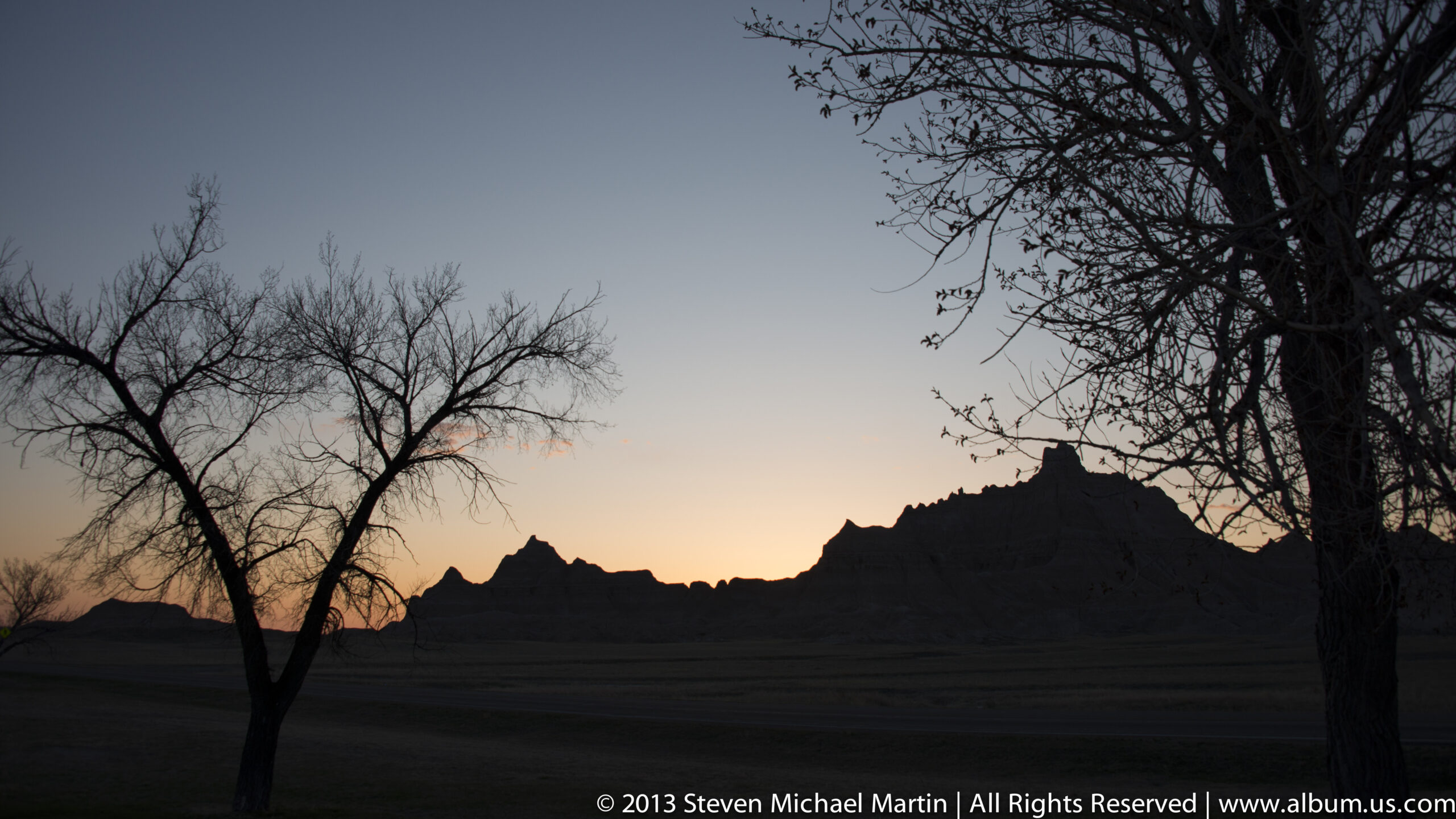
Bare trees frame a jagged badlands ridge in silhouette as a narrow band of peach light lingers along the horizon. The dark foreground and blackened rock profiles contrast with the fading gray-blue sky, turning familiar geological forms into a graphic evening scene. Branches edge the composition on both sides, emphasizing the ridge’s uneven skyline.
Caption
Bare trees frame a jagged badlands ridge in silhouette as a narrow band of peach light lingers along the horizon. The dark foreground and blackened rock profiles contrast with the fading gray-blue sky, turning familiar geological forms into a graphic evening scene. Branches edge the composition on both sides, emphasizing the ridge’s uneven skyline.
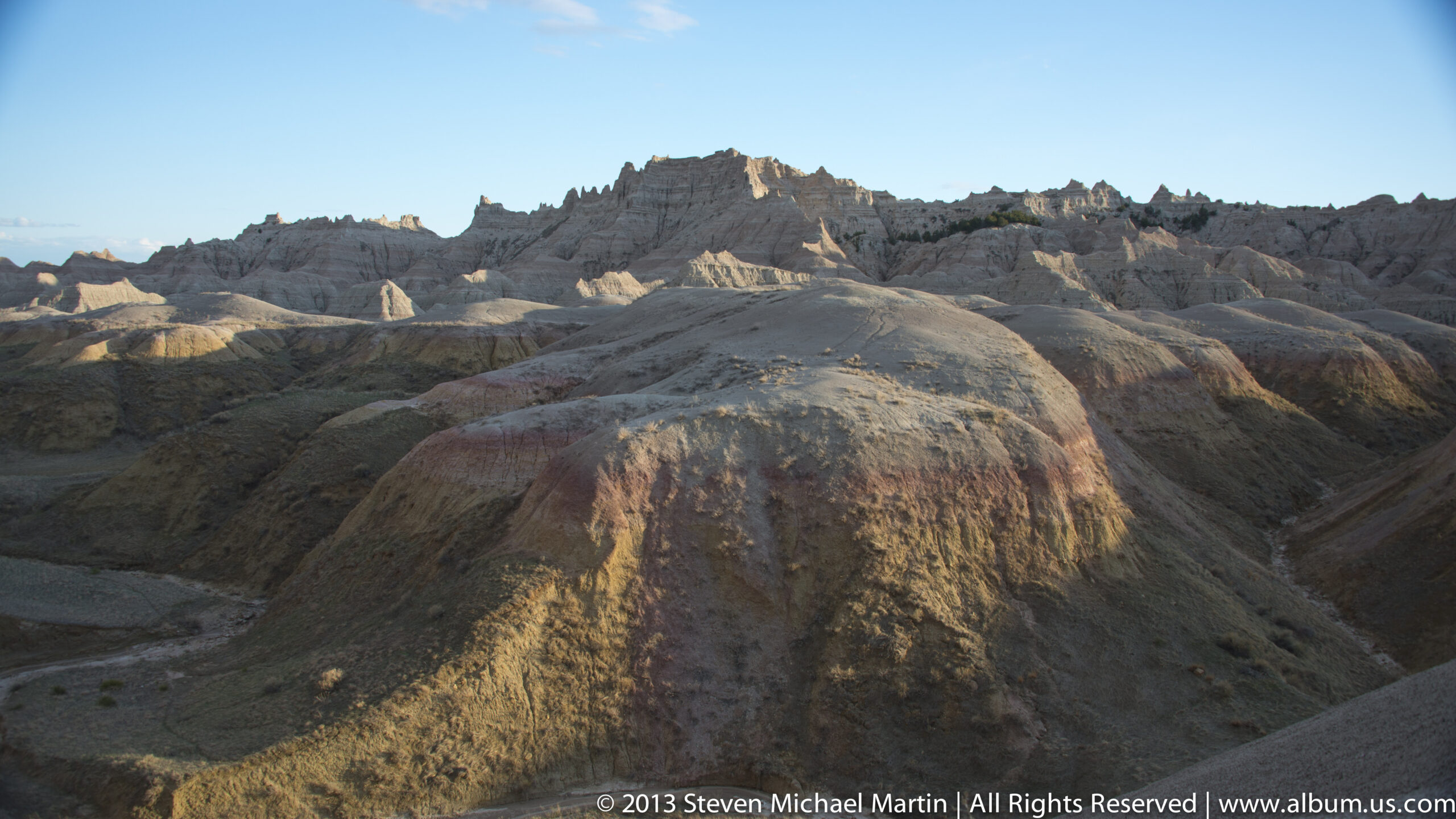
A broad expanse of eroded ridges catches the last warm light, with alternating sunlit crests and shadowed gullies creating a strong pattern. A rounded foreground mound leads toward jagged formations on the horizon, while a narrow strip of blue sky remains above them. The view makes changing light the defining feature.
Caption
A broad expanse of eroded ridges catches the last warm light, with alternating sunlit crests and shadowed gullies creating a strong pattern. A rounded foreground mound leads toward jagged formations on the horizon, while a narrow strip of blue sky remains above them. The view makes changing light the defining feature.
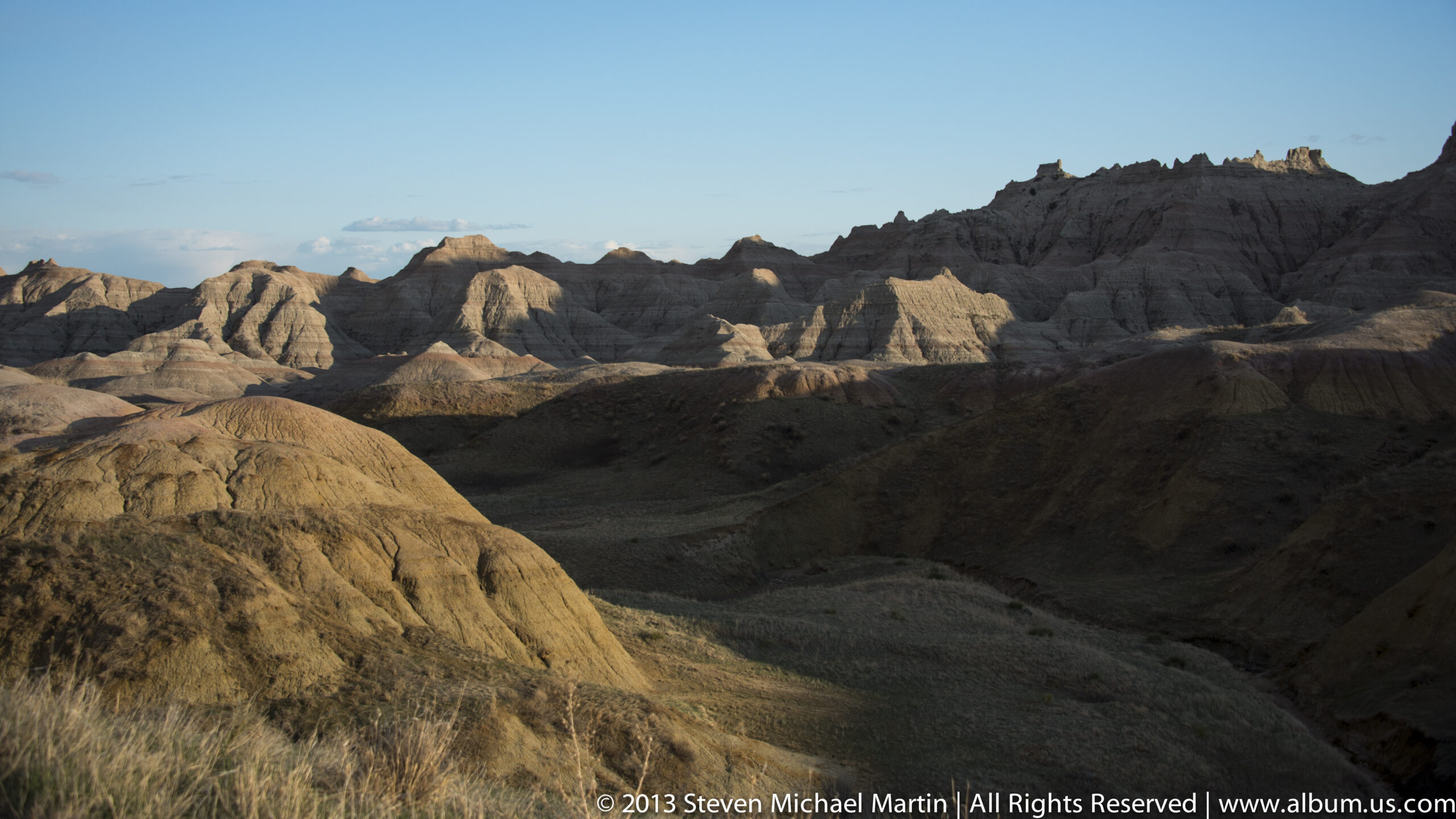
A rugged field of eroded mounds and ridges lies partly in shadow as low sunlight warms the upper formations. The contrast divides the scene into a dark foreground basin and a band of illuminated rock along the horizon. The elevated viewpoint gives depth to the terrain while emphasizing the transition into evening.
Caption
A rugged field of eroded mounds and ridges lies partly in shadow as low sunlight warms the upper formations. The contrast divides the scene into a dark foreground basin and a band of illuminated rock along the horizon. The elevated viewpoint gives depth to the terrain while emphasizing the transition into evening.
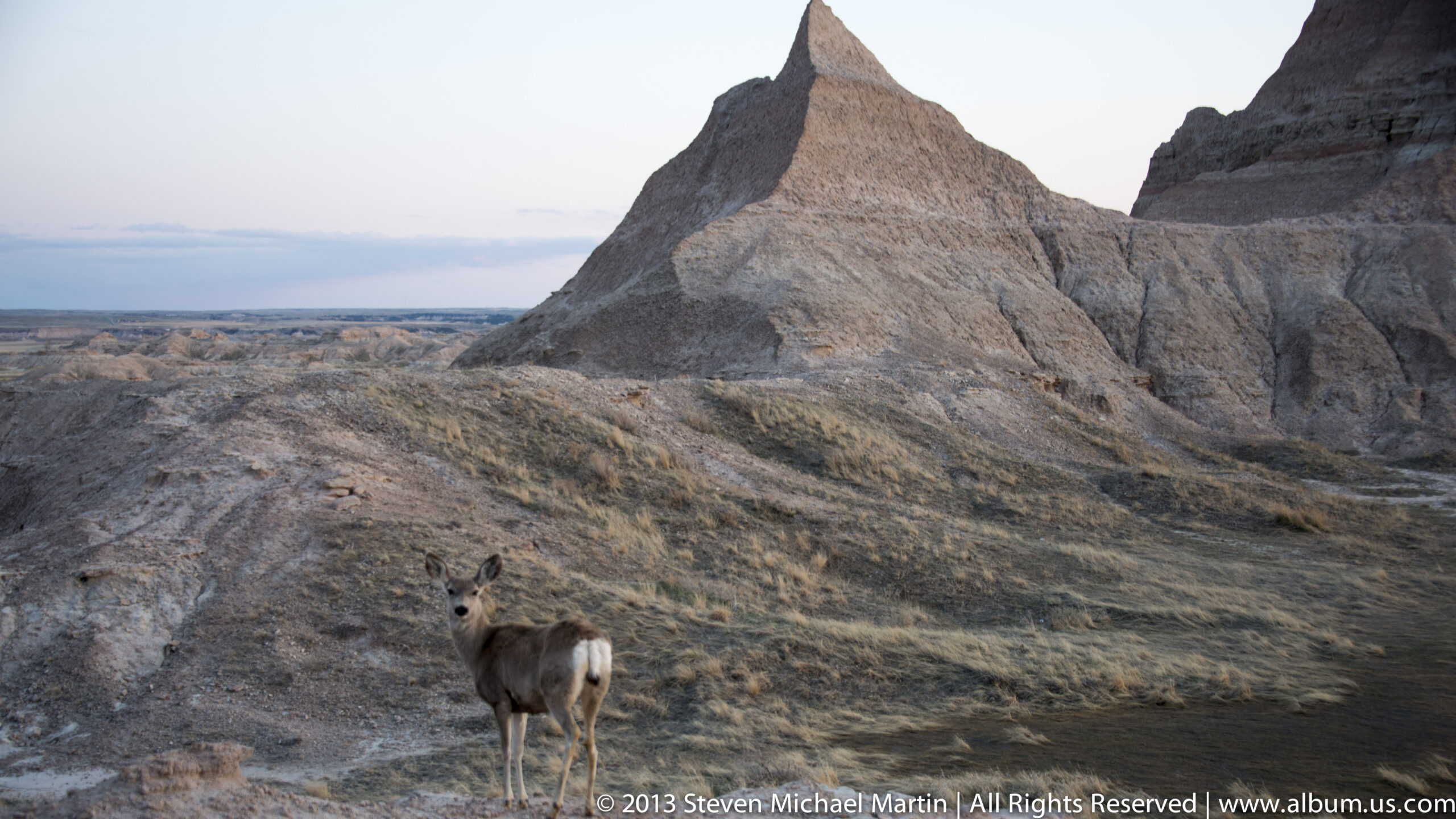
A deer pauses on a narrow grassy slope beneath steeply eroded formations, looking toward the camera while its white rump catches the light. Its large ears and slim profile suggest a mule deer, though the small figure leaves some species details difficult to confirm. The animal’s placement near the lower edge sets its scale against the layered ridge and open badlands terrain.
Caption
A deer pauses on a narrow grassy slope beneath steeply eroded formations, looking toward the camera while its white rump catches the light. Its large ears and slim profile suggest a mule deer, though the small figure leaves some species details difficult to confirm. The animal’s placement near the lower edge sets its scale against the layered ridge and open badlands terrain.

A line of pale, sharply eroded ridges runs across the middle distance, with branching gullies descending toward a sparse grassy foreground. Large cumulus clouds build above the plateau beneath a saturated blue sky. The elevated viewpoint pairs the sculpted formations with expansive weather, keeping the horizon high enough to show their broken relief.
Caption
A line of pale, sharply eroded ridges runs across the middle distance, with branching gullies descending toward a sparse grassy foreground. Large cumulus clouds build above the plateau beneath a saturated blue sky. The elevated viewpoint pairs the sculpted formations with expansive weather, keeping the horizon high enough to show their broken relief.

A large bison grazes with its head lowered in short prairie grass, its heavy dark coat and curved horns sharply visible. The animal fills most of the frame, while a softly focused expanse of pale grassland recedes behind it. Side lighting reveals the rough texture of its shoulder and thick winter coat.
Caption
A large bison grazes with its head lowered in short prairie grass, its heavy dark coat and curved horns sharply visible. The animal fills most of the frame, while a softly focused expanse of pale grassland recedes behind it. Side lighting reveals the rough texture of its shoulder and thick winter coat.
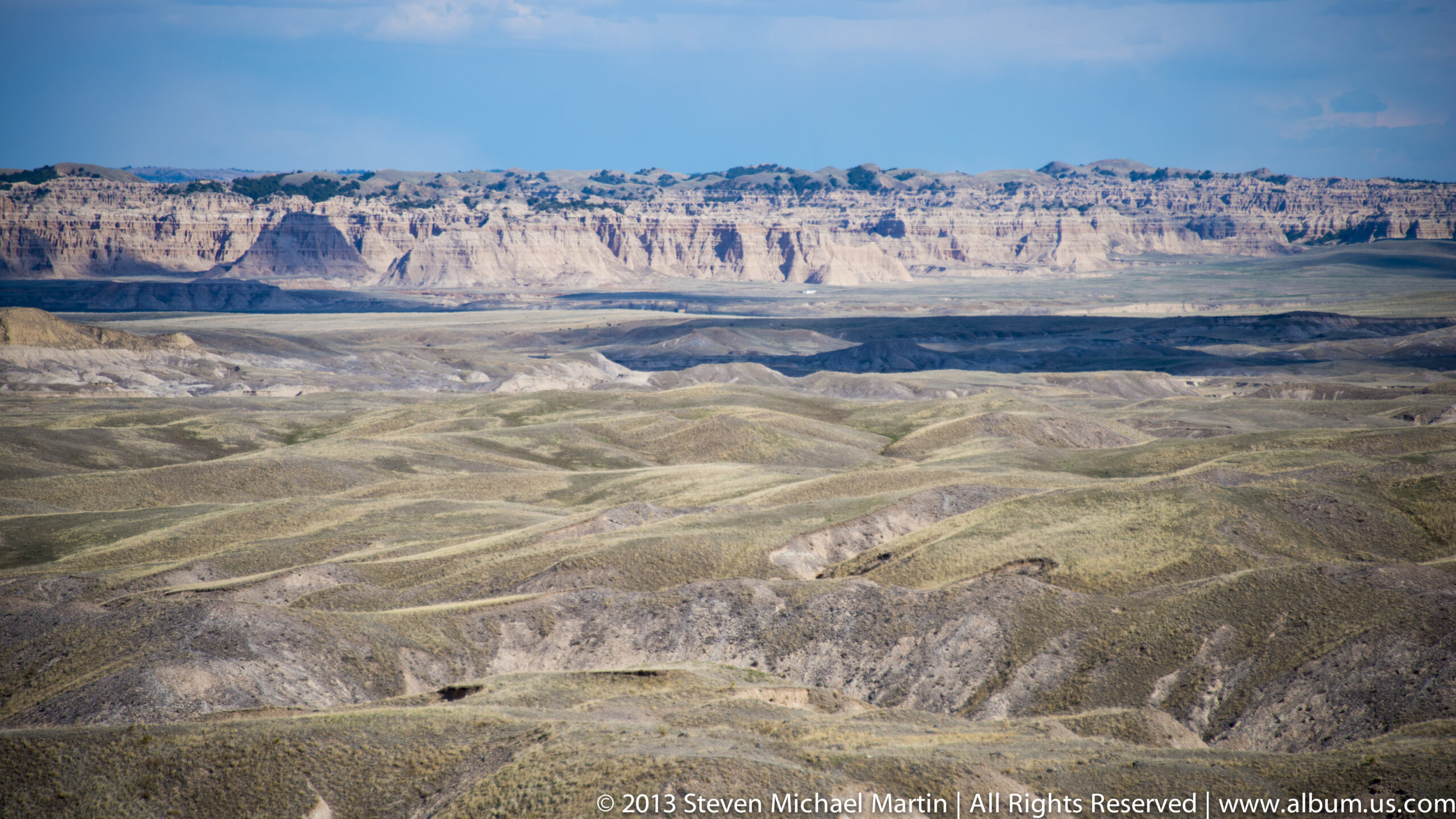
From a high overlook, pale ridges and shallow drainage channels spread across a broad basin toward a long escarpment on the horizon. Sparse vegetation traces the low ground, and a narrow blue band of sky caps the distant formations. The layered view shows the basin’s scale and its transition into the more rugged wall beyond.
Caption
From a high overlook, pale ridges and shallow drainage channels spread across a broad basin toward a long escarpment on the horizon. Sparse vegetation traces the low ground, and a narrow blue band of sky caps the distant formations. The layered view shows the basin’s scale and its transition into the more rugged wall beyond.
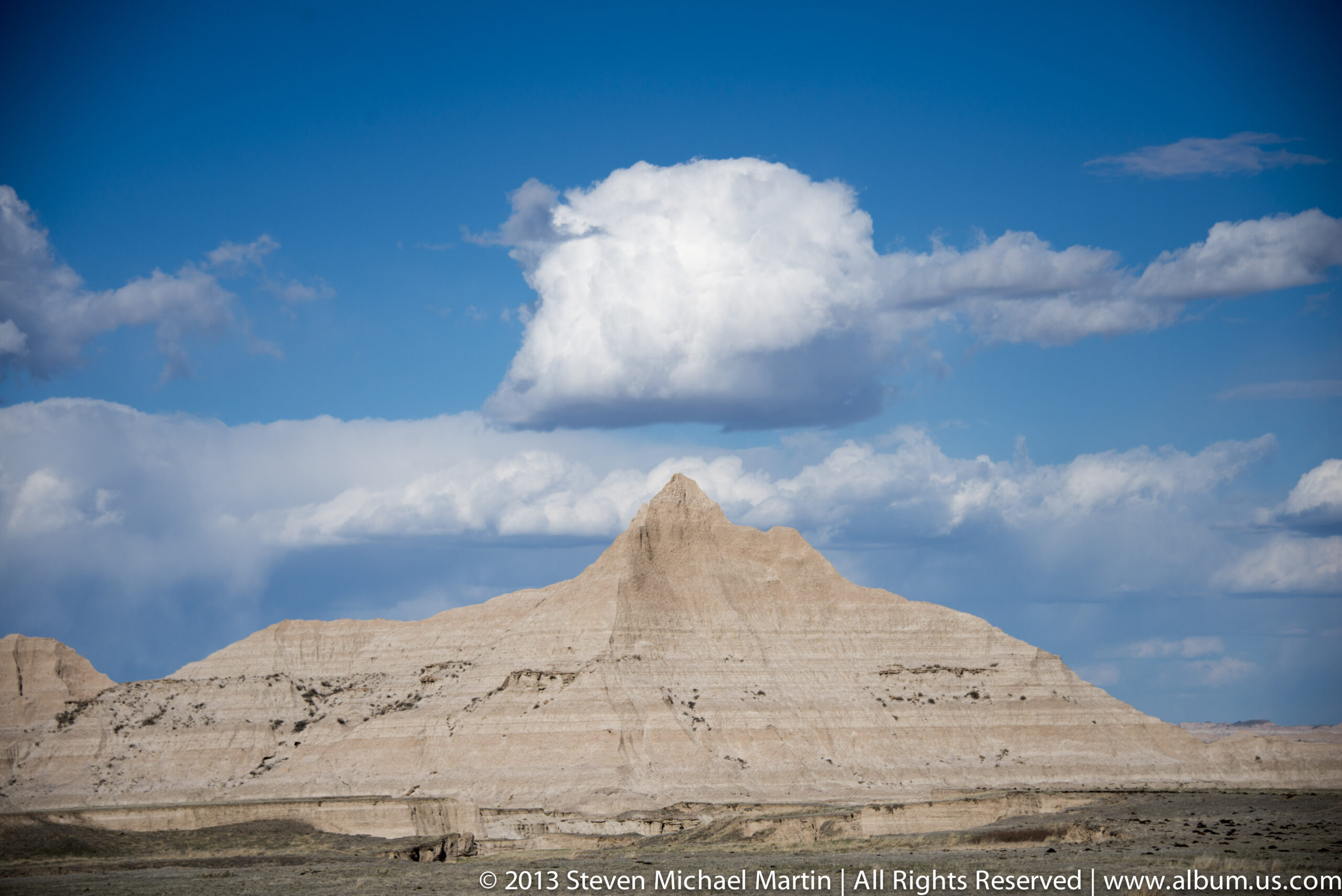
A steep-sided pale butte rises alone against a vivid blue sky, its summit shaped into a narrow, irregular crest. A large cumulus cloud towers above and slightly behind it, echoing the formation’s upward profile. The sparse composition isolates the butte from the surrounding terrain and draws attention to its silhouette.
Caption
A steep-sided pale butte rises alone against a vivid blue sky, its summit shaped into a narrow, irregular crest. A large cumulus cloud towers above and slightly behind it, echoing the formation’s upward profile. The sparse composition isolates the butte from the surrounding terrain and draws attention to its silhouette.
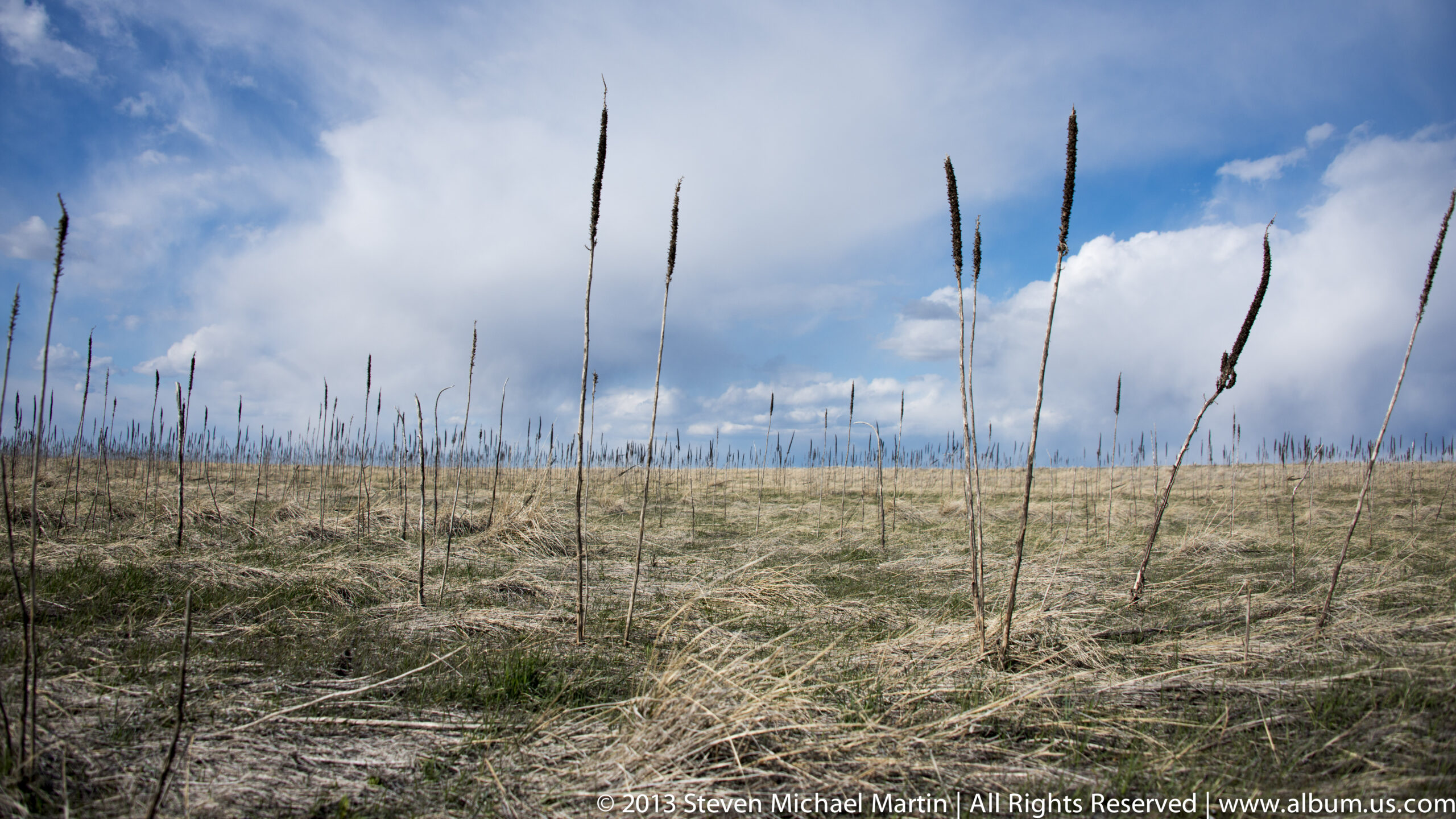
Tall dried seed stalks rise from a low mat of tan grasses on open prairie. Several dark stems punctuate the foreground and middle ground, while a blue sky with scattered clouds fills the upper half. The uncluttered view records the grassland’s seasonal texture rather than the park’s more dramatic ridges.
Caption
Tall dried seed stalks rise from a low mat of tan grasses on open prairie. Several dark stems punctuate the foreground and middle ground, while a blue sky with scattered clouds fills the upper half. The uncluttered view records the grassland’s seasonal texture rather than the park’s more dramatic ridges.
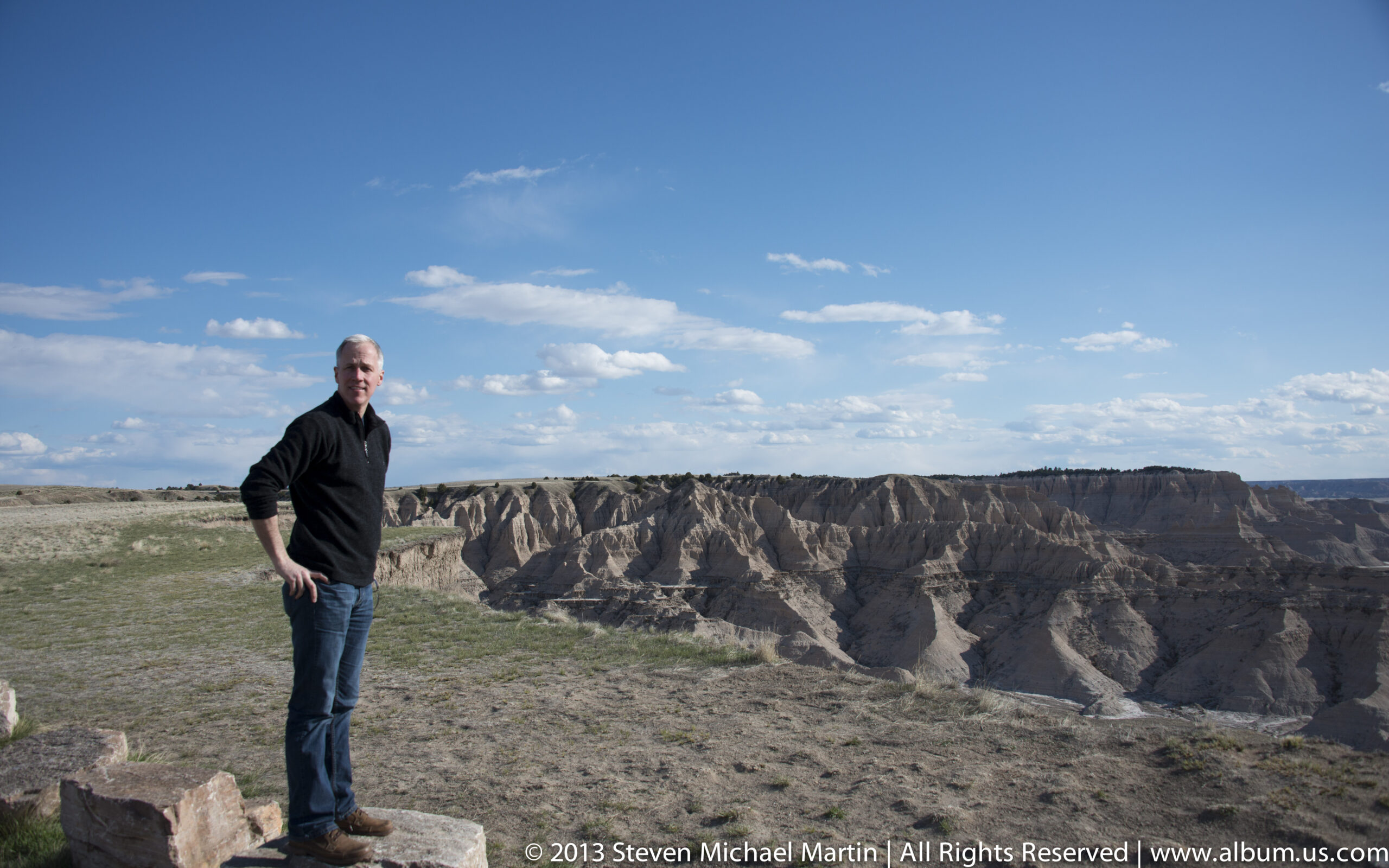
A man stands on a rock at the edge of an overlook, with sharply eroded ridges dropping away behind him. He faces the camera while the broad sky and distant plateau extend across the upper background. The full-body figure gives scale to the steep formations and marks the viewpoint as a place for visitors.
Caption
A man stands on a rock at the edge of an overlook, with sharply eroded ridges dropping away behind him. He faces the camera while the broad sky and distant plateau extend across the upper background. The full-body figure gives scale to the steep formations and marks the viewpoint as a place for visitors.

A man in a dark jacket stands with arms folded against a backdrop of pale, sharply dissected ridges. The closer framing includes his upper body and keeps the layered formations legible behind him. Clear daylight brings out the contrast between the dark clothing, muted grass, and exposed sedimentary slopes.
Caption
A man in a dark jacket stands with arms folded against a backdrop of pale, sharply dissected ridges. The closer framing includes his upper body and keeps the layered formations legible behind him. Clear daylight brings out the contrast between the dark clothing, muted grass, and exposed sedimentary slopes.
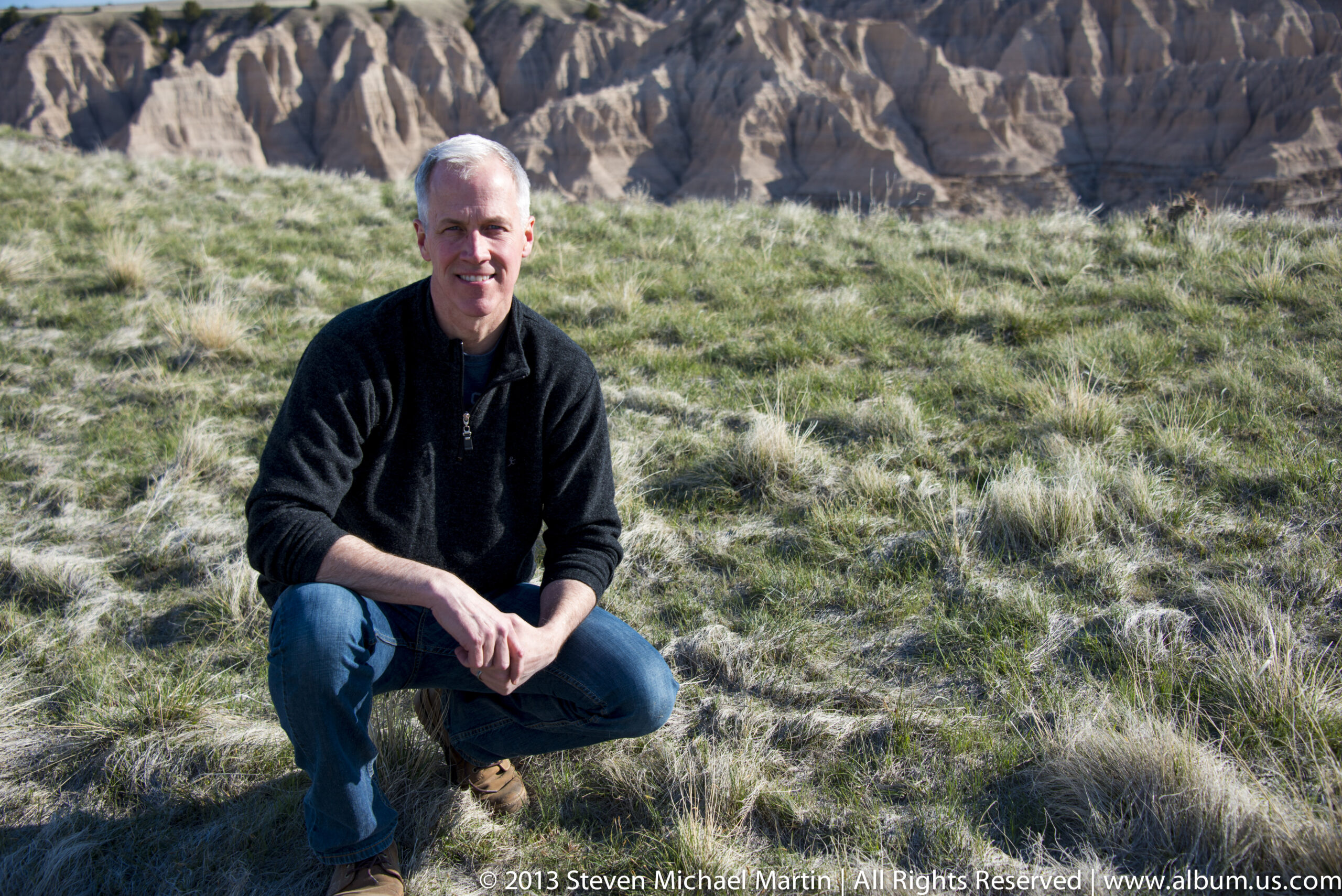
A man crouches on the grassy rim of a ravine, smiling toward the camera with broken ridges rising directly behind him. His low pose places him close to the ground cover, while the background preserves the steep, finely cut rock slopes. This portrait combines a personal moment with the park’s distinctive terrain.
Caption
A man crouches on the grassy rim of a ravine, smiling toward the camera with broken ridges rising directly behind him. His low pose places him close to the ground cover, while the background preserves the steep, finely cut rock slopes. This portrait combines a personal moment with the park’s distinctive terrain.
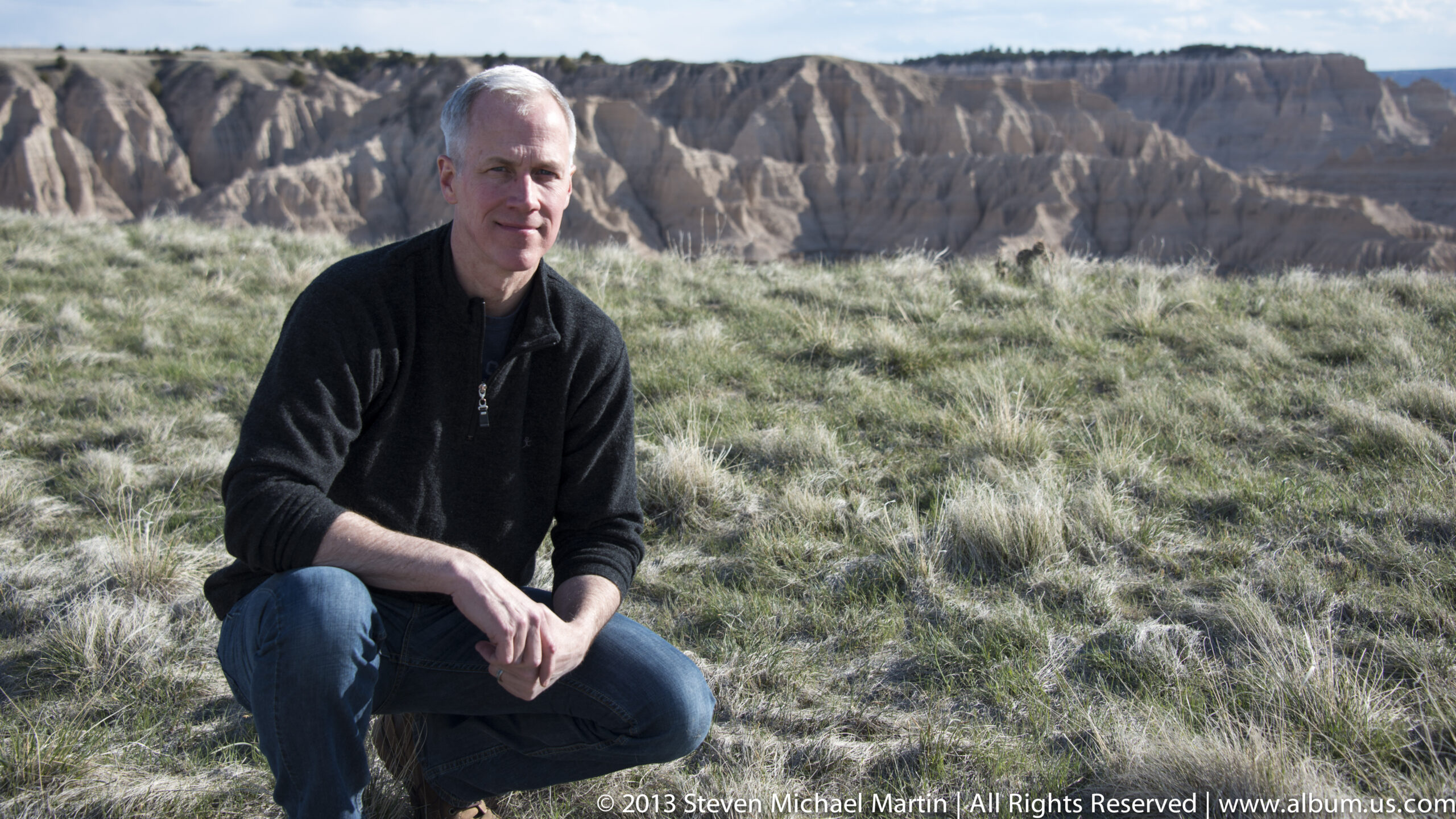
A man sits on the grassy edge of a slope, facing the camera with his hands resting near his knees. The jagged badlands wall runs behind him, its pale ridges contrasting with the green and tan grasses in the foreground. The seated pose and medium distance distinguish this view from the standing overlook portraits.
Caption
A man sits on the grassy edge of a slope, facing the camera with his hands resting near his knees. The jagged badlands wall runs behind him, its pale ridges contrasting with the green and tan grasses in the foreground. The seated pose and medium distance distinguish this view from the standing overlook portraits.

A man’s face and shoulders fill the foreground, with the steep, pale badlands slopes rendered softly behind him. He looks directly toward the camera in bright daylight, and the shallow depth of field separates his expression from the layered terrain. The close crop prioritizes the portrait while retaining the landscape as context.
Caption
A man’s face and shoulders fill the foreground, with the steep, pale badlands slopes rendered softly behind him. He looks directly toward the camera in bright daylight, and the shallow depth of field separates his expression from the layered terrain. The close crop prioritizes the portrait while retaining the landscape as context.
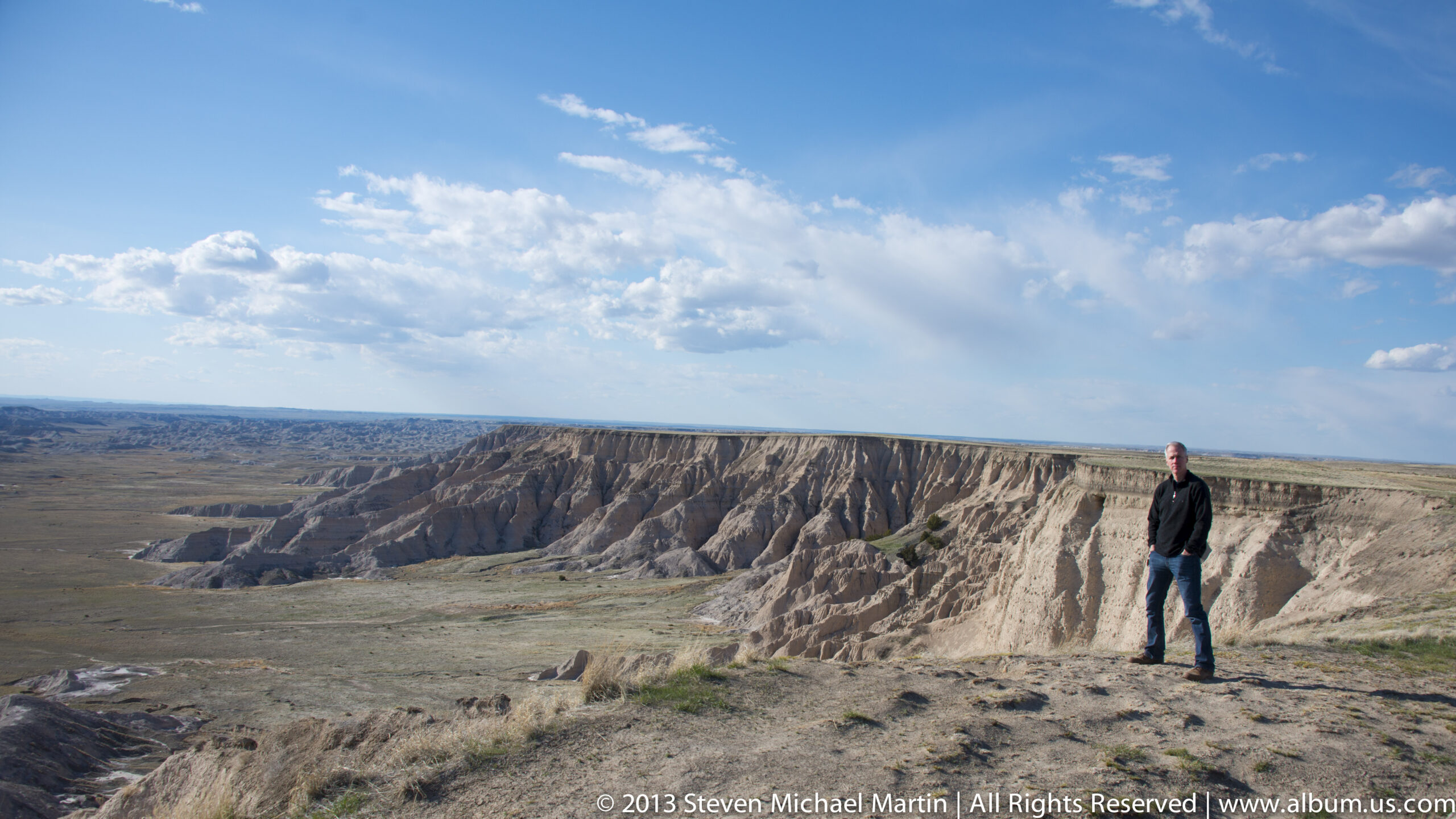
A man stands near the right edge of an expansive overlook, dwarfed by a long line of eroded ridges and a wide, cloud-dappled sky. The formations descend into a shallow basin before rising again along the horizon. This composition gives the landscape most of the frame and uses the visitor as a small scale marker.
Caption
A man stands near the right edge of an expansive overlook, dwarfed by a long line of eroded ridges and a wide, cloud-dappled sky. The formations descend into a shallow basin before rising again along the horizon. This composition gives the landscape most of the frame and uses the visitor as a small scale marker.
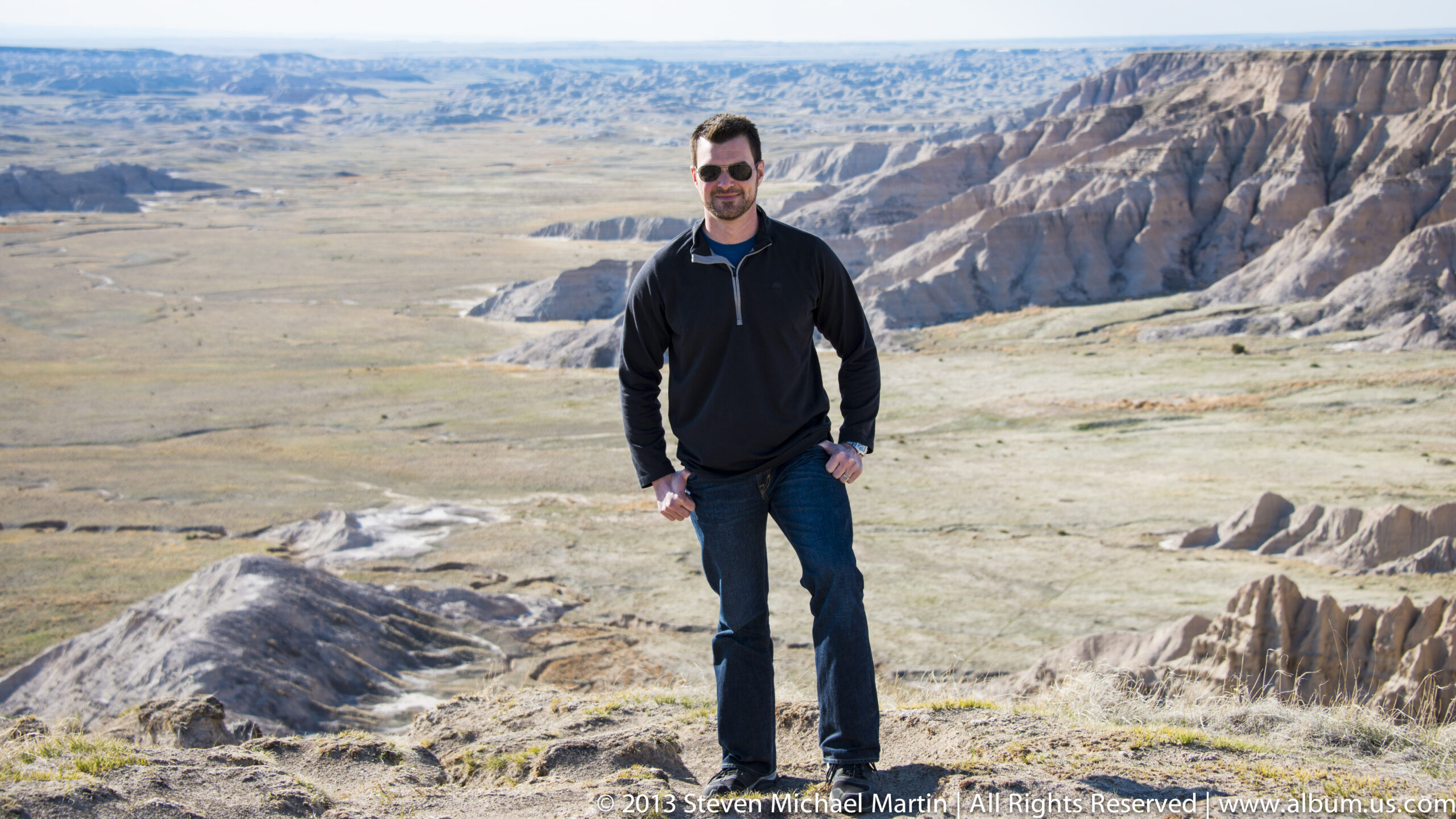
A man wearing dark sunglasses stands on a rocky overlook with one hand at his hip. Pale ridges and a broad basin open behind him, and a rounded foreground boulder anchors the lower left. The full-length composition combines a posed portrait with a clear view into the surrounding formations.
Caption
A man wearing dark sunglasses stands on a rocky overlook with one hand at his hip. Pale ridges and a broad basin open behind him, and a rounded foreground boulder anchors the lower left. The full-length composition combines a posed portrait with a clear view into the surrounding formations.
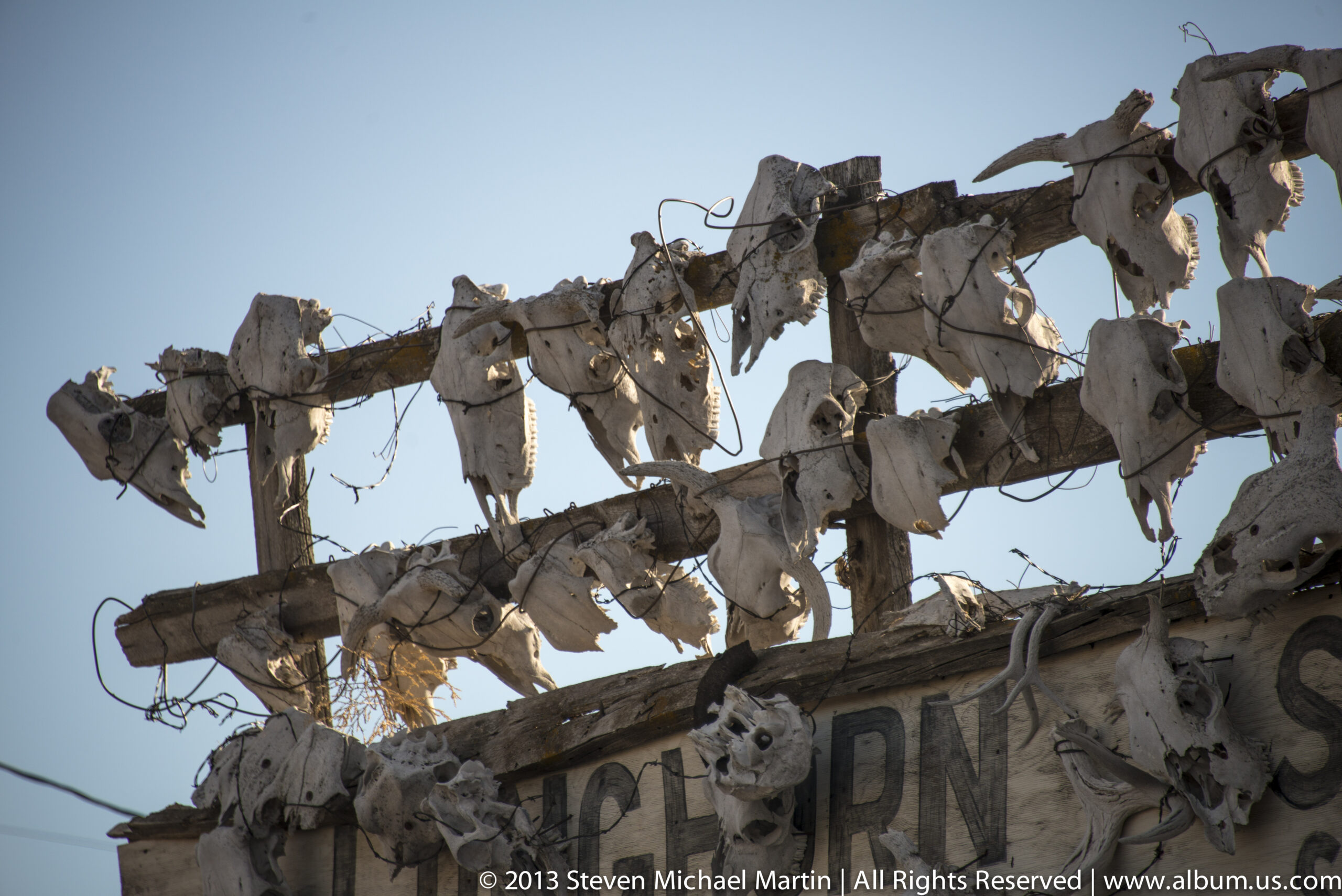
A row of pale animal skulls and horns is wired along a weathered timber beam above an old building. Their varied shapes overlap against a clear sky, while a large faded sign is partly visible below. The close upward angle makes the display of skulls the main subject and leaves the structure secondary.
Caption
A row of pale animal skulls and horns is wired along a weathered timber beam above an old building. Their varied shapes overlap against a clear sky, while a large faded sign is partly visible below. The close upward angle makes the display of skulls the main subject and leaves the structure secondary.
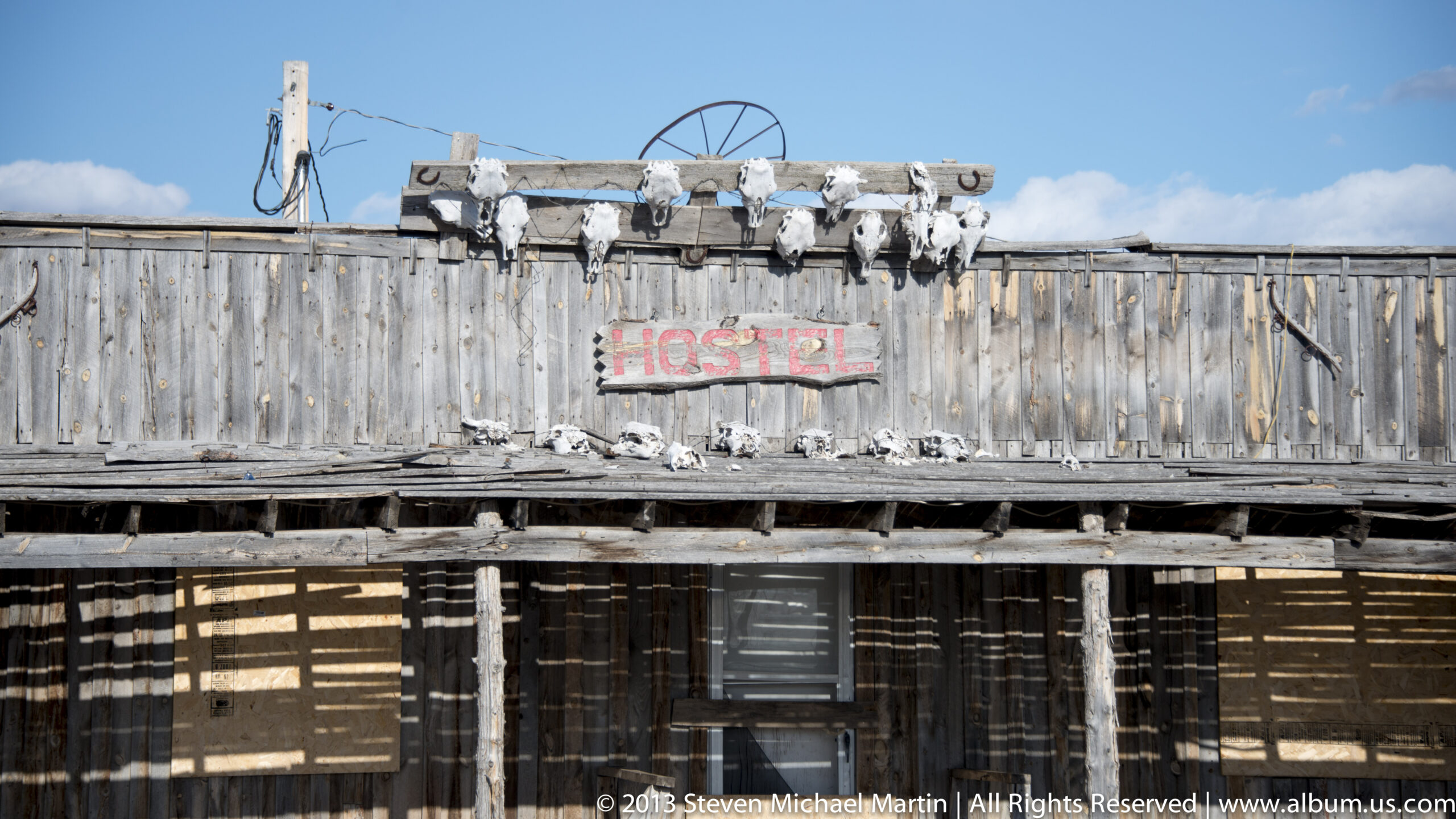
A faded red “HOSTEL” sign is fixed to a broad gray timber facade, beneath a line of mounted skulls and horns. A simple door and small window sit below the sign, while a metal wheel-like object rests on the roofline. The frontal view documents the building’s sign and rough timber construction.
Caption
A faded red “HOSTEL” sign is fixed to a broad gray timber facade, beneath a line of mounted skulls and horns. A simple door and small window sit below the sign, while a metal wheel-like object rests on the roofline. The frontal view documents the building’s sign and rough timber construction.
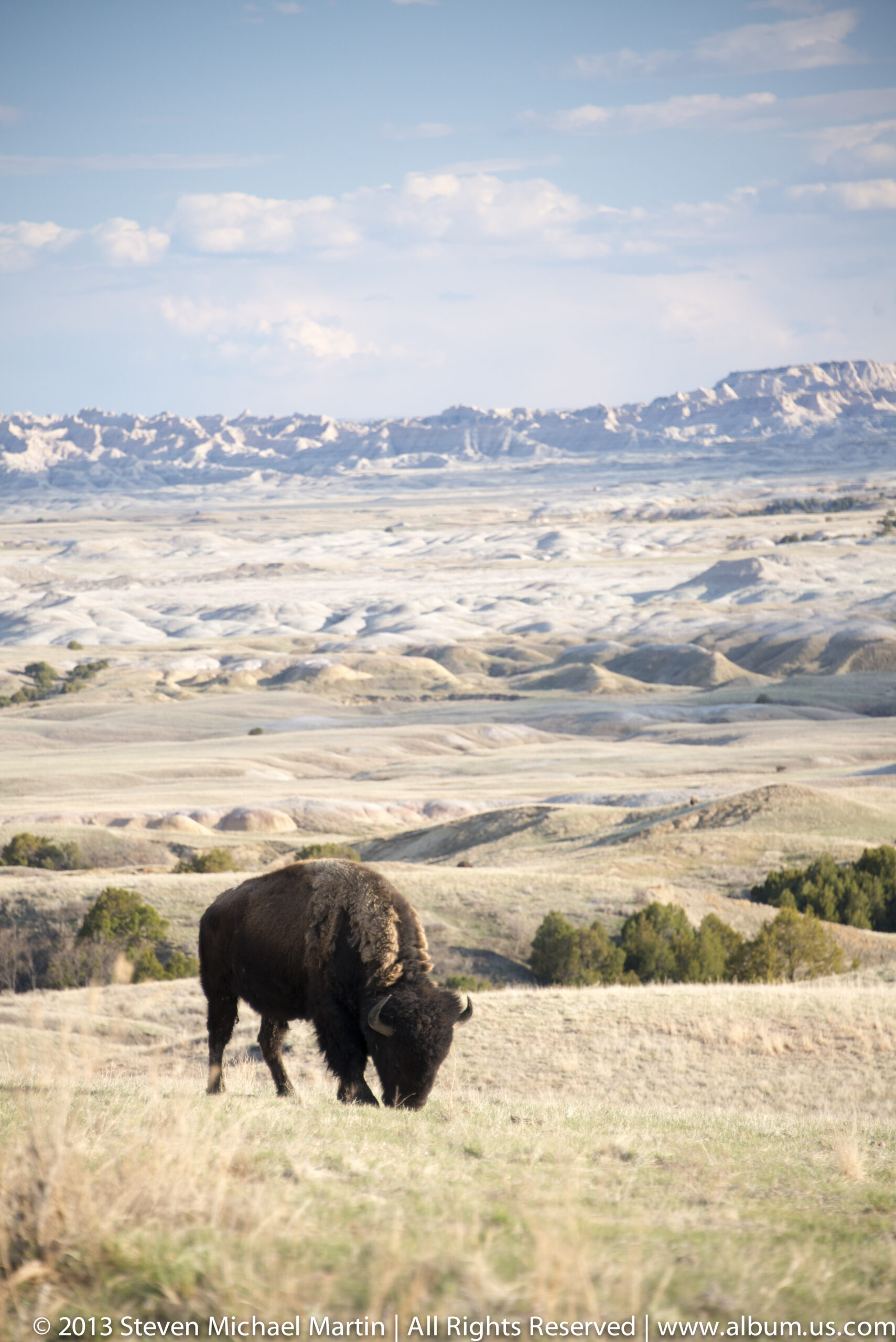
A bison grazes with its head down on a sunlit grassy slope, with a broad plain and low hills stretching into the distance. The animal is shown in profile near the lower center, leaving much of the frame to the open landscape. Soft afternoon light separates the dark coat from the pale grass.
Caption
A bison grazes with its head down on a sunlit grassy slope, with a broad plain and low hills stretching into the distance. The animal is shown in profile near the lower center, leaving much of the frame to the open landscape. Soft afternoon light separates the dark coat from the pale grass.
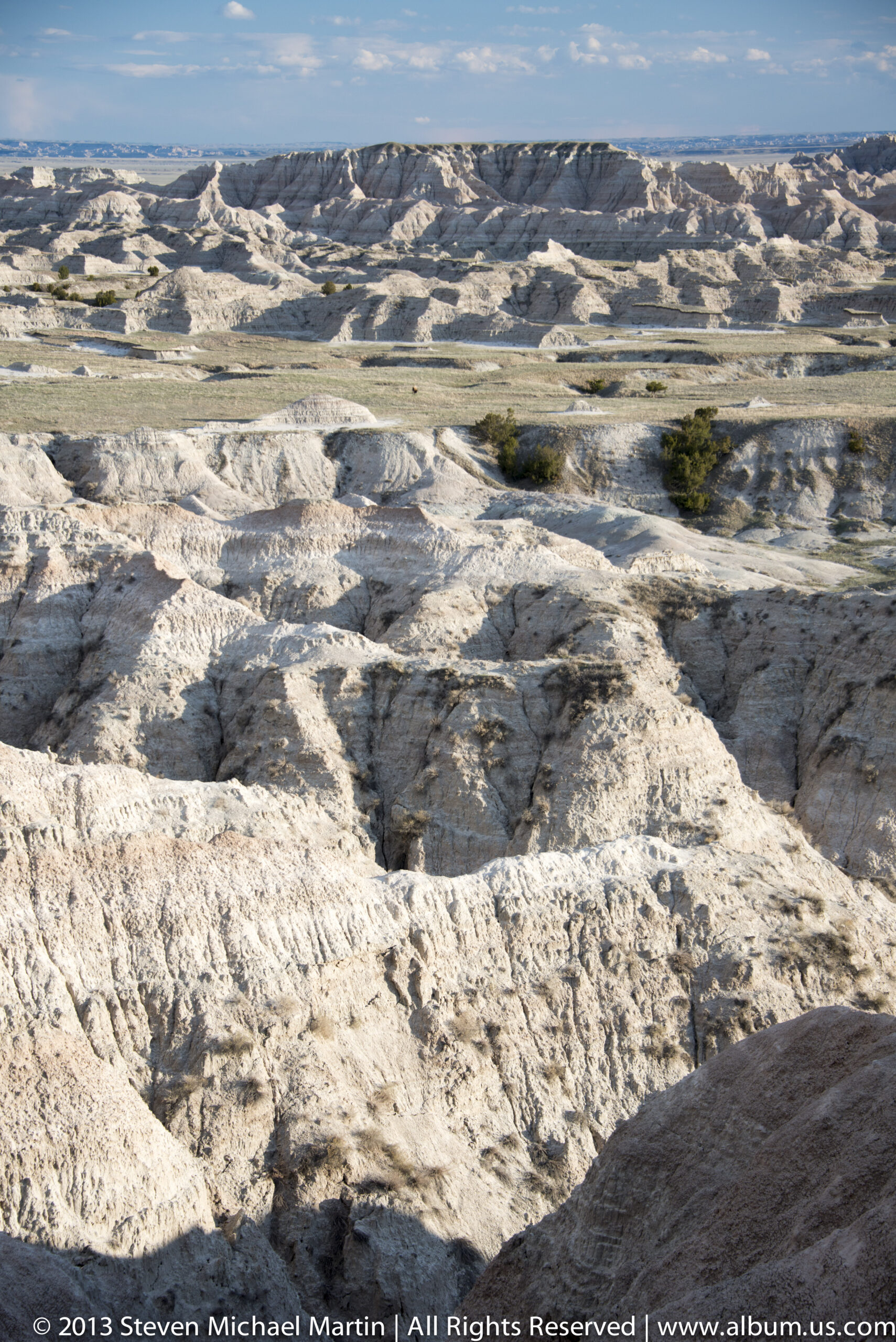
An elevated view looks across a pale, deeply eroded surface scored by branching channels and low ridges. Sparse dark shrubs appear farther out, beyond the exposed formations. The foreground textures occupy most of the frame, making the fine pattern of erosion more prominent than the distant horizon.
Caption
An elevated view looks across a pale, deeply eroded surface scored by branching channels and low ridges. Sparse dark shrubs appear farther out, beyond the exposed formations. The foreground textures occupy most of the frame, making the fine pattern of erosion more prominent than the distant horizon.
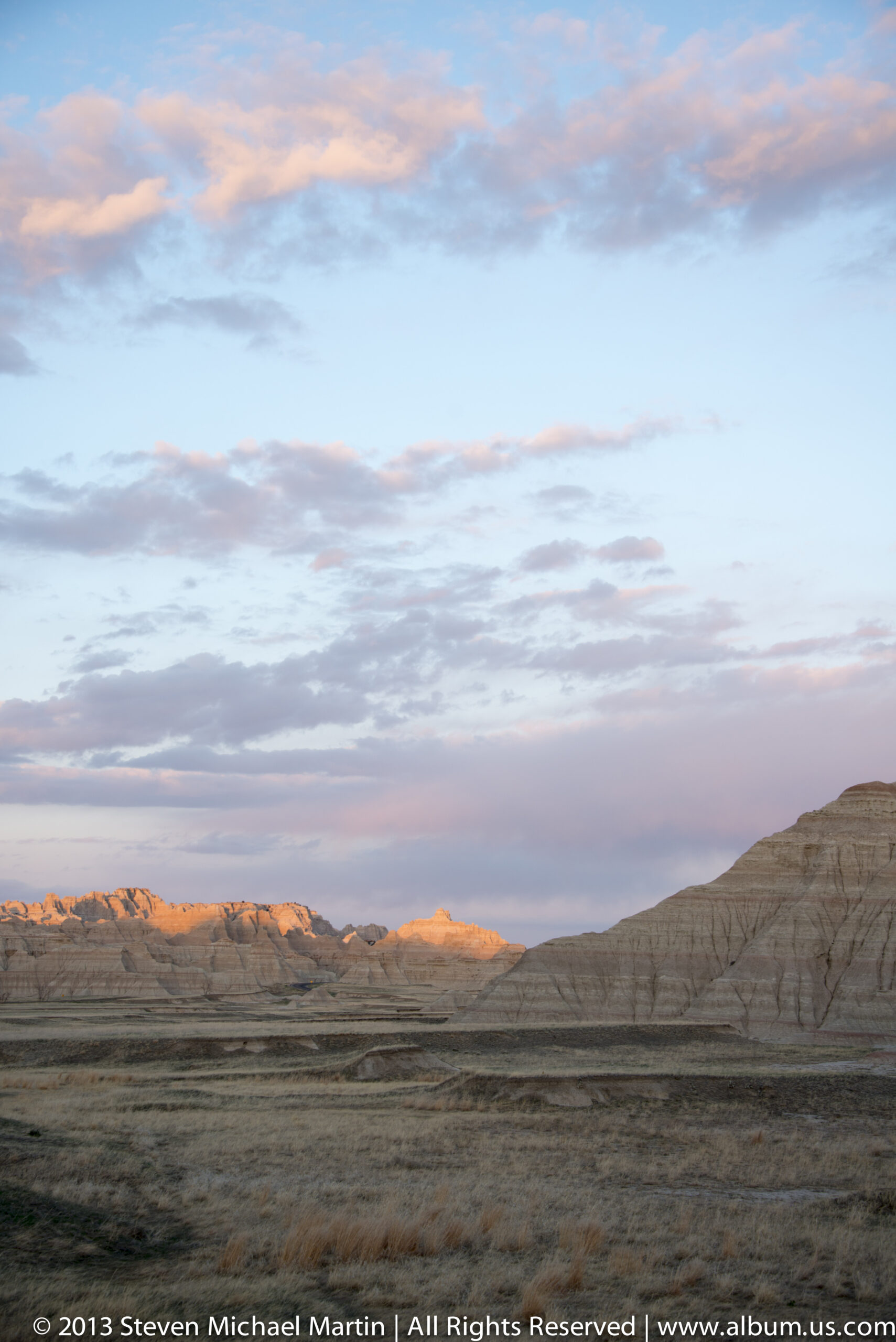
A broad, dark prairie stretches toward a low ridge of badlands, where the last warm light catches the upper slopes. Above it, layers of blue, lavender, and pink clouds spread across a large sky. The low horizon and subdued foreground give the scene an expansive, quiet character, distinct from the tighter formations views nearby.
Caption
A broad, dark prairie stretches toward a low ridge of badlands, where the last warm light catches the upper slopes. Above it, layers of blue, lavender, and pink clouds spread across a large sky. The low horizon and subdued foreground give the scene an expansive, quiet character, distinct from the tighter formations views nearby.
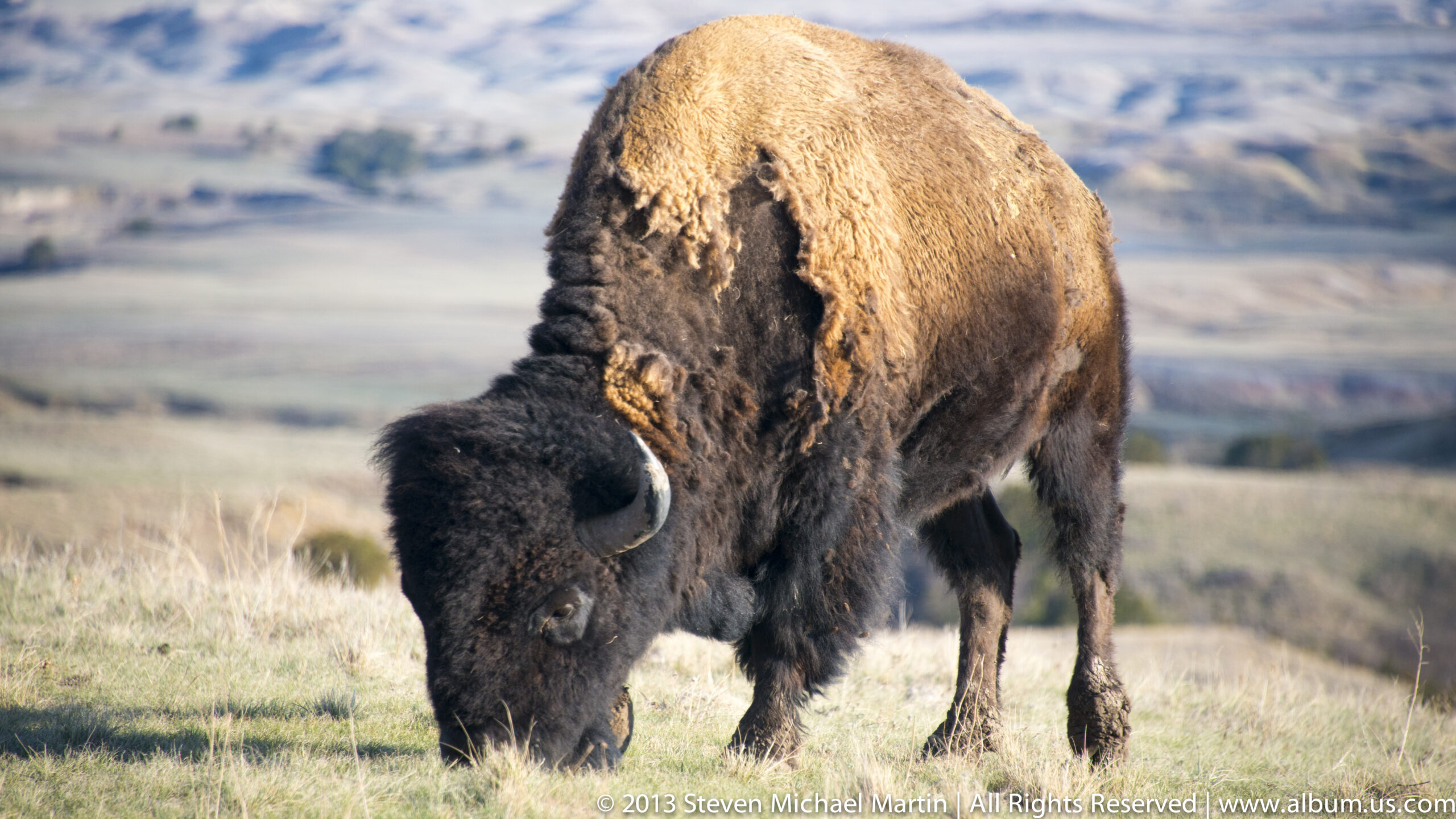
A bison feeds with its head lowered, filling the foreground with a shaggy shoulder and curved horn. Sunlight catches the tawny ridge of its back while the face remains in shadow. The shallow background shows a soft sweep of prairie and distant badlands, separating this close wildlife view from wider grazing scenes.
Caption
A bison feeds with its head lowered, filling the foreground with a shaggy shoulder and curved horn. Sunlight catches the tawny ridge of its back while the face remains in shadow. The shallow background shows a soft sweep of prairie and distant badlands, separating this close wildlife view from wider grazing scenes.
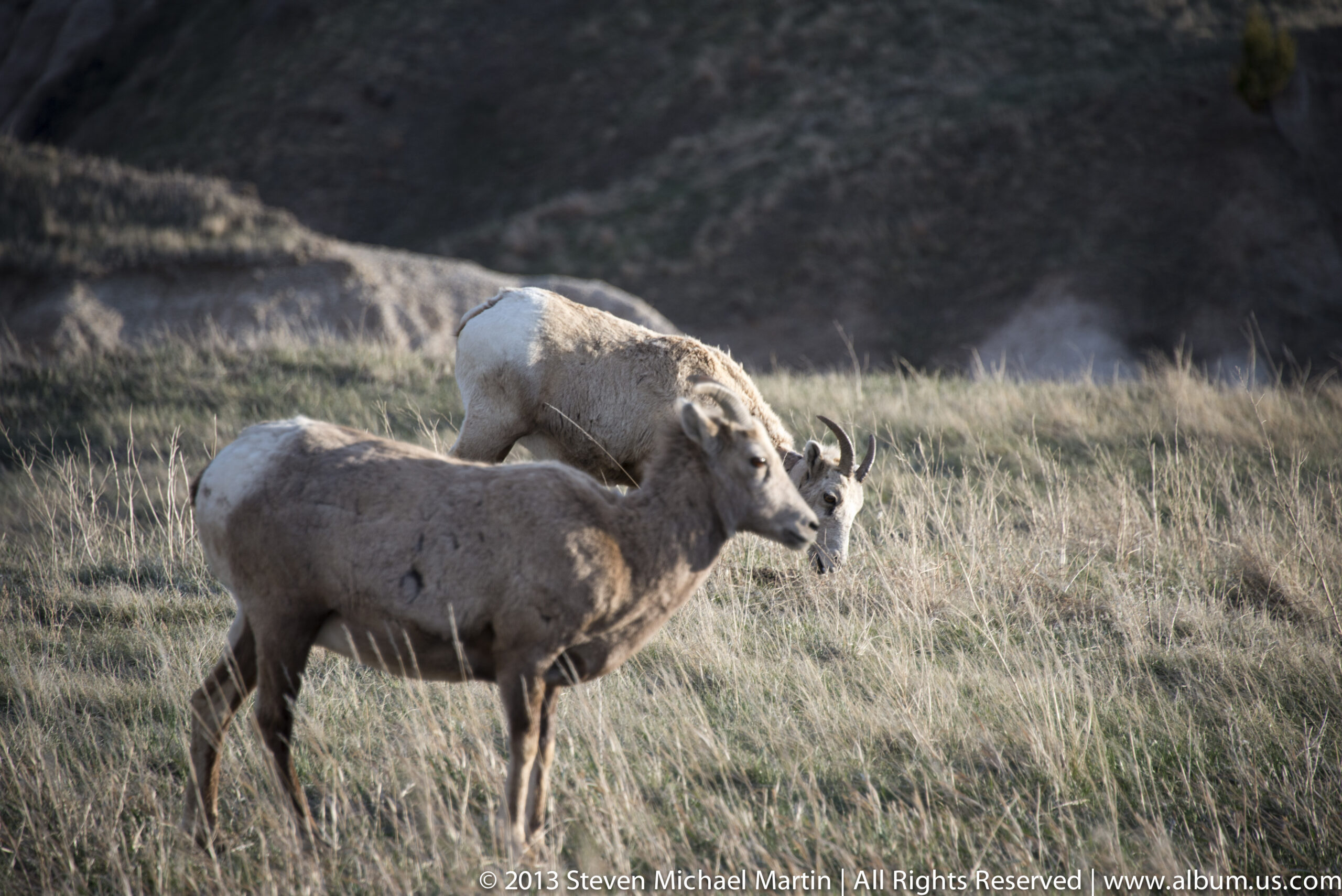
Two bighorn sheep stand close together in short grass, one partly behind the other. Their pale coats, compact bodies, and curved horns are visible against a softly focused slope. The animals’ overlapping positions and calm stance make this a wildlife portrait of a pair rather than a wide habitat view.
Caption
Two bighorn sheep stand close together in short grass, one partly behind the other. Their pale coats, compact bodies, and curved horns are visible against a softly focused slope. The animals’ overlapping positions and calm stance make this a wildlife portrait of a pair rather than a wide habitat view.
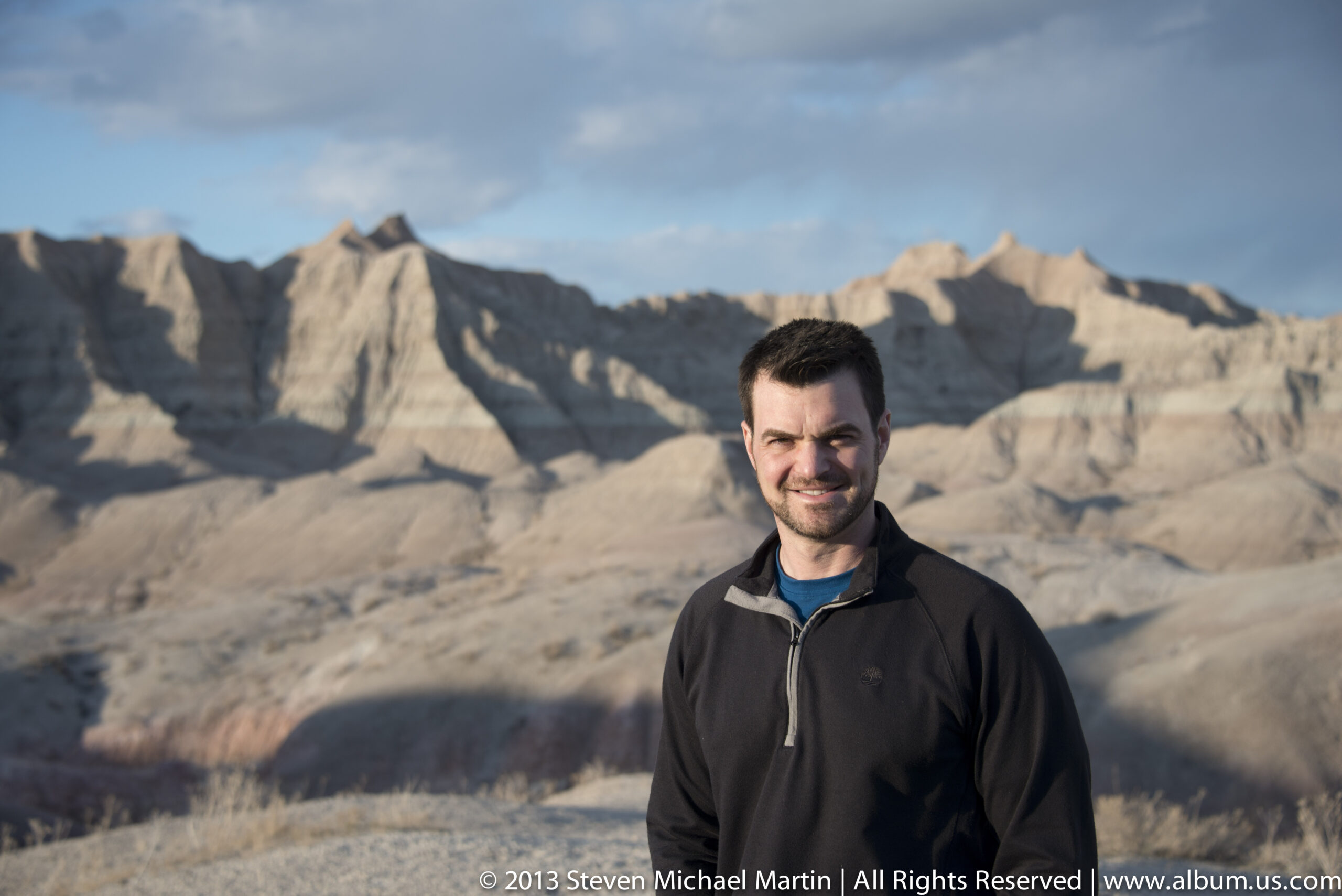
A man in a dark quarter-zip jacket stands before sharply folded badlands ridges in warm late-day light. The medium portrait frames him from the waist up, with the rugged landscape extending across the background. His direct gaze and relaxed posture contrast with the angular forms behind him.
Caption
A man in a dark quarter-zip jacket stands before sharply folded badlands ridges in warm late-day light. The medium portrait frames him from the waist up, with the rugged landscape extending across the background. His direct gaze and relaxed posture contrast with the angular forms behind him.
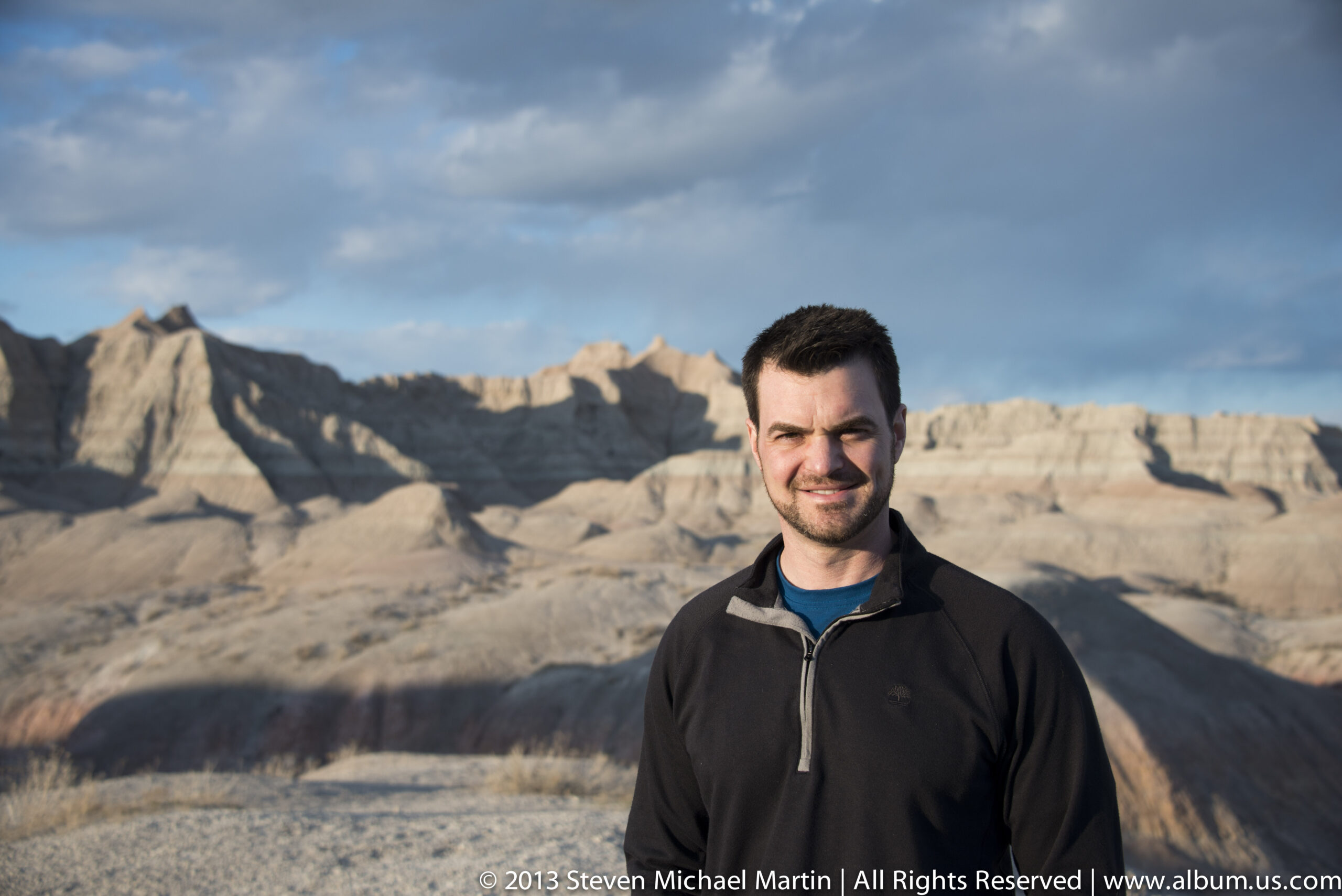
The same visitor appears in a tighter waist-up portrait, centered against pale rock formations illuminated by low sunlight. A blue shirt shows beneath his dark jacket, while the background falls slightly out of focus. The closer framing shifts emphasis from the landscape to his expression and clothing.
Caption
The same visitor appears in a tighter waist-up portrait, centered against pale rock formations illuminated by low sunlight. A blue shirt shows beneath his dark jacket, while the background falls slightly out of focus. The closer framing shifts emphasis from the landscape to his expression and clothing.
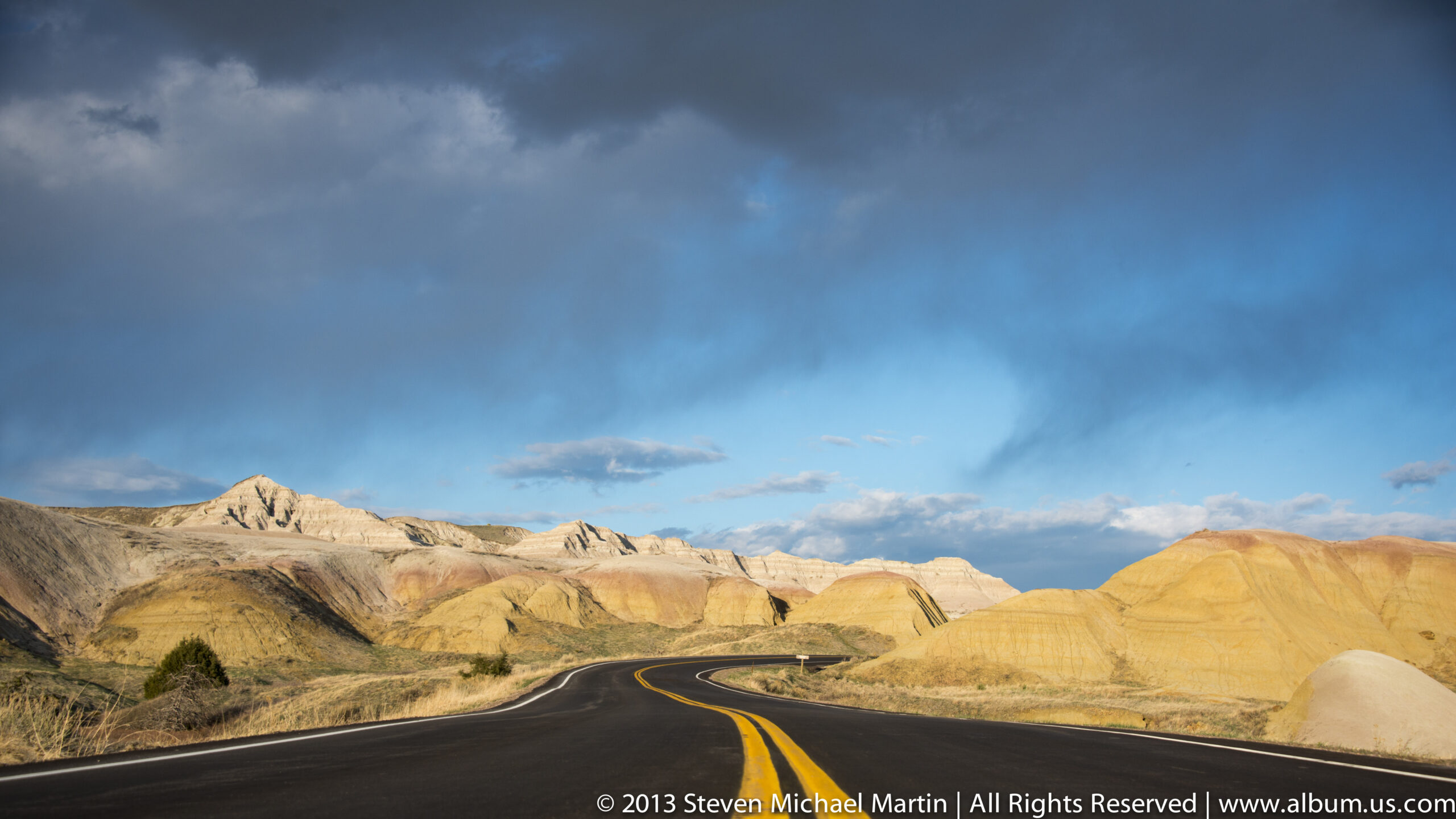
A paved two-lane road curves between rounded yellow and tan formations beneath a dramatic sky. The dark asphalt and painted centerline draw the eye toward a bend at the base of the hills. Sunlight picks out the ridges while a darker cloud bank gathers overhead, giving the route a strong sense of direction.
Caption
A paved two-lane road curves between rounded yellow and tan formations beneath a dramatic sky. The dark asphalt and painted centerline draw the eye toward a bend at the base of the hills. Sunlight picks out the ridges while a darker cloud bank gathers overhead, giving the route a strong sense of direction.
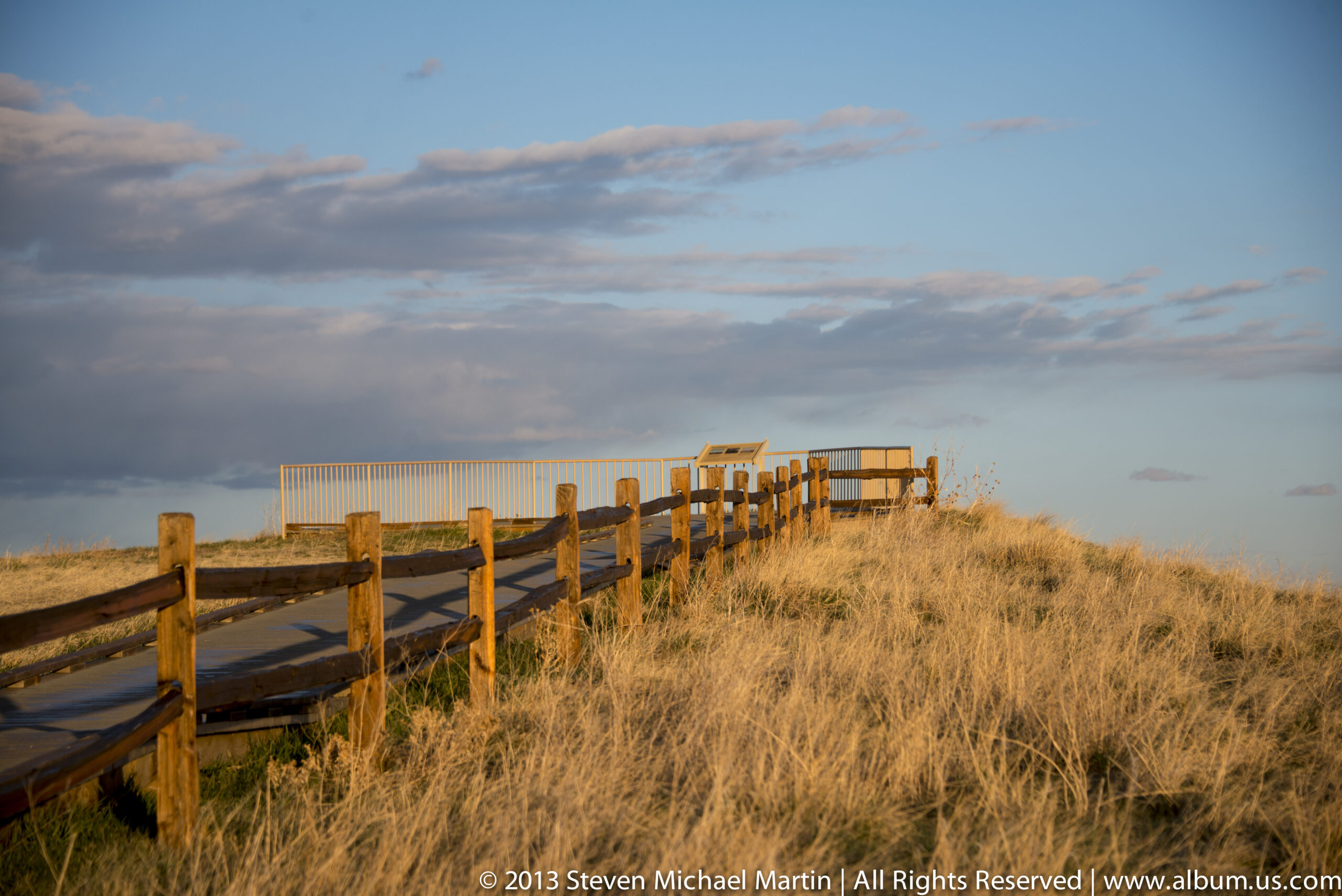
A wooden boardwalk with sturdy railings crosses tall prairie grass toward a small viewing platform. The low sun warms the posts and dry vegetation, while a partly cloudy sky opens above the flat horizon. The empty walkway creates a clear route into the grassland and suggests an accessible visitor path.
Caption
A wooden boardwalk with sturdy railings crosses tall prairie grass toward a small viewing platform. The low sun warms the posts and dry vegetation, while a partly cloudy sky opens above the flat horizon. The empty walkway creates a clear route into the grassland and suggests an accessible visitor path.
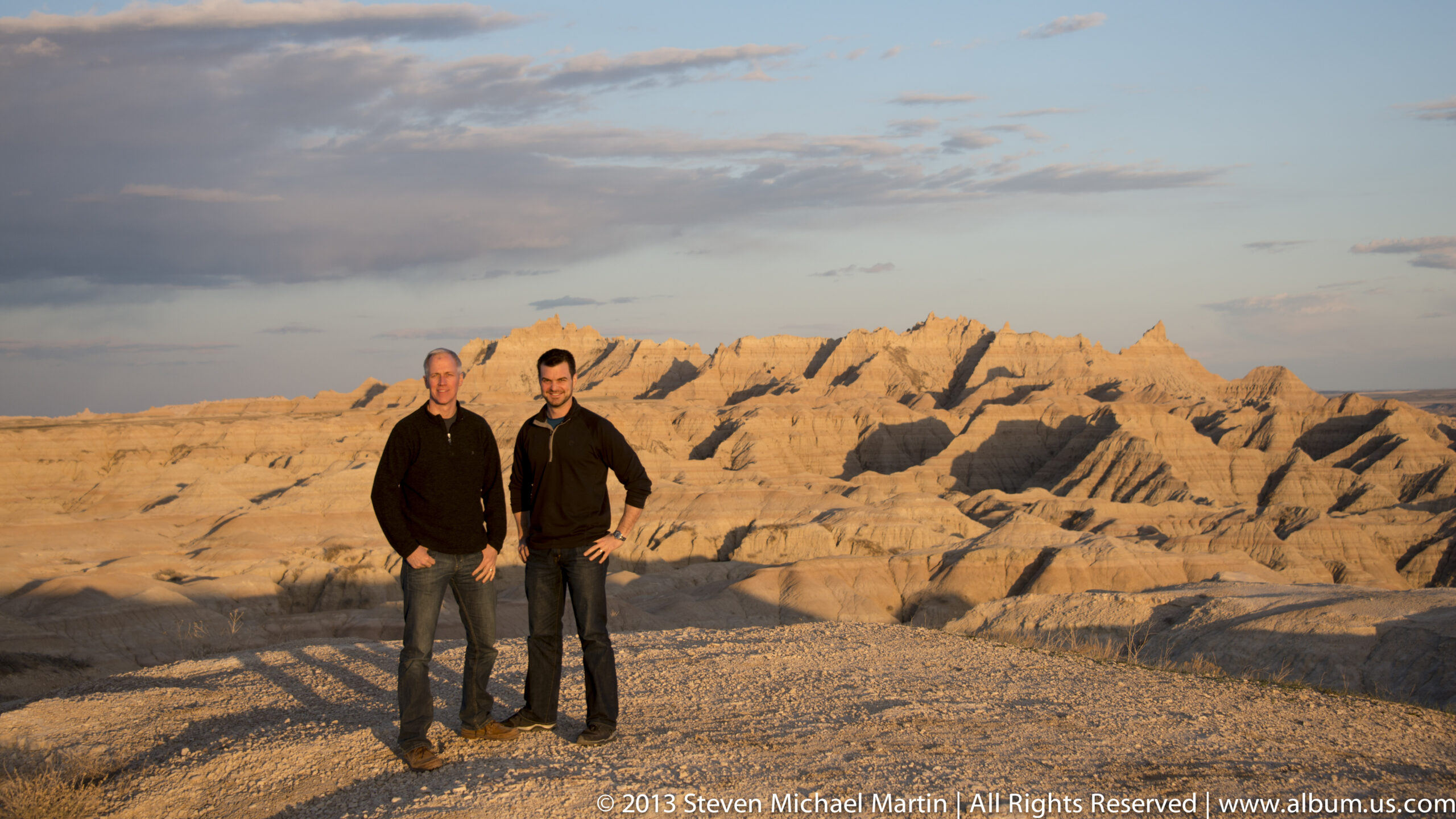
Two men stand side by side on a gravel overlook, facing the camera with jagged formations glowing behind them in late sunlight. Their full figures are small against the broad rock wall, which runs across the background. The portrait preserves both the companions and the dramatic setting at golden hour.
Caption
Two men stand side by side on a gravel overlook, facing the camera with jagged formations glowing behind them in late sunlight. Their full figures are small against the broad rock wall, which runs across the background. The portrait preserves both the companions and the dramatic setting at golden hour.
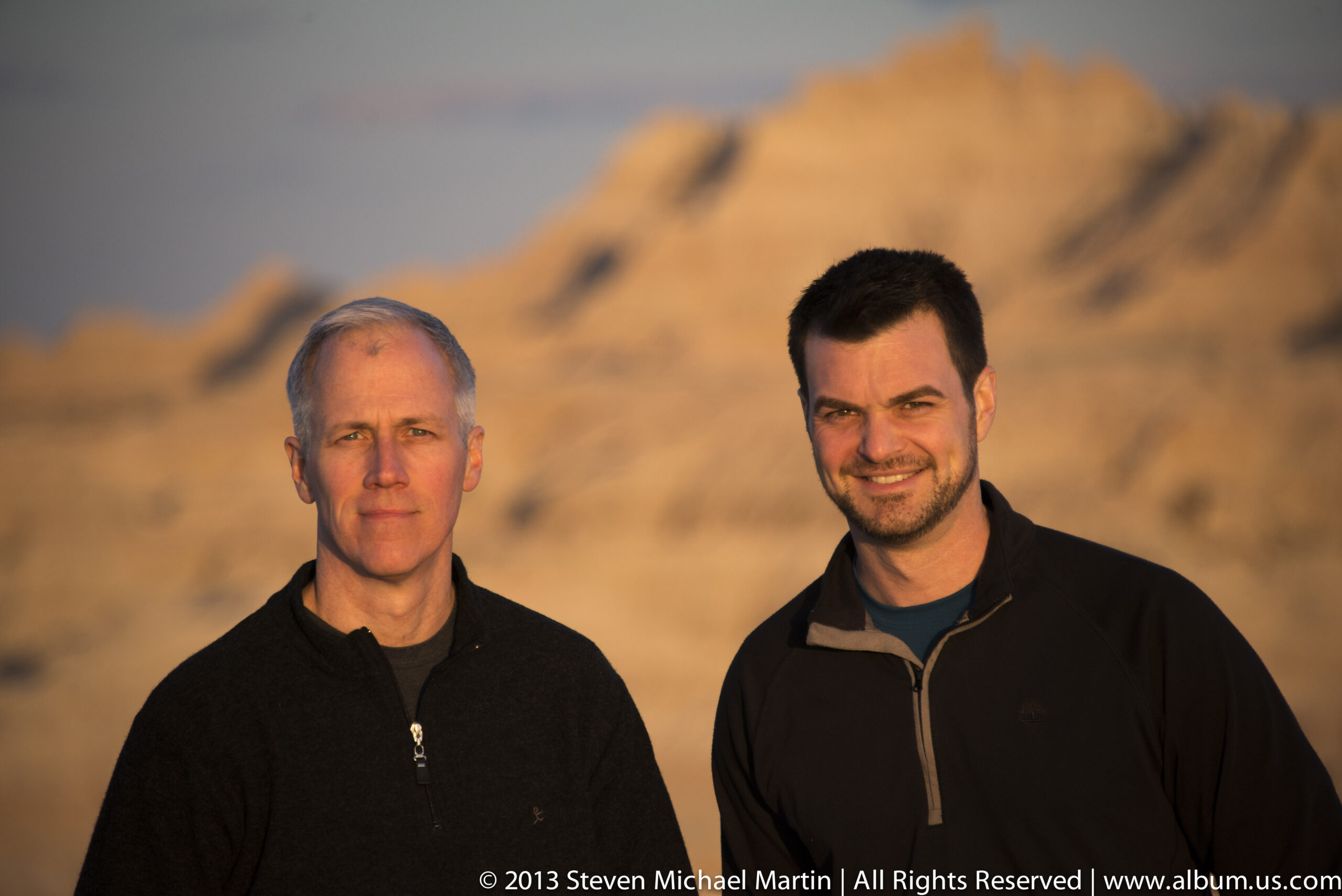
Two men are framed from the chest up, their faces warmly lit against a softly blurred orange rock formation. The closer crop places their expressions side by side and reduces the landscape to a glowing backdrop. The shallow focus distinguishes this portrait from the wider overlook view of the pair.
Caption
Two men are framed from the chest up, their faces warmly lit against a softly blurred orange rock formation. The closer crop places their expressions side by side and reduces the landscape to a glowing backdrop. The shallow focus distinguishes this portrait from the wider overlook view of the pair.
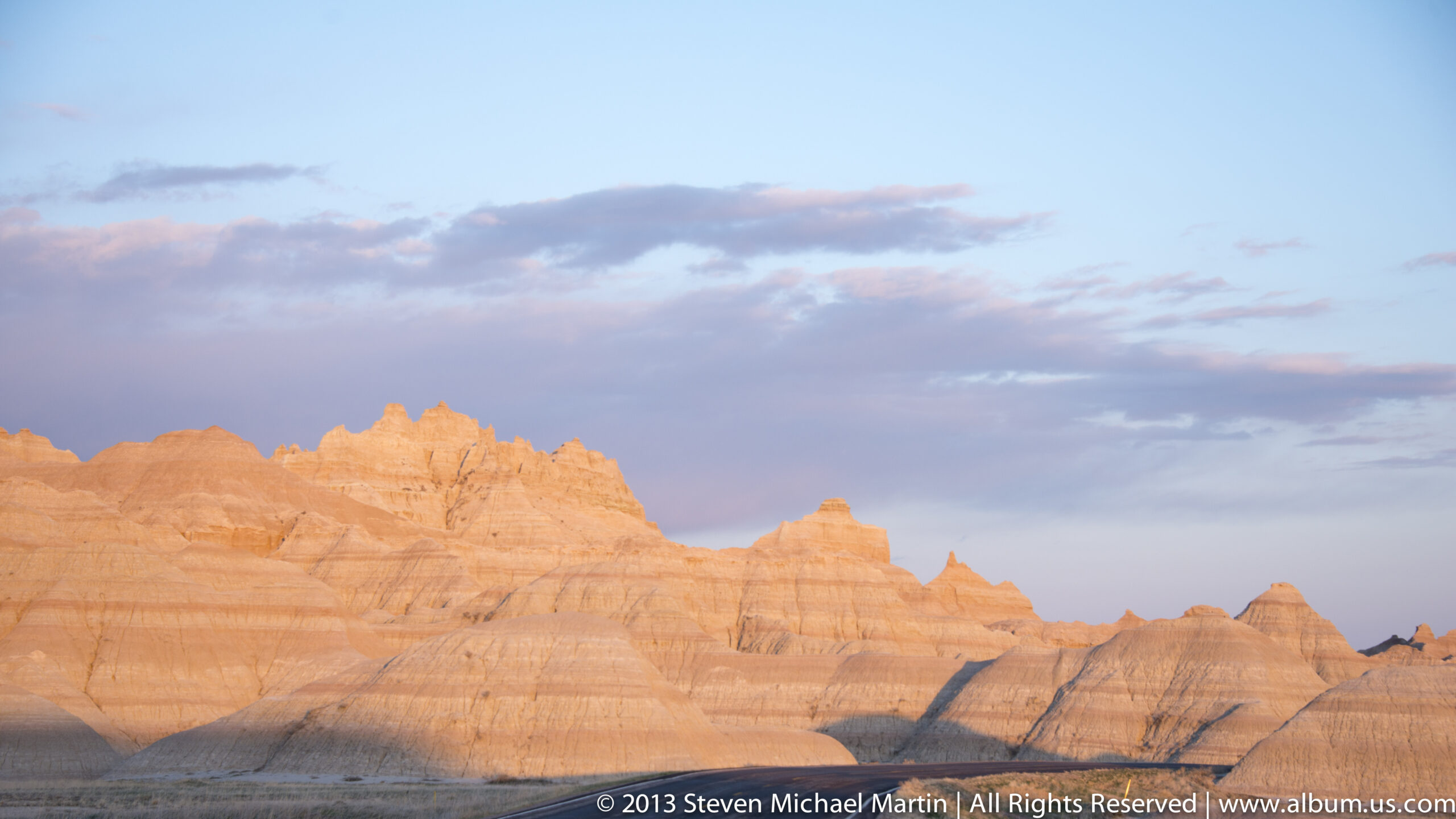
Warm light washes across a close wall of layered badlands formations, picking out horizontal bands and sharply eroded ridgelines beneath a blue, cloud-streaked sky. The foreground remains in cool shadow, giving the sunlit rock a vivid contrast and bringing its sculpted profiles forward. This near view makes the changing color and texture of the formations the principal subject.
Caption
Warm light washes across a close wall of layered badlands formations, picking out horizontal bands and sharply eroded ridgelines beneath a blue, cloud-streaked sky. The foreground remains in cool shadow, giving the sunlit rock a vivid contrast and bringing its sculpted profiles forward. This near view makes the changing color and texture of the formations the principal subject.
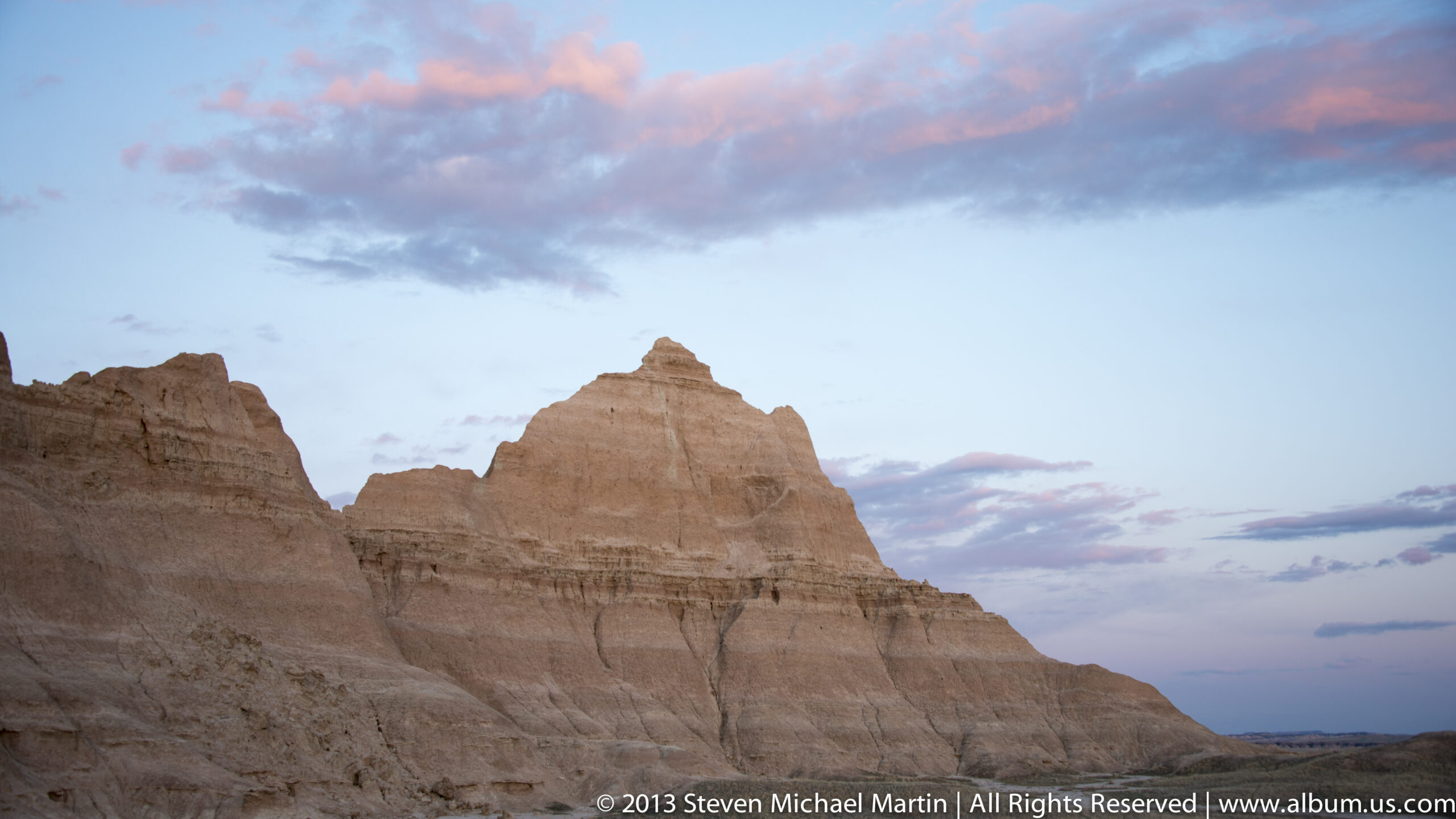
A tall, horizontally banded butte rises between closer eroded walls, its muted tan face set against a wide blue sky brushed with pink clouds. The viewpoint looks slightly upward, allowing the central summit and striated slopes to dominate the frame while a sliver of distant plain remains visible at right. Soft evening light reveals the formations’ layered surfaces without flattening their relief.
Caption
A tall, horizontally banded butte rises between closer eroded walls, its muted tan face set against a wide blue sky brushed with pink clouds. The viewpoint looks slightly upward, allowing the central summit and striated slopes to dominate the frame while a sliver of distant plain remains visible at right. Soft evening light reveals the formations’ layered surfaces without flattening their relief.
National Park Field Guide
Badlands National Park preserves dramatically eroded sedimentary rock formations that reveal millions of years of environmental change. Wind and water erosion exposed fossil-rich layers that provide insight into ancient ecosystems that existed long before the development of modern grasslands. The park illustrates how geological forces gradually shaped terrain across the Great Plains.
🧭 Key Features
- Layered sedimentary rock formations shaped by erosion
- One of the richest fossil beds from the Oligocene epoch
- Mixed-grass prairie ecosystems supporting wildlife populations
- Sharply eroded buttes, pinnacles, and spires
- Landscape illustrating long-term climate change
🌄 Landscape Highlights
Distinctive rock formations display visible layers representing ancient depositional environments. Erosion gradually sculpted steep ridges and narrow valleys that produce dramatic visual contrasts between light and shadow. The surrounding prairie illustrates ecological adaptation to semi-arid conditions.
🌎 Natural Systems
Sedimentary deposits accumulated when the region was covered by inland seas and river floodplains millions of years ago. Over time, erosion exposed these layers, revealing fossil evidence of prehistoric mammals. Grassland ecosystems developed later as climate conditions became drier and cooler.
🦬 Wildlife Encountered
Wildlife encounters in Badlands National Park included sightings of American bison and bighorn sheep moving through the park’s distinctive eroded formations and surrounding mixed grass prairie. Bison were observed grazing in open grassland areas overlooking the layered Badlands landscape, reflecting the continued recovery of this iconic Great Plains species across portions of its historic range.
Bighorn sheep were observed navigating sloped terrain near the park’s sharply eroded formations. Their ability to move confidently across steep and uneven surfaces makes them well adapted to the rugged topography that characterizes the Badlands environment.
Although the park is best known for its striking geological formations, the presence of large mammals such as bison and bighorn sheep highlights the ecological diversity of this landscape and its importance as habitat for species adapted to both prairie and rugged terrain.
📷 Photography Notes
- Early or late light emphasizes layered textures
- Wide compositions show scale of formations
- Storm clouds enhance dramatic contrast
- Look for patterns in eroded ridgelines
- Use foreground formations to create depth
- Seasonal color variation adds visual interest
🌱 Conservation Context
Badlands National Park protects fossil resources and prairie ecosystems that illustrate long-term environmental change. Preservation allows continued scientific study of geological formations that reveal how climate and erosion shaped the Great Plains region over millions of years.

An open Badlands National Park brochure presents a panoramic landscape across its top, followed by interpretive sections on the region’s changing geology, wildlife, prairie, and human history. Illustrations and small photographs—including animals and fossil-like forms—are arranged around dense text panels. The spread’s headline, “Of Time and the Badlands,” frames the park as both an evolving landform and habitat.
Caption
An open Badlands National Park brochure presents a panoramic landscape across its top, followed by interpretive sections on the region’s changing geology, wildlife, prairie, and human history. Illustrations and small photographs—including animals and fossil-like forms—are arranged around dense text panels. The spread’s headline, “Of Time and the Badlands,” frames the park as both an evolving landform and habitat.
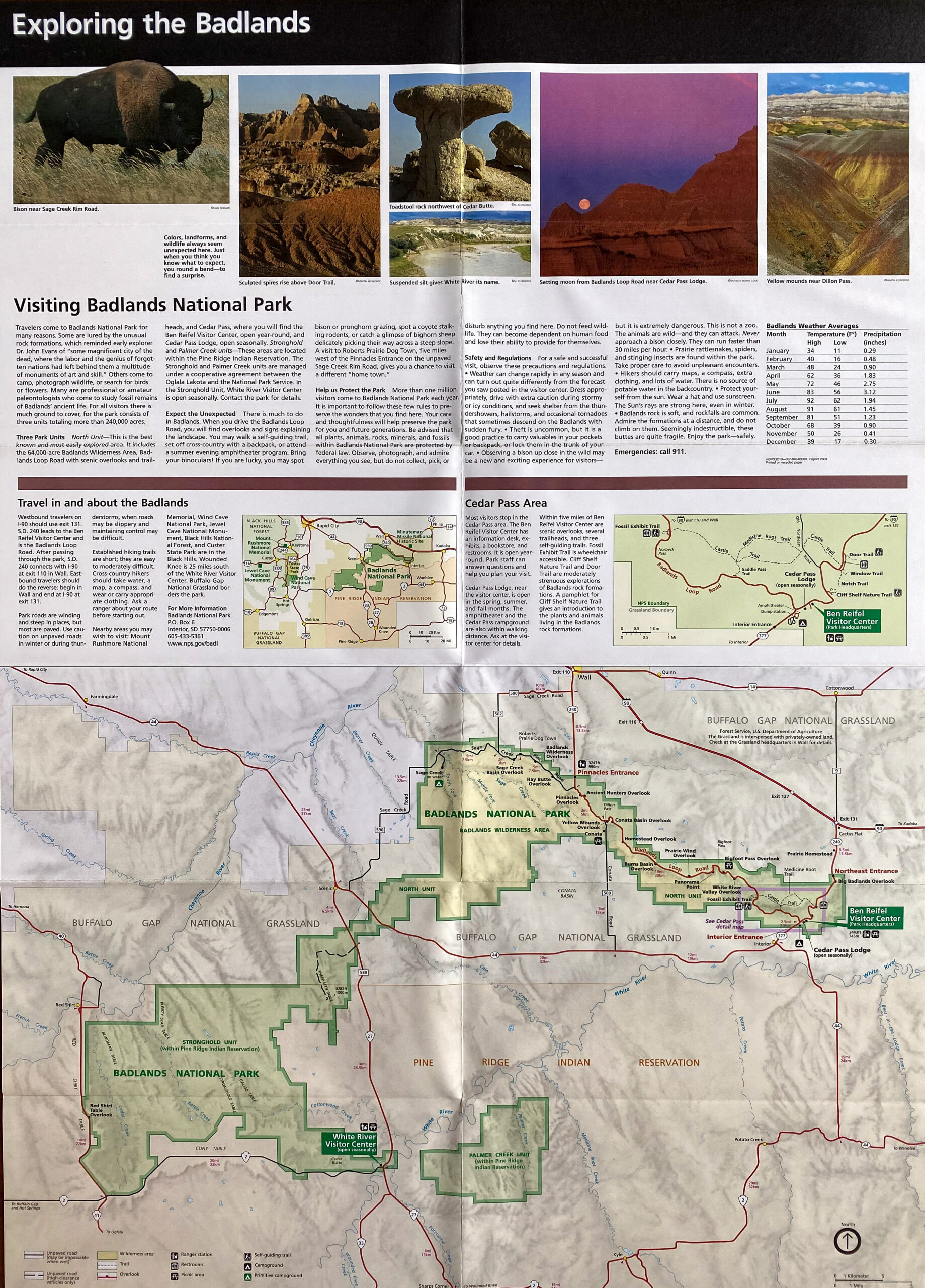
The final brochure spread, titled “Exploring the Badlands,” combines scenic photographs and visitor information with two smaller area maps and a large regional map. A green outline marks the park across the lower map, amid roads, waterways, and neighboring protected lands. The page serves as a practical orientation guide, linking specific access areas with the broader geography of the Badlands region.
Caption
The final brochure spread, titled “Exploring the Badlands,” combines scenic photographs and visitor information with two smaller area maps and a large regional map. A green outline marks the park across the lower map, amid roads, waterways, and neighboring protected lands. The page serves as a practical orientation guide, linking specific access areas with the broader geography of the Badlands region.