Canyon de Chelly National Monument — Milky Way
Canyon de Chelly’s remote location and limited light pollution create favorable conditions for observing the Milky Way above the canyon landscape. The sandstone walls and open desert sky provide a natural setting where geological formations can be viewed in combination with astronomical features. The contrast between ancient rock formations and the night sky emphasizes the immense scale of time represented at the site.
The canyon environment preserves dark sky conditions that allow visibility of dense star fields and the central band of the Milky Way during appropriate seasonal periods. Clear desert air and limited artificial light contribute to strong visibility of celestial features. The setting highlights the connection between landscape and the broader natural environment beyond Earth.
Visitors experience Canyon de Chelly differently at night, where reduced light reveals the texture of the canyon walls beneath a dense field of stars. The combination of geology and astronomy creates a distinctive perspective on the landscape, emphasizing both natural beauty and environmental preservation.
The Milky Way brightens the center of a dense star field above a low, irregular treeline. Bare branches reach into the sky from the lower foreground, while the dark land remains nearly featureless beneath them. The wider arrangement places the celestial band directly over the silhouetted horizon, giving this frame a clear separation between glowing sky and dark terrestrial forms.
Caption
The Milky Way brightens the center of a dense star field above a low, irregular treeline. Bare branches reach into the sky from the lower foreground, while the dark land remains nearly featureless beneath them. The wider arrangement places the celestial band directly over the silhouetted horizon, giving this frame a clear separation between glowing sky and dark terrestrial forms.

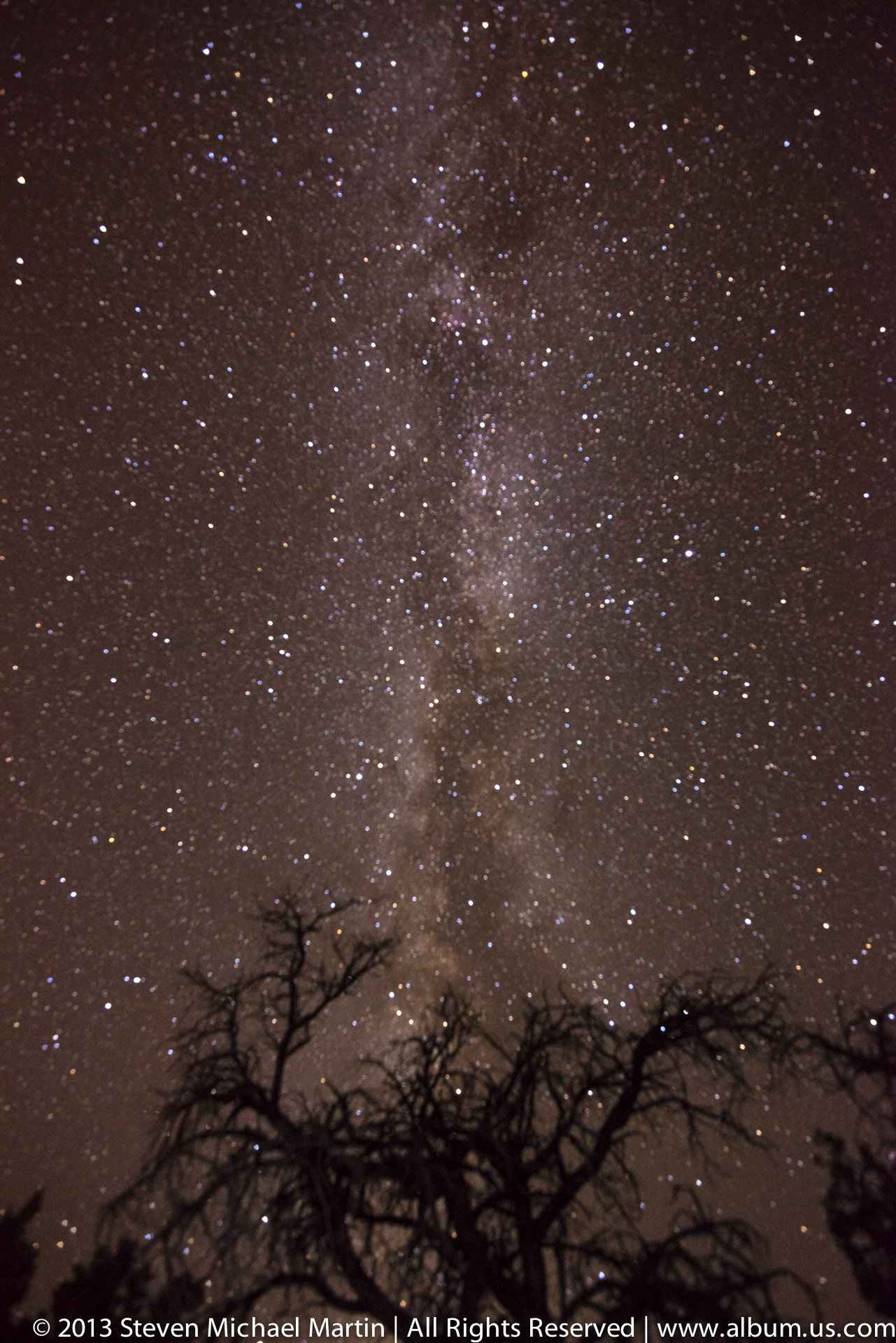
The Milky Way forms a pale, granular band across a dense star field, emerging above dark trees and a leafless branching silhouette at lower left. Its luminous concentration contrasts with the warm brown cast of the surrounding sky. The low tree line gives the celestial structure a terrestrial frame, while the composition leaves most of the image to the stars.
Caption
The Milky Way forms a pale, granular band across a dense star field, emerging above dark trees and a leafless branching silhouette at lower left. Its luminous concentration contrasts with the warm brown cast of the surrounding sky. The low tree line gives the celestial structure a terrestrial frame, while the composition leaves most of the image to the stars.
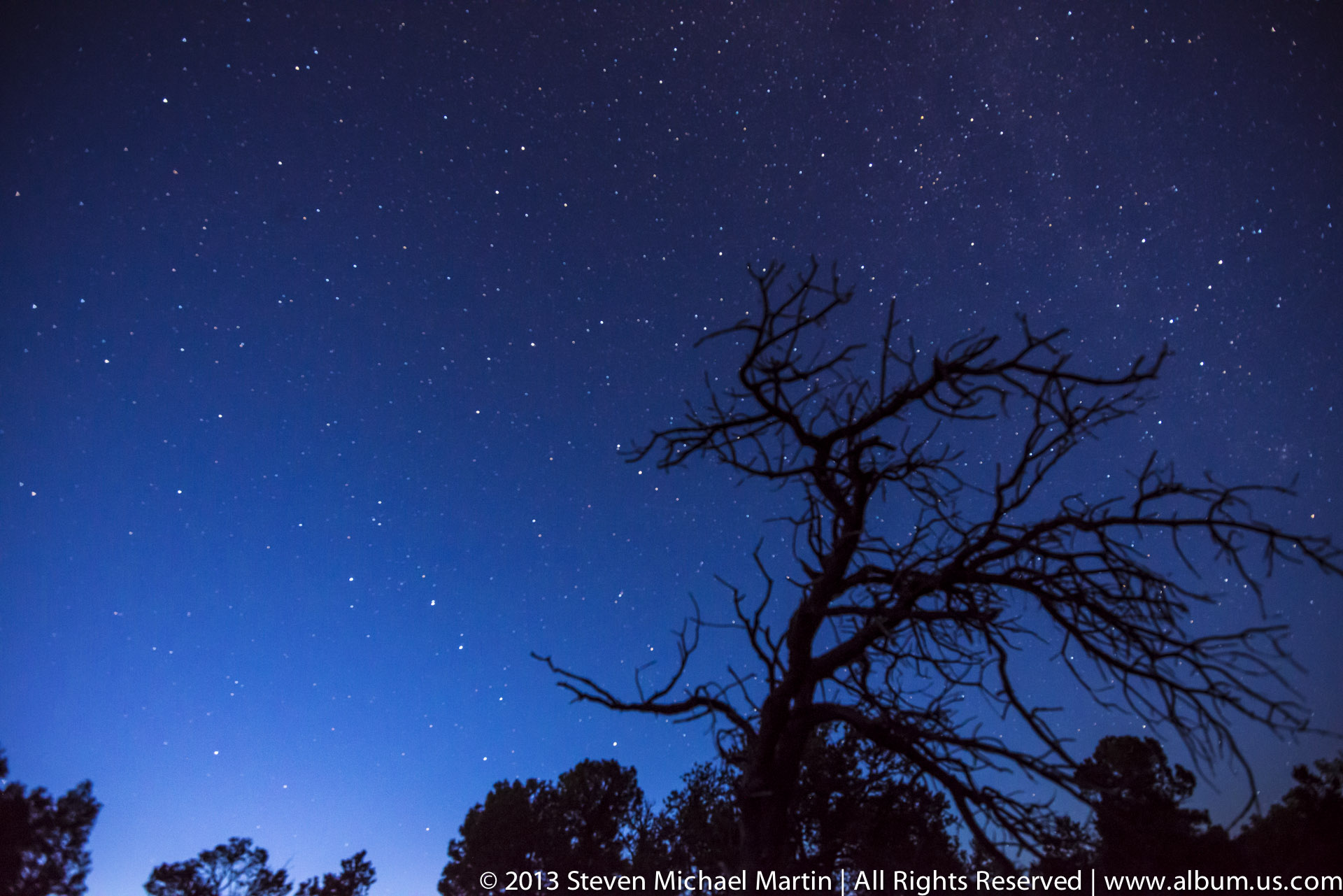
A large bare tree spreads across the right side of the frame, its fine branches set against a deep blue, star-filled sky. The brighter lower horizon silhouettes a row of trees, separating the open sky from the dark land. Compared with the preceding view, the tree dominates the composition and the increased number of visible stars gives the scene a more densely patterned sky.
Caption
A large bare tree spreads across the right side of the frame, its fine branches set against a deep blue, star-filled sky. The brighter lower horizon silhouettes a row of trees, separating the open sky from the dark land. Compared with the preceding view, the tree dominates the composition and the increased number of visible stars gives the scene a more densely patterned sky.
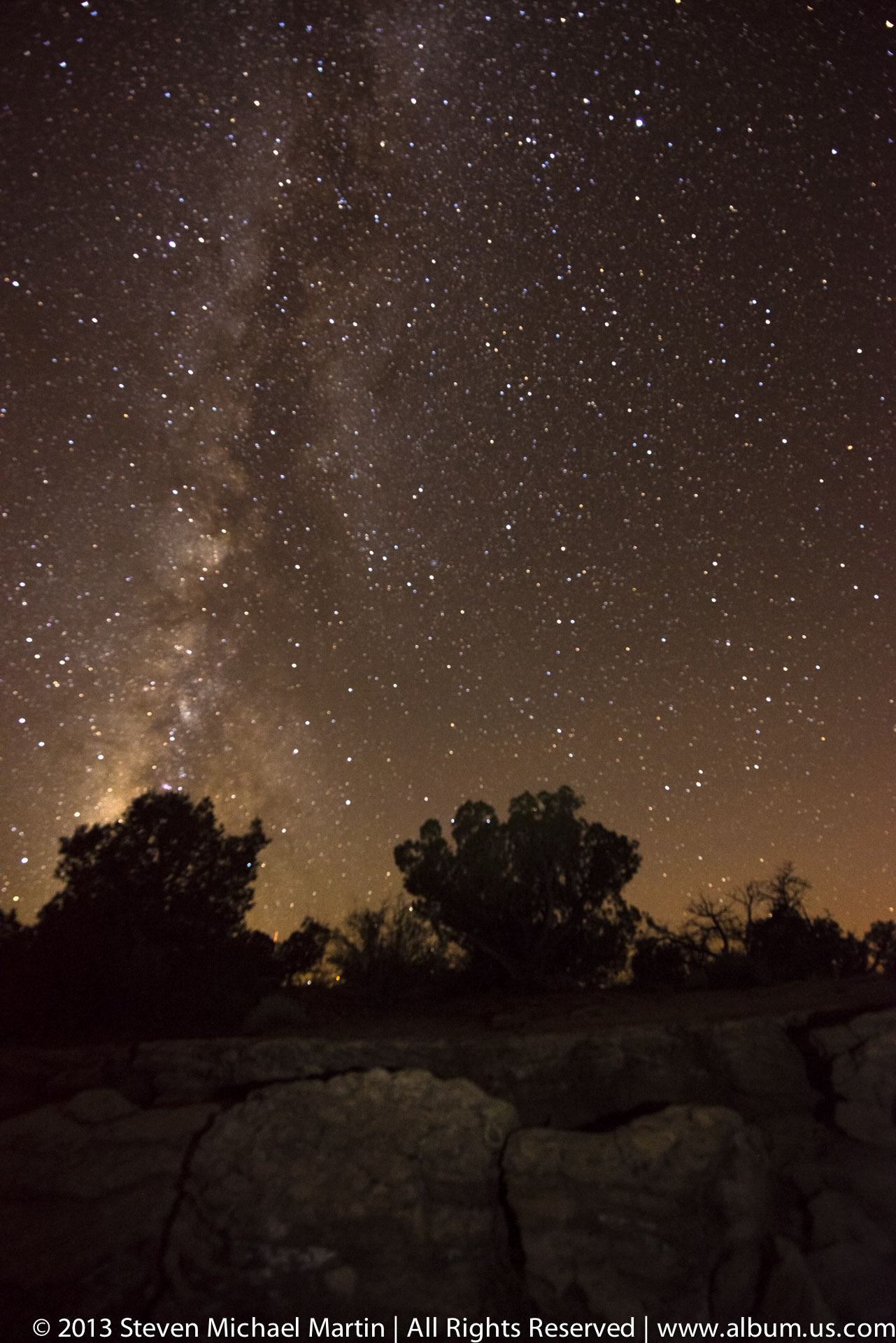
A bright Milky Way band rises above a dark, uneven horizon, where tree silhouettes and low rock forms create a layered foreground. A warm orange glow near the horizon fades into a star-filled sky, transitioning to deeper blue-black overhead. This final night view includes more visible ground than the preceding frames, linking the celestial scene to the rugged terrain below.
Caption
A bright Milky Way band rises above a dark, uneven horizon, where tree silhouettes and low rock forms create a layered foreground. A warm orange glow near the horizon fades into a star-filled sky, transitioning to deeper blue-black overhead. This final night view includes more visible ground than the preceding frames, linking the celestial scene to the rugged terrain below.
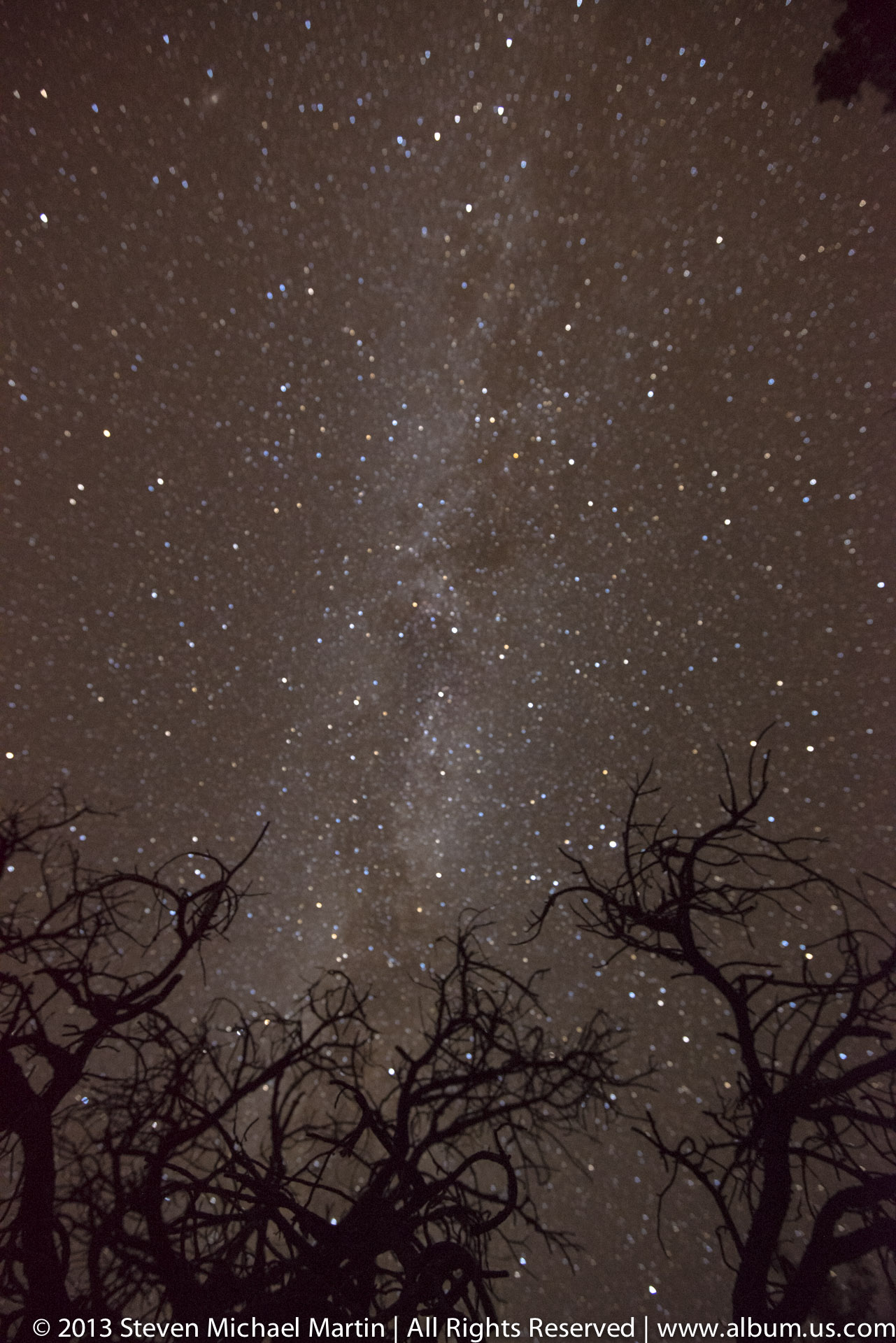
Fine bare branches stretch across the lower foreground beneath a dense star field. A soft, cloudy Milky Way band is visible through the center of the sky, while dark foliage clips the upper-right corner. The composition uses the branching silhouettes as a delicate foreground lattice, keeping the celestial field dominant and distinguishing this view from frames with a single large tree.
Caption
Fine bare branches stretch across the lower foreground beneath a dense star field. A soft, cloudy Milky Way band is visible through the center of the sky, while dark foliage clips the upper-right corner. The composition uses the branching silhouettes as a delicate foreground lattice, keeping the celestial field dominant and distinguishing this view from frames with a single large tree.
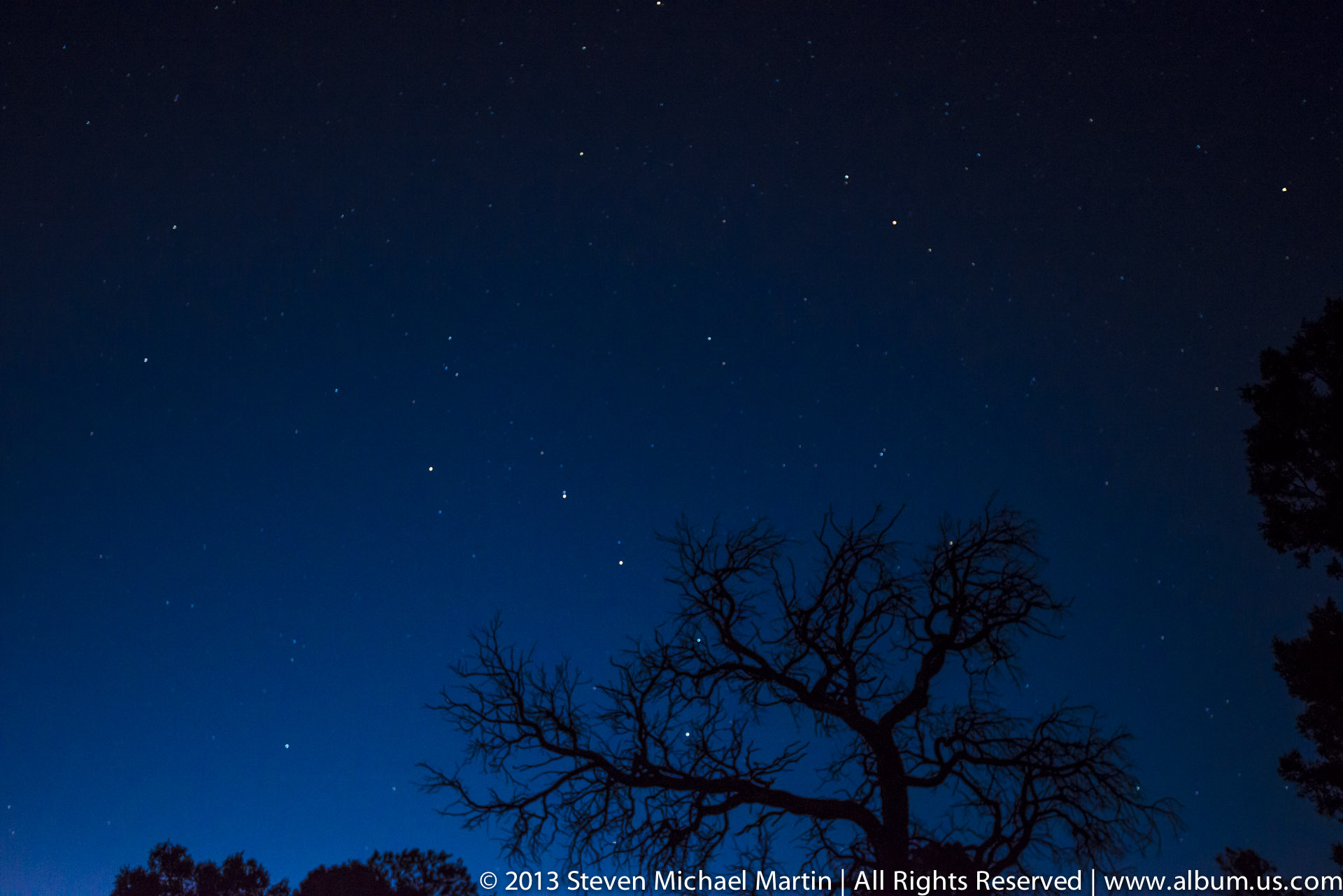
A dark blue night sky holds a sparse scattering of stars above a low line of trees. A leafless tree rises in silhouette near the center, its branching crown interrupting the open sky, while a darker evergreen edge enters from the right. The restrained composition gives the tree’s outline more weight than the faint stars and preserves the deep blue of the night.
Caption
A dark blue night sky holds a sparse scattering of stars above a low line of trees. A leafless tree rises in silhouette near the center, its branching crown interrupting the open sky, while a darker evergreen edge enters from the right. The restrained composition gives the tree’s outline more weight than the faint stars and preserves the deep blue of the night.
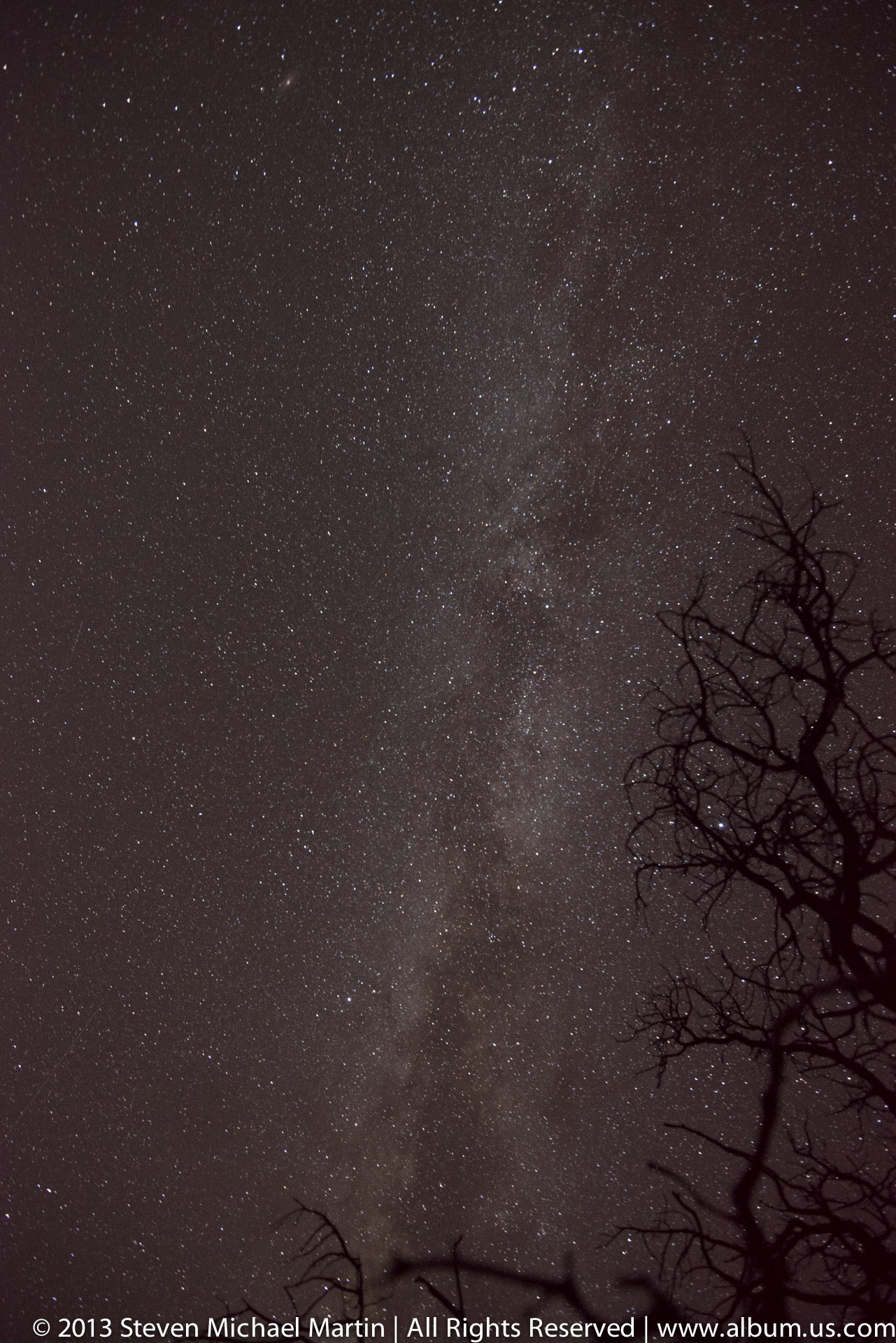
A luminous, nearly vertical sweep of the Milky Way runs through the star field, with faint mottled structure visible across the center of the sky. A leafless tree enters from the right edge, its branches reaching toward the galactic band, while a few smaller silhouettes line the bottom. The off-center framing balances the celestial detail with the dark shape of the tree.
Caption
A luminous, nearly vertical sweep of the Milky Way runs through the star field, with faint mottled structure visible across the center of the sky. A leafless tree enters from the right edge, its branches reaching toward the galactic band, while a few smaller silhouettes line the bottom. The off-center framing balances the celestial detail with the dark shape of the tree.
Canyon de Chelly National Monument — Field Guide
🏛️ National Monument Field Guide
📍 Overview
Canyon de Chelly National Monument preserves sandstone canyon formations within the Colorado Plateau where long-term erosion created steep canyon walls and sheltered valley environments. The monument also offers dark sky conditions that allow observation of the Milky Way above the canyon landscape.
Limited artificial light and dry desert air contribute to strong visibility of stars and astronomical features. The canyon environment illustrates both geological processes and the importance of preserving natural night sky conditions.
⭐ Highlights
- Sandstone canyon landscape
- Dark sky viewing conditions
- Milky Way visibility
- Colorado Plateau geology
- Remote desert environment
🔎 Key Features
- Layered sedimentary rock canyon walls
- Low light pollution conditions
- High desert night sky environment
- Geological and astronomical setting
- Preserved natural landscape
📷 Photography Notes
- Tripod required for night photography
- Clear skies provide strongest star visibility
- Foreground rock formations add scale
- Low moon phases improve contrast
- Wide-angle compositions work well
- Simple framing emphasizes sky detail
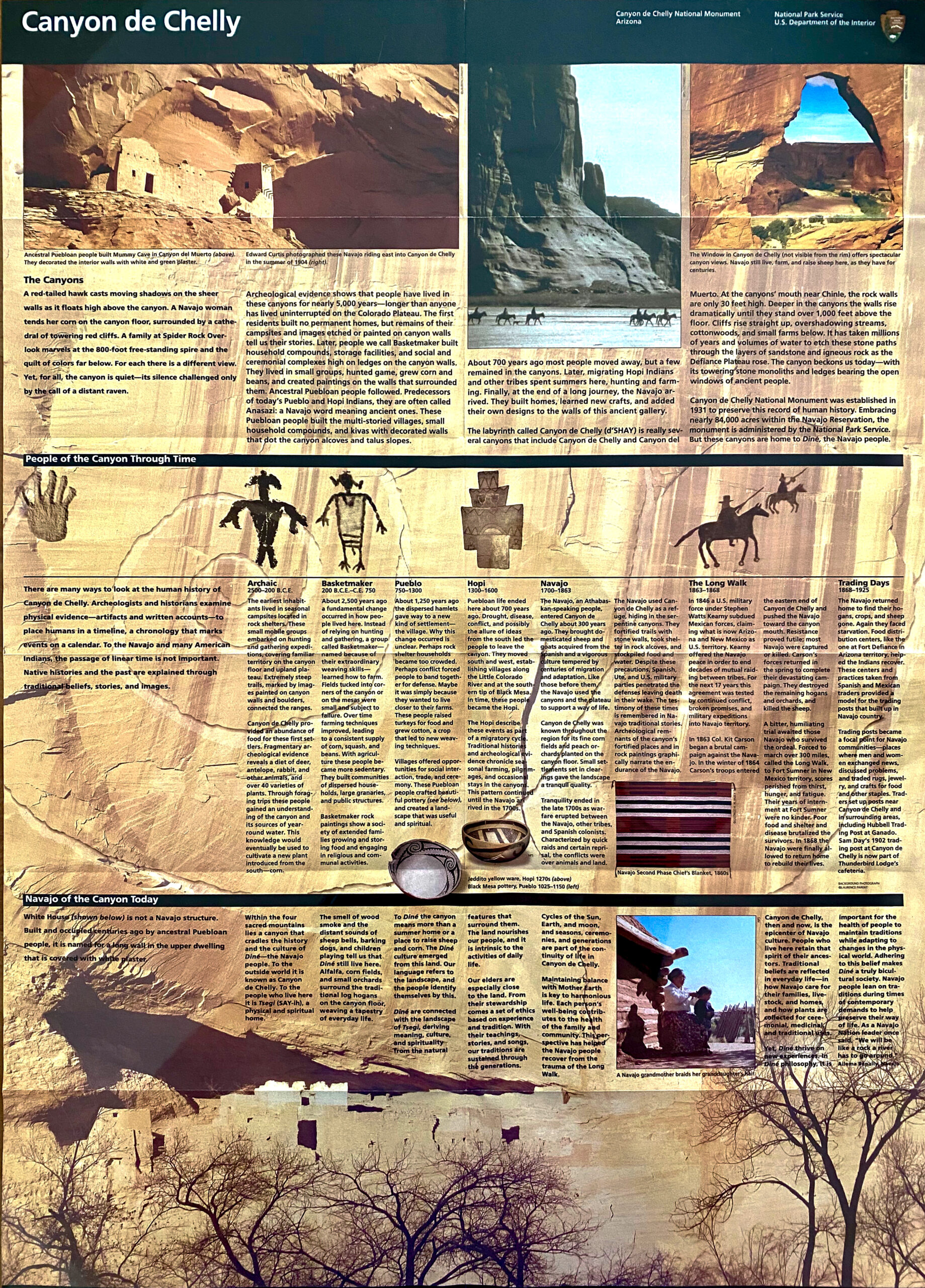
A large interpretive panel headed “Canyon de Chelly” combines blocks of explanatory text with landscape photographs, drawings, and small images of objects and cultural motifs. Its broad horizontal layout is divided into several sections, each pairing text with visual examples. The proof-sheet view does not make the smaller writing readable, so the caption describes the panel’s visible organization without summarizing its details.
Caption
A large interpretive panel headed “Canyon de Chelly” combines blocks of explanatory text with landscape photographs, drawings, and small images of objects and cultural motifs. Its broad horizontal layout is divided into several sections, each pairing text with visual examples. The proof-sheet view does not make the smaller writing readable, so the caption describes the panel’s visible organization without summarizing its details.
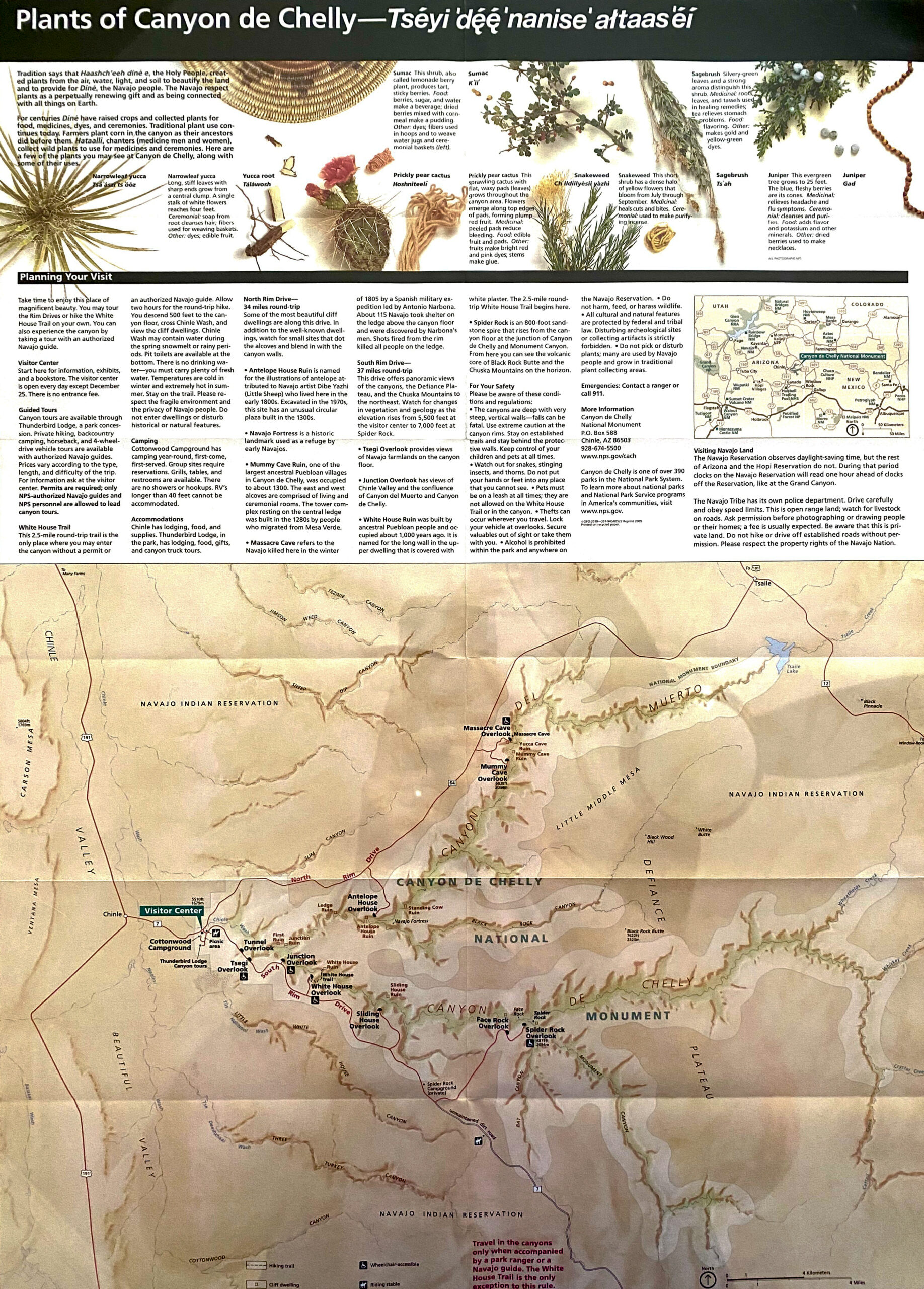
A long educational display titled “Plants of Canyon de Chelly” places botanical illustrations above columns of text and a broad map across its lower half. The map traces the canyon and surrounding routes, while the upper sections pair plant images with written information. The panel’s combination of vegetation study and geographic overview makes this image distinct from the neighboring cultural exhibit.
Caption
A long educational display titled “Plants of Canyon de Chelly” places botanical illustrations above columns of text and a broad map across its lower half. The map traces the canyon and surrounding routes, while the upper sections pair plant images with written information. The panel’s combination of vegetation study and geographic overview makes this image distinct from the neighboring cultural exhibit.