Devils Tower National Monument
Devils Tower rises dramatically above the surrounding plains as a column of igneous rock formed through volcanic activity millions of years ago. Molten material cooled underground and later became exposed as surrounding sedimentary rock eroded away. The tower’s vertical columns formed as cooling magma contracted, producing distinctive geometric patterns visible on the rock surface.
The formation holds cultural significance for several Indigenous communities who consider the site sacred. Oral traditions describe the tower within spiritual narratives that connect the landscape to cultural identity and historical memory. The prominent rock formation serves as both a geological landmark and a cultural symbol within the northern plains.
Today, Devils Tower illustrates how volcanic processes can produce unique geological formations that persist long after surrounding rock has eroded. The monument demonstrates how natural landmarks become integrated into both scientific study and cultural tradition.
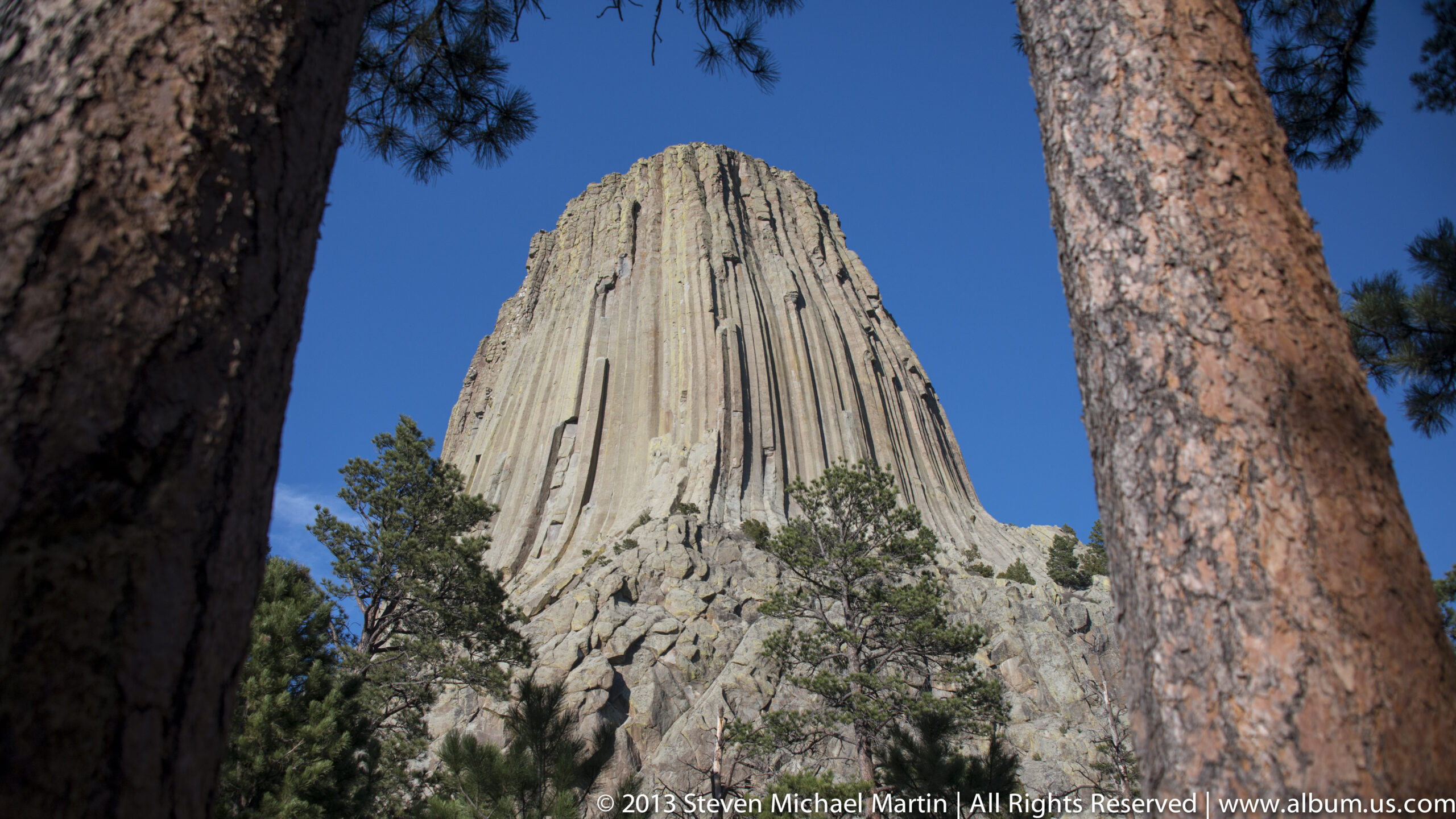
Two rough-barked tree trunks frame the tower, which rises centrally beyond the intervening pines. The vertical lines of the trunks echo the rock’s columnar grooves, while the framing leaves a clear window of blue sky around its summit. The wooded foreground gives this view a more enclosed perspective than the open approach photographs.
Caption
Two rough-barked tree trunks frame the tower, which rises centrally beyond the intervening pines. The vertical lines of the trunks echo the rock’s columnar grooves, while the framing leaves a clear window of blue sky around its summit. The wooded foreground gives this view a more enclosed perspective than the open approach photographs.
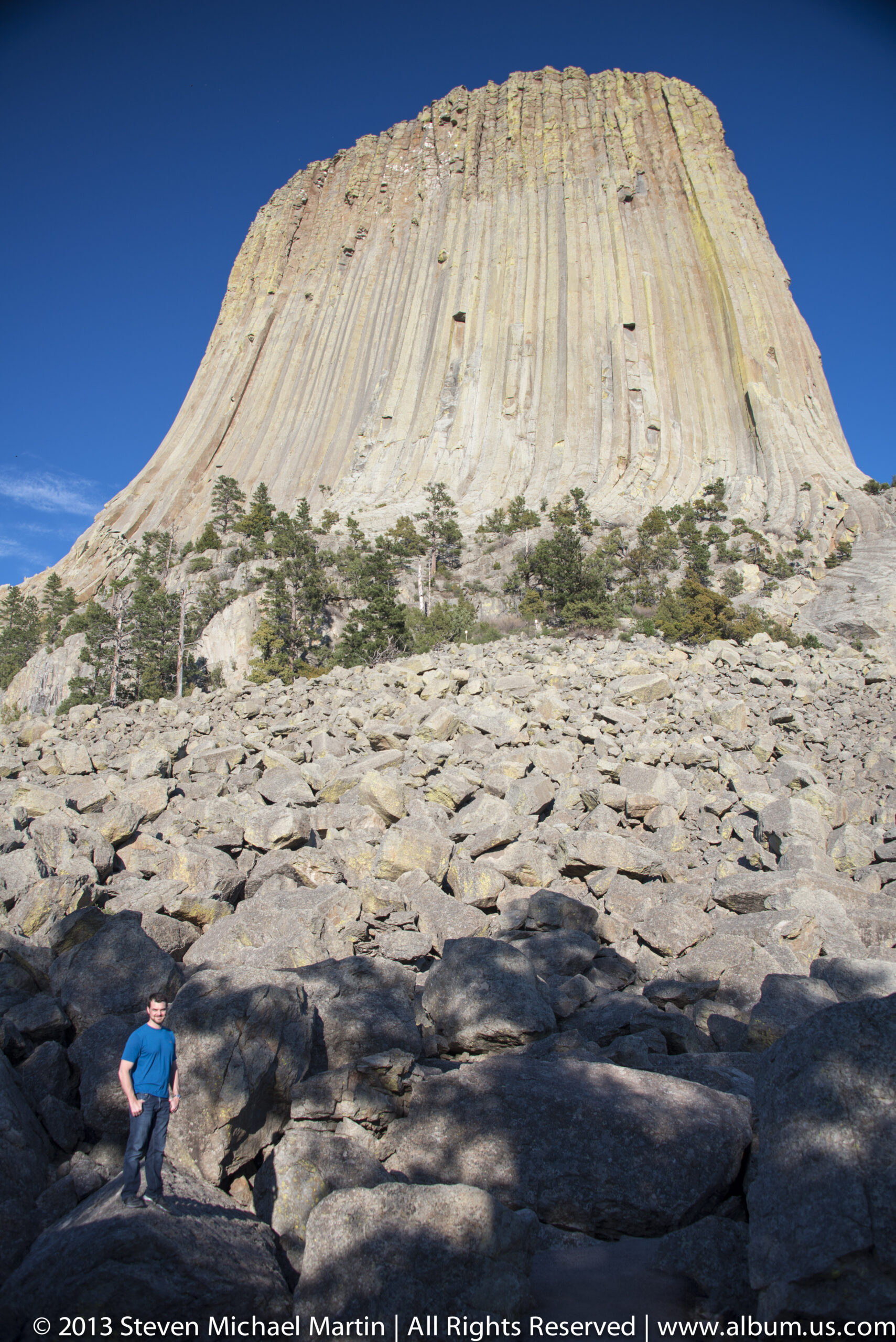
A visitor in blue walks across an extensive talus field below Devils Tower, whose vertical columns fill the upper background. Broken pale boulders cover the slope between the figure and the tower, making the uneven approach visible. The wide framing gives the small person a clear scale relationship to the massive formation.
Caption
A visitor in blue walks across an extensive talus field below Devils Tower, whose vertical columns fill the upper background. Broken pale boulders cover the slope between the figure and the tower, making the uneven approach visible. The wide framing gives the small person a clear scale relationship to the massive formation.
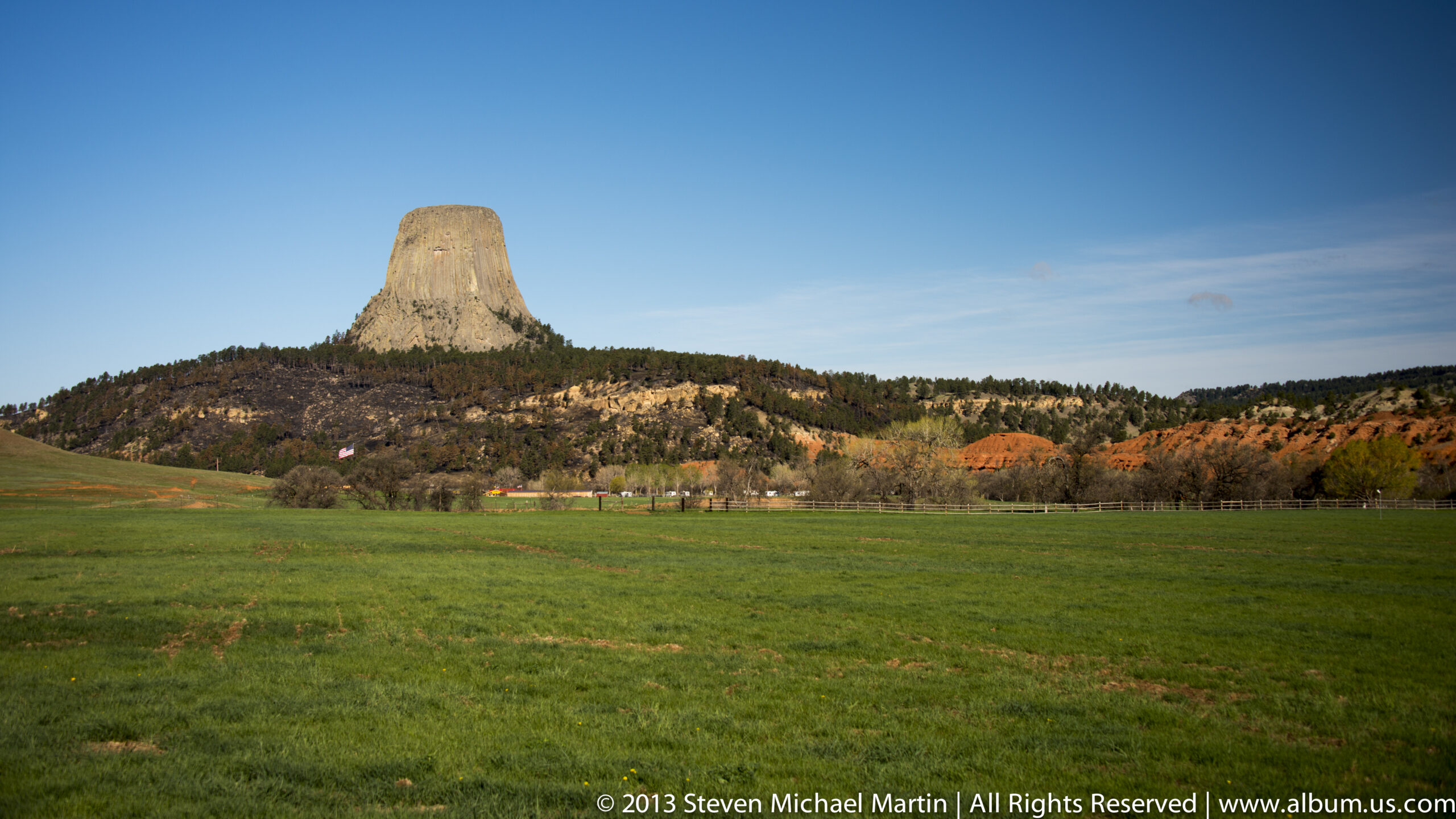
Devils Tower stands in the distance beyond an open green meadow, low wooded hills, and trees showing orange autumn color. The isolated tower rises clearly above the horizon beneath a pale blue sky. This broad approach view includes more of the surrounding countryside than the closer images of the rock face.
Caption
Devils Tower stands in the distance beyond an open green meadow, low wooded hills, and trees showing orange autumn color. The isolated tower rises clearly above the horizon beneath a pale blue sky. This broad approach view includes more of the surrounding countryside than the closer images of the rock face.
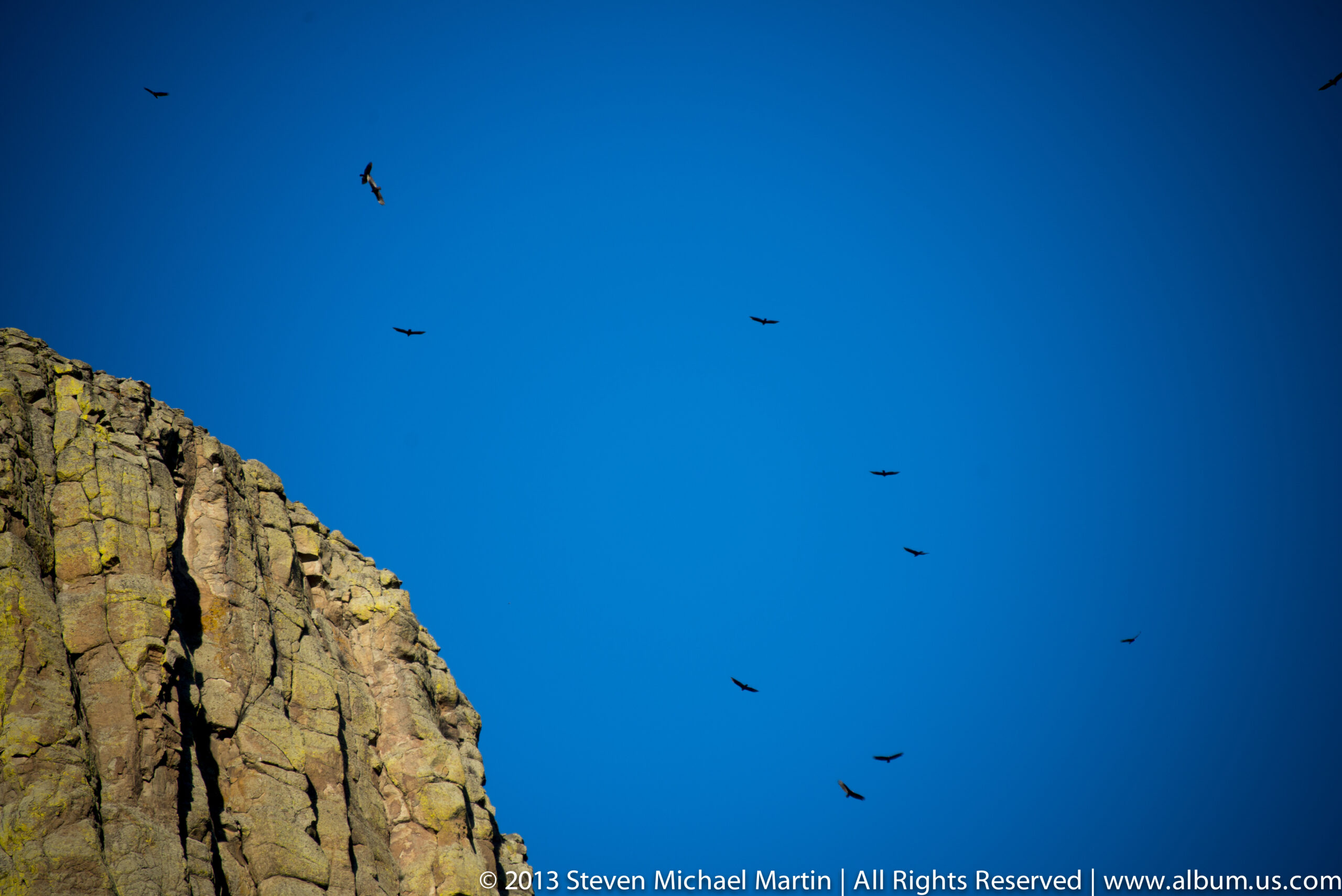
Several dark birds wheel across a clear blue sky beside a sunlit, fractured rock face. Their varied positions create a loose arc above the cliff edge, while the close crop excludes the ground and surrounding landscape. The birds’ silhouettes are distinct, but the proof-sheet view does not support a reliable species identification.
Caption
Several dark birds wheel across a clear blue sky beside a sunlit, fractured rock face. Their varied positions create a loose arc above the cliff edge, while the close crop excludes the ground and surrounding landscape. The birds’ silhouettes are distinct, but the proof-sheet view does not support a reliable species identification.
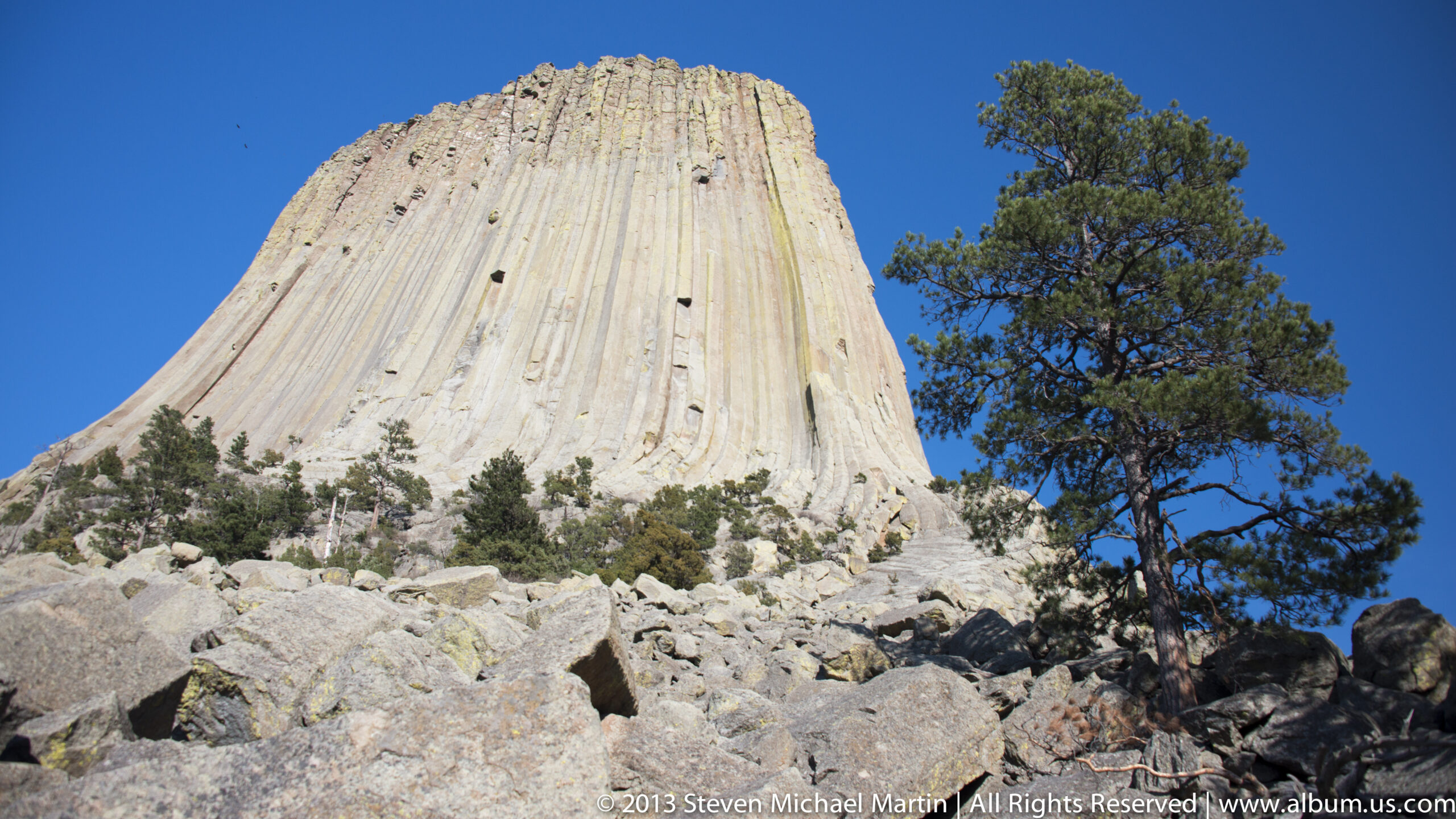
The tower rises beyond a foreground field of angular boulders, with a mature pine standing to its right. Strong sunlight brightens the vertical rock columns and pale talus, while the tree adds a contrasting dark, irregular form. This lower viewpoint connects the tower’s steep sides to the broken rock that spreads around its base.
Caption
The tower rises beyond a foreground field of angular boulders, with a mature pine standing to its right. Strong sunlight brightens the vertical rock columns and pale talus, while the tree adds a contrasting dark, irregular form. This lower viewpoint connects the tower’s steep sides to the broken rock that spreads around its base.
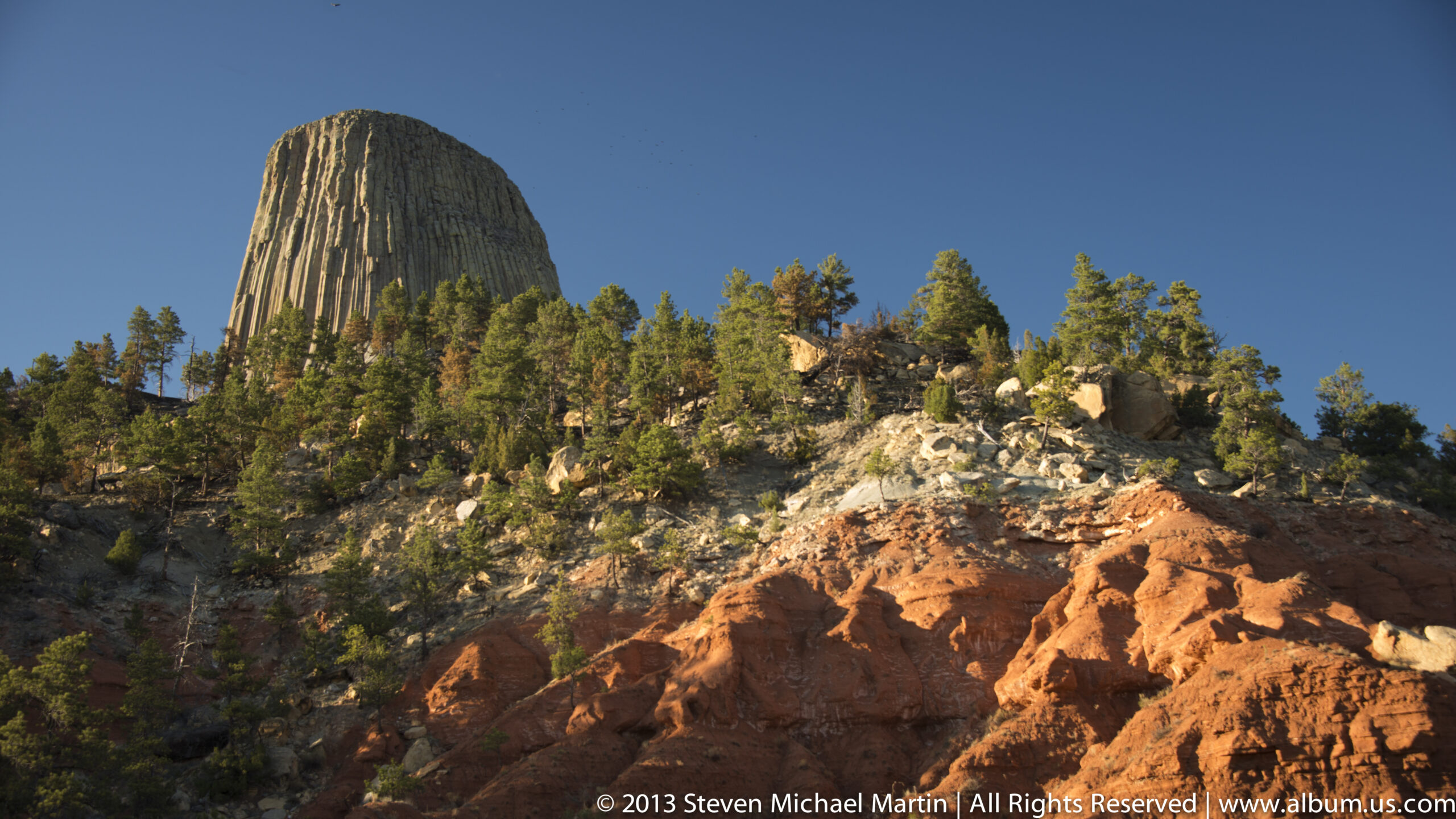
Devils Tower appears partly behind a wooded slope, with its ribbed upper face catching warm evening light. Red-orange exposed rock fills the foreground below dense pines, creating bands of contrasting color and texture. This oblique view places the tower within the surrounding forested terrain rather than isolating it against open sky.
Caption
Devils Tower appears partly behind a wooded slope, with its ribbed upper face catching warm evening light. Red-orange exposed rock fills the foreground below dense pines, creating bands of contrasting color and texture. This oblique view places the tower within the surrounding forested terrain rather than isolating it against open sky.
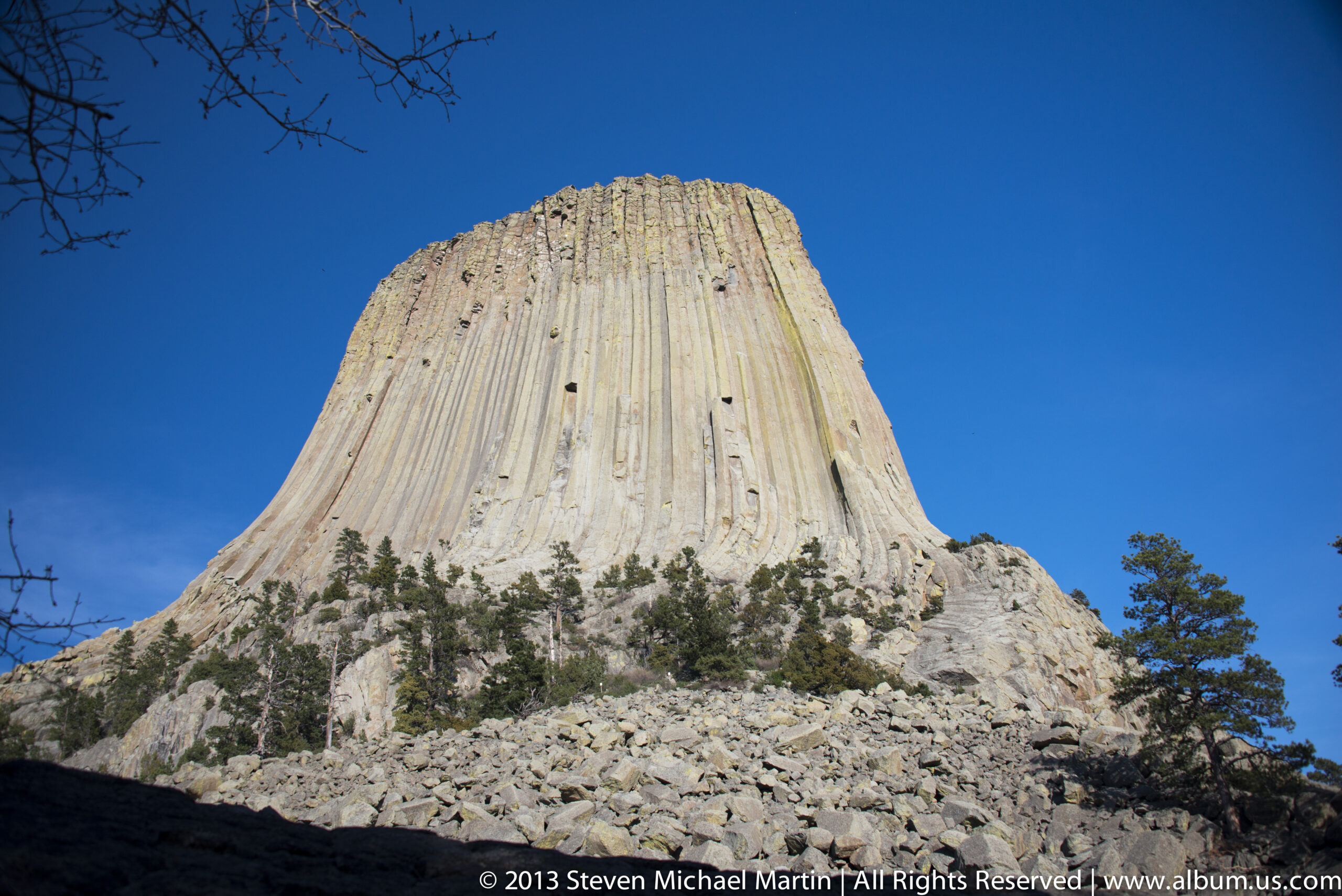
Devils Tower rises as a broad, isolated columnar formation above a pale apron of broken rock. Long vertical joints run from its rounded summit toward the base, while dark trees frame the lower edge of the scene. The frontal view sets the tower against a cloudless blue sky and shows its steep, nearly continuous sides.
Caption
Devils Tower rises as a broad, isolated columnar formation above a pale apron of broken rock. Long vertical joints run from its rounded summit toward the base, while dark trees frame the lower edge of the scene. The frontal view sets the tower against a cloudless blue sky and shows its steep, nearly continuous sides.
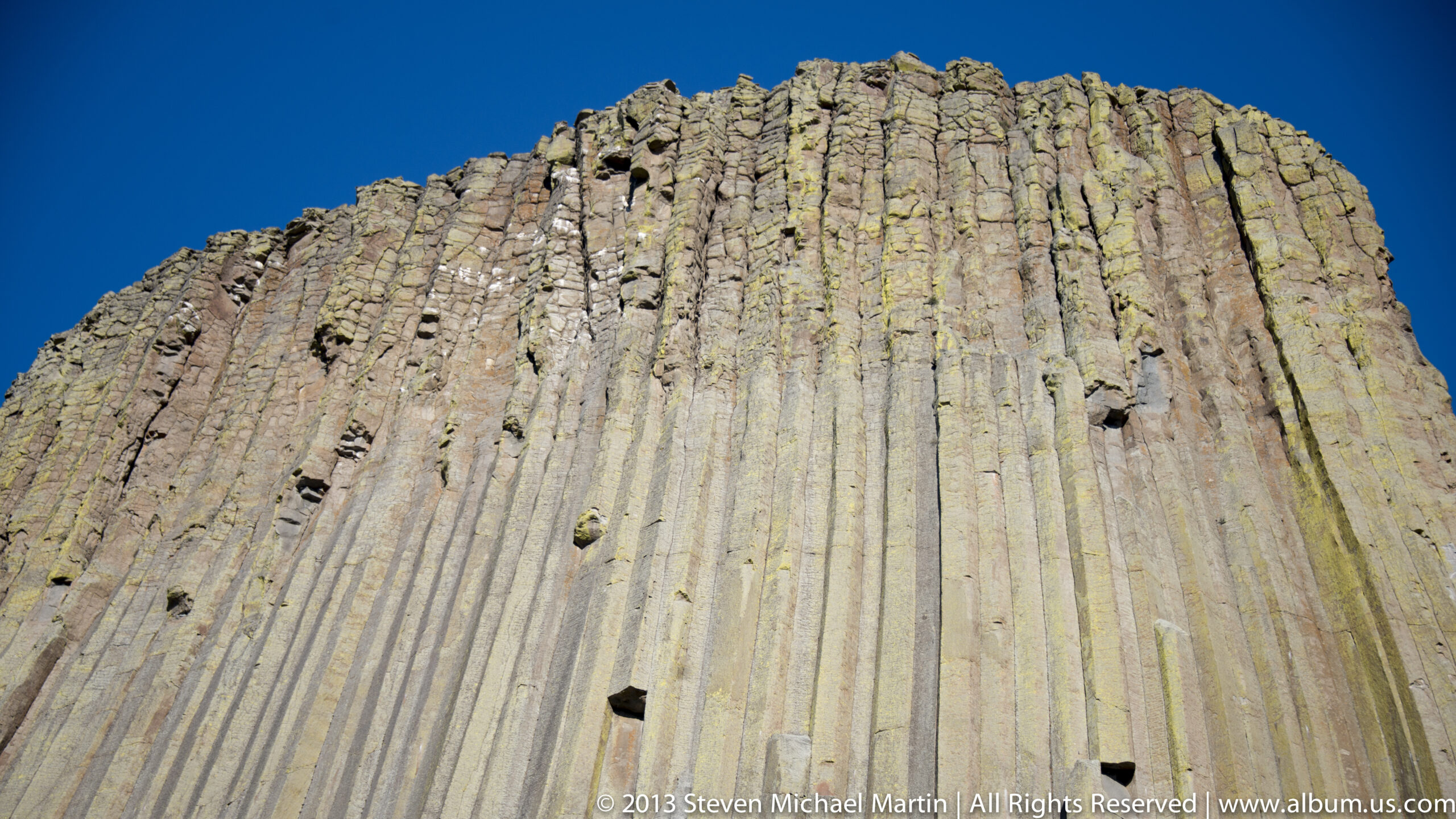
A close upward view isolates the tower’s deeply grooved face, where parallel columns form narrow ridges and dark fissures. Small ledges and gaps interrupt the otherwise vertical pattern, and scattered patches of yellow-green growth cling to the rock. With the summit and surrounding landscape cropped out, the image emphasizes the formation’s scale and surface structure.
Caption
A close upward view isolates the tower’s deeply grooved face, where parallel columns form narrow ridges and dark fissures. Small ledges and gaps interrupt the otherwise vertical pattern, and scattered patches of yellow-green growth cling to the rock. With the summit and surrounding landscape cropped out, the image emphasizes the formation’s scale and surface structure.
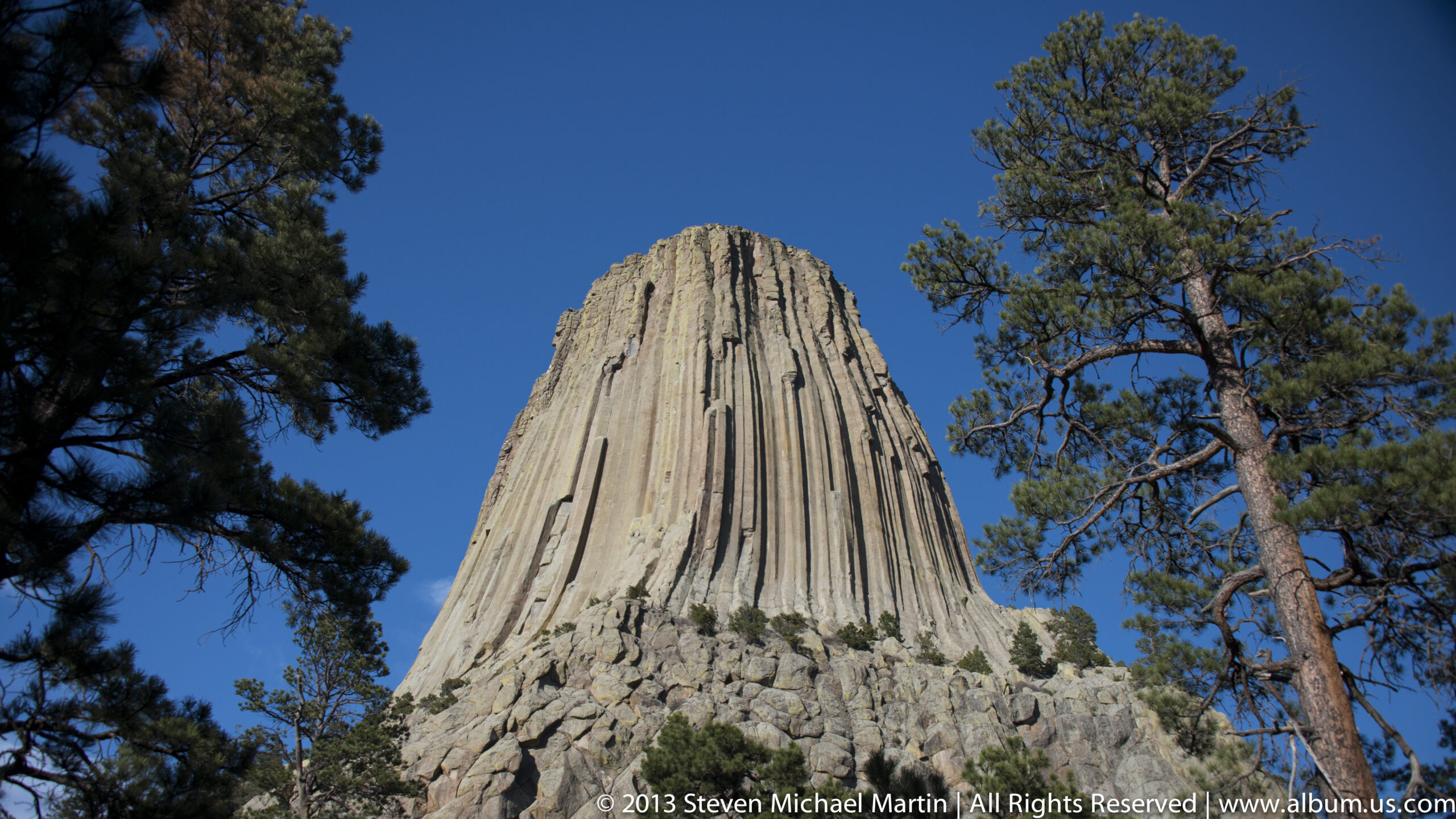
Seen from within the trees, Devils Tower rises above a slope of pale talus and scattered evergreens. A tall pine stands to the right of the summit, while darker branches frame the left edge. The composition contrasts the tower’s massive, bare rock surface with the forest growing across its lower slopes.
Caption
Seen from within the trees, Devils Tower rises above a slope of pale talus and scattered evergreens. A tall pine stands to the right of the summit, while darker branches frame the left edge. The composition contrasts the tower’s massive, bare rock surface with the forest growing across its lower slopes.
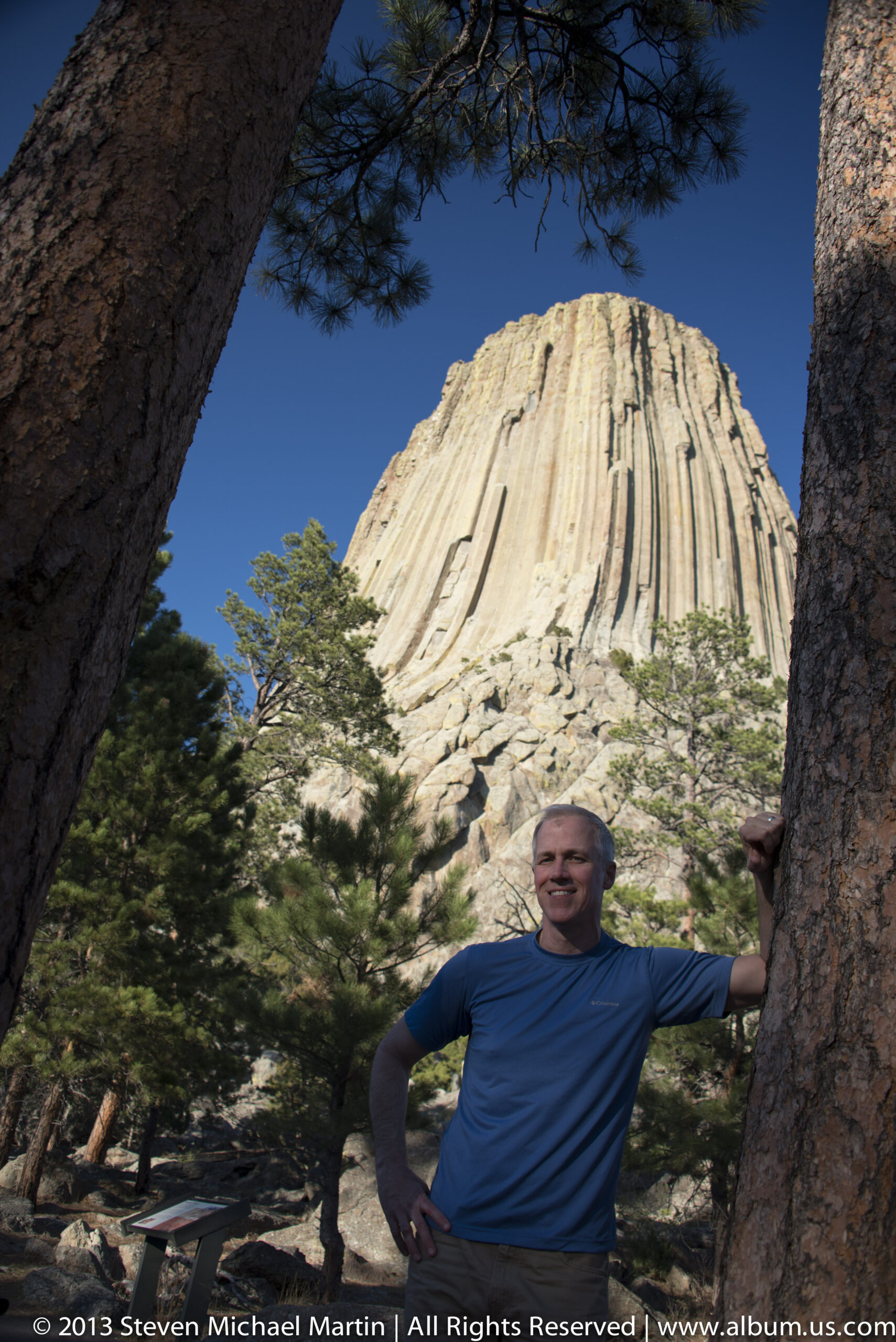
A visitor in a blue shirt stands beside a pine trunk beneath Devils Tower, one arm extended toward the tree. The immense columnar formation fills the background, its pale fluted sides rising above a rocky, wooded base. The human figure and nearby trunk provide scale and make this a personal encounter with the landmark.
Caption
A visitor in a blue shirt stands beside a pine trunk beneath Devils Tower, one arm extended toward the tree. The immense columnar formation fills the background, its pale fluted sides rising above a rocky, wooded base. The human figure and nearby trunk provide scale and make this a personal encounter with the landmark.
National Monument Field Guide
Devils Tower National Monument preserves a prominent igneous rock formation created by cooling magma that formed vertical columns visible across the surrounding plains. Erosion removed softer sedimentary layers, exposing the tower’s distinctive structure. The monument illustrates how volcanic processes shape unusual geological formations that become important natural landmarks.
🏛 Key Significance
- Igneous rock formation created by cooling magma
- Distinctive vertical column structures
- Prominent geological landmark rising above plains
- Sacred site within Indigenous cultural traditions
- One of the earliest designated U.S. National Monuments
📖 Interpretive Context
Cooling magma contracted into polygonal columns as it solidified beneath the earth’s surface. Over time, erosion removed surrounding sedimentary rock, exposing the tower’s resistant igneous structure. The formation demonstrates how volcanic processes influence landscape development across geological time periods.
📷 Photography Notes
- Wide compositions emphasize isolation of the tower
- Side lighting highlights column structure
- Foreground vegetation adds depth
- Cloud formations enhance vertical scale
- Low-angle views emphasize height
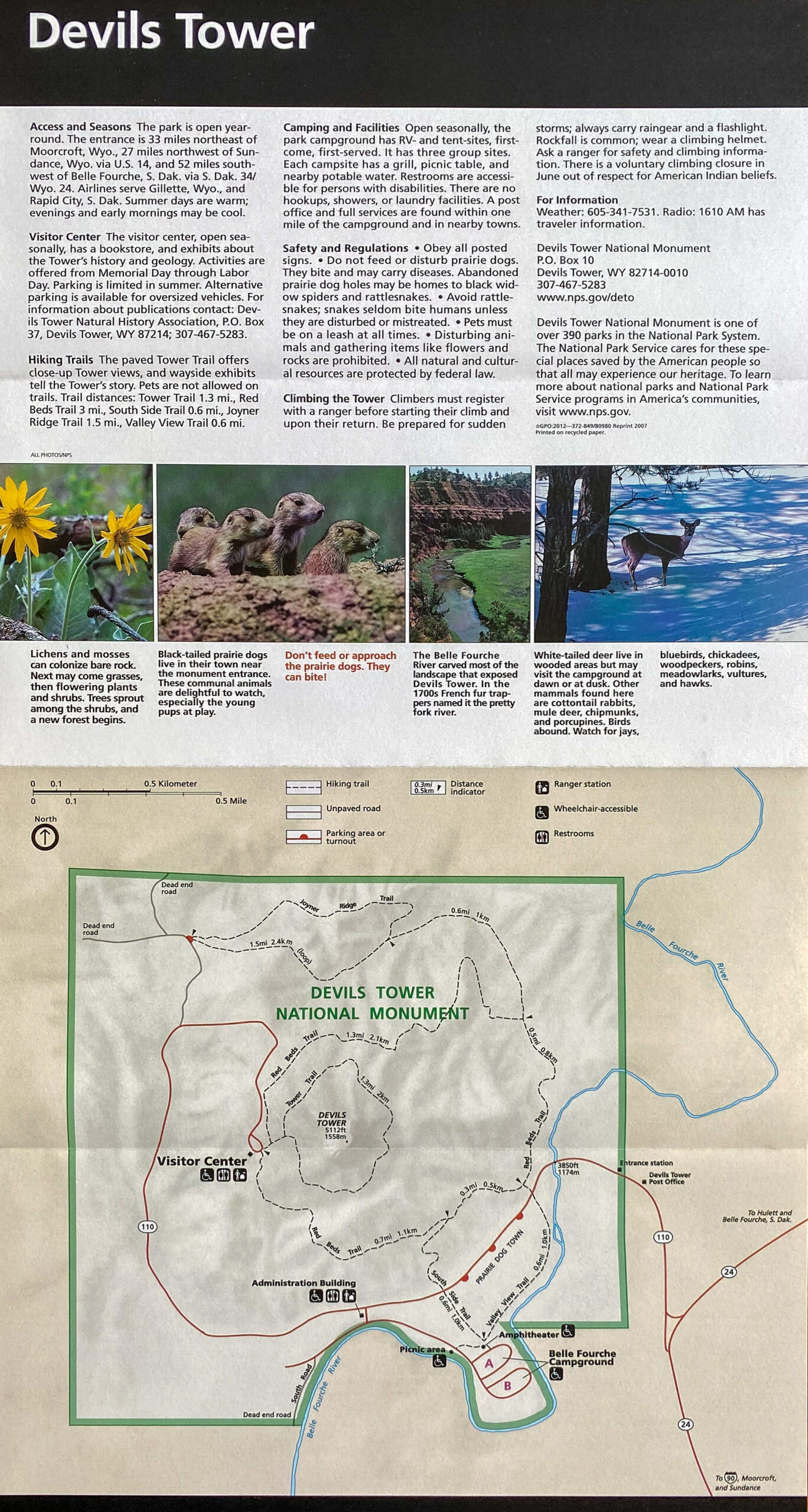
A large park map occupies the lower half of an interpretive panel, outlined by a green border and labeled “Devils Tower National Monument.” Blocks of explanatory text and small wildlife and landscape photographs fill the upper portion. The map shows roads and trails around the monument, though the smallest labels are not legible in the proof-sheet view.
Caption
A large park map occupies the lower half of an interpretive panel, outlined by a green border and labeled “Devils Tower National Monument.” Blocks of explanatory text and small wildlife and landscape photographs fill the upper portion. The map shows roads and trails around the monument, though the smallest labels are not legible in the proof-sheet view.

An interpretive panel titled “Devils Tower” combines a photograph of the formation with a colored geological diagram and explanatory text. The display explains how the tower’s columnar structure relates to its formation; the smaller body text cannot be read reliably at this scale. Its graphic cross-section and headline make geology the panel’s central subject.
Caption
An interpretive panel titled “Devils Tower” combines a photograph of the formation with a colored geological diagram and explanatory text. The display explains how the tower’s columnar structure relates to its formation; the smaller body text cannot be read reliably at this scale. Its graphic cross-section and headline make geology the panel’s central subject.