Lake Nutuvukti – Gates of the Arctic National Park and Preserve
Lake Nutuvukti lies within the remote interior of Gates of the Arctic National Park and Preserve and reflects the expansive tundra and mountain landscapes characteristic of the Brooks Range region. Surrounded by broad valleys and glacially shaped terrain, the lake represents the type of undeveloped environment that defines much of the park. The surrounding landscape illustrates the interaction of geological forces and Arctic climatic conditions over long periods of time.
The area surrounding the lake includes rolling uplands, river systems, and seasonal vegetation adapted to short growing seasons and long winter conditions. Glacial activity helped shape the basin that now holds the lake, while ongoing erosion continues to influence the surrounding terrain. Wildlife movement across these landscapes reflects long-standing ecological patterns shaped by seasonal variation in temperature and daylight.
Visitors encounter open horizons and quiet surroundings that emphasize the scale of Arctic wilderness. The simplicity of the landscape reinforces the sense of remoteness associated with Gates of the Arctic and illustrates the importance of preserving intact ecosystems across large geographic areas.
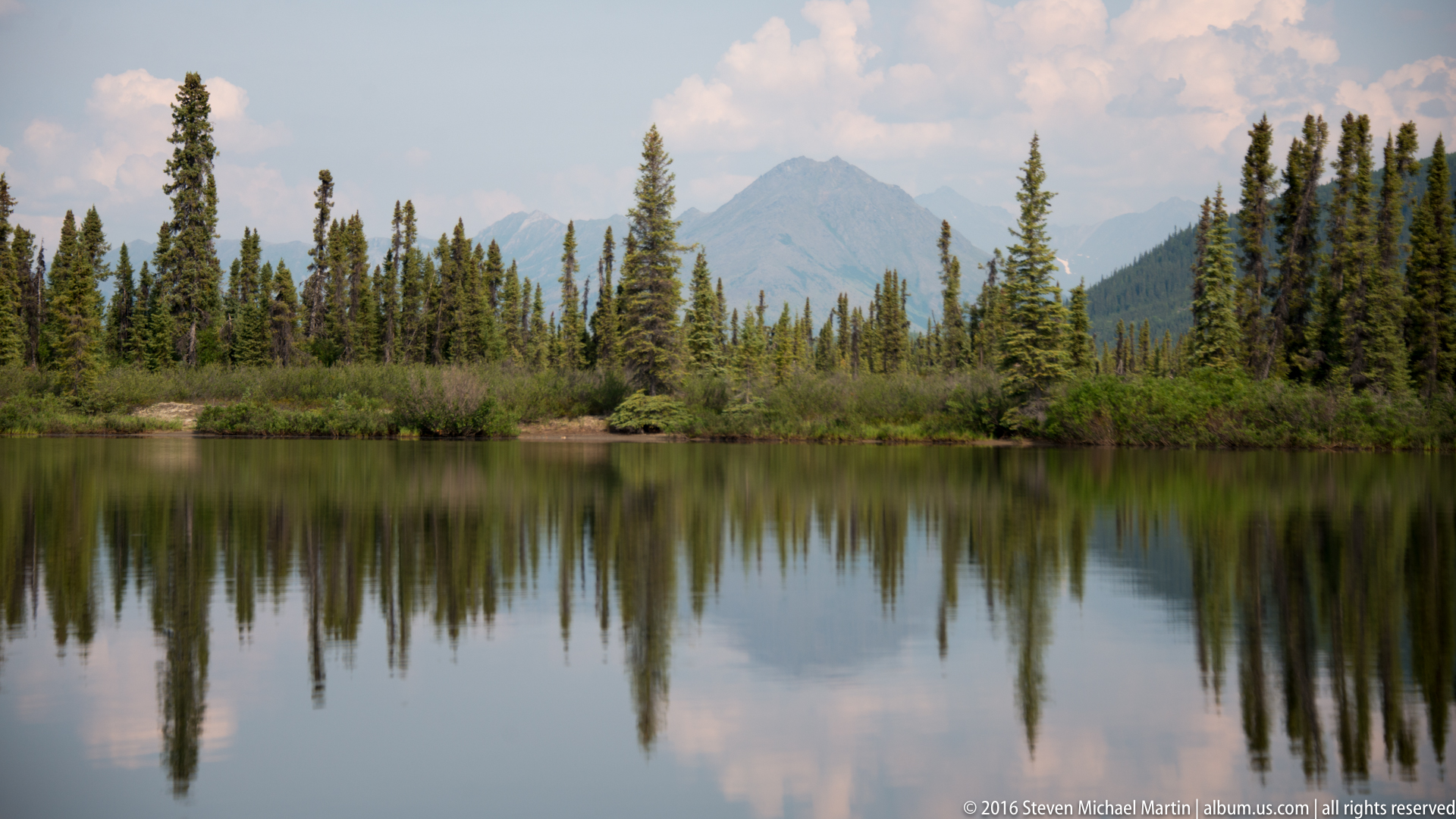
A pointed mountain peak rises behind spruce trees on the far shore, its summit framed by pale clouds. The lake reflects the tree line and the darker lower slopes, while the peak remains visible above them. Foreground water occupies nearly half the frame, giving the reflection an equal role in the composition and setting this view apart from wider lake panoramas.
Caption
A pointed mountain peak rises behind spruce trees on the far shore, its summit framed by pale clouds. The lake reflects the tree line and the darker lower slopes, while the peak remains visible above them. Foreground water occupies nearly half the frame, giving the reflection an equal role in the composition and setting this view apart from wider lake panoramas.

A narrow water channel parts the low shrubs in the foreground and leads the eye toward a broad lake. Beyond the water, a rounded mountain catches warm light while the nearby spruce remain in shadow. This framed viewpoint emphasizes the route from marshy shoreline to open lake, with small waves of haze softening the distant bank.
Caption
A narrow water channel parts the low shrubs in the foreground and leads the eye toward a broad lake. Beyond the water, a rounded mountain catches warm light while the nearby spruce remain in shadow. This framed viewpoint emphasizes the route from marshy shoreline to open lake, with small waves of haze softening the distant bank.

A brown cabin appears between tall spruce on the opposite shore, with its roofline and walls mirrored in the foreground water. The trees partly conceal the building, but the reflection makes its placement across the lake easy to read. A mountain peak rises behind the forest, linking the modest structure to the larger landscape without obscuring its distinct shoreline position.
Caption
A brown cabin appears between tall spruce on the opposite shore, with its roofline and walls mirrored in the foreground water. The trees partly conceal the building, but the reflection makes its placement across the lake easy to read. A mountain peak rises behind the forest, linking the modest structure to the larger landscape without obscuring its distinct shoreline position.

A shallow pond mirrors a row of slender spruce trees and the low ridge beyond them. Reeds and sedges break the water’s edge, while the nearly level viewpoint doubles the sparse tree line in the still surface. The open sky and muted light give this wetland scene a quieter, more intimate scale than the broad valley views nearby.
Caption
A shallow pond mirrors a row of slender spruce trees and the low ridge beyond them. Reeds and sedges break the water’s edge, while the nearly level viewpoint doubles the sparse tree line in the still surface. The open sky and muted light give this wetland scene a quieter, more intimate scale than the broad valley views nearby.
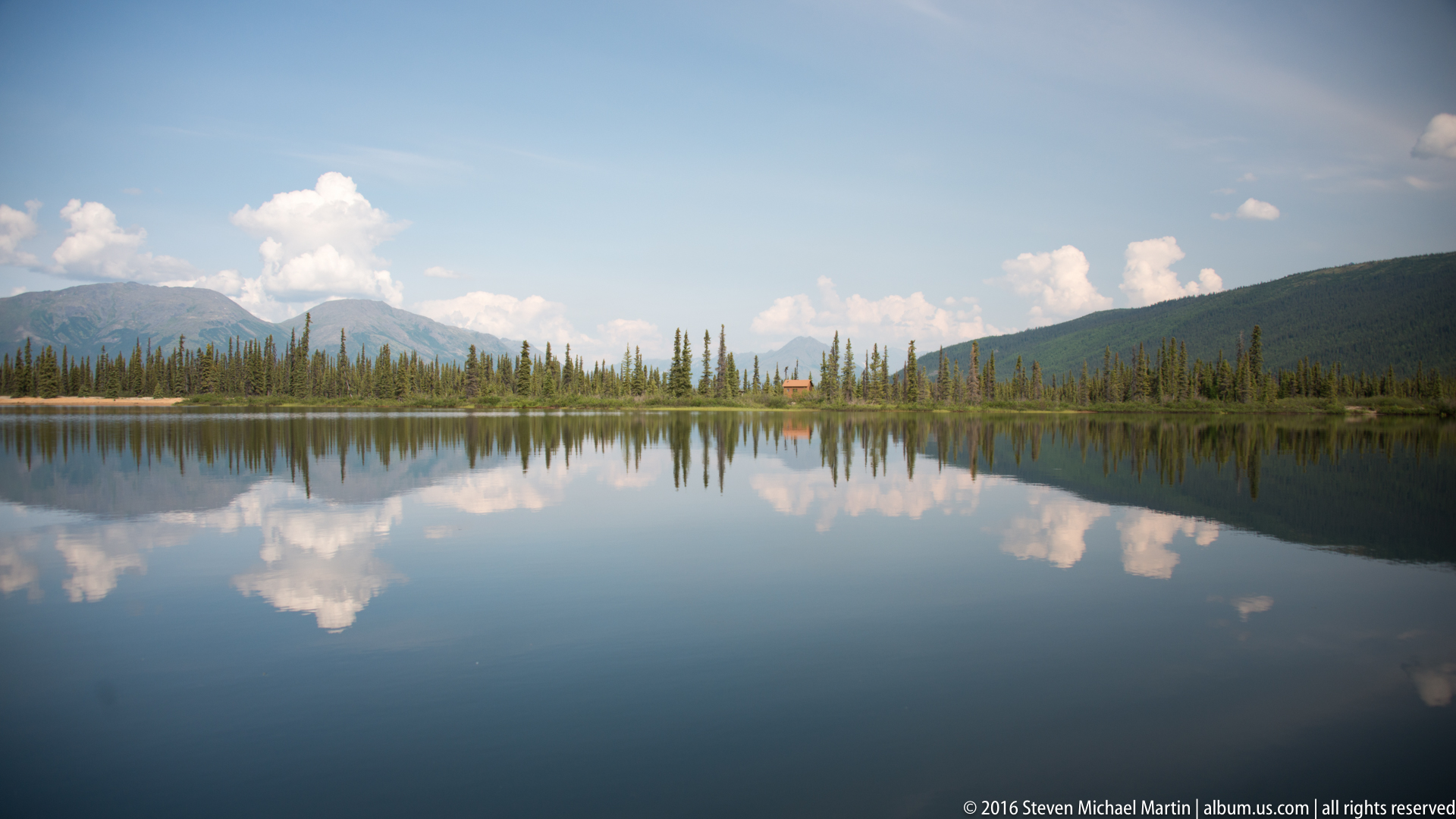
A wide stretch of water opens toward a distant spruce shore and layered mountains beneath towering white clouds. A tiny cabin sits near the center of the far bank, providing a human scale within the expansive view. Its small size makes the surrounding lake, mountain arc, and sky the dominant elements, while the calm water repeats the cloud shapes below.
Caption
A wide stretch of water opens toward a distant spruce shore and layered mountains beneath towering white clouds. A tiny cabin sits near the center of the far bank, providing a human scale within the expansive view. Its small size makes the surrounding lake, mountain arc, and sky the dominant elements, while the calm water repeats the cloud shapes below.
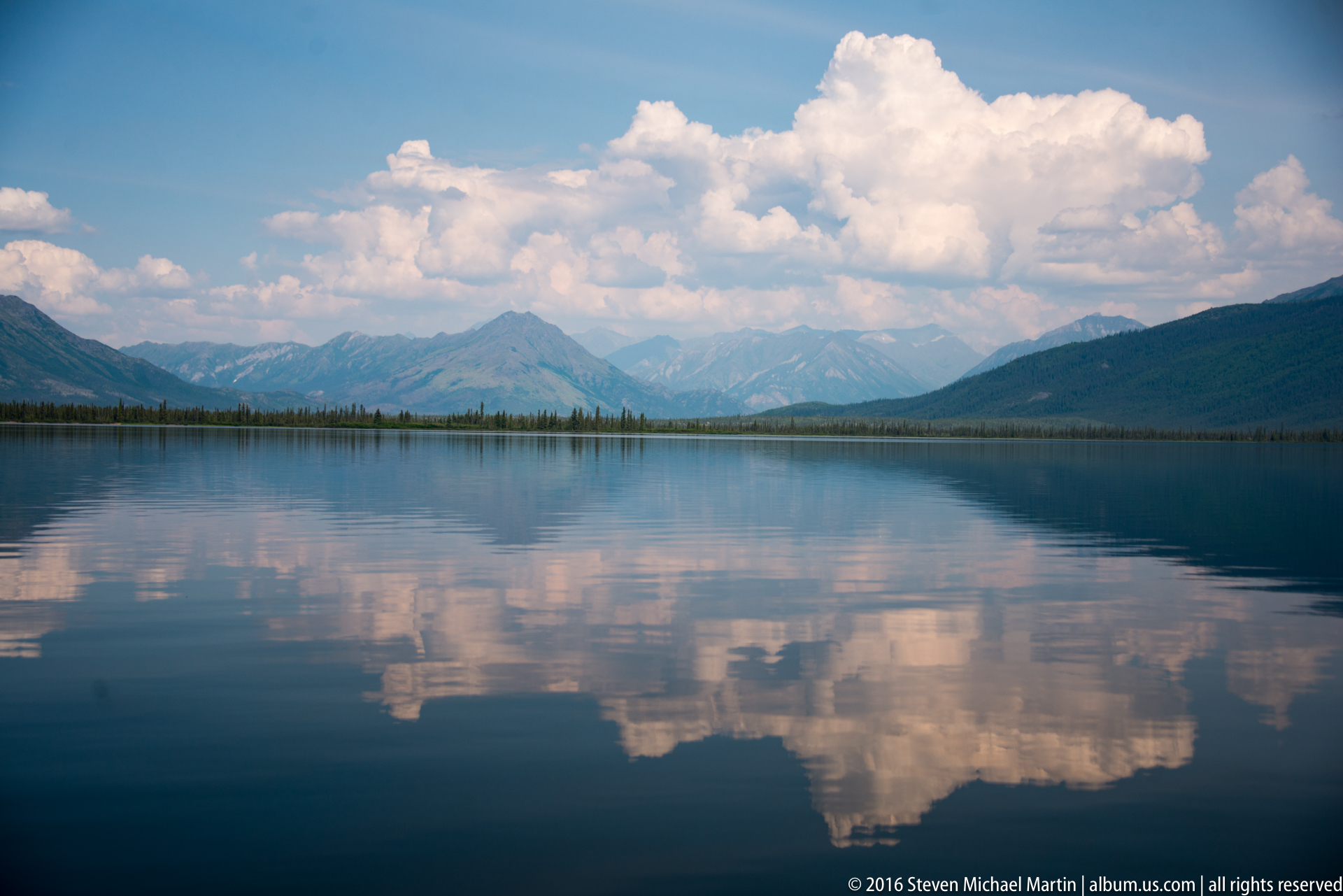
A towering cumulus cloud rises above the mountain range and dominates both sky and water. The lake reflects its bright vertical form, while dark slopes at the left and right edges frame the distant opening. The strong cloud reflection gives this panorama a vertical center within an otherwise broad horizontal scene, distinguishing it from the quieter shoreline views.
Caption
A towering cumulus cloud rises above the mountain range and dominates both sky and water. The lake reflects its bright vertical form, while dark slopes at the left and right edges frame the distant opening. The strong cloud reflection gives this panorama a vertical center within an otherwise broad horizontal scene, distinguishing it from the quieter shoreline views.

A freestanding metal range occupies the foreground of a compact cabin kitchen, with a blue kettle and large black pot on its burners. Open shelves hold food containers and kitchen supplies beneath a small window. The practical arrangement of cookware, stored provisions, and unfinished wood surfaces conveys a working backcountry interior.
Caption
A freestanding metal range occupies the foreground of a compact cabin kitchen, with a blue kettle and large black pot on its burners. Open shelves hold food containers and kitchen supplies beneath a small window. The practical arrangement of cookware, stored provisions, and unfinished wood surfaces conveys a working backcountry interior.
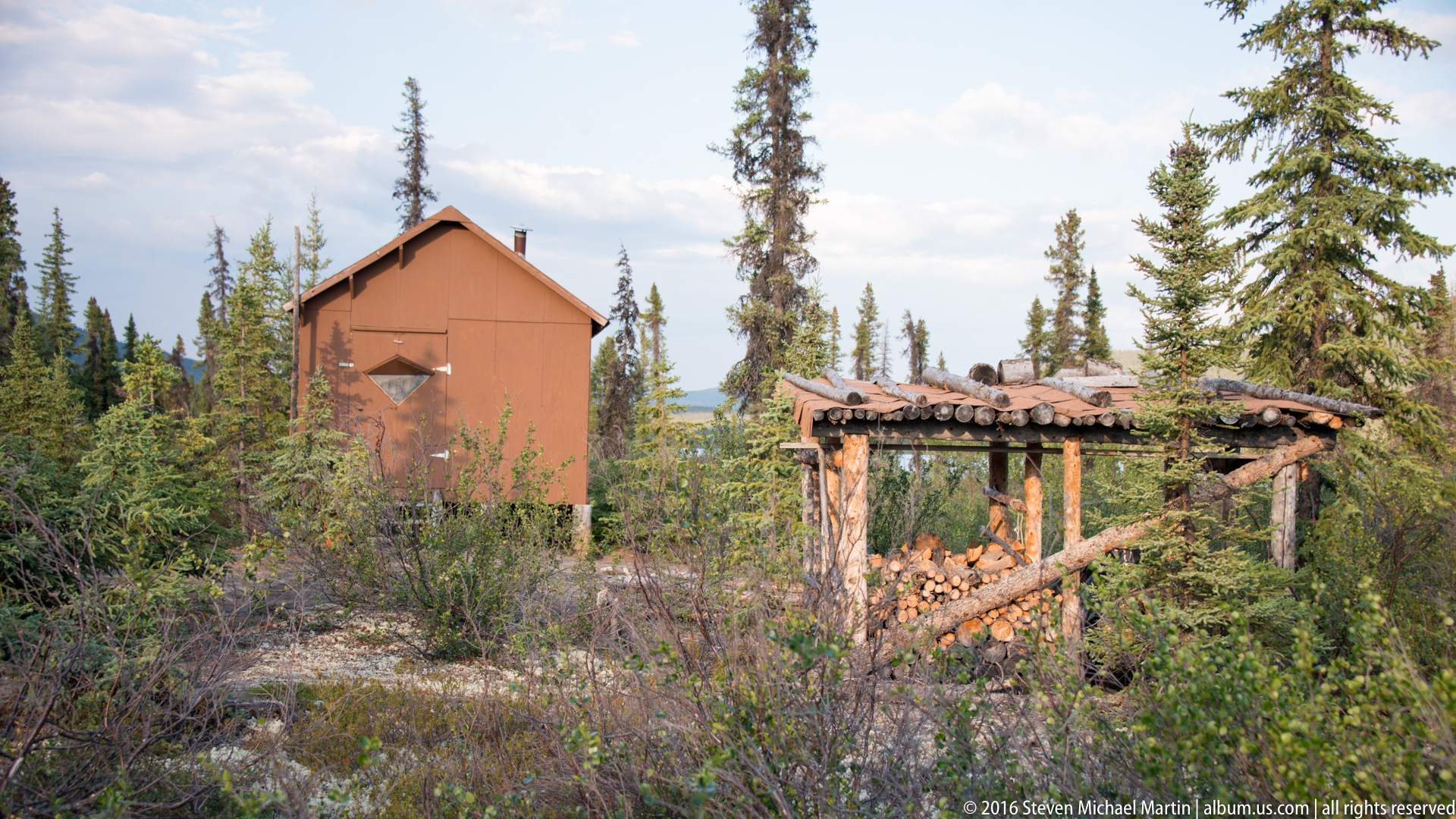
A small brown cabin rises among spruce trees beside an open log shelter filled with stacked firewood. The cabin’s simple gable and small window face the clearing, while shrubs and uneven ground soften the structures’ edges. This wider view situates the wood storage within a remote forest camp rather than isolating the shelter as an object.
Caption
A small brown cabin rises among spruce trees beside an open log shelter filled with stacked firewood. The cabin’s simple gable and small window face the clearing, while shrubs and uneven ground soften the structures’ edges. This wider view situates the wood storage within a remote forest camp rather than isolating the shelter as an object.

From above, an open tundra valley spreads between dark spruce-covered slopes and a distant chain of rounded mountains. A narrow strip of water and forest borders the foreground, while the broad, treeless interior reveals the scale of the valley. The aerial viewpoint links the lake margin to the surrounding uplands without reducing the landscape to a single peak.
Caption
From above, an open tundra valley spreads between dark spruce-covered slopes and a distant chain of rounded mountains. A narrow strip of water and forest borders the foreground, while the broad, treeless interior reveals the scale of the valley. The aerial viewpoint links the lake margin to the surrounding uplands without reducing the landscape to a single peak.

A still pond forms a pale, reflective opening in dense conifer forest. From the elevated viewpoint, its irregular shoreline reveals patches of bright green marsh and low vegetation between the water and trees. The compact basin contrasts with the surrounding continuous forest, while reflected clouds soften the water’s surface.
Caption
A still pond forms a pale, reflective opening in dense conifer forest. From the elevated viewpoint, its irregular shoreline reveals patches of bright green marsh and low vegetation between the water and trees. The compact basin contrasts with the surrounding continuous forest, while reflected clouds soften the water’s surface.

Purple spruce cones gather along a fresh green branch, their layered scales and rain droplets rendered sharply against a soft, moss-green background. The close focus shifts attention from the surrounding wilderness to a small seasonal detail: new cones still attached to the tree. Blurred cones at the frame edges extend the branch beyond the central cluster.
Caption
Purple spruce cones gather along a fresh green branch, their layered scales and rain droplets rendered sharply against a soft, moss-green background. The close focus shifts attention from the surrounding wilderness to a small seasonal detail: new cones still attached to the tree. Blurred cones at the frame edges extend the branch beyond the central cluster.

A hazy mountain ridge rises above a dark band of spruce and an open green wetland. The soft, subdued light reduces detail in the peaks, making their jagged silhouettes appear distant against the pale sky. Rather than emphasizing a single identifiable summit, the view records the layered relationship between lowland tundra, forest, and the mountainous horizon.
Caption
A hazy mountain ridge rises above a dark band of spruce and an open green wetland. The soft, subdued light reduces detail in the peaks, making their jagged silhouettes appear distant against the pale sky. Rather than emphasizing a single identifiable summit, the view records the layered relationship between lowland tundra, forest, and the mountainous horizon.

A weathered timber framework lies in a sandy clearing at the edge of spruce forest. Heavy posts, crossed beams, and several boxlike wooden elements form an irregular structure, now surrounded by low shrubs and moss. Its use and date cannot be established from this view, so the image is best read as a remnant of human activity within the wooded landscape.
Caption
A weathered timber framework lies in a sandy clearing at the edge of spruce forest. Heavy posts, crossed beams, and several boxlike wooden elements form an irregular structure, now surrounded by low shrubs and moss. Its use and date cannot be established from this view, so the image is best read as a remnant of human activity within the wooded landscape.

A pale-purple wildflower opens on a slender stem among softly blurred green leaves. A small pale insect rests near the center of the flower, adding a second point of detail to the close study. The shallow focus isolates the bloom from the dense vegetation behind it, while the surrounding leaves establish the plant’s place in a low, leafy understory.
Caption
A pale-purple wildflower opens on a slender stem among softly blurred green leaves. A small pale insect rests near the center of the flower, adding a second point of detail to the close study. The shallow focus isolates the bloom from the dense vegetation behind it, while the surrounding leaves establish the plant’s place in a low, leafy understory.

A slender fireweed stalk rises alone against blurred green and purple vegetation. Its pink blossoms and unopened buds form a narrow vertical line, with the nearest flowers crisp and the surrounding plants reduced to soft color. The composition isolates the plant’s shape and flowering sequence, offering a more singular study than the clusters of blooms elsewhere in the portfolio.
Caption
A slender fireweed stalk rises alone against blurred green and purple vegetation. Its pink blossoms and unopened buds form a narrow vertical line, with the nearest flowers crisp and the surrounding plants reduced to soft color. The composition isolates the plant’s shape and flowering sequence, offering a more singular study than the clusters of blooms elsewhere in the portfolio.

Mist hangs over the water behind a foreground of dark spruce trunks and dense lakeside shrubs. Small pools and wet ground appear among the vegetation, while a low mountain is just visible through the haze. The layered trees frame the lake rather than opening onto it, giving this view a sheltered, close-range character and a subdued early- or late-day atmosphere.
Caption
Mist hangs over the water behind a foreground of dark spruce trunks and dense lakeside shrubs. Small pools and wet ground appear among the vegetation, while a low mountain is just visible through the haze. The layered trees frame the lake rather than opening onto it, giving this view a sheltered, close-range character and a subdued early- or late-day atmosphere.

Slender purple flowers rise above grasses in a sunlit meadow, where scattered yellow blooms and low green plants fill the spaces between them. The selective focus gives the nearest stems definition while the surrounding field dissolves into a softly textured carpet. This wider botanical view shows the flowers as part of a mixed meadow rather than as an isolated specimen.
Caption
Slender purple flowers rise above grasses in a sunlit meadow, where scattered yellow blooms and low green plants fill the spaces between them. The selective focus gives the nearest stems definition while the surrounding field dissolves into a softly textured carpet. This wider botanical view shows the flowers as part of a mixed meadow rather than as an isolated specimen.

A slender fireweed stem carries open pink-purple blossoms and unopened buds above a softly blurred green background. The vertical flower spike is sharply defined against the surrounding vegetation, and several blossoms turn outward from the central stalk. The close composition draws attention to the sequence from bud to open flower without showing the plant’s full height or its wider habitat.
Caption
A slender fireweed stem carries open pink-purple blossoms and unopened buds above a softly blurred green background. The vertical flower spike is sharply defined against the surrounding vegetation, and several blossoms turn outward from the central stalk. The close composition draws attention to the sequence from bud to open flower without showing the plant’s full height or its wider habitat.

A narrow, shallow watercourse winds through dense marsh vegetation. Reeds and grasses rise from both banks, while low shrubs lean over the reflective channel and partly conceal its edges. The close viewpoint follows the water between the plants, emphasizing a small drainage route through wet ground rather than the open lake views elsewhere in the sequence.
Caption
A narrow, shallow watercourse winds through dense marsh vegetation. Reeds and grasses rise from both banks, while low shrubs lean over the reflective channel and partly conceal its edges. The close viewpoint follows the water between the plants, emphasizing a small drainage route through wet ground rather than the open lake views elsewhere in the sequence.
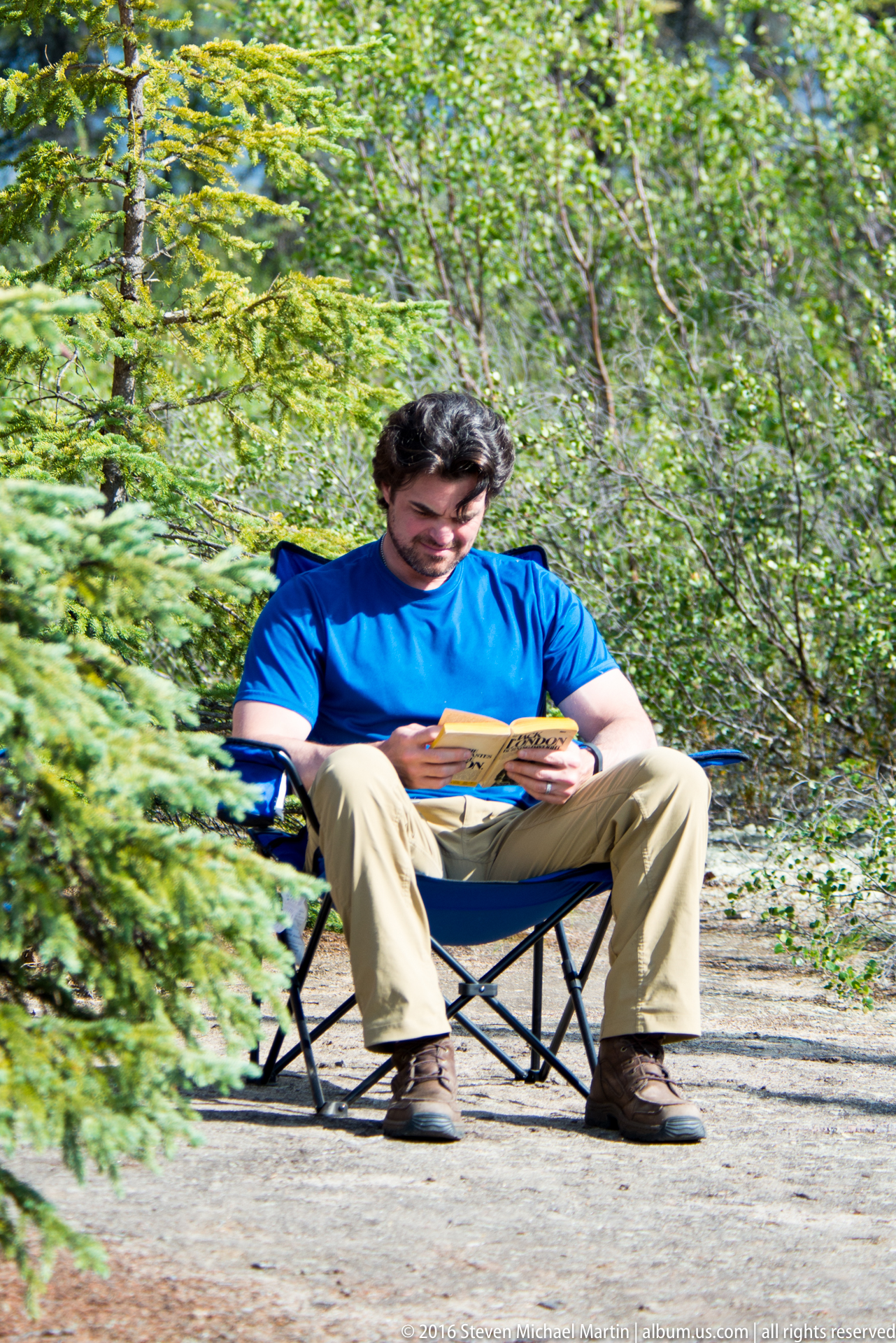
A man in a blue shirt sits in a folding camp chair on a gravel track, looking down at a small booklet or map in his hands. Low shrubs and young trees enclose the path, making the activity feel paused within a wooded outdoor setting. The centered composition places the reader against the track’s pale surface and surrounding green vegetation.
Caption
A man in a blue shirt sits in a folding camp chair on a gravel track, looking down at a small booklet or map in his hands. Low shrubs and young trees enclose the path, making the activity feel paused within a wooded outdoor setting. The centered composition places the reader against the track’s pale surface and surrounding green vegetation.
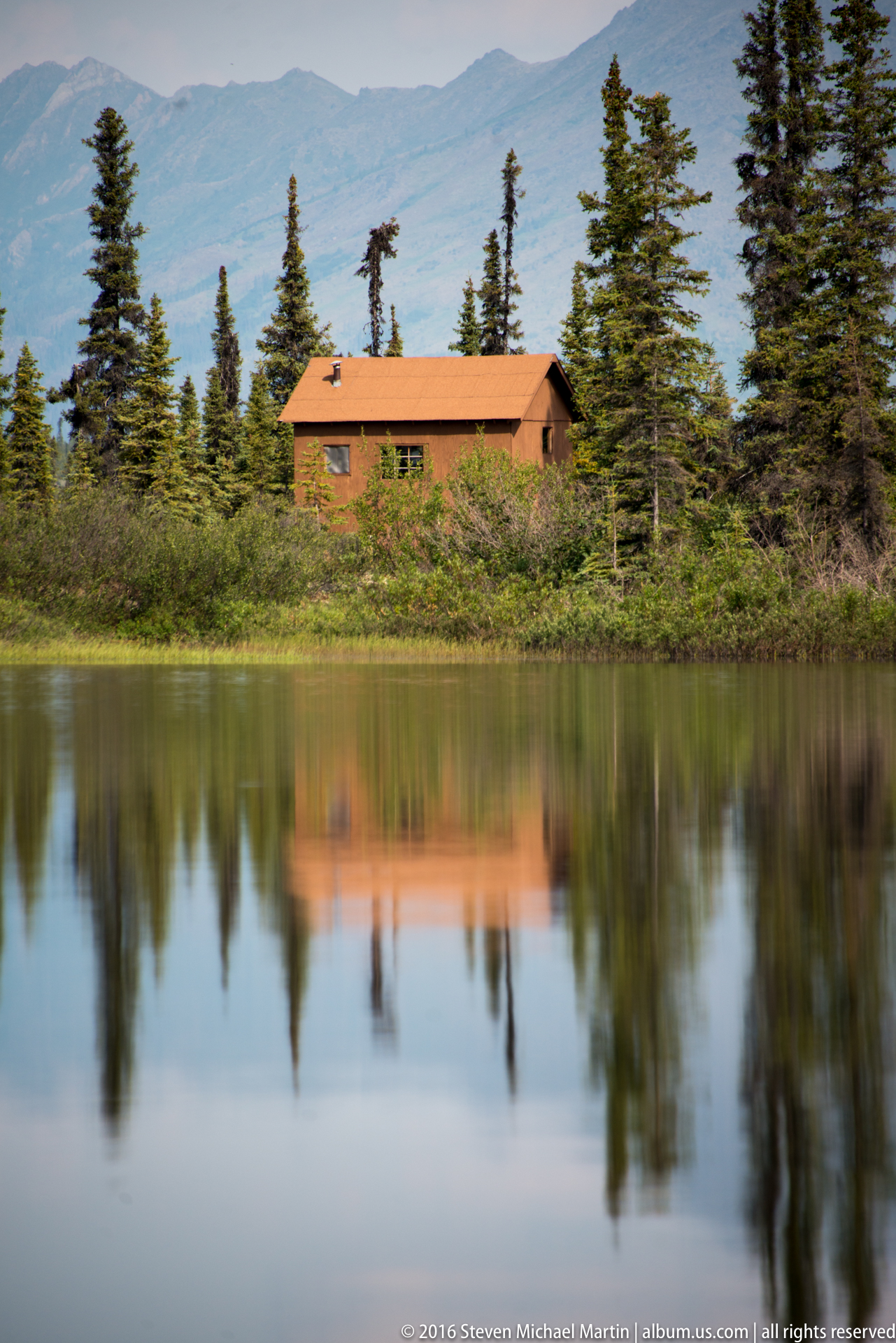
A low wooden cabin sits among spruce on the far bank, its warm brown walls and roof reflected in the still lake. Trees partially screen the building, so the cabin appears as a small interruption in the continuous green shoreline. The reflection doubles the structure beneath the waterline and gives this view a quiet architectural focal point within the larger wilderness landscape.
Caption
A low wooden cabin sits among spruce on the far bank, its warm brown walls and roof reflected in the still lake. Trees partially screen the building, so the cabin appears as a small interruption in the continuous green shoreline. The reflection doubles the structure beneath the waterline and gives this view a quiet architectural focal point within the larger wilderness landscape.
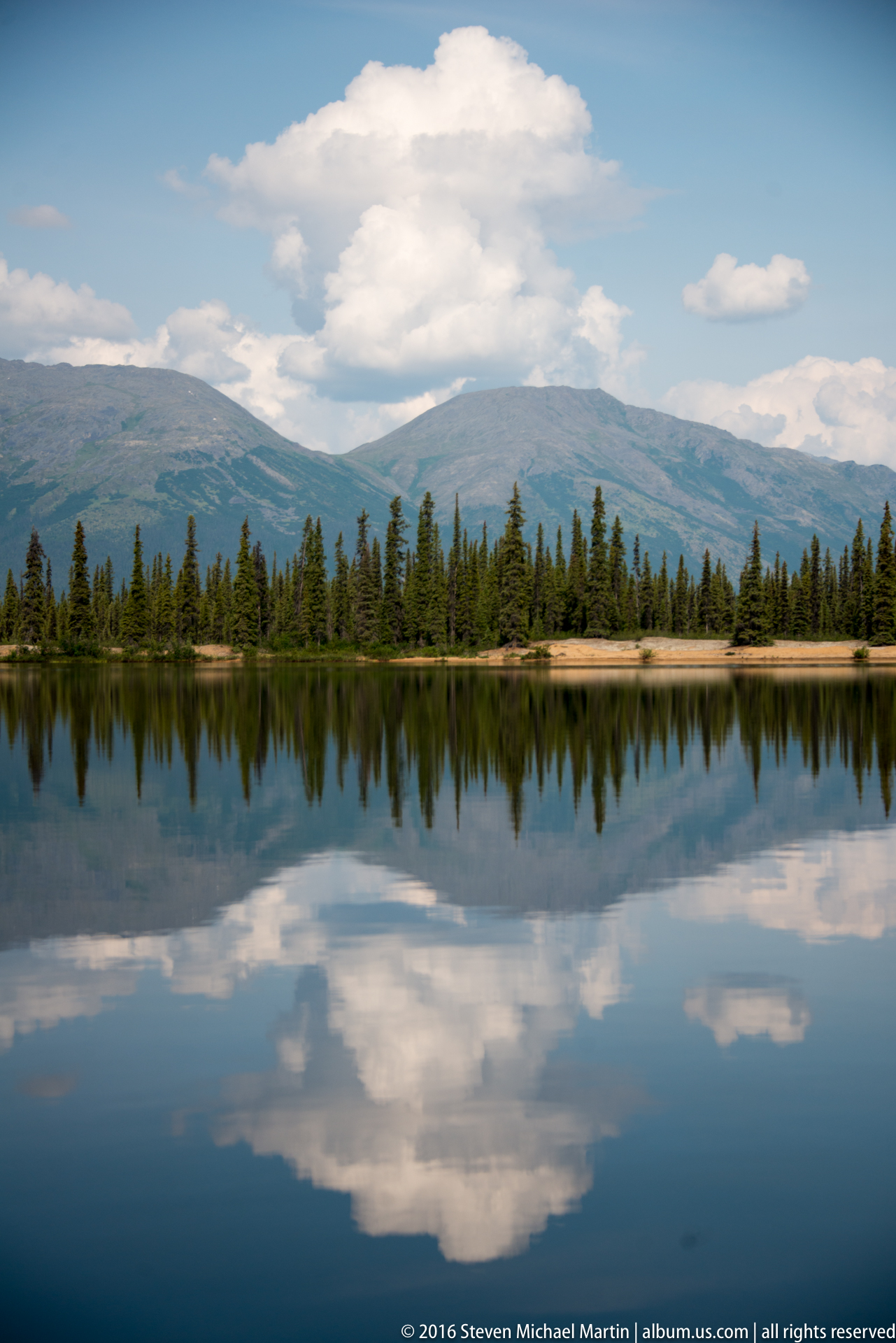
A broad expanse of water mirrors the forested shore and mountain ridges beneath a deep blue sky. Large cumulus clouds gather above the mountains and repeat in the lake, while a narrow sandy margin separates water from spruce. The open composition emphasizes the long horizontal reach of the lake and the changing scale from near shore to distant peaks.
Caption
A broad expanse of water mirrors the forested shore and mountain ridges beneath a deep blue sky. Large cumulus clouds gather above the mountains and repeat in the lake, while a narrow sandy margin separates water from spruce. The open composition emphasizes the long horizontal reach of the lake and the changing scale from near shore to distant peaks.

A man wearing an orange cap and flotation vest sits low in a canoe, holding a paddle across the water. Shrubs crowd the near shore, and a small cabin is visible among trees behind him. The close, water-level viewpoint records the practical act of paddling within a sheltered lakeshore, with the person and boat more prominent than the surrounding mountain landscape.
Caption
A man wearing an orange cap and flotation vest sits low in a canoe, holding a paddle across the water. Shrubs crowd the near shore, and a small cabin is visible among trees behind him. The close, water-level viewpoint records the practical act of paddling within a sheltered lakeshore, with the person and boat more prominent than the surrounding mountain landscape.

A tall cumulus cloud rises above a low mountain ridge and is reflected almost completely in the calm lake below. A continuous band of spruce marks the far shore, separating the mountain slopes from their inverted image. The balanced horizontal framing makes sky and water share equal weight, while the bright cloud becomes the scene’s most distinct feature.
Caption
A tall cumulus cloud rises above a low mountain ridge and is reflected almost completely in the calm lake below. A continuous band of spruce marks the far shore, separating the mountain slopes from their inverted image. The balanced horizontal framing makes sky and water share equal weight, while the bright cloud becomes the scene’s most distinct feature.

A low sandy point edged with spruce projects into the lake beneath a hazy mountain slope. The tree line and point are reflected in the still water, creating a narrow band of pale shore between forest and lake. Compared with the broad cloud reflections in adjacent views, this composition gives greater prominence to the wooded shoreline and its small projecting point.
Caption
A low sandy point edged with spruce projects into the lake beneath a hazy mountain slope. The tree line and point are reflected in the still water, creating a narrow band of pale shore between forest and lake. Compared with the broad cloud reflections in adjacent views, this composition gives greater prominence to the wooded shoreline and its small projecting point.

A close portrait isolates a man in an orange cap and green flotation vest against a soft blue-gray background. He looks toward the left edge of the frame, with sunlight defining his face and the cap’s curved brim. The tight crop removes the boat and shoreline visible in related views, turning attention to the visitor’s expression and outdoor gear.
Caption
A close portrait isolates a man in an orange cap and green flotation vest against a soft blue-gray background. He looks toward the left edge of the frame, with sunlight defining his face and the cap’s curved brim. The tight crop removes the boat and shoreline visible in related views, turning attention to the visitor’s expression and outdoor gear.
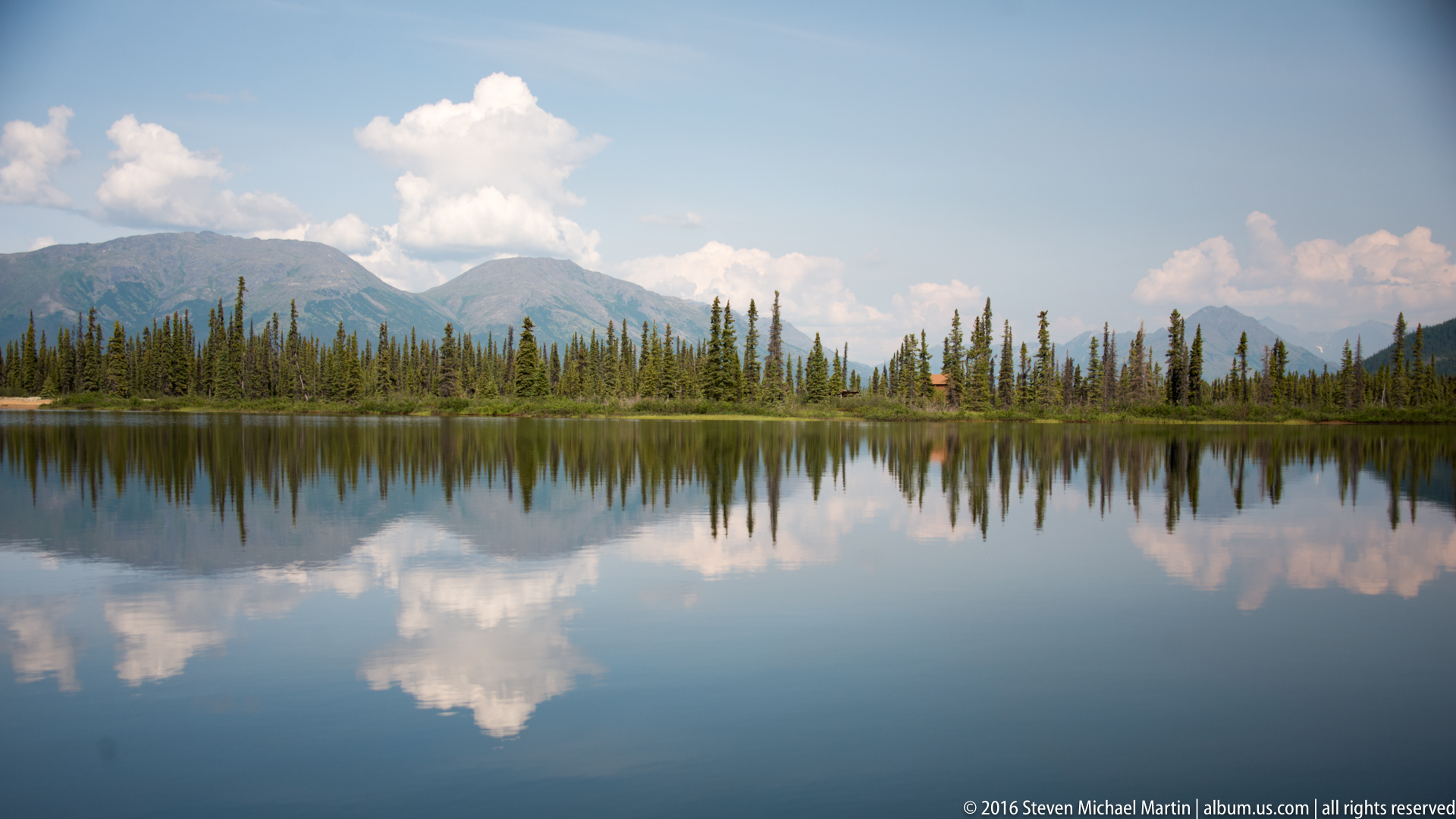
A broad, level panorama balances a low mountain range and scattered clouds against their reflections in the lake. A continuous spruce line runs across the center, dividing the image into sky and water while preserving a nearly symmetrical arrangement. The wide framing gives the landscape greater breadth than the closer shoreline studies, and the calm surface keeps the reflected clouds clearly legible.
Caption
A broad, level panorama balances a low mountain range and scattered clouds against their reflections in the lake. A continuous spruce line runs across the center, dividing the image into sky and water while preserving a nearly symmetrical arrangement. The wide framing gives the landscape greater breadth than the closer shoreline studies, and the calm surface keeps the reflected clouds clearly legible.

Set back among tall spruce, a small cabin occupies only a narrow section of the far shore. Its orange-brown roof and walls appear between the trunks, with a clear reflection below in the lake. The wider view makes the building subordinate to the forest and mountain backdrop, showing how a single structure is absorbed into the surrounding landscape.
Caption
Set back among tall spruce, a small cabin occupies only a narrow section of the far shore. Its orange-brown roof and walls appear between the trunks, with a clear reflection below in the lake. The wider view makes the building subordinate to the forest and mountain backdrop, showing how a single structure is absorbed into the surrounding landscape.

A loon glides across pale, nearly featureless water, its black head, white collar, and spotted back standing out against the muted surface. The bird’s low position in the frame leaves ample open water around it, emphasizing the quiet distance between wildlife and shore. The visible plumage supports identification as a loon, though a species-level determination is less certain from this view.
Caption
A loon glides across pale, nearly featureless water, its black head, white collar, and spotted back standing out against the muted surface. The bird’s low position in the frame leaves ample open water around it, emphasizing the quiet distance between wildlife and shore. The visible plumage supports identification as a loon, though a species-level determination is less certain from this view.
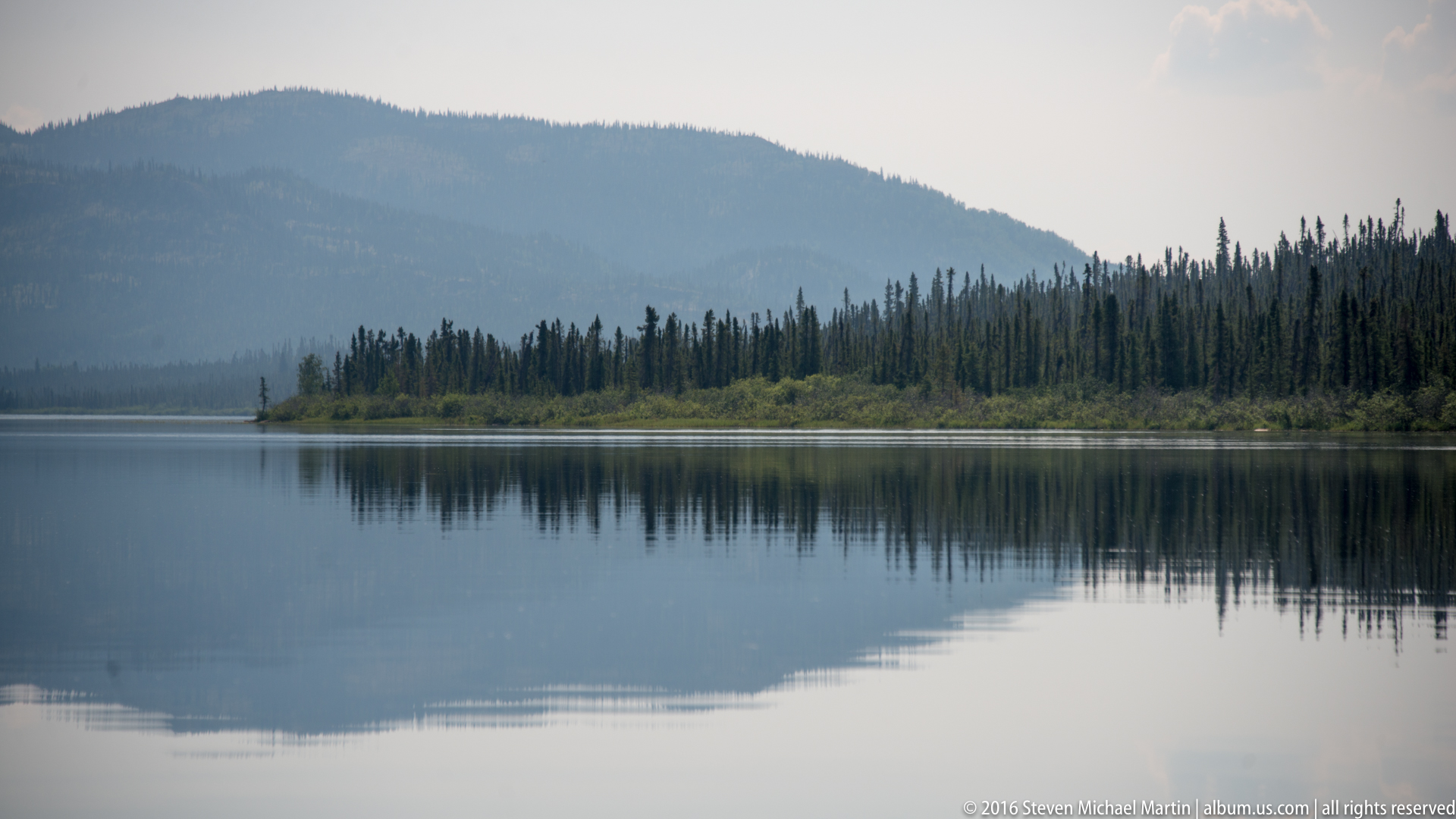
A dark conifer shore stretches across the lake beneath a hazy mountain slope. Its reflection forms a soft, nearly continuous band in the still water, while the pale sky and low-contrast light mute the distinction between land and reflection. The composition relies on the long horizontal shoreline rather than a prominent peak or cloud, giving the scene a subdued, atmospheric character.
Caption
A dark conifer shore stretches across the lake beneath a hazy mountain slope. Its reflection forms a soft, nearly continuous band in the still water, while the pale sky and low-contrast light mute the distinction between land and reflection. The composition relies on the long horizontal shoreline rather than a prominent peak or cloud, giving the scene a subdued, atmospheric character.

Seen from a low angle, a loon moves across softly rippled gray water. Its long dark bill points left, while the black head, white throat band, and patterned back remain visible above the surface. The bird’s profile and the broad negative space isolate its swimming motion; the water’s subtle texture contrasts with the stillness of the wider lake scenes.
Caption
Seen from a low angle, a loon moves across softly rippled gray water. Its long dark bill points left, while the black head, white throat band, and patterned back remain visible above the surface. The bird’s profile and the broad negative space isolate its swimming motion; the water’s subtle texture contrasts with the stillness of the wider lake scenes.
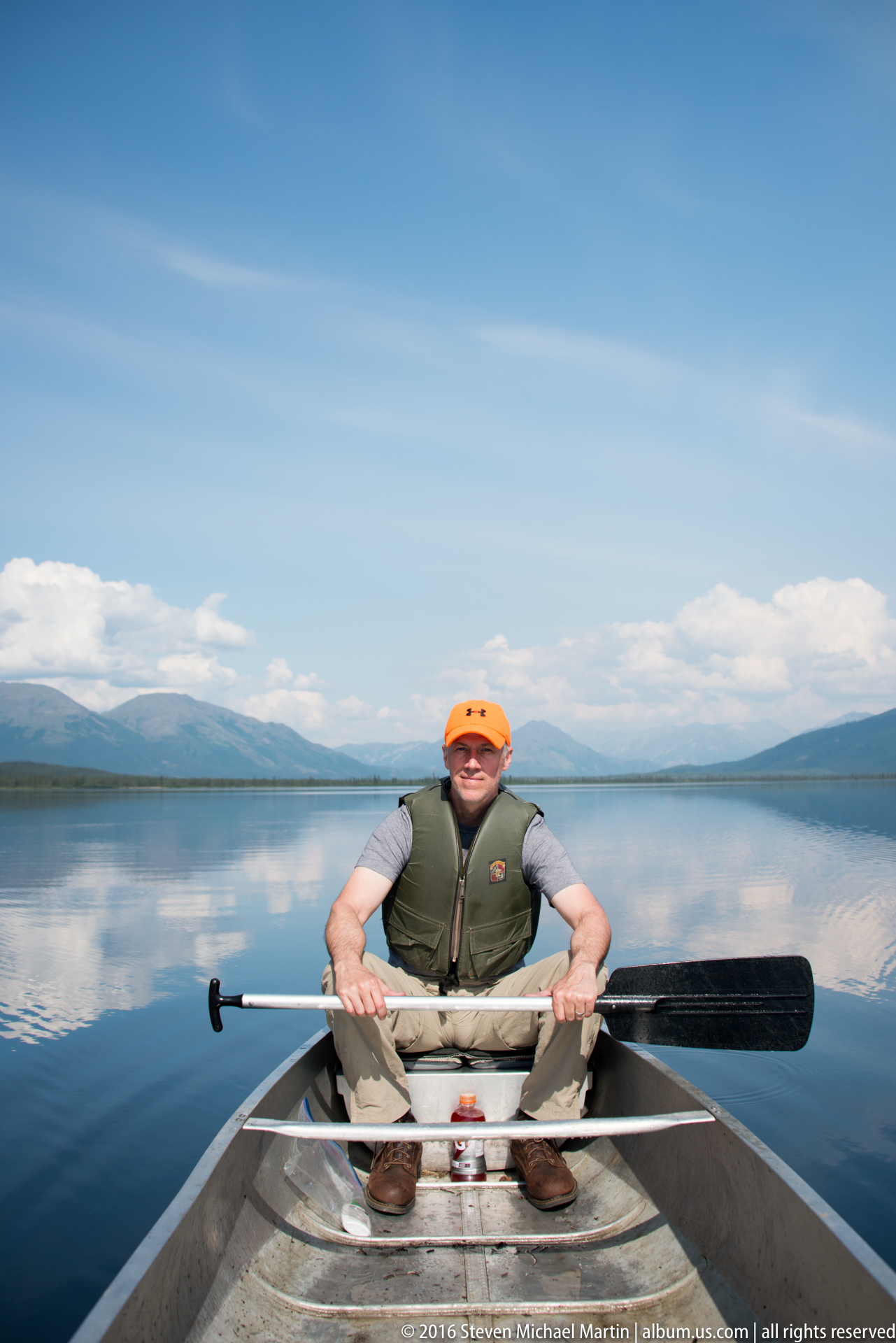
A man sits near the bow of a canoe, facing the camera with a paddle held across his lap. He wears an orange cap and flotation vest, while the boat points toward a distant mountain-lined shore. The low viewpoint from the canoe places the paddler within the broad water and sky, recording a moment of travel rather than a portrait at the lakeside.
Caption
A man sits near the bow of a canoe, facing the camera with a paddle held across his lap. He wears an orange cap and flotation vest, while the boat points toward a distant mountain-lined shore. The low viewpoint from the canoe places the paddler within the broad water and sky, recording a moment of travel rather than a portrait at the lakeside.
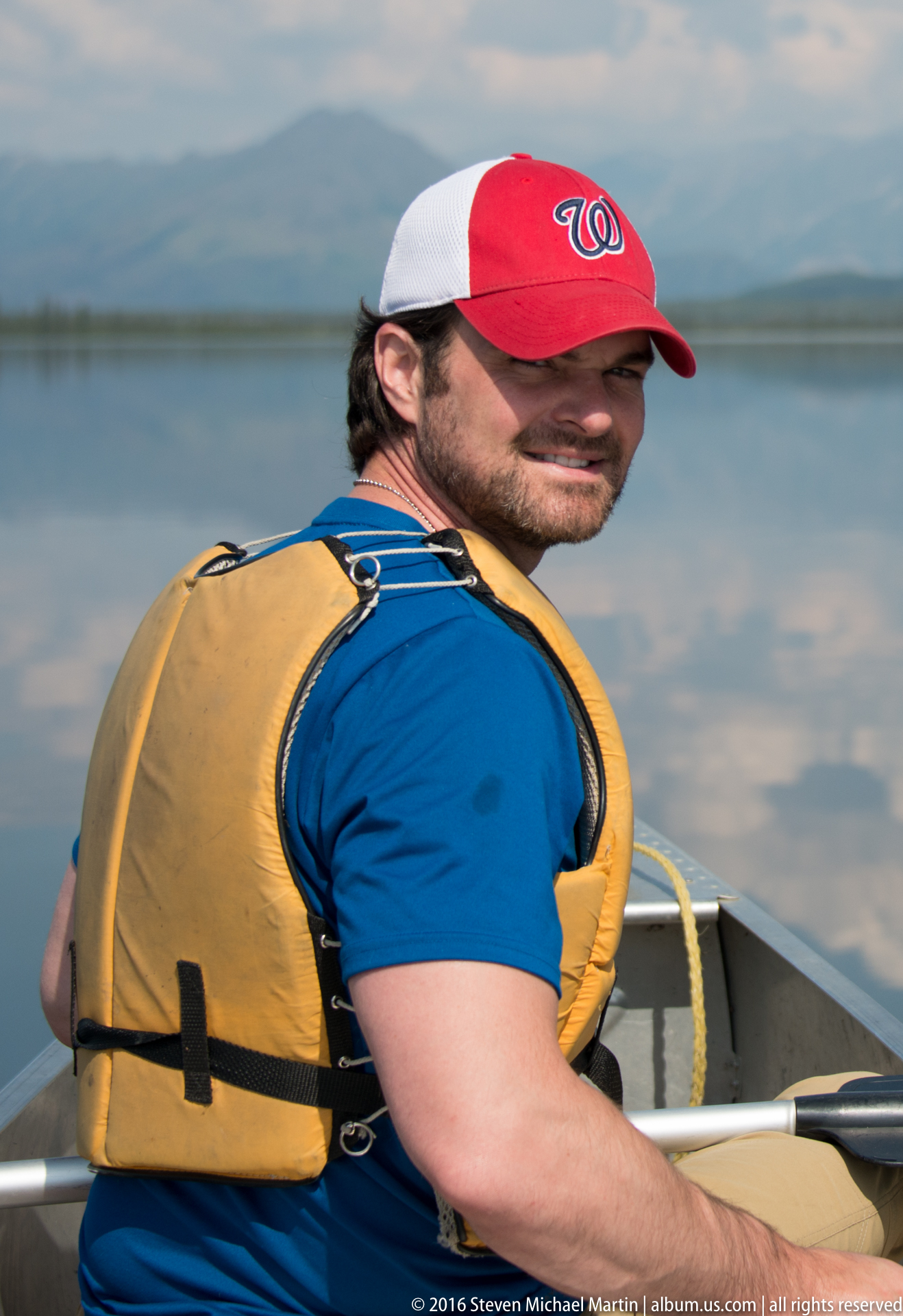
The close crop centers a man turning over his shoulder from a canoe, wearing a yellow life jacket and a red-and-white cap. The lake and far shore remain softly visible behind him, but the composition favors his expression and clothing over the surrounding landscape. The photograph provides a human-scale counterpart to the broad lake views in the sequence.
Caption
The close crop centers a man turning over his shoulder from a canoe, wearing a yellow life jacket and a red-and-white cap. The lake and far shore remain softly visible behind him, but the composition favors his expression and clothing over the surrounding landscape. The photograph provides a human-scale counterpart to the broad lake views in the sequence.
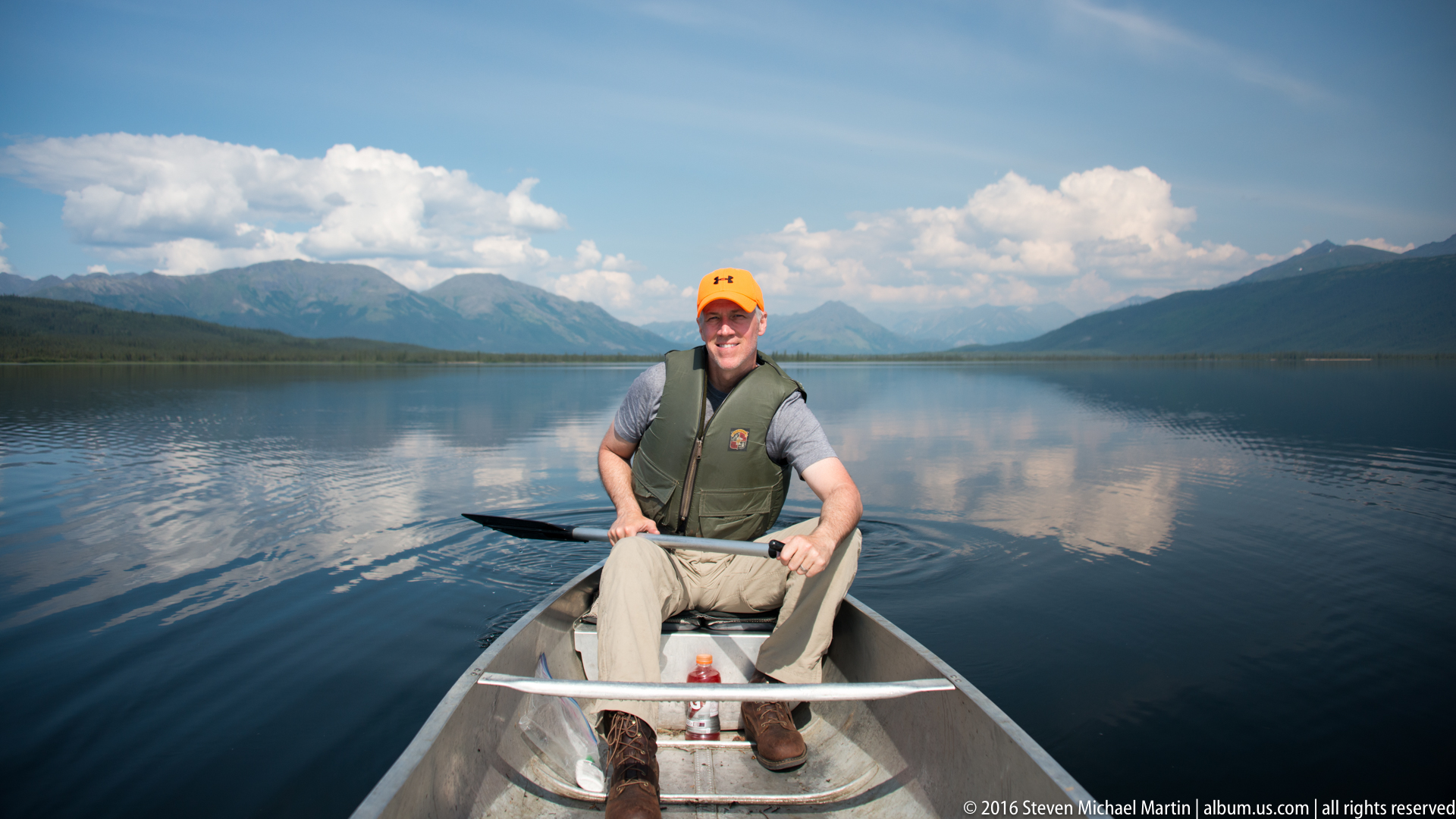
A canoeist sits facing the camera in a small aluminum canoe, holding a paddle across his lap. A bottle and other gear rest near his feet. Behind him, a broad lake reflects the surrounding mountains and cumulus clouds, placing the solitary paddler within a large, quiet landscape.
Caption
A canoeist sits facing the camera in a small aluminum canoe, holding a paddle across his lap. A bottle and other gear rest near his feet. Behind him, a broad lake reflects the surrounding mountains and cumulus clouds, placing the solitary paddler within a large, quiet landscape.

Seen from behind and to one side, a man in a yellow life jacket draws a black paddle through the water. The canoe’s metal crossbars frame the foreground, while the glassy lake mirrors a line of forest and distant mountains. The turned pose gives this view a sense of movement distinct from the front-facing canoe portrait.
Caption
Seen from behind and to one side, a man in a yellow life jacket draws a black paddle through the water. The canoe’s metal crossbars frame the foreground, while the glassy lake mirrors a line of forest and distant mountains. The turned pose gives this view a sense of movement distinct from the front-facing canoe portrait.
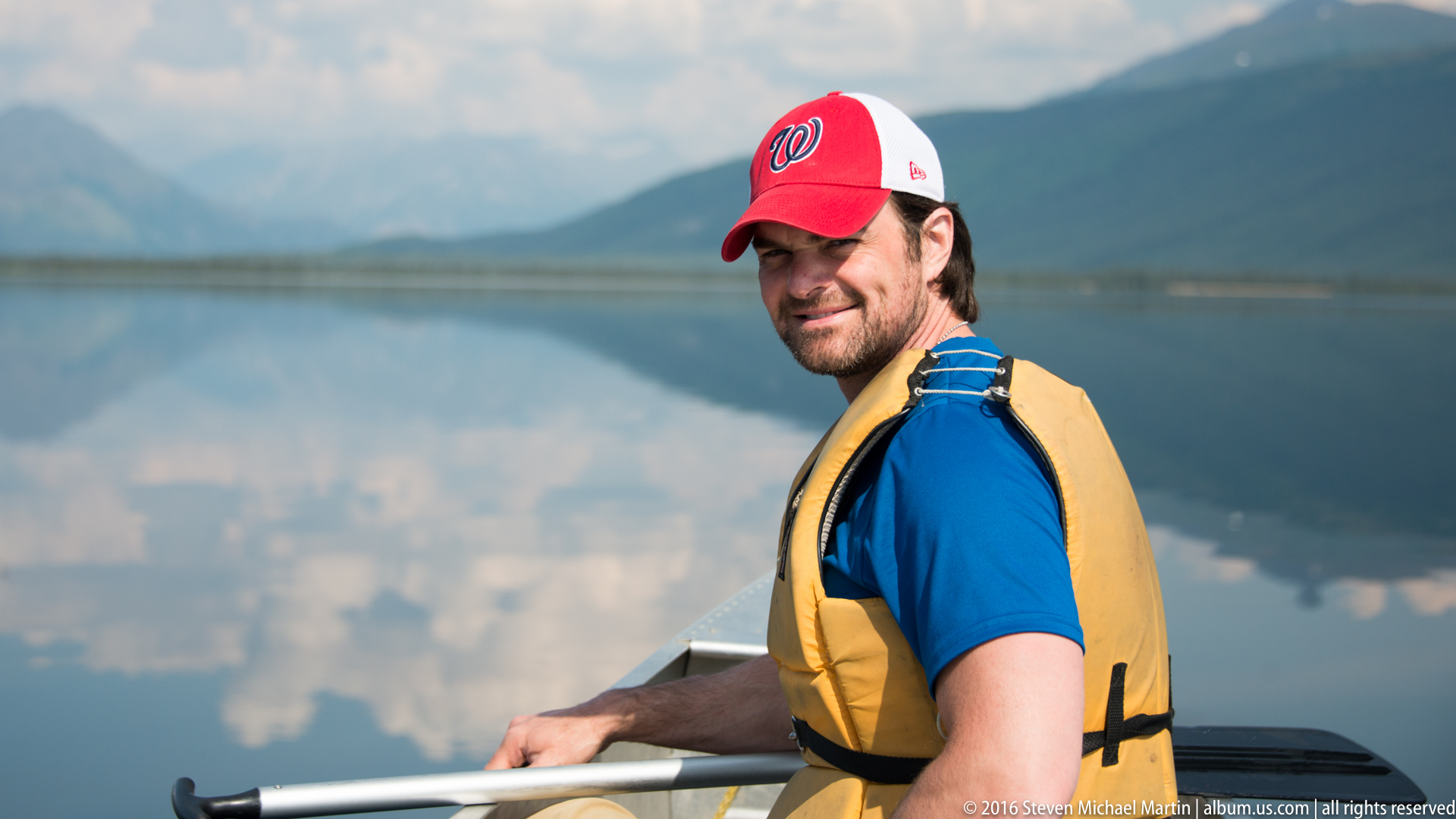
A man wearing a yellow life jacket and red-and-white cap sits sideways in a canoe, holding a paddle near the gunwale as he looks toward the camera. The lake’s pale reflection and a blurred mountain slope form a quiet backdrop. The medium portrait keeps both the paddler and his position on the water legible.
Caption
A man wearing a yellow life jacket and red-and-white cap sits sideways in a canoe, holding a paddle near the gunwale as he looks toward the camera. The lake’s pale reflection and a blurred mountain slope form a quiet backdrop. The medium portrait keeps both the paddler and his position on the water legible.
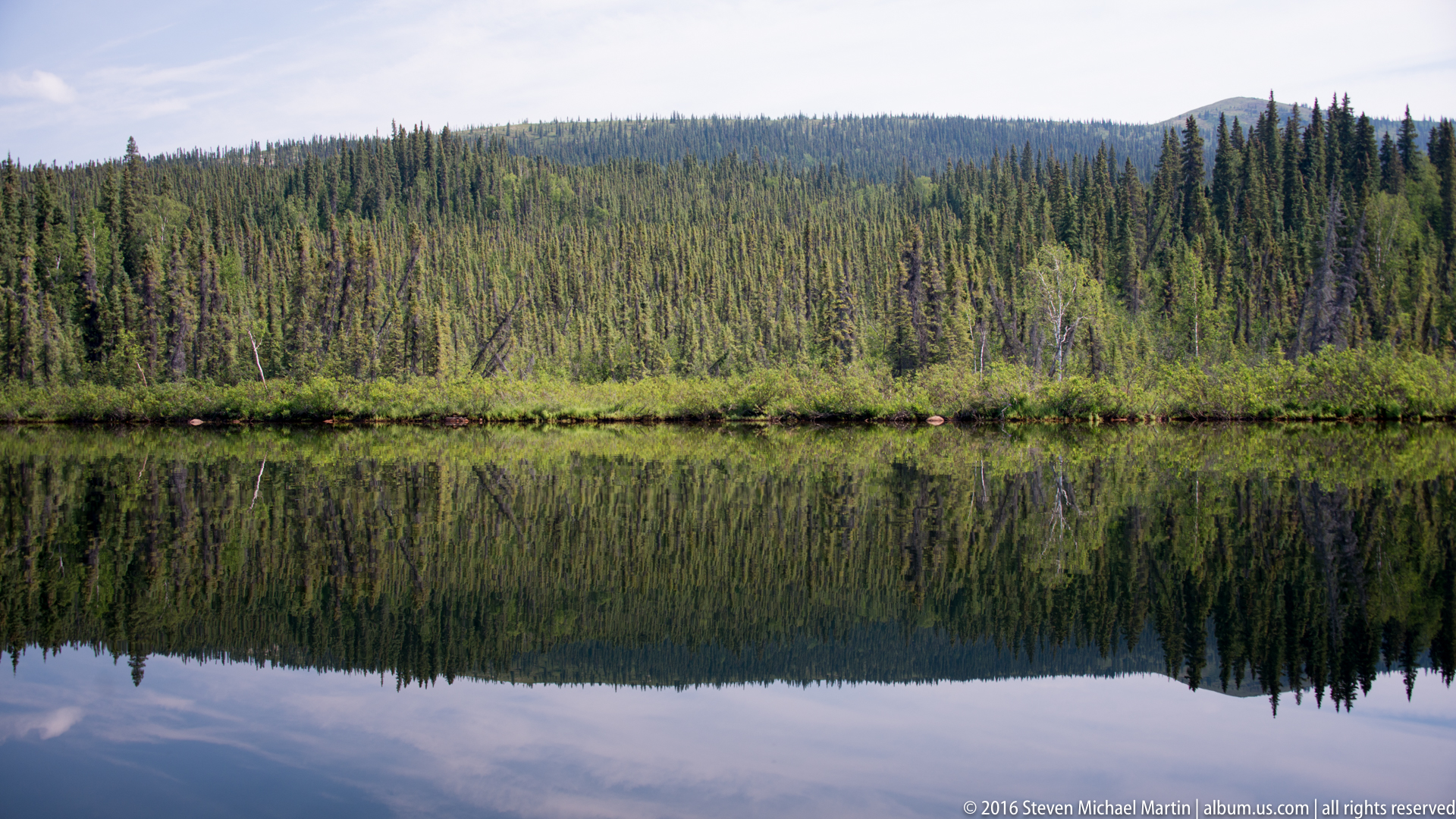
A densely wooded shoreline runs across the center of the frame, with a mountain ridge rising behind it and a near-perfect reflection below. Dark conifers and lighter deciduous growth create a varied edge along the water. The near symmetry and still surface turn the scene into a study of forest, mountain, and reflection rather than an action view.
Caption
A densely wooded shoreline runs across the center of the frame, with a mountain ridge rising behind it and a near-perfect reflection below. Dark conifers and lighter deciduous growth create a varied edge along the water. The near symmetry and still surface turn the scene into a study of forest, mountain, and reflection rather than an action view.
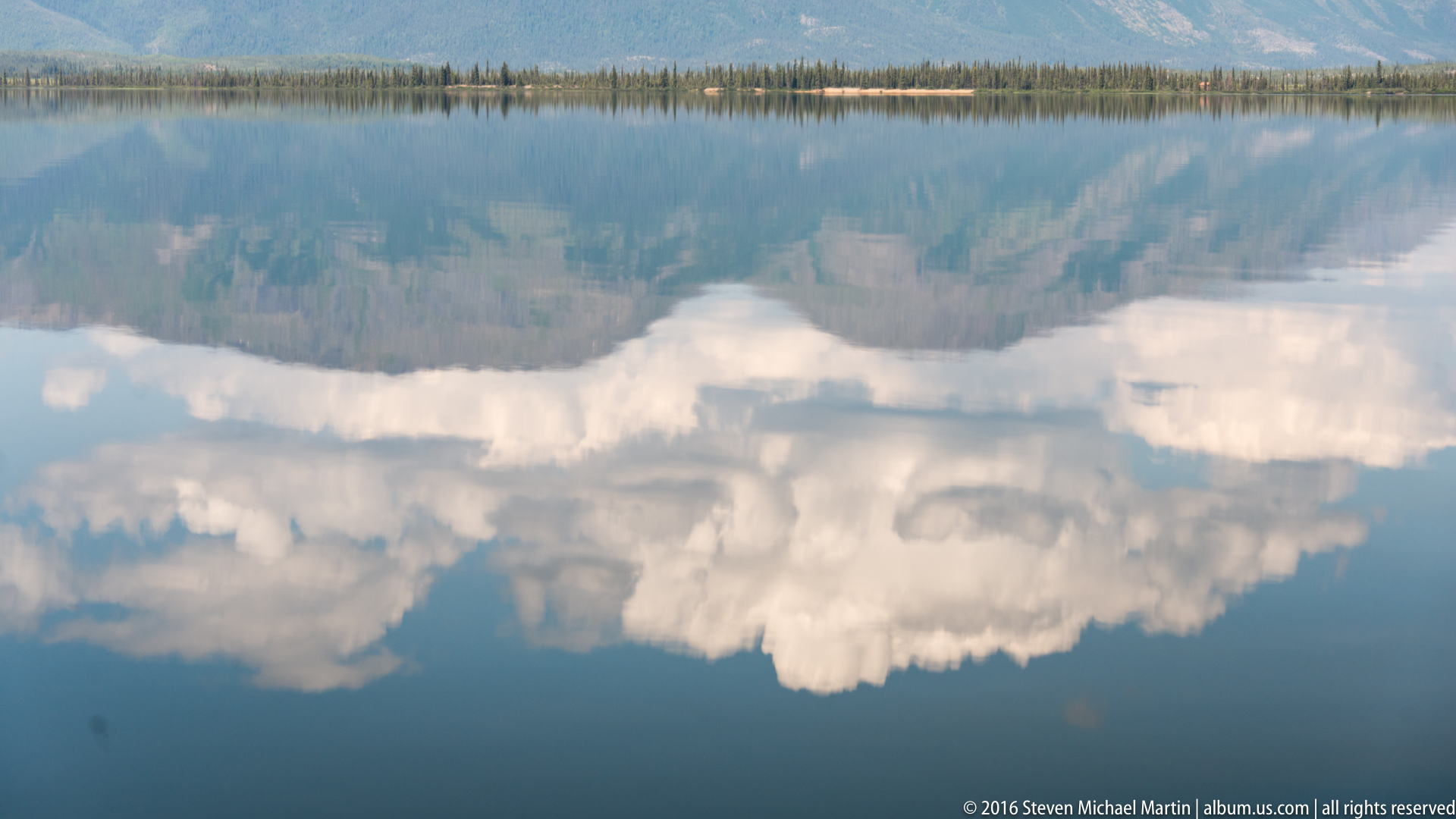
The frame is dominated by a broad reflection of bright cumulus clouds in deep blue water. A narrow strip of distant shoreline and mountain silhouettes remains along the top edge, emphasizing how the lake surface reverses the sky. With little foreground detail, the photograph focuses on reflected light and the calm expanse of water.
Caption
The frame is dominated by a broad reflection of bright cumulus clouds in deep blue water. A narrow strip of distant shoreline and mountain silhouettes remains along the top edge, emphasizing how the lake surface reverses the sky. With little foreground detail, the photograph focuses on reflected light and the calm expanse of water.
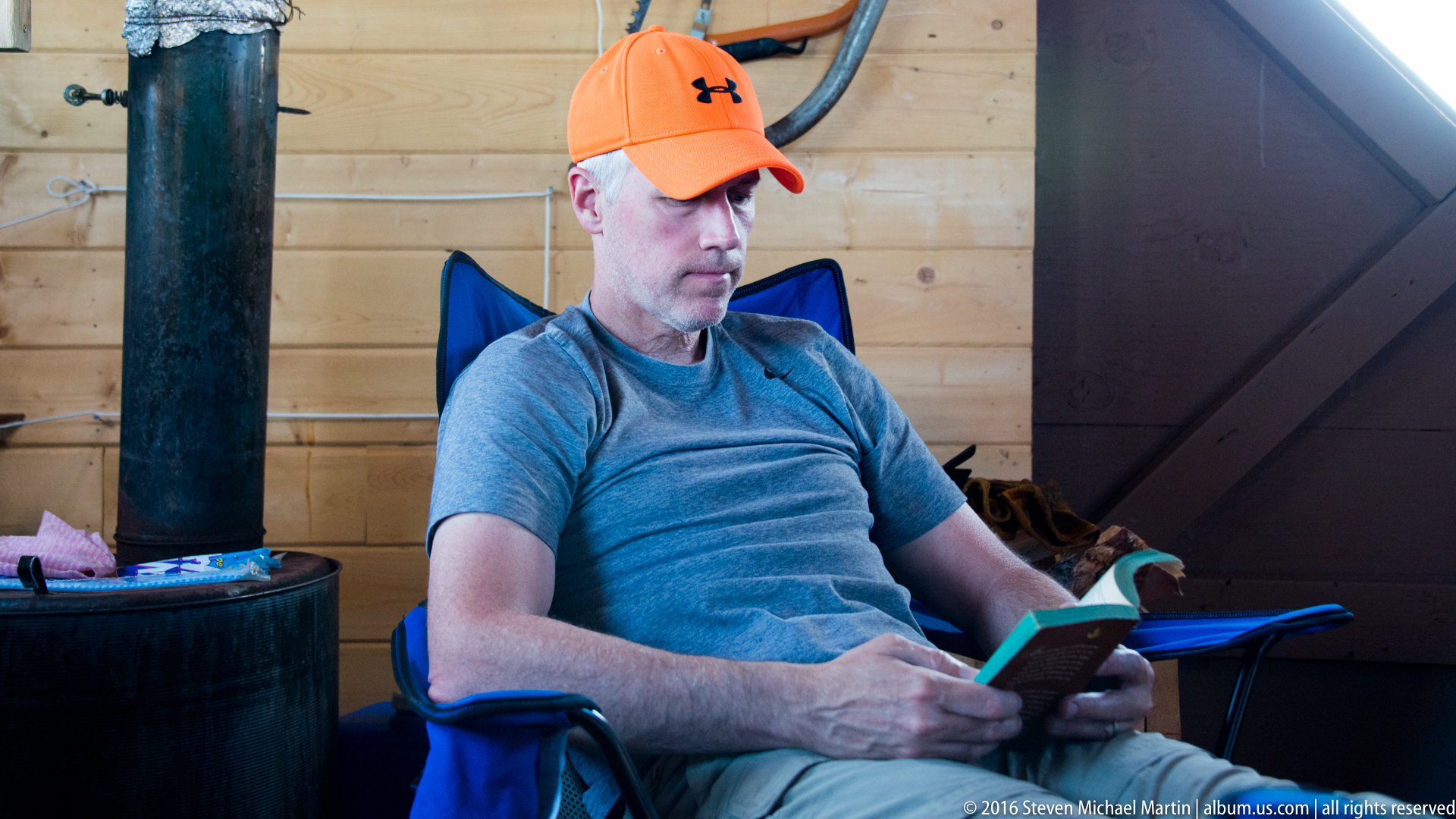
A man in an orange cap sits in a folding chair inside a small, wood-paneled cabin, looking down at a handheld device or book. A tall black stove stands beside him, and a narrow sloped ceiling encloses the compact room. The quiet interior portrait contrasts with the open water and mountain scenery outdoors.
Caption
A man in an orange cap sits in a folding chair inside a small, wood-paneled cabin, looking down at a handheld device or book. A tall black stove stands beside him, and a narrow sloped ceiling encloses the compact room. The quiet interior portrait contrasts with the open water and mountain scenery outdoors.
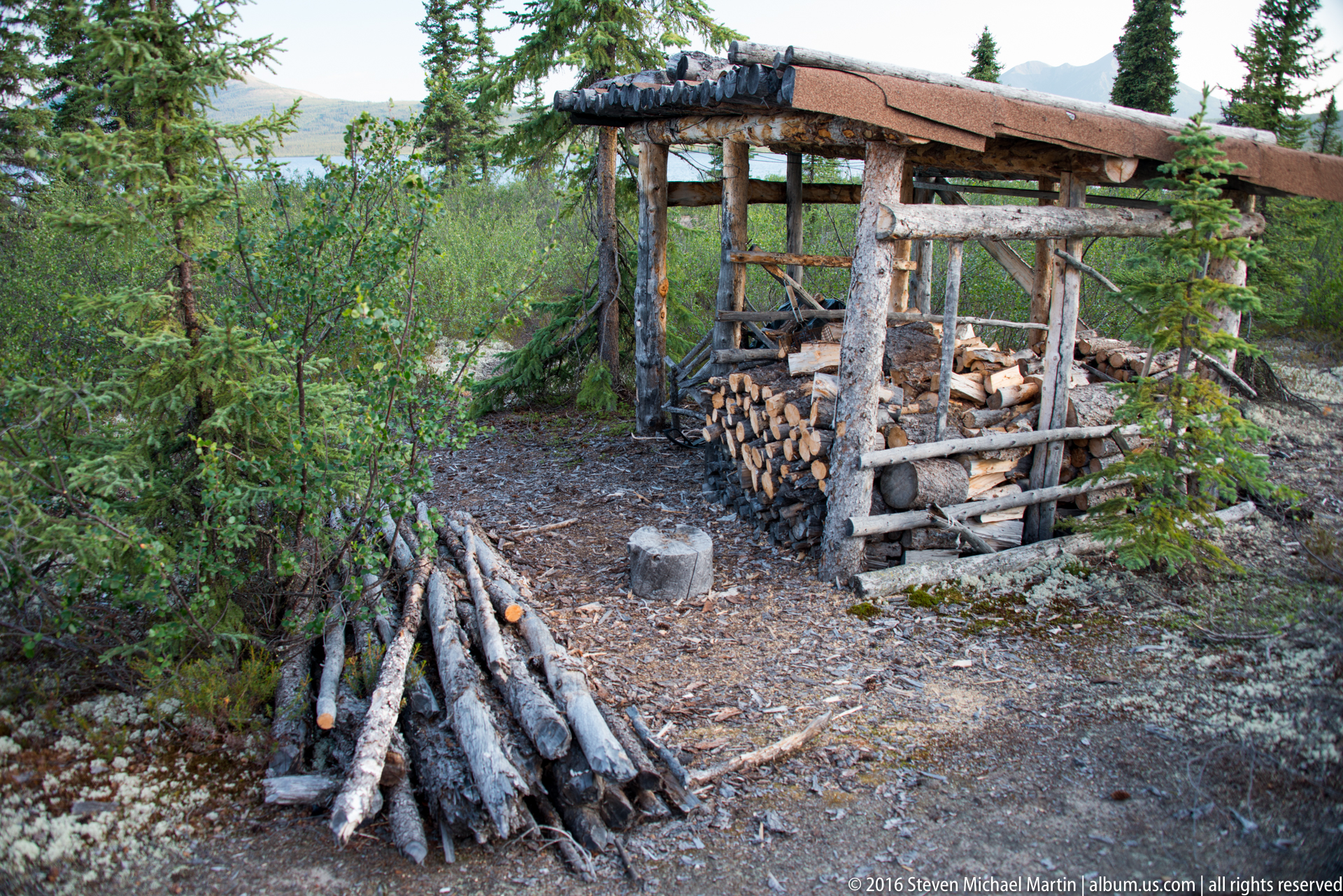
A rough timber shelter stands among spruce and shrubs, with split firewood stacked beneath its low roof and longer logs arranged beside the path. The open-sided structure protects the wood while remaining integrated with the forest clearing. A tarp or roofing material covers part of the top, and a chopping block sits near the entrance.
Caption
A rough timber shelter stands among spruce and shrubs, with split firewood stacked beneath its low roof and longer logs arranged beside the path. The open-sided structure protects the wood while remaining integrated with the forest clearing. A tarp or roofing material covers part of the top, and a chopping block sits near the entrance.

A slender plant carries several violet, daisy-like flower heads above small green leaves. One open bloom faces the camera, its yellow-orange center sharply defined against a softly blurred background of brown gravel and rock. The close view reveals the flower’s form and color, but the proof sheet does not support a precise species identification.
Caption
A slender plant carries several violet, daisy-like flower heads above small green leaves. One open bloom faces the camera, its yellow-orange center sharply defined against a softly blurred background of brown gravel and rock. The close view reveals the flower’s form and color, but the proof sheet does not support a precise species identification.

Warm light strikes a broad, pale rock summit above darker forested lower slopes. The mountain fills most of the frame, its broken ridgeline and exposed stone standing out against a clear blue sky. The compressed view isolates the peak from the surrounding valley; no individual mountain name is legible or provided.
Caption
Warm light strikes a broad, pale rock summit above darker forested lower slopes. The mountain fills most of the frame, its broken ridgeline and exposed stone standing out against a clear blue sky. The compressed view isolates the peak from the surrounding valley; no individual mountain name is legible or provided.
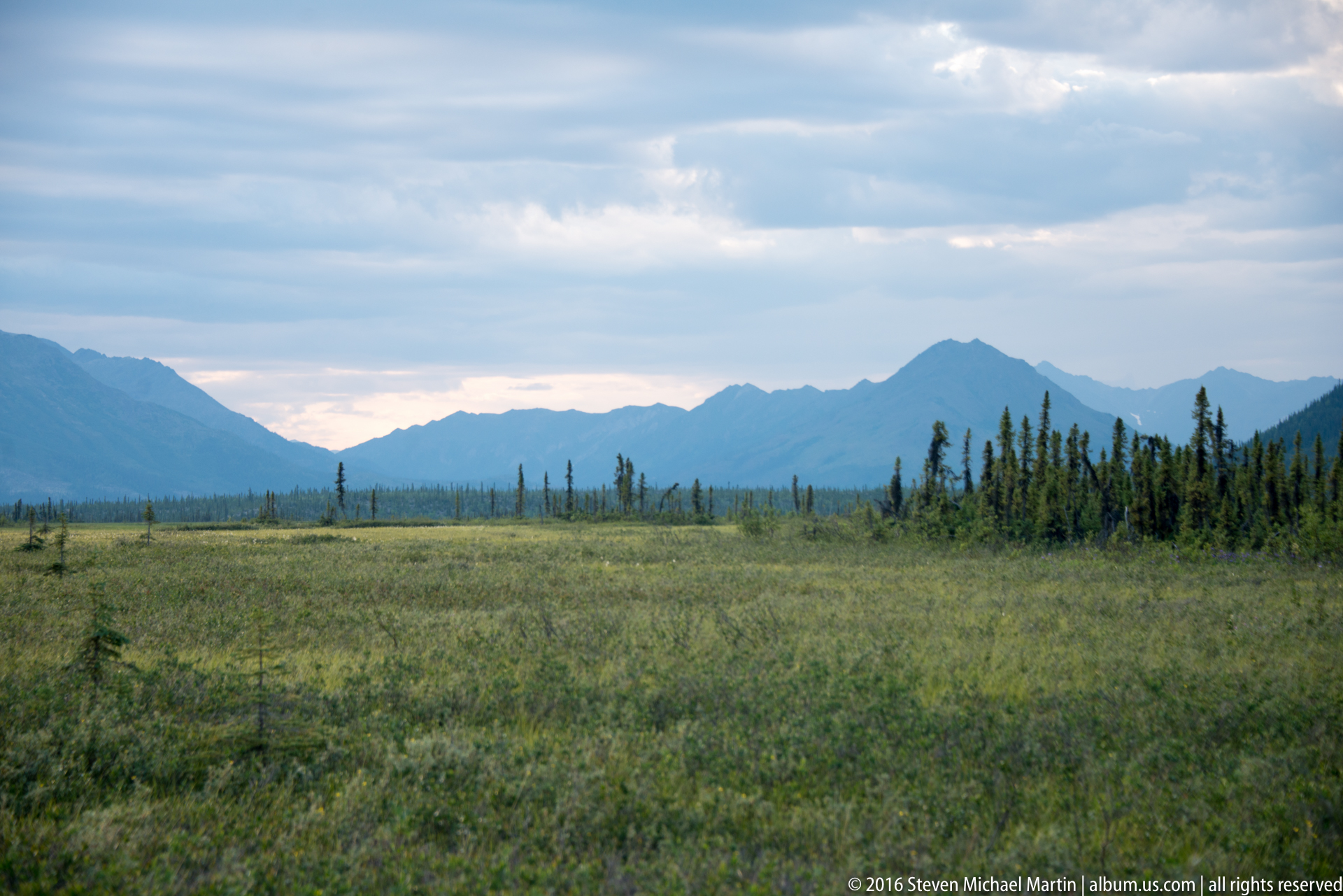
A broad, low plain of grasses and shrubs opens toward layered mountain ridges beneath a bright, clouded sky. Scattered spruce form a broken line across the middle distance, while the foreground remains largely treeless. The wide composition gives the landscape room to unfold from tundra-like ground to distant relief.
Caption
A broad, low plain of grasses and shrubs opens toward layered mountain ridges beneath a bright, clouded sky. Scattered spruce form a broken line across the middle distance, while the foreground remains largely treeless. The wide composition gives the landscape room to unfold from tundra-like ground to distant relief.
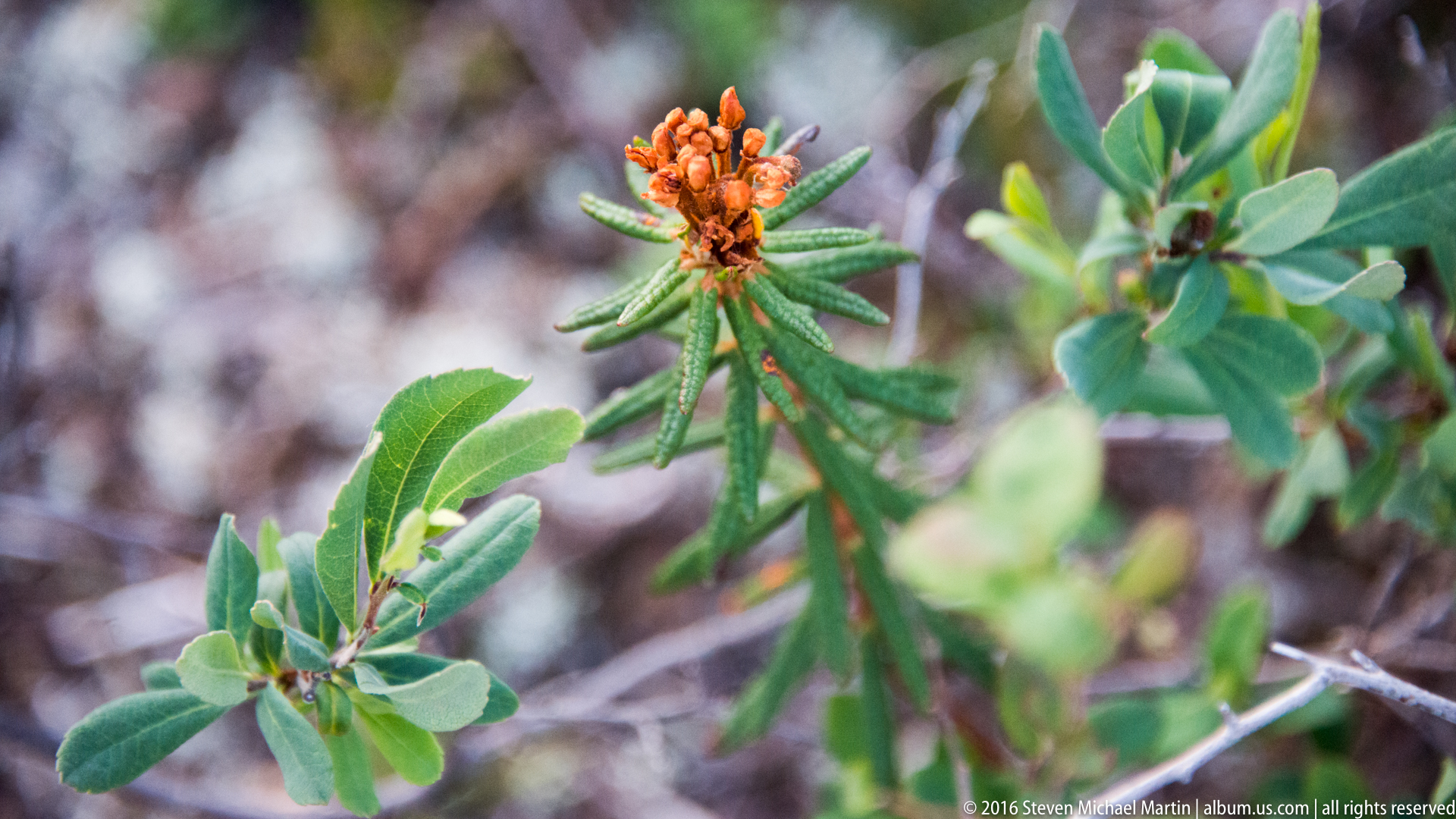
A close view centers a compact cluster of orange flowers at the tip of a woody stem, surrounded by oval green leaves with pale undersides. Other branches soften into the background, isolating the small cluster from its tundra setting. The flower and leaf arrangement is visible, but a species-level identification would require clearer diagnostic detail.
Caption
A close view centers a compact cluster of orange flowers at the tip of a woody stem, surrounded by oval green leaves with pale undersides. Other branches soften into the background, isolating the small cluster from its tundra setting. The flower and leaf arrangement is visible, but a species-level identification would require clearer diagnostic detail.
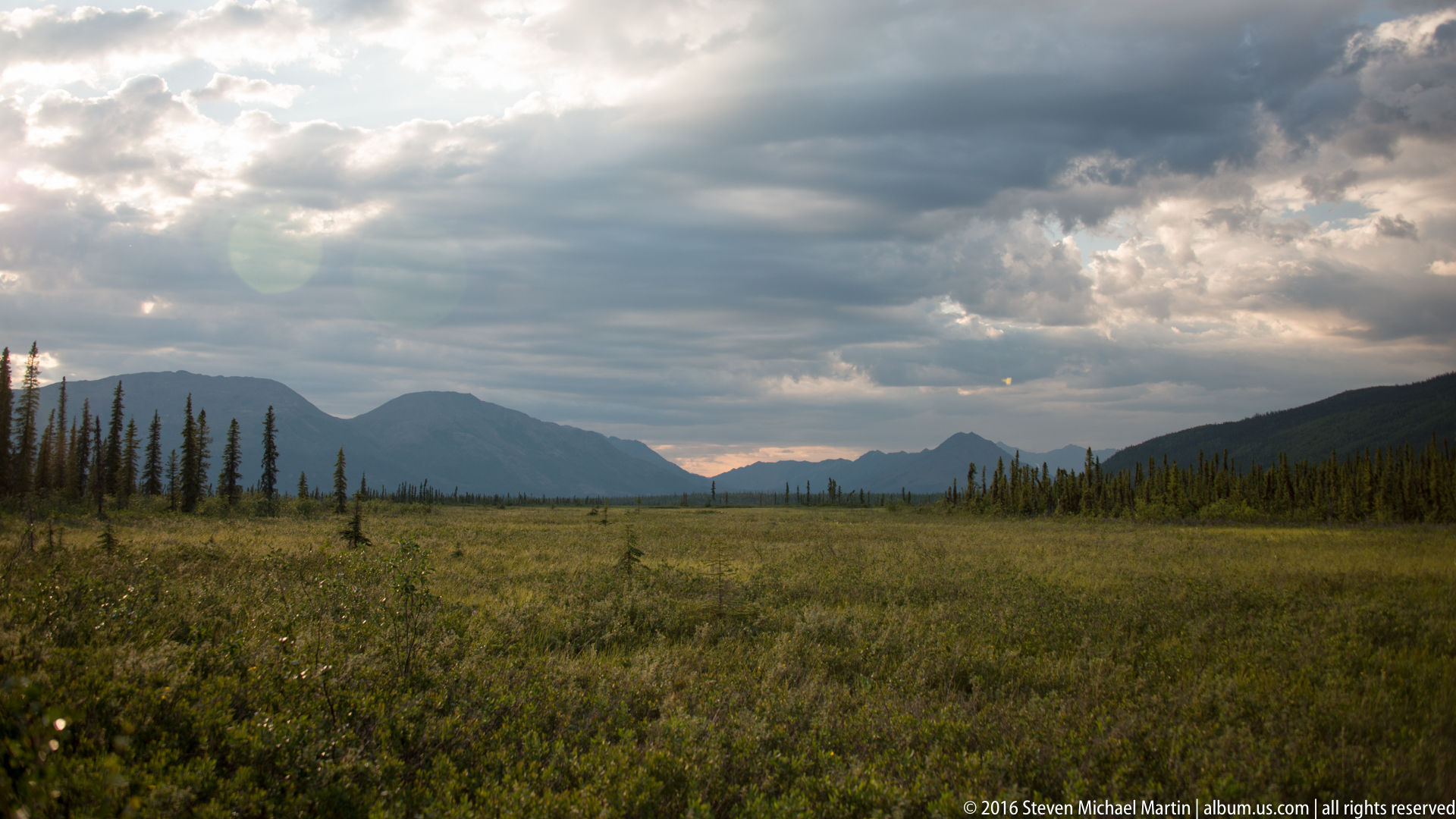
A low sun illuminates a narrow band near the horizon while heavy clouds cast broad shadows across the open plain. Dark mountain silhouettes frame the distant gap, and scattered spruce punctuate the foreground. A small flare of light appears beneath the cloud cover, giving this view a different mood from the brighter daytime landscapes nearby.
Caption
A low sun illuminates a narrow band near the horizon while heavy clouds cast broad shadows across the open plain. Dark mountain silhouettes frame the distant gap, and scattered spruce punctuate the foreground. A small flare of light appears beneath the cloud cover, giving this view a different mood from the brighter daytime landscapes nearby.
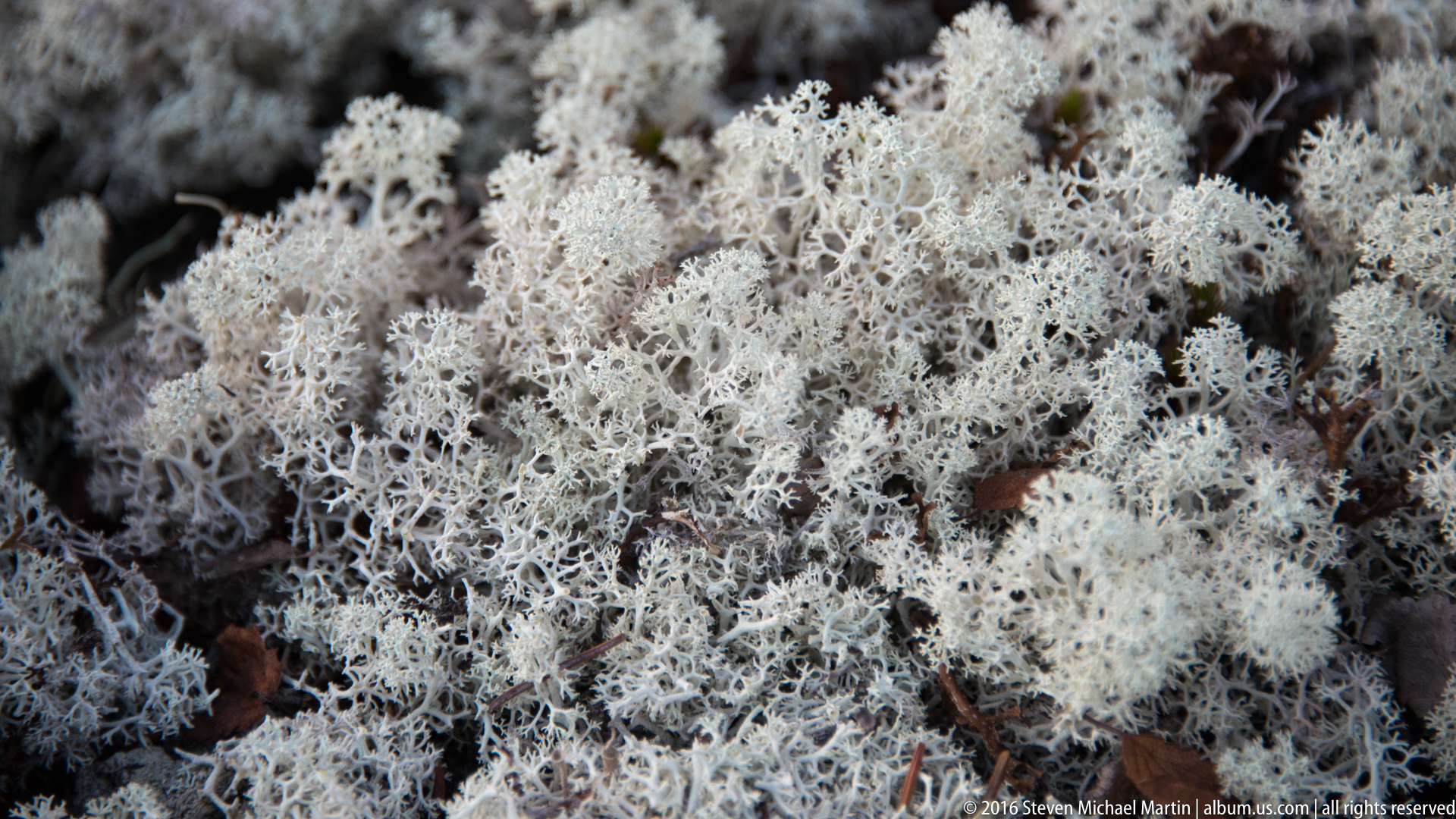
A close-up reveals a dense, branching mat of pale gray-white lichen spread over dark soil, moss, and small pieces of forest debris. The delicate fronds form a porous, coral-like texture across nearly the entire frame. The view supports a lichen identification, but does not provide enough detail to distinguish a particular species with confidence.
Caption
A close-up reveals a dense, branching mat of pale gray-white lichen spread over dark soil, moss, and small pieces of forest debris. The delicate fronds form a porous, coral-like texture across nearly the entire frame. The view supports a lichen identification, but does not provide enough detail to distinguish a particular species with confidence.
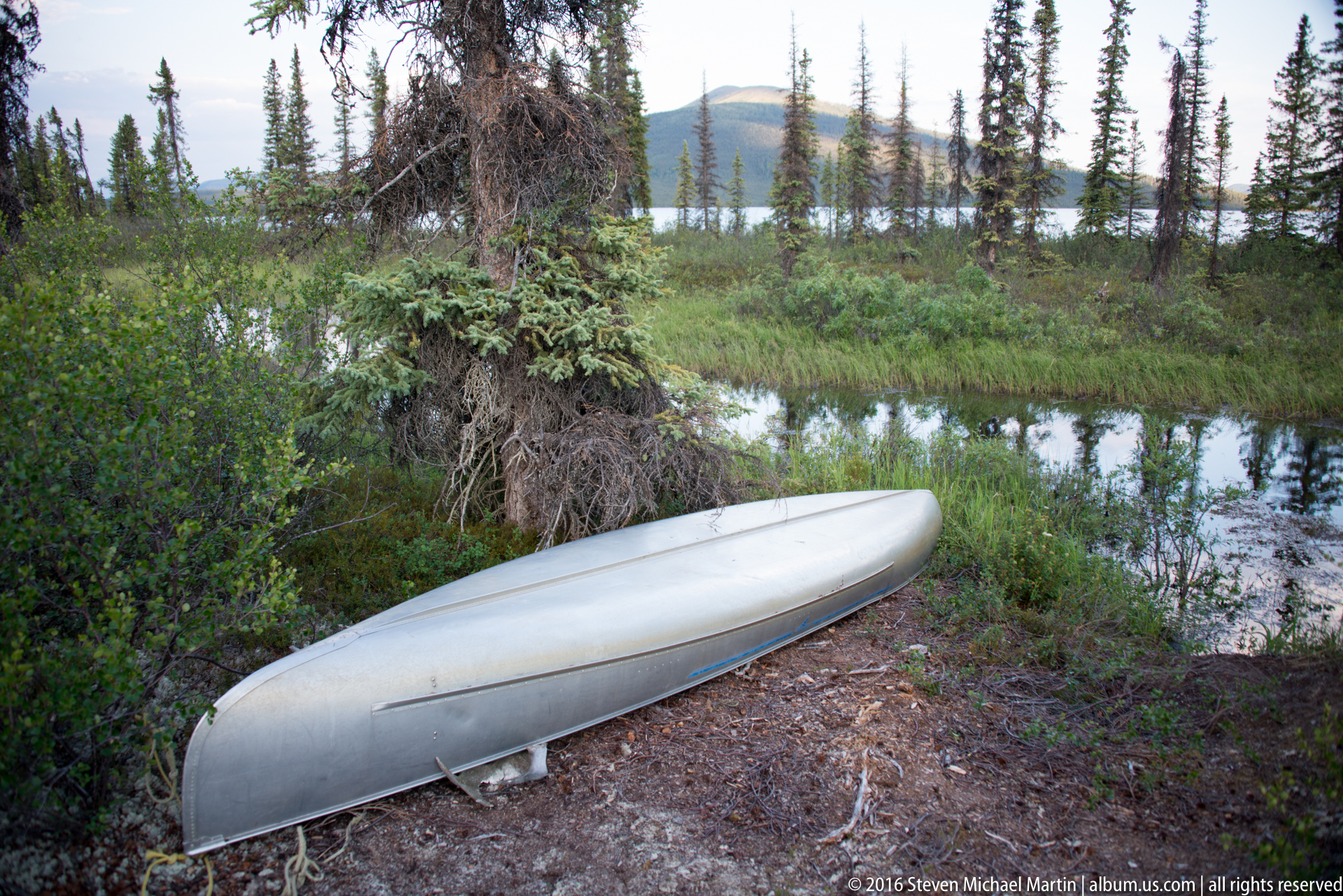
A pale canoe lies upside down on a narrow strip of shore, its hull curving across the foreground. Behind it, low spruce branches, shrubs, and small pools lead toward a glimpse of open water. The close shoreline view suggests a landing or storage place, but the canoe’s exact use and owner are not evident.
Caption
A pale canoe lies upside down on a narrow strip of shore, its hull curving across the foreground. Behind it, low spruce branches, shrubs, and small pools lead toward a glimpse of open water. The close shoreline view suggests a landing or storage place, but the canoe’s exact use and owner are not evident.

A blue enamel kettle and a large black pot sit side by side on a freestanding two-burner range. The close framing shows the burner grates and metal supports, with reflective insulation behind the stove suggesting a compact sheltered cooking area. No flame or food is visible, so the image records equipment rather than a specific meal in progress.
Caption
A blue enamel kettle and a large black pot sit side by side on a freestanding two-burner range. The close framing shows the burner grates and metal supports, with reflective insulation behind the stove suggesting a compact sheltered cooking area. No flame or food is visible, so the image records equipment rather than a specific meal in progress.
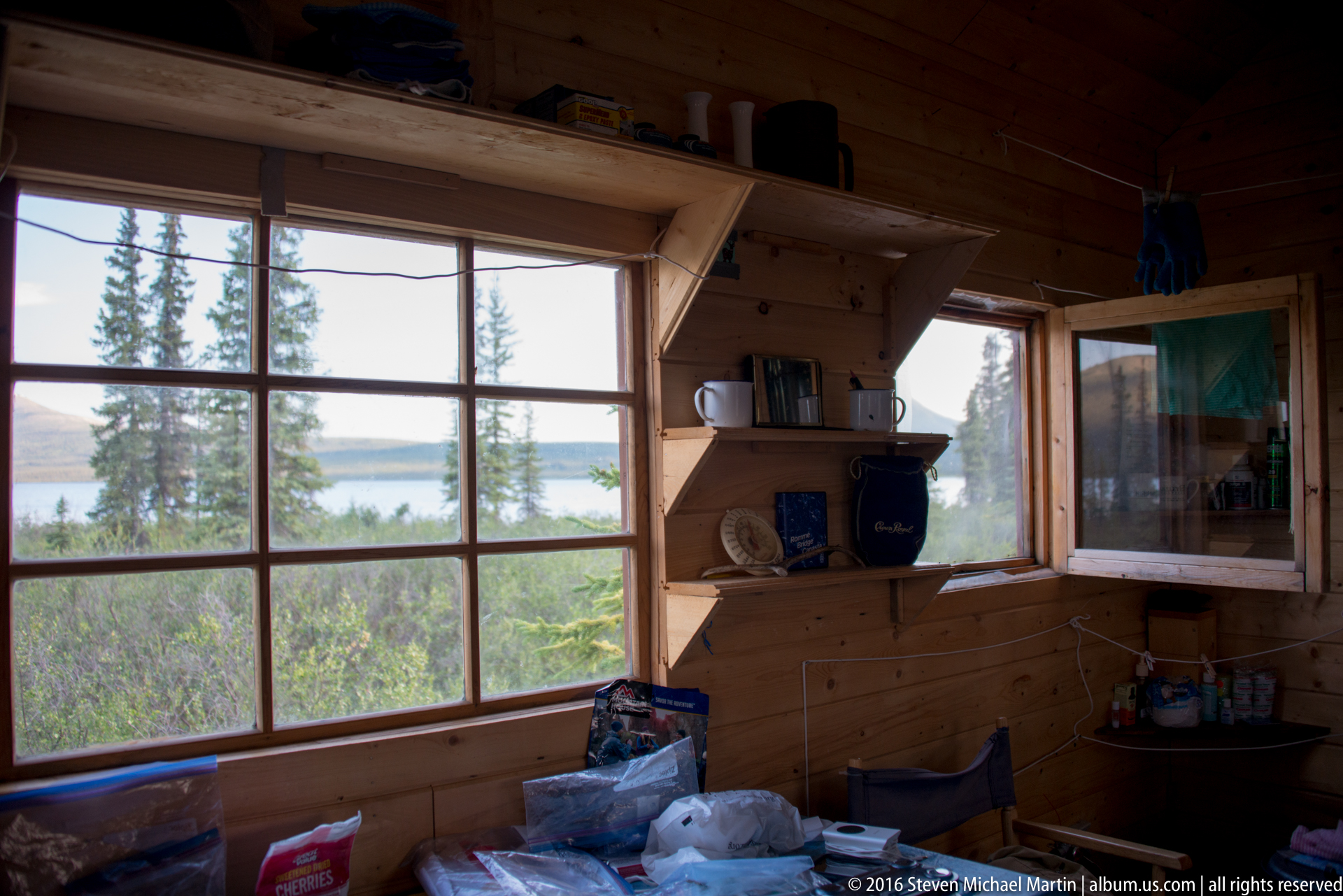
Large divided windows look from a wood-paneled room toward trees and a strip of lake. Bags and supplies cover a table or counter below, while open shelves hold mugs and small containers. The arrangement combines a practical interior with an expansive view outdoors, suggesting a lived-in camp space without revealing its occupants.
Caption
Large divided windows look from a wood-paneled room toward trees and a strip of lake. Bags and supplies cover a table or counter below, while open shelves hold mugs and small containers. The arrangement combines a practical interior with an expansive view outdoors, suggesting a lived-in camp space without revealing its occupants.
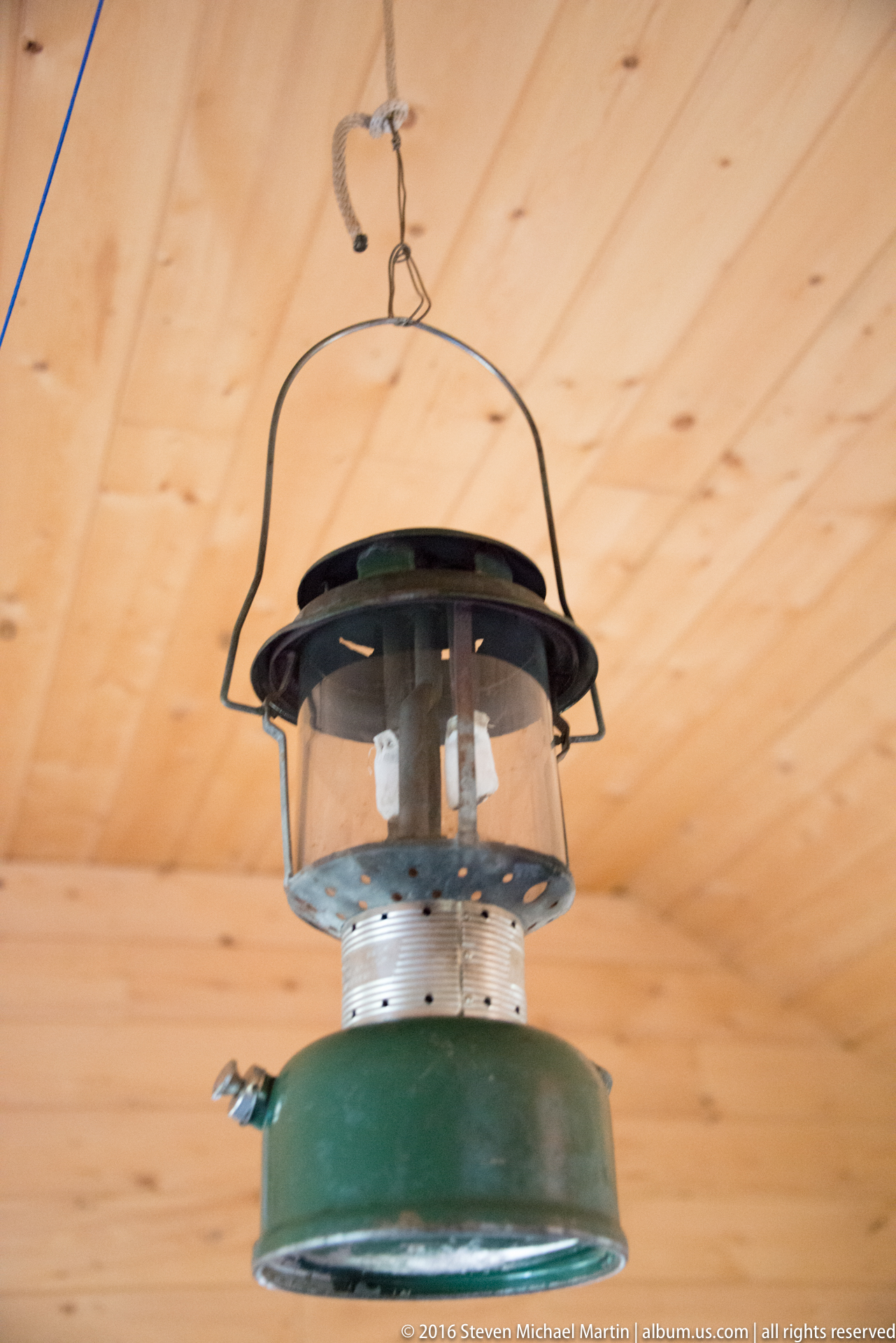
A green metal lantern hangs from a hook beneath a pale wooden ceiling. Its glass globe, protective wire frame, and curved carrying handle are visible in close detail. The simple fixture suggests portable cabin lighting, although the lantern is unlit and its fuel type or maker cannot be confirmed from the photograph alone.
Caption
A green metal lantern hangs from a hook beneath a pale wooden ceiling. Its glass globe, protective wire frame, and curved carrying handle are visible in close detail. The simple fixture suggests portable cabin lighting, although the lantern is unlit and its fuel type or maker cannot be confirmed from the photograph alone.

A pink-orange sky fades above a chain of dark mountain silhouettes, while a line of spruce and the open foreground fall nearly black. The low horizon leaves most of the frame to the glowing dusk, making this a study of color and silhouette rather than surface detail. The scene’s quiet contrast distinguishes it from the cloudier daylight views.
Caption
A pink-orange sky fades above a chain of dark mountain silhouettes, while a line of spruce and the open foreground fall nearly black. The low horizon leaves most of the frame to the glowing dusk, making this a study of color and silhouette rather than surface detail. The scene’s quiet contrast distinguishes it from the cloudier daylight views.
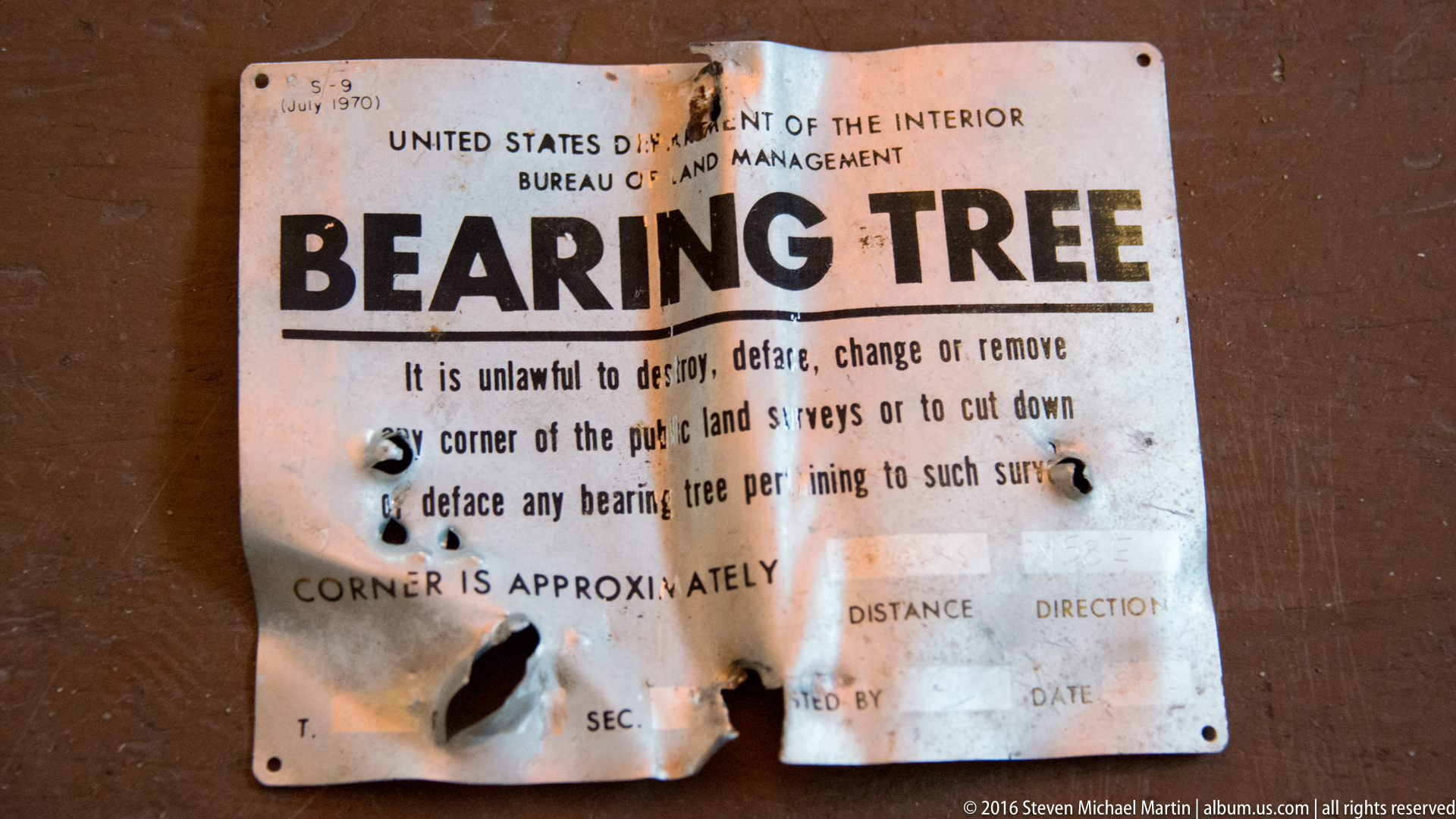
A worn metal sign headed BEARING TREE explains that it is unlawful to destroy, deface, change, or remove public-land survey corners and associated bearing trees. The Bureau of Land Management identification appears across the top, while punched holes and creases mark the sign’s damaged surface. The close view preserves a practical notice about protecting survey markers in remote terrain.
Caption
A worn metal sign headed BEARING TREE explains that it is unlawful to destroy, deface, change, or remove public-land survey corners and associated bearing trees. The Bureau of Land Management identification appears across the top, while punched holes and creases mark the sign’s damaged surface. The close view preserves a practical notice about protecting survey markers in remote terrain.

Four paperback books are spread across a red patterned bed covering. Two covers clearly name Jack London, while the others show illustrated adventure scenes and partly legible titles. Their worn covers and informal placement suggest reading material gathered in a cabin, but the image does not establish who owns the books or when they were read.
Caption
Four paperback books are spread across a red patterned bed covering. Two covers clearly name Jack London, while the others show illustrated adventure scenes and partly legible titles. Their worn covers and informal placement suggest reading material gathered in a cabin, but the image does not establish who owns the books or when they were read.
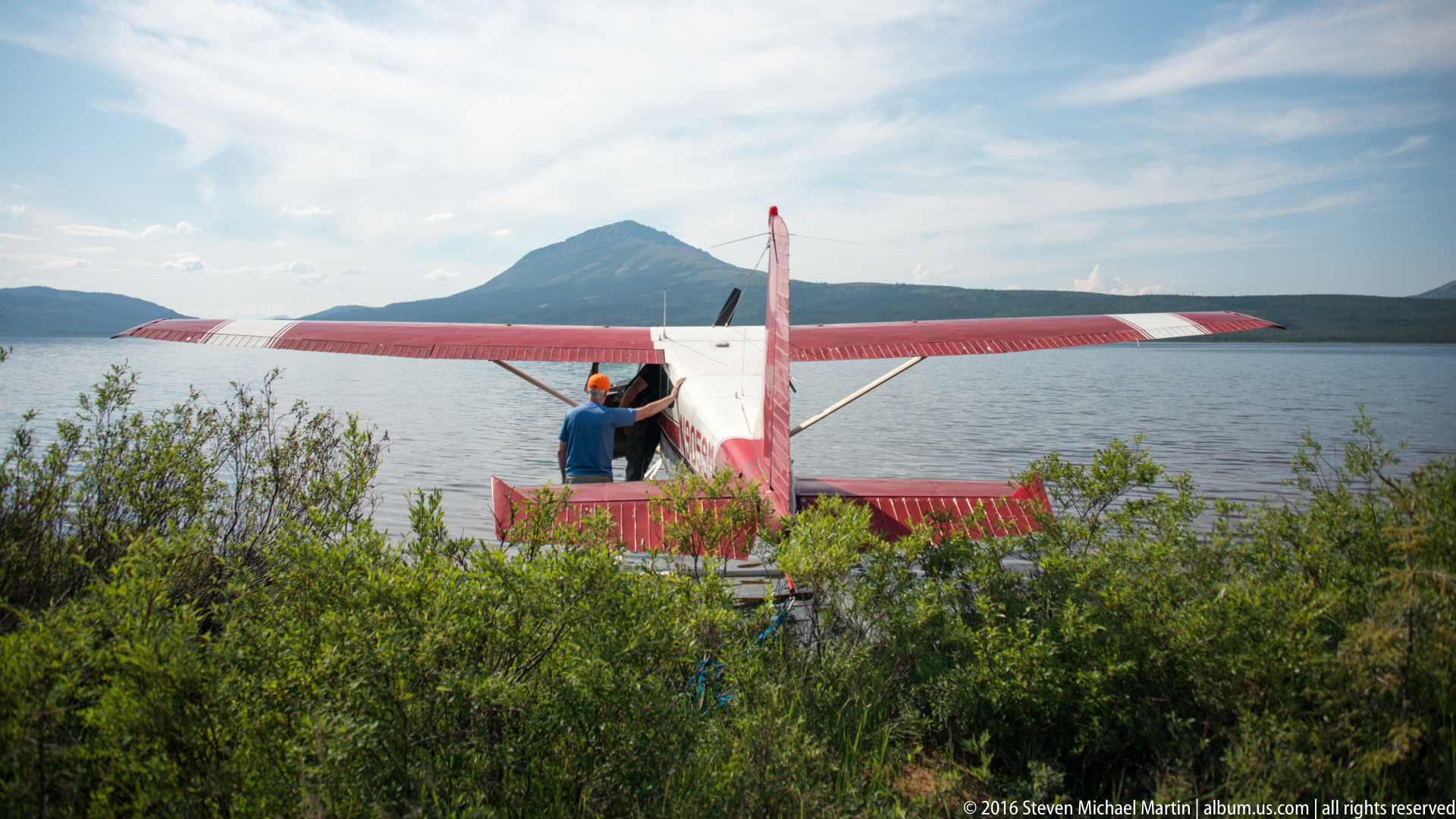
A red-and-white high-wing floatplane sits at the lake’s edge, partly screened by brush. A person in an orange cap stands beside the open cabin area, appearing to prepare to board. Water and a rounded mountain rise behind the aircraft, placing the small plane within the lake-centered landscape and showing its role as a practical means of access.
Caption
A red-and-white high-wing floatplane sits at the lake’s edge, partly screened by brush. A person in an orange cap stands beside the open cabin area, appearing to prepare to board. Water and a rounded mountain rise behind the aircraft, placing the small plane within the lake-centered landscape and showing its role as a practical means of access.
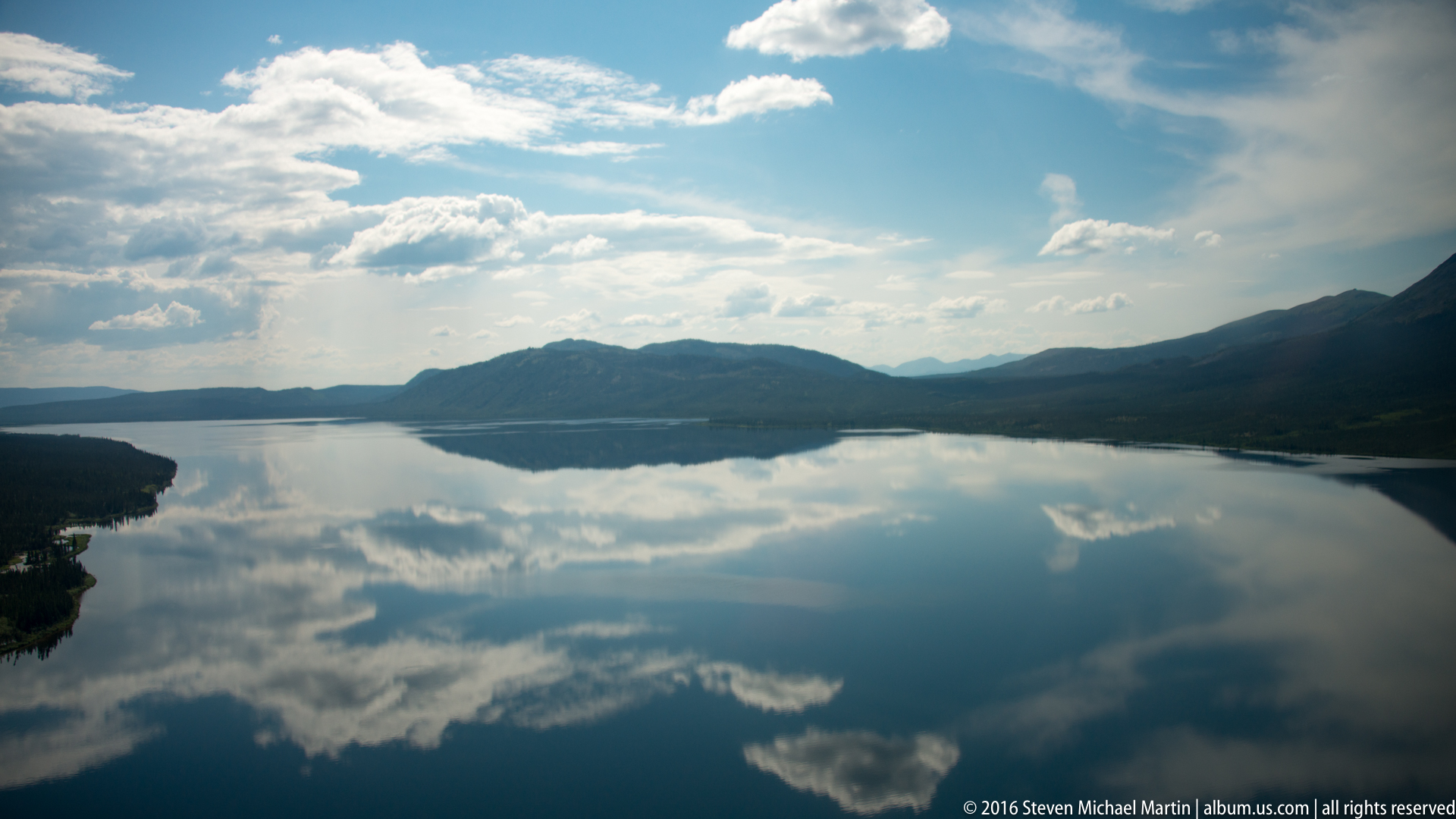
A wide expanse of water reflects bright cumulus clouds, while low mountain ridges and forested shorelines curve around the far side of the lake. A small patch of blue sky opens above the clouds. The elevated viewpoint makes the reflected sky nearly as prominent as the distant landscape, giving the water a calm, mirror-like surface.
Caption
A wide expanse of water reflects bright cumulus clouds, while low mountain ridges and forested shorelines curve around the far side of the lake. A small patch of blue sky opens above the clouds. The elevated viewpoint makes the reflected sky nearly as prominent as the distant landscape, giving the water a calm, mirror-like surface.
Gates of the Arctic National Park and Preserve — Field Guide
National Park Field Guide
📍 Overview
Gates of the Arctic National Park and Preserve protects one of the largest undeveloped wilderness areas in the United States. Located north of the Arctic Circle, the park includes rugged mountain ranges, broad river valleys, and tundra landscapes shaped by glacial and geological processes. The absence of roads and developed trails contributes to a strong sense of isolation and environmental continuity.
The Brooks Range forms the central geographic feature of the park, creating dramatic transitions between interior forest ecosystems and northern tundra environments. Wildlife including caribou, wolves, and bears inhabit the region, reflecting ecological relationships shaped by seasonal migration and climate conditions. Archaeological evidence indicates long-standing human presence connected to subsistence traditions adapted to Arctic environments.
⭐ Highlights
- One of the most remote national parks in the United States
- Brooks Range mountain landscapes
- Large-scale wilderness with minimal development
- Wildlife habitats shaped by seasonal migration
- River systems flowing through Arctic valleys
🔎 Key Features
- Mountain ranges formed by geological uplift
- Remote tundra and river valley ecosystems
- Archaeological evidence of early human activity
- Landscape shaped by glacial processes
- Minimal infrastructure emphasizing wilderness preservation
📷 Photography Notes
- Wide compositions help convey the scale of the landscape
- Low-angle light can emphasize mountain textures
- Weather changes can create dramatic atmosphere
- Foreground elements help add depth to expansive views
- Seasonal colors can vary significantly across tundra terrain
- Look for compositions that emphasize isolation and scale

A printed page pairs a snow-covered mountain panorama with a lone hiker crossing the foreground. Smaller photographs of wildlife, plants, and terrain sit above columns of explanatory text, arranging the Arctic landscape as both a vast setting and a place encountered on foot. The tiny print is not legible in this view, so the page’s precise publication title and claims remain unidentified.
Caption
A printed page pairs a snow-covered mountain panorama with a lone hiker crossing the foreground. Smaller photographs of wildlife, plants, and terrain sit above columns of explanatory text, arranging the Arctic landscape as both a vast setting and a place encountered on foot. The tiny print is not legible in this view, so the page’s precise publication title and claims remain unidentified.

The map traces the extensive, irregular boundary of Gates of the Arctic National Park and Preserve across a relief-rendered section of northern Alaska. Green lines enclose a broad central area and several separated units, while nearby preserves, wilderness areas, rivers, and settlements place the protected lands in regional context. The park’s name is printed prominently within the shaded mountain terrain.
Caption
The map traces the extensive, irregular boundary of Gates of the Arctic National Park and Preserve across a relief-rendered section of northern Alaska. Green lines enclose a broad central area and several separated units, while nearby preserves, wilderness areas, rivers, and settlements place the protected lands in regional context. The park’s name is printed prominently within the shaded mountain terrain.
Other Arctic Alaska Portfolios:
Gates of the Arctic NP – Anaktuvuk Pass

Gates of the Arctic NP – Bettles
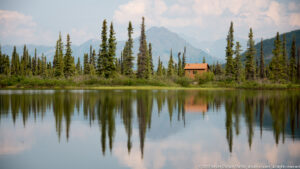
Gates of the Arctic NP – Lake Nutuvukti
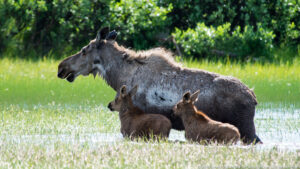
Kobuk Valley NP – Onion Portage and River Exploration
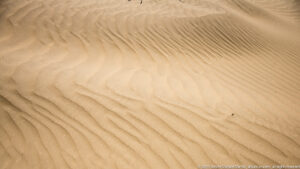
Kobuk Valley NP – Sand Dunes
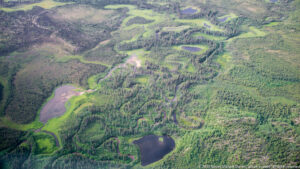
Kobuk Valley NP – Ambler
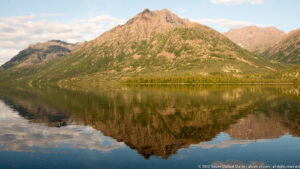
Gates of the Arctic NP – Selby Lake
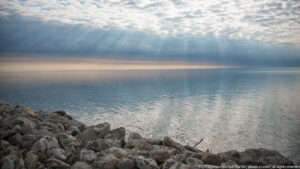
Kotzebue, Alaska
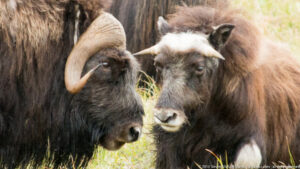
Bering Land Bridge NPRES
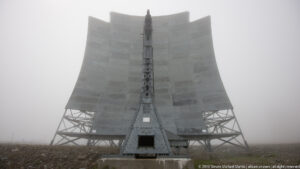
Nome, Alaska

Togiak NWR
Dillingham, Alaska