Canyon de Chelly National Monument
Canyon de Chelly National Monument protects a landscape shaped by erosion of sandstone layers, forming steep canyon walls and sheltered valley floors. The canyon environment has supported human habitation for thousands of years, with archaeological remains illustrating cultural continuity across many generations.
Rock formations within the canyon reveal the geological processes that shaped much of the Colorado Plateau, where sedimentary layers were uplifted and gradually eroded by water. The canyon system provided protection, water access, and agricultural opportunities for communities that lived within the canyon environment.
Visitors encounter Canyon de Chelly as both a natural and cultural landscape. The relationship between geology and human settlement is visible in the placement of structures within canyon walls and along valley floors. The monument preserves evidence of long-term connections between people and the land.

Two narrow sandstone spires rise from the canyon floor, their sheer sides catching the light against a wide sweep of red cliffs. Green vegetation and a winding wash trace the lower valley around the formations. The distant viewpoint places the paired towers within the scale of the larger canyon landscape.
Caption
Two narrow sandstone spires rise from the canyon floor, their sheer sides catching the light against a wide sweep of red cliffs. Green vegetation and a winding wash trace the lower valley around the formations. The distant viewpoint places the paired towers within the scale of the larger canyon landscape.

The twin towers of Spider Rock stand near the center of the canyon, with sunlight revealing their vertical faces and the broad valley below. A dark rock ledge enters from the lower right, adding a foreground frame that distinguishes this view from the more open panorama. The surrounding cliffs extend toward a level blue horizon.
Caption
The twin towers of Spider Rock stand near the center of the canyon, with sunlight revealing their vertical faces and the broad valley below. A dark rock ledge enters from the lower right, adding a foreground frame that distinguishes this view from the more open panorama. The surrounding cliffs extend toward a level blue horizon.

Curving bands and shallow basins sweep across an exposed sandstone slope, forming a pattern of nested arcs. Small shrubs grow in pockets along the left edge, providing scale against the broad, smooth rock surface. The close overhead angle makes the stone’s sculpted contours and fine sedimentary lines the focus.
Caption
Curving bands and shallow basins sweep across an exposed sandstone slope, forming a pattern of nested arcs. Small shrubs grow in pockets along the left edge, providing scale against the broad, smooth rock surface. The close overhead angle makes the stone’s sculpted contours and fine sedimentary lines the focus.

From a high rim, the view opens across a broad sandstone canyon cut by side ravines and scattered with low vegetation. A rounded rock mass occupies the foreground, while sheer red walls and isolated formations recede toward the horizon. The elevated perspective reveals the scale of the canyon and the layered arrangement of its cliffs.
Caption
From a high rim, the view opens across a broad sandstone canyon cut by side ravines and scattered with low vegetation. A rounded rock mass occupies the foreground, while sheer red walls and isolated formations recede toward the horizon. The elevated perspective reveals the scale of the canyon and the layered arrangement of its cliffs.

A closer elevated angle isolates the paired sandstone towers and their long shadow across the scrub-covered canyon floor. The taller pillar has a broken, irregular crown, while the adjacent tower stands slightly lower and broader. Red sandstone walls and sparse green vegetation surround the formations, making their separation and height easy to read.
Caption
A closer elevated angle isolates the paired sandstone towers and their long shadow across the scrub-covered canyon floor. The taller pillar has a broken, irregular crown, while the adjacent tower stands slightly lower and broader. Red sandstone walls and sparse green vegetation surround the formations, making their separation and height easy to read.

A thick projecting sandstone shelf casts a narrow shadow over thin, closely stacked beds below it. The horizontal layers bend gently and vary in color from rust to pale orange, while shrubs gather at the base of the outcrop. The close view emphasizes the rock’s stratification and the overhanging ledge.
Caption
A thick projecting sandstone shelf casts a narrow shadow over thin, closely stacked beds below it. The horizontal layers bend gently and vary in color from rust to pale orange, while shrubs gather at the base of the outcrop. The close view emphasizes the rock’s stratification and the overhanging ledge.

A man in a red-and-black striped polo and blue jeans stands among broad sandstone blocks, facing the camera with his arms at his sides. Juniper-like trees and low brush grow behind him beneath a clear blue sky. The full-length framing shows the visitor in relation to the uneven stone terrain.
Caption
A man in a red-and-black striped polo and blue jeans stands among broad sandstone blocks, facing the camera with his arms at his sides. Juniper-like trees and low brush grow behind him beneath a clear blue sky. The full-length framing shows the visitor in relation to the uneven stone terrain.

Masonry rooms stand beneath a broad sandstone overhang, with additional structures arranged along the sloping ledges below. The pale alcove roof shelters the dwellings, while the exposed red rock frames them from above and behind. This distant view shows how the built rooms occupy several levels at the base of the cliff.
Caption
Masonry rooms stand beneath a broad sandstone overhang, with additional structures arranged along the sloping ledges below. The pale alcove roof shelters the dwellings, while the exposed red rock frames them from above and behind. This distant view shows how the built rooms occupy several levels at the base of the cliff.

From above, compact masonry rooms cluster on a sloping shelf beneath a sandstone cliff. Rectangular door openings and low wall remnants divide the dwellings into small spaces, while the broad rock face rises immediately behind them. The tight composition clarifies the arrangement of the rooms without establishing a named site.
Caption
From above, compact masonry rooms cluster on a sloping shelf beneath a sandstone cliff. Rectangular door openings and low wall remnants divide the dwellings into small spaces, while the broad rock face rises immediately behind them. The tight composition clarifies the arrangement of the rooms without establishing a named site.

A close portrait frames a smiling man in a red striped polo from the chest upward. His short gray hair and face are sharply focused, while sandstone and evergreen foliage dissolve into a soft background. The shallow depth of field separates the portrait from the rocky setting seen in the wider view.
Caption
A close portrait frames a smiling man in a red striped polo from the chest upward. His short gray hair and face are sharply focused, while sandstone and evergreen foliage dissolve into a soft background. The shallow depth of field separates the portrait from the rocky setting seen in the wider view.
Canyon de Chelly National Monument — Field Guide
🏛️ National Monument Field Guide
📍 Overview
Canyon de Chelly National Monument preserves a sandstone canyon landscape that has supported human settlement for thousands of years. The canyon environment provided natural protection, water access, and fertile ground for agriculture, supporting continuous cultural presence.
Erosion of uplifted sedimentary rock layers formed steep canyon walls that shelter archaeological sites preserved within alcoves and cliff faces. The monument illustrates the relationship between geological processes and long-term human habitation in the American Southwest.
⭐ Highlights
- Sandstone canyon landscapes
- Archaeological cliff dwellings
- Long history of human habitation
- Cultural landscape of the Colorado Plateau
- Relationship between geology and settlement
🔎 Key Features
- Layered sedimentary rock canyon walls
- Archaeological structures within alcoves
- Evidence of long-term habitation
- High desert canyon environment
- Cultural significance of landscape features
📷 Photography Notes
- Side lighting enhances canyon texture
- Wide views emphasize canyon scale
- Morning light creates softer contrast
- Foreground vegetation adds depth
- Cliff dwellings provide focal points
- Simple framing highlights geology
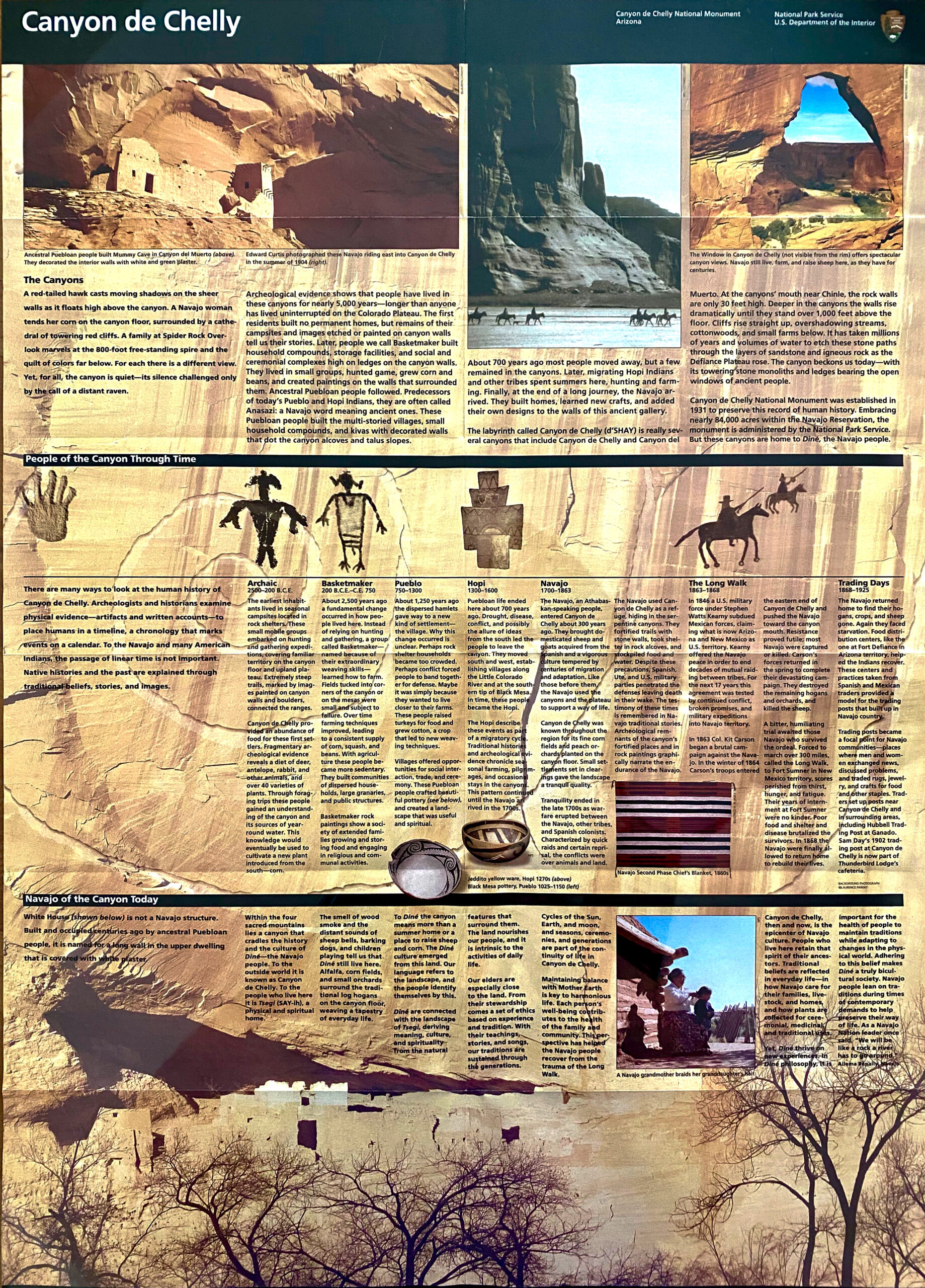
A large interpretive panel headed “Canyon de Chelly” combines blocks of explanatory text with landscape photographs, drawings, and small images of objects and cultural motifs. Its broad horizontal layout is divided into several sections, each pairing text with visual examples. The proof-sheet view does not make the smaller writing readable, so the caption describes the panel’s visible organization without summarizing its details.
Caption
A large interpretive panel headed “Canyon de Chelly” combines blocks of explanatory text with landscape photographs, drawings, and small images of objects and cultural motifs. Its broad horizontal layout is divided into several sections, each pairing text with visual examples. The proof-sheet view does not make the smaller writing readable, so the caption describes the panel’s visible organization without summarizing its details.
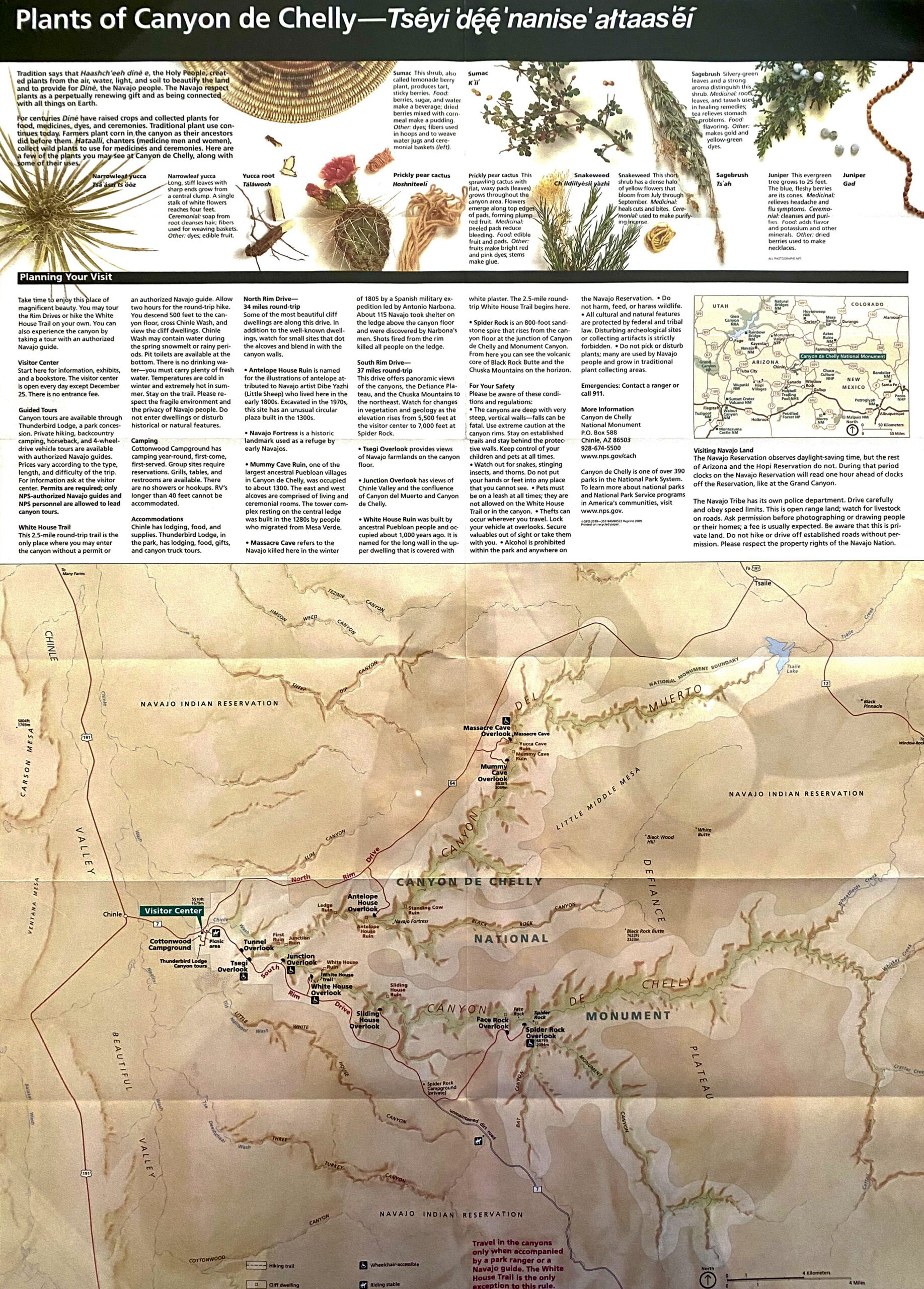
A long educational display titled “Plants of Canyon de Chelly” places botanical illustrations above columns of text and a broad map across its lower half. The map traces the canyon and surrounding routes, while the upper sections pair plant images with written information. The panel’s combination of vegetation study and geographic overview makes this image distinct from the neighboring cultural exhibit.
Caption
A long educational display titled “Plants of Canyon de Chelly” places botanical illustrations above columns of text and a broad map across its lower half. The map traces the canyon and surrounding routes, while the upper sections pair plant images with written information. The panel’s combination of vegetation study and geographic overview makes this image distinct from the neighboring cultural exhibit.