Russell Cave and Little River Canyon
Russell Cave preserves evidence of human habitation dating back more than 10,000 years, providing insight into the deep history of North America long before European exploration. Archaeological discoveries at the site demonstrate how Indigenous peoples adapted to changing environmental conditions through hunting, gathering, and seasonal settlement patterns. The cave served as a natural shelter that protected artifacts illustrating thousands of years of cultural continuity.
Nearby Little River Canyon reflects the geological processes that shaped the southeastern landscape through erosion and water flow over long periods of time. Rivers such as the Little River formed natural travel corridors that later influenced exploration and settlement patterns during the colonial period. These waterways ultimately connected to larger river systems leading toward the Mississippi River and the Gulf Coast.
Together, Russell Cave and Little River Canyon provide a broader historical context for understanding how landscapes shaped patterns of movement and settlement across North America. Indigenous knowledge of terrain and waterways influenced later exploration routes used by European settlers and traders moving through the continent.
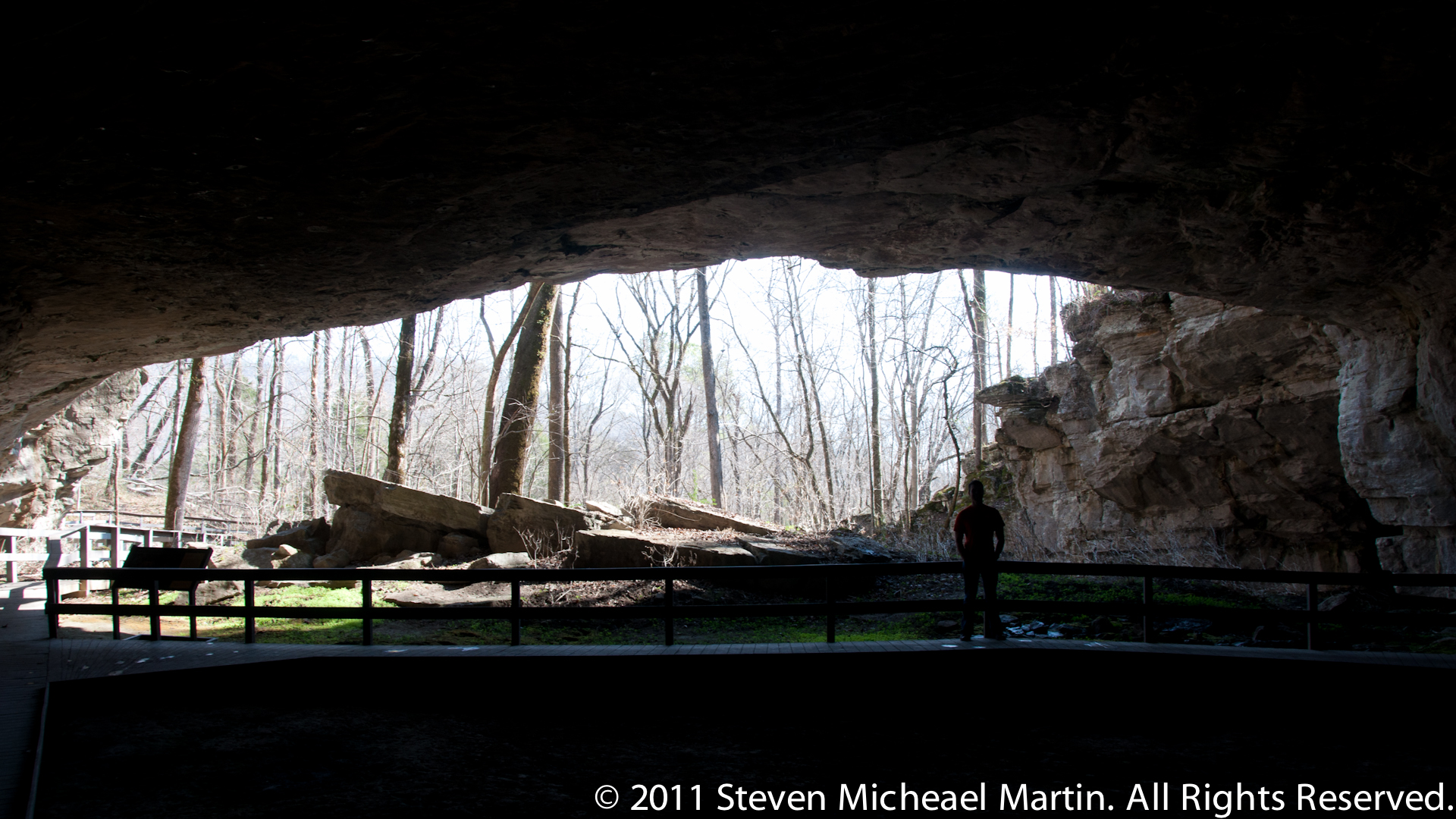
From within the deep rock overhang, the cave mouth frames a leafless woodland and a low visitor barrier. A silhouetted person near the railing gives scale to the broad shelter, while daylight reveals broken stone and vegetation beyond. This interior-to-exterior view conveys the contrast between the cavernous ceiling and the open forest edge.
Caption
From within the deep rock overhang, the cave mouth frames a leafless woodland and a low visitor barrier. A silhouetted person near the railing gives scale to the broad shelter, while daylight reveals broken stone and vegetation beyond. This interior-to-exterior view conveys the contrast between the cavernous ceiling and the open forest edge.
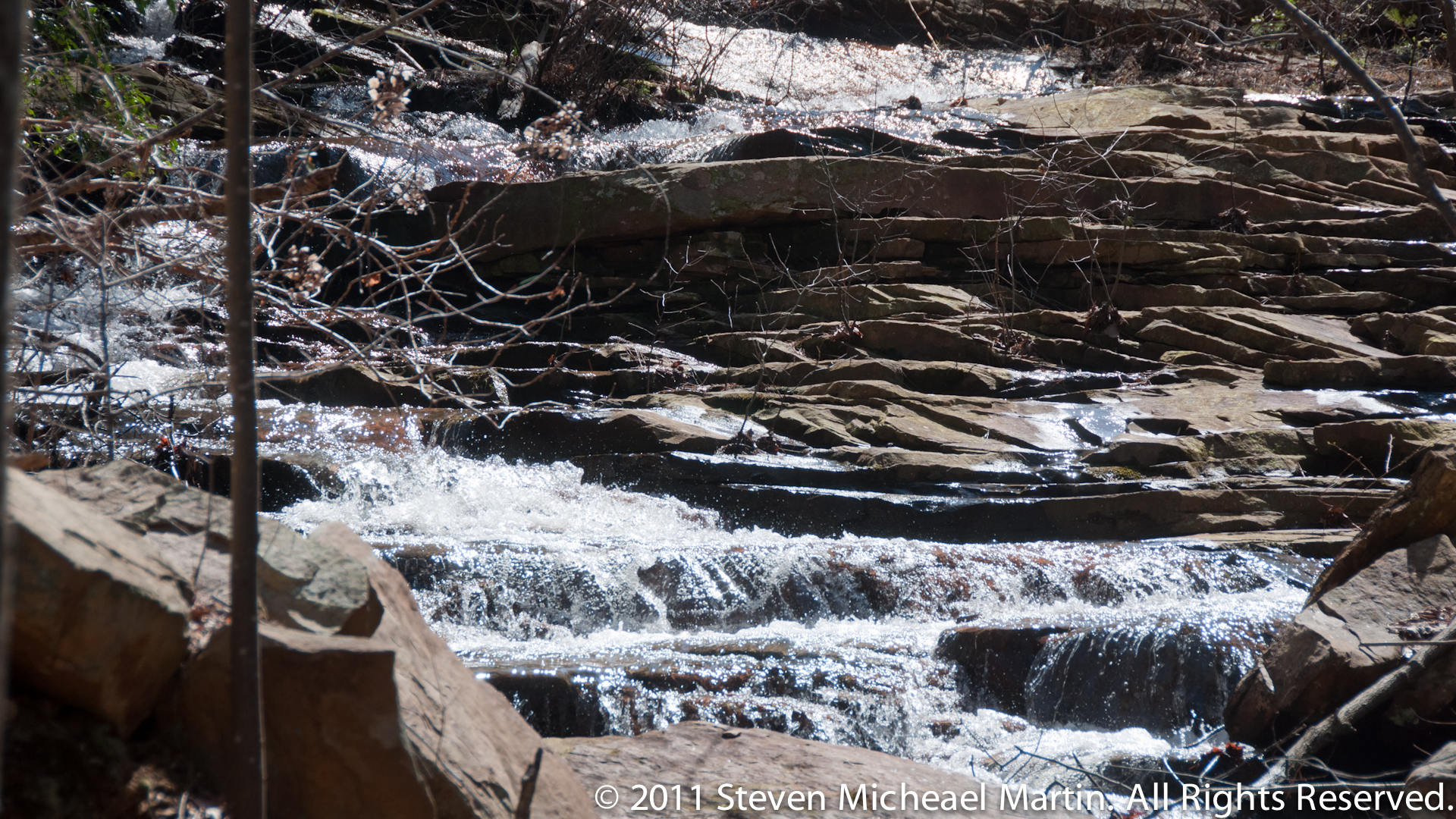
Clear water steps over a series of broad, layered rock shelves, forming several low cascades across the frame. Sunlight catches the white water against dark brown and gray stone, while slender branches cross the foreground. The composition emphasizes the bedrock’s horizontal layers and the repeated short drops rather than the larger creek setting.
Caption
Clear water steps over a series of broad, layered rock shelves, forming several low cascades across the frame. Sunlight catches the white water against dark brown and gray stone, while slender branches cross the foreground. The composition emphasizes the bedrock’s horizontal layers and the repeated short drops rather than the larger creek setting.
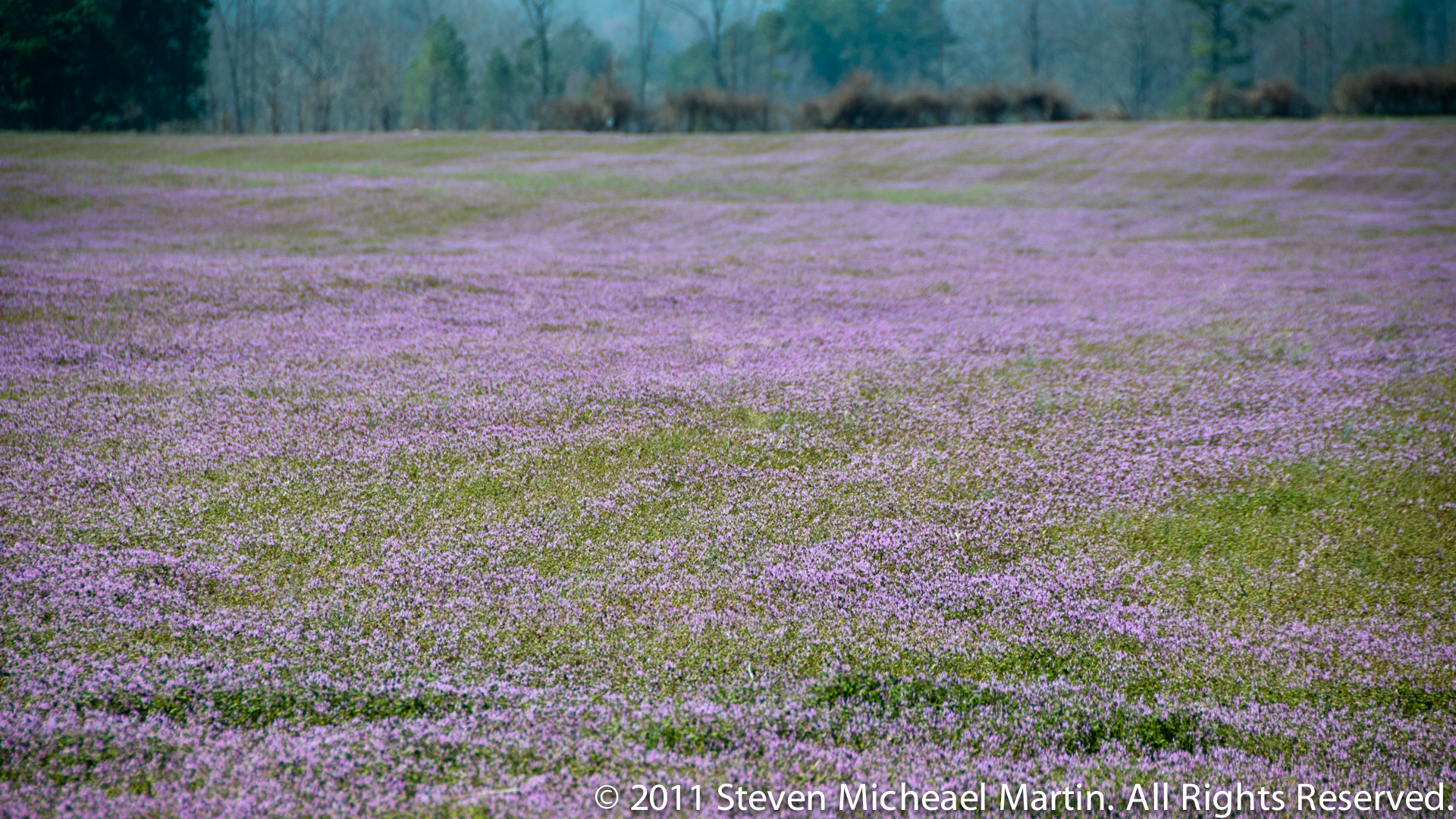
A broad meadow patterned with purple blooms extends toward a distant line of leafless trees. Green openings break up the flowers, and the open horizontal view shows more of the field’s scale than the closer floral composition on the preceding image. No single blossom is distinct enough to support a species-level identification.
Caption
A broad meadow patterned with purple blooms extends toward a distant line of leafless trees. Green openings break up the flowers, and the open horizontal view shows more of the field’s scale than the closer floral composition on the preceding image. No single blossom is distinct enough to support a species-level identification.
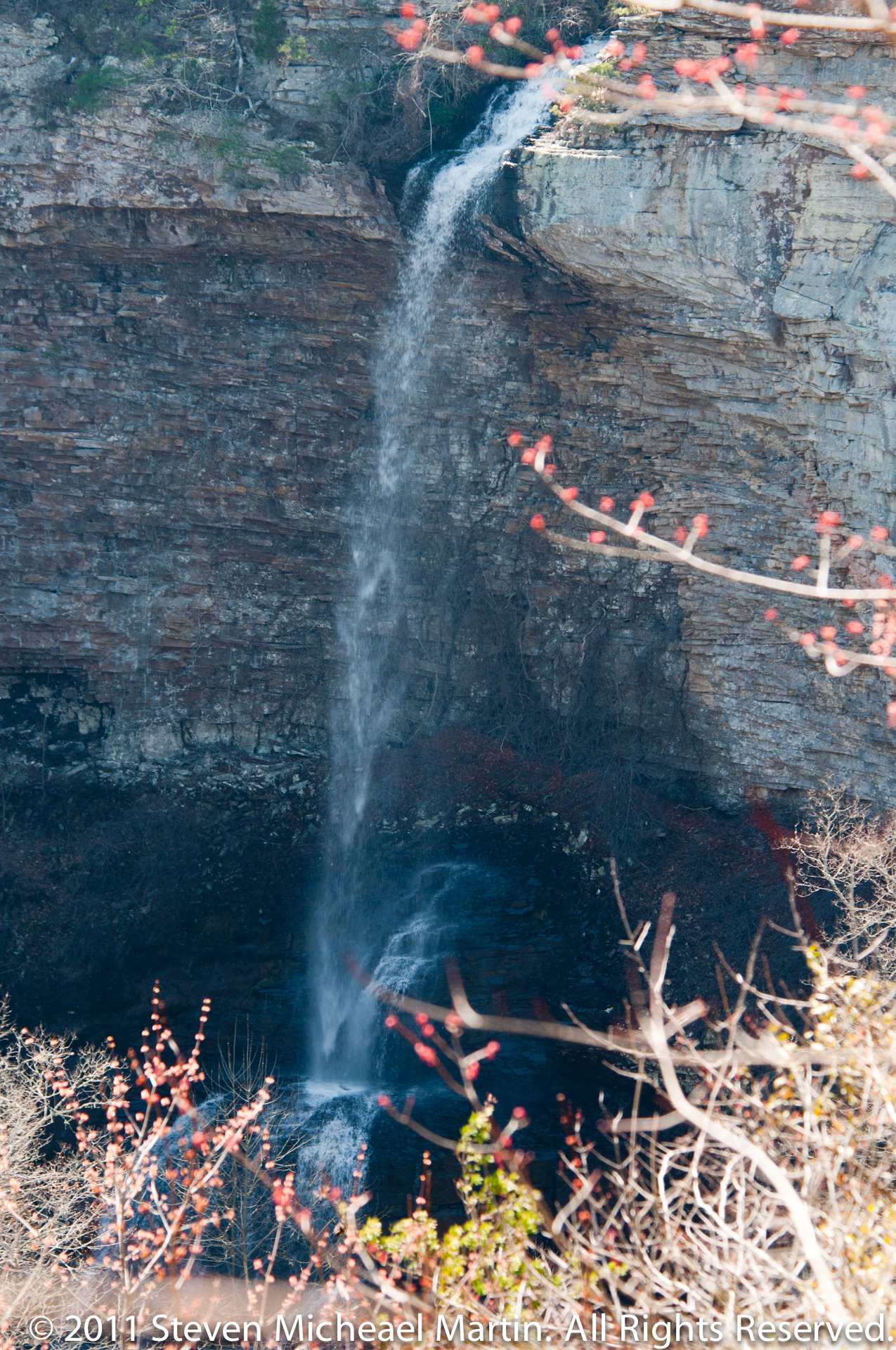
A narrow stream drops from a low rock ledge into a dark, rounded pool, sending a pale ribbon of water across the blue-black surface. Bare twigs and scattered reddish leaves edge the foreground and upper bank. The close composition isolates the small cascade and pool, with no broad view of the surrounding creek corridor.
Caption
A narrow stream drops from a low rock ledge into a dark, rounded pool, sending a pale ribbon of water across the blue-black surface. Bare twigs and scattered reddish leaves edge the foreground and upper bank. The close composition isolates the small cascade and pool, with no broad view of the surrounding creek corridor.
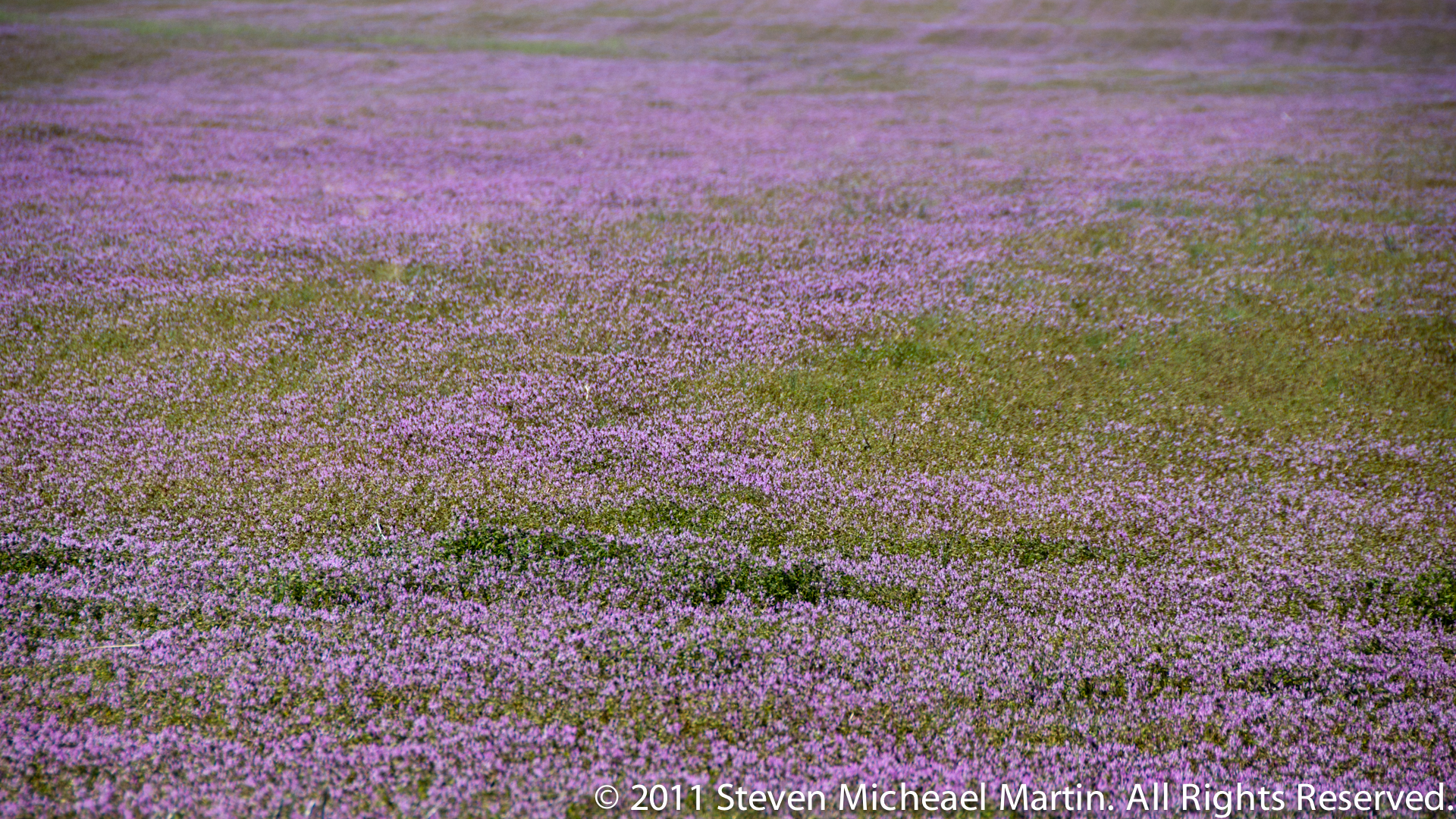
A dense carpet of small purple flowers fills nearly the entire frame, interrupted by patches of green grass. The low viewpoint makes the blossoms read as a continuous field, with no individual plant close enough to identify a species confidently. Soft, even light reveals the variation in color across the ground.
Caption
A dense carpet of small purple flowers fills nearly the entire frame, interrupted by patches of green grass. The low viewpoint makes the blossoms read as a continuous field, with no individual plant close enough to identify a species confidently. Soft, even light reveals the variation in color across the ground.
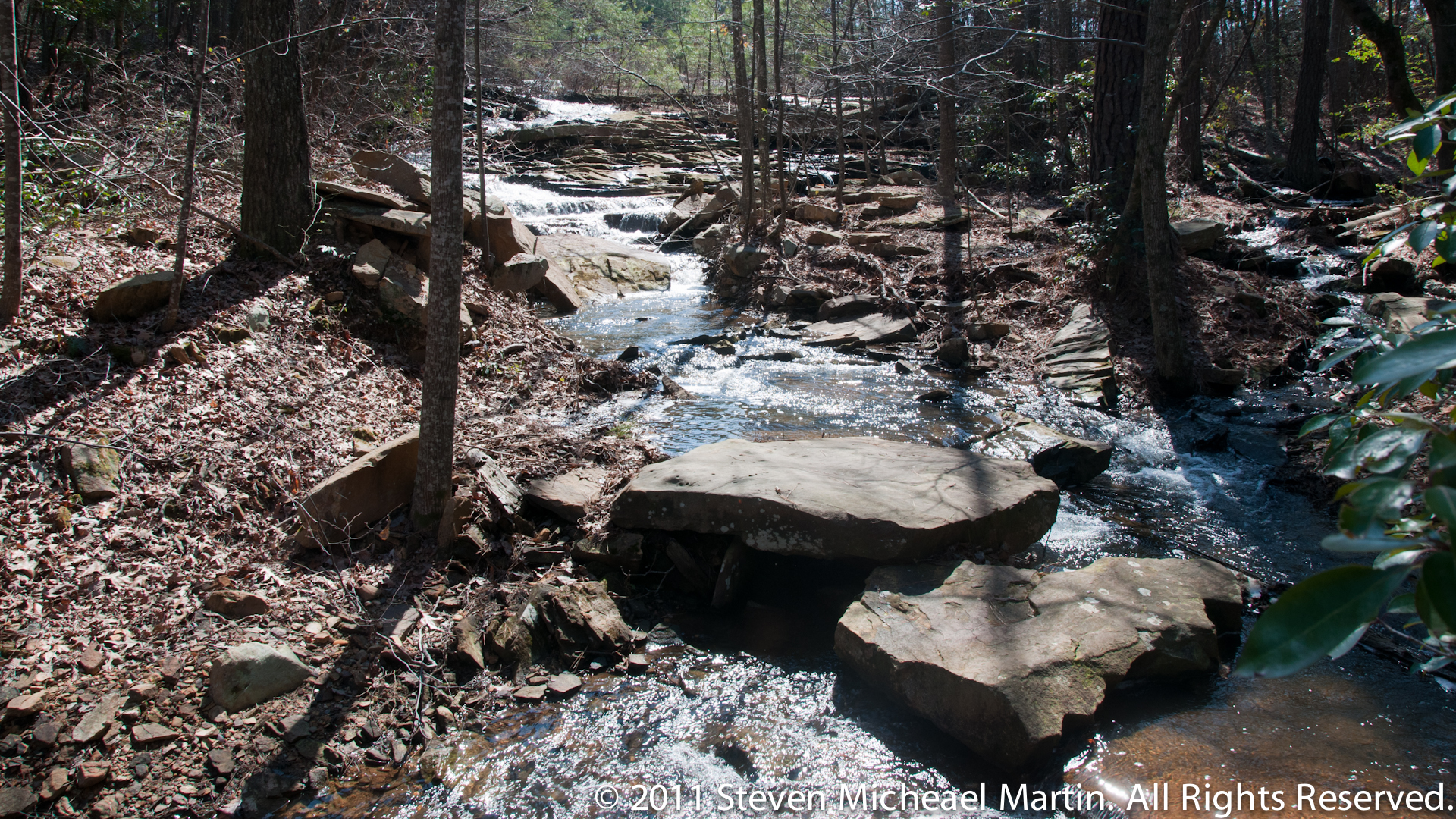
A shallow creek winds through leaf-covered woodland, flowing around broad, flat slabs of exposed bedrock. Bare trunks and scattered evergreen foliage line the banks, while sunlight glints on the small riffles in the foreground. The view follows the water upstream through a narrow, rocky channel rather than isolating a single cascade.
Caption
A shallow creek winds through leaf-covered woodland, flowing around broad, flat slabs of exposed bedrock. Bare trunks and scattered evergreen foliage line the banks, while sunlight glints on the small riffles in the foreground. The view follows the water upstream through a narrow, rocky channel rather than isolating a single cascade.

Water spills over a shallow rock lip into a shadowed pool, creating a narrow vertical plume and a soft circular disturbance on the surface. Small leaves float near the edges, and pale branches cross the foreground. Compared with a wider creek view, this frame concentrates on the water’s movement and the pool’s smooth, dark basin.
Caption
Water spills over a shallow rock lip into a shadowed pool, creating a narrow vertical plume and a soft circular disturbance on the surface. Small leaves float near the edges, and pale branches cross the foreground. Compared with a wider creek view, this frame concentrates on the water’s movement and the pool’s smooth, dark basin.
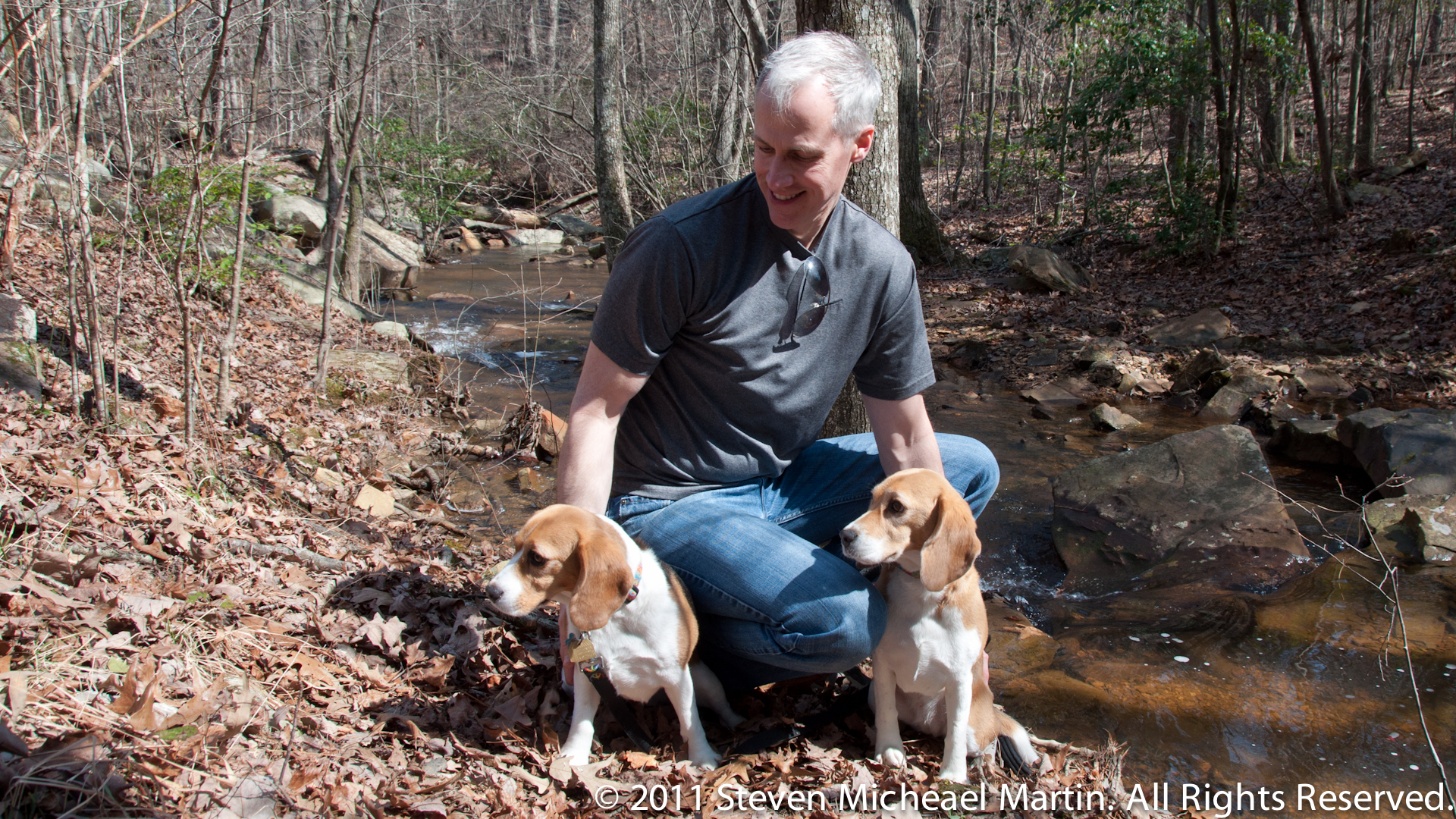
A visitor crouches beside two beagles on a flat rock at the edge of a shallow woodland creek. The dogs stand close together in the foreground, while small cascades and leaf-covered banks continue behind them. The portrait combines a human-scale pause with the rocky stream setting and makes the dogs the immediate focal point.
Caption
A visitor crouches beside two beagles on a flat rock at the edge of a shallow woodland creek. The dogs stand close together in the foreground, while small cascades and leaf-covered banks continue behind them. The portrait combines a human-scale pause with the rocky stream setting and makes the dogs the immediate focal point.
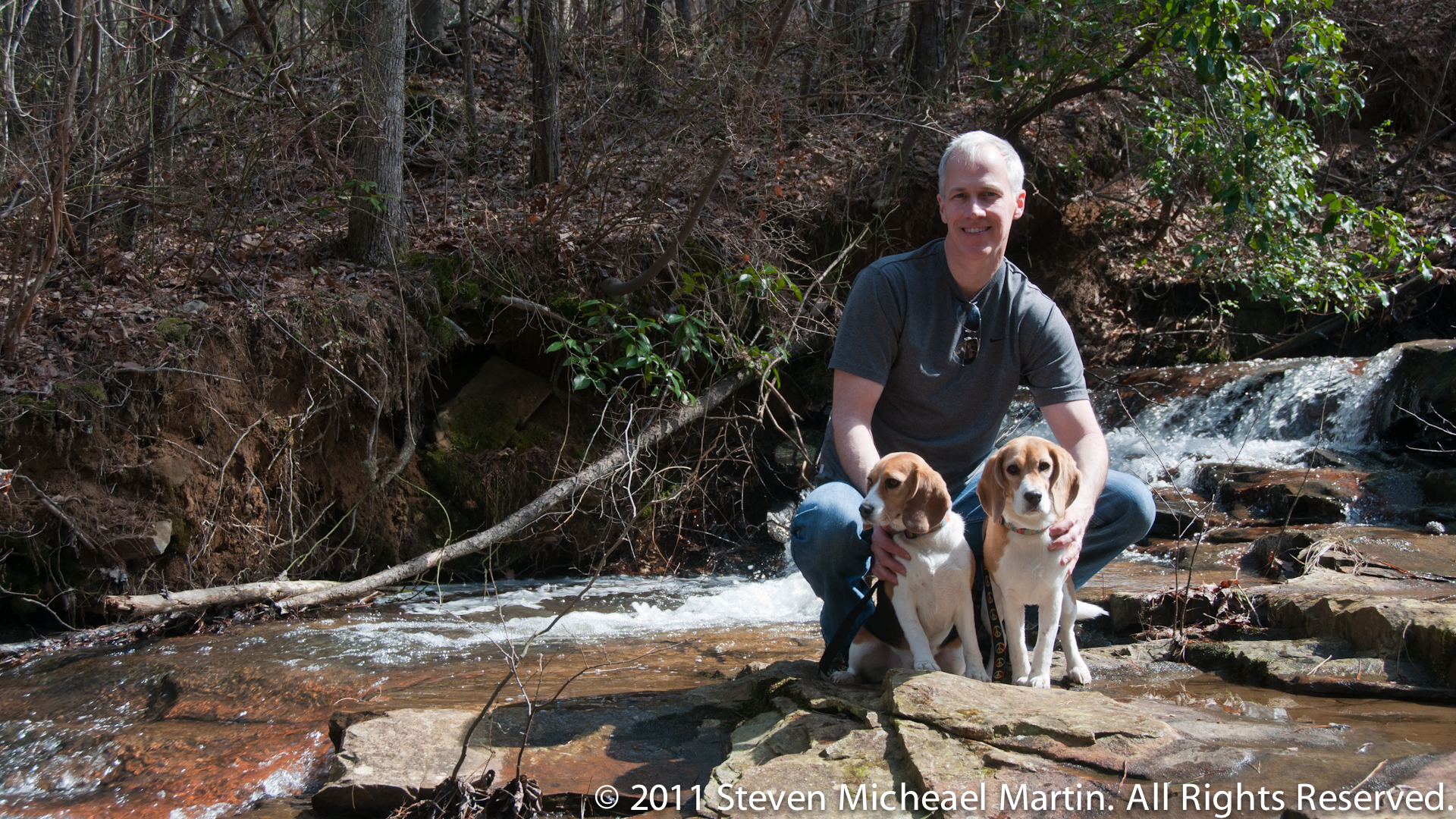
A man sits on a rock in the shallow stream with two beagles positioned in front of him. Water rushes over stones just behind the group, while the shaded bank rises into a dense mix of bare branches and evergreen plants. Unlike the earlier creek portrait, this view places the trio directly in the watercourse against a visible cascade.
Caption
A man sits on a rock in the shallow stream with two beagles positioned in front of him. Water rushes over stones just behind the group, while the shaded bank rises into a dense mix of bare branches and evergreen plants. Unlike the earlier creek portrait, this view places the trio directly in the watercourse against a visible cascade.
Russell Cave National Monument Field Guide
📍 Location
Russell Cave National Monument is located in northeastern Alabama within the southern Appalachian Plateau, where limestone formations created sheltered environments supporting long periods of human habitation.
🏛 Historical Significance
Archaeological evidence indicates nearly 10,000 years of intermittent human use of the cave as shelter and seasonal habitation. Artifacts discovered at the site provide insight into changing lifeways, tools, and environmental adaptation across prehistoric periods in the southeastern United States.
⭐ Highlights
- Large limestone cave opening within forested landscape
- Archaeological evidence of long-term habitation
- Interpretive exhibits documenting prehistoric cultures
- Connection to broader southeastern Indigenous history
📷 Photography Notes
- Low light conditions require steady exposure settings
- Contrast between cave opening and surrounding forest works well compositionally
- Morning light can illuminate cave entrance textures
- Wide framing emphasizes scale of rock shelter
- Trail approaches provide contextual landscape views
📚 Summary
Russell Cave preserves evidence of long-term human adaptation to changing environments within the southeastern United States. The site illustrates the relationship between geological shelter and patterns of habitation extending across millennia.

A large interpretive panel titled “Russell Cave” pairs an illustrated scene of people inside a cave with blocks of explanatory text and archaeological diagrams. The upper painting includes figures, animal remains, and a rock shelter, while maps and stratigraphic drawings occupy the lower section. The display presents the site through both visual reconstruction and written interpretation.
Caption
A large interpretive panel titled “Russell Cave” pairs an illustrated scene of people inside a cave with blocks of explanatory text and archaeological diagrams. The upper painting includes figures, animal remains, and a rock shelter, while maps and stratigraphic drawings occupy the lower section. The display presents the site through both visual reconstruction and written interpretation.
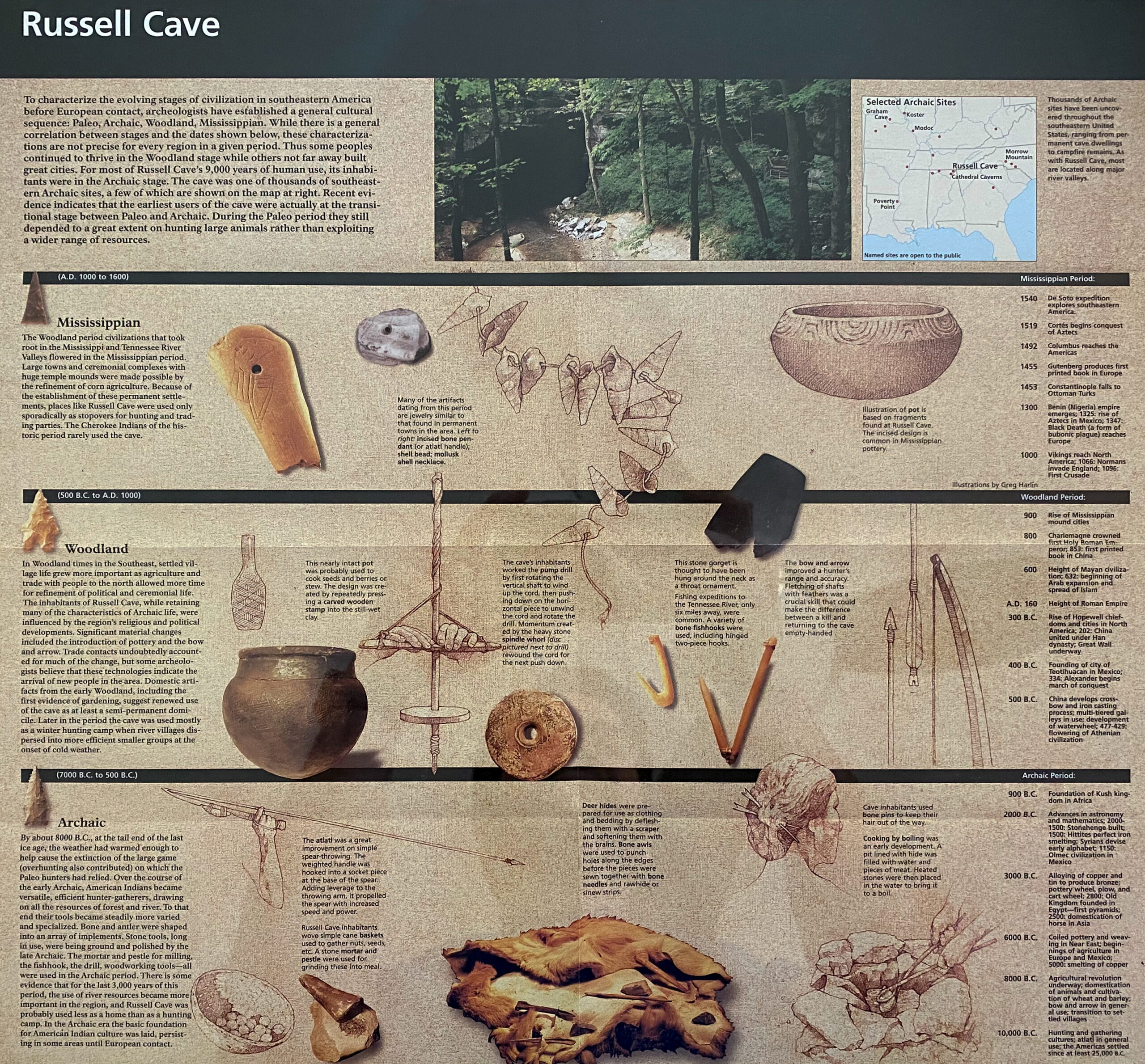
A second Russell Cave exhibit panel organizes archaeological information into successive cultural periods. Small photographs and drawings of tools, pottery, food remains, and other artifacts sit beside explanatory text and timeline bands. The broad display emphasizes material evidence and chronology, complementing the preceding panel’s illustrated cave scene.
Caption
A second Russell Cave exhibit panel organizes archaeological information into successive cultural periods. Small photographs and drawings of tools, pottery, food remains, and other artifacts sit beside explanatory text and timeline bands. The broad display emphasizes material evidence and chronology, complementing the preceding panel’s illustrated cave scene.