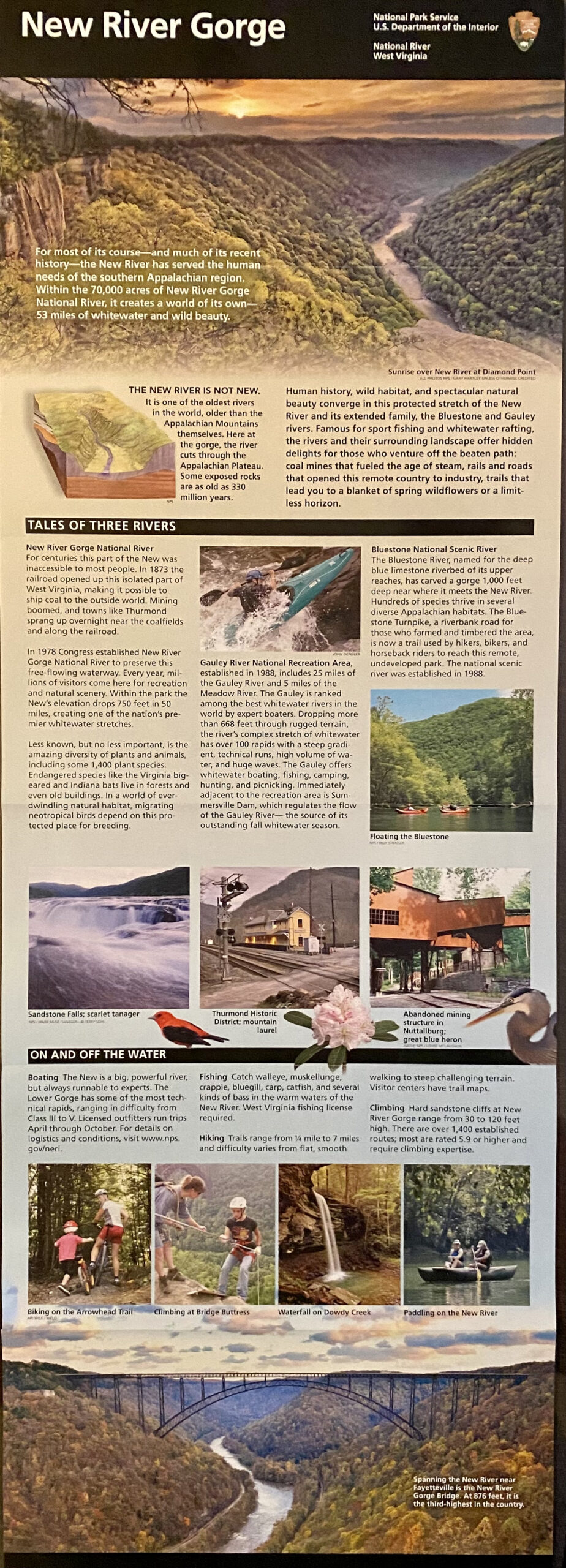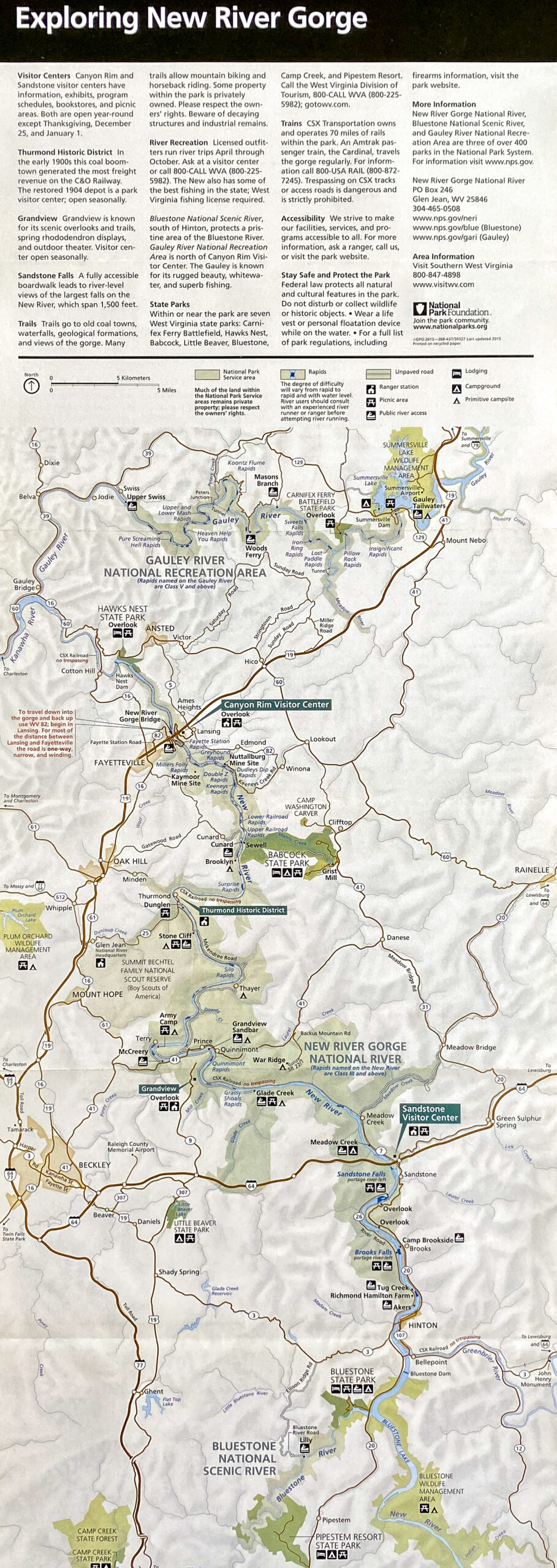
Sandstone Falls
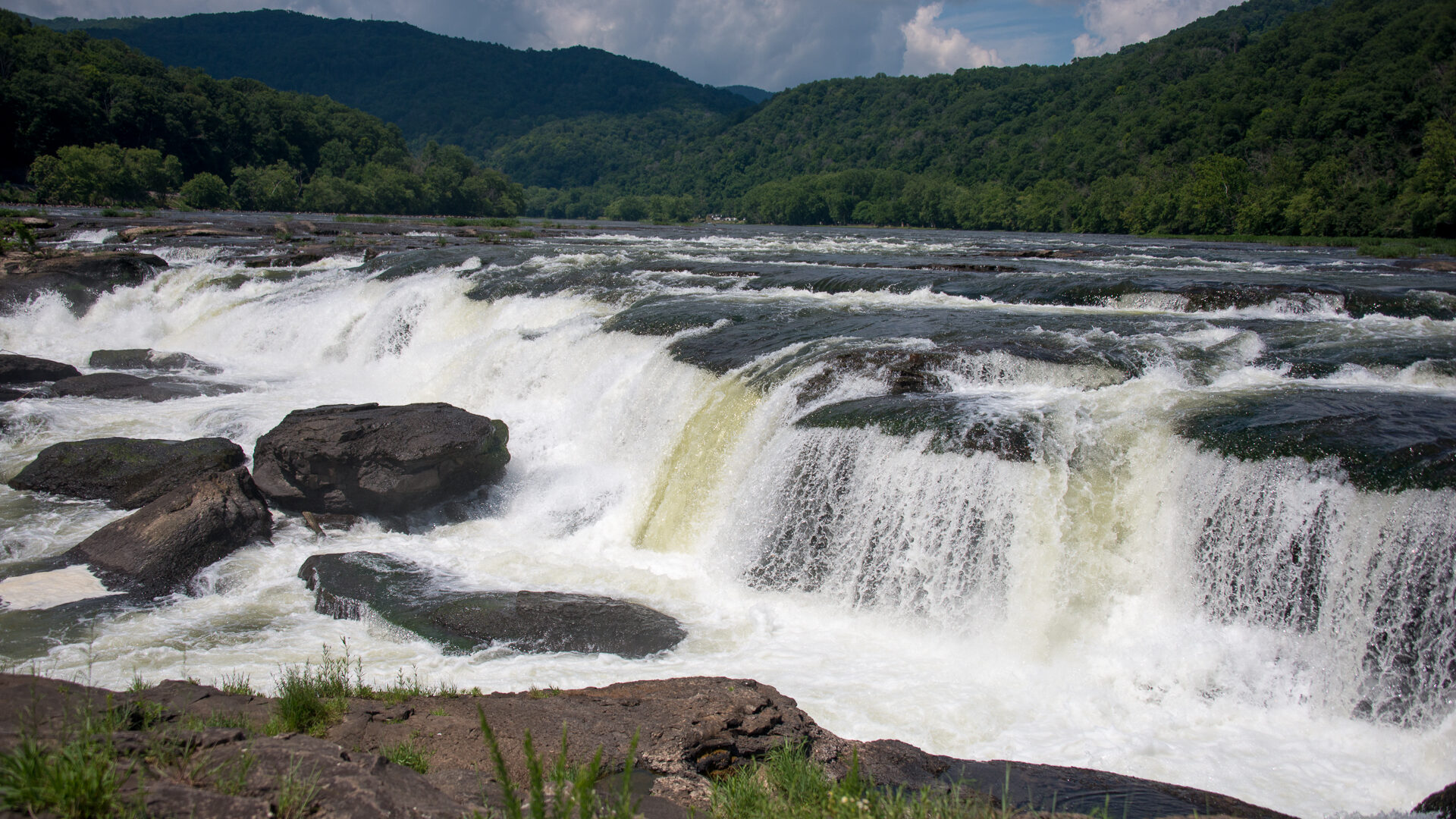
Sandstone Falls forms where the New River flows across resistant sandstone layers that create a series of cascades and channels. Variations in rock hardness influence the shape and flow of water across the riverbed, producing broad falls rather than a single vertical drop. The waterfall demonstrates how geological structure affects river behavior.
The surrounding river environment supports plant and animal communities adapted to changing water levels and seasonal flow variation. Islands and rock ledges create habitat diversity within the river corridor. The falls illustrate how erosion interacts with sedimentary rock layers to produce distinctive water features.
Today, Sandstone Falls demonstrates how river systems shape landscape features over long periods of time. The falls reflect the interaction between water flow and geological structure within the Appalachian Plateau.







National Park Field Guide
New River Gorge National Park preserves landscapes shaped by one of the oldest rivers in North America. Over millions of years, the New River carved a deep canyon through the Appalachian Plateau, exposing rock layers that record geological change across long time periods. Forested slopes, waterfalls, and river corridors illustrate the interaction between erosion and ecological development.
🧭 Key Features
- Deep gorge carved by the New River
- Sandstone cliffs and layered rock formations
- Industrial heritage sites reflecting coal mining history
- Waterfalls shaped by resistant rock layers
- Forested Appalachian mountain environments
🌄 Landscape Highlights
The gorge reveals sedimentary rock layers formed over millions of years as erosion gradually deepened the river valley. Elevated viewpoints illustrate the scale of the canyon and the relationship between river flow and surrounding terrain. Seasonal vegetation highlights ecological diversity across slopes and riverbanks.
🌎 Natural Systems
The New River’s long geological history allowed extensive erosion of the Appalachian Plateau, creating steep slopes and exposed rock layers. Variations in rock resistance influence the formation of waterfalls and cliff faces. River flow patterns shape plant communities adapted to differing moisture conditions.
📷 Photography Notes
- Overlooks reveal scale of the gorge
- Morning light enhances depth within canyon views
- Waterfalls benefit from longer exposure techniques
- Foreground vegetation adds visual layering
- Bridge structure contrasts with natural terrain
- Seasonal foliage adds color variation
🌱 Conservation Context
New River Gorge protects ecosystems shaped by erosion, climate, and geological structure. Preservation of river corridors and forest environments allows continued observation of natural processes influencing Appalachian landscapes.