Steven Michael Martin

Cumberland Gap NHP

Cumberland Gap National Historical Park Cumberland Gap National Historical Park preserves a natural mountain pass through the Appalachian Mountains that served as a critical corridor for migration into the interior of North America. The gap formed through geological processes that created a lower elevation passage between ridges, allowing movement through otherwise difficult terrain. For centuries, […]


Explore Portfolio

Department of Treasury

United States Department of the Treasury The United States Department of the Treasury building stands adjacent to the White House within the historic Federal Triangle area, forming part of the architectural ensemble that represents the executive branch of the federal government. Constructed beginning in 1836 and expanded over several decades, the building reflects neoclassical architectural […]

Explore Portfolio

Teepees in Protest on the National Mall, Washington DC

National Mall Teepees The National Mall has long served as a civic gathering place where public expression intersects with the symbolic landscape of the federal government. Demonstrations, commemorations, and temporary installations have appeared along the Mall throughout the twentieth and twenty-first centuries, reflecting the role of public space in democratic society. Positioned between institutions of […]

Explore Portfolio

Folly Beach

Folly Beach Folly Beach is located on Folly Island along the South Carolina coast, part of a chain of barrier islands forming the Atlantic Coastal Plain. These islands are shaped by tidal currents, storms, and long-term sediment movement that create sandy shorelines and maritime ecosystems characteristic of the southeastern United States. Barrier island environments play […]

Explore Portfolio

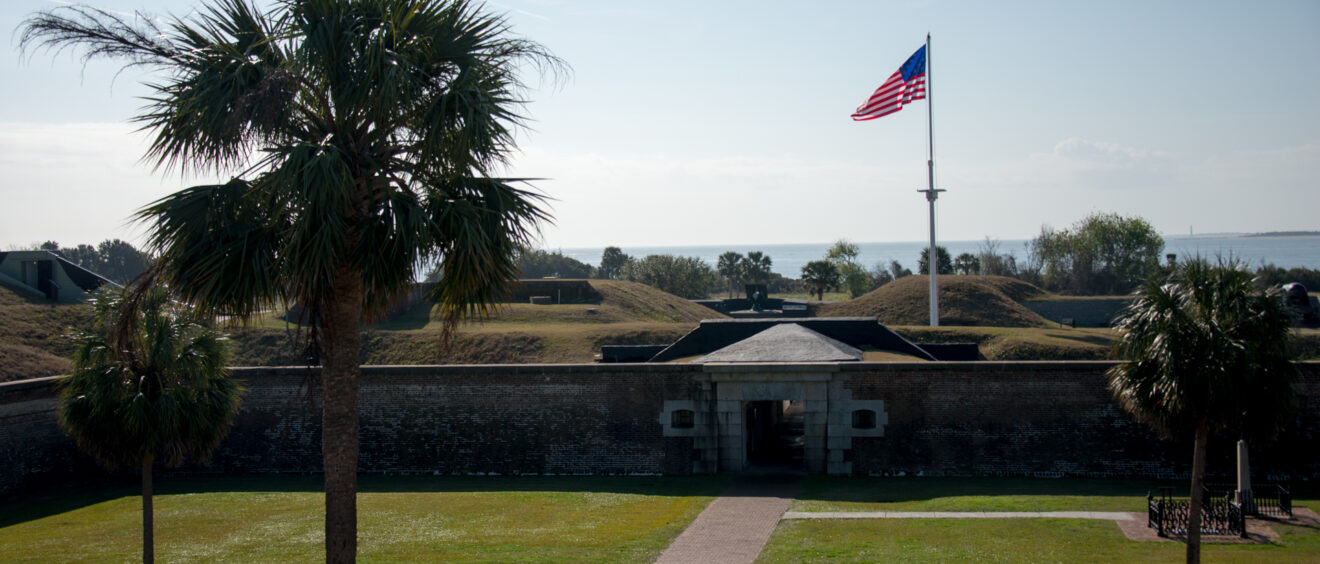
Fort Moultrie

Fort Moultrie Fort Moultrie is located on Sullivan’s Island at the entrance to Charleston Harbor, where coastal geography has long influenced defensive planning for one of the most important ports in the southeastern United States. The original fort, constructed of palmetto logs in 1776, played a significant role in the American Revolutionary War during the […]

Explore Portfolio

Down East

Down East The Down East region of Maine encompasses remote coastal landscapes shaped by glaciation, maritime climate, and long traditions of fishing and navigation along the Gulf of Maine. The term originated in nautical language describing vessels sailing downwind toward eastern ports along the New England coast, reflecting the importance of maritime geography in shaping […]

Explore Portfolio