Yellowstone Stars
Remote regions of Yellowstone National Park provide opportunities to observe dark night skies largely unaffected by urban light pollution. High elevation, low population density, and protected landscapes contribute to favorable conditions for viewing stars, constellations, and the Milky Way. These conditions illustrate how protected environments preserve natural phenomena that are increasingly difficult to observe in developed areas.
Night skies have historically played an important role in navigation, seasonal observation, and cultural traditions across many societies. Observing stars in remote environments provides insight into how earlier travelers relied on celestial patterns for orientation and timekeeping.
Today, dark sky environments highlight the importance of preserving natural conditions that allow continued observation of astronomical phenomena. Yellowstone’s remote landscapes provide opportunities to experience night skies similar to those observed for thousands of years.
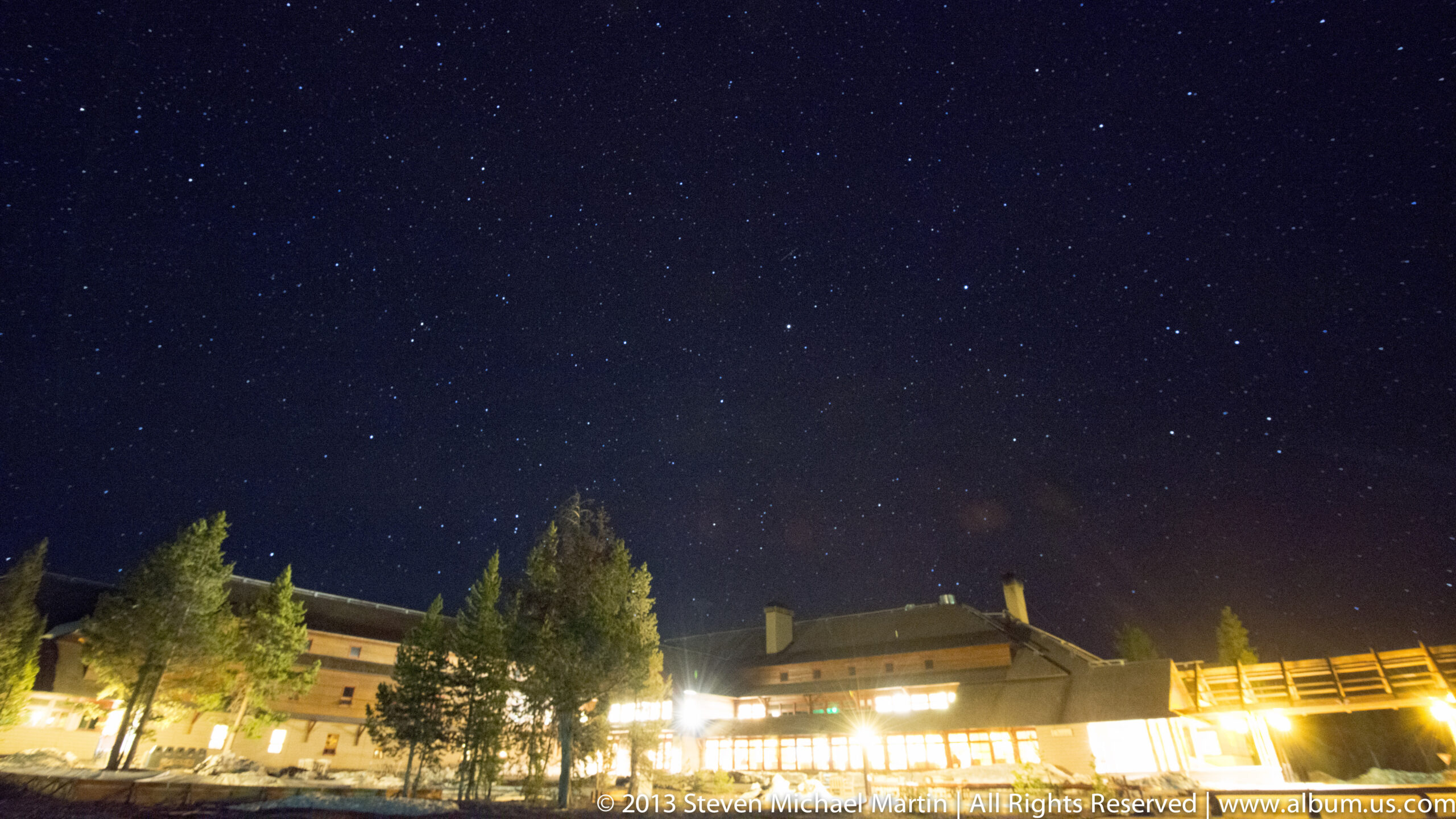
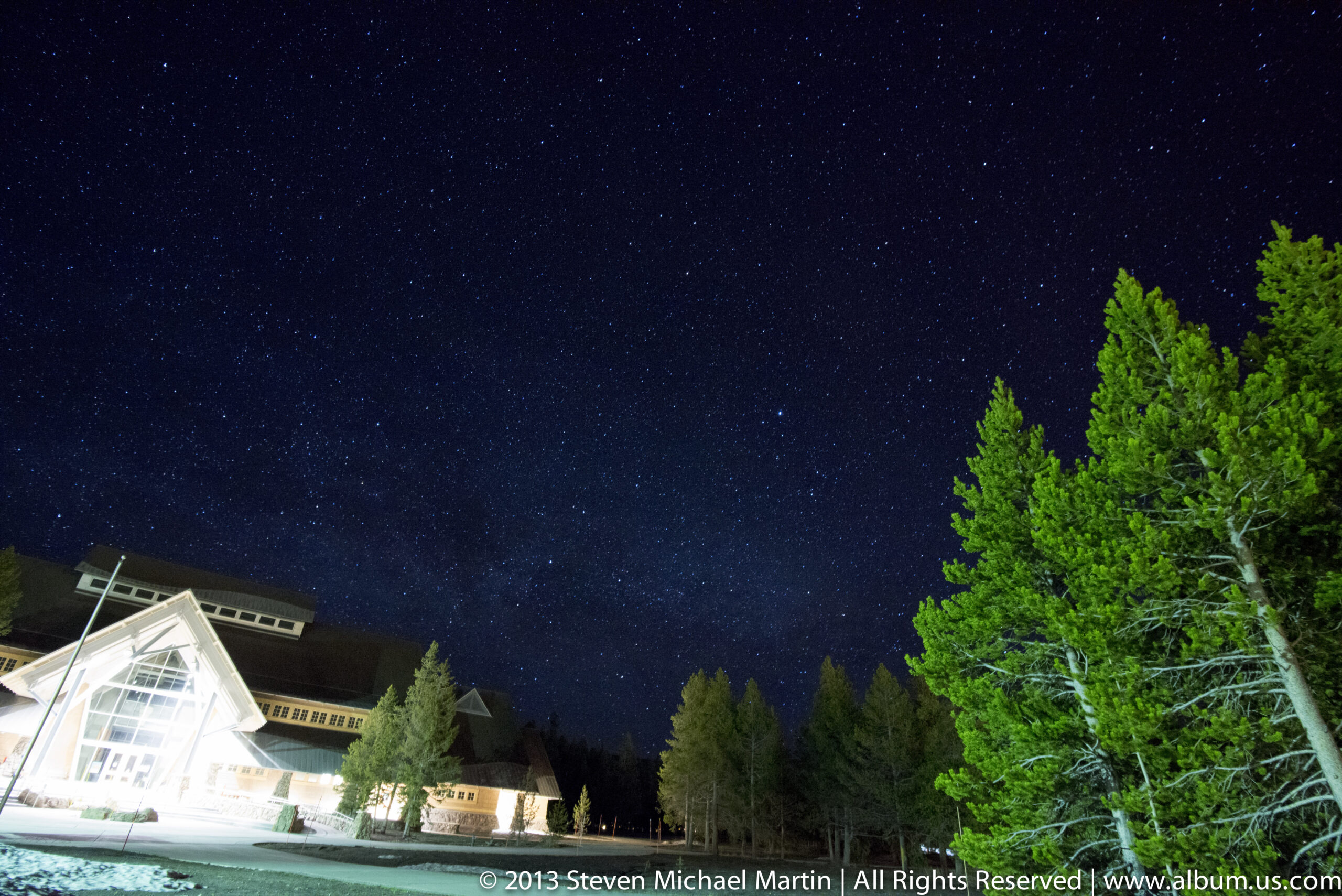
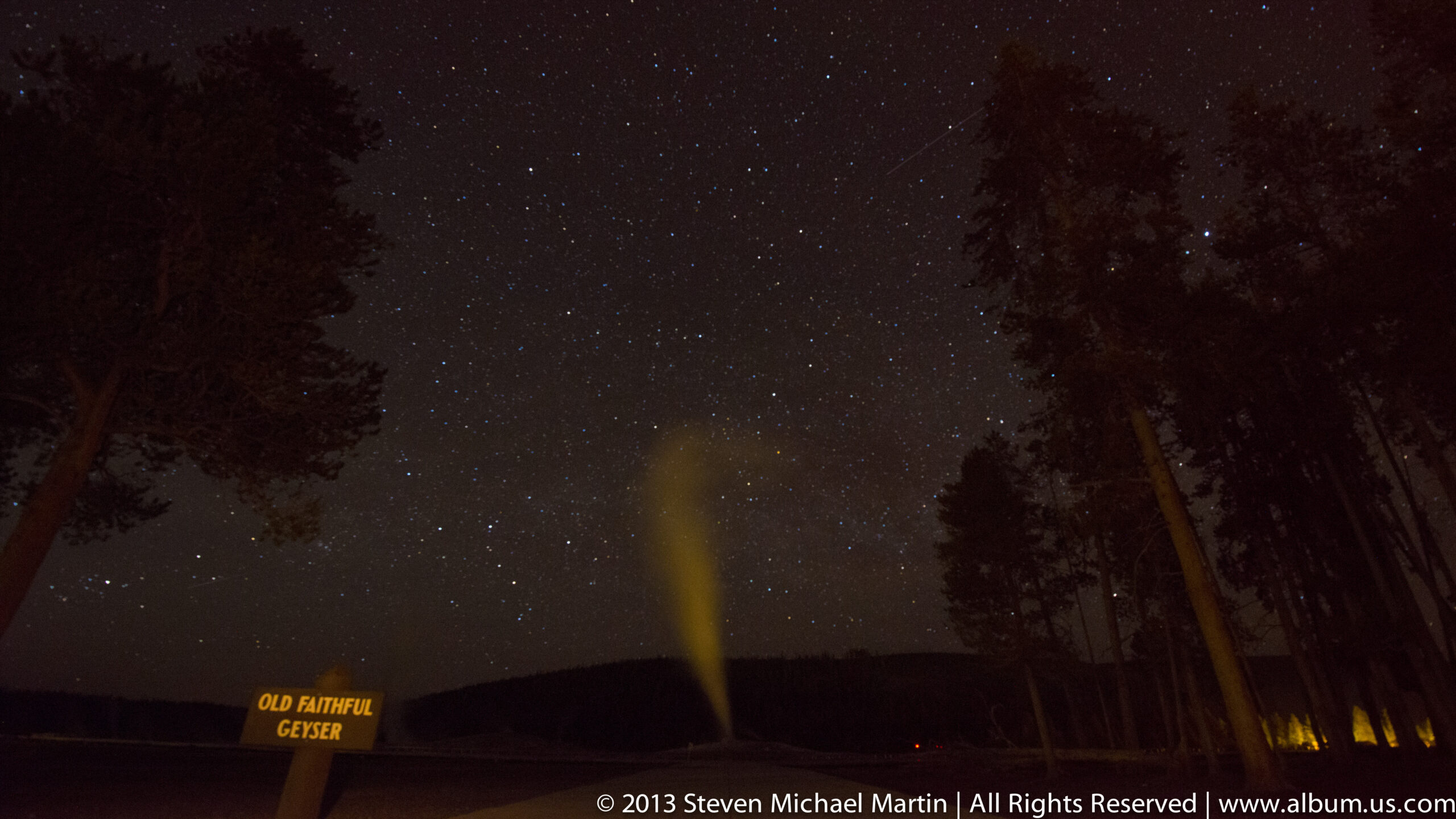
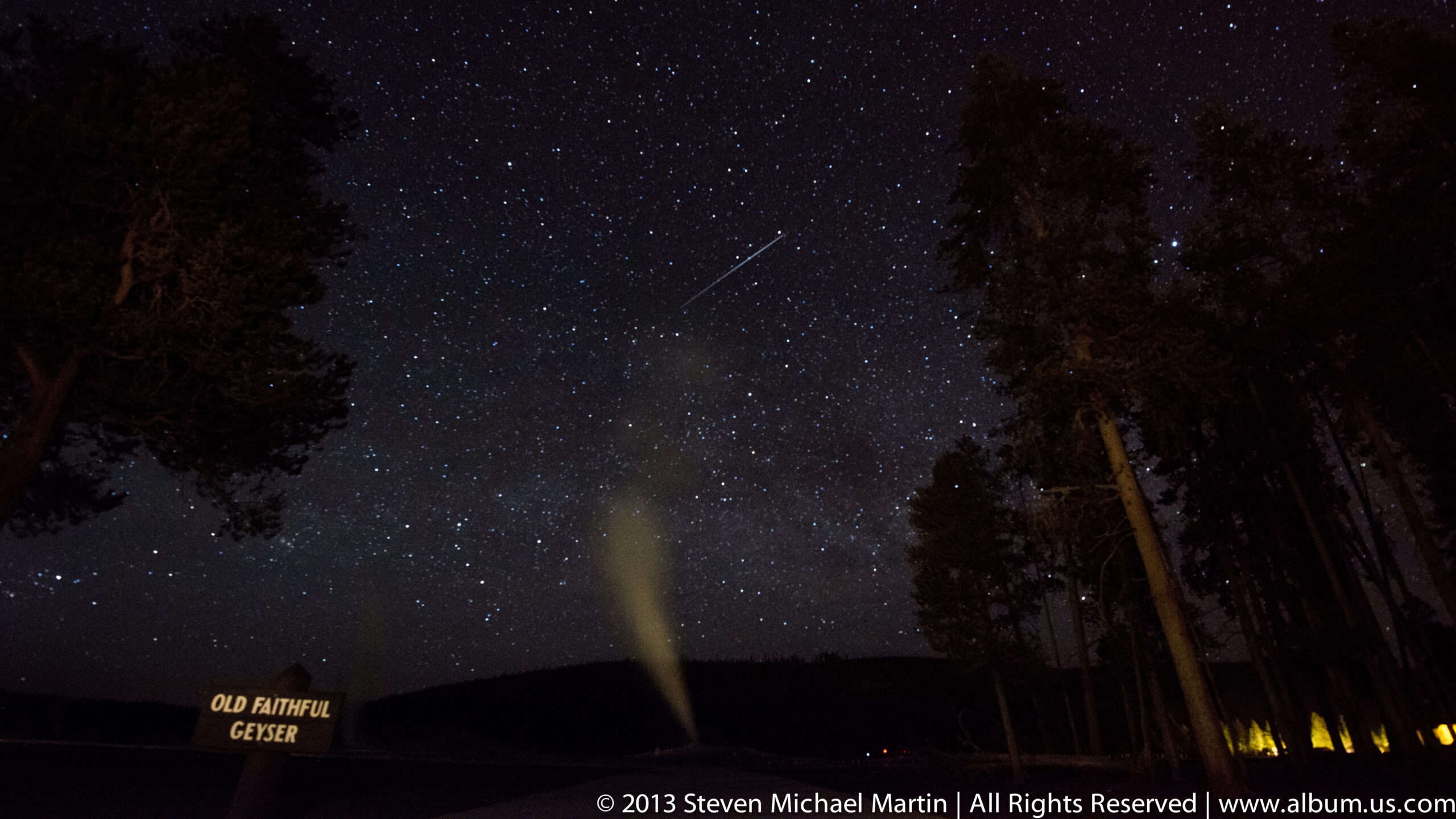
The lodge entrance glows beneath a dark, star-speckled sky, with a triangular glass gable forming the brightest architectural feature. A tall pine frames the right side and smaller trees line the building. This view includes more of the illuminated façade than the previous frame, making the contrast between the visitor structure, surrounding vegetation, and night sky the central subject. The lodge entrance glows beneath a dark, star-speckled sky, with a triangular glass gable forming the brightest architectural feature. A tall pine frames the right side and smaller trees line the building. This view includes more of the illuminated façade than the previous frame, making the contrast between the visitor structure, surrounding vegetation, and night sky the central subject. Warm lights spread across the low lodge façade, while several trees interrupt the building’s roofline and a deep blue star field fills most of the frame. The viewpoint shifts attention from the glass entrance to the length of the brightly lit structure. Strong glare from the exterior lighting brightens the foreground, leaving the sky and surrounding landscape in sharp visual contrast. Warm lights spread across the low lodge façade, while several trees interrupt the building’s roofline and a deep blue star field fills most of the frame. The viewpoint shifts attention from the glass entrance to the length of the brightly lit structure. Strong glare from the exterior lighting brightens the foreground, leaving the sky and surrounding landscape in sharp visual contrast. A steeply gabled, glass-fronted lodge occupies the lower left beneath a clear star field. Evergreen trees rise along the right edge, their bright foliage set against the deep blue sky. The low viewpoint emphasizes the building’s roofline and the height of the nearby trees, while the exterior lighting creates a bright foreground against the comparatively dark forest and sky. A steeply gabled, glass-fronted lodge occupies the lower left beneath a clear star field. Evergreen trees rise along the right edge, their bright foliage set against the deep blue sky. The low viewpoint emphasizes the building’s roofline and the height of the nearby trees, while the exterior lighting creates a bright foreground against the comparatively dark forest and sky. A narrow plume rises from Old Faithful beneath a dense field of stars, framed by dark conifers. The geyser’s yellow illumination separates it from the low horizon, while a small sign in the foreground identifies the feature. The long exposure records the eruption against a nearly black landscape, giving the scene a clear contrast between the active thermal feature and the quiet forest edge. A narrow plume rises from Old Faithful beneath a dense field of stars, framed by dark conifers. The geyser’s yellow illumination separates it from the low horizon, while a small sign in the foreground identifies the feature. The long exposure records the eruption against a nearly black landscape, giving the scene a clear contrast between the active thermal feature and the quiet forest edge. Old Faithful appears as a small illuminated plume beneath a broad, blue-black sky filled with stars. A fine diagonal streak crosses the upper sky, while the dark tree line and the geyser sign anchor the scene at ground level. Compared with the closer, warmer view, this frame gives more space to the night sky and records the eruption as one element within a wider nocturnal landscape. Old Faithful appears as a small illuminated plume beneath a broad, blue-black sky filled with stars. A fine diagonal streak crosses the upper sky, while the dark tree line and the geyser sign anchor the scene at ground level. Compared with the closer, warmer view, this frame gives more space to the night sky and records the eruption as one element within a wider nocturnal landscape. A printed Yellowstone guide fills the frame with explanatory text, landscape photographs, maps, and a prominent band of illustrated wildlife. Elk, bison, bears, and birds appear among the drawings, while smaller panels below address park features and locations. The page is presented as an informational display rather than a view of wildlife in the field, so its diagrams and captions are the primary subject. A printed Yellowstone guide fills the frame with explanatory text, landscape photographs, maps, and a prominent band of illustrated wildlife. Elk, bison, bears, and birds appear among the drawings, while smaller panels below address park features and locations. The page is presented as an informational display rather than a view of wildlife in the field, so its diagrams and captions are the primary subject. A folded map titled “Exploring Yellowstone” presents the park through shaded relief, roads, place labels, and a row of inset maps across the top. The broad central map is crossed by visible fold lines, while a legend and explanatory text run along the lower margin. Its layout combines an overview of the park with smaller location panels intended to help readers orient themselves across the region. A folded map titled “Exploring Yellowstone” presents the park through shaded relief, roads, place labels, and a row of inset maps across the top. The broad central map is crossed by visible fold lines, while a legend and explanatory text run along the lower margin. Its layout combines an overview of the park with smaller location panels intended to help readers orient themselves across the region.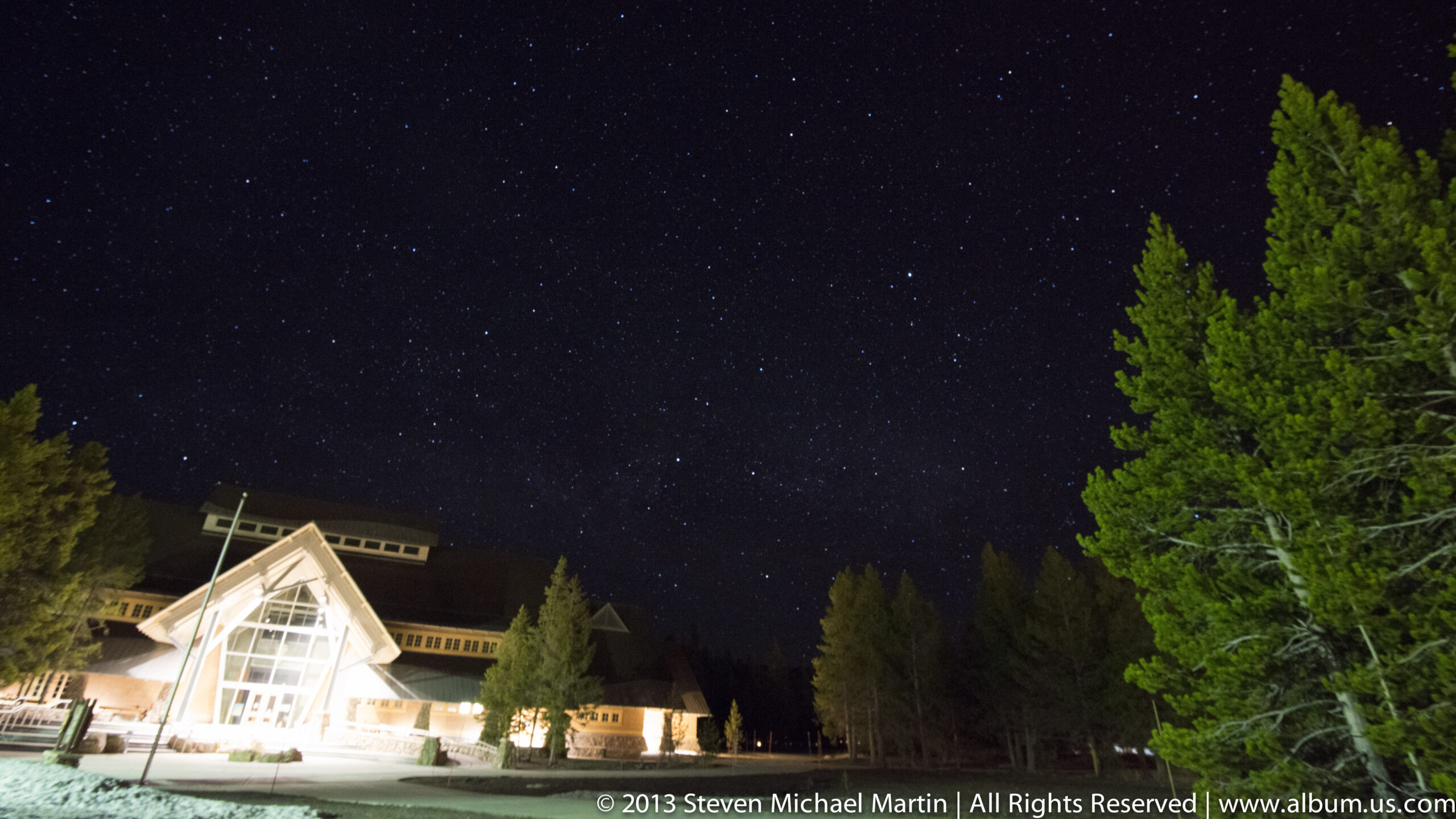
Caption
Caption
Caption
Caption
Caption

Caption

Caption